No end in sight as the French nuclear industry reduces its output
There may be no end in sight for the European power crunch this year, even
after the winter season ends. Low nuclear power generation in France, a
major producer and exporter of nuclear-powered electricity in Europe, could
send power prices on the continent higher in the spring.
France gets more
than 70 percent of its total electricity from nuclear power generation and
is a major exporter of electricity, including to the UK. France’s EDF
stopped two nuclear power plants at the end of last year after finding a
fault at one during routine maintenance.
This brought the total number of
nuclear plants out of operation in December to four, which accounted for 13
percent of the current power availability in France.
Last week, EDF revised down both its 2022 and 2023 nuclear output estimates. As part of its
control program on the French nuclear fleet, EDF revised its 2022 nuclear
output estimate from 300 – 330 TWh to 295 – 315 TWh, the company said
on February 7.
Days later, EDF revised down its 2023 French nuclear output
estimate from 340 – 370 TWh to 300-330 TWh, to reflect a heavy industrial
program with 44 reactor outages for maintenance and inspection, including 6
ten-year inspections, plus 2 scheduled outages starting in 2022 that will
continue into 2023.
Another reason for the nuclear output downgrade is “the
continuation of the control and repair programme on the pipes potentially
affected by the stress corrosion phenomenon, which is still ongoing,” EDF
said.
Oil Price 17th Feb 2022
The Nuclear Free Local Authorities (NFLA) of the UK and Ireland call for truly green energy on old nuclear sites
NFLA endorses call for real green energy on former nuclear sites
The Nuclear Free Local Authorities (NFLA) of the UK and Ireland has called for renewable technologies to be used to produce ‘real green energy’ on land formerly occupied by now decommissioned nuclear power plants.
The NFLA was pleased to see the Nuclear Decommissioning Authority (NDA), the agency charged with making safe and clearing closed civil nuclear plants, committing itself in its latest draft Business Plan to being a ‘net (carbon) zero’ business, but disheartened by the lack of detail.
In its response to the consultation on the plan concluded today by the NDA, the NFLA hopes that ‘active consideration can be given to generating onsite power and heat to support decommissioning operations using renewable technologies.
Councillor David Blackburn, Chair of the NFLA Steering Committee, said:
“We are surprised that the NDA has not picked up on the obvious. The land formerly occupied by nuclear power plants, whilst not being so attractive for residential, leisure or office developments, has great potential to be the location for solar farms, wind turbines and ‘green’ hydrogen. Or, where these plants are located by the sea, even to support offshore generation through being a support base for wind farms and tidal schemes. By their nature, nuclear plants are also linked to the electricity grid. Why not use their geographical situation and infrastructure for ‘real green’ energy generation?”
In its draft Business Plan, the NDA has indicated that the following land on each of these redundant power plant sites has now been ‘de-designated’ from nuclear use: Berkeley – 11 hectares; Harwell – 23 hectares; Oldbury – 32 hectares; Winfrith – 10 hectares; and Capenhurst – 17 hectares, but over the next decade all of the UK’s remaining outdated Advanced Gas Cooled reactors will be closed and decommissioning will begin, a process that will take over 100 years.
Councillor Blackburn added: “Clearly NDA operatives will be on-site for a long-time so an investment in micro-generation schemes, such as roof-mounted solar, a solar farm or wind turbines, would pay for itself many fold. Not only would the NDA reap the dividend of generating renewable power to support decommissioning operations, but it would also reduce the agency’s carbon footprint. And as 1,043 hectares is expected to be eventually freed up, there is no reason that the agency could not become a net exporter of renewable energy to the National Grid.”
In its response, the NFLA references a community-owned renewable energy provider which has a 915 KW solar farm on a 1.6 hectare site, and points out that the Oldbury ‘de-designated land’ is 32 hectares, enough to theoretically host twenty such schemes. For more information please contact: Richard Outram, Secretary, NFLA email Richard.outram@manchester.gov.uk / mobile 07583 097793
Europe must get serious about energy conservation
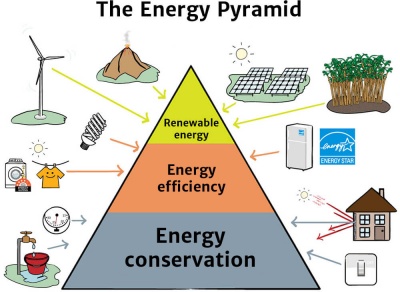
Europe must get serious about renovating homes to ease energy crisis. Over
40% of EU gas Import Is used to heat buildings, and one-third of European
homes use gas to heat. Reducing energy demand and accelerating the use of
renewable energy through more insulated homes will help put Europe’s
energy dependence on a new foundation.
Brussels has already promised a “wave of innovation” as part of the EU Green Deal. Now is the time for
member states to start this in earnest. Shortly before the end of last
year, the European Commission proposed a new law to renovate the most
energy-hungry buildings prior to yet another EU summit discussing the
energy price crisis.
Approximately €18 trillion is available, including
€670 billion from the Recovery Fund, one-third of which is allocated to
climate change measures. Research Showing that people want to live in
energy-efficient homes, they expect the government to accelerate the
transition to more environmentally friendly buildings. We need to align
this political will and the desires of the people with the vision of
reliable financing of the warm and affordable homes we want to live in and
the laws and policies to make it happen.
FT 25th Jan 2022
https://www.ft.com/content/a0dab19e-1b76-49fa-90aa-4973c7ba7341
Local MP has vision for a non-nuclear future for Hunterston
LOCAL MP Patricia Gibson has spoken of her vision for a non-nuclear future
for Hunterston. The Westminster politician has thrown her weight behind a
call to develop a green energy plan for the site. She said: “The closure of
Hunterston B is the end of an era for North Ayrshire, regardless of
anyone’s views on nuclear power. “Jobs have been lost, with many more to
follow over the next eight years as the plant defuels and is then
decommissioned. “A plan to transition to new green energy generation at
this prime location must now be taken forward with a renewed sense of
urgency.
Largs & Millport News 24th Jan 2022
Transistion to genuinely clean energy has succeeded in many cases, including economically
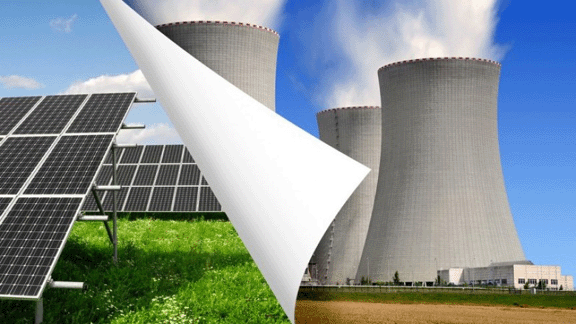
Michael Grubb: Limiting climate change will require an unprecedented
global movement to make low-carbon technologies the norm. COP26 – the UN
climate conference held last November in Glasgow – showed that
unfortunately, the world is far from ready for such a movement.
Many leaders still assume that reducing emissions and growing their countries’
economies aren’t compatible goals. Yet in many places, transitions to
clean energy technologies have succeeded far beyond expectations.
Since 2010, wind power has grown from providing under 1% to providing 10% of
electricity in Brazil, and provided 15% of the EU’s electricity demand in
2019. Solar power – described as “the most expensive way to reduce
carbon emissions” as recently as 2014 – now costs 85% less than it did
a decade ago, increasingly making it the cheapest electricity in history.
And in India, affordable energy access programmes drove sales of
high-efficiency LED bulbs from just 3 million in 2012 to 670 million in
2018, with prices also falling by 85%.
These three technologies now offer
some of the cheapest ways to produce electricity or light across much of
the world. What’s crucial is that these transitions all involved
significant government action. Plus, most went ahead despite the fact that
in many cases, early economic calculations suggested that developing
renewables would be an especially expensive way to cut emissions.
Rather than relying on research and development to bring down costs through coming
up with new inventions – or leaving the market to do so on its own
through competition – governments used subsidies and public procurement
programmes (government commitments to buy a certain volume of a new
product) to keep costs down and boost uptake.
Historically, it’s been widely assumed that reducing emissions would mean damaging countries’
economies. And low-carbon transitions do, of course, involve social and
economic challenges. But well-designed policies – such as those used to
drive the revolutions in wind, solar and LEDs – have the potential to
create huge benefits for participating countries, not just for our climate.
If we want to solve climate change, we first need to transform our economic
thinking.
Renew Economy 20th Jan 2022
Australia continues to lead the world for solar installations.

Rooftop solar took a hit in 2021 with the industry growing a third less than expected thanks to lockdowns and supply chain disruptions, despite still showing strong growth overall. More than 3m households and small businesses across the country now have solar panel systems installed, with the milestone reached in November. According to registration data provided by solar consultancy company SunWiz, 3.24GW of new solar capacity was added across the country last year, representing 10% growth on the previous year.
These figures include small rooftop systems of less than 100MW registered by homeowners and small businesses, and do not include large, industrial-scale solar installations. Queensland now has the most installed capacity, with 4,483MW, closely followed by New South Wales (4,256MW) and Victoria (3,839MW). Australia continues to lead the world for solar installations with a total installed capacity of just under 17GW.
nationwide.
Guardian 19th Jan 2022
Germany’s admirable record in promoting renewable energy, as it leaves nuclear behind.

The nuclear shenanigans aren’t enough to take away Germany’s crown as a climate-forward country. The politics that sped up the nuclear phaseout also created room for a renewables boom. Starting with the Renewable Energy Sources Act in 2000, Germany’s energy policy, known as energiewende, created some of the most generous subsidies for solar power. ………..
Germany moved ahead with a plan to shut off nearly 50 per cent of its nuclear power plants, with the rest scheduled to close by the end of 2022. Some asked how a climate-forward country could lay waste to a source of zero-carbon power, [zero carbon? not so] especially when there’s a shortage of it. Others
pointed out that Germany’s renewables investments are for naught if it has to fill up the nuclear quota using dirty coal. Outrageous, right?
Not so fast, says Nikos Tsafos, an energy and climate analyst at the Center for Strategic and International Studies. “It’s very easy to solve climate change if I’m not politically constrained.” Any sensible climate plan
requires that clean energy replaces dirty sources quickly, while at the same time efficiency measures cut the demand for energy overall.
That, in theory, would result in a smooth decline in emissions as laid out in scientific models. Reality, however, is anything but smooth. The transition will inevitably be shaped by human particularities.
The nuclear shenanigans aren’t enough to take away Germany’s crown as a climate-forward country. The politics that sped up the nuclear phaseout also created room for a renewables boom. Starting with the Renewable Energy Sources Act in 2000, Germany’s energy policy, known as energiewende, created some of the most generous subsidies for solar power. These came in the form of guaranteed prices (or feed-in tariffs) for generating solar power. German taxpayers paid billions of euros to support a new technology. The demand created giant solar companies, including many in China, that progressively made the technology cheaper (with additional support in the form of Chinese subsidies) and thus more accessible to the rest of the world.
Financial Post 11th Jan 2022
The desperate nuclear industry now looks to get its claws into electric cars.

US Nuclear January 2022 Shareholder Letter, US Nuclear Corp.Thu, January 13, 2022”……………………..Looking forward to electric cars and trucks: As a group Solar System Resources, Grapheton, and Four Point, with the encouragement of US Nuclear, were one of 20 EV innovators, judged and selected by ‘Charge On Innovation Challenge’ out of 350 of the best engineering companies in this global competition under the patronage of BHP, RioTinto, and Vale mining companies. Competing to electrify huge fleets of ultra-class mining trucks, our group proposed to develop a novel super-capacitor technology that would be used for powering and rapidly charging electric cars and trucks………’https://finance.yahoo.com/news/us-nuclear-january-2022-shareholder-133000864.html
The European Association for Renewable Energie Eurosolar rejects inclusion of nuclear and natural in the EU taxonomy
The European Association for Renewable Energie Eurosolar rejects »any
elements of nuclear and natural gas supply in the EU taxonomy for
environmentally sustainable activities«. The taxonomy is a classification
system for sustainable economic activities which are due to receive
advantageous financing conditions under EU regulations.
The European
Commision has proposed to include nuclear and natural gas into the
taxonomy. Member states like Germany strongly protested or, like Luxembourg
and Austria, even announced to bring action against the Commission, while
others are decisively supporting the proposal.
Photon 10th Jan 2022
Hunterston nuclear power workers need a just transition to sustainable work. No more subsidies to the nuclear industry.
Workers are key to a just transition at the Hunterston nuclear plant,
which retires today, according to the Scottish Greens.
The nuclear sectorbhas used the occasion to call for more subsidies, despite the UK Government
already subsidising the sector and proposing to charge bill payers upfront
to pay for nuclear power stations that haven’t even been built yet, like
at Hinkley Point.
Commenting, Scottish Greens energy spokesperson Mark
Ruskell said: “Respect and thanks must go to the workers at Hunterston
who have kept our lights on over the decades and those who will continue
the important work of de-commissioning. “These communities deserve a just
transition away from an energy source that is expensive and neither clean
nor sustainable. The vast subsidies involved would be better spent
investing in modern renewable energy solutions that provide a long-term
future for workers and our planet.”
Scottish Greens 7th Jan 2021
https://greens.scot/news/greens-workers-key-to-hunterston-transition
Scotland very nearly reached goal of 100% renewable energy over 2020
Final figures released by the Scottish government show that the country
just missed out on reaching its goal of 100% of its energy consumption
being from renewables by 2020. In the year, the equivalent of 98.6% of
gross electricity consumption in Scotland was from renewable sources in
2020, up on the provisional figure of 97.4% released in May 2021.
Current 6th Jan 2022
Pro nuclear shills use UK’s energy crisis to promote nuclear, but with government action, renewable energy would solve the problem
Government failure behind energy crisis, Chartist, By Dave Toke -31/12/2021 The only thing wrong with renewables is that we’ve not built nearly enough of them, says Dave Toke. Amidst a global shortfall of gas supplies in relation to demand (and a global increase in gas prices), the anti-renewables lobbies are busy blaming a lack of wind and solar (wot, solar too?) for the soaring energy prices. It’s nonsense of course to pin the blame on renewables for a combination of a global oil and gas crisis and the UK’s unique market vulnerability to natural gas supply squeezes, but that’s precisely what is happening. The truth is we’d be much more secure and greener with a much higher proportion of energy coming from renewables backed up with a revived storage network that successive UK governments have allowed to run down.
Of course we’ve had fossil fuel energy price surges and crises for decades, but now, suddenly, to read some papers and a lot of tweets, I’m told mainly from fossil fuel lobbyists, it’s the fault of renewables! Remarkable!
Some are even using the crisis to boost the case for nuclear power. Now that’s ironic, given that five out of 14 of EDF’s nuclear units are offline as I write! With nuclear, of course, it’s always going to be better in the future (and never is). Certainly, the idea that the UK relying on 3.2GW units (like Hinkley C and the planned Sizewell C) for its security at times of pressure is a guarantee of system security needs rather clearer analysis than is being done at the moment. (By the way, did you know that the first Hinkley C – like EPR in China – got shut down this summer because of radioactive leaks? Somebody please tell me when it gets back online.)………………..
We need much, much more renewables. Currently, the UK generates about 100TWh a year of wind and solar, compared to around 900TWh of natural gas consumption. How on earth can you blame wind and solar for a failure to meet gas demand when the Government has so far incentivised only a small fraction of the renewable energy generation required to phase out reliance on natural gas? It’s gaslighting on a grand scale (pun intended).
And, yes, there’s easily enough renewables to do the job. All of UK energy could be supplied from offshore wind occupying less than less than 8 per cent of the UK’s offshore waters, not counting all the solar and other renewable energy resources in the UK. https://www.chartist.org.uk/government-failure-behind-energy-crisis/
Why nuclear power is a bad way to balance renewable energy
Why nuclear power is a bad way to balance renewable energy https://100percentrenewableuk.org/why-nuclear-power-is-a-bad-way-to-balance-renewable-energy
David Toke, Ian Fairlie and Herbert Eppel from 100percentrenewableuk discuss how nuclear power effectively switches off wind and solar power and how a 100percent renewable energy system is much better for the UK than one involving nuclear power.
The Government, backed by a lot of public policy reports paid for by pro-nuclear interests, constantly pushes out the view that nuclear power is ‘essential’ to balancing wind and solar power. But what they never mention is the massive waste of renewables that occurs in such a scenario. Under the scenarios planned by the Government nuclear power is paid very high prices to generate power even when there is excess electricity, which pushes renewables to close down. The Government also refuses to undertake serious investigations of how a system that uses excess renewables to create short and long term storage is a much better way of organising our energy needs rather than wasting more money on building nuclear power stations.
Look at our video which, drawing upon research on the role of nuclear and renewables, discusses these issues.
If you agree the aims of 100percentrenewableuk please join the discussion via our email group.
UK’s fossil fuel use at an all-time low , as renewables generate 67% of Britain’s electricity

Fossil fuel use on the UK’s power grid dropped to an all-time low this week, in a sign analysts say is further evidence of the “renewables revolution” under way on the British electricity generation.
Just before midnight on Wednesday evening coal and gas were providing just six per cent
of electricity, according to Drax Electric Insights. “Renewables generated 24.19 GW – 65 per cent of the country’s entire electricity needs – while fossil fuels were at a new record low,” the analysts said
in statement on Thursday.
iNews 30th Dec 2021
https://inews.co.uk/news/fossil-fuels-power-wind-renewable-1375827
In Germany, coal-produced electricity has dropped, along with nuclear, while renewable-provided electricity continues to increase
Paul Dorfman: I disagree with Lord Howell of Guildford’s assertion (letter, Dec 29) that the decline of nuclear power in Germany has been accompanied by an increase in coal burning. Electricity generation
from coal in Germany dropped nearly 40TWh in 2020 as nuclear generation fell by 11TWh the same year.
The growth in renewables has outstripped the drop in nuclear power by almost double. Since 2011, nuclear in the German electricity mix halved from 22 per cent to 11 per cent, while the share of renewables increased from 17 per cent to 45 per cent.
Not only that, but Germany regularly has the lowest wholesale electricity prices in Europe after Scandinavia. The simple fact is that nuclear power plants are by far the most expensive technology for generating electricity.
Times 29th Dec 2021
1 This Month
19 February – VIRTUAL EVENT-Decision Time: AI and Our Nuclear Arsenal
12:45 p.m. Central / 1:45 p.m. Eastern
To see nuclear-related stories in greater depth and intensity – go to https://nuclearinformation.wordpress.com
-
Archives
- February 2026 (141)
- January 2026 (308)
- December 2025 (358)
- November 2025 (359)
- October 2025 (376)
- September 2025 (258)
- August 2025 (319)
- July 2025 (230)
- June 2025 (348)
- May 2025 (261)
- April 2025 (305)
- March 2025 (319)
-
Categories
- 1
- 1 NUCLEAR ISSUES
- business and costs
- climate change
- culture and arts
- ENERGY
- environment
- health
- history
- indigenous issues
- Legal
- marketing of nuclear
- media
- opposition to nuclear
- PERSONAL STORIES
- politics
- politics international
- Religion and ethics
- safety
- secrets,lies and civil liberties
- spinbuster
- technology
- Uranium
- wastes
- weapons and war
- Women
- 2 WORLD
- ACTION
- AFRICA
- Atrocities
- AUSTRALIA
- Christina's notes
- Christina's themes
- culture and arts
- Events
- Fuk 2022
- Fuk 2023
- Fukushima 2017
- Fukushima 2018
- fukushima 2019
- Fukushima 2020
- Fukushima 2021
- general
- global warming
- Humour (God we need it)
- Nuclear
- RARE EARTHS
- Reference
- resources – print
- Resources -audiovicual
- Weekly Newsletter
- World
- World Nuclear
- YouTube
-
RSS
Entries RSS
Comments RSS
 nuclear-news