Renewable energy is the only credible path forward -António Guterres
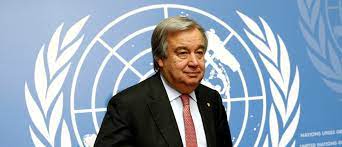
Renewable energy is the only credible path forward if the world is to avert
a climate catastrophe, UN Secretary-General António Guterres said on
Saturday, outlining a five-point plan for a just transition.
“Only renewables can safeguard our future, close the energy access gap, stabilize
prices and ensure energy security,” he said in a video message to the
13th Session of the International Renewable Energy Agency (IRENA) Assembly,
taking place this weekend in Abu Dhabi, United Arab Emirates. “Together,
let’s jumpstart a renewables revolution and create a brighter future for
all.
UN 14th Jan 2023
Prolonged outages of France’s nuclear reactors.
French power prices advanced after the start of two nuclear reactors were
pushed back, denting the nation’s ramp up in capacity at a time they are
most needed. French power for next month gained the most in two weeks,
rising as much as 3.9%. An oncoming cold snap in western Europe and rising
natural gas prices also provided bullish sentiment for electricity traders
across the region.
The prolonged outages will set back the recovery of the
nation’s nuclear capacity, which is the backbone of Europe’s integrated
power system. Availability at EDF’s nuclear fleet has increased in recent
weeks and is near the highest level in a year. The Chooz-1 unit is now due
to start on Feb 28, a month later than planned, while Blayais-1 was delayed
by 10 days to Feb. 11, according to data submitted to the grid.
Bloomberg 13th Jan 2023
Germany aims for faster expansion of wind energy, not nuclear
Germany Targets Three New Windmills a Day for Energy Reboot. Chancellor
Scholz says faster expansion of renewables needed. He rules out further
nuclear power extension to ease crunch.
Bloomberg 14th Jan 2023
The renewable energy transition is creating a green jobs boom

12.7 million people now work in the global renewable energy sector, according to the
International Renewable Energy Agency. It says the biggest growth has been
in the solar photovoltaic (PV) sector, especially in Asia, which employs
79% of the global total. Wind and hydropower, as well as liquid biofuels
make up most of the rest of the growth in renewable energy jobs. China
dominates employment in most renewable energy sectors, however Brazil has
the most biofuel jobs.
World Economic Forum 13th Jan 2023
https://www.weforum.org/agenda/2023/01/renewable-energy-transition-green-jobs/
Analysis Shows U.S. Wind and Solar Could Outpace Coal and Nuclear Power in 2023
EcoWatch By: Common Dreams, January 8, 2023, By Jake Johnson
A new analysis of federal data shows that wind and solar alone could generate more electricity in the United States than nuclear and coal over the coming year, critical progress toward reducing the country’s reliance on dirty energy.
The SUN DAY Campaign, a nonprofit that promotes sustainable energy development, highlighted a recently released U.S. Energy Information Administration (EIA) review finding that renewable sources as a whole—including solar, wind, biomass, and others—provided 22.6% of U.S. electricity over the first 10 months of 2022, a pace set to beat the agency’s projection for the full year.
“Taken together, during the first ten months of 2022, renewable energy sources comfortably out-produced both coal and nuclear power by 16.62% and 27.39% respectively,” the SUN DAY Campaign noted Tuesday. “However, natural gas continues to dominate with a 39.4% share of total generation.”…………………… more https://www.ecowatch.com/wind-solar-outpace-nuclear-coal.html
Nuclear fusion may change our world but renewable energy sources will save it: experts
Harnessing nuclear fusion could take more than 40 years, while some solutions already exist
Rossland News, Jan. 8, 2023 By Rachel Morgan, Local Journalism Initiative Reporter, The Pointer
We are living through unprecedented times……………. we are also.. living through unprecedented technological times…….
But experts are already warning that `nuclear fusion’ technology, suddenly being heralded by many as the panacea, the great answer to our planetary climate problem, should not distract from the critical role renewable energy sources are already playing in our quest to cleanse Earth.
While some forms of renewable energy have been used as far back as 2,000 years ago when the Greeks built water mills to turn grains into flour, modern renewable energy technologies first began to take shape over the 19th and 20th centuries. It wasn’t until the turn of the 21st century that technologies like wind turbines and solar panels reached the point of viability as wide scale sources of energy. According to the International Energy Agency (IEA), renewable sources of energy are now, collectively, on track to surpass coal as the number one generator of electricity by 2025.
A month ago, everything changed. Suddenly, the entire conversation around alternative energy has been shifted, forever……………..
When news broke [of a “breakthrough ” in nuclear fusion] there was a sigh of relief across the globe. Immediately, articles began circulating about salvation for the planet as fusion would, inevitably, power a clean energy grid.
But as the novelty of the remarkable breakthrough begins to wear off, researchers and scientists are already wary of the potential negative consequences.
“I was not overly optimistic,” Jean-Thomas Bernard, a visiting professor in the Department of Economics and the Institute of the Environment at the University of Ottawa, says. His expertise deals with the economics of energy use and he addressed the potential of nuclear fusion. “It is a good idea to proceed with developing, doing research on that line. But we are very far from seeing commercial plants being built.”
His concern, like many others in the growing fields dedicated to finding solutions for the most pressing environmental issues, is the danger of being distracted by a silver bullet, especially one that might arrive too late.
It could take more than 40 years before nuclear fusion can be harnessed and scaled to create the amount of electricity needed to change the game. Meanwhile, alternatives that are already doing this, could be suddenly overlooked, in favour of a technology that won’t be ready before catastrophic climate change alters Earth, forever.
Currently, there is research and testing into two different methods to create the type of nuclear fusion the California experiment produced. Both rely on heavy forms of hydrogen which are compressed until they fuse together emitting energy that can create steam to turn a turbine. The process used at the NIF lab relied on laser beams directed at the elements, which needed about 99 percent more energy to actually operate them than what was ultimately produced (the ignition event only measures the energy gain from the laser output, not the electricity required to run the laser machines).
Another process being experimented with across the globe, including in British Columbia, uses magnetic force to create the pressure and heat needed for the elements to fuse. It is unclear which process will result in the biggest gains, using the least amount of initial energy input. It’s also unclear which of the two methods might be realistically scalable, to use for global electricity production. Scientists have also said it is hard to predict how long it will take to advance current technology around each method to the point when nuclear fusion can be widely generated to create energy for everyday human use.
Experts agree it could still be decades before we see fusion contributing to our electricity grid…………
One fear is the nuclear fusion breakthrough will siphon off investments and detract attention from current renewable alternatives, just as those technologies are becoming more and more viable.
Late last year the International Energy Agency released a report with an accompanying article, headlined: “Renewable power’s growth is being turbocharged as countries seek to strengthen energy security”.
…….. Global renewable power capacity is now expected to grow by 2,400 gigawatts (GW) over the 2022-2027 period, an amount equal to the entire power capacity of China today, according to Renewables 2022, the latest edition of the IEA’s annual report on the sector.” https://www.rosslandnews.com/opinion/opinion-nuclear-fusion-may-change-our-world-but-renewable-energy-sources-will-save-it-experts/
Great Britain produced a record amount of wind-powered electricity in 2022
Great Britain produced a record amount of wind-powered electricity in 2022,
according to the National Grid. More electricity came from renewable and
nuclear power sources than from fossil fuels gas and coal, the second
highest after 2020.
Replacing fossil fuels with green power is a core way
for the world to tackle the impacts of climate change. Sources like wind
and solar are also significantly cheaper and should lead to cheaper bills
in the long-run.
Overall 48.5% of electricity came from renewable and
nuclear power, compared to 40% from gas and coal power stations. On a
single day in November, more than 70% of electricity was produced by wind,
or around 20GW. That’s enough power to heat about 1700 homes for a year.
That record was again broken on 30 December when 20.918GW was generated by
wind turbines. For five months of the year (February, May, October,
November and December), more than half of electricity came from so-called
zero carbon electricity sources renewable and nuclear. And the use of coal
– the most polluting fossil fuel – continued to fall. In 2022 it generated
just 1.5% of electricity compared to 2012 when it was 43%.
BBC 6th Jan 2023
Solar power innovation by two British local councils.
Over 100 council car parking spaces in Sudbury and Stowmarket have been
covered with solar panels to help power and reduce carbon emissions at two
council-owned leisure centres. Babergh and Mid Suffolk District Councils
have finished building solar carports more than 110 of their existing car
parking spaces to help power two of their leisure centres.
They are among the UK’s first rural local authorities to trial the technology, which will
reduce the centres’ reliance on the grid and cut carbon emissions. Seventy
solar carports are located at Mid Suffolk Leisure Centre in Stowmarket,
providing up to almost 24% of the centre’s annual electricity demand.
The remaining 40 are located at Kingfisher Leisure Centre in Sudbury, providing
over 16% of its annual electricity demand. Each site also includes battery
storage so excess energy produced during sunnier periods can be saved for
later, as well as eight electric vehicle charging points, including two
rapid chargers.
New Anglia 3rd Jan 2023
European Energy Crisis: France Close to Electricity Rationing Over Problems with Local Nuclear Plants
PETER CADDLE1 Jan 2023456
France is uncomfortably close to energy rationing as a result of issues it is having with some of its nuclear power plants, a report by The Times has claimed.
The UK newspaper has alleged that Emmanuel Macron’s France is currently coming close to having to ration energy due to a number of its nuclear power plants being taken offline over the last number of months.
If true, the news does not bode well for many countries in Europe that rely upon France for some of their electricity, with both the UK and Germany depending on the country for some of their power.
According to the report published on Sunday, the reduction in the number of nuclear power plants in operation in the country has put extreme strain on the country’s national power grid.
Warmer weather has since meant that, despite supply issues, energy rationing will likely not be needed, though the country’s power watchdog has warned that a sudden cold snap could change this.
“Until January 15, we know that we will have no difficulty,” The Times reports Emmanuelle Wargon, who serves as President of France’s Energy Regulation Commission, as saying.
While the widespread availability of nuclear power has overall been a boon for France at a time when gas and oil have gotten rapidly more scarce in Europe, issues with various plants throughout the country have seen production fall to worryingly low levels in recent weeks.
With dangerous cracks being discovered in a number of major power stations, up to half of the country’s arsenal of nuclear facilities has been taken offline, dramatically reducing the amount of electricity the country can produce.
Although the state quickly deployed a veritable army of engineers to address the problems, temporary damage to production levels nevertheless forced it to pull back on supplying its European neighbours, with the country requesting last month to cut off the UK from French energy exports in the hopes of saving electricity…. https://www.breitbart.com/europe/2023/01/01/european-energy-crisis-france-close-to-electricity-rationing-over-problems-with-local-nuclear-plants/
Europe shows how to cut demand for energy use
Europe’s energy sacrifices: the winter test of resolve. From Finland to
France, citizens are reducing their power consumption. Can a drop in
temperatures break that collective resilience? Prices across the bloc have
been sky high, even if they have come down since a sharp rise in August
Entire swaths of industry — notably steel and chemical manufacturers —
have cut production, while governments have poured more than €700bn into
subsidies and financial support, according to the Brussels-based think-tank
Bruegel.
Data from Eurostat show that household gas bills dramatically
increased in almost all of the EU’s 27 member states in the first half of
the year with some, such as Estonia and Bulgaria, shouldering more than
double last year’s cost.
Broad estimates for the reduction in gas use
across Europe hover at around 15 per cent in the second half of this year,
in line with a commitment by EU governments in July to voluntarily cut
demand by that amount. Much of the savings have come from “demand
destruction” among industrial users that have shut down production but
that should not negate household and community efforts, says Henning
Gloystein, director of energy, climate and resources at Eurasia Group.
Even if consumer demand is “super volatile across Europe, depending almost
entirely on the weather”, he says, “the heating of households and small
businesses is the biggest part of gas consumption each winter and if we
can’t solve that we are screwed.”
In Germany, which received more than
half of its gas from Russia in 2021, a concerted government campaign to cut
energy consumption has filtered down through city authorities. Lights in
public buildings have been dimmed, temperatures in sports facilities
lowered to 17C, hot water has been switched off in public buildings and
heating of municipal buildings in major cities cut to a minimum.
In France, where the situation is made more challenging by the closure of almost half
of its nuclear power fleet for maintenance, monuments such as the Eiffel
Tower and the Palace of Versailles now stand in darkness for most of the
night and the shop windows of luxury stores belonging to the LVMH
conglomerate, including Louis Vuitton on the Champs Elysées, are now
dimmed from around 10pm.
FT 30th Dec 2022
https://www.ft.com/content/6e08003e-5de0-4707-93c3-43b64480443e
France’s nuclear headache – Macron on the brink of rationing electricity
France’s nuclear headache leaves Macron on brink of rationing
electricity. The threat of power cuts has been looming over France —
curious considering that it is normally a significant exporter of
electricity, thanks to its 56 nuclear reactors, by far the largest number
of Europe.
This same dependence on nuclear has proved to be its Achilles
heel, however, as a result of a crisis prompted by the discovery of cracks
in the pipes of a number of its reactors which, at its height, forced the
closure of almost half of its nuclear power stations.
The resulting cut in
output to a 30-year low has added to the energy supply problems across
Europe caused by Russia’s war on Ukraine. Some of the problem reactors
have since been restarted, but last week 39 per cent of France’s 61,370
megawatts of nuclear generation capacity remained offline, according to
analysis by Reuters of data provided by RTE, which operates the country’s
grid.
Times 1st Jan 2023
As France’s nuclear energy sector falters, Britain’s wind and solar power booms
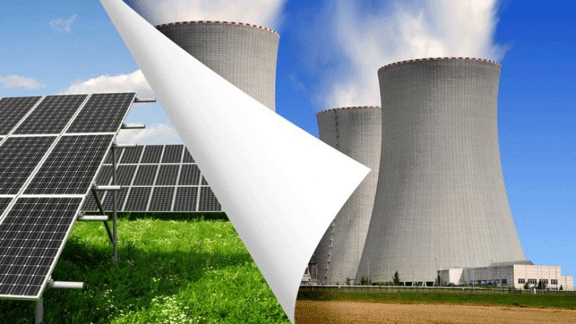
the continued sharp growth of green power in Britain’s electricity mix. Wind farms generated a record 28 per cent of the country’s needs this year, up from 23 per cent last year. Solar generation increased to 5 per cent this year, from essentially zero a decade earlier.
Britain exported more electricity to Europe than ever before this year while wind and solar generation hit all-time highs, according to the first analysis of the year’s power mix. The energy crisis in Europe prompted by
Russia’s invasion of Ukraine and safety problems at French nuclear plants resulted in Britain becoming a net exporter of electricity to the Continent for the first time in more than a decade.
Renewable power sources generated in excess of 40 per cent of Britain’s electricity needs for the first
time as both wind and solar output increased, according to the analysis by Imperial College London for Drax Electric Insights and seen by The Times.
Gas-fired power generation also increased, compensating for a sharp drop in imports and helping to supply the rising exports. Soaring gas prices meant power prices were almost twice as high as a year earlier. Iain Staffell, of Imperial College London, lead author of the report, said: “This has been a year like no other for the energy industry.
The public are feeling the pain of high gas prices on their energy bills, even though renewables are
providing the grid with more cheap, green electricity than ever before. The lesson from 2022 is that we need to break our addiction to fossil fuels once and for all if we want lower-cost and more secure energy supplies.”
This reversal was driven by net exports to France, with more than half of the French nuclear fleet forced offline over the summer for maintenance and to repair corrosion and cracking.
Power flows on interconnectors are normally decided by the market, travelling in the direction of the highest
bidder. The analysis also shows the continued sharp growth of green power in Britain’s electricity mix. Wind farms generated a record 28 per cent of the country’s needs this year, up from 23 per cent last year. Solar
generation increased to 5 per cent this year, from essentially zero a decade earlier.
Times 29th Dec 2022
Sunak’s wrongheaded renewables tax risks trashing Britain’s wind and solar ambitions.
DR NINA SKORUPSKA: Sunak’s wrongheaded renewables tax risks trashing
Britain’s wind and solar ambitions. The Government must change course,
otherwise we will see winters even more painful than this one.
Call it what you will – a windfall tax, a clawback, a levy – the fact remains that the
Electricity Generator Levy (EGL), in its current form, is set to cause
irreparable damage to Britain’s green energy industry by stalling
investment. In principle, our sector is certainly not against the
Government’s policy to require generators to help pay for energy bill
support.
However, we would question the wisdom of subjecting the cheaper,
greener renewable power sector to a more punishing tax regime than its oil
and gas counterparts. It is an inexplicable disparity – our sector is key
to tackling the volatile costs of fossil fuels at the heart of rising
energy bills. Treatment should be fair and equitable in relation to the oil
and gas sector.
Telegraph 23rd Dec 2022
UK tipped to export even more energy to France despite blackout fears.
UK tipped to export even more energy to France despite blackout fears.
France’s nuclear power output has plunged to a 30-year low – and the UK is
expected to continue to part ways with its energy supplies despite shortage
fears this winter.
A nuclear expert has warned that the UK may have to send
more energy across the Channel to help keep the lights on in France. This
is despite fears that Britain could be weeks away from its own shortages
this winter.
France has taken 16 of its 56 nuclear reactors offline due to
corrosion issues, causing nuclear power output levels to plummet in recent
months. Making matters worse, Paris confirmed last week that maintenance
halts at two of Electricite de France SA’s reactors – and that it will last
for an extra four months. It may also have to carry out lengthy repairs at
seven other reactors next year, too.
Under normal circumstances, France is
a net exporter of energy, sending some of this to the UK via
interconnectors. While the exchange of energy from the UK to France has
been happening regularly for a number of months, Dr Paul Dorfman, a nuclear
expert from Sussex University, has warned that the UK could ramp up its
exports to France, despite its own domestic energy issues.
Express 24th Dec 2022
https://www.express.co.uk/news/science/1711900/uk-energy-france-nuclear-blackout-edf
Twice as many people support onshore wind compared to nuclear power, according to UK Government survey.
Renewable energy of all sorts is at
least twice as popular with the British public compared to nuclear power
according to the newly released ‘BEIS Public Opinion Tracker Autumn
2022‘. Solar power was supported or strongly supported by 89% of
respondents, offshore wind by 85% and onshore wind by 79%. This was
compared to only 37% for nuclear power, 25% for fracking and 44% for carbon
capture and storage. The survey recorded that just 29% of people believe
that nuclear energy ‘provides a safe source of energy in the UK’.
100% Renewables 15th Dec 2022
1 This Month
23 April – WEBINAR – Why new nuclear reactors are the wrong tools for decarbonization Thursday, April 23 • 1 AM – 2 AM AEST



Pine Ridge Uranium is the real threat, not Tehran- Tell Burgum: Stop the Extraction.
Chernobyl: The Lost Tapes – A good documentary on Chernobyl on SBS available On Demand for the next 3 weeks– https://www.sbs.com.au/ondemand/tv-program/chernobyl-the-lost-tapes/2352741955560
To see nuclear-related stories in greater depth and intensity – go to https://nuclearinformation.wordpress.com
-
Archives
- April 2026 (275)
- March 2026 (251)
- February 2026 (268)
- January 2026 (308)
- December 2025 (358)
- November 2025 (359)
- October 2025 (376)
- September 2025 (257)
- August 2025 (319)
- July 2025 (230)
- June 2025 (348)
- May 2025 (261)
-
Categories
- 1
- 1 NUCLEAR ISSUES
- business and costs
- climate change
- culture and arts
- ENERGY
- environment
- health
- history
- indigenous issues
- Legal
- marketing of nuclear
- media
- opposition to nuclear
- PERSONAL STORIES
- politics
- politics international
- Religion and ethics
- safety
- secrets,lies and civil liberties
- spinbuster
- technology
- Uranium
- wastes
- weapons and war
- Women
- 2 WORLD
- ACTION
- AFRICA
- Atrocities
- AUSTRALIA
- Christina's notes
- Christina's themes
- culture and arts
- Events
- Fuk 2022
- Fuk 2023
- Fukushima 2017
- Fukushima 2018
- fukushima 2019
- Fukushima 2020
- Fukushima 2021
- general
- global warming
- Humour (God we need it)
- Nuclear
- RARE EARTHS
- Reference
- resources – print
- Resources -audiovicual
- Weekly Newsletter
- World
- World Nuclear
- YouTube
-
RSS
Entries RSS
Comments RSS
 nuclear-news