As Europe Quits Russian Gas, Half of France’s Nuclear Plants Are Off-Line
France’s state-backed nuclear operator is scrambling to overcome a monthslong crisis to get as many reactors as possible restarted before winter sets in.
New York Times, By Liz Alderman. Reporting from Paris, Nov. 16, 2022
An army of engineers has fanned out through nuclear power plants across France in recent months, inspecting reactors for signs of wear and tear. Hundreds of expert welders have been recruited to repair problems found in cooling circuits. Stress tests are being conducted to check for safety problems.
As Europe braces for a winter without Russian gas, France is moving fast to repair a series of problems plaguing its atomic fleet. A record 26 of its 56 reactors are off-line for maintenance or repairs after the worrisome discovery of cracks and corrosion in some pipes used to cool reactor cores.
The crisis is upending the role that France has long played as Europe’s biggest producer of nuclear energy, raising questions about how much its nuclear power arsenal will be able to help bridge the continent’s looming crunch……………………………………………
France’s nuclear power crunch has become so acute that Mr. Macron is preparing to have the government take over the remaining 16 percent of EDF that it doesn’t already own, at a cost of nearly 10 billion euros ($10.3 billion).
The company, which is nearly €45 billion in debt, has tumbled further into financial difficulty and announced that its 2022 profit would drop by €29 billion because of the problems with its reactors, as well as a government effort to force EDF to provide artificially cheap electricity for households and businesses.
Even as EDF is rushing to comply with the demand for accelerated repairs, the company last week cut its 2022 nuclear power production forecast. The announcement caused the cost of French and European electricity to spike.
Herculean efforts to repair corrosion in pipes that cool the cores of four reactors were taking longer than expected, the company said. Those reactors now will not restart until January or February.
A strike late last month by French nuclear plant workers demanding higher wages to keep up with inflation was another blow. EDF said it was already behind in performing required maintenance on several aging reactors because of coronavirus lockdowns when the labor action put it further behind.
The company’s recent troubles began late last year, as it started moving through that backlog. The inspections unearthed alarming safety issues — especially corrosion and micro-cracks in systems that cool a reactor’s radioactive core — at an older-generation nuclear reactor in southwest France called Civaux 1. As EDF scoured its nuclear facilities, it found that 16 reactors, most of them newer-generation models, faced similar risks and closed them down.
EDF made to reactors designed by Westinghouse Electric that EDF had used in its older-generation plants. Bernard Doroszczuk, the head of France’s Nuclear Safety Authority, testified to French lawmakers this summer that the modifications, used for later-generation reactors, appeared to have caused abnormal corrosion and stress on critical cooling pipes.
The crisis has sent French nuclear power production to a 30-year low, generating less than half of the 61 gigawatts that the reactors can produce. (EDF also generates electricity with gas, coal and renewable technologies.) Even when more reactors are restarted in the coming months, French nuclear output will be around 45 gigawatts — lower than usual this winter, compounding the impact of Russia’s gas cutoff.
The situation “increases the risk of supply shortages for the coming winter, with availability standing at record-low levels for this time of the year,” Fabian Ronningen, a senior analyst at Rystad Energy, an independent consultancy, said in a note to clients.
The energy shortfall has turned France, once the continent’s biggest exporter of energy, into a net importer this year. A quarter of Europe’s electricity comes from nuclear power plants in about a dozen countries, with France producing more than half the total………………………………..
But even critical repairs must be monitored. EDF said a radioactive leak occurred this month during a hydraulic test on the main cooling circuit of the Civaux 1 nuclear power plant. EDF had spent months laboring to repair the corroded cooling pipes, using new technologies including ultrasound and welding robots that don’t have radiation exposure limits.
EDF said that there was no safety risk from that leak, and that no radioactivity was detected outside of it. But the episode is likely to delay the plant’s reopening beyond a planned Jan. 8 date, adding to the nuclear park’s woes. https://www.nytimes.com/2022/11/15/business/nuclear-power-france.html
Image
Image
Ukraine joins in USA’s false story, “clean” energy from the mythical small nuclear reactors

Ukraine, United States announce cooperation on Clean Fuels from SMR pilot project. https://www.ukrinform.net/rubric-economy/3613271-ukraine-united-states-announce-cooperation-on-clean-fuels-from-smr-pilot-project.html 13 Nov 22,
—
As part of the UN’s COP27 Climate Conference, U.S. Special Presidential Envoy for Climate John Kerry and Ukrainian Energy Minister German Galushchenko announced cooperation on a Ukraine Clean Fuels from Small Modular Reactors (SMR) pilot project.
The relevant statement was made by the U.S. Department of State, an Ukrinform correspondent reports.
“Special Presidential Envoy for Climate John Kerry and Ukraine Minister of Energy German Galushchenko announced a Ukraine Clean Fuels from SMRs Pilot project that will demonstrate production of clean hydrogen and ammonia using secure and safe small modular nuclear reactor (SMR) and cutting-edge electrolysis technologies in Ukraine,” the report states.
The project aims to carry out a first-of-a-kind pilot of commercial-scale production of clean fuels from SMRs using solid oxide electrolysis.
“Building on existing capacity-building cooperation launched under the U.S. Foundational Infrastructure for Responsible Use of SMR Technology (FIRST) program, the project seeks to support Ukraine’s energy security goals, enable decarbonization of hard-to-abate energy sectors through clean hydrogen generation, and improve long-term food security through clean ammonia-produced fertilizers. Further, it aims to demonstrate Ukraine’s innovative clean energy leadership through the use of advanced technologies,” the U.S. Department of State noted.
Additionally, Special Envoy Kerry launched a new initiative, Project Phoenix, to accelerate the transition in Europe of coal-fired plants to SMRs while retaining local jobs through workforce retraining.
Project Phoenix will provide direct U.S. support for coal-to-SMR feasibility studies and related activities in support of energy security goals for countries in Central and Eastern Europe.
Is nuclear energy actually sustainable?

“If successive governments had given even half the love and attention they afford to nuclear power to scaling up home insulation, energy efficiency and smart storage technologies, it’s likely we wouldn’t be facing current challenges around energy and household bills, and we would have done a lotmore good for the climate and nature.”
Sizewell C, if built, would not produce electricity until the 2030s. A debate in the House of Commons on 19 January, led by a group of MPs known as the “atomic kittens”, suggested nuclear energy can be a
panacea for all ills – including a solution for the climate crisis and the gas crunch.
The facts suggest otherwise. In addition to safety
concerns, rising costs are a central reason why the number of new plants
under construction remains limited. Since 2011, nuclear power construction
costs globally have doubled or even tripled.
China is, however, notable in
its nuclear ambitions. The country is planning at least 150 new reactors in
the next 15 years, more than the rest of the world has built in the past
35, though cost could ultimately change this direction of travel.
The major excitement among many nuclear enthusiasts, including plenty of UK MPs is
around so-called small modular reactors (SMRs). If you believe the hype,
they are the answer to all climate and energy ills.
Traditional, big nuclear projects look likely to provide only a sliver of the world’s
electricity in the future. They are hugely expensive to build, their
construction runs over time, and they are frequently struck by
technological issues.
Moreover, they need to be built close to the sea or a
large river for cooling reasons, highlighted Paul Dorfman from the
University of Sussex. France has already had to curtail nuclear power
output in periods of heatwaves and drought, which are only set to get worse
as climate change takes hold. Greater storm surges and eroding coastlines
also don’t make the prospect of building by the sea any easier. SMRs
solve few of these issues.
So what is the solution? Renewables, renewables
and more renewables? In short, yes. The costs of solar, wind power and
storage continue to fall, and by 2026 global renewable electricity capacity
is forecast to rise by more than 60 per cent, to a level that would equal
the current total global power capacity of fossil fuels and nuclear
combined, says the IEA. Some argue nuclear can be a clean back-up option
for when the wind doesn’t blow and the sun isn’t shining.
But again, other options already exist, including demand response (for example,
plugging in your electric car when there is lots of energy and not
switching on your washing machine when the system is under strain),
large-scale storage and interconnections between different countries.
Craig Bennett, chief executive of the Wildlife Trusts, summed up the general mood
of those less enthused by nuclear than Crosbie and her fans: “If
successive governments had given even half the love and attention they
afford to nuclear power to scaling up home insulation, energy efficiency
and smart storage technologies, it’s likely we wouldn’t be facing current
challenges around energy and household bills, and we would have done a lot
more good for the climate and nature.”
New Statesman 12th Nov 2022
EDF nuclear problems increase risk of winter energy shortages
EDF nuclear problems increase risk of winter energy shortages. French
energy prices surge as EDF scales back electricity output predictions
again. The risk of energy shortages in Britain and across the Channel this
winter is growing as French state energy giant EDF faces fresh problems
with its nuclear power stations.
French power prices for January have
surged above €1,000 (£870) per megawatt hour after EDF scaled back
predictions for its nuclear electricity output for the fourth time this
year. Markets were also rattled further on Tuesday as the company warned it
was “too early to say” whether the Civaux 1 reactor would return to
service on schedule following a radiation leak.
Experts said the
developments risked further squeezing the amount of power available in
January and February, the coldest months of the year when demand is usually
highest. That could spell trouble for France and Britain, which hope to
rely on each other for electricity supplies this winter.
Telegraph 8th Nov 2022
France’s Nuclear Power Problems Are Mounting
Oil Price, By ZeroHedge – Nov 07, 2022,
France’s nuclear troubles are mounting due primarily to routine maintenance of the country’s 56 aging reactors. A new update from French electric utility company Electricite de France SA, commonly known as EDF, said an outlook for nuclear power generation was slashed ahead of winter, causing chaos in energy markets.
EDF is the world’s largest owner of nuclear plants. It reported Friday that its fleet of nuclear reactors is expected to produce between 275 and 285 terawatt-hours of energy this year, down from the range of 280 and 300 terawatt-hours.
The reduced outlook comes amid a series of strikes at nuclear plants across the country that delayed planned maintenance work. Nuclear power generation has been sliding all year due to technical issues, and about half of the country’s 56 reactors are shuttered.
“The situation changed drastically this year, when France swung from being one of Europe’s largest exporters of electricity to a net importer because of issues with its reactors. The outages worried officials that France and the broader region might run short of electricity in the winter, when power demand in Europe peaks,” Bloomberg said. …………………………………………………………………………………https://oilprice.com/Latest-Energy-News/World-News/Frances-Nuclear-Power-Problems-Are-Mounting.html
As France’s aging nuclear reactors fail, France may block electricity exports to UK
France may block energy exports to UK as Macron’s ‘ancient’ nuclear
plants rust up. Power giant EDF will slash output following delays in vital
repairs to its fleet of nuclear reactors. The French may block electricity
exports to the UK this winter as a result, causing a fresh energy supply
crunch on these shores. It’s a frightening prospect as winter looms.
Express 5th Nov 2022
France, depending on nuclear power, now imports more electricity than it exports

Nuclear power provides 70pc of French electricity. The failure to replace
ageing infrastructure has left more than half of the 56 reactors out of
service as the worst winter in living memory approaches.
EDF, whichnoperates the plants, has been nationalised and, for the first time in
decades, France is importing more energy than it exports, only narrowly
avoiding blackouts so far. For the foreseeable future, the country has not
only been overtaken by Sweden as Europe’s leading electricity exporter,
but has lost its vaunted reputation for energy security.
Telegraph 6th Nov 2022
https://www.telegraph.co.uk/business/2022/11/06/how-france-became-trapped-spiral-chaos-decline/
Does the UK need new nuclear plants like Sizewell C to reach net zero?
Does the UK need new nuclear plants like Sizewell C to reach net zero?
With the cost of renewables and batteries plummeting, some academics argue
that the UK doesn’t need to build new nuclear power stations to achieve its
net zero goal.
Eight months ago, the UK government made a big bet on
nuclear, promising to treble the size of the country’s nuclear fleet
between now and 2050. Delivering on that promise would require huge
investment in both large-scale new nuclear plants and small-scale modular
reactors. This follows years of government delay and prevarication.
Ministers at the time told the public this push for nuclear was essential
to achieve the UK’s aim to have net-zero carbon emissions by 2050.
That nuclear-fuelled zero-carbon future could now be in doubt, according to news
reports. A government official told the BBC that plans for the nuclear
power plant Sizewell C, which would supply around 7 per cent of the UK’s
electricity, are “under review” as the government looks to cut
spending.
The prime minister’s spokesperson later denied that it was
under review, saying that negotiations with private firms over funding were
ongoing and the government “hoped to get a deal over the line as soon as
possible”.
However, some academics are questioning whether new nuclear is
even necessary. For years it has been energy orthodoxy to argue that
nuclear will be an essential component of the UK’s energy mix to meet its
net zero goal. Wind and solar would supply most of the country’s energy,
so the thinking went, but some back-up power would be needed for when the
wind doesn’t blow and the sky is cloudy. It is an argument broadly
accepted by the UK government, the Climate Change Committee that advises it
and, reluctantly, many environmental campaigners.
But that is now changing,
says James Price at University College London, author of a study published
in September that suggests the government’s backing for new nuclear is
“increasingly difficult to justify”
New Scientist 4th Nov 2022
India headed towards 100% renewables power by 2050
A new optimistic Nature paper from the LUT University in Finland looks to a
key role being played by renewables for rapid transitioning of the power
sector across states in India. Progress has been uneven at times, but LUT
says that a renewables-based power system by 2050 could be ‘lower in cost
than the current coal dominated system’ and have ‘zero greenhouse gas
emissions’ while providing ‘reliable electricity to around 1.7 billion
people’.
Renew Extra 29th Oct 2022
https://renewextraweekly.blogspot.com/2022/10/india-towards-100-renewable-power-by.html
Nuclear power – a ‘religion’ in France. now turning out to be a curse.
Paris dims the lights as blackouts threaten disaster for Macron. Years of
underinvestment in its aging nuclear fleet risk causing chaos in France
this winter. Xavier Barbaro, chief executive of France’s leading
independent renewables producer Neoen, is concerned about the growing risk
of shortages.
“It’s a possibility and no one would have thought that a
few years or even a few months ago,” he says. “Blackouts were something in
the past. and it can happen again. “We have heard literally for decades
that having nuclear was a chance for the country and in the end, it might
actually be a curse.”
France put all of its eggs in the nuclear basket,
but technical problems are now frequently cutting capacity at its aging
plants. While President Emmanuel Macron has ordered new reactors as part of
a nuclear “renaissance”, decades of inaction are coming back to haunt
the country. Like Liz Truss, Macron’s government has staked its
reputation on his country avoiding blackouts that would undoubtedly have
severe political consequences this winter.
However, industry bosses are
less certain than the President. “We’ve been told for ages that nuclear
power is safe, secure and so constant,” says Adrien Jeantet, director of
energy services at Enercoop, a French utility company using only renewable
energy.
“Now we see that it’s not dependable. We really need it now that
we have gas shortages and all of a sudden it’s not there. Half of the
reactors are shut down.” Barbara Pompili, Macron’s minister in charge
of the energy transition for two years, says nuclear power is almost like a
religion in France.
However, she adds that a widespread belief in its
“magic” has caused underinvestment in renewables that will be needed
for the future. “What I’m worried about is the strategic thinking in the
long run,” she says. “Maybe we were too confident on nuclear power and
we underestimated the importance of renewables. The reason is that too many
people considered that investing in renewables was bad for nuclear power.
“It’s totally crazy. We lost so much time thinking in this way… it’s
very difficult to have a serious rational debate in France on the energy
issue.”
Telegraph 24th Oct 2022
France’s Nuclear Reactors Malfunction as Energy Crisis Bites
B1 The linchpin of France’s energy security faces maintenance and pipe-corrosion problems plus labor unrest
WSJ, By Matthew Dalton Oct. 23, 2022
PARIS—France is falling behind in its plans to return the country’s fleet of nuclear reactors to full power this winter after a rash of outages, raising fears that one of Europe’s key sources of electricity won’t be ramped up to counter Russia’s squeeze on the continent’s energy supplies.
The nuclear fleet was designed to act as the front line of France’s energy security. Since Moscow cut the flow of natural gas to Europe—plunging the continent into its biggest energy crisis since the 1970s oil shock—France’s vaunted nuclear fleet has been about as effective as the Maginot Line, the French fortifications that did little to stop the German invasion during World War II…………….. (subscribers only) more https://www.wsj.com/articles/frances-nuclear-reactors-malfunction-as-energy-crisis-bites-11666517581
Renewable energy brings record savings to Europe
Renewable energies have allowed the European Union to avoid €99bn in
fossil gas imports since the beginning of the war in Ukraine, with an
increase of €11bn compared to last year thanks to record growth in wind
and solar capacity, according to a new report.
Edie 20th Oct 2022
How European countries are cutting power consumption.
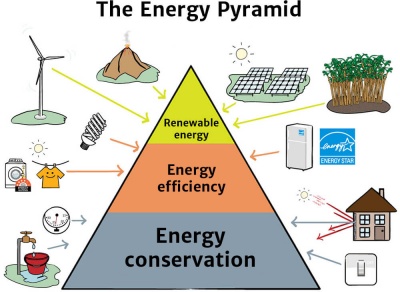
What are European countries doing to cut power consumption? Paris is
switching off the Eiffel Tower lights an hour early, Milan has turned off
public fountains, and Hanover is offering gym users cold rather than hot
showers in an effort to combat potential energy shortages this winter.
At the same time, the public are being encouraged to do their bit by avoiding
using household appliances between 4pm and 7pm, stock up on blankets and
slow down their driving. One global retail chain is encouraging staff to
change their behaviours: to use stairs instead of lifts, to use
energy-saving apps at home, and unplug devices rather than leaving them on
standby.
The UK, by contrast, has blocked a £15m campaign encouraging the
public to conserve energy, with the government arguing that the country is
“not a nanny state”. But across Europe, governments and municipal
authorities have responded to calls to reduce power consumption and reach
an EU target of shaving 15% off energy consumption by next March. All
member states are reducing heating in public buildings by one degree to
19C, but some have gone further.
Guardian 18th Oct 2022
Low operating costs make the case for investing in utility-scale renewable projects
Renewables met 100% of global electricity demand growth during the first
half of 2022. So says the ‘Global Electricity Mid-Year Insights 2022’
from Ember, a global energy think tank. In fact, it says there was a 389
TWh increase in the demand for electricity in the first half of 2022
compared to the first half of 2021, whereas the rise in renewables supply
was actually a bit more – 416TWh.
That’s not surprising given that
renewables are getting so cheap- including in the UK, with wind and solar
the most prolificate new sources across world. However, that in turn may
create a bit of a problem for older renewables, set up under quite
lucrative subsidy schemes, based on now high gas prices, like the
Renewables Obligation in the UK. As I have noted in earlier posts, there is
pressure on them to switch to the more competitive CfD system. Certainly
the RO system is based on adding a subsidy to wholesale gas prices, so
something has to change, since gas prices are now so high. But there are
issues- will every supplier be happy to accept less earnings? They may drag
their feet.
The record-breaking run in power prices, particularly in
Europe, is creating a favorable investment case for solar and wind
projects, making it increasingly compelling to develop renewable assets
purely based on project economics. According to Norwegian consultancy
Rystad Energy, current spot prices in Germany, France, Italy, and the
United Kingdom would all result in payback of 12 months or less.
Considering the average monthly spot prices for August in these countries
were all well over €400/MWh and the relatively low operating costs of
renewables, investing in utility-scale projects appear to be a no-brainer.
Renew Extra 15th Oct 2022
https://renewextraweekly.blogspot.com/2022/10/renewable-booming-but-windfall-tax.html
Nuclear Power Is a Dead End. We Must Abandon It Completely.
In fact, the knock-out arguments against the nuclear industry today are reactors’ cost and deployment time. The greatest barriers to this claimed renaissance—and it is primarily talk, not investment—is its inability to deliver affordable power on time and on budget.
Small nuclear reactors (SMRs) -both slower to deploy than conventional reactors and more expensive per kilowatt capacity. “overall, SMRs are inferior to conventional reactors with respect to radioactive waste generation, management requirements, and disposal options.”
Even given Europe’s energy crisis, the case against nuclear power has never been so conclusive—and so important.
The Nation, By Paul Hockenos 13 Oct 22,
BERLIN—Amid a confluence of crises—the Ukraine war, an energy crisis, and climate breakdown—nuclear energy is experiencing a renaissance, at least in the rhetoric of politicians and pundits across Europe, North America, and beyond. After all, it’s tempting to propose these generators of low-carbon energy as a panacea to this daunting phalanx of calamities.
But in fact, the case against nuclear power and for genuinely renewable energies has never been so conclusive—and so important. In early March, Russia captured the Zaporizhzhia nuclear power plant in Ukraine—the largest in Europe with six reactors, each the size of the one that melted down in the 1986 Chernobyl disaster—and transformed it into an army base from which it fires artillery at Ukrainian positions.
Although this weaponizing of nuclear reactors had long been recognized as a threat, the vulnerability of nuclear power plants in conflict zones is now center stage in Europe. The battlefield in this case is controlled by an unpredictable autocrat who has threatened that he’ll use every means at his disposal to destroy Ukraine. At the Zaporizhzhia station, the Russian military has taken the Ukrainian nuclear engineers hostage, and is working them at gunpoint. The International Atomic Energy Agency (IAEA) warned in August that there’s a “real risk of nuclear disaster” unless the fighting stops. Russia could sabotage a power plant like Zaporizhzhia and attempt to shift the blame onto Ukraine. A nuclear weapon strike would be a crime against humanity, but a disaster at nuclear plant could blur responsibility and complicate the international response. Nuclear plants, where military-scale security is nonexistent, are sitting ducks for acts of terrorism and wartime targeting.

At the same time, the world’s nuclear power champion, France, has punctured the myth that nuclear power is a round-the-clock energy source that can operate without back-up reserves—a favorite trope of wind and solar power skeptics. Nowhere in Europe today is the energy crisis more acute than in France, where for much of this year, between a third and over half of France’s 56 nuclear reactors have been shut down either because weather-warmed rivers cannot cool their systems or on account of corrosion damage, hairline cracks, staff shortages, and pending maintenance work on their geriatric hardware. The outages have forced France to rely on Germany for electricity imports—culled in large part from the wind and solar farms that supply almost half of Germany’s electricity. In August, France’s power prices hit €1,100 per megawatt-hour, more than 10 times the 2021 price, smashing records across the continent………………………………………
Critics’ original concern with nuclear power, namely its safety, remains paramount. The two most catastrophic meltdowns, in 1986 at the Chernobyl nuclear power plant in the Soviet Union and the Fukushima site in Japan, in 2011, had horrific repercussions that still haunt those regions. But these mega disasters are only the most well known. According to IAEA, there have been 33 serious incidents at nuclear power stations worldwide since 1952—two in France and six in the United States.
These accident numbers don’t include the toxic fallout from lax disposal and storage of nuclear waste.

Between 1945 and 1993, 13 countries, including the UK, the US, and the Soviet Union, heaved barrels of nuclear waste into their seas—a total of 200,000 tons—presuming the vast ocean waters would dissolve and dilute it. Those casks still lie there today.
This sad chapter belongs to the 80-year-old saga of nuclear waste. Currently, there’s over a quarter-million metric tons of spent fuel rods sitting above ground, usually in cooling pools at both closed-down and operative nuclear plants, waiting like Samuel Beckett’s protagonists Vladimir and Estragon for a definitive solution that will never come.
In northern Europe, the Finns claim that they’ve solved it by digging 100 tunnels 1,400 feet into the bedrock of an uninhabited island in the Gulf of Bothnia. Underway now for decades, this $3.4 billion undertaking, the first permanent repository in the world, will eventually hold all of Finland’s spent nuclear refuse—less than 1 percent of the world’s accumulated radioactive remnants—until about 2100. This highly radioactive mass will, its operators promise, remain catacombed for 100,000 years. (Since nuclear waste is lethal for up to 300,000 years, these sites are a time-bomb for whoever or whatever is inhabiting the planet then, assuming geological conditions allow it to lie peacefully for that long.) In light of Finland’s small volume of radioactive waste, the full lifetime price tag of nearly $8 billion dollars is significantly more per ton than the estimated $34.9 billion, $19.8 billion, and $96 billion that the France, Germany, and the United States respectively will shell out for nuclear waste management, according to the World Nuclear Waste Report 2019.
Most countries don’t have barren islands far from groundwater sources, so they have to make do, like Switzerland did in September when it announced that it intends to excavate a geological storage repository near the German border, closer to German towns in Baden Württemberg than Swiss ones. Germany’s borderland communities are vigorously contesting the choice, which will probably be abandoned by the Swiss. Nearly all proposed sites end up scratched for the obvious reason that nobody wants to live next to a nuclear waste dump.
“Nowhere in the world has anyone managed to create a place where we can bury extremely nasty nuclear waste forever,” Denis Florin of Lavoisier Conseil, an energy-focused management consultancy in Paris, told the Financial Times earlier this year. “We cannot go on using nuclear without being adult about the waste, without accepting we need to find a permanent solution.”
The inherent danger of nuclear power is often relativized by advocates as the bitter pill we must choke down in light of its other advantages. In fact, the knock-out arguments against the nuclear industry today are reactors’ cost and deployment time. The greatest barriers to this claimed renaissance—and it is primarily talk, not investment—is its inability to deliver affordable power on time and on budget.
Nuclear energy is such a colossal expense—into the tens of billions of dollars, like the $30 billion Vogtle units in Waynesboro, Ga.—that few private investors will touch them, even with prodigious government bankrolling.
The UK government finally found a taker for its Hinkley Point C station in 2016 when it offered lavish subsidies to the French energy firm EDF. But even that deal becomes less sweet the higher construction costs spiral and the longer EDF postpones its opening beyond 2025. So catastrophic are the cost overruns of EDF’s projects worldwide that the company could no longer service its €43 billion debt and this year agreed to full nationalization. But experts say this alone won’t solve any of the fundamental problems at Hinkley C or the Flamanville plant in Normandy, which is 10 years behind schedule, with costs fives times in excess of the original budget. Cost overruns are one reason that one in eight new reactor projects that start construction are abandoned.
While safety concerns drive up the cost of nuclear plant insurance, the price of renewables is predicted to sink by 50 percent or more by 2030. Study after study attests that wind and solar cost a fraction of the price of nuclear power: at least three to eight times the bang for the buck in terms of energy generation and climate protection, at a time when the exorbitant cost of energy is causing recessions and street protests across Europe. It is because solar photovoltaic and wind power are the cheapest bulk power source in most of the world that renewables, grids, and storage now account for more than 80 percent of power sector investment. In 2021, companies, governments, and households invested 15 times as much in renewable energy than in nuclear. They’re simply the better buy.
NUCLEAR IS MUCH TOO SLOW
Indeed, in the face of an ever more cataclysmic climate crisis that demands solutions now—like hitting the EU’s 2030 targets of reducing carbon dioxide emissions by 55 percent of 1990 levels by 2030—the build-out of nuclear is painfully, prohibitively slow. In Europe, just one nuclear reactor has been planned, commissioned, financed, constructed, and put online since 2000—that’s Finland’s Olkiluoto-3 reactors (March 2022). Europe’s flagship nuclear projects—called European Pressurized Reactors—have been dogged by delays from the start. The Olkiluoto-3 reactors in Finland, which had been scheduled to go online in 2009, still isn’t heating homes. Globally, the average construction time—which count the planning, licensing, site preparation, and arranging of finances—is about a decade.
Small-scale modular reactors (SMR), advanced with funding during the Obama administration, are supposedly the industry’s savior—the so-called next generation—although they’ve been around for decades. Purportedly quicker to build, with factory-made parts, they generate at most a 10th of the energy as a conventional reactor. Yet they are not significantly different in terms of their problems. The World Nuclear Industry Status Report 2022 claims that, so far, they have been both slower to deploy than conventional reactors and more expensive per kilowatt capacity. A recent study conducted by Stanford University and University of British Columbia came to the conclusion that “overall, SMRs are inferior to conventional reactors with respect to radioactive waste generation, management requirements, and disposal options.”
NUCLEAR AND RENEWABLES DON’T MIX
Finally, the last claim of nuclear supporters is that the massive baseload supply that reactors provide when they’re up and running is just what systems reliant on weather-based renewables need at down times. In fact, nuclear is the opposite of what decentralized clean energy systems require.
Renewables and nuclear energy don’t mix well in one system, explains Toby Couture of the Berlin-based think tank E3 Analytics. “What renewables need is not so-called baseload power,” he told me, “which is inflexible and unable to ramp up and down, but flexible, nimble supply provided by the likes of storage capacity, smart grids, demand management, and a growing toolbox of other mechanisms, not the large and inflexible supply of nuclear reactors.”
Couture added, “The inability of nuclear power to ramp down effectively to ‘make room’ for cheap wind and solar is one of the main reasons why France’s own domestic renewable energy development has lagged behind its peers.” According to Couture, France’s inability to flexibly accommodate wind and solar has exacerbated the continent-wide power supply crunch.
In light of the energy crisis, Germany may extend the lifetime of two of its three remaining nuclear plants for three months, in a reserve capacity beyond their scheduled end-of-year closure date. This emergency measure, a direct consequence of the previous governments’ failures, does not alter the logic against nuclear power, which even Germany’s own nuclear industry now accepts. Renewables, clean tech, and energy efficiency are easy to rollout, cost-effective, safe, and proven. Let’s concentrate on deploying these technologies at full speed to decarbonize our world before the impacts of climate change overwhelm us. https://www.thenation.com/article/world/nuclear-power-europe-energy/
1 This Month
19 February – VIRTUAL EVENT-Decision Time: AI and Our Nuclear Arsenal
12:45 p.m. Central / 1:45 p.m. Eastern
To see nuclear-related stories in greater depth and intensity – go to https://nuclearinformation.wordpress.com
-
Archives
- February 2026 (127)
- January 2026 (308)
- December 2025 (358)
- November 2025 (359)
- October 2025 (376)
- September 2025 (258)
- August 2025 (319)
- July 2025 (230)
- June 2025 (348)
- May 2025 (261)
- April 2025 (305)
- March 2025 (319)
-
Categories
- 1
- 1 NUCLEAR ISSUES
- business and costs
- climate change
- culture and arts
- ENERGY
- environment
- health
- history
- indigenous issues
- Legal
- marketing of nuclear
- media
- opposition to nuclear
- PERSONAL STORIES
- politics
- politics international
- Religion and ethics
- safety
- secrets,lies and civil liberties
- spinbuster
- technology
- Uranium
- wastes
- weapons and war
- Women
- 2 WORLD
- ACTION
- AFRICA
- Atrocities
- AUSTRALIA
- Christina's notes
- Christina's themes
- culture and arts
- Events
- Fuk 2022
- Fuk 2023
- Fukushima 2017
- Fukushima 2018
- fukushima 2019
- Fukushima 2020
- Fukushima 2021
- general
- global warming
- Humour (God we need it)
- Nuclear
- RARE EARTHS
- Reference
- resources – print
- Resources -audiovicual
- Weekly Newsletter
- World
- World Nuclear
- YouTube
-
RSS
Entries RSS
Comments RSS
 nuclear-news