Nuclear power is ‘overblown’ as an energy source for data centers, power company CEO says
CNBC Spencer Kimball, MON, JUN 10
KEY POINTS
- AES Corporation CEO Andrés Gluski said the “euphoria” over nuclear power has been a “little overblown.”
- AES is a major power provider for large tech companies building out data centers, with more than 40% of its backlog coming from customers including Amazon, Microsoft and Google.
- Gluski said renewables are the future, though natural gas will be needed as a transition fuel.
The euphoria over nuclear energy as a power source for data centers is “overblown,” the CEO of a major power provider for large tech companies told CNBC in an interview Monday.
AES Corporation CEO Andrés Gluski said renewable energy is the future, though natural gas will also play a role as a transition fuel. Nuclear power, on the other hand, faces challenges in meeting the growing power demand from data centers, Gluski said.
AES is a major power provider for large tech companies building out data centers, with more than 40% of its 12.7 gigawatt backlog coming from customers including Amazon, Microsoft and Google, according to its most recent earnings presentation to investors.
……………………Gluski said the “euphoria” over nuclear power is a “little overblown.” There is only so much existing nuclear energy that merchant power providers can re-contract to sites such as data centers, the CEO said.
“The question is, going forward, what’s the price of new nuclear,” Gluski said, adding that only one new nuclear plant has been built in the U.S. in decades and it came in far above budget.
‘The future is going to be renewable’
The second of two new nuclear reactors at Vogtle Plant in Georgia came online in April, but the project was seven years behind schedule and cost double the original projections, according to the Energy Information Administration. The reactors, operated by Georgia Power, are the first newly-constructed nuclear units built in the U.S. in more than 30 years, according to the Department of Energy.
……………………..Gluski pointed to the recent agreement between Microsoft and Brookfield Asset Management for 10.5 gigawatts of renewable energy between 2026 and 2030 as a sign of the future. Microsoft and Brookfield described the agreement as the largest renewable purchase ever between two corporate partners.
“It tells you that’s where most of the energy is going to be coming from,” Gluski said. “They are cheaper, they are clean and quite frankly easier to site, so the future is going to be renewable energy.”…………………………….
Solar, storage and wind represented about 95% of the power capacity in line waiting for connection to the grid at the end of 2023, while gas was just 3% and a grab bag made up the rest, according to Lawrence Berkeley National Laboratory. Renewables and storage in line for connection is nearly twice the installed capacity of the U.S. power plant fleet.
AES has already signed long-term contracts with data centers to provide them hourly matched renewable energy 24/7, Gluski said. “We’ve done that already for two years. So we can do that today,” he said.
AES signed an agreement with Google in 2021 to power its Virginia data center campus with 90% carbon-free energy on an hourly basis using a combination of wind, solar, hydro and battery storage resources.
The power company recently signed an agreement with Amazon for an additional gigawatt of solar and storage at a site in Kern County, California, bringing the project to a total of two gigawatts in a 15-year contract that is expected to come online in 2025 to 2026. AES has described the agreement as the largest solar and storage project in the U.S.
All told, the power company has signed agreements to provide Amazon with 3.1 gigawatts of power, Microsoft with 1.7 gigawatts, and Google with 800 megawatts, according to its first quarter earnings presentation.
“All of them want to be part of an energy transition,” Gluski said. “I don’t see anybody saying build me gas and coal plants to power my data centers, unless it’s a temporary situation, give me power from your gas plant until the renewables are available.”
AES stock is up 26% over the past three months and 6% year to date. Some 67% of Wall Street analysts rate AES the equivalent of a buy, 25% have a hold on the company’s stock and 8% rate it the equivalent of a sell. https://www.cnbc.com/2024/06/10/nuclear-is-overblown-as-energy-source-for-data-centers-aes-ceo-says.html
Energy buffs give small modular reactors a gigantic reality check
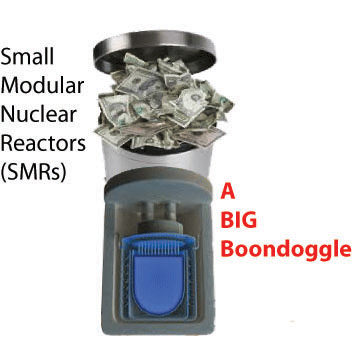
John Ketchum, CEO of nuclear power firm NextEra, has even said SMRs were nothing but “an opportunity to lose money in smaller batches”
Before signing any contract for an SMR, just get a fixed price in writing. If a developer won’t agree to it, they probably don’t have faith in their own estimates.
Too expensive, slow, and risky for investors, and they’re taking focus off renewables, say IEEFA experts
Brandon Vigliarolo, Mon 3 Jun 2024 , https://www.theregister.com/2024/06/03/small_modular_reactor_criticism/
Miniature nuclear reactors promise a future filled with local, clean, safe zero-carbon energy, but those promises quickly melt when confronted with reality, say a pair of researchers.
Known as small modular reactors, or SMRs, miniaturized atomic power plants have been touted as a way to ensure the world meets climate change mitigation goals as fossil fuels are phased out in favor of renewables and nuclear sources.
With a few SMR projects built and operational at this point, and more plants under development, the Institute for Energy Economics and Financial Analysis (IEEFA) concludes in a report that SMRs are “still too expensive, too slow to build, and too risky to play a significant role in transitioning away from fossil fuels.”
IEEFA doesn’t have many data points to pull from, with only three SMRs actually online around the world – one in China and two in Russia. A fourth, in Argentina, is still under construction and perfectly illustrates the point IEEFA researchers try to make: It’s running far over cost and is facing budget constraints that could affect its future.
The other three SMRs have run into similar issues. They’ve all been way more expensive than initially agreed upon, and proposals for SMRs in the US face related issues, the report finds.
Per-kilowatt hour costs for SMRs proposed in the US by NuScale, the first company to receive US regulatory approval for SMRs, have more than doubled since 2015. Costs projected by X-Energy and GE-Hitachi for their SMRs have similarly risen since initial proposals.
In most cases, these costs are rising before the US Nuclear Regulatory Commission has even given its approval, IEEFA notes.
Pick none: Fast, good, low risk
If the cost of an SMR were high but the risk low, or if construction were quick, it might be worth considering further development. The report finds that SMRs are neither cheap, quick, nor reliable.
Along with those costs, IEEFA research points out that none of the SMRs built so far have come anywhere close to meeting proposed construction timelines. The two Russian units were supposed to be built in three years, but both took 13. The Shidao Bay SMR in China was estimated as a four-year project but took 12, while the ongoing CAREM 25 in Argentina was also proposed as a four-year development but has so far taken 13.
Similarly optimistic construction estimates have consistently shown up in US SMR project development presentations,” the report notes. Without speed or value to rely on, one would hope that an SMR project was at least low risk, but that doesn’t appear to be the case either.
Leaders at two nuclear power companies whose quotes are carried in the report “endorsed nuclear power in the abstract” as a way to transition away from fossil fuels, but both expressed concern over the investment risk.
John Ketchum, CEO of nuclear power firm NextEra, has even said SMRs were nothing but “an opportunity to lose money in smaller batches” at this point in time, which was cited in the report. Chris Womack, CEO at Southern Company, which recently finished building the first new US nuclear reactor this century, similarly expressed concerns about expanding his company’s nuclear portfolio.
Quit hogging the energy transition spotlight
The report’s data makes it seem like there’s not a lot going for SMRs, but “loud and persistent” advocates for the technology have managed to capture the spotlight anyway, say report authors David Schlissel, IEEFA director of resource planning analysis, and Dennis Wamsted, IEEFA energy analyst.
“A key argument from SMR proponents is that the new reactors will be economically competitive,” said Schlissel. “But the on-the-ground experience with the initial SMRs that have been built or that are currently under construction shows that this simply is not true.”
Meanwhile, all the time, energy, and money spent constructing SMRs is taking resources away from renewables that work, and would work now, the duo said. It’s also likely that, even though SMR operators intend their reactors to be complementary to other power sources on the grid, they’re far more likely to do the opposite, the report concludes – especially given the rise in construction costs and the need to break even.
“Developers bringing multibillion-dollar SMRs onto the electric grid would have every incentive to run them as much as possible,” the report surmises. “The less they run, the more their per megawatt-hour costs rise and the harder it will be for them to compete in the market.”
“Having invested billions, it is unlikely developers will willingly cycle their plants to accommodate renewables,” the report adds.
While some have predicted it might take a decade to get SMR technology to the point where it’s reliable, Schlissel and Wamsted believe the mini-reactors will continue to be too expensive, slow, and risky to play a reliable role in fossil fuel transition in the next 15 years. That said, developers are still going to push for the projects, so the pair reckon there’s a few things prospective buyers and investors should ensure – like crafting restrictions into contracts that prevent delays and risking costs from being pushed onto ratepayers.
Schlissel and Wamsted make several more recommendations for how to keep SMR projects from becoming too costly or blocking renewables, but the best one is the simplest: Before signing any contract for an SMR, just get a fixed price in writing. If a developer won’t agree to it, they probably don’t have faith in their own estimates.
Wamsted appears to have little faith SMR developers would agree to those terms.
“The comparison between building new SMRs and building renewable energy couldn’t be clearer,” Wamsted said of the pair’s recommendations. “Regulators, utilities, investors, and government officials should acknowledge this and embrace the available reality: Renewables are the near-term solution.”
The ugly truth behind ChatGPT: AI is guzzling resources at planet-eating rates
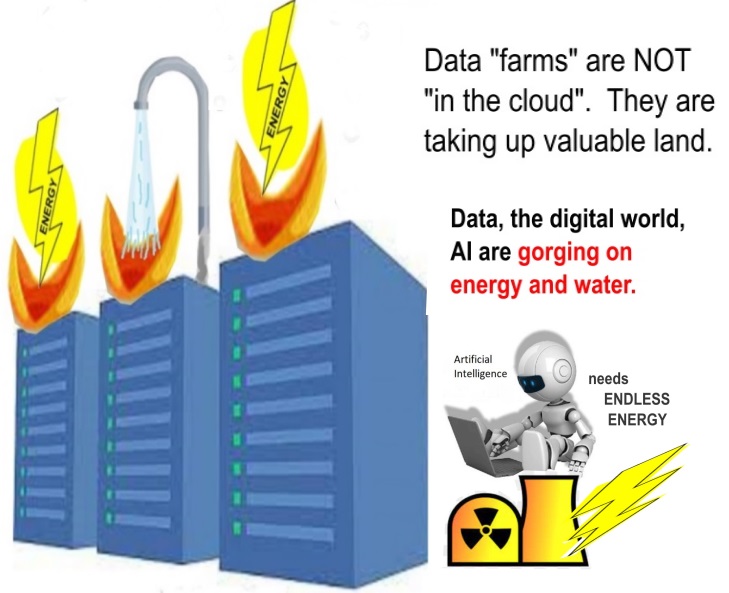
Mariana Mazzucato, Mariana Mazzucato is professor of economics at UCL, and director of the Institute for Innovation and Public Purpose, https://www.theguardian.com/commentisfree/article/2024/may/30/ugly-truth-ai-chatgpt-guzzling-resources-environment
Big tech is playing its part in reaching net zero targets, but its vast new datacentres are run at huge cost to the environment.
hen you picture the tech industry, you probably think of things that don’t exist in physical space, such as the apps and internet browser on your phone. But the infrastructure required to store all this information – the physical datacentres housed in business parks and city outskirts – consume massive amounts of energy. Despite its name, the infrastructure used by the “cloud” accounts for more global greenhouse emissions than commercial flights. In 2018, for instance, the 5bn YouTube hits for the viral song Despacito used the same amount of energy it would take to heat 40,000 US homes annually.
This is a hugely environmentally destructive side to the tech industry. While it has played a big role in reaching net zero, giving us smart meters and efficient solar, it’s critical that we turn the spotlight on its environmental footprint. Large language models such as ChatGPT are some of the most energy-guzzling technologies of all. Research suggests, for instance, that about 700,000 litres of water could have been used to cool the machines that trained ChatGPT-3 at Microsoft’s data facilities. It is hardly news that the tech bubble’s self-glorification has obscured the uglier sides of this industry, from its proclivity for tax avoidance to its invasion of privacy and exploitation of our attention span. The industry’s environmental impact is a key issue, yet the companies that produce such models have stayed remarkably quiet about the amount of energy they consume – probably because they don’t want to spark our concern.
Google’s global datacentre and Meta’s ambitious plans for a new AI Research SuperCluster (RSC) further underscore the industry’s energy-intensive nature, raising concerns that these facilities could significantly increase energy consumption. Additionally, as these companies aim to reduce their reliance on fossil fuels, they may opt to base their datacentres in regions with cheaper electricity, such as the southern US, potentially exacerbating water consumption issues in drier parts of the world. Before making big announcements, tech companies should be transparent about the resource use required for their expansion plans.
Furthermore, while minerals such as lithium and cobalt are most commonly associated with batteries in the motor sector, they are also crucial for the batteries used in datacentres. The extraction process often involves significant water usage and can lead to pollution, undermining water security. The extraction of these minerals are also often linked to human rights violations and poor labour standards. Trying to achieve one climate goal of limiting our dependence on fossil fuels can compromise another goal, of ensuring everyone has a safe and accessible water supply.
Moreover, when significant energy resources are allocated to tech-related endeavours, it can lead to energy shortages for essential needs such as residential power supply. Recent data from the UK shows that the country’s outdated electricity network is holding back affordable housing projects. This will only get worse as households move away from using fossil fuels and rely more on electricity, putting even more pressure on the National Grid. In Bicester, for instance, plans to build 7,000 new homes were paused because the electricity network didn’t have enough capacity.
In an era where we expect businesses to do more than just make profits for their shareholders, governments need to evaluate the organisations they fund and partner with, based on whether their actions will result in concrete successes for people and the planet. In other words, policy needs to be designed not to pick sectors or technologies as “winners”, but to pick the willing by providing support that is conditional on companies moving in the right direction. Making disclosure of environmental practices and impacts a condition for government support could ensure greater transparency and accountability. Similar measures could promote corporate accountability in global mineral supply chains, enforcing greater human rights compliance.
In navigating the intersection of technological advancement and environmental sustainability, policymakers are facing the challenge of cultivating less extractive business models. This is not just about adopting a piecemeal approach; it’s about taking a comprehensive systematic view, empowering governments to build the needed planning and implementation capacity. Such an approach should eschew outdated top-down methods in favour of flexible strategies that integrate knowledge at all levels, from local to global. Only by adopting a holistic perspective can we effectively mitigate the significant environmental impacts of the tech industry.
Ultimately, despite the unprecedented wave of innovation since the 1990s, we have consistently overlooked the repercussions of these advances on the climate crisis. As climate scientists anticipate that global heating will exceed the 1.5C target, it’s time we approach today’s grand challenges systemically, so that the solution to one problem does not exacerbate another.
A global review of Battery Storage: the fastest growing clean energy technology today
Energy Post 27th May 2024 by IEA
The IEA report “Batteries and Secure Energy Transitions” looks at the impressive global progress, future projections, and risks for batteries across all applications. 2023 saw deployment in the power sector more than double. Strong growth occurred for utility-scale batteries, behind-the-meter, mini-grids, solar home systems, and EVs. Lithium-ion batteries dominate overwhelmingly due to continued cost reductions and performance improvements. And policy support has succeeded in boosting deployment in many markets (including Africa).
Further innovations in battery chemistries and manufacturing are projected to reduce global average lithium-ion battery costs by a further 40% by 2030 and bring sodium-ion batteries to the market. The IEA emphasises the vital role batteries play in supporting other clean technologies, notably in balancing intermittent wind and solar.
New successes include the fact that solar PV plus batteries is now competitive with new coal-fired power in India and, in the next couple years, should become competitive with new coal in China and new natural gas-fired power in the U.S. Looking ahead, deployment must increase sevenfold by 2030. The prospects are good: if all announced plants are built on time this would be sufficient to meet the battery requirements of the IEA’s net-zero scenario in 2030. And although, today, the supply chain for batteries is very concentrated, the fast-growing market should create new opportunities for diversifying those supply chains.
Batteries are an essential part of the global energy system today and the fastest growing energy technology on the market
Battery storage in the power sector was the fastest growing energy technology in 2023 that was commercially available, with deployment more than doubling year-on-year.
Strong growth occurred for utility-scale battery projects, behind-the-meter batteries, mini-grids and solar home systems for electricity access, adding a total of 42 GW of battery storage capacity globally. Electric vehicle (EV) battery deployment increased by 40% in 2023, with 14 million new electric cars, accounting for the vast majority of batteries used in the energy sector.
Despite the continuing use of lithium-ion batteries in billions of personal devices in the world, the energy sector now accounts for over 90% of annual lithium-ion battery demand. This is up from 50% for the energy sector in 2016, when the total lithium-ion battery market was 10-times smaller. With falling costs and improving performance, lithium-ion batteries have become a cornerstone of modern economies, underpinning the proliferation of personal electronic devices, including smart phones, as well the growth in the energy sector. In 2023, there were nearly 45 million EVs on the road – including cars, buses and trucks – and over 85 GW of battery storage in use in the power sector globally.
Lithium-ion batteries dominate battery use due to recent cost reductions and performance improvements…………………………………………………………….
‘Offshore wind farms could have averted Fukushima disaster’

A global review led by the University of Surrey reveals that offshore wind farms could have prevented the Fukushima disaster and are now a cheaper energy alternative than nuclear power
Dimitris Mavrokefalidis, 05/30/2024 , https://www.energylivenews.com/2024/05/30/offshore-wind-farms-could-have-averted-fukushima-disaster/
A review conducted by researchers at the University of Surrey has concluded that offshore wind farms could have averted the Fukushima nuclear disaster by maintaining the cooling systems and preventing a meltdown.
The study highlights that wind farms are less vulnerable to earthquakes than nuclear power plants.
Suby Bhattacharya, Professor of Geomechanics at the University of Surrey, emphasised that wind power provides abundant clean energy and can enhance the safety and reliability of other facilities.
The review indicates that wind energy is now more cost-effective due to reduced construction costs and improved methods to minimise environmental impact.
The report finds that new wind farms can produce energy at a significantly lower cost than new nuclear power stations.
In the UK, the lifetime cost of generating wind power has dropped from £160/MWh to £44/MWh, covering all expenses from planning to decommissioning.
Professor Bhattacharya said: “What makes wind so attractive is that the fuel is free, and the cost of building turbines is falling. There is enough of it blowing around the world to power the planet 18 times over.
“Our report shows the industry is ironing out practical challenges and making this green power sustainable, too.”
2
TODAY. Jobs jobs jobs in the nuclear industry – but is it true?

Go to Google news for nuclear information, and you’ll be swamped with glowing stories from the World Nuclear Association, the IAEA, and the big corporate media outlets – all about the wonderful future for the nuclear industry- –
all those jobs! including in the lovely nuclear weapons industry.
Jobs in renewable energy. This year’s report finds that renewable energy employment worldwide has continued to expand – to an estimated 13.7 million direct and indirect jobs in 2022. We can expect the creation of many millions of additional jobs in the coming years and decades. https://mc-cd8320d4-36a1-40ac-83cc-3389-cdn-endpoint.azureedge.net/-/media/Files/IRENA/Agency/Publication/2023/Sep/IRENA_Renewable_energy_and_jobs_2023.pdf?rev=4f65518fb5f64c9fb78f6f60fe821bf2

Jobs in nuclear power. I have not been able to find any kind of authoritative report on global jobs in nuclear power. I did find one source (on Quora) stating that each nuclear reactor in construction provides 1400-1800 jobs, and in operation 400 -700 jobs. The nuclear industry claims many more, but for construction, we must remember – this is all in the rather distant future.
The figure below is a prediction from many years ago. If we are to believe the nuclear lobby, this prediction should change rapidly.


What we do know is that at present, renewable energy jobs are increasing exponentially, and nuclear power building is almost at a standstill.
The figure on the left is also from many years ago. But I doubt that much has changed.
Of course – this is all about the actual reactors. There are many jobs in uranium mining, milling, transport etc, and of course, in nuclear weapons-making
The quality of jobs.
In energy efficiency there are many interesting and clean jobs. Also, workers know that they are contributing to a healthier planet – something to be proud of.
In renewable energy the jobs are relatively clean and healthy, and there’s again, the knowledge of being in an alternative to the polluting industries – coal and nuclear.
In nuclear energy and nuclear fuel, the workers are involved in the risky area of ionising radiation. There’s a huge amount of documentation on this. It is NOT a healthy job, though I suppose that it’s better to be a highly paid nuclear executive or lobbyist, safe in a nice office.
I doubt that nuclear workers can get much satisfaction about “helping the planet”, as the “peaceful” nuclear industry is so dirty, dangerous, and intimately connected with nuclear weapons.
No doubt some nuclear workers get paid a lot more than renewable energy workers do. But, there’s real value in knowing that your contribution to society is a clean and positive one.
The (currently terrible) mood in renewables… is largely irrelevant
At some point people should realize that (i) investments have continued, (ii) the price increases that hit the sector have hit other sectors as well so do not really hurt its relative competitiveness, and (iii) it works…
JÉRÔME À PARIS, MAY 27, 2024, https://jeromeaparis.substack.com/p/the-currently-terrible-mood-in-renewables (EXCELLENT GRAPHS)
The past year has seen both a terrible political backlash against renewables (and climate policies more generally) and a relentlessly negative mood music about the sector, making it sound like nobody is investing in the sector, even though the industry keeps on breaking records.
It’s been difficult to write anything mildly positive or just sensible about activity in the sector when it risks simply being drowned out by these negative perceptions and ignored.
The negative context has been driven by headlines focused on the offshore wind sector (some projects abandoned or delayed in the US, the UK “round 5” auction getting no bidders) and generated by high profile decisions, mostly by oil&gas players, to reduce their exposure to the sector and do so rather noisily. This has naturally been seized upon with glee, and amplified, by opponents to the sector, who remain active, if slightly more subtle than in the past.
It has had some really effects, in particular in my small corner of the market (early development for offshore wind, in particular floating offshore wind), where investors have become a lot more prudent and mostly adopted a ”wait and see” attitude to new projects and markets rather than the enthusiastic “must have” rush of a few years ago.
So, just last week, you could still read headlines like “European utilities cut renewable targets as high costs and low power prices bite” that make it sound like investment is really slowing down… when it really isn’t, and prices are getting worse, when they aren’t…
So what explains the discrepancy?
At some point people should realize that (i) investments have continued, (ii) the price increases that hit the sector have hit other sectors as well so do not really hurt its relative competitiveness, and (iii) it works…
I’ve been thinking that it may just take a couple of eye-catching announcements (a new tender at lower than expected prices, a new high profile acquisition) to change the mood and suddenly switch everybody from “let’s wait” to “we need to do this” but I’m not so sure – we’ve had such announcements already (recent news about the tenders in France, Norway or Australia, for instance, or proposed acquisitions like OX2 by EQT) and they have been largely ignored outside of the industry.
But that last FT headline made me realize why – these positive stories did not come from the big players (oil&gas majors or the key publicly-traded utilities) and they are not, how shall we say, very click-bait-y… Complex stories, unknown parties, and it doesn’t bleed… Not headline material.
To me, the main story this year is actually that we are beginning to see our power systems completely taken over by renewables. In places like the UK (see above), California, Spain, and even Texas, or Germany, solar is now dominant for many hours each day. Even more interestingly, the availability of battery storage solutions is now extending the period of carbon-free, or at least carbon-light, electricity by several hours each day (and the growth of batteries is even more explosive than that of solar).
This is naturally happening first (i) in the places that have built quite a bit of solar, (ii) that have the relevant sunny climate, (iii) during the warmer season, and (iv) during the day. But the growth in solar penetration has been phenomenal in a lot of places, and such dominance of solar is soon going to extend from a few hours per day a few weeks per year in a handful of countries to most of the day (and night), a large fraction of the year, in a growing number of systems. At some point – and this is likely just a few years away, we’ll likely have to manage increasingly often the situation where there is more electricity available than demand, and prices crash to zero (or below). I’m actually not too worried about this “problem” – we are talking about having a really useful input (energy, in a highly usable form) available at a low price: I’m sure lots of ways, old and new, will be found to make use of that resource and turn it into something valuable in monetary terms when it’s in surplus… Storage is the most obvious one, but I’m sure there will lots of interruptible activities that will grow to take advantage of low prices with high flexibility.
But the consciousness of this is not percolating yet. There’s two reasons for that: (i) the system is not crashing, so journalists have no acute reason to talk about it (you’ll note that articles usually come when some production or penetration record is broken) and the transition is not that visible – or only to specialized professionals and geeks, and (ii) this is happening in a completely decentralized way – there is no “solar super-major”, or even headlines-worthy multi-billion mega-projects that politicians would want to brag about or the press or stock analysts could follow.
Which brings me back to the utilities and oil&gas majors. They are in fact playing an incredibly small role in the transition.
We are used to these mammoth companies that control everything – big power plants, large customer base, massive political influence and corresponding headlines, and they are largely absent from the new system. Oh sure, they have renewables arms that are quite large, which may even be the largest around in their country or area of activity, but they make up only a small part of the overall renewable generation. (It’s a bit hard to find data, but this WoodMacKenzie report from 2019 noted that the top 10 owners of solar plants only controlled 6.9% of worldwide installed capacity, while a Finergreen ranking from 2017 showed that in France, EDF was the market leader with just 4% of solar capacity).
So people actually like to talk about offshore wind, because it’s understandable – big multi-billion euro investments, giga-watt scale projects, large companies developing them – but offshore wind is actually a very small chunk of the energy transition, and will likely stay that way (however much I care about the sector myself!) even in Europe…
And even in offshore wind, the utilities are not that dominant, when competition is allowed. The recent Norwegian auction was won by parkwind and INGKA, the French one by Bay.Wa and elicio, the largest financings last year were managed by Northland Power, the biggest floating wind pipeline is probably owned by Bluefloat – all names familiar to industry players but probably not to the wider public (and not to the journalists in the mainstream business press, apparently, as they keep asking the likes of Shell, Ørsted or Iberdrola for their opinion)…
In other words, we are moving from a very centralized system, dominated by large fossil fuel plants (or big hydro and nukes where available), where supply had to adapt to demand, to a highly decentralized one, where demand will adapt to the increased availability of supply at times, in an increasingly diverse number of ways, and we’ll likely have substantial oversupply during the day – until new demand balances it out.
The grid will become used in very different ways – that transformation has been successfully happening in (relative) silence over the past 25 years and will continue.
What also seems likely is that there could be very little room in such a system for baseload production, which will need to deal with very low prices during the growing periods of solar surplus, and may soon not be needed even at night for large parts of the year – you don’t run “must run” plants 25% of the time. There is some level of constant demand from industry and a few vital other sectors, but it seems increasingly unlikely that large centralized plants will be more competitive over the year than a combination of renewables (dominated by solar), storage and some very little used flexible fossil fuel peaker plant capacity.
So, for power generation and the wider energy transition, unexpectedly maybe, small is and will be beautiful, even as the overall volumes are gigantic. For renewables, no headlines is probably a good thing (as most stories seem to be scary ones). And for offshore wind, a lack of “animal spirits” may be a pity, but the sector will remain a niche (very useful in some places) and a relative minnow compared to solar, onshore wind and, increasingly, storage.
Q&A – Germany’s nuclear exit: One year after

CLEAN ENERGY WIRE, FACTSHEET, 16 Apr 2024, Benjamin Wehrmann
Decades of debates came to an end in April 2023, when Germany finally shuttered its last nuclear power plants after the energy crisis. One year on, predictions of supply risks, price hikes and dirty coal replacing carbon-free nuclear power have not materialised.
Instead, Germany saw a record output of renewable power, the lowest use of coal in 60 years, falling energy prices across the board and a major drop in emissions. Industry representatives warn that an effect on power costs may still become visible once Germany’s economy moves out of recession.
At the same time, many countries plan to expand nuclear power, suggesting the country’s phase-out has not found many followers. Yet, global nuclear power market numbers indicate that a nuclear revival is not imminent either. [UPDATES Government advisor says power prices higher due to exit; majority in survey says nuclear exit was a mistake]
Content
- How has the phase-out been conducted?
- Was there any supply security risk in the aftermath?
- What was the gap left by nuclear power filled with?
- What changed in electricity imports and why?
- Did power prices go up due to the phase-out?
- What happens with the retired nuclear plants and waste materials?
- How did the national debate about nuclear power develop?
- How did the nuclear debate move on in the rest of the world?
………………………………………………………………………………………………………………..more https://www.cleanenergywire.org/factsheets/qa-germanys-nuclear-exit-one-year-after—
Electricity grids creak as AI demands soar

The world’s data centres are using ever more electricity. In 2022, they gobbled up 460 terawatt hours of electricity, and the International Energy Agency (IEA) expects this to double in just four years. Data centres could be using a total of 1,000 terawatts hours annually by 2026. “This demand is roughly equivalent to the electricity consumption of Japan,” says the IEA. Japan has a population of 125 million people.
Chris Baraniuk,Technology reporter, 20 May 24, https://www.bbc.com/news/articles/cj5ll89dy2mo
There’s a big problem with generative AI, says Sasha Luccioni at Hugging Face, a machine-learning company. Generative AI is an energy hog.
“Every time you query the model, the whole thing gets activated, so it’s wildly inefficient from a computational perspective,” she says.
Take the Large Language Models (LLMs) at the heart of many Generative AI systems. They have been trained on vast stores of written information, which helps them to churn out text in response to practically any query.
“When you use Generative AI… it’s generating content from scratch, it’s essentially making up answers,” Dr Luccioni explains. That means the computer has to work pretty hard.
A Generative AI system might use around 33 times more energy than machines running task-specific software, according to a recent study by Dr Luccioni and colleagues. The work has been peer-reviewed but is yet to be published in a journal.
It’s not your personal computer that uses all this energy, though. Or your smartphone. The computations we increasingly rely on happen in giant data centres that are, for most people, out of sight and out of mind.

“The cloud,” says Dr Luccioni. “You don’t think about these huge boxes of metal that heat up and use so much energy.”
The world’s data centres are using ever more electricity. In 2022, they gobbled up 460 terawatt hours of electricity, and the International Energy Agency (IEA) expects this to double in just four years. Data centres could be using a total of 1,000 terawatts hours annually by 2026. “This demand is roughly equivalent to the electricity consumption of Japan,” says the IEA. Japan has a population of 125 million people.
At data centres, huge volumes of information are stored for retrieval anywhere in the world – everything from your emails to Hollywood movies. The computers in those faceless buildings also power AI and cryptocurrency. They underpin life as we know it.
But some countries know all too well how energy hungry these facilities are. There is currently a moratorium preventing the construction of new data centres in Dublin. Nearly a fifth of Ireland’s electricity is used up by data centres, and this figure is expected to grow significantly in the next few years – meanwhile Irish households are reducing their consumption.
The boss of National Grid said in a speech in March that data centre electricity demand in the UK will rise six-fold in just 10 years, fuelled largely by the rise of AI. National Grid expects that the energy required for electrifying transport and heat will be much larger in total, however.
Utilities firms in the US are beginning to feel the pressure, says Chris Seiple at Wood Mackenzie, a consultancy.
“They’re getting hit with data centre demands at the exact same time as we have a renaissance taking place – thanks to government policy – in domestic manufacturing,” he explains. Lawmakers in some states are now rethinking tax breaks offered to data centre developers because of the sheer strain these facilities are putting on local energy infrastructure, according to reports in the US.
Mr Seiple says there is a “land grab” going on for data centre locations near to power stations or renewable energy hubs: “Iowa is a hotbed of data centre development, there’s a lot of wind generation there.”
Some data centres can afford to go to more remote locations these days because latency – the delay, usually measured in milliseconds, between sending information out from a data centre and the user receiving it – is not a major concern for increasingly popular Generative AI systems. In the past, data centres handling emergency communications or financial trading algorithms, for example, have been sited within or very near to large population centres, for the absolute best response times.
There is little doubt that the energy demands of data centres will rise in the coming years, but there is huge uncertainty over how much, stresses Mr Seiple.
Part of that uncertainty is down to the fact that the hardware behind generative AI is evolving all the time.
There is little doubt that the energy demands of data centres will rise in the coming years, but there is huge uncertainty over how much, stresses Mr Seiple.
Part of that uncertainty is down to the fact that the hardware behind generative AI is evolving all the time.
Renewables and storage still cheapest option, nuclear too slow and costly in Australia – CSIRO

Giles Parkinson, May 22, 2024, https://reneweconomy.com.au/renewables-and-storage-still-cheapest-option-nuclear-too-slow-and-costly-in-australia-csiro/
Australia’s main scientific body, the CSIRO, has reaffirmed its assessment that integrated renewable energy is by far the cheapest option for Australia, and that nuclear – be it large scale or small modular reactors – is too slow and too costly.
The CSIRO’s findings have been consistent since the first of its now annual GenCost reports was released under the then Coalition government in 2018. In fact the gap between renewables and nuclear has widened, despite the addition of integration and transmission costs to wind and solar, even with up to a 90 per cent renewable share.
Its draft report released late last year re-affirmed that nuclear – the chosen technology of new Coalition leader Peter Dutton and his energy spokesman Ted O’Brien, remained by far the costliest energy choice for Australia.
Dutton is digging in on nuclear, and amid furious attacks from right wing media and so-called think tanks, the Coalition has tried to discredit the CSIRO GenCost report, which is produced in conjunction with energy experts at the Australian Energy Market Operator.
The nuclear boosters were particularly frustrated by the CSIRO’s costings on SMR (small modular reactors), which was based on the NuScale project in the US, the only SMR in the western world to get close to construction, but which was abandoned because of soaring costs that caused its customers to withdraw their support.
The nuclear boosters, and the federal Coalition, want the CSIRO and AEMO to accept the cost forecasts from salesmen for SMR technologies that remain largely on the drawing board and which – unlike the failed NuScale project – have no real world verification.
The CSIRO has now released its final GenCost report, prepared in conjunction with AEMO, and which it describes as the most comprehensive assessment of generation costs ever produced in this country.
The CSIRO has bent over backwards to respond to the criticism from the nuclear lobby, and added an estimated cost in Australia for large scale nuclear. It says is not as pricy as SMR technology, but is still at least double the cost of integrated renewables, and wouldn’t be possible before 2040 even if a commitment was made now.
That’s important, because Australia is the midst of a renewable energy transition that aims for an 82 per cent renewable energy share by 2030. Climate science dictates that speed of emissions cuts is now critically important, and by 2040 the country should be at or close to 100 per cent renewables.
The addition of large scale nuclear was one of a number of changes to the GenCost report from its 2023 edition, including a return to calculations for solar thermal, a technology hoping for its own renaissance, the inclusion of spilled energy from wind and solar, and – in response to more feedback – including integration costs incurred before 2030.
It doesn’t change the picture that much. Wind and solar are still by far the cheapest, in 2023 and in 2030, even though an expected cost reduction for wind energy – whose prices spiked after the Covid pandemic and energy crisis – is now not expected to take much longer until the mid 2030s.
Solar costs, however, are still falling, and it’s important to note that renewable integration costs for 80 per cent renewables in 2030 are less than $100/MWh. Even assuming the money is spent now, before expected cost reductions, the cost for an 80 per cent wind and solar grid in 2023 is put at $120/MWh.
Compare that to the estimated costs for nuclear, which in terms of the political and public debate, are the most revealing, and just a little inconvenient for the Coalition, whose attacks on the CSIRO and AEMO ignore the fact that the same conclusions were reached under its own governance.
The final GenCost report highlights how the favoured technologies of the conservatives – be they nuclear, gas, gas with CCS and coal with CCS – are so much higher than solar and wind with firming. SMRs are four to six times the cost of integrated renewables, and the first projects are likely to be significantly higher.
Large scale nuclear is twice as expensive, again without considering the first of its kind costs which would be necessary in Australia, and without considering the considerable costs of added reserve capacity needed because the plants are so big.
It also does not take into account how nuclear, with its “always on” business model could fit into a future grid already dominated by renewables and needing flexible capacity to support it, not redundant baseload.
Even with the full integrated costs itemised for both the 2023 and the 2030 assessments, the difference is clear.
CSIRO says that its draft GenCost received more submissions than any previous edition, with most of the 45 submissions coming from individuals who support nuclear.
This is not surprising given that no one in the Australian energy industry is the slightest bit interested in the technology, because of its costs and the timelines. As US energy expert Amory Lovins wrote for Renew Economy this week, nuclear “has no place in Australia’s energy future. No one who understands energy markets would claim otherwise.”
Indeed, two of the most prominent public faces of the pro-nuclear campaign in Australia have been a school student and an emergency doctor from Ontario, who have both received remarkable amounts of publicity in mainstream media despite their lack of industry knowledge.
The CSIRO points out that the large scale nuclear costs are at best estimates, because there is no nuclear industry in Australia, and no regulatory framework. First of its kind developments are likely to be exorbitant, but even basing its estimates on the South Korea experience puts the costs of large scale nuclear at a multiple of renewables.
The nuclear lobby has been insistent that wind and solar costs need to factor in the integration costs of the technologies in the grid, including storage and transmission, so no doubt they will insist that the CSIRO now does the same with large scale nuclear.
It is not likely to be cheap. As CSIRO notes, large scale nuclear units normally ranges in size from 1 GW to 1.4 GW or more, far bigger than the biggest coal unit in Australia, which is 750 MW. That will require added reserve capacity of equivalent size in case of an unexpected outage or unplanned maintenance.
In the UK, the regulator estimated that the additional reserve capacity of the Hinkley C nuclear plant would be in the order of $12 billion, on top of the now blown out costs of up to $92 billion for that reactor.
The project that had promised to be “cooking turkeys” by 2017, looks to be a cooked turkey itself by the time it gets switched on in 2031.
Federal energy minister Chris Bowen said the GenCost report validated the Labor government’s focus on renewables, and underlined the risky nature of the Coalition’s “half-baked” goal of keeping ageing coal fired power plants operating until nuclear can be delivered in the 2040s.
“Were small modular nuclear reactors able to be up and running in Australia by 2030, which they aren’t, the ‘first of a kind’ scenario is a cost of between $294/MWh and $764/MWh,” Bowen said. “Meaning small modular nuclear reactors would be up to more than nine times more expensive than firmed large-scale wind and solar.
“We know that Australia has the best solar resources in the world, and today’s report shows large-scale solar alone is 8 per cent cheaper to build than a year ago,” he said.
“We know Australia doesn’t have that time (to wait for nuclear) – 24 coal plants announced their closure dates under the previous government, and 90% of Australia’s coal-fired power is forecast to close by 2035.”
Giles Parkinson is founder and editor of Renew Economy, and is also the founder of One Step Off The Grid and founder/editor of the EV-focused The Driven. He is the co-host of the weekly Energy Insiders Podcast. Giles has been a journalist for more than 40 years and is a former business and deputy editor of the Australian Financial Review. You can find him on LinkedIn and on Twitter.
Think before you click – and three other ways to reduce your digital carbon footprint

The invisible downside to our online lives is the data stored at giant energy-guzzling datacentre
Koren Helbig, https://www.theguardian.com/australia-news/article/2024/may/18/how-to-reduce-digital-carbon-footprint-energy-consumption
Think before you click – and three other ways to reduce your digital carbon footprint
The invisible downside to our online lives is the data stored at giant energy-guzzling datacentres
Supported by

Koren HelbigSat 18 May 2024 01.00 AESTShare226
It’s been called “the largest coal-powered machine on Earth” – and most of us use it countless times a day.
The internet and its associated digital industry are estimated to produce about the same emissions annually as aviation. But we barely think about pollution while snapping 16 duplicate photos of our pets, which are immediately uploaded to the cloud.
This is the invisible downside to our online lives: the data we produce is stored and processed in giant energy-guzzling datacentres dotted all over the world.
Over the past year I’ve delved into digital waste and learned key ways we can lower our digital carbon footprints.
1. Think before you click
Every document, photo and email – even every “like” or comment on social media – travels through multiple electricity-hungry layers of internet infrastructure, including computer servers housed in mindbogglingly large datacentres.
“The biggest datacentre on the planet … south of Beijing … has a surface area of 600,000 square metres, the equivalent of 110 football pitches,” writes the French journalist Guillaume Pitron in his 2021 book, The Dark Cloud: How the Digital World Is Costing the Earth.
Processing data within these “factories of the digital age” creates heat as a waste product, requiring air conditioning or chilled water systems – largely powered by coal – to maintain stable temperatures.
I started with small changes to reduce my data use – unsubscribing from unwanted newsletters and deleting unused phone apps.
I also avoid firing up generative AI for simple answers – it uses an estimated four to five times the energy of a conventional web search.
2. Clear the virtual clutter
Most of us hoard thousands of old or unread emails and countless photo duplicates. Regularly deleting them can help reduce your digital footprint.
Many inboxes allow you to search via file size; I’ve made a habit of periodically searching “1MB or larger” and deleting any emails with sizeable attachments I no longer need. Searching via sender name allows you to bulk-delete hundreds of marketing emails in one satisfying click.
In my professional and personal lives I take hundreds of photos shot in RAW, a file format two to six times larger than JPG – so I’m diligent about deleting duplicates almost immediately.
Android and iPhone offer basic “free up space” bulk-delete functionality for photos and files. Or try the GetSorted app, which breaks photo clean-up tasks into achievable chunks.
3. Minimise cloud storage
By next year the digital industry is set to become the fourth-highest electricity consumer in the world, behind China, India and the US.
To reduce my reliance on energy-intensive cloud storage, I’ve gone analogue. I store all my photos and files on password-protected hard drives, which only use energy when plugged in. I back these up quarterly to two copies, one of which is stored at a friend’s place in case of fire or theft at mine.
This helps save money as I pay for just one cloud subscription – where I only store the files I’m working on.
That system may be a bit too clunky for most – so regular clean-ups of the files you are choosing to store on the cloud becomes more important.
4. Keep devices for as long as possible
While it’s tempting to continually upgrade to the latest gadget, new devices come at a hefty environmental cost. The manufacture of a smartphone, for example, accounts for about 80% of its lifetime carbon emissions, according to the UN Environment Programme.
So the longer we keep using a device, the better. Refurbished phones and computers are becoming more common, and IT community websites such as ifixit.com can help you repair products yourself.
Even clearing cyber clutter can help prolong your device’s lifespan, according to a Macquarie University human geography associate professor, Dr Jessica McLean.
“My computer was running slowly and my browser kept crashing,” she says. “It turned out I had a bunch of videos and big documents stored that were eating a lot of memory. We deleted them and my computer started working again.”
But McLean, who wrote a book about the high environmental impact of digital activity, warns that the burden of digital pollution can’t fall to individuals alone.
“We need to be part of a systemic structural shift,” she says. “And that means taking individual opportunities to intervene but also demanding and expecting our governments to better regulate corporations and shift to carbon-neutral options.”
Solar and wind generation will soon pass nuclear, hydro

In a new monthly column for pv magazine, the International Solar Energy Society (ISES) explains how solar and wind are dominating power plant construction.
MAY 20, 2024 INTERNATIONAL SOLAR ENERGY SOCIETY (ISES) Authors: Prof. Ricardo Rüther (UFSC), Prof. Andrew Blakers /ANU https://www.pv-magazine.com/2024/05/20/solar-and-wind-generation-will-soon-pass-nuclear-and-hydro/
Our ISES pv magazine column in April showed that the fastest energy change in history is continuing. In 2023, solar and wind together constituted 80% of global net power capacity additions. Growth in power capacity is followed by growth in annual energy generation.
Over the past decade, global solar generation has grown ninefold to reach 1,500 TWh per year while wind generation has tripled to 2300 TWh per year (Figure 1 on original). This corresponds to compound growth rates of 22% and 11% per year respectively. In contrast, hydro, nuclear and coal generation had growth rates of about 1% per year, and gas 3%.
The solar growth rate of 22% per year is equivalent to doubling every 3 years. At this growth rate, solar generation will reach 100,000 TWh per year in 2042 which is enough to fully decarbonize the global economy.
Nuclear has a global average capacity factor of 74%, followed by coal (50% to 70%), combined cycle gas (40% to 60%), wind (30% to 60%), large hydro (30% to 50%), and solar photovoltaics (12% to 25%).
Despite its relatively low capacity factor, solar generation is tracking to surpass nuclear generation in 2026, wind in 2027, hydro in 2028, gas in 2030 and coal in 2032.
Solar and wind are strongly dominating powerplant construction, whereas construction of all other generation technologies is both small and stagnant. Coal, gas and nuclear could be mostly gone by mid-century once retirements outpace new construction.
The leading countries for per capita solar and wind generation are all in Europe, except Australia (Figure 2 on original). Also shown in Figure 2 is global per capita generation from hydro and nuclear. Combined generation from solar and wind in the leading countries is now fourfold larger than the global average generation from hydro and nuclear combined.
Australia is a global pathfinder because, unlike in Europe, it cannot share electricity across national boundaries to reduce the effects of variable weather and demand. Australia must go it alone. Australia is convincingly demonstrating that change can happen quickly with good policies. Over the period 2020 to 2030, fossil generation is falling from 75% to 18%, while solar and wind generation is rising from 19% to 75%.
Brazil and Chile are middle income pathfinder countries, with about 81% and 60% respectively of electricity generation coming from hydro, wind and solar. Pathfinder countries are driven by a desire to reduce both electricity prices and emissions. There are few serious concerns about future grid stability because there will be sufficient investment in storage, transmission, and demand management.
Tech firms claim nuclear will solve AI’s power needs – they’re wrong

Some AI firms think nuclear power can help meet the electricity demand from Silicon Valley’s data centres, but building new nuclear power stations takes too long to plug the gap in the short term
New Scientist, By Jeremy Hsu, 16 May 2024
Silicon Valley wants to use nuclear power to support the energy-hungry data centres that help train and deploy its artificial intelligence models. But realistic timelines show that any US nuclear renaissance will have at best a limited impact during a period of fast-rising electricity demand.
Global electricity usage from data centres is already on track to double by 2026. In the US, data centres represent the fastest-growing source of energy demand at a time when the country’s……………………… (Subscribers only) https://www.newscientist.com/article/2431828-tech-firms-claim-nuclear-will-solve-ais-power-needs-theyre-wrong/
—
Constellation Energy looks to small nuclear reactors for the gross, ever-increasing energy needs of great steel data containers.
Constellation Energy eyes new nuclear for unprecedented data center power
demand.
Constellation Energy (CEG.O), opens new tab is considering building
next-generation nuclear plants on its existing sites to meet soaring demand
from data centers, executives with the Baltimore-based power company said
on Thursday. The largest operator of U.S. nuclear energy said it is looking
at adding new small modular reactors and other energy technologies to
deliver electricity to large load customers like data centers.
Reuters 9th May 2024
Energy Revolutions – time for a change
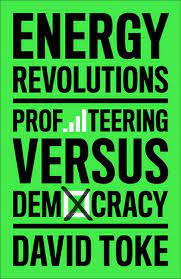
https://renewextraweekly.blogspot.com/2024/05/energy-revolutions-time-for-change.html
In this uncompromisingly radical Pluto book entitled Energy Revolutions, with the graphic subtitle Profiteering versus democracy, Dr David Toke argues that the energy crisis is an inevitable result of an industry run by and for corporate profit. He says ‘energy policy was never meant to favour sustainability or energy security – for decades, it has been shaped by corporate interests while hampering renewable alternatives. Now we suffer the cascading consequences’. He says there is an urgent need to radically increase state intervention, including public ownership, and deploy ‘energy democracy’ for the public interest.
However, he is not against market competition as such- it can speed change and help reduce costs. Thus, in his account of the early days of renewables, he says that, as a result of the adoption of Feed In Tariffs in the late 2000’s in Germany and elsewhere, markets were created that ‘meant that the wind and solar industries grew quickly. The costs of renewable energy plummeted, and today renewable energy is much cheaper than either fossil fuels or nuclear power. If things had been left as the anti-renewable incentive campaigners wanted, then of course the renewables industry would never have taken off. The world would be in a parlous position in terms of surviving the fossil fuel price spirals that we see in cycles (in both oil & natural gas price crises). Our ability to deal with the climate crisis would be almost destroyed’.
Toke though says that when markets are used to create monopolies, in pursuit of corporate profits and control, things go seriously awry- as we saw in 2022 and subsequently, with record profits being made by oil and gas companies. With energy prices escalating, Exxon made $55 bn, Shell $40 bn, Chevron $36.5 bn and Equinor $55 bn. Wind-fall taxes can claw back a tiny bit of this profiteering, but it is insignificant when you realise that, as Toke quotes an economist as saying ‘the oil and gas industry has delivered $2.8bn (£2.3bn) a day in pure profit for the last 50 years’. What’s needed is system change.
That of course is the familiar call of most radicals. Toke says, at present ‘the wealthy, who own the shares, get richer at the expense of ordinary people.’ In response, he says, while we can’t simply nationalise oil to solve this problem, since the compensation required would be huge, we can change the way the market works. Crucially, he says, ‘as the renewable energy revolution gathers pace, we need state intervention to ensure that the benefits of lower-cost green energy supplies go to the consumer & not the energy corporations’. In particular, ‘we need to extend government intervention & elements of state ownership of the retail energy supply sector to ensure that the consumer, not the big corporations, benefits from cheap renewable energy.’
The focus on ‘retail supply’ is linked to a proposed decentral shift away from seeing consumers as passive to one in which consumers may also be energy producers (via PV) and/or may also take an active role in managing their energy use (via DSM). Toke also sees them playing more of a role in shaping the system via an expansion of democratic participation, enabled by local energy co-ops, municipal projects & nationalisation of some of the energy systems. He says that public ownership ‘has an important role in delivering services in parts of energy systems where competition is itself either impossible or inefficient. It may be especially relevant to the retail electricity supply sector’. He adds ‘bringing in retail energy supply into public ownership should be cheap for the state to achieve since the companies involved have few tangible assets.’ But, he also looks to boosting competition ‘by the establishment of state companies to develop renewable energy alongside existing private companies’.
Some of this it may sound utopian or even naive, but Toke reminds us that the ‘alternative energy’ activists in the 1970s and 1980s ‘were seen as fringe oddballs by the energy mainstream. Today their vital role in developing niche renewable energy technologies and markets is airbrushed out of history since it contradicts the idea that big capitalism solves the big problems.’ Well yes, and now we live in a world in which renewables will soon dominate – supplying up to 100% of all global energy by 2050. However, as Toke says, it has to be done right. He provides us with, if not a blueprint of what to do, then at least a rough guide to the key political issues, with some very good insights on the situation in the UK, EU and USA. For example, it is amazing how expensive PV cells are in the US and how far France is behind on renewables due to its obsession with, now failing, nuclear.
In terms of technology choice, Toke backs most renewables strongly, though not all biomass, and seems convinced that domestic heat pumps are the best bet for using green power for home heating- whereas he says that green hydrogen, produced using renewable power, ‘needs to be used only for essential purposes, for example for storing renewable energy or for some industrial purposes for which electricity is not desirable. It should not be squandered in the provision of heating or cooling services’.
That’s now a common view: electric powered heat pumps are seen as much more efficient. Even if it does seem odd to abandon gas boilers and the existing gas pipeline system, which some wanted to repurpose for zero carbon green hydrogen use. Of course, some wanted to use fossil-derived blue hydrogen, a very different and very dire thing. But Toke notes that ‘the German coalition was divided when it came to debating a heating law about phasing out gas boilers in existing buildings. As part of a compromise, municipal authorities have been given the task of making plans for heat networks to be powered by large-scale heat pumps’. Well yes, as Toke admits, large heat pumps are more efficient. Although, dare I say, Combined Heat and Power plants, feeding heat nets and heat stores, can be even better and can help with grid balancing.
We can of course debate the pros and cons of each option and Toke takes us through some of the issues including, inevitably, nuclear, which he is clearly not fond of- not least since it is expensive and inflexible. Although his assertion that ‘once the current spurt of labour-intensive industrialism peters out in China, their drive in building nuclear power will fade, leaving nuclear in decline’, is maybe a bit too optimistic. Overall through, pronouncements like this aside, this is a good book if you want to get to grips with some of the key political and economic issues facing renewable energy and green politics- in a fast changing world.
1 This Month

Protect Sazan Island from the Trump family! https://secure.avaaz.org/campaign/en/protect_sazan_island_from_the_trump_family_loc/?bqFCVab&v=174511&cl=22707147157&_checksum=5e9dde668860e8231c33699735e16a1fbf22ab2cb01da50c999fe8732b9775ef&utm_source=email&utm_medium=blast_email&utm_campaign=174511
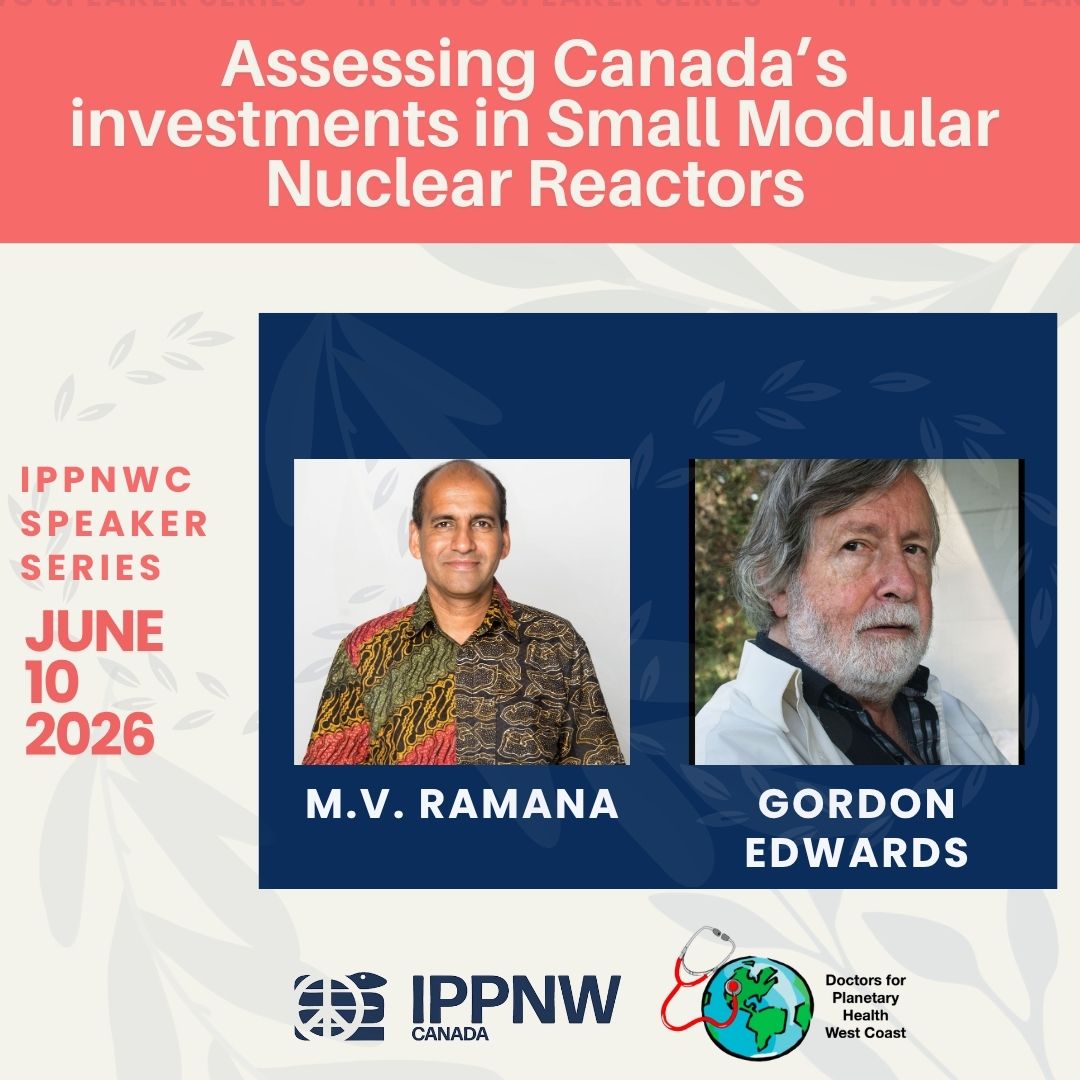
10 June – Assessing Canada’s Investments in Small Modular Nuclear Reactors – https://zoom.us/meeting/register/IiqHA5feRhaEBycOLNTJlA#/registration


Cuba Is Not a Failed State – It Is a Besieged State
PETITION: “Global Appeal to Endorse Palestinian Right of Return of Refugees”
To see nuclear-related stories in greater depth and intensity – go to https://nuclearinformation.wordpress.com
-
Archives
- June 2026 (89)
- May 2026 (306)
- April 2026 (356)
- March 2026 (251)
- February 2026 (268)
- January 2026 (308)
- December 2025 (358)
- November 2025 (359)
- October 2025 (376)
- September 2025 (257)
- August 2025 (319)
- July 2025 (230)
-
Categories
- 1
- 1 NUCLEAR ISSUES
- business and costs
- climate change
- culture and arts
- ENERGY
- environment
- health
- history
- indigenous issues
- Legal
- marketing of nuclear
- media
- opposition to nuclear
- PERSONAL STORIES
- politics
- politics international
- Religion and ethics
- safety
- secrets,lies and civil liberties
- spinbuster
- technology
- Uranium
- wastes
- weapons and war
- Women
- 2 WORLD
- ACTION
- AFRICA
- Atrocities
- AUSTRALIA
- Christina's notes
- Christina's themes
- culture and arts
- Events
- Fuk 2022
- Fuk 2023
- Fukushima 2017
- Fukushima 2018
- fukushima 2019
- Fukushima 2020
- Fukushima 2021
- general
- global warming
- Humour (God we need it)
- Nuclear
- RARE EARTHS
- Reference
- resources – print
- Resources -audiovicual
- Weekly Newsletter
- World
- World Nuclear
- YouTube
-
RSS
Entries RSS
Comments RSS
 nuclear-news