Nuclear vs Energy Storage

The Chair of the Nuclear Free Local Authorities has made a plea to the new
Minister of State for Energy for the Department of Energy Security and Net
Zero to prioritise investment in energy storage capacity alongside
renewables as a key component in making Britain a Net Zero nation. Energy
storage, both short- and long-term, is often an unsung, but essential,
element to achieving – as is the Labour Government’s stated ambition
– the goal to make the UK a ‘clean, green energy superpower’.
Numerous academic studies have demonstrated that this is not only possible
solely through investment in renewables, but that it can be achieved at a
cost to the taxpayer that is £100 billion lower than one which embraces
nuclear energy.
The NFLA’s Scotland Policy Advisor Pete Roche has just
written an excellent briefing published under the No2 Nuclear banner
titled, ‘Energy Storage and Flexibility in a 100% Renewable Energy
System’, which highlights its criticality in capturing the surplus energy
often generated, but unused, by renewables as well is in more effectively
managing energy demand against supply.
Dr. M.V. Ramana, the Simons Chair in
Global Disarmament and Human Security at the University of British
Columbia, described the balance between generation, storage and management:
“We have learned how to manage grids with high proportions of renewable
sources. To balance this variability, we must invest in a mix of renewable
energy technologies across various regions, and in battery and other
storage technologies to store excess energy. In addition, we need to shape
electricity demand to more closely match supply.”
NFLA 12th Sept 2024
Renewables beat nuclear – even with full balancing included
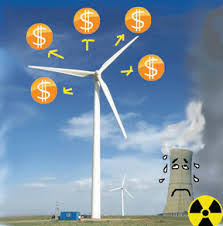
RENEW EXTRA WEEKLY, 9 Sept 24
A new Danish study comparing nuclear and renewable energy systems (RES) concludes that, although nuclear systems require less flexibility capacity than renewable-only systems, a renewable energy system is cheaper than a nuclear based system, even with full backup: it says ‘lower flexibility costs do not offset the high investment costs in nuclear energy’.
It’s based on a zero-carbon 2045 smart energy scenario for Denmark, although it says its conclusions are valid elsewhere given suitable adjustments for local conditions. ‘The high investment costs in nuclear power alongside cost for fuel and operation and maintenance more than tip the scale in favour of the Only Renewables scenario. The costs of investing in and operating the nuclear power plants are simply too high compared to Only Renewables scenario, even though more investment must be put into flexibility measures in the latter’.
In the Danish case, it says that ‘the scenario with high nuclear implementation is 1.2 billion EUR more expensive annually compared to a scenario only based on renewables, with all systems completely balancing supply and demand across all energy sectors in every hour.’ It goes on ‘to achieve a more cost-efficient system based predominantly on nuclear power- the investment costs would have to drop to 1.55 MEU/MW. This is significantly below any current or future cost projection for nuclear power. Such a high cost-margin indicates that a combination of low-cost RES and sector coupling presents a cost-effective energy transition making it very hard for nuclear power to deliver a competitive alternative’…………………………………………………………………………….
Interestingly, in the UK context, Lord Turner, Chair of the UK Energy Transitions Commission, has also said that costly new nuclear plants may not be needed for net zero, since there are cheaper, low-carbon alternatives that could back up intermittent renewables. Hydrogen fuel or gas power plants fitted with CCS could fill the gap when wind or solar was not enough to keep the lights on. ‘I don’t think it is the case that you need new nuclear to balance the system. The systems of the future don’t absolutely need a base load.’ The power system ‘can work on a combination of intermittent variable renewables, wind & solar plus some hydro. I think the challenge for new nuclear is that it is just expensive. Bluntly, new nuclear can play very little role in a 2030 target.’
Well maybe that’s why there seems to have been some second thoughts about the new EPR reactor proposed for Sizewell in the UK, with the final investment decision for the Sizewell C nuclear plant evidently facing delays. Initially, EDF, the project’s developer, aimed to secure funding by the end of this year, but the timeline may now extend into 2025.
The prospect for nuclear do seem a bit uncertain, with the case for it these day relying in part on the claim that it can back up renewables and help avoid climate change. But that also seems to be uncertain, as is argued in a new comprehensive review of nuclear issues by academics from Germany and Finland, arguing that it has no role to play in responding to climate change. It says that it is ‘not a sustainable and affordable source of energy for the low-carbon energy transformation’ given its ‘cost-intensive nature, coupled with safety considerations’. And crucially it says that it is ‘characterized by very long construction times, and even longer developments of new technical generations, too far away and uncertain to contribute to climate change mitigation anytime soon’.
In addition ‘from an energy system perspective, nuclear power is not compatible with a system based on renewables, but rather hinders its expansion. Last but not least, nuclear power is particularly unfavorable in a future with higher temperatures and weather extremes and more military threats’.
That sounds pretty damning, even leaving aside radioactive waste handing, and also weapons proliferation and terrorism-related issues, with, as Prof. Ramana discusses in his recent powerful overview book ‘Nuclear is not the solution’, in addition to its other problems, reliance on civil nuclear power making ‘catastrophic nuclear war more likely’. Even if, hopefully, we can avoid that, there are still concerns about nuclear blackmail. And all this just to generate expensive energy.
Yes, going for renewables does mean we have invest in flexible balancing technology and energy storage, but that is cheaper overall and it also getting even cheaper, with many new options emerging. As Ramana says, to balance the variability of renewables, ‘we must invest in a mix of renewable energy technologies across various regions, and in battery and other storage technologies to store excess energy. In addition, we need to shape electricity demand to more closely match supply.’ In common with the German and Finnish researchers, he too sees that as the way ahead. https://renewextraweekly.blogspot.com/2024/09/renewables-beat-nuclear-even-with-full.html
The massive new projects propelling South Australia towards 100 per cent net renewables

The season of renewable records has begun early in Australia, sending
average coal power down below 50 per cent for the first time, establishing
new records for wind output, and sending grid demand to new lows across the
main grid.
The state at the forefront of the country’s energy transition
is, without a shadow of a doubt, South Australia. It kicked out coal in
2016, and is steadily reducing its dependence on gas. When a new
transmission link to NSW is completed in the next two years, the state
expects to run at 100 per cent net renewables – reducing gas to a support
role and becoming the first multi-gigawatt scale grid in the world to reach
such a milestone through wind and solar, rather than more conventional
renewable sources.
Big industry is lining up to build new factories and
production facilities to take advantage of cleaner power and lower
wholesale prices, and BHP is talking of doubling its mining production at
the giant Olympic Dam – and its smelting and refining capacity. The
latest data shows that wind and solar provided enough power to meet more
than 70 per cent of the state’s electricity demand in the last 12 months
– although the government says it is 75 per cent.
Over the past 30 days
it has been 86.4 per cent, and over the past week it has been more than 105
per cent. Rooftop solar now supplies the equivalent of all state demand on
occasions, presenting a complication for the market operator which prefers
to run the grid with assets it can control. It’s working on that solution
with new inverter standards and grid protocols, including solar
switch-offs. South Australia also led the country, and the world, in the
installation of the first big battery, the original “Tesla Big Battery”
now properly known as the Hornsdale Power Reserve.
Renew Economy 6th Sept 2024
Hokkaido more plugged in to renewable energy than rest of Japan
Hokkaido had over 40% of its electricity generated by renewable energy
sources in fiscal 2023, nearly twice the national average and already above
the maximum share that the central government is looking to achieve by
2030.
With use of renewables — especially wind power — expected to grow
further, the local government has set a goal of getting 60% of its
electricity from solar, on and offshore wind, biomass, hydropower,
geothermal and some nuclear energy by 2030.
For all of Japan, the average
goal is to have between 36% and 38% of electricity be from renewables by
then.
Japan Times 26th Aug 2024
https://www.japantimes.co.jp/news/2024/08/26/japan/society/hokkaido-renewable-energy/
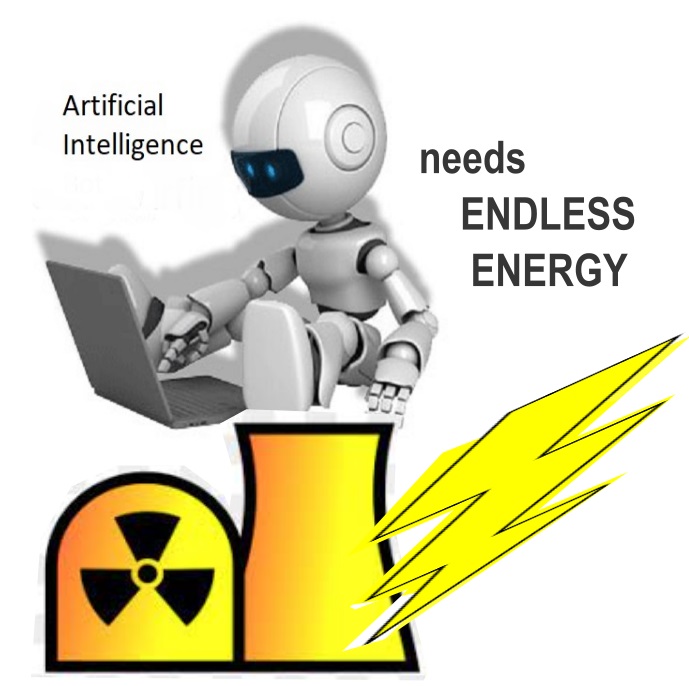
AI’s insatiable energy demand is going nuclear
Yahoo.com, Rachelle Akuffo, Host, Mon, Aug 26, 2024
On the surface, the deal indicates Amazon’s ambitious expansion plans. But dig deeper, and the company’s purchase of a nuclear power facility speaks to a broader issue that Amazon and other tech giants are grappling with: the insatiable demand for energy from artificial intelligence.
In Amazon’s case, AWS purchased Talen Energy’s Pennsylvania nuclear-powered data center to co-locate its rapidly expanding AI data center next to a power source, keeping up with the energy demands that artificial intelligence has created.
The strategy is a symptom of an energy reckoning that has been building as AI has been creeping into consumers’ daily lives — powering everything from internet searches to smart devices and cars
Companies like Google (GOOG, GOOGL), Apple (AAPL), and Tesla (TSLA) continue to enhance AI capabilities with new products and services. Each AI task requires vast computational power, which translates into substantial electricity consumption through energy-hungry data centers.
Estimates suggest that by 2027, global AI-related electricity consumption could rise by 64%, reaching up to 134 terawatt hours annually — or the equivalent of the electricity usage of countries like the Netherlands or Sweden.
This raises a critical question: How are Big Tech companies addressing the energy demands that their future AI innovations will require?
The rising energy consumption of AI
According to Pew Research, more than half of Americans interact with AI at least once a day.
Prominent researcher and data scientist Sasha Luccioni, who serves as the AI and climate lead at Hugging Face, a company that builds tools for AI applications, often discusses AI’s energy consumption.
Luccioni explained that while training AI models is energy-intensive — training the GPT-3 model, for example, used about 1,300 megawatt-hours of electricity — it typically only happens once. However, the inference phase, where models generate responses, can require even more energy due to the sheer volume of queries.
For example, when a user asks AI models like ChatGPT a question, it involves sending a request to a data center, where powerful processors generate a response. This process, though quick, uses approximately 10 times more energy than a typical Google search.
“The models get used so many times, and it really adds up quickly,” Luccioni said. She noted that depending on the size of the model, 50 million to 200 million queries can consume as much energy as training the model itself.
“ChatGPT gets 10 million users a day,” Luccioni said. “So within 20 days, you have reached that ‘ginormous’ … amount of energy used for training via deploying the model.”
The largest consumers of this energy are Big Tech companies, known as hyperscalers, that have the capacity to scale AI efforts rapidly with their cloud services. Microsoft (MSFT), Alphabet, Meta (META), and Amazon alone are projected to spend $189 billion on AI in 2024.
As AI-driven energy consumption grows, it puts additional strain on the already overburdened energy grids……………………………………………
https://finance.yahoo.com/news/ais-insatiable-energy-demand-is-going-nuclear-143234914.html
.
Tech Companies Are Racing to Harness Nuclear Power
Oil Price, By Felicity Bradstock – Aug 18, 2024
- Tech companies are investing heavily in nuclear energy to power their AI operations.
- Regulatory challenges and utility opposition are hindering the development of new nuclear projects.
With the demand for power increasing rapidly, tech companies are looking for innovative solutions to meet the demand created by artificial intelligence (AI) and other new technologies. In addition to solar and wind power, several tech companies are investing in nuclear energy projects to power operations. The clear shift in the public perception of nuclear power has once again put the abundant clean [!] energy source on the table as an option, with the U.S. nuclear energy capacity expected to rise significantly over the coming decades. ……………………………
Tech companies have invested heavily in wind and solar energy to power their data centers and are now looking for alternative clean power supplies. In 2021, Sam Altman, the CEO of OpenAI, invested $375 in the nuclear fusion startup Helion Energy. Last year, Microsoft signed a deal to purchase power from Helion beginning in 2028. Altman also chairs the nuclear fission company Oklo. Oklo is planning to build a massive network of small-scale nuclear reactors in rural southeastern Idaho to provide power to data centers as the electricity demand grows. It is also planning to build two commercial plants in southern Ohio.
However, getting some of these nuclear projects off the ground is no easy feat. Oklo has found it difficult to get the backing of nuclear regulators. In 2022, the Federal Nuclear Regulatory Commission (FERC), which oversees commercial nuclear power plants, rejected the firm’s application for the design of its Idaho “Aurora” project, for not providing enough safety information. …………………………………………
In addition to the red tape from regulators, many utilities are opposing new nuclear projects due to their anticipated impact on the grid. Some data centers require 1 GW or more of power, which is around the total capacity of a nuclear reactor in the U.S. PJM Interconnection, the biggest grid operator in the U.S., recently warned that power supply and demand is tightening as the development of new generation is falling behind demand. However, some tech companies are proposing to connect data centers directly to nuclear plants, also known as co-location, to reduce the burden on the grid.
However, several U.S. utilities oppose co-location plans……………………………………………………… more https://oilprice.com/Alternative-Energy/Nuclear-Power/Tech-Companies-Are-Racing-to-Harness-Nuclear-Power.html
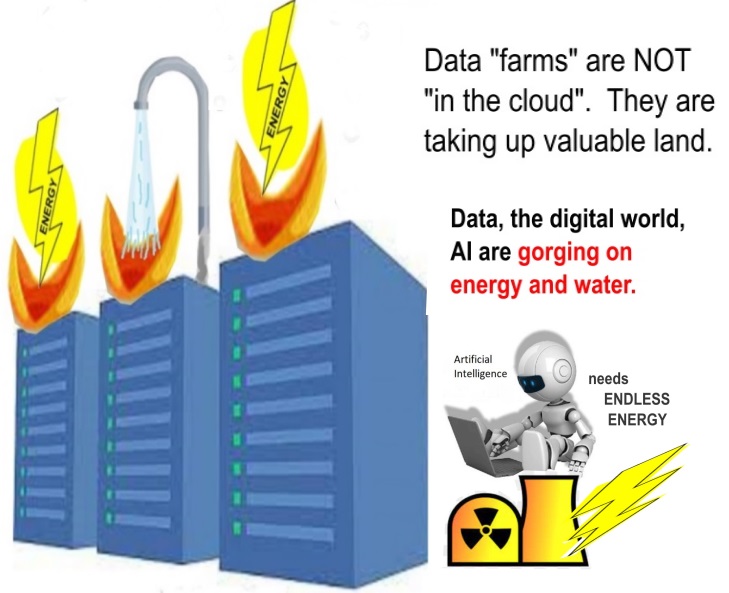
Amazon Vies for Nuclear-Powered Data Center
The deal has become a flash point over energy fairness
1EEE Spectrum, Andrew Moseman, 12 Aug 2024
When Amazon Web Services paid US $650 million in March for another data center to add to its armada, the tech giant thought it was buying a steady supply of nuclear energy to power it, too. The Susquehanna Steam Electric Station outside of Berick, Pennsylvania, which generates 2.5 gigawatts of nuclear power, sits adjacent to the humming data center and had been directly powering it since the center opened in 2023.
After striking the deal, Amazon wanted to change the terms of its original agreement to buy 180 megawatts of additional power directly from the nuclear plant. Susquehanna agreed to sell it. But third parties weren’t happy about that, and their deal has become bogged down in a regulatory battle that will likely set a precedent for data centers, cryptocurrency mining operations, and other computing facilities with voracious appetites for clean electricity.
Putting a data center right next to a power plant so that it can draw electricity from it directly, rather than from the grid, is becoming more common as data centers seek out cheap, steady, carbon-free power. Proposals for co-locating data centers next to nuclear power have popped up in New Jersey, Texas, Ohio, and elsewhere. Sweden is considering using small modular reactors to power future data centers.
However, co-location raises questions about equity and energy security, because directly-connected data centers can avoid paying fees that would otherwise help maintain grids. They also hog hundreds of megawatts that could be going elsewhere.
When Amazon Web Services paid US $650 million in March for another data center to add to its armada, the tech giant thought it was buying a steady supply of nuclear energy to power it, too. The Susquehanna Steam Electric Station outside of Berick, Pennsylvania, which generates 2.5 gigawatts of nuclear power, sits adjacent to the humming data center and had been directly powering it since the center opened in 2023.
After striking the deal, Amazon wanted to change the terms of its original agreement to buy 180 megawatts of additional power directly from the nuclear plant. Susquehanna agreed to sell it. But third parties weren’t happy about that, and their deal has become bogged down in a regulatory battle that will likely set a precedent for data centers, cryptocurrency mining operations, and other computing facilities with voracious appetites for clean electricity.
Putting a data center right next to a power plant so that it can draw electricity from it directly, rather than from the grid, is becoming more common as data centers seek out cheap, steady, carbon-free power. Proposals for co-locating data centers next to nuclear power have popped up in New Jersey, Texas, Ohio, and elsewhere. Sweden is considering using small modular reactors to power future data centers.
However, co-location raises questions about equity and energy security, because directly-connected data centers can avoid paying fees that would otherwise help maintain grids. They also hog hundreds of megawatts that could be going elsewhere.
“They’re effectively going behind the meter and taking that capacity off of the grid that would otherwise serve all customers,” says Tony Clark, a senior advisor at the law firm Wilkinson Barker Knauer and a former commissioner at the Federal Energy Regulatory Commission (FERC), who has testified to a U.S. House subcommittee on the subject.
Amazon’s nuclear power deal meets hurdles
The dust-up over the Amazon-Susquehanna agreement started in June, after Amazon subsidiary Amazon Web Services filed a notice to change its interconnection service agreement (ISA) in order to buy more nuclear power from Susquehanna’s parent company, Talen Energy. Amazon wanted to increase the amount of behind-the-meter power it buys from the plant from 300 MW to 480 MW. Shortly after it requested the change, utility giants Exelon and American Electric Power (AEP), filed a protest against the agreement and asked FERC to hold a hearing on the matter…………………………………………………………………………………………………………….
Costs of data centers seeking nuclear energy
Yet such arrangements could have major consequences for other energy customers, Clark argues. For one, directing all the energy from a nuclear plant to a data center is, fundamentally, no different than retiring that plant and taking it offline. “It’s just a huge chunk of capacity leaving the system,” he says, resulting in higher prices and less energy supply for everyone else.
Another issue is the “behind-the-meter” aspect of these kinds of deals. A data center could just connect to the grid and draw from the same supply as everyone else, Clark says. But by connecting directly to the power plant, the center’s owner avoids paying the administrative fees that are used to maintain the grid and grow its infrastructure. Those costs could then get passed on to businesses and residents who have to buy power from the grid. “There’s just a whole list of charges that get assessed through the network service that if you don’t connect through the network, you don’t have to pay,” Clark says. “And those charges are the part of the bill that will go up” for everyone else.
Even the “carbon-free” public relations talking points that come with co-location may be suspect in some cases. In Washington State, where Schneider works, new data centers are being planted next to the region’s abundant hydropower stations, and they’re using so much of that energy that parts of the state are considering adding more fossil fuel capacity to make ends meet. This results in a “zero-emissions shell game,” Clark wrote in a white paper on the subject.
These early cases are likely only the beginning. A report posted in May from the Electric Power Research Institute predicts energy demand from data centers will double by 2030, a leap driven by the fact that AI queries need ten times more energy than traditional internet searches. The International Energy Agency puts the timeline for doubling sooner–in 2026. Data centers, AI, and the cryptocurrency sector consumed an estimated 460 terawatt-hours (TWh) in 2022, and could reach more than 1000 TWh in 2026, the agency predicts.
Data centers face energy supply challenges
New data centers can be built in a matter of months, but it takes years to build utility-scale power projects, says Poorvi Patel, manager of strategic insights at Electric Power Research Institute and contributor to the report. The potential for unsustainable growth in electricity needs has put grid operators on alert, and in some cases has sent them sounding the alarm. Eirgrid, a state-owned transmission operator in Ireland, last week warned of a “mass exodus” of data centers in Ireland if it can’t connect new sources of energy. ……………………………………………………………………………………..more https://spectrum.ieee.org/amazon-data-center-nuclear-power—
Data centers want to tap existing nuclear power. Is that good or bad?
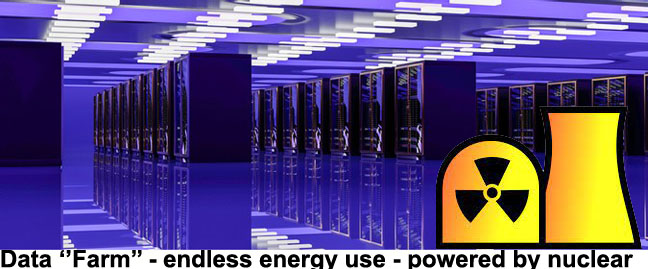
Tech giants are working to divert round-the-clock nuclear power to massive new data centers. Regulators and climate advocates are concerned.
Canary Media, By Jeff St. John, 14 Aug 24
Across the U.S. East Coast, nuclear power plant owners are proposing marriages to tech giants who are both desperate for electricity to fuel their massive data-center expansion plans and publicly committed to using clean energy. The proposals go like this: Build data centers that connect directly to our round-the-clock, carbon-free nuclear power, and secure long-term financial and clean-energy benefits for the both of us.
The companies looking to tie the knot say these are matches made in heaven. But a growing number of critics are objecting at the altar.
The first such announcement came in March, when Amazon Web Services agreed to spend $650 million to buy an existing 960 megawatt data center campus that’s already hooked up to Talen Energy’s 2.5 gigawatt Susquehanna nuclear power plant in northeastern Pennsylvania. Several similar proposals are in the works, with nuclear power plant owners Constellation Energy, Vistra, Dominion Energy, and Public Service Enterprise Group eyeing prospects, according to company statements and analyst reports.
Nuclear energy and tech company trade groups say these “colocation” projects will bring stability to a nuclear industry that provides the country’s largest share of zero-carbon energy. By allowing data centers to circumvent the overtaxed U.S. grid and get online faster, these linkups will also bolster U.S. competitiveness in artificial intelligence and other high-tech fields, they say, positioning the deals as a partial solution to the problem of meeting fast-rising electricity demand from industrial customers.
…mounting scrutiny from energy analysts and climate advocates, who fear that a rush to divert existing zero-carbon nuclear energy to power-hungry data centers could end up raising ratepayer bills, reducing grid reliability, and increasing power sector emissions overall.
Those are the risks outlined in a July blog post by Jackson Morris, director of state power sector policy at the Natural Resources Defense Council. “We’re not anti–data center and anti–load growth,” Morris told Canary Media. “But we want to make sure that actions being taken don’t lead to negative impacts in terms of emissions reductions or costs to consumers.”
Lawmakers and regulators in Connecticut, Maryland, New Jersey, and Pennsylvania are raising similar concerns……………………..
When a new data center comes online, new electricity generation has to be built — either to support the facility directly or to plug the massive hole created when the data center siphons off electricity from an existing power source.
Unless those data center owners can build enough clean energy to make up that gap, that replacement power will largely come from existing fossil-fueled power plants………………………………………………………………………………………………….more https://www.canarymedia.com/articles/nuclear/data-centers-want-to-tap-existing-nuclear-power-is-that-good-or-bad
How French nuclear output has declined faster in France than Germany

French decline may be caused by having to ‘load follow’ renewables
David Toke, Aug 09, 2024, https://davidtoke.substack.com/p/how-french-nuclear-output-has-declined
Whatever one thinks of the German decision to phase-out nuclear power, a really strange thing is that the French are coordinating an unintentional phase-out of nuclear energy. At the same time as Germany has been running down its nuclear production. Much attention has focussed on criticising German policy, but much less on criticising what is a continuing failure of French energy policy.
For sure French non-fossil energy production is still much higher than most countries, but this lead is seriously declining. The proportion of non-fossil electricity production is now little higher than a country such as non-nuclear Denmark which has built up its renewables from virtually nothing in recent times. Talk of building half a dozen more French nuclear plant is – just talk.
Plans for new nuclear plant have been bullish for decades- the term ‘nuclear renaissance’ has been doled out for 20 years. However, in practice, little gets built. On the other hand France is failing to develop its renewable energy industry at anything like a good enough speed to make up for the decline in nuclear production. You can see the comparison of nuclear decline in France and Germany in the graph below [on original], which takes its data from the Energy Institute ‘s Statistical Review of World Energy, see HERE
As can be seen in the graph, from 2011 French nuclear production declined by 104 TWh, whilst in Germany it declined by 101 TWh. Yet it has been the decline in German nuclear production (following the decision to phase out nuclear in 2011) that has been much more of a long-term talking point.
Certainly, the dominant message in the press in the UK, spread by politicians from Labour and Conservatives, is that the failure to stop the decline in nuclear production which has also occurred in the UK is because of political failure. But this story ought to be wearing thin, after so many years of so-called nuclear renaissance and its promotion. Might it just have something to do with the failing nature of the technology itself? This seems obvious to independent observers, but it does not detract from our leaders’ desire to throw immense sums after technology that takes almost forever to deliver.

I discuss these issues in my recently published book Energy Revolutions, Profiteering versus Democracy’ (Pluto Press) (see HERE). But a few salient points can be made here to attempt to explain the decline in nuclear power in France. One can hypothesise a couple of reasons why French nuclear production may be declining. One factor may well simply be that the French nuclear industry did a bad job and built a lot of sub-standard power plant.
There is another possibility which may be adding to the problems caused by the first suggested reason. The French nuclear power stations may be accelerating their own demise because of the technical damage caused by the balancing role they are being forced to play in the French power market. Nuclear power plant in France have been forced to ‘load-follow’ ie, often reduce their output, because of variations in solar and wind power that is generated across the continental electricity system. #
The continental electricity interconnectors use AC transmission equipment which means that France cannot just disconnect when there is too much electricity coming into the French system. French power plant have to power down, and since nuclear forms such a dominant part of French generation, the nuclear power power plant has to regularly ramp up and down.
There are relatively few publicly available discussions of the possibilities for reactor damage in such load-following activities. Such discussions as they are, seem to be side-shows to ascertaining whether load following by nuclear reactors is possible, rather than the long-term damage involved. But there are some pointers in the discussions that are available.
One academic thesis commented, on a simulation based on a Swedish reactor, that: ‘The mechanisms for the damages are for example erosion-corrosion, fatigue, vibrations and wear. In the reactor core, there are also limitations for the rate of how quickly the power decrease and increase can be performed and how low the power can be reduced before problems with xenon poisoning and PCI occur……………….An increased usage of the pumps and valves was shown, which will give an added risk of wear and tear’ (Bjurenfolk, 220, 9 see HERE) . A study published by the Nuclear Energy Agency for the OECD commented: ‘Load cycling leads to variation in the coolant temperature, and thus in the temperatures of different components (see Figure 3.3 and Figure 3.4). These periodic temperature variations lead to cyclic changes in the mechanical load in some parts of the equipment, and could induce localised structural damage (fatigue) of these elements if the temperature gradients are large.’ OECD/NEA 2011, 41, see HERE
Of course in the UK no such problems of damage due to load-following will ever occur for the simple reason that in the UK nuclear power has a privileged position. Despite increasing international interconnection, the interconnection is through DC transmission systems which offer much greater control over imports. Nuclear power plants are allowed to generate as much as they can, and it is renewable energy that has to power down in cases where there are grid constraints or an excess of supply compared to demand.
In the case of Hinkley C, when it eventually comes online, the contracts given to EDF encourage it to carry on generating, not load follow. In the UK it is windfarms that bear political blame for compensation paid to them for lost production when they have to switch off (very often to protect nuclear production). This has been documented by 100percentrenewableuk in the case of Scotland, see HERE.
However, turning back to France, the French Government’s recent press releases on building future nuclear power obscure the fact that it has taken around two decades to build one plant. Meanwhile, the amount of solar and wind power production added in France since 2011 is rather less than the decline in nuclear production. To cap it all EDF has called for subsidies for solar pv to be reviewed (see HERE).
Yes, solar pv may be inconvenient for nuclear power, but it does seem that unless France develops renewables, including solar pv, much more quickly than has been done since 2011, the French electricity system will (at recent rates of nuclear decline) gradually collapse.
Certainly, the dominant message in the press in the UK, spread by politicians from Labour and Conservatives, is that the failure to stop the decline in nuclear production which has also occurred in the UK is because of political failure. But this story ought to be wearing thin, after so many years of so-called nuclear renaissance and its promotion. Might it just have something to do with the failing nature of the technology itself? This seems obvious to independent observers, but it does not detract from our leaders’ desire to throw immense sums after technology that takes almost forever to deliver.
I discuss these issues in my recently published book Energy Revolutions, Profiteering versus Democracy’ (Pluto Press) (see HERE). But a few salient points can be made here to attempt to explain the decline in nuclear power in France. One can hypothesise a couple of reasons why French nuclear production may be declining. One factor may well simply be that the French nuclear industry did a bad job and built a lot of sub-standard power plant.
There is another possibility which may be adding to the problems caused by the first suggested reason. The French nuclear power stations may be accelerating their own demise because of the technical damage caused by the balancing role they are being forced to play in the French power market. Nuclear power plant in France have been forced to ‘load-follow’ ie, often reduce their output, because of variations in solar and wind power that is generated across the continental electricity system. #
The continental electricity interconnectors use AC transmission equipment which means that France cannot just disconnect when there is too much electricity coming into the French system. French power plant have to power down, and since nuclear forms such a dominant part of French generation, the nuclear power power plant has to regularly ramp up and down.
There are relatively few publicly available discussions of the possibilities for reactor damage in such load-following activities. Such discussions as they are, seem to be side-shows to ascertaining whether load following by nuclear reactors is possible, rather than the long-term damage involved. But there are some pointers in the discussions that are available.
One academic thesis commented, on a simulation based on a Swedish reactor, that: ‘The mechanisms for the damages are for example erosion-corrosion, fatigue, vibrations and wear. In the reactor core, there are also limitations for the rate of how quickly the power decrease and increase can be performed and how low the power can be reduced before problems with xenon poisoning and PCI occur……………….An increased usage of the pumps and valves was shown, which will give an added risk of wear and tear’ (Bjurenfolk, 220, 9 see HERE) . A study published by the Nuclear Energy Agency for the OECD commented: ‘Load cycling leads to variation in the coolant temperature, and thus in the temperatures of different components (see Figure 3.3 and Figure 3.4). These periodic temperature variations lead to cyclic changes in the mechanical load in some parts of the equipment, and could induce localised structural damage (fatigue) of these elements if the temperature gradients are large.’ OECD/NEA 2011, 41, see HERE
Of course in the UK no such problems of damage due to load-following will ever occur for the simple reason that in the UK nuclear power has a privileged position. Despite increasing international interconnection, the interconnection is through DC transmission systems which offer much greater control over imports. Nuclear power plants are allowed to generate as much as they can, and it is renewable energy that has to power down in cases where there are grid constraints or an excess of supply compared to demand
As can be seen in the graph, from 2011 French nuclear production declined by 104 TWh, whilst in Germany it declined by 101 TWh. Yet it has been the decline in German nuclear production (following the decision to phase out nuclear in 2011) that has been much more of a long-term talking point.
Certainly, the dominant message in the press in the UK, spread by politicians from Labour and Conservatives, is that the failure to stop the decline in nuclear production which has also occurred in the UK is because of political failure. But this story ought to be wearing thin, after so many years of so-called nuclear renaissance and its promotion. Might it just have something to do with the failing nature of the technology itself? This seems obvious to independent observers, but it does not detract from our leaders’ desire to throw immense sums after technology that takes almost forever to deliver.
I discuss these issues in my recently published book Energy Revolutions, Profiteering versus Democracy’ (Pluto Press) (see HERE). But a few salient points can be made here to attempt to explain the decline in nuclear power in France. One can hypothesise a couple of reasons why French nuclear production may be declining. One factor may well simply be that the French nuclear industry did a bad job and built a lot of sub-standard power plant.
There is another possibility which may be adding to the problems caused by the first suggested reason. The French nuclear power stations may be accelerating their own demise because of the technical damage caused by the balancing role they are being forced to play in the French power market. Nuclear power plant in France have been forced to ‘load-follow’ ie, often reduce their output, because of variations in solar and wind power that is generated across the continental electricity system. #
The continental electricity interconnectors use AC transmission equipment which means that France cannot just disconnect when there is too much electricity coming into the French system. French power plant have to power down, and since nuclear forms such a dominant part of French generation, the nuclear power power plant has to regularly ramp up and down.
There are relatively few publicly available discussions of the possibilities for reactor damage in such load-following activities. Such discussions as they are, seem to be side-shows to ascertaining whether load following by nuclear reactors is possible, rather than the long-term damage involved. But there are some pointers in the discussions that are available.
One academic thesis commented, on a simulation based on a Swedish reactor, that: ‘The mechanisms for the damages are for example erosion-corrosion, fatigue, vibrations and wear. In the reactor core, there are also limitations for the rate of how quickly the power decrease and increase can be performed and how low the power can be reduced before problems with xenon poisoning and PCI occur……………….An increased usage of the pumps and valves was shown, which will give an added risk of wear and tear’ (Bjurenfolk, 220, 9 see HERE) . A study published by the Nuclear Energy Agency for the OECD commented: ‘Load cycling leads to variation in the coolant temperature, and thus in the temperatures of different components (see Figure 3.3 and Figure 3.4). These periodic temperature variations lead to cyclic changes in the mechanical load in some parts of the equipment, and could induce localised structural damage (fatigue) of these elements if the temperature gradients are large.’ OECD/NEA 2011, 41, see HERE
Of course in the UK no such problems of damage due to load-following will ever occur for the simple reason that in the UK nuclear power has a privileged position. Despite increasing international interconnection, the interconnection is through DC transmission systems which offer much greater control over imports. Nuclear power plants are allowed to generate as much as they can, and it is renewable energy that has to power down in cases where there are grid constraints or an excess of supply compared to demand.
In the case of Hinkley C, when it eventually comes online, the contracts given to EDF encourage it to carry on generating, not load follow. In the UK it is windfarms that bear political blame for compensation paid to them for lost production when they have to switch off (very often to protect nuclear production). This has been documented by 100percentrenewableuk in the case of Scotland, see HERE.
However, turning back to France, the French Government’s recent press releases on building future nuclear power obscure the fact that it has taken around two decades to build one plant. Meanwhile, the amount of solar and wind power production added in France since 2011 is rather less than the decline in nuclear production. To cap it all EDF has called for subsidies for solar pv to be reviewed (see HERE).
Yes, solar pv may be inconvenient for nuclear power, but it does seem that unless France develops renewables, including solar pv, much more quickly than has been done since 2011, the French electricity system will (at recent rates of nuclear decline) gradually collapse.
‘Massive disinformation campaign’ is slowing global transition to green energy

UN says a global ‘backlash’ against climate action is being stoked by fossil fuel companies
Fiona Harvey Environment editor, Thu 8 Aug 2024, https://www.theguardian.com/environment/article/2024/aug/08/fossil-fuel-industry-using-disinformation-campaign-to-slow-green-transition-says-un
Fossil fuel companies are running “a massive mis- and disinformation campaign” so that countries will slow down the adoption of renewable energy and the speed with which they “transition away” from a carbon-intensive economy, the UN has said.
Selwin Hart, the assistant secretary general of the UN, said that talk of a global “backlash” against climate action was being stoked by the fossil fuel industry, in an effort to persuade world leaders to delay emissions-cutting policies. The perception among many political observers of a rejection of climate policies was a result of this campaign, rather than reflecting the reality of what people think, he added.
“There is this prevailing narrative – and a lot of it is being pushed by the fossil fuel industry and their enablers – that climate action is too difficult, it’s too expensive,” he said. “It is absolutely critical that leaders, and all of us, push back and explain to people the value of climate action, but also the consequences of climate inaction.”
He contrasted the perception of a backlash with the findings of the biggest poll ever conducted on the climate, which found clear majorities of people around the world supporting measures to reduce greenhouse gas emissions. The survey found 72% of people wanted a “quick transition” away from fossil fuels, including majorities in the countries that produce the most coal, oil and gas. Green parties and plans may have suffered reverses in some parts of the world, he said, but in others they have gained seats, and seen policies that would once have been considered radical enter the mainstream.
Governments must take note, said Hart, who acts as special adviser on climate to the UN secretary general, António Guterres. “This should alert political leaders – those that are ambitious are not only on the right side of history, they’re on the side of their people as well.
“Climate appears to be dropping down the list of priorities of leaders,” he said. “But we really need leaders now to deliver maximum ambition. And we need maximum cooperation. Unfortunately, we are not seeing that at the moment.”
He warned that the consequences of inaction were being felt in rich countries as well as poor. In the US, many thousands of people are finding it increasingly impossible to insure their homes, as extreme weather worsens. “This is directly due to the climate crisis, and directly due to the use of fossil fuels,” he said. “Ordinary people are having to pay the price of a climate crisis while the fossil fuel industry continues to reap excess profits and still receives massive government subsidies.”
Yet the world has never been better equipped to tackle climate breakdown, Hart added. “Renewables are the cheapest they’ve ever been, the pace of the energy transition is accelerating,” he said.
Governments should also take care to ensure that their climate policies did not place unfair burdens on those on low incomes, as poorly designed measures could hurt the poor, according to Hart. “Each country will really need to ensure its transition is well planned to minimise the impact on people and vulnerable populations, because a lot of the so-called pushback comes when there’s a perception that the costs on poor and vulnerable persons are being disproportionately felt,” he said.
For that reason, the UN is calling for new national plans on the emissions reductions required under the 2015 Paris agreement, in which governments must set out clearly not just their targets but how they will be achieved through policy, and what the probable impacts are.
The new national plans, called nationally determined contributions (NDCs), should be “as consultative as possible so that whole segments of society – young people, women, children, workers – will be able to provide their perspective on how the transition should be planned and well-managed, and how it will be financed”, he said.
“Despite everything we see [in the form of extreme weather], we’re still not seeing the level of ambition or action that the world desperately needs.”
Britain’s net zero dream could be crushed by big tech

As demand for data storage grows, so does the need for giant data centres – which pose a threat to our landscape and our energy supply
Jim Norton, 4 August 2024
Gigantic facilities represent the very real physical cost of our
unquenchable thirst for the internet and, increasingly, these facilities
pose a threat not only to our landscape but our energy supply too.
This year, big tech has started to sound the alarm that the boom in artificial
intelligence (AI) – which is even more power hungry than the normal web
– is putting the world in danger of missing its ambitious net zero
targets.
Tech leaders from Amazon CEO Andy Jassy and OpenAI boss Sam
Altman, to the billionaire owner of X (formerly Twitter) Elon Musk, have
warned this year about generative AI’s voracious use of power. Musk
warned it could lead to a global electricity shortage as early as next
year.
Some studies suggest the AI industry alone could consume as much
energy as a country the size of the Netherlands by 2027. AI’s thirst for
power has led to fears that the technology is jeopardising the ambitious
climate targets set by both governments and tech giants.
Renewable energy is not yet consistent nor plentiful enough to keep up with AI demand,
meaning officials and companies will likely have to fall back on fossil
fuels. This year, both Google and Microsoft admitted their ambitious
targets of reaching net zero by 2030 were under threat; revealing their
greenhouse emissions had risen by 48 per cent and a third, respectively,
over the past few years, largely due to the explosive growth of AI.
So what does this mean for the UK? The National Grid has predicted that AI will
drive a spike in energy use, with the amount of power demanded by data
centres expected to increase six-fold over the next decade. Given
Britain’s energy infrastructure is already struggling under the weight of
existing demand, and is in dire need of an upgrade, Labour’s aims of
decarbonising the power supply by 2030 will certainly be put under immense
pressure.
Telegraph 4th Aug 2024
https://www.telegraph.co.uk/environment/2024/08/04/big-tech-ai-green-belt-destruction/
UK Electricity System Operator (ESO)s Future Energy Scenarios for a green UK – nuclear power is uncertain.
In its new Future Energy Scenarios report, National Grid’s Electricity
System Operator (ESO) maps three potential pathways to meet the UK’s 2050
net-zero target. Electric Engagement is weighted towards the
electrification of sectors such as heating, transport & heavy industry.
Hydrogen Evolution prioritises the use of hydrogen instead. Holistic
Transition is a mix. Renewables dominate across the board, with wind and
solar at 150-250 GW by 2050, depending on the scenario. Total energy supply
and demand is highest in the Hydrogen Evolution pathway. Electrifying
sectors is seen as inherently more efficient than producing hydrogen, since
doing so can be energy-intensive, using scarce green energy to make
expensive fuel, or carbon-intensive fossil gas.
Indeed, as Edie notes,
though natural gas supply in the Hydrogen Evolution pathway is two-thirds
lower in 2050 than at present, it is still over double the level in the
Electric Engagement/Holistic Transitions. But in Holistic Transition,
hydrogen is nevertheless used for hard-to-decarbonise sectors like heavy
industrial manufacturing, though light road transport and building heating
are mainly electric.
ESO says that it will be possible to get to zero net
power before 2035, if Biomass with Carbon Capture and Storage (BECCS) is
also used. They say all their new zero pathways ‘achieve a decarbonised
power sector by 2035 at the latest. Holistic Transition & Electric
Engagement achieve this in 2033 and 2034 respectively. This is driven by
high levels of wind & solar uptake, reduced use of unabated gas & initial
deployments of bioenergy with carbon capture & storage (BECCS).’ And ESO
insist that ‘negative emissions with power BECCS from 2030 onwards are
essential to achieving net zero power.’
However, the ESO doesn’t see nuclear expanding very much until around 2040 and even on the Electric Engagement scenario it only reaches 151 TWh from 22GW by 2050 (less than
the government’s target of 24GW), compared with 380 TWh for offshore wind.
But not everyone sees it that way. The growth-orientated Sci-Tech lobby
group UKDayOne is pushing for nuclear, and says ‘the Government should
aim to have built or begun constructing 8-10 additional gigawatt-scale
nuclear plants by 2040.’ It points to modelling by Carbon Free Europe (CFE)
which it says suggests that ‘the most cost-effective path to net zero for
the UK involves building 61GW of nuclear by 2050, due to reduced
requirements for grid balancing’.
That would certainly cut back on offshore
wind. Or as CFE puts it ‘failure to reach this level of [nuclear]
deployment will require building significantly more offshore wind &
increase transition costs,’ adding that ‘a breakthrough in nuclear costs
could unlock additional opportunities for nuclear applications’.
But will that happen? No sign yet with the £20bn Sizewell C plan still stalled and
novel SMRs at best some way off. The new government may not be willing to
also push ahead just now with a decision on Sizewell C. It is certainly
interesting that the claim made by the last government that nuclear was a
‘sustainable and environmentally friendly energy generation solution’ has
not yet been backed up by DESNZ research. It’s evidently still ‘work in
progress’. Given also its high cost, and the governments money shortage,
maybe it’s time for a U turn?
Renew Extra 3rd Aug 2024
https://renewextraweekly.blogspot.com/2024/08/in-its-new-future-energy-scenarios.html
Renewables are crushing gas-fired power

Europe’s electricity system is transitioning at breakneck speed.
Renewables are displacing thermal generation so fast that gas-fired power
has slumped to a two-decade low. Continental Europe produced less
electricity from natural gas over the first seven months of this year than
at any time since 2005, according to research by Energy Flux. A few
countries bucked the trend, but at the regional level there is no sign of
this changing any time soon. The continent’s full-throttled embrace of
wind and solar — combined with the return of French nuclear, and Alpine
hydro, milder winters and a weak economic recovery — has dislodged gas
from the heart of many EU power markets. The transformation is both
astonishing and alarming. Europe’s great gas power slump has wiped out
the equivalent of the combined annual primary gas demand of Denmark,
Ireland, Norway and Portugal since 2017. That’s roughly 240 cargoes of
liquefied natural gas (LNG) every year, no longer needed.
Energy Flux 1st Aug 2024
https://www.energyflux.news/p/renewable-crushing-gas-fired-power-wind-solar-eu
How much electricity comes from the Sun on summer days in the UK?
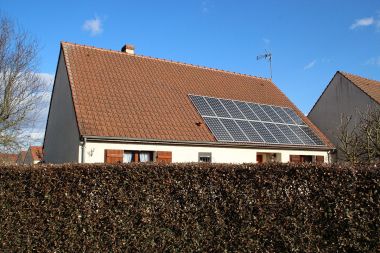
With blazing sun across the UK, the past week has seen solar energy’s
contribution to Britain’s energy mixture hit levels of up to 32% –
highlighting how much the sun can contribute to the country’s electricity
supplies. Each summer, the levels of solar energy in use rise, according to
Christelle Barnes, vice-chair at Solar Energy UK and UK general manager at
SolarEdge. “Every year, that percentage number just gets a little bit
higher. So it was typically between 25% and 27% over the last couple of
years. So just seeing numbers like 30% now is definitely showing that we’re
continuing to deploy more solar,” she told Yahoo News.
Yahoo News 31st July 2024
https://uk.news.yahoo.com/how-much-electricity-sun-summer-uk-172202857.html
More than 885 solar panels have been installed on two Scottish Water sites
in the Central Belt, helping to save 57 tonnes of carbon a year and address
the increasing urgency of climate change. The projects have seen 512 photovoltaic (PV) panels installed at
Bothwellbank Waste Water Treatment Works in South Lanarkshire, which are
able to generate 0.23GWh of power and will offset around a fifth of the
site’s energy needs. In addition, 373 tank-mounted PV panels are now in
place at Roseberry Water Treatment Works in Midlothian, supplementing 178
panels which were installed as part of a previous scheme. The site can now
generate a total of 0.18GWh of energy, offsetting 12% of its energy needs.
Combined, these installations are expected to produce 0.41GWh of green
electricity each year – equivalent to the energy needed to boil around
1.8 million kettles annually. This latest £678,000 investment by Scottish
Water and its commercial subsidiary, Scottish Water Horizons, sees the
sites join a growing list of water and waste water treatment works which
are now either self-sufficient or partly sufficient in their power
requirements.
Midlothian View 31st July 2024
California achieves 100% renewable energy for 100 days.

On 100 out of 144 days since 8 March, California’s electricity has been supplied fully by
renewable energy for at least part of the day.
Power Technology 30th July 2024
https://www.power-technology.com/news/california-achieves-100-renewable-energy-for-100-days/
1 This Month

Protect Sazan Island from the Trump family! https://secure.avaaz.org/campaign/en/protect_sazan_island_from_the_trump_family_loc/?bqFCVab&v=174511&cl=22707147157&_checksum=5e9dde668860e8231c33699735e16a1fbf22ab2cb01da50c999fe8732b9775ef&utm_source=email&utm_medium=blast_email&utm_campaign=174511
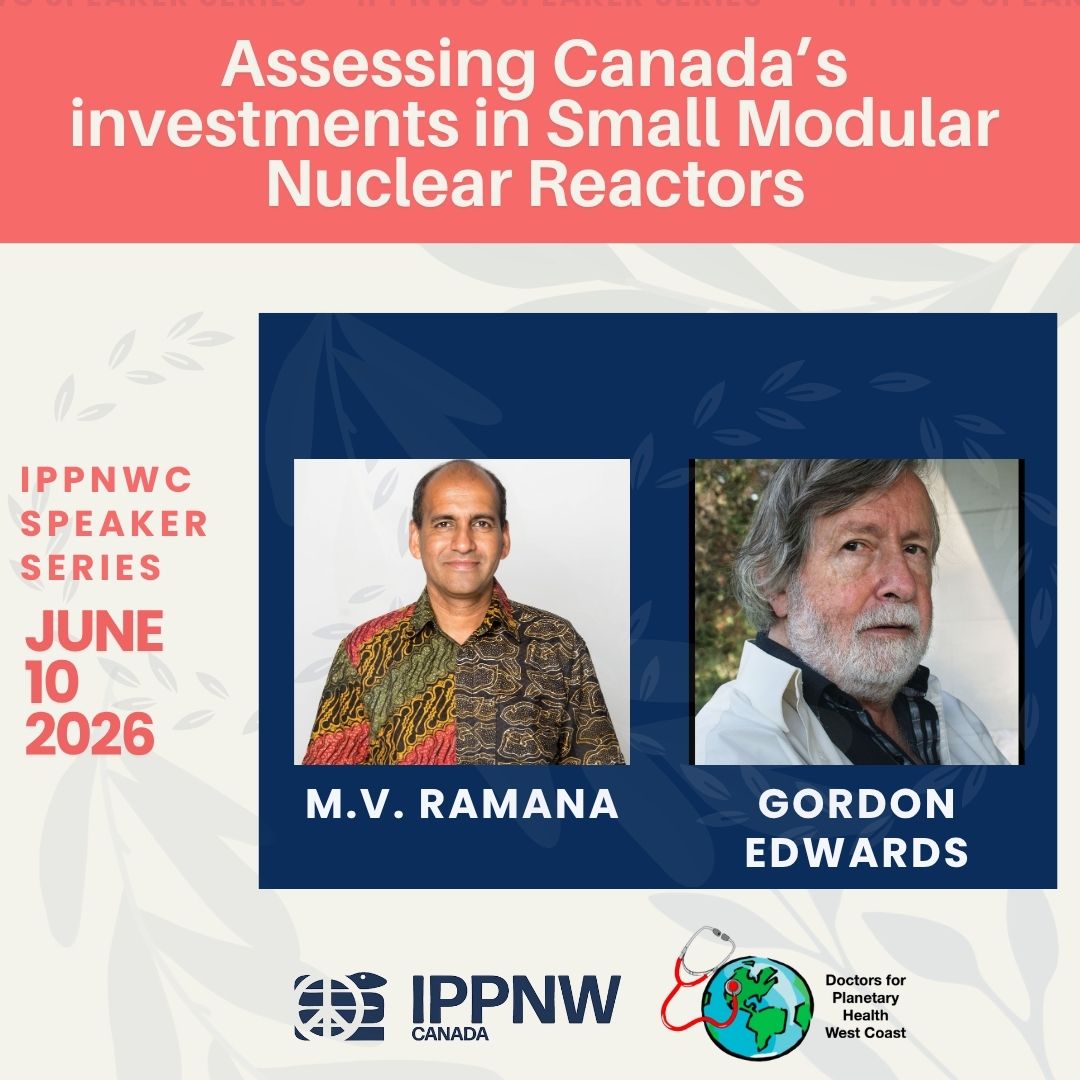
10 June – Assessing Canada’s Investments in Small Modular Nuclear Reactors – https://zoom.us/meeting/register/IiqHA5feRhaEBycOLNTJlA#/registration


Cuba Is Not a Failed State – It Is a Besieged State
PETITION: “Global Appeal to Endorse Palestinian Right of Return of Refugees”
To see nuclear-related stories in greater depth and intensity – go to https://nuclearinformation.wordpress.com
-
Archives
- June 2026 (89)
- May 2026 (306)
- April 2026 (356)
- March 2026 (251)
- February 2026 (268)
- January 2026 (308)
- December 2025 (358)
- November 2025 (359)
- October 2025 (376)
- September 2025 (257)
- August 2025 (319)
- July 2025 (230)
-
Categories
- 1
- 1 NUCLEAR ISSUES
- business and costs
- climate change
- culture and arts
- ENERGY
- environment
- health
- history
- indigenous issues
- Legal
- marketing of nuclear
- media
- opposition to nuclear
- PERSONAL STORIES
- politics
- politics international
- Religion and ethics
- safety
- secrets,lies and civil liberties
- spinbuster
- technology
- Uranium
- wastes
- weapons and war
- Women
- 2 WORLD
- ACTION
- AFRICA
- Atrocities
- AUSTRALIA
- Christina's notes
- Christina's themes
- culture and arts
- Events
- Fuk 2022
- Fuk 2023
- Fukushima 2017
- Fukushima 2018
- fukushima 2019
- Fukushima 2020
- Fukushima 2021
- general
- global warming
- Humour (God we need it)
- Nuclear
- RARE EARTHS
- Reference
- resources – print
- Resources -audiovicual
- Weekly Newsletter
- World
- World Nuclear
- YouTube
-
RSS
Entries RSS
Comments RSS
 nuclear-news