The Inheritance of Fear: From the Cold War to Trump’s World
24 March 2026 Michael Taylor, https://theaimn.net/the-inheritance-of-fear-from-the-cold-war-to-trumps-world/
Even as children, we knew something was wrong. The adults spoke in hushed tones. The news carried a sense of urgency. At school, the playground chatter wasn’t about games – it was about war. The kind that could end everything.
By my final year, the fear had become personal. Among the boys, we spoke about conscription – about being called up to fight in the Vietnam War. It wasn’t abstract anymore. It was waiting for us.
That was the world we inherited.
And now, it seems, the next generation is inheriting something disturbingly familiar.
Recent polling shows that fear of a major global conflict is no longer a fringe concern. In the United States, nearly half of respondents – 46% – believe a world war is likely within the next five years, with similar fear echoed across Britain, Canada and France. Across Europe, between 41% and 55% of people think another world war is likely within a decade.
Among younger people, the anxiety runs deeper still. A global Red Cross survey found that almost half of millennials believe a third world war is likely in their lifetime. And here in Australia, new research suggests that young adults are among the most anxious about national security threats, with many expecting conflict within years rather than decades.
This is not abstract fear.
It is generational.
But there is a difference between then and now.
The Cold War was terrifying, but it was also structured. Two superpowers, locked in a tense but calculated standoff. There were rules – dangerous ones, but rules nonetheless.
Today, the fear feels less ordered. Less predictable. More dependent on personalities than systems.
And that is where Donald Trump enters the picture.
To his supporters, he is decisive – a leader unafraid to act. But to many others, particularly younger people watching from a distance, he represents something far more unsettling: volatility. A willingness to escalate, to threaten, to test boundaries not as a last resort, but as a demonstration of strength.
In some international polling, even allied populations now cite the United States itself – under Trump’s leadership – as a potential source of global instability.
That perception matters.
Because fear is not driven solely by events, but by expectations – by what people believe might happen next.
And for a generation raised on a constant stream of crisis – pandemics, climate change, economic instability, and now rising global tensions – the idea that a single leader’s impulses could tip the balance is deeply unsettling.
Unlike our childhood, there is no buffer. No evening news that ends at six o’clock. No space between events and reaction. Every threat is immediate. Every escalation is live-streamed. Every rumour amplified.
There is no off switch.
And so the fear settles in – not always as panic, but as something quieter and more corrosive. A sense that the future is unstable. That the world is being shaped not by steady hands, but by unpredictable ones.
We have seen this kind of fear before.
We lived through it.
But today’s version carries an added uncertainty – not just about what might happen, but about who might make it happen.
For younger generations, that may be the most unsettling thought of all.
War Becomes Spectacle in Trump’s Horrific Propaganda Promoting War in Iran
The White House has circulated videos that fuse footage of bombing raids with visuals from video games and action films.
By Henry A. Giroux , Truthout, March 21, 2026
During his presidential campaign, Donald Trump promised to be an antiwar candidate, boasting that, unlike his predecessors, he would end endless wars and keep the United States out of new military conflicts. Yet the trajectory of his presidency has unfolded in the opposite direction. From expanding military confrontations in the Caribbean to the escalating war with Iran, launched through large-scale strikes that risk igniting a wider regional catastrophe, Trump’s rule has increasingly relied on the language and machinery of war. As Zachary Basu points out in Axios, “he has attacked seven nations [and] authorized more individual air strikes in 2025 than President Biden did in four years.”
What makes this moment particularly disturbing is not only the violence itself, but also the way it is staged and celebrated. As the conflict with Iran intensified, the White House circulated promotional videos that fused real footage of bombing raids with visuals drawn from video games and action films, transforming acts of destruction into a spectacle of national triumph. In such images, war appears not as tragedy or political catastrophe but as thrilling display, inviting viewers to admire the technological performance of power while remaining detached from the human suffering it produces. These spectacles are more than crude propaganda.
They reveal a deeper shift in political culture in which violence is aestheticized, cruelty normalized, and militarism staged as entertainment, training the public to experience domination not as a catastrophe but as an exhilarating display of power.
We live in an age of monsters. More than two centuries ago, Francisco Goya captured such a moment in his haunting 1799 etching, “The Sleep of Reason Produces Monsters,” an image that now reads less like a relic of the Enlightenment than a prophecy of our own time. The Italian political thinker Antonio Gramsci described moments like this as periods of historical crisis, writing that “the crisis consists precisely in the fact that the old is dying and the new cannot be born; in this interregnum a great variety of morbid symptoms appear.” Our present moment bears all the marks of such an interregnum.
We inhabit a time in which the promise of democracy has been kidnapped, stripped of its moral language, and cast into the abyss of authoritarian rule. Reason, once the fragile guardian of justice and collective responsibility, now suffocates beneath what Jeffrey Edward Green describes as an ocular politics of lies, corruption, and organized cruelty. It has been subordinated to a visual culture that “sparks deep emotional responses” while deriding solidarity, democratic values, and informed judgment. Justice itself has been weaponized, transformed into an instrument of state terror wielded by an army of thugs who abduct, assault, and kill protesters, migrants, and people of color. Hope is mocked as naïveté, memory is erased, and historical consciousness is censored in a political culture where resistance itself is treated as a crime…………………………………………………………………………………………………………………………………………………………………………………………………………………………………..
Susan Sontag anticipated this danger in her reflections on photography and war imagery. Sontag argued that modern visual culture has the capacity to transform suffering into a spectacle. Images that depict violence may initially provoke shock or anger, but repeated exposure can produce a form of moral anesthesia. The viewer becomes fascinated by the visual power of the image itself while the suffering it represents recedes into abstraction…………………………………………………………………………………………………
A society that learns to watch war as if it were a video game risks losing the capacity to recognize the humanity that disappears behind the screen. The danger lies not only in the violence such spectacles celebrate but also in the sensibility they cultivate, one that numbs moral judgment and prepares the ground for authoritarian rule. Resisting this culture of cruelty demands more than outrage or cosmetic reform. It requires a broad democratic awakening capable of confronting the economic and political system that feeds on war and inequality……………………………… https://truthout.org/articles/war-becomes-spectacle-in-trumps-horrific-propaganda-promoting-war-in-iran/?utm_source=Truthout&utm_campaign=4da2782418-EMAIL_CAMPAIGN_2026_03_21_07_27&utm_medium=email&utm_term=0_bbb541a1db-4da2782418-650192793
Is a Mass Revolt Against Technocracy Starting to Happen?
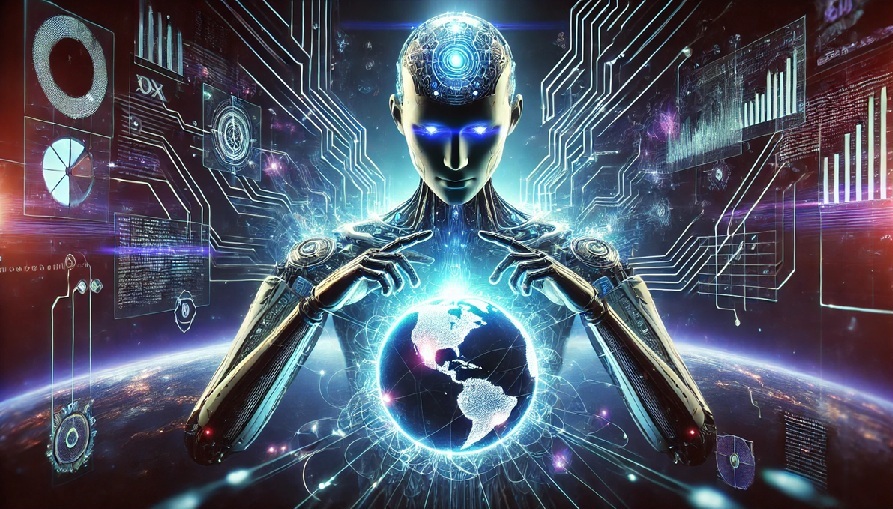
The Technocratic Takeover: Alive and Well
Let’s be clear about what’s happening here: robots and AI are taking over our culture, our politics, our way of life, and our relationships to each other as social beings.
They’re becoming the advance guard for a new and unprecedented technocratic form of governance—the apotheosis of Western scientific materialism. Further, these new forms of governance are being carried out by unelected Big Tech overlords operating behind the scenes and in the backrooms of a mediated society well out of public view
Will there be a popular uprising against AI and the vast AI-based robotic machinery that’s taking over both the means of production and the means of information?
Tom Valovic, Feb 14, 2026, Common Dreams, https://www.commondreams.org/opinion/revolt-against-big-tech
Ted Gioia has a popular Substack called “The Honest Broker.” Although, as an author, his books tend to focus on music and popular culture, he writes eloquently about a wide range of topics and offers insightful commentary about the global forced march toward technocratic lifestyle and governance that we’re now immersed in. In one posting, “25 Propositions about the New Romanticism,” Gioia posits that there is a new movement afoot mimicking (or, better, reflecting) the Romantic Period of the 18th century. This movement coincided with the first industrial revolution and, as a counterweight to that trend, saw a great shift toward impulses to re-enchant the world via poetry, art, and music, and reconnecting to nature. Gioia writes:
More than two years ago, I predicted the rise of a New Romanticism—a movement to counter the intense rationalization and expanding technological control of society. Rationalist and algorithmic models were dominating every sphere of life at that midpoint in the Industrial Revolution—and people started resisting the forces of progress. Companies grew more powerful, promising productivity and prosperity. But Blake called them “dark Satanic mills” and Luddites started burning down factories—a drastic and futile step, almost the equivalent of throwing away your smartphone.
Even as science and technology produced amazing results, dysfunctional behaviors sprang up everywhere. The pathbreaking literary works from the late 1700s reveal the dark side of the pervasive techno-optimism—Goethe’s novel about Werther’s suicide, the Marquis de Sade’s nasty stories, and all those gloomy Gothic novels. What happened to the Enlightenment?
As the new century dawned, the creative class (as we would call it today) increasingly attacked rationalist currents that had somehow morphed into violent, intrusive forces in their lives—an 180° shift in the culture. For Blake and others, the name Newton became a term of abuse. Artists, especially poets and musicians, took the lead in this revolt. They celebrated human feeling and emotional attachments—embracing them as more trustworthy, more flexible, more desirable than technology, profits, and cold calculation.
He goes on to posit that we’re poised for a return to that modality and points out that the notion of a New Romanticism has spread “like a wildfire,” citing influencers such as Ross Barkan, Santiago Ramos, and Kate Alexandra. Gioia sees what he describes as cultural trends at the leading edge of this transformation citing popular TV series such as Pluribus and Yellowstone. But is this really happening or has Gioia just stumbled on a pocket of cultural resistance and pushback against technocracy that’s primarily a pocket of unified self-expression rather than something representing deep and substantive cultural and societal change?
The Technocratic Takeover: Alive and Well
Let’s be clear about what’s happening here: robots and AI are taking over our culture, our politics, our way of life, and our relationships to each other as social beings. They’re becoming the advance guard for a new and unprecedented technocratic form of governance—the apotheosis of Western scientific materialism. Further, these new forms of governance are being carried out by unelected Big Tech overlords operating behind the scenes and in the backrooms of a mediated society well out of public view.
The tech takeover is such a massive appropriation of our social, political, and cultural life—and indeed our own biological substrate—that stoic acceptance might not be the way to go this time around.
I certainly hope that Gioia is right about a major cultural rejection of technocracy. There are indeed hopeful signs. The fundamental human values that make societies work and cohere have gotten steadily shunted aside by the technocracy takeover of culture and education—essentially becoming a new value system. This behind-the-scenes power shift has been amplified and compounded by an over-emphasis in education on STEM, corporate modalities, neo-Darwinian utilitarianism, and the continuing erosion of the humanities that began decades ago. So yes, without a doubt, we need to get “back to the garden” and return to a wider and deeper set of the kind of core values that ultimately hold societies together. Without positive shared values, societies become rudderless and fall into a kind of benighted chaos. All we need to do is look around.
All of that said, in his Substack post, Gioia missed an important component of this transition—if indeed it is coming to pass (and we can only hope). Throwing off technocracy and emerging from our involuntary digital cages also means reconnecting with the natural world, a fundamental human relationship that’s now increasingly mediated by digital devices. The need for this reconnection, this existential about-face, was a key aspect of the romanticism of the 18th century. In literature, for example, the Romantic poets were rather obsessed with it as poet Robert Bly points out in his stellar book News of the Universe (I highly recommend it.) In allowing our daily life to be shifted into an increasingly claustrophobic and self-reinforcing digital cage, we have abandoned not only our connection to the natural world but also to each other. Connecting to nature also lets us tap into the mystery of the universe, which despite human folly remains nonetheless fully intact even if absurdly rationalized by scientific reductionism. Carl Sagan and Albert Einstein were both scientists who could appreciate this. We need more like them.
The Robot Wars: No Longer Sci-Fi
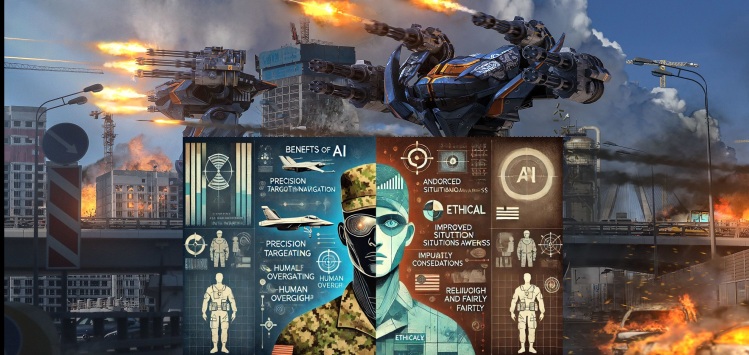
In the 80s and 90s, science fiction movies and literature commonly offered themes of “robot wars” where humans were pitted against the dominance of an ugly dystopian society. Will this be our future courtesy of Elon Musk and his cohorts? Or, alternatively, will there be a mass uprising against AI and the vast AI-based robotic machinery that’s taking over both the means of production and the means of information? We humans are known for our adaptability and stoicism in difficult situations such as world wars and major disasters. That stoicism and sense of “accepting what can’t be changed” seems to be part of our psychological and perhaps even biological makeup. But the tech takeover is such a massive appropriation of our social, political, and cultural life—and indeed our own biological substrate—that stoic acceptance might not be the way to go this time around.
In the next few years, it most certainly will have finally dawned on the mass of humanity, especially in advanced Western nations, that something is badly amiss. Many will realize at a visceral level that their everyday lives are trapped in a claustrophobia-inducing closed-circuit technocratic system and control grid that robs them of autonomy and freedom while purporting to do the opposite.
I totally agree that a new romanticism is a very necessary sea change at this strange time in human history but am perhaps a bit less optimistic that it will happen—at least over the next few years. The forces of technocracy seem too powerful at the moment to be countered because so many of the necessities of everyday life depend on our attachment to this digital realm. This includes paying bills, financial maintenance, government-related necessities such as getting a license renewed, and so much more. Further, technological dependency keeps getting ratcheted up by the self-appointed masters of the universe represented by Big Tech’s unchallenged and ever-growing power. That said, I sincerely hope I’m wrong about this and Gioia is right. Time will tell.
Oxfam responds to mass forced displacement in Lebanon and ready to respond to wider regional crisis

6 March 2026 AIMN Editorial, https://theaimn.net/oxfam-responds-to-mass-forced-displacement-in-lebanon-and-ready-to-respond-to-wider-regional-crisis/
Oxfam and partners are responding to the immediate needs of people who have been forcibly displaced by Israel’s bombardment and ground invasion of Lebanon, as the conflict across the region enters a dramatically new and dangerous phase.
Oxfam in Lebanon is scaling up its emergency response by supporting thousands of people across shelters in Mount Lebanon, the South, and the Bekaa, providing bedding kits, hygiene kits, menstrual hygiene management kits, and clean water.
“This expansion of Israeli occupation and its bombing of Lebanon will devastate people across Lebanon who had not yet recovered from the last wave of violence, inflicting more trauma on an already traumatised population,” said Lebanon country director Bachir Ayoub. “Once again, families have been forced from their beds and their homes as Israel rained bombs down on their communities.”
There is grave concern about the scale and impact the conflict will have on tens of millions of people across the region, where almost 60 million already rely on humanitarian aid. The broader escalation in the region is triggering further mass forced displacement, placing additional strain on overstretched systems and pushing humanitarian conditions further towards catastrophe.
It will widen inequality gaps, intensify existing poverty and injustice, and limit the ability of humanitarian organisations to reach communities in need.
“Global inaction has set the scene for this dangerous escalation,” said Ayoub. “The inability of the international community to hold Israel accountable for its ongoing violations of international law has led us to this point, where we again see hundreds of thousands of people in Lebanon forced to flee in the march towards a wider regional war.”
Oxfam staff and partners are poised to respond with pre-positioned life-saving aid throughout the countries where the aid agency operates if the escalation is allowed to further spill out across the Middle East
In light of unlawful attacks by the United States and Israel and Iran’s retaliation, Oxfam demands that the international community reaffirm its commitment to international law. Rules governing the use of force must be applied equally, most of all the prohibition against the aggressive use of force enshrined in the United Nations Charter. The U.S, Israel, Iran and all parties to the conflict must immediately cease their attacks, de-escalate the chaos across the region and refrain from future actions that lead to yet another cycle of violence.
The United States of Consumption
To put this crudely, we consume far beyond our means because our military keeps enough of us feeling secure, and we have such a large military because we consume far beyond our means
Our Trash and Our Lives, Here and Abroad
By Andrea Mazzarino, Tom Dispatch, 28 Jan 26
I learned one of my most valuable lessons about U.S. power in my first year as a Brown University doctoral student. It was in anthropology professor Catherine Lutz’s seminar on empire and social movements. I’d sum up what I remember something like this: Americans consume one hell of a lot — cars, clothes, food, toys, expensive private colleges (ahem…), and that’s just to start. Since other countries like China, the United Kingdom, and Japan purchase substantial chunks of U.S. consumer debt, they have a vested interest in our economic stability. So, even though you and I probably feel less than empowered as we scramble to make mortgage, car, or credit-card payments, the fact that we collectively owe a bunch of money globally makes it less likely that a country like China will want to rock the boat — and that includes literally rocking the boat (as with a torpedo).
In classes like that one at Brown, I came to understand that the military power we get from owing money is self-reinforcing. It helps keep our interest rates low and, in turn, our own military can buy more supplies (especially if Donald Trump’s latest demand for a $1.5 trillion Pentagon budget goes through!). Our own debt somewhat ironically allows this country to continue to expand its reach, if not around the globe these days, at least in this hemisphere (whether you’re thinking about Venezuela or Greenland). Often when I splurge on a fancy Starbucks latte or a new pair of shoes, I think about how even critics of U.S. military hegemony like me help prop up our empire when we do what Americans do best — shop!
To put this crudely, we consume far beyond our means because our military keeps enough of us feeling secure, and we have such a large military because we consume far beyond our means.
And boy, can we shop! As of August 2025, U.S. consumer debt ballooned to nearly $18 trillion and then continued to rise through the end of last year.
Here’s one consequence of our consumptive habits: we Americans throw a lot of stuff out. Per capita, we each generate an average of close to two tons of solid waste annually, if you include industrial and construction waste (closer to one ton if you don’t). Mind you, on average, that’s roughly three times what most other countries consume and throw out — much more than people even in countries with comparable per capita wealth.
Reminders of our waste are everywhere………………………………………………………………………………………………………………………………………………………………………………………………
Military Contamination
Our military, far from being just another enabler of unequal consumption and suffering, contributes mightily to the waste we live with. In the U.S., hundreds of military bases are contaminated by so-called forever chemicals, such as PFAS, in the drinking water and the soil. We’re talking about chemicals associated with cancer, heart conditions, birth defects, and other chronic health problems. The civilian populations surrounding such bases are often low-income and disproportionately people of color. Of course, also disproportionately impacted are the military families and veterans who live and work around such bases, and tend to have inadequate healthcare to address such issues.
An example would be the Naval Submarine Base in New London……………………………………………………………….
Andrea Mazzarino, Waste Not, Want Not (on a Trumpian Planet)
Posted on January 27, 2026
In the age of Donald Trump, “garbage” has a distinctly new meaning — or do I mean an all too old one in the United States of America? In the view of “our” president, garbage now means “Somali” or “immigrant” or simply anyone on the streets of Minneapolis who doesn’t look nice and White. (And give him credit: at one point, he even managed to call Somali immigrants to this country “garbage” four times in seven seconds, which should be considered a record for anyone on more or less anything.) And don’t forget that he threw Representative Ilhan Omar, who arrived in this country from a devastated Somalia at age 12, under the Trumpian garbage truck. (“We’re going to go the wrong way if we keep taking in garbage into our country. Ilhan Omar is garbage. She’s garbage. Her friends are garbage.”) And, of course, anyone trying to do anything about protecting us from climate change is certainly the definition of garbage in Trump’s America.
Only recently, in fact, his Environmental Protection Agency (EPA) went to work to wipe out the government’s “endangerment finding,” allowing fossil fuels to be regulated under the Clean Air Act. No more, it seems. As EPA Administrator Lee Zeldin put it, “We are driving a dagger straight into the heart of the climate change religion to drive down cost of living for American families, unleash American energy, bring auto jobs back to the U.S. and more.” So, give President Trump and crew full credit for preparing to turn the rest of us into so much… well, yes, garbage in a garbage country on a garbage planet.
But I should put a caveat on all of this. Maybe there’s still a little hope. After all, once upon a time (in the 2024 election campaign), Donald Trump spoke of Venezuela’s oil supplies in just that classic Trumpian fashion. “Their oil is garbage,” he said. “It’s horrible. The worst you can get. Tar. It’s like tar.” Now, of course, it’s pure gold to him, but perhaps one day he’ll remember what he once thought about it and even (though I wouldn’t count on it for a second) change his mind. In that context, let TomDispatch regular Andrea Mazzarino consider American trash, the garbage of our world, and what to make of it all. So, hold your nose, and read away. Tom
The United States of Consumption
Our Trash and Our Lives, Here and Abroad
I learned one of my most valuable lessons about U.S. power in my first year as a Brown University doctoral student. It was in anthropology professor Catherine Lutz’s seminar on empire and social movements. I’d sum up what I remember something like this: Americans consume one hell of a lot — cars, clothes, food, toys, expensive private colleges (ahem…), and that’s just to start. Since other countries like China, the United Kingdom, and Japan purchase substantial chunks of U.S. consumer debt, they have a vested interest in our economic stability. So, even though you and I probably feel less than empowered as we scramble to make mortgage, car, or credit-card payments, the fact that we collectively owe a bunch of money globally makes it less likely that a country like China will want to rock the boat — and that includes literally rocking the boat (as with a torpedo).
In classes like that one at Brown, I came to understand that the military power we get from owing money is self-reinforcing. It helps keep our interest rates low and, in turn, our own military can buy more supplies (especially if Donald Trump’s latest demand for a $1.5 trillion Pentagon budget goes through!). Our own debt somewhat ironically allows this country to continue to expand its reach, if not around the globe these days, at least in this hemisphere (whether you’re thinking about Venezuela or Greenland). Often when I splurge on a fancy Starbucks latte or a new pair of shoes, I think about how even critics of U.S. military hegemony like me help prop up our empire when we do what Americans do best — shop!
To put this crudely, we consume far beyond our means because our military keeps enough of us feeling secure, and we have such a large military because we consume far beyond our means.
American Trash and the Politics of Consumption
And boy, can we shop! As of August 2025, U.S. consumer debt ballooned to nearly $18 trillion and then continued to rise through the end of last year.
Here’s one consequence of our consumptive habits: we Americans throw a lot of stuff out. Per capita, we each generate an average of close to two tons of solid waste annually, if you include industrial and construction waste (closer to one ton if you don’t). Mind you, on average, that’s roughly three times what most other countries consume and throw out — much more than people even in countries with comparable per capita wealth.
Reminders of our waste are everywhere. Even in my state, Maryland, which funnels significant tax dollars into environmental conservation, you can see plastic bags and bottles tangled in the grass at the roadside, while the air in my wealthy county’s capital city often smells like car exhaust or the dirty rainwater that collects at the bottom of your trash can. Schoolchildren like mine bring home weekly piles of one-sided worksheets, PTA event flyers, plastic prizes, and holiday party favors. Even the rich soil of our rural neighborhood contains layers of trash from centuries of agricultural, household, and military activity, all of which remind me of the ecological footprint we’re leaving to our children and grandchildren.
To our credit, some of us try to be mindful of that. In recent years, three different public debates about how to fuel our consumptive habits (and where to put the byproducts) have taken place in my region. Residents continue to argue about where to dispose of the hundreds of thousands of tons of our county’s waste (much of it uneaten food) that’s currently incinerated near the scenic farmland where I live. Do we let it stay here, where it pollutes the land and water, not to mention the air, and disturbs our pastoral views? Or do we haul at least some of the residual ash to neighboring counties and states, to areas that tend to be poor majority-minority ones? While some local advocacy groups oppose the exporting (so to speak) of our trash, it continues to happen.

A related dispute has taken place in an adjacent county that’s somewhat less wealthy but also majority White. That debate centers on the appropriate restrictions on a data center to be built there that will store information we access on the Internet and that’s expected to span thousands of acres. How far away need it be from residents’ homes and farms? Will people be forced to sell their land to build it?
While many of our concerns are understandable — I’m not ready to move so that we can have a data center nearby — it turns out that some worries animating such discussions are (to put it kindly) aesthetic in nature. Recently, a neighbor I’d never met called me to try to enlist our family in a debate about whether some newcomers, a rare Indian-American family around here, could construct a set of solar panels in a field along a main road, where feed crops like alfalfa can usually be seen blooming in the springtime.
My neighbor’s concern: that the new family wanted to use those fields for solar panels to supply clean energy to their community (stated with emphasis, which I presumed to denote the Asian-Americans who would assumedly visit them for celebrations and holidays). Heaven forbid! She worried that the panels would disrupt the views of passersby like us and injure a habitat for the bald eagle — ironic concerns given how much of a mess so many of us have already made renovating our outbuildings, raising our dogs and chicken flocks, and chopping down trees that get in the way of our homes or social gatherings.
Many such concerns are raised sincerely by people who care deeply about land and community. However, the fact that, to some, solar panels are less desirable than the kinds of crops that look nice or feed our desire for more red meat should reframe the debate about whose version of consumption (and garbage) should be acceptable at all.
Indeed, not all of us create or live with garbage to the same degree. Compared to White populations, Black populations are 100% more likely and communities of Asian descent 200% more likely to live within six miles of a U.S. Superfund site (among America’s most polluted places). Such proximity is, in turn, linked to higher rates of cancer, asthma, and birth defects.
Nor do Whites suffer such impacts in the same ways. According to an analysis by the Environmental Protection Agency — and let’s appreciate such an analysis while we still have access to it, since the Trump administration’s EPA just decided to stop tracking the human impact of pollution — Black Americans live with approximately 56% more pollution that they generate, Hispanic Americans experience 63% more than what they create, and — ready for this? — White Americans are exposed to 17% less than they make.
Military Contamination
Our military, far from being just another enabler of unequal consumption and suffering, contributes mightily to the waste we live with. In the U.S., hundreds of military bases are contaminated by so-called forever chemicals, such as PFAS, in the drinking water and the soil. We’re talking about chemicals associated with cancer, heart conditions, birth defects, and other chronic health problems. The civilian populations surrounding such bases are often low-income and disproportionately people of color. Of course, also disproportionately impacted are the military families and veterans who live and work around such bases, and tend to have inadequate healthcare to address such issues.
An example would be the Naval Submarine Base in New London, where my family spent a significant amount of time. Encompassing more than 700 acres along the Thames River, that base was designated a Superfund site in 1990 due to contamination from unsanctioned landfills, chemical storage, and waste burial, all of which put heavy metals, pesticides, and other toxic substances into the environment.
Rather than bore you with more statistics, let me share how it feels to stand on its grounds. Picture a wide, deep river, slate gray and flanked by deciduous trees. On the bank opposite the base, multifamily housing and the occasional restaurant have been wrought from what were once factories. After you pass the guard station, a museum to your left shows off all manner of missiles, torpedoes, and other weaponry, along with displays depicting the living spaces of sailors inside submarines, with bunks decorated with the occasional photo of scantily clad White women (presumably meant to boost troop morale).
To your right, there are brick barracks, office buildings, takeout restaurants, even a bowling alley, and submarines, their rounded turrets poking out of the water. Along roadways leading through the base, old torpedoes are painted in bright colors like children’s furniture and repurposed as monuments to America’s military might. The air smells like asphalt and metal. Signs of life are everywhere, from the seagulls that swoop down to catch fish to the sailors and their families you see moving about in cars. It’s hard to comprehend that I’m also standing on what reporters have called “a minefield of pollution… a dumping ground for whatever [the base] needed to dispose of: sulfuric acid, torpedo fuel, waste oil, and incinerator ash.”
Empire of Waste
When I say that our military produces a lot of garbage, I don’t just mean in this country. I also include what it does abroad and the countries like Israel that we patronize and arm. Last summer, I corresponded with anthropologist Sophia Stamatopoulou-Robbins, who spent more than a year documenting the human casualties and costs of what the Israeli military and other Israelis have done in Israeli-occupied Palestine. That includes the mass dumping of garbage there from Israeli territories and the barricading of Palestinian communities from waste disposal sites, all of which have led to environmental contamination……………………………………………………………………………….. https://tomdispatch.com/the-united-states-of-consumption/
Dazed and confused in North America

Five of us were out on the busiest intersection in Brunswick, Maine for an hour today at noon. (Photo by MB Sullivan)
Bruce Gagnon, Jan 09, 2026https://brucegagnon177089.substack.com/p/eye-contact-hard-to-come-by?open=false#%C2%A7dazed-and-confused-in-north-america
We got a good share of honks but more bad fingers than usual. The vast majority are trying not to make eye contact. Are they dazed and confused or suffering from orange man induced depression?
Either way it is going to be a hard fall for us in this country. Far too many will sit back and watch the collapse and do little to help.
I know these people quite well. My own mother objected to my choice of an ‘organizing career’ – her favorite saying was, ‘You can’t beat city hall’.
How many real humans are left these days? How many true patriots (I consider myself one) are still around?
Maybe those who are lost should listen to the Moody Blues song Tuesday afternoon, ‘I’m just beginning to see…something calls to me.’
We need all the inspiration we can get.
Keep paddling as the sea levels rise.
Bruce
On Becoming The First Species To Go Extinct From Politeness
Caitlin Johnstone, 4 Dec 25, https://www.caitlinjohnst.one/p/on-becoming-the-first-species-to?utm_source=post-email-title&publication_id=82124&post_id=180748045&utm_campaign=email-post-title&isFreemail=true&r=1ise1&triedRedirect=true&utm_medium=email
We’re on track to become the first species to go extinct due to politeness. Gonna follow the dinosaurs out the door because it was too uncomfortable and confrontational to tell a few billionaires and empire managers to fuck off.
As Howard Zinn put it:
“As soon as you say the topic is civil disobedience, you are saying our problem is civil disobedience. That is not our problem…. Our problem is civil obedience. Our problem is the numbers of people all over the world who have obeyed the dictates of the leaders of their government and have gone to war, and millions have been killed because of this obedience. And our problem is that scene in All Quiet on the Western Front where the schoolboys march off dutifully in a line to war. Our problem is that people are obedient all over the world, in the face of poverty and starvation and stupidity, and war and cruelty. Our problem is that people are obedient while the jails are full of petty thieves, and all the while the grand thieves are running the country. That’s our problem.”
Or as Utah Phillips put it, “The earth is not dying, it is being killed. And the people who are killing it have names and addresses.”They have names and addresses, but we don’t stop them. We let them wave armageddon weapons around for global power agendas and let them destroy our biosphere for profit, and who knows where they’re headed with all this AI stuff with zero regulations or accountability. They just get to play games with the lives of every organism on this planet, completely unimpeded.
We don’t allow this for any good reason. We just don’t want to be rude. Stopping them would feel like a bit much, you know? A bit too much shrill woke-policing. Nobody likes a humorless scold.
What a ridiculous reason for the world to end.
I like to think about the Fermi paradox sometimes. You know, the apparent contradiction between the fact that we can’t detect any signs of extraterrestrial life in our galaxy and the fact that the Drake equation suggests we should be seeing some due to the sheer number of stars in the Milky Way.
People have come up with all kinds of theories to resolve this paradox. Maybe the ETs are keeping signs of their existence hidden from us for some reason. Maybe there has been life on other planets many times throughout our galaxy’s history, but whenever life advances up to a certain level of intelligence it always self-destructs by cannibalizing its own biosphere or annihilating itself with nuclear weapons.
One theory I like to contemplate is the possibility that there is life on other planets and that those life forms will one day evolve high levels of intelligence, but we’re not seeing any signs of extraterrestrial technology because humans are the first life forms to arrive at this stage.
Isn’t that trippy to imagine? If WE’RE the grown-ups here? If we are the eldest sibling in our galactic family? The aliens never came to rescue us with technologies from a civilization millions of years more advanced than ours because there ARE no civilizations more advanced than ours. We got here first.
Imagine how silly it would be if we went extinct due to politeness, and then other civilizations came here millions of years later and found out that’s what happened to their galaxy’s firstborn intelligent life. If they showed up and found a bunch of ruins on a poisoned planet, with a sign that says “Sorry, we tried to stay alive but we didn’t feel entitled enough to make Sam Altman stop being a dick.”
What an embarrassment that would be. We’d be the laughing stock of the Milky Way. Whole insults would be made out of us.
“Someone needs to put a stop to this nonsense, but I don’t want to make a scene.”
“Ah, quit being such a little homo sapien!”
What a dopey legacy for a species to leave behind.
Let’s turn things around before it comes to that, shall we?
Palestinians Will Not Let the Genocide Kill Their Hopes: The Forty-Seventh Newsletter (2025)
The Palestinian people continue to resist the inhuman Israeli occupation and genocide, turning art and culture into spaces of memory, dignity, and hope.
20 November 2025. Tricontinental: Institute for Social Research.
In the United Nations’ Humanitarian Situation Update #340 on the Gaza Strip (12 November 2025), there is a section on the distress experienced by more than 1 million Palestinian children in Gaza. The most common symptoms among children reported in the assessment are ‘aggressive behaviour (93 per cent), violence toward younger children (90 per cent), sadness and withdrawal (86 per cent), sleep disturbances (79 per cent), and education avoidance (69 per cent)’. Children account for about half the population in Gaza, where the median age is 19.6 years. They will struggle for a very long time to overcome these symptoms. There is no end in sight to the concrete conditions that produce them, namely the ongoing genocide and occupation.
Children face extraordinary attacks by the Israeli forces, some of which were documented in a recent report by Defense for Children International. For instance, on 22 October 2025, sixteen-year-old Saadi Mohammad Saadi Hasanain and a group of other children went to Saadi’s destroyed home to collect some of his belongings and firewood. Israeli quadcopters opened fire on them, forcing the children to scatter. Two of the boys escaped the attack; Saadi and another boy could not. The next morning, Saadi’s family found the body of the other boy, his head crushed. Beside him they found Saadi’s phone, his shoes, and his pants. Saadi’s shirt was tied around the body of the murdered boy. There is no news of Saadi, and his family fears he has been taken by Israeli forces.
Our latest dossier, Despite Everything: Cultural Resistance for a Free Palestine, includes a powerful line from the eighteen-year-old Gazan artist Ibraheem Mohana, who came of age during the genocide: ‘They started the war to kill our hopes, but we won’t let that happen’. We won’t let that happen. That refusal is a powerful sensibility.
The title of the dossier references the words of Palestinian actor and filmmaker Mohammad Bakri – despite everything, including the genocide, Palestinian culture will endure and will flourish. Not only will Palestinian culture survive the genocide, but it is the people’s cultural resources that will help heal the children and provide them with a pathway back to some level of sanity. Art is a safe refuge, a practice that allows a people to manage trauma that cannot be assimilated into their collective life. The trauma imposed on Palestinians is not necessarily an event but a process, a total way of life. Palestinian life, in fact, is marked by trauma. Art is a refuge from such trauma. No wonder that so many children who survive war and its afflictions on the body and mind can find a measure of healing through the therapy of art…………………………………………….
Art can be a refusal to be erased, a testimony against imperialist narratives, and an attempt to keep historical memory alive. ‘Whatever I can use to protect myself – paintbrush, pen, gun – they are tools of self-defence’, wrote the late Palestinian novelist and militant of the Popular Front for the Liberation of Palestine Ghassan Kanafani. Palestinian artists pointed out that South Africans produced murals, music, poetry, and theatre as part of the anti-apartheid struggle (which we documented in our dossier on the Medu Art Ensemble).
The imprint of the fight for human dignity is not only present on the battlefields of national liberation but equally in the hearts of the people who aspire to win their freedom, even as others seek to deny them that right. The struggle of the oppressed to win their freedom is a struggle to vitalise cultural resources into a democratic force of their own.’………………………………………..
Since 7 October 2023, Israeli bombs have fallen on the sites of Palestinian social reproduction (bakeries, fishing boats, agricultural fields, homes, hospitals) and institutions of Palestinian cultural life (universities, galleries, mosques, and libraries). One of these institutions is the Edward Said Public Library in northern Gaza, which attracted dozens of visitors every day. The poet Mosab Abu Toha founded the library in 2017 and, in 2019, decided to raise money for a second branch in Gaza City which had a computer lab where children and adults could learn to use computer programmes and design websites.
In November 2023, the Israelis bombed the Gaza Municipal Library. Over the following months, they also bombed Gaza’s public universities, destroying their libraries. By April 2024, thirteen public libraries had been erased. ……………………………………………………………………
Abu Toha built the Edward Said Public Library in the aftermath of the fifty-one-day bombardment of Gaza in 2014. During the bombardment, the poet Khaled Juma wrote perhaps one of the most powerful elegies for Palestinian survival:
Oh, rascal children of Gaza.
You who constantly disturbed me with your screams under my window,
You who filled every morning with rush and chaos,
You who broke my vase and stole the lonely flower on my balcony,
Come back –
And scream as you want,
And break all the vases,
Steal all the flowers.
Come back.
Just come back.
Just come back. https://thetricontinental.org/newsletterissue/palestine-children-art/
Nuclear Force “Recapitalization”
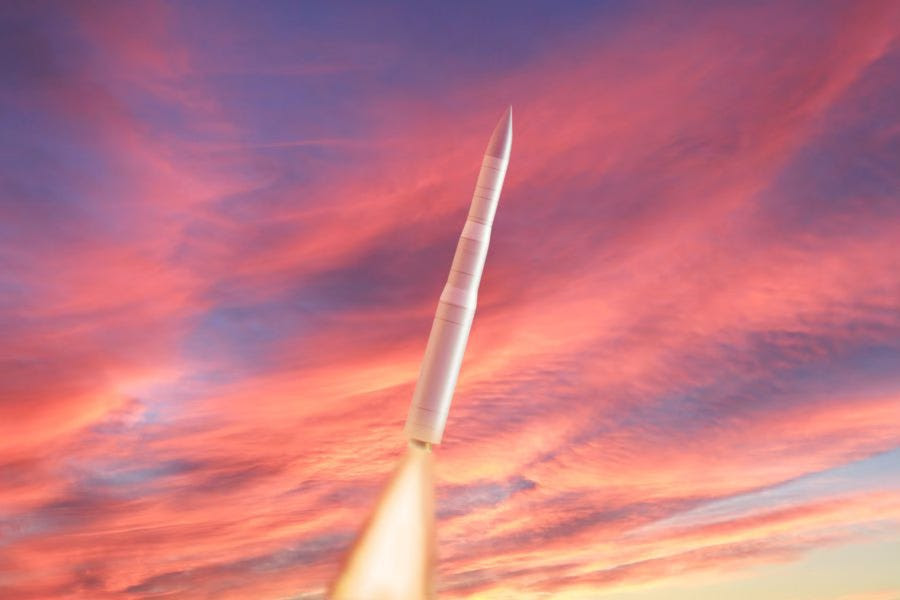
an idealized illustration of a Sentinel ICBM soon after launch. Don’t think about the aftermath of thermonuclear war. As NBC Pitchman Brian Williams once said, it’s important to be guided by the beauty of our weapons.
An Abomination of the English Language
| Just when you thought the assault on the English language couldn’t be more severe, I came across a new abomination in a recent memo (11/3/25) signed by the Chief of Staff of the Air Force (CSAF).The CSAF expressed his commitment to nuclear force “recapitalization,” meaning that he fully supports the B-21 Raider and the Sentinel ICBM, which will cost more than $500 billion over the next two decades. He vowed he’d “relentlessly advocate” for them. |
“Recapitalization”: What a word to describe more genocidal nuclear weapons!
Typically, the Air Force refers to “modernization” or “investment” when it comes to new nukes. This latest euphemism is an even more extreme example of bureaucratese and business-speak.
We’re just “recapitalizing” our nuclear forces, folks. Nothing to see here, move along.
One thing is certain. The new CSAF, with his talk of “recapitalization,” will make the smoothest of transitions to industry once he retires from the military.
It’s time for recapitalization! (Red sky in morning, America take warning.)
What we should be talking about after watching Bigelow’s ‘A House of Dynamite’ nuclear thriller.
It’s hard to avoid wondering how the change in leadership and the loss of expertise within the government would affect decision-making today.
Damage limitation in nuclear war is fundamentally a mirage.
By Mark Goodman | October 25, 2025,
Mark Goodman is a former senior scientist at the US State Department who specialized in nuclear policy—nuclear energy, nuclear nonproliferation,…
Kathryn Bigelow’s new film, A House of Dynamite, presents a compelling, Rashomon-style dissection of a moment of crisis from three different perspectives. Other nuclear wonks have praised the film for exposing the dangers of nuclear weapons. While the film is a work of cinematic art in its own right, Bigelow’s main objective is to make the audience reflect on those dangers and discuss how to deal with them.
Surprise attack, realistic response. The film gets many important facts right. Chiefly, it illustrates the dilemmas and paradoxes of nuclear deterrence. Deterrence is supposed to prevent war, but it depends on making the threat of nuclear war credible enough that it deters actions that could lead to war. In normal times, when tensions are low, deterrence can contribute to stability; in times of crisis, it can prompt decision makers to act with greater caution. But crises can also create a “use it or lose it” pressure to launch nuclear weapons while it’s still possible. The decision time can be painfully short—19 minutes in this movie. As one character puts it in the film, the choice is between suicide—launching a retaliatory strike knowing the response will be devastating—and surrender. This is why President Barack Obama’s Nuclear Posture Review in 2010 put a premium on giving the president more time to decide.
The movie also shows the machinery of government as it faces a crisis. It presents the drama first at the operational level: soldiers and watch officers going from routine to “What the heck?” in the blink of an eye. A single long-range missile is heading to Chicago from northeast Asia—probably from North Korea, but it could be Russia or China. The second iteration brings in a sprawling array of experts and policy advisors as they seek to understand what is happening, the choices, and the consequences.
The third iteration shows decision makers—the defense secretary and the president—suddenly facing an urgent dilemma with no good choices. In the movie, the scenario jumps to “DEFCON 2,” which is the second-highest state of military readiness for which armed forces are on high alert and could deploy and engage in combat within six hours. And when the interception fails, the scenario moves to “DEFCON 1,” the maximum readiness posture when an attack is imminent or already underway. I’ve never been that close to a crisis—DECON 2 was ordered only once during the Cuban Missile Crisis, and DEFCON 1 is without precedent—but the human and institutional dynamics at each level seemed plausible. It’s hard to avoid wondering how the change in leadership and the loss of expertise within the government would affect decision-making today.
But for all it gets right, the film also muddles some key points……………..
Illusion of ‘damage limitation.’ The film brings to mind current debates over whether the United States needs more nuclear weapons to simultaneously deter Russia and China, particularly as China’s stockpile is growing by roughly a hundred warheads a year. The conventional wisdom seems to be that the United States does, based on arcane calculations of what deterrence requires, which in turn are based on policy assumptions about what nuclear weapons are for.
It turns out that what drives the numbers is not what one might think of as the primary role of nuclear weapons—to deter a nuclear attack against the United States. Rather, the numbers are based on the secondary role of trying to limit damage to the United States if deterrence fails. Damage limitation makes sense in principle, but in practice is virtually impossible, and trying to limit damage can do more harm than good. According to the logic of damage limitation, the United States would launch a preemptive attack to destroy the other side’s nuclear weapons and limit their ability to destroy the United States. This notion of preemption is what creates the use-it-or-lose-it pressure, and that pressure gets worse when the United States designs its nuclear forces to emphasize the ability to strike first over the ability to ride out the attack and then retaliate.
Damage limitation in nuclear war is fundamentally a mirage.
If even a small number of nuclear weapons survive a first strike, they could still wreak massive devastation. A nuclear power cannot escape its own vulnerability. There’s a saying that the first casualty of war is the war plan, and nuclear war is no exception. Any use of nuclear weapons would fundamentally change the nature of a conflict. Everything, including the scenarios and dilemmas confronting decision makers, would be transformed in unpredictable ways. Catastrophe might not be inevitable, but it would loom at every turn. It is this incalculable danger—not the calculations of the planners—that is the unavoidable essence of nuclear deterrence.
Missile defense myth. A House of Dynamite also gets the futility of missile defense right, but it does not explain why. Sure, the limited defense system failed in the film, but one could argue we could do better. Wouldn’t President Donald Trump’s proposed Golden Dome defend the United States against a nuclear attack? As counterintuitive as it sounds, the answer is no. Worse, it would be futile and dangerous.
Golden Dome is futile because it’s always going to be easier and cheaper for the attacker to overwhelm, spoof, or circumvent any missile defense system.
Take Russia’s war against Ukraine for example: Russian missiles can relatively easily hit Ukrainian cities and infrastructure, while Russian ground forces are at a standstill. The attacker’s advantage is magnified for intercontinental-range missiles, which are faster and harder to hit, and any failure to intercept a nuclear warhead would be disastrous.
And missile defense is dangerous because, if paired with a nuclear force structure designed to preempt, it can magnify the temptation to use that force to strike first. ………………………………
I spent most of my career in government trying to prevent the spread of nuclear weapons and avoid nuclear war. After the Cold War, the world seemed to lose interest in nuclear weapons. Arms control and risk reduction became niche topics for a narrow group of insiders and experts. Bigelow’s A House of Dynamite is a welcome and useful reminder that the dangers of nuclear weapons not only never went away, but they have been growing in recent years. Hopefully, this renewed attention will stimulate a rethinking of the United States’ nuclear posture so that the danger of possessing and deploying nuclear weapons does not outweigh the threats they are meant to deter.https://thebulletin.org/2025/10/what-we-should-be-talking-about-after-watching-bigelows-a-house-of-dynamite-nuclear-thriller/?utm_source=ActiveCampaign&utm_medium=email&utm_content=What%20we%20should%20be%20talking%20about%20after%20%20%20A%20House%20of%20Dynamite&utm_campaign=20251024%20Monday%20Newsletter
‘You and the Atom Bomb’: how George Orwell’s 1945 essay predicted the Cold War and nuclear proliferation
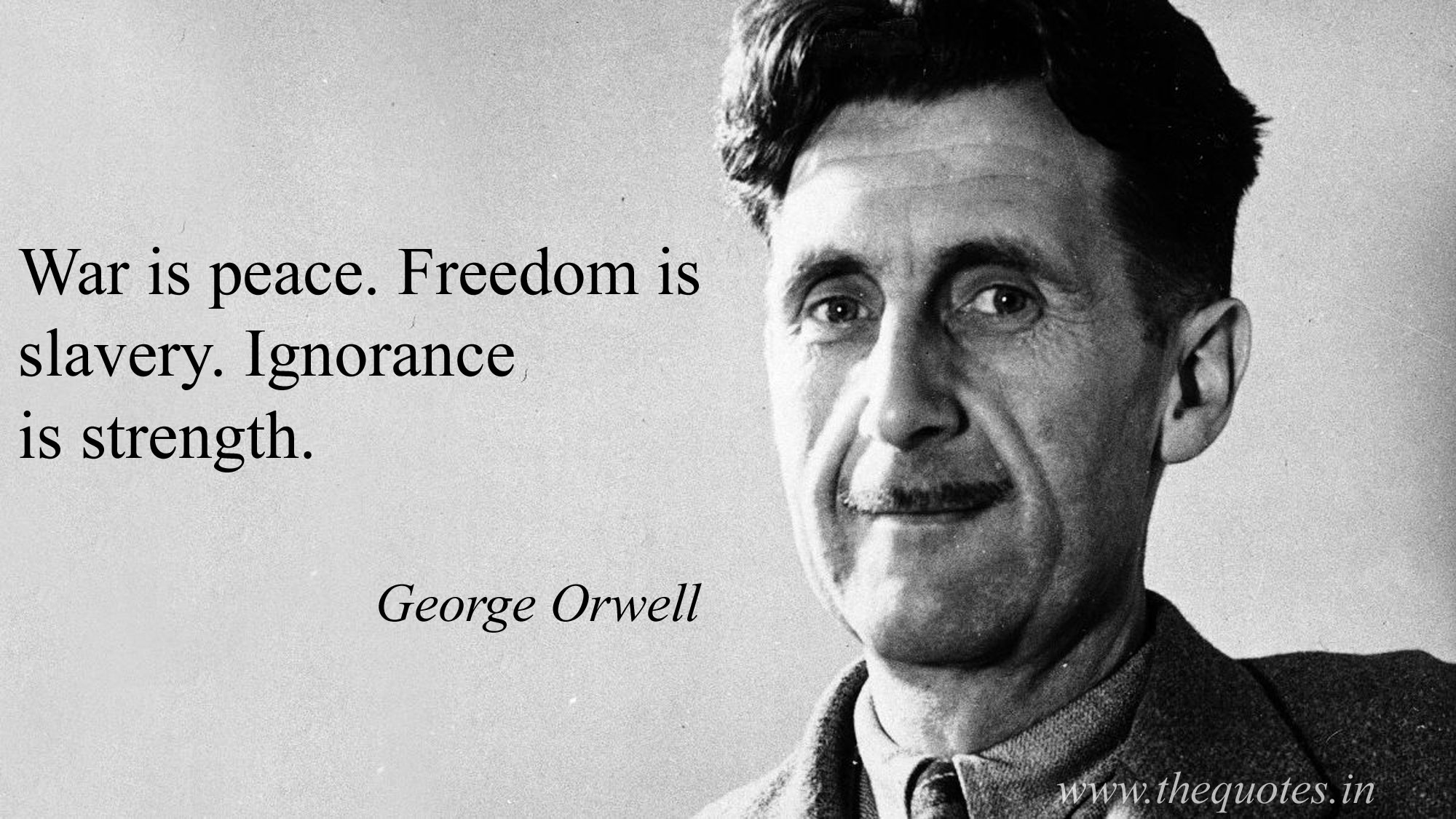
October 20, 2025, Ibrahim Al-Marashi, Adjunct Professor, IE School of Humanities, IE University; California State University San Marcos, https://theconversation.com/you-and-the-atom-bomb-how-george-orwells-1945-essay-predicted-the-cold-war-and-nuclear-proliferation-267708
August 2025 marked the 80th anniversary of the 1945 atomic bombings of Hiroshima and Nagasaki. Just a month after the attacks, on 19 October 1945, George Orwell published an essay in the London Tribune, entitled “You and the Atom Bomb”. In it, he surmised what if “the great nations make a tacit agreement never to use the atomic bomb against one another?” He wrote that what would emerge is a “peace that is no peace”, and “a permanent state of ‘cold war’”, introducing an enduring metaphor that would define geopolitics for decades.
In the essay, Orwell also predicted nuclear proliferation: “The bomb is fantastically expensive and that its manufacture demands an enormous industrial effort, such as only three or four countries in the world are capable of making.” Indeed, all five permanent members of the Security Council of the United Nations (UN), which was also established 80 years ago, have now obtained “the bomb”, the USSR being the second in 1949.
Since then, its threat has shaped and justified global conflict. Both Iraq and Iran have been accused of seeking the bomb, but instead of diplomatic non-proliferation, the US and Israel have, in both cases, used armed force to prevent these nations from obtaining nuclear weapons.
One of the reasons the UN approved the 1991 Gulf War was the existence of intelligence that Iraq had a nuclear weapons program. In 2003, the US and UK attempted to get the UN to approve a similar war to dismantle Iraq’s alleged nuclear weapons – based on flawed intelligence that had been plagiarised from my very own University of Oxford thesis.
In June 2025, Israel attacked Iran for allegedly seeking a nuclear weapon, also on the basis of “intelligence” reports. The world held its breath during the ensuing 12-day war, which could all too easily have escalated into nuclear conflict.
Today, artificial intelligence (AI) may allow a nation or terrorist group to build an atomic bomb in ways that Orwell’s contemporaries – the likes of Einstein and Oppenheimer – could have never envisioned.
Novels and the Cold War
In 1949, just four years after You and the Atom Bomb, Orwell’s novel 1984 was published. It is a dystopian novel that foreshadows the Cold War he had predicted in 1945, with three fictional geopolitical blocs – Oceania (North America and Britain), Eurasia (USSR and Europe), and Eastasia (China and its neighbours) – forming a series of ever-shifting alliances to control the “Disputed territories.”
The novel was prescient – it written before the North Atlantic Treaty Organization (Nato) and the Warsaw Pact, and before terms such as the “First”, “Second” and “Third World” had taken root.
However, it was his contemporary, WWII British Naval Intelligence officer Ian Fleming, who used the novel to predict a different facet of 21st century power dynamics. In his wildly successful James Bond novels (and their even more popular film adaptations), the greatest threat to global security is not national governments like the USSR, but super-powerful individual actors, such as criminal mastermind Ernst Stavro Blofeld and the scientist Dr No.
In recent decades, Fleming’s vision of concentrated individual power as the nexus of geopolitical threat has materialised time and time again. In 2001, Osama bin Laden ushered in the 20-year Global War on Terror. Media mogul Rupert Murdoch holds inordinate power over international politics, swaying elections and major votes like the 2016 Brexit vote. It was Elon Musk, not NASA, who created a space program and provided internet to Ukraine after the 2022 Russian invasion, giving SpaceX power not seen since the days of the British East India Company.
Atomic AI and dirty bombs
The path to obtaining a nuclear weapon has not changed much since Hiroshima, though AI might make it easier for states that seek atomic bombs. Advances in AI may also make it easier for a terrorist group to produce and detonate a conventional explosive combined with radioactive material, causing psychological and economic disruption, otherwise known as a “dirty bomb”.
Orwell’s writing exposes the hypocrisy of this term, as he forces us to ask whether it means that regular nuclear weapons are, by default, “clean bombs”. Nevertheless, for all the fear of an improvised, terrorist dirty bomb attack, the dirtiest are those covered with depleted uranium (DU), which are widely used by Western military forces.
DU was initially produced 80 years ago as a “waste” by-product of uranium enrichment during the Manhattan Project. Its scientists discovered that it could be used to create armour-piercing weapons.
These were used by the US and UK during both the 1991 Gulf War and 2003 Iraq War. They still contaminate the soil, leading to cancer, birth defects, and other illnesses. Today, Ukraine not only suffers from the continuing fallout of Chernobyl – both it and Russia have been using these weapons since 2022.
Fake news in 1945
While AI has supercharged what we typically think of as Orwellian – surveillance states like those depicted in 1984 – Orwell also wrote about how technology allowed for misinformation. In 1944, he questioned fake reports of non-existent German air raids over Britain which were broadcast on Nazi radio, and highlighted their value as propaganda in the event of a potential German victory.
Today, 80 years on, the same thing is still happening. In June 2025, during the 12-Day War between Israel and Iran, AI-fabricated deepfake videos showed nuclear mushroom clouds detonating over destroyed Iranian atomic facilities.
Some argue today that the Cold War between Washington and Moscow never ended, giving Orwell’s metaphor an enduring legacy. Nevertheless, US writer and political commentator Walter Lippman is generally credited for inventing the term in 1947, proving Orwell’s assertion from the novel 1984: “He who controls the past controls the future; who controls the present controls the past.”
The play’s the thing
12 Oct 25, Beyond Nuclear
Atomic Bill and the Payment Due, Libbe HaLevy’s new play, uncovers a shocking secret of journalistic malpractice and more, writes Karl Grossman
Can a play influence public perception of our shared atomic history enough to shift the conversation away from a presumed nuclear “renaissance” and into a more critical, life-protective examination of what this technology is and could do to us all?
Playwright and podcaster Libbe HaLevy believes it can. She spent 13 years researching and writing that play—Atomic Bill and the Payment Due—which had its premiere staged reading on September 9th as a featured presentation of the 50th anniversary celebration of the establishment of the Peace Resource Center at Wilmington College in Ohio.
For 14 years, HaLevy has hosted the podcast Nuclear Hotseat, aired on 20 Pacifica affiliate radio stations throughout the United States and, as its website (NuclearHotseat.com) says, has been tuned into and downloaded by audiences in over 124 countries around the world.
It was while working on a 2012 episode focusing on the Trinity atomic bomb test in New Mexico that she became aware of journalistic irregularities around that event that piqued her interest.
The play is “a true story about media manipulation at the dawn of the Atomic Age and the New York Times reporter who sold his soul to get the story.”
That reporter is William Laurence, a Pulitzer Prize-winning science reporter at the Times. In 1945, General Leslie Groves, director of the Manhattan Project, arranged with Times publisher Arthur Hays Sulzberger, and Edwin James, its managing editor, to have Laurence secretly inserted into the Manhattan Project. He was the only journalist embedded in the crash program to build the first atomic bombs– a position he relished.
Before World War II broke out and the splitting of the atom first occurred, Laurence wrote in the Times about how atomic energy could for mankind “return the Earth to the Eden he had lost.” He witnessed the Trinity test in New Mexico in July 1945, and wrote the Manhattan Project press release that was distributed afterwards, which claimed only that an ammunition dump exploded and no one was hurt. He had arranged a seat on the Enola Gay for its dropping of an atomic bomb on Hiroshima, but missed getting on—a bitter disappointment. But he did fly on an airplane that followed the B-29 that dropped an atomic bomb on Nagasaki. When the war ended, he wrote articles in the Times glorifying the Manhattan Project and for many years promoted nuclear energy in his stories— ignoring the lethal impacts of radioactivity.
HaLevy sensed a play lurking in the story.
HaLevy has a long background in theatre and playwriting, with more than 50 presentations of her plays and musicals, and multiple awards—most under her previous name, Loretta Lotman.
And she was exposed to the dangers of nuclear energy, having been in a house in Pennsylvania one mile away from the Three Mile Island nuclear power plant when it underwent a meltdown in 1979. She had been staying with friends on a badly timed vacation.
HaLevy authored a book about her experience, Yes, I Glow in the Dark! One Mile from Three Mile Island to Fukushima and Nuclear Hotseat, published in 2018. Dr. Helen Caldicott, author of Nuclear Madness and many other books on nuclear technology, has said of HaLevy’s book that it “must be read by all people who care about the future of the planet and their children.”
Of her book, HaLevy has said: “It’s the story of what happened when I found myself trapped one mile from an out-of-control, radiation-spewing nuclear reactor—how it impacted my life, health, sense of self—and what it took to recover. It’s a personal memoir, a guidebook on what the nuclear industry gets away with and how they get away with it, and a directory of resources and strategies with which to fight back. The information ranges from 1950’s Duck and Cover and Disney’s Our Friend the Atom to how I learned to fight nuclear with facts, sarcasm… and a podcast.”
HaLevy recounted in an interview last week that in 2012, with Nuclear Hotseat having begun in the aftermath of Fukushima a year earlier, she read that more than one press release was written about the Trinity Test before the blast, when no one knew exactly what it would do. She called me for more information. She was right: there had been four press releases written by Laurence in advance to cover every eventuality from “nothing to see here” to “martial law, evacuate the state”—a clear violation of journalistic ethics. I referred her to Beverly Ann Deepe Keever, who had written the book News Zero: The New York Times and the Bomb, published in 2004. Laurence is a main figure in it.
Keever was a journalist writing for publications including Newsweek, The New York Herald Tribune and the Christian Science Monitor, and for seven years reported on the Vietnam War from the front lines. At the time she wrote News Zero she was a professor of journalism at the University of Hawaii.
In News Zero Keever detailed “the arrangements” made by Groves with Sulzberger and James at the Times; how Laurence “was hired by the U.S. War Department in April 1945 to work for the Manhattan Project;” and how his four months of writing “provided most of the material” used by the Times “in devoting ten of its 38 pages on August 7, 1945 to the development of the atomic bomb and its first use on Hiroshima. Laurence was thus a major player in providing many text-based images, language and knowledge that first fixed and molded the meanings and perceptions of the emerging atomic age. But this major player served as a scribe writing government propaganda on a historic issue, rather than as a watchdog adhering to those high principles traditionally espoused by the press in general and the Times in particular.”
Inspired by Keever’s book, HaLevy launched into extensive research on Laurence—a quest made more difficult because he destroyed all his files, papers, correspondence, and calendars, leaving behind only his published articles, four nuclear-themed books, and two carefully manipulated oral histories recorded for Columbia University. But she was looking beyond the known facts to the human, emotional underpinnings of the story. “These events did not happen by themselves,” she said. “There were people, agendas, money and psychology behind the decisions made, and I saw Laurence as the lynchpin in conveying the earliest atomic story. I needed to know: who was this man and how could he do that?”
A play is different than a book— it focuses on human emotions, on drama.
And there is much drama in Atomic Bill and the Payment Due…………………………………………………………………………………………………..
A key scene takes place at a press conference at the Trinity site a month after the test bomb was exploded. It pinpoints Laurence’s decision that betrayed not only Burchett and himself, but all of humanity by steering the public away from the truth about radiation while obliterating Burchett’s story. For HaLevy, this highlights the moment where Laurence—if he ever had a soul —lost it.
But the rewards were immediate. Jessie says: “Laurence is front page in the Times for two full weeks in September 1945: Ten articles, 20,000 words. He coins the term ‘Atomic Age’ but uses the word ‘radiation’ only four times, not once mentioning its dangers.” And he wins a Pulitzer……………………………………………………………………………………….. https://beyondnuclearinternational.org/2025/10/12/the-plays-the-thing/
The Total Trumpification of America
4 October 2025, Roswell, https://theaimn.net/the-total-trumpification-of-america/
In an era of bold leadership and unprecedented achievement, one man’s visage can no longer be confined to the traditional halls of fame. First, he wanted his face on Mount Rushmore. Then, he set his sights on a coin. But why think so small? In a move that has stunned pundits and thrilled patriots, President Trump has announced a plan for total perceptual saturation. It’s no longer about a place on the currency; it’s about the currency, the country, and the cosmos.
The following official press release and subsequent details outline the groundbreaking “Patriotic Image Total Coverage Act.”
The Official Press Release
“After the tremendous success of my administration, the greatest in history, it has become clear that the American people need a constant, stable, and beautiful reminder of who made it all possible. So, I am implementing a new policy, the ‘Patriotic Image Total Coverage Act.’ It’s the best act. Everyone says so. My face will now be on… the lot. Why have a little when you can have it all? It’s going to be yuge.”
What “The Lot” Actually Includes
Currency: All of it. Not just coins. Pennies, nickels, dimes – his face is on both sides. The $20 bill? It’s just three different angles of his face.
Stamps: The “Forever Trump” stamp is the only option for mail, with a special “Executive Edition” that costs $10 and is, according to sources, “so much better than the regular stamp.”
Government Property: Every police car, every fire truck, every mailbox, and every single page of every government website. The “loading” icon on IRS.gov is now a spinning golden “T.”
Consumer Goods: By executive order, his face is subtly woven into the fabric of all Levi’s jeans, printed on every egg, and appears as a watermark on all pizza boxes.
Infrastructure: A subtle (but not that subtle) granite inlay of his profile on every mile of interstate highway. Every manhole cover is a newly minted bronze bust.
The Digital Sphere: A mandatory browser extension that places a small, translucent image of him smiling approvingly in the corner of your screen during any online financial transaction.
Nature Itself: A permanent, cloud-seeding program ensures that, on sunny days, the clouds occasionally arrange themselves into a likeness visible from three states away.
Every McDonald’s Happy Meal box: A natural fit. His face would be there, winking, with the caption, “You’re gonna love it. Believe me.”
Bottles of Trump Water: The label is just his face, with an expression of ultimate purity. “It’s the clearest water. Some say it’s the best water in the history of water.”
The Surface of a Giant Comet: As it swings by Earth every 75 years, it will flash his face, reminding future generations of this golden age.
On the Moon: Forget a plaque; a massive, laser-etched portrait on the face of the moon, visible with a good telescope. “So the aliens know who to call for the best deals.”
The Washington Monument: A giant, wraparound vinyl print. It would be the world’s tallest selfie.
A Line of “Executive Time” Watches: The entire watch face is his face, with his hair acting as the hour and minute hands.
The Google Search Bar: A tiny, persistent icon in the corner, offering to “search for the best results, something the other guys can’t do.”
And this biggie: The Shroud of Mar-a-Lago. A sacred linen bearing the inexplicable and glorious likeness of Donald Trump. It is a testament not to suffering, but to unparalleled success and energy.
And one final, fitting addition:
Toilet Paper: For the ultimate “draining the swamp” experience.
Atomic Bill and the Payment Due

The play is “a true story about media manipulation at the dawn of the Atomic Age and the New York Times reporter who sold his soul to get the story.”
By Karl Grossman, Nation of Change, 27 Aug 25
Can a play influence public perception of our shared atomic history enough to shift the conversation away from a presumed nuclear “renaissance” and into a more critical, life-protective examination of what this technology is and could do to us all?
Playwright and podcaster Libbe HaLevy believes it can. She spent 13 years researching and writing that play—Atomic Bill and the Payment Due—which will have its premiere staged reading next week, on Sept. 9, as a featured presentation at the 50th anniversary celebration of the establishment of the Peace Resource Center at Wilmington College in Ohio.
For 14 years, HaLevy has hosted the podcast Nuclear Hotseat, aired on 20 Pacifica affiliate radio stations throughout the United States and, as its website (NuclearHotseat.com) says, has been tuned into and downloaded by audiences in over 124 countries around the world.
It was while working on a 2012 episode focusing on the Trinity atomic bomb test in New Mexico that she became aware of journalistic irregularities around that event that piqued her interest.
The play, says its program notes, is “a true story about media manipulation at the dawn of the Atomic Age and the New York Times reporter who sold his soul to get the story.”
That reporter is William Laurence, a Pulitzer Prize-winning science reporter at the Times. In 1945, General Leslie Groves, director of the Manhattan Project, arranged with Times publisher Arthur Hays Sulzberger, and Edwin James, its managing editor, to have Laurence secretly inserted into the Manhattan Project. He was the only journalist embedded in the crash program to build the first atomic bombs—a position he relished.
Before World War II broke out and the splitting of the atom first occurred, Laurence wrote in the Times about how atomic energy could for mankind “return the Earth to the Eden he had lost.” He witnessed the Trinity test in New Mexico in July 1945, and wrote the Manhattan Project press release that was distributed afterwards, which claimed only that an ammunition dump exploded and no one was hurt. He had arranged a seat on the Enola Gay for its dropping of an atomic bomb on Hiroshima, but missed getting on—a bitter disappointment. But he did fly on an airplane that followed the B-29 that dropped an atomic bomb on Nagasaki. When the war ended, he wrote articles in the Times glorifying the Manhattan Project and for many years promoted nuclear energy in his stories— ignoring the lethal impacts of radioactivity.
HaLevy sensed a play lurking in the story. ………………………………………………………………………………………………………………………… https://www.nationofchange.org/2025/08/26/atomic-bill-and-the-payment-due/
August 26, 2025
242
SOURCENationofChange
2
Chris Hedges: Israel’s Assassination of Memory
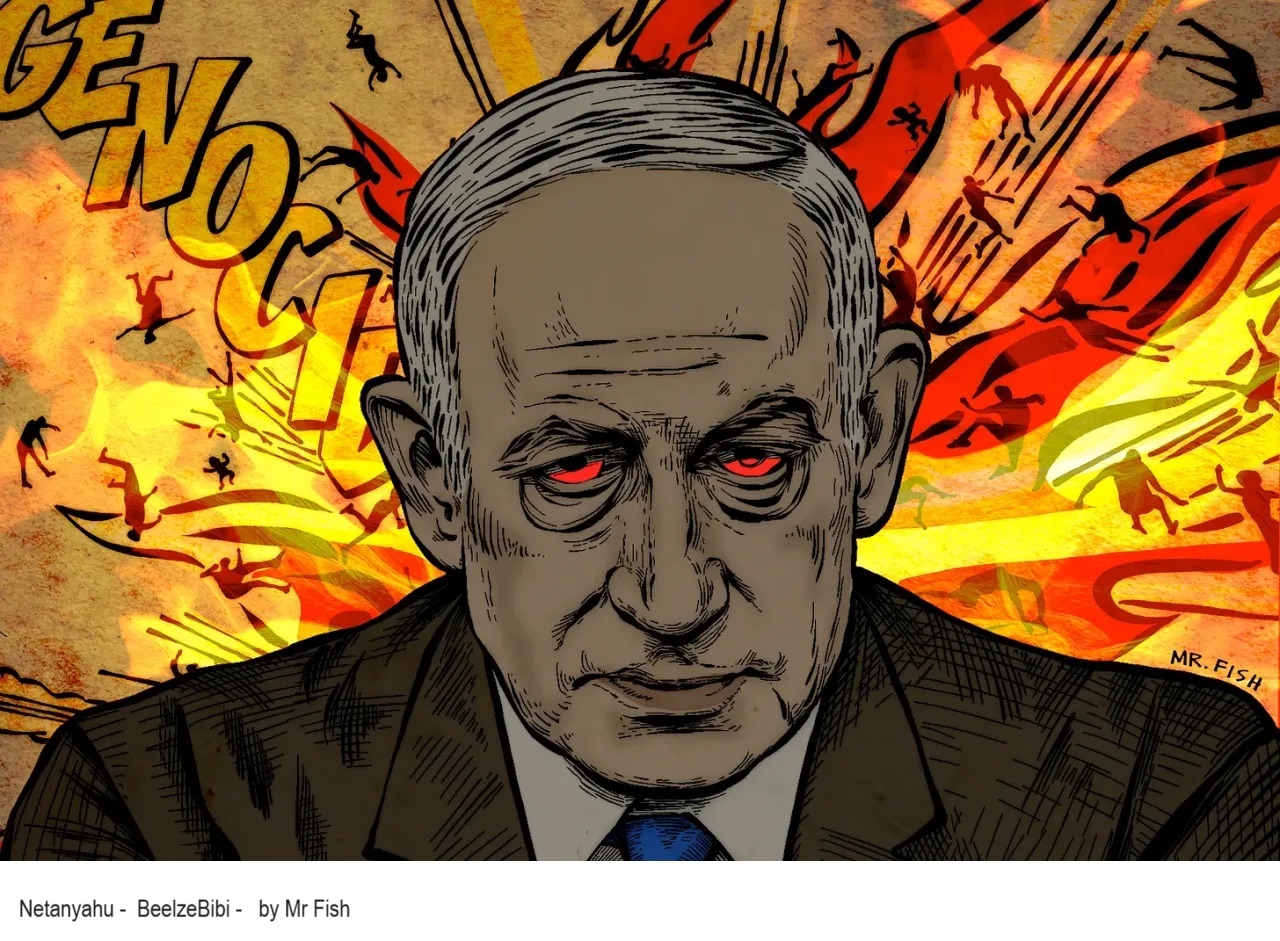
This is Kabuki theater — a way, when the genocide is over, for these Western leaders to insist they stood on the right side of history, even as they armed and funded the genocidal killers, while harassing, silencing or criminalizing those who decried the slaughter.
August 23, 2025, By Chris Hedges ScheerPost, https://scheerpost.com/2025/08/23/chris-hedges-israels-assassination-of-memory/
As Israel ticks off its list of Nazi-like atrocities against the Palestinians, including mass starvation, it prepares for yet another – the demolition of Gaza City, one of the oldest cities on Earth. Heavy engineering equipment and gigantic armored bulldozers are tearing down hundreds of heavily damaged buildings. Cement trucks are churning out concrete to fill tunnels. Israeli tanks and fighter jets pummel neighborhoods to drive Palestinians who remain in the ruins of the city to the south.
It will take months to turn Gaza City into a parking lot. I have no doubt Israel will replicate the efficiency of the Nazi SS Gen. Erich von dem Bach-Zelewski, who oversaw the obliteration of Warsaw. He spent his final years in a prison cell. May history, at least in terms of this footnote, repeat itself.
As Israeli tanks advance, Palestinians are fleeing, with neighborhoods such as Sabra and Tuffah, cleansed of its inhabitants. There is little clean water and Israel plans to cut it off in northern Gaza. Food supplies are scarce or wildly overpriced. A bag of flour costs $22.00 a kilo, or your life. A report published Friday by the Integrated Food Security Phase Classifications (IPC) , the world’s leading authority on food insecurity, for the first time has confirmed a famine in Gaza City. It says more than 500,000 people in Gaza are facing “starvation, destitution and death”, with “catastrophic conditions” projected to expand to Deir al-Balah and Khan Younis next month. Nearly 300 people, including 112 children, have died from starvation.
European leaders, along with Joe Biden and Donald Trump, remind us of the real lesson of the Holocaust. It is not Never Again, but, We Do not Care. They are full partners in the genocide. Some wring their hands and say they are “appalled” or “saddened.” Some decry Israel’s orchestrated starvation. A few say they will declare a Palestinian state.
This is Kabuki theater — a way, when the genocide is over, for these Western leaders to insist they stood on the right side of history, even as they armed and funded the genocidal killers, while harassing, silencing or criminalizing those who decried the slaughter.
Israel speaks of occupying Gaza City. But this is a subterfuge. Gaza is not to be occupied. It is to be destroyed. Erased. Wiped off the face of the earth. There is to be nothing left but tons of debris that will be laboriously carted away. The moonscape, devoid of Palestinians of course, will provide the foundation for new Jewish colonies.
“Gaza will be entirely destroyed, civilians will be sent to…the south to a humanitarian zone without Hamas or terrorism, and from there they will start to leave in great numbers to third countries,” Israel’s Minister of Finance Bezalel Smotrich announced at a conference on increased Jewish settlement in the Israeli-occupied West Bank.
All that was familiar to me when I lived in Gaza no longer exists. My office in the center of Gaza City. The Marna boarding house on Ahmed Abd el Aziz Street, where after a day’s work I would drink tea with the elderly woman who owned it, a refugee from Safad in northern Galilee. The coffee shops I frequented. The small cafes on the beach. Friends and colleagues, with few exceptions, are in exile, dead or, in most cases, have vanished, no doubt buried under mountains of debris. On my last visit to Marna House, I forgot to return the room key. Number 12. It was attached to a large plastic oval with the words “Marna House Gaza” on it. The key sits on my desk.
The imposing Qasr al-Basha fortress in Gaza’s Old City — built by Mamluk Sultan Baibars in the 13th century and known for its relief sculpture of two lions facing each other — is gone. So too is the Barquq Castle, or Qalʿat Barqūqa, a Mamluk-era fortified mosque constructed in 1387-1388, according to an inscription above the entrance gateway. Its ornate Arabic calligraphy by the main gate once read:
“In the name of Allah, the Most Gracious, Most Merciful. The mosques of God shall establish regular prayers, and practice regular charity, and fear none except God.”
The Great Omari Mosque in Gaza City, the ancient Roman cemetery and the Commonwealth War Cemetery — where more than 3,000 British and commonwealth soldiers from World War I and World War II are buried — have been bombed, and destroyed, along with universities, archives, hospitals, mosques, churches, homes and apartment blocks. Anthedon Harbor, which dates to 1100 B.C. and once provided anchorage for Babylonian, Persian, Greek, Roman, Byzantine and Ottoman ships, lies in ruins.
I used to leave my shoes on a rack by the front door of the Great Omari Mosque, the largest and oldest mosque in Gaza, in the Daraj Quarter of the Old City. I washed my hands, face and feet at the common water taps, carrying out the ritual purification before prayer, known as wudhu. Inside the hushed interior with its blue-carpeted floor, the cacophony, noise, dust, fumes and frenetic pace of Gaza melted away.
The razing of Gaza is not only a crime against the Palestinian people. It is a crime against our cultural and historical heritage — an assault on memory. We cannot understand the present, especially when reporting on Palestinians and Israelis, if we do not understand the past.
History is a mortal threat to Israel. It exposes the violent imposition of a European colony in the Arab world. It reveals the ruthless campaign to de-Arabize an Arab country. It underscores the inherent racism towards Arabs, their culture and their traditions. It challenges the myth that, as former Israeli prime minister Ehud Barak said, Zionists created, “a villa in the middle of a jungle.” It mocks the lie that Palestine is exclusively a Jewish homeland. It recalls centuries of Palestinian presence. And it highlights the alien culture of Zionism, implanted on stolen land.
When I covered the genocide in Bosnia, the Serbs blew up mosques, carted away the remains and forbade anyone to speak of the structures they had razed. The goal in Gaza is the same, to wipe out the past and replace it with myth, to mask Israeli crimes, including genocide.
The campaign of erasure banishes intellectual inquiry and stymies the dispassionate examination of history. It celebrates magical thinking. It allows Israelis to pretend the inherent violence that lies at the heart of the Zionist project, going back to the dispossession of Palestinian land in the 1920s and the larger campaigns of ethnic cleansing of Palestinians in 1948 and 1967, does not exist.
The Israeli government bans public commemorations of the Nakba, or catastrophe, a day of mourning for Palestinians who seek to remember the massacres and expulsion of 750,000 Palestinians carried out by Jewish terrorist militias in 1948 for this reason. Palestinians are even prevented from carrying their flag.
This denial of historical truth and historical identity permits Israelis to wallow in eternal victimhood. It sustains a morally blind nostalgia for an invented past. If Israelis confront these lies it threatens an existential crisis. It forces them to rethink who they are. Most prefer the comfort of illusion. The desire to believe is more powerful than the desire to see.
Erasure calcifies a society. It shuts down investigations by academics, journalists, historians, artists and intellectuals who seek to explore and examine the past and the present. Calcified societies wage a constant war against truth. Lies and dissimulation must be constantly renewed. Truth is dangerous. Once it is established it is indestructible.
As long as truth is hidden, as long as those who seek truth are silenced, it is impossible for a society to regenerate and reform itself. The Trump administration is in lock step with Israel. It too seeks to prioritize myth over reality. It too silences those who challenge the lies of the past and the lies of the present.
Calcified societies cannot communicate with anyone outside their incestious circles. They deny verifiable fact, the foundation on which rational dialogue takes place. This understanding lay at the heart of South Africa’s Truth and Reconciliation Commission. Those who carried out the atrocities of the apartheid regime confessed their crimes in exchange for immunity. By doing so they gave the victims and the victimizers a common language, one rooted in historical truth. Only then was healing possible.
Israel is not only destroying Gaza. It is destroying itself.
1 This Month

of the week – Shut Down Drone Warfare!


Tell the Ukrainian Government to Drop Prosecution of Peace Activist Yurii Sheliazhenko

Petition to revoke the licensing of the Near Surface Nuclear Disposal Facility (NSDF) at Chalk River. https://www.ourcommons.ca/petitions/en/Petition/Details?Petition=e-7247
To see nuclear-related stories in greater depth and intensity – go to https://nuclearinformation.wordpress.com
-
Archives
- March 2026 (237)
- February 2026 (268)
- January 2026 (308)
- December 2025 (358)
- November 2025 (359)
- October 2025 (376)
- September 2025 (257)
- August 2025 (319)
- July 2025 (230)
- June 2025 (348)
- May 2025 (261)
- April 2025 (305)
-
Categories
- 1
- 1 NUCLEAR ISSUES
- business and costs
- climate change
- culture and arts
- ENERGY
- environment
- health
- history
- indigenous issues
- Legal
- marketing of nuclear
- media
- opposition to nuclear
- PERSONAL STORIES
- politics
- politics international
- Religion and ethics
- safety
- secrets,lies and civil liberties
- spinbuster
- technology
- Uranium
- wastes
- weapons and war
- Women
- 2 WORLD
- ACTION
- AFRICA
- Atrocities
- AUSTRALIA
- Christina's notes
- Christina's themes
- culture and arts
- Events
- Fuk 2022
- Fuk 2023
- Fukushima 2017
- Fukushima 2018
- fukushima 2019
- Fukushima 2020
- Fukushima 2021
- general
- global warming
- Humour (God we need it)
- Nuclear
- RARE EARTHS
- Reference
- resources – print
- Resources -audiovicual
- Weekly Newsletter
- World
- World Nuclear
- YouTube
-
RSS
Entries RSS
Comments RSS
 nuclear-news