Covid-19 highlights risks of doing nothing on global heating
 ‘Green Swan’ Virus Shock Proves Need for Joint Climate Action, Bloomberg Law
- Covid-19 highlights risks of doing nothing on global warming
- BIS urges global cooperation in rethinking old routines
The coronavirus pandemic that’s sent the global economy into a tailspin highlights the need for international collaboration to tackle crises posing severe threats to human lives, chief among them climate change, according to the Bank for International Settlements.
Much like global warming, the disease outbreak meets the criteria for being a “Green Swan,” according to the Basel, Switzerland-based institution, which adapted Nassim Nicholas Taleb’s “Black Swan” concept for high-impact adverse events outside the scope of regular expectations to describe risks that are highly likely to materialize but too complex to fully understand…….
Central banks have already begun to consider climate change as a factor in their assessment of financial and economic risks, and the BIS highlighted the possibility of further multidisciplinary efforts to absorb large shocks. …..
With the global economy in the throes of its deepest dive since the 1930s, the pandemic may jolt decision makers into action to address global warming, according to the BIS.
“Covid-19 might have presented a vivid image of what the future might look like if nothing is done to reduce greenhouse gases, inflicting similar stoppages worldwide after some tipping-point is reached,” it said. “It may also have raised awareness of the fragility of some of our systems and therefore of the need for improved efficiency and greater resilience.”
To contact the reporter on this story:
Catherine Bosley in Zurich at cbosley1@bloomberg.net
To contact the editors responsible for this story:
Fergal O’Brien at fobrien@bloomberg.net https://news.bloomberglaw.com/banking-law/green-swan-virus-shock-proves-need-for-joint-climate-action
Killer heat and humidity already with us
 Map: Killer heat and humidity is spiking decades sooner than we feared https://www.fastcompany.com/90503692/map-killer-heat-and-humidity-is-spiking-decades-sooner-than-we-feared
At a ‘wet bulb’ temperature of 35 degrees Celsius, a human can’t survive for more than six hours, even in shade and with water. We’re starting to see those conditions more and more frequently. BY ADELE PETERS 13 May 20
If heat and humidity cross a certain extreme threshold—a “wet bulb” temperature of 35 degrees Celsius—the human body can’t survive long outside. It’s a scenario that some researchers had predicted becoming common later in the century, when climate change may make some regions essentially unlivable. But a new study suggests that dangerous, previously unprecedented levels of heat and humidity are already beginning to occur. Continue reading
Water loss in northern peatlands threatens to intensify fires, global warming
 Water loss in northern peatlands threatens to
  intensify fires, global warming
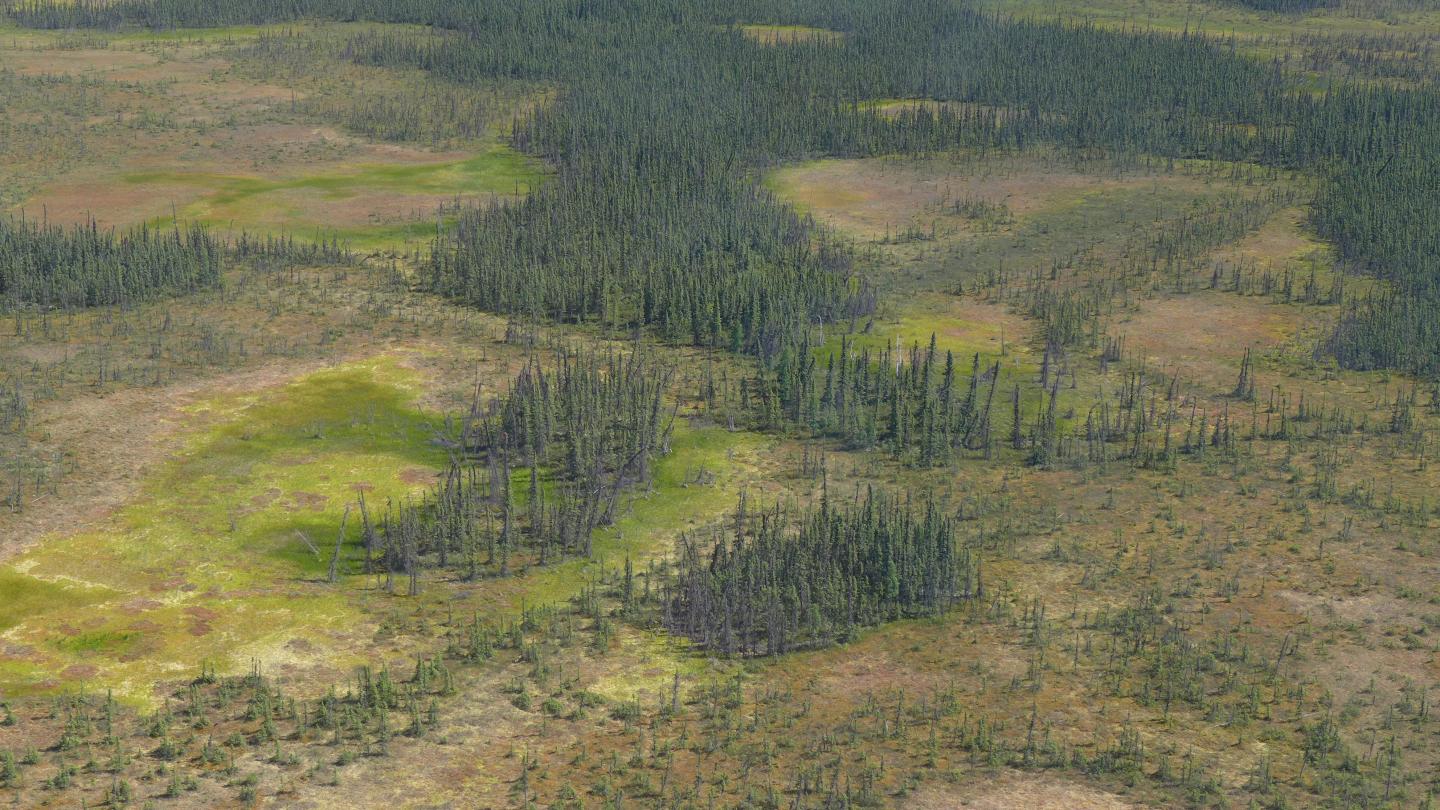
https://www.eurekalert.org/pub_releases/2020-05/mu-wli050820.php Boreal climate change study features 59 authors, MCMASTER UNIVERSITY HAMILTON, ON, MAY 11, 2020 – A group of 59 international scientists, led by researchers at Canada’s McMaster University, has uncovered new information about the distinct effects of climate change on boreal forests and peatlands, which threaten to worsen wildfires and accelerate global warming.Manuel Helbig and Mike Waddington from McMaster’s School of Geography and Earth Sciences gathered observational data from collaborators in countries across the boreal biome. Their study of how ecosystems lose water to the atmosphere appears today in the journal Nature Climate Change.
The unprecedented detail of their work has highlighted dramatic differences in the ways forests and peatlands regulate water loss to the atmosphere in a warming climate, and how those differences could in turn accelerate the pace of warming.
Most current global climate models assume the biome is all forest, an omission that could seriously compromise their projections, Helbig says.
“We need to account for the specific behavior of peatlands if we want to understand the boreal climate, precipitation, water availability and the whole carbon cycle,” he says.
“Peatlands are so important for storing carbon, and they are so vulnerable.”
Until now, Helbig says, it had not been possible to capture such a comprehensive view of these water-cycle dynamics, but with the support of the Global Water Futures Initiative and participation from so many research partners in Canada, Russia, the US, Germany and Scandinavia, new understanding is emerging.
As the climate warms, air gets drier and can take up more water. In response to the drying of the air, forest ecosystems – which make up most of the world’s natural boreal regions – retain more water. Their trees, shrubs and grasses are vascular plants that typically take up carbon dioxide and release water and oxygen through microscopic pores in their leaves. In warmer, dryer weather, though, those pores close, slowing the exchange to conserve water.
Together with lakes, the spongy bogs and fens called peatlands make up the remainder of the boreal landscape. Peatlands store vast amounts of water and carbon in layers of living and dead moss. They serve as natural firebreaks between sections of forest, as long as they remain wet.
Peatland mosses are not vascular plants, so as warming continues, they are more prone to drying out. Unlike forests, they have no active mechanism to protect themselves from losing water to the atmosphere. Dehydration exposes their dense carbon stores to accelerated decomposition, and turns them from firebreaks into fire propagators, as shown in previous research from Waddington’s ecohydrology lab.
Drier peatlands mean bigger, more intense fires that can release vast amounts of carbon into the atmosphere, accelerating global warming, Helbig says.
“It’s crucial to consider the accelerated water loss of peatlands in a warming climate as we project what will happen to the boreal landscape in the next 100 to 200 years,” he says.
Can Covid-19 response be a model for climate action?
 Some governments are already flagging the need to alter environmental standards to boost economic activity. But business groups are suggesting that the rebuilding of virus-rattled economies can be done hand-in-hand with the transition to net-zero emissions. Perhaps climate policy – historically relegated to the “too-hard” basket – stands a chance in the new world.
|
Can Covid-19 response be a NOAH YIM NATASHA KASSAM Mass behaviour change, policies guided by science, acting In 2020, the world will see the largest annual drop in carbon dioxide emissions in history. The havoc wreaked by the coronavirus and its accompanying lockdowns has seen fleets of planes grounded and factories shudder to a halt. Levels of mobility in the world’s largest cities have fallen below 10% of usual traffic. The International Energy Agency predicts that Covid-19 could wipe out international demand for coal, oil, and gas, with only renewable energy showing resilience. The preliminary data from some of the world’s biggest economies shows that global emissions are in for a sharp, if temporary, decline. Early numbers from Europe suggest that the continent could see a 24% drop in EU Emissions Trading Scheme (ETS) emissions for the whole year. Global emissions will likely only fall by 5% – a reminder that most of the world’s emissions do not come from transportation. But economies around the world are lifting their lockdowns. China, the world’s largest carbon emitter, saw a 25% decrease in emissions over its four-week lockdown. Factories in China are back online, and as in previous economic disruptions, stimulus packages and increased targets could outweigh the short-term impacts on energy and emissions. Publics recognise the challenge ahead. In China, 87% say that climate change is as serious a crisis as Covid-19 in the long term. While the number in Australia is much lower, the majority – 59% – agree. Given the significant personal and economic sacrifices many publics have made to combat Covid-19, will these concerns finally translate into real progress in addressing climate change, once the current crisis has subsided? The prospects look good. Covid-19 has put science front and centre. Continue reading |
Heat+ humidity – global heating has already made parts of the world too hot for humans
 Climate change has already made parts of the world too hot for humans, New Scientist 8 May 2020, By Adam Vaughan Global warming has already made parts of the world hotter than the human body can withstand, decades earlier than climate models expected this to happen.
Jacobabad in Pakistan and Ras al Khaimah in the United Arab Emirates have both repeatedly crossed a deadly threshold for one or two hours at a time, an analysis of weather station data found.
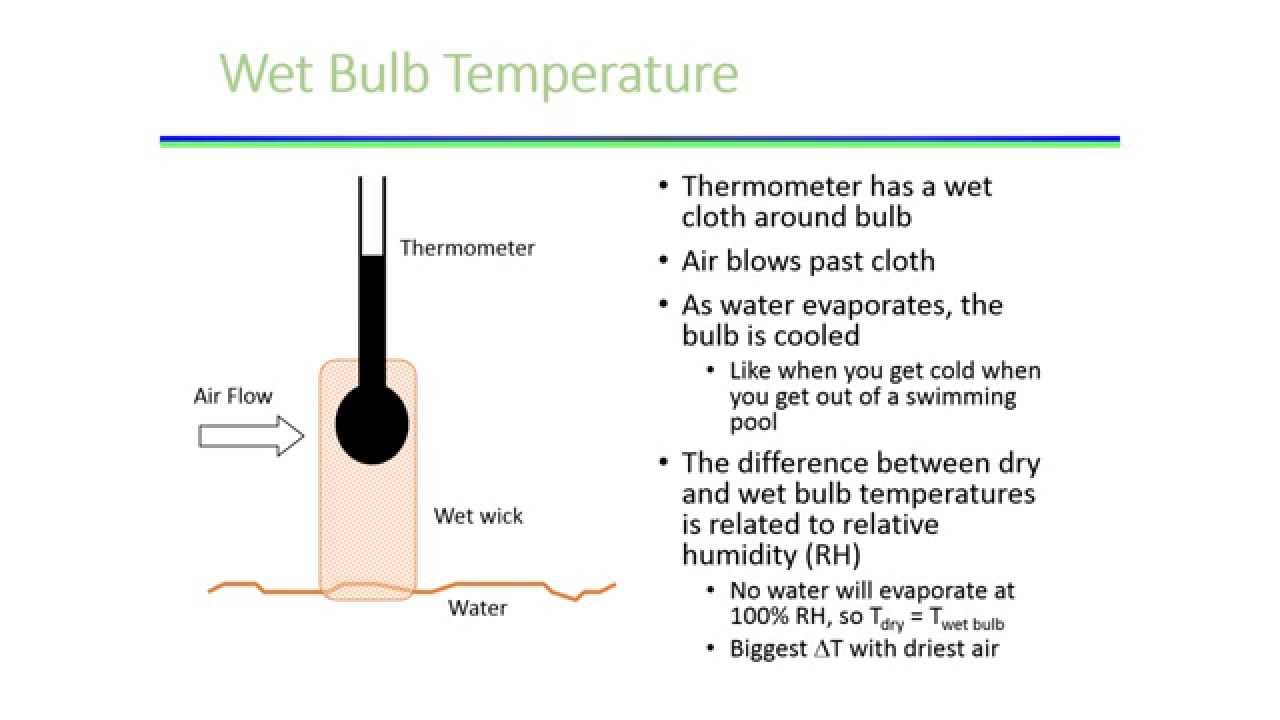
Wet bulb temperature (TW) is a measure of heat and humidity, taken from a thermometer covered in a water-soaked cloth. Beyond a threshold of 35°C TW the body is unable to cool itself by sweating, but lower levels can still be deadly, as was seen in the 2003 European heatwave that killed thousands without passing 28°C TW.
A US-UK team analysed weather station data across the world, and found that the frequency of wet bulb temperatures exceeding temperatures between 27°C TW and 35°C TW had all doubled since 1979. Though 35°C TW is thought of as a key threshold, harm and even death is possible at lower temperatures, so the team included these in their analysis.
Most of the frequency increases were in the Persian gulf, India, Pakistan and south-west North America. But at Jacobabad and Ras al Khaimah, 35°C TW appears to have been passed, the first time the breach has been reported in scientific literature.
“The crossings of all of these thresholds imply greater risk to human health – we can say we are universally creeping close to this magic threshold of 35°C. The tantalising conclusion is it looks like, in some cases for a brief period of the day, we have exceeded this value,” says Tom Matthews at Loughborough University in the UK……….: https://www.newscientist.com/article/2242855-climate-change-has-already-made-parts-of-the-world-too-hot-for-humans/#ixzz6M5ow6Dlr
Alabama joins Kentucky, South Dakota and West Virginia to criminalize fossil fuel protests
In March, Kentucky, South Dakota and West Virginia passed laws restricting pipeline protests. Alabama is poised to become the fourth.
By Alexander C. Kaufman 10 May 20 Alabama lawmakers this week advanced legislation to add new criminal penalties to nonviolent protests against pipelines and other fossil fuel projects, setting a course to become the fourth state to enact such measures amid the chaos of the coronavirus pandemic.
Kentucky, South Dakota and West Virginia enacted similar measures in March, just as states started implementing lockdowns to contain the outbreak of COVID-19, the respiratory illness caused by the virus.
The Alabama Senate passed the bill on March 12, just befohe Alabama Senate passed the bill on March 12, just before state officials, alarmed at the spread of the virus, postponed legislative hearings for a month. When the capitol reopened in Montgomery on May 4, state Democrats remained in their home districts, but enough Republican lawmakers returned to restart work on the legislation. On Monday, the House version of the bill was introduced and referred to the committee that oversees utilities and infrastructure. Continue reading
Climate change – a bigger still challenge follows coronavirus
 After coronavirus, focus on the climate emergency https://www.theguardian.com/world/2020/may/10/after-coronavirus-focus-on-the-climate-emergency Signatories including Dr Wolfgang Knorr say it is game over for preventing climate change, Colin Hines says a green infrastructure should be prioritised in a post-Covid-19 world, and Andy Radford on why we should consider permanent changes to the way we live
11 May 2020 Last month, the Guardian quoted Fatih Birol, executive director of the International Energy Agency, saying if we put post-pandemic bailout money in the wrong place “we will lock ourselves in a dirtier energy system, making it much more difficult to reach our climate targets” (‘Coronavirus profiteers’ condemned as polluters gain bailout billions, 17 April).
We beg to differ. It is game over for preventing dangerous climate change now that governments are planning the cheapest and quickest return to consumption. Riding on the wave of cheap oil and fossil-fuel bailouts is incompatible with keeping the average global temperature rise below 2C, let alone 1.5C.
Even if the world agreed to maintain all the pandemic-enforced restrictions on travel and consumption, the emissions saved would amount to almost nothing, compared with what’s needed to achieve the Paris agreement’s climate targets. Yet whether it’s to discourage mass fatalism, or prevent the very worst of what the future threatens, those of us with this knowledge still cling to “yes we can”. In this story, it is always five to midnight; it is always the last chance to prevent disaster. In contrast, collective action on climate can only grow out of complete honesty. It is time to acknowledge our collective failure to respond to climate change, identify its consequences and accept the massive personal, local, national and global adaptation that awaits us all.
Dr Wolfgang Knorr Department of Physical Geography and Ecosystem Science, Lund University, Prof Eric Rignot University of California, Irvine, Prof Rik Leemans Wageningen University and Research, Prof Andy Morse School of Environmental Sciences, University of Liverpool, Prof Dennis Baldocchi Department of Environmental Science, Policy and Management, University of California, Berkeley, Prof Thomas Hickler Senckenberg Biodiversity and Climate Research Centre, Prof Francis E Putz Department of Biology, University of Florida, Prof Maarten Krol Wageningen University, Dr Alberte Bondeau Institut Méditerranéen de Biodiversité et d’Ecologie, Aix-Marseille Université, CNRS, Prof Wolfgang Cramer Institut Méditerranéen de Biodiversité et d’Ecologie, Aix-Marseille Université, CNRS, Prof Paul Palmer University of Edinburgh, Dr James G Dyke Global Systems Institute, University of Exeter
Oxford University’s call for a green stimulus for the economy and Polly Toynbee’s demand for a dramatically fairer reversal of the impact of “wealth on health” could both be addressed by a nationwide Green New Deal programme (Poverty kills people: after coronavirus we can no longer ignore it, 5 May).
This would allow a way out of the economic collapse caused by coronavirus, while rebuilding our social infrastructure and tackling the climate emergency. It can also provide new jobs and huge opportunities for businesses. At its heart must be a labour-intensive social infrastructure that rebuilds our austerity battered public services. The prioritisation of green infrastructure will require a shift of economic priorities towards more decentralised local economies that reduce carbon emissions and air pollution, minimise the throughput of raw materials, provide long-term food security and protect biodiversity.
This radically new approach will involve listening to climate experts, funding the transition needed through massive government borrowing and introducing policies to curb our “freedoms” to travel, eat and consume in ways that threaten the planet. It is a Green New Deal imperative to tackle both the social and climate crisis that must emerge as the exit strategy from coronavirus.
Colin Hines
Convenor, UK Green New Deal Group
It is not only whales that are enjoying the opportunity for improved “conversations” presented by the current drop in manmade noise levels (Silence is golden for whales as lockdown reduces ocean noise, 27 April). From insects to fish, nature is booming as human activity intrudes less during lockdown. In our gardens, birdsong is more noticeable without a constant soundtrack of traffic noise. When our activities increase post-lockdown, we should reflect on the joy these sounds have given us and consider more permanent changes to the way we share the planet with our wildlife, for the benefit of all.
Andy Radford
Professor of behavioural ecology, University of Bristol
Global heating – lethal heat plus humidity already coming to areas across the world
 Potentially fatal bouts of heat and humidity on the rise, study finds
Scientists identify thousands of extreme events, suggesting stark warnings about global heating are already coming to pass, Guardian, Nina Lakhani 9 May 2020 Intolerable bouts of extreme humidity and heat which could threaten human survival are on the rise across the world, suggesting that worst-case scenario warnings about the consequences of global heating are already occurring, a new study has revealed.Scientists have identified thousands of previously undetected outbreaks of the deadly weather combination in parts of Asia, Africa, Australia, South America and North America, including several hotspots along the US Gulf coast.
Humidity is more dangerous than dry heat alone because it impairs sweating – the body’s life-saving natural cooling system.
The number of potentially fatal humidity and heat events doubled between 1979 and 2017, and are increasing in both frequency and intensity, according to the study published in Science Advances.……
The ominous findings come as something of a surprise to scientists, as previous studies had projected such extreme weather events would occur later in the century, mostly in parts of the tropics and subtropics where humidity is already a problem. ….. https://www.theguardian.com/environment/2020/may/08/climate-change-global-heating-extreme-heat-humidity
2020 hurtles toward the warmest year milestone
Global warming pushes April temperatures into record territory, as 2020 heads for disquieting milestone, WP, By Andrew Freedman, May 5 Last month tied for the warmest April on record for the globe, as 2020 hurtles toward the warmest year milestone.New data, released Tuesday from the European Union’s Copernicus Climate Change Service, lends further support to the prediction that 2020 will rank among the top two warmest years recorded.
In April, the National Oceanic and Atmospheric Administration, using its own temperature monitoring data, reported that there is a 75 percent chance that 2020 will become the planet’s warmest year since instrument records began in 1880, and very likely long before that.
Human-caused climate change from increasing amounts of planet-warming greenhouse gases is vaulting temperatures higher, making it easier for a given month or year to set a new warmth milestone. Carbon dioxide is the most important long-lived greenhouse gas in the atmosphere, released by the burning of fossil fuels such as coal and oil for energy and transportation.
Daily carbon dioxide levels measured at the summit of Mauna Loa in Hawaii have reached 418 parts per million this month, the highest level in at least 3 million years. It’s expected that the monthly average value for 2020 will be set this month, and will be near 417 ppm, compared with last year’s measurement of 414.7 ppm.
The new Copernicus data shows a huge area of crimson red for the month of April, denoting much-above-average temperatures, across northern Asia, especially Siberia.
Temperatures were also well above average for the month across northern and coastal central Greenland, parts of Antarctica, areas of Alaska and the Arctic Ocean……. https://www.washingtonpost.com/weather/2020/05/05/global-warming-pushes-april-temperatures-into-record-territory-2020-heads-disquieting-milestone/
A small window of opportunity to stave off rapid global heating

|
‘Blown away’: Safe climate niche closing fast, with billions at risk, https://www.theage.com.au/environment/climate-change/blown-away-safe-climate-niche-closing-fast-with-billions-at-risk-20200504-p54pod.html By Peter Hannam, May 5, 2020 As much as one-third of the world’s population will be exposed to Sahara Desert-like heat within half a century if greenhouse gas emissions continue to rise at the pace of recent years.Scientists from China, the US and Europe found that the narrow climate niche that has supported human society would shift more over the next 50 years than it had in the preceding 6000 years. As many as 3.5 billion people will be exposed to “near-unliveable” temperatures averaging 29 degrees through the year by 2070. Less than 1 per cent of the Earth’s surface now endures such heat. That heat compares with the narrow 11- to 15-degree range that has supported civilisation over the past six millennia, according to research published Tuesday in the journal Proceedings of the National Academy of Sciences. “Absent climate mitigation or migration, a substantial part of humanity will be exposed to mean annual temperatures warmer than nearly anywhere today,” the paper said. Xu Chi, a researcher at China’s Nanjing University and one of the paper’s authors, said: “We were frankly blown away by our own initial results. As our findings were so striking, we took an extra year to carefully check all assumptions and computations.” “Clearly we will need a global approach to safeguard our children against the potentially enormous social tensions the projected change could invoke.” Among the most exposed nations will be India – where many people live in “already-hot places” – with as many as 1.2 billion people likely to be forced to move if population and warming trends continue. For Nigeria, the number exposed could be 485 million, according to a media release distributed along with the paper. The scenario used projected the total populations in India and Nigeria to reach 2.2 billion and 600 million, respectively, by 2070, Dr Xu told the Herald and The Age. In Australia, areas of Western Australia and the Northern Territory home to about 200,000 people will be at risk. The research extended current population and greenhouse gas emissions trends into the future, and excluded impacts from the coronavirus pandemic on both. The researchers also considered possible rainfall changed. “The global pattern of population distribution seems less constrained by precipitation – while there is also an optimum around 1000 mm [of rainfall a year ] – so we focused on temperature,” Dr Xu said. “Changes of precipitation regime would definitely have impacts, but such impacts together those of temperature change would be more complex to foresee.”
Compared with pre-industrial-era conditions, temperatures globally will be about 3 degrees hotter by 2070. But as land warms faster than the oceans, the rise for people on average will be about 7.5 degrees, the paper found. Should the world adopt strong emissions reductions – the so-called Representative Concentration Pathway 2.6 – it would “substantially reduce the geographical shift in the niche of humans and would reduce the theoretically needed movement to about 1.5 billion people”, the paper said. Still, that number would account for about one in seven of the world’s population. “Each degree of temperature rise above the current baseline roughly corresponds to 1 billion humans left outside the temperature niche, absent migration,” it said.
The researchers added that upheavals among populations – and the ecosystems that support them – could happen well before 2070. “Migration inevitably causes tension, even now, when a relatively modest number of about 250 million people live outside their countries of birth.” Tim Lenton, director of the Global Systems Institute at the University of Exeter and one of the paper’s authors, said: “The good news is that these impacts can be greatly reduced if humanity succeeds in curbing global warming.” Marten Scheffer, a professor at Wageningen University and an author of the report, said the response to the coronavirus should give cause for some optimism that climate change’s looming threats could also be tackled. “The COVID-19 response revealed that if a problem appears to be urgent and serious, humanity globally is able to act massively if needed, even if there are economic costs,” he told the Herald and The Age. “Perhaps this may serve to make it feel more doable to address global warming too. Our findings indicate that that would be worthwhile.” |
|
Petersberg Climate Dialogue to be held virtually this year
 Sustainable Recovery**
Livestream recording of “Financing Climate Ambition in the context of
COVID-19”. A sustained green, resilient recovery from COVID-19 requires
significant investments to scale and achieve economy-wide transformation,
particularly in developing and emerging markets. Delivering this
sustainable recovery and creating new opportunities for growth will involve
accelerating the transition towards a low-carbon, resilient future that is
already underway.
Dialogue has provided a forum for high-level political discussions,
focusing both on the international climate negotiations and on advancing
climate action on the ground.
will be held virtually for the first time, and will focus on climate
ambition in the context of a green, resilient recovery. See, in particular
Mark Carmey from 41.43 He asks “what can we do to drice climate finance
in support of the transition to a net zero economy?” A related question
is what will be the economics of a post-Covid world? The new economy will
require a massive reallocation of capital. It provides an opportunity to
require companies and sectors to have net zero transition plans. The aim of
his work on Cop-26 is to ensure that every financial decision takes climate
into account. 120 countries have committed to net zero. That means every
company, every sector, every pension fund in those countries should have a
net zero plan which it has disclosed. When countries are designing their
recovery strategies they would do well to use this new financial framework
that is centred around the transition to net zero because that will amplify
the effectiveness. Once the war against Covid in won our ambition should be
to build a planet fit for our grandchildren.
Climate Policy Initiative 29th April 2020
https://www.youtube.com/watch?v=8sLyUMokSvI
Top regulator who steered banks’ revival after last crash has a new crisis
mission: ‘My green energy plan to spark the economy back to life’. With the
oil price at record lows, Lord Turner concedes that fossil fuels ‘are
suddenly going to look cheap’ as travel resumes – potentially making a
switch to cleaner energy less attractive. But he is adamant that investment
in green fuel would create jobs and give Britain’s post-coronavirus economy
a much-needed boost. For instance, a jobs cull in North Sea oil could be
offset by transferring workers with marine engineering skills to building
bases for offshore windfarms, he says. ‘North-west Europe is blessed with
huge amounts of offshore wind potential, and both the UK and the rest of
Europe should be planning for massive offshore wind developments in the
North Sea that can give us green electricity at a low price,’ he says.
‘It’s a huge strategic opportunity.’ When pressed on whether the Government
should bail out struggling companies, rather than letting some firms fail,
it’s the first time his smooth theorising is rattled. ‘I’m not getting into
the specifics of individual companies,’ he says testily. ‘But any company
that receives a bailout should have green targets attached.’
Daily Mail 2nd May 2020
Report warns on the threat of sea level rise to Sizewell nuclear plan
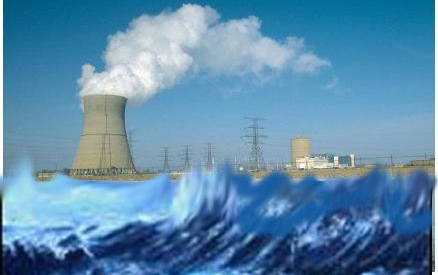 Sea level rise ‘could threaten nuclear power
  station’ planned for UK, report claims, Independent UK, EDF about to submit planning application for major development at Sizewell on Suffolk coast, Harry Cockburn, 1 May 20
Rising sea levels and coastal erosion could pose a threat to two nuclear reactors planned to be built on the low-lying Suffolk coast, according to local councils and analysis by an independent environmental group.
East Suffolk Council and Suffolk County Council have already lodged various concerns about French company EDF Energy’s plans for the new facilities at Sizewell C, and a new analysis by experts at the Nuclear Consulting Group suggests planned sea defences may be inadequate in future climate change scenarios.
EDF is reportedly about to submit its official planning application for the project, and has been working with Chinese state-owned nuclear company.
The Nuclear Consulting Group’s paper, written by structural engineer, Nick Scarr, suggests the Suffolk coast where the Sizewell development is planned, is inherently “unstable”, and that due to erosion by the sea the site could become an island before the station reaches the end of its active life, thereby risking a serious accident. Mr Scarr told the Climate News Network:
“Any sailor, or lifeboat crew, knows that east coast banks need respect — they have dynamic patterns, and even the latest charts cannot be accurate for long. “I was deeply concerned by EDF’s premise that there is micro-stability at the Sizewell site, which makes it suitable for new-build nuclear. It is true if you restrict analysis to recent historical
data, but it is false if you look at longer-term data and evidence-based climate science predictions…….. (subscribers only) https://www.independent.co.uk/independentpremium/nuclear-power-sea-rise-sizewell-c-edf-suffolk-a9492901.html
An Arctic island is warming SIX times faster than the global average
|
Global warming: An Arctic island is warming SIX times faster than the global average, GLOBAL WARMING threatens the planet as a whole but parts of an island in the Arctic are warming six times faster than the global average, scientists have warned. Express UK By SEBASTIAN KETTLEY Apr 30, 2020 Polar researchers stationed in the southwest of the Arctic island of Spitsbergen have found a worrying warming trend in meteorological data spanning 40 years. Temperatures in parts of the island, which is part of the Svalbard archipelago between Norway and the North Pole, have risen six times higher than the global average. Scientists from the Institute of Geophysics, Polish Academy of Sciences (IGF PAN) made the worrying discovery during expeditions to the Polish Polar Station Hornsund. The scientists presented their findings in Earth System Science Data. Professor Marzena Osuch, study co-author and hydrologist, told the Polish Press Agency (PAP): “The average temperature in Hornsund between 1979 and 2018 rose by 1.14C per decade. “The change is more than six times higher than the global change for the same period.”……. https://www.express.co.uk/news/science/1276239/Global-warming-Arctic-temperatures-Spitsbergen-warming-faster-climate-change |
|
Climate change: lakes and rivers will become drier, increasingly infectious and toxic
Climate change: lakes and rivers will become drier, increasingly infectious and toxic, Stuff NZ, Olivia Wannan, Apr 30 2020
By dragging our feet on climate action, we increasingly condemn our beloved lakes and rivers to a future of salmonella contamination, algal blooms, species extinctions and drying out, a new report warns.
Our Freshwater 2020, produced by the Ministry for the Environment and Statistics NZ, is a stark reminder that the already-threatened health of our waterways rests on our ability to urgently shift away from fossil fuels.
Even if emissions stay at historically low levels, temperatures will continue to rise in the coming decades, due to the lag between releasing greenhouse gas and the effects on our atmosphere, seas and waterways.
As the climate warms, rain storms will intensify, snowfall will decrease, glaciers will melt, soils will dry out and the sea level will rise – each affecting our lakes and rivers.
In the east, regions such as Hawke’s Bay will see increasingly low waterways by the end of the century, says Ministry for the Environment departmental science advisor Dr Alison Collins.
In the west – particularly in the South Island – rivers and lake levels are expected to rise, potentially leading to flooding.
After extreme downpours, drinking water and swimming spots are at high risk of being contaminated with infectious tummy bugs such as salmonella and harmful strains of E.coli, she says. Northern and remote eastern communities with less-developed water supply systems are particularly vulnerable.
Toxic algal blooms will become more common, as warmer temperatures reduce the mixing between upper and lower levels of deep lakes, boosting nutrient levels at the surface and algal growth. Without the waters mixing, the lake bottom is also deprived of oxygen, which drives out animals such as crayfish (kōura) and mussels (kākahi).
Combined with pollution and habitat loss, climate change is likely to push some freshwater species – both native and introduced – to extinction, the report says. …… https://www.stuff.co.nz/environment/climate-news/121178883/climate-change-lakes-and-rivers-will-become-drier-increasingly-infectious-and-toxic
EDF’s planned Sizewell nuclear power station – vulnerable to sea level rise
Climate News Network 28th April 2020, Controversial plans by the French nuclear giant EDF to build two of its massive new reactors on the low-lying east coast of England are causingalarm: the shore is eroding and local people fear sea level rise could maroon the station on an island.
because they fear the proposed sea defences for the new station, Sizewell C, will be inadequate.
will be adequate.
of construction, 60 years of operation and then the time needed to decommission it.
https://climatenewsnetwork.net/sea-level-rise-threatens-uk-nuclear-reactor-plans/
1 This Month
26 September – International Day for the Total Elimination of Nuclear Weapons





PLEASE OPPOSE HR 8255 AND S.3639 – bills would accelerate satellite deployment, with no environmental review or safeguards – https://ncstd5li.quorum.us/campaign/169331/
To see nuclear-related stories in greater depth and intensity – go to https://nuclearinformation.wordpress.com
-
Archives
- September 2026 (281)
- August 2026 (330)
- July 2026 (355)
- June 2026 (287)
- May 2026 (306)
- April 2026 (356)
- March 2026 (251)
- February 2026 (267)
- January 2026 (308)
- December 2025 (358)
- November 2025 (359)
- October 2025 (375)
-
Categories
- 1
- 1 NUCLEAR ISSUES
- business and costs
- climate change
- culture and arts
- ENERGY
- environment
- health
- history
- indigenous issues
- Legal
- marketing of nuclear
- media
- opposition to nuclear
- PERSONAL STORIES
- politics
- politics international
- Religion and ethics
- safety
- secrets,lies and civil liberties
- spinbuster
- technology
- Uranium
- wastes
- weapons and war
- Women
- 2 WORLD
- ACTION
- AFRICA
- Atrocities
- AUSTRALIA
- Christina's notes
- Christina's themes
- culture and arts
- Events
- Fuk 2022
- Fuk 2023
- Fukushima 2017
- Fukushima 2018
- fukushima 2019
- Fukushima 2020
- Fukushima 2021
- general
- global warming
- Humour (God we need it)
- Nuclear
- RARE EARTHS
- Reference
- resources – print
- Resources -audiovicual
- Weekly Newsletter
- World
- World Nuclear
- YouTube
-
RSS
Entries RSS
Comments RSS

