An American nuclear reactor flooded by an extreme rainfall event – during the pandemic
COVID Infects World Nuclear Plants May 27, 2020, by Radio Ecoshock
“………AN AMERICAN REACTOR FLOODED BY AN EXTREME RAINFALL EVENT – DURING THE PANDEMIC
Grant Smith mentioned the climate threat to nuclear installations. We have a case of that right now. The American mid-West has experience record-setting extreme rainfall events. The City of Chicago just had it wettest May, for the third year in a row. All that rain burst two dams in Michigan, flooding out the city of Midland, population 42,000. It also flooded the Dow Chemical plant that has produced noxious chemicals for years, including Agent Orange. The company acknowledges their chemicals have leaked out over the years. It has been declared a Superfund site, among the worst in the country requiring federal cleanup funds. There are chemicals lining the river, now being stirred up by the flood, and washing down into Lake Michigan.
What is less reported is the Dow nuclear reactor at that flooded site. It is a smaller research reactor built in the 1960’s, called a TRIGA 1 model. The reactor is sunk down into the ground. It doesn’t have cooling rods, but depends on convection for water cooling. Although the reactor was not operating at the time of the flood in late May, the design suggest it probably still had nuclear materials inside. Are they now leaking out into the river and Lake Michigan. So far, the company says “no”. With no federal oversight reporting we can rely on, you just have to take the word of Dow Chemical that this reactor is perfectly safe during this extreme rainfall event. Nothing to worry about here, they say. Beyond nearly 400 very large nuclear power plants in the United States, there are thousands of smaller reactors scattered around the country, at Universities, military bases, and private companies. Who is keeping track of those as climate change and a pandemic come knocking at the door?
Here is that unusual event report to the NRC about the Dow Chemical reactor in Michigan. For those who want to dive deeper, here is a description of that Triga Mark I reactor……… https://www.ecoshock.org/2020/05/covid-infects-world-nuclear-plants.html
RUSSIAN NUCLEAR INDUSTRY STRUGGLES WITH PANDEMIC, also threatened by climate change
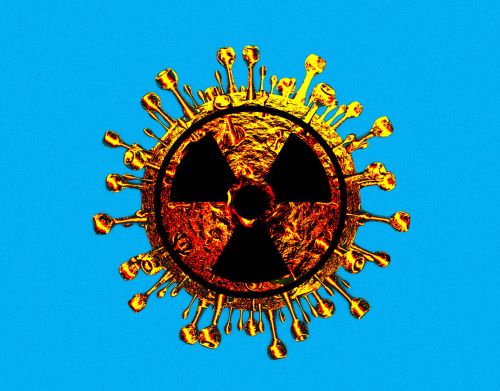 COVID Infects World Nuclear Plants, May 27, 2020, by Alex Smith, Radio Ecoshock, “……….RUSSIAN NUCLEAR INDUSTRY STRUGGLES WITH PANDEMICNow it the time to talk about the awful virus out of control in Russia, the last bastion of nuclear ambition with an infamous track record. I have to report it, because it seems no one from there feels safe to talk about it. One environment group reported safety questions about secret nuclear cities – after a government minister mentioned it. They declined an interview. I contacted reporters usually willing to do radio, including two from the English language Moscow Times, but got no reply. Radio silence as they say. These are dangerous times in Moscow, as ambulances line up outside hospitals, mortuaries go into overdrive, and the Putin government, like many governments, covers up early mistakes. COVID Infects World Nuclear Plants, May 27, 2020, by Alex Smith, Radio Ecoshock, “……….RUSSIAN NUCLEAR INDUSTRY STRUGGLES WITH PANDEMICNow it the time to talk about the awful virus out of control in Russia, the last bastion of nuclear ambition with an infamous track record. I have to report it, because it seems no one from there feels safe to talk about it. One environment group reported safety questions about secret nuclear cities – after a government minister mentioned it. They declined an interview. I contacted reporters usually willing to do radio, including two from the English language Moscow Times, but got no reply. Radio silence as they say. These are dangerous times in Moscow, as ambulances line up outside hospitals, mortuaries go into overdrive, and the Putin government, like many governments, covers up early mistakes.
o I patch together what little we can find out. The Russian nuclear story, as I said in the beginning, spreads out to governments all over the world, from the Middle East to North Korea. Really their nuclear technology is not much more dangerous than in Japan or America. It is all dangerous when built and run by flawed humans. Every nuclear country has a secret history of near-misses and hidden atomic poisons. Britain, Canada, France, you name it. There is a long list of atomic leaks, break-downs, hair-raising risks all over the world. Like the Trump Administration, the Putin government downplayed the threat of COVID-19 for precious months after it broke out in China. For a while in February, it looked like the pandemic would barely graze Russia. It was business-as-usual. Then the first wave arrived. Now Russia has the third most serious infection in the world, with way over 300,000 cases confirmed, and who knows how many really. The government is reporting low death rates, under 4,000 mortalities. As in China, these numbers are not credible. The real number of deaths has to be many times that. In late May, the Moscow Times ran an article explaining why the Russian government did not count 60% of suspected Covid-19 deaths. Only cases where autopsies showed the disease were counted. But who has time or staff to do thousands of autopsies during a wave of the pandemic? The Moscow health department attributed the obvious spike in deaths to things like “heart failure, stage four malignant diseases, leukemia … and other incurable deadly diseases”. In many ways, Russia is still a secret state. Certainly it has secret atomic cities. These are closed cities. You needed special permits to go there even before the pandemic, in fact, since the 1950’s. Nuclear bombs, missiles, and torpedoes are made there. Factories make reactors that can float in the sea, hide in the ground, or blast out into space. During Soviet times, these cities also specialized in chemical and biological weapons. Some say they still do, though the Russians publicly denounced those weapons. So if was surprising when “The head of Russia’s state nuclear corporation has expressed concerns about the spread of the novel coronavirus to three of its so-called “nuclear cities.” At the beginning of May, Charles Digges from the Russian environment group Bellona wrote about it, after the public announcement by Rosatom chief Alexei Likhachev. Likhachev said: “The situation in Sarov, Elektrostal, Desnogorsk is today particularly alarming.” People in the West do not understand why it is alarming that anything was admitted at all. When he said it, Russia was just the seventh most infected country. Less than a month later, their cases have doubled, and Russia is number two worst. The archipelago of nuclear labs and businesses controlled by Russia’s Rosatom employ around 250,000 people. The company admits they have stashed some workers permanently on nuclear sites, but like the U.S. industry, won’t say how many or where. This is what you do when you have an emergency. During the pandemic, they need to try to isolate enough workers to keep nuclear reactors operating and cool, to keep vast lakes and mountains of nuclear waste cool and secure, literally, to keep the lights on. The record shows safety at many Russian nuclear complexes has been poor at the best of times. There is a long and painful history not just of nuclear accidents – those are legendary – but of atomic neglect. Barrels of highly radioactive materials were just buried all over, or sunk at sea. Nobody is totally sure where all of it went. The Soviet Union left the world a legacy of abandoned hot spots no-go zones. Putin inherited that, and doubled down on Russian nuclear ambitions. The Russians will sell, and have sold, nuclear technology to anyone. Iran? Sure. North Korea, well that transfer of Russian nuclear technology may or may not have been authorized. Now they are building a nuclear reactor in Bangladesh. But why not? Canada gave India nuclear tech that led to their atomic bomb, and trained the Pakistani father of the bomb. Canadian engineers watched as prison slave labor built a Candu nuclear plant in Romania. The Romanians couldn’t really pay, so Canada agreed to take it out in coal and jam. It’s a dirty corrupt business no matter who does it. The on-again off-again felon Mike Flynn was busy trying to selling nuclear reactors to dictators in the Middle East. China wants to make money selling reactors. Nobody makes money selling reactors. Nuclear power is the biggest money pit in the history of money pits. And the cost never ends. Deconstruction usually falls on future taxpayers. The dangerous radioactive waste needs to be secured and guarded for tens of thousands of years. It’s never over. Thank goodness nuclear weapons are no longer a threat. Except both Russia and the United States have announced new supersonic atomic delivery missiles in just the last couple of years. Trump is pushing to build new nuclear weapons – the best anybody has ever seen! Britain is always embarking on a new nuclear plan that sinks into hundreds of billions of wasted pounds. Don’t get me started on nuclear waste dump schemes that never work or mini-reactors to save the climate. But the Russians have to be champions of nuclear secrecy. I don’t know of any other whole cities entirely closed off, so secret they did not even appear on maps. Now they say that despite official worries, everything nuclear is under control in Russia. The Rosatom chief reported 47 employees infected with COVID-19. 23 of them are in the secret city of Sarov, he said, in late April. How many are there now? MORE NUCLEAR WORRIES IN RUSSIA AS COVID-19 RUNS RAMPANTEleven hundred miles East of Moscow, the Russian nuclear power plant at Beloyarsk was the first to keep it’s staff on site. Nobody goes home. That was reported in Russian-only by the state news agency Interfax. At least one staff member was sick for days with a high fever. That was in April. The old reactors from the 1960’s are temporarily shut down, but now they run two large fast-neutron reactors there. The Russian group Bellona reports “270 workers isolated at the Rostov nuclear plant took to social media to complain they were being treated like ’cattle’.” That is in Southwest corner of Russia, along the Don River. The workers reported lack of protection against the virus and terrible working conditions. Rosatom says those concerns have since been addressed. URANIUM MINING SHUT DOWN AROUND THE WORLDRosatom also reports the large Russian uranium mining industry has been shut down due to coronavirus concerns. Many mines of all kinds have been closed around the world. We will start to feel the shortages some time in the fall, even though demand has fallen off. The Russians are also concerned about their electric utilities, because as they say “Falling incomes of both retail and corporate consumers might result in a tidal wave of unpaid electricity bills.” The American and European electric utilities fear that too. Uranium mining has been closed down for the pandemic pretty well everywhere from Canada to Kazakhstan to Namibia. Nuclear reprocessing plants are also closed. There is currently a glut of nuclear fuel, but I suppose if the pandemic is not solved in a year or so, nuclear power plants could run low on fuel. Perhaps experts can advise us on that. On April 14, a Russia language news outlet reported three employees of Kursk Nuclear Power Plant were infected by COVID-19. That is in the city of Kurchatov, in the direction of the border with Ukraine. You need a special permit to go there too. How many are infected there now? The Russian nuclear industry, both weapons and power, is not immune to this novel virus. So far they have not been overwhelmed by it. Not that we know of. Now that the pandemic is full blown and still growing in Russia, there is practically nothing coming out about the nuclear danger there. I suppose we will find out 30 years from now when the archives are released. Or maybe any day now, when radioactivity monitors in Sweden or Washington State go off. Of course, that could be coming from Japan, China, Canada, the U.S., or any of the dozens of nuclear operations run by humans with no immunity to a new disease, and economies shaking down. THERE IS ANOTHER HOT SPOT – SIBERIABefore we leave Russia, let me tell you about another hot spot there: Siberia. In last week’s Radio Ecoshock program, two top scientists told us about the coming heat as we load up the atmosphere with carbon. Dr. Radley Horton from Columbia was part of a team that discovered heat beyond human endurance is already popping up in various countries. It’s not that hot in Siberia. I’m sure the locals are enjoying the early summer warmth, although they must be nervous. Forest fires, and they have massive planet-changing forest fires, are already burning in Siberia, when it should be time for the snow to melt. For European and Canadian listeners, that’s 31 degrees C in Siberia, instead of -12 C, over a massive, massive area. Will we see a repeat of the 2010 heat wave over Russia, that killed tens of thousands of people and closed down the country’s wheat export trade? How much carbon will be released this year from forest fires in the far north? It has begun. ‘…… https://www.ecoshock.org/2020/05/covid-infects-world-nuclear-plants.html |
|
Extreme heat, humidity, air pollution – combined threat to South Asia

|
South Asia’s twin threat: extreme heat and foul air https://climatenewsnetwork.net/south-asias-twin-threat-extreme-heat-and-foul-air/
|
|
|
Michigan flooding: a warning on potential triple disaster – climate, pandemic, and nuclear radiation


Michigan authorities were forced to face a “no-win compromise” between protecting the public from exposure to Covid-19 while at the same time moving people out of harm’s way after heavy rains caused failures at the Edenville and Sanford dams, leading to devastating floods.
The Dow plant insists there have been no chemical or radiological releases, but the situation will be evaluated once floodwaters recede. Fortunately, no full-scale commercial nuclear power plant was in the path of the Michigan floods.
Operating nuclear power stations are required by federal and state laws to maintain radiological emergency preparedness to protect populations within a ten-mile radius from the release of radioactivity following a serious nuclear accident. These measures include mass evacuations.
However, many communities around the nation’s 95 commercial reactors are presently sheltering-in-place at home as a protective action during the Covid-19 pandemic.
The Michigan flooding has forced the relocation of thousands of citizens from their stay-at-home lockdown into the social distancing challenges of mass shelters. Evacuating tens of thousands from a likely more far-reaching radioactive cloud to mass shelters, as is presently planned during a nuclear emergency, raises difficult if not impossible choices under pandemic conditions.
In fact, a Memorandum of Understanding (MOU) (Sect.03.02 p.2) between the U.S. Nuclear Regulatory Commission (NRC) and the Federal Emergency Management Agency (FEMA) already obligates the federal government to re-exam radiological emergency plans around nuclear facilities specifically in response to a pandemic, and to identify any shortcomings, deficiencies and enhancements that might be needed under such conditions.
But to date, neither agency has taken the initiative to do so. In fact, the NRC actions are focused on relaxing safety measures required by operating licenses, resulting in extended work hours for reactor operators and security guards, and deferred safety inspections and repairs for as much as another 18 months. This makes an accident more likely.
Given what we are now seeing in Michigan, the NRC and FEMA should lose no time in reviewing their MOU and the viability of their radiological emergency plans, and take action to make any necessary enhancements or shut these nuclear facilities down.
Beyond Nuclear has identified two such actions under the MOU as vital to public health:
- The NRC and FEMA must conduct a “Disaster Initiated Report”, as mandated by the MOU, on the adequacy of offsite radiological emergency response plans during the pandemic, and;
- Federal and state response plans need to be bolstered by the immediate pre-distribution of potassium iodide (KI) tablets by direct delivery to every resident within the ten-mile radius of U.S. nuclear power stations, now, before any accident occurs. This is in accordance with disaster medicine expert recommendations including from the American Thyroid Association (ATA).
- KI, if taken promptly in advance or shortly after exposure to radioactive iodine, is recognized by the US Food and Drug administration as a safe, inexpensive and effective prophylactic prevention for thyroid cancer and other developmental disorders caused by exposure to highly mobile iodine-131. Radioactive iodine is a gas released early in a serious nuclear accident.
- KI is particularly important for the protection of infants, young children and pregnant women and should be readily on hand, according to the ATA and the American Academy of Pediatrics.
The ATA further recommends stockpiling KI tablets in schools, hospitals, police and fire stations from 10 miles out to 50 miles from every nuclear power plant. These institutions could then serve to pre-distribute KI free through the mail upon request to every home and business within 50 miles of an operating nuclear plant.
KI is commonly used to iodize table salt in concentrations. When taken in tablet form, it saturates the thyroid with stable iodine and blocks the absorption of radioactive iodine into the thyroid gland.
- KI only protects the thyroid. It does not protect other parts of the body, or prevent damage from other radioactive isotopes released during a nuclear power plant accident, such as cesium-137 or krypton or xenon gases. Ideally, it is used to provide protection to the thyroid — because iodine-131 can be the large and early radioactive exposure first to arrive — while people are still evacuating out of the oncoming radioactive fallout pathway.
KI is a critical adjunct to evacuation, but it should not replace evacuation from a nuclear accident, even during a viral pandemic. If faced with an immediate threat to life, perhaps even a triple threat such as an extreme flood, a nuclear accident and Covid-19 exposure, evacuation must be the immediate decision.
However, at least having KI tablets on hand provides for a reasonable protection from the radioactive iodine, a fundamental human right while seeking to shelter farther away from a nuclear accident.
The prospect of a nuclear disaster prompting a mass evacuation during a viral pandemic reinforces the need for an energy policy focused on safe, clean and affordable renewable energy. It’s time to remove the added and unnecessary danger presented by the 95 nuclear reactors still operating in the US today and transition to a rapid phaseout before a nuclear emergency during a pandemic becomes a nightmarish reality.
Australia, and the world, underestimate how many die due to global heating
|
Experts Warn Climate Change Is Already Killing Way More People Than We Record, Science Alert ,CARLY CASSELLA, 25 MAY 2020
People around the world are already dying from the climate crisis,and yet all too often, official death records do not reflect the impact of these large-scale environmental catastrophes. According to a team of Australian health experts, heat is the most dominant risk posed by climate change in the country. If the world’s emissions remain the same, by 2080 Australian cities could see at least four times the number of deaths from increasing temperatures alone. “Climate change is a killer, but we don’t acknowledge it on death certificates,” says physician Arnagretta Hunter from the Australian National University. That’s a potentially serious oversight. In a newly-published correspondence, Hunter and four other public health experts estimate Australia’s mortality records have substantially underreported heat-related deaths – at least 50-fold. While death certificates in Australia do actually have a section for pre-existing conditions and other factors, external climate conditions are rarely taken into account. Between 2006 and 2017, the analysis found less than 0.1 percent of 1.7 million deaths were attributed directly or indirectly to excessive natural heat. But this new analysis suggests the nation’s heat-related mortality is around 2 percent. “We know the summer bushfires were a consequence of extraordinary heat and drought and people who died during the bushfires were not just those fighting fires – many Australians had early deaths due to smoke exposure,” says Hunter……. “Death certification needs to be modernised, indirect causes should be reported, with all death certification prompting for external factors contributing to death, and these death data must be coupled with large-scale environmental datasets so that impact assessments can be done.” …… Such action, they say, is imperative. Not only for Australia but many other countries in the world. The United Kingdom has documented some problems with accurately filling out death certificates, and cities in several parts of the world are on track for similar heat-related mortality rates as Australia. But there are some places that will need to do more than just update their current system. In the tropics, there’s little valid mortality data on the more than 2 billion people who live in this heat-vulnerable region. And that makes predicting what will happen to these communities in the future much trickier. “Climate change is the single greatest health threat that we face globally even after we recover from coronavirus,” says Hunter. “We are successfully tracking deaths from coronavirus, but we also need healthcare workers and systems to acknowledge the relationship between our health and our environment.” In an unpredictable world, if we want to know where we’re going, we have to know where we’ve been. Figuring out how many of us have already died from climate change will be key to that process. We can’t ignore it any longer. The correspondence was published in The Lancet Planetary Health. https://www.sciencealert.com/official-death-records-are-terrible-at-showing-how-many-people-are-dying-from-the-climate-crisis |
|
|
The flooding danger to nuclear radioactive sites -Michigan dams fail
|
Michigan dams fail near Midland; ‘catastrophic’ flooding underway — Dow Chemical research reactor potentially in harm’s way http://www.beyondnuclear.org/climate-change-whats-new/2020/5/21/michigan-dams-fail-near-midland-catastrophic-flooding-underw.html
Fortunately, the Midland commercial nuclear power plant was never fired up, so there is no radioactive contamination there, nor high-level radioactive waste in on-site storage. Dr. Mary Sinclair, a co-founder and co-leader of Don’t Waste Michigan*, helped lead the successful resistance to the Midland nuclear power plant, way back in the 1970s and 1980s.
The reason the Midland nuclear power plant was stopped, at 90% construction completion on one reactor and about 50% on the other, was that safety-significant buildings were sinking into the ground, not unlike the Leaning Tower of Pisa. Of course, it took many years of dedicated commitment and hard work by anti-nuclear activists, talented environmental attorneys, and even a courageous Nuclear Regulatory Commission (NRC) whistle-blower testifying before Congress, to prevail against greed-driven companies like Midland-based Dow Chemical, and Jackson, MI-based Consumers Energy.
A similar situation is unfolding at the Vogtle Units 3 and 4 nuclear power plant construction site in GA. BREDL has launched an intervention at the NRC against Vogtle Unit 3, due to it sinking into the ground as well. And Nuclear Watch South has also intervened at the NRC against Vogtle Unit 3’s fuel loading, due to major, widespread violations of ITAAC QA.
Speaking of Dow, there is, however, a 1967-era research reactor at its Midland facilities, that is potentially in harm’s way from the flooding, as we speak (See NRC Event Notification Report, May 20, 2020, Event Number 54719) . And there is, of course, off the charts bad dioxin and other toxic chemical contamination in or near these waterways, compliments of Dow. This includes a Superfund site, severe contamination downstream in the Tittabawassee River, as well as wastewater retention ponds at Dow Chemical itself. Groups like Citizens for Alternatives to Chemical Contamination (CACC)*, Lone Tree Council, and others, have for decades watch-dogged the toxic goings-on at and downstream from Dow.
Mary Sinclair’s son, Peter Sinclair, a climate protection leader, is quoted in the Washington Post article linked above. Here are some passages from the article, including Peter Sinclair’s quote:
Dow Chemical Co.’s Midland headquarters was evacuated, with only essential staff remaining on-site to monitor the situation. The facility is associated with a Superfund site due to excess dioxins, which are known to cause cancer, in the riverbed downstream of the plant. New video released by the Michigan State Police appeared to show some flooding on the Dow property, though the extent and severity is unclear.
“Dow has activated its local emergency operations center and is implementing its flood preparedness plan which includes the safe shutdown of operating units,” wrote the company on its Facebook page. Dow also filed an “Unusual Event Report” with the Nuclear Regulatory Commission because of the possibility that floodwaters could affect its 300 kilowatt nuclear research reactor, located at the plant, though the reactor was already shut down due to the coronavirus outbreak. That reactor was built in 1967. “This is a solidly middle to upper class town because of the Dow plant here,” Peter Sinclair, a Midland resident who is a videographer for Yale Climate Connections, said in an interview. He said a 2017 seasonal flood event, combined with this disaster, may cause property values to decline. This includes expensive lakefront property, since these lakes are now being drained by the flooding. …Sinclair, who is on the dry side of Midland and is sheltering family members who live closer to the flood-affected areas, says this event illustrates what climate scientists have been warning about for years. “[There is the] Larger issue of aging infrastructure plus incremental climate change, this is a point that all the scientists make that the change is gradual, gradual, gradual until the infrastructure fails.” While this catastrophic flooding is very bad enough in its own right, it also raises the specter of worsening flooding impacts on nuclear facilities, in the Great Lakes Basin and across the continent, including the worsening high risk of dam bursts upstream of nuclear facilities.
The July 16, 1979 uranium tailings dam burst in n.w. New Mexico, inundating the Rio Puerco with a flood of radioactive and toxic wastewater, is considered one of the single worst nuclear disasters in U.S. history (that most people have never even heard of). Navajo/Diné shepherds live downstream, such as in the Red Water Pond Road Community. The Rio Puerco is their sole source of drinking and irrigation water. The shallowest of “clean ups” was carried out, leaving most of the escaped contamination in the environment.
The mass evacuation of 10,000 Michiganders to escape the floodwaters, amidst global pandemic stay-at-home and social-distancing orders, also raises the specter of a radiological disaster requiring mass evacuation at a time like this. The NRC, FEMA, related state government agencies across the country, and the nuclear power industry itself, have not addressed this question and concern. How are people supposed to shelter at home, and maintain physical distance from others, when forced to flee for their health and lives, whether from floodwaters as in Midland, or from hazardous radioctivity if a nuclear diaster were to occur during this pandemic emergency. David Lochbaum, retired from UCS, raised just such questions recently in the Bulletin of the Atomic Scientists, when a tornado struck his hometown of Chattanooga, TN, amidst the pandemic; Chattanooga “hosts” multiple atomic reactors in the area.
Dr. Mary Sinclair herself presciently warned about the high risks of storing high-level radioactive waste on the shores of the Great Lakes and the banks of major rivers — the fresh drinking water sources for both Canada and the U.S. — as well as along the ocean coasts (also experiencing climate change-induced sea level rise). She did this in a mid- to late-1990s presentation she delivered on public access television in her area.
Please see this link to Anna Tilden and John Jackson’s 2013 update, of Irene Koch and Dave Martin’s 1990, Great Lakes Nuclear Hot Spots map, posted online.
*Kevin Kamps, Beyond Nuclear’s radioactive waste specialist, serves on Don’t Waste Michigan’s board of directors, and on Citizens for Alternatives to Chemical Contamination’s advisory board.
|
|
Climate: Cyclone Amphan disaster in India, Bangladesh
|
Cyclone Amphan leaves thousands homeless in eastern India as PM Narendra Modi offers help, SBS News, 23 May 20, Authorities have begun assessing damage and clearing roads in the wake of Cyclone Amphan, which has killed more than 90 people and left millions displaced in eastern India and Bangladesh.
Several thousand people have been left homeless after the most powerful cyclone in more than a decade hit India and Bangladesh this week, as Indian Prime Minister Narendra Modi visited the area on Friday and pledged aid. Cyclone Amphan killed at least 96 people, officials said, after it swept in from the Bay of Bengal on Wednesday. Eighty fatalities were in the eastern Indian state of West Bengal and 16 were in neighbouring Bangladesh, after winds of up to 185 km per hour caused flooding, blew away roofs, uprooted trees and ripped up power lines…… The total death toll is expected to rise as communications are restored and authorities reach villages cut off by blocked roads, particularly in India’s low-lying Sundarbans delta, home to four million people and thick mangrove forests that are a critical tiger habitat. In the Sundarbans’ Gosaba, an administrative area of the river delta that juts into the sea, the storm completely destroyed around 26,000 homes and damaged another 14,000, local disaster management official Pradip Kumar Dalui said. The cyclone also damaged some 19 kilometres of embankments around Gosaba, causing 13 breaches that led salty water to inundate swathes of land, Prime Minister Modi said. …. https://www.sbs.com.au/news/cyclone-amphan-leaves-thousands-homeless-in-eastern-india-as-pm-narendra-modi-offers-help |
|
Nuclear reactor threatened by Michigan flooding, but news media ignores this
Current Event Notification Report for May 20, 2020 https://www.nrc.gov/reading-rm/doc-collections/event-status/event/en.html#en54719
| U.S. Nuclear Regulatory Commission Operations Center Event Reports For
|
Michigan flood – a setback to cleanup of toxic waste Superfund site
Michigan flood displaces thousands, threatens chemical plant Brynne Connolly 21 May 20, MIDLAND, Mich. (AP) — Floodwaters have overtaken dams and forced the evacuation of about 10,000 people from communities in central Michigan, where the governor warned that Dow Chemical Co.’s hometown could end up under 9 feet of water by Wednesday evening and said the state will investigate the dam operators.
Families living along the Tittabawassee River and connected lakes in Midland County were ordered to leave home Tuesday evening, the second time in less than 24 hours. By Wednesday morning, water several feet deep covered streets, parking lots and parkland and had reached a hotel near the river in downtown Midland.
No injuries or fatalities related to the flooding have been reported, city spokeswoman Selina Tisdale said.
The river topped a previous record of 33.9 feet (10.3 meters) set during flooding in 1986, the National Weather Service said. Its flood stage is 24 feet (7.3 meters), and it was expected to crest by day’s end at about 38 feet (11.6 meters).
The Weather Service urged anyone near the river to seek higher ground following “catastrophic dam failures” at the Edenville Dam, about 140 miles (225 kilometers) north of Detroit, and the Sanford Dam, about seven miles (11 kilometers) downriver.
Midland City Manager Brad Kaye said Wednesday that the Sanford Dam is overflowing but the extent of structural damage isn’t yet known.
If the entire dam structure were to fail, “there would be a much higher surge that will come down the river and that could raise the level much more quickly than what we’re seeing right at the moment,” Kaye said.
Michigan is under a stay-at-home order to prevent the spread of the coronavirus. The state has been a national hot spot for COVID-19, with more than 52,000 cases and 5,000 deaths, but Midland County has had fewer than 80 cases and under 10 deaths. Still, residents were advised to take precautions and schools set up as shelters spaced cots to adhere to social distancing guidelines.
Gov. Gretchen Whitmer said downtown Midland, a city of 42,000 and home to Dow Chemical Co., faced an especially serious flooding threat.
“In the next 12 to 15 hours, downtown Midland could be under approximately 9 feet of water,” the governor said during a late Tuesday briefing. “We are anticipating an historic high water level.”
On Wednesday, Whitmer told reporters that her office has been in touch with federal officials and will ask FEMA for support. “This is an event unlike anything we’ve ever seen before,” she said.
President Donald Trump tweeted that he was closely monitoring the situation and praised first responders. But he also took a jab at Whitmer, whom he has criticized for her stay-at-home orders: “We have sent our best Military & @fema Teams, already there. Governor must now ‘set you free’ to help. Will be with you soon!”
Whitmer said the state would investigate the operators of the dams and “pursue every line of legal recourse we have.”
The Federal Energy Regulatory Commission said it has directed Boyce Hydro to establish an independent investigation team to determine the cause of the damage to Sanford Dam, and that it would reach out to state officials regarding the Edenville Dam. It will send an engineer to assist with the investigation when it’s safe to do so.
In 2018, the commission revoked Boyce Hydro’s license to operate the Edenville Dam due to non-compliance issues that included spillway capacity and the inability to pass the most severe flood reasonably possible in the area. That year, the state rated the dam, built in 1924, in unsatisfactory condition.
The Sanford Dam, which was built in 1925, received a fair condition rating. Both are in the process of being sold.
“The initial readout is that this was a known problem for a while and that’s why its important that we do our due diligence,” Whitmer said.
Dow Chemical, with 9,000 employees and contractors in Midland, on Tuesday shut down all operating units except those needed to contain chemicals, spokesman Kyle Bandlow said. By Wednesday, floodwater was mixing with on-site containment ponds prompting the company and U.S. Coast Guard to activate emergency plans, Dow said in a statement.
It said there was no threat to the public or the environment, and that it has uncovered no product releases.
The flooding likely will pose a significant setback to the cleanup of a federal Superfund site caused by Dow’s release of dioxins in the last century, which contaminated sediments and floodplains along 50 miles (80 kilometers) of the Tittabawassee and Saginaw rivers, said Allen Burton, a professor of environment and sustainability at the University of Michigan…… https://wordpress.com/read/blogs/110336978/posts/1018052
Feds spent 20 years warning Michigan dam was in danger before it failed
Feds spent 20 years warning Michigan dam was in danger before it failed, By Kyle Feldscher
May 21, 2020 Thousands in Michigan evacuate after two dams fail (CNN)Federal regulators have warned for more than 20 years of inadequate spillways at a Michigan dam that was breached Tuesday, sending floodwaters raging into a city of more than 40,000.
Global heating is making hurricanes more extreme
Global warming is making hurricanes stronger, study says, Doyle Rice, USA TODAY, 18 May 20
- Scientists studied 40 years of satellite images to reach their conclusions.
- Tropical cyclones are some of nature’s most powerful and destructive storms.
- Much of the death and destruction from hurricanes comes from storms of Category 3 strength or higher.
Who says we can’t control the weather?
Human-caused global warming has strengthened the wind speeds of hurricanes, typhoons and cyclones around the globe, a new study released Monday said.
These storms, collectively known as tropical cyclones, are some of nature’s most powerful and destructive storms. Category 5 Hurricane Dorian, for example, laid waste to portions of the Bahamas last year as the storm’s 185-mph winds cut through the nation like a buzzsaw.
Scientists studied 40 years of satellite images to reach their conclusions.
“Our results show that these storms have become stronger on global and regional levels, which is consistent with expectations of how hurricanes respond to a warming world,” said study lead author James Kossin of the National Oceanic and Atmospheric Administration.
Global warming, aka climate change, is caused by the burning of fossil fuels such as coal, oil and gas, which release greenhouse gases such as carbon dioxide into the Earth’s atmosphere. This has caused the planet to warm to levels that cannot be explained by natural factors.
The study was led by scientists from NOAA and the University of Wisconsin and was published in the peer-reviewed journal Proceedings of the National Academy of Sciences.
Kerry Emanuel, a hurricane expert at the Massachusetts Institute of Technology who was not involved in the study, said the findings were “much in line with what’s expected,” according to the New York Times.
Scientists said that the chances of hurricanes becoming a Category 3 or higher have increased each of the past four decades. Much of the death and destruction from hurricanes comes from storms of Category 3 strength or higher, which are known as “major” hurricanes……. https://www.usatoday.com/story/news/nation/2020/05/18/global-warming-making-hurricanes-stronger-study-suggests/5216028002/
A moment of reckoning – when coronavirus meets climate change
|
A moment of reckoning – when coronavirus meets climate change Cyclones in the Pacific and pandemics tell us a lot about global inequality and highlight our futile pursuit of profit, Aljazeera Dr Jale Samuwai, 18 May 20 In the midst of economic shocks and border closures caused by the coronavirus pandemic, the Pacific region has yet again been ravaged by a Category 5 cyclone that left a trail of destruction across four Pacific island countries in a span of four days from April 5 to 8.The economic toll from Cyclone Harold and the response to the coronavirus pandemic to Pacific economies is yet to be determined, but they have for sure rolled backed significant economic gains in these countries. The economic, social and environmental impacts of the pandemic, exacerbated by climate-induced disasters such as tropical Cyclone Harold, will reverberate well into the future for these countries. COVID-19 and climate change have re-emphasised the fragility of Pacific economies and their acute vulnerability to global phenomena. Oxfam’s report on the potential economic impact of the coronavirus – Dignity not Destitution – demonstrates that the scenario unfolding in the Pacific is a reality that most vulnerable and poor developing countries in the Global South could relate to in light of the current global precarity and uncertainty. The Pacific double whammy brings us to an important moment for the world to reexamine our current approach to development, specifically the dominant economic model that prioritises profit over people and the environment. Both COVID-19 and climate change continue to expose the failures in our economic structures and the need to change our approach to how our economies are governed. Inequality – the common denominatorInequality is perhaps the most obvious flaw of the current economic model. Both cyclones and pandemics exacerbate the persistent inequalities at different levels of our societies. Those who are bound to suffer the most from the extreme effects of these two phenomena are the poorest and the “have nots” in societies. In a global economy where the world’s richest one percent of people have more than twice as much wealth as 4.6 billion of the poorest people on earth, according to a report by Oxfam in 2020, the ability of the majority of the population right now to access the resources they need to holistically build their resilience and bounce back from global crisis is severely limited and in some cases non-existent. Oxfam’s briefing, Dignity not Destitution, forecasts that half a billion more people are now likely to be pushed into poverty because of the pandemic without an urgent and a human-oriented emergency global rescue package that is compassionate towards the needs of world’s poorest and vulnerable countries. What we need is a global rescue package that not only focuses on protecting small businesses but one that also provides safety nets to the most vulnerable populations. Importantly, the pandemic and climate change have once again shone a harsh light on the persistent social gendered inequalities in our communities……… We are now approaching a crossroads; we can either continue with the business-as-usual way of development, or we can change: We transform the way we do things and build an economy that nurtures our people and our planet. This is the political choice that is at stake. For our sake, and the sake of our children, we urge our leaders to choose the latter, because sticking with the status quo will only bring about more suffering and destruction to our world. https://www.aljazeera.com/indepth/opinion/moment-reckoning-coronavirus-meets-climate-change-200423105300035.html |
|
Antarctic krill threatened by warming waters – climate change’s danger to the marine ecosystem
Climate change threatens Antarctic krill and the sea life that depends on it The Conversation, Devi Veytia, PhD student , University of Tasmania, Stuart Corney, Senior lecturer, University of Tasmania, 19 May 20,
The Southern Ocean circling Antarctica is one of Earth’s richest marine ecosystems. Its food webs support an abundance of life, from tiny micro-organisms to seals, penguins and several species of whales. But climate change is set to disrupt this delicate balance.
What we found
Antarctic krill are one of the most abundant animal species in the world. About 500 million tonnes of Antarctic krill are estimated to exist in the Southern Ocean.
Antarctic krill play a critical role in the ocean’s food webs. But their survival depends on a delicate balance of food and temperature. Scientists are concerned at how climate change may affect their population and the broader marine ecosystem.
Krill growth depends largely on ocean temperature and the abundance of its main food source, phytoplankton (microscopic single-celled plants)………
Krill growth habitat shifted south as suitable ocean temperatures contracted towards the poles. Combined with changes in phytoplankton distribution, growth habitat improved in spring but deteriorated in summer and autumn.
This early end to the growth season could have profound consequences for krill populations. The krill life cycle is synchronised with the Southern Ocean’s dramatic seasonal cycles. Typically this allows krill to both maximise growth and reproduction and store reserves to survive the winter.
A shift in habitat timing could create a mismatch between these two cycles.
For example, female krill need access to plentiful food during the summer in order to spawn. Since larger females produce exponentially more eggs, a decline in summer growth habitat could result in smaller females and far less spawning success.
Why this matters
Krill’s significant role in the food chain means the impacts of these changes may play out through the entire ecosystem.
If krill shift south to follow their retreating habitat, less food would be available for predators on sub-Antarctic islands such as Antarctic fur seals, penguins and albatrosses for whom krill forms a significant portion of the diet.
In the past, years of low krill densities has coincided with declines in reproductive success for these species…….. https://theconversation.com/climate-change-threatens-antarctic-krill-and-the-sea-life-that-depends-on-it-138436
Latest climate models suggest global heating could be worse than we thought
Just how hot will it get this century? Latest climate models suggest it could be worse than we thought, The Conversation, May 18, 2020 , Michael Grose, Climate Projections Scientist, CSIRO, Julie Arblaster, Associate Professor, Monash University Climate scientists use mathematical models to project the Earth’s future under a warming world, but a group of the latest models have included unexpectedly high values for a measure called “climate sensitivity”.
Climate sensitivity refers to the relationship between changes in carbon dioxide in the atmosphere and warming.
The high values are an unwelcome surprise. If they’re right, it means a hotter future than previously expected – warming of up to 7℃ for Australia by 2100 if emissions continue to rise unabated.
Covid-19 highlights risks of doing nothing on global heating
‘Green Swan’ Virus Shock Proves Need for Joint Climate Action, Bloomberg Law
- Covid-19 highlights risks of doing nothing on global warming
- BIS urges global cooperation in rethinking old routines
The coronavirus pandemic that’s sent the global economy into a tailspin highlights the need for international collaboration to tackle crises posing severe threats to human lives, chief among them climate change, according to the Bank for International Settlements.
Much like global warming, the disease outbreak meets the criteria for being a “Green Swan,” according to the Basel, Switzerland-based institution, which adapted Nassim Nicholas Taleb’s “Black Swan” concept for high-impact adverse events outside the scope of regular expectations to describe risks that are highly likely to materialize but too complex to fully understand…….
Central banks have already begun to consider climate change as a factor in their assessment of financial and economic risks, and the BIS highlighted the possibility of further multidisciplinary efforts to absorb large shocks. …..
With the global economy in the throes of its deepest dive since the 1930s, the pandemic may jolt decision makers into action to address global warming, according to the BIS.
“Covid-19 might have presented a vivid image of what the future might look like if nothing is done to reduce greenhouse gases, inflicting similar stoppages worldwide after some tipping-point is reached,” it said. “It may also have raised awareness of the fragility of some of our systems and therefore of the need for improved efficiency and greater resilience.”
To contact the reporter on this story:
Catherine Bosley in Zurich at cbosley1@bloomberg.net
To contact the editors responsible for this story:
Fergal O’Brien at fobrien@bloomberg.net https://news.bloomberglaw.com/banking-law/green-swan-virus-shock-proves-need-for-joint-climate-action
1 This Month
19 February – VIRTUAL EVENT-Decision Time: AI and Our Nuclear Arsenal
12:45 p.m. Central / 1:45 p.m. Eastern
To see nuclear-related stories in greater depth and intensity – go to https://nuclearinformation.wordpress.com
-
Archives
- February 2026 (181)
- January 2026 (308)
- December 2025 (358)
- November 2025 (359)
- October 2025 (376)
- September 2025 (258)
- August 2025 (319)
- July 2025 (230)
- June 2025 (348)
- May 2025 (261)
- April 2025 (305)
- March 2025 (319)
-
Categories
- 1
- 1 NUCLEAR ISSUES
- business and costs
- climate change
- culture and arts
- ENERGY
- environment
- health
- history
- indigenous issues
- Legal
- marketing of nuclear
- media
- opposition to nuclear
- PERSONAL STORIES
- politics
- politics international
- Religion and ethics
- safety
- secrets,lies and civil liberties
- spinbuster
- technology
- Uranium
- wastes
- weapons and war
- Women
- 2 WORLD
- ACTION
- AFRICA
- Atrocities
- AUSTRALIA
- Christina's notes
- Christina's themes
- culture and arts
- Events
- Fuk 2022
- Fuk 2023
- Fukushima 2017
- Fukushima 2018
- fukushima 2019
- Fukushima 2020
- Fukushima 2021
- general
- global warming
- Humour (God we need it)
- Nuclear
- RARE EARTHS
- Reference
- resources – print
- Resources -audiovicual
- Weekly Newsletter
- World
- World Nuclear
- YouTube
-
RSS
Entries RSS
Comments RSS
 nuclear-news