Nuclear power has no place in a green energy future-because of – time delay, success of renewables, huge costs, dangers, weapons connection, and wastes

from Yahoo News, 21 Oct 21, ”…….Practical concerns also temper enthusiasm for a nuclear future. The next generation of reactors, heralded as a game changer by supporters, still haven’t been proven in the real world. Even if those technologies are as revolutionary as advertised, skeptics say it could take decades before they make a real difference in the global energy grid — too long if the worst outcomes of climate change are to be avoided.
Renewable energy technologies can be enough on their own
“The drawbacks to nuclear are compounded by the burgeoning success of renewables — both solar and wind are getting cheaper and more efficient, year after year. There is also a growing realisation that a combination of renewables, smart storage, energy efficiency and more flexible grids can now be delivered at scale and at speed — anywhere in the world.” — Jonathon Porritt, Guardian
The world doesn’t have time to wait for next-gen nuclear
“When it comes to averting the imminent effects of climate change, even the cutting edge of nuclear technology will prove to be too little, too late. Put simply, given the economic trends in existing plants and those under construction, nuclear power cannot positively impact climate change in the next ten years or more.” — Allison Macfarlane, Foreign Affairs
A major ramp-up in nuclear technologies isn’t economically feasible
“While nuclear power may have once been cheaper than wind or solar, the economics have since changed dramatically. Nuclear power plants are very expensive to build and the economics of nuclear power are getting steadily worse. By contrast, renewables continue to come down in price.” — Ian Lowe, Conversation
There’s no way to guarantee that nuclear plants will be safe
“People around the world have witnessed the Three Mile Island, Chernobyl and Fukushima accidents. It is more than enough to believe that a safe nuclear power plant is nothing but a myth.” — Jang Daul, Korea Times
More nuclear power could lead to more nuclear weapons
“Some nations — India and Pakistan, and in all probability Israel — became nuclear powers after originally seeking nuclear technology for research or to develop nuclear power. … This is important: The technology used to turn on lights or charge mobile phones shouldn’t need to involve national or international defence apparatus.” — Editorial, Nature
Nuclear waste is still a major problem
“Nuclear waste lasts for hundreds of thousands of years before they are half-decayed. Our United States government — perhaps the longest continuous government in the world — is only 232 years old. Who will be around to manage uranium wastes?” — David Ross, Courier-Journal
Nuclear power has no place in a healthy, sustainable future – IPPNW
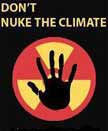
Nuclear power has no place in a healthy, sustainable future. IPPNW
statement for COP26 UN Climate Change Conference 2021. In the lead-up to
COP26, there has been another round of concerted and increasingly desperate
attempts to portray nuclear power as an acceptable, safe and low carbon
energy source that can help address the climate heating crisis. We reject
this deception, which serves only those with vested interests in the
nuclear power industry, and those whose motive is not safe low carbon
electricity, but maintaining or being in a position to build nuclear
weapons.
IPPNW 18 October 2021
https://www.ippnw.org/wp-content/uploads/2021/10/IPPNW-COP-26-10-18-21.docx.pdf
The nuclear industry might get taxpayers money by calling itself ”amber”, if it’s too hard to appear ”green”
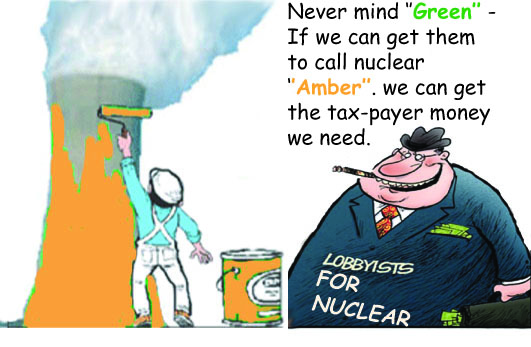
possible compromises included creating an “amber” label for activity that did not win the green label but would still secure a place in the bloc’s transition and not discourage private sector investment. ………..
Brussels to delay decision on how to classify nuclear power for green finance. Debate over energy has been supercharged by surging electricity costs, Ft.com Mehreen Khan and Sam Fleming in Brussels, 20 Oct 21
Brussels will delay long-awaited proposals on how to classify nuclear power and natural gas under the EU’s landmark labelling system for green finance, as member states demand looser rules to help counteract the continent’s energy crisis. EU financial services commissioner Mairead McGuinness told the Financial Times that Brussels would take more time before deciding how to deal with the controversial energy sources under the so-called “taxonomy on sustainable finance” that had been due this autumn.
The debate about how to classify low carbon natural gas and nuclear energy, which produces no CO2 [ ed.except in its long complex fuel and waste chains] but whose waste byproducts are toxic for the environment, has been supercharged by surging electricity costs that have prompted EU governments into emergency financial action to protect households. European leaders are due to debate the taxonomy and how to mitigate soaring prices at a summit in Brussels on Thursday.
“As we come to the end of the year there will be more pressure to resolve this,” said McGuinness. “We don’t have a ready-made solution because this is, both technically but politically . . . one of those issues where you have very divided views.” Europe’s pro-nuclear countries, led by France, and pro-gas member states in the south and east, are demanding the taxonomy rules do not penalise technologies they say are vital in securing the transition to net zero emissions. Environmental groups, however, want the system to abide by scientific criteria to ensure the rules stamp out, rather than encourage, so-called “greenwashing” in the investment industry. ………..
Europe’s energy crisis is the latest challenge to the credibility of the EU’s green labelling system which was designed to be a “gold standard” for investors to know what counts as truly sustainable economic activity. But the rules have been mired in controversy as Brussels struggles to balance science with sensitive political decisions about whether to award some activities the highest green label — penalising those that do not. Ten countries, including France, Finland, Poland and Hungary this week said it is “absolutely necessary that nuclear power was included in the taxonomy framework”.
McGuinness said it remained an “open question” as to whether the green label would be expanded to “accommodate nuclear and gas”. She said possible compromises included creating an “amber” label for activity that did not win the green label but would still secure a place in the bloc’s transition and not discourage private sector investment. ………..
The rules are being closely watched by investors and regulators in the US and UK, who have also said they will come up with their own classification systems. Within the EU, the taxonomy will be used to judge whether investments made by member states are truly green and will form the basis for an EU “green bond standard” that will be used to issue €250bn in sustainable debt under the bloc’s recovery fund. https://www.ft.com/content/898e6c53-8e85-4cfc-b00b-16a09d50b462
UK’s ”Net Zero” climate strategy fails to give concrete commits to reduce energy use, promote renewables.

| In reaction to the government’s Net Zero Strategy, Rebecca Newsom, Greenpeace UK’s head of politics, said “This document is more like a pick and mix than the substantial meal that we need to reach net zero. Extra cash for tree planting and progress on electric vehicles doesn’t make up for the lack of concrete plans to deliver renewables at scale, extra investment in public transport, or a firm commitment to end new oil and gas licences. There are only half-hearted policies and funding commitments to decarbonise our draughty homes at the speed necessary, and it fundamentally fails to grapple with the need to reduce our meat and dairy consumption to stop global deforestation. With just eight years left to halve global emissions, the government can’t just keep dining out on its ‘ambitious targets’. Until the policy and funding gaps are closed, Boris Johnson’s plea to other countries to deliver on their promises at the global climate conference next month will be easy to ignore.” Greenpeace 19th Oct 2021 https://www.greenpeace.org.uk/latest-updates/?news_type=press-release |
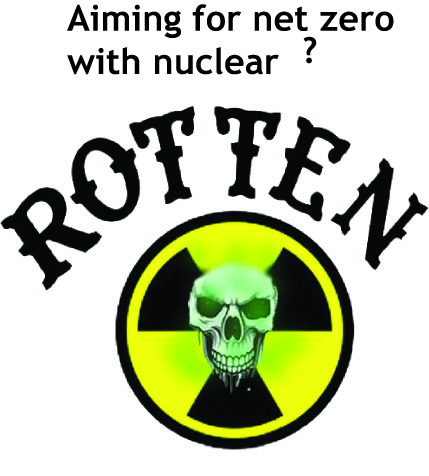
If nuclear is at the heart of our trip to net-zero, then it is a rotten heart.
A substantial step forward, or huge letdown? The green economy reacts to the Net-Zero Strategy. The UK’s Net-Zero Strategy is finally here, but the reaction to the nation’s blueprint to decarbonisation ranges from those believing it provides much-needed clarity for business to others claiming it does nowhere near enough to drive all parts of the economy to net-zero by 2050.
Tom Burke, chair, E3G said “New nuclear power can do nothing to help the UK achieve a net-zero power system by 2035. It will, however, take away a huge amount of public investment from things that could get us to net-zero cheaper and faster. If nuclear is at the heart of our trip to net-zero, then it is a rotten heart.”
Edie 19th Oct 2021
Nuclear power is itself vulnerable to climate change, and there are better ways to tackle global heating

As Michael E Mann, another giant of climate science activism, points out in his book, The New Climate War, nuclear support has long seemed a “shibboleth” for US conservatives; its opposition more a feature of the left. Nuclear energy comes with a lot of politically-toned symbolism here in the UK too. For some it represents security (all the more potent in the face of a gas crisis), for others, including the Scottish Greens who criticised possible UK plans recently, a terrifying threat to public and environmental safety.
But it’s worth noting that Mann, unlike Hansen, is sceptical about nuclear, citing not only the dangers and problems of waste, but also the fact that climate change itself, floods and drought, could make reactors more vulnerable.
“If we are forced into a choice between one risk or the other,” he writes, “a reasonable argument could be made that there’s a significant role to be played by nuclear energy.
The problem with this argument is that it buys into the fallacy that nuclear power is necessary for us to decarbonise our economy.” We can do it, he says, with renewables – and it would be cheaper. “The average nuclear power generating cost is about $100 per megawatt-hour, compared with $50 for solar and $30 to $40 for onshore winds,”he notes.
James Hansen says nuclear power is answer to climate. Is he right? https://www.heraldscotland.com/opinion/19653021.james-hansen-says-nuclear-power-answer-climate-right/ By Vicky Allan, Senior features writer 18th October
Last week, James Hansen, prominent climate scientist and a keen advocate of nuclear power, gave his verdict on the current path of the UK. “Regarding Boris Johnson: it’s possible he will put the UK on a path to 100 percent clean electricity (renewables + nuclear, no gas or coal), in which case the UK, which led us into the fossil fuel era, could lead us out.”
Just a few days ago it was announced that the UK government was poised to approve funding for a fleet of Rolls-Royce mini nuclear reactors. And with that, the way is paved for modern nuclear. The fears provoked by the memories of Fukushima, Three Mile Island and Chernobyl are dismissed, passed over, or countered.
We have a climate guru like Hansen saying that the only answer can be the “development and deployment of modern nuclear power”.“Otherwise,” he says, “gas will be the required complement to intermittent renewable energy for electricity generation…Modern nuclear power, in contrast, has the smallest environmental footprint of the potential energies because of its high energy density and the small volume of its waste, which is well-contained, unlike wastes of other energy sources.”
How did we come to this? How did the search for an answer to a climate crisis caused by an excess of an everyday, non-toxic gas, land on a technology which, though now vastly improved in terms of safety, still comes with a risk of terrifying toxicity?
I don’t want to plunge into any kneejerk anti-nuclear tirade. I realise how politically tribal our responses on this can be. As Michael E Mann, another giant of climate science activism, points out in his book, The New Climate War, nuclear support has long seemed a “shibboleth” for US conservatives; its opposition more a feature of the left. Nuclear energy comes with a lot of politically-toned symbolism here in the UK too. For some it represents security (all the more potent in the face of a gas crisis), for others, including the Scottish Greens who criticised possible UK plans recently, a terrifying threat to public and environmental safety.
But it’s worth noting that Mann, unlike Hansen, is sceptical about nuclear, citing not only the dangers and problems of waste, but also the fact that climate change itself, floods and drought, could make reactors more vulnerable. “If we are forced into a choice between one risk or the other,” he writes, “a reasonable argument could be made that there’s a significant role to be played by nuclear energy. The problem with this argument is that it buys into the fallacy that nuclear power is necessary for us to decarbonise our economy.” We can do it, he says, with renewables – and it would be cheaper. “The average nuclear power generating cost is about $100 per megawatt-hour, compared with $50 for solar and $30 to $40 for onshore winds,”he notes.
That chimes with a recent report issued by INET Oxford, which looked at progress on renewables according to Wright’s Learning Curve, which predicts how costs and efficiency change with investment. It found that “a major, accelerated push to deploy renewables and drive out carbon emitting fossil fuels is likely to lower energy costs by trillions of dollars”.
Even the National Grid’s recently published Future Energy Scenarios report did not rely on new nuclear. The most ambitious of its three different plans for progress towards net zero focussed on renewables, storage and “only very limited new nuclear development after Hinckley Point C”.
It strikes me that nuclear is the “clean energy” we turn to in pessimism, when we think that all the other changes aren’t going to happen – the societal change, the development of storage, the advance in renewables. It’s not surprising Hansen feels that pessimism;it’s what experience tells him. Since he started calling out anthropogenic climate change in 1988 our yearly emissions have only grown.
Still, my hope, though it may be naïve, is that we are nearing a paradigm shift. Nuclear is what we look to when we feel cornered into embracing its risks. But we can reach for more.
Nuclear power? It’s of zero use to Australia’s emissions plan

I have no problems with nuclear power. But the only way it would be viable is with an extremely high carbon price. I say bring that on!
Except a high carbon price makes renewables an even better investment, and thus nuclear less needed.
And even a high carbon price won’t get enough nuclear plants built soon enough to prevent temperatures rising above 2C.
Nuclear power is too costly, too slow, so it’s zero use to Australia’s emissions plan, EXCELLENT GRAPHS Guardian, Greg Jericho 18 Oct 21, With a 20-year development timeline, nuclear plants won’t be built soon enough to stop temperatures rising above 2C. So why are we wasting precious time debating them?
The catch-22 of nuclear power in Australia is that you would only consider it if you wanted to reduce emissions because of climate change, but if you agree climate change is real and we need to reduce emissions, you would not consider nuclear power.
Currently Australia burns a lot of coal – more than other comparable economies with nuclear power.
Even worse, Victoria relies greatly on the dirtiest and least-efficient brown coal.
But if you think climate change is a load of bunk then, as current head of charging with ChargeFox, Evan Beaver, puts it in his excellent blog post on the issue, “we might as well burn all the coal we have. And we have a lot.”
But if you do agree climate change is real then what we need to do is reduce emissions as fast as possible. As I noted last month, at a certain point there will be so much CO2 in the atmosphere that we won’t be able to limit temperatures rising above either 1.5C or 2C above pre-industrial levels, no matter when we get to net zero afterwards.
Projected cumulative emissions between 2021 and 2050
6,161Gt is the carbon budget to stay below 2C; 3,521Gt is the carbon budget for 1.5C
We must cut emissions fast – at least 50% below 2005 levels by 2030, and probably by about 75% if we want to limit temperature rises to less than 1.5C.
Nuclear power is of zero use on that score.
We know this because nuclear power has already been examined a lot.
One excellent study was in 2006 under the Howard government, by Ziggy Switkowski. It noted that “the earliest that nuclear electricity could be delivered to the grid would be 10 years, with 15 years more probable”.
Alright then. Firstly, not even the National party is insane enough to make nuclear power an election promise.
So let’s assume if the Coalition wins next year’s election, but announces a move to legalise nuclear power, that even with the best intentions, given the task of getting the votes, it’d be lucky for that to happen until the end of 2022.
Now all that has to happen is choose the type of reactor, and oh, pick a spot (have fun).
Ignore the coming election in 2025 and assume everything gets in place by 2024 (not a hope, but hey, let’s play pretend). That means at best we’re looking at 2035 but more likely 2040 before the first nuclear plant comes on line.
That is already too late to help prevent temperatures reaching 2C, and by then an overwhelming amount of our electricity will already be generated by renewables.
That means the need for such a plant is gone. Markets know this, which is why no one will ever invest in such a plant here.
The CSIRO’s latest “GenCost” report suggests the capital costs of small modular reactor (SMR) nuclear power plants by 2030 and even out to 2050 will be greater than renewables, including solar thermal plants.
But perhaps rather surprising is that nuclear becomes even less viable when the CSIRO projects the world getting to net zero by 2050.
The reason is that, under such a scenario, the push for renewables accelerates so greatly that the development of nuclear power effectively stalls, meaning Australia would have to be a leading investor in new plants – thus paying the first mover costs.
As the CSIRO notes, “a major source of discomfort” for nuclear stakeholders is that the high cost estimate of nuclear power “is of theoretical value only” because “a nuclear SMR plant is not planned to be built in Australia anytime soon”………………….
I have no problems with nuclear power. But the only way it would be viable is with an extremely high carbon price. I say bring that on!
Except a high carbon price makes renewables an even better investment, and thus nuclear less needed.
And even a high carbon price won’t get enough nuclear plants built soon enough to prevent temperatures rising above 2C.
Nuclear power: too costly, and too slow. https://www.theguardian.com/business/grogonomics/2021/oct/19/nuclear-power-too-costly-too-slow-so-its-zero-use-to-australias-emissions-plan
Flamanville nuclear power plant has exceeded the threshold for discharging a powerful greenhouse gas.
Flamanville nuclear power plant has exceeded the threshold for discharging
a powerful greenhouse gas. In nine months, the quantity of SF6, the most
powerful greenhouse gas, released by the Flamanville nuclear power plant in
La Manche, has already exceeded the annual declaration threshold. This
threshold was reached on September 27, 2021, as confirmed by EDF on
Thursday, October 14, 2021.
Ouest France 14th Oct 2021
Demonising China is unhelpful while encouraging China to participate in Cop26
As Britain prepares to host the Cop26 climate conference in Glasgow next month, it is pursuing two contradictory policies that undermine its chances of success. On the one hand, it is seeking a unified global response to the climate crisis with nations agreeing to targets for the reduction of their coal and petroleum emissions.
But at the same time, it has joined the US in escalating a new cold war directed at confronting China and Russia at every turn. The two policies have polar opposite objectives in trying to persuade China, responsible for 27 per cent of global carbon emissions, to cut back on building new coal-fuelled power stations, but at the same time demonising China as a pariah state with whom political, commercial and intellectual contacts should be as limited as possible.
Independent 15th Oct 2021
https://www.independent.co.uk/climate-change/opinion/china-russia-climate-cop26-b1939164.html
There are Much More Powerful Greenhouse Gases than CO2 and EDF’s Nuclear Reactors are Spewing Them Out (Apart from Toxic Radioactive Emissions!!)

EdF finally admit that operational nuclear power station discharges of Sulfur hexafluoride gas make massive contributions to Global warming/Climate change Flamanville nuclear power plant has exceeded the threshold for discharging SF6. In nine months, the quantity of SF6, the most powerful greenhouse gas, released by the Flamanville nuclear power plant in La Manche, has already […]
There are Much More Powerful Greenhouse Gases than CO2 and EDF’s Nuclear Reactors are Spewing Them Out (Apart from Toxic Radioactive Emissions!!) — RADIATION FREE LAKELAND
There are Much More Powerful Greenhouse Gases than CO2 and EDF’s Nuclear Reactors are Spewing Them Out (Apart from Toxic Radioactive Emissions!!) https://mariannewildart.wordpress.com/2021/10/15/there-are-much-more-powerful-greenhouse-gases-than-co2-and-edfs-nuclear-reactors-are-spewing-them-out-apart-from-toxic-radioactive-emissions/
ON OCTOBER 15, 2021 BY MARIANNEWILDARTEdF finally admit that operational nuclear power station discharges of Sulfur hexafluoride gas make massive contributions to Global warming/Climate change
Flamanville nuclear power plant has exceeded the threshold for discharging SF6. In nine months, the quantity of SF6, the most powerful greenhouse gas, released by the Flamanville nuclear power plant in La Manche, has already exceeded the annual declaration threshold. This threshold was reached on September 27, 2021, as confirmed by EDF on Thursday, October 14, 2021.
The Flamanville nuclear power plant (Manche) declared a “significant environmental event” after having emitted a cumulative quantity of SF6, the most powerful greenhouse gas, above the declaration threshold, we learned from EdF on Thursday October 14th.
“On September 27, 2021, the cumulative annual quantity of SF6 gas emissions reached 100.37 kg, exceeding the declaration threshold of 100 kg,” said EDF in a press release posted on the plant’s website. SF6, targeted as early as 1997 by the Kyoto Protocol on the climate, has a warming potential 23,000 times that of CO2 and remains in the atmosphere for up to 3,000 years. It is the most potent of greenhouse gases, even though it represents a small part of it.
The campaign group Sortir du Nuclear criticized EdFs pollution, saying : “Letting 100 kg of this gas escape is like emitting more than 2 million kg of C02 into the atmosphere. In just nine months, the Flamanville site has already exceeded (the 100 kg threshold). And the year is not over. Each year, each of the 18 nuclear power plants in France has this right to pollution and thus actively contributes to global warming, not to mention refrigerant leaks.”
Sortir de Nuclear further states that until 2018, EDF did not report any of these emissions. Sulfur Hexafluoride (SF6) gas “is used to ensure the electrical isolation of high voltage equipment. On the Flamanville site, SF6 gas is used as insulation for the energy evacuation stations and the supply stations for auxiliary transformers “, stated EDF.
Ouest France 14th Oct 2021
https://www.ouest-france.fr/normandie/flamanville-50340/la-centrale-nucleaire-de-flamanville-a-depasse-le-seuil-de-rejet-d-un-puissant-gaz-a-effet-de-serre-4ef83064-2cdc-11ec-9285-f388b2ea32b0
Nuclear power is not sustainable energy – German environment ministry
Nuclear power is not sustainable energy – German environment ministry https://www.reuters.com/business/energy/nuclear-power-is-not-sustainable-energy-german-environment-ministry-2021-10-13/Reuters BERLIN, Oct 13 (Reuters) – Germany’s continues to push for the European Union not to classify nuclear power as a sustainable energy source, the country’s environment ministry spokesperson told a press conference on Wednesday.
“In the event an accident, entire regions would become uninhabitable and many future generations of taxpayers would have to pay for the damage as well as deal with the waste. All this is obviously not sustainable,” the spokesperson said.
He added that nuclear power is more expensive than renewable energy, and said new construction projects take too long in light of the need for urgent solutions to the climate crisis.
France building a pro-nuclear European alliance in lead-up to Cop26

France is building a pro-nuclear European alliance to overcome German resistance to new rules that would open the way for more [so-called] carbon-free atomic power. Nine other European countries have signed up to a nuclear power initiative at a time of spiralling energy prices, partly caused by EU
climate change policies that increase the cost of electricity generation using fossil fuels.
The countries are pushing for nuclear power, which produces no carbon emissions [if you just don’t count the full nuclear fuel chain] , and they want it to be classified as a greentechnology in EU industrial “taxonomy” ratings, which would clearprivate investment in atomic power to be linked to climate policy
subsidies.
Times 12th Oct 2021
Smoke from nuclear war would devastate ozone layer, alter climate

SMOKE FROM NUCLEAR WAR WOULD DEVASTATE OZONE LAYER, ALTER CLIMATE Atmospheric impacts of global nuclear war would be more severe than previously thought https://news.ucar.edu/132813/smoke-nuclear-war-would-devastate-ozone-layer-alter-climate
OCT 13, 2021 – BY DAVID HOSANSKY The massive columns of smoke generated by a nuclear war would alter the world’s climate for years and devastate the ozone layer, endangering both human health and food supplies, new research shows.
The international study paints an even grimmer picture of a global nuclear war’s aftermath than previous analyses. The research team used newly developed computer climate modeling techniques to learn more about the effects of a hypothetical nuclear exchange, including complex chemistry interactions in the stratosphere that influence the amounts of ultraviolet (UV) radiation that reach the planet’s surface.
Since the ozone layer protects Earth’s surface from harmful UV radiation, such impacts would be devastating to humans and the environment. High levels of UV radiation have been linked to certain types of skin cancer, cataracts, and immunological disorders. The ozone layer also protects terrestrial and aquatic ecosystems, as well as agriculture.
“Although we suspected that ozone would be destroyed after nuclear war and that would result in enhanced ultraviolet light at the Earth’s surface, if there was too much smoke, it would block out the ultraviolet light,” said study co-author Alan Robock, a professor of climate science at Rutgers University. “Now, for the first time, we have calculated how this would work and quantified how it would depend on the amount of smoke.”
Continue readingUK Climate denialist group rebrands itself as ”Net Zero Watch (NZW)”
| THE Scottish Greens have called on Boris Johnson to remove “dangerous Trumpian extremism” from his party if he is to have any credibility with world leaders ahead of COP26. It comes as a climate change denial group recently changed its name and main focus – while counting a long-serving Tory MP amongst its biggest backers. There are indications that more are likely to join. The new Net Zero Watch (NZW) website was unveiled yesterday (October 11) with the stated aim of talking about the “serious implications of expensive and poorly considered climate change policies”. The group isa rebranding of the campaigning arm of the climate change sceptical lobby group Global Warming Policy Foundation (GWPF) with the Global Warming Policy Forum disappearing from the internet on Monday with the URL redirecting to the NZW website. NZW has chosen to align itself with public anxiety over the costs of net-zero emissions goals to the taxpayer at a time when the UK is experiencing fuel shortages. One of the group’s main proponents is former Brexit minister and Conservative MP Steve Baker (below) who has been taking aim at UK Government experts for their plans to move towards renewables as the main source of energy. The National 12th Oct 2021 https://www.thenational.scot/news/19641580.boris-johnson-warned-senior-tories-peddle-climate-conspiracies-ahead-cop26 |
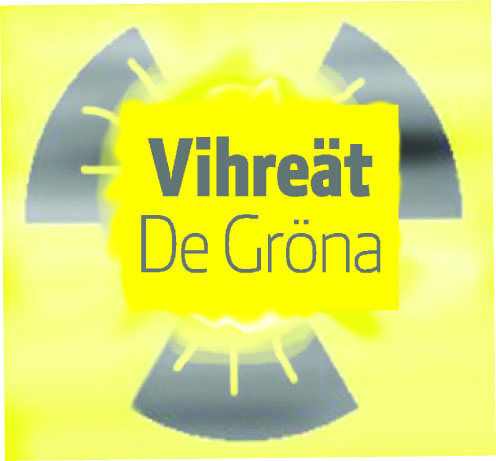
Finland’s Greens turn a lovely shade of nuclear yellow, as they back nuclear power as ”sustainable”
—Finland lobbies nuclear energy as a sustainable source https://www.euractiv.com/section/politics/short_news/finland-lobbies-nuclear-energy-as-a-sustainable-source/ By Pekka Vanttinen | EURACTIV.com, 11 Oct 2021
Following a previously secret decision, the Finnish government will lobby the European Union to declare nuclear power as a sustainable energy source.
Wind and solar have been approved as sustainable by the EU, but decisions on gas and nuclear have so far not been made. Even if plants are emission-free, nuclear is currently considered only a low-carbon energy source due to emissions caused by mining and transport.
Finland has four nuclear plants, and the fifth is nearing completion after years of postponements because of technical complexities. The future of nuclear energy remains important for the country. Its industry is highly energy-intensive, and Finland has a target of being carbon neutral by 2035. Currently, 30% of Finland’s energy is produced by nuclear energy.
As reported by the Finnish Broadcasting Company (YLE), the government’s alignment to lobby nuclear as a sustainable source marks a near U-turn within the Green Party sitting in the current five-party cabinet. Traditionally the party has been fiercely anti-nuclear and has resigned from previous governments over the issue. Its views have become more pragmatic, and the Greens now claim to have a technology-neutral attitude when it comes to fighting climate change.
1 This Month



26 September – International Day for the Total Elimination of Nuclear Weapons


PLEASE OPPOSE HR 8255 AND S.3639 – bills would accelerate satellite deployment, with no environmental review or safeguards – https://ncstd5li.quorum.us/campaign/169331/
To see nuclear-related stories in greater depth and intensity – go to https://nuclearinformation.wordpress.com
-
Archives
- September 2026 (245)
- August 2026 (330)
- July 2026 (355)
- June 2026 (287)
- May 2026 (306)
- April 2026 (356)
- March 2026 (251)
- February 2026 (267)
- January 2026 (308)
- December 2025 (358)
- November 2025 (359)
- October 2025 (375)
-
Categories
- 1
- 1 NUCLEAR ISSUES
- business and costs
- climate change
- culture and arts
- ENERGY
- environment
- health
- history
- indigenous issues
- Legal
- marketing of nuclear
- media
- opposition to nuclear
- PERSONAL STORIES
- politics
- politics international
- Religion and ethics
- safety
- secrets,lies and civil liberties
- spinbuster
- technology
- Uranium
- wastes
- weapons and war
- Women
- 2 WORLD
- ACTION
- AFRICA
- Atrocities
- AUSTRALIA
- Christina's notes
- Christina's themes
- culture and arts
- Events
- Fuk 2022
- Fuk 2023
- Fukushima 2017
- Fukushima 2018
- fukushima 2019
- Fukushima 2020
- Fukushima 2021
- general
- global warming
- Humour (God we need it)
- Nuclear
- RARE EARTHS
- Reference
- resources – print
- Resources -audiovicual
- Weekly Newsletter
- World
- World Nuclear
- YouTube
-
RSS
Entries RSS
Comments RSS
 nuclear-news