nuclear-news

The News That Matters about the Nuclear Industry Fukushima Chernobyl Mayak Three Mile Island Atomic Testing Radiation Isotope

President of the European Commission to have the final say on whether Europe considers nuclear power to be ”clean” and ”green”?

Gas and nuclear: Fate of EU green taxonomy ‘now in the hands of von der Leyen’ By Frédéric Simon and Kira Taylor | EURACTIV.com, 10 Dec 2021

European Commission President Ursula von der Leyen has taken charge of a soon-to-be-published list of sustainable investments amid controversy around the possible classification of fossil gas and nuclear energy as “green” or “transitional” activities under certain conditions, according to several sources familiar with the process.

The European Union is moving closer to integrating nuclear power and natural gas into the bloc’s sustainable finance taxonomy – a set of rules designed to provide investors with a common definition of what is green and what is not in order to channel more capital into sustainable businesses.

The list of activities that Europe considers “green” or “transitional” investments will be laid down in a so-called ‘delegated act’ adopted by the European Commission setting out detailed implementing rules under the EU’s sustainable finance taxonomy regulation, adopted in December 2019.

But after several failed attempts and mounting controversy over the role of gas and nuclear power in the energy transition, President von der Leyen has now taken matters into her own hands, several sources told EURACTIV………

On Wednesday evening, the EU passed the first part of its taxonomy rulebook, setting out environmental criteria for investments including renewable energy, shipping and car manufacturing that will apply as of January 2022.

But no decision has been taken yet on the most politically sensitive part of the taxonomy, dealing with gas and nuclear investments………….   Contacted by EURACTIV, the European Commission did not confirm whether von der Leyen had taken charge. Most likely, the proposal will be presented to the College of Commissioners by Mairead McGuinness, the EU financial services commissioner, and Valdis Dombrovskis, the vice-president in charge of the economy, a spokesperson said.

Given internal procedures, a final proposal should be ready by Friday before it is submitted to the college for approval next week, according to an EU source.

Europe divided

European countries are deeply divided on the subject. While France is leading a group of twelve countries supporting the inclusion of nuclear energy in the taxonomy, five other EU countries expressed their opposition to the move, with Austria even warning it was ready to challenge the decision before the EU court of justice.

Central and eastern European countries are also pushing to include fossil gas as a “transitional” activity in the taxonomy, arguing that gas is needed as a stepping stone for them to exit coal, the most polluting of all fossil fuels.

But the United Nations Principles for Responsible Investment (PRI), a network of international investors, has advised the EU against allowing these energy sources a sustainable label.

The inclusion of gas-fired power “would seriously compromise” the taxonomy’s role as an independent and scientific tool in line with Europe’s climate goals, PRI warned in a briefing note.

And while a report from the European Commission’s Joint Research Centre (JRC) looked favourably at the inclusion of nuclear, it did “not sufficiently [address] risks related to the storage of nuclear waste, severe incidents and nuclear proliferation,” UNEP said.

The UN-supported initiative recommends that Europe explores alternatives, either by developing a proposal for sectors involved with the energy transition or extending the taxonomy “to recognise intermediate economic activities and transition pathways such as gas-fired power that operates below the ‘significant harm’ threshold of 270g CO2/kWh”………

Technology neutral

In the end, it looks increasingly likely that both gas and nuclear will be included in the list of sustainable investments as transitional fuels………….

For nuclear, however, the choice to call it transitional is still subject to controversy, with supporters arguing it should labelled “sustainable” because of its low-carbon [?]nature………..

Nuclear split in three categories

According to the EU’s energy commissioner Kadri Simson, the proposal “will be ready in the coming weeks…and it will clarify whether or not nuclear energy generation, waste disposal or fuel supply can be classified as sustainable activities for investors.”

Simson’s comments suggest that the upcoming delegated act could split nuclear activities into three categories: fuel supply, energy generation and waste.

….  the management of radioactive waste and the possibility of a nuclear incident remains a cause of concern for the United Nation’s PRI, which says these were not sufficiently explored in the JRC report.

“The materialisation of the risks above could seriously harm most – if not all – of the five environmental objectives other than climate mitigation that are part of the EU Taxonomy Regulation,” the PRI said in its briefing note.

…….. There is still no confirmed date for the publication of the taxonomy’s delegated act, but the European Commission says it will be published before the end of the year. Some expect it to be published alongside the gas package on 14 December while others are talking about it coming out on 22 December.  https://www.euractiv.com/section/energy/news/gas-and-nuclear-fate-of-eu-green-taxonomy-now-in-the-hands-of-von-der-leyen/

December 12, 2021 Posted by | climate change, EUROPE | Leave a comment

European Union passes sustainable taxonomy law, but postpones decision about nuclear power.

The commission must deliver a science-based taxonomy regulation that excludes fossil gas, nuclear, and factory farming. Otherwise, the credibility of the taxonomy is ruined.”


EU green taxonomy becomes law, gas and nuclear postponed,   
 Institutional investors have signalled they want a taxonomy that is based on science – not political compromise.  euobserver,   By WESTER VAN GAAL  11 Dec 21,

BRUSSELS,  The first two chapters of the sustainable taxonomy, the EU’s ambitious labelling system for green investment, were passed on Thursday (9 December).

Until midnight on Wednesday, EU member states had time to reject this first set of rules – the so-called ‘first delegated act’.

But despite opposition from a group of countries, the proposal passed and will come into force on 1 January 2022.   It will describe the sustainable criteria for renewable energy, car manufacturing, shipping, forestry and bioenergy and more, and include a “technology-neutral” benchmark at 100 grams of CO2 per kilowatt-hour for any investments in energy production.

The criteria for the list has mainly been compiled by the Sustainable Finance Platform, a group of 57 NGOs, scientific and financial experts, making the first part of taxonomy “science-based”…..

The European Commission will now likely unveil the second delegated act on 22 December.

This will describe how nuclear and gas will be labelled under the taxonomy. But the process has become highly-politicised over the last months.

Second act

In a meeting of member states on 29 November the project nearly faltered.

An EU diplomat, speaking anonymously, explained to EUobserver that a French-led group of 13 member states tried to block the first list “out of principle” – because the commission had not agreed to include nuclear and gas in the green taxonomy.

France and Finland pushed for nuclear to be “fully part of the taxonomy.” Ten other mainly eastern European countries want gas included. Sweden joined the group because the new rules endanger its forestry sector.

The group tried to gain a supermajority of 15 to force the commission’s hand but fell short. Germany and Italy abstained, but did not respond to requests for explanation made by EUobserver.

The commission will now decide how to label nuclear and gas before the end of the year, and it is not yet clear how the issue will pan out…………..

Whatever the commission will decide, only a supermajority in the council – 15 member states – or a parliamentary majority can block the second delegated act. Both are unlikely.

What next?

Institutional investors have already signalled they want a taxonomy based on science, not political compromise.

This will “harm the objective-scientific, transparent character of the taxonomy and increases the risk of ‘greenwashing’. Europe promised the world climate leadership, it is time to show it,” a group of banks wrote this week.

Sebastien Godinot, a senior economist at WWF and member of the EU’s Sustainable Finance Platform, said the commission must not give in to blackmail and bullying.

“The commission must deliver a science-based taxonomy regulation that excludes fossil gas, nuclear, and factory farming. Otherwise, the credibility of the taxonomy is ruined.”

But the commission may have no choice but to compromise between the gas and nuclear-supporting member states on one side, and countries opposing these on the other – while also being mindful that investors and experts from its Sustainable Finance Platform will reject a system containing contradictory political concessions. https://euobserver.com/climate/153776

December 12, 2021 Posted by | climate change, EUROPE, politics international | Leave a comment

Bradwell nuclear project would become vulnerable to sea level rise

BANNG refutes recent statement by BRB that Bradwell B would be Essex’s
biggest contribution to reduced carbon emissions. Low lying land at
Bradwell would become vulnerable to sea level rise. And Bradwell B would be
unlikely to start operating before the middle of next decade – far too
late to make an appreciable contribution to a net zero 2050. In fact it
would have a negative impact on renewable energy and flexibility.

 Maylands Mayl 10th Dec 2021


December 11, 2021 Posted by | climate change, UK | Leave a comment

European Union passes sustainable taxonomy law, but postpones decision about nuclear power.

The commission must deliver a science-based taxonomy regulation that excludes fossil gas, nuclear, and factory farming. Otherwise, the credibility of the taxonomy is ruined.”


EU green taxonomy becomes law, gas and nuclear postponed,   
 Institutional investors have signalled they want a taxonomy that is based on science – not political compromise.  euobserver,   By WESTER VAN GAAL  11 Dec 21,

BRUSSELS,  The first two chapters of the sustainable taxonomy, the EU’s ambitious labelling system for green investment, were passed on Thursday (9 December).

Until midnight on Wednesday, EU member states had time to reject this first set of rules – the so-called ‘first delegated act’.

But despite opposition from a group of countries, the proposal passed and will come into force on 1 January 2022.   It will describe the sustainable criteria for renewable energy, car manufacturing, shipping, forestry and bioenergy and more, and include a “technology-neutral” benchmark at 100 grams of CO2 per kilowatt-hour for any investments in energy production.

The criteria for the list has mainly been compiled by the Sustainable Finance Platform, a group of 57 NGOs, scientific and financial experts, making the first part of taxonomy “science-based”…..

The European Commission will now likely unveil the second delegated act on 22 December.

This will describe how nuclear and gas will be labelled under the taxonomy. But the process has become highly-politicised over the last months.

Second act

In a meeting of member states on 29 November the project nearly faltered.

An EU diplomat, speaking anonymously, explained to EUobserver that a French-led group of 13 member states tried to block the first list “out of principle” – because the commission had not agreed to include nuclear and gas in the green taxonomy.

France and Finland pushed for nuclear to be “fully part of the taxonomy.” Ten other mainly eastern European countries want gas included. Sweden joined the group because the new rules endanger its forestry sector.

The group tried to gain a supermajority of 15 to force the commission’s hand but fell short. Germany and Italy abstained, but did not respond to requests for explanation made by EUobserver.

The commission will now decide how to label nuclear and gas before the end of the year, and it is not yet clear how the issue will pan out…………..

Whatever the commission will decide, only a supermajority in the council – 15 member states – or a parliamentary majority can block the second delegated act. Both are unlikely.

What next?

Institutional investors have already signalled they want a taxonomy based on science, not political compromise.

This will “harm the objective-scientific, transparent character of the taxonomy and increases the risk of ‘greenwashing’. Europe promised the world climate leadership, it is time to show it,” a group of banks wrote this week.

Sebastien Godinot, a senior economist at WWF and member of the EU’s Sustainable Finance Platform, said the commission must not give in to blackmail and bullying.

“The commission must deliver a science-based taxonomy regulation that excludes fossil gas, nuclear, and factory farming. Otherwise, the credibility of the taxonomy is ruined.”

But the commission may have no choice but to compromise between the gas and nuclear-supporting member states on one side, and countries opposing these on the other – while also being mindful that investors and experts from its Sustainable Finance Platform will reject a system containing contradictory political concessions. https://euobserver.com/climate/153776

December 11, 2021 Posted by | climate change, EUROPE, politics, politics international | Leave a comment

Analysis: Small Modular Reactors Are Decades Away. That Suits the Fossil Lobby Just Fine.

Perhaps it is no coincidence that the fossil fuel lobby in all three countries is keen to support nuclear power as “one of the answers to climate change.” Unlike renewables that can be deployed quickly, new nuclear power is decades away, providing breathing space for a dying industry to go on exploiting fossil fuels while nuclear power plants are built.

Analysis: Small Modular Reactors Are Decades Away. That Suits the Fossil Lobby Just Fine.  https://www.theenergymix.com/2021/12/01/analysis-small-modular-reactors-are-decades-away-that-suits-the-fossil-lobby-just-fine/December 1, 2021

Primary Author: Paul Brown @pbrown4348    Media outlets and the energy journalists employed by them seem to have lost their critical faculties when it comes to writing about small modular nuclear reactors (SMRs), according to critics who think the industry has no hope of delivering on its promises to build a new generation of power stations.

In the build-up to the climate talks at COP 26 in Glasgow, through the negotiations and afterwards, small modular reactors were repeatedly discussed enthusiastically in newspaper articles, government announcements, and by the nuclear industry.

In every article or press release these reactors, which in the UK have yet to leave the drawing board, were touted as a vital part of Britain’s efforts to reach zero emissions by 2050. The same treatment has been given to similar plans in Canada, France, and the United States.

Oil Price reported Rolls Royce, the British engineering giant, was “breathing life back into the nuclear industry” by promising the first reactor in operation by the early 2030s and 10 by 2035.

After months of hype, having been given £210 million of British government money and raised £250 million from private investors, Rolls Royce has finally applied to the UK licencing authority to have its design approved so construction can begin.

Rolls-Royce SMR has been established to deliver a low-cost, deployable, scalable, and investable program of new nuclear power plants,” said CEO Tom Samson. “Our transformative approach to delivering nuclear power, based on predictable factory-built components, is unique, and the nuclear technology is proven. Investors see a tremendous opportunity to decarbonize the U.K. through stable baseload nuclear power, in addition to fulfilling a vital export need as countries identify nuclear as an opportunity to decarbonize.”

Meanwhile, campaigners and climate policy specialists at the Glasgow talks were looking for fast, deep cuts in carbon emissions before 2030, to enable the planet to have a chance of staying below 1.5°C. They cast Rolls-Royce’s plans, which have been re-announced repeatedly over several months, as another prime example of “greenwash” or “kicking the can down the road.”

Nor did campaigners at Glasgow miss the fact that Britain, Canada, and the United States, the three countries with most enthusiasm for small modular reactors, have something else in common: Their wish to go on extracting oil and gas that scientists say needs to be kept in the ground if the 1.5°C limit is not to be breached.

Perhaps it is no coincidence that the fossil fuel lobby in all three countries is keen to support nuclear power as “one of the answers to climate change.” Unlike renewables that can be deployed quickly, new nuclear power is decades away, providing breathing space for a dying industry to go on exploiting fossil fuels while nuclear power plants are built.

Jonathon Porritt, chair of the U.K.’s Sustainable Development Commission between 2000 and 2009 and founder member of Forum for the Future, is scathing about the plans of the U.K. government and Rolls Royce.

He says taking the SMR through the Generic Design Assessment process takes at least four years, more likely five, and even if it passes it will take years to build, given the need to find sites and seek planning permission amid likely public opposition.

To be generous, Porritt said, it would be 2035 before the first was commissioned, let alone the five to 16 reactors Rolls Royce wants to build.

“It is therefore of zero benefit in terms of meeting the (British) government’s own target of a 78% reduction in greenhouse gas emissions by 2035,” he said.  “It doesn’t matter how many times ministers bang this particular drum, or how many times deplorably gullible journalists in the BBC, Financial Times, Times, and the Daily Telegraph suck it all up. Moonshine is still moonshine.”

“It’s all such a pathetic waste of time—and of taxpayers’ money,” he added. “Whatever the time scale, SMRs will never compete with renewables plus storage.”

Porritt went on to discuss tidal stream energy using undersea turbines rather like wind turbines, which two British companies are developing with some success, and the even greater potential of using the tidal range—the height difference between low and high tide—to generate electricity to generate electricity through traditional turbines. Since Britain has the second-highest tides in the world after Canada and is surrounded by the sea, it has huge potential—but is ignored by the U.K. government.

“If our government was genuinely serious about energy security (instead of finding ways of propping up Rolls-Royce to support our nuclear weapons program), tidal power would be top of its list,” Porritt concluded.

Not all publications, however, agree with the mainstream British press about nuclear power. Under the headline “Nuclear Power Won’t Save the World—It Won’t Even Help”, published in the Green Energy Times, climate writer and retired computer engineer George Harvey said the cost estimates and timetables for nuclear power were never realistic.

“All told, we might say that putting money into nuclear power goes beyond being a monumental waste,” he wrote. “It detracts from the overarching issue of dealing with climate change by making that money unavailable for dealing with the problem using less expensive, more reliable energy that can be built far more quickly.”

December 6, 2021 Posted by | 2 WORLD, climate change, Small Modular Nuclear Reactors | Leave a comment

The nuclear fuel chain – uranium mining to radioactive waste problem- European Commission to decide if it is ”green” and”sustainable”


The European Commission is preparing to settle whether nuclear and natural gas are “green” investments in an update to the EU’s sustainable finance taxonomy expected next week, according to several sources.

The list will clarify whether nuclear energy generation, waste disposal or fuel supply can be classified as sustainable activities for investors, EU energy commissioner Kadri Simson told a nuclear conference in Paris on Tuesday. French economy minister Bruno Le Maire told the same conference he was convinced France could persuade Germany – which is phasing out its nuclear generation — to agree to including nuclear in the list.

 Montel 30th Nov 2021

 https://www.montelnews.com/news/1277923/ec-set-to-clarify-nuclear-gas-green-status-next-week

December 2, 2021 Posted by | climate change, EUROPE | Leave a comment

Global heating brings easier Arctic passage for Russia’s floating nuclear power plant to open up Arctic for more fossil fuel mining, more global heating.

 World’s first floating nuclear power plant fuels Russia’s Arctic ambitions   Ft.com Remote Siberian port lies at centre of plans to open up shipping and reach valuable resources © Nastassia Astrasheuskaya/FT | The Akademik Lomonosov nuclear power plant Share on twitter (opens new window) Share on facebook (opens new window) Share on linkedin (opens new window) Save Nastassia Astrasheuskaya in Pevek YESTERDAY  

  Moored off the small Arctic town of Pevek is the Akademik Lomonosov — the world’s first floating nuclear power plant and a sign of how President Vladimir Putin’s ambitions for Russia’s far east are taking shape. This port on the northern coast of Siberia was once notorious as a Soviet gulag. These days it is part of Moscow’s plan to open up a major shipping lane through the Arctic and bring natural resources within easier reach. Pevek’s harbour is only ice-free for four months a year but is intended to become a hub for commercial shipping on the so-called Northern Sea Route as climate change gradually eases the passage through the Arctic. And the power provided by the Akademik Lomonosov is intended to help Pevek become a gateway to Chukotka, a region close to Alaska and rich in gold, silver, copper, lithium and other metals…………

 Few in Pevek seem concerned by the nuclear reactor in the harbour. “Fear? We have none. Perhaps Russians are not afraid of anything any more. We have seen and lived through everything. We have to be optimistic,” said Igor Ranav, a locally born businessman. “We were told the plant is made with the latest technology and it is safe, and I hope so.” 

Development of the NSR is in the hands of Rosatom, the state nuclear corporation. As well as commissioning the Akademik Lomonosov, Rosatom is also in charge of nuclear-powered icebreakers that the company expects will help to open up year-round Arctic navigation by the middle of the decade. …………

Developing Chukotka along with the rest of the Arctic has long been a goal for Putin and Russia, which this week is hosting a plenary meeting of the Arctic Council, where the eight countries of the region are represented. “Russia should expand through the Arctic, as this is where it has its main mineral resources,” Putin said in 2017, when Russia first produced liquefied natural gas in the Arctic and exported it via the NSR.  ……………

By mid-century, the  Arctic and Antarctic Research Institut   expects ice levels to lose another two-thirds in the summer, and to halve in winter. The warming ocean is expected to help cut shipment cost. Less ice means fewer icebreakers and faster journeys.  
The warming ocean is expected to help cut shipment cost. Less ice means fewer icebreakers and faster journeys…………….. https://www.ft.com/content/f5d25126-94fc-41fc-bc35-341df0560f4d

December 2, 2021 Posted by | climate change, Russia, technology | Leave a comment

Fact check: Is nuclear energy good for the climate? 

proponents of nuclear energy “fail to take into account many factors,” including those sources of emissions outlined. All the studies reviewed by DW said the same thing: Nuclear power is not emissions-free.

Every dollar invested in nuclear energy is therefore a dollar diverted from true urgent climate action. In that sense, nuclear power is not climate-friendly”

Fact check: Is nuclear energy good for the climate?  DW 29 Nov 21, Supporters of nuclear energy say it can help us wean our economies off polluting fossil fuels. No surprise, it’s a heated issue. But what about the facts? Can nuclear power really help save the climate?

…………..  In recent weeks, particularly during the COP26 climate summit, advocates have been creating a stir online with statements like “if you’re against nuclear energy, you’re against climate protection” and “nuclear energy is about to make a comeback.” But is there anything to it?

Is nuclear power a zero-emissions energy source?

No. Nuclear energy is also responsible for greenhouse gas emissions. In fact, no energy source is completely free of emissions, but more on that later.

When it comes to nuclear, uranium extraction, transport and processing produces emissions. The long and complex construction process of nuclear power plants also releases CO2, as does the demolition of decommissioned sites. And, last but not least, nuclear waste also has to be transported and stored under strict conditions — here, too, emissions must be taken into account.

And yet, interest groups claim nuclear energy is emission-free. Among them is Austrian consulting firm ENCO. In late 2020, it released a study prepared for the Dutch Ministry of Economic Affairs and Climate Policy that looked favorably at the possible future role of nuclear in the Netherlands.

“The main factors for its choice were reliability and security of supply, with no CO2 emission,” it read. ENCO was founded by experts from the International Atomic Energy Agency, and it regularly works with stakeholders in the nuclear sector, so it’s not entirely free of vested interests.

At COP26, environmental initiative Scientists for Future (S4F) presented a paper on nuclear energy and the climate. The group came to a very different conclusion. “Taking into account the current overall energy system, nuclear energy is by no means CO2 neutral,” they said. 

Ben Wealer of the Technical University of Berlin, one of the report’s authors, told DW that proponents of nuclear energy “fail to take into account many factors,” including those sources of emissions outlined above. All the studies reviewed by DW said the same thing: Nuclear power is not emissions-free.

How much CO2 does nuclear power produce?

Results vary significantly, depending on whether we only consider the process of electricity generation, or take into account the entire life cycle of a nuclear power plant. A report released in 2014 by the UN’s Intergovernmental Panel on Climate Change (IPCC), for example, estimated a range of 3.7 to 110 grams of CO2 equivalent per kilowatt-hour (kWh).

It’s long been assumed that nuclear plants generate an average of 66 grams of CO2/kWh — though Wealer believes the actual figure is much higher. New power plants, for example, generate more CO2 during construction than those built in previous decades, due to stricter safety regulations.

Studies that include the entire life cycle of nuclear power plants, from uranium extraction to nuclear waste storage, are rare, with some researchers pointing out that data is still lacking. In one life cycle study, the Netherlands-based World Information Service on Energy (WISE) calculated that nuclear plants produce 117 grams of CO2 emissions per kilowatt-hour. It should be noted, however, that WISE is an anti-nuclear group, so is not entirely unbiased.

However, other studies have come up with similar results when considering entire life cycles. Mark Z. Jacobson, director of the Atmosphere / Energy Program at California’s Stanford University, calculated a climate cost of 68 to 180 grams of CO2/kWh, depending on the electricity mix used in uranium production and other variables.

How climate-friendly is nuclear compared to other energies?

If the entire life cycle of a nuclear plant is included in the calculation, nuclear energy certainly comes out ahead of fossil fuels like coal or natural gas. But the picture is drastically different when compared with renewable energy.

According to new but still unpublished data from the state-run German Environment Agency (UBA) as well as the WISE figures, nuclear power releases 3.5 times more CO2 per kilowatt-hour than photovoltaic solar panel systems. Compared with onshore wind power, that figure jumps to 13 times more CO2. When up against electricity from hydropower installations, nuclear generates 29 times more carbon.

Could we rely on nuclear energy to help stop global warming?

…………..  “The contribution of nuclear energy is viewed too optimistically,”   Wealer from Berlin’s Technical University  said. “In reality, [power plant] construction times are too long and the costs too high to have a noticeable effect on climate change. It takes too long for nuclear energy to become available.”

Mycle Schneider, author of the World Nuclear Industry Status Report, agrees.

Nuclear power plants are about four times as expensive as wind or solar, and take five times as long to build,” he said. “When you factor it all in, you’re looking at 15-to-20 years of lead time for a new nuclear plant.”

He pointed out that the world needed to get greenhouse gases under control within a decade. “And in the next 10 years, nuclear power won’t be able to make a significant contribution,” added Schneider. 

Nuclear power is not being considered at the current time as one of the key global solutions to climate change,” said Antony Froggatt, deputy director of the environment and society program at the international affairs think tank Chatham House in London.

He said a combination of excessive costs, environmental consequences and lack of public support were all arguments against nuclear power.

Nuclear funding could go toward renewables

Due to the high costs associated with nuclear energy, it also blocks important financial resources that could instead be used to develop renewable energy, said Jan Haverkamp, a nuclear expert and activist with environment NGO Greenpeace in the Netherlands. Those renewables would provide more energy that is both faster and cheaper than nuclear, he said.

Every dollar invested in nuclear energy is therefore a dollar diverted from true urgent climate action. In that sense, nuclear power is not climate-friendly,” he said.

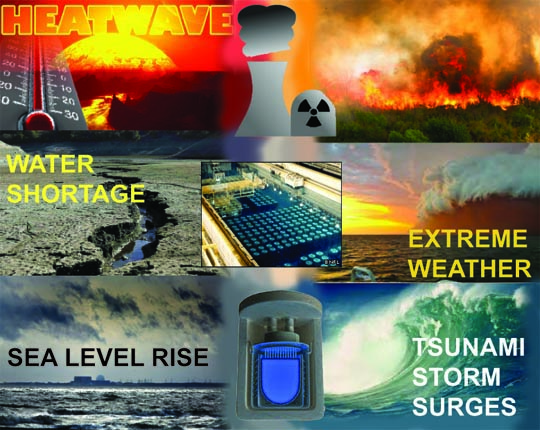
In addition, nuclear energy itself has been affected by climate change. During the world’s increasingly hot summers, several nuclear power plants have already had to be temporarily shut down or taken off the grid. Power plants depend on nearby water sources to cool their reactors, and with many rivers drying up, those sources of water are no longer guaranteed.

The much vaunted “renaissance of nuclear power” is anything but when all the facts are taken into consideration, Mycle Schneider told DW. He said the nuclear industry has been shrinking for years.

“In the last 20 years, 95 nuclear power plants have gone online and 98 have been shut down. If you take China out of the equation, the number of nuclear power plants has shrunk by 50 reactors in the last two decades,” Schneider added. “The nuclear industry is not thriving.”  https://www.dw.com/en/fact-check-is-nuclear-energy-good-for-the-climate/a-59853315

November 30, 2021 Posted by | 2 WORLD, climate change | Leave a comment

Melting Arctic sea ice linked to ”worsening fire hazards” in Weatern USA

 Arctic sea ice melt has driven an increase in “fire-favourable
weather” across the western US over the past four decades, according to
new research.

The study, published in Nature Communications, finds that low
Arctic sea ice levels during July to October have knock-on impacts in the
atmosphere that push the jet stream northwards. This tends to bring hotter
and drier conditions in the western US over the following autumn, resulting
in more frequent and intense fires in the region, the authors find.

They add that this mechanism may strengthen over the coming decades as the
Arctic melts further, making the western US “even more susceptible to
destructive fire hazards”.

 Carbon Brief 25th Nov 2021

November 27, 2021 Posted by | ARCTIC, climate change | Leave a comment

CSIRO study proves climate change driving Australia’s 800% boom in bushfires.

CSIRO study proves climate change driving Australia’s 800% boom in bushfires, The Age, By Mike Foley, November 26, 2021 Climate change is the dominant factor causing the increased size of bushfires in Australia’s forests, according to a landmark study that found the average annual area burned had grown by 800 per cent in the past 32 years.

The peer-reviewed research by the national science agency, CSIRO — published in the prestigious science journal, Nature — reveals evidence showing changes in weather due to global warming were the driving force behind the boom in Australia’s bushfires.

Lead author and CSIRO chief climate research scientist Pep Canadell said the study established the correlation between the Forest Fire Danger Index – which measures weather-related vegetation dryness, air temperature, wind speed and humidity – and the rise in area of forest burned since the 1930s.

“It’s so tight, it’s so strong that clearly when we have these big fire events, they’re run by the climate and the weather,” Dr Canadell said.

Prime Minister Scott Morrison went to the COP26 climate talks in Glasgow to commit Australia to reach net zero emissions by 2050, and to upgrade his expectations for Australia’s 2030 carbon cuts, but he defied a global push to commit to phasing out fossil-fuel use. Instead, the Coalition government is backing a significant expansion of the gas industry, which it predicts will be 13 per cent larger in 2050 than it is now.

Under the federal government’s gas industry strategy, taxpayers will support the private sector to develop viable new gas fields and develop an extensive network of new pipelines and related infrastructure.

The bushfire royal commission identified climate change as a key risk to ongoing bushfire catastrophe but did not make recommendations about reducing greenhouse emissions to curb the threat.

The CSIRO report found other factors have an impact on the extent and intensity of bushfires such as the amount of vegetation or fuel load in a forest, the time elapsed since the last fire, and hazard reduction burning. But Dr Canadell said the study showed the link between weather and climate conditions and the size of bushfires was so tight, it was clear these factors far outweighed all other fire drivers…………….

oyal c

Mega-fires, which burn more than 1 million hectares, have “markedly” increased with three of the four recorded from 1930 occurring since 2000, while the gap between big blazes has had a “rapid decrease”, the study says.

Last year, the bushfire royal commission reported fuel-load management through hazard reduction burning “may have no appreciable effect under extreme conditions” that typically cause loss of life and property.  https://www.theage.com.au/politics/federal/csiro-study-proves-climate-change-driving-australia-s-800-percent-boom-in-bushfires-20211126-p59cgr.html

November 27, 2021 Posted by | AUSTRALIA, climate change | Leave a comment

Bellona signs open letter to prevent nuclear energy and fossil gas from being labelled as green

(Signed by 129 reputable European and international organisations)

Granting nuclear and fossil gas the label of sustainability would undermine the EU’s climate targets, divert much-needed investments in the green transition and jeopardize the credibility of the entire European Green Deal.  Olaf ScholzFederal Minister of Finance
and Vice Chancellor
11016 Berlin
Germany

Dear Federal Minister,

We are extremely concerned by the announcement of the European Commission’s President, Ursula von der Leyen, to likely label both nuclear energy and fossil gas as sustainable in the context of the EU’s taxonomy. According to media coverage, it was the absence of a strong German voice against nuclear in the European Council on 21/22 October that directly contributed to this decision. In your role as current finance minister and future Chancellor, we call on you to swiftly and decisively confirm the German veto against labelling nuclear as a sustainable form of energy and highlight that the Commission’s attempt to shape this discussion during the sensitive time of a new government being formed in Germany is not acceptable.

The EU taxonomy regulation is meant to provide guidelines for the necessary future-oriented investments for Europe’s economic transition. Nuclear energy, however, is unsustainable due to severe safety risks, environmental pollution and the unsolved waste problem. Fossil gas emits large quantities of climate-damaging greenhouse gases, especially methane, along its extraction and transport chain. Granting nuclear and fossil gas the label of sustainability would undermine the EU’s climate targets, divert much-needed investments in the green transition and jeopardize the credibility of the entire European Green Deal.

Dear Federal Minister, Germany has embarked upon a clear path to phase out nuclear power by the end of next year. NGOs from across Europe count on you to take an equally clear stance against nuclear energy but also fossil gas at the European level. more https://bellona.org/news/climate-change/2021-11-bellona-signs-open-letter-to-take-action-to-prevent-nuclear-energy-and-fossil-gas-from-being-labelled-as-green

November 25, 2021 Posted by | climate change, EUROPE, opposition to nuclear | Leave a comment

These 129 reputable European and international organisations have signed up to letter opposing inclusion of nuclear and gas as being ”sustainable” and ”green”.

France Nature Environnement, France
CEE Bankwatch Network
European Environmental Bureau (EEB)
The Green Tank, Greece
Umanotera – Slovenian Foundation for Sustainable Development, Slovenia
Umweltinstitut München e.V., Germany
Socio-ecological union international
Climate Strategy Group
Andy Gheorghiu Consulting, Germany
Green Liberty, Latvia    10
BürgerBegehren Klimaschutz
Bürgerbewegung Finanzwende, Germany
AnsvarligFremtid, Denmark
Klimabevægelsen i Danmark (350 Denmark), Denmark
Naturschutzbund Deutschland e.V., Germany
BirdLife Europe
uranium-network.org, Germany
eco-union, Spain
Mouvement Ecologique (FoE-Luxembourg), Luxemburg
urgewald, Germany  20
.ausgestrahlt, Germany
350.org Europe
Deutscher Naturschutzring, Germany
Stowarzyszenie Pracownia na rzecz Wszystkich Istot, Poland
Legambiente, Italy
Carbon Market Watch
Health and Environment Justice Support (HEJSupport)
Counter Balance
ZERO – Association for the Sustainability of the Earth System, Portugal
Clean Air Action Group, Hungary  30
Alofa Tuvalu, Tuvalu
Réseau pour la transition énergétique CLER, France
Creatura Think & Do Tank, Finland
Women Against Nuclear Power, Finland
Women for Peace, Finland
The Alliance of the Associations Polish Green Network, Poland
FMKK – The Swedish Anti Nuclear Movement, Sweden
Polish Ecological Club Mazovian Branch, Poland
Stowarzyszenie Ekologiczne EKO-UNIA, Poland
Stowarzyszenie Ekologiczno-Kulturalne “Wspólna Ziemia”, Poland   40
Arbeitskreis Indianer Nordamerikas, Austria
EuroNatur Stiftung, Germany
Our Fish
E3G – Third Generation Environmentalism
Bioland e.V., Germany
Deutsche Umwelthilfe e.V., Germany
Germanwatch e.V., Germany
Fair Finance International
National Society of Conservationists – Friends of the Earth Hungary, Hungary
Nucléaire Stop Kernenergie – Belgium  50
Tegengas/Dégaze – Belgium
IPPNW (International Physicians for the Prevention of Nuclear War), German affiliate, Germany
Urgenda Foundation, The Netherlands
Focus Association for Sustainable Development, Slovenia
Milieudefensie, The Netherlands
Za Zemiata/Friends of the Earth Bulgaria, Bulgaria
Fair Finance Guide, Sweden
Corporate Europe Observatory
Jihočeské matky, z.s., Czech Republic


WEED e.V. – World Economy, Ecology and Development, Germany  60ShareAction
Global Witness
Reclaim Finance, FranceFossielvrij NL, The Netherlands
Bürgerinitiative “Kein Atommüll in Ahaus” e.V., GermanyThe Peace Movement of Orust, Sweden
Global Nature Fund, Germany
Climate Action Network International
Transport & Environment
NewClimate Institute gGmbH, Germany   70
Miljöringen lovisa Finland
Réaction en chaîne humaine pour l’arrêt du nucléaire France
Calla – Association for Preservation of the Environment, Czech republic
Réseau “Sortir du nucléaire”, France
BI “Stoppt Temelin”, Germany
GLOBAL 2000 – Friends of the Earth Austria, Austria
Suomen luonnonsuojeluliitto (Finnish Association for Nature Conservation), Finland
Forum Ökologie & Papier, Germany
Plattform gegen Atomgefahren Salzburg (PLAGE), Austria
Gas Free Pensions, Europe  80
Réseau Action Climat France
PSR / IPPNW Switzerland (Physicians for Social Respon
sibility /International Physicians for the Prevention of Nuclear War)
Greenpeace
Begegnungszentrum für Aktive Gewaltlosigkeit, Austria
Hiilivapaa Suomi, Finland
Food & Water Action Europe, Europe
International Network for Sustainable Energy – Europe
ReCommon, Italy
Inter-Environnement Wallonie, Belgique  90
Campagna “Per il Clima Fuori dal Fossile”, Italy
Movimento No TAP/SNAM Brindisi, Italy
Redazione emergenzaclimatica.it, Italy
BankTrack, the Netherlands
TerraBlu, Italy
Bellona Europa, Belgium
Bellona Deutschland, Germany
Forum Ambientalista O.d.V., Italy
Climate Action Network, Europe
Associazione Tarantola Rubra, Italy  100
Friends of the Earth, Europe
Trivelle Zero Molise, Italy
Environmental Coalition on Standards, Belgium
Collettivo No al Fossile Civitavecchia, Italy
WWF Forlì-Cesena, Italy
Coordinamento ravennate Fuori dal Fossile, Italy
The Swedish Anti-Nuclear Movement, Branch Gävle, Sweden
NOAH Friends of the Earth Denmark
Wiener Plattform Atomkraftfrei, Austria
Parents For Future Vienna, Austria   110
Trivelle Zero Marche, Italy
Parents for Future Gütersloh, Germany
A Sud, Italy
European Alliance for the Self-determination of Indigenous Peoples, Austria/France/Germany/Switzerland
Mom Loves Taiwan
Forum Ökologisch-Soziale Marktwirtschaft e.V., Germany
WISE Netherlands
atomstopp_atomkraftfrei leben!, Austria
Freistädter Mütter gegen Atomgefahr, Austria
Grandparents For Future Austria  120
Parents For Future Oberösterreich, Austria
Frauen für den Frieden Schweiz
Bund für Umwelt und Naturschutz Deutschland (BUND) e.V – Friends of the Earth Germany, Germany
nternational Commission for the Protection of the Alps (CIPRA International), Liechtenstein
Rete “Legalità per il clima”, Europe
Collectif anti-nucléaire Ouest, France
Fédération anti-nucléaire Bretagne, France
GasExit
Greenpeace, Russia   129

more https://bellona.org/news/climate-change/2021-11-bellona-signs-open-letter-to-take-action-to-prevent-nuclear-energy-and-fossil-gas-from-being-labelled-as-green

November 25, 2021 Posted by | 2 WORLD, climate change, opposition to nuclear | Leave a comment

Powerful greenhouse gases emitted from Hunterston A nuclear station

THE release of a refrigerant gas during the ongoing decommissioning of Hunterston A has been revealed at a recent nuclear summit.

Hunterston ‘A’ bosses reported two environmental incidents at the station during its decommissioning phase linked to their air conditioning units. Earlier this year, the release of fluorinated gases was noticed.

These are powerful man-made gases that can stay in the atmosphere for centuries and contribute
to a global greenhouse effect. The incidents formed part of a report to the recent Hunterston site stakeholders meeting.

 Largs & Millport News 22nd Nov 2021

 https://www.largsandmillportnews.com/news/19720653.gas-leak-hunterston-reported-sepa/

November 25, 2021 Posted by | climate change, UK | Leave a comment

Latest COP 26 pledges will lead to 16% increase in carbon emissions, NOT the necessary 45% decrease

Let us be clear – Cop26 utterly failed on the only issue that counts:
cutting global carbon emissions. The latest IPCC report stated that we
needed a 45 per cent cut in carbon emissions by 2030. UN analysis of the
latest Cop26 pledges suggests that they will lead to a 16 per cent
increase.

 Independent 22nd Nov 2021

https://www.independent.co.uk/climate-change/opinion/climate-crisis-cop26-failure-carbon-emissions-action-b1959211.html

November 25, 2021 Posted by | 2 WORLD, climate change | Leave a comment

IEA: Rate of energy efficiency improvements needs to double to put world on track for net-zero

The IEA is urging other nations to follow in Europe’s footsteps and implement stricter standards and regulations for energy-using products; consider tax incentives for energy efficiency; increase public spending on building and industrial retrofitting and streamlining planning procedures to make efficiency projects more attractive to private finance. Private spending on energy efficiency between 2021 and 2023 is forecast to be more than twice as high as spending by governments.

https://www.edie.net/news/6/IEA–Rate-of-energy-efficiency-improvements-needs-to-double-to-put-world-on-track-for-net-zero/

19 November 2021, source edie newsroom, Sarah George

Globally, energy efficiency has improved in 2021 after a rocky 2020, according to a new analysis from the International Energy Agency (IEA). But the rate of progress will need to at least double to put the world on track for net-zero by 2050, the Agency is warning.

19 November), the 2021 edition of the Agency’s annual Energy Efficiency Report reveals that progress is now back on track as the world emerges from the worst of the Covid-19 pandemic.

2020 saw only a minor (0.5%) improvement to global energy intensity, amid falling energy demands and prices, slowed investment in the energy sector and many energy-using sectors and logistical issues with supply chain and solutions installation.

Global energy intensity is on track to fall 1.9% in 2021, the analysis forecasts. This is a promising yet expected figure – the year-on-year fall was 2% in 2019.  

“It is still unclear whether this year’s improved energy intensity will signal the start of a sustained recovery,” the IEA said in a statement.

However, increased investment trends, rising government spending on efficiency – in large part related to recovery plans enacted in response to Covid-19 crisis – new announcements of higher climate ambition and other policy measures offer some encouraging signals.”

To this point, the report forecasts that, by the end of the year, national policies will have helped to generate $30bn of investment in energy efficiency – around 10% of the total set to be allocated between 2015 and 2021.

In recent months, much growth in energy efficiency investment has been concentrated in Europe. Policy supports have included the European Commission’s Renovation Wave and overarching Energy Efficiency Directive, and the UK’s updated Industrial Strategy and Heat and Buildings Strategy.

A long road ahead

Nonetheless, the report emphasises the fact that there is still much more to be done. It highlights the fact that, in the IEA’s scenario for net-zero by 2050, global energy intensity falls by at least 4% each year in the 2020s.

The IEA is urging other nations to follow in Europe’s footsteps and implement stricter standards and regulations for energy-using products; consider tax incentives for energy efficiency; increase public spending on building and industrial retrofitting and streamlining planning procedures to make efficiency projects more attractive to private finance. Private spending on energy efficiency between 2021 and 2023 is forecast to be more than twice as high as spending by governments.

The report emphasises the fact that, while wealthy nations are currently accounting for the majority of global investment in energy efficiency, developing and emerging nations also stand to reap benefits in terms of rapid job creation and economic growth, as well as future-proofing infrastructure and industry. Delivering the 4% annual improvement to global energy intensity, the IEA has forecast, would create four million additional jobs in energy efficiency by 2030, in sectors including construction and retrofitting.

As well as addressing low-hanging fruit using mature technologies, the IEA’s report outlines the potential for implementing the next generation of digital technologies. It states that, by the end of the year, there will be more ‘smart’ connected appliances and sensors in the world than people for the first time. This presents a major opportunity to accelerate energy efficiency improvements.

At COP26, the IEA and the UK Government launched a Product Efficiency Call to Action, which aims to double the energy efficiency of air conditioning, refrigeration, industrial motor systems and lighting by 2030. These four activities account for more than 40% of global electricity demand every year. In total, 14 countries have now signed onto the initiative, which is the largest of its kind. Read edie’s full story here.

November 23, 2021 Posted by | 2 WORLD, climate change, ENERGY | Leave a comment