The 2015 Paris climate agreement – a weak ‘treaty’, but it is working up to a point.

In many ways, the landmark climate accord, agreed to at a U.N. summit in 2015, is a weak treaty. Despite the fanfare that accompanied its signing, the agreement has no binding limits on emissions, relies on countries to set their own goals for slashing pollution, and rests on an assumption that they can be shamed into living up to their promises.
It’s not even a real treaty: To get the U.S. on board, the architects of the accord crafted it as an “executive agreement” — no Congressional approval needed.
And yet, somehow, the Paris Agreement is working. To a point. The most recent U.N. climate conference, which wrapped last weekend in Glasgow, Scotland, showed signs of progress that would have seemed unthinkable only a few years ago. Under the Paris Agreement, nations have to submit pledges (or
promises, or wishful thinking, depending on who you ask) for how much they will reduce emissions every five years.
That’s the core of the agreement:
Voluntary pledges enacted and reviewed in a soup of international peer pressure that, ideally, will push countries to steadily do more and more.The goal is to use this system of “pledge and review” to limit global warming to “well below” 2 degrees Celsius — or, ideally, 1.5 degrees Celsius.
Grist 17th Nov 2021
https://grist.org/cop26/cop26-shows-the-paris-agreement-is-kinda-sorta-working/
COP 27 in Egypt: growing concern that civil society groups will have restricted access
Concern is growing over plans to host a UN climate conference in Sharm
el-Sheikh next year, in what will be a crucial summit if the world is to
limit global heating to 1.5C. Several green experts and human rights
activists have told the Observer they fear the ability of civil society
groups to protest at the summit will be curtailed by Egypt’s
authoritarian regime, reducing the pressure that can be brought to bear on
leaders and ministers from the nearly 200 countries expected to take part.
Guardian 21st Nov 2021
German banks sceptical about nuclear and gas inclusion in green taxonomy.
German banks sceptical about nuclear and gas inclusion in green taxonomy.
Eight German banks have said there is “limited room” for nuclear and
gas power in the EU’s list of sustainable economic investments, warning
that the ‘green taxonomy’ should only include genuinely
climate-friendly activities.
ENDS Europe 19th Nov 2021
“Rather than contributing to net zero, Bradwell B nuclear plant would be ‘ideally placed’ to become the casualty of climate change.”
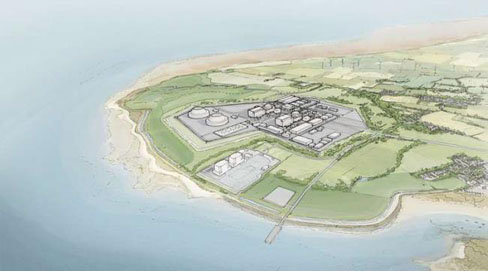
CAMPAIGNERS fighting against plans for a new nuclear power station have hit out at claims it is a key asset in the fight against climate change. The Blackwater Against New Nuclear Group (BANNG) has refuted a statement saying the Bradwell B power station would be Essex’s “biggest contribution to climate action”. The statement from Bradwell B Power Station came in relation to the COP26 climate discussions in Glasgow and said the project was “ideally placed” to play a “major part” in achieving net zero by 2050 emission goals.
But BANNG has claimed, due to the nuclear power station being on a low-lying site, rising global
temperatures would see it become vulnerable to rising sea levels and other weather events by the end of the century. BANNG’s secretary Varrie Blowers added: “Rather than contributing to net zero, Bradwell B would be ‘ideally placed’ to become the casualty of climate change.”
Braintree & Witham Times 17th Nov 2021
Climate change intensifies disastrous floods in Canada
A state of emergency has been declared in the Canadian western province of
British Columbia after a major storm cut road and rail links in the region.
The Canadian Armed Forces have been deployed to help thousands of stranded
residents who have been trapped since the storm hit overnight on Sunday.
Local officials warned on Thursday that the price tag to rebuild could
exceed C$1bn ($790m, £590m). One woman was killed in a landslide, and two
people are missing. Officials expect more fatalities to be confirmed in the
coming days. One man caught up in the storm told the BBC the scenes
afterwards were like “Armageddon”.
BBC 18th Nov 2021
https://www.bbc.co.uk/news/world-us-canada-59324764
Canada floods: 18,000 people still stranded in ‘terrible, terrible
disaster’. Alarm grows about climate change in British Columbia after
summer wildfires wiped out vegetation that could have slowed flooding.
Guardian 19th Nov 2021
Antarctic ice sheet changed alarmingly quickly in past – and may be happening again now
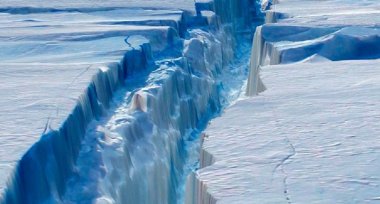
Our findings are consistent with a growing body of evidence suggesting the acceleration of Antarctic ice-mass loss in recent decades may mark the beginning of a self-sustaining and irreversible period of ice sheet retreat and substantial global sea level rise,”
“When we might see the eventual stabilisation of the ice sheet is unknown, because it will depend significantly on how much future climate warming occurs.”
Antarctic ice sheet changed alarmingly quickly in past – and may be happening again now, more https://www.miragenews.com/antarctic-ice-sheet-changed-alarmingly-quickly-676904/ 19 Nov 21, Patterns of rapid ice loss in the past could predict style of future Antarctic ice sheet retreat.
The melting of the Antarctic Ice Sheet may have already passed a point of no return, a new study has found, and scientists say it could contribute to sea level rise over coming centuries and possibly millennia.
The study, published overnight in Nature Communications and co-authored by Dr Zoë Thomas and Professor Chris Turney from UNSW Sydney, used geological data from Antarctica combined with computer models and statistical analyses to understand how recent changes compare to those from the past going back thousands of years.
Our study reveals that during times in the past when the ice sheet retreated, the periods of rapid mass loss ‘switched on’ very abruptly, within only a decade or two,” says Dr Thomas.
“Interestingly, after the ice sheet continued to retreat for several hundred years, it ‘switched off’ again, also only taking a couple of decades.”
Dr Thomas says the Antarctic Ice Sheet went through many of these on/off episodes, each time contributing to global sea level rise as the world warmed at the end of the last ice age, about 20,000 years ago.
The researchers’ findings confirm computer modelling that had indicated that the diminishing ice sheet had passed a critical tipping point leading to irreversible loss of parts of the ice sheet below sea level.
“We have already observed over the last two decades that the Antarctic Ice Sheet has suddenly started losing ice which has contributed to rising sea levels around the world,” says Prof. Turney.
“But the satellite data showing this speed-up only go back about 40 years, so we needed longer records to put this change in context.”
Looking for clues
The researchers examined the gritty sediments released from melting icebergs that settled into mud on the sea floor for clues to the ice sheet’s history of retreat and growth phases.
By counting the amounts of this iceberg-rafted sediment through the core, the scientists were able to identify eight phases with high amounts of debris which they interpreted as retreat phases of the Antarctic Ice Sheet. Each phase showed the same pattern – the ice sheet destabilised within a decade, contributed to global sea level rise for centuries to a millennium, and then subsequently re-stabilised equally rapidly.
Combining the sediment record with computer models of ice sheet behaviour, the team showed that each episode of increased iceberg calving reflected increased loss of ice from the interior of the ice sheet, not just changes in the already-floating ice shelves.
Professor Nick Golledge from Te Puna Pātiotio, the Antarctic Research Centre at Te Herenga Waka, Victoria University of Wellington, led the ice-sheet modelling.
“We found that iceberg calving events on multi-year time scales were synchronous with discharge of grounded ice from the Antarctic Ice Sheet,” he says.
Warning signs
Dr Thomas then applied statistical methods to the model outputs to see if early warning signs could be detected for tipping points in the ice sheet system. Her analyses confirmed that tipping points did indeed exist.
“If it just takes one decade to tip a system like this, that’s actually quite scary because if the Antarctic Ice Sheet behaves in future like it did in the past, we must be experiencing the tipping right now,” she says.
Lead author Dr Michael Weber, from the Institute of Geosciences at the University of Bonn, led the team that recovered cores of the sediment from the Southern Ocean.
“Our findings are consistent with a growing body of evidence suggesting the acceleration of Antarctic ice-mass loss in recent decades may mark the beginning of a self-sustaining and irreversible period of ice sheet retreat and substantial global sea level rise,” he says.
“When we might see the eventual stabilisation of the ice sheet is unknown, because it will depend significantly on how much future climate warming occurs.”
Germany’s Chancellor Merkel maintains stand against nuclear power being classified as sustainable

Merkel defends nuclear power exit despite climate challenges, Euro News, By Andreas Rinke, 17 Nov 21,
BERLIN -Chancellor Angela Merkel has defended her decision to phase out nuclear energy, even though it has made it harder for Germany to wean its economy off fossil fuels.
In an interview with Reuters, the outgoing chancellor also said she was opposed to any plans by the European Union to label nuclear power as “sustainable”.
“It’s true, of course, that we now face the very ambitious and challenging task of completing the energy transition while phasing out coal and nuclear power,” said Merkel, who will step down once a new government is sworn in following an election in September.
“But it’s also true that this will be worth it for our country if we do it right.”
Merkel, who has led her country for 16 years, pushed for Germany to abandon nuclear power after the Fukushima disaster in Japan a decade ago, a decision that most Germans agree with……..
RENEWABLES
The share of renewables in the energy mix of Europe’s largest economy has been growing steadily since the Fukushima disaster, though energy economists say it has not risen fast enough to help Germany meet its ambitious emissions targets.
Renewables accounted for 45% of Germany’s energy last year, up from 17% in 2010, data compiled by the Agora Energiewende think-tank showed. The share of electricity generated from coal fell to 23% from 42% a decade ago. Nuclear power was halved to 11%.
The EU executive, the European Commission, is drawing up a sustainable finance “taxonomy” setting out which activities meet the environmental criteria to qualify for funding under an EU sustainable investment programme.
A document viewed by Reuters in March indicated experts were preparing to label nuclear power as sustainable because it has none of the carbon dioxide emissions produced by fossil fuels.
Merkel said Germany would continue to oppose the plan but acknowledged that it would be hard to rally 19 other members behind its position to block it.
“It’s difficult to stall the procedure as such once the European Commission has presented an act,” said Merkel.
“We in Germany believe – across party lines – that nuclear energy should not be classified as being as clean as wind and solar energy.”……… https://www.euronews.com/next/2021/11/17/germany-merkel-nuclear-exclusive
The consumerism that destroys life is also the cause of the environmental emergency — Hawkins Bay Dispatch — Barbara Crane Navarro

The consumerism that destroys life is also the cause of the environmental emergency, https://hawkinsbay.wordpress.com/2021/11/13/the-consumerism-that-destroys-life-is-also-the-cause-of-the-environmental-emergency/
Decades ago, corporations and governments invented the traits we now call ‘human nature.’ COP26 has shown ‘consumers’ that buying something ‘different’ is not working. 13 November 2021 | Graham Peebles | Euroasia Review The natural environment has been poisoned, vandalized and trashed in accordance with the demands and values of the all-pervasive socio-economic system, and as long as it persists it is impossible to imagine the steps required to save the natural world being taken.
The consumerism that destroys life is also the cause of the environmental emergency — Hawkins Bay Dispatch — Barbara Crane Navarro
greed, ownership of things (homes, cars, clothes etc.), and the general accumulation of stuff is insisted upon, for the simple reason that it is consumerism that feeds the monster. This very same consumerism, which is perpetuating unhappiness and fuelling ill health, is also the underlying cause of the environmental emergency.
As COP26 draws to an unimpressive close, governments haggle over emission targets, funding of fossil fuels and money for the global south, and a new poll reports that most people (in the 10 countries polled, including UK, US, Germany, France) say they are unwilling to alter their way of life to save our planet. We must once again ask, what will it take for humanity to wake up and change?
Economic considerations and short term self-interest will continue to be applied and the devastation will continue.
Continue readingOver 100 European non government organisations urge the European Commission to block nuclear power from being accepted as a clean green investment
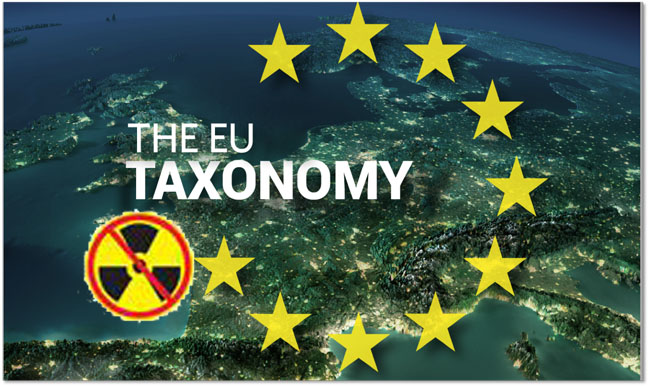
NGOs press Germany to block nuclear, gas green status https://www.montelnews.com/news/1272742/ngos-press-germany-to-block-nuclear-gas-green-status SIOBHAN HALL, Brussels, 16 Nov 2021
Montel) More than 100 NGOs from across Europe have urged Germany to ensure nuclear and natural gas-fired power plants do not qualify as “green” investments under the EU’s sustainable finance taxonomy.
They expressed concern in a letter to future German chancellor Olaf Scholz on Monday that the European Commission was finalising the rules for nuclear and natural gas while Germany was focused on forming its new government.
The country has committed to phase out nuclear power by the end of next year and the NGOs urged Scholz to “take an equally clear stance” against nuclear power and natural gas in EU level rules.
An unofficial draft paper circulating in Brussels recently set out potential criteria for including gas-fired power plants and nuclear as green as part of new taxonomy proposals.
EU pressure
In October, 10 EU countries led by France signed a joint declaration urging the EC to recognise nuclear and natural gas as sustainable activities according to the taxonomy.
Doing so would make it cheaper to finance and build new nuclear power plants, said the Czech Republic’s deputy prime minister Karel Havlicek at the time.
The other countries involved were Bulgaria, Croatia, Finland, Hungary, Poland, Romania, Slovakia and Slovenia.
On Sunday, environmental group Greenpeace attacked the EC over potential plans to define gas and nuclear as green against the backdrop of a “weak” agreement made at the conclusion of COP26 climate talks in Glasgow.
“Over the last two weeks of climate talks, the European Commission has supported fast-track funding for new gas terminals and pipelines, and labelled gas, nuclear energy and industrial farming as sustainable and eligible for green funding,” said the group.
Action on global heating? Inadequate COP26 kept this possibility alive, by just a thread

The best that can be said about Cop26 is that it has kept the possibility of limiting global heating to 1.5C alive, if only by a thread. The worst outcome of this conference would have been if countries had agreed to next reopen their commitments to reduce emissions only in five years’ time, as was agreed in Paris in 2015. This would have been nothing short of a disaster. It would have firmly put the world on the path to catastrophic and irreversible overheating – involving the deaths of tens of millions of people and the total obliteration of some countries as a result of rising sea levels. It would have thrown away humanity’s last chance of
avoiding this fate.
Instead, countries have agreed to come back to revisit their commitments in a year’s time, and every year after that. Something
radical will need to shift in the next year or two in order to achieve the commitments that are urgently needed to limit warming to 1.5C. Take the UK’s net zero strategy, for example, which falls far short of what is needed in order for it to achieve its stated goal of net zero emissions by 2050. It has been estimated we need to be investing about 1% of GDP to meet this; but the government has committed just a fraction of that, and the strategy is further undermined by the government reneging on its own policy
commitments, including its recent scrapping of the green homes schemes and the delay in the phase-out of gas boilers.
Observer Editorial 13th Nov 2021
COP 26 waters down the prospects of world action to stop coal pollution

Cop26: Alok Sharma in tears as India and China dilute pledge to phase out coal. A historic United Nations deal to end the use of coal power was watered down last night after a dramatic last-minute intervention from China and India.
Alok Sharma, the president of Cop26, was reduced to tears as he apologised to delegates for the way the late change was made. The deal, dubbed the Glasgow climate pact, had been set to include a pledge to accelerate the “phase-out” of coal power but this was switched late on to “phase-down”. The change in wording lessens the urgency with which countries are required to reduce the use of coal, the world’s strongest driver of climate change. Chris Stark, chief executive of the Climate Change Committee, an independent adviser to the government, said: “The writing is on the wall for fossil fuels now. We are in a new period of
action and if that is the legacy of Glasgow, I will be delighted.”
Times 14th Nov 2021
Nuclear power is the 3rd highest carbon emitter after coal-fired and natural gas.

Richard, 13 Nov Nuclear is not green. It’s the 3rd highest carbon emitter after coal-fired and natural gas electricity generators. Life cycle emissions 66 grams of carbon dioxide for every kilowatt-hour compared with 9 grams per kilowatt-hour for wind and 32 grams per kilowatt-hour for solar.
[“Valuing the greenhouse gas emissions from nuclear power”: A critical survey
Benjamin K. Sovacool Energy Policy 36 (2008) 2940– 2953]
COP26 – while some progress has been made, a current policy world of 2.6C or 2.7C warming is still one with potentially catastrophic impacts on human and natural systems.
Business Green 11th Nov 2021, Depending on whom you ask, the COP26 climate summit may seem like the best of times or the worst of times. On the one hand, reports proclaim boldly that limiting global warming to below 2C might finally be in reach. On theother, critics complain that modest improvements on country commitments amount to little more than “blah blah blah”. The reality is more nuanced. There has been progress made in flattening the curve of future emissions through both climate policies and falling clean energy costs.
At the same time, the world is still far from on track to meet Paris Agreement goals of limiting warming to 1.5C or “well below” 2C.
COP26 negotiations have seen a flurry of new reports on what existing and new promises and pledges mean for the climate.
Here, Carbon Brief breaks down these numbers, looking at what they refer to, where different groups agree and disagree on likely outcomes, and the potential impact of new long-term net-zero promises.
The analysis reveals widespread agreement between four different groups assessing the climate outcomes of COP26. They suggest that current policies will lead to a best-estimate of around 2.6C to 2.7C warming by 2100 (with an uncertainty range of 2C to 3.6C).
Finally, if countries meet their long-term net-zero promises, global warming would be reduced to around 1.8C (1.4C to 2.6C) by 2100, though temperatures would likely peak around 1.9C in the middle of the century before declining.
In addition to the revised NDCs, there have been a series of announcements at COP26 – including the Global Methane Pledge and an accelerated coal phaseout, as well as business pledges as part of the Race to Zero campaign. Carbon Brief’s analysis finds that these new announcements – combined with recent updates to NDCs – have likely shaved an additional 0.1C warming off what was implied under commitments out to 2030.
Similarly, India’s new net-zero pledge has reduced projected global temperature rise by around 0.2C – if all countries meet their long-term net-zero promises.
The extent to which the many new and revised targets will be met will depend on whether they are translated into meaningful near-term commitments. So far the lack of stronger commitments for emissions cuts by 2030 creates a “very big credibility gap” for net-zero promises, according to the Climate Action Tracker………………..
while some progress has been made, a current policy world of 2.6C or 2.7C warming is still one with potentially catastrophic impacts on human and natural systems. Much more needs to be done to further reduce emissions to meet Paris Agreement goals of limiting warming to “well below” 2C by 2100.
Business Green 11th Nov 2021
EU states split on classifying nuclear energy as ‘green’
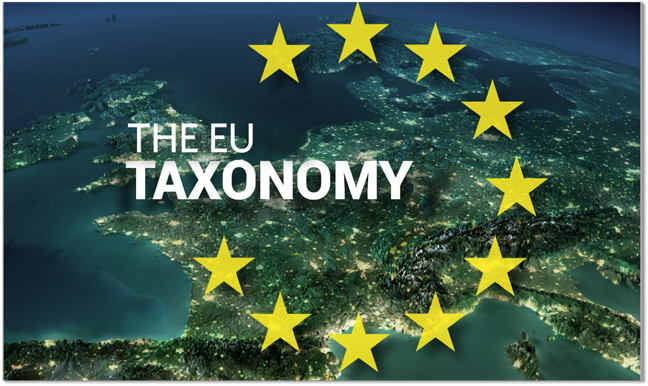
EU states split on classifying nuclear energy as ‘green’ DW 12 Nov 21,
“It’s too risky, too slow and too expensive,” Germany says — while other EU members have pushed for the bloc to classify nuclear power as eco-friendly for investors.
Germany, Luxembourg, Portugal, Denmark and Austria spoke out on Thursday against the classification of nuclear energy as a climate-friendly source of power.
The five countries issued a statement on the sidelines of the UN climate summit in Glasgow, COP26. It comes as the European Commission is working on a so-called EU taxonomy, in which it lists what the bloc considers as “environmentally sustainable economic activities.”
Some other EU countries, led by France, are seeking to add modern forms of nuclear energy to that list……
“The current decade will be crucial for our common path toward climate neutrality and an economic system that respects the limits of our planet,” Germany, Luxembourg, Portugal, Denmark and Austria said in a statement.
Therefore, it is crucial to have an EU taxonomy that considers the sustainability of a form of energy “throughout its life cycle,” the signatories added, referring to the radioactive waste generated by nuclear power use.
They also warned that the classification could risk diverting EU funds from renewable energies such as wind and solar power.
“Nuclear power cannot be a solution in the climate crisis,” said German Environment Minister Svenja Schulze.
“It is too risky, too slow and too expensive for the crucial decade in the fight against climate change,” she added.
Austria’s environment minister, Leonore Gewessler, also backed Germany’s stance, saying, “Just because something is not quite so bad doesn’t mean it’s good.”
What about the countries supporting nuclear energy?
France, Poland, Hungary and the Czech Republic have called on the European Commission to classify nuclear power plants and nuclear waste storage facilities as “green.”
They also want the taxonomy to include natural gas-fired power plants.
What is the EU taxonomy?
Compiled by the European Commission, the highly anticipated classification system is a list of “environmentally sustainable economic activities.”
The Commission has said the list should “create security for investors, protect private investors from greenwashing, help companies to become more climate-friendly, mitigate market fragmentation and help shift investments where they are most needed.”
If Brussels classifies nuclear power as “sustainable” in the legal text, it will count as a direct recommendation to financial markets to invest in nuclear plants…..
many environmentalists oppose nuclear power, citing the risk of nuclear meltdowns and the difficulty of properly disposing of nuclear waste.
Germany, Denmark, Luxembourg, Austria and Portugal warn against including nuclear in the proposed EU taxonomy
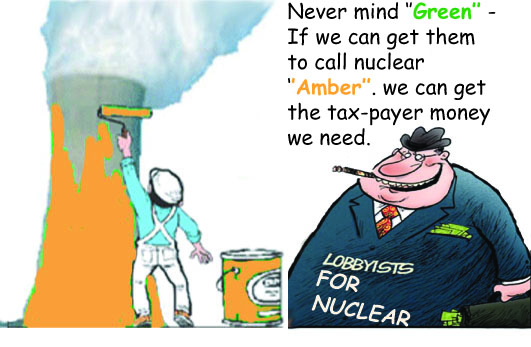
The environment ministers of five EU member states including Germany warned against including nuclear power in the proposed EU taxonomy at the sidelines of the UN Cop 26 climate conference in Glasgow today. In a jointstatement issued by the environment ministers of Germany, Denmark, Luxembourg, Austria and Portugal, the signatories warn that including nuclear in the taxonomy would permanently damage the latter’s “integrity, credibility and therefore its usefulness”. The EU taxonomy is to establish criteria for environmentally sustainable economic practices, steering funding towards these activities. German caretaker environment minister Svenja Schulze said that “nuclear power is too risky, too expensive”, and in any case would come too late to make a notable contribution to mitigating climate warming. Argus Media 11th Nov 2021 https://www.argusmedia.com/en/news/2272872-ministries-reject-nuclear-inclusion-in-eu-taxonomy |
1 This Month
19 February – VIRTUAL EVENT-Decision Time: AI and Our Nuclear Arsenal
12:45 p.m. Central / 1:45 p.m. Eastern
To see nuclear-related stories in greater depth and intensity – go to https://nuclearinformation.wordpress.com

-
Archives
- February 2026 (170)
- January 2026 (308)
- December 2025 (358)
- November 2025 (359)
- October 2025 (376)
- September 2025 (258)
- August 2025 (319)
- July 2025 (230)
- June 2025 (348)
- May 2025 (261)
- April 2025 (305)
- March 2025 (319)
-
Categories
- 1
- 1 NUCLEAR ISSUES
- business and costs
- climate change
- culture and arts
- ENERGY
- environment
- health
- history
- indigenous issues
- Legal
- marketing of nuclear
- media
- opposition to nuclear
- PERSONAL STORIES
- politics
- politics international
- Religion and ethics
- safety
- secrets,lies and civil liberties
- spinbuster
- technology
- Uranium
- wastes
- weapons and war
- Women
- 2 WORLD
- ACTION
- AFRICA
- Atrocities
- AUSTRALIA
- Christina's notes
- Christina's themes
- culture and arts
- Events
- Fuk 2022
- Fuk 2023
- Fukushima 2017
- Fukushima 2018
- fukushima 2019
- Fukushima 2020
- Fukushima 2021
- general
- global warming
- Humour (God we need it)
- Nuclear
- RARE EARTHS
- Reference
- resources – print
- Resources -audiovicual
- Weekly Newsletter
- World
- World Nuclear
- YouTube
-
RSS
Entries RSS
Comments RSS
 nuclear-news