Nuclear not competitive’ and too late for energy transition: Enel Green Power CEO.
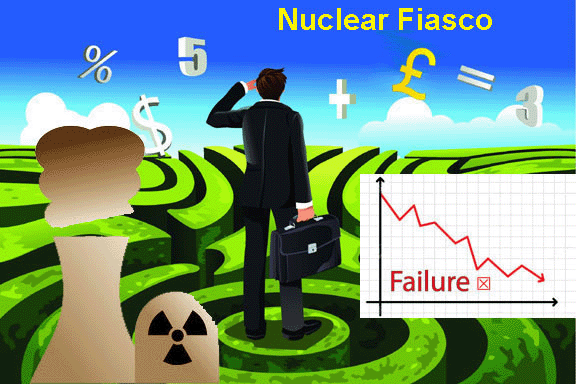
Nuclear not competitive’ and too late for energy transition: Enel Green Power CEO, Italian renewables giant ‘obviously’ won’t invest in nuclear due to long construction times and high costs, Salvatore Bernabei says https://www.rechargenews.com/energy-transition/nuclear-not-competitive-and-too-late-for-energy-transition-enel-green-power-ceo/2-1-1155407 By Bernd Radowitz 26 Jan 22,
Enel Green Power has no intention to invest in nuclear power despite the European Commission’s plan to label the technology as sustainable, the Italian renewables supermajor’s chief executive Salvatore Bernabei said.
Construction times of conventional nuclear power plants are far too long in relation to the need to get the energy transition done within the next 20 to 30 years, the CEO explained.
“If you think about the current technology and the current timing of development and construction of nuclear plants, it is much bigger than 10 years (from the moment) you take the initial investment decision,” Bernabei said at a press briefing.
You have the permitting, then you have the construction,” he said, adding that all projects currently being built have exceeded their planned construction time, and their completion takes “two to three times more than initially expected.”
“They are (also) out of budget. So, saying that nuclear could help in the transition with the current technology – I leave you to (make) the conclusion.”
His comments came after the EU Commission had proposed to include nuclear power and fossil gas under certain circumstances in its taxonomy that labels energy projects as sustainable and thus facilitates financing. The taxonomy proposal enjoys the backing by France, Finland and several Eastern European EU states that want to build or expand atomic power, but the inclusion of nuclear has been strongly opposed by Germany, Austria, Spain and Luxembourg.
Despite its stated wish to build new nuclear reactors and revamp existing ones to extend their operational life, France has suffered severe setbacks during the construction of the Flamanville 3 reactor, one of the few nuclear plants being built in Europe. The country this winter also had to switch off a series of atomic power stations, forcing it to import large volumes of electricity from neighbouring countries.
French state-owned utility EDF earlier this month has said the plant of the novel European Pressurised Reactor (EPR) type at Flamanville will cost another €300m more than forecast and fuel loading is being pushed back by up to six month, the Reuters news agency had reported. The 1.65GW reactor according to French media will then have cost French taxpayers a record €19.1bn ($21.5bn) instead of the €3.4bn originally budgeted, and have taken 15 years to build, ten years longer than originally planned.
Similar construction time and cost overruns have been experienced in Finland, where operator Teollisuuden Voima (TVO) has recently started to commission the Olkiluoto 3 reactor, also an EPR reactor.
Germany’s government last weekend issued a statement rejecting the inclusion of nuclear power into the EU’s taxonomy.
“It is risky and expensive. New reactor concepts such as mini-reactors also entail similar problems and cannot be classified as sustainable,” economics and climate minister Robert Habeck and environment minister Steffi Lemke said in a joint reaction.
It is clear to everyone that the levelised cost of electricity (LCOE) of nuclear is much bigger than €100 per megawatt hour, Bernabei agreed.
Small nuclear reactors (SMRs), which by some investors such as Bill Gates are touted to be a quick solution helping the energy transition, and supposedly are safer, may not be such a quick fix either, the EGP CEO pointed out.
“Then you talk of the next generation (of nuclear power). But in the next generation, you have this word ‘next’, (which) has to be defined yet. We are speaking about something that could be ready in 2040 – perhaps,” Bernabei said.
The first SMR reactor is slated to be built in China by 2026, “and they are the first mover,” the CEO added.
“So, whatever the taxonomy would say, the question will be ‘is there anyone available to invest in a technology that would need more than 10 years to become a reality? And perhaps when it becomes reality, the market has completely changed its dynamic with a cost that today is not competitive.”
“As Enel we don’t intend to invest in nuclear obviously.”
Italy after a referendum following the Chernobyl nuclear disaster had switched off nuclear power in the by 1990, but the far right Lega party of Matteo Salvini lobbies for it renaissance.
Former nuclear regulators say that nuclear power is not a feasible option for tackling the climate crisis.
Nuclear energy not feasible way to tackle climate crisis, former regulators say https://www.independent.co.uk/climate-change/news/nuclear-energy-climate-crisis-experts-b2001076.html
It would be unlikely to make relevant contribution quickly enough, experts say, Zoe Tidman, 26 Jan 22, Nuclear energy is not part of any feasible strategy that could be used to tackle climate change, former top officials from national regulators have said
The experts said it was too costly, risky and unlikely to have a significant impact quickly enough.
The comments were made in a joint statement by Dr Gregory Jaczko, Professor Wolfgang Renneberg, Dr Bernard Laponche and Dr Paul Dorfman, who have been involved in government nuclear regulation and radiation protection levels in the US, Germany, France and the UK respectively.
The former top officials said they felt a “collective responsibility” to comment on whether nuclear energy could play a significant role in trying to tackle the climate crisis.
“Ireland must take firm stance against greenwashing of EU Taxonomy” – Member of European Parliament

“Ireland must take firm stance against greenwashing of EU Taxonomy” –
Chris MacManus MEP. “The inclusion of gas and nuclear energy in the
Sustainable Finance Taxonomy would amount to greenwashing and must be
firmly opposed by the Irish government and MEPs,” said Chris MacManus,
MEP for the Midlands Northwest. “There is a very narrow political window
in which to reject this greenwashing attempt, and Ireland needs to be clear
and vocal in its opposition to the Commission’s proposal.”
Sinn Fein 25th Jan 2022
The threat of nuclear winter hangs over our warming planet
The threat of nuclear winter hangs over our warming planet, Pearls and Irritations By Andrew GliksonJan 26, 2022 Even a limited nuclear war would inject enough smoke and dust into the atmosphere to threaten the survival of our species.
The impact of the Cretaceous-Paleocene asteroid 66 million years ago released enough dust and debris to cloud large parts of the planet, causing the mass extinction of some 80 per cent of animal species. When Turco et al. (1983) and Carl Sagan (1983) warned the world about the climatic effects of a nuclear war, they pointed out that the amount of carbon stored in a large city was sufficient to release enough aerosols, smoke, soot and dust to block sunlight over large regions, leading to a widespread failure of crops and extensive starvation.
The current nuclear arsenals of the United States and Russia could potentially inject 150 teragrams of soot from fires ignited by nuclear explosions into the upper troposphere and lower stratosphere (Coupe et al., 2019), lasting for a period of 10 years or longer, followed by a period of intense radioactive radiation over large areas.
Even a “limited” nuclear war, such as between India and Pakistan, would release enough aerosols to affect large regions, killing millions or billions through starvation. As stated by Robock et al. (2007):
“The casualties from the direct effects of blast, radioactivity, and fires resulting from the massive use of nuclear weapons by the superpowers would be so catastrophic … the ensuing nuclear winter would produce famine for billions of people far from the target zones.”
With the global arsenal of nuclear warheads at around 13,000 – 90 per cent of which are held by Russia and the US – a regional conflict such as in Ukraine or Taiwan would threaten to spill worldwide. As the clock of atomic scientists is set at 100 seconds to doomsday, the rising probability of an intended or inadvertent nuclear war, against the background of rising global warming, indicates an hour of truth for our species – a choice between the defence of life on earth and global suicide……………………. https://johnmenadue.com/the-threat-of-nuclear-winter-hangs-over-our-warming-planet/
Debate flares in Amiens over the attempt to include nuclear in the ”green taxonomy”
Hours before the window for lodging objections closes, EU environment and energy ministers meeting in France Friday differed sharply on a European Commission provision that would classify nuclear and natural gas energy as “sustainable”. The controversy pits countries led by France — where nuclear generates a world-leading 70 percent of electricity — against Germany, Austria and others in the 27-nation bloc. Debate over the Commission’s so-called “taxonomy” is not on the agenda of the informal, three-day talks in Amiens, but flared nonetheless. In late December the European Commission unveiled a classification labelling investment in nuclear gas-based energy as sustainable, in order to favour sectors that reduce the greenhouse gas emissions driving global warming. Fin24 22nd Jan 2022 https://www.news24.com/fin24/economy/eu-nations-quarrel-over-whether-nuclear-gas-are-green-20220122 |
How France greenwashes nuclear weapons

President Macron has announced investment of one billion euros in research and construction of small modular reactors (SMRs). SMRs are small nuclear reactors that are to be used primarily for submarine propulsion and thus for military purposes in distant theatres of war
Behind the planned modernisation of French nuclear power, allegedly to ensure cheaper electricity, nestles the agenda of its nuclear weapons programme. For years now, the state has imposed the exorbitant costs of its civilian-military nuclear industry on the French public.
France plans to modernise its nuclear power – allegedly to insure cheaper and greener electricity. Yet behind it nestles a nuclear weapons agenda https://www.ips-journal.eu/topics/foreign-and-security-policy/how-france-greenwashes-nuclear-weapons-5668/ 23 Jan 22,
At the turn of the year, France assumed the presidency of the Council of the European Union. And last week, the EU defence ministers met informally to talk about the Common Security and Defence Policy (CSDP). Among other issues, they discussed nuclear security and nuclear deterrence strategies.
In recent years, the French president has been a strong advocate of nuclear power. Historically, France’s independent development of nuclear technology for atomic weapons has been an important source of national pride. Since the 1990s, however, nuclear power has been declining as a consequence of the Chernobyl disaster. Annual reports by Mycle Schneider, an international consultant on energy and nuclear policy, show that this is a part of a global trend. Nevertheless, France continues to be a tireless advocate of this technology.
Nuclear answers for green energy and weapons
On 1 January 2022, a draft regulation of the European Commission classified the investment in nuclear energy and natural gas as sustainable. This concerns billions of euros in financial support in the so-called EU Taxonomy. Emmanuel Macron was keen to acquire a ‘Green Label’ for nuclear energy. France’s real interests concerning nuclear energy emerged clearly in a speech Macron delivered on a visit to Framatome’s Le Creusot facility in 2020: ‘Without civilian nuclear energy there is no military use of this technology – and without military use there is no civilian nuclear energy’. In a nutshell, this means that without a cutting-edge nuclear industry France cannot continue to expand and modernise its nuclear weapons arsenal. This remains true for all nuclear weapons states.
At present, these states are upgrading their arsenals. Russia and the United States are procuring new delivery systems – such as hypersonic missiles – that will be able to deliver their nuclear bombs much more quickly and accurately, leaving the enemy with no time to defend themselves. Thus, a new nuclear arms race has begun.
The US think tank Atlantic Council is quite open about how crucial it regards civilian use of nuclear power to be for national security policy: the civilian US nuclear industry is a U.S. strategic asset of vital importance for US national security. Similar formulations can be found in the speeches of other presidents of nuclear weapons states. Its civilian nuclear complex costs the United States at least USD 42.4bn a year. The International Campaign to Abolish Nuclear Weapons (ICAN) claims that all nuclear weapons states together invest over USD 100bn a year in their nuclear weapons arsenals.
France, too, wants to join in the ongoing technological development in other nuclear weapons states for quite some time. President Macron has announced investment of one billion euros in research and construction of small modular reactors (SMRs). SMRs are small nuclear reactors that are to be used primarily for submarine propulsion and thus for military purposes in distant theatres of war. The new Hunter class submarines underline France’s great-power ambitions. This needs to be understood against the background of the collapsed submarine deal with Australia. Last year Australia announced that it was cancelling its contract to buy French diesel submarines in favour of US and UK nuclear technology.
Flexible submarine-based nuclear weapons systems have major strategic importance for all nuclear weapons states. They have the capability of going for up to three months without surfacing. They can cover great distances at high speeds undetected and surface almost wherever they want around the globe. They are capable of launching up to 20 missiles, each with a dozen individual guided warheads. All this plays a key role in the nuclear weapons doctrine of the five ‘official’ nuclear weapons states, the United States, the United Kingdom, Russia, France, and China. At the same time, the possession of this technology underpins these countries’ great-power status. France, like the other nuclear weapons states, is keen to consolidate its status.
Exposing the French agenda
The first meeting of EU defence ministers under the French Council Presidency was held on 12–13 January 2022 in Brest. This is where France’s sea-based nuclear weapons are stationed, making this a clear demonstration of its military power. As early as his 2020 speech in Le Creusot, the French President confirmed his country’s military ambitions: ‘the nuclear industry will remain the cornerstone of our strategic autonomy. It affects every aspect of deterrence, powering our nuclear submarines, submarines for launching ballistic missiles, and powering our nuclear aircraft carriers.’
Nuclear power and nuclear sharing are controversial in the European Union. Austria and Luxembourg have sharply criticised the EU Taxonomy. At the same time, there has been a multilateral UN treaty banning weapons of mass destruction since the Treaty on the Prohibition of Nuclear Weapons of 22 January 2021.
Behind the planned modernisation of French nuclear power, allegedly to ensure cheaper electricity, nestles the agenda of its nuclear weapons programme. For years now, the state has imposed the exorbitant costs of its civilian-military nuclear industry on the French public. The costs of building the pressurised water reactor in Flamanville, for example, ran to €19.4bn. Ultimately, electricity customers and investors subsidise military applications with ‘climate-saving nuclear power’.
In any case, as France takes over the EU Council Presidency it is now perfectly placed to promote the civilian-military use of nuclear energy and a European security and defence strategy based on the doctrine of nuclear deterrence.
Germany formally opposes inclusion of nuclear energy in EU’s ”sustainable” taxonomy

Germany cries foul over nuclear energy in EU’s green rule book, Daily Sabah, BY REUTERS, BERLIN JAN 23, 2022 German Chancellor Olaf Scholz’s three-party coalition government has raised objections to a European Union draft plan to label nuclear power plants as a sustainable energy source in a formal letter to Brussels, ministers said on Saturday.
The EU taxonomy aims to set a gold standard for green investments, helping climate-friendly projects to pull in private capital and stamping out “greenwashing,” where investors and companies overstate their eco-credentials.
“As the federal government, we have once again clearly expressed our rejection of the inclusion of nuclear energy. It is risky and expensive,” Vice Chancellor and Economy Minister Robert Habeck said in a joint statement with Environment Minister Steffi Lemke, both senior members of the Greens party.
In its letter to Brussels, published by the Economy Ministry on its webpage, the German government also pointed to the lack of any safety requirements regarding nuclear power plants.
“Serious accidents with large, cross-border and long-term hazards to humans and the environment cannot be excluded,” Berlin said in its letter, adding that the question of where to store radioactive waste in the long term was still unanswered.
Habeck and Lemke said that Berlin should reject the plan in their opinion if the European Commission disregarded Germany’s objections and left the draft plan unchanged.
However, German government sources told Reuters earlier this month that coalition parties wanted to avoid escalating the EU dispute and agreed in coalition talks behind closed doors to abstain in any upcoming vote.
Long delayed
The EU rules have been long delayed, with countries split over whether nuclear energy and natural gas deserve a green badge. Austria has already said it would take legal action if the European Commission proceeds with its draft plan to label both as sustainable investments………………………..
The commission hopes to adopt a final draft by the end of the month. https://www.dailysabah.com/business/energy/germany-cries-foul-over-nuclear-energy-in-eus-green-rule-book
Officials at San Onofre conspicuously silent on the risks of tsunami waves to nuclear waste storage.
The tsunami advisory that woke up the West Coast Jan. 15 should serve as a wake-up call on flooding dangers at the nuclear waste storage facility in San Onofre. The facility is 100 feet from the beach.
During high tides, waves crash into an aging bulkhead that separates the sea from the storage
vault — a kind of crypt that holds 73 thin-walled, metal canisters jam-packed with 3.6 million pounds of deadly, radioactive waste.
According to Southern California Edison, the sprawling, concrete vault will flood from a storm at high tide. If the ocean were to swamp the so-called Independent Spent Fuel Storage Installation, we could have an unsurpassed disaster on our hands, an uncontrolled criticality, one that has never occurred in the U.S. commercial power industry.
The undersea volcanic eruption this month near Tonga sent waves across the Pacific. Officials in
Hawaii reported tsunami wave heights of nearly 3 feet. At San Diego Harbor, officials measured more than a half-foot of sea level rise. Meanwhile, officials from shuttered San Onofre Nuclear Generating Station remained conspicuously silent.
Times of San Diego 20th Jan 2022
Nuclear energy too costly for humans — and the planet

But this [France’s small nuclear reactor] plan has a whole range of shortcomings, not least because reaching the same capacity as a single large nuclear reactor requires a great deal of these small reactors.
This high number will increase the risk of a nuclear accident many time over,” the German Federal Office for the Safety of Nuclear Waste Management (BASE) recently warned
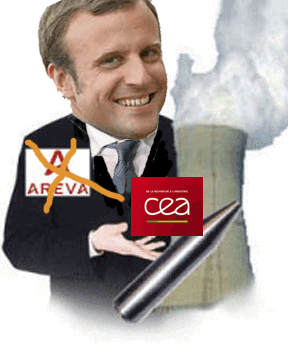
“Without civilian nuclear power, there is no military nuclear power, and without military nuclear power, there is no civilian nuclear power,” Macron said.
Nuclear energy too costly for humans — and the planet https://www.dw.com/en/opinion-nuclear-energy-too-costly-for-humans-and-the-planet/a-60390384 21 Jan 22
Nuclear power will soon be classified as environmentally friendly under the new EU taxonomy. But nothing about it is green or safe, says DW’s Jeannette Cwienk.
I can still clearly recall that spring afternoon in late April 1986. I had been out playing in the woods and building a fort with some friends, when a rain shower forced us back home. It was a fun, carefree day.
We had no idea that just hours earlier, reactor number 4 at the Chernobyl power plant near the Ukrainian city of Pripyat had exploded.
When the news came out days later, the Chernobyl catastrophe and fears of a radiation-filled future quickly came to define my younger years.
Such memories, however, are not the only reason for my concern about the European Commission’s proposal to include nuclear energy and natural gas as environmentally-friendly technology in the EU taxonomy.
Doing so would see nuclear energy classified as sustainable, and recommend it as an option for investors — making a mockery of environmental efforts.
Who will pay for nuclear accidents?
The EU Commission is completely ignoring the costs of nuclear energy. Quite apart from the funds required to build new nuclear power plants, even smaller ones, there is the far more important and apparently overlooked question of who would foot the bill in the event of an accident.
.
In Germany alone, the federal costs attached to the consequences of the Chernobyl catastrophe have been estimated at around €1 billion ($1.1 billion). Worldwide, the immediate economic ramifications of Chernobyl are estimated to have been more than €200 billion — and that doesn’t include the cost of widespread related illness.
Health costs were also not included in the €177-billion bill linked to the consequences of the March 2011 Fukushima nuclear disaster in Japan, as estimated by the Japanese government in 2017.
Most of these costs have since been covered by Japanese taxpayers, because the operating company, TEPCO, was de facto nationalized after the disaster to avoid insolvency.
Taxpayers will be forced to foot the bill
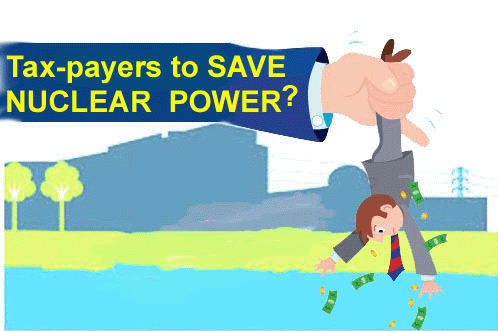
And this brings us to the heart of the problem: in Europe, the amounts that nuclear operators are required to set aside in case they’re found liable for a nuclear accident are laughably small. In the Czech Republic, nuclear power plant operators are required to have €74 million on hand in case of an accident; in Hungary, the figure is €127 million.
Even in France, the driving force for the planned “greening” of European nuclear energy and the largest consumer of nuclear energy worldwide — it makes up around 70% of its energy supply — operators are only required to set aside €700 million in case of an accident. A large nuclear accident in Europe could easily cost between €100 and 430 billion. And should that happen, the affected countries — along with their taxpayers — will be forced to foot the bill.
This situation has been met with criticism by Germany’s new finance minister and the leader of the neoliberal Free Democrat Party, Christian Lindner, who recently expressed skepticism about the place of nuclear energy in the new EU taxonomy.
“An energy source that can only be mainstream if the state is prepared to accept liability — that’s a sign from the market that it can’t be a sustainable energy source,” he said.
On Friday, the German government is likely to vote against the EU Commission’s plans — and rightly so. Austria and Luxembourg, on the other hand, have gone a courageous step further and have announced plans to take Brussels to court if the disputed sustainability plans go ahead.
Small modular reactors also a risk
In France, meanwhile, President Emmanuel Macron likes to describe nuclear power as a “stroke of luck” for climate protection. The fact that 10 of the country’s reactors are currently offline — three from the latest generation due to safety concerns — are apparently not an issue for the French government, which has been trying to allay the fears of a nuclear accident with new small modular reactors (SMR). These smaller power stations are only around one 10th of the size of a conventional nuclear site — and therefore are considered less dangerous, in the event of an accident.
But this plan has a whole range of shortcomings, not least because reaching the same capacity as a single large nuclear reactor requires a great deal of these small reactors.
“This high number will increase the risk of a nuclear accident many time over,” the German Federal Office for the Safety of Nuclear Waste Management (BASE) recently warned.
Is it really about climate protection?
BASE has also been critical of a report by the EU’s Joint Research Center, which the EU Commission has used to make its assessment about the environmental friendliness of civil nuclear power.
The EU report only partially considers the risks of nuclear energy use for humans and the environment, as well as for future generations, and some of the principles of scientific work are not correctly taken into account. According to BASE, the report cannot be relied on to comprehensively assess the sustainability of nuclear energy use.
This has raised doubts over the claim that Brussels wants to include nuclear power in the new EU taxonomy primarily for climate protection reasons. Instead, the decision seems to be down to political pressure, especially from Paris.
As a global nuclear power, France wants to hold on to its nuclear plants at all costs, as Macron clearly stated in December.
“Without civilian nuclear power, there is no military nuclear power, and without military nuclear power, there is no civilian nuclear power,” he said.
European States opposing inclusion of nuclear in ‘green’ taxonomy warn on diverting investement from genuinely clean technologies.
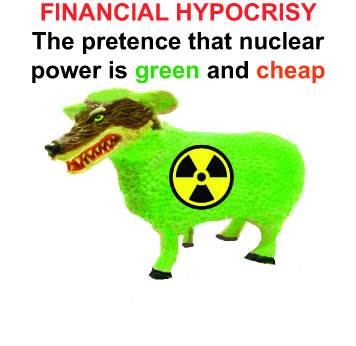
Austria, Denmark, Luxembourg and Spain continue to reject natural gas and
nuclear in the EU’s sustainable finance taxonomy, their energy and
climate ministers have said in response to a recent draft proposal.
The European Commission’s proposed conditions under which investments in
natural gas-fired and nuclear power plants would be deemed “green” in a
draft updated taxonomy sent “the wrong signals to financial markets and
seriously risks being rejected by investors,” the ministers said late on
Thursday.
The taxonomy aims to help investors identify suitable projects
that support the EU’s climate goals. It does not require investments in
projects that meet the criteria nor prohibit investments in projects that
do not. The ministers argued, however, that the long lifetimes of natural
gas and nuclear plants meant that including them in the taxonomy could lock
in their use for many decades and divert investments away from renewables.
Montel 21st Jan 2022
https://www.montelnews.com/news/1294402/four-eu-nations-reject-gas-nuclear-in-green-taxonomy
World’s largest iceberg melted – now one trillion tonnes of ice – gone

The monster iceberg A68 was dumping more than 1.5 billion tonnes of fresh water into the ocean every single day at the height of its melting. To put that in context, it’s about 150 times the amount of water used daily by all UK citizens.
A68 was, for a short period, the world’s biggest iceberg. It covered an area of nearly 6,000 sq km (2,300 sq miles) when it broke free from Antarctica in 2017. But by early 2021, it had vanished. One trilliontonnes of ice, gone.
BBC 20th Jan 2022
Austria preparing for a legal battle to prevent EU from calling nuclear power ‘sustainable’
Austria gears up to fight EU ‘green’ nuclear energy plan, France 24Vienna (AFP) 19 Jan 22, – As the EU moves to label energy from nuclear power and natural gas as “green” investments, Austria is gearing up to fight this, including with a legal complaint.The European Commission is consulting with member states and European lawmakers until Friday on its plans.A final text could be published by end of the month and would become EU law effective from 2023 if a majority of member states or the EU Parliament fail to oppose it.
“Neither of these two forms of energy is sustainable and therefore has no place in the taxonomy regulation,” Environment Minister Leonore Gewessler told AFP in an interview this week in her eighth-floor office overlooking the Danube canal that flows through central Vienna.
The European Commission is consulting with member states and European lawmakers until Friday on its plans.A final text could be published by end of the month and would become EU law effective from 2023 if a majority of member states or the EU Parliament fail to oppose it.
“Neither of these two forms of energy is sustainable and therefore has no place in the taxonomy regulation,” Environment Minister Leonore Gewessler told AFP in an interview this week in her eighth-floor office overlooking the Danube canal that flows through central Vienna.
Strong arguments’
The 44-year-old said Austria had “very, very strong arguments” why energy from nuclear power and natural gas should not be labelled as green and as such she had “great confidence” a complaint at the EU Court of Justice (ECJ) could succeed.
“The question of waste disposal (from nuclear energy) has not been solved for decades… It’s as if we give our children a backpack and say ‘you will solve it one day,'” she said……………https://www.france24.com/en/live-news/20220119-austria-gears-up-to-fight-eu-green-nuclear-energy-plan
Why nuclear power can never be green

Why nuclear power can never be green, https://www.arabnews.com/node/200506 RANVIR S. NAYAR, January 15, 2022, Jan. 14 was a frightening Friday for EDF, the French state-owned utility company that is also the world’s largest nuclear power operator.
The week had begun on a bad note for EDF when it announced another delay in commissioning its EPR, the third-generation pressurized water reactor it has been trying to build at Flamanville (pictured) in France and a couple of other sites in other countries. EDF said the plant would now be ready only in 2023, and the cost had further increased to €12.7 billion.
Barely had the stock markets digested this bit of bad news — albeit not entirely unexpected, since EPR has been EDF’s bete noire since it was conceived over a decade ago — than the French government said EDF ought to cut its electricity price down to the same level as rivals in the French market. This sent EDF stock plunging on Friday by 20 percent.
Meanwhile another battle, of far greater consequence to Europe and the world, was raging just across the border in Brussels. That began when the European Commission tried to slip in a major modification to how power sources are labeled, by according the “green investment” tag to nuclear power.
If officials in Brussels had hoped that the media and others would be too busy welcoming 2022 to notice, within hours they were proved wrong as the new government in Germany and numerous environmental groups rejected the new designation and asked for it to be withdrawn.
The “green” designation had been in the offing for a while, as the EU and the rest of the world struggles to meet the ambitious targets for reduced carbon emissions required by the Paris Agreement.
Not surprisingly, a key driver is France, which is not only the biggest user of nuclear power, but has also just begun its six-month rotating presidency of the EU. However, French and EC officials ought to have realized that such a controversial move could not just be slipped in, especially with a new government in Germany that includes as a major partner, for the first time, the Green Party — who have actively campaigned for a total phase-out of nuclear power.
If a “green investment” tag is indeed given to nuclear energy, driving hundreds of billions of dollars of fresh capital into hundreds of new nuclear power projects, then world leaders must pause and consider whether they putting ticking timebombs under all of us.
On the same day as European officials moved the draft to give the green investment tag to nuclear power, Germany shut down three of its last six nuclear reactors, as part of its promise to phase out nuclear power totally by end of 2022.
Little wonder, then, that the German government called the European move greenwashing, and said it diluted the good label of sustainability. Germany was joined by Austria, which said it would sue if the EC went ahead, and that neither gas nor nuclear power could be called green as they were both harmful for the environment.
Indeed, calling nuclear power “green” or “sustainable,” attempting to equate a nuclear reactor with a solar panel or a wind turbine, is plain and simple fraud. Certainly, nuclear power does not lead to carbon emissions once production begins, but to give it the same treatment as a trully renewable source such as solar or wind is not just twisting the truth, it is a bare-faced lie.
Sustainability cannot be measured simply by carbon emissions, it must also take into account the overall impact on the environment, and the possibility of accidents and damage. From Chernobyl to Fukushima, and many more incidents that pass unreported or don’t make global headlines, the world has already seen the dangers of nuclear power.
Nuclear power accounts for less than 10 percent of the world’s total electricity generation. One reason for this low share is that these projects are extremely capital intensive, with the construction cost for each MW of nuclear power exceeding €7.7 million in the case of Flamanville. Moreover, nuclear power projects have a long history of lengthy delays and cost over runs. Flamanville’s initial budget was €3.3 billion and the plant was to be operational in 2013. Now it is over a decade late and the cost has grown over 400 percent, with no certainty that it will not have further cost or time over runs. In contrast, solar power in many parts of the world has become even cheaper than coal, the cheapest source so far.
The nuclear industry lobby says that the cost of running a nuclear power plant is minimal and that over a life-cycle nuclear power is competitive. However, this is false again, as decommissioning a nuclear power plant can be more expensive than building it in the first place. There is also doubt over how safely the nuclear waste has been stored, and whether it would leak into ground water or contaminate the soil over the course of tens of thousands of years that will be radioactive.
If a “green investment” tag is indeed given to nuclear energy, driving hundreds of billions of dollars of fresh capital into hundreds of new nuclear power projects, then world leaders must pause and consider whether they putting ticking timebombs under all of us.
The world must ponder whether it is worth tackling the poison in the air that is carbon by spreading poison all around us, in air, in soil and in water — because that is what will happen if we go full-tilt for nuclear energy.
- Ranvir S. Nayar is managing editor of Media India Group, a global platform based in Europe and India, which encompasses publishing, communication, and consultation services.
Nuclear power plants – ”no significant harm?”-risks of catastrophic accidents, wastes dangers to future generations, water consumption.
Not green and not sustainable, The science-based case for excluding nuclear power from the EU taxonomy, Beyond Nuclear, 15 Jan 2022, ”………………………Does the present generation of nuclear fission power plants ‘do no significant harm’?
To answer this question, two specific issues for nuclear power stand out: the risk of a catastrophic accident and the management of high-level nuclear waste (HLW). Nuclear fission energy is characterized by low probability, high consequence risks to humans and the environment. Even the JRC recognizes that the risk of a severe nuclear accident cannot be excluded, even in the best commercially available nuclear power plants.

The disaster in Fukushima (2011) was triggered by a process that these nuclear reactors were not “designed” to withstand. These circumstances shed light on the limitations of the technical risk assessments, which have not fully taken into account beyond design risks in particular of core melt accidents.
The events in Fukushima have made it apparent that such assessments are based on specific assumptions, for example on seismic safety or the maximum height of a tsunami, and that reality can disprove these assumptions. Deciding whether such risks belong to the category of ‘tolerable risks’ for a given society depends on the various risk regulation measures put in place. Especially relevant for nuclear fission power is the fact that the liability of the operator in the case of a severe accident is limited and the remaining costs are (largely) taken on by the state (privatization of profits, socialization of risks).
The Taxonomy architecture is not designed to cater for such risks that carry an intergenerational impact lasting for thousands of years, making it an unsuitable instrument to decide on the sustainable nature of nuclear power.

The characteristics and nature of HLW generated by the nuclear fission process present long-term intergenerational risks and thereby challenge the principle of ‘do no significant harm’ to the extent that nuclear fission energy may not be considered eligible for the EU Taxonomy.
This was made abundantly clear to the Commission in the TEG’s recommendations, which were not published in their entirety. Independent, scientific, peer-reviewed evidence compiled by TEG provided confirmation of the risk of significant harm arising from nuclear waste.
The back end of the fuel cycle is currently dominated by the containment of spent fuel rods and waste from nuclear power facilities. Safe and secure long-term storage of nuclear waste remains unresolved and has to be demonstrated in its operational complexity. Whilst the nuclear industry and international nuclear waste experts provide assurances of multiple engineered safeguards designed to reduce the risks from nuclear waste through geological disposal, the question remains whether, despite the solid scientific basis and thorough geological knowledge gathered, in the absence of experience with this technology, one can really guarantee that HLW will remain isolated from humans and the environment for thousands, let alone millions of years.
The fact that a ‘solution’ has to be found for the existing quantities of waste (as well spent fuel as conditioned high level waste forms), and that geological disposal is the least bad solution for this, does not imply that nuclear power can suddenly be classified as a ‘green’ energy source. It is therefore reasonable to conclude that the risks presented by nuclear fission energy to the ‘do no significant harm’ principle and technical screening criteria of the EU Taxonomy means that it can not be considered EU Taxonomy eligible or aligned as long as the technology and fuel cycle management has not proven to be sustainable as a whole.
Other concerns with regard to DNSH criteria
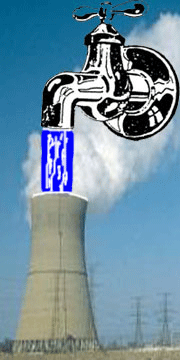
Nuclear fission power plants require about three cubic metres of cooling water per megawatt hour (MWh) produced. A nuclear plant’s cooling water consumption is higher than that of fossil-fuel plants. Throughout the world, new nuclear plants and existing plants increasingly face cooling water scarcity induced by heat waves, a situation that is likely to be aggravated by climate change. More efficient cooling technologies could be considered, but this adds to the already high costs of nuclear power plants.
For reasons of having access to enough cooling water, nuclear plants are mostly sited in coastal or estuarine locations, but this makes them vulnerable to flooding and extreme events that climate change may occasion. The siting of nuclear power plants along coastal zones presents adaptation risks associated with sea-level rise, water temperature rise, coastal erosion as well as natural catastrophes such as the Fukushima disaster demonstrates.
The Fukushima disaster reveals how powerless human operators are when nuclear systems escape full, continuous control. Instead of helping to address the impacts of the Tsunami as renewable energy sources would have, the devastated nuclear power plant strongly aggravated the emergency relief in the province and left huge new problems of liquid waste and radioactive waste resulting from infrastructure and land cleaning activities, never encountered before in densely populated industrial areas.
Furthermore, when major nuclear plant accidents occur significant land areas become unsuitable for human habitation (e.g. Chernobyl, Fukushima).
Advocates of nuclear power draw attention to the survival of natural flora and fauna in zones contaminated by radioactive materials and precluding human access. However, this is presumably not the type of ecological protection and resilience that the EU Taxonomy aims to achieve. Surface or underground mining and the processing of uranium ore can substantially damage surrounding ecosystems and waterways. The huge volumes of associated mining waste in developing countries are normally not considered in life cycle waste inventories of nuclear energy producing countries.
More critically, the adverse effects on local environmental conditions of routine discharging of nuclear isotopes to the air and water at reprocessing plants have not been considered thoroughly enough. A number of adverse impacts (of radiation) on soil/sediment, benthic flora and fauna and marine mammals has been demonstrated ……………………………… https://wordpress.com/read/feeds/72759838/posts/3774941784
The science-based case for excluding nuclear power from the EU taxonomy

Not green and not sustainable, The science-based case for excluding nuclear power from the EU taxonomy, Beyond Nuclear, 15 Jan 2022,
A statement by Dawn Slevin, Dr. Erik Laes, Paolo Masoni, Jochen Krimphoff, Fabrizio Varriale, Andrea Di Turi, Dr. Ulrich Ofterdinger, Dr. Dolores Byrne, Dr. Petra Kuenkel, Ursula Hartenberger, Kosha Joubert, Dr. Paul Dorfman, Anders Wijkman, Prof. Petra, Seibert, Rebecca Harms, Joseph Kobor, Michel Lee, Dr. Stuart Parkinson, and Dr. Ian Fairlie
One of the most influential policy initiatives of the European Commission in the past years has been the “EU Taxonomy”, essentially a shopping list of investments that may be considered environmentally sustainable across six environmental objectives
To be deemed EU Taxonomy aligned, the activity must demonstrate a substantial contribution to one environmental objective, such as climate change mitigation, whilst causing no significant harm to the remaining five environmental objectives (climate change adaptation, sustainable use and protection of water and marine resources, transition to a circular economy, pollution prevention and control, and protection and restoration of biodiversity and ecosystems).
All eligible activities are required to comply with technical screening criteria (TSC) for ‘substantial contribution’ and ‘do no significant harm’ and to demonstrate that social safeguards are in place. The EU Taxonomy provides a common language for sustainability reporting, a foundation for green bond reporting and much more. It is intended to be used by international financial markets participants whose products are sold within the EU in order to evaluate the sustainability of their underlying investments.
The use of the EU Taxonomy is furthermore compulsory for the EU and member states when introducing requirements and standards regarding environmental sustainability of financial products, such as an EU ecolabel for investment products or an EU Green Bond Standard. It will also apply to 37% of activities earmarked as ‘climate-friendly’ financed by the EU COVID-19 recovery funding. Its science-based approach is designed to give confidence to a wide range of international stakeholders that environmental claims are not greenwashing.
The question whether nuclear fission energy complies with the ‘do no significant harm’ (DNSH) criteria of the EU Taxonomy was the focus of the Technical Expert Group (TEG) DNSH assessment on nuclear fission technologies which recommended to the Commission that nuclear should not be included in the EU Taxonomy of environmentally sustainable activities.
Taking into account the significant financial implications of adopting the TEG recommendations, it became the starting point of intense behind-door lobbying. France led a coalition of 10 EU Member States arguing that nuclear fission as well as gas-fired power plants should be included in the Taxonomy. Together with Finland (Olkiluoto-3), France is at present the only EU country constructing a new nuclear power plant (Flamanville-3).
The Finnish and French construction sites were meant to be the industrial demonstration of an evolutionary nuclear technology (the “European Pressurised water Reactor” or EPR). Olkiluoto-3 was meant to start generating power in 2009, followed by Flamanville-3 in 2012. Instead, the projects turned out to have multiple engineering difficulties and financial constraints that resulted in significant delays culminating in missed deadlines for various production start dates and tripling unit cost.
Nevertheless, in October 2021 president Macron announced that France will continue to invest heavily in the construction of EPR ‘light’ versions, next to research into small modular reactor (SMR) technology. Following consultation with Member States, the Commission charged its former nuclear Joint Research Centre (JRC) to draft another technical report in 2020 – the “Technical assessment of nuclear energy with respect to the ‘do no significant harm’ criteria of Regulation (EU) 2020/852”. This report was reviewed by two sets of experts, the Group of Experts on radiation protection and waste management under Article 31 of the Euratom Treaty (having no specific competences in sustainability impact assessment other than impacts incurred by radiation) and the Scientific Committee on Health, Environmental and Emerging Risks on environmental impacts (Sheer).
While the Sheer group pointed out some omissions, the Article 31 Group of Experts, unsurprisingly supported the conclusions of the JRC. Nevertheless, a minority report opposed the lack of integration of economic and environmental aspects, as put forward by the Rio principles for Sustainable Development.
The JRC, supported by the Art. 31 experts, concluded amongst others that: “…deep geological repositories are considered, at the state of today’s knowledge, appropriate and safe means of isolating spent fuel and other high-level waste (HLW) from the biosphere for very long timescales and the necessary technologies are now available;” “..the standards of environmental control needed to protect the members of the public are likely to be sufficient to ensure that other species are not put at risk;” “… the requirements in the [EU Taxonomy] TSC regarding protection of humans and the environment from harmful effects of ionising radiation are automatically satisfied in the EU if a licence can be issued.”
Notwithstanding the findings of the JRC and the Article 31 Group of Experts, members of the TEG DNSH maintain our position that nuclear fission energy should not be included in the EU Taxonomy of environmentally sustainable activities. We the TEG DNSH members observe that the above JRC/Article 31 Group of experts’ statements and conclusions drawn thereof cannot be fully based on scientific evidence as deep geological disposal of high-level nuclear waste entails the need for adequate quality assurance and control of waste form compatibility, as well as for monitoring of health impacts and preservation of knowledge and memory for possibly thousands of years. It also requires operational demonstration of disposal within Europe.
The fact that according to the current technical state of knowledge there is no alternative to deep geological disposal as a ‘solution’ for the nuclear waste problem does not take away from its ethically problematic character. Moreover the independent scientific evidence which the TEG presented to the European Commission, shows evidence of adverse impacts to the natural environment arising from the many processes involved in the nuclear power lifecycle (from uranium mining to waste disposal) that are operational today.
Therefore, we maintain our recommendation to the European Commission that nuclear fission energy has no place on the EU Taxonomy of sustainable activities, whether or not it is licensed. It is furthermore our view that the proponents of nuclear energy have guided the interpretation of scientific knowledge and the framing of sustainability assessment in order to use the EU Taxonomy to place a ‘scientific’ stamp on what is primarily a political position on nuclear fission energy aiming to satisfy the few EU member states that wish to promote the associated technologies.
Does the present generation of nuclear fission power plants ‘do no significant harm’? ………
The Taxonomy architecture is not designed to cater for such risks that carry an intergenerational impact lasting for thousands of years, making it an unsuitable instrument to decide on the sustainable nature of nuclear power. ………..
Other concerns with regard to DNSH criteria ……………………………..
Should nuclear fission power be included in the taxonomy as a transition activity? ……………………………………..
Further issues of justice beyond the DNSH criteria …………………….
The Way Forward .
Controlling nuclear technologies, investments, and practices requires a high level of technical expertise, which emphasizes the need for expert structures which are independent of the nuclear industry and can therefore better safeguard the common good at international, European and national levels.
The nuclear industry is currently self-regulating with oversight provided by the IAEA (with a mandate to promote the peaceful applications of nuclear technology), EURATOM framing and international committees such as UNSCEAR depending too much on international diplomacy (which recently cast doubt on the health effects of exposure to low levels of radiation).
We highlight the need for an independent international agency requiring revision of the EURATOM treaty as well in order to be able to review nuclear power issues with a focus on society’s need of sustainable development above nuclear sectoral interests, in terms of safeguarding public and environmental health, economic and energy security and general issues of justice.
The proposed inclusion of nuclear fission energy in the EU Taxonomy will channel much needed capital away from proven sustainable energy sources, create more long-term operational and waste management risks and adverse environmental and social impacts that will undermine the principles and technical screening criteria of the EU Taxonomy and crucially, undermine Europe’s credibility and standing amongst its own citizens and international peers.
Instead of giving the nuclear industry a new financial injection for solutions of the past such as the large scale EPR, the EU should focus on pressing issues such as looking for common solutions to the existing HLW problem in EU Member States (and internationally) and taking up a strong regulatory position on nuclear safety and peaceful developments in nuclear technology.
It is the responsibility of Euratom to demonstrate a real European collaboration in solving the technical as well as the environmental and economic challenges related to HLW management (emergency management, harmonised safety and QA/QC criteria for waste forms, insurances).
The signatories of this letter understand the need of the nuclear industry to receive ongoing regulatory support to ensure that their current operations, management of waste, and decommissioning are authorized and carried out in a safe manner. We therefore encourage the JRC and EU Institutions to extend and harmonise their support and strategic direction of the nuclear industry in the new energy transition paradigm, but we state categorically that the proposed inclusion of nuclear fission energy on the EU Taxonomy of environmentally sustainable activities is contrary to the TEGs recommendation to the European Commission.
The above is the content of a Statement of Concern sent by the EU Taxonomy subgroup DNSH TEG members and expert supporters to the Commission on December 21, 2021. The statement can also be downloaded in PDF format. https://wordpress.com/read/feeds/72759838/posts/3774941784
1 This Month
19 February – VIRTUAL EVENT-Decision Time: AI and Our Nuclear Arsenal
12:45 p.m. Central / 1:45 p.m. Eastern
To see nuclear-related stories in greater depth and intensity – go to https://nuclearinformation.wordpress.com
-
Archives
- February 2026 (161)
- January 2026 (308)
- December 2025 (358)
- November 2025 (359)
- October 2025 (376)
- September 2025 (258)
- August 2025 (319)
- July 2025 (230)
- June 2025 (348)
- May 2025 (261)
- April 2025 (305)
- March 2025 (319)
-
Categories
- 1
- 1 NUCLEAR ISSUES
- business and costs
- climate change
- culture and arts
- ENERGY
- environment
- health
- history
- indigenous issues
- Legal
- marketing of nuclear
- media
- opposition to nuclear
- PERSONAL STORIES
- politics
- politics international
- Religion and ethics
- safety
- secrets,lies and civil liberties
- spinbuster
- technology
- Uranium
- wastes
- weapons and war
- Women
- 2 WORLD
- ACTION
- AFRICA
- Atrocities
- AUSTRALIA
- Christina's notes
- Christina's themes
- culture and arts
- Events
- Fuk 2022
- Fuk 2023
- Fukushima 2017
- Fukushima 2018
- fukushima 2019
- Fukushima 2020
- Fukushima 2021
- general
- global warming
- Humour (God we need it)
- Nuclear
- RARE EARTHS
- Reference
- resources – print
- Resources -audiovicual
- Weekly Newsletter
- World
- World Nuclear
- YouTube
-
RSS
Entries RSS
Comments RSS
 nuclear-news