Climate Change Threatens U.S. Nuclear Strike Capability

A new report says flooding and heat waves exacerbated by climate change could complicate U.S. nuclear launches
Scientific American, By Minho Kim, E&E News on July 14, 2023
CLIMATEWIRE | Flooding, rising seas and extreme heat from climate change threaten the nation’s ability to launch some of its nuclear weapons, according to a new report by the Carnegie Endowment for International Peace.
The report warns that climate change could undermine U.S. efforts to stop adversaries from using nuclear weapons by interfering with the military’s operation and maintenance of missile launch systems that are a key part of nuclear deterrence.
Missile systems at a Navy submarine base in Georgia and at a launch field in North Dakota face increasing flood threats from climate change that could inundate for weeks at a time access roads that are used to transport missiles and maintenance equipment to the sites.
“The issue is really transporting the missiles,” report author and Carnegie fellow Jamie Kwong said in an interview Monday. “If you can’t transport the missiles and you have older weapons on board that perhaps need technical updates, that raises questions about the potential viability of missiles.”
At Whiteman Air Force Base in Missouri, heat waves are the major concern. Many climate models predict an increasing number of days with temperatures above 90 degrees Fahrenheit, the threshold for “black flag” days at the air base that limit the activities of armed personnel due to concerns about heat stroke.
CLIMATEWIRE | Flooding, rising seas and extreme heat from climate change threaten the nation’s ability to launch some of its nuclear weapons, according to a new report by the Carnegie Endowment for International Peace.
The report warns that climate change could undermine U.S. efforts to stop adversaries from using nuclear weapons by interfering with the military’s operation and maintenance of missile launch systems that are a key part of nuclear deterrence.
Missile systems at a Navy submarine base in Georgia and at a launch field in North Dakota face increasing flood threats from climate change that could inundate for weeks at a time access roads that are used to transport missiles and maintenance equipment to the sites.
“The issue is really transporting the missiles,” report author and Carnegie fellow Jamie Kwong said in an interview Monday. “If you can’t transport the missiles and you have older weapons on board that perhaps need technical updates, that raises questions about the potential viability of missiles.”
At Whiteman Air Force Base in Missouri, heat waves are the major concern. Many climate models predict an increasing number of days with temperatures above 90 degrees Fahrenheit, the threshold for “black flag” days at the air base that limit the activities of armed personnel due to concerns about heat stroke.
“That has implications for pilot readiness,” Kwong said. Whiteman is home to B-2 Spirits, the only U.S. stealth nuclear bombers that are undetectable to enemy radar.
Air-, land- and sea-based weapons systems form the three legs of the U.S. nuclear triad that the Pentagon calls the “backbone of America’s national security.”
“Each leg of the U.S. nuclear triad could be detrimentally affected by climate change,” Kwong said. “…………………………………
The report is the first to look at the impacts of climate change on the U.S. nuclear deterrent capabilities, Kwong said. To assess the risks, Kwong overlaid the predictions from government climate models such as the NOAA model for sea-level rise with critical nuclear warhead facilities that represent each element of the triad.
“The point of this report is to demonstrate that we’re not thinking about this enough,” Kwong said. “One of the most surprising things about my research was how little we’re paying attention to this, which is surprising, given the [importance] of nuclear weapons to U.S. national security interests.”…………..
At the Kings Bay, Ga., naval base, the access road to the Strategic Weapons Facility Atlantic, where submarines with nuclear warheads get repaired and receive supplies, is projected to flood once a year on average, the report found. The base is one of only two sites equipped to fully support a ballistic missile submarine fleet, one of the most important legs of the U.S. nuclear system for its clandestine operations under the sea.
The launch fields in Minot, N.D., could face similar transportation problems, Kwong said. The access roads connecting about 150 underground missile launch pads are unpaved dirt roads “particularly vulnerable to flooding,” the report says…………………..
Heat waves could also impact the stealth bombers because rising temperatures cause air density to drop, making takeoff difficult, the report says. Commercial aircraft comparable to B-2s in size are grounded at 118 F, according to the report.
Radar-absorbing stealth skins of the B-2 bombers are also highly sensitive to heat and humidity, requiring “special, intensive maintenance” during heatwaves………. https://www.scientificamerican.com/article/climate-change-threatens-u-s-nuclear-strike-capability/
Extreme weather increasingly disrupted generation of nuclear power in last 30 years: State of the Climate in Europe 2022.

Nearly 60% of plants located by rivers or lakes in the continent experienced nuclear power production losses since 2017
Down to Earth, By Seema Prasad, Wednesday 21 June 2023
Weather-related production losses accounted for approximately just about 0.35 per cent of global nuclear energy generation in 2022, up from 0.29 per cent five years earlier, according to the latest State of the Climate in Europe 2022.
The report by the World Meteorological Organization and the European Union’s Copernicus Climate Change Service noted specifically that globally, nuclear power interruptions as a result of adverse weather conditions, only consist of a small share of total nuclear outages.
Nevertheless, the researchers said disruptions to nuclear power plants owing to extreme changes in weather conditions are on the rise, and interruptions increased over the past three decades.
The steepest inclines were seen between 2003-2006, and 2010-2018, respectively.
Nearly 60 per cent of reported weather-related nuclear production losses since 2017 were associated with plants located by rivers or lakes, the report stated, indicating they could be prone to flooding.
In a 2017 study by the United States Nuclear Regulatory Commission (NRC), of the 61 nuclear sites evaluated, 55 experienced flooding hazards exceeding the design capacity of the plants.
Jan HaverKamp, Greenpeace International’s senior expert on nuclear energy and energy policy told Down to Earth (DTE): “This is a phenomenon we are already aware of for indeed around two decades. Last year in summer, around 10 nuclear power plants in France had to close down temporarily because of temperature limitations to their cooling water.”
…………………In essence, nuclear power plants require huge amounts of water to prevent fission products in the core and spent nuclear fuel from overheating, says the National Resource Defense Council.
“In the past, we have seen cases where the Paks nuclear power station in Hungary had to reduce capacity because of a lack of volume in the Danube River due to drought. Something similar also has been seen in France along the Loire and the Rhone in the past,” HaverKamp told DTE.
According to the International Atomic Energy Agency, of the currently operating 442 reactors, 96 per cent are water-cooled, making nuclear energy the most water-intensive energy source.
The recent State of the Climate 2022 report said of the 100 Gigawatts of nuclear capacity currently under construction or planned by IAEA Member States, more than 60 per cent are located on the seacoast, so they are less affected by cooling water issues.
HaverKamp told DTE that the report does not acknowledge other risks: “We are also aware of the extra risk to coastal NPPs that were built without taking sea level rise into account. This means that the chance of flooding will increase and coastal NPPs have to increase their flood defenses when they want to prolong their operational lifetime.”
Under worsening climate scenarios in the long term, localised climate projections by the Intergovernmental Panel on Climate Change, particularly at the nuclear site locations, show that southern Europe could witness extreme temperatures above 40°C and an increase in consecutive drought-like conditions, the report said.
Apart from low river flows, increasing temperatures and heat extremes are the major factors, a press release reiterated.
The report, therefore underscores the necessity of establishing adaptation provisions associated with strict safety revisions.
Increasingly frequent and severe climate hazards, including the risk of simultaneous concurrent weather events, must be included in infrastructure and energy supply planning, according to the Climate Change and Nuclear Power 2022 report.…………https://www.downtoearth.org.in/news/energy/extreme-weather-increasingly-disrupted-generation-of-nuclear-power-in-last-30-years-state-of-the-climate-in-europe-2022-90190
More than 113 million Americans under extreme heat alerts as relentless temperatures continue
More than 113 million Americans under extreme heat alerts as relentless
temperatures continue Relentless, hazardous heat is expected to continue
for at least another week across parts of the south.
Independent 13th July 2023
The US says it will not “under any circumstances” pay reparations todeveloping countries hit by climate change-fuelled disasters
Climate envoy John Kerry made the remarks at a Congress hearing before flying to China to
discuss the issue. Some countries want major economies – which produce the
most greenhouse gases – to pay for past emissions. A fund has been
established for poorer nations, but it remains unclear how much richer
countries will pay. Mr Kerry, a former secretary of state, was asked during
a hearing before a House of Representatives foreign affairs committee
whether the US would pay countries that have been damaged by floods, storms
and other climate-driven disasters. “No, under no circumstances,” he said
in response to a question from Brian Mast, the committee chair.
BBC 14th July 2023
Hungary’s nuclear power plant reduces output due to the hot weather

Paks nuclear power plant in trouble: it runs with reduced performance.
https://dailynewshungary.com/paks-nuclear-power-plant-in-trouble-it-runs-with-reduced-performance/ John Woods · 14/07/2023
Hungary’s nuclear power plant in Paks reduced its performance due to the significant increase in the water temperature of the Danube River, the Hungarian News Agency said in a statement. According to telex.hu, the Danube’s water temperature reached 29.72 degrees at the measuring point. Therefore, from 4.30 PM, the nuclear power plant reduced the performance of blocks 2, 3, and 4 by 240 megawatts. According to a 2001 environmental protection ministerial decree, the water temperature around Paks cannot exceed 30 °C.
Please use the sharing tools at the bottom of the articles.
In the power plant’s interior regulation, 29.5 degrees is the intervention limit. Provided they reach that, they reduce the power plant’s performance by 80 megawatts per 0.1 °C to reach the prescribed temperature level.
https://dailynewshungary.com/paks-nuclear-power-plant-in-trouble-it-runs-with-reduced-performance/
Greenpeace: Asset managers are ‘ignoring’ climate impact of bitcoin
Cristian Angeloni, 13 July 2023•
Greenpeace has called on the world’s biggest asset managers to tackle the
impact their investments in Bitcoin have on the climate. A report published
by the environmental campaign group on Tuesday claims financial services
companies are adding to increased pollution and wider usage of fossil fuels
by investing in and offering new products and services linked to the
carbon-intensive crypto-currency.
Business Green 13th July 2023
https://www.businessgreen.com/news/4120131/greenpeace-asset-managers-ignoring-climate-impact-bitcoin
Temperatures above average almost every day this year
Temperatures above average almost every day this year. Much of Europe is
sweltering and temperatures are reaching record highs. Other parts of the
world are also suffering withering heat, including northwest Africa,
Siberia, Japan, China, Mauritius, the Caribbean and Mexico.
Times 14th July 2023
https://www.thetimes.co.uk/article/temperatures-above-average-almost-every-day-this-year-608lxh6mq
UK to see biggest increase in ‘uncomfortably hot’ days in the world as climate change bites.
Researchers warn Britain is ‘dangerously
underprepared’ for the change, which could increase deadly heat health
risks. The UK is likely to see the biggest increase in the number of days
with temperatures of 25°C or more in the world – and it is not prepared
for it, a study suggests.
Researchers at Oxford University forecast that
Britain will see a 30 per cent rise in “uncomfortably hot” days if
global warming exceeds 1.5°C and reaches 2°C, as is expected. This would
be the highest percentage rise in hot days of any country on the planet.
A day becomes uncomfortable when the average mean temperature hits 18°C over
the course of 24 hours. During this time temperatures could, as a rough
guide, “peak at about 25°C, with a low of around 11°C at night” –
although the precise highs and lows around the 18°C average temperature
would vary from day to day, researchers say.
Uncomfortably hot days
typically require “cooling interventions” such as window shutters,
ventilation, fans or air conditioning. MPs on the Environmental Audit
Committee last week began an inquiry into heat and sustainable cooling,
looking at what the UK can learn from other countries, and how it can
protect vulnerable populations from extreme heat – “so there’s definitely
good steps forward in this area”.
Dr Nicole Miranda, of Oxford
University, added: “One large risk [in the UK] is further stressing our
energy grid. If our homes are overheated and the first solution that we run
to is air conditioners. “If we all have air conditioners and if we all
turn them on at the same time that is going to drain our energy systems and
it’s just going to pose a huge stress. I’m not saying there are going to be
shortages but it’s a risk that we need to control.”
iNews 13th July 2023
https://inews.co.uk/news/environment/uk-biggest-increase-uncomfortably-hot-days-world-2476037
High river temperatures to limit French nuclear power production
By Forrest Crellin, July 13, 2023, PARIS, (Reuters) – Output restrictions are expected at two nuclear plants along the Rhone river in eastern France due to high temperature forecasts, nuclear operator EDF (EDF.PA) said, several days ahead of the similar warning last year, but affecting fewer plants.
The hot weather is likely to halve the available power supply from the 3.6 gigawatt (GW) Bugey plant and the 2.6 GW Saint Alban plant from July 13 and July 16 respectively, the operator said.
However, production will be at least 1.8 GW at Bugey and 1.3 GW at Saint Alban to meet grid requirements, and may change according to grid needs, the operator said.
Kpler analyst Emeric de Vigan said the restrictions were likely to have little effect on output in practice, with cuts likely only at the weekend or midday when solar output was at its peak, so that the impact on power prices would be slim.
He said the situation would need monitoring in coming weeks, however, noting it was unusually early in the summer for such restrictions to be imposed.
Water temperatures at the Bugey plant already eclipsed the initial threshold on July 9 where restrictions are possible, and are currently forecast to peak next week and then drop again, Refinitiv data showed……….
The Garonne river in southern France has the highest potential for warming to critical levels, but the Golfech plant is currently offline for maintenance until mid-August, the data showed.
“(The restrictions were) to be expected and it will probably occur more often,” Greenpeace campaigner Roger Spautz said.
“The authorities must stick to existing regulations for water discharges. Otherwise the ecosystems will be even more affected,” he added………………………….. more https://www.reuters.com/business/energy/high-river-temperatures-limit-french-nuclear-power-production-2023-07-12/
France Cuts Nuclear Output as Heat Triggers Water Restrictions.
Francois de Beaupuy and Todd Gillespie, Bloomberg News,
Electricite de France SA will curtail production at one nuclear reactor
this weekend as a heat wave restricts the amount of water that can be
discharged into the Rhone River. The utility had warned of possible curbs
on output earlier this week as warm weather swept southern France, pushing
up temperatures on the Rhone. EDF uses water to cool its reactors before
releasing it into the river, and overheating the waterway can threaten fish
and other wildlife. One of four 900-megawatt reactors at the Bugey power
station will reduce generation to zero from Saturday morning to Sunday
evening due to “environmental issues”, EDF said in a notice Thursday.
It added that that the duration may change if the weather forecast changes.
Bloomberg 13th July 2023
https://www.bnnbloomberg.ca/france-cuts-nuclear-output-as-heat-triggers-water-restrictions-1.1945393
Nuclear-based fantasies are holding back real climate action

SMR Education Task Force, June 22, 2023, https://crednb.ca/2023/06/22/nuclear-based-fantasies-are-holding-back-real-climate-action/—
Today a network of groups across Canada announces the launch of the SMR Education Task Force to share under-reported facts about small modular nuclear reactors (SMRs) with members of Parliament and provincial legislatures.
We begin with the latest report from Canada Energy Regulator (CER). This federal document, called Canada’s Energy Future, projects that enough new nuclear reactors (SMRs) will be operational by 2050 to more than double Canada’s existing nuclear electricity generation.
Canada currently has 19 operating power reactors, built over 58 years. The new report claims that we will build more than 50 new reactors in much less time.
This fantasy has no basis in reality. It is inconsistent with independent analyses by energy researchers not tied to the nuclear industry. One such study in the Bulletin of Atomic Scientists makes it clear that SMRs have at best a marginal role to play in a truly effective climate action plan. SMRs fail the tests of timeliness and affordability – they take too long and cost too much.
In addition to Ontario and Alberta, the CER report imagines deploying SMRs in Quebec and British Columbia. This is news to citizens in those provinces. BC ratepayers have rejected nuclear power in the past, and Quebec phased out of nuclear power in 2012. With every reactor comes long-lived radioactive waste — including the structure itself, which is a provincial responsibility to safeguard for thousands of years after shutdown.
Yesterday, the Coalition for Responsible Energy Development in New Brunswick (CRED-NB) sent a letter to Canada’s Natural Resources Minister reminding him that more than 120 civil society, public interest, faith-based and Indigenous groups across Canada have signed a statement warning that SMRs are a dirty, dangerous distraction from urgent climate action.
These groups understand that responding to the climate emergency does not require gambling on untested nuclear reactors. They know that energy efficiency measures and renewable sources cost at least 3 to 7 times less than nuclear power per tonne of carbon emissions avoided.
The groups oppose using public funds earmarked for climate action to support the nuclear industry’s eager experimentation with novel reactor designs. We are challenging the government to release the research and data that support its nuclear-based strategy.
Nuclear promoters, with long-standing allies embedded in the federal and provincial governments, are making unsubstantiated promises about SMRs in an audacious attempt to grab as much public funding as possible to keep their dying industry alive.
Worldwide, nuclear’s share of global electricity has dropped over the last 25 years from 17% to less than 10%. The International Energy Agency forecasts that more than 90% of all new electricity installations worldwide over the next 5 years will be non-hydro renewables.
The industry’s money-grab will succeed only if our public representatives remain uninformed about the facts. That is why we are pleased to announce the SMR Education Task Force and look forward in the months ahead to share information about SMRs based on independent science and research.
Diversion from urgent climate action. How the European nuclear lobby undermines the EU’s energy future –

By Jan Haverkamp, https://eu.boell.org/en/nuclear-lobby, 22 June 23
In several countries in the EU, as well as in the Brussels corridors of the European Union institutions, a vehement debate is currently taking place regarding the demand for more nuclear power. Only five years ago, this attention hardly existed. This study looks at the sudden surge in attention for nuclear energy and tries to understand the role of different actors on the side of the nuclear lobby. It investigates the case of the Netherlands, which turned from a de facto nuclear phase-out country to one where expansion of nuclear energy is currently under preparation, as well as the European Union, where a large minority of Member States have brought nuclear back to the table in many climate-related legislative debates.
The current enormous political lobby for nuclear energy – at the party-political level in the Netherlands and by a substantial group of Member States in the EU – leads to a diversion of attention and capital from urgent and effective climate measures and threatens to delay urgent climate action.
This study provides ideas about how this lobby may be countered. The chances for that lie in the complexity of the issue and the realities on the ground that may force the executive – the government in the Netherlands and the European Commission in the EU – to prevent the nuclear debate diverting too much attention and capital from urgent and effective climate action, keeping in mind that nuclear power itself will deliver virtually nothing to the climate emergency’s resolution.
more https://eu.boell.org/sites/default/files/2023-06/nuclear_lobby_report_final.pdf
…… Executive summary
1. Introduction
2. Nuclear lobby in the Netherlands
3. Nuclear lobby in the EU
Who is who in the Brussels nuclear debate?
Who drives nuclear lobbying in the EU?
4. Final conclusions
References
Ecological tipping points could occur much sooner than expected, study finds.

Amazon rainforest and other ecosystems could collapse ‘very soon’,
researchers warn. Ecological collapse is likely to start sooner than
previously believed, according to a new study that models how tipping
points can amplify and accelerate one another.
Based on these findings, the authors warn that more than a fifth of ecosystems worldwide, including the Amazon rainforest, are at risk of a catastrophic breakdown within a human
lifetime.
Guardian 22nd June 2023
Scientists monitoring ‘doomsday’ glacier in Antarctic warn climate change happening faster than ever before.

Collapse of the Thwaites glacier and its accompanying ice sheet could lead to more than three metres of sea level rise. The British Antarctic Survey is hoping to find out how fast it might collapse
i news, By Daniel Capurro, Environment Correspondent, June 20, 2023
Antarctica is changing at “a pace that we’ve never seen before” with the potential collapse of key ice sheets threatening three metres of sea level rise in a century, the British Antarctic Survey (BAS) has warned.
Scientists at the BAS, which is launching a new 10-year strategy, are part of a multinational effort to monitor the Thwaites glacier, which has been dubbed the “doomsday glacier”.
The river of ice has retreated more than eight miles since the 90s and is already responsible for 4 per cent of global sea level rises. Were it to melt entirely, this would cause a rise in the sea level of 65 centimetres.
More worryingly, it is thought to be both the keystone and the “weak underbelly” of the West Antarctic Ice Sheet.
If Thwaites were to pass a tipping point and be lost completely, said the BAS, it could potentially lead other glaciers around it to rapidly disintegrate and eventually to the collapse of the entire ice sheet.
Were that to happen, global sea levels would rise by more than three metres, with Cambridge, the headquarters of the BAS, suddenly finding itself on the edge of saltwater marshes.
“There’s this common perception of sea level changes a few millimetres a year, and therefore we all relaxed thinking what are a few millimetres?” said Dr Dominic Hodgson, head of the Ice Sheets and Climate Change team at the British Antarctic Survey. “But when we look back at the historical record, we can see that in the past when ice sheets melted, they do in very non-linear jumps.”
There are periods of meltwater pulses, where essentially an ice sheet collapses and the sea level rises by several metres in the 100 years or so. It’s really rapid.”
BAS scientists are now racing to understand the composition of the bedrock beneath the glacier. Depending on how hard or soft it is could affect whether the glacier takes just five years to disappear or 500, although Dr Alex Brisbourne, who is part of the bedrock team, said the worst-case scenarios already appeared unlikely.
Even without such a collapse, the picture from the Polar regions is a troubling one. “We’ve seen extreme temperatures in Antarctica in the last couple of years, over 20°C, which is completely unsustainable for keeping ice,” said Dr Hodgson.
“We’ve got serious problems happening, starting in the polar regions and spreading out to the rest of the planet that we have to address now,” he said………….
more https://inews.co.uk/news/environment/scientists-racing-doomsday-glacier-change-faster-ever-2422082
A heating world can’t afford a cold war
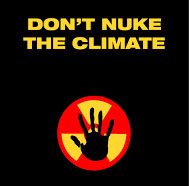
Mads Flarup Christensen, 19 June 2023, https://www.greenpeace.org/international/story/60291/a-heating-world-cant-afford-a-cold-war/
Bombing a home to pieces is not the path to a peaceful or green world. Yet right now, there are 3844 nuclear warheads deployed worldwide with missiles and aircraft. That’s ten nuclear warheads for every day of the year. Two thousand of these are ready for immediate launch and if that weren’t enough, an additional ten thousand are stacked high in military stockpiles waiting to be used. Most of today’s modern warheads are at least five times more powerful than those dropped on Hiroshima and Nagasaki. My home town of Copenhagen is well within range of many of these missiles, like most other places. Casualties would be staggering.
Missiles of particular note and concern stem from Russia, which has started deploying tactical nuclear warheads a step closer to Europe and into Belarus, its close military ally ruled by “Europe’s last dictator”. This is especially alarming as it is the first time since the fall of the Soviet Union in 1991 for such weapons to be moved outside of Russia. This has led to the UN Disarmament chief warning that the threat of nuclear weapons use is higher than at any time since the Cold War.
Echoing this dismay is the Stockholm International Peace Research Institute (SIPRI). Releasing its annual assessment of the state of international security a few days ago, the independent institute stated “We are drifting into one of the most dangerous periods in human history”. Their research shows that the world’s nine nuclear armed states – the US, Russia, the UK, France, China, India, Pakistan, the Democratic People’s Republic of Korea (North Korea) and Israel – are continuing to grow and modernize their arsenals. According to the International Campaign to Abolish Nuclear Weapons (ICAN), the nuclear nine spent $157,664 per minute on nuclear weapons in 2022. That’s a total of $82.9 billion. Overall, all military expenditure saw a big increase worldwide, reaching a new high of $2240 billion. This is more than twenty times the annual financial goal agreed at the 2009 Copenhagen UN climate talks for adaptation and mitigation, which has never been met. What drove this boost in military spending? Largely, Russia’s full scale invasion of Ukraine.
While the impacts of Russia’s war in Ukraine are deep, tragic and far-reaching, it is not the only major crisis taking place. 2022 saw the sharpest rise in the number of people forcibly displaced due to social and climate crises worldwide. As of mid-2022, an estimated 1 in every 77 people – 108.4 million – had to flee their homes, more than twice as many as a decade ago. The United Nations’ refugee agency says this is the greatest number of forcibly displaced people ever recorded. Many of those people are in or from Ukraine, Syria, Afghanistan and Sudan. Yet conflict is not the only cause, as climate disasters led to 32.6 million internal displacements last year.
In the face of so much suffering and injustice, as usual there are those who stand to profit at any cost. Arms sales have gone up by 50% leaving manufacturers with blossoming balance sheets. But they are not the only vultures. Big Oil continues to make record war profits, the latest figures being to the tune of more than $200 billion. Added to this brutal bounty, and despite their promises and pledges to transition to renewable energy, governments are doubling spending on fossil fuel subsidies and approving new oil and gas projects. And, as exposed by Greenpeace’s Unearthed and Lighthouse Reports, on the back of a global food crisis that’s pushing millions more people into hunger, the world’s top ten hedge funds made an estimated $1.9bn profit from the food price spike triggered by Russia’s invasion of Ukraine.
Global solutions to borderless problems abound but too many political and business leaders are pushing for dirty profits and hateful division over peace, prosperity and frankly, the planet’s future. We are at a critical juncture where the focus should be on strengthening multilateralism for peace and climate, rather than promoting false solutions and profit mongering. The increase in nuclear weapons does not make our world safer and cannot address today’s challenges, quite the contrary. The Treaty on Prohibition of Nuclear Weapons made history by declaring nuclear weapons illegal under international law, but nuclear armed states have not only failed to ratify it, they are deterring other countries from doing so.
Instead of this race to spend big on destruction, more time and resources could and should go on addressing the root causes of our interconnected environmental and social crises. Climate change is transforming our understanding of security, and beefing up arsenals is a folly against the reality of increasing economic disruption, flooding, disease, famine, drought and crop-failure, migration and intensified competition for food, water and energy in regions where resources are already hugely stretched. The smarter approach would be for the current system’s power brokers to focus on the root causes of today’s discontent alongside diplomacy and sustainable development, instead of cosying up to warmongers and disaster capitalists.
Take action and support the Treaty on Prohibition of Nuclear Weapons here.
1 This Month



26 September – International Day for the Total Elimination of Nuclear Weapons


PLEASE OPPOSE HR 8255 AND S.3639 – bills would accelerate satellite deployment, with no environmental review or safeguards – https://ncstd5li.quorum.us/campaign/169331/
To see nuclear-related stories in greater depth and intensity – go to https://nuclearinformation.wordpress.com
-
Archives
- September 2026 (219)
- August 2026 (330)
- July 2026 (355)
- June 2026 (287)
- May 2026 (306)
- April 2026 (356)
- March 2026 (251)
- February 2026 (267)
- January 2026 (308)
- December 2025 (358)
- November 2025 (359)
- October 2025 (375)
-
Categories
- 1
- 1 NUCLEAR ISSUES
- business and costs
- climate change
- culture and arts
- ENERGY
- environment
- health
- history
- indigenous issues
- Legal
- marketing of nuclear
- media
- opposition to nuclear
- PERSONAL STORIES
- politics
- politics international
- Religion and ethics
- safety
- secrets,lies and civil liberties
- spinbuster
- technology
- Uranium
- wastes
- weapons and war
- Women
- 2 WORLD
- ACTION
- AFRICA
- Atrocities
- AUSTRALIA
- Christina's notes
- Christina's themes
- culture and arts
- Events
- Fuk 2022
- Fuk 2023
- Fukushima 2017
- Fukushima 2018
- fukushima 2019
- Fukushima 2020
- Fukushima 2021
- general
- global warming
- Humour (God we need it)
- Nuclear
- RARE EARTHS
- Reference
- resources – print
- Resources -audiovicual
- Weekly Newsletter
- World
- World Nuclear
- YouTube
-
RSS
Entries RSS
Comments RSS
 nuclear-news