Doomsday Greenland glacier on the brink as scientist sounds alarm.
Scientists have issued a dire warning as the Greenland ice sheet, one of
the largest in the world, is far more vulnerable than previously thought.
The enormous body of ice has been critical to global sea level rise and
climate change, and new research suggests that it could be in greater
danger than previously believed.
The climate crisis, triggered by human
activity like burning fossil fuels, has resulted in average global
temperatures rising to dangerous levels, and is beginning to cause, or
aggravate major natural disasters around the world. Scientists now warn
that the rising air temperatures has amplified the effects of melting
caused by the ocean warming, which has led to greater loss of ice from the
Greenland ice sheet.
Express 16th Oct 2022
Preparing for COP27 Climate Summit – an urgent shake-up of international finance system is needed
COP26 President Alok Sharma will today (Friday 14 October, 2022) deliver a
major keynote address at the Wilson Center think-tank in Washington, D.C.,
outlining key climate finance priorities ahead of COP27 next month. Mr
Sharma is expected to address how the international system – including
multilateral development banks, businesses, central banks, finance
ministries and regulators – must reform to support faster climate action in
line with the Paris Agreement and the Glasgow Climate Pact, which was
agreed by nearly 200 countries at COP26 last year.
Cabinet Office 13th Oct 2022
Don’t nuke the future

even the White House Environmental Justice Advisory Committee (WHEJAC) have declared nuclear power to be a false solution to climate change.

Regrettably. powerful nuclear lobbies, the Biden Administration, and nuclear supporters in Congress have ramrodded legislation (the 2021 IFA; the 2022 IRA) through Congress worth as much as $70+ billion dollars to bail out this false climate “solution”.
Time to focus on real climate solutions
Don’t nuke the future — Beyond Nuclear International https://beyondnuclearinternational.org/2022/10/02/dont-nuke-the-future/ By David Kraft, NEIS, 2 Oct 22,
As we strike for climate, we must strike nuclear power from our energy plans
The Fridays for the Future Climate Strike on September 23 called out tens of thousands of people worldwide – over 300 in downtown Chicago — to protest the inadequate governmental response to the Climate Code Red, and identify the many corporate criminals who are responsible for the bulk of the crisis.
While it is necessary to identify and hold accountable those who are the source of the problem, if the Planet is to survive the predicted catastrophic temperature rise and resulting environmental impacts, it is equally important to identify real and viable solutions to the crisis, given the limited amount of time left to act.
On that note it cannot be stressed more emphatically that nuclear power is not a viable climate solution.
Why is this the case? With eight years left before the IPCC’s 2030 deadline to literally reinvent and implement a climate friendly energy infrastructure, nuclear power serves as a drag and barrier to reaching that target. It is too costly; to slow to build out to the levels needed; displaces less atmospheric carbon per dollar spent than cheaper and quicker alternatives; and not only fails to solve its current list of unsolved problems (for example, nuclear waste disposal), but adds to this list the threat of increased nuclear proliferation and accidents, especially in war zones like Ukraine, and potentially elsewhere (India/Pakistan; China Taiwan; Iran/Saudi Arabia, etc.).
Worse, money spent on bailing out the economically failed nuclear power plants we have is money not available to be spent on real climate solutions we already know work: more renewable energy, more energy efficiency, improved transmission/distribution systems, and energy storage.
Who says so? Only: two former CHAIRPERSONS of the U.S. Nuclear Regulatory Commission; former public utilities chairs and utility CEOs from the states of California, New York, and Maine; energy experts and scientists like Amory Lovins and Mark Jacobson of Stanford University, and Dr. Andy Stirling of University of Sussex.
Cost analysts at Lazards demonstrate that nuclear (both the present old generation, and the proposed “next generation” of so-called small modular nuclear reactors) is too expensive compared to renewables and other alternatives; while those at Moody’s point out that reactors will be at severe risk of operating safely in a climate disrupted world without extraordinary added expense to enhance safety – again, money that won’t be available for real alternatives.
Environmental justice activists loudly label nuclear power as a false climate solution. Statements by the Climate Justice Alliance and Indigenous Environmental Network (IEN), and even the White House Environmental Justice Advisory Committee (WHEJAC) have declared nuclear power to be a false solution to climate change. Scores if not hundreds of environmental organizations nationwide share the same sentiment.
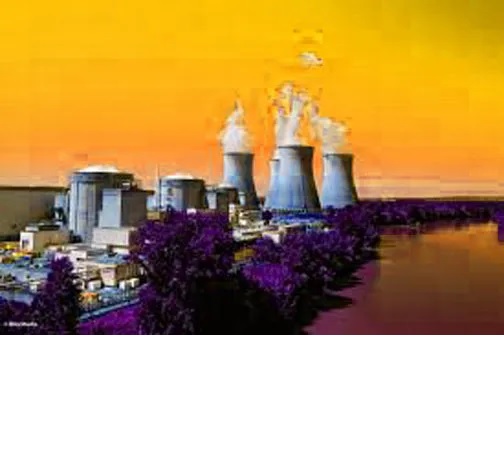
Who else? Mother Nature herself. The heat wave experienced in France this year (and in previous years) shuttered 32 of 54 French reactors due to lack of river water to cool them and make steam – precisely when they were needed most. The laws of physics state that reactors will also produce less electricity the warmer the water they take in to make steam. And climate induced swarms of jellyfish, mayflies and other creatures have led to reactor shutdowns on multiple occasions. These will only become more frequent with the worsening climate disruption. These incidents have led former Union of Concerned Scientists staff scientist and NRC consultant David Lochbaum to sardonically ask, “And what will save nuclear power from climate change?
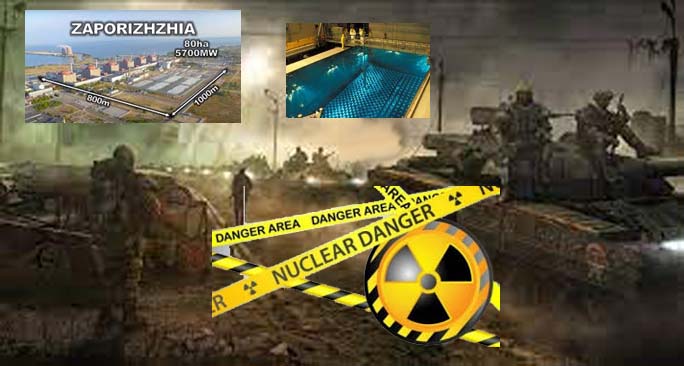
Finally, the war in Ukraine has forced to world to examine whether nuclear power even belongs on a planet where war seems omnipresent. Nuclear power plants are now targets in war. Do not think this will be the end of it. The war and what has happened at the Zaporizhzhia nuclear plant in Ukraine now forces the nuclear industry, military planners and governments of the world to face what they have long avoided and refused to discuss: nuclear power plants are gigantic, pre-positioned radiation dispersion devices. The thought of sprinkling literally thousands of so-called “small modular nuclear reactors” (SMNRs) worldwide like fairy dust — without containment buildings and with reduced emergency planning/response zones and plans, as nuclear proponents eager to market their new techno-toys currently suggest — almost seems to be the quintessential confirmation of Einstein’s admonition that insanity is doing the same thing over and over, expecting different results.
Regrettably. powerful nuclear lobbies, the Biden Administration, and nuclear supporters in Congress have ramrodded legislation (the 2021 IFA; the 2022 IRA) through Congress worth as much as $70+ billion dollars to bail out this false climate “solution.” This is one time when trying to jam a square peg down a round hole will not work. You can’t build an energy future by bailing out the past.
Today’s demonstrations make two very important points: we are out of time; and we must declare a climate crisis – and act like it is a crisis, to paraphrase climate activist Greta Thunburg. We do not have the time or money for “all of the above”, business as usual false solutions like those proposed by Sen. Joe Manchin and Sen. Chuck Schumer. We must act now to implement real energy solutions.
Nuclear power is simply a false solution to the climate crisis. Anyone who says otherwise is as much a “denier” as those who still falsely claim that climate change does not exist.
This article also appeared as a September 23, 2022 press release from Nuclear Energy Information Service, a non-profit organization committed to ending nuclear power and advocating for sustainable ecologically sound and socially just energy solutions.
The world in denial about the climate crisis
Climate breakdown is far more intense in 2022 than even many scientists
expected, yet the world still isn’t treating this like a crisis. I
underestimated the depth and intransigence of society’s collective
climate denial. Despite climate breakdown being far more intense by 2022
than I thought it would be – it all feels like a decade or two ahead of
schedule, somehow – the world still isn’t treating global heating like
the emergency it is.
To understand what an emergency we are now in, the
scale and variety of the climate damage we’ve already incurred, you only
need to look at a few of the most recent disasters. Hurricane Ian has just
pummeled Cuba and Florida. The full extent of the disaster will only be
revealed in the coming days and weeks, although first looks are shocking.
But we do know with certainty that Ian was supercharged by global heating
through several well-understood fundamental physics pathways.
Or consider the record extreme heat, fires, and drought that have hammered arid
subtropical regions such as California, Spain, China and elsewhere this
summer.
The planet has heated by about 1.3C on average since fossil fuel
burning began in earnest 150 years ago, and is now increasing by 0.1C every
five years. These mean values roughly double over the planet’s land
surfaces. That extra heat also supercharges heatwaves. In addition, global
heat is expanding the Hadley cell circulation and moving subtropical storms
poleward, causing a permanent increase in subtropical aridification.
All of this tends to dry out soils, kill trees and worsen wildfires. Or consider
the biblical flooding in Pakistan from a few weeks ago. Or the “doomsday
glacier” in Antarctica which promises “big changes over small
timescales”. Or record melt of the Greenland ice sheet. Or the crazy and
deadly disintegration of glaciers in Europe. In short, it has been a summer
of climate insanity.
But even so, this will be, on average, the coolest
summer with the least climate chaos for the rest of your life. That is just
the nature of trends. It should be terrifying.
Guardian 1st Oct 2022
https://www.theguardian.com/commentisfree/2022/oct/01/climate-emergency-hurricane-ian-crisis
Climate pragmatism or Faustian bargain? — Beyond Nuclear International

A (rotten) compromise
The Inflation Reduction Act, with its hodgepodge of climate measures, is what remains of progressive Democrats’ multi-trillion dollar Green New Deal agenda of 2019 and the $2 billion Build-Back-Better framework legislation that President Biden pushed last fall……..……………………………
the enacted climate action bill is technology agnostic, and includes, for example, tax support for nuclear plant lifetime extensions. Rhodium Group estimates that without the bill’s funding commitments, about one-third of U.S. nuclear plants would have to shut down by 2030 due to cost. Hundreds of millions of dollars also support nuclear fusion research………….
New US laws will prop up old nukes
Climate pragmatism or Faustian bargain? — Beyond Nuclear International What the new US climate law does—and where it fails
By Liane Schalatek, Heinrich Böll Stiftung 2 Oct 22,
Analysis: U.S. climate policy is currently putting observers through a roller coaster of emotions: just a few weeks ago, the Supreme Court limited the authority of the U.S. Environmental Protection Agency to issue far-reaching climate regulations. Now, after decades of unsuccessful legislative attempts, the U.S. Congress has passed the most comprehensive American climate legislation ever by a razor-thin majority.
The $369 billion package is now law with President Biden’s recent signature. The legislation is intended to lead to drastic emissions reductions over the next decade and transform the U.S. energy sector and the U.S. economy. What some see as an expression of goal-oriented climate pragmatism, in which the perfect must not become the enemy of the good, others see as a Faustian bargain that tightens rather than loosens the fossil fuel industry’s stranglehold on the U.S. economy. So what exactly is in the package?
The sweeping climate package, embedded alongside health care and tax reforms in the surprise passage of the more than 700-page Inflation Reduction Act, represents the largest U.S. funding boost to date to reduce greenhouse gases and promote climate-friendly “green” technologies. It is roughly four times what was authorized for climate action under President Biden’s Democratic predecessor Obama in 2009 in what was then the American Recovery and Reinvestment Act. This spending is in addition to the more than $200 billion in clean energy and climate action investments that a majority Democratic Congress already approved last year in a massive infrastructure funding bill.
Passage of the bill is a much-needed win for the Biden administration, whose approval ratings are extremely low given the impact of inflation on American households. It comes just months before the November midterm elections, in which Republicans are expected to win.
Carrots instead of sticks: financial incentives instead of bans
The law includes neither a carbon price nor a CO2 cap under a federal emissions trading system. It also fails to radically address the main cause of climate change, namely the extraction and burning of fossil fuels. Thus, the measure clearly relies on carrots rather than sticks, in part because previous attempts to push a climate bill through Congress that relies on carbon taxation have repeatedly failed over the past several decades. Then-Vice President Al Gore’s push in 1993 failed to gain traction, as did the Markey-Waxman emissions trading plan of 2010.
So instead of punitive measures and restrictions, the package prioritizes financial support as an incentive and emphasizes how much the investments will support the American economy, create jobs and benefit consumers. This also secured the almost euphoric support of the U.S. business sector for the proposed legislation, with letters of support from more than 1,000 companies, investors and trade groups, including major oil companies, as well as labor unions. The Biden administration has purposefully pursued this approach, which justifies climate protection with green jobs and economic growth, since the beginning of his term in office as part of his reconstruction strategy to Build Back Better after the pandemic-related economic crisis.
Accordingly, the White House stressed that the Inflation Reduction Act “secures America’s position as a world leader in domestic manufacturing and clean energy supply chains,” creates and sustains “good-paying union jobs in construction and manufacturing, including in rural communities,” and lowers annual energy costs for Americans by an average of up to $1840, according to expert estimates.
Expansion of the US markets for renewable energies and e-mobility…………………………………
A (rotten) compromise
The Inflation Reduction Act, with its hodgepodge of climate measures, is what remains of progressive Democrats’ multi-trillion dollar Green New Deal agenda of 2019 and the $2 billion Build-Back-Better framework legislation that President Biden pushed last fall…………………………………..
The majority of Democrats and climate experts celebrates the package as a historic success of pragmatic climate policy, in which good legislation was not sacrificed in the name of hoping for an even better ideal—especially in the face of the expected Republican win in the midterm elections, which could block U.S. climate legislation for the rest of the decade so critical for accelerated climate action. …………………………..
Safeguarding the fossil fuel industry
The many-voiced chorus of those hailing the legislative coup drowns out the critical voices from the progressive U.S. climate movement, who castigate what they see as a rather rotten compromise and a Faustian bargain.
That’s because in order to win Manchin’s approval, numerous pledges were made that solidify the fossil fuel industry’s stranglehold on the U.S. economy instead of reducing its influence. Chief among these is the provision requiring the U.S. Department of the Interior to agree to millions of acres of new oil and gas development concessions over the next decade as a precondition to leases for offshore wind and solar and wind farms on federally owned land, including in the Gulf of Mexico and Alaska’s Cook Inlet. Each year, for example, an area of ocean the size of the U.S. state of Wyoming, about 60 million acres, could be opened to offshore drilling. While such extraction concessions need not necessarily lead to expanded fossil fuel production, their forced linkage to permits for new renewable energy projects could slow such clean investments…………………………………………..
the enacted climate action bill is technology agnostic, and includes, for example, tax support for nuclear plant lifetime extensions. Rhodium Group estimates that without the bill’s funding commitments, about one-third of U.S. nuclear plants would have to shut down by 2030 due to cost. Hundreds of millions of dollars also support nuclear fusion research……………………………………………………..
even in the best-case scenario, emissions reductions are still well below what would be needed to meet the climate pledge President Biden has made to the global community, which calls for the U.S. to reduce emissions by 50 to 52 percent from 2005 levels by 2030………………………………..
Climate justice deficits
Many U.S. climate activists view the passage of the legislative package with mixed feelings , if not outright anger and disappointment, including in light of critical equity deficiencies in its design and foreseeable implementation. After all, it was their political pressure on Democrats, their mobilization of votes, and their implementation proposals over recent years, which made the Inflation Reduction Act even possible.
………………………………………………………………………. Many progressive climate groups in the U.S. see the passage of the climate package, despite or more precisely because of all its flaws, as an incentive to ramp up their climate activism in the run-up to the midterm elections and to keep up the pressure on Democrats to implement more progressive legislative goals if more progressive climate activists can be elected to Congress. They have not yet given up hope that President Biden might yet declare a national climate emergency, as they have requested, which would allow him, via presidential decrees, to, for example, halt U.S. crude oil exports, limit private investment in fossil fuel projects abroad, or spend defense budget money on renewable energy. And they are also counting on young climate activists in particular to become more involved at the local level in the coming years in order to politically implement their vision of far more comprehensive climate-just social and environmental protection rules in cities and municipalities in all U.S. states.
Nuclear power classed as “amber”, not “green”. Is it officially accepted as Environmental, Social, and corporate Governance (ESG) ?

the Commission applies a number of screening and disclosure conditions to nuclear’s taxonomy inclusion. For instance, there are screens based on scientific advice such as requiring disposal facilities for low-level radioactive waste to already be operational, member states having a plan for high-level waste disposal by 2050 and a ban on exporting radioactive waste to developing countries for disposal.
Does the EU taxonomy vote mean nuclear is officially ESG? ETF Stream, By Jamie Gordon, 26 Sep 2022,
The implementation of the Delegated Act will test both the EU’s credibility and investors’ appetite to adhere to prescriptive ESG frameworks
The European Parliament took the contentious step in July of voting to include nuclear energy within its taxonomy of sustainable activities, however, it remains to be seen whether other ESG frameworks will follow suit and if any naysayer investors will be swayed by the regulator’s decision.
Almost three years after first being discussed, nuclear energy, along with natural gas, look set to be added to the EU’s taxonomy via the Complementary Climate Delegated Act from 1 January 2023, earmarking them as sustainable investments for the time being.
The road to this verdict was not only meandering but full of obstacles, with Kenneth Lamont, senior research analyst at Morningstar, previously describing nuclear as being “stony on a political level” for investors and policymakers.
It began with the European Commission’s Technical Expert Group publishing the Taxonomy Technical Report in March 2020, which notably snubbed nuclear from its list of green activities.
A year later, leaders of seven EU member states wrote a letter calling on the European Commission to accommodate all paths to climate neutrality while the Commission’s Joint Research Centre argued nuclear should be eligible for ESG investment.
Even though the Commission announced a month later it would bootstrap nuclear and gas to its taxonomy via a Delegated Act, in October, a ‘Nuclear Alliance’ of 15 European Ministers called for the energy source to be included in the main body of the taxonomy by the end of 2021.
Ignoring these calls, the Commission published a draft of the Delegated Act on 31 December, which was soon met by fierce opposition as Austria and Luxembourg threatened to bring a lawsuit before the European Court of Justice.
Despite members of the Environment and Economic Affairs committees later voting against the proposed taxonomy changes in June, the defeat of the motion to block the Delegated Act in the European Parliament in July means nuclear will soon make its delayed entry into the taxonomy.
Conditional inclusion
While the move is significant for challenging the nuclear exclusions applied to many ESG frameworks and products, it bears remembering the Commission’s Platform on Sustainable Finance views nuclear as an ‘amber’ rather than ‘green’ activity – and its inclusion in the taxonomy is both conditional and time-limited………………………………..
Despite nuclear’s seemingly low-carbon credentials, the European countries most active in building new plants – Ukraine, the UK and France – currently only have a combined five plants under construction versus 17 for China alone.
Similarly, 27 out of the 31 reactors that have been under construction since 2017 are of Russian or Chinese design, according to analysis by SocGen.
…………………………….. there are several compelling arguments against nuclear being in the taxonomy such as what to do with thousands of tonnes of radioactive waste, concerns around directing capital away from renewables and the worthwhile geopolitical point that in 2020, 20.2% of the EU’s uranium supply came from Russia and 19.2% from its ally, Kazakhstan, according to Eurostat.
It is also worth noting the size of political opposition to nuclear as a ‘transition energy’, with 278 of 639 MEPs opposing the Delegated Act in July’s motion.
Considering these points, the Commission applies a number of screening and disclosure conditions to nuclear’s taxonomy inclusion. For instance, there are screens based on scientific advice such as requiring disposal facilities for low-level radioactive waste to already be operational, member states having a plan for high-level waste disposal by 2050 and a ban on exporting radioactive waste to developing countries for disposal.
Also, large listed non-financial and financial companies will be required to disclose what portion of their activities are linked to the energies included in the Delegated Act.
Greater complexity across EU policy……………………………………………………………………..
The ultimate test, however, will be if taxonomy inclusion changes investor attitudes towards nuclear, given its aim is to act as a framework for guiding capital towards worthy recipients.
………………………………. Many index providers will remove nuclear power operators from their exclusion lists and will become more flexible in including utilities that generate power from nuclear facilities in their indices,” he added.
However, he warned others with their own internal rules and those fulfilling client mandates would be less likely to change their indices in fear of losing business.
FTSE Russell, for instance, continues to categorise nuclear as tier three under its Green Revenues Classification System, meaning it has some environmental benefit but this is overall net neutral or negative……………………………………
Some investors might also be put off by the fact the technical screening criteria of the Delegated Act will be reviewed every three years, which includes time limits for the contribution of nuclear and gas to climate change mitigation efforts. If the EU reverses its recent taxonomy changes in future, investors in nuclear and gas will have to rush to get rid of these exposures in order to remain aligned.
For now, ESG might like nuclear a little more than it did a year ago but EU taxonomy support only applies to certain subsectors, subject to conditions and set to be reviewed over time.
Overall, though, the Delegated Act should be understood as more an act of EU pragmatism than moral change of heart on what it means to be sustainable. Nuclear may have a role to play in net-zero efforts but will face an uphill battle to convert its detractors. https://www.etfstream.com/features/does-the-eu-taxonomy-vote-mean-nuclear-is-officially-esg/
Why future sea levels matter to Suffolk’s Sizewell nuclear plant
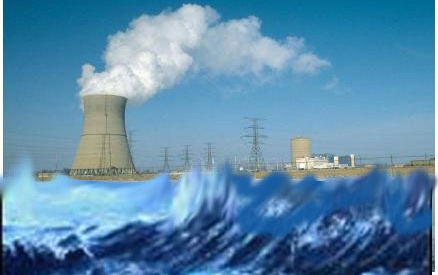
Global coastal inundation is now expected to be far worse than previously predicted
https://www.theguardian.com/news/2022/sep/16/why-future-sea-levels-matter-to-suffolks-sizewell-nuclear-plant Paul Brown, 16 Sept 22,
The caution of scientists, reinforced by accusations scaremongering from the well-funded fossil fuel lobby, has meant computer estimates of sea level rise in official forecasts have been low. Scientists mostly only counted the rise of the oceans because of expansion of warmer water then added on melting glaciers in the Alps and other temperate regions.
Originally ice caps in Greenland and Antarctica were excluded, in case increased snow fall in winter was greater than the ice melt in summer. Real time measurements of ice lost in polar regions has changed that. Coastal inundation in places such as East Anglia, Florida, and the Nile and Mekong deltas is expected to be far worse and quicker than previously predicted. Food supplies are threatened. The melting is also irreversible.
This makes Boris Johnson’s last act as prime minister to back a giant nuclear power plant on a low lying coast at Sizewell in Suffolk look a gamble. The builders, EDF, say there is no danger because the twin reactors will be built on a concrete raft seven metres above mean sea level, with a further surrounding wall to protect the nuclear island. But this concrete monolith will need to withstand sea level rise and storm surges for up to 200 years to protect future generations from its radioactive content.
France Urges Brussels To Label Nuclear-Produced Hydrogen “Green”

EurActiv , By Paul Messad, French Energy Minister Agnès Pannier-Runacher is trying to get EU Energy Commissioner Kadri Simson to include nuclear among energy sources for the production of so-called “green” hydrogen, according to a letter seen by EURACTIV France………………..
according to the French minister, the current rules leave little room for the production of green hydrogen from “low-carbon” electricity, mostly nuclear power.
Given “the absolute priority of the next decade for hydrogen, […] the only important issue is the carbon content of the hydrogen produced and not the production vector,” Pannier-Runacher wrote to the European Commissioner…………………………….
France riding solo
The pro-nuclear position of the French when it comes to green hydrogen is not entirely shared by the industry.
Jorgo Chatzimarkakis, CEO of Hydrogen Europe, which represents the interests of the industry in 25 EU countries, said the letter is proof that France is “going solo” on nuclear and putting itself in a “dangerous insular position”……… https://www.eurasiareview.com/18092022-france-urges-brussels-to-label-nuclear-produced-hydrogen-green/
Extreme hunger is soaring in the world’s climate hotspots – Oxfam
Extreme hunger is closely linked to the climate crisis, with many areas of
the world most affected by extreme weather experiencing severe food
shortages, research has shown.
The development charity Oxfam examined 10 of
the world’s worst climate hotspots, afflicted by drought, floods, severe
storms and other extreme weather, and found their rates of extreme hunger
had more than doubled in the past six years.
Within the countries studied,
48 million people are currently suffering from acute hunger, up from about
21 million people in 2016. Of these, about 18 million people are on the
brink of starvation, according to the Oxfam report published on Thursday.
Guardian 16th Sept 2022
Drying up of Europe’s great rivers – the death knell for France’s nuclear fleet?
From the Danube to the Loire, Europe’s prime rivers — lifelines for the continent’s economy — are running low after a brutal five-month drought. After years of dry weather, scientists are warning that low-water conditions could become the norm in Europe as the climate changes.
Could the Drying Up of Europe’s Great Rivers Be the New Normal Yale Environment 369 BY PAUL HOCKENOS • SEPTEMBER 6, 2022 “………………………………. “At towns up and down the Danube, drought and climate change take on an existential meaning,” explains Nick Thorpe, author of The Danube: A Journey Upriver from the Black Sea to the Black Forest. “In contrast to city dwellers, they’re having this disaster unfold before their eyes.”
…………………………. In France, the warmed waters of the Rhône and Garonne can no longer cool the systems of nuclear power plants, forcing numerous plants to shut down. And hundreds of tributaries to the larger rivers are in even worse shape: bone dry.
…………………………. In early August, France’s prime minister, Élisabeth Borne, said that France is in the midst of the “most severe drought” the country has ever experienced, which has so sapped rivers — including the Loire, the Doubs, the Dordogne, and the Garonne — that hundreds of municipalities now require that drinking water be delivered by truck………………………… https://e360.yale.edu/features/europe-rivers-drought
Super Typhoon Hinnamnor Could Slam Straight Into Nuclear Power Plant
https://www.newsweek.com/typhoon-hinnamnor-south-korea-kori-nuclear-power-plant-1739947 BY JESS THOMSON ON 9/5/22
The most powerful storm in South Korean history is due to collide with a nuclear power plant.
According to the South Korea Meteorological Administration, Super Typhoon Hinnamnor is due to hit on September 6, and may cause multiple casualties. Kori Nuclear Power Plant, which is in the oncoming path of the Category 5 storm near to industrial city Ulsan, has lowered the run rates of three of its nuclear reactors to less than 30 percent in preparation for the typhoon, according to EnergyVoice.
“We’re now entering a phase where we have to minimize casualties,” Han Sang Un, the chief forecaster at Korea Meteorological Administration, said during a briefing on September 5.
“It’s a massive typhoon with a 400-kilometer (248.5 miles) radius, which is big enough to cover Seoul to Busan. Most regions in Korea will experience intense rain and wind,” he said.
Typhoon Sarah, which hit South Korea in 1959, and Typhoon Maemi, which hit in 2003, are thought to be two of the most powerful storms in the nation’s history. Hinnamnor is forecasted to be potentially more powerful. As of September 5, the storm has wind speeds of 127 miles per hour (mph) with gusts around 155 mph, according to the U.S. Joint Typhoon Warning Center.
“Super typhoons are defined as a typhoon in the NW Pacific Ocean basin with 1-minute sustained winds of at least 130 kts (150 mph), which is equivalent to a strong Category 4 or Category 5 on the Saffir-Simpson hurricane wind scale,” Dr. Adam Lea, a senior research associate in hurricanes, typhoons and tropical cyclones for University College London’s Department of Space & Climate Physics, told Newsweek.
“The overall diameter of the storm can be hundreds of km but the very damaging winds are confined to a much smaller region surrounding the eye called the eye wall, which is a ring of thunderstorms surrounding the eye where the most extreme conditions occur. This area typically extends to 100km [around 60 miles] from the eye. Hinnamnor is one of the larger typhoons with typhoon force winds extending up to around 140km [around 85 miles] from the center.”
The Kori Nuclear Power Plant, which is in the path of the storm, may therefore be at risk if the typhoon hits it at full power.
Natural disasters of this kind are historically very bad news for power plants: the Fukushima Daiichi nuclear plant in Japan was severely damaged by a tsunami caused by a 9.0-magnitude earthquake in 2011, leading to some 150,000 people to be evacuated from the communities close to the disaster site.
According to Lea, a super typhoon hitting land at peak intensity would cause extreme to catastrophic damage to most buildings not built to resist such winds.
However, typhoon Hinnamnor has weakened considerably from its peak intensity.
“I am not knowledgeable on nuclear power plants, but the buildings are very sturdily constructed and will withstand the winds comfortably,” he said. “In advance of typhoon Maemi in 2003, five nuclear plants were shut down automatically and were ultimately unaffected.”
The typhoon is forecasted by the South Korea Meteorological Administration to hit the resort island of Jeju at about 1 a.m. local time on September 6, and southern coastal cities including Ulsan and Busan at about 7 a.m. Residents have been advised to remain indoors, and according to Bloomberg, 200 residents in coastal areas of Busan have been asked to evacuate to shelters on September 5.
Future threat to Europe’s water supplies as Switzerland’s glaciers are rapidly thawing
Switzerland’s glaciers have lost more than half their volume in less than a
hundred years, and the long hot summer this year has accelerated the thaw,
a new study shows. The glaciers support ski resorts and attract climbers
and hikers in summer, but are also essential to Europe’s water supply. Now,
communities across the Alps are worrying about their future.
BBC 1st Sept 2022
The ‘horrors of climate change’ hit Pakistan
More than 1,000 dead and 33MILLION people displaced due to Pakistan flash
floods: Terrifying torrents of water are filmed wiping village away after
monsoon. More than 1,000 deaths from widespread flooding in Pakistan amid
‘climate catastrophe’ monsoon season. Flash flooding washed away entire
villages as 33 million Pakistanis were displaced and army called to rescue.
Pakistani military chiefs released a video Sunday pleading with countries
to offer their financial support. PM Shahbaz Sharif blamed ‘the horrors of
climate change’ for dramatic scenes which saw hotel washed away.
Daily Mail 29th Aug 2022
South Asian countries facing devastating extreme weather events – seek reparation from rich countries
South Asian countries facing devastating extreme weather events are
increasingly looking to Cop27 and in turn, rich countries for more finance
– which in itself has become yet another reminder that they are not the
ones to have caused the problem in the first place but have become one of
the most vulnerable to it.
From record-breaking heatwaves and droughts to
devastating floods, millions of people in south Asia are suffering
back-to-back extreme weather events on an unprecedented scale in the last
few months. Calls for reparations from wealthier countries have only grown
even as climate crisis-induced disasters like intensified heatwaves, drying
rivers, raging wildfires and frequent storms are now impacting regions
where such phenomenon were at one time unprecedented.
Independent 29th Aug 2022
Nuclear: EDF extends the shutdown of four reactors for several weeks. (Translation)
The energy company announced on Thursday that reactors 1, 3 and 4 of the Cattenom power plant, as well as reactor 1 of Penly, will only be reconnected to the electricity network between November and January. An announcement related to the stress corrosion problem detected since last fall on several units.
By Les Echos
Posted on August 25, 2022 at 5:55 PMUpdated on August 25, 2022 at 6:04 p.m.
France will have to do without at least four nuclear reactors until the beginning of winter. This Thursday, EDF announced the extension, for several weeks, of the shutdown of units affected by the problem of stress corrosion detected for the first time in the fall of 2021.
According to the new provisional timetable published by the energy company, reactors 1 and 4 of the Cattenom power plant, in Moselle, will be reconnected to the electricity network on November 1 and 14 respectively . Reactor number 3 will resume service on December 11, while unit number 1 of the Penly power plant (Seine-Maritime) will not be reconnected until January 23……… (subscribers only) https://www.lesechos.fr/industrie-services/energie-environnement/nucleaire-edf-prolonge-pour-plusieurs-semaines-larret-de-quatre-reacteurs-1783781#utm_source=newsletter&utm_medium=email&utm_campaign=nl_lec_18h&utm_content=20220825&xtor=EPR-5020-%5B20220825
1 This Month
19 February – VIRTUAL EVENT-Decision Time: AI and Our Nuclear Arsenal
12:45 p.m. Central / 1:45 p.m. Eastern
To see nuclear-related stories in greater depth and intensity – go to https://nuclearinformation.wordpress.com
-
Archives
- February 2026 (145)
- January 2026 (308)
- December 2025 (358)
- November 2025 (359)
- October 2025 (376)
- September 2025 (258)
- August 2025 (319)
- July 2025 (230)
- June 2025 (348)
- May 2025 (261)
- April 2025 (305)
- March 2025 (319)
-
Categories
- 1
- 1 NUCLEAR ISSUES
- business and costs
- climate change
- culture and arts
- ENERGY
- environment
- health
- history
- indigenous issues
- Legal
- marketing of nuclear
- media
- opposition to nuclear
- PERSONAL STORIES
- politics
- politics international
- Religion and ethics
- safety
- secrets,lies and civil liberties
- spinbuster
- technology
- Uranium
- wastes
- weapons and war
- Women
- 2 WORLD
- ACTION
- AFRICA
- Atrocities
- AUSTRALIA
- Christina's notes
- Christina's themes
- culture and arts
- Events
- Fuk 2022
- Fuk 2023
- Fukushima 2017
- Fukushima 2018
- fukushima 2019
- Fukushima 2020
- Fukushima 2021
- general
- global warming
- Humour (God we need it)
- Nuclear
- RARE EARTHS
- Reference
- resources – print
- Resources -audiovicual
- Weekly Newsletter
- World
- World Nuclear
- YouTube
-
RSS
Entries RSS
Comments RSS
 nuclear-news