More than 1,500 arrested at Extinction Rebellion protest in The Hague
More than 1,500 climate protesters have been arrested by police in the
Netherlands after blocking a major motorway in The Hague. During the
protest, organised by Extinction Rebellion, activists walked onto the A12
highway demanding an end to fossil fuel subsidies. Police fired water
cannon to try to disperse the crowds – but many came prepared in raincoats
and swimsuits. Most arrested protesters were released, but police said 40
would be prosecuted. Among those at Saturday’s protest were several Dutch
celebrities, including actress Carice van Houten, known for playing
Melisandre in TV series Game of Thrones. She was arrested but later allowed
to return home, Dutch news agency ANP said. Extinction Rebellion accused
police of using water cannon just 15 minutes after the start of the
blockade – but police said they had asked the activists to leave and gave
them a chance to do so before using the water cannon.
BBC 27th May 2023
https://www.bbc.co.uk/news/world-europe-65735289
Guardian 27th May 2023
Slowing ocean current caused by melting Antarctic ice could have drastic climate impact, study says
The Southern Ocean overturning circulation has ebbed 30% since the 90s, CSIRO scientist claims, leading to higher sea levels and changing weather
Donna Lu, Guardian, 26 May 23
A major global deep ocean current has slowed down by approximately 30% since the 1990s as a result of melting Antarctic ice, which could have critical consequences for Earth’s climate patterns and sea levels, new research suggests.
Known as the Southern Ocean overturning circulation, the global circulation system plays a key role in influencing the Earth’s climate, including rainfall and warming patterns. It also determines how much heat and carbon dioxide the oceans store.
Scientists warn that its slowdown could have drastic impacts, including increasing sea levels, altering weather patterns and depriving marine ecosystems of vital nutrients.
“Changes in the overturning circulation are a big deal,” said the study’s co-author, Dr Steve Rintoul, an oceanographer and expert on the Southern Ocean at the Australian government’s Commonwealth Scientific and Industrial Research Organisation (CSIRO)
It’s something that is a concern because it touches on so many aspects of the Earth, including climate, sea level, and marine life.”
The finding comes months after modelling, which Rintoul was involved in, that predicted a 40% slowdown in the circulation by 2050.
“The model projections of rapid change in the deep ocean circulation in response to melting of Antarctic ice might, if anything, have been conservative,” Rintoul said. “We’re seeing changes have already happened in the ocean that were not projected to happen until a few decades from now.”
………………………………………….. The study looked specifically at changes in overturning circulation in the Australian Antarctic basin, but the researchers believe a “circumpolar slowdown” is occurring.
………………………..
“We expect in the longer term that while there will be ups and downs related to sea ice formation, the overall trend is that Antarctica is losing more ice, is melting more, and that will gradually slow down this overturning circulation.
“Unless we act soon we will commit ourselves to changes that we’d really rather avoid,” he said. “We need to act to reduce emissions and we need to do everything we can as fast as we can.”
The study, whose first author is Kathryn Gunn of the CSIRO and the University of Southampton, was published in the journal Nature Climate Change. https://www.theguardian.com/science/2023/may/25/slowing-ocean-current-caused-by-melting-antarctic-ice-could-have-drastic-climate-impact-study-says
Hinkley Point C – Why nuclear power accelerates carbon emissions

https://bhesco.co.uk/blog/hinkley-point-c-why-nuclear-power-accelerates-carbon-emissions Kayla Ente on 21/04/2023 These carbon emissions have already been absorbed in the atmosphere, long before the plant starts producing electricity. Renewable sources of energy (like the three windfarms in Kent powering 400,000 homes) are cheaper, come with much less associated environmental destruction, and have a carbon footprint a fraction of the carbon emissions produced by the concrete footprint of nuclear power.
by Kayla Ente on 21/04/2023
In August 2018, Prof Andy Stirling and Dr Phil Johnstone published their working paper exposing the link between the fissile material produced by nuclear power plants and its importance for military purposes, where depleted uranium is used in weaponry and in submarines1.
The British government now openly admits that the taxpayer subsidises nuclear used for military purposes in our energy bills2. This is the motivation behind the ‘Regulated Asset Base’ (RAB) funding model proposed by the Government to finance new nuclear power. We will all pay for the construction of new nuclear power plants through higher energy bills.
Nuclear power is expensive, toxic and there is no solution for its long term storage. It is powerfully destructive, not only for its use in weaponry, but also leads to an increase in levels of radioactive materials in the air, as has been measured at the Atomic Weapons Establishment in Aldermaston3.
As cancer rates in the UK rise to unprecedented heights, access to health care declines, and more people and businesses cannot afford to pay their energy bills, one must question the wisdom of UK energy policy and how it is manipulated to our detriment.
Hinkley Point C will produce 25TWh of electricity per year. As the electricity is produced whether there is demand for it or not, because a nuclear power plant cannot be switched off spontaneously, the present system of financing means that the taxpayer will fund the wastage that occurs on the grid when nuclear powered electricity generated is not used.
Historically, approximately 64% of energy produced by the centralised energy generation and transmission system has been wasted4. This happens in the production of electricity – the efficiency of the plants themselves, the heat generated that is wasted and the transmission and distribution of electricity across the country. Therefore, the projected carbon emissions savings are overstated because most of the electricity produced is not used, or worse, clean renewable power is switched off to manage oversupply of electricity on the grid.
Construction on the 3.26GW Hinkley Point C nuclear power plant in Somerset began in 2016. Unprecedented feats of engineering have been achieved during the process, of which engineers are rightly proud.
In total, 74,600 tonnes of concrete has been poured to construct its base, the four intake heads and two outfall heads. 3km of cement tunnels have been constructed to expel the cooling water for the plant into the Bristol Channel.
These carbon emissions have already been absorbed in the atmosphere, long before the plant starts producing electricity. Renewable sources of energy (like the three windfarms in Kent powering 400,000 homes) are cheaper, come with much less associated environmental destruction, and have a carbon footprint a fraction of the carbon emissions produced by the concrete footprint of nuclear power.
The newest nuclear renaissance, “Great British Nuclear” is part of the government’s efforts to include nuclear power in the UK green taxonomy, i.e. that nuclear power is considered to be “environmentally sustainable”. Many see this as part of the government’s attempts to defer important investment away from wind and solar power developments (combined with investment in grid scale energy storage to ensure reliability). Because wind and solar power are the cheapest source of electricity, they embed affordability into our self sufficient energy future. They also bring higher gross value added to government accounts, as opposed to investments in carbon capture and storage which only add to the cost of generation, just to continue burning fossil fuels.
By focusing efforts on investing in partnerships with other NATO aligned countries (the USA spends $840 billion every year on its “defence” programme) in the spirit of Brexit, this government irresponsibly spends taxpayer’s money on programmes that maintain business as usual to burn fossil fuels and promote nuclear power instead of protecting its people during times of unprecedented suffering in social care, health care and energy security.
BHESCo have been saying for years that new nuclear power is a bad deal for the UK taxpayer and for the planet. Our Government should be directing its investment towards a national energy efficiency improvement campaign while encouraging the development of clean, renewable energy generation and energy storage.
A clean energy transition means moving away from nuclear power

Because we’ve stalled for so long in getting off coal, oil and gas for electricity generation, we need solutions that can be scaled up quickly and affordably.
the Intergovernmental Panel on Climate Change’s Sixth Assessment report shows that nuclear power delivers only 10 per cent of the results of wind and solar at far higher costs.
by David SuzukiMay 24, 2023 https://rabble.ca/environment/a-clean-energy-transition-means-moving-away-from-nuclear-power/
As the impacts of climate disruption become more frequent and intense, we need a range of solutions. One that’s getting a lot of attention is nuclear power.
Industry is pushing hard for it, especially “small modular reactors,” and the federal government has offered support and tax incentives. After 30 years without building any new reactors, Ontario is also jumping onto the nuclear bandwagon again. How should we react?
Along with its many known problems, as an inflexible, costly baseload power source, nuclear is becoming as outdated as fossil fuels. Small modular reactors will create even more waste and cost more — and slow the necessary transition to renewable energy.
Many disadvantages of nuclear are well known. It can contribute to weapons proliferation. Radioactive waste remains highly toxic for a long time and must be carefully and permanently stored or disposed of. And while serious accidents are rare, they can be devastating and difficult to deal with, as the Chernobyl and Fukushima disasters demonstrated.
Uranium to fuel nuclear also raises problems, including high rates of lung cancer in miners and emissions from mining, transport and refining. Add that to the water vapour and heat it releases, and nuclear power produces “on average 23 times the emissions per unit electricity generated” as onshore wind, according to Stanford University professor Mark Jacobson.
But the biggest issues are that nuclear power is expensive — at least five times more than wind and solar — and takes a long time to plan and build. Small modular reactors are likely to be even more expensive, especially considering they’ll produce far less electricity than larger plants. And because the various models are still at the prototype stage, they won’t be available soon.
Because we’ve stalled for so long in getting off coal, oil and gas for electricity generation, we need solutions that can be scaled up quickly and affordably.
The last nuclear plant built in Ontario, Darlington, ended up costing $14.4 billion, almost four times the initial estimate. It took from 1981 to 1993 to construct (and years before that to plan) and is now being refurbished at an estimated cost of close to $13 billion. In 1998, Ontario Hydro faced the equivalent of bankruptcy, in part because of Darlington.
Ontario’s experience isn’t unique. A Boston University study of more than 400 large-scale electricity projects around the world over the past 80 years found “on average, nuclear plants cost more than double their original budgets and took 64 per cent longer to build than projected,” the Toronto Star reports. “Wind and solar, by contrast, had average cost overruns of 7.7 per cent and 1.3 per cent, respectively.”
China has been building more nuclear power plants than any other country — 50 over the past 20 years. But in half that time, it has added 13 times more wind and solar capacity.
As renewable energy, energy efficiency and storage technologies continue to rapidly improve and come down in price, costs for nuclear are rising. As we recently noted, the Intergovernmental Panel on Climate Change’s Sixth Assessment report shows that nuclear power delivers only 10 per cent of the results of wind and solar at far higher costs. In the time it takes to plan and build nuclear, including small modular reactors, and for much less money, we could be putting far more wind, solar and geothermal online, and developing and increasing storage capacity, grid flexibility and energy efficiency.
The amount it will cost to build out sufficient nuclear power — some of which must come in the form of taxpayer subsidies — could be better put to more quickly improving energy efficiency and developing renewable energy such as wind, solar and geothermal.
Putting money and resources into nuclear appears to be an attempt to stall renewable electricity uptake and grid modernization. Small modular reactors are likely to cost even more than large plants for the electricity they generate. And, because more will be required, they pose increased safety issues.
David Suzuki Foundation research shows how Canada could get 100 per cent reliable, affordable, emissions-free electricity by 2035 — without resorting to expensive and potentially dangerous (and, in the case of small modular reactors, untested) technologies like nuclear.
Global heating is predicted to trigger more nuclear outages in France every year.

extreme heat and droughts amid
climate change could impact nuclear plants, which use water to cool down.
EDF expects to lose 1.5% of its nuclear output, or about 5 TWh, annually
by 2050 due to the impact of global warming based on an average production
of 400 TWh, an executive said on Tuesday.
This compares with a current
average loss of nuclear power output caused by global warming of 0.3%, or
1.2 TWh, Cecile Laugier, head of environment at EDF’s nuclear branch,
told reporters. This echoes a report released in March by France’s Court
of Auditors, which said global warming could trigger three to four times
more outages than today. Increased risk of extreme heat and droughts amid
climate change could impact nuclear plants, which use water to cool down.
Montel 16th May 2023
https://www.montelnews.com/news/1499729/heat-to-cause-15-yearly-nuclear-output-loss-by-2050–edf
Siting new nuclear power stations — an unsustainable geography
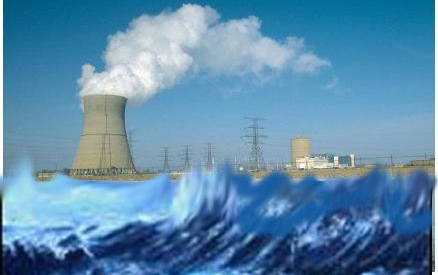
https://www.nuclearpolicy.info/news/siting-new-nuclear-power-stations-an-unsustainable-geography/ 16 May 23 ‘The government’s ambition to achieve energy and environmental security by ramping up the development of nuclear power stations faces a significant obstacle — the lack of sites on which to build them.
As Andrew Blowers points out in the latest issue of Town & Country Planning, the Journal of the Town and Country Planning Association, the need for suitable and acceptable sites on which to deploy a variety of new nuclear power stations, ranging from big GW (gigawatt) behemoths to Small (or not so small) Modular Reactors (SMRs), is a pressing, although much neglected issue.
There is a presumption in government and the nuclear industry that sites in suitable locations will be available and ready for development. But, in reality there are only a handful of sites, eight to be precise, deemed ‘potentially suitable’ in the government’s outdated and unrevised National Policy Statement of 2011. And only one of these, Hinkley Point, has secured all the necessary planning and environmental permits and regulatory licences necessary for its go-ahead.
In truth, the geography of nuclear power has barely changed, frozen in aspic since it was first established over half a century ago. There is an increasing disjunction between the ring of coastal sites on which the early generations of big power stations were built and the present-day absence of sites that are suitable for the varied fleet of nuclear stations in prospect in an era of climate change.
Without a new siting strategy. there is a severe danger that new nuclear power stations with attendant radioactive waste stores will be located in places that are wholly unsuitable and unsustainable during the century or more that dangerous radioactivity will remain on sites.
n the article, Andrew Blowers, Emeritus Professor of Social Sciences at the Open University and former member of the Committee on Radioactive Waste Management (CoRWM), traces the history of nuclear siting in Britain from its origins shrouded in military secrecy in obscure locations, notably Sellafield in West Cumbria and Dounreay in the far north of Scotland. The age of civil nuclear energy was ushered in by the White Paper A Programme of Nuclear Power in 1955. The first generation of Magnox stations was constructed during the 1950s and 1960s at coastal sites providing cooling water, suitable land and remoteness.1 By 1971, with Wylfa in North Wales coming on stream, there were 11 stations, all bar one in coastal and estuarial locations.
This pattern was reinforced and slightly extended by the second-generation AGR (Advanced Gas-cooled Reactor) stations completed mainly during the 1970s, either alongside Magnox stations or at new but still coastal sites (Hartlepool, Heysham, and Torness). By the end of the 1970s the geography of nuclear power in Britain was complete.
Since then only one station, Sizewell B, has come on stream. The abortive ‘nuclear renaissance’ proclaimed by Tony Blair gave birth to one solitary project, the controversial, expensive and late-running Hinkley Point C. By 2020 the programme for development on eight ‘potentially suitable’ existing sites had begun to look dead in the water. But, once again nuclear is rising Phoenix-like in the form of a truly enormous and quite unattainable programme for 24GW of electricity from nuclear power stations large and small conjured up by Boris Johnson.
Nuclear operators have been eyeing up existing sites. But there is no overall plan, there are no sites immediately available, and several of the existing sites identified as ‘potentially suitable’ face trenchant opposition or are quite unsuitable.
Four observations can be made. First, existing sites were established long ago at a time when environmental concerns were subordinate. Second, the attempts to revive nuclear power during this century have confirmed the existing pattern of sites. Third, the criteria of site selection require fundamental revision in the light of the dire prospects for several existing sites in an era of accelerating impacts of climate change. But, fourth and most perversely, attempts at strategic site planning have proved no constraint on the prospects for existing sites to be appropriated by government and the nuclear industry.
In short, strategic siting of nuclear power stations is a case of retrospective legitimation of sites selected under quite different economic, technical and, above all, environmental conditions to those pertaining today. It is possible that sites that reflect a bygone age may yet survive into the unmanageable conditions of the future.’
Note 1: The Magnox stations were at Calder Hall and Chapel Cross (dual-use military and civil) and Bradwell, Sizewell, Dungeness, Berkeley, Oldbury, Hinkley Point (in England), Wylfa (Wales) and Hunterston (Scotland). Trawsfynydd in Snowdonia was the only inland location.
Links to related articles……….
Cop28 host UAE’s approach is ‘dangerous’, says UN’s ex-climate chief

The United Arab Emirates’ approach to the Cop28 climate summit it will
preside over in November is “very dangerous” and a “direct threat to
the survival of vulnerable nations”, according to the UN’s former
climate chief. Christiana Figueres, who was pivotal to the delivery of the
landmark Paris climate agreement in 2015, also said the country holding the
presidency of the UN summit could not put forward its own position and had
to be neutral.
Guardian 16th May 2023
https://www.theguardian.com/environment/2023/may/16/cop28-host-uae-climate-united-arab-emirates
Wildfires, heat waves in Canada, Russia, Mongolia Kazakhstan
Wildfires in the boreal forests of Canada and Russia of rising intensity
are sharply reducing air quality and pumping tons of carbon dioxide into
the earth’s atmosphere, the EU’s earth observation programme has warned.
Fires in Canada’s main oil-producing province of Alberta alone have burnt
about 1 million acres since January 1 and forced nearly 30,000 people to
evacuate in the past week. The relocation of communities and proximity of
fires also caused more than a dozen oil and gases companies to temporarily
shut or curtail operations, including Cenovus Energy, Paramount Resources,
Crescent Point Energy, NuVista Energy and Tourmaline Oil, the country’s
largest gas producer.
In Russia, wildfires are burning across the Urals and
Siberia, in a band stretching from the Chelyabinsk region across Omsk and
Novosibirsk regions to Primorye, and are also affecting Kazakhstan and
Mongolia. Earlier this week, local authorities in Russia said more than
54,000 hectares of forests in the Sverdlovsk region in the Urals were on
fire as of Monday morning, the AP reported.
FT 13th May 2023
https://www.ft.com/content/6adb3a9b-c31a-4a36-a45e-0f1239d98014
Pacific Northwest braces for unusually early heat wave threatening to break
records
An unusually early heat wave is expected to start Saturday and last through
Monday in parts of the Pacific Northwest.
Independent 13th May 2023
https://www.independent.co.uk/climate-change/news/heat-wave-oregon-canada-wildfire-b2338272.html
75 active wildfires rage in Alberta, Canada
Much of Canada and parts of the US are blanketed by smoke as wildfires in
the province of Alberta continue to rage. As of Thursday, there are 75
active wildfires in Alberta, 23 of which are considered out of control.
Early May is typically the start of wildfire season in the region, but
experts have said that this level activity is unusual.
BBC 12th May 2023
Weatherwatch: concerns over climate impact on UK nuclear power sites
Ex-adviser worries ministers have not taken into account sea level rise and storms in selecting sites
Paul Brown https://www.theguardian.com/news/2023/may/12/weatherwatch-concerns-over-climate-impact-on-uk-nuclear-power-sites
Successive governments since the 1980s have had plans for new generations of nuclear power stations sited around the coasts of the United Kingdom. Although the main reason for building them, according to politicians, is to provide a low-carbon form of electricity to combat the climate crisis, no thought seems to have gone into what the climate crisis might do to the nuclear power stations.
Prof Andy Blowers, a former government adviser on nuclear waste, points out in the Town and Country Planning Association Journal that the eight sites identified in 2011 as suitable for new stations are the same as those identified half a century earlier, on which the first generation of nuclear power stations were built.
The reason the sites were originally chosen was their remoteness, for safety, and their proximity to the sea, for cooling purposes. The latest reasoning is that they would have a better chance of public acceptance because two generations of local people have worked in the industry. The new installations are planned to operate for 60 years and will need another century after closure to cool sufficiently to remove the waste.
Blowers, an opponent of the government plans, worries that ministers seem to have taken no account of sea level rise, intense storms and the prospect of flooding at these sites.
Former Nuclear Leaders: Say ‘No’ to New Reactors
The former heads of nuclear power regulation in the U.S., Germany, and France, along with the former secretary to the UK’s government radiation protection committee, have issued a joint statement that in part says, “Nuclear is just not part of any feasible strategy that could counter climate change.”
The statement issued Jan. 25 notes the importance of global action to combat climate issues, but the four leaders say nuclear power is too costly, and too risky an investment, to be a viable strategy against climate change.
The four leaders issuing the joint statement include:
- Dr. Greg Jaczko, former Chairman of the U.S. Nuclear Regulatory Commission, and founder of Maxean, an energy company.
- Prof. Wolfgang Renneberg, a university professor and former Head of the Reactor Safety, Radiation Protection and Nuclear Waste, Federal Environment Ministry, Germany.
- Dr. Bernard Laponche, a French engineer and author, and former Director General, French Agency for Energy Management, former Advisor to French Minister of Environment, Energy and Nuclear Safety.
- Dr. Paul Dorfman, an associate fellow and researcher at the University of Sussex, and former Secretary UK Govt. Committee Examining Radiation Risk from Internal Emitters.
Here’s the text of the statement:
“The climate is running hot. Evolving knowledge of climate sensitivity and polar ice melt-rate makes clear that sea-level rise is ramping, along with destructive storm, storm surge, severe precipitation and flooding, not forgetting wildfire. With mounting concern and recognition over the speed and pace of the low carbon energy transition that’s needed, nuclear has been reframed as a partial response to the threat of global heating. But at the heart of this are questions about whether nuclear could help with the climate crisis, whether nuclear is economically viable, what are the consequences of nuclear accidents, what to do with the waste, and whether there’s a place for nuclear within the swiftly expanding renewable energy evolution.
“As key experts who have worked on the front-line of the nuclear issue, we’ve all involved at the highest governmental nuclear regulatory and radiation protection levels in the US, Germany, France and UK. In this context, we consider it our collective responsibility to comment on the main issue: Whether nuclear could play a significant role as a strategy against climate change.
“The central message, repeated again and again, that a new generation of nuclear will be clean, safe, smart and cheap, is fiction. The reality is nuclear is neither clean, safe or smart; but a very complex technology with the potential to cause significant harm. Nuclear isn’t cheap, but extremely costly. Perhaps most importantly nuclear is just not part of any feasible strategy that could counter climate change. To make a relevant contribution to global power generation, up to more than ten thousand new reactors would be required, depending on reactor design.”
The statement includes a list of items (below) the leaders see as making an argument against nuclear power.
In short, nuclear as strategy against climate change is:
- Too costly in absolute terms to make a relevant contribution to global power production
- More expensive than renewable energy in terms of energy production and CO2 mitigation, even taking into account costs of grid management tools like energy storage associated with renewables rollout.
- Too costly and risky for financial market investment, and therefore dependent on very large public subsidies and loan guarantees.
- Unsustainable due to the unresolved problem of very long-lived radioactive waste.
- Financially unsustainable as no economic institution is prepared to insure against the full potential cost, environmental and human impacts of accidental radiation release – with the majority of those very significant costs being borne by the public.
- Militarily hazardous since newly promoted reactor designs increase the risk of nuclear weapons proliferation.
- Inherently risky due to unavoidable cascading accidents from human error, internal faults, and external impacts; vulnerability to climate-driven sea-level rise, storm, storm surge, inundation and flooding hazard, resulting in international economic impacts.
- Subject to too many unresolved technical and safety problems associated with newer unproven concepts, including ‘Advanced’ and Small Modular Reactors (SMRs).
- Too unwieldy and complex to create an efficient industrial regime for reactor construction and operation processes within the intended build-time and scope needed for climate change mitigation.
- Unlikely to make a relevant contribution to necessary climate change mitigation
- needed by the 2030’s due to nuclear’s impracticably lengthy development and construction time-lines, and the overwhelming construction costs of the very great volume of reactors that would be needed to make a difference.
Despite the dangers of climate change, UK nuclear power stations still sited on the coastline!
**Nuclear Siting**
Frozen in aspic — planning and pragmatism in the siting of nuclear power
stations in Britain. Despite efforts at strategic siting and the problems
posed by changing circumstances — especially the challenges arising out
of climate change — the geography of nuclear power infrastructure is
stubbornly inflexible, and has barely changed since it was first
established over half a century ago, as Andrew Blowers explains.
The geography of nuclear power in Britain was more or less settled by the 1970s
and has endured remarkably since then. Speed was of the essence in the
early years, a so-called age of ‘innocent expectation’ or, perhaps more
realistically, one of ‘trust in technology’. This was ‘nuclear’s
moment’, lasting less than three decades, during which time the
infrastructure of nuclear development was established around Britain,
predominantly at coastal sites.
But there is now a serious disjunction between a geography of nuclear power established more than half a century ago and the realities of site suitability in an age of climate change.
During the present century, a strategic siting process was adopted, with
individual sites identified through a National Policy Statement for Nuclear
Power Generation. In practice, siting remains a specific process, a matter
primarily of economic and historical determinism, with a few projects
seeking to attract investment to a handful of existing sites.
The last of the AGRs, at Torness on the east coast of Scotland, became the focus of the
first full-blown anti-nuclear protest in 1978 and 1979, attracting 5,000
people to the familiar features of fairs, symbols, stalls, camps, speeches,
leaflets, workshops, non-violent action, political and media attention,
stand-off s with police, and site occupations. The protest halted progress
but was eventually cleared. Its target was not just Torness power station
but the nuclear industry itself, and the connections between civil and
military nuclear power were clearly in evidence. With Torness, the
geography of nuclear power in Britain was complete.
Town & Country Planning Association Journal March April, 25th April 2023. ..https://www.tcpa.org.uk/journals/
The most at-risk regions in the world for high-impact heatwaves

Heatwaves are becoming more frequent under climate change and can lead to
thousands of excess deaths. Adaptation to extreme weather events often
occurs in response to an event, with communities learning fast following
unexpectedly impactful events.
Using extreme value statistics, here we show
where regional temperature records are statistically likely to be exceeded,
and therefore communities might be more at-risk. In 31% of regions
examined, the observed daily maximum temperature record is exceptional.
Climate models suggest that similar behaviour can occur in any region.
In some regions, such as Afghanistan and parts of Central America, this is a
particular problem – not only have they the potential for far more extreme
heatwaves than experienced, but their population is growing and
increasingly exposed because of limited healthcare and energy resources. We
urge policy makers in vulnerable regions to consider if heat action plans
are sufficient for what might come.
Nature Communications 25th April 2023
Searing heatwave hitting Southern and South Eastern Asia.
Much of southern and southeastern Asia is enduring a deadly,
record-smashing heat wave, one that’s being called the continent’s worst
ever recorded in April. Several all-time record high temperatures have been
broken, including a torrid 113.7 degrees in Tak, Thailand, the nation’s
hottest reading on record. Laos also recorded its highest reliable
temperature in its history earlier this week, with 108.9 degrees at Luang
Prabang, reported climatologist and weather historian Maximiliano Herrera.
As the searing heat spread from India to China to Thailand to Japan,
Herrera called it a “monster Asian heat wave like none before.”
USA Today 19th April 2023
One in three people on the planet hit by ‘monster Asian heatwave’. The
searing heat has spread across large parts of south and southeast Asia in
recent weeks, and impacted more than a dozen countries including India,
China, Thailand, Laos, Bangladesh, Turkmenistan, Japan and Korea. The
temperature hit a scorching 44.6 degrees Celsius in the western province of
Tak, Thailand this week, the hottest temperature ever recorded in the
country. Thailand’s Meteorological Department warned that the baking
weather would continue into next week.
Independent 20th April 2023
https://www.independent.co.uk/climate-change/news/asia-heatwave-india-china-thailand-b2323666.html
Nuclear disasters could leave a lasting legacy of contaminants in glaciers
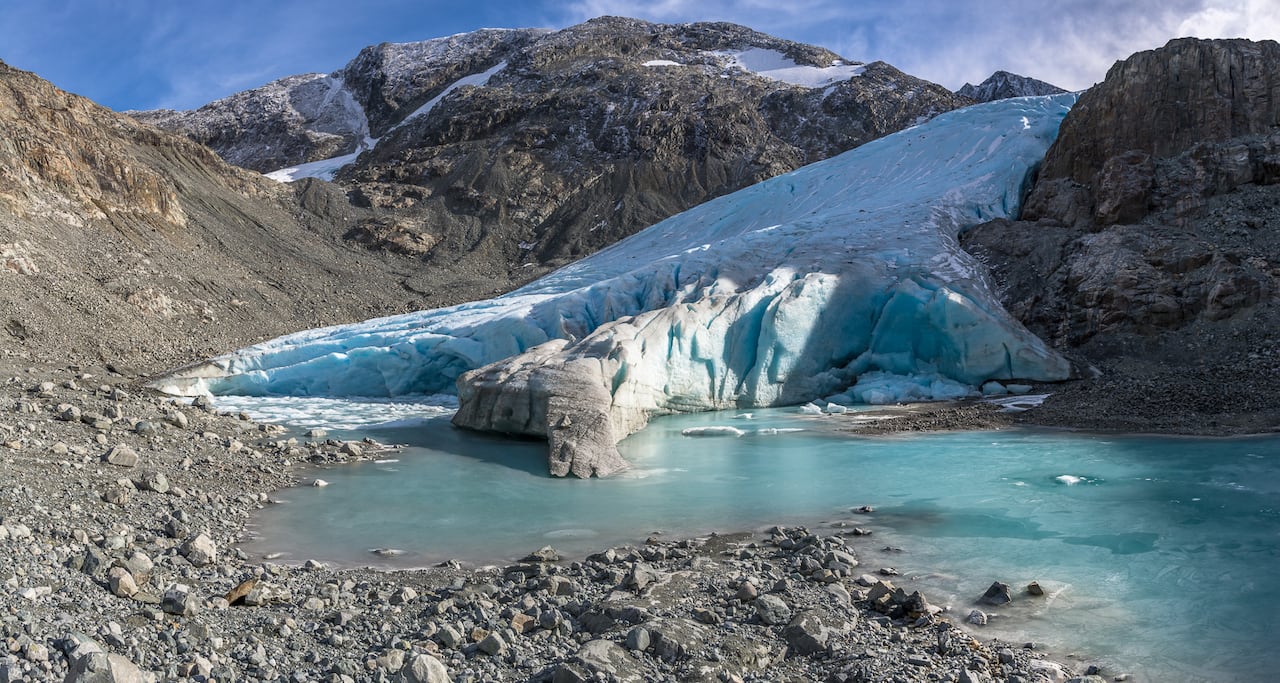
Emerging research is suggesting that radioactive particles are being stored within glaciers
University of Plymouth Alan Williams, April 2019
Nuclear disasters such as Chernobyl and Fukushima are known to have had an immediate impact on their surrounding environments and the people living within them.
But emerging research is suggesting the legacy of these events and international weapons testing could be felt for much longer as radioactive particles are being stored within glaciers.
The first results from this collaborative international research project were presented at the 2019 General Assembly of the European Geosciences Union (EGU), taking place in Vienna from April 7-12, 2019………………………………………
The EGU presentation combined studies into the presence of fallout radionuclides (FRNs), a product of nuclear accidents and weapons testing, within ice surface sediments – or cryoconite – across multiple sites in the Arctic (Sweden, Greenland and Svalbard), Iceland, the European Alps, the Caucasus, British Columbia, and Antarctica.
The levels of some FRNs found in these sites are orders of magnitude higher than those detected in many other (non-glaciated) environments, raising important questions around the role of glaciers, and specifically cryoconite and its interaction with meltwater, in the accumulation of anthropogenic atmospheric contaminants.
The research also demonstrates that the presence of FRNs in cryoconite is not restricted to sites closest to large source areas such as Chernobyl, highlighting the global reach of nuclear events and other sources of atmospherically-transported contaminants.
The widespread occurrence of concentrated FRNs in glacier catchments, and the impacts on downstream water and environmental quality, including uptake of FRNs into flora and fauna, are the focus of current and future research efforts.
Dr Clason said:
“Research into the impact of nuclear accidents has previously focussed on their effects on human and ecosystem health in non-glaciated areas. But evidence is mounting that cryoconite on glaciers can efficiently accumulate radionuclides to potentially hazardous levels. Very high concentrations of radionuclides have been found in several recent field studies, but their precise impact is yet to be established. Our collaborative work is beginning to address this because it is clearly important for the pro-glacial environment and downstream communities to understand any unseen threats they might face in the future.”
1 This Month
19 February – VIRTUAL EVENT-Decision Time: AI and Our Nuclear Arsenal
12:45 p.m. Central / 1:45 p.m. Eastern
To see nuclear-related stories in greater depth and intensity – go to https://nuclearinformation.wordpress.com

-
Archives
- February 2026 (141)
- January 2026 (308)
- December 2025 (358)
- November 2025 (359)
- October 2025 (376)
- September 2025 (258)
- August 2025 (319)
- July 2025 (230)
- June 2025 (348)
- May 2025 (261)
- April 2025 (305)
- March 2025 (319)
-
Categories
- 1
- 1 NUCLEAR ISSUES
- business and costs
- climate change
- culture and arts
- ENERGY
- environment
- health
- history
- indigenous issues
- Legal
- marketing of nuclear
- media
- opposition to nuclear
- PERSONAL STORIES
- politics
- politics international
- Religion and ethics
- safety
- secrets,lies and civil liberties
- spinbuster
- technology
- Uranium
- wastes
- weapons and war
- Women
- 2 WORLD
- ACTION
- AFRICA
- Atrocities
- AUSTRALIA
- Christina's notes
- Christina's themes
- culture and arts
- Events
- Fuk 2022
- Fuk 2023
- Fukushima 2017
- Fukushima 2018
- fukushima 2019
- Fukushima 2020
- Fukushima 2021
- general
- global warming
- Humour (God we need it)
- Nuclear
- RARE EARTHS
- Reference
- resources – print
- Resources -audiovicual
- Weekly Newsletter
- World
- World Nuclear
- YouTube
-
RSS
Entries RSS
Comments RSS
 nuclear-news