The profligate use of our stressed freshwater resource by the nuclear industry.
Stressed Freshwater in our Lakes and Rivers Cooling the Heels of the Nuclear Industry – while the Industry wants More and Hotter Waste.
BY MARIANNEWILDART, https://mariannewildart.wordpress.com/2023/06/15/stressed-freshwater-in-our-lakes-and-rivers-are-cooling-the-heels-of-the-nuclear-industry-and-the-industry-wants-more-and-hotter-waste/
There is a deeply worrying unspoken aspect of this heatwave and that is the profligate use of our stressed freshwater resource by the nuclear industry. The hotter the weather the more freshwater is required for processes including the one absolutely essential to protect all life on planet earth from humanity’s greatest hubris – and that is the cooling of high level radioactive wastes. The industry requires top quality water not the rubbish that was given to folk in West Cumbria from the boreholes near Sellafield – nope the industry requires the coolest freshest waster including from Britain’s most iconic lake.
For Fifteen years now Radiation Free Lakeland have been flagging up the nuclear industry’s eyewatering use of our most precious resource, freshwater. For fifteen years the main stream media have shied away from the issue preferring to flag up the freshwater use of fracking which is big and very nasty but on a different scale both in time and quantity of freshwater involved .
Despite the nuclear industry insisting that the public should not have access to information on fresh water use for reasons of ‘national security’ we now have a body of documentation from (largely blacked out) Freedom of Information requests and research which shows that the nuclear industry’s freshwater use is on a scale second to none. The nuclear industry’s abuse of fresh water continues long after other industrys’ fracking, fossil fuel etc will have come and gone.
We have been told by diligent fracking activists that the figure from the hydraulic fracture plan for Cuadrilla was up to 31,000 cubic metres of water to frack the first well. This was based on up to 765 cubic metres per stage. The number of stages in the fracture plan was 41. That is a lot, it is too much and thanks to diligence of fracking campaigners (nuclear campaigners also fought fracking) this was stopped in its tracks. The ALREADY monstrous freshwater use by the nuclear industry in the Preston area was flagged up by nuclear campaigners.
Springfields Nuclear Fuels just off Preston New Road discharges at least 2400 cubic metres A DAY into the River Ribble. The fresh water discharge contains chemical and radioactive contamination – but the industry say this is fine as the super large quantities of fresh water used “dilute and disperse” the nasties.
Springfields Nuclear Fuels which is slap bang in the middle of Cuadrilla’s fracking plans on the Fylde has recieved no, nada, zilch attention over its fresh water use.
The video illustrates information painstakingly gleaned about Springfields freshwater use along with Sellafield’s. The front and the back end of the nuclear industry which are neatly tucked away under a cloak of invisibility in the NW. Sellafield’s abusive use of the Lake District’s freshwater is detailed in the video taken from a talk at New Horizons, St Annes. Lets hope the rain falls soon to replenish our Lakes and Rivers which have been flushing cool water over hot nuclear wastes since the 1940s. The new build plan would mean more and ever hotter wastes to cool into infinity . Our Lakes and rivers are finite.
This abuse of our fresh water has been going on now since the 1940s. Who knew? and Who Cares?
Greta Thunberg: not phasing out fossil fuels is ‘death sentence’ for world’s poor.
Rich countries are signing a “death sentence” for millions of poor
people around the world by failing to phase out fossil fuels, the climate
activist Greta Thunberg has told governments. She warned on Tuesday that
with annual greenhouse gas emissions at an all-time high, only a “rapid
and equitable” phaseout of fossil fuels would keep global temperatures
within the scientifically advised limit of 1.5C above pre-industrial
levels.
Guardian 13th June 2023
Oil-rich nations dominate COP28 – now offering rich sponsorships, in the effort to silence critics

Emanuele Del Rosso Emanuele is an award-winning Italian political cartoonist. His work is published and distributed internationally.
16 January 2023
UN climate summit organisers wage public relations battle. Marketing drive
for multimillion-dollar sponsorships for UAE-hosted event as critics become
more vocal.
The UAE COP28 has offered sponsorship packages ranging up to
$8.2mn (Dh30mn) for a principal partner to enjoy privileged access in the
controlled “blue zone” where world leaders gather, according to
documents sent to prospective sponsors.
Space in the “green zone”, open
to civil society and small business, is less than $7,000 (Dh25,000).
Expressions of interest for pavilions close this week for the event
starting on November 30.
FT 11th June 2023
https://www.ft.com/content/7b17bc43-f303-4039-a8d5-7e9825604a46
Is peaceful protest enough to make a difference to the climate crisis. or do we need a “tornado of change”?

Chris Packham has called for a “tornado of change” to tackle the
climate crisis and questioned whether peaceful protest is making enough of
a difference. The naturalist and presenter, a regular donor to the Just
Stop Oil campaign, is preparing to front a Channel 4 documentary
provisionally entitled Is It Time to Break the Law? In the film, to be
aired this summer, Packham will assess the impact of protests by those who
have broken the law and been imprisoned and ask whether more people should
risk arrest. “Peaceful protest has been a cornerstone of activism, but as
the urgency grows, we must question whether it is enough,” Packham said.
Times 7th June 2023
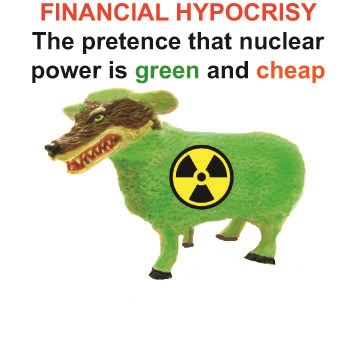
Europe’s Nuclear Power Puzzle
By Felicity Bradstock – Jun 07, 2023,
- EU member states hold divergent views on the inclusion of nuclear power in the green energy transition, hindering consensus.
- Nuclear power is seen as a potential solution for energy security and clean energy production, but concerns about nuclear waste persist.
- While some countries are closing nuclear plants, others are investing in new facilities, causing further division within the bloc.
Since the European Commission stated the need for an accelerated green transition that includes nuclear power and natural gas, it seems member states are having a hard time agreeing on nuclear development. While some countries, such as Germany, are closing their nuclear plants, others, including Finland and Hungary, are developing new facilities. So, after years of nuclear power fearmongering and avoidance, where will Europe land on new nuclear development?
In 2022, the European Commission defined both nuclear power and natural gas as climate-friendly energy sources, adding both to the EU “taxonomy” rulebook from 2023 to spur ‘green’ investment in both sectors. This is a decision that was approved by the European Parliament after much deliberation from member states about how these types of energy should be defined. The EU financial services chief Mairead McGuinness explained: “The Complementary Delegated Act is a pragmatic proposal to ensure that private investments in gas and nuclear, needed for our energy transition, meet strict criteria.”
……….. Meanwhile, nuclear energy, although not a renewable source of power, is viewed as clean, as operations do not emit greenhouse gases. However, many argue that the nuclear waste it produces could be detrimental to the environment, particularly as there is no cohesive international agreement on how to appropriately dispose of this waste………..
Despite the inclusion of nuclear power in the EU rulebook under the green taxonomy, many countries continue to disagree on the use of nuclear energy and the development of new projects. And a divide means delays. ………….
While several EU states support the development and use of nuclear power as a clean energy source, others, such as Germany and Belgium, refused to classify nuclear energy as clean. Weeks later, the debate is still ongoing, with France hoping to reopen negotiations over the Green Deal law, but Germany hopes to pass the law in its current state.
………………………………………….. After over a year of debate, various EU member states can still not agree on the use of nuclear power in the region. While many view it as vital to providing energy security and producing vast amounts of clean energy, others say it is detracting from renewable energy projects, and there is still a big question about how to dispose of the potentially harmful nuclear waste. Until this issue can be agreed upon, the Green Deal law will likely remain in a state of limbo. https://oilprice.com/Alternative-Energy/Nuclear-Power/Europes-Nuclear-Power-Puzzle.html
—
1.5 C limit is still feasible
Now that the Earth has warmed roughly 1.2°C, “once-in-a-century”
heatwaves, forest fires, and floods are becoming more familiar to us. But
there is still a massive difference between 1.2°C and 1.5°C, and the
science shows that it is still possible to end this century at or below
that threshold.
Project Syndicate 1st June 2023
Mediterranean now a global heating hotspot
Shortly after Easter this year, in the midst of a historic, multi-year
drought, temperatures in parts of the western Mediterranean climbed a
barely believable 20C higher than seasonal norms, hitting a
record-shattering 39C in southern Spain. And that was in April.
As global heating advances, July and August in the world’s most-visited holiday
destination – pre-Covid, more than 300 million tourists a year headed to
the Med, a figure some predict could rise to 500 million by the end of the
decade – risk becoming unbearable.
The Mediterranean basin is a global
heating hotspot. While the world is now about 1.1C warmer than it was in
the 1970s, the region is already up 1.5C and on course for 3C by the end of
the century (or 5C, in a worst-case scenario). Rising temperatures and more
frequent heatwaves are not the only challenge. Most climate models agree
that in most parts of the world, warmer will also mean wetter – but not in
the Med, where rainfall is set to plunge by between 10% and 60%.
Guardian 3rd June 2023
Increasing heat could turn ocean plankton microbes into carbon emitters
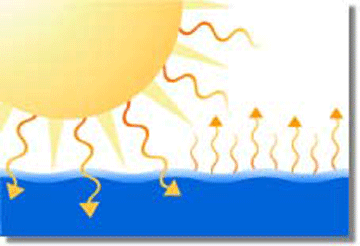
Warming climate could turn ocean plankton microbes into carbon emitters.
New research finds that a warming climate could flip globally abundant
microbial communities from carbon sinks to carbon emitters, potentially
triggering climate change tipping points. The findings are published in
Functional Ecology.
Phys.org 1st June 2023
https://phys.org/news/2023-05-climate-ocean-plankton-microbes-carbon.html
China swelters through record temperatures. And vulnerability of old people to heat waves

Temperatures across China reached or exceeded their records for the month
of May, the country’s National Climate Centre has said. Weather stations
at 446 sites registered temperatures that were the same as, or greater
than, the highest ever recorded for the month of May, deputy director of
the National Climate Centre Gao Rong said at a press briefing on Friday. On
Monday, the Shanghai Meteorology Bureau reported that the city had recorded
a temperature of 36.1 degrees Celsius. The previous record for May was
35.7C, which occurred in 2018. Over the next three days, most of southern
China is expected to be hit by temperatures of more than 35C, with
temperatures in some areas exceeding 40C, according to national forecasters
on Friday.
Guardian 2nd June 2023
New heatwave warnings could miss vulnerable older people who aren’t
online. Email alerts to warn public about dangers of hot weather will be
voluntary and will give advice on how to stay cool.
Telegraph 1st June 2023
https://www.telegraph.co.uk/news/2023/06/01/new-heatwave-warnings-not-nanny-state-health-officials/
Extreme heat events have now become the new normal

global cooperation is needed to bolster society’s resilience to extreme heat and enhance its capacity to overcome climate challenges.
By Wei Ke | CHINA DAILY 2023-05-29 https://www.chinadaily.com.cn/a/202305/29/WS6473dd60a310b6054fad5766.html
Since the first day of 2023, extreme heat events have increased the threat to human health and the environment. Europe experienced the warmest New Year in history, with temperatures in some places reaching early summer levels. The highest temperature, of 25.1 Celsius, was recorded in Bilbao, Spain. In Glucholazy, Poland, the temperature at 4 am on Jan 1 was as high as 18.7 C, more than the local average minimum summer temperature. And while at least eight European countries experienced their hottest New Year’s Day, more than 100 weather stations in France reported record-breaking temperatures.
Unlike gradual global warming which many people expect, extreme heat events have raised temperatures to historical highs in many places. On Jan 1 this year, temperatures in many places in France, Germany, Denmark and Latvia were exceptionally high. For example, the temperature in Berlin, Germany, was 16 C — normally, it hovers around 0 C during New Year.
According to the State of the Global Climate 2022 of the World Meteorological Organization, which was released on April 21, global temperatures in 2022 were 1.15 C higher compared with the pre-industrial levels from 1850 to 1900. Global warming is not a gradual and uniform process anymore; instead, it manifests through a succession of extreme heat events, continuously breaking high-temperature records worldwide.
There has been a significant increase in both the frequency and intensity of extreme heat events. According to the UN Office for Disaster Risk Reduction’s report, Human Cost of Disasters 2000-19, there were 432 instances of extreme heat events globally between 2000 and 2019 compared with just 130 instances between 1980 and 1999, an increase of a whopping 232 percent.
As the northern hemisphere enters the summer season, extreme heat events have become the norm, rather than the exception. On April 14, Tak province in northwestern Thailand recorded a scorching 45.4 C, breaking Thailand’s highest temperature record of 44.6 C set in Mae Hong Son province in 2016.
Record-breaking heat-waves have swept across Southeast Asia, South Asia and Central Asia, with temperatures crossing 42 C. And severe air pollution has further compounded the situation in many parts of Southeast Asia, and thus increased the risk of respiratory and cardiovascular diseases.
The impacts of high temperatures are far-reaching, not only affecting human life and health but also posing a threat to the environment and ecosystems. In 2020, more than 330 elephants in the southern region of Botswana died of cyanotoxin poisoning, as prolonged heat and drought led to a bloom of cyanobacteria in ponds and other water bodies. These cyanobacteria released a significant amount of cyanotoxins in the water bodies, which resulted in the poisoning and subsequent deaths of the elephants that consumed the toxic water.
Extreme heat and drought also contribute to wildfires. In 2019-20, Australia experienced severe heat waves that contributed to the devastating wildfires which lasted for a staggering nine months. While the wildfires caused an economic loss of about 10.3 billion Australian dollars ($6.73 billion), they also claimed the lives of or displaced nearly 3 billion animals — mammals including marsupials, birds, reptiles and amphibians.
Worse, the wildfires emitted about 715 million tons of carbon dioxide, more than Australia’s total annual greenhouse gas emissions from fossil fuel combustion.
One of the worst effects of global warming is the “wet gets wetter, dry gets drier” phenomenon, where humid regions experience increased rainfall and arid regions become drier — with the rainy season marked by more severe flooding and the dry season by intense drought.
According to the Human Cost of Disasters 2000-19 report, over the past 20 years, there has been a 134 percent increase in flood-related disasters, 97 percent increase in storms, 46 percent increase in wildfires, and 29 percent increase in droughts or drought-like conditions.
In addition, as the oceans warm, heat-waves emanating from the oceans and seas have become more common. The increasing warming of the ocean surface inhibits the absorption of oxygen by the water, which exacerbates the problem of oxygen depletion in the marine environment, posing a threat to the survival of marine animals and plants. Warmer ocean temperatures also contribute to the increasing frequency and severity of typhoons and hurricanes. And since such storms have a wider range extending to northern latitudes, regions like northeastern China could experience typhoons in the future.
In summer, extreme heat conditions in the northern hemisphere are becoming the norm, prompting the WMO to urge countries to issue early warnings and take early action. But while it is essential for governments and management agencies at all levels to issue weather alerts and forecasts, they should also pay greater attention to the rights of vulnerable groups, including people who work outdoors during hot weather.
Building public heat shelters to protect people during orange and red heat alerts is essential. Especially, public activity centers, libraries and other government facilities allow outdoor workers to avoid working during the hottest hours of the day. As for people in general, they should closely follow weather forecasts and warnings so they can avoid the risk of heatstroke by not venturing out during extreme heat events.
Yet global temperatures will continue to rise as greenhouse gas emissions are unlikely to reduce drastically in the next 20-30 years. Therefore, economies around the world, especially the major economies, should intensify efforts to reduce emissions. The public, on its part, can contribute to the global efforts to mitigate climate change by adopting simple habits including switching off lights when not in use, recycling products, reducing the use of cars, changing the food habit, and refraining from compulsive shopping. These slight changes in habits can help lower individuals’ carbon footprint and thus reduce emissions.
But global cooperation is needed to bolster society’s resilience to extreme heat and enhance its capacity to overcome climate challenges.
Freak May typhoon shows Philippines is now in constant state of climate emergency
‘Super typhoons have become our new normal,’ activists say
Stuti Mishra, 30 May 23 https://www.independent.co.uk/climate-change/news/typhoon-mawar-philippines-climate-change-b2348165.html—
Typhoon Mawar, an unusually intense cyclone that has struck Guam and the Philippines before heading towards Taiwan and southern Japan, shows the southeast Asian country is in a “constant state of climate emergency”, activists have said, demanding reparations for vulnerable nations.
In a statement released on Monday, Greenpeace International demanded fossil fuel companies take responsibility for the intensifying extreme weather events seen worldwide and pay reparations for climate impacts.
The typhoon left Guam flooded and without power for days and has prompted evacuations and amid extreme weather warnings in the Philippines.
Mawar, known locally in the Philippines as typhoon Betty, is the strongest typhoon of the year so far and the strongest northern hemisphere cyclone ever recorded in the month of May.
“The Philippines is in a constant state of climate emergency,” said Greenpeace Philippines campaigner Jefferson Chua.
Rock ‘flour’ from Greenland can capture significant CO2, study shows

Powder produced by ice sheets could be used to help tackle climate crisis when spread on farm fields
Damian Carrington Environment editor @dpcarrington, Tue 30 May 2023
Rock “flour” produced by the grinding under Greenland’s glaciers can trap climate-heating carbon dioxide when spread on farm fields, research has shown for the first time.
Natural chemical reactions break down the rock powder and lead to CO2 from the air being fixed in new carbonate minerals. Scientists believe measures to speed up the process, called enhanced rock weathering (ERW), have global potential and could remove billions of tonnes of CO2 from the atmosphere, helping to prevent extreme global heating…………..
Greenland’s giant ice sheet produces 1bn tonnes a year of rock flour, which flows as mud from under the glaciers. This means the potential supply of rock flour is essentially unlimited, the researchers said, and removing some would have very little effect on the local environment.
The weathering process is relatively slow, taking decades to complete, but the researchers said ERW could make a meaningful difference in meeting the key target of net zero emissions by 2050. Phasing out the burning of fossil fuels remains the most critical climate action, but most scientists agree that ways of removing CO2 from the atmosphere will also be needed to avoid the worst effects of the climate crisis.
“If you want something to have a global impact, it has to be very simple,” said Prof Minik Rosing at the University of Copenhagen, who was part of the research team. “You can’t have very sophisticated things with all kinds of hi-tech components. So the simpler the better, and nothing is simpler than mud.”
He added: “Above all this is a scalable solution. Rock flour has been piling up in Greenland for the past 8,000 years or so. The whole Earth’s agricultural areas could be covered with this, if you wished.”……………………………………………………………….more https://www.theguardian.com/environment/2023/may/30/rock-flour-greenland-capture-significant-co2-study
Thawing glaciers around Everest show critical need to stop greenhouse emissions
Helen Clark – former prime minister of New Zealand: Global temperature
rises mean that Everest, in common with mountains across the Himalayas, is
undergoing unprecedented and irreversible change. The 79 glaciers that
surround Everest have thinned by more than 100 metres (328ft) in just six
decades, and the rate of thinning has nearly doubled since 2009.
Communities at the top of the world are crying out to world leaders for
help. Humanity has a mountain to climb in reaching the aspirations of the
Paris Agreement. The only hope is for concerted global action to reduce
greenhouse gas emissions dramatically to save the world’s snow and ice
before it is too late.
Times 29th May 2023
https://www.thetimes.co.uk/article/as-everest-shows-action-on-climate-change-is-critical-lswbmvlps
Sea level rise will “disappear” California’s famed beaches
California is known for golden sands and endless waves, but much of the
state’s famous shoreline could vanish in the future. That’s according
to a new study, which found that between 25% and 70% of California beaches
might be washed away by the end of the century, leaving only cliffs or
coastal infrastructure in their wake.
Guardian 27th May 2023
https://www.theguardian.com/us-news/2023/may/27/california-beaches-erosion-2100-study
Insurance giant halts sale of new home policies in California due to wildfires
The insurance giant State Farm, America’s biggest car and home insurer
by premium volume, will halt the sale of new home insurance policies in
California, citing wildfire risk and inflation of construction costs.
Starting on Saturday, the company will not accept insurance applications
for business and personal lines property and casualty insurance. The
company will still accept auto insurance applicants.
Guardian 27th May 2023
https://www.theguardian.com/us-news/2023/may/27/state-farm-home-insurance-california-wildfires
1 This Month
19 February – VIRTUAL EVENT-Decision Time: AI and Our Nuclear Arsenal
12:45 p.m. Central / 1:45 p.m. Eastern
To see nuclear-related stories in greater depth and intensity – go to https://nuclearinformation.wordpress.com
-
Archives
- February 2026 (141)
- January 2026 (308)
- December 2025 (358)
- November 2025 (359)
- October 2025 (376)
- September 2025 (258)
- August 2025 (319)
- July 2025 (230)
- June 2025 (348)
- May 2025 (261)
- April 2025 (305)
- March 2025 (319)
-
Categories
- 1
- 1 NUCLEAR ISSUES
- business and costs
- climate change
- culture and arts
- ENERGY
- environment
- health
- history
- indigenous issues
- Legal
- marketing of nuclear
- media
- opposition to nuclear
- PERSONAL STORIES
- politics
- politics international
- Religion and ethics
- safety
- secrets,lies and civil liberties
- spinbuster
- technology
- Uranium
- wastes
- weapons and war
- Women
- 2 WORLD
- ACTION
- AFRICA
- Atrocities
- AUSTRALIA
- Christina's notes
- Christina's themes
- culture and arts
- Events
- Fuk 2022
- Fuk 2023
- Fukushima 2017
- Fukushima 2018
- fukushima 2019
- Fukushima 2020
- Fukushima 2021
- general
- global warming
- Humour (God we need it)
- Nuclear
- RARE EARTHS
- Reference
- resources – print
- Resources -audiovicual
- Weekly Newsletter
- World
- World Nuclear
- YouTube
-
RSS
Entries RSS
Comments RSS
 nuclear-news