July was world’s hottest month on record, climate scientists confirm
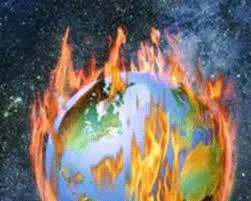
July has been confirmed as the hottest month on record globally after
several heatwaves in parts of Europe, according to the Copernicus Climate
Change Service (C3S). The global average temperature was 16.95C last month,
surpassing the previous record set in 2019 by a substantial 0.33C.
Temperatures exceeded 40C last week in several countries across Europe
including Greece, France, Italy and Spain. Wildfires forced the evacuation
of thousands of residents and tourists from several Greek islands including
Rhodes. There were also high temperatures in South American countries,
despite it being winter there. July is estimated to have been about 1.5C
warmer than the average for 1850-1900, according to C3S, and 0.72C warmer
than the 1991-2020 average.
Guardian 8th Aug 2023
The digital data industry is an energy and water guzzling climate disaster.

Energy-hungry AI could pose a challenge for data centre ESG
The Age By Tim Biggs, August 5, 2023
Sustainability experts have warned of a crunch ahead for the booming data centre industry, as increasing energy usage amid demand for new artificial intelligence-powered technologies crosses paths with a hotter, drier climate.
Data centres are becoming an asset-class part of infrastructure, as AI powers a boom in growth and demand for data while investment managers and superannuation funds increase their stakes. Late last year, US asset manager DigitalBridge and Melbourne-based IFM investors acquired data centre leader Switch for $US11 billion ($16.83 billion).
Meanwhile the International Energy Agency estimates that software-related activities currently account for about 5 per cent of global greenhouse gas emissions, which may rise to 14 per cent by 2040. Data centres and transmission networks specifically account for around 1 per cent, but some estimates predict that to rise rapidly to more than 3 per cent in a matter of years.
……….. a recent report from the University of Technology Sydney’s Institute for Sustainable Futures suggested the data centre industry was “exposed to significant ESG (environmental, social, and corporate governance) risks that have largely escaped our collective attention”, including the increasing need for cooling combined with huge demands for data.
“This all comes at the same time as we’re seeing a shift in our weather patterns. We’re heading for days of peak heat events,” said researcher Gordon Noble, who led the UTS study.
“So the challenge is, we have 45-degree days in the western suburbs of Sydney and Melbourne, where data centres will need to increase the demand for energy to ensure that they’re delivering their services. At a time when households will also be wanting to make sure that they’ve got cool homes.”
The study, which was commissioned by data centre technology provider Pure Storage, also surveyed experts in charge of sustainability at their organisations, of whom only five per cent said they were getting detailed sustainability information from their data centre provider.
As record heat waves affect parts of Europe, recent figures have shown data centres in Ireland consume 18 per cent of the country’s electricity, around the same as homes. Ireland is the European home of several tech giants, but some of the nation’s politicians have said the power-hungry data centres put pressure on the national grid, increase electricity prices for everyone and will make it impossible to hit emissions targets.
“From an Australian perspective, data centres need to be on the sustainability agenda,” Noble said.
“It’s probably fair to say other issues have been in the limelight. But we’ve got increasing demand for data, which is only going to exacerbate because of the investments that we’re seeing in new technology like AI. We need to understand where we’re located, particularly in the context of El Nino.”
RMIT University school of computing dean Professor Karin Verspoor said AI – like blockchain technology and cryptocurrency mining before it – was getting a lot of attention from developers and investors, but there was not enough discussion of the exponentially increasing amounts of energy it used.
Some researchers have calculated that training a single medium-sized generative AI model could consume electricity and energy equivalent to 626,000 tons of CO2 emissions, around what five American cars would use throughout their lifetimes, including manufacturing.
“These are huge models, and they’re only getting bigger, and there’s more of them. Massive quantities of data are involved in training,” Verspoor said, adding this was on top of the ongoing energy costs once users are hitting data centres constantly to use the generative AI product.
“And it’s not just energy actually, it’s also water because water is used often to cool the data centres. So, there are these sorts of secondary climate impacts.”
While Verspoor agreed data centre providers could help mitigate the impacts with more energy-efficient technologies and offsets, she said the developers and consumers of AI products also had to take some responsibility…………………………………….
AI company Hugging Face has run experiments in low-power AI development using nuclear energy, but still found its development of a large language model produced around 50 metric tons of carbon dioxide emissions, or the equivalent of an individual taking 60 flights between London and New York. It estimated that OpenAI, when developing its last-generation ChatGPT model, may have produced 500 metric tonnes…………………….. more https://www.theage.com.au/technology/energy-hungry-ai-could-pose-a-challenge-for-data-centre-esg-20230802-p5dtad.html
What you won’t learn about in Oppenheimer: the potential effects of a nuclear winter

CBC Science What on Earth? James Westman 4vAug 23
“………………………………………………. One potential effect of the atom bomb wasn’t understood until years after the death of J. Robert Oppenheimer, the director of the Manhattan Project. Specifically, the concept of nuclear winter, which was first brought to the world’s attention by astrophysicist and author Carl Sagan in 1983.
Virtually every modern climate model has confirmed the initial findings: nuclear war would cool the planet.
“Nuclear weapons dropped on cities and industrial areas would produce fires, the fires would produce smoke, and that smoke would be lofted up into the stratosphere in a giant thunderstorm,” Alan Robock, a climate scientist at Rutgers University in New Jersey, said in a recent interview.
………………. “The basic physics are very simple: if you block out the sun, it gets cold at the ground,” Robock said. “We have analogues of that. We have nighttime, we have winter.”
…………………….. Why has the smoke from wildfires not caused global cooling? Unless smoke particles reach the stratosphere, they get washed out of the lower atmosphere by precipitation.
………………………..According to a 2007 paper, a nuclear war between the U.S. and Russia would send 150 million tonnes of black soot into the stratosphere, resulting in global average surface cooling of 7 C to 8 C that would persist for years. Even after a decade, the world would still be 4 C cooler.
This would be a massive problem for global food production. Countries at higher latitudes, like Canada, would be particularly hard hit by nuclear winter, since much of the country is already too cold for significant agriculture.
If you’re wondering if nuclear winter would stop global warming, you’re not alone. It’s a question Robock gets all the time. A full-scale nuclear war and a global famine resulting from nuclear winter would lead to the collapse of industrial society and human civilization. Robock said that if the U.S. and Russia had a nuclear war, it would largely halt carbon emissions, since most human activities would have ceased……………..
Human-caused climate change poses the threat of an average global temperature change of several degrees on the timescale of decades. Nuclear winter, on the other hand, poses that danger on the timescale of years — even within a year.
“A nuclear war’s impact on global food systems comes as a shock. It basically comes overnight. There’s no way to adapt,” said Jonas Jaegermeyr, a climate scientist and crop modeller who studies nuclear winter at Columbia University in New York.
A paper released last year in Nature Food found that up to 5.3 billion people would die from starvation two years after a full-scale nuclear exchange between the U.S. and Russia and the ensuing nuclear winter. (The paper also found 99 per cent of Canadians would starve to death.)
Clearly, nuclear winter is just about the worst way imaginable to stop global warming. It would replace steady planetary warming with abrupt planetary cooling.
“If you want to solve the global warming problem, the first answer is to just leave the fossil fuels in the ground and stop and use the sun and the wind [for power],” said Robock. “We have enough to power the world.” https://www.cbc.ca/news/science/what-on-earth-oppenheimer-nuclear-winter-climate-change-1.6926861
Nuclear war would be more devastating for Earth’s climate than cold war predictions – even with fewer weapons
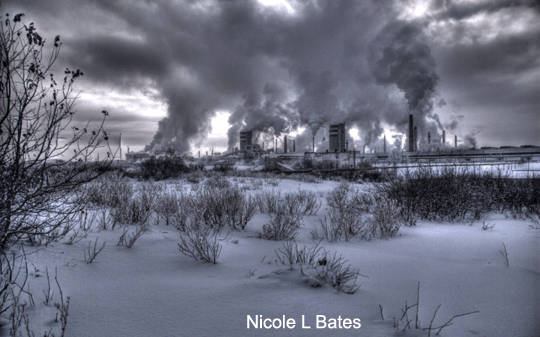
Christopher Nolan’s biopic of J. Robert Oppenheimer has revived morbid curiosity in the destructive power of nuclear weapons. There are now an estimated 12,512 nuclear warheads.
A war in which even a fraction of these bombs were detonated would create blast waves and fires capable of killing millions of people almost instantly. The radiation-induced cancers and genetic damage would affect the remaining population for generations.
But what sort of world would remain amid the radioactive fallout? For the last four decades, scientists modelling the Earth system have run computer simulations to find out.
Using their knowledge of chemistry and climate modelling, atmospheric scientists Paul Crutzen and John Birks wrote a short paper in 1982 which suggested a nuclear war would produce a smoke cloud so massive that it would cause what became known as a nuclear winter. This, they claimed, would devastate agriculture and with it, civilisation.
A year later, scientists from the US and Soviet Union confirmed first that cities and industrial complexes hit by nuclear weapons would indeed produce much more smoke and dust than burning the equivalent area of forest. And second, this global layer of smog would block out sunlight, causing conditions at Earth’s surface to become rapidly colder, dryer and darker.
Climate modelling shows the reduced sunlight would plunge global temperatures by up to 10˚C for nearly a decade. These freezing conditions, combined with less sunlight for plants to photosynthesise, would have catastrophic consequences for global food production and lead to mass starvation worldwide.
Modern climate models are much more sophisticated than those used in the 1980s. And while there are fewer nukes in working order today, more recent results from computer simulations suggest that the grim prophecy delivered by scientists 40 years ago may actually have been an underestimate.
Clear and present danger
Environmental scientists led by Alan Robock at Rutgers University in the US argued in a recent paper that the nuclear winter theory helped end the proliferation of nuclear weapons during the cold war. In 1986, President Ronald Reagan and General Secretary Mikhail Gorbachev took the first steps in history to reduce the number of nuclear weapons while citing the predicted consequences of a nuclear winter for all life on Earth…………………………. more https://theconversation.com/nuclear-war-would-be-more-devastating-for-earths-climate-than-cold-war-predictions-even-with-fewer-weapons-210567
A Vital Atlantic Ocean System Could Collapse Sooner Than Previously Thought
Climate change is slowing down the Atlantic Meridional Overturning Circulation, a key ocean “conveyer belt.” New research finds it could collapse completely by 2060.
By Siri Chilukuri / Grist 31 Jul 23 ScheerPost
Oceans all over the world rely on a delicate balance of different elements to remain stable: Temperature, salinity, pH, and pressure all combine to create the complex bodies of water that maintain conditions for marine life and define the planet. Climate change has altered those conditions, though, by warming oceans to record-high temperatures and introducing more fresh water through sea-ice and glacier melt.
Now, new research published on Tuesday warns that a vital Atlantic Ocean system could collapse by 2060, setting off one of the planet’s tipping points, or potential points of no return. That collapse could eventually spell catastrophe for the people who live in countries that border the Atlantic Ocean, leading to increased sea-level rise in the United States, decreased temperatures and altered storm patterns over Western Europe, rejiggered climate and agricultural zones, and hotter ocean temperatures in the Caribbean.
The study, published in the journal Nature Communications, contradicts findings from the Intergovernmental Panel on Climate Change, or IPCC, the United Nations’ scientific collaboration that publishes reports on the state of climate change. The group’s latest assessment, released last year, found the collapse of the group of Atlantic Ocean currents to be unlikely given the group only acknowledges weakening of the Atlantic Meridional Overturning Circulation, or AMOC, starting in 2004. The report notes that scientists cannot say when or if a collapse will happen, since they state even the decline prior to the 2000s cannot necessarily be attributed to climate change.
We absolutely have deep respect for the IPCC report,” Susanne Ditlevsen, a statistician at the University of Copenhagen and co-author of the study, told Grist. “When we first started, we had this idea that we could use this method that’s data-based, to kind of confirm what the IPCC report is saying. So when we actually got our first results, we were very surprised, and we didn’t believe them.”
The AMOC is a thick band of water that travels from the Gulf of Mexico north along the southeastern U.S. before heading up the western edge of Europe, carrying mild temperatures with it, and onward toward Greenland and Iceland. Once there, the current is infused with heavy, cold, and salty water that then sinks, traveling back down the coast of the U.S. This system provides what one expert with the National Oceanic and Atmospheric Administration, or NOAA, called “symmetry” to temperatures in the North and South hemispheres.
But as carbon dioxide levels rise, temperatures increase, and ice melts in the Arctic, this current is being inundated with fresh water, throwing it out of balance. This has led to a weakening of the AMOC, which recently saw its slowest point in 1,600 years in 2021.
If the web of Atlantic Ocean currents stopped, it would constitute one of the Earth’s tipping points, which signal a dramatic, potentially irreversible shift in the condition of the planet — and its habitability for humans. A study last year found that the planet may have already passed a few tipping points, including tropical coral die-off and the beginning of the Greenland ice-sheet collapse, at just 1.1 degree Celsius (1.9 degrees Fahrenheit) of warming. ……………………………………… https://scheerpost.com/2023/07/31/a-vital-atlantic-ocean-system-could-collapse-sooner-than-previously-thought/
Humans Might Be About to Break the Ocean? Don’t Stop the Presses

JULIE HOLLAR, FAIR, 31 July 23
When a new peer-reviewed study (Nature Communications, 7/25/23) announces that a crucial Atlantic Ocean circulation system, a cornerstone of the global climate, may collapse as quickly as two years from now, you’d think news outlets might want to put that on the front page.
The AMOC (Atlantic Meridional Overturning Circulation) moves warmer water from the tropics to the North Atlantic, where it cools, sinks and returns down the US East Coast. Its collapse would be a “climate tipping point” with, as the British Guardian (7/25/23) explained,
disastrous consequences around the world, severely disrupting the rains that billions of people depend on for food in India, South America and West Africa. It would increase storms and drop temperatures in Europe, and lead to a rising sea level on the eastern coast of North America. It would also further endanger the Amazon rainforest and Antarctic ice sheets.
The study, published by an open-access affiliate of the prestigious scientific journal Nature, used new statistical methods, rather than new observations, to make its prediction, which contradicts the IPCC’s latest assessment. The IPCC (6/14/19) deemed a full collapse this century “very unlikely,” but it relied on data that only went back to 2004. The new study, the Guardian reported, “used sea surface temperature data stretching back to 1870 as a proxy for the change in strength of AMOC currents over time.” The study projected the collapse of the ocean system between 2025 and 2095, with 2050 the most likely date, without sharp reductions in global carbon emissions.
Some climate scientists are cautious about the new study, suggesting that more observational data is needed to say the collapse could happen so imminently (Grist, 7/26/23). But as climate scientist Jonathan Foley argued (Twitter, 7/27/23), though the study doesn’t offer certainty, the consequences are so dire that “the only prudent reaction to this is to work to address climate change, as quickly as possible, to avoid these kinds of impacts.”
“I really wish that journalists and editors took this as seriously as scientists do, and reported it loudly and accurately, taking the time to get the facts right,” Foley wrote. “The planet is in trouble, and we need to have the best possible information.”
Unfortunately for the planet and those who inhabit it, corporate media would rather look the other way, at worst, and offer scary clickbait headlines with few connections to actionable policy at best.
‘Try all that we can’
At the Washington Post, editors put the news on page 12 (7/26/23). …………………………….
The Wall Street Journal, the favored newspaper of the business crowd, didn’t even bother to cover the report, ………………………………..
NPR (7/27/23) focused more on the importance of the timing of the collapse than on the collapse itself,…………………………………..
‘Plausible we’ve fallen off a cliff’
The New York Times (7/26/23) was one of the only major outlets to put the news on its front page, with a well-reported piece by Raymond Zhong. It also did better than many, mentioning “human-driven warming” in the second paragraph, and paraphrasing a scientist that “uncertainty about the timing of an AMOC collapse shouldn’t be taken as an excuse for not reducing greenhouse-gas emissions to try to avoid it.” That scientist, Hali Kilbourne, was given the last word:
“It is very plausible that we’ve fallen off a cliff already and don’t know it,” Dr. Kilbourne said. “I fear, honestly, that by the time any of this is settled science, it’s way too late to act.”
Yet even here, no connections were made to concrete policy options, and no policy experts or activists were quoted to offer them.
The only other front-page US newspaper mention FAIR could find in the Nexis database was in the Charleston Post & Courier (7/25/23), which similarly made no connections to policy.
In the context of a summer of extreme climate events, including unprecedented heatwaves, ocean temperatures and wildfires, we desperately need a media system that treats the climate crisis like the five-alarm fire that it is, and demands accountability from the politicians and industries—not least the fossil fuel industry—driving us off the cliff.
‘Era of global boiling has arrived,’ says UN chief

‘Era of global boiling has arrived,’ says UN chief as July set to be
hottest month on record. The era of global warming has ended and “the era
of global boiling has arrived”, the UN secretary general, António
Guterres, has said after scientists confirmed July was on track to be the
world’s hottest month on record.
Guardian 27th July 2023
‘Project 2025’: plan to dismantle US climate policy for next Republican president
An alliance of rightwing groups has crafted an extensive presidential
proposal to bolster the planet-heating oil and gas industry and hamstring
the energy transition, it has emerged. Against a backdrop of
record-breaking heat and floods this year, the $22m endeavor, Project 2025,
was convened by the notorious rightwing, climate-denying thinktank the
Heritage Foundation, which has ties to fossil fuel billionaire Charles
Koch.
Called the Mandate for Leadership: The Conservative Promise, it is
meant to guide the first 180 days of presidency for an incoming Republican
president. Climate experts and advocates criticized planning that would
dismantle US climate policy.
Guardian 27th July 2023
Why investing in new nuclear plants is bad for the climate
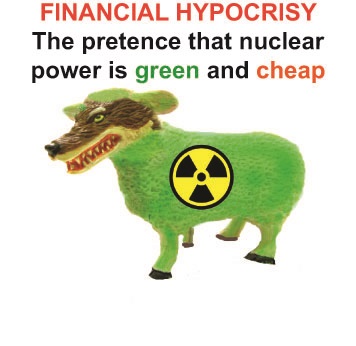
the climate crisis demands urgency and requires such large investments that cost efficiency is of key importance.
Joule, Luke Haywood Marion Leroutier Robert Pietzcker, July 21, 2023
There has been a strong push to promote increased investments in new nuclear power as a strategy to decarbonize economies, especially in the European Union (EU) and the United States (US).
The evidence base for these initiatives is poor. Investments in new nuclear power plants are bad for the climate due to high costs and long construction times. Given the urgency of climate change mitigation, which requires reducing emissions from the EU electricity grid to almost zero in the 2030s (Pietzcker et al.1), preference should be given to the cheapest technology that can be deployed fastest.
On both costs and speed, renewable energy sources beat nuclear. Every euro invested in new nuclear plants thus delays decarbonization compared to investments in renewable power. In a decarbonizing world, delays increase CO2 emissions.
Our thoughts focus on new nuclear power plants (not phasing out existing plants) in the US and Europe. In Europe, new nuclear power plants are planned or seriously discussed in France, Czechia, Hungary, Poland, Bulgaria, Slovenia, Sweden, and the United Kingdom. We do not focus on China, where government-set electricity prices and subsidized capital costs make it more difficult to contrast the profitability of different types of energy sources.
Nuclear energy is expensive
The cost overruns on recent nuclear projects are dramatic. In an international comparative assessment of construction cost overruns for electricity infrastructure, Sovacool et al. 2 find that nuclear reactors are the investment type with the most frequent and largest cost overruns, alongside hydroelectric dams. 97% of the 180 nuclear reactor investment projects included in their analysis suffered cost overruns, with an average cost increase of 117% per project.
More recently, the current estimate of the construction costs of the French Flamanville project stands at €13.2 billion up from an initial €3.3 billion (figures that do not even include financing costs, which the French audit office estimated at €4.2 billion up from an initial €1.2 billion) and those of the recently opened Finish Olkiluoto at €11 billion instead of €3 billion. “Construction costs are high enough that it becomes difficult to make an economic argument for nuclear,” Davis finds. Similarly, Wealer et al.conclude that “investing into a Gen III/III+ nuclear power plant … would very likely generate significant losses.”
Why is nuclear so costly?
Construction costs are driven by safety. Nuclear accidents remain a possibility—and damages may be global. Rangel and Lévêque note that huge damages occurring at “low and uncertain probability” make it difficult to determine whether safety investments are cost-effective. The nuclear plants built relatively quickly in previous decades had lower safety. requirements. Policy makers’ preferences for safety makes sense given that nuclear power plant operators’ private insurance coverage is typically very limited.
Beyond construction costs, the cost of capital is a critical parameter for evaluating the viability of nuclear power. First, the very long construction times and delays generate particularly large financing costs for a given interest rate. Portugal-Pereira et al. report an escalation of capital costs worldwide due to increasing construction delays for the last generation of nuclear reactors constructed since the 2010s. The French court of auditors estimates that the cost of the French nuclear power plant Flamanville will increase from €13.2 billion to €20 billion once financing costs and delays are taken into account. Second, the historically high risk of default translates into higher interest rates. These two factors make the profitability of nuclear projects very dependent on financing conditions.
Finding an economic rationale for continued investment in new nuclear requires optimism regarding costs………………………………………….
Costs are not projected to come down very much even for the six new reactors planned to be built by 2035 (estimated to cost €52 billion in total, or €8.6 billion per reactor). The most recent EPR construction, Sizewell C in the United Kingdom, is also one of the most expensive projects at around €23 billion (£20 billion). This pattern of increasing costs over time has generated some interest in the literature (Lovering et al.7 and Eash-Gates et al.8).
Most of the candidate explanations (in particular, increased safety regulations) do not provide grounds for optimism for the future. In a wide-ranging review of different technologies, Meng et al.9 find nuclear power to be a “notable exception” where progress is overestimated with actual costs consistently higher than expected.

Small modular reactors (SMRs) may not be an exception: their advantages in terms of lower complexity may not translate into sound economics given lower energy production. Glaser et al 10 note that even optimistic estimates require many hundreds of reactors to be built before electricity produced is cost-competitive compared with larger reactor designs. The potential of modularity to reduce costs appears limited in practice.
Nuclear power is not cost-competitive with renewables
Despite poor profitability, nuclear power is advanced as a good investment to fight climate change. However, today, the challenge for nuclear profitability does not come from coal or gas but from renewables. It is hard to overstate how strongly the costs of renewables have decreased (see Figure 1 on original) . Few publications have anticipated these cost decreases, and public debate is often based on outdated cost assumptions.
Baseload and flexibility
…………………………………….Shirizadeh et al. 12 find that costs of storing variable renewable electricity production appear manageable, with storage costs of less than 15% of total costs associated with a fully renewable electricity grid for France. Pietzcker et al.1 find that new nuclear constructions would not decrease the costs of achieving EU climate targets. Shirizadeh and Quirion 13 find that a 100% renewable system is very cost-effective for France.
Taking into account wider economic impacts does not favor nuclear
………………………………….adding non-market benefits to the equation implies that non-market costs should also be considered. This is not easy: how should we account for nuclear waste? Nuclear waste is the unresolved problem of the nuclear industry. Cheap long-term storage for anthropogenic radioactive substances is elusive despite worldwide, decades-old efforts. In absence of any proven low-cost permanent storage technology, nuclear waste will have to be retreated regularly and stored in facilities above the ground.
Costs would arise for many thousands of years. The importance of costs and benefits for future generations in today’s decisions has been a controversial topic for climate change policy, and it appears even more relevant for nuclear waste. Krall et al. 14 argue that SMRs may actually “exacerbate the challenges of nuclear waste management.”
Third, uranium mining causes pollution and radioactive exposure. As a report of the EU’s Scientific Committee on Health, Environmental and Emerging Risks notes, “almost 100% of the total eco-toxicity and human toxicity impacts over the whole nuclear life cycle is connected to mining and milling … While mining and milling is regulated [within the EU], 90% of what the EU need globally comes from 7 countries (none in Europe).” In Niger, for example, the systematic neglect of health and safety procedures in countries producing uranium for EU consumption persists despite evidence of “grave environmental impacts and rampant institutional failures.” 15
Finally, the continued development of nuclear energy could contribute to the risk of proliferation of nuclear weapons, as well as the risk of nuclear power plants being targeted in armed conflict, a permanent risk in Ukraine today.
Building new nuclear takes time we do not have
The business case and economics may be poor, but in light of the very real threat of climate catastrophe, should we not invest in all alternatives to fossil fuels? The problem is that building nuclear plants is slow and delivery is uncertain.
Even the International Atomic Energy Agency and Nuclear Energy Agency—organizations promoting the use of nuclear energy—assume construction times of around one decade, 13 whereas renewables can come online in a fraction of that time. Given lags in planning and regulatory approval, any new nuclear plants would come online too late to help decarbonize our economies on time. However, even this time frame appears optimistic:………………………………………..
Conclusion: In solving the climate crisis, new nuclear is a costly and dangerous distraction
……………………………………………………………….. the climate crisis demands urgency and requires such large investments that cost efficiency is of key importance……………………………… If governments and economic actors believe that nuclear power will come online at a certain date, they will not make alternative plans, and without alternative plans, the current carbon-intensive electricity system will remain in place—rendering climate targets unachievable.
References (many) ……………………….. https://www.cell.com/joule/fulltext/S2542-4351(23)00281-7
How deadly are these heatwaves – and how hot will they get?

Babies and children under 5 years of age ssare especially endangered by hot nights
As record-breaking temperatures hit the planet, stresses on the body include heatstroke and heart, kidney and lung disease
Ajit Niranjan, Harvey Symons and Antonio Voce
Sat 22 Jul 2023
Heat is a silent killer. When it gets too hot, the heart pumps faster, blood races and organs begin to fail. The stress overwhelms the body as it struggles to cool itself down. Internal temperatures rise from regular (37C) through feverish (38C) to deadly (40C).
Many people who spend most of their time outside, such as farmers, builders and the homeless, die outright from heatstroke. But far more lives are claimed by heart, lung and kidney disease made worse in hot weather. Research pegs the death toll from heat in Europe last summer at 61,672 people – more than a jumbo jet crashing out of the sky every day.
Am I safe if I stay inside during the day?
Record-breaking temperatures in the day grab the most attention. But relentless hot nights are when much of the damage is done. The body can’t cool down, dragging out the time its organs spend under stress, and people struggle to sleep, cutting into crucial recovery time.
Hot nights and bad sleep are uncomfortable for all but deadly for some. Studies show the sleep deprivation inflicted by hot weather hits older people and women hardest – the same people who die at the highest rates during heatwaves – and hot nights are associated with high mortality from heat………………………………………………………. https://www.theguardian.com/world/2023/jul/22/heatwaves-how-dangerous-hot-extremes
From body bags of ice to pavement burn: US grapples with new extreme heat reality

From body bags of ice to pavement burn: US grapples with new extreme heat
reality. As unrelenting, record-breaking temperatures continue across many
states, pressure is mounting on US healthcare systems due to an increasing
number of people in heat distress coming through their doors.
In the Southwest, doctors are relying on tried-and-tested measures such as body
bags packed with ice to quickly bring down dangerously high body
temperatures. Doctors at Memorial Hermann Medical Center in Houston, Texas,
told The Independent that there has been an increase in the number of
patients presenting with heat-related illnesses including heat stroke,
which can be potentially fatal if not treated rapidly.
Independent 22nd July 2023
https://www.independent.co.uk/climate-change/news/heatwave-arizona-texas-deaths-burns-b2378285.html
“Nuclear Power Is Already a Climate Casualty”
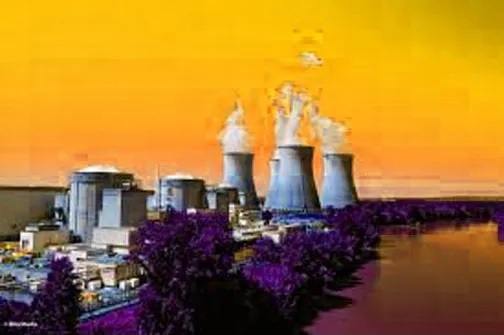
French Rivers Heat Up, Luck Is Not a Strategy for the Ukraine, – We Chat with Nuclear Expert Dr. Paul Dorfman
Hot Globe Substack, STEVE CHAPPLE, JUL 20, 2023
HOT GLOBE:
Paul, thanks for joining us. Let’s talk about nuclear and climate change.
PAUL DORFMAN:
Thanks, Steve. It’s important to understand that nuclear is very likely to be a significant climate casualty.
For cooling purposes nuclear reactors need to be situated by large bodies of water, which means either by the coast or inland by rivers or large water courses. Sea levels are rising much quicker than we had thought and inland the rivers are heating up, potentially drying up, and also subject to significant flooding and flash-flooding and inundation. The key issue for coastal nuclear is storm surge, which is basically where atmospheric conditions meet high tide, which is essentially what happens in Fukushima.
HOT GLOBE: The decommissioned nuclear plant in southern California at San Onofre is a case in point with the cans of nuclear waste still stored in a concrete containment box lapped by the rising tide–
DORFMAN: In France where I am right now [the government utility] just today put out once again warnings about their reactors having to power down because of low river flow, heated river flow. Now that’s not simply for reactor cooling. It’s about the water that the reactors are cooled by, which then need to be discharged back into the rivers. This super-heated water would basically kill the ecology. The reactors have to power down so as not to discharge heated waters back.
Nuclear has been touted as a potential ameliorated solution to climate. The problem, of course, is that nuclear will be, and relatively soon, a climate casualty, so coastal nuclear, unfortunately, is likely to flood via storm surge and inland nuclear will struggle more and more to get reactor cooling water and be able to discharge super-heated water to the receiving river waters.
“The notion that nuclear will will help us with climate is fortunately –unfortunately–simply not the case.”
HOT GLOBE: In America there’s an awful lot of new money sloshing around for climate remediation. Do you have an opinion on Small Nuclear Reactors?
DORFMAN: It’s not been simply I, but the former head of the US nuclear regulatory commission, the NRC, who coauthored a key study which says quite clearly that small modular reactors produce significantly more radioactive waste than conventional reactors. The waste issue is absolutely key, but there are other issues as well. I remember being invited to give a talk at the Royal United Services Institute in the UK, basically the governmental intellectual arm of the military. The compact design of small nuclear reactors is not suited to defense in depth of the nuclear island and the military guys really seemed to get and understand this, similar problem to conventional reactors in terms of safety and security as we’re finding out in Ukraine now.
The other issue is what’s known as the “economies of scale.” The bigger the nuclear plant the cheaper. ……….The economics of small nuclear reactors are proving deeply problematic. The cost per MW hour is rising. Already conventional reactors are hugely, massively, 4 to 5 times more expensive than renewables-plus, and it’s looking more and more that small nuclear reactors will have similar economic and finance problems, and of course small nuclear reactors are still in development. There are no functioning small nuclear reactors in the world producing conventional power, and they are many years from deployment.
So given the fact that we now know we have an existential climate crisis, small nuclear reactors and of course certainly conventional nuclear look to be far too costly and far too late to help the climate crisis.”
HOT GLOBE: Tell us a little bit about the situation in Zaporizhia. It comes and goes in the American media, but it seems pretty freaking scary to us over here in California! How do you estimate the dangers in the last month or so?
DORFMAN: We’ve been lucky so far but luck isn’t a strategy. Zaporizhia –6 very large nuclear power plants, the largest station in Europe with a very significant radiological inventory and critically very significant spent fuel, spent high level radiological nuclear inventory–is in the middle of a shooting war. Now there’s no way that any nuclear power plant can survive a concerted military attack. No nuclear power plant in the world is designed to do this. The International Atomic Energy agency has been very quiet about this for the last few decades which is kind of worrying given the fact that it seems obvious. Basically, people like me and many others haven’t wanted to talk about this in the past for fear of putting ideas into people’s heads, but the cat is really out of the bag now, and in an increasingly unstable world, it seems absolutely clear that nuclear risk for conventional civil nuclear plants is ramping up both in Zaporizhia and elsewhere whether in Israel, Iran, Pakistan, India or any other potential conflict zone. There’s a very real risk that existing and any new nuclear power plants will be in the firing line.
In Zaporizhia the key concern is cooling-–the cooling ponds are open but the reactors themselves are basically open in all these plants, too. They are in cold shutdown but they also need power to keep the internal sort of governance working, so both the reactors in cold shut down, not in active use and certainly the high level radioactive waste, need cooling. If something God forbid goes wrong you’ll see a worst case scenario. You’ll see what happened at Fukushima. Within eight hours you’ll see hydrogen buildup, hydrogen explosion. You’ll then see significant loss of cooling. If the backup diesel generators don’t run within a day or two, you could well see meltdown. The worst case prognosis is very grave.
HOT GLOBE: Oii. Explain the difference between Chernobyl and Fukushima in terms of Zaporizhia.
DORFMAN: Chernobyl was a graphite moderated reactor. Graphite is the kind of thing that you find on the inside of a pencil. When Chernobyl blew, this graphite was distributed high into the atmosphere and could blow far and wide. The kinds of reactors that you find in Zaporizhia are not, thank heavens, of that design. They are slightly newer Russian designed reactors which have gone through certain kinds of safety upgrades post Fukushima, not the spent fueling ponds but the reactors themselves, so if the worst were to happen, you wouldn’t see a Chernobyl. You would more likely see a Fukushima because you wouldn’t see this punch out of the graphite particles into the air, which would carry the radiation far and wide. What you would see, unfortunately, is very severe contamination of the immediate area and of the region, certainly of Ukraine, potentially Russia and certainly middle Europe. Now what’s also critically important post-accident is what would happen to the land. Ukraine is a very significant grain producing nation and other populations including the African population absolutely depend on this grain. So
that’s the thing about nuclear, if something goes wrong you can really start to write off a lot of people’s lives.
The high risk of this form of technology when we have other forms of technology that will lead us to net zero—there really isn’t any significantly good reason to go down the new nuclear route for whole sets of reasons and one of those reasons is we’re living in an increasingly unstable world and nuclear is increasingly, civil nuclear, is increasingly risky………………………………………….
more https://hotglobe.substack.com/p/nuclear-power-is-already-a-climate
Europe heatwave: EU sends planes to Greece as thousands flee fires. Highof 48C expected on continent as red spreads across the European weathermap.
Times 18th July 2023
https://www.thetimes.co.uk/article/europe-heatwave-weather-charon-forecast-latest-news-ffq9k9drn
A sleepy town of 8,000 located near the Sardinian capital of Cagliari,
Decimomannu is currently one of Italy’s hottest locations, and experts
had predicted record temperatures on Tuesday and Wednesday. Locals say many
have locked themselves in shuttered homes or fled to surrounding beaches.
Times 19th July 2023
Hundreds have fled as wildfires rage in Greece for a third day while
authorities brace for a new heatwave stoking tinderbox conditions across
the country. Dozens of homes were gutted in towns west of Athens, while the
fire brigade reported that a third fire had broken out on the island of
Rhodes. Firefighters worked throughout the night and four aircraft sent
from Italy and France will soon join the efforts to keep the flames at bay,
as a second heatwave is forecast to start in Greece on Thursday. Thousands
have also been evacuated in the Canary Islands and Switzerland in recent
days, as southern Europe is gripped by the ongoing wildfires and extreme
heat caused by the fossil-fuel-driven climate crisis.
Independent 19th July 2023
Heatwaves are new normal as 50C hits US and China – UN
The extreme temperatures sweeping the globe this week are the new normal in
a world warmed by climate change, the UN weather agency says. Temperatures
went over 50C (122F) in parts of the US and China on Sunday. The World
Meteorological Organisation warned the heatwave in Europe could continue
into August. Millions around the world are under heat advisories as
officials warn of danger to life from the hot temperatures. Night-time in
Europe and the US is not expected to bring widespread relief as
temperatures stay above 30C in places including Arizona or southern Spain.
BBC 17th July 2023
Climate Change Threatens U.S. Nuclear Strike Capability

A new report says flooding and heat waves exacerbated by climate change could complicate U.S. nuclear launches
Scientific American, By Minho Kim, E&E News on July 14, 2023
CLIMATEWIRE | Flooding, rising seas and extreme heat from climate change threaten the nation’s ability to launch some of its nuclear weapons, according to a new report by the Carnegie Endowment for International Peace.
The report warns that climate change could undermine U.S. efforts to stop adversaries from using nuclear weapons by interfering with the military’s operation and maintenance of missile launch systems that are a key part of nuclear deterrence.
Missile systems at a Navy submarine base in Georgia and at a launch field in North Dakota face increasing flood threats from climate change that could inundate for weeks at a time access roads that are used to transport missiles and maintenance equipment to the sites.
“The issue is really transporting the missiles,” report author and Carnegie fellow Jamie Kwong said in an interview Monday. “If you can’t transport the missiles and you have older weapons on board that perhaps need technical updates, that raises questions about the potential viability of missiles.”
At Whiteman Air Force Base in Missouri, heat waves are the major concern. Many climate models predict an increasing number of days with temperatures above 90 degrees Fahrenheit, the threshold for “black flag” days at the air base that limit the activities of armed personnel due to concerns about heat stroke.
CLIMATEWIRE | Flooding, rising seas and extreme heat from climate change threaten the nation’s ability to launch some of its nuclear weapons, according to a new report by the Carnegie Endowment for International Peace.
The report warns that climate change could undermine U.S. efforts to stop adversaries from using nuclear weapons by interfering with the military’s operation and maintenance of missile launch systems that are a key part of nuclear deterrence.
Missile systems at a Navy submarine base in Georgia and at a launch field in North Dakota face increasing flood threats from climate change that could inundate for weeks at a time access roads that are used to transport missiles and maintenance equipment to the sites.
“The issue is really transporting the missiles,” report author and Carnegie fellow Jamie Kwong said in an interview Monday. “If you can’t transport the missiles and you have older weapons on board that perhaps need technical updates, that raises questions about the potential viability of missiles.”
At Whiteman Air Force Base in Missouri, heat waves are the major concern. Many climate models predict an increasing number of days with temperatures above 90 degrees Fahrenheit, the threshold for “black flag” days at the air base that limit the activities of armed personnel due to concerns about heat stroke.
“That has implications for pilot readiness,” Kwong said. Whiteman is home to B-2 Spirits, the only U.S. stealth nuclear bombers that are undetectable to enemy radar.
Air-, land- and sea-based weapons systems form the three legs of the U.S. nuclear triad that the Pentagon calls the “backbone of America’s national security.”
“Each leg of the U.S. nuclear triad could be detrimentally affected by climate change,” Kwong said. “…………………………………
The report is the first to look at the impacts of climate change on the U.S. nuclear deterrent capabilities, Kwong said. To assess the risks, Kwong overlaid the predictions from government climate models such as the NOAA model for sea-level rise with critical nuclear warhead facilities that represent each element of the triad.
“The point of this report is to demonstrate that we’re not thinking about this enough,” Kwong said. “One of the most surprising things about my research was how little we’re paying attention to this, which is surprising, given the [importance] of nuclear weapons to U.S. national security interests.”…………..
At the Kings Bay, Ga., naval base, the access road to the Strategic Weapons Facility Atlantic, where submarines with nuclear warheads get repaired and receive supplies, is projected to flood once a year on average, the report found. The base is one of only two sites equipped to fully support a ballistic missile submarine fleet, one of the most important legs of the U.S. nuclear system for its clandestine operations under the sea.
The launch fields in Minot, N.D., could face similar transportation problems, Kwong said. The access roads connecting about 150 underground missile launch pads are unpaved dirt roads “particularly vulnerable to flooding,” the report says…………………..
Heat waves could also impact the stealth bombers because rising temperatures cause air density to drop, making takeoff difficult, the report says. Commercial aircraft comparable to B-2s in size are grounded at 118 F, according to the report.
Radar-absorbing stealth skins of the B-2 bombers are also highly sensitive to heat and humidity, requiring “special, intensive maintenance” during heatwaves………. https://www.scientificamerican.com/article/climate-change-threatens-u-s-nuclear-strike-capability/
1 This Month
19 February – VIRTUAL EVENT-Decision Time: AI and Our Nuclear Arsenal
12:45 p.m. Central / 1:45 p.m. Eastern
To see nuclear-related stories in greater depth and intensity – go to https://nuclearinformation.wordpress.com

-
Archives
- February 2026 (141)
- January 2026 (308)
- December 2025 (358)
- November 2025 (359)
- October 2025 (376)
- September 2025 (258)
- August 2025 (319)
- July 2025 (230)
- June 2025 (348)
- May 2025 (261)
- April 2025 (305)
- March 2025 (319)
-
Categories
- 1
- 1 NUCLEAR ISSUES
- business and costs
- climate change
- culture and arts
- ENERGY
- environment
- health
- history
- indigenous issues
- Legal
- marketing of nuclear
- media
- opposition to nuclear
- PERSONAL STORIES
- politics
- politics international
- Religion and ethics
- safety
- secrets,lies and civil liberties
- spinbuster
- technology
- Uranium
- wastes
- weapons and war
- Women
- 2 WORLD
- ACTION
- AFRICA
- Atrocities
- AUSTRALIA
- Christina's notes
- Christina's themes
- culture and arts
- Events
- Fuk 2022
- Fuk 2023
- Fukushima 2017
- Fukushima 2018
- fukushima 2019
- Fukushima 2020
- Fukushima 2021
- general
- global warming
- Humour (God we need it)
- Nuclear
- RARE EARTHS
- Reference
- resources – print
- Resources -audiovicual
- Weekly Newsletter
- World
- World Nuclear
- YouTube
-
RSS
Entries RSS
Comments RSS
 nuclear-news