 Climate optimism has been a disaster. We need a new language – desperately, Guardian 21st Sept 2017 Ellie Mae O’Hagan
Climate models have not ‘exaggerated’ global warming
Factcheck: Climate models have not ‘exaggerated’ global warming , Skeptical Science, by Zeke HausfatherThis is a re-post from Carbon Brief 6 Oct 17 A new study published in the Nature Geosciences journal this week by largely UK-based climate scientists has led to claims in the media that climate models are “wrong” and have significantly overestimated the observed warming of the planet.
Here Carbon Brief shows why such claims are a misrepresentation of the paper’s main results. In reality, the results obtained from the type of model-observation comparisons performed in the paper depend greatly on the dataset and model outputs used by the authors.
Much of the media coverage surrounding the paper, Millar et al, has focused on the idea that climate models are overestimating observed temperatures by around 0.3C, or nearly 33% of the observed warming since the late 1800s. For example, the Daily Mailreported:
According to these models, temperatures across the world should now be at least 1.3 degrees above the mid-19th century average, which is taken as a base level in such calculations. But the British report demonstrates that the rise is only between 0.9 and 1 degree.
Lead author Dr Richard Millar and his co-authors have pushed back against such media coverage, releasing a statement which says:
A number of media reports have asserted that our [study] indicates that global temperatures are not rising as fast as predicted by the Intergovernmental Panel on Climate Change (IPCC), and hence that action to reduce greenhouse gas emissions is no longer urgent. Both assertions are false. Our results are entirely in line with the IPCC’s 2013 prediction that temperatures in the 2020s would be 0.9-1.3 degrees above pre-industrial [levels].
[Carbon Brief’s guest post by Dr Millar earlier this week includes the paper’s key figures. Additionally, one of his co-authors, Prof Piers Forster, provides further reaction at the end of this article.]
Contrary to media claims, the study found that warming is consistent with the range of IPCC models, albeit a bit lower than the average of all the models.
Indeed, as Carbon Brief explains in detail below, the difference between models and observations turns out to depend largely on what climate model outputs and observational temperature series are used……….https://www.skepticalscience.com/factcheck-models-have-not-exaggerated-warming.html
Turkey Point Nuclear Power Station not adequately prepared for sea level rise
State Senator Says FPL Isn’t Preparing Miami’s Nuclear Plant for Sea-Level Rise, Miami New Times, | OCTOBER 5, 2017 The Turkey Point Nuclear Generating Station is built directly on the waterfront in Homestead — a location that has exposed the plant to serious natural disasters. The power plant survived Hurricane Andrew in 1992, but the storm’s 175 mph winds knocked out communication lines, disabled the emergency fire-safety system, and “severely cracked” an exhaust stack that could have destroyed the plant’s back-up power system if the stack had toppled, according to the Union of Concerned Scientists.
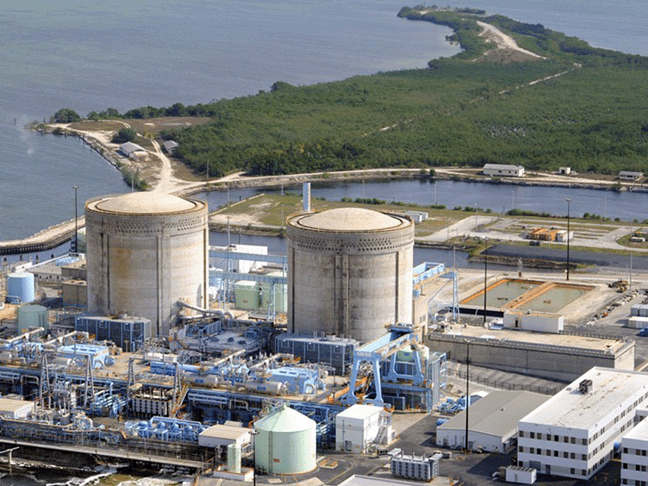
So while Florida Power & Light (FPL) proposes expanding Turkey Point and building two more reactors there, Miami state Sen. Jose Javier Rodriguez is asking for safer measures to prepare for sea-level rise and major hurricanes — or for FPL to drop the expansion plans altogether. This past August 23, Rodriguez sent the U.S. Nuclear Regulatory Commission (NRC), which regulates nuclear power plants, a letter demanding that FPL add greater sea-level-rise protections to its development plan.
Rodriguez made the letter public this week because the NRC had scheduled a hearing today to move forward with Turkey Point’s expansion plans; Hurricane Irma delayed the meeting, but it’s still expected to happen by the end of December. Rodriguez is asking the NRC to continue to delay ruling on the plan’s approval until FPL addresses the concerns of environmentalists and activists.
“They’re only taking into account one foot of sea-level rise in the future,” Rodriguez tells New Times. “Some projections — we’re hopeful those projections are wrong — but some projections are orders of magnitude higher than that.”…….
n his August letter to the NRC, Rodriguez laid out three specific concerns, which clean-energy activists opposed to FPL’s expansion plans have voiced repeatedly: First, Rodriguez said Turkey Point’s Combined Operating License application (COL) accounts for only a foot of sea-level rise by 2100 even though the National Oceanic and Atmospheric Administration warned last January that the seas could rise as much as 8.2 feet in that time period.
Second, Rodrigeuz said he was upset the plan covered only the new reactors — Units 6 and 7 — that FPL plans to build and does not propose any changes for the existing reactors. Those are the same reactors attached to cooling canals that leak low-level radioactive waste into Biscayne Bay and salt water into Miami’s drinking-water aquifer. Environmentalists have long complained that Turkey Point sits too close to protected parks and drinking-water sources.
Third, the lawmaker added he thought FPL’s applications did not properly account for what might happen to spent nuclear fuel rods that the plants produce. ….
“That also is obviously a huge concern all over the country,” Rodriguez says. “There really isn’t a plan for how these nuclear facilities store their waste.”
Anti-nuclear activists argue that if safely storing spent rods is this difficult, nuclear plants simply should not be built. Investigative comedian John Oliver earlier this yrar devoted a long segment on his HBO show Last Week Tonight to the nuclear-waste storage problem:
FPL recently won the right to store low-level radioactive waste from the expansion site underground in a rocky zone, but some environmental activists worry the waste might leak into Miami’s largest source of drinking water, the Biscayne Aquifer. Lawyers for the City of Miami asked the NRC to force FPL to rewrite its plan, but NRC regulators say FPL has done enough to mitigate those concerns.
Rodriguez’s latest letter comes amid scrutiny of FPL following Hurricane Irma. On September 11, Newsweek reported that FPL had not yet finished reinforcing Turkey Point against the elements before Irma arrived. According to NRC documents Newsweek obtained, Turkey Point’s own operators told the NRC that the plant is still working to seal doors and improve floodwater-drainage mechanisms…….. http://www.miaminewtimes.com/news/turkey-point-miami-nuclear-plant-sea-level-rise-plan-inadequate-miami-lawmaker-warns-9722390
40 large Catholic institutions put their money where fossil fuel investment isn’t
 Shunning Fossil Fuels, 40 Catholic Groups Seek Climate Action, Scientific American
The coalition is the largest number of Catholic institutions to team up for a shift to green energy By Alister Doyle, Reuters on October 3, 2017 OSLO (Reuters) – Forty Roman Catholic groups said on Tuesday they were shunning investments in fossil fuels and urged others to follow suit.
The coalition was the largest number of Catholic institutions, in countries including Australia, South Africa, Britain and the United States, to team up for a shift to greener energies, the Global Catholic Climate Movement said.
Among those taking part was Assisi’s Sacro Convento and other Catholic institutions in the Italian town, birthplace of Saint Francis, who inspired Pope Francis.
The “joint divestment from fossil fuels is based on both their shared value of environmental protection and the financial wisdom of preparing for a carbon-neutral economy,” the Global Catholic Climate Movement said.
It did not estimate the value of their fossil fuel holdings. Several, contacted by Reuters, said they had few or none to sell and wanted mainly to rule out future investments and urge others to divest.
The Assisi municipality allied itself with the 40. “Many people say that Assisi is the city on the mountain – all people can see the choices, political and environmental, that Assisi takes,” mayor Stefania Proietti told Reuters.
She said the town was investing in cleaner energy, such as solar panels on rooftops, and electric vehicles……..
The Catholic Church claims 1.2 billion members.
Ben Caldecott, founding director of the Oxford sustainable finance programme at the University of Oxford, said: “Groups with moral authority, religious groups being a good example, are likely to have a disproportionate impact in terms of increasing stigma” of investing in fossil fuels.
The International Energy Agency projects that fossil fuels will account for more than half of world energy demand in 2040, even with a big green shift. Fossil fuel companies such as Exxon Mobil or Royal Dutch Shell say they are limiting emissions.
“Today’s announcement is a further sign we are on the way to achieving our collective mission,” said Christiana Figueres, the U.N.’s climate chief at the time of the Paris Agreement. “We still have a long way to go, however.” https://www.scientificamerican.com/article/shunning-fossil-fuels-40-catholic-groups-seek-climate-action/
Climate risks prompt top investment groups to push for action
Top investment groups push for action on climate risks, Ft.com 2 Oct 17 by Ed Crooks in New York and Attracta Mooney in London
BlackRock and others demand disclosure at US energy companies, analysis shows
Large investment groups including BlackRock and Vanguard have stepped up pressure on US energy companies to address the risks associated with climate change, despite the Trump administration’s lack of action to address the threat.
An analysis of shareholder votes at this year’s annual meetings showed investors have taken a more active role in pushing for information on climate risks, often voting for improved disclosure against company board recommendations. In votes at seven of the largest US energy companies this year, the 30 largest investors switched their votes to support disclosure on climate risk a total of 38 times, having opposed similar resolutions in 2016, according to ShareAction, a campaign group.
The data came from regulatory filings compiled by Proxy Insight, an information service. The increasingly assertive position taken by large investors had its most significant impacts at ExxonMobil and Occidental Petroleum, two of the largest US oil groups. There was majority support for proposals calling on the companies to publish regular reports on the possible impact on their businesses of policies to address the threat of climate change. In both cases, BlackRock and Vanguard, the world’s two largest fund managers, voted to support the proposals. …….
Edward Kamonjoh, executive director of the 50/50 Climate Project, said he expected investors to seek better explanations from fund managers when they decide not to support climate-related resolutions. “Large fund managers with poor voting records on climate risk can expect public challenges on the dichotomy between their engagement priorities and voting practices,” he said.https://www.ft.com/content/48ad5476-a6aa-11e7-ab55-27219df83c97
Christian leaders make the moral case for climate action
We stand committed to protecting migrant families, all of whom deserve our help. But we’re also committed to limiting the cause of needless future suffering.
The scientific consensus on climate change is clear.
For believers in Jesus Christ, the divine command to love one’s neighbour requires us to understand how our actions – or inaction – affect others. Christians must reduce the causes of climate change. The call to love our neighbours requires no less.

The Christian case for tackling climate change https://www.christiantoday.com/article/the.christian.case.for.tackling.climate.change/114897.htm Bishop John Arnold and Bishop Martin Lind This autumn marks the 500th anniversary of the great schism that divided the Christian Church. Today, Christian brothers and sisters on both sides of this historical divide work together in pursuit of the moral vision that is laid out in the Gospels. We house the homeless together, feed the hungry together, and pacify conflicts together.
Unfortunately, the disaster in Syria was undergirded by another disaster, and one that will continue to grow unless we stop it. The tragic truth is that experts believe that the Syrian drought was made more likely by climate change.
Droughts have happened in the Near East and around the world for millennia. Climate change is different. Climate change is deeply and drastically altering long-established patterns of rainfall. Small-scale farmers’ and herders’ livelihoods depend on predicting the weather, and for them, the drastic and ongoing alteration of weather patterns means disaster.
Syria provides a real-world example of the consequences of a climate-forced drought, with analysis provided by, among others, former leaders of the United States military. The Syrian drought drove newly impoverished people out of the countryside, creating enormous pressure in urban areas. In Damascus, Aleppo, and other cities, a dramatically expanded presence of desperately poor people fed into to a wider sense of unrest.
Climate change did not cause the refugee crisis. But climate change very probably contributed to the social crisis that prompted it. Events such as the drought are more likely to occur with greater frequency and severity due to climate change.
Unfortunately, the migration of the past several years is only a precursor of what’s to come. Drought is one consequence of climate change and one that will have long-lasting repercussions. Another is sea level rise.
Over the coming decades, the highly exposed, highly populated coast of Bangladesh will probably see sea level rise that will flood the homes of tens of millions of people, driving human migration on a scale the Earth has never seen. Caring for these migrants will challenge all of us.
We stand committed to protecting migrant families, all of whom deserve our help. But we’re also committed to limiting the cause of needless future suffering.
The scientific consensus on climate change is clear. Burning fossil fuels such as coal, gas, and oil adds greenhouse gases to the atmosphere. In the atmosphere, these added gases function like a blanket, trapping heat from the sun and holding it close to the Earth.
The consequences of a warmer Earth are profound – and they are already here. From the countryside of Syria to our backyards in London, climate change is disrupting how we live.
Because a warmer atmosphere holds more moisture, the United Kingdom has already seen increases in average rainfall. Heavier rains mean more flooded homes and businesses, more stresses on expensive infrastructure, and days of missed school or work. Coastal areas are also vulnerable to increased flooding from sea-level rise and storm surge.
For believers in Jesus Christ, the divine command to love one’s neighbour requires us to understand how our actions – or inaction – affect others. Christians must reduce the causes of climate change. The call to love our neighbours requires no less.
Worldwide, Christians are now observing the ecumenical Season of Creation, the period from September 1to October 4 when we pray and act together to protect the good gift of Creation. As was witnessed by the joint statement for World Day of Prayer for Creation, jointly issued by Pope Francis and Patriarch Bartholomew, environmental protection is being met with a unified Christian response.
Here in the United Kingdom, the Catholic Church of Wales and England is supporting the livesimply Award. The Catholic communities that have received the award have made real progress in caring for Creation. In Stowmarket, Our Lady’s Parish created reusable shopping bags for parishioners. In Leamington, the Parish of St Peter Apostle encouraged parishioners to walk or cycle to church to shrink their carbon footprint. These parishes join 25 others who have achieved the rigorous standards of the award.
The Lutheran Church in Great Britain has taken steps to make its practices more sustainable and to incorporate care for creation into worship and education services. The church has diverted trash from landfills by instituting the use of reusable cups and service materials and installing recycling bins. It has highlighted climate change and environment issues in weekly intercessions and educated congregants about the need to reduce, re-use and recycle as part of Lenten Disciplines. The church has undertaken a significant education campaign, discussing the importance of caring for our environment with children during children’s addresses and children’s church, planning a ‘litter-picking’ event with the children in the near future.
Now it’s up to all Christians to continue and expand this collective response.
Catholic or Lutheran, ordained or lay, we’re all called by our Creator to love and protect the human family and our common home. We are standing together to answer God’s call.
John Arnold is Bishop of the Salford Diocese of the Catholic Church and chairperson of the Environmental Justice Committee of the Bishops’ Conference of England and Wales.
Dr Martin Lind is Bishop of the Lutheran Church in Great Britain.
Global carbon emissions remained static in 2016 – (one bit of welcome news)
 Global carbon emissions stood still in 2016, offering climate hope, The new data is a welcome sign of progress in the battle against global warming but many challenges remain, including methane from cattle, Guardian, Damian Carrington, 28 Sept 17, Global emissions of climate-warming carbon dioxide remained static in 2016, a welcome sign that the world is making at least some progress in the battle against global warming by halting the long-term rising trend.
All of the world’s biggest emitting nations, except India, saw falling or static carbon emissions due to less coal burning and increasing renewable energy, according to data published on Thursday by the Netherlands Environmental Assessment Agency (NEAA). However other mainly developing nations, including Indonesia, still have rising rates of CO2 emissions.
Stalled global emissions still means huge amounts of CO2 are being added to the atmosphere every year – more than 35bn tonnes in 2016 – driving up global temperatures and increasing the risk of damaging, extreme weather. Furthermore, other heat-trapping greenhouse gases, mainly methane from cattle and leaks from oil and gas exploration, are still rising and went up by 1% in 2016.
“These results are a welcome indication that we are nearing the peak in global annual emissions of greenhouse gases,” said climate economist Prof Lord Nicholas Stern at the London School of Economics and president of the British Academy.
“To realise the goals of the Paris agreement and hold the increase in global average temperature to well below 2C, we must reach peak emissions as soon as possible and then achieve a rapid decline soon afterwards,” Stern said. “These results from the Dutch government show that there is a real opportunity to get on track.”………
Stern said many of the big emitting nations had achieved significant reductions in 2016: “However, all countries have to accelerate their emissions reductions if the Paris goals are to be met.” He said this could also drive development in poorer nations: “We can now see clearly that the transition to a low-carbon economy is at the heart of the story of poverty reduction and of the achievement of the UN Sustainable Development Goals.”
The new Dutch report shows CO2 emissions from China, the world’s biggest emitter, fell 0.3% in 2016. US CO2 emissions fell 2.0% and Russia’s by 2.1%, with the EU flat, although UK emissions tumbled by 6.4%, as coal burning plunged.
Of the top five emitters, only India’s CO2 emissions rose, by 4.7%. Significant increases were also seen in Indonesia, Malaysia, the Philippines, Turkey and Ukraine. https://www.theguardian.com/environment/2017/sep/28/global-carbon-emissions-stood-still-in-2016-offering-climate-hope
India-USA civil nuclear cooperation agreement is really just a weapons marketing deal


 Indo-US Nuclear Agreement Is An Arms Deal: Ex-US Senator Larry Pressler https://www.ndtv.com/india-news/indo-us-nuclear-agreement-is-an-arms-deal-ex-us-senator-larry-pressler-1756557 Former US Senator Larry Pressler said the focus of Indo-US bilateral partnership should be on ‘agriculture, technology and health care’ All India | Press Trust of India September 29, 2017 NEW DELHI: The civil nuclear cooperation agreement between India and the US is more of an “arms deal”, but the focus of the bilateral partnership should be on “agriculture, technology and health care”, former US Senator Larry Pressler said today. Mr Pressler, who has served as chairman of the US Senate’s Arms Control Subcommittee, also had a word of caution for Pakistan.
He said if Pakistan did not act on terrorism, the Trump administration could declare it “a terror state”. “I would love to see peaceful use of nuclear energy, but I am worried that so far it (nuclear agreement) has mostly been an arms deal. It seems to me that much of the new agreement is a large arms sale to Indians,” Mr Pressler said.
The former US Senator was speaking during the launch of his book.
India and the US signed the nuclear cooperation agreement in October 2008, ending India’s isolation by the West in the nuclear and space arena. The deal has given a significant boost to India’s nuclear energy production.
Mr Pressler said former US President Barack Obama’s visit to New Delhi was “largely an arms sale trip”. On whether the US could declare Pakistan a “terror state”, he said, “Unless Pakistan does not change certain things, it may happen. Moreover, the Trump administration is making sounds that they are getting near this. And I hope they do.”
Mr Pressler is known for advocating amendments in the 1990s which banned most of the economic and military assistance to Pakistan, unless the US President certified on an annual basis that Islamabad did not possess nuclear explosive devices.
Puerto Rico could go 100% renewable energy

Above – solar rooftop keep power going, in flooded Indian city
In Maria’s Wake, Could Puerto Rico Go Totally Green?, Progressive, by Harvey Wasserman, September 28, 2017 The ecological and humanitarian destruction of Puerto Rico has left the world aghast. But there is a hopeful green-powered opportunity in this disaster that could vastly improve the island’s future while offering the world a critical showcase for a sane energy future.
By all accounts Hurricane Maria has leveled much of the island, and literally left it in the dark. Puerto Rico’s electrical grid has been extensively damaged, with no prospects for a return to conventionally generated and distributed power for months to come.
In response Donald Trump has scolded the island for it’s massive debt, and waited a full week after the storm hit to lift a shipping restriction requiring all incoming goods to be carried on US-flagged ships. (That restriction is largely responsible for the island’s economic problems in the first place.)
The Puerto Rico Electric Power Authority is a state-owned operation that hosts a number of solar and wind farms, as well as a network of hydroelectric dams. But the bulk of its energy supply has come from heavy industrial oil, diesel and gas burners. It also burns coal imported from Colombia at a plant in Guyama.
The fossil burners themselves apparently were left mostly undamaged by Maria. But the delivery system, a traditional network of above-ground poles and wires, has essentially been obliterated……..
With solar panels and battery backups, every one of those hospitals could be energy self-sufficient. Throughout the U.S. such technology is now being applied at medical facilities, data processing and storage facilities, and other critical units.
According to Mark Sommer, a California-based energy expert, Puerto Rico could safeguard such critical facilities and far more quickly restore its power by letting go of the old paradigm of central-generated and distributed electricity, and moving instead to a decentralized network of green-based micro-grids.
Micro-grids are community-based networks that power smaller geographic and consumer areas than the big central grids like the one that served Puerto Rico. Mostly they are based on decentralized generation, including networks of roof-top solar panels. As Sommer puts it: “renewably powered microgrids are a relatively simple and already mature technology that can be deployed in months rather than years and once the initial investment is recovered deliver dramatically lower energy bills.”
Because Puerto Rico is mountainous and hosts many small, remote villages, the island’s best hope for a manageable energy future is with decentralized power production in self-sustaining neighborhoods. Built around small-scale wind and solar arrays, with battery backups protected from inevitable floods and hurricanes, Puerto Rico could protect its electricity supply from the next natural disaster while building up a healthy, low-cost energy economy……
Puerto Rico’s best hope for a safe, prosperous, sustainable energy future is to take control of its power supply with a mix of renewable generation, protected backup storage, and a decentralized, local-based network of community-owned microgrids. http://progressive.org/dispatches/could-puerto-rico-go-totally-green/
Hundreds of $billions a year – the hidden costs of climate change
Hidden Costs of Climate Change Running Hundreds of Billions a Year, A new report warns of a high price tag on the impacts of global warming, from storm damage to health costs. But solutions can provide better value, the authors say. National Geographic
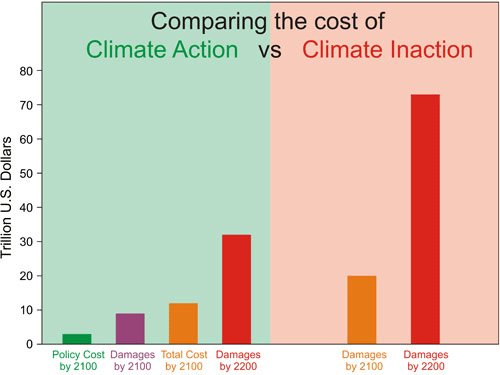
Extreme weather, made worse by climate change, along with the health impacts of burning fossil fuels, has cost the U.S. economy at least $240 billion a year over the past ten years, a new report has found.
And yet this does not include this past month’s three major hurricanes or 76 wildfires in nine Western states. Those economic losses alone are estimated to top $300 billion, the report notes. Putting it in perspective, $300 billion is enough money to provide free tuition for the 13.5 million U.S. students enrolled in public colleges and universities for four years.
In the coming decade, economic losses from extreme weather combined with the health costs of air pollution spiral upward to at least $360 billion annually, potentially crippling U.S. economic growth, according to this new report, The Economic Case for Climate Action in the United States, published online Thursday by the Universal Ecological Fund.
The Caribbean and climate refugees

Are Hurricanes Creating Climate Refugees In The Caribbean? Forbes, , 21 Sept 17 “………Prime Minister Roosevelt Skerrit declared that 95% of the country of Dominica was destroyed by Hurricane Maria. I suspect that many of the 73,000 residents left the country and with that level of destruction, when can (or will) they go back? Other countries like Cuba, Puerto Rico and the British/U.S. Virgin Islands took massive hits from Irma and Maria as well.Some reports estimate that Puerto Rico may be without power for 4 to 6 months. Places like St. Bart, Anguilla, St. Maarten, Barbuda and Dominica are much smaller, and I am already noticing that they do not get mentioned very much in the social and broader media discussions.
It is for these reasons that I wonder if some of the residents will ever return. Maria Cristina Garcia is the author of the book, Climate Refugees: The Environmental Origins of Refugee Migrations. In a Cornell University media release, Garcia stated
People have been displaced by climate for millennia…but we are now at a particular historical moment, facing a new type of environmentally driven migration that will be more fast and furious. It will require incredible adaptability and political will to keep up with the changes that are forecasted to happen…..
Garcia is also concerned because climate refugees (displaced due to sea level rise, loss of agricultural productivity, storm-related destruction) would not fall under the current legal designations for refugees. U.S. law bases refugee status on persecution related to religion, race, political viewpoint, or nationality. Other international laws are similar and provide no protection.
The U.S. military is also concerned about climate refugees. A 2011 National Academies study commissioned by the U.S. Navy discussed the various threats and political destabilization that an influx of climate refugees in certain nations would cause. Bangladesh and India may offer a glimpse of such border conflicts already. The same report also expressed concerns about U.S. military resources being stretched thin for climate-related natural disaster relief……..https://www.forbes.com/sites/marshallshepherd/2017/09/21/are-hurricanes-creating-climate-refugees-in-the-caribbean/#163d49ac5e97
Pilgrim Nuclear power station forced to reduce power due to stormy weather and rising ocean temperatures
 Stormy weather forces Pilgrim nuclear plant to power down, es Pilgrim nuclear plant to power down, http://www.patriotledger.com/news/20170922/stormy-weather-forces-pilgrim-nuclear-plant-to-power-down By Christine Legere / Cape Cod Times, PLYMOUTH — Tropical storm Jose has been churning up the waters of Cape Cod Bay and creating operational problems for Pilgrim Nuclear Power Station in the process.
Pilgrim operators reduced the reactor’s power to 70 percent of its maximum Thursday due to rising ocean water temperatures. The temperature of the seawater used to cool the reactor cannot exceed 75 degrees under standards set by the Nuclear Regulatory Commission.
“We took action when it reached 71 degrees to ensure we did not challenge the limit,” said Patrick O’Brien, spokesman for Entergy, Pilgrim’s owner and operator.
Pilgrim draws up to 500 million gallons daily from Cape Cod Bay. The water cools the reactor and the turbine, passing through a network of thousands of tubes.
The seawater being discharged by the nuclear reactor is considerably hotter than the water drawn in — as much as 30 degrees hotter. The locations of the water intake structure and discharge structure at Pilgrim are separated by a jetty to help prevent the warm discharge water from migrating to the intake area and boosting the water temperature there.
“Previously, during storm monitoring, operations identified the potential for ocean conditions that would require preemptive actions and a power reduction as salt service water temperatures rose,” O’Brien said in his email. “Once predetermined criteria were met, operators commenced power reduction.”
Nuclear plants are about one-third efficient, explained David Lochbaum, director of the Nuclear Safety Program for the Union of Concerned Scientists.
“Of the three units of energy produced by the reactor core, one third goes out onto the transmission lines as electricity, and two thirds gets rejected to the nearby body of water,” Lochbaum said. “Reducing the reactor power level reduces the amount of heat energy carried away by the discharge flow, thus also reducing the amount of warm water sneaking around the jetty to re-enter the plant.”
The reactor will remain at reduced power until ocean temperatures allow for its return to full power operation, O’Brien said. — Follow Christine Legere on Twitter: @ChrisLegereCCT.
Trump putting in peril the future of an entire generation – Leonardo Di Caprio
 Leonardo DiCaprio blasts Trump over climate change http://pagesix.com/2017/09/22/leonardo-dicaprio-blasts-trump-over-climate-change/By Jessica Sager
The Oscar winner, 42, met with then-president-elect Trump, 71, in December, only to have the POTUS disregard their conversation once he took office.
“We presented him with a comprehensive plan to tackle climate change, while also simultaneously harnessing the economic potential of green jobs,” DiCaprio recalled at the Yale Climate Conference on Tuesday (via The Hartford Courant). “We talked about how the United States has the potential to lead the world in clean-energy manufacturing and research and development.”
Once in office, Trump pledged to withdraw from the Paris climate accord, which regulates greenhouse emissions, and appointed climate change skeptic Scott Pruitt to head the Environmental Protection Agency.
The moves left staunch environmentalist DiCaprio nonplussed.
“We should not have people in office who do not believe in facts and truths and modern science that are able to manipulate and risk the entire future of this entire generation,” he fumed. “We are at that turning point right now, and we are going to look back at this point in history, and frankly this administration, and certain people are going to be vilified for not taking action. They really are. And it’s up to this generation, it’s up to all of you to get involved and make a difference.”
The motivation of climate denial groups
Climate deniers want to protect the status quo that made them rich
Sceptics prefer to reject regulations to combat global warming and remain indifferent to the havoc it will wreak on future generations , Guardian, John Gibbons, 22 Sept 17 From my vantage point outside the glass doors, the sea of grey hair and balding pates had the appearance of a golf society event or an active retirement group. Instead, it was the inaugural meeting of Ireland’s first climate denial group, the self-styled Irish Climate Science Forum (ICSF) in Dublin in May. All media were barred from attending.
Its guest speaker was the retired physicist and noted US climate contrarian, Richard Lindzen. His jeremiad against the “narrative of hysteria” on climate change was lapped up by an audience largely composed of male engineers and meteorologists – mostly retired. This demographic profile of attendees at climate denier meetings has been replicated in London, Washington and elsewhere.
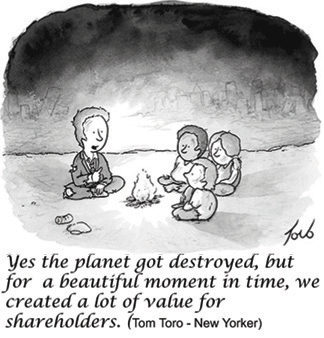 How many people in the room had children or indeed grandchildren, I wondered. Could an audience of experienced, intelligent people really be this blithely indifferent to the devastating impacts that unmitigated climate change will wreak on the world their progeny must inhabit? These same ageing contrarians doubtless insure their homes, put on their seatbelts, check smoke alarms and fret about cholesterol levels.
Why then, when it comes to assessing the greatest threat the world has ever faced and when presented with the most overwhelming scientific consensus on any issue in the modern era, does this caution desert them? Are they prepared quite literally to bet their children’s lives on the faux optimism being peddled by contrarians?
“We have been repeatedly asked: ‘Don’t you want to leave a better Earth for your grandchildren,’” quipped the comedian and talk show host John Oliver. “And we’ve all collectively responded: ‘Ah, fuck ’em!’” This would be a lot funnier were it not so close to the bone.
Climate Change (Abbreviated): Last Week Tonight with John Oliver (HBO)
Short-termism and self-interest is part of the answer. A 2012 study in Nature Climate Change presented evidence of “how remarkably well-equipped ordinary individuals are to discern which stances towards scientific information secure their personal interests”.
This is surely only half the explanation. A 2007 study by Kahan et al on risk perception identified “atypically high levels of technological and environmental risk acceptance among white males”. An earlier paper teased out a similar point: “Perhaps white males see less risk in the world because they create, manage, control and benefit from so much of it.” Others, who have not enjoyed such an armchair ride in life, report far higher levels of risk aversion…….
Facing up to climate change also means confronting the uncomfortable reality that the growth-based economic and political models on which we depend may be built on sand. In some, especially the “winners” in the current economic system, this realisation can trigger an angry backlash.
This at last began to make sense of these elderly engineers crowding into hotel rooms to engage in the pleasant and no doubt emotionally rewarding group delusion of imagining climate change to be some vast liberal hoax.
In truth, the arguments hawked around by elderly white male climate deniers like Fred Singer, William Happer and Nigel Lawson among others are intellectually threadbare, pockmarked with contradictions and offer little more than a cherry-picked parody of how science actually operates. Yet this is catnip for those who choose to be deceived.
It is, however, deeply unfair to tar all elderly white men as reckless and egotistical; notable exceptions include the celebrated naturalist David Attenborough……
A century after elderly military leaders cheerfully sent millions of young men from the trenches to their slaughter in the first world war, the defiant mood of today’s climate deniers is best captured by the stirring words of Blackadder’s General Melchett: “If nothing else works, a total pig-headed unwillingness to look facts in the face will see us through!” https://www.theguardian.com/environment/2017/sep/22/climate-deniers-protect-status-quo-that-made-them-rich
Optimism about climate change is not serving us well
The extreme weather of the past months is a game-changer: surely now the world is ready to talk about climate change as a civilisation-collapsing catastrophe. A lot of work has been done since to understand why climate change is so
uniquely paralysing, most prominently by George Marshall, author of the
book Don’t Even Think About It.
uniquely paralysing, most prominently by George Marshall, author of the
book Don’t Even Think About It.
Marshall describes climate change as “a perfect and undetectable crime everyone contributes to but for which no one
has a motive”. Climate change is both too near and too far for us to be
able to internalise: too near because we make it worse with every minute
act of our daily lives; too far because until now it has been something
that affects foreign people in foreign countries, or future versions of
ourselves that we can only conceive of ephemerally.
has a motive”. Climate change is both too near and too far for us to be
able to internalise: too near because we make it worse with every minute
act of our daily lives; too far because until now it has been something
that affects foreign people in foreign countries, or future versions of
ourselves that we can only conceive of ephemerally.
It is also too massive.
The truth is if we don’t take action on climate change now, the food
shortages, mass migration and political turmoil it will cause could see the
collapse of civilisation in our lifetimes. Which of us can live with that
knowledge? It’s not surprising, then, that some years ago climate
activists switched to a message of optimism.
The truth is if we don’t take action on climate change now, the food
shortages, mass migration and political turmoil it will cause could see the
collapse of civilisation in our lifetimes. Which of us can live with that
knowledge? It’s not surprising, then, that some years ago climate
activists switched to a message of optimism.
But the message of optimism
has done is create a giant canyon between the reality of climate change and
most people’s perception of it. An optimistic message has led to
complacency – “people are saying it’s doable so it will probably be
fine” – and championing success stories has convinced people that the
pathetic, threadbare action taken by governments so far is sufficient.
has done is create a giant canyon between the reality of climate change and
most people’s perception of it. An optimistic message has led to
complacency – “people are saying it’s doable so it will probably be
fine” – and championing success stories has convinced people that the
pathetic, threadbare action taken by governments so far is sufficient.
I’ve lost count of the sheer number of politically engaged, conscientious
people I’ve met who have simply no idea how high the stakes are. Could
the language of emergency work? It has never been tried with as much
meteorological evidence as we have now, and we’ve never had a target as
clear and unanimous as the one agreed in Paris.
people I’ve met who have simply no idea how high the stakes are. Could
the language of emergency work? It has never been tried with as much
meteorological evidence as we have now, and we’ve never had a target as
clear and unanimous as the one agreed in Paris.
The one thing I know is
that the events of the last few months have changed the game, and this is
the moment to start debating a new way to talk about climate change. It may
be that if the time for a mass movement is not now, there won’t be one.
https://www.theguardian.com/commentisfree/2017/sep/21/climate-optimism-disaster-extreme-weather-catastrophe
that the events of the last few months have changed the game, and this is
the moment to start debating a new way to talk about climate change. It may
be that if the time for a mass movement is not now, there won’t be one.
https://www.theguardian.com/commentisfree/2017/sep/21/climate-optimism-disaster-extreme-weather-catastrophe
Nuclear plants in the path of hurricanes – disasters waiting to happen
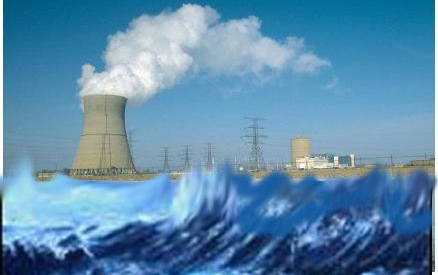 Nuclear Plants Plus Hurricanes: Disasters Waiting to Happen http://progressive.org/dispatches/nuclear-plants-plus-hurricanes-disasters-waiting-to-happen/, by Harvey WassermanSeptember 21, 2017 Although the mainstream media said next to nothing about it, independent experts have made it clear that Hurricanes Harvey and Irma threatened six U.S. nuclear plants with major destruction, and therefore all of us with apocalyptic disaster. It is a danger that remains for the inevitable hurricanes, earthquakes, tsunamis and other natural disasters yet to come.
During Harvey and Irma, six holdovers from a dying reactor industry—two on the Gulf Coast at South Texas, two at Key Largo and two more north of Miami at Port St. Lucie—were under severe threat of catastrophic failure. All of them rely on off-site power systems that were extremely vulnerable throughout the storms. At St. Lucie Unit One, an NRC official reported a salt buildup on electrical equipment requiring a power downgrade in the midst of the storm.
Loss of backup electricity was at the core of the 2011 catastrophe at the Fukushima Daiichi nuclear plant in Japan when the tsunami there and ensuing flood shorted out critical systems. The reactor cores could not be cooled. Three melted. Their cores have yet to be found. Water pouring over them flooded into the Pacific, carrying away unprecedented quantities of cesium and other radioactive isotopes. In 2015, scientists detected radioactive contamination from Fukushima along the coast near British Columbia and California.
Four of six Fukushima Daichi reactors suffered hydrogen explosions, releasing radioactive fallout far in excess of what came down after Hiroshima and Nagasaki. Extreme danger still surrounds Fukushima’s highly radioactive fuel pools, which are in varied stages of ruin.
“In addition to reactors, which at least are within containment structures, high-level radioactive waste storage pools are not within containment, and are also mega-catastrophes waiting to happen, as in the event of a natural disaster like a hurricane,” says Kevin Kamps of the activist group Beyond Nuclear.
In 1992 Hurricane Andrew paralyzed fire protection systems at Florida’s Turkey Point and so severely damaged a 350-foot-high tower it had to be demolished. The eye of that storm went directly over the reactor, sweeping away support buildings valued at $100 million or more.
There’s no reason to rule out a future storm negating fire protection systems, flinging airborne debris into critical support buildings, killing off-site backup power, and more.
As during Andrew, the owners of the nuclear plants under assault from Harvey and Irma had an interest in dragging their feet on timely shut-downs. Because they are not liable for downwind damage done in a major disaster, the utilities can profit by keeping the reactors operating as long as they can, despite the obvious public danger.
Viable evacuation plans are a legal requirement for continued reactor operation. But such planning has been a major bone of contention, prompting prolonged court battles at Seabrook, New Hampshire, and playing a critical role in the shutdown of the Shoreham reactor on Long Island. After a 1986 earthquake damaged the Perry reactor in Ohio, then-Governor Richard Celeste sued to delay issuance of the plant’s operating license. A state commission later concluded evacuation during a disaster there was not possible. After Andrew, nuclear opponents like Greenpeace questioned the right of the plant to continue operating in light of what could occur during a hurricane.
Throughout the world, some 430 reactors are in various stages of vulnerability to natural disaster, including ninety-nine in the United States. Numerous nuclear plants have already been damaged by earthquakes, storms, tsunamis, and floods. The complete blackout of any serious discussion of what Harvey and Irma threatened to do to these six Texas and Florida reactors is cause for deep concern.
Harvey Wasserman’s California Solartopia show airs at KPFK-FM in Los Angeles; his Green Power & Wellness Show is podcast at prn.fm. He is the author of Solartopia! Our Green-Powered Earth and co-author of Killing Our Own: The Disaster of America’s Experience with Atomic Radiation.
1 This Month




PLEASE OPPOSE HR 8255 AND S.3639 – bills would accelerate satellite deployment, with no environmental review or safeguards – https://ncstd5li.quorum.us/campaign/169331/
To see nuclear-related stories in greater depth and intensity – go to https://nuclearinformation.wordpress.com
-
Archives
- September 2026 (330)
- August 2026 (330)
- July 2026 (355)
- June 2026 (287)
- May 2026 (306)
- April 2026 (356)
- March 2026 (251)
- February 2026 (267)
- January 2026 (308)
- December 2025 (358)
- November 2025 (359)
- October 2025 (375)
-
Categories
- 1
- 1 NUCLEAR ISSUES
- business and costs
- climate change
- culture and arts
- ENERGY
- environment
- health
- history
- indigenous issues
- Legal
- marketing of nuclear
- media
- opposition to nuclear
- PERSONAL STORIES
- politics
- politics international
- Religion and ethics
- safety
- secrets,lies and civil liberties
- spinbuster
- technology
- Uranium
- wastes
- weapons and war
- Women
- 2 WORLD
- ACTION
- AFRICA
- Atrocities
- AUSTRALIA
- Christina's notes
- Christina's themes
- culture and arts
- Events
- Fuk 2022
- Fuk 2023
- Fukushima 2017
- Fukushima 2018
- fukushima 2019
- Fukushima 2020
- Fukushima 2021
- general
- global warming
- Humour (God we need it)
- Nuclear
- RARE EARTHS
- Reference
- resources – print
- Resources -audiovicual
- Weekly Newsletter
- World
- World Nuclear
- YouTube
-
RSS
Entries RSS
Comments RSS

