The Atlantic Ocean’s currents are on the verge of collapse. This is what it means for the planet

The Atlantic Ocean’s currents are on the verge of collapse. This is what
it means for the planet. Scientists are concerned that the Atlantic
Ocean’s system of currents may be about to reach a tipping point. If it
does, it’ll have severe consequences for all of us.
BBC Science Focus 13th Oct 2024
https://www.sciencefocus.com/comment/atlantic-current-collapse
How carbon capture and storage and nuclear are adding little to decarbonisation compared to solar and wind
CCS, like nuclear is going not very far in terms of future increases in decarbonisation capacity, but it will be at very great cost to taxpayers.
David Toke, Oct 16, 2024
We’ve heard a lot in the news recently about how carbon capture and storage of carbon dioxide (CO2) is a major solution to decarbonisation. But the global figures suggest otherwise. The results so far are that this is having an almost insignificant effect on global decarbonisation. Rather it is looking like CCS funding from Governments is a good way of funneling money into the fossil fuel and chemicals industry with very little to show for combatting climate change. Indeed this CCS sector is eerily technologically redundant in many of the same ways as nuclear power.
You can see this in the chart below [on original]. This shows the respective global contributions to carbon dioxide abatement from three sources a) solar plus wind power, b) nuclear power and c) carbon capture and storage (CCS).
I have taken global capacity figures for CCS from the Global CCS Institute (HERE). They have data available for the period since 2010 showing how the global capacity for CO2 removal has changed. I have used data on carbon intensity of global electricity production drawn from Ember (See HERE) to determine how much CO2 is saved by each unit of nuclear, solar and wind generation. Then I combine this with data on nuclear, solar and wind electricity generation from the Energy Institute (See HERE).
The result is a calculation of the annual carbon dioxide saved by global solar plus wind generation, nuclear generation and CCS (since 2010). There is a notable caveat with regard to the CCS figures. Whilst I have confidence in the reported production figures from solar, wind and nuclear power, I have no information that the ‘capacity’ of CCS reported is actually being completely filled each year. Therefore the CCS annual capacity figures must each be regarded as a ‘maximum’.
It is apparent that whilst solar and wind are increasing rapidly, and nuclear production has stagnated, CCS contributes a very small amount to world carbon removal capacity by comparison. …………………………………………………………………………………………………………………..
Meanwhile, technologies, which do stand a chance of being optimised and do not involve fossil fuels or nuclear power are ignored. Recent UK Government announcements talk of around £20 billion being made available for CCS activities over the coming years. Yet there is no direct budget to develop deep underground or closed loop geothermal energy, new technologies, which have seen considerable technical interest in recent years (see HERE and HERE)………………………………………………This trend of low output compared to public money spent seems likely to continue for many years to come!
CCS – eerily like nuclear?
What is striking about CCS processes is that they are seriously dogged by environmental problems…………………………………….The technology starts off as an inferior commercial proposition to conventional fossil fuel commercial activities, and the pressures for improvements are going to increase costs, not reduce them. Have we heard this before? Well, yes.
This is actually much the same general problem that nuclear power has faced. Nuclear power is a mature technology relying on a low-productivity construction industry. On top of this its costs have increased since its inception because of the need to build-in safety requirements. New designs have tended to be made with safety in mind (eg ‘passive’ safety designs) rather than improvements in economic productivity. This, in general, is the same sort of problem that fossil fuel CCS faces. See my earlier blog post on nuclear’s productivity problems HERE. Like nuclear CCS is forced to pursue non-market objectives rather than improve productivity to reduce costs of production.
The contrast with solar and wind is staggering. These technologies can devote their efforts into reducing costs and improving productivity. Solar panels today are made with a small fraction of the polysilicon used in the past. The production lines are much longer and efficiently organised and the machines to make the panels are much better and cheaper etc etc. In the case of wind power the wind capture rates have been improved through computer-aided design of the turbine blades, making the machines of lighter material and also making them a great deal bigger etc etc.
CCS, like nuclear is going not very far in terms of future increases in decarbonisation capacity, but it will be at very great cost to taxpayers. No commercial operation is going to contract for the CCS ‘product’. There is a very limited market for CO2 itself and no commercial market for storing carbon dioxide outside of direct Government support. For how long can this drain on our public spending resources carry on?
https://davidtoke.substack.com/p/how-carbon-capture-and-storage-and
The climate crisis threatens societal collapse—how many more hurricanes will it take for us to wake up?
As a new scientific report warns that the world is on the ‘brink of an irreversible climate disaster’, why do politicians and the media seem so uninterested?

By Alan Rusbridger, October 11, 2024, https://www.prospectmagazine.co.uk/world/environment-news/climate-change/68197/how-many-more-hurricanes-before-we-wake-up-to-the-climate-crisis
It took a dangerous category 3 hurricane in Florida to force climate change onto some, but not all, newspaper front pages. Normally this is a subject for gentle condescension.
You’ll have read a dozen such pieces. Climate change is genuine—there’s no denying that—but let’s be real about so-called “net zero”. We need to be “financially prudent as well as environmentally responsible”, as the Times intoned this week in endorsing BP’s retreat from agreed targets. We must stand against the politicisation of the weather, as Florida governor Ron De Santis is fond of speechifying. Blah, blah, blah, as Greta Thunberg would say.
A mega storm lashing into Florida is difficult to ignore: well-off Americans as victims, lots of vivid film footage etc. And so Hurricane Milton will receive many more eyeballs and clicks than, say, the 1,700 people killed in 2022 when torrential flooding hit Pakistan, submerging a third of the country and affecting 33m people. For some reason this was considered not so newsworthy.
News judgements over such things can be fickle. The day before Milton made landfall a group of respected scientists issued a report which warned that “the future of humanity hangs in the balance” and that we could be facing “partial societal collapse”.
Now, it’s been some time since I worked in daily news, but this feels like what we call “a story”. Not just a story, but what is known in the trade as a “marmalade-dropper”—a story so gripping that it could lead to a distracted breakfast accident. The internal machinations of the Conservative party are important, sure, but how do they compare with the future of humanity?
The report was barely covered. Did any news editor deign to glance at this academic paper, in the journal Bioscience? If they had, they might have been struck by the very startling language of the scientists who wrote it.
“We are on the brink of an irreversible climate disaster,” it began. “This is a global emergency beyond any doubt. Much of the very fabric of life on Earth is imperilled. We are stepping into a critical and unpredictable new phase of the climate crisis.”
Let’s imagine a range of news desk reactions to this alarming news. The first might be a stifled yawn—as in “we’ve heard all this before, tell us something new.” The second might be to question: “Who are these so-called experts?”
There’s something in the first reaction: we have, indeed, heard dire warnings before—albeit not always in such stark terms. As to the second, the 14 authors are easily Googled: they come from top-notch universities around the world. The journal, published by Oxford University Press, comes from the American Institute of Biological Sciences. I think we can call this kosher.
But there are two deeper problems with the way the media thinks about climate change. The first is that it has become the subject of ideology more than science. Our imaginary news editor will have to factor in any prejudices his/her editor, or proprietor, may have in regard to the climate crisis. If the general newsroom feeling—arrived at by a process of mysterious osmosis—is that it’s all a load of overblown woke nonsense, then our news editor will ignore the story. The science doesn’t stand a chance.
The second problem is that journalism is most comfortable when looking in the rearview mirror. Something that happened yesterday is news: something that might, or might not, happen in 30 years’ time is prediction.
How can journalism adapt so that it can—with the assistance of experts—look forward as well as back? “I think journalism has to help us imagine and comprehend the true scale of what will happen if we don’t change course,” is how Wolfgang Blau, who created an Oxford University programme in climate journalism, puts it. It is sometimes referred to as “anticipatory journalism”.
But there are plenty of things in the here and now to be covered. One question might be, “Who is funding Kemi Badenoch?” The information is hiding in plain sight. Her register of interests shows that she’s accepted £10,000 for her leadership campaign from the chair of a climate science denial group.
Let’s make this really easy. Google the excellent research outfit desmog.com and you’ll find that climate campaigners have done the heavy lifting already, investigating the donation from Neil Record, a millionaire Tory donor and founder of the investment firm Record Financial Group. He is chair of Net Zero Watch (NZW), the campaign arm of the Global Warming Policy Foundation (GWPF).
“Based in 55 Tufton Street, Westminster, the GWPF is the UK’s leading climate science denial group,” reports desmog. The GWPF’s director Benny Peiser has suggested it would be “extraordinary anyone should think there is a climate crisis”, while the group has also expressed the view that carbon dioxide has been mischaracterised as pollution, when in fact it is a “benefit to the planet”.
What’s more, it turns out—and thanks to Bloomberg for this nugget of information—that Badenoch has been running her leadership campaign from Mr Record’s home. While she has declared the £10,000 donation from Mr Record, the use of the house has not been declared. A spokesman for the candidate suggested she had done nothing wrong.
Badenoch has previously criticised the UK’s climate targets, calling them “arbitrary” in a 2022 interview. Badenoch has previously suggested that she would be in favour of delaying the UK’s commitment to reach net zero by 2050. She argued that new fossil fuel licences were compatible with the UK’s climate targets.
Badenoch’s rival for the Tory leadership, Robert Jenrick, has also been examined by desmog, which found a growing record of attacks on climate action. He denounces “net zero zealotry” and has labelled the UK’s net zero target as “dangerous fantasy green politics unmoored from reality.” He has supported the opening of new coal mines.s previously critic.
Worth covering? Perhaps by the same newshounds who have so enthusiastically gone in search of the generous donors who have kept Labour’s top team in smart suits, Taylor Swift tickets and football freebies?
Hurricane Milton will soon be off the front pages. Normal service will resume. But it’s hard, once you’ve read it, to dislodge the spectre of “partial societal collapse” if we continue to pretend climate change isn’t an urgent threat to our way of life. We will all have to adapt—including politicians and journalists.
Alan Rusbridger is the editor of Prospect and the former head of Lady Margaret Hall, Oxford. He was editor of the Guardian from 1995 to 2015.
Revealed: EDF’s hidden plans for two huge 30 feet high flood barriers in the heart of East Suffolk’s Heritage Coast 04.10.24
As part of the much-criticised justification for issuing a nuclear site
licence for the controversial Sizewell C nuclear development, the UK’s
chief nuclear regulator, the Office for Nuclear Regulation (ONR), has
divulged hitherto hidden plans for two sea walls to be constructed in the
heart of East Suffolk’s Heritage Coast and the Suffolk & Essex Coast &
Heaths National Landscape, designed to provide additional flood protection.
Both walls are proposed to be up to 30 feet high. To the south of the
Sizewell C site, the wall will span the ‘Sizewell Gap’ joining Sizewell
A’s Sea defences to the cliffs south of Sizewell village. The northern
one will span the river in the Sizewell Marshes SSSI, joining Sizewell
C’s northern sea defences with higher ground inland at Goose Hill and
will be at least 100 metres in length but potentially much longer.
The ONR claims that Sizewell C Ltd, the site’s developer, is ‘committed’ to
installing these structures ‘should climate change be worse than is
reasonably foreseeable’, despite there being no mention of them in
EDF’s application for the Development Consent Order (DCO) for Sizewell C.
Therefore, they were absent from the plans approved by the Secretary of
State in July 2022 after he had overturned the Planning Inspectors’
recommendation for refusal.
TASC 4th Oct 2024
Greenpeace warns of flooding risks at France’s biggest nuclear plant
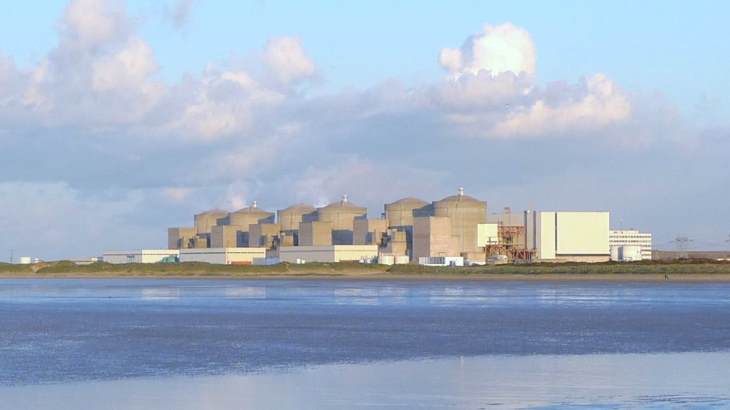
Greenpeace is urging French energy giant EDF to abandon its plans to build two new reactors at its Gravelines nuclear plant, citing the risk of flooding due to rising sea levels. The environmental group accuses the French nuclear industry of underestimating the threat to the coastal site.
04/10/2024 By:RFI
With six 900MW reactors, the Gravelines nuclear power plant on the Channel coast is already the most powerful in Western Europe.
EDF’s proposal to build two additional new generation pressurised water reactors (EPR2) of 1600 MW each is part of President Emmanuel Macron’s nuclear revival programme.
The new reactors are currently the subject of public debate. If they pass safety criteria laid down by France’s nuclear safety authority (ASN), construction would begin in 2031 and they could be on stream by 2040.
While they would be built on a 11-metre-high platform, Greenpeace claims there is a significant safety risk.
“The entire power plant site could find itself – during high tides and when there is a 100-year surge – below sea level” by 2100, it warned in a report published Thursday.
EDF refutes their calculations.
“The height of the platform chosen for the EPR2 reactors at Gravelines provides protection against “extreme” flooding, taking into account the effects of IPCC [Intergovernmental Panel on Climate Change] scenarios, which are among the most penalising with regard to sea-level rise”, EDF said in a statement to RFI.
Protective measures
Greenpeace argues that EDF’s calculations are outdated and do not fully account for the realities of global warming.
“We can’t think as if the current situation were going to remain stable and that sea levels were just going to rise a little”, says Pauline Boyer, Greenpeace’s energy transition campaigner.
The NGO has therefore based its projection on the IPCC’s most pessimistic scenario, which assumes that no action will be taken to reduce greenhouse gas emissions by 2100……………………….
Boyer believes a comprehensive risk study, factoring in climate change, “should govern the choice of site”, and be carried out before the public debate ends on 17 January.
While Greenpeace’s report centres on Gravelines, Boyer warned that climate change threatens other nuclear plants, with risks tied to rising temperatures and extreme weather events like storms.
She also pointed to potential conflicts over access to river water needed to cool reactors. https://www.rfi.fr/en/france/20241004-greenpeace-warns-of-flooding-risks-at-france-s-biggest-nuclear-plant
Jane Fonda: Nuclear power at Three Mile Island is no climate solution
Nuclear power is slow, expensive — and wildly dangerous, the actor and activist writes. Why would anyone tempt fate by reactivating a facility that suffered the worst nuclear accident in U.S. history?
by Jane Fonda, For The Inquirer, Oct. 2, 2024,
The recent news about restarting the Three Mile Island nuclear power plant 75 miles west of Philadelphia hit me hard.
My heart sank as I thought back to The China Syndrome, a nuclear disaster movie I starred in with Jack Lemmon and Michael Douglas in 1979. Why, I wondered, would anyone tempt fate by reactivating a facility that suffered the worst nuclear accident in U.S. history?
The China Syndrome was about a nuclear power reactor potentially melting down and unleashing a cloud of deadly radioactivity across the surrounding region. Two weeks after the movie hit theaters, real life imitated art with a vengeance.
One of the two reactors at Three Mile Island suffered what investigators termed “a partial meltdown.” As industry officials and federal regulators tried to determine the extent of the damage and whether to evacuate people, a terrifying drama played out on TV screens across Pennsylvania and around the world.
I realize that today, some people regard nuclear power as a necessary tool in the fight against climate change. As someone who is devoting my life to that fight, I understand the temptation to embrace nuclear power. We absolutely need to phase out oil, gas, and coal — the fossil fuels overheating our planet — and fast. Any means of achieving that goal deserves consideration.
The latest sign of our climate peril came last week as Hurricane Helene, amped by super-hot sea water, battered Florida, Georgia, and the Carolinas. Helene’s destructiveness, however, is also a reminder that climate change can endanger nuclear power facilities.
As the Perry World House at the University of Pennsylvania has noted, “As temperatures rise and climate hazards, such as drought, sea level rise, and extreme precipitation intensify, nuclear infrastructure is put at risk.”…………………………………………………………………………………………………………….
Ironically enough, the main reason nuclear power is so expensive is also the main reason it isn’t much help against climate change. It’s simply too slow — no nuclear reactor of any kind has been built in less than 10 to 20 years. What’s more, that extra-long construction time translates into massive borrowing costs for the capital needed to finance the plants, boosting their eventual cost.
And yes, that’s true even of the new generation of smaller, modular reactors Bill Gates, Microsoft’s founder, is so fond of. Every time I speak in public about the climate crisis, someone asks if the modular reactors can’t be a solution. So I’ve spent time researching the issue because I think when celebrities presume to speak about public issues, we have an obligation to know the facts.
With climate change, we don’t have the kind of time needed to get a nuclear plant licensed, built, and supplying power to the grid. Scientists are clear: Humanity has to limit global warming to 1.5 degrees Celsius (about 2 degrees Fahrenheit) above the preindustrial level if we’re to avoid catastrophic destruction and human suffering.
That means, scientists say, emissions of heat-trapping pollution must fall by half over the next five years. So simply as a matter of timing, nuclear is not a good climate solution.
By contrast, solar plants take about four years to get up and running. Wind turbines about the same. And boosting energy efficiency — designing our buildings and vehicles so they use much less energy but deliver the same comfort and performance — is the fastest, most powerful tool of all for displacing fossil fuels.
None of these renewable energy sources risk a nuclear meltdown. None guzzle billions of gallons of fresh water like nuclear plants do — water whose supply will become ever more uncertain as climate change unleashes deeper droughts in the years ahead. None burden our descendants with vast amounts of waste that remains dangerously radioactive for hundreds of thousands of years, with a $400 million annual bill for disposal that the public must pay.
That radioactivity, by the way, is one reason why it’s simply inaccurate to call nuclear power “clean energy.” It may be non-carbon energy, but anything that stays fatally poisonous for millennia is not clean.
If people want to support genuine solutions to climate change, I invite them to help the Jane Fonda Climate PAC elect climate champions to local, state, and national offices in November.
In Philadelphia, my political action committee has endorsed Nikil Saval in Pennsylvania Senate District 1 and Andre Carroll in Pennsylvania House District 201. You’ll find a complete list of our candidates, in Pennsylvania and across the U.S., here: janepac.com/?home#endorsements.
All of our candidates shun campaign contributions from the fossil fuel industry. They work to accelerate the deployment of solar, wind, and other genuinely clean energy sources. And they oppose nuclear.
Like two people trying to get through a narrow doorway at the same time, there isn’t room for both nuclear and renewables in our energy future. It’s an obvious choice, no?
Jane Fonda is a veteran political activist, two-time Academy Award-winning actor, and the principal of the Jane Fonda Climate PAC. https://www.inquirer.com/opinion/commentary/three-mile-island-restart-nuclear-energy-microsoft-jane-fonda-20241002.html?fbclid=IwY2xjawFsioJleHRuA2FlbQIxMQABHbLqJVZNISHHrY1j7l9JH_V4zF1kKMk155YvjJxBjwMmDYUFQ7FylW0fIQ_aem_oGsEOADg7faINQnGbVTQ4w
Heatwaves caused cuts in France’s nuclear power production.
(Montel) Heatwaves in July and August provoked a 430 GWh cut in nuclear output at four EDF nuclear power plants – double last summer’s amount but slightly below the nine-year median, a French consultancy said on Tuesday.
EDF summer heat cuts double but below 9-year median
Reporting by: Sophie Tetrel, 01 Oct 2024 .
https://montelnews.com/news/70ed2eeb-e06c-4494-abca-42207139db11/edf-heat-cuts-double-from-summer-2023-but-stay-below-9-yr-median
This summer’s cut represented less than 1% of the country’s total atomic generation and was below the 600 GWh median recorded over the 2015-2023 period, said Thibault Laconde, head of analysis consultancy Callendar.
Last year’s climate-related cuts amounted to only 217 GWh due to several reactors being offline for maintenance, he added.
He said the noteworthy aspect of this year was that high temperature levels caused the outages, rather than a lack of water supply due to drought.
Production cuts or stoppages were concentrated between 29 July-3 August and 11-15 August, corresponding with the summer heatwaves, he said.
The cuts amounted to 279 GWh at Golfech, 93 GWh at Bugey, 55 GWh at St Alban and 7 GWh at Tricastin.
However, they were well below the 3 TWh record seen in 2020, Laconde added.
Many French nuclear plants use river water to cool reactors and EDF is required to reduce their output if river temperatures or low flows break legal limits.
Hurricane Helene sends a warning
https://beyondnuclearinternational.org/2024/10/01/hurricane-helene-sends-a-warning/
A nuclear plant, fortunately closed, was inundated, but we may not get so lucky next time, writes Linda Pentz Gunter
As no one can have failed to notice, our country has been ravaged once again by violent weather extremes, most recently by Hurricane Helene, which left areas in the south submerged and destroyed, and led to a significant number of deaths.
The press has routinely been describing the extreme flooding, especially in places such as North Carolina, as “Biblical. But, as my partner and colleague at Beyond Nuclear Paul Gunter points out, it is nothing of the sort. As should be obvious by now, our ever more frequent climatic disasters are entirely human-caused.
Acts of God, whether you are a believer or not, have absolutely nothing to do with it.
Try telling that to our political leaders. No matter who wins in November, we are looking at drilling (Trump) or fracking (Harris) or possibly both. And, of course, more nuclear power!
The fact that all of these will obviously make the climate crisis far worse far faster does not pass these people by. They know it. But they push both fossil and fissile energy anyway, submitting willingly to the bidding of their corporate paymasters who would rather celebrate near-term greed and gain than leave a livable world to their children and grandchildren.
This means we are led by climate criminals who go not only unpunished, but who are routinely re-elected.
The push for license extensions for our aging reactor fleet is particularly heinous. The lapdog nuclear regulator, the US Nuclear Regulatory Commission, has been exposed by the Government Accountability Office in a damning report as entirely uninterested in how the ravages of the climate crisis might jeopardize the safety of nuclear power plants.
“NRC doesn’t fully consider potential increases in risk from climate change,” wrote the GAO. “For example, NRC mostly uses historical data to identify and assess safety risks, rather than data from future climate projections.”
Instead, the NRC is intent on colluding with the nuclear industry to sell us nuclear power as some sort of answer to the climate crisis.
Apart from the fact that nuclear power is too expensive and too slow, as we have argued here countless times, it is actually a hazard under climate chaos conditions. And we got the perfect demonstration of this from Hurricane Helene.
First of all, because of the extreme radiological risks, some nuclear power plants in the path of the hurricane were shut down as a preemptive precaution including Hatch in Georgia. This makes them completely useless in the wake of the storm’s onslaught when people are desperate for electricity.
Then take the case of the Crystal River nuclear power plant on Florida’s Gulf Coast. Floodwaters swamped the site. Fortunately the plant has been shuttered since 2013 but all of the high-level irradiated radioactive fuel waste is still stored there.
“The whole site was flooded, including buildings, sumps, and lift stations. Industrial Wastewater Pond #5 was observed overflowing to the ground due to the surge,” read a report filed by plant owner, Duke Energy.
Given the present enthusiasm for extending the licenses of the still operating US nuclear reactor fleet — and they are talking about out to 80 or even 100 years for reactors that were never designed or intended to run that long — Crystal River might easily still have been operating.
Under today’s rush to relicense — and even reopen the country’s most dangerously degraded reactors including Palisades in Michigan — it probably would be.
Did nuclear waste escape as a result of the Crystal River nuclear site flood?
“We are still in the process of obtaining access and assessing the damage, but due to the nature of this event we anticipate difficulty with estimating the total discharge amount of wastewater, and impacts are unknown at this time,” wrote Duke in its report.
In other words, we may never know.
The implication of a nuclear plant inundated by a massive storm surge does not have to be imagined. We saw it at the Fukushima Daiichi nuclear plant in Japan on March 11, 2011, when a 50-foot tsunami swept over the inadequate sea wall and knocked out the backup onsite power after the earlier earthquake had already severed the offsite power connection.
Meanwhile, Crystal River owner Duke is the very same company that is trying to secure a license extension for its three Oconee reactors in South Carolina that sit downstream from not one but two dams!
The three reactors are sited 300 feet below the water level in Lake Jocassee behind Jocassee Dam and five feet below the water level in the immediately adjacent Lake Keowee.

What could possibly go wrong? Nothing, argues Duke, for whom the idea of a dam overtopping or breaking, sending a wall of water directly at the plant — effectively an inland tsunami — just isn’t a credible possibility.
Out of our scope, declares the NRC, which contends it cannot include an assessment of likely climate change impacts on Oconee operations within its environmental review for license renewal.
Beyond Nuclear and the South Carolina chapter of the Sierra Club have been fighting this through legal channels and will continue to do so.
After last week, you might expect such a blinkered view of current — never mind future — climatic conditions to change. But it won’t.
Retrofitting an old nuclear plant to adequately protect it against the impacts of a climate crisis never prepared for, costs money.
Sorry, AI won’t “fix” climate change.
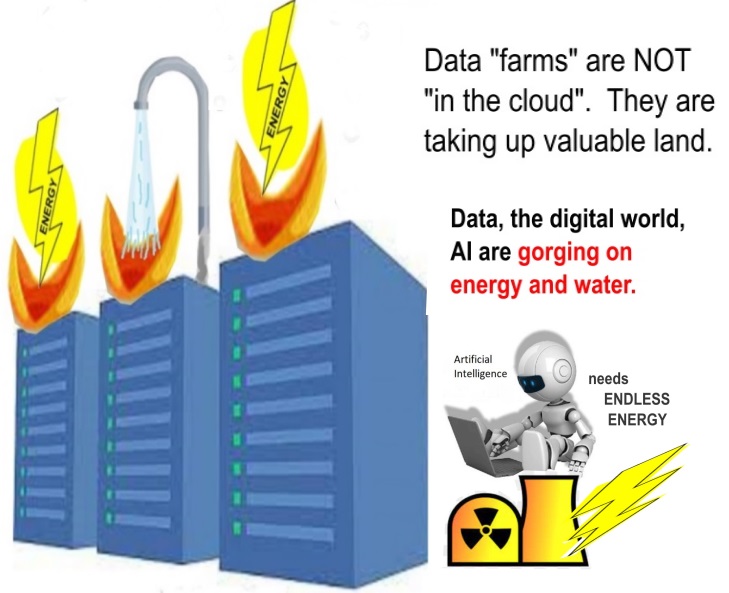
OpenAI’s Sam Altman claims AI will deliver an “Intelligence Age,” but tech breakthroughs alone can’t solve global warming.
James Temple, September 28, 2024,
https://www.technologyreview.com/2024/09/28/1104588/sorry-ai-wont-fix-climate-change/
In an essay last week, Sam Altman, the CEO of OpenAI, argued that the accelerating capabilities of AI will usher in an idyllic “Intelligence Age,” unleashing “unimaginable” prosperity and “astounding triumphs” like “fixing the climate.”
It’s a promise that no one is in a position to make—and one that, when it comes to the topic of climate change, fundamentally misunderstands the nature of the problem.
More maddening, the argument suggests that the technology’s massive consumption of electricity today doesn’t much matter, since it will allow us to generate abundant clean power in the future. That casually waves away growing concerns about a technology that’s already accelerating proposals for natural-gas plants and diverting major tech companies from their corporate climate targets.
By all accounts, AI’s energy demands will only continue to increase, even as the world scrambles to build larger, cleaner power systems to meet the increasing needs of EV charging, green hydrogen production, heat pumps, and other low-carbon technologies. Altman himself reportedly just met with White House officials to make the case for building absolutely massive AI data centers, which could require the equivalent of five dedicated nuclear reactors to run.
It’s a bedrock perspective of MIT Technology Review that technological advances can deliver real benefits and accelerate societal progress in meaningful ways. But for decades researchers and companies have oversold the potential of AI to deliver blockbuster medicines, achieve super intelligence, and free humanity from the need to work. To be fair, there have been significant advances, but nothing on the order of what’s been hyped.
Given that track record, I’d argue you need to develop a tool that does more than plagiarize journalism and help students cheat on homework before you can credibly assert that it will solve humanity’s thorniest problems, whether the target is rampant poverty or global warming.
To be sure, AI may help the world address the rising dangers of climate change. We have begun to see research groups and startups harness the technology to try to manage power grids more effectively, put out wildfires faster, and discover materials that could create cheaper, better batteries or solar panels.
All those advances are still relatively incremental. But let’s say AI does bring about an energy miracle. Perhaps its pattern-recognition prowess will deliver the key insight that finally cracks fusion—a technology that Altman is betting on heavily as an investor.
That would be fantastic. But technological advances are just the start—necessary but far from sufficient to eliminate the world’s climate emissions.
How do I know?
Because between nuclear fission plants, solar farms, wind turbines, and batteries, we already have every technology we need to clean up the power sector. This should be the low-hanging fruit of the energy transition. Yet in the largest economy on Earth, fossil fuels still generate 60% of the electricity. The fact that so much of our power still comes from coal, petroleum, and natural gas is a regulatory failure as much as a technological one.
“As long as we effectively subsidize fossil fuels by allowing them to use the atmosphere as a waste dump, we are not allowing clean energy to compete on a level playing field,” Zeke Hausfather, a climate scientist at the independent research organization Berkeley Earth, wrote on X in a response to Altman’s post. “We need policy changes, not just tech breakthroughs, to meet our climate goals.”
That’s not to say there aren’t big technical problems we still need to solve. Just look at the continuing struggles to develop clean, cost-competitive ways of fertilizing crops or flying planes. But the fundamental challenges of climate change are sunk costs, development obstacles, and inertia.
We’ve built and paid for a global economy that spews out planet-warming gases, investing trillions of dollars in power plants, steel mills, factories, jets, boilers, water heaters, stoves, and SUVs that run on fossil fuels. And few people or companies will happily write off those investments so long as those products and plants still work. AI can’t remedy all that just by generating better ideas.
To raze and replace the machinery of every industry around the world at the speed now required, we will need increasingly aggressive climate policies that incentivize or force everyone to switch to cleaner plants, products, and practices.
But with every proposal for a stricter law or some big new wind or solar farm, forces will push back, because the plan will hit someone’s wallet, block someone’s views, or threaten the areas or traditions someone cherishes. Climate change is an infrastructure problem, and building infrastructure is a messy human endeavor.
Tech advances can ease some of these issues. Cheaper, better alternatives to legacy industries make hard choices more politically palatable. But there are no improvements to AI algorithms or underlying data sets that solve the challenge of NIMBYism, the conflict between human interests, or the desire to breathe the fresh air in an unsullied wilderness.
To assert that a single technology—that just happens to be the one your company develops—can miraculously untangle these intractable conflicts of human society is at best self-serving, if not a little naïve. And it’s a troubling idea to proclaim at a point when the growth of that very technology is threatening to undermine the meager progress the world has begun to make on climate change.
As it is, the one thing we can state confidently about generative AI is that it’s making the hardest problem we’ve ever had to solve that much harder to solve.
Huge Arctic wildfires release 100m tonnes of greenhouse gas in a year

Scientists are alarmed at how extreme the blazes have become as the climate
changes, and 2024 ranks as the fourth worst year for emissions from Arctic
fires. Huge wildfires have blazed across the Arctic this summer, releasing
almost as much carbon dioxide into the atmosphere as the petrostate Kuwait
emits annually.
Fires in the carbon-rich frozen soils in the north of
Russia, Canada and other countries occur naturally as a result of lightning
strikes. Sometimes they spread south into the ring of boreal forests.
Scientists are alarmed at how extreme the blazes have become in recent
years as the climate changes. The Arctic’s worst year on record was 2020,
followed by 2019 and 2004.
Times 30th Sept 2024, https://www.thetimes.com/uk/environment/article/huge-arctic-wildfires-release-100m-tonnes-of-greenhouse-gas-in-a-year-ncb8cmdfq
Hurricane Helene Floods Closed Duke Nuclear Plant in Florida
By Ari Natter, September 28, 2024 , https://www.bnnbloomberg.ca/investing/2024/09/28/hurricane-helene-floods-retired-duke-nuclear-plant-in-florida/
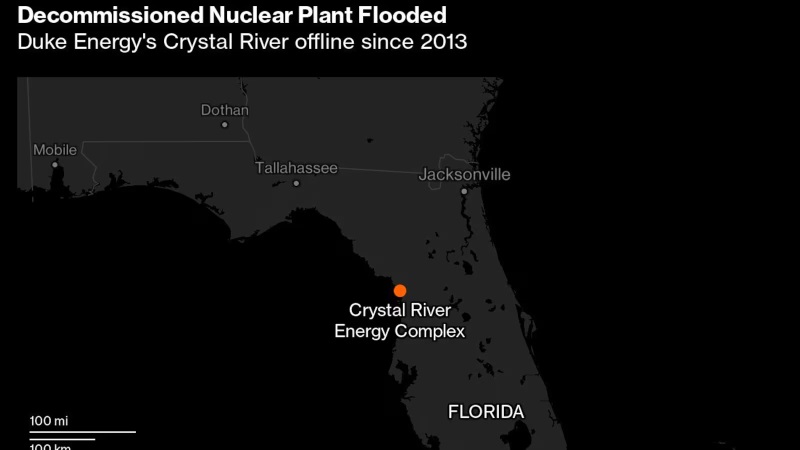
(Bloomberg) — Floodwaters from Hurricane Helene have swamped a retired Duke Energy Corp. nuclear power plant, according to a filing with the Florida Department of Environmental Protection, though an escape of contaminated fuel appears unlikely.
The Crystal River plant, which has been shuttered since 2013, experienced a storm surge of as much as 12 feet, according to the filing, which was posted online.
“The whole site was flooded, including buildings, sumps, and lift stations. Industrial Wastewater Pond #5 was observed overflowing to the ground due to the surge,” according to the report, which was filed Friday, the day after Helene roared ashore.
“We are still in the process of obtaining access and assessing the damage, but due to the nature of this event we anticipate difficulty with estimating the total discharge amount of wastewater, and impacts are unknown at this time,” the report said.
The used nuclear fuel at the site remains secure, Duke Energy said in a statement Sunday. “All radioactive material has been segmented and permanently packaged in shielded containers impervious to the effects of extreme weather,” the company said.
The facility, just south of Cedar Key, is still in the process of being dismantled. It’s likely that the spent fuel, which is kept onsite in dry storage, is safe, Edwin Lyman, a nuclear specialist with the Union of Concerned Scientists, said in an email before Duke Energy commented.
“There is probably still quite a bit of low-level radioactive waste awaiting shipment, and it’s likely the site wastewater has low levels of radioactive contamination,” Lyman said in an email. “Although anything is possible, based on the Fukushima experience, if the storage area were immersed in water for a short period of time, there is unlikely to be significant damage or leakage from the canisters.”
The site also flooded in 2023 after Hurricane Idalia made landfall, according to a report in Newsweek, that said spent fuel was scheduled to remain on site until 2037.
–With assistance from Tony Czuczka.
Green campaigners lambast UN climate summit hosts for clinging to fossil fuels

Hello from New York, where I spent yesterday evening at a lively
gathering hosted by the Fossil Fuel Non-Proliferation Treaty Initiative,
the campaign founded by Canadian activist Tzeporah Berman.
Among the speakers over dinner was Susana Muhamad, environment minister of Colombia,
which is one of 14 countries to have backed the drive for a legally binding
international treaty restricting fossil fuel extraction.
In the absence of such constraints, many countries are increasing their fossil fuel
production — including the hosts of last year’s, this year’s, and next
year’s UN climate COP summits, as our first item today highlights.
Yesterday, New York hosted a meeting of the COP “troika”, with
representatives of the host of last year’s UN climate summit (the United
Arab Emirates), this year’s (Azerbaijan) and next year’s (Brazil).
Cue a volley of criticism from environmental non-profit organisations, which
lambasted the three nations — all major oil and gas producers — over
their climate commitments.
FT 28th Sept 2024
https://www.ft.com/content/a48ad5b1-2175-4062-9caa-697b6541ff56
Data center emissions probably 662% higher than big tech claims. Can it keep up the ruse?

Emissions from in-house data centers of Google, Microsoft, Meta and Apple may be 7.62 times higher than official tally
Guardian, Isabel O’Brien, 16 Sept 24
Big tech has made some big claims about greenhouse gas emissions in recent years. But as the rise of artificial intelligence creates ever bigger energy demands, it’s getting hard for the industry to hide the true costs of the data centers powering the tech revolution.
According to a Guardian analysis, from 2020 to 2022 the real emissions from the “in-house” or company-owned data centers of Google, Microsoft, Meta and Apple are likely about 662% – or 7.62 times – higher than officially reported.
Amazon is the largest emitter of the big five tech companies by a mile – the emissions of the second-largest emitter, Apple, were less than half of Amazon’s in 2022. However, Amazon has been kept out of the calculation above because its differing business model makes it difficult to isolate data center-specific emissions figures for the company.
As energy demands for these data centers grow, many are worried that carbon emissions will, too. The International Energy Agency stated that data centers already accounted for 1% to 1.5% of global electricity consumption in 2022 – and that was before the AI boom began with ChatGPT’s launch at the end of that year.
AI is far more energy-intensive on data centers than typical cloud-based applications. According to Goldman Sachs, a ChatGPT query needs nearly 10 times as much electricity to process as a Google search, and data center power demand will grow 160% by 2030. Goldman competitor Morgan Stanley’s research has made similar findings, projecting data center emissions globally to accumulate to 2.5bn metric tons of CO2 equivalent by 2030.
In the meantime, all five tech companies have claimed carbon neutrality, though Google dropped the label last year as it stepped up its carbon accounting standards. Amazon is the most recent company to do so, claiming in July that it met its goal seven years early, and that it had implemented a gross emissions cut of 3%.
“It’s down to creative accounting,” explained a representative from Amazon Employees for Climate Justice, an advocacy group composed of current Amazon employees who are dissatisfied with their employer’s action on climate. “Amazon – despite all the PR and propaganda that you’re seeing about their solar farms, about their electric vans – is expanding its fossil fuel use, whether it’s in data centers or whether it’s in diesel trucks.”
A misguided metric
The most important tools in this “creative accounting” when it comes to data centers are renewable energy certificates, or Recs. These are certificates that a company purchases to show it is buying renewable energy-generated electricity to match a portion of its electricity consumption – the catch, though, is that the renewable energy in question doesn’t need to be consumed by a company’s facilities. Rather, the site of production can be anywhere from one town over to an ocean away………………………………………………………………………………………………………………………………………………………………
2025 and beyond
Even though big tech hides these emissions, they are due to keep rising. Data centers’ electricity demand is projected to double by 2030 due to the additional load that artificial intelligence poses, according to the Electric Power Research Institute.
Google and Microsoft both blamed AI for their recent upticks in market-based emissions…………………………………………..
Whether today’s power grids can withstand the growing energy demands of AI is uncertain. One industry leader – Marc Ganzi, the CEO of DigitalBridge, a private equity firm that owns two of the world’s largest third-party data center operators – has gone as far as to say that the data center sector may run out of power within the next two years.
And as grid interconnection backlogs continue to pile up worldwide, it may be nearly impossible for even the most well intentioned of companies to get new renewable energy production capacity online in time to meet that demand. https://www.theguardian.com/technology/2024/sep/15/data-center-gas-emissions-tech
US Militarism Is a Leading Cause of the Climate Catastrophe

US military interventions are not just wars on people — they’re also wars on the climate.
By Marjorie Cohn , Truthout, September 10, 2024
This week marks 23 years since George W. Bush declared a U.S.-led “war on terror” and the people of Afghanistan and Iraq are still suffering its consequences.
After the U.S. invaded Iraq, an estimated half a million Iraqis were killed and at least 9.2 million were displaced. From 2003-2011, more than 4.7 million Iraqis suffered from moderate to severe food insecurity. Over 243,000 people have been killed in the Afghanistan/Pakistan war zone since 2001, more than 70,000 of them civilians. Between 4.5 and 4.6 million people have died in the post-9/11 wars.
The U.S.’s “war on terror” also escalated the climate catastrophe, resulting in local water shortages and extreme weather crises that are only getting worse. In 2022, Afghanistan had its worst drought in 30 years and it is facing a third consecutive year of drought. “The war has exacerbated climate change impacts,” Noor Ahmad Akhundzadah, a professor of hydrology at Kabul University, told the New York Times.
Meanwhile in the current moment, U.S. military assistance to Israel’s genocidal campaign is also intensifying the climate crisis.
As we look back across more than two decades of the “war on terror,” it is clear that many lives will be saved if we can bring a halt to U.S. military interventions throughout the world and simultaneously target the U.S. military’s catastrophic contributions to the climate crisis that threaten us all.
“The U.S. military is the single largest institutional consumer of fossil fuels in the world,” Taylor Smith-Hams, U.S. senior organizer at 350.org, a global climate justice organization, said at a workshop on the Impact of Current Wars on Climate Crisis at the Veterans For Peace (VFP) Convention on August 17. “Militarism and war are key drivers of the climate crisis,” she added, citing fighter jets, warships and the U.S.’s massive constellation of military bases throughout the world.
Climate Effects of the “War on Terror”
On September 11, 2001, 19 men committed suicide and took roughly 3,000 people with them by flying two airliners into the World Trade Center, one into the Pentagon and one into a field in Pennsylvania. None of the hijackers hailed from Afghanistan or Iraq; 15 came from Saudi Arabia. Nevertheless, the Bush administration illegally invaded Afghanistan and Iraq and overthrew their governments, then killed, injured and tortured nearly three-quarters of a million of their people.
Beyond the terrible death tolls in both countries, a lesser known consequence of the “war on terror” was the exacerbation of the climate catastrophe, both in the countries targeted by the war and globally.
Since the 1997 Kyoto Protocol excluded military emissions from the counting of national emissions figures, U.S. military emissions are significantly undercounted. Although militaries are a significant source of carbon emissions, little is understood about their carbon footprint.
Beyond the terrible death tolls … a lesser known consequence of the “war on terror” was the exacerbation of the climate catastrophe, both in the countries targeted by the war and globally.
One of the first studies to expose direct and indirect military emissions as a result of combat was conducted by Benjamin Neimark, Oliver Belcher, Kirsti Ashworth and Reuben Larbi. They examined the use of concrete “blast walls” by U.S. forces in Baghdad, Iraq, from 2003-2008, the first five years of Bush’s “Operation Iraqi Freedom,” to measure the carbon footprint of the war. Concrete walls and barriers were also used in U.S. counterinsurgency operations in Kandahar and Kabul, Afghanistan, from 2008-2012 during “Operation Enduring Freedom.” (Although these two wars did not bring freedom, their effects on the climate crisis are enduring.)
While occupying Baghdad, the U.S. military erected hundreds of miles of blast walls in order to control the urban population pursuant to its counterinsurgency strategy. “Effective weaponisation of concrete has an extraordinary carbon footprint,” Neimark, Belcher, Ashworth and Larbi wrote. “The large carbon footprint comes mainly from the amount of heat and energy in cement production, the main ingredient in concrete.”
The logistical movement of troops, convoys, weapons, supplies and equipment, as well as firepower itself, carry a direct carbon cost. Jet propulsion fuel for fighter jets is a major culprit. U.S. military fuel use is “one of the largest single institutional carbon polluters in modern history,” the researchers wrote. But the indirect emissions in blast walls that result from the concrete supply chains that furnish the U.S. military are also substantial, Neimark and his coauthors argue.
“Parts of Afghanistan have warmed twice as much as the global average” New York Times international climate reporter Somini Sengupta wrote in 2021, and the war has intensified the impact of climate change.
Afghanistan ranks in the top 10 countries undergoing extreme weather conditions, including droughts, storms and avalanches, the United Nations Office for the Coordination of Humanitarian Affairs (OCHA) reported a year ago. Afghanistan ranks fourth among countries with the highest risk of a crisis and eighth on the Notre Dame Global Adaptation Index of nations most vulnerable and least prepared to deal with climate change.
The story of what happened in Afghanistan provides a chilling example of the long-term consequences of war on climate change. Decades from now, Gaza, which was already vulnerable to the climate crisis before October 7, 2023, will invariably suffer increased climate effects from Israel’s current genocidal campaign. “Climate consequences including sea level rise, drought and extreme heat were already threatening water supplies and food security in Palestine,” Nina Lakhani wrote in a January article in The Guardian. “The environmental situation in Gaza is now catastrophic.”
Emissions From U.S.-Aided Israeli Genocide Have “Immense” Effect on Climate Crisis
Israel’s ongoing genocide in Gaza has killed at least 41,000 Palestinian people, and likely many more. During the first two months of Israel’s genocidal campaign, emissions that warmed the planet exceeded the annual carbon footprint of over 20 of the world’s most climate-vulnerable countries, according to a study by Benjamin Neimark, Patrick Bigger, Frederick Otu-Larbi and Reuben Larbi. Roughly 281,000 metric tons of war-related carbon dioxide were emitted in the first two months of the war following October 7, 2023. More than 99 percent of these emissions resulted from Israel’s bombing campaign and ground invasion of Gaza and U.S. supply flights to Israel. The climate cost was equivalent to the burning of at least 150,000 tons of coal. Almost half of the emissions were caused by U.S. cargo planes flying military supplies to Israel. Hamas rockets fired into Israel accounted for the equivalent of 300 tons of coal, an indicator of the asymmetry of Israel’s war on Palestine.
“The role of the US in the human and environmental destruction of Gaza cannot be overstated,” said Patrick Bigger, coauthor of the study and research director at the thinktank Climate + Community Project (CCP). During the VFP workshop, Bigger called it an “environmental Nakba.”
The story of what happened in Afghanistan provides a chilling example of the long-term consequences of war on climate change.
David Boyd, UN special rapporteur for human rights and the environment, said, “This research helps us understand the immense magnitude of military emissions — from preparing for war, carrying out war and rebuilding after war. Armed conflict pushes humanity even closer to the precipice of climate catastrophe, and is an idiotic way to spend our shrinking carbon budget.”
“From an ecological perspective, there is no such thing as an ‘effective’ or ‘green’ technology or military,” Neimark, Belcher, Ashworth and Larbi, coauthors of the concrete blast wall study, found. While Israel touts itself as a global leader in climate change adaptation and mitigation, it is actually engaged in “greenwashing” — misleading marketing practices to make policies appear more environmentally friendly. Indeed, “Israel’s green technologies are fundamentally structured by the Zionist project of appropriating Palestinian lands,” Sara Salazar Hughes, Stepha Velednitsky and Amelia Arden Green argue in their 2022 article, “Greenwashing in Palestine/Israel: Settler colonialism and environmental injustice in the age of climate catastrophe.”
Israel’s systems of waste management, renewable energy and agricultural technologies (“agritech”) are actually mechanisms for appropriation and dispossession of Palestinian territory, according to Hughes, Velednitsky and Green. Although Israel promotes itself as a responsible steward of Palestinian lands, “Israeli sustainability sustains settler colonialism.”
“Climate crisis in Palestine cannot be detached from the Israeli occupation. The brutal and extensively documented apartheid regime that Israel imposes and maintains over Palestinians is fundamentally incompatible with the tenets of climate justice,” Patrick Bigger, Batul Hassan, Salma Elmallah, Seth J. Prins, J. Mijin Cha, Malini Ranganathan, Thomas M. Hanna, Daniel Aldana Cohen and Johanna Bozuwa wrote for the think tank CCP.
Bigger and his coauthors cite Israel’s settler-colonial campaign to replace native olive groves with nonnative plants that reduce biodiversity, increase susceptibility to fire and put unsustainable pressure on natural resources. Palestinians, they write, are much more vulnerable than Israelis to the effects of climate change. “While Palestinians are displaced to support Israel’s renewable energy industry, Palestinian solar projects are destroyed as ‘illegal constructions,’ having failed to secure permits from Israeli authorities.”
As the largest provider of military hardware to the Israeli regime, the U.S. government is “directly complicit” in Israel’s genocide, ethnic cleansing and apartheid. “An immediate, permanent ceasefire and the end of US funding for Israeli apartheid and occupation is needed to halt the ongoing violence and address the driving forces of climate breakdown in Palestine,” Bigger and coauthors wrote.
About 20 percent of the U.S. military’s annual operational emissions is devoted to protecting fossil fuel interests in the Gulf, which is warming twice as rapidly as the rest of the world, according to Neta Crawford, author of The Pentagon, Climate Change and War. Nevertheless, the U.S. and other NATO countries are largely concerned with climate change as a national security threat. They don’t focus on their contributions to it.
“Here in the U.S., our government continues to dump enormous amounts of money into death and destruction at home and around the world, while cutting social programs and refusing to adequately contribute to international climate finance commitments, always with the excuse that there isn’t enough money,” Smith-Hams said at the VFP workshop.
Our anti-militarism work should target the U.S. military’s devastating contributions to the climate crisis. Our future depends on it.
For more information, see the Climate Crisis & Militarism Project of Veterans For Peace.
Marjorie Cohn is professor emerita at Thomas Jefferson School of Law, dean of the People’s Academy of International Law and past president of the National Lawyers Guild. She sits on the national advisory boards of Assange Defense and Veterans For Peace. A member of the bureau of the International Association of Democratic Lawyers, she is the U.S. representative to the continental advisory council of the Association of American Jurists. Her books include Drones and Targeted Killing: Legal, Moral and Geopolitical Issues.
Blackwater – a land in transition
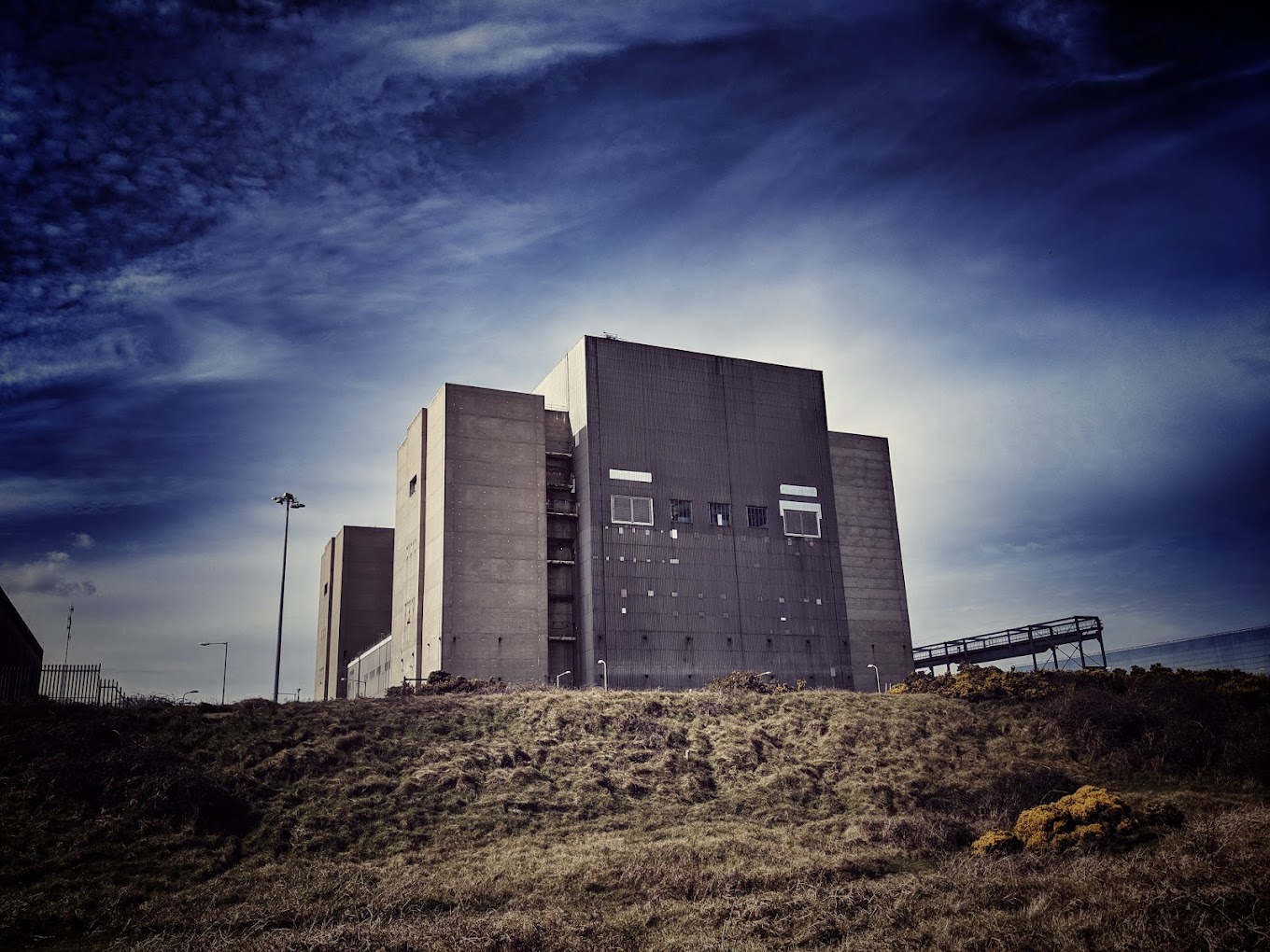
4 September 2024, https://www.banng.info/news/regional-life/blackwater-in-transition/
The Blackwater is a land where earth, water and sky intermingle in an eternal process of transition and transformation. In our time Climate Change and the Energy Transition are creating fundamental changes in the relationship between land, sea and air that will utterly transform our environment in the years to come.
The Blackwater is not an iconic landscape, unlike, say, Constables Country, with its charms set in a romantic afterglow and its appeal as the idealised English landscape. The Blackwater is more a concept with specific meanings and specific environments for farmers, sailors, fishermen, holidaymakers, birders and residents enjoying its waters, marshes, seaside, farmland and settlements. It is a precious region with many national and international conservation designations. Some of its landscapes are ecological treasure chests, especially the dwindling marshes taken from the sea by progressive dyking and draining to produce the so-called ‘meadows of the sea’.
Today, a reversal is in train as coastal squeeze erodes the fragile waterlands in a battle that only the sea can win. Gradually, though inexorably, the land yields as seal levels rise and storm surges, flooding and erosion intensify with global warming.
Global warming is already at critical levels and further increases in temperatures are already baked in. We will have to adapt to inevitable consequences while trying to prevent runaway Climate Change by making a rapid shift from fossil fuels to renewable forms of energy – in other words to achieve an Energy Transition.
While this is a global challenge it must be achieved through local measures already under way and impacting on our landscape. Out to sea in vast arrays of turbines are turning contributing to the UK’s 30GW of offshore wind power capacity. Onshore the windmills on the Dengie represent a tiny part of the 15GW onshore wind, two-thirds comes from Scotland. The government has committed to increasing wind capacity by 2030, to 30GW onshore and 60GW offshore.
This is a herculean ambition and major constraints lie in the way. One of these is transmission as the National Grid confronts local communities with its planned Norwich to Tilbury Great Grid Upgrade. The line of tall pylons will not impact the Blackwater landscape and a landfall at Bradwell is unlikely.
Even more unlikely is the possibility of new nuclear at Bradwell. Climate Change will put paid to the idea of building on a floodable coast today and a vanishing one in the far future. For the present there remains the forlorn hulk of the former Bradwell nuclear power station, once at the forefront of an energy transition now an isolated relic of a bygone age.
1 This Month


Website of the Week

New book – https://www.amazon.com/dp/1923372157?utm_source=substack&utm_medium=email
Now until to February 10, 2026 Radioactive waste storage in France: the debate is finally open! How to participate?
-
Archives
- January 2026 (127)
- December 2025 (358)
- November 2025 (359)
- October 2025 (377)
- September 2025 (258)
- August 2025 (319)
- July 2025 (230)
- June 2025 (348)
- May 2025 (261)
- April 2025 (305)
- March 2025 (319)
- February 2025 (234)
-
Categories
- 1
- 1 NUCLEAR ISSUES
- business and costs
- climate change
- culture and arts
- ENERGY
- environment
- health
- history
- indigenous issues
- Legal
- marketing of nuclear
- media
- opposition to nuclear
- PERSONAL STORIES
- politics
- politics international
- Religion and ethics
- safety
- secrets,lies and civil liberties
- spinbuster
- technology
- Uranium
- wastes
- weapons and war
- Women
- 2 WORLD
- ACTION
- AFRICA
- Atrocities
- AUSTRALIA
- Christina's notes
- Christina's themes
- culture and arts
- Events
- Fuk 2022
- Fuk 2023
- Fukushima 2017
- Fukushima 2018
- fukushima 2019
- Fukushima 2020
- Fukushima 2021
- general
- global warming
- Humour (God we need it)
- Nuclear
- RARE EARTHS
- Reference
- resources – print
- Resources -audiovicual
- Weekly Newsletter
- World
- World Nuclear
- YouTube
-
RSS
Entries RSS
Comments RSS
 nuclear-news