Zelensky’s diaspora delegation led by economic hit-woman who led plunder of Ukraine

the conflict with Russia has provided Zelensky with justification to strip 70 percent of Ukraine’s workers of collective bargaining rights and arrest everyone from his political rivals to socialist organizers – a wave of repression
With tens of billions more on the way to Ukraine, the country’s debt to international creditors continues to grow, setting the stage for another crushing wave of austerity after the war. The diaspora operatives I encountered on their way into the Capitol gallery appeared poised to guide the plunder from the comfort of suburban America.
The Grayzone, MAX BLUMENTHAL·DECEMBER 23, 2022 The Grayzone intercepted Volodymyr Zelensky’s Ukrainian diaspora delegation outside the US Capitol and encountered Natalie Jaresko, the corporate operative who helped guide Wall Street’s pillaging from Kiev to Puerto Rico. Jaresko indignantly justified Zelensky’s banning of his political rivals as a necessary wartime measure.
Steel fencing and police barricades ringed the perimeter of the US Capitol Building hours ahead of the arrival of Volodymyr Zelensky. The Ukrainian president appeared in Washington DC in the early afternoon on December 21, 2022, emerging from a US military jet clad in an olive drab sweatshirt and cargo pants, and charged with a singular mission:
convince Congress and the Biden administration to send his government more than the whopping $45 billion in military and humanitarian aid it had already allocated for 2023.
Just outside the police barricades, at the eastern side of the Capitol grounds, as a demonstration by a small but dedicated group of antiwar activists wound down, a group of around 20 Ukrainians in dark business attire gathered for a photo. They were on their way into the Capitol, where they were to function as Zelensky’s personal cheering section, representing the Ukrainian diaspora before a nationally televised audience.
I approached members of the delegation to challenge them on Zelensky’s lobbying push and the planned expansion of the NATO proxy war he is leading against Russia. My questions were met with a torrent of worn-out talking points about Ukraine’s crusade to defend democracy, accusations that Moscow was sponsoring my reporting, and a complaint that $45 billion in US aid was too little.
Several of the Ukrainian delegates I encountered on the way into the US Capitol happened to have played significant roles in the transformation of Ukraine from a neutral state into a hyper-militarized vassal of the US and the IMF.
The most voluble among them, acting as a de facto spokesperson for the group, was Natalie Jaresko. A Ukrainian-American financial industry operative, Jaresko presided over several IMF austerity packages and the rampant privatization of Ukraine’s economy as the country’s Minister of Finance in its post-coup government.
The economic hit-woman
In our exchange, Jaresko unabashedly defended Zelensky’s outlawing of 11 opposition political parties, his banning of opposition media, and his plans to blacklist the Russian wing of the Orthodox Church. “It’s martial law!” Jaresko exclaimed, justifying Kiev’s authoritarian crackdown as a necessary wartime measure.
Jaresko has seen the corruption and de-democratization of Ukraine from within. She helped open up the country’s economy to Western multinationals after being appointed to the Foreign Investors Advisory Council of Victor Yuschenko, a neoliberal president who gained power thanks to the “Orange Revolution” backed by US intelligence and Western-aligned oligarchs George Soros and Boris Berisovsky in 2005.
Under Yuschenko’s reign, Ukraine’s government officially heroized the World War Two-era Nazi collaborator Stepan Bandera. During our exchange, Jaresko deflected when asked if she supported Bandera. However, her brother, John, has presided over the construction of a memorial in Bloomingdale, New Jersey to “Heroes of Ukraine” including World War Two-era Nazi collaborators, according to researcher Moss Robeson.
Nine years later, following the Euromaidan coup also engineered by Washington, Jaresko rose to Minister of Finance. She was granted Ukrainian citizenship on the day of her appointment.
Through her new post, Jaresko assumed control of Datagroup, the company that oversees Ukraine’s telecom sector. As former investment executive Tim Duff recounted, Jaresko “immediately proceeded to squeeze her competitor, the owner of Datagroup, out of business using the kind of foreign currency loan debt scam favored by Mafia hoods and economic hitmen employed by the CIA.”
While in Kiev, steering the government alongside a cadre of Ukrainian-American operatives, Jaresko grumbled about her salary while angling for opportunities to supplement it. In a withering analysis of her financial self-dealing, the late investigative journalist Robert Parry found that Jaresko “collected $1.77 million in bonuses from a U.S.-taxpayer-financed investment fund where her annual compensation was supposed to be limited to $150,000”
As Jaresko lapped up praise from Beltway corporate media, the NATO-sponsored Atlantic Council that employed her as a visiting fellow acknowledged that under her watch, “the average monthly wage in Ukraine is only $194, an inflation rate of 55 percent is decimating citizens’ purchasing power, and a painful IMF-mandated austerity program involving sweeping cuts to social programs is being implemented.”
In 2017, Jaresko was rewarded with an appointment and $625,000 salary as director of Promesa, the unelected US board charged with restructuring Puerto Rico’s debt – and which average Puerto Ricans refer to derisively as “La Junta.” Jaresko resigned rom her position this April after leaving Puerto Rico’s economy firmly in the hands of Wall Street creditors.
The all-encompassing shock therapy that Jaresko prescribed from Puerto Rico to Ukraine was only possible thanks to society-wide disasters. In San Juan, it was Hurricane Maria that placed neoliberal capitalism on overdrive; in Kiev, it was a coup and a proxy war. Indeed, the conflict with Russia has provided Zelensky with justification to strip 70 percent of Ukraine’s workers of collective bargaining rights and arrest everyone from his political rivals to socialist organizers – a wave of repression that Jaresko explicitly justified in her exchange with me.
The Ukrainian president accompanied his Pinochet-style crackdown with an appeal this October at the NYSE Stock Exchange for multinational corporations to deepen their exploitation of his country’s economy and resources. As The Grayzone’s Alex Rubinstein reported, Zelensky’s foreign investment initiative plastered the word “deregulation” across the homepage of its website.
The diaspora lobbyist
As I challenged the Ukrainian delegation on the nearly $100 billion of military aid the US has forked over to Kiev, a bespectacled middle-aged man interjected, demanding to know why I supposedly supported an “unprovoked” assault on an “innocent people.”
I countered that I opposed the Ukrainian military’s 8-year-long attack on the ethnic Russian population of Donetsk and Lugansk, where thousands had been killed before the Russian military ever entered Ukraine in February 2022. I then asked the indignant character if he also opposed the shelling of civilians in the eastern republics.
His reply came in the form of a firm “no!”
That person turns out to be a member of the US Commission on Security and Cooperation in Europe named Orest Deychakiwsky. His commission is charged with monitoring Ukrainian compliance with OSCE commitments, including those Kiev made – and relentlessly violated –– to the Minsk Accords. As former German Chancellor Angela Merkel confessed this December, Ukraine’s Western backers used the Minsk Accords as a stalling tactic to prepare it for military conflict with Russia………………………………..
“We’re gonna send a lot more!”
With tens of billions more on the way to Ukraine, the country’s debt to international creditors continues to grow, setting the stage for another crushing wave of austerity after the war. The diaspora operatives I encountered on their way into the Capitol gallery appeared poised to guide the plunder from the comfort of suburban America.
In the meantime, lawmakers from both parties can hardly contain their exuberance for expanding the proxy war. As one of the energy industry’s favorite senators, Democrat Joe Manchin, exclaimed when I asked him on a sidewalk outside the Capitol about the billions in military aid on the way to Ukraine, “We’re gonna send a lot more. I’m all in!” https://thegrayzone.com/2022/12/23/zelenskys-diaspora-hit-woman-ukraine/
A pretentious and dishonest story-telling conference of Small Nuclear Reactor salesmen in Atlanta 2022

Markku Lehtonen in The Bulletin of the Atomic Scientists covered this conference – “SMR & Advanced Reactor 2022” event in Atlanta – in a lengthy article.
The big players were there, among over 400 vendors, utility representatives, government officials, investors, and policy advocates, in “an atmosphere full of hope for yet another nuclear renaissance.
The writer details the claims and intentions of the SMR salesmen – in this “occasion for “team-building” and raising of spirits within the nuclear community.’, in relation to climate change and future energy needs, and briefly mentioning “security”, which is code for the nuclear weapons aspect.

It struck me that “team building” might be difficult, seeing that the industry representatives were from a whole heap of competing firms, with a whole heap of different small reactor designs, (and not all designs are even small, really)
This Bulletin article presents a measured discussion of the possibilities and the needs of the small nuclear reactors. The writer recognises that this gathering was really predominantly a showcase for the small nuclear wares, – the SMR salesmen “must promise, if not a radiant future, at least significant benefits to society. “
“Otherwise, investors, decision-makers, potential partners, and the public at large will not accept the inevitable costs and risks. Above all, promising is needed to convince governments to provide the support that has always been vital for the survival of the nuclear industry.”
He goes on to describe the discussions and concerns about regulation, needs for a skilled workforce, government support, economic viability. There were some contradictory claims about fast-breeder reactors.
Most interesting was the brief discussion on the political atmosphere, the role of governments, the question of over-regulation .
” A senior industry representative …. lamenting that the nuclear community has “allowed too much democracy to get in“
“The economic viability of the SMR promise will crucially depend on how much further down the road towards deglobalization, authoritarianism in its various guises, and further tweaking of the energy markets the Western societies are willing to go”
The Bulletin article concludes:
“Promises and counter-promises. For the SMR community that gathered in Atlanta, the conference was a moment of great hope and opportunity, not least thanks to the aggravating climate and energy security crises. But the road toward the fulfilment of the boldest SMR promises will be long, as is the list of the essential preconditions. To turn SMR promises into reality, the nuclear community will need no less than to achieve sufficient internal cohesion, attract investors, navigate through licensing processes, build up supply chains and factories for module manufacturing, win community acceptance on greenfield sites, demonstrate a workable solution to waste management, and reach a rate of deployment sufficient to trigger learning and generate economies of replication. Most fundamentally, governments would need to be persuaded to provide the many types of support SMRs require to deliver on their promises.
Promising of the kind seen at the conference is essential for the achievement of these objectives. The presentations and discussions in the corridors indeed ran the full gamut of promise-building, from the conviction of a dawning nuclear renaissance along the lines “this time, it will be different!” through the hope of SMRs as a solution to the net-zero and energy-security challenges, and all the way to specific affirmations hailing the virtues of individual SMR designs. The legitimacy and credibility of these claims were grounded in the convictions largely shared among the participants that renewables alone “just don’t cut it,” that the SMR supply chain is there, and that the nuclear industry has in the past shown its ability to rise to similar challenges.
Two questions appear as critical for the future of SMRs. First, despite the boost from the Ukraine crisis, it is uncertain whether SMR advocates can muster the political will and societal acceptance needed to turn SMRs into a commercial success. The economic viability of the SMR promise will crucially depend on how much further down the road towards deglobalization, authoritarianism in its various guises, and further tweaking of the energy markets the Western societies are willing to go. Although the heyday of neoliberalism is clearly behind us and government intervention is no longer the kind of swearword it was before the early 2000s, nothing guarantees that the nuclear euphoria following the Atoms for Peace program in the 1950s can be replicated. Moreover, the reliance of the SMR business case on complex global supply chains as well as on massive deployment and geographical dispersion of nuclear facilities creates its own geopolitical vulnerabilities and security problems.
Second, the experience from techno-scientific promising in a number of sectors has shown that to be socially robust, promises need constructive confrontation with counter-promises. In this regard, the Atlanta conference constituted somewhat of a missed opportunity. The absence of critical voices reflected a longstanding problem of the nuclear community recognized even by insiders—namely its unwillingness to embrace criticism and engage in constructive debate with sceptics. “Safe spaces” for internal debates within a like-minded community certainly have their place, yet in the current atmosphere of increasing hype, the SMR promise needs constructive controversy and mistrust more than ever.” https://thebulletin.org/2022/12/building-promises-of-small-modular-reactors-one-conference-at-a-time
Bank of America, investors, thrilled and delighted with the nuclear arms race

Above: Banks investing in nuclear weapons
These 3 stocks will benefit from the nuclear arms race – Bank of America
Stock Markets (Dec 20, 2022,
The U.S. defense stocks are likely to continue outperforming the market, thanks to the ongoing conflict in Ukraine and a potential conflict in Taiwan, according to Bank of America analysts.
One particular area of the defense sector to be monitored closely is the one focused on the development of nuclear weapons.
“We expect concerns of nuclear proliferation to drive secular and governmental defense spending, particularly as the US moves away from nation-state conflicts, like in the Middle East, and focuses attention on near-peer threats. We expect US defense companies to see much of the upside from increased demand for nonstrategic nuclear weapons,” the analysts said in a client note……………….
As Europe lacks the industrial footprint the US has cultivated, we expect that US defense primes will be called upon to fill demand, reflecting a significant upside to these names,” they added.
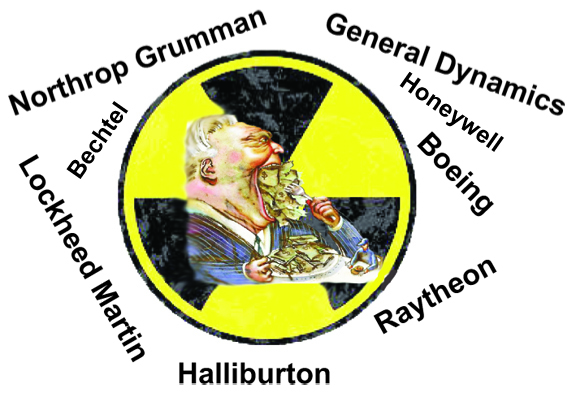
Along these lines, the analysts see Northrop Grumman (NYSE:NOC), Boeing (NYSE:BA), and Lockheed Martin (NYSE:LMT) benefiting from the increased demand as these three have the largest nuclear operations.
“This reinforces our Buy rating on Northrop Grumman. We remain Neutral on Boeing and Lockheed Martin on account of continued supply chain challenges and operational hurdles,” the analysts concluded. https://au.investing.com/news/stock-market-news/these-3-stocks-will-benefit-from-the-nuclear-arms-race–bank-of-america-432SI-2747010
Paul Dorfman: Nuclear power is just a slow and expensive distraction.

Despite recent breakthroughs in nuclear fusion, renewables remain the most
important technology for reaching net zero. “Fissile fuel” is back –
or so say the UK’s policy teams and press.
Rishi Sunak and Emmanuel
Macron are about to strike a deal on nuclear cooperation, and recent
editorials across national newspapers all reckon everything in the garden
is nuclear. Where, however, is the evidence for its efficacy?
The British and French governments can sign any deal they like – if key financial
investors don’t take up the remaining 60 per cent of construction costs,
the planned Sizewell C plant in Suffolk is going nowhere. The omens
aren’t good.
Recently Sir Nigel Wilson, group CEO of Legal & General, one
of the UK’s largest real assets firms, told BBC Radio Four: “We are not
big fans of Sizewell C.” Sir David King, the UK’s former chief
scientific adviser and a long-standing nuclear supporter, told LBC that the
plant would be “very difficult to protect from flooding” due to rising
sea levels on the Suffolk coast.
New Statesman 13th Dec 2022
Another dodgy Special Purpose Acquisition Company (SPAC) set up to promote small nuclear reactors.
https://www.youtube.com/watch?v=AAJTkL99anI&t=22s
Nuclear SMR developer X-energy to merge with Ares Management-backed SPAC, creating $2B company, Utility Dive, Stephen Singer, Dec. 7, 2022
Dive Brief
- X Energy Reactor Co., a developer of small modular nuclear reactors and fuel technology, is merging with a special purpose acquisition company backed by private equity firm Ares Management Corp., X-energy announced Tuesday. The deal would establish a combined publicly traded company valued at $2 billion.
- The company will receive about $1 billion in cash in the trust account of Ares Acquisition Corp., the SPAC, assuming no redemptions by shareholders. Investments and financing commitments include $75 million from Ares Management and $45 million from Ontario Power Generation and Segra Capital Management.
……………………… X-energy, based in Rockville, Maryland, is advancing nuclear generation through a high-temperature gas-cooled small modular reactor, or SMR, the Xe-100, and its fuel, TRISO-X. The reactor is engineered to operate as a single 80-MW unit and optimized as a four-unit plant delivering 320 MW.
……………………. Edwin Lyman, director of Nuclear Power Safety at the Union of Concerned Scientists, questioned the “fundamental economic justification” for SMRs.
“A small reactor is going to produce more expensive electricity than large ones,” he said.
Backers defend SMRs as benefiting from economies of scale, but that’s not been demonstrated, Lyman said. “It would require a large order book and experience,” he said.
…………………………. At the closing of the deal, which is expected in the second quarter of 2023, the combined company will be named X-Energy Inc. and will be listed on the New York Stock Exchange. https://www.utilitydive.com/news/X-energy-ares-managment-spac-merger-small-modular-nuclear-smr/638097/
Sizewell C nuclear – a huge black hole for taxpayers’ money
“If the Chancellor is looking for cheap, reliable, energy independence,
he is backing the wrong project, as Sizewell C’s ultimate cost and
technical reliability are so uncertain and building it is reliant on French
state-owned EDF.
Green-lighting Sizewell C also loads more tax onto
struggling households, who would be forced to pay a nuclear levy on bills
for a decade before they could light a single lightbulb. Despite the
Chancellor’s statement, Sizewell C still needs financing, and with at least
a year before it’s decided whether it will finally go ahead, we’ll keep
fighting this huge black hole for taxpayers’ money, when there are cheaper,
quicker ways to get to net zero.”
Stop Sizewell C 3rd Dec 2022
Macron pushes a “renaissance” while French nuclear flops

A farce that would make Feydeau blush — Beyond Nuclear International
A farce that would make Feydeau blush — Beyond Nuclear International
Secrecy on USA’s new nuclear stealth bomber, and of course, secrecy on its cost to taxpayers.


The fact that the price is not public troubles government watchdogs.
Pentagon unveils new nuclear stealth bomber after years of secrecy The HillBY THE ASSOCIATED PRESS VIA NEXSTAR MEDIA WIRE – 12/02/22
WASHINGTON (AP) — America’s newest nuclear stealth bomber is making its public debut after years of secret development and as part of the Pentagon’s answer to rising concerns over a future conflict with China.
The B-21 Raider is the first new American bomber aircraft in more than 30 years. Almost every aspect of the program is classified. Ahead of its unveiling Friday at an Air Force facility in Palmdale, California, only artists’ renderings of the warplane have been released. Those few images reveal that the Raider resembles the black nuclear stealth bomber it will eventually replace, the B-2 Spirit.
The bomber is part of the Pentagon’s efforts to modernize all three legs of its nuclear triad, which includes silo-launched nuclear ballistic missiles and submarine-launched warheads, as it shifts from the counterterrorism campaigns of recent decades to meet China’s rapid military modernization………………………………….
Six B-21 Raiders are in production; The Air Force plans to build 100 that can deploy either nuclear weapons or onventional bombs and can be used with or without a human crew. Both the Air Force and Northrop also point to the Raider’s relatively quick development: The bomber went from contract award to debut in seven years. Other new fighter and ship programs have taken decades.
The cost of the bombers is unknown. The Air Force previously put the price for a buy of 100 aircraft at an average cost of $550 million each in 2010 dollars — roughly $753 million today — but it’s unclear how much the Air Force is actually spending.
The fact that the price is not public troubles government watchdogs.
“It might be a big challenge for us to do our normal analysis of a major program like this,” said Dan Grazier, a senior defense policy fellow at the Project on Government Oversight. “It’s easy to say that the B-21 is still on schedule before it actually flies. Because it’s only when one of these programs goes into the actual testing phase when real problems are discovered. And so that’s the point when schedules really start to slip and costs really start to rise.”
The Raider will not make its first flight until 2023. However, using advanced computing, Warden said, Northrop Grumman has been testing the Raider’s performance using a digital twin, a virtual replica of the one being unveiled.
…………………… Given advances in surveillance satellites and cameras, the Raider will debut very much under wraps and will be viewed inside a hangar. Invited guests including Defense Secretary Lloyd Austin will witness the hangar doors open to reveal the bomber for its public introduction, then the doors will close again. https://thehill.com/homenews/3759575-pentagon-unveils-new-nuclear-stealth-bomber-after-years-of-secrecy/
UK government to take 50% stake in the French development of Sizewell C nuclear station

Ed note: This is the Tory government plan. But didn’t they pinch the Great British Energy idea from Labour?
Sizewell C project takes major step forward as government unveils plans to establish Great British Energy, a new arms-length public body to oversee UK nuclear power pipeline. The government has approved plans to build the UK’s
first new nuclear power plant in a quarter of a century, today confirming it has agreed to invest £679m to take a 50 per cent stake in the Sizewell C project being developed in Suffolk by French energy giant EDF.
Then”historic” investment will see the UK government become joint shareholder in Sizewell C alongside developer EDF, which will also provide additionalminvestment to match the UK government’s stake, muscling out previousmshareholder China’s CGN in the process.
EDF and the government now plan to work together to attract further third-party investment in the 3.2GW low carbon power project, which once completed would be expected to provide enough power to meet the needs of six million homes for more than 50 years.
In addition, the government today also announced plans to establish Great British Nuclear, a new arms-length public body to help develop a pipeline of new nuclear projects. More details are expected early in the new year, including on the government’s funding commitment to the new body.
Business Green 29th Nov 2022
Emmanuel Macron picks a bad time to promote France’s nuclear nuclear technology in a marketing tour to USA
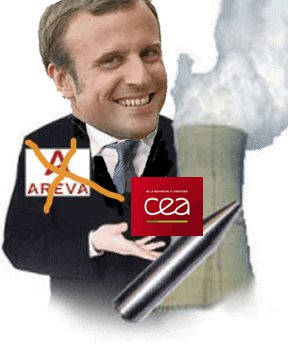
With 40 percent of France’s nuclear power plants offline, there could hardly be a more awkward time to promote the country’s know-how
Macron to promote nuclear energy in U.S., as industry faces crisis in France, By Rick Noack, November 29, 2022, PARIS — As French President Emmanuel Macron makes the rounds in Washington starting Wednesday for the first state visit of the Biden administration, high on his agenda are his plans for a nuclear energy “renaissance.” His entourage includes the major players from France’s nuclear energy industry, who will be looking to the French leader to help boost the development and export of their technology, including smaller and more versatile reactors.
But there could hardly be a more awkward time to promote French nuclear know-how.
While Macron was preparing to head to Washington, France was relying on planes traveling in the opposite direction to prevent its nuclear-reliant power grid from collapsing. U.S. and Canadian contractors have been flown in to help after safety concerns forced the closure of half of the country’s nuclear power plants. Last week, 23 out of 56 were still offline, due to concerns over corrosion cracks and an accumulation of pandemic-related inspection delays.
………….. instead of bolstering its position as an energy exporter, France has had to import electricity from Germany — the country hit hardest by the shift away from Russia. And Britain, which normally depends on France for energy to get through winter, is talking about having to encourage people to keep their ovens and dishwashers off to avoid blackouts.
Other French neighbors, including Belgium, Switzerland and parts of Italy, may be under even more pressure as a result of the French reactor problems, said Clement Bouilloux, country manager for France at energy consultancy EnAppSys.
“Everyone was relying on the French nuclear power plants,” he said.
The situation has tarnished France’s reputation as a nuclear power leader and may have contributed to the country missing out on key contracts. Only weeks ago, France’s state-owned energy company EDF lost the first part of a $40 billion contract for Poland’s first nuclear power plant to U.S. company Westinghouse………………………………………………………..
Macron has acknowledged that the French industry has “fallen behind,” but he has defended its ability to recover, striking deals on nuclear energy cooperation in recent months with countries including India and Britain.
Macron is scheduled to attend a nuclear energy session on Wednesday, alongside four French cabinet members and several executives from the country’s major nuclear energy firms and its public regulator, the Élysée Palace said last week.
A French official added Monday that one area where France anticipates possible mutual interests is the development of small modular reactors (SMRs)…………….. https://www.washingtonpost.com/world/2022/11/29/macron-us-state-visit-nuclear-france/
Sizewll C nuclear white elephant could cost up to £43 billion

Grant Shapps follows Johnson and Kwarteng’s example by purposefully
avoiding any discussion or interaction with those directly affected by the
proposed Sizewell nuclear development during his recent visit to Sizewell
while reconfirming the government’s commitment to the £700m investment by
way of joining EDF in a 50:50 partnership in the Sizewell C White Elephant
financial sink hole on Suffolk’s eroding coast.
Jenny Kirtley, Chair of Together Against Sizewell C, said today, ‘There is nothing new in terms of
funding – this announcement still doesn’t go beyond the £700m already
promised, followed by a lot of sticking plasters to protect the government
from the criticism of doing nothing for years to drive down electricity on
the demand side. A pathetic response from a delusional government that is
long past its sell-by date.
The government’s own risk assessment forecasts
that Sizewell C may cost up to £43 billion –
yet another example of this government’s willingness to squander £billions of public money on a project
that may never operate as it still requires the resolution of EDF’s inability to secure a permanent and reliable supply of a potable water.
TASC 29th Nov 2022
UK government desperate for investors in its Sizewell C nuclear project, as it pays out the Chinese company previously involved

Construction will not begin in earnest until the consortium has raised close to £20bn of equity and debt from private investors. That fundraising could take at least a year and has no guarantee of success.
The UK government is to pay Chinese state-owned power group CGN over £100mn to exit Britain’s £20bn Sizewell C nuclear energy project in a bid to reduce Beijing’s involvement in the country’s infrastructure. The payment to CGN for its 20 per cent stake in the proposed nuclear plant in Suffolk is part of a £679mn UK state investment in Sizewell first announced by former prime minister Boris Johnson in September and finalised on Tuesday.
Construction will not begin in earnest until the consortium has raised close to £20bn of equity and debt from private investors. That fundraising could take at least a year and has no guarantee of success. UK government officials said that the departure of CGN would clear the way for US investors to put money into Sizewell C, since the Chinese company has been put under US sanctions.
CGN remains a minority 33 per cent investor in Britain’s giant Hinkley Point C nuclear power station in Somerset, another
EDF led project. Although this has already been delayed by several years, it is intended to be the first of a new generation of nuclear power stations. The Chinese group also controls a site at Bradwell-on-Sea in Essex, where it hopes to be the lead investor in a new generator.
CGN’s planned use of its own reactor technology at Bradwell received former approval from Britain’s nuclear regulator in February. But ministers think that ultimately it will not be allowed to build at the site, which they expect to change hands in due course.
FT 29th Nov 2022
https://www.ft.com/content/a9a34ea3-649f-4a47-a4c8-ee269e07eccc
New Mexico’s revolving nuclear door: top environment officials sell out to nuclear weapons lab.

Santa Fe, NM – As part of a long, ingrained history, senior officials at the New Mexico Environment Department (NMED) have repeatedly resigned to go to work for the nuclear weapons labs, the Department of Energy, or DOE contractors. In a number of cases that is where they came from to begin with.
The hierarchy of leadership at NMED starts with the Secretary, Deputy Secretaries and then Division Directors. The position of Resource Protection Division Director is particularly critical because it oversees the two NMED bureaus most directly involved with DOE facilities in New Mexico, the Hazardous Waste Bureau and the DOE Oversight Bureau. However, all four former or current Resource Protection Division Directors have gone or are going to work for the nuclear weapons labs, the DOE or its contractors. They are:
• Chris Catechis, currently Acting Resource Protection Division Director, is reportedly assuming a job at the Los Alamos National Laboratory (LANL) within days. Prior to NMED he had worked at the Sandia National Laboratories for 22 years.[1]
• Catechis’ immediate supervisor Stephanie Stringer resigned October 31 to go to work for DOE’s semi-autonomous nuclear weapons agency, the National Nuclear Security Administration (NNSA). She was Resource Protection Division Director prior to being promoted to Deputy Cabinet Secretary for Operations (second only to NMED Secretary James Kenney).
• J.C. Borrego resigned as NMED Acting Deputy Secretary and Acting Resource Protection Division Director in the last months of the Governor Martinez Administration to go to work for the Sandia National Laboratories.• During the Martinez Administration, Kathryn Roberts resigned as Resource Protection Division Director to go to work for a DOE contractor. Prior to NMED she had worked at LANL for four years as Group Leader for Regulatory Support and Performance.
This begs the question of whether the positions of NMED Deputy Directors and Resource Protection Division Directors are being intentionally targeted for co-optation by the nuclear weapons industry. The Environment Department remains underfunded and understaffed, but in contrast DOE will spend $9.4 billion in FY 2023 on nuclear weapons and related programs in New Mexico. [2] This is astonishing when the state’s entire operating budget is $8.5 billion. Exactly what the benefits are for New Mexicans from all of this nuclear weapons spending is not clear. On the downside, the Land of Enchantment is a target for nuclear waste dumping. At the same time, New Mexico is rated dead last in education[3] and quality of life for children.[4]
DOE’s largest expenditures in New Mexico are for the aggressive expansion of the production of plutonium “pits,” the radioactive cores of nuclear weapons. This will generate yet more radioactive wastes and contamination that should require robust regulation and enforcement. Despite that, top NMED officials are subverting their loyalties during an ongoing lawsuit by the Environment Department against DOE seeking to terminate a 2016 “Consent Order” that condones weak cleanup at the Lab.
The Deputy Directors and the Resource Protection Division Directors serve at the pleasure of the Governor. Yet their actions seemingly conflict with a “Code of Conduct” that Governor Michelle Lujan Grisham stipulated for state employees. It decreed:
“You shall treat your government position as a public trust… only to advance the public interest and not to obtain personal benefits… Full disclosure of real or potential conflicts of interest shall be a guiding principle… You shall not engage in any other employment or activity that creates a conflict of interest… you shall disclose any anticipated outside employment before it begins… violating some provisions of this Code of Conduct may subject you to potential civil enforcement actions and criminal penalties under the law.”[5]
To illustrate how these changing loyalties can potentially compromise environmental protection in New Mexico, Stringer and Catechis were centrally involved in recent and pending NMED decisions on:
• Granting “temporary authorization” to the Waste Isolation Pilot Plant (WIPP), the nation’s only designated permanent radioactive waste dump, to drill a new ventilation shaft to support its expansion.
• Extending WIPP’s hazardous waste permit. The current permit expired in 2020 but has been administratively continued. DOE is now seeking to have it indefinitely extended. More than half of WIPP’s future capacity will be reserved for plutonium wastes from expanded nuclear weapons production.
• Allowing or not allowing LANL to release up to 100,000 curies of gaseous radioactive tritium into the air.
• Approving or not LANL’s request to “cap and cover” existing buried radioactive and toxic wastes, instead of comprehensive cleanup that would eliminate the threat to groundwater.
• NMED’s lawsuit against DOE to terminate the ineffective 2016 Consent Order governing cleanup at LANL.
NMED Deputy Secretary Stephanie Stringer doubled as Chair of New Mexico’s Water Quality Control Commission (WQCC). She recently opposed a motion by the citizen groups Concerned Citizens for Nuclear Safety (CCNS) and Honor Our Pueblo Existence to reverse a state groundwater discharge permit. CCNS’ Joni Arends questioned Stringer’s decision, saying, “The important LANL Radioactive Liquid Waste Treatment Facility (RLWTF) handles, treats and stores hazardous wastes, hence it is required to be regulated by the NM Hazardous Waste Act. But under her leadership, the Water Quality Control Commission rejected our petition for review of the permit on jurisdictional grounds, while granting a stay of the proceedings as requested by NNSA.”
“We learned that Stringer submitted her job application to NNSA on August 7, two days before a WQCC hearing that she presided over as Chair. On August 30, she signed the Commission’s order granting the NNSA’s motion to stay all proceedings on the RLWTF. The very next day NNSA offered Stringer a salaried position. On October 31, 2022, Stringer resigned her position with NMED and on November 6 reported for work at NNSA. At no time did Stephanie Stringer disclose her new job before leaving NMED. Her conduct disqualified her from serving on the WQCC and is highly improper and in violation of the Governor’s Code of Conduct – all to the detriment of the citizens and environment of New Mexico.”[6]
The example of former Resource Protection Division Director Kathryn Roberts is particularly troubling. After working at LANL she was employed at NMED and in time became the Resource Protection Division Director. In that capacity she was the lead negotiator with Christine Gelles, then-manager of the DOE Environmental Management Los Alamos field office, for a revised 2016 Consent Order that weakened cleanup at LANL. Roberts resigned from NMED a half year after the revised Order went into effect, joining Gelles at Locknecker and Associates, a LANL cleanup contractor.[7] The new Consent Order allowed the Lab to settle any outstanding violations of the more stringent and enforceable 2005 Consent Order. Existing violations were waived when New Mexico could have collected more than $300 million in stipulated penalties had NMED vigorously enforced the 2005 Consent Order. At the time, the Land of Enchantment was facing a budget crisis with a projected $600 million deficit. In effect, NMED gave away half of that deficit to a polluting nuclear weapons site that now has an annual budget of $4.5 billion.
Other examples of NMED’s revolving door of regulators selling out to the regulated:
• Katheryn Robert’s immediate boss at the time, NMED Secretary Ryan Flynn, resigned to become executive director of the New Mexico Oil and Gas Association that lobbies against environmental regulations.
• In the 1990’s, after drafting state regulations governing the release of mixed radioactive and hazardous air emissions, NMED air quality specialist Bill Blankenship left to work at LANL, in part to enable a Clean Air Act permit for a major plutonium facility for nuclear weapons.
• Pete Maggiore, NMED Secretary July 1998 – August 2002, joined NNSA’s Los Alamos Office in 2011.
• Susan McMichael, NMED Office of General Counsel in the late 1990’s, resigned to become an attorney for LANL.
• Kathryn Lynnes, Environmental Compliance Specialist, Hazardous Waste Bureau 2004 – 2006, subsequently worked for LANL and then for the Air Force on the Kirtland Air Force Base’s aviation fuel groundwater contamination, a very contentious issue for the State of New Mexico.
Jay Coghlan, Nuclear Watch New Mexico Director, commented, “New Mexico needs to quit being a nuclear banana republic. We can’t have our top Environment Department officials selling out to the state’s largest polluters. I call upon the Governor to enforce the Code of Conduct that she stipulated. Moreover, state legislators should pass a law that the regulators can’t go to work for the regulated for at least two years after leaving their positions with the New Mexico Environment Department.”
Ineos corporation to join Rolls Royce’s messy consortium, to push for Small Nuclear Reactors in the Great British Nuclear Swindle

Rolls-Royce is in talks with Ineos to build a mini nuclear reactor to power the chemicals group’s Grangemouth refinery.

Rolls is heading a government-backed consortium to develop between 20 and 30 small modular nuclear reactors but is in need of customers to help to reduce the risk of the venture.
Ministers are finalising plans to support SMRs through a body called Great British Nuclear, which will be responsible for getting
planning permission and undertaking the preparation work on the new sites. Rolls’ talks with Ineos, first reported by The Sunday Telegraph, are understood to be at an early stage. Ineos’s Grangemouth refinery in Scotland is a joint venture with PetroChina and refines crude oil and produces chemicals.
Times 28th Nov 2022
UK government PR exercise “Great British Nuclear” headed for financial failure.
Letter Steve Thomas: Six months after it was announced, it is clear that
Great British Nuclear was no more than a government PR exercise. You report
that it “could prevent a repeat of the Wylfa and Cumbria farragoes”.
That would be remarkable.
The Cumbria project failed because the reactor
supplier, Westinghouse, went bankrupt; Wylfa failed because, although the
government offered to take a 30 per cent stake, no other investors came
forward.
he problem with nuclear is not that we don’t have the
organisation quite right. It’s that nuclear is far too expensive and
economically risky and takes much too long to build to be any use.
Times 25th Sept 2022
https://www.thetimes.co.uk/article/admit-it-nuclears-going-nowhere-tclmnr89f
1 This Month
Chernobyl: The Lost Tapes – A good documentary on Chernobyl on SBS available On Demand for the next 3 weeks– https://www.sbs.com.au/ondemand/tv-program/chernobyl-the-lost-tapes/2352741955560

of the week–London Campaign for Nuclear Disarmament

Tell the Ukrainian Government to Drop Prosecution of Peace Activist Yurii Sheliazhenko
To see nuclear-related stories in greater depth and intensity – go to https://nuclearinformation.wordpress.com
-
Archives
- April 2026 (152)
- March 2026 (251)
- February 2026 (268)
- January 2026 (308)
- December 2025 (358)
- November 2025 (359)
- October 2025 (376)
- September 2025 (257)
- August 2025 (319)
- July 2025 (230)
- June 2025 (348)
- May 2025 (261)
-
Categories
- 1
- 1 NUCLEAR ISSUES
- business and costs
- climate change
- culture and arts
- ENERGY
- environment
- health
- history
- indigenous issues
- Legal
- marketing of nuclear
- media
- opposition to nuclear
- PERSONAL STORIES
- politics
- politics international
- Religion and ethics
- safety
- secrets,lies and civil liberties
- spinbuster
- technology
- Uranium
- wastes
- weapons and war
- Women
- 2 WORLD
- ACTION
- AFRICA
- Atrocities
- AUSTRALIA
- Christina's notes
- Christina's themes
- culture and arts
- Events
- Fuk 2022
- Fuk 2023
- Fukushima 2017
- Fukushima 2018
- fukushima 2019
- Fukushima 2020
- Fukushima 2021
- general
- global warming
- Humour (God we need it)
- Nuclear
- RARE EARTHS
- Reference
- resources – print
- Resources -audiovicual
- Weekly Newsletter
- World
- World Nuclear
- YouTube
-
RSS
Entries RSS
Comments RSS
 nuclear-news