Mini nuclear reactors all the rage, but are they the answer?

Mini nuclear reactors have appeared on the scene as an exciting prospect since the
spring budget, but how do they weigh up to traditional plants?
London-based start-up Newcleo laid out plans over the weekend to raise £900mln to build
small reactors in the UK on the back of the news. US-based developer Last
Energy then announced it had signed a deal to sell 24 of its mini nuclear
plants to UK customers on Monday, with these set to cost just £100mln
each.
Rolls-Royce Holdings PLC, a key player in the industry and the only
firm with SMR tech currently going through the UK’s regulatory process,
said it welcomed the government’s new stance, meanwhile.
What it may not
welcome is heated-up competition, though, with Newcleo among six rival
firms which have already applied to enter the UK’s stringent SMR design
assessment process, and the announcement likely to prompt more –
including Last Energy. Cavendish Nuclear/X-Energy, GE-Hitachi Nuclear
Energy, GMET Nuclear, Holtec Britain, UK Atomics, mark the others which
have submitted applications for their tech, though none are set to match
the size and output of Rolls-Royce’s.
Proactive Investors 21st March 2023
Thorium fake charity group cons El Salvador into joining the “Nuclear Power Club”.
Power, 20 Mar 23,
“…… the government of El Salvador and the Thorium Energy Alliance, a Harvard, Illinois–based non-profit advocacy group that endorses thorium-fueled reactors, signed a memorandum of understanding (MOU) to promote the “El Salvador Energy Bridge” plan. The MOU was signed by Daniel Alvarez, El Salvador’s director general of Energy, Hydrocarbons, and Mines (DGEHM), and John Kutsch, executive director of the Thorium Energy Alliance, at the Embassy of El Salvador in Washington, D.C. (Figure 1), with Ambassador Milena Mayorga present to witness the event.
El Salvador has historically gotten much of its power from hydro and geothermal resources, according to International Energy Agency (IEA) data. In 2020, the most recent numbers available on the IEA’s website, hydropower accounted for about 32.8% of the electricity generation in El Salvador. Geothermal was second, supplying 24.6% of the mix, while oil (15.5%), solar PV (14.3%), and biofuels (12.9%) rounded out the list. El Salvador’s total generation in 2020 was about 6.321 TWh………………..”
South Korea coming for a slice of Africa’s emerging nuclear power market
As African countries firm up their nuclear power ambitions, South Korea’s Korea Hydro & Nuclear Power (KHNP), a subsidiary of state-owned Korea Electric Power Corporation is coming for a share of the continent’s emerging market.…… (Subscribers only) https://www.theafricareport.com/293984/south-korea-coming-for-a-slice-of-africas-emerging-nuclear-power-market/
Just another U.S. nuclear front group, marketing to Indonesia (never mind about the volcanoes)
USA, Indonesia announce partnership on SMRs
WNN, 20 March 2023
The USA and Indonesia have announced a strategic partnership to help Indonesia develop its nuclear energy programme, supporting Indonesia’s interest in deploying small modular reactor (SMR) technology to meet its energy security and climate goals.
A Memorandum of Agreement, as well as affiliated grants and contracts, was signed during the Indo-Pacific Business Dialogue in Bali, Indonesia. The agreement advances the goals of the Just Energy Transition Partnership (JETP) and will strengthen Indonesia’s leadership in the ASEAN region on the deployment of advanced, safe and secure nuclear energy technologies, working toward the goal of net-zero emissions in Indonesia by 2060.
Under the agreement, the US Trade and Development Agency (USTDA) has awarded a grant to PLN Indonesia Power to provide assistance to assess the technical and economic viability of a proposed nuclear power plant, to be located in West Kalimantan. It will include a site selection plan, power plant and interconnection system design, preliminary environmental and social impact assessment, risk assessment, cost estimate and regulatory review.
Indonesia Power selected NuScale Power to carry out the assistance in partnership with a subsidiary of Fluor Corporation and Japan’s JGC Corporation. The proposed 462 MWe facility would utilise NuScale’s SMR technology…………………………………..
In August 2019, Indonesia’s National Atomic Energy Agency (Batan) signed a Memorandum of Understanding with utility Indonesia Power to cooperate in the use of nuclear technology in the energy sector. One area of cooperation will be a feasibility study on the use of nuclear power plants. https://world-nuclear-news.org/Articles/USA,-Indonesia-announce-partnership-on-SMRs
U.S. government marketing nuclear power to Indonesia
Indonesia plans to develop a nuclear power plant with a potential capacity
of 462MW in West Kalimantan with funding and technological support from the
United States government.
Infrastructure Journal 20th March 2023
https://www.ijglobal.com/articles/171053/indonesia-plans-nuclear-plant-with-us-support
Despite UK government’s enthusiasm, nuclear power is just not a good investment
Investment industry lukewarm on confirmation of nuclear in UK taxonomy.
One London-based funding manager warned that the industry’s problems were
economic not environmental. A sustainability figure at one large UK fund
manager said the nuclear industry’s ability to attract capital has not
primarily been about having to manage an unattractive ESG profile. “It is
incredibly expensive and un-cost competitive when compared to the
alternatives”.
Responsible Investor 14th March 2023
https://www.responsible-investor.com/investment-industry-lukewarm-on-confirmation-of-nuclear-in-uk-taxonomy/
EDF confirms nuclear power target for 2023, despite corrosion problems, and plummeting output in 2022.
EDF confirms 300-330 TWh nuclear power target for 2023 despite the recent
discovery of new corrosion issues which may be present at all France’s 56
reactors. France’s nuclear output plummeted by 22.6% year-on-year in 2022,
down 81.7 TWh to 279 TW.
Montel 17th March 2023
https://www.montelnews.com/news/1462200/edf-confirms-300-330-twh-nuclear-power-target-for-2023
UK government is urged to “come clean” over the real cost of Sizewell C nuclear power station

Ministers must “come clean” over the cost of the planned Sizewell C
nuclear power station, MPs have heard. Alan Brown, the SNP’s energy
security spokesman, sought guarantees about the Suffolk project, given the
increasing costs for building Hinkley Point C in Somerset. Speaking at
Cabinet Office questions, Mr Brown (Kilmarnock and Loudoun) said: “In
2016, Hinkley Point C was estimated to cost £18 billion. “The latest
update is Hinkley Point C is going to cost £33 billion. “Now, the UK
Government wants to replicate Hinkley Point C at Sizewell C. “Why then
are they still estimating the cost for Sizewell C at £18 billion and when
are they going to come clean about the real cost?”
Irish News 16th March 2023
UK political row over ‘expensive and unnecessary ‘ spending on nuclear power stations.
Tory Aberdeenshire MP accused of ‘failing to stand up for north-east’ in
nuclear power row. The UK Government has been hit with criticism over what
is being described as ‘expensive and unnecessary’ spending on nuclear power
stations, with the Aberdeenshire MP slated by the SNP’s Energy
spokesperson.
A political row has broken out after an Aberdeenshire MP was
accused of prioritising ‘expensive and unnecessary’ nuclear stations over
carbon capture storage (CCS) and renewable energy. In a letter to Mr Bowie,
the MP for West Aberdeenshire and Kincardine, SNP energy spokesman Alan
Brown expressed concerns over updated costs to nuclear station Hinckley
Point C in Somerset.
The project is now slated to cost the taxpayers
£33billion, a 40 per cent real terms increase to the original 2016 estimate
of £18billion. Despite the soaring costs, it was revealed earlier this week
the UK government has not engaged with EDF over what that means for the
delivery of the project, while still pressing ahead for another new station
at Sizewell C.
Aberdeen Live 14th March 2023
https://www.aberdeenlive.news/news/aberdeen-news/tory-aberdeenshire-mp-accused-failing-8250696
Costs for safety measures necessary to restart Japan’s idle nuclear reactors keep ballooning

Costs for safety measures necessary to restart Japan’s idle nuclear
reactors following the 2011 Fukushima nuclear disaster ballooned to over
6.09 trillion yen in January, according to 11 major power companies in the
country. As some companies have not yet included costs related to
implementing anti-terrorism measures in their calculations, required under
stricter regulations introduced in 2013 following the nuclear accident that
occurred on March 11, 2011, the total amount is expected to increase
further.
The costs involve safety measures for 15 nuclear power stations
and consist of both expenses already used and those expected in the future.
As of January 2022, they totaled 5.78 trillion yen. Over a one-year period
through January this year, safety costs increased by 230 billion yen at the
No. 2 unit in Tohoku Electric Power Co’s Onagawa plant in Miyagi
Prefecture, northeastern Japan, and by 80 billion yen at Chugoku Electric
Power Co’s Shimane nuclear plant in western Japan. The Onagawa No. 2 unit
and the Shimane No. 2 unit have already cleared safety screenings by the
country’s nuclear regulator, the Nuclear Regulation Authority, with
construction work necessary to restart them under way after gaining local
consent. The cost of safety measures for the Onagawa No. 2 unit totals 710
billion yen, more than double the roughly 300 billion yen spent to build
it.
Japan Today 12th March 2023
https://japantoday.com/category/national/safety-costs-at-nuclear-plants-in-japan-exceed-6-tril.-yen
US Department of Energy announces a $1.2 billion fund to save America’s aged nuclear power stations

Energy Department Announces Funds for Nuclear Power Plants
MARCH 12, 2023
Both existing operational and closed facilities are receiving assistance.
The Department of Energy has announced a $1.2 billion fund dedicated to extending the life of America’s aging nuclear power plants or potentially reopening plants that have closed, expanding the reactors eligible for aid.
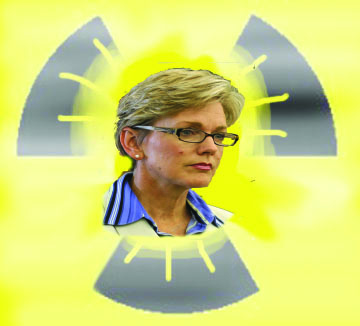
Secretary Jennifer Granholm said, “Preserving the domestic fleet is critical to reaching America’s clean energy future.” She said that expanding the scope of funding “will allow even more nuclear facilities the opportunity to continue operating as economic drivers in local communities that benefit from cheap [??], clean[??] and reliable power.” …………………… https://www.presidentialprayerteam.org/2023/03/12/energy-department-announces-funds-for-nuclear-power-plants/—
Why Russia has such a strong grip on Europe’s nuclear power
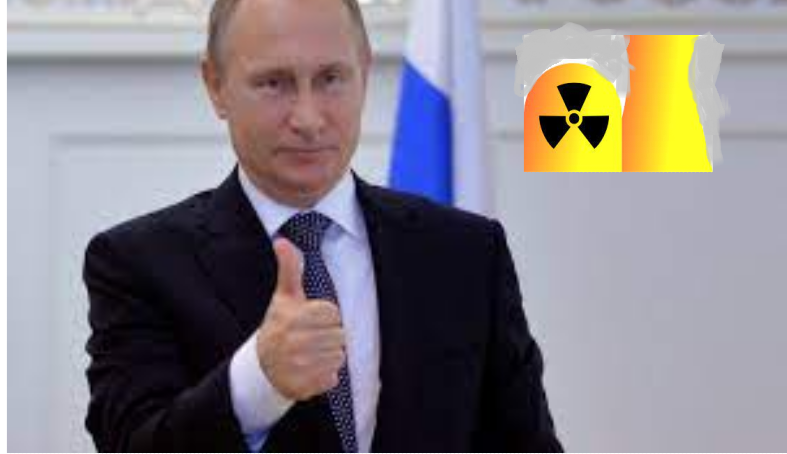
Why Russia Has Such a Strong Grip on Europe’s Nuclear Power. New energy
sources to replace oil and natural gas have been easier to find than
kicking the dependency on Rosatom, the state-owned nuclear superstore.
The pinched cylinders of Russian-built nuclear power plants that dot Europe’s
landscape are visible reminders of the crucial role that Russia still plays
in the continent’s energy supply.
Europe moved with startling speed to wean
itself off Russian oil and natural gas in the wake of war in Ukraine. But
breaking the longstanding dependency on Russia’s vast nuclear industry is a
much more complicated undertaking.
New York Times 10th March 2023
British government poised to label nuclear as “green”, but investors are not impressed
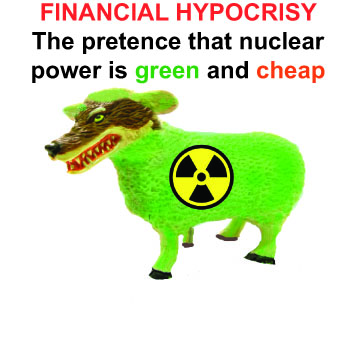
The British government is poised to redefine nuclear power as “green”
as it seeks to drum up more private investment in the sector to improve
domestic energy resilience. Ministers are set to consult on proposals to
change the so-called “taxonomy” — or financial classification system
— of energy in order to redefine nuclear projects as sustainable
investments. It is expected to lead to a reversal of the decision by the
Treasury as recently as 2021 to exclude nuclear power from the so-called
green investment framework.
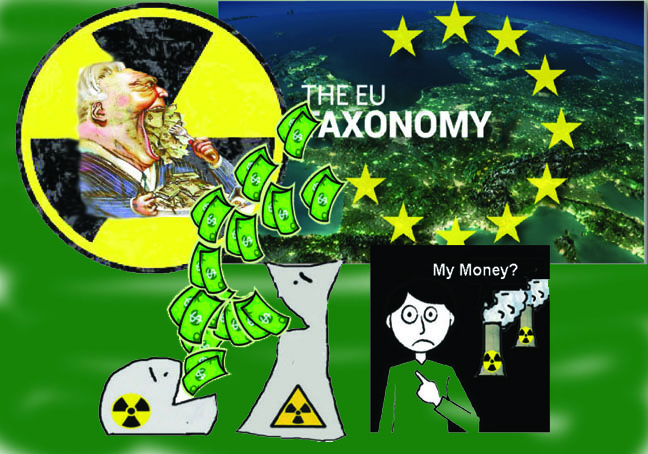
The move echoes a decision last year by the
European Commission to label both nuclear and some forms of gas as
“green” investments, which prompted legal challenges from Greenpeace
and a coalition of WWF and Client Earth.

The consultation comes as thegovernment is set to provide about £80mn
in seed funding for the launch ofGreat British Nuclear, a new body which will
oversee plans to build a new
generation of nuclear power stations in the UK, according to two people
familiar with the negotiations. Ministers are anxious to accelerate the
programme which has been dogged by delays and cost overruns on the only new
nuclear plant under construction at Hinkley Point in Somerset. The
government, together with French state-backed utility EDF, are trying to
raise £20bn in private finance for the next power station at Sizewell in
Suffolk.
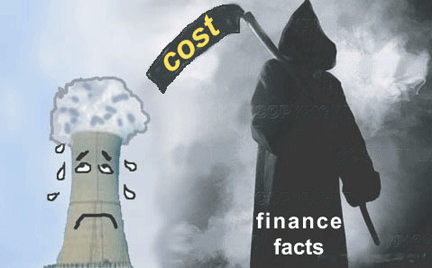
But investors have shown little interest in backing greenfield
nuclear projects, because of the construction risks in the highly
regulated, safety- critical sector. All new nuclear projects across Europe
have been hit by delays and big cost overruns.
Nick Stansbury, head of
climate solutions at Legal and General Investment Management, warned that
the changes to the taxonomy were unlikely to drive investment. Ministers
will also update their strategy for reaching net zero by 2050 after a judge
ruled last July that the original document provided insufficient detail and
gave the government a deadline to rewrite it by the end of this month. The
energy department refused to comment.
FT 9th March 2023
https://www.ft.com/content/2bef8242-d04b-47b9-84f8-b301692ea2f4
Britain’s “Regulated Asset Base” funding method for nuclear power is deemed not likely to work

National Infrastructure Commission model spells trouble for nuclear RAB
funding. Dr Jim Cuthbert questions whether the government’s funding method
for its nuclear power programme provides value for money, given it now
expects the plants to take nearly twice as long to build.
A major part of
the government’s energy strategy is a programme of eight new nuclear power
stations, to be funded by the Regulatory Asset Base (RAB) funding method.
One of the main features of RAB is that it involves consumers paying from
the start of construction for benefits they will only begin to receive when
construction is completed, and the plant is producing electricity.
One of
the key questions that should be answered in assessing whether a RAB-funded
project should go ahead is whether the eventual benefit consumers could
receive, in this case through cheaper electricity charges in the long run,
is enough to compensate them for the opportunity cost of the payments made
while receiving no benefit.
Given the long construction periods now
anticipated for new nuclear plants, it is unlikely that RAB financing will
be able to attain a sufficient cost advantage to do so. In 2019, the
National Infrastructure Commission (NIC) produced a paper on the
application of the RAB approach to nuclear energy, illustrating a
methodology including an approach to answering the above key question.
The NIC paper set out the results of illustrative calculations of the impact of
a range of factors on the likely value for money of RAB projects.
Unfortunately, it is something of a mixed bag. On the negative side, the
results in the paper are not presented in a way that allows the impact of
different factors to be separately identified: and, critically, the NIC
makes a central assumption about the likely length of the construction
period for new nuclear projects only about half of what the government now
assumes. On the plus side, having clarified with the NIC what methodology
it was using in the opportunity cost component of their model, their basic
approach seems sensible.
Although not clear from the original NIC paper,
the length of the construction period has a critical effect on the likely
value for money of a RAB-funded nuclear project. If the NIC’s basic model
is applied to a project with the government’s current assumption of a
13-to-17-year-long construction period, instead of the NIC’s central
assumption of eight years, then RAB nuclear is unlikely to achieve a
sufficient cost advantage over alternative approaches to compensate
consumers for the opportunity cost of their initial payments.
Public Finance 9th March 2023
China marketing nuclear power to Uganda

Uganda announces plans to start nuclear power generation
Energy minister says preparation ongoing to pave way for 1st nuclear power project
Hamza Kyeyune |09.03.2023,
KAMPALA, Uganda
Uganda announced Thursday it will begin construction of the country’s first nuclear facility, the Buyende Nuclear Power Plant, in partnership with China National Nuclear Corporation that would assist the East African country in developing capabilities for peaceful use of atomic energy.
Currently in Africa, only South Africa has an active nuclear power plant, while Russia’s state-owned energy corporation Rosatom commenced construction of Egypt’s first nuclear facility last year………..
https://www.aa.com.tr/en/africa/uganda-announces-plans-to-start-nuclear-power-generation/2841543
1 This Month
Chernobyl: The Lost Tapes – A good documentary on Chernobyl on SBS available On Demand for the next 3 weeks– https://www.sbs.com.au/ondemand/tv-program/chernobyl-the-lost-tapes/2352741955560

of the week–London Campaign for Nuclear Disarmament

Tell the Ukrainian Government to Drop Prosecution of Peace Activist Yurii Sheliazhenko
To see nuclear-related stories in greater depth and intensity – go to https://nuclearinformation.wordpress.com
-
Archives
- April 2026 (139)
- March 2026 (251)
- February 2026 (268)
- January 2026 (308)
- December 2025 (358)
- November 2025 (359)
- October 2025 (376)
- September 2025 (257)
- August 2025 (319)
- July 2025 (230)
- June 2025 (348)
- May 2025 (261)
-
Categories
- 1
- 1 NUCLEAR ISSUES
- business and costs
- climate change
- culture and arts
- ENERGY
- environment
- health
- history
- indigenous issues
- Legal
- marketing of nuclear
- media
- opposition to nuclear
- PERSONAL STORIES
- politics
- politics international
- Religion and ethics
- safety
- secrets,lies and civil liberties
- spinbuster
- technology
- Uranium
- wastes
- weapons and war
- Women
- 2 WORLD
- ACTION
- AFRICA
- Atrocities
- AUSTRALIA
- Christina's notes
- Christina's themes
- culture and arts
- Events
- Fuk 2022
- Fuk 2023
- Fukushima 2017
- Fukushima 2018
- fukushima 2019
- Fukushima 2020
- Fukushima 2021
- general
- global warming
- Humour (God we need it)
- Nuclear
- RARE EARTHS
- Reference
- resources – print
- Resources -audiovicual
- Weekly Newsletter
- World
- World Nuclear
- YouTube
-
RSS
Entries RSS
Comments RSS
 nuclear-news