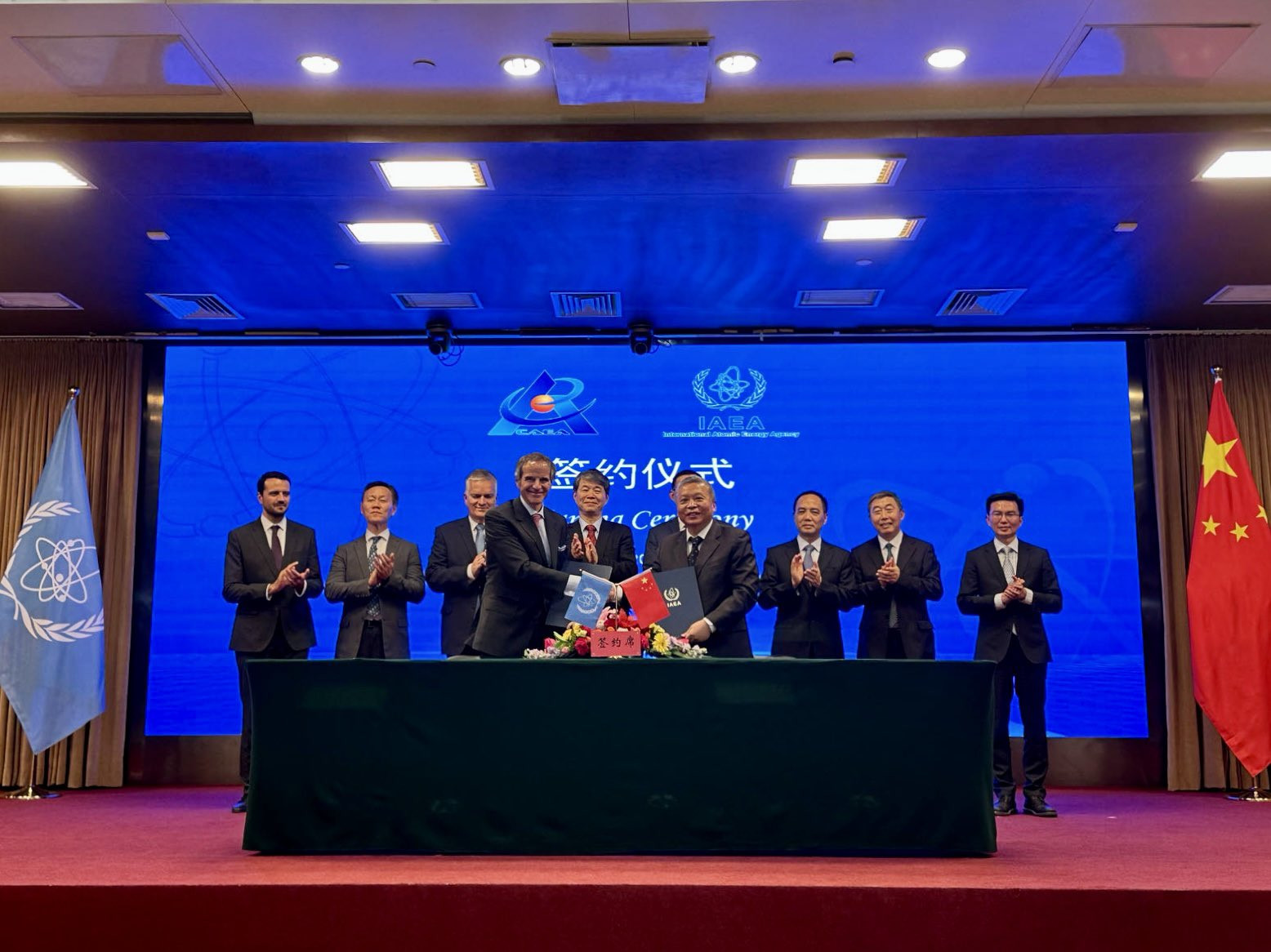
Director General Grossi Highlights China as Indispensable IAEA Partner, Leader in Nuclear Energy
IAEA Joanne Liou, IAEA Office of Public Information and Communication, 24 May 23
As the IAEA supports efforts to accelerate the contribution of atomic energy to peace, health and prosperity around the world, China is an indispensable partner in this endeavour, said Rafael Mariano Grossi, IAEA Director General, at the start of a week-long visit to China. Mr Grossi is meeting with several high-level officials and visiting nuclear facilities and institutions in Beijing, Shanghai and Shandong, during his first official visit to the country.
“China is one of the IAEA’s most important partners and a global leader in nuclear energy,” Mr Grossi said. “This week’s agenda will cover the remarkable progress of China’s nuclear energy programme, cooperation in nuclear applications and indispensable exchanges on non-proliferation and nuclear safety.” China has more than 50 operational nuclear power units and 24 are under construction. By 2035, China’s nuclear power generation will account for 10 per cent of the country’s electricity generation, according to the latest Blue Book of China Nuclear Energy Development Report.
On Monday, Mr Grossi and other IAEA officials signed several agreements at the China Atomic Energy Authority (CAEA), which reflect the diverse scope of work between the IAEA and China. The agreements will strengthen cooperation on small modular reactors, nuclear fusion, and nuclear data, fuel cycle and waste management, as well as communication activities……………………………………………. more https://www.iaea.org/newscenter/news/director-general-grossi-highlights-china-as-indispensable-iaea-partner-leader-in-nuclear-energy
Romania to be a guinea pig for NuScam’s small nuclear reactor folly
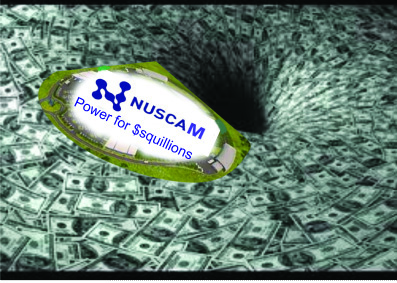
Romania’s NuScale SMR plan gets USD275 million boost WNN 22 May 2023
Funding of up to USD275 million to advance the deployment of a NuScale Power Corporation VOYGR small modular reactor (SMR) plant in Romania was announced at the G7 leaders’ summit by the USA and “multinational public-private partners” from Japan, South Korea and the United Arab Emirates.
……………… EXIM and the US International Development Finance Corporation also issued Letters of Interest for “potential financial support of up to USD3 billion and USD1 billion, respectively, for project deployment”. The announcement was part of the G7 Leaders’ plan to “mobilise USD600 billion in infrastructure investments under the Partnership for Global Infrastructure and Investment”.
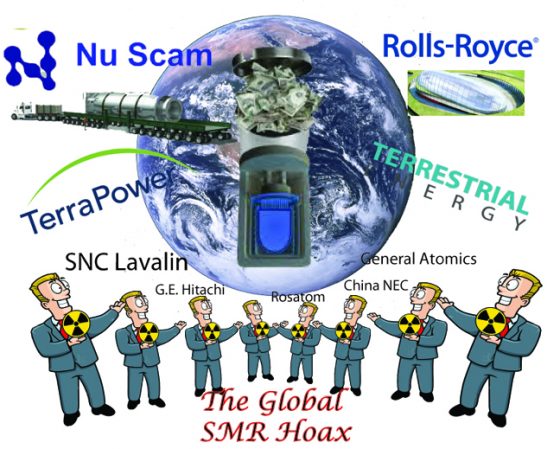
……………………… John Hopkins, NuScale Power president and CEO, said: “Support from the Biden Administration and international partners is a signal to energy markets around the world that NuScale SMRs are an important new technology solution to global decarbonisation and that Romania has the capabilities and experience to support its deployment … we are thrilled public-private partnerships are helping deploy our leading SMR technology as soon as 2029.”……………….. https://www.world-nuclear-news.org/Articles/NuScale-s-Romanian-SMR-plan-gets-USD275-million-bo
Damning critique of Rolls Royce
The new chief executive of Rolls-Royce has delivered another damning
critique of its performance, saying that one of its core divisions has been
“grossly mismanaged”. Tufan Erginbilgic, 63, took the top job at the
aerospace and engineering group at the start of this year and weeks later
infamously described the group as a “burning platform”. In his latest
broadside, the former BP executive took aim at the performance of its power
systems division, which makes diesel and gas engines for use in
superyachts, trains and mining lorries, and for back-up power generation.
Times 22nd May 2023
Finnish nuclear plant throttles production as electricity price plunges
Electricity production must also be profitable for nuclear power plants, according to the facility’s operator Teollisuuden Voima (TVO).
The output of Finland’s newest nuclear power facility, Olkiluoto 3, has been
significantly cut back because electricity has become too cheap, according
to the plant’s owner, Teollisuuden Voima (TVO).
“Electricity productionmust also be profitable for nuclear power plants, and when the price is
particularly low, there may be situations where output is limited,” TVO
communications manager, Johanna Aho, said. Early on Wednesday the market
price for electricity dropped below zero cents per kilowatt-hour (kWh) and
for hours after that the price was only 0.3 cents per kWh at its highest,
according to the country’s grid operator, Fingrid.
YLE 17th May 2023
Should SC have canceled Plant Summer? Yes, and Ga. should have canceled, too

https://www.postandcourier.com/columbia/opinion/should-sc-have-canceled-plant-summer-yes-and-ga-should-have-canceled-too/article_a298d894-f34c-11ed-8647-cfd2ea480900.html By Patty Durand 17 My 23
In a recent Post and Courier opinion piece, author Kevin Fisher quoted an Atlanta Journal-Constitution headline, “Georgia Power began splitting atoms on Monday at one of its two new nuclear units at Plant Vogtle.” In his piece, he expressed regret that SCANA and Santee Cooper botched and then abandoned Plant Summer, costing ratepayers about $9 billion while getting nothing in return.
It might seem logical to think that spending $9 billion for something you did not receive meant the decision to stop was wrong, but in the case of Plant Summer, it was absolutely the right decision. Rather than taking up space here, please type “sunk cost fallacy” into any search engine after you read this article.
People who wish South Carolina had not canceled Plant Summer must not realize how much trouble Georgians are in over the cost of Plant Vogtle. Now approaching $40 billion, it is the most expensive power plant ever built on earth.
As Georgia Power continues to rack up billions of dollars of cost overruns for Plant Vogtle, botched is hardly a strong enough word to describe this project. According to documents filed at the Georgia Public Service Commission prepared by independent construction monitors, issues plaguing the project include unachievable schedules, a culture of poor work inspections, failure to document progress, violation of IEEE standards and component failure rates of 80 percent. Failure to adopt lessons learned has also been a bedrock theme.
Although Georgia officials like to say zero carbon energy is a benefit of Plant Vogtle, let’s be clear: reduced carbon emissions were not why this plant was built. Georgia has no renewable energy goals and last July the Ga PSC authorized 2300 MW of new natural gas generation. Georgia doesn’t even track carbon emissions.
This plant happened because Georgia Power’s business model rewards capital investment, a perverse incentive that results in overbuilding and delivers rich profits. Georgia Power has already earned billions of dollars in early profits just for construction financing costs from riders on electricity bills. Once both reactors begin operating Georgia Power bills are expected to increase a shocking 20 percent for 60 years to pay for it.
For a state already in the top 10 for high power bills and energy poverty, these increases will be more than many people can bear.
Since South Carolina has half the population of Georgia, state officials knew that billions of dollars of cost overruns for Plant Summer would have been divided over a small number of customers and electricity rate increases would have been unbearable. That is why officials wisely canceled Plant Summer.
And look at what South Carolina has accomplished since Plant Summer was canceled: The 2014 landmark energy bill known as the Distributed Energy Resources (DER) program has flourished in ways it would not have with the heavy costs and distractions of building a nuclear power plant which crowds out other investments.
In 2023 South Carolina is a top 10 state for affordable electric bills and is ranked 13th nationally for rooftop solar. Georgia is the opposite: we are a top 10 state for most expensive electric bills and in 43rd place for rooftop solar — practically last. Rooftop solar is too expensive for almost everyone since Georgia officials do nothing to support it, so customers are forced to pay big electricity bills profiting Georgia Power. Once construction costs are added to the rates Georgia Power bills will become the highest in the nation because of Plant Vogtle. This is the fate South Carolina avoided by cancelling Plant Summer.
South Carolina officials who made the tough call to cancel Plant Summer in 2017 should be thanked for that decision. Utility officials who lied about Plant Summer’s progress were held accountable, while utility officials in Georgia similarly providing false schedule updates and cost estimates have had no accountability.
And by the way? The “splitting of atoms” at Plant Vogtle’s Unit 3 that began April 1 is no longer occurring. This unit shut down May 5, for the second time in the past month, for safety failures. Cost overruns continue.
Patty Durand is founder of Cool Planet Solutions and is a candidate for the Georgia Public Service Commission.
Finance for renewable energy
The lessons learned from scaling up wind and solar technologies from an
expensive niche option to arguably the cheapest option for new electricity
generation can act as a framework for the continued growth of the energy
transition and its expansion to emerging economies. This is the conclusion
from a new report published this week by the International Renewable Energy
Agency (IRENA) launched in partnership with the Indian G20 Presidency
entitled “Low-Cost Energy Transition Finance”. The report focuses on
the need for low-cost finance to support the development of newer renewable
energy technologies such as green hydrogen, energy storage, and offshore
wind in both emerging market economies and advanced economies.
Renew Economy 17th May 2023
Biden is selling weapons to the majority of the world’s autocracies
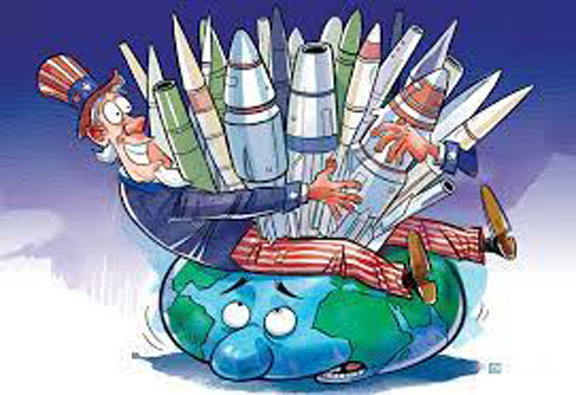
Despite the White House’s rhetoric about supporting global democracy, the U.S. sold weapons in 2022 to 57 percent of the world’s authoritarian regimes.
Stephen Semler, May 11 2023, The Intercept
SINCE PRESIDENT JOE BIDEN came into office in 2021, he hasdescribed a “battle between democracies and autocracies” in which the U.S. and other democracies strive to create a peaceful world. The reality, however, is that the Biden administration has helped increase the military power of a large number of authoritarian countries. According to an Intercept review of recently released government data, the U.S. sold weapons to at least 57 percent of the world’s autocratic countries in 2022.
Since the end of the Cold War, the United States has been the world’s biggest weapons dealer, accounting for about 40 percent of all arms exports in a given year. In general, these exports are funded through grants or sales. There are two pathways for the latter category: foreign military sales and direct commercial sales.
The U.S. government acts as an intermediary for FMS acquisitions: It buys the materiel from a company first and then delivers the goods to the foreign recipient. DCS acquisitions are more straightforward: They’re the result of an agreement between a U.S. company and a foreign government. Both categories of sales require the government’s approval.
Country-level data for last year’s DCS authorizations was released in late April through the State Department’s Directorate of Defense Trade Controls. FMS figures for fiscal year 2022 were released earlier this year through the Pentagon’s Defense Security Cooperation Agency. According to their data, a total of 142 countries and territories bought weapons from the U.S. in 2022, for a total of $85 billion in bilateral sales.
How many of those countries were democracies, and how many were autocracies? That question can be answered by comparing the new U.S. arms sales data to political regime data from the Varieties of Democracy project at the University of Gothenburg in Sweden, which uses a classification system that’s called Regimes of the World.
The system classifies regimes into four categories: closed autocracy, electoral autocracy, electoral democracy, and liberal democracy. For a country to be classified as a democracy, it must have multiparty elections and political freedoms that make those elections meaningful. According to this methodology, the dividing line between democracies and autocracies is whether a country’s leaders are accountable to their citizens through free and fair elections.
Of the 84 countries codified as autocracies under the Regimes of the World system in 2022, the United States sold weapons to at least 48, or 57 percent, of them. The “at least” qualifier is necessary because several factors frustrate the accurate tracking of U.S. weapons sales. The State Department’s report of commercial arms sales during the fiscal year makes prodigious use of “various” in its recipients category; as a result, the specific recipients for nearly $11 billion in weapons sales are not disclosed………………………… https://theintercept.com/2023/05/11/united-states-foreign-weapons-sales/
Counting the rising costs of Scotland’s nuclear testing facility

Alan Laird, 12 May 23
https://www.thenational.scot/community/23516945.counting-rising-costs-scotlands-nuclear-testing-facility/
HOW magnanimous of Andrew Bowie, Westminster’s Nuclear Minister, not to “impose nuclear power on Scotland” (The National, May 4), although he’s a bit late with that assurance. But never mind democracy, let’s look at the cost.
Dounreay was commissioned as a test facility in 1955 on our north coast – in other words, “let’s put it waaaay up there in case something goes wrong”.
The initial research reactor “went critical” – a not very reassuring term for “started working” – in 1958.
The Dounreay Fast Reactor started up in 1959 and shut down in 1977 after 15 years of operation. Its maximum output of 14MW was negligible.
A Fast-Breeder Reactor, now an abandoned technology, began supplying 250MW from 1975 till 1995, enough for about 48,000 homes. Its cooling was by liquid sodium – 1500 tons of the stuff – which explodes instantly in contact with air. Cool.
Then there is the military site, HMS Vulcan, for development and testing the reactors of nuclear-powered submarines. From 1963 to 2015, five generations of small reactors have been tested here, routinely run at greater than operational stress to find out any faults before installation in the subs. How reassuring. As with MoD sites on the Clyde, full disclosure of breaches of health and safety are not disclosed. The site is due for decommissioning next year. Estimates of the costs are not available.
In 1998, following safety and pollution concerns, Norway, Sweden and the Irish Republic demanded the immediate closure of the site. PM Tony Blair was advised it would take £1 billion and 100 years to complete the work. By 2006, 25 years and £2.7bn was the estimate, then in 2007 it was 17 years and £2.6bn. In 2019 contracts worth £400m were awarded to continue the clean-up, with a new estimate of £4.3bn and 60 years. I guess no-one actually knows.
The site also took in foreign spent nuclear fuel for reprocessing. Unsurprisingly, many foreign customers refused to take their nuclear waste back. It’s mostly still there, along with Dounreay’s own.
The expected date of the return of the site to brownfield use is 2330. Yes, that’s more than 300 years from now. Uncountable billions of pounds and nearly 400 years of an unusable bit of Scotland is an astounding price to pay for powering 48,000 homes.
The arguments for nuclear power put forward by the industry and their UK Government lackeys are contradictory, disingenuous and downright dishonest.
Dounreay’s installation is a mere toy compared to Hunterston (both reactors now decommissioned) and Torness (the nuclear regulator thinks it should close by 2024). First estimates for decommissioning these sites is £132 billion and 120 years. I wonder when that estimate will be revised upward?
Just as a footnote, all of the UK’s uranium has to be imported. Much of it from Russia. The real reason the UK Government wants to continue with this outrageous waste of money is for the steady supply of enriched uranium for making atomic bombs. That’s worth it to them at any cost.
Rolls-Royce falls 6% as update lacks oomph and news on small nuclear business
Oliver Haill, 11 May 23, Proactive Investor 11th May 2023
Rolls-Royce Holdings PLC’s (LSE:RR.) shares fell 6% to a month’s low after its trading update contained nothing new, analysts said, with some concern about the lack of updates about its small nuclear reactor business…………
Putin Still Selling U.S. Nearly $1 Billion in Nuclear Fuel
NewsWeek, BY ANNA SKINNER ON 5/11/23
The United States has done a thorough job of sanctioning Russia, but it still relies on the nation for one key resource.
The U.S. and other Western nations were quick to sanction Russia after Russian President Vladimir Putin ordered an invasion of Ukraine in February 2022. Western allies joined forces in sanctioning resources like Russian oil and gas to deprive the Kremlin of financial gain amid funneling money into its war against Ukraine. International companies located in Russia also were quick to leave, further damaging the Russian economy, but Russia still maintains a firm grasp on a horde of something that many other countries want: nuclear fuel.
Nuclear energy, which generates power through a process of splitting uranium atoms, has evaded sanctions more than a year into the war. Enriching uranium is a highly specialized process that can only be done in certain countries, such as Russia. Russia has some of the world’s largest uranium supplies, and it also excels in the necessary process of converting it to enriched uranium, which then can be used as nuclear fuel. Commercial plants converting uranium operate in Russia, Canada, China and France, with Russia having the most infrastructure needed for the conversion……………..
Because of this, Rosatom State Nuclear Energy Corporation—Russia’s collection of nuclear suppliers—provides a quarter of the U.S.’s nuclear fuel, and the United States continues to pay for the resource, spending a collective $1 billion last year, according to a report by the Wall Street Journal.
………………. In March, the U.S.’s first nuclear reactor in seven years started nuclear reactions in Georgia. CNBC reported that including the new reactor, there are 93 reactors throughout the United States providing a fifth of the nation’s energy. A quarter of the nuclear resources needed to power that energy is sourced from Rosatom.
U.S. companies are paying steeply for the resources needed to power its reactors, which means it is funding both Russia and Ukraine during the war….. https://www.newsweek.com/putin-selling-us-nearly-billion-dollars-nuclear-fuel-1799788
Sowing Seeds of Plunder: A Lose-Lose Situation in Ukraine

President Zelenskyy put the land reform into law in 2020 against the will of the vast majority of the population who feared it would exacerbate corruption and reinforce control by powerful interests in the agricultural sector.
The largest landholders are a mix of Ukrainian oligarchs and foreign interests — mostly European and North American as well as the sovereign fund of Saudi Arabia.
Ed note: The irony of it! Ukrainians hold the hated memory of Soviet Russia starving Ukraine, as it sent their grain to Russia. Now we have the Western world helping themselves to Ukraine’s agriculture – with increasing farming for export, – pushing out the livelihood’s of Ukrainian small farmers. Zelensky – seen as a hero/saviour for now – – but how will this clown be remembered?
y Colin Todhunter, 10 May 23 https://www.globalresearch.ca/sowing-seeds-plunder-lose-lose-situation-ukraine/5818851
It’s a lose-lose situation for Ukrainians. While they are dying to defend their land, financial institutions are insidiously supporting the consolidation of farmland by oligarchs and Western financial interests.
So says Frédéric Mousseau, Policy Director of the Oakland Institute, an independent think tank.
Depending on which sources to believe, between 100,000 and 300,000 Ukrainian soldiers (possibly more) have died during the conflict with Russia. That figure, of course, does not include civilian casualties.
The mainstream narrative in the West is that Russia grabbed Crimea and then invaded Ukraine. Russia is portrayed as the outright aggressor which wants to restore its control over large swathes of Europe.
The expansion of NATO towards the east, the US-backed coup in 2014 – followed by eight years of the shelling of the ethnic Russian eastern parts of the country by the regime in Kyiv resulting in around 14,000 deaths – led up to the military intervention by Russia, which regards the expansionism and militarism as an existential threat.
It is not the purpose of this article to explore these issues. Much has already been written on this elsewhere. But billions of dollars’ worth of military hardware has been sent to Ukraine by the NATO countries and hundreds of thousands of young Ukrainians have died.
They died in the belief that they were protecting their nation – their land. A land that is among the most fertile in the world.
Professor Olena Borodina of the National Academy of Sciences of Ukraine says:
“Today, thousands of rural boys and girls, farmers, are fighting and dying in the war. They have lost everything. The processes of free land sale and purchase are increasingly liberalised and advertised. This really threatens the rights of Ukrainians to their land, for which they give their lives.”
Borodina is quoted in the February 2023 report by the Oakland Institute War and Theft: The Takeover of Ukraine’s Agricultural Land, which reveals how oligarchs and financial interests are expanding control over Ukraine’s agricultural land with help and financing from Western financial institutions.
Aid provided to Ukraine in recent years has been tied to a drastic structural adjustment programme requiring the creation of a land market through a law that leads to greater concentration of land in the hands of powerful interests. The programme also includes austerity measures, cuts in social safety nets and the privatisation of key sectors of the economy.
Frédéric Mousseau, co-author of the report, says:
“Despite being at the centre of news cycle and international policy, little attention has gone to the core of the conflict — who controls the agricultural land in the country known as the breadbasket of Europe. [The] Answer to this question is paramount to understanding the major stakes in the war.”
The report shows the total amount of land controlled by oligarchs, corrupt individuals and large agribusinesses is over nine million hectares — exceeding 28% of Ukraine’s arable land (the rest is used by over eight million Ukrainian farmers).
Amidst Chaos of War, a New Report Exposes the Stealth Take-over of Ukrainian Agricultural Land
The largest landholders are a mix of Ukrainian oligarchs and foreign interests — mostly European and North American as well as the sovereign fund of Saudi Arabia. A number of large US pension funds, foundations and university endowments are also invested in Ukrainian land through NCH Capital – a US-based private equity fund, which is the fifth largest landholder in the country.
President Zelenskyy put the land reform into law in 2020 against the will of the vast majority of the population who feared it would exacerbate corruption and reinforce control by powerful interests in the agricultural sector.
The Oakland Institute notes that, while large landholders are securing massive financing from Western financial institutions, Ukrainian farmers — essential for ensuring domestic food supply — receive virtually no support. With the land market in place, amid high economic stress and war, this difference of treatment will lead to more land consolidation by large agribusinesses.
All but one of the ten largest landholding firms are registered overseas, mainly in tax havens such as Cyprus or Luxembourg. The report identifies many prominent investors, including Vanguard Group, Kopernik Global Investors, BNP Asset Management Holding, Goldman Sachs-owned NN Investment Partners Holdings, and Norges Bank Investment Management, which manages Norway’s sovereign wealth fund.
Most of the agribusiness firms are substantially indebted to Western financial institutions, in particular the European Bank for Reconstruction and Development, the European Investment Bank, and the International Finance Corporation – the private sector arm of the World Bank.
Together, these institutions have been major lenders to Ukrainian agribusinesses, with close to US$1.7 billion lent to just six of Ukraine’s largest landholding firms in recent years. Other key lenders are a mix of mainly European and North American financial institutions, both public and private.
The report notes that this gives creditors financial stakes in the operation of the agribusinesses and confers significant leverage over them. Meanwhile, Ukrainian farmers have had to operate with limited amounts of land and financing, and many are now on the verge of poverty.
International financial institutions are in effect subsidising the concentration of land and a destructive industrial model of agriculture based on the intensive use of synthetic inputs, fossil fuels and large-scale monocropping.
Much of what is happening in Ukraine is part of a wider trend: private equity funds being injected into agriculture throughout the world and used to lease or buy up farms on the cheap and aggregate them into large-scale, industrial grain and soybean concerns. These funds use pension funds, sovereign wealth funds, endowment funds and investments from governments, banks, insurance companies and high net worth individuals (see the 2020 report ‘Barbarians at the Barn‘ by Grain.org).
Financialising agriculture this way shifts power to people with no connection to farming. In the words of BlackRock’s Larry Fink: “Go long agriculture and water and go to the beach.”
Funds tend to invest for between 10 and 15 years, resulting in good returns for investors but can leave a trail of long-term environmental and social devastation and serve to undermine local and regional food insecurity.
By contrast, according to the Oakland Institute, small-scale farmers in Ukraine demonstrate resilience and enormous potential for leading the expansion of a different production model based on agroecology and producing healthy food. Whereas large agribusinesses are geared towards export markets, it is Ukraine’s small and medium-sized farmers who guarantee the country’s food security.
This is underlined by the State Statistics Service of Ukraine in its report ‘Main agricultural characteristics of households in rural areas in 2011’, which showed that smallholder farmers in Ukraine operate 16% of agricultural land, but provide 55% of agricultural output, including 97% of potatoes, 97% of honey, 88% of vegetables, 83% of fruits and berries and 80% of milk.
In June 2020, the IMF approved an 18-month, strings-attached $5 billion loan programme with Ukraine. Also that year, the World Bank incorporated measures relating to the sale of public agricultural land as conditions in a $350 million Development Policy Loan (COVID ‘relief package’) to Ukraine. This included a required ‘prior action’ to “enable the sale of agricultural land and the use of land as collateral.”
According to the Oakland Institute:
“Ukraine is now the world’s third-largest debtor to the International Monetary Fund and its crippling debt burden will likely result in additional pressure from its creditors, bondholders and international financial institutions on how post-war reconstruction – estimated to cost US$750 billion – should happen.”
Financial institutions are leveraging Ukraine’s crippling debt to drive further privatisation and liberalisation – backing the country into a corner to make it an offer it can’t refuse.
Since the war began, the Ukrainian flag has been raised outside parliament buildings in the West and iconic landmarks have been lit up in its colours. An image bite used to conjure up feelings of solidarity and support for that nation while serving to distract from the harsh machinations of geopolitics and modern-day economic plunder that is unhindered by national borders and has scant regard for the plight of ordinary citizens.
Bill Gates, Rolls Royce, and others, in the scrum to con the UK government into buying useless nuclear reactor minitrash

Rolls-Royce mini-nukes project under threat as Bill Gates eyes bid
Global interest comes as British company scrambles to secure government contract
By Gareth Corfield, 7 May 2023
Bill Gates is eyeing a bid to build Britain’s first mini-nuclear reactor in a direct challenge to Rolls-Royce which is scrambling to secure a government contract. Seattle-based TerraPower, which was founded by the Microsoft billionaire, said it was considering throwing its hat into the ring for lucrative contracts to build Britain’s next-generation small modular reactors or “mini-nukes”.
In a blog post, Mr Gates said the nuclear energy company’s work “has drawn interest from around the globe”, citing agreements with Japan, South Korea and the Luxembourg-based ArcelorMittal steel conglomerate. TerraPower claims its travelling wave reactor design can “operate for centuries with unenriched uranium fuel”. Founded in 2006, the company secured $830m (£657m) in its most recent funding round last summer. Unlike many traditional SMR designs, the company’s plant, called Natrium, uses a molten salt heat storage system that will allow it to rapidly boost its power output at peak times.
Dozens of other nuclear energy startups are competing to bring their designs into
service, with Rolls-Royce competing against the likes of GE-Hitachi, Mitsubishi Heavy Industries and Westinghouse Electric. In March, US company Last Energy, signed a deal to sell 24 small modular reactors (SMRs) to British customers. While Last Energy still needs regulatory approval for its designs, the company expects the first of its SMRs to be operational by 2026 with no government funding required.
Telegraph 7th May 2023
Blaine Higgs, Premier of New Brunswick, Canada, heads to Europe to promote non-existent small nuclear reactors

Premier will promote hydrogen, natural gas and small modular reactors to thousands in Rotterdam
Higgs heads to Europe to pitch energy sources that don’t exist yet, Jacques Poitras · CBC News · May 05, 2023
Premier Blaine Higgs is heading to Europe next week to promote three New Brunswick energy sources that remain largely hypothetical at the moment.
Higgs will be at the World Hydrogen Summit next week in Rotterdam, the Netherlands, and will then travel to Paris.
The focus in Rotterdam will be pitching the province’s hydrogen, natural gas and small modular reactor projects to customers — though none of them are producing anything that exists yet.
He’ll position all three of those sources as a key part of the transition away from greenhouse gas-emitting energy as the world seeks to limit the effects of climate change……………………………
In Rotterdam, he’ll present his case to 8,000 delegates from more than a hundred countries attending the summit…………………………………..
It’s not clear what market there would be in Europe for small modular nuclear reactors built in New Brunswick by ARC Clean Energy Inc. and Moltex Energy.
Other companies around the world are working on their own SMR designs and some countries in Europe, including Germany, have cooled to nuclear power as a fossil fuel alternative.
And for both ARC and Moltex, a working reactor remains several years away. ARC says its first will be able to start operating at Point Lepreau in 2030 while Moltex says its initial device will take more time. ………………………….. https://www.cbc.ca/news/canada/new-brunswick/higgs-energy-europe-1.6833878
—
Canada and Ontario are turning to nuclear energy as a green solution. Here’s the problem with that.
As more than $1 billion in public money is being committed to a new generation of reactors, critics are calling for a pause and a rethink, saying nuclear power’s cost overruns, construction delays and safety concerns outweigh its benefits as a provider of clean electricity.
By Marco Chown Oved, Climate Change Reporter, Thu., May 4, 2023
After a pause of more than 30 years, Ontario is poised to start building nuclear reactors again in an effort to provide the carbon-free electricity needed to avoid the worst effects of climate change.
Both Premier Doug Ford and Prime Minister Justin Trudeau have lauded nuclear power as a climate change solution, one that will help reduce emissions, attract green businesses and provide abundant electricity to enable society to stop burning fossil fuels.
But as more than $1 billion in public money is being committed to a new generation of reactors, critics are calling for a pause and a rethink, saying nuclear power’s cost overruns, construction delays and safety concerns outweigh its benefits as a provider of clean electricity — especially when renewables such as wind and solar are cheaper, quicker to build and have no long-term radioactive legacy.
The last nuclear plant Ontario built was so expensive that it caused the bankruptcy of Ontario Hydro, said Mark Winfield, a professor of environmental and urban change at York University.
“People don’t remember that,” he said. “Now, we’re sleepwalking back down a nuclear path and nobody’s asking the big questions about the costs, viability, risks and alternatives.”
Winfield, who is also co-chair of the Sustainable Energy Initiative at York, said the climate crisis has opened up a window of opportunity for nuclear power, aided by the public’s short memory.
“The nuclear industry is engaged in a full-court press, trying to take advantage of the decarbonization push to rehabilitate its reputation,” he said, an assertion supported by records in the lobbyist registry in Ontario.
Building nuclear to reduce emissions is a false solution, he said, because it will burden future generations with waste that will remain radioactive for thousands of years.
“It’s climate change for nuclear waste. Are we trading one giant intergenerational problem for another.
…………………….. Winfield and other critics point to nuclear power’s record of taking longer to build and costing more than anticipated — often by large margins — as the reason why the spread of the technology stalled decades ago.
……………………………. Nuclear power was never meant to be commercially viable, said Benjamin Sovacool, a professor of earth and environment at Boston University. It was developed in the United States as a way to convince the public that the power of the atom — which had demonstrated its catastrophic destructive potential during the Second World War — could be used for good, he said.
“There was this euphoria around what nuclear power could do,” he said. The only problem? “It was never cost effective.”
Sovacool published an academic paper that analyzed the construction timelines and budgets of more than 400 large-scale electricity projects around the world over the past 80 years. He found, on average, nuclear plants cost more than double their original budgets and took 64 per cent longer to build than projected. Wind and solar, by contrast, had average cost overruns of 7.7 per cent and 1.3 per cent, respectively.
“That’s why the market has not really embraced nuclear power at all. It just can’t compete with modern renewables,” said Sovacool. “Nuclear is stagnating and declining.”
……………………………………………………………. One of the only places where enthusiasm exists for new nuclear is China.
Over the past two decades, China has commissioned 50 new reactors, more than half of all new reactors built. In the rest of the world, twice as many reactors have been decommissioned (105) as were built (48). But even China’s passion for nuclear is eclipsed by its penchant for building solar.
Since 2001, China has added 47.5 GW of nuclear power generation to its grid, according to the World Nuclear Industry Report. But in the last decade — half that time — it has also built 13 times more wind and solar (630 GW), according to the International Energy Agency.
…………………………….. The cost increases associated with these undercut the case that nuclear power is reliable and inexpensive, Ramana said, prompting the nuclear industry to lowball cost estimates and provide unrealistic construction schedules.
“If politicians and the public were given accurate estimates, they’d say: ‘No thank you,’ ” he said. “There is an incentive to lie about this. If you look into the history, you should be very skeptical about promises.”
Canada was an early proponent of nuclear power, with the first experimental nuclear reactor outside the U.S. operating at Chalk River in the 1940s. Canada then developed its own civilian power technology — called CANDU — with prototypes built at Douglas Point, Ont., and Gentilly, Que., in the 1960s. The first large-scale reactor was built in Pickering in 1971, followed by Bruce in 1977, Point Lepreau, N.B., in 1983 and Darlington in 1990.
In Ontario, all three plants — Pickering, Bruce and Darlington — took longer and cost more to build than expected. Darlington, the last one to be completed, ended up costing $14.4 billion — triple the original budget.
Built to meet projections of soaring demand for electricity that didn’t materialize after the recession of the early ’90s, Darlington nuclear power plant bankrupted Ontario Hydro and led to the once-profitable public utility being broken into three.
The promised electricity price reductions also failed to materialize.
Now, three decades later, Ontario gets 53 per cent of its electricity from nuclear, but faces growing demand for noncarbon emitting electricity as industry returns to the province and cars and home heating electrify.
So Queen’s Park is turning to nuclear again.
Midway through $26 billion in refurbishments to extend the production lives of Darlington and Bruce, Ontario Power Generation (OPG) asked the Canadian Nuclear Safety Commission to prolong its operating licence for Pickering, Canada’s oldest operating reactor.
But that won’t be enough. The Independent Electricity System Operator said new nuclear reactors will be needed to get the province’s electricity supply to net-zero emissions. So, OPG has started the licensing process to build a first-of-its-kind small modular reactor (SMR)……………………………………
SMRs are supposed to solve the cost overruns and construction delays that plagued larger nuclear projects. They are to be assembled mostly in a factory, where costs can be better controlled, and their smaller size means they will be quicker to construct.
The SMR proposed for Darlington will have a 300 MW capacity. By contrast, each of the four existing reactors at Darlington have a capacity of nearly 900 MW.
But the very logic of going small undercuts the economies of scale that large nuclear reactors relied on, said Lyman. While they may cost a lot, full-scale reactors produce incredible amounts of electricity. Lyman doubts the smaller reactors will end up being much cheaper, but they’ll definitely produce less electricity — and he has concerns they could be less safe.
“In the drive to show these things are going to be cheaper, they’re cutting too many corners,” he said. “There may be a way to make it safe enough, but that’s not the way we’re going.”
The hypothetical consequences of a nuclear accident would be far worse in Ontario, where Darlington and Pickering are located very close to millions of homes, than most other nuclear plants around the world, said Theresa McClenaghan, a lawyer with the Canadian Environmental Law Association.
“We have been numbed to the danger,” she said. “The emergency planning zone extends well into Toronto.”………………. https://www.thestar.com/news/canada/analysis/2023/05/04/the-problemswith-canada-and-ontarios-new-push-for-nuclear-energy.html?rf
US Sells Taiwan 400 Harpoon Anti-Ship Missiles – Profits and Provocations, Not Protection
There are no clear solutions for Taiwan if it continues down the path of US-sponsored separatism and antagonism toward the rest of China, so much so that the only logical solution to “defeat” a Chinese blockade of the island is to not provoke one in the first place.
US Sells Taiwan 400 Harpoon Anti-Ship Missiles as US-Chinese Tensions Rise
03.05.2023 Author: Brian Berletic
As the US continues its proxy war against Russia in Ukraine, it also continues preparations for a similar conflict with China using the island province of Taiwan as its proxy of choice in Asia.
Toward this end, the US continues flooding the island province with billions of dollars worth of weapons.
One of the more recent announced weapon sales was 400 Harpoon anti-ship missiles.
Washington’s Flawed “Porcupine Strategy” for Taiwan
The anti-ship missiles manufactured by Boeing would presumably be part of developing much wider anti-access area denial (A2AD) capabilities for the administration’s armed forces on the island.
A Taiwan-based analyst, Pei-Shiue Hsieh, in an article for The Diplomat titled, “Building Taiwan’s Own Area Denial Capabilities,” would claim:
While some assert that Taiwan cannot counter a Chinese invasion on its own, the results of my analytical wargames show the opposite. The drills by the Chinese People’s Liberation Army (PLA) last month likely demonstrated Beijing’s intentions to impose a naval blockade on the island in the event of a military confrontation. Taiwan’s military needs to prevent Chinese fleets from moving into their tactical positions or, if unable to prevent the blockade’s establishment, to disrupt ongoing PLA Navy (PLAN) operations.
In order to do so, the author suggests:
Taiwan must develop its own anti-access/area denial (A2/AD) strategy, which incorporates guided weapons and reconnaissance systems. Currently, Taiwan’s military possesses two possible options for guided anti-ship weapons: the ground-launched Hsiung Feng II/III and the ground- or air-launched AGM-84 Harpoon. With the reconnaissance information gathered by naval surveillance radars and MQ-9B SeaGuardian unmanned aerial vehicles, these legacy anti-ship missiles remain potent defenders of the island. However, as the PLAN is rapidly growing, Taiwan needs more than short- and medium-range options to cope with the PLA threat.
The Hsiung Feng III and Harpoon anti-ship missiles have ranges of 400 km and 139 km respectively. While these ranges may seem like more than enough to target and destroy Chinese warships imposing a sea blockade on the island of Taiwan, the problem is that while the missiles themselves have active radar homing, finding Chinese ships to home in on in the first place will be very difficult for Taiwan’s armed forces…………………………………………..
In a scenario where China is attempting to blockade Taiwan and China feels its surface vessels are at risk from anti-ship missiles, it can also employ submarines while using its formidable missile force to strike at and destroy not only military capabilities based on Taiwan, but also ports receiving military aid from abroad as well as ships attempting to deliver it. A blockade by any other name is still a blockade.
The other problem Taiwan’s administration faces is the time frame purchased weapons would actually reach the island. The 400 purchased Harpoon anti-ship missiles will take years at the earliest to arrive……………………
According to most estimates, the gap in military capabilities between China and the United States is set to close somewhere around 2025. By 2029, the gap would be in the process of widening, but this time in China’s favor.
Contracts for munitions like the LRASM are not even being publicly discussed, but should such contracts be signed, it’s likely Taiwan will be waiting as long or longer for the missiles to arrive, and that is assuming the missiles are developed into ground-launched systems to adapt to the reality Taiwan’s air force will not play a role in any hostilities with the rest of China.
Profits and Provocations, Not Protection
While Boeing is certainly profiting from the sale of 400 Harpoon anti-ship missiles to Taiwan, the move hardly enhances Taiwan’s military capabilities relative to the rest of China, nor does it do so within the window of opportunity the US seeks to provoke an armed conflict with China over Taiwan. If any blockade imposed by China around the island province of Taiwan is to be broken, it will have to be by the US military using a combination of anti-ship missiles and anti-submarine warfare.
US policymakers having wargamed an armed conflict between the US and China noted that the US would likely exhaust its arsenal of long-range anti-ship missiles of all kinds, a result of America’s limited military industrial capacity, a shortfall on demonstration amid its proxy war with Russia in Ukraine at the moment.
But even if the US didn’t run out of missiles and if the US was successful in thwarting China’s use of naval vessels to impose a blockade, a de facto blockade can still be imposed through the use of China’s long-range missiles fired from the mainland at Taiwan’s ports and any ships attempting to utilize them.
There are no clear solutions for Taiwan if it continues down the path of US-sponsored separatism and antagonism toward the rest of China, so much so that the only logical solution to “defeat” a Chinese blockade of the island is to not provoke one in the first place.
Brian Berletic is a Bangkok-based geopolitical researcher and writer, especially for the online magazine “New Eastern Outlook”. https://journal-neo.org/2023/05/03/us-sells-taiwan-400-harpoon-anti-ship-missiles-as-us-chinese-tensions-rise/
1 This Month
Chernobyl: The Lost Tapes – A good documentary on Chernobyl on SBS available On Demand for the next 3 weeks– https://www.sbs.com.au/ondemand/tv-program/chernobyl-the-lost-tapes/2352741955560

of the week–London Campaign for Nuclear Disarmament

Tell the Ukrainian Government to Drop Prosecution of Peace Activist Yurii Sheliazhenko
To see nuclear-related stories in greater depth and intensity – go to https://nuclearinformation.wordpress.com
-
Archives
- April 2026 (139)
- March 2026 (251)
- February 2026 (268)
- January 2026 (308)
- December 2025 (358)
- November 2025 (359)
- October 2025 (376)
- September 2025 (257)
- August 2025 (319)
- July 2025 (230)
- June 2025 (348)
- May 2025 (261)
-
Categories
- 1
- 1 NUCLEAR ISSUES
- business and costs
- climate change
- culture and arts
- ENERGY
- environment
- health
- history
- indigenous issues
- Legal
- marketing of nuclear
- media
- opposition to nuclear
- PERSONAL STORIES
- politics
- politics international
- Religion and ethics
- safety
- secrets,lies and civil liberties
- spinbuster
- technology
- Uranium
- wastes
- weapons and war
- Women
- 2 WORLD
- ACTION
- AFRICA
- Atrocities
- AUSTRALIA
- Christina's notes
- Christina's themes
- culture and arts
- Events
- Fuk 2022
- Fuk 2023
- Fukushima 2017
- Fukushima 2018
- fukushima 2019
- Fukushima 2020
- Fukushima 2021
- general
- global warming
- Humour (God we need it)
- Nuclear
- RARE EARTHS
- Reference
- resources – print
- Resources -audiovicual
- Weekly Newsletter
- World
- World Nuclear
- YouTube
-
RSS
Entries RSS
Comments RSS
 nuclear-news