China joins the rush to market nuclear power to Turkey
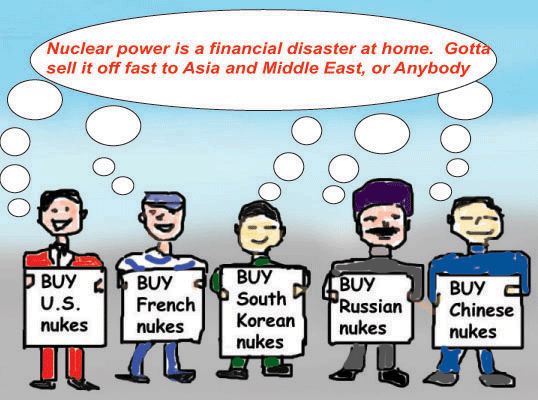
Türkiye in contact with China for planned 3rd nuclear plant’, BY DAILY SABAH WITH REUTERS, JUN 23, 2023
Türkiye is in contact with China regarding the construction of a planned third nuclear power plant (NPP) and is surveying sites for a fourth, a top ministry official said.
Russia’s Rosatom is building the country’s first nuclear power plant, Akkuyu NPP, in its southern Mersin province, with the first reactor expected to go online next year……………
Assessing investability of new nuclear projects like Sizewell C
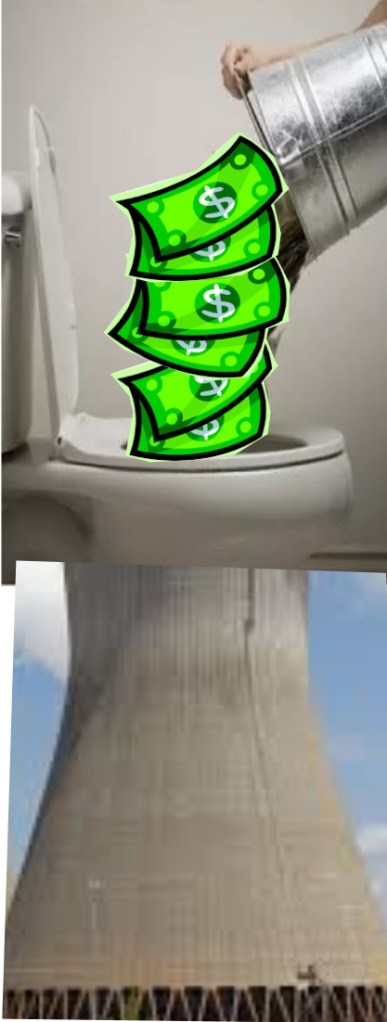
The crucial issue here is that the regulated company is permitted to start charging customers immediately after the project begins, and can continue to do so throughout the construction phase.
The downside for customers or ratepayers is that they end up bearing most of the risk, whether that is delays, cost increases, or even complete cancellations.
it is transferring a lot of the risk straight onto the customer and the customer can end up paying through the nose for nothing if you have serious problems in terms of timescales.”
NS Energy, By James Varley 19 Jun 2023
The UK is grappling with the problem of inviting the private sector to invest in new nuclear without interest driving up the price. Its solution cuts costs – but transfers the risk to consumers
UK Chancellor Jeremy Hunt confirmed recently that the UK would back the proposed Sizewell C nuclear power plant with an investment of £679m. The funding had initially been announced by then Prime Minister Boris Johnson. It is a mark of the large investment involved in a new nuclear unit that, despite UK plans to see one new nuclear plant reach Final Investment Decision (FID) in this parliament (ie before the end of 2024) and two achieve FID in the next (before 2029), two incoming Prime Ministers (Teresa May and Rishi Sunak) have announced reviews of Sizewell C. But Sunak’s chancellor Jeremy Hunt reaffirmed both the project and the funding, saying: “Our £700m investment is the first state backing for a nuclear project in over 30 years and represents the biggest step in our journey to energy independence.”
Of perhaps more interest to investors is the UK government’s decision to take a 50% stake in Sizewell C, with co-investor EDF. But neither of the two envisages holding those large stakes for very long. Once the project – which now has planning permission – reaches FID, both hope that it will attract new investors, so that the UK and EDF can reduce their stake to around the 20% level.
It is hoped that the project can bring in private capital because investors will gain confidence in the continued presence in the project of the UK and EDF but also because it will be built under a different financing model.
It is hoped Sizewell C will look less like a state-owned plant where funding comes from the government and it (in effect taxpayers) bears the risk of cost and schedule overruns. Instead, the government hopes it will resemble other types of power plant development cycles, in which different investors buy and dispose of stakes as the project moves from development, to permitted and ‘shovel-ready’, to construction and operation. With each step the project rises in value while the risk falls, so eventually it becomes investable for groups like pension funds which will accept low returns in exchange for long-term stability, while early investors will take their profit and reinvest in other projects where returns are higher.
At £20bn (in 2015 money) even 60% of the project will be too large for any single bank or other investors, which are more likely to join at the £1bn level. But the UK hopes that post-FID (aimed to be at the end of 2024) the project will attract enough investors that they will be in competition on the initial return on investment required. In the future, the level of allowed return will be set by the UK’s energy regulatory authority, Ofgem
Moving to a RAB model
Co-investing with the government is not currently enough to make Sizewell C an attractive investment though. The key to that, the UK government believes, is the Regulated Asset Base model (RAB).
The Department for Business, Energy and International Strategy (BEIS) set out its view on the RAB model and compared it with other funding models in an Impact Assessment in 2021 – required because the RAB model required primary legislation (which has now been passed).
Comparing RAB with relying on existing funding models, such as Contracts for Difference (CfD) BEIS said it “believes there are few, if any, strategic investors in the market with the risk appetite to finance a new nuclear power plant using a CfD mechanism.” In fact, BEIS also considered that the RAB on its own “would not achieve the goal of delivering new projects at a lower cost”. It added new Funded Decommissioning Programme (FDP) legislation and the new Special Administration Regime.
What is the Regulated Asset Base model? It aims to manage nuclear’s biggest problem: huge capital costs and the long gap (as much as 15 years) between investing and starting to earn a return when power is produced.
The UK’s RAB approach aims to address this. It has commonalities with US models that add nuclear to a utility’s ‘rate base’, but the UK version would ring-fence the project activities in a special purpose vehicle (SPV). The SPV is awarded a licence to own and operate the project for a defined period. It is permitted to recover the costs of construction and operation, and also to make an ‘allowed return’ on the asset for the lifetime of the licence.
The crucial issue here is that the regulated company is permitted to start charging customers immediately after the project begins, and can continue to do so throughout the construction phase.
……………………..The downside for customers or ratepayers is that they end up bearing most of the risk, whether that is delays, cost increases, or even complete cancellations.
……………………….There is no shortage of experience in the energy sector of different financing models. Some have salutary lessons………………………………
The burden lies less heavily on wind and solar projects because they can be built relatively quickly and the project can be built in phases. As a result, income from part of the project starts early, while construction lessons can be learned from in early phases so delivery risk in the later phases is lower. Nuclear does not have that opportunity.
Prices set in advance look very different in the rearview mirror. Once the plant is operating the risks accepted by the developer before and during construction are forgotten…………………..
With the RAB model, a nuclear plant will still face price and volume risk once operating, as its power will have to be sold into a volatile market where nuclear can be pushed out of the merit order by cheap renewables and prices can fall to zero at times (a contrast to TTT, whose customer Thames Water has no choice but to use the service and no alternative supplier).
Despite the fact that it may reduce costs, consumer advocates are very wary of the RAB model. Alan Whitehead, Labour’s shadow energy minister and a longstanding observer of the industry, has previously complained that the RAB model “effectively puts costs on the consumer well before you have any idea when a particular plant will come onstream. If there is any slippage in the process the consumer just continues to pay out. …it is transferring a lot of the risk straight onto the customer and the customer can end up paying through the nose for nothing if you have serious problems in terms of timescales.”
He referred to consumers in the USA who were left paying the cost for decades when nuclear projects were cancelled……………….. https://www.nsenergybusiness.com/features/assessing-investability-of-new-nuclear-projects-like-sizewell-c/
Royal Navy struggles to attract recruits for nuclear-armed subs
https://cnduk.org/royal-navy-struggles-to-attract-recruits-for-nuclear-armed-subs/ 20 June 23
The head of the Royal Navy has called for the service to “get bigger” as it struggles to attract new recruits for its vessels and nuclear-armed submarines.
Speaking to parliamentary magazine The House, First Sea Lord Admiral Sir Ben Key said the Navy he joined over thirty years ago was 75,000 people. This has now dropped to about 36,000. “We are effectively in a war for talent in this country – there is no great secret in that,” Kay said noting that workplace expectations across generations have changed in recent years.
The lack of communication while submariners are at sea was raised as one of the concerns, with the desire for “permanent connectivity” with friends and family not possible while on patrol.
Another reason, according to Kay, was the lack of engagement with the nuclear question. “I think it is fair [to say] that this country is not very good about talking about…nuclear power as opposed to nuclear weapons,” he said, referring to the perceived significance of being a nuclear-armed ‘power’.
The Navy hopes to improve recruitment with a new drive to better explain what life on a submarine is like. The service is also looking at expand beyond its traditional base audience of those who come from Navy families, and showcase the variety of roles the Navy can offer such as accountants and doctors.
Kay’s comments comes as Britain’s nuclear-armed submarine crews are spending record amounts of time at sea, prompting concerns over the psychological pressure on crews spending up to five months at sea.
CND General Secretary Kate Hudson said:
“Admiral Kay rightly points out the list of difficulties that life on a nuclear-armed submarine poses for potential recruits. Extended periods of time at sea out of contact with friends and family comes with serious psychological pressures, but so does the responsibility of carrying weapons that can kill millions of people. Scrapping the Navy’s nuclear-armed subs would go towards easing the the service’s recruitment problems and free up billions of pounds for other uses.”
Workers, residents, at US site that made Nagasaki A-bomb’s plutonium, are still suffering
after he and a local journalist conducted a survey on surrounding farms in 1985, Bailie began to have doubts. Nearly all the families living nearby suffered from cancer, birth defects, or thyroid disease, he says — health issues that could be attributed to radiation exposure. This led to the area being coined “the death mile” by some journalists at the time.
documents that were declassified in the late 1980s showed that Hanford had contaminated the surrounding farmland, air, farm animals, and crops with unsafe levels of radiation for years.
June 18, 2023 , Mainichi, Japan
HANFORD, Washington (Kyodo) — As cleanup efforts continue in Washington state at a decommissioned U.S. nuclear facility that played a crucial role in the country’s acquisition of the atom bomb in World War II, questions linger over whether the site has caused serious health issues for workers and local residents.
Construction began on the facility, known as the Hanford site, eighty years ago in 1943 and involved the building of the world’s first large-scale nuclear reactor.
Through the Manhattan Project, a U.S. government research and development program for building nuclear weapons, the site’s B reactor, erected on a 580-square-mile stretch of land next to the Columbia River in south-central Washington, produced the nuclear material for one of the only two atomic bombs ever used in an armed conflict.
Codenamed “Fat Man,” the device was detonated over the city of Nagasaki in southwestern Japan on Aug. 9, 1945, effectively ending Japan’s involvement in the conflict.
The 6.2 kilograms of plutonium contained in the nuclear device released energy equivalent to 21 kilotons of TNT, taking the lives of tens of thousands of innocent people while subjecting the surrounding area to deadly radiation, killing countless more.
But citizens of Nagasaki may not be the only victims of Hanford’s plutonium production. During its decades of operation, U.S. residents living near and mainly downwind of the complex experienced severe health effects that they believe stem from the site’s activities.
One such resident is Tom Bailie, 76, who grew up and still resides just miles downwind from Hanford in a farming community.
Reflecting on his upbringing, Bailie recalled during an interview in April that no one ever thought the site at Hanford would cause harm to “patriotic American citizens.”
But, after he and a local journalist conducted a survey on surrounding farms in 1985, Bailie began to have doubts. Nearly all the families living nearby suffered from cancer, birth defects, or thyroid disease, he says — health issues that could be attributed to radiation exposure. This led to the area being coined “the death mile” by some journalists at the time.
Bailie said that his wife, father, and three uncles all had cancer before passing away, while his two sisters also have cancer and take thyroid medicine. The year before Bailie was born, his mother had a stillbirth. Bailie himself was born with birth defects and was on an iron lung when he was 4 years old. He now requires medication for a thyroid problem.
Bailie vividly remembers encounters with “men in space suits,” equipped with dosimeters to measure radiation levels, walking on his farm. The men would collect soil samples and even ask the farmers to send the heads and feet of ducks and rabbits they would kill while hunting to Hanford for analysis.
When he began speaking out about the hardships and health problems that he attributed to the Hanford site, many people from the community dismissed him as “nuts” or “crazy.” Some even mockingly referred to him as the “glow-in-the-dark farmer.”
But documents that were declassified in the late 1980s showed that Hanford had contaminated the surrounding farmland, air, farm animals, and crops with unsafe levels of radiation for years…………………….
Before being decommissioned in 1989, Hanford produced around 74 tons of plutonium, nearly two-thirds of all the plutonium produced for government purposes in the United States. One of the consequences of the site’s work was massive amounts of contamination and dangerous leftover byproducts, most of which remain on the site today.
Currently, 177 underground tanks containing 56 million gallons of highly radioactive waste, contaminated buildings, and cocooned reactors still exist there, alongside multiple other buried waste sites.
The same year Hanford was decommissioned, cleanup efforts began for dealing with the dangerous byproducts left over from the production of plutonium. Efforts to clean the area of waste are anticipated to be astronomically costly and time-consuming.
According to Hanford’s latest estimate, released in 2022, the total cost of the cleanup is projected to range from $319.6 billion to $660 billion, with a completion date not expected until at least fiscal 2078.
But Tom Carpenter, 66, former head of Hanford Challenge, a nonprofit organization dedicated to ensuring the responsible and safe clearing of the Hanford site, argues that using the word “cleanup” is misleading.
Carpenter says complete eradication of contamination from thousands of acres is impossible, and not the goal of the cleanup process. He asserts that the best that can be achieved at Hanford is “the mitigation of some risks.”
Hanford Challenge’s primary goal, he says, is to ensure authorities prioritize a swift cleanup and make sure that no corners are cut, nor workers put in unnecessary danger. This includes fighting for those who are currently working on the site.
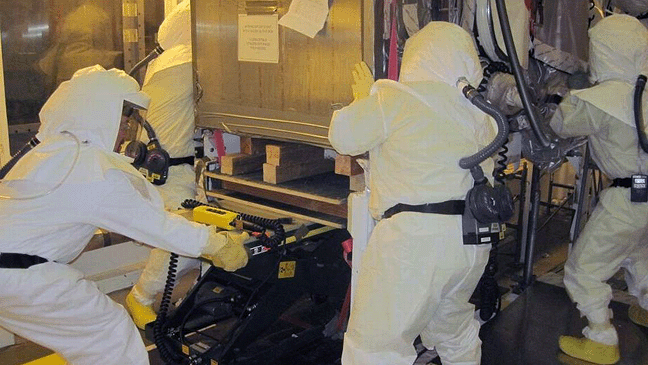
Many workers involved in the cleanup of the Hanford site continue to be exposed to toxic chemicals, vapors, and radioactive materials, resulting in debilitating health conditions.
A recent survey of the workers by Washington state revealed more than 50 percent of them had been exposed to radioactive or toxic chemicals. Workers exposed to these dangerous materials and vapors have developed beryllium disease, cancers, organ damage, and occupational dementia.
Until recently, these workers had to prove that their health issues were directly caused by their work at the Hanford site to receive assistance with their medical expenses.
According to former worker and Hanford Challenge director Jim Millbauer, 65, proving this was extremely difficult, costly, time-consuming, and often fruitless, as most occupational illness claims were rejected.
But a recent law has changed this, presuming that any health effects suffered by workers who spend just eight hours working at Hanford are caused by working at the facility, making it easier for sick workers to get their treatment paid for. https://mainichi.jp/english/articles/20230616/p2g/00m/0in/069000c
More trouble at Vogtle
June 19, 2023 https://beyondnuclear.org/more-trouble-at-vogtle/
The nuclear drumbeaters ignore stories like this latest setback out of Georgia because the inconvenient truth of nuclear power is that it is NOT reliable, is far too slow and expensive and of course comes with a myriad of safety problems and no solution to the radioactive waste it generates.
The only US flagship for new reactors is the Vogtle 3 and 4 project in Georgia, which continues to stutter and stumble as it tries to bring two AP 1000 reactors to life, already heralded as a “milestone” with neither reactor yet on line.
Vogtle 3 has already had several setbacks delaying its commercial operation. The most recent is a problem in the hydrogen system that is used to cool its main electrical generator, delaying operations until July (barring other problems that could still arise.)
The twin reactor project is already 16 years in the making and now at least $20 billion over budget. Despite all this and the nuclear poster child for risk that is the 6-reactor Zaporizhzhia nuclear power plant in Ukraine, embroiled in a war, the pro-nuclear propaganda machine rolls blindly on.
“……………………………………In Georgia, almost every electric customer will pay for Vogtle. Georgia Power’s 2.7 million customers are already paying part of the financing cost and elected public service commissioners have approved a monthly rate increase of $3.78 a month for residential customers as soon as the third unit begins generating power.
A July operation date means that increase would hit bills in August, two months after residential customers see a $16-a-month increase to pay for higher fuel costs. Georgia Power also raised rates by 2.5% in January after commissioners approved a separate three-year rate plan. Increases of 4.5% will follow in 2024 and 2025 under that plan.
Commissioners will decide later who pays for the remainder of the costs of Vogtle, including the fourth reactor.
Pension funds and investment managers are not willing to take the risks on the dying nuclear industry
With their costs falling, the UK is aiming to get most of its power from renewables, but the British Energy Security Strategy also includes an ambition for the UK to produce ‘up to 24 GW’ of civil nuclear power by 2050, which might mean that nuclear energy would provide up to 25% of the UK’s electricity. The government wants it to be mainly private sector funded, but this major expansion programme has not been going very well.
Despite government encouragement and some seed corn cash, pension fund and investment managers have not been keen to face the risks and uncertainties, for example of the proposed large new EPR plant at Sizewell. Even NEST, the government’s workplace pension scheme, the National Employment Savings Trust, says it will not invest in nuclear projects like this, despite government policy directives
Some remain hopeful that smaller modular reactor (SMR) projects will be more attractive to investors, but SMRs are some way off yet. Rolls Royce had been promoting the development of an SMR with some government support, but the head of the project at Rolls was a casualty of a management change recently. Its whole SMR project might soon also be one. An aviation industry expert told the Telegraph: ‘it will inevitably get more expensive than you expected, they always do. And meanwhile, renewables are still getting cheaper.’ Maybe Rolls should just stick to aero-engines. …………………………………
Meantime, Germany has finally closed the last three of its nuclear plants, and, although some think that may have be premature (they should perhaps have got rid of coal first), it’s now a done deal and does not seem to have caused major problems. The 4GW or so of lost capacity is well on the way to being replaced by renewables, as their cost fall and they accelerate ahead. So, although reliance on Russian gas has been problematic, that seem now to have been faced, with some now seeing Germany as pioneering a nuclear- free way forward.
Of course not everyone sees it that way. Despite the dire financial state of EDF, France has defended nuclear strongly and challenged the German phase out. It even tried to hijack the EU Renewables Directive. And there is no shortage of pro-nuclear propaganda around the world. Some of it arguably is rather odd. For example, what are we to make of Oliver Stone and his ‘Nuclear Now’ film? He has been quoted as saying ‘in the face of climate change, nuclear isn’t only an option it’s the only option,’. And also that ‘Russia is doing a great job with nuclear energy’. Well, tell that last bit to the G7 group countries, 5 of whom have just tried to undermine Russia’s grip on global nuclear power supplies by shutting it out of a new alliance. Or for that matter, those in Ukraine (and elsewhere) who worry about nuclear plant security in war zones.
……………………… the US Department of Energy recently said that the US domestic nuclear industry has the potential to ‘scale from ~100 GW in 2023 to ~300 GW by 2050 – driven by deployment of advanced nuclear technologies.’
Would that scale of expansion be wise? Energy Intelligence thought not. Indeed, challenging the US DoE projection, it said it was ‘beyond absurd – it’s irresponsible. It’s absurd because the US no longer has the supply chain needed for large-scale nuclear projects- it can’t even forge a pressure vessel; it’s irresponsible because the cost of building 200-300 new reactors would be more than $3 trillion. Resources devoted to rescuing a dying industry are resources that wouldn’t be available for viable, less-costly strategies to achieve net-zero emissions in the power sector. More than that, the report reflects an energy agency still dominated by a nuclear-centric culture, and badly out of step with the times’. Quite so. A worryingly backward looking approach. But there is a lot of it about… https://renewextraweekly.blogspot.com/2023/06/nuclear-update-its-still-with-us.html
Expert: Germany’s energy system has coped with nuclear shutdown
| 06/18/2023 https://www.marketscreener.com/quote/stock/E-ON-SE-3818998/news/Expert-Energy-system-has-coped-with-nuclear-shutdown-44138125/ – The German energy system has not experienced any problems after the shutdown of the last three nuclear power plants in mid-April, according to an expert. “The energy supply has coped very well with the nuclear phase-out,” Claudia Kemfert, an energy economist at the German Institute for Economic Research, told the Augsburger Allgemeine newspaper (Monday edition). | ||
“The remaining three nuclear reactors still produced just under six percent of the electricity. The loss of this electricity production was lost in the noise of the European electricity market,” Kemfert said. The volumes that were eliminated were easy to replace: “Electricity production from renewable energies has increased significantly in Germany,” Kemfert explained. Electricity has also become cheaper, she added. “The price of electricity on the borsen has fallen during the period of the nuclear phase-out,” she pointed out
In May, the borsen electricity price for next-day delivery averaged around 82 euros per megawatt hour, the lowest since July 2021
USA marketing nuclear power to Bulgaria
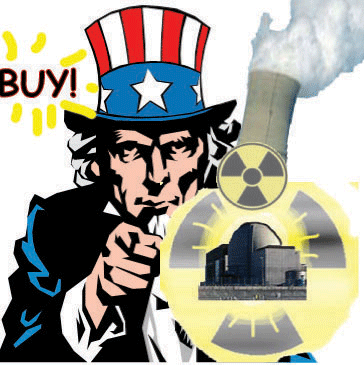
Westinghouse has signed a front-end engineering and design (FEED) contract
with Kozloduy NPP-Newbuild for the construction of an AP1000 reactor at the
Kozloduy nuclear power plant site in Bulgaria.
World Nuclear News 15th June 2023
https://www.world-nuclear-news.org/Articles/FEED-contract-signed-for-Bulgarian-AP1000
USA to market small nuclear reactors to Slovakia?
The Ministry of Economy and Slovenské elektrárne have signed a memorandum
of cooperation with a range of partners in the energy field to support the
development of small modular reactors (SMRs) in Slovakia, including
applying for funding from the USA’s Project Phoenix. The other signatories
of the memorandum were US Steel Košice, the Slovak Electricity
Transmission System, VUJE, the Office of Nuclear Supervision and the Slovak
Technical University in Bratislava. There will now be an application for
funding from the US government’s Project Phoenix, which was announced by US
Climate Envoy John Kerry at COP27 last year – it aims to “accelerate the
global clean energy transition by providing technical assistance to support
decision-making on pursuing the conversion of one or more coal-fired power
plants to secure and safe zero-carbon” SMR nuclear energy generation.
World Nuclear News 13th June 2023
https://www.world-nuclear-news.org/Articles/Slovenske-elektrarne-pushes-ahead-on-SMR-plans
Egypt joining IAEA’s Convention on Nuclear Safety, as Russia successfully markets its nuclear industry to Egypt
“……………………… by joining IAEA’s convention on peaceful nuclear safety, Egypt took another step towards implementing its nuclear power programme.
“Egypt has gone a long way towards implementing its first nuclear power plant at El-Dabaa, 320 kilometres northwest of Cairo,” said Awadallah, adding that the plant will have four nuclear reactors that will begin operating between 2028 and 2030.
He noted that these reactors, which generate energy for peaceful purposes, are designed in collaboration with Russia’s state-owned nuclear engineering company, Rosatom, with a capacity of 1.2 GW each.
The construction of the first three reactors has already begun after obtaining approval from the Egyptian Nuclear and Radiological Regulatory Authority (ENRRA).
On 19 November 2015, Egypt and Russia signed an agreement under which Russia will build and finance Egypt’s first nuclear power plant.
The preliminary contracts for constructing the four nuclear reactors were signed, in December 2017, in the presence of Egyptian President Abdel-Fattah El-Sisi and Russian President Vladimir Putin.
The state-owned Rosatom will build the plant and supply Russian nuclear fuel for its entire life cycle.
Russia will finance 85 percent of the cost with a loan of $25 billion, while Egypt will provide the remaining 15 percent in the form of instalments. The Russian loan is repaid over 22 years, with an annual interest of three percent……………………….
The presidential decree on Egypt joining IAEA’s convention on nuclear safety will be submitted for a final vote when Egypt’s parliament – the House of Representatives – reconvenes next Tuesday, 20 June.
Ignoring the Fiction of a Nuclear Silver Bullet
by Ben JealousJune 14, 2023, https://www.washingtoninformer.com/jealous-ignoring-the-fiction-of-a-nuclear-silver-bullet/
A growing chorus in Washington equates weaning our country off energy from killer fossil fuels to relying more heavily on new nuclear power plants. The same debates are happening in state capitals from Richmond to Raleigh, Springfield to Sacramento. This chorus distracts from the real work ahead of ensuring clean, renewable, affordable energy for every community.
The risk of nuclear energy is an easy dividing line. To opponents, names like Three Mile Island, Chernobyl and Fukushima are all the evidence we need that a catastrophic event is unavoidable and unacceptable. For supporters, those events are a sign that disasters are few. Both are right – they happen infrequently, and when they do occur, they are cataclysmic.
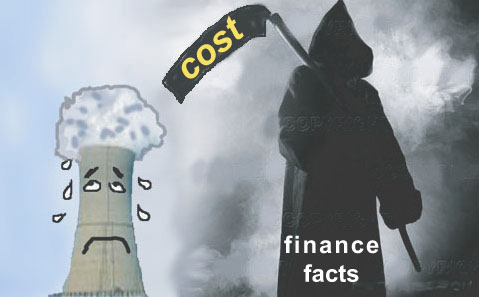
The more compelling reasons we should drop the silver bullet thinking about nuclear power are its cost and its reliability.
Since the mid-20th century when nuclear power entered the public imagination, the belief has been that energy is “free” – start the chain reaction make electricity. It’s not, and it never has been (uranium must be mined and reactor fuel is consumable). We’ve reached a point where renewable sources like wind and solar power are cheaper, in part because they are quicker to come online.
Lazard, a global investment bank and financial consultancy that reports annually on the “levelized cost of energy” from various sources, found that nuclear power is two to six times more costly per megawatt hour than wind and solar (which now cost the same per megawatt hour). The capital cost of large-scale solar and wind is at least eight times lower. The time to get new wind and solar into the electricity grid is at least half the time for a new nuclear plant; history shows that anyone who estimates the completion date for a new nuclear plant is wrong.
Unlike most industries that rely heavily on science and technology, the cost of building nuclear plants is rising over time. In Silicon Valley, they call it a reverse learning curve.
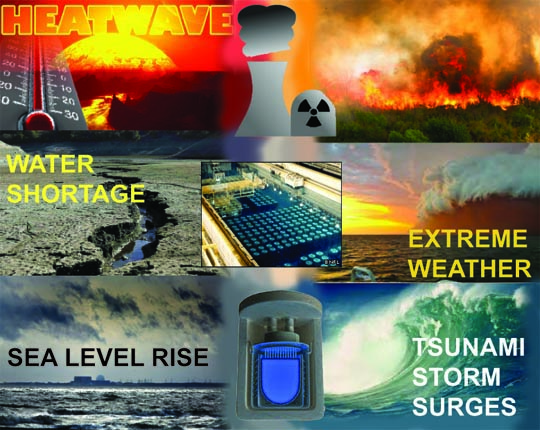
Supporters of nuclear power like to argue that nuclear plants are required for reliability, and that they can operate all the time. This ignores nuclear’s vulnerability to climate change: severe weather, extreme temperatures, and both floods and droughts have forced nuclear plants to shut down unexpectedly in recent years. Additionally, a reactor goes offline for routine maintenance at least every two years, which means a plant must have more total capacity to cover that maintenance routine. By comparison, wind and solar farms have much fewer operational problems. And battery backups have gotten faster than the gas power generation that nuclear plants often turn to meet peak demand.
It’s time to confront nuclear’s challenges — uranium mining, accident risk, cost, and climate vulnerability — and double down on the solutions we know will be central to our shift away from fossil fuels.
We can’t afford the distraction of a fiction around nuclear power when burning fossil fuels threatens the health of millions around the world annually. Our focus must be on bringing the clean air, cost saving, and economic benefits of clean energy to communities across the country as quickly as we can. From home energy retrofits and rooftop solar to wind energy and battery storage, we have more and better ways than ever before to transform our energy systems from fossil fuels to energy that’s actually clean, reliable and renewable.
Ben Jealous is executive director of the Sierra Club, America’s largest and most influential grassroots environmental organization.
Russia trying to market nuclear power stations to Sri Lanka
IAEA studying plans to build nuclear power plant in Sri Lanka, Colombo Gazette, June 15, 2023
The International Atomic Energy Agency (IAEA) is studying Russia’s plans to build a nuclear power plant in Sri Lanka.
Rosatom, the Russian the State Atomic Energy Corporation will help build a nuclear power plant in Sri Lanka.
The Ambassador of Sri Lanka to the Russian Federation, Janita Liyanage, said that the project was approved by the country’s authorities and is now being studied by IAEA specialists.
According to her, there is still a discussion on making the nuclear power plant floating or building it on the ground.
Rosatom will also help train specialists who will work at the nuclear power plants…….
Sri Lanka plans to build its first nuclear power plant with technical support from Russia by 2032…………………….. https://colombogazette.com/2023/06/15/iaea-studying-plans-to-build-nuclear-power-plant-in-sri-lanka/
The ABCs of a nuclear education
Then she remembered the words of her grandmother, a field nurse from Ohkay Owingeh Pueblo, who once tended to Navajo Nation tribal members affected by uranium mining and saw the health impacts of radiation exposure firsthand.
“She used to tell me, ‘Don’t ever, ever work at Los Alamos National Labs.’”
New Mexico’s local colleges are training students to work in a plutonium pit factory. What does this mean for their future — and the world’s?
Searchlight NewMexico, by Alicia Inez Guzmán, June 7, 2023
Every day, thousands of people from all parts of El Norte make the vertiginous drive up to Los Alamos National Laboratory. It’s a trek that generations of New Mexicans have been making, like worker ants to the queen, from the eastern edge of the great Tewa Basin to the craggy Pajarito Plateau.
All in the pursuit of “good jobs.”
Some, inevitably, are bound for that most secretive and fortified place, Technical Area 55, the very heart of the weapons complex — home to PF-4, the lab’s plutonium handling facility, with its armed guards, concrete walls, steel doors and sporadic sirens. To enter “the plant,” as it’s known, is to get as close as possible to the existential nature of the nuclear age.
For 40 years, some 250 workers were tasked, mostly, with research and design. But a multibillion-dollar mission to modernize the nation’s nuclear arsenal has brought about “a paradigm shift,” in the words of the Defense Nuclear Facilities Safety Board, a federal watchdog. Today, the plant is in the middle of a colossal expansion — growing from a single, aged building to what the safety board calls “a large-scale production facility for weapon components with the largest number of workers in its history.”
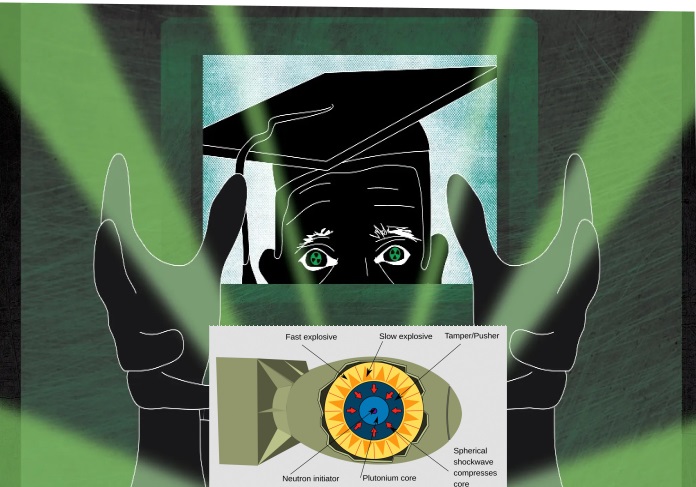
In short, the plant is slated to become a factory for making plutonium pits, the essential core of every nuclear warhead.
Four years ago, LANL began laying the groundwork for this expansion by searching out and shaping a highly trained labor pool of technicians to handle fissile materials, machine the parts for weapons, monitor radiation and remediate nuclear waste. The lab turned to the surrounding community, as it often had, tapping New Mexico’s small regional institutions — colleges that mostly serve minority and low-income students. The plan, as laid out in a senate subcommittee meeting, set forth a college-to-lab pipeline — a “workforce of the future.”
Taken altogether, Santa Fe Community College, Northern New Mexico College and the University of New Mexico’s Los Alamos campus are set to receive millions of federal dollars for their role in preparing and equipping that workforce. They’ve graduated 74 people to date, many of whom will end up at TA-55……………………………………
For many local families, the lab has been a gateway to the American dream. Its high wages have afforded generations of Norteños a chance at the good life — new houses, new cars, land ownership, higher education for their kids. Indeed, to work there is to become part of the region’s upper crust.
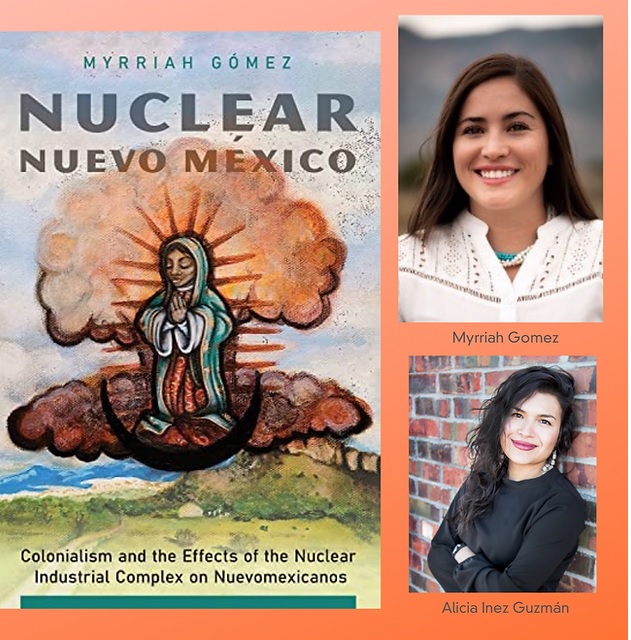
It carries a legacy of illness, death and environmental racism for countless others. History tells of a long practice of hiring local Hispano and Pueblo communities to staff some of the most dangerous positions, a practice that has its origins in the early years of the lab, as Myrriah Gómez described in her 2022 book “Nuclear Nuevo México.”
New Mexico’s academic institutions have for decades served as LANL’s willing partner, feeding students into the weapons complex with high school internships, undergraduate student programs; graduate and postdoc programs; and apprenticeships for craft trades and technicians. The lab heavily recruits at most local colleges with the assurance of opportunities not easily found in New Mexico.
Talavai Denipah-Cook can still remember LANL representatives plying her with promises of a high-paying job and good benefits at an American Indian Sciences and Engineering Society conference years ago. At the time, she was a student at a local high school, and the future that they painted looked bright.
“I was like, ‘Wow, that sounds really intriguing.’ We don’t get that around here, especially as people of color,” said Denipah-Cook, now a program manager in the Environmental Health and Justice Program at Tewa Women United, an Indigenous nonprofit based in Española.
Then she remembered the words of her grandmother, a field nurse from Ohkay Owingeh Pueblo, who once tended to Navajo Nation tribal members affected by uranium mining and saw the health impacts of radiation exposure firsthand.
“She used to tell me, ‘Don’t ever, ever work at Los Alamos National Labs.’” ……………………………………………………………………………………………………….
“The lab has never had to be accountable for their promises,” said Greg Mello, of the Los Alamos Study Group, an influential anti-nuclear nonprofit based in Albuquerque. “Could they be a factory? Could they produce pits reliably? No. Not at all.”
LANL, regardless, was tapped as one of two sites — the other being the Savannah River plutonium processing facility in South Carolina — to produce an annual quota of “no fewer than 80 such pits by 2030,” according to the Fiscal 2020 National Defense Authorization Act. With this, LANL has been authorized to produce 30 pits per year by 2026.
What’s being proposed is so huge it has no precedent, said Jay Coghlan, executive director of Nuclear Watch New Mexico, an anti-nuclear advocacy organization in Santa Fe.
“Here we have this arrogant agency that thinks it can just impose expanded bomb production on New Mexico,” said Coghlan, referring to the National Nuclear Security Administration, the lead agency for pit production. “They do not have credible cost estimates and they do not have a credible plan for production. But yet they expect New Mexicans to bear the consequences.”
The costs, according to the Los Alamos Study Group, will come to some $46 billion by 2036 — the earliest the NNSA says it can hit 80 pits per year at the two sites. It’s roughly the same amount of money it would take to rebuild every single failing bridge in America.
To support the pit mission at LANL, the NNSA estimates the lab will need 4,100 full-time employees, including scientists and engineers, security guards, maintenance and craft workers, and “hard-to-fill positions,” as LANL has dubbed the pipeline jobs.
More costly than the Manhattan Project in its day, the NNSA program is the most expensive in the agency’s history. It is also destined, Coghlan and others say, to collapse under its own weight. Both Los Alamos and Savannah River are, according to federal documents, billions of dollars over budget and years behind schedule.
Money, waste and risk
In the meantime, LANL’s budget has increased by 130 percent over the past five years, according to a June 2022 report by the Government Accountability Office. There’s no real way to determine how much money LANL will need to reach its quota.
…………………………………………………………. Radiation 101: Students get prepped for pit work
Last spring, assistant professor Scott Braley taught two back-to-back introductory courses to 13 future radiation control technicians at NNMC. His lectures covered a host of topics: the history of “industrial-scale” radiation accidents worldwide, algebraic formulas to determine the correlation between individual cancer and workplace exposure, and maximum permissible doses for future workers like themselves. The rates are higher than for the general public, Braley explained, because, for one, radiation workers “have accepted a higher risk.”
……………………………. Much of the college programs and their curricula center around minimizing risk. But because the possibility of serious harm at LANL is much higher than in most jobs, the programs present an ethical dilemma: Who are the people bearing the risk?
“What does it mean to assume that exposure is acceptable at all?” asked Eileen O’Shaughnessy, cofounder of Demand Nuclear Abolition. “Because the thing about radiation is it’s cumulative and any amount is unsafe.”
………………….. “You realize, yes, they are paying you well, but you’re being put in situations that you have no idea about,” said the retired machinist, a man with over two decades of experience working at the lab, much of it at the plant. He asked to remain anonymous for fear of retaliation. “It’s the mentality at the lab,” he said. “They don’t really think that people that are techs are even really worth much.”
A powerful neighbor
Dueling perspectives in El Norte reveal the chasms around the lab and, in particular, what some consider the Manhattan Project’s original sin: Its use of eminent domain to force Indigenous and Hispano people off their farms and sacred lands on the Pajarito Plateau. Its arrival, oral histories hold, spelled the end of land-based living.
……………………. As the single largest employer in northern New Mexico, LANL’s horizon of influence is vast. And with billions more dollars flooding in, its sway in almost every sphere — economics, politics, education — seems only to grow.
“It is hard for us at the Los Alamos Study Group to see how New Mexico can ever develop if LANL becomes a reliable, enduring pit factory,” said Greg Mello, the executive director. “We see it as a death sentence for economic and social development in Northern New Mexico.”
Despite the lab’s omnipresence, economic gains have been relatively limited. While Los Alamos County has one of the highest median household incomes in the nation, the surrounding communities — including Española — are among the poorest in the state.
The most damning indication of that disparity came in a draft report from the University of New Mexico’s Bureau of Business and Economic Research, which showed that the lab actually cost Rio Arriba County $2.6 million and Santa Fe County $2.2 million in fiscal year 2017.
According to the Rio Grande Sun, LANL suppressed that information in the report’s final version. And though LANL jobs are by far the most competitive in the region, the trickle-down hasn’t amounted to collective uplift.
“LANL has been a bad neighbor,” charged Warren. “If the economic benefits are so good for them to continue their work and expand, you would think the communities around here would be doing better. But we’re not.” https://searchlightnm.org/the-abcs-of-a-nuclear-education/
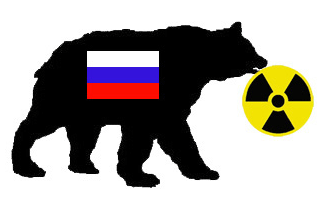
China and Russia building most nuclear power plants, – the main goal is to market them to developing countries

China and Russia account for 70% of new nuclear plants
Exports used as diplomatic card while Western nations fall behind
NAOYUKI TOYAMA, Nikkei staff writerJune 11, 2023
TOKYO — Russia and China are building up an outsized presence in the field of nuclear power, with the countries accounting for nearly 70% of reactors under construction or in planning worldwide.
…………………Notably, 33 of the reactors are being constructed or planned outside each respective country. Russia has the largest number of overseas reactors with 19, and despite growing opposition from Europe and the U.S. following its invasion of Ukraine, it maintains a strong global influence in nuclear power.
In April, Russian President Vladimir Putin participated remotely in a ceremony to mark the arrival of the first fuel at the under-construction Akkuyu nuclear power plant in Turkey………
Russia’s nuclear power diplomacy is extending to other countries as well. In May, Rosatom began full-scale construction on Unit 3 of the Dabaa nuclear plant in Egypt, the country’s first.
Hungarian Prime Minister Viktor Orban met with Rosatom officials this month to discuss the company’s plans to build a new nuclear power plant in the country’s south. Hungary opposes sanctions the European Union has imposed on Rosatom.
“Many developing countries take a positive view of Russia,” Kacper Szulecki of the Norwegian Institute of International Affairs told British scientific journal Nature Energy. Russia’s acceptance of spent nuclear fuel is also attractive to emerging countries.
Meanwhile, China is deepening its engagement with Pakistan………………………………..
China also plans to build a nuclear plant in Argentina…………………………………
The U.S., Japan and Europe are hoping to catch up using small modular reactors (SMRs), considered fourth-generation technology………………………………………..
Another issue is nuclear fuel. Uranium enrichment has become the weak link for Western nations. Enrichment facilities are limited, and Russia is the global leader for that process. In April, the U.S., the U.K., France, Canada and Japan formed a nuclear fuel alliance. While the aim is to shut out Russian fuel from Western reactors, doing so will not be easy.
https://asia.nikkei.com/Business/Energy/China-and-Russia-account-for-70-of-new-nuclear-plants
The planet’s economist: has Kate Raworth found a model for sustainable living?

Her hit book Doughnut Economics laid out a path to a greener, more equal society. But can she turn her ideas into meaningful change?
by Hettie O’Brien, Guardian, 8 June 23
The problem is that there are few templates for an economy that
radically shrinks the world’s carbon footprint without also shrinking our
quality of life. The economist Kate Raworth believes she has a solution.
It is possible, she argues, to design an economy that allows humans and the
environment to thrive. Doing so will mean rejecting much of what defined
20th-century economics. This is the essential premise of her only book,
Doughnut Economics: Seven Ways to Think Like a 21st Century Economist,
which became a surprise hit when it was published in 2017.
The book, which
has been translated into 21 languages, brings to mind a charismatic
professor dispensing heterodox wisdom to a roomful of students. “Citizens
of 2050 are being taught an economic mindset that is rooted in the
textbooks of 1950, which in turn are rooted in the theories of 1850,”
Raworth writes.
By exposing the flaws in these old theories, such as the
idea that economic growth will massively reduce inequality, or that humans
are merely self-interested individuals, Raworth wants to show how our
thinking has been constrained by economic concepts that are fundamentally
unsuited to the great challenges of this century.
Guardian 8th June 2023
1 This Month
Chernobyl: The Lost Tapes – A good documentary on Chernobyl on SBS available On Demand for the next 3 weeks– https://www.sbs.com.au/ondemand/tv-program/chernobyl-the-lost-tapes/2352741955560

of the week–London Campaign for Nuclear Disarmament

Tell the Ukrainian Government to Drop Prosecution of Peace Activist Yurii Sheliazhenko
To see nuclear-related stories in greater depth and intensity – go to https://nuclearinformation.wordpress.com
-
Archives
- April 2026 (139)
- March 2026 (251)
- February 2026 (268)
- January 2026 (308)
- December 2025 (358)
- November 2025 (359)
- October 2025 (376)
- September 2025 (257)
- August 2025 (319)
- July 2025 (230)
- June 2025 (348)
- May 2025 (261)
-
Categories
- 1
- 1 NUCLEAR ISSUES
- business and costs
- climate change
- culture and arts
- ENERGY
- environment
- health
- history
- indigenous issues
- Legal
- marketing of nuclear
- media
- opposition to nuclear
- PERSONAL STORIES
- politics
- politics international
- Religion and ethics
- safety
- secrets,lies and civil liberties
- spinbuster
- technology
- Uranium
- wastes
- weapons and war
- Women
- 2 WORLD
- ACTION
- AFRICA
- Atrocities
- AUSTRALIA
- Christina's notes
- Christina's themes
- culture and arts
- Events
- Fuk 2022
- Fuk 2023
- Fukushima 2017
- Fukushima 2018
- fukushima 2019
- Fukushima 2020
- Fukushima 2021
- general
- global warming
- Humour (God we need it)
- Nuclear
- RARE EARTHS
- Reference
- resources – print
- Resources -audiovicual
- Weekly Newsletter
- World
- World Nuclear
- YouTube
-
RSS
Entries RSS
Comments RSS
 nuclear-news
