UK’s Energy Regulator ,Ofgem, flags concerns over Sizewell C costs

https://www.energylivenews.com/2024/03/21/ofgem-flags-concerns-over-sizewell-c-costs/
The energy regulator has highlighted concerns in a letter to the Energy Secretary regarding potential modifications to the Sizewell C project, emphasising the need for certainty in project costs
Ofgem has conveyed its concerns to the Energy Secretary regarding proposed modifications to the Sizewell C project’s Regulated Asset Base licence.
In a letter, Ofgem underscores the importance of certainty in underlying project costs and contracts for the economic regulatory regime’s fairness to consumers, taxpayers and potential investors.
The letter emphasises the need for thorough progress on all aspects of the project before implementing any licence modifications, especially in light of “challenges” faced by EDF with the construction of Hinkley Point C.
The energy regulator said: “It is important to ensure all aspects of the project are appropriately progressed before making licence modifications.
“This is especially pertinent given the ongoing challenges being experienced by EDF with the construction of Hinkley Point C, which shares many design elements with the proposed Sizewell C plant.
“When considering responses to this consultation, our expectation is that the Department for Energy Security and Net Zero (DESNZ) will continue to ensure that value for money for consumers is a priority consideration in any analysis and decision making around potential changes to the licence, and that any changes made are well justified and evidenced.
“In addition, it is vital that DESNZ also takes into account the effect of any potential changes on the overall operability of the licence and Ofgem’s ability to effectively discharge our obligations over time.”
Nuclear ranks last on list of good investments by big institutions
Marion Rae, Mar 25, 2024, https://reneweconomy.com.au/nuclear-ranks-last-on-list-of-good-investments-by-big-institutions/
Nuclear energy is last on the list of technologies that investors want exposure to, according to a survey of big financial institutions.
The vast majority of investors do not see nuclear power as a good investment, with less than one in 10 exploring this technology, the survey released on Monday found.
Opposition Leader Peter Dutton is spruiking nuclear reactors as an option for Australia’s future low-carbon economy although the energy source is illegal under existing laws and Labor has ruled it out.
Renewable energy is tipped to deliver the best long-term financial returns, with half the investors surveyed exploring opportunities to invest.
Investors have also become more confident about Australian climate policy under the Albanese government, according to the survey by the Investor Group on Climate Change.
“Investors have given the government a pretty good report card,” the group’s policy chief Erwin Jackson said.
But Australia will need globally competitive, targeted incentives to suit the nation’s economic strengths and values to stop “ongoing capital flight” to the United States and Europe where there are more generous tax breaks.
Clear timelines for the phase-out of fossil fuels by 2050 would also help investors manage transition risks and remain invested in the Australian economy, according to the group.
This year’s data includes 63 superannuation funds as well as other asset owners and managers, with more than $37 trillion in assets under management globally. Their beneficiaries include more than 15 million Australians.
Emerging priorities include clear timelines for phasing out coal, oil and gas and clear policies to build resilience and adapt to physical damage from climate change.
Opinions citing policy and regulatory uncertainty as a barrier to clean economy investment in Australia have changed dramatically, supported by four out of 10 investors compared with 7 out of 10 in 2021.
Renewable energy (47 per cent) was picked as the best option for long-term climate solutions, followed by nature-based schemes including biodiversity projects (34 per cent).
But investors are still in the dark on the federal government’s sector-by-sector decarbonisation plans for heavy polluters such as the energy, transport, agriculture and resources industries – and on the scope of the 2035 emissions reduction target.
“Credible and clear sector by sector decarbonisation plans to achieve a 2035 target with the highest possible level of ambition are critical for investment and it is critical to build on the steps already taken,” Mr Jackson said.
Climate Change and Energy Minister Chris Bowen has said the 2035 target will be “ambitious and achievable”, with advice to come from Australia’s recently beefed-up Climate Change Authority.
The sectoral review by the authority has an August 1 deadline, and will be released shortly afterwards.
AAP
The extraordinary financial costs of ‘small’ nuclear power stations

By Alan Finkel, Cosmos, 21 Mar 24
Partial extract from an article to be posted in 360info.org
They’re being touted as the solution to kickstarting a nuclear power industry in Australia.
According to the Opposition’s Minister for Climate Change and Energy, Ted O’Brien, small modular reactors (SMR) could be built within ten-year period if it wins the next election.
However, it would likely take 20 years to commence commercial operation of any nuclear reactors in Australia from the time in-principle approval was reached. To reach that starting point and enable detailed consideration of the challenges and costs of nuclear power, the existing legislative ban on nuclear power in Australia will need to be removed.
There are other obstacles.
While there’s plenty of excitement about SMRs, the problem is there just isn’t enough data about them, mainly because there are none operating in any OECD country.
And it’s unknown when any might be. As Allison Macfarlane, former chair of the US Nuclear Regulatory commission, argues in her article,The end of Oppenheimer’s energy dream, the proposal for small modular reactors to help us in the clean energy transition is fanciful.
The SMR furthest along the US Nuclear Regulatory Commission (NRC) approval process, from the US company NuScale, cancelled its first planned installation in Utah last November when the initial cost blew out to USD$9 billion, corresponding to USD$20 billion per GW.
The only countries with working SMRs are China and Russia.
Micro and large reactors
Micro reactors are intended to generate electrical power up to 10 MW per unit. Although companies such as Rolls Royce are developing these, there do not appear to be any commercial micro modular reactors that have completed their design.
That leaves full-scale reactors, which have also been mentioned as part of a possible Australian nuclear power play.
Korean company KEPCO builds most of the nuclear reactors in Korea and has now built one at Barakah in the United Arab Emirates. This 5.6 GW plant, scheduled to open this year, has taken 16 years to complete and cost USD$24 billion (AUD$36 billion). At 5.6 GW, that is AUD$6.4 billion per GW. Given salaries and skills shortages in Australia, inflation, interest rates and our regulatory requirements, it would cost more and take longer in Australia.
The Hinkley C plant in the UK was supposed to be finished in 2017 but has been delayed again until 2031 – 23 years after approval. The estimated construction cost ballooned to AUD$89 billion. At 3.2 GW electrical power, that is AUD$28 billion per GW.
In the US, the most recent nuclear reactors to be built are the Vogtle 3 and 4built at the existing facility that is home to the Vogtle 1 and 2 reactors. Both were anticipated to be in service in 2016. Vogtle 3 began commercial operation in July 2023. Vogtle 4 is projected to commence operation in the second quarter of 2024 – 15 years after the construction contract was awarded.
Construction cost USD$34 billion (AUD$52 billion) for the combined 2.2 GW output of the two reactors, or AUD$24 billion per GW.
Construction of nuclear plants in the United States has declined dramatically over the years. Approximately 130 were built from the mid 1950s to the mid 1990s. Only four commenced operation in the 30 years from the mid 1990s to now, and at the time of writing there are no nuclear reactors under construction in the United States.
In France, only one nuclear power plant is under construction. The 1.65 GW Flamanville EPR reactor is hoped to be completed and begin to supply electricity later this year, 17 years after construction began. The most recent cost estimate was AUD$22 billion or AUD$13 billion per GW. No other nuclear power plants are planned in France.
These high costs and long delivery durations for full-scale reactors are the reasons SMRs are proposed as a way forward in Australia. However, SMRs are a new technology. There are none in operation or construction in any OECD countries, thus it is not possible to estimate the costs or delivery schedules. NuScale’s investment to date suggests that the capital cost for the first units to be delivered will be very high. ………… https://cosmosmagazine.com/technology/energy/the-extraordinary-financial-costs-of-nuclear-power/
Australia moves to prop up Aukus with $4.6bn pledge to help clear Rolls-Royce nuclear reactor bottlenecks in UK

Funding revealed on eve of government talks is in addition to billions of dollars to be sent to US
Guardian, Daniel Hurst in Canberra, 21 Mar 24
The Australian government will seek to prop up the Aukus pact by sending A$4.6bn (£2.4bn) to the UK to clear bottlenecks at the Rolls-Royce nuclear reactor production line.
The funding – revealed on the eve of high-level talks between the Australian and UK governments on Friday – is in addition to billions of dollars that will be sent to the US to smooth over production delays there.
The Australian government will also announce on Friday that the government-owned shipbuilder ASC and the British defence firm BAE Systems will jointly build the nuclear-powered submarines for the Royal Australian Navy.
The nuclear reactors for the boats are to be manufactured at Rolls-Royce in the English city of Derby, but doubts have already been raised about whether reactor cores will be made in time for the UK’s first Dreadnought nuclear submarine.
Australia has now allocated £2.4bn over 10 years to expand the production capacity at Derby to deliver reactors for Australia’s submarines, to be known as SSN-Aukus……………………………………..
Cameron and the UK defence secretary, Grant Shapps, arrived in Canberra on Thursday for talks with their Australian counterparts, Penny Wong and Richard Marles.
They will hold an annual 2+2 meeting in Adelaide on Friday, with Aukus expected to be a major focus along with the war in Ukraine, the conflict in the Middle East and China’s position in the Indo-Pacific…………………..
Marles, the deputy prime minister and defence minister, said at the same media conference that the Australian government was “really aware of the stretched industrial base in the UK and in the US”.

Australia’s commitment to help clear backlogs in the US and the UK “was not without controversy” but was necessary for Aukus to succeed, Marles said.
Under the staged plans announced last March, Australia will buy at least three Virginia-class submarines from the US in the 2030s, prior to the domestically built SSN-Aukus entering into service from the 2040s.
But revelations that the US Navy plans to build only one Virginia-class nuclear-powered submarine next year have prompted renewed concerns about lagging performance on US production lines.
Marles, Shapps and the US defence secretary, Lloyd Austin, issued a joint statement on Thursday declaring the three countries remained “fully committed to this shared endeavour” and were “investing significantly” to ensure its success.
Australia plans to set up a joint venture between ASC and BAE Systems to build the SSN-Aukus submarines. This structure will allow the Australian government to be heavily involved in delivering the strategically important project.
But the finer details have yet to be locked in, and ASC and BAE will work cooperatively in the meantime to develop the new submarine construction yard at South Australia’s Osborne shipbuilding precinct.
ASC built Australia’s conventionally powered Collins-class submarines, but has not previously worked with nuclear-powered boats.
In 2014 the then defence minister, David Johnston, was censured by the Senate for saying he “wouldn’t trust them [ASC] to build a canoe”…………………………
Australia and the UK on Thursday also signed a new defence and security cooperation agreement that formalises a commitment to consult each other on threats to sovereignty and regional security.
It includes a status of forces agreement, clearing regulatory hurdles for their forces to operate in each other’s countries.https://www.theguardian.com/world/2024/mar/21/australia-moves-to-prop-up-aukus-with-46bn-pledge-to-help-clear-rolls-royce-nuclear-reactor-bottlenecks-in-uk
This is why Sizewell C construction poses ‘possible risk’ to new hospital build
Potential obstacles facing construction of new West Suffolk Hospital in
Bury St Edmunds by 2030 include funding shortfall and development of
Sizewell C
A shortfall in funding and a difficulty in finding a contractor
are among the potential obstacles facing plans to build a new hospital in
Bury St Edmunds by 2030. A report, published ahead of the West Suffolk NHS
Foundation Trust (WSFT) board meeting tomorrow, highlighted potential
issues with the Hardwick Manor project.
The building of a new nuclear power
plant, Sizewell C, on the Suffolk coast was mentioned as one of the reasons
finding a contractor could be challenging.
Suffolk News 21st March 2024
Filling Nuclear Power’s $5 Trillion Hole Is Beyond the Banks

“We need to find a way to make it predictable, stable, bankable and affordable.”
“The project risks, as we have seen in reality, seem to be very high,” said European Investment Bank Vice President Thomas Ostros. – the world’s biggest multilateral lender recommends that countries needing power quickly focus on renewables and energy efficiency,
Nuclear-energy officials arrived in Brussels this week amid a growing wave of public support for atomic power. They left humbled by the tepid reaction of bankers assessing the price tag of their ambitions.
Bloomberg News, Jonathan Tirone, https://financialpost.com/pmn/business-pmn/filling-nuclear-powers-5-trillion-hole-is-beyond-the-banks/wcm/0d2062d5-7120-4480-b53a-a52e70ef2b45/amp/ 22 Mar 24,
The International Atomic Energy Agency convened a summit to build momentum for a low-emissions technology that many expect will be critical for hitting climate targets. A group of mostly Western countries pledged to triple nuclear generation by 2050. But lenders balked at the eyewatering cost of doing so.
“If the bankers are uniformly pessimistic, it’s a self-fulfilling prophecy,” former US Energy Secretary Ernest Moniz said Thursday after listening to a panel of international lenders explain why they’re unwilling to provide the $5 trillion the industry needs by mid-century.
“The bankers are calling for a proven business case,” said Jozef Sikela, the Czech Republic’s industry and trade minister. “We need to find a way to make it predictable, stable, bankable and affordable.”
Projects in Western economies have been plagued by construction delays and ballooning costs in recent decades. The newest reactor in the European Union — Olkiluoto 3 in Finland — started generating power last year, more than a decade late and three times over budget. Similarly in the US, Southern Co.’s Vogtle facility came in seven years behind schedule and $16 billion over estimates.
“The project risks, as we have seen in reality, seem to be very high,” said European Investment Bank Vice President Thomas Ostros. While the world’s biggest multilateral lender won’t close the door on nuclear, it recommends that countries needing power quickly focus on renewables and energy efficiency, he said.
China and Russia are building the most reactors. But their state-owned model of development is at odds with the European and US emphasis on private capital. That will likely need to change if Western economies want to maintain nuclear’s market share.
“We need state involvement, I don’t see any other model,” Ostros said. “Probably we need quite heavy state involvement to make projects bankable.”
Ines Rocha, a director at the European Bank of Reconstruction and Development, and Fernando Cubillos, a banker at the Development Bank of Latin America, also said their lending priorities lean toward renewables and transmission grids. “Nuclear comes last,” Cubillos said.

Potential new investors could include sovereign wealth funds or philanthropists, according to Charles Oppenheimer, who advocates for nuclear energy at The Oppenheimer Project.
“If it’s a safe and secure investment with a predictable return, there’s a huge amount of capital,” said the grandson of J. Robert Oppenheimer, the US physicist who ran the Manhattan Project. “What is lacking generally is capital for that risky build.”
Europe and the US have been trying to engineer nuclear out of its malaise, proposing a new generation of smaller reactors that can be factory-made and assembled on-site. Theoretically, that approach could cut costs, but has yet to be proven.
In the meantime, with global temperatures soaring and international climate targets in peril, some nuclear advocates say the focus on such innovations may be misguided.
“We’ve heard a lot about a leapfrogging to the next generation of nuclear technologies,” Moniz said. “I would submit it might just be better to focus on getting some technologies deployed right now.”
—With assistance from John Ainger.
The West’s Nuclear Power Revival Could Be Slower Than Hoped.

By Tsvetana Paraskova – Mar 21, 2024
Western nations may be getting ahead of themselves in their ambition to
swiftly roll out new nuclear power capacity in the current push to reduce
dependence on Russian uranium and meet net-zero targets with more
nuclear-generated electricity. Most Western governments – with the
notable exception of Germany – are now betting on nuclear power to help
them with the carbon emission targets. But many may have become too
optimistic they would see a fast rollout of nuclear reactors and capacities
in an industry notoriously known for years of delays and huge cost
overruns. “Clients, governments and ourselves as the industry
players . . . we all become too optimistic,” Ian Edwards, chief
executive of Canada’s engineering giant AtkinsRéalis, told the Financial
Times.
Oil Price 21st March 2024
IAEA’s Rafael Grossi in Iraq to market nuclear reactors

IAEA to Help Iraq Develop Peaceful Nuclear Program, Agency Head Says , https://english.aawsat.com/business/4917976-iaea-help-iraq-develop-peaceful-nuclear-program-agency-head-says%C2%A0 20 Mar 24
The head of the International Atomic Energy Agency Rafael Grossi met Iraq’s prime minister in Baghdad on Monday as part of a visit to help the country develop a peaceful nuclear program.
“We have discussed several projects in Iraq, including building a nuclear reactor for peaceful purposes,” Iraqi Education Minister Naim al-Aboudi told reporters following a meeting between Grossi and Iraqi Prime Minister Mohammed Shia al-Sudani.
Grossi said that a team of Iraqi experts would visit the agency’s headquarters in Vienna in a few days to hold meetings to “set out a road map for the Iraqi peaceful nuclear program” amid growing interest in nuclear energy in the region.
“We see that in the (United Arab) Emirates, we see that in Egypt … and of course we should see it here in Iraq,” Grossi told reporters.
Iraq in the past had three nuclear reactors in Tuwaitha, its main nuclear research site, south of Baghdad. One was destroyed by an Israeli air raid in 1981 and the two others by US warplanes in the 1991 Gulf war that followed Iraq’s 1990 invasion of Kuwait.
“Definitely, turning the page on this complex past is of the essence and we’re doing just that,” Grossi said.
Nuclear power station workers set to walk out in dispute over pay
The union say that the dispute is a result of an ‘inadequate’ pay offer of 4.5%, effective from April 2023.
Caitlyn Dewar, 18 Mar 24, https://news.stv.tv/highlands-islands/dounreay-nuclear-power-station-workers-in-highlands-set-to-walk-out-in-dispute-over-pay
Hundreds of workers at a nuclear power station in the Highlands are being balloted for strike action in a pay dispute.
Unite the union confirmed that around 450 members employed by Magnox Limited based at Dounreay power station are being balloted for strike action in a pay dispute.
The union say that the dispute is a result of an “inadequate” pay offer of 4.5%, effective from April 2023 which was rejected by 95% in a consultative pay ballot.
Unite said the offer amounts to a substantial real terms pay cut, adding that the true rate of inflation based on the RPI stood at 11.4%.
Unite’s Magnox membership includes craft technicians, general operators, chemical and electrical engineers, and maintenance fitters and safety advisors.
Unite general secretary Sharon Graham said: “The Dounreay workforce are highly-skilled and they undertake an extremely important job.
3 days ago
Share this story
Posted in
Hundreds of workers at a nuclear power station in the Highlands are being balloted for strike action in a pay dispute.
Unite the union confirmed that around 450 members employed by Magnox Limited based at Dounreay power station are being balloted for strike action in a pay dispute.
The union say that the dispute is a result of an “inadequate” pay offer of 4.5%, effective from April 2023 which was rejected by 95% in a consultative pay ballot.
Unite said the offer amounts to a substantial real terms pay cut, adding that the true rate of inflation based on the RPI stood at 11.4%.
Unite’s Magnox membership includes craft technicians, general operators, chemical and electrical engineers, and maintenance fitters and safety advisors.
Unite general secretary Sharon Graham said: “The Dounreay workforce are highly-skilled and they undertake an extremely important job.
Ad
“The failure to pay our members a decent pay increase is outrageous, Magnox seems to have money to burn for directors and shareholders but thinks it is acceptable to deny its workers a decent pay increase.”
“Unite will fully support our members at Dounreay power station in the fight for better jobs, pay and conditions.”
Magnox Ltd, currently trading as Nuclear Restoration Services, is a wholly owned subsidiary of the Nuclear Decommissioning Authority (NDA).
The Dounreay power station is scheduled to be fully decommissioned and cleaned-up in 2033.
The union said that the remuneration package of the highest paid Magnox director went up from £331,000 to £651,000 in March 2023, and the company paid dividends of £2.1m in the same period.
Marc Jackson, Unite industrial officer, added: “Pay negotiations with Magnox have been ongoing since January 2023 with next to no movement by the company. However, Magnox has not been slow in making sure the remuneration packages for directors have been bolstered with the highest paid director seeing their package double in the space of a year.
“Unite’s membership at Dounreay power station will no longer accept these double standards, and that’s why we are balloting our members for strike action.”
Magnox has been contacted for comment.
Glorious new financial jargon from the nuclear lobby – the “International Bank for Nuclear Infrastructure (IBNI)”

International Bank for Nuclear Infrastructure (IBNI) will become the ‘Gold Standard’ of nuclear finance.
the IBNI will have an estimated 30+ sovereign governmental member shareholders, each with aligned views on nuclear energy and other global policy objectives. …….. IBNI – as a specialised ‘global nuclear infrastructure bank’ – will have a global mandate to finance and support nuclear sector projects, programmes and industries in all its member countries .
where the bank aims to achieve the most significant global impacts will be in catalysing a highly significant ‘capital multiplier impact’, which represents the total quantum of global financial markets capital mobilised relative to each dollar of public investment (by sovereign shareholder member states) in the bank.
IBNI will become the ‘Gold Standard’ of nuclear finance.
Why nuclear energy needs exclusive global multilateral infrastructure bank By Daniel Dean, 18 Mar 2024 https://www.nsenergybusiness.com/features/why-nuclear-energy-needs-exclusive-global-multilateral-infrastructure-bank/—
The mobilisation of trillions of dollars of global capital necessary for the nuclear sector to scale in the near-term can be supported by a new kind of financial institution – an international multilateral infrastructure bank focused exclusively on nuclear energy, writes Daniel Dean, IBNI-IO SAG chairman.
Attaining current policy objectives, including 2050 Net Zero, will require global nuclear technologies to scale to an unprecedented magnitude and at breakneck speed.

COMMENT on Lie number 1. Attaining 2050 Net Zero may well be impossible anyway, but there is zero likelihood of nuclear power to have anything meaningful to do with it, other than to slow down real solutions – energy conservation and renewable energy .
This historically unmatched scaling will also require the very rapid mobilisation of multiple trillions of dollars of capital into the sector.quick online loans. Existing nuclear project delivery and financing mechanisms rely mainly on governmental support and attract very limited risk appetite from the global financial markets. Such existing models will be insufficient for catalyzing the very significant quanta of capital necessary required to enable nuclear to scale as quickly as possible to achieve multiple 100s of GW’s of additional global nuclear generation capacity. If the world is going to achieve its ambitious climate, clean energy, energy transition and energy security goals in this short period of time, there simply needs to be a fundamental change in the approach toward financing nuclear infrastructure.
Scaling of the nuclear sector faces numerous and multidimensional impediments. These interrelated impediments span a broad spectrum and include among others: public policy; regulatory, markets and ESG frameworks; social license; geopolitical; commercial and risk allocation models; and perhaps most importantly, affordability and accessibility. Each of the nuclear sector’s impediments is manifested in the form of financial risk. Clearly, the nuclear industry will need to do its part through increased on-time and on-budget performance and other progressive improvements, alongside the key roles of governments, owner-operators, end-users/ratepayers and all other stakeholder groups that will each need to do their part. However, the ‘sum of these parts’ (e.g. what each stakeholder can individually do) does not add up to a solution that will enable nuclear to scale.
The mobilisation of the necessary capital required for nuclear to scale, requires formulation of systemic and multidimensional risk mitigation solutions. The nuclear sector is currently caught in a ‘vicious circle’, whereby nuclear cannot and will not scale without access to a ‘runway’ of cost-efficient capital and such capital is not accessible unless nuclear becomes sufficiently de-risked due to scaling. Nuclear’s ‘vicious circle’ needs to be very rapidly transformed into a ‘virtuous circle’, which will require immediate risk mitigation solutions and unlocking capital flows well before scaling can begin.
From a financial risk management perspective, the nuclear sector poses excessive financial risk as it is measured in the form of the Value at Risk (“VaR”) metric. From a financier’s perspective, VaR can be described simply as: the amount of at-risk capital deployed and the probability of loss.
Because nuclear sector financings are both highly capital intensive and the real and perceived risks of the sector are viewed to be high, it is intuitive that the nuclear sector’s VaR profiles currently compare unfavourably against many other alternative asset classes.

Well that one sure is true!
A new nuclear investor
The proposed International Bank for Nuclear Infrastructure (IBNI) will be a new multilateral nuclear infrastructure bank that will be focused on enabling nuclear technology to rapidly scale and become both highly affordable and accessible within all its member countries, globally. Importantly, IBNI will finance and support both the production and supply chain (supply side) as well as the customer side (demand side) of the nuclear sector in member countries ranging from developing countries to highly developed ‘nuclear mature’ countries. The bank will act as the global early and long-term patient capital provider and it will finance and support all areas of the nuclear value spectrum on a technology-, vendor-, and country-neutral basis including new-build (Gen. III/ III+, Gen IV and future fusion, other); life-extensions and re-starts; refinancing and restructurings; fuel cycle (mining through repository); production and supply chains; nuclear infrastructure; and decommissioning and nuclear waste management projects, programs and industries.
IBNI will be capitalised, governed and operated using models similar to those that have been proven mission-successful by the world’s major global multilateral banks, which have been in existence for many decades. Those models include the World Bank Group (WBG); the European Bank for Reconstruction and Development (EBRD); and the Asian Development Bank (ADB). In other words, the IBNI will have an estimated 30+ sovereign governmental member shareholders, each with aligned views on nuclear energy and other global policy objectives. Whereas those existing ‘multilateral development banks’ like the WBG, EBRD and ADB are generally focused on missions such as economic development and poverty eradication (and generally, within defined geographies, developmental and/or income strata), IBNI – as a specialised ‘global nuclear infrastructure bank’ – will have a global mandate to finance and support nuclear sector projects, programmes and industries in all its member countries (not limited to geography, developmental status or income level). The existing multilateral banks are currently not providing any material support for the nuclear sector. While the change in longstanding policies of these institutions toward nuclear is highly encouraged and would be complimentary (not competitive), these institutions are ill-equipped to be seen as a substitute for IBNI’s proposed role as the global nuclear financing institution.
On the one hand, the bank will use its own capital to directly co-finance and support qualified nuclear projects based on the principle of ‘additionality’ (i.e. ‘bridging gaps’ throughout the nuclear value spectrum where existing public and private funding and financing are not adequately accessible on a cost-efficient basis). It is anticipated that the bank’s main commercial operating arm, the IBNI Ordinary Operations Fund will be a self-sustaining entity that will issue long-term debt in the global ‘sovereign and supranational bond markets’. Based on the strong shareholder liquidity and support offered by the bank’s shareholders, it is envisaged that the fund will achieve ‘triple-A’ credit ratings or the highest credit quality that will allow IBNI to borrow funds at the lowest cost and in turn, pass along lowest cost financing for the benefit of the bank’s programme participants. Certainly, accessing least-cost capital is one critical element that will drive down nuclear generation costs and enable nuclear technologies to achieve affordability targets, which are critical for enabling nuclear to scale.
On the other hand, and most importantly, where the bank aims to achieve the most significant global impacts will be in catalysing a highly significant ‘capital multiplier impact’, which represents the total quantum of global financial markets capital mobilised relative to each dollar of public investment (by sovereign shareholder member states) in the bank. IBNI’s advisory team projects that the bank should reasonably target a ‘capital multiplier impact’ of more than 100x, from the bank’s targeted establishment date in 2024/25 through 2050. Accordingly, the potential for the highly significant ‘capital multiplier impact’ effect targeted by IBNI will provide the highest value for money for each public dollar invested. Thus, a comparative investment in the bank would represent the most efficient means of achieving both national and global policy objectives, relative to strictly inward investments in a countries own nuclear sector’s domestic and bilateral initiatives (which the bank would not compete with).
COMMENT: utterly convincing? Not really.
Managing nuclear risk
In order to accomplish the bank’s core mission of scaling nuclear to attain a sustainable 2050 Net Zero World, IBNI will need to enable multidimensional risk mitigation solutions that will rapidly and sufficiently reduce nuclear sector VaR profiles to levels that become acceptable and in line with other similar infrastructure asset classes.
IBNI will implement programmes and offer customised financial product lines that will be engineered to systemically and progressively ‘flatten’ the VaR curves all across the nuclear sector. This ambition goes well beyond the necessary goal of developing market confidence through the necessary demonstration of global fleet deployments of serialised, repeatable, successful nuclear projects delivered within schedule and budget. IBNI will also serve as a global aggregator of an adopted set of universal nuclear-specific standards and criteria and the bank will aim to become a global institutional repository of nuclear financing expertise, which will become relied upon by investors, lenders and financing institutions for their own evaluation of nuclear sector financing transactions. Borrowing from the World Bank’s phraseology, IBNI will become the ‘Gold Standard’ of nuclear finance. While currently there are discrete elements of nuclear-specific financing standards and expertise available (from the International Atomic Energy Agency, Organisation of Economic Cooperation and Development, and Equator Principles IV, International Finance Corporation Standards, for example), there is, by no means, the necessary comprehensive set of nuclear-specific financing standards and criteria, such as those that pertain to every other asset class which are available from the existing major multilateral financing institutions like the World Bank. Nuclear is a very unique asset class that deserves its own global financial institution that would have deep expertise within the sector and an understanding of the unique multidimensional risk elements of nuclear finance. Such an institution would be able to adopt a set of standards and criteria specific to these unique elements.
Without an IBNI, and despite the valiant combined efforts of individual governments, sporadic international cooperation and the nuclear industry itself, the nuclear sector’s ability to scale will most likely continue to be constrained and the ‘vicious circle’ will persist unbroken.
COMMENT. Yes – agreed – the nuclear sector’s ability to scale will most likely continue to be constrained and the ‘vicious circle’ will persist
IBNI offers a unique ‘whole of the world’ proposition that will enable the global nuclear sector to rapidly and efficiently break the ‘vicious circle’ that persistently plagues the sector. Only through a global and systemic approach toward mitigating nuclear’s multidimensional risk elements and sufficiently ‘flattening’ the nuclear sector’s VaR curves can the sector’s ‘vicious circle’ be transformed into a ‘virtuous circle’. IBNI offers this unique global risk mitigation solution which will enable the mobilisation of trillions of dollars of global capital necessary for the nuclear sector to scale in the near term.

This article first appeared in Nuclear Engineering International magazine.
New Brunswick’s Point Lepreau nuclear plant ranked as poor performer among international peers
Consultant ranks Lepreau in ‘bottom quartile’ in multiple performance categories
Robert Jones · CBC News · Mar 20, 2024
Since 2014 the Point Lepreau nuclear generating station has been one of the poorest-performing reactors among dozens of similar facilities in five countries, a pair of unflinching reports commissioned by N.B. Power about the troubled plant suggest.
The U.S.-based energy consulting firm ScottMadden found N.B. Power spent less on upkeep at Lepreau since it completed a major refurbishment in 2012 than owners of more reliable reactors, and they provided evidence that Lepreau’s troubles may be connected to a failure to invest enough on maintenance.
The reports also suggest Lepreau’s performance may worsen in future years if amounts spent on keeping ahead of trouble are not increased significantly………………………………………………………..
Lepreau, originally commissioned in 1983, had a disappointing production record in its first 25 operational years that has continued over the last decade, despite a major overhaul of its reactor and nuclear components between 2008 and 2012.
In the 11 years from 2013 and 2023, Lepreau suffered 400 more days of downtime than originally projected, costing the utility up to $1 billion in lost production and repair costs that have been battering the utility’s finances…………………………………………………………………………. more https://www.cbc.ca/news/canada/new-brunswick/nb-power-point-lepreau-poor-1.7148879
Bulgarian nuclear experts question economic viability of new nuclear project
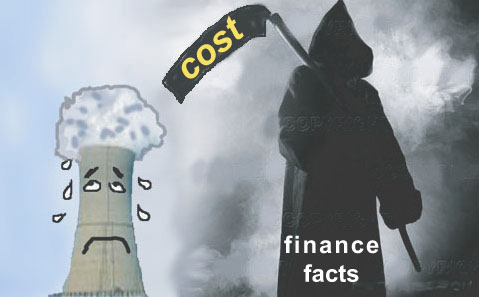
By Emiliya Milcheva and Krassen Nikolov | Euractiv.bg 18 Mar 24
Bulgarian nuclear experts are questioning the economic feasibility of the country’s plan to build two US nuclear reactors at the Kozloduy nuclear power plant, raising questions on funding and whether the country has the means to purchase energy from these plants.
“It will be very difficult to find banks to finance the project,” Valentin Kolev, energy expert and a member of the American Association of Energy Engineers told Euractiv. “If we assume that we will produce 15 terawatt-hours per year, in 20 years of operation, it makes 300 terawatt hours. At a price of €17.6 billion for the two reactors, a price of close to €60/MWh would result, but this is only the investment. Fuel costs and much more are not included. The price cannot be below €100-125.”
Energy Minister Rumen Radev said that the electricity from the new Kozloduy NPP reactors will cost €65/MWh.
Bulgaria will build the two nuclear reactors with loans, and only 30% of the construction costs will be financed with money from the state budget, according to an investigation by Euractiv.
At the end of last year, Bulgarian Prime Minister Nikolai Denkov told Euractiv that Greece, Serbia, and North Macedonia were interested in signing long-term contracts for the purchase of electricity from the future seventh and eighth units of the Kozloduy NPP. However, Bulgaria has not been able to attract the three neighbouring countries as investors.
European companies also showed no interest in building the new plant, with the Bulgarian parliament voting to open negotiations with the Korean company Hyundai. The nuclear reactors will be based on the AR-1000 technology of the American company Westinghouse.
Bulgarian Energy Minister Rumen Radev sets the final price for the new reactors at €13 billion, but most experts claim that the price will exceed €17.5 billion.
Kolev recalled the HSBC investment study for the abandoned Belene nuclear power plant project, set to comprise two Russian reactors. This study calculated the cost of electricity at €75/MWh, which led the government to abandon the project as the return on investment would not be high enough.
“For now, it is not clear how the new nuclear plants will be paid for,” Neykov commented.
Another Bulgarian energy expert – Georgi Stefanov – also expressed fears billions of euro might be spent from the state budget, but in the end, nothing would be built.
“The construction of a power plant should be looked at like this: How much money do we need, how much money will we earn, and then how much money will we pay for the disposal when the NPP is closed, and for the maintenance of the nuclear waste?” Stefanov said……………………………….https://www.euractiv.com/section/politics/news/bulgarian-nuclear-experts-question-economic-viability-of-new-nuclear-project/
—
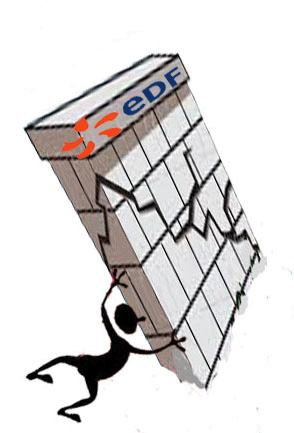
Deadlines, costs, production: France’s nuclear company EDF in a moment of truth
By Paul Messad | Euractiv France, Mar 18, 2024
EDF, the French state-owned energy giant faces criticism for rising costs and delays in its nuclear projects, its existing reactors have also been encountering problems. Euractiv looks at the implications of these challenges for EDF and the wider nuclear energy industry.
January 23, 2023: EDF, Europe’s leading energy company, announces a further extension of the costs and construction times of its two 3rd generation pressurized water reactors (EPR) located at Hinkley Point in England. The budget could increase by 70 to 90% compared to initial estimates and the start-up could be four to six years late.
……….the delays are “not likely to undermine the confidence of the British government in its nuclear strategy” , defends SFEN. Proof of this would be its reinvestment of more than a billion pounds sterling in two other reactors built by EDF in England, at Sizewell.
For others, on the contrary, the Anglo-Saxon situation is symptomatic of the challenge faced by the largest nuclear operator in the world, in whose confidence is eroded as projects progress, while it aims, in particular, at the construction of six, then 14 EPRs in France, and one (or even four in total) in the Czech Republic for which the authorities are awaiting guarantees.
Especially since another project tarnishes the image of the French giant. On the continent, EDF is in fact building an EPR in France, in Flamanville (Normandy). But as in England, construction is experiencing significant delays (12 years) and additional costs (+470%). The start-up of the reactor planned for “mid-2024” could even be further delayed .
……………………..In France, the government intends to get started since it plans to build six EPRs — and possibly eight others. Estimated costs and deadlines for the first six: 52 billion euros and a first commissioning in 2035.
For once, according to Les Échos , costs have already been revised upwards… by 30%. When questioned, the CEO of EDF, Luc Rémont, “does not confirm any figures” .
“We will be there when we have made all the optimizations [engineering design, component manufacturing, etc., Editor’s note] ,” he explained on the sidelines of the Franco-Czech nuclear summit organized in Prague. on March 8 and 9.
The deadlines, already “very demanding” , he agreed at the end of November, have since been postponed to 2040.
This back and forth annoys the Minister of the Economy and Energy. “EDF must learn to keep its costs and its schedule ,” criticized Bruno Le Maire at the beginning of March in Le Monde .
Czech Republic, Poland, Slovakia…
It must be said that EDF is playing on its international reputation.
In Prague, Mr. Rémont accompanied the President of the Republic, Emmanuel Macron, who came to defend EDF’s candidacy for the construction of one, or even four reactors in total, in the Czech Republic.
However, the country’s authorities have emphasized their commitment to respecting deadlines and costs.
“We are interested in the lowest possible price, the highest possible guarantees that the plant will be built on time ,” Jozef Síkela, Czech Minister of Industry and Trade, told Euractiv .
Clearly, it is not because EDF is the only European company in the running that it will be chosen. Worse, the company is walking on eggshells, competing, as in 2009 on the reactor issue in the United Arab Emirates, by a subsidiary of the South Korean KEPCO.
“Fifteen years later, the Flamanville EPR […] is still not in service. Three of the South Korean reactors in Abu Dhabi are there and the last one very soon [with delay, Editor’s note]” , reminded the former representative of EDF to the European institutions (1987 to 2000) Lionel Taccoen, resumed on
The situation may seem all the more worrying as EDF is also interested in building reactors in the Netherlands, Bulgaria , Slovenia, Slovakia and Poland where the French firm was recently defeated .
In addition, the Czech authorities have left the door open for the American Westinghouse to propose a new offer. The latter has also won several contracts for reactors in Europe in recent years. …………………….
The other dark spot on EDF’s picture lies in the management of its existing fleet and in particular the annus horribilis 2022 where, in the midst of the energy crisis, production has fallen back to pre-1990 levels .
“The year in which France should have shone is exactly the year in which we had a 50% reduction in the fleet,” argued to Euractiv at the end of January Xavier Daval, vice-president of the Renewable Energies Union, the main actors’ union. of the sector in France.
We will now have to wait until 2027, according to EDF , to once again reach production levels slightly higher than those of 1995 (around 360 TWh over the year), far from the 400-420 TWh reached between 2002 and 2015.
As if more was needed, EDF discovered at the beginning of March new “indications” of corrosion , a nightmare of 2022, on one of the reactors in the park.
Nevertheless, the company and the nuclear industry benefit more than ever from government support. France, like the fifteen other European states, which are part of the “nuclear alliance”, supports the emergence of 30 to 45 large reactors by 2050 . Will EDF be the main architect? https://www.euractiv.com/section/energy-environment/news/frances-edf-faces-uphill-battle-as-europes-demand-for-nuclear-reactors-grows/
Money is “The Achilles Heal” of the nuclear state

Paul Richards, 19 mar 24
Integrated, with the first lies, and weasel words, becoming memes out of public and private orations, Lewis Strauss, uttered during his term in the quasi-U.S. government, Atomic Energy Commission [AEC]1953 to 1958.
Even after being rebuked by, U.S. electricity cartels, behind the meter, Lewis Strauss, modified his orations.
“Our children will enjoy in their homes electrical energy too cheap to meter…
….will travel effortlessly over the seas and under them and through the air with a minimum of danger and at great speeds, and will experience a lifespan far longer than ours, as disease yields and man comes to understand what causes him to age….” Lewis Strauss. 1954 National Association of Science Writers Founder Day Dinner.
Strauss, then promised the Plutonium Economy overproduction of nuclear or carbon, fuelled heat, resulting in excess electricity, and the ensuing growth we have suffered in the 21C, the primary cause of global warming.
This legacy linear economy business model, reflects the fundamental flaw, in the so-called modern economic theory, putting profit before the Planet and people
EU to use Russian assets to buy arms for Ukraine – Scholz
The German chancellor has clarified that profits obtained from Moscow’s funds held in the EU will be used to arm Kiev
German Chancellor Olaf Scholz has said that interest accrued from Russian assets frozen in the EU will be used to purchase weapons for Ukraine.
Soon after Russia launched its military operation against Ukraine in February 2022, Western countries froze approximately $300 billion of funds belonging to the Russian Central Bank. Of that sum, the Brussels-based clearinghouse Euroclear holds around €191 billion ($205 billion), which has accrued nearly €4.4 billion in interest over the past year.
Speaking at a joint press conference with French President Emmanuel Macron and Polish Prime Minister Donald Tusk in Berlin on Friday, Chancellor Scholz said: “We will use windfall profits from Russian assets frozen in Europe to financially support the purchase of weapons for Ukraine.
The German leader also announced plans to establish a “new capability coalition for long-range rocket artillery,” with procurement to take place “on the overall world market.”
The German chancellor did not provide specifics, and it remains unclear whether he was referring to an entirely new initiative, or to a “long-range” scheme announced by President Macron in February.
European Commission President Ursula von der Leyen last month suggested using the interest from frozen Russian assets to buy weapons for Ukraine. However, Politico, citing an anonymous EU official, reported on Thursday that Malta, Luxembourg and Hungary had “expressed reservations” about the plan earlier this week.
Moscow has repeatedly warned that any actions taken against its assets would amount to “theft.” It has stressed that seizing the funds or any similar move would violate international law and undermine Western currencies, the global financial system, and the world economy.
1 This Month

of the week – Shut Down Drone Warfare!


Tell the Ukrainian Government to Drop Prosecution of Peace Activist Yurii Sheliazhenko

Petition to revoke the licensing of the Near Surface Nuclear Disposal Facility (NSDF) at Chalk River. https://www.ourcommons.ca/petitions/en/Petition/Details?Petition=e-7247
To see nuclear-related stories in greater depth and intensity – go to https://nuclearinformation.wordpress.com
-
Archives
- April 2026 (103)
- March 2026 (251)
- February 2026 (268)
- January 2026 (308)
- December 2025 (358)
- November 2025 (359)
- October 2025 (376)
- September 2025 (257)
- August 2025 (319)
- July 2025 (230)
- June 2025 (348)
- May 2025 (261)
-
Categories
- 1
- 1 NUCLEAR ISSUES
- business and costs
- climate change
- culture and arts
- ENERGY
- environment
- health
- history
- indigenous issues
- Legal
- marketing of nuclear
- media
- opposition to nuclear
- PERSONAL STORIES
- politics
- politics international
- Religion and ethics
- safety
- secrets,lies and civil liberties
- spinbuster
- technology
- Uranium
- wastes
- weapons and war
- Women
- 2 WORLD
- ACTION
- AFRICA
- Atrocities
- AUSTRALIA
- Christina's notes
- Christina's themes
- culture and arts
- Events
- Fuk 2022
- Fuk 2023
- Fukushima 2017
- Fukushima 2018
- fukushima 2019
- Fukushima 2020
- Fukushima 2021
- general
- global warming
- Humour (God we need it)
- Nuclear
- RARE EARTHS
- Reference
- resources – print
- Resources -audiovicual
- Weekly Newsletter
- World
- World Nuclear
- YouTube
-
RSS
Entries RSS
Comments RSS
 nuclear-news