NuScale Power Corporation (SMR) Reports Q1 Loss, Misses Revenue Estimates
Zacks Equity Research, Fri, 10 May 2024
NuScale Power Corporation (SMR) came out with a quarterly loss of $0.21 per share in line with the Zacks Consensus Estimate. This compares to loss of $0.16 per share a year ago. These figures are adjusted for non-recurring items.
A quarter ago, it was expected that this company would post a loss of $0.22 per share when it actually produced a loss of $0.25, delivering a surprise of -13.64%.
Over the last four quarters, the company has not been able to surpass consensus EPS estimates.
NuScale Power , which belongs to the Zacks Electronics – Power Generation industry, posted revenues of $1.38 million for the quarter ended March 2024, missing the Zacks Consensus Estimate by 56.22%. This compares to year-ago revenues of $5.51 million. The company has topped consensus revenue estimates just once over the last four quarters.
The sustainability of the stock’s immediate price movement based on the recently-released numbers and future earnings expectations will mostly depend on management’s commentary on the earnings cal
……………………………………………………. the shares are expected to underperform the market in the near future. ………………………….. https://au.finance.yahoo.com/news/nuscale-power-corporation-smr-reports-213506291.html
Sam Altman’s nuclear energy company Oklo plunges 54% in New York Stock Exchange debut

Hayden Field, MacKenzie Sigalos, 10 May 24, https://www.cnbc.com/2024/05/10/sam-altman-takes-nuclear-startup-oklo-public-to-power-ai-ambitions.html
KEY POINTS
- Sam Altman, best known as the CEO of OpenAI, is also chairman of a nuclear power company called Oklo, which has just gone public through a special purpose acquisition company.
- Oklo merged with AltC Acquisition Corp., Altman’s SPAC, and is now trading on the New York Stock Exchange under the ticker “OKLO.”
- The company received about $306 million in gross proceeds upon closing the transaction, according to a release.
Sam Altman is now chairman of a public company. But it’s not OpenAI.
On Friday, advanced nuclear fission company Oklo started trading on the New York Stock Exchange. The company, which has yet to generate any revenue, went public through a special purpose acquisition company (SPAC) called AltC Acquisition Corp., founded and led by Altman.
Under the ticker symbol “OKLO,” shares plummeted 54% on Friday to $8.45, valuing the company at about $364 million. Oklo received roughly $306 million in gross proceeds in the transaction, according to a release.
Oklo’s business model is based on commercializing nuclear fission, the reaction that fuels all nuclear power plants. Instead of conventional reactors, the company aims to use mini nuclear reactors housed in A-frame structures. Its goal is to sell the energy to end users such as the U.S. Air Force and big tech companies.
Oklo is currently working to build its first small-scale reactor in Idaho, which could eventually power the types of data centers that OpenAI and other artificial intelligence companies need to run their AI models and services.
Altman is co-founder and CEO of OpenAI, which has been valued at over $80 billion by private investors. He’s said that he sees nuclear energy as one of the best ways to solve the problem of growing demand for AI, and the energy that powers the technology, without relying on fossil fuels. Microsoft co-founder Bill Gates and Amazon founder Jeff Bezos have also invested in nuclear plants in recent years.
“I don’t see a way for us to get there without nuclear,” Altman told CNBC in 2023. “I mean, maybe we could get there just with solar and storage. But from my vantage point, I feel like this is the most likely and the best way to get there.”
In an interview with CNBC Thursday, Oklo CEO Jacob DeWitte confirmed that the company has yet to generate revenue and has no nuclear plants deployed at the moment. He said the company is targeting 2027 for its first plant to come online.
Going the SPAC route is risky. So-called reverse mergers became popular in the low-interest rate days of 2020 and 2021 when tech valuations were soaring and investors were looking for growth over profit. But the SPAC market collapsed in 2022 alongside rising rates and hasn’t recovered.
AI-related companies, on the other hand, are the new darlings of Wall Street.
“SPACs haven’t exactly had the best performances in the past couple of years, so for us to have sort of the outcome that we’ve had here is obviously a function of the work we put in, but also what we’re building and also the fact that the market sees the opportunity sets here,” said DeWitte, who co-founded the company in 2013. “I think it’s very promising on multiple fronts for [the] nuclear, AI, data center push, as well as the energy transition piece.”
The company has seen its fair share of regulatory setbacks. In 2022, the U.S. Nuclear Regulatory Commission denied Oklo’s application for an Idaho reactor. The company has been working on a new application, which it isn’t aiming to submit to the NRC until early next year, DeWitte said, adding that it’s currently in the “pre-application engagement” stage with the commission.
Altman got involved with Oklo while president of the startup incubator Y Combinator. Oklo went into the program in 2014 after an earlier meeting between Altman and DeWitte. In 2015, Altman invested in the company and became chairman.
It’s not Altman’s only foray into nuclear energy or other infrastructure that could power large-scale AI growth.
In 2021, Altman led a $500 million funding round in clean energy firm Helion, which is working to develop and commercialize nuclear fusion. Helion said in a blog post at the time that the capital would go toward its electricity demonstration generator, Polaris, “which we expect to demonstrate net electricity from fusion in 2024.”
Altman didn’t respond to a request for comment.
In recent years, Altman has also poured money into chip endeavors and investments that could help power the AI tools OpenAI builds.
Just before his brief ouster as OpenAI CEO in November, he was reportedly seeking billions of dollars for a chip venture codenamed “Tigris” to eventually compete with Nvidia.
Altman in 2018 invested in AI chip startup Rain Neuromorphics, based near OpenAI’s San Francisco headquarters. The next year, OpenAI signed a letter of intent to spend $51 million on Rain’s chips. In December, the U.S. compelled a Saudi Aramco-backed venture capital firm to sell its shares in Rain.
DeWitte told CNBC that the data center represents “a pretty exciting opportunity.”
“What we’ve seen is there’s a lot of interest with AI, specifically,” he said. “AI compute needs are significant. It opens the door for a lot of different approaches in terms of how people think about designing and developing AI infrastructure.”
How long does it take to build a nuclear reactor? We ask France

Sophie Vorrath, May 8, 2024, https://reneweconomy.com.au/how-long-does-it-take-to-build-a-nuclear-reactor-we-ask-france/

A short answer to this question might be, it depends who you ask. Ask Australia’s Opposition leader Peter Dutton, for instance, and he will tell you a federal Coalition government under his leadership could have a nuclear power plant up and running in Australia within a decade.
Ask the highly experienced French state-owned nuclear power giant EDF, which manages 56 reactors in the world’s most nuclear dependent country, and you would get rather a different answer.
Bloomberg reports that EDF this week got regulatory approval to start up its newest nuclear reactor, the 1.6GW Flamanville plant in France’s north west – a milestone that is 12 years behind schedule and more than four times over budget, thanks to a range of construction problems including concrete weakness and faulty pipe welds.
The green light allows EDF to load the fuel in the reactor, proceed with trials, then begin operations, the Autorite de Surete Nucleaire said in a statement on Tuesday. Further approvals will be needed upon reaching key milestones during the trial phase, the regulator said.
According to other reports, EDF said last month it hoped to connect the Flamanville pressurised reactor to the national grid by the European summer and reach full power by the end of the year.
But it will not be smooth sailing from there. A faulty vessel cover still needs replacing at the plant, with reports suggesting this has been pushed out to 2026, when the plant would be shut down for up to a year.
Meanwhile, EDF in March raised its cost estimate for the construction of six new nuclear reactors to €67.4 billion ($A102.5 billion), Reuters has reported, up from the company’s first estimated their cost of €51.7 billion.
So, how long does it take to build a nuclear reactor?
Kobad Bhavnagri, Bloomberg New Energy Finance’s energy expert and global head of strategy says the long delay and cost blowout at Flamanville 3 is not an isolated incident.
“Very similar delays and multifold cost blowouts have occurred with recent reactor builds in the UK, Finland and USA,” Bhavnagri writes on LinkedIn.
“Countries with well established nuclear industries.
“The lesson here? Don’t believe anyone who says they know how much it will cost and how long it will take to build a new nuclear plant (unless they are in China).”
Nuclear-waste compensation (?bribery) numbers raise eyebrows

South Bruce would receive $418 million in total compensation if its site is selected; the comparison figure for Ignace is $170 million.
NWO Newswatch, Mike Stimpson, Local Journalism Initiative Reporter, 3 May 24
IGNACE – As a community vote on nuclear-waste concluded, residents of this Northwest municipality were talking about the deep geological repository’s other potential host municipality.
The Municipality of South Bruce, in southwestern Ontario near Lake Huron, on Monday published the hosting agreement it negotiated with the Nuclear Waste Management Organization.
The South Bruce agreement promises far more for that municipality than Ignace would receive if it is selected to host repository operations.
If the South Bruce site is selected for the proposed underground waste storage facility, the municipality would receive about $418 million over the project’s 138-year life, according to documents released by South Bruce.
The comparison figure for Ignace is approximately $170 million.
Reaction on social media included Ignace residents saying the divergent figures make Ignace look either foolish or an attractive bargain………………………………………………………..
Both municipalities must communicate their continued willingness to be host communities to the NWMO before a site is chosen.
If South Bruce voters decide in a referendum on Oct. 28 that they are not willing to continue as a potential host community, the industry-funded NWMO would remit a $4-million “exit payment” to the municipality.
If the Township of Ignace declares itself not willing, the exit payment would be $5 million.
If South Bruce is willing but not selected, it is to receive $8 million; Ignace would receive the same amount if willing but not selected.
In addition to the municipalities, nearby First Nations must be willing to participate in order for a site to be selected.
For the Revell Lake site, Wabigoon Lake Ojibway Nation must express willingness. The potential First Nations partner for the South Bruce site is Saugeen Ojibway Nation.
The NWMO has committed to selecting a site by December 31, 2024.
Construction is projected to begin around 2034 and take about 10 years to complete, Ponka said. https://www.nwonewswatch.com/local-news/nuclear-waste-compensation-numbers-raise-eyebrows-8683186
Georgia’s Vogtle 2 nuclear reactors cost over $30Billion, – but were meant to cost $14Billion
Georgia Power announced this week that the 1,114-megawatt (MW) Unit 4
nuclear power reactor at Plant Vogtle near Waynesboro, Georgia, entered
into commercial operation after connecting to the power grid in March 2024.
The commercial start of Unit 4 completes the 11-year expansion project at
Plant Vogtle.
No nuclear reactors are under construction now in the United
States.
Vogtle Unit 3 began commercial operation in July 2023. The plant’s
first two reactors, with a combined 2,430 MW of nameplate capacity, began
operations in 1987 and 1989. The two new reactors bring Plant Vogtle’s
total generating capacity to nearly 5 gigawatts (GW), surpassing the
4,210-MW Palo Verde plant in Arizona and making Vogtle’s four units the
largest nuclear power plant in the United States.
Construction at the two
new reactor sites began in 2009. Originally expected to cost $14 billion
and begin commercial operation in 2016 (Vogtle 3) and in 2017 (Vogtle 4),
the project ran into significant construction delays and cost overruns.
Georgia Power now estimates the total cost of the project to be more than
$30 billion.
US Energy Information Administration 1st May 2024
A new nuclear energy law will likely mean higher utility bills

RADIO IQ | By Michael Pope, May 2, 2024, https://www.wvtf.org/news/2024-05-02/a-new-nuclear-energy-law-will-likely-mean-higher-utility-bills
Customers of Dominion Energy and Appalachian Power might soon start seeing higher electric bills. That’s because of a new law signed by Governor Glenn Youngkin that allows for utilities to make customers pay for the costs of developing nuclear power facilities – things like permitting, for example. The bill was introduced by Senator Dave Marsden of Fairfax County.
“Ratepayers could be responsible for $1.40 a month for up to five years in creating the funds necessary to get through the nuclear regulatory commission process, which is hugely expensive,” Marsden says. “It takes four to five years.”
Utility customers don’t usually pay for things like development, and Josephus Allmond at the Southern Environmental Law Center says this poses a risk for ratepayers.
“The risk is that customers are footing the bill for this development several years, and if it doesn’t come to fruition, then they’ve just spent $500 million or $125 million, depending on the utility you’re talking about, going towards development of something that will never benefit them,” Allmond explains.
The new law goes into effect July 1st, but utilities would need to have any plans approved by the State Corporation Commission. Meanwhile, the clock is ticking on the goal for Virginia to be emissions free by 2050, a benchmark laid out in the Virginia Clean Economy Act.
This report, provided by Virginia Public Radio, was made possible with support from the Virginia Education Association.
Industrial action by nuclear submarine workforce hits Rolls Royce
GMB members working on the company’s nuclear submarine programme have
begun industrial action. The action comes after 90 per cent of GMB members
at the company supported action if company bosses failed to present a pay
rise acceptable to union members. Known as ‘work to rule’, the
industrial action will see GMB members applying strict limits to working
outside of pre-agreed processes. Rolls-Royce is a world leader in the field
of submarine technology, as well as being the supplier to Britain’s
domestic nuclear submarine fleet.
UK Defence Journal 30th April 2024
https://ukdefencejournal.org.uk/industrial-action-by-nuclear-sub-workforce-hits-rolls-royce
Five Things the “Nuclear Bros” Don’t Want You to Know About Small Modular Reactors
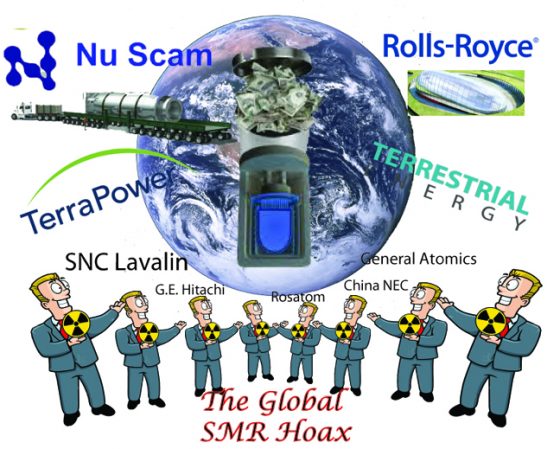
1. SMRs are not more economical than large reactors.
2. SMRs are not generally safer or more secure than large light-water reactors.
3. SMRs will not reduce the problem of what to do with radioactive waste.
4. SMRs cannot be counted on to provide reliable and resilient off-the-grid power for facilities, such as data centers, bitcoin mining, hydrogen or petrochemical production.
5. SMRs do not use fuel more efficiently than large reactors.
Ed Lyman, April 30, 2024 https://blog.ucsusa.org/edwin-lyman/five-things-the-nuclear-bros-dont-want-you-to-know-about-small-modular-reactors/
Even casual followers of energy and climate issues have probably heard about the alleged wonders of small modular nuclear reactors (SMRs). This is due in no small part to the “nuclear bros”: an active and seemingly tireless group of nuclear power advocates who dominate social media discussions on energy by promoting SMRs and other “advanced” nuclear technologies as the only real solution for the climate crisis. But as I showed in my 2013 and 2021 reports, the hype surrounding SMRs is way overblown, and my conclusions remain valid today.
Unfortunately, much of this SMR happy talk is rooted in misinformation, which always brings me back to the same question: If the nuclear bros have such a great SMR story to tell, why do they have to exaggerate so much?
What are SMRs?
SMRs are nuclear reactors that are “small” (defined as 300 megawatts of electrical power or less), can be largely assembled in a centralized facility, and would be installed in a modular fashion at power generation sites. Some proposed SMRs are so tiny (20 megawatts or less) that they are called “micro” reactors. SMRs are distinct from today’s conventional nuclear plants, which are typically around 1,000 megawatts and were largely custom-built. Some SMR designs, such as NuScale, are modified versions of operating water-cooled reactors, while others are radically different designs that use coolants other than water, such as liquid sodium, helium gas, or even molten salts.
To date, however, theoretical interest in SMRs has not translated into many actual reactor orders. The only SMR currently under construction is in China. And in the United States, only one company—TerraPower, founded by Microsoft’s Bill Gates—has applied to the Nuclear Regulatory Commission (NRC) for a permit to build a power reactor (but at 345 megawatts, it technically isn’t even an SMR).
The nuclear industry has pinned its hopes on SMRs primarily because some recent large reactor projects, including Vogtle units 3 and 4 in the state of Georgia, have taken far longer to build and cost far more than originally projected. The failure of these projects to come in on time and under budget undermines arguments that modern nuclear power plants can overcome the problems that have plagued the nuclear industry in the past.
Developers in the industry and the US Department of Energy say that SMRs can be less costly and quicker to build than large reactors and that their modular nature makes it easier to balance power supply and demand. They also argue that reactors in a variety of sizes would be useful for a range of applications beyond grid-scale electrical power, including providing process heat to industrial plants and power to data centers, cryptocurrency mining operations, petrochemical production, and even electrical vehicle charging stations.
Here are five facts about SMRs that the nuclear industry and the “nuclear bros” who push its message don’t want you, the public, to know.
Continue readingAustralia: Critical worker shortage menaces nuclear-powered submarine workforce
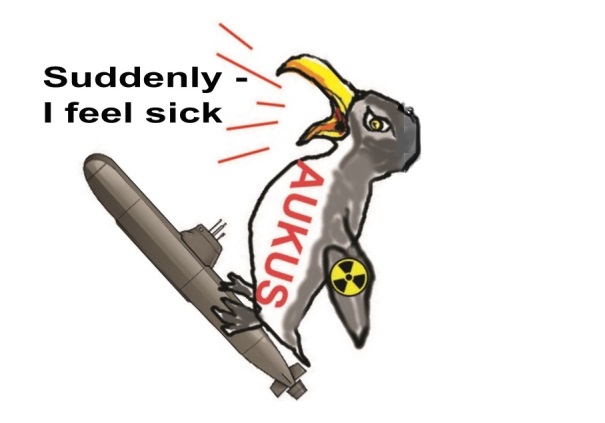
INDUSTRY, 29 APRIL 2024, By: Liam Garman
The document, sourced through a freedom of information request from former independent senator for South Australia Rex Patrick, examined the civilian nuclear workforce required to maintain a nuclear reactor plant.
According to the document, Australia will require over 75,000 additional electricians, construction managers, metal machinists and welders in its “feeder workforce”, a term for Australia’s pool of workers that are eligible to pursue a career in the submarine workforce.
In particular, by financial year 2030–2031, Australia will require:
- An additional 33,553 electricians;
- An additional 19,364 construction managers;
- An additional 11,753 metal machinists;
- An additional 12,280 welders.
The figures were assessed by calculating the difference between the projected demand and supply of skilled workers.
The document warns that the total shortfall will be even larger than the initial figures, confirming that the totals do not include additional demand produced by the nuclear-powered submarine industry.
The report raises an alarm for policymakers, noting that Australia has neither a skilled nuclear-powered workforce to leverage for the construction and maintenance of nuclear-powered submarines, nor does it have a big enough pool of eligible candidates.
“There is no current Australian talent pool with the required mix of qualifications, skills, experience, and behaviours to fulfil the civilian nuclear workforce roles,” the document read……………………………………………………………
Defence may also face additional constraints with the decision to build the SSN-AUKUS at Osborne in South Australia and maintain the capability in Henderson in Western Australia.
The research found the greatest feeder workforce is located in NSW, followed by Victoria and Queensland, while the state with the fewest skills is South Australia. https://www.defenceconnect.com.au/industry/13993-critical-worker-shortage-menaces-nuclear-powered-submarine-workforce
Rolls-Royce scales back plans to build nuclear factories in UK
Rolls-Royce has scaled back plans to build two new factories for its small modular reactor (SMR) programme in the UK, following delays to a government design competition.
The FTSE 100 company had originally proposed one factory to make heavy pressure vessels for its SMRs and another to make the building blocks of the reactors.
It had drawn up a final shortlist of locations for the pressure vessels factory, including the International Advanced Manufacturing Park on the outskirts of Sunderland, Teesworks in Redcar and the Gateway industrial park in Deeside, Wales.
But on Friday Rolls confirmed it no longer intends to proceed with that plan because there is no longer time to build the factory and make the first pressure vessels for the early 2030s, when it hopes to complete its first SMRs.
It is still proceeding with work to build the second factory, however.
The company had been waiting for the outcome of an ongoing SMR design competition in the UK – first announced by the Government in 2015 – before it made a decision on the pressure vessel plant.
But that competition has been repeatedly delayed, with the arms length body Great British Nuclear only formally created last summer and winners not due to be announced until this June at the earliest.
Instead the engineering giant will now buy its heavy pressure vessels from a third party supplier.
The large, metal components sit at the heart of nuclear reactors and must be able to withstand extremely high temperatures and pressures. They are only made by a select group of companies, partly due to the need for specialist welding techniques.
Among their number is now Sheffield Forgemasters, which was nationalised by the Ministry of Defence in 2021.
Earlier this month, Sheffield became the sole UK company to gain the qualifications needed to make SMR reactor vessel components.
Despite having shelved its plans for a heavy pressure vessel factory, Rolls is still pressing ahead with plans to build its second factory, which will build the modular units that make up its SMRs.
It is understood that sites shortlisted for the pressure vessel factory will also be contenders for the second plant but no decisions have been made.
On Friday, a spokesman for Rolls-Royce SMR confirmed the company had now “prioritised work on our modules assembly and test facility”, adding: “Our efforts are focused on identifying the best site to support our deployment at pace.”
The company has also not ruled out reviving its plan for a heavy pressure vessel factory at some point in the future, so long as it manages to build up a healthy pipeline of orders.
A Government spokesman said: “Our world leading SMR competition aims to be the fastest of its kind, helping secure billions in investment for the UK, meaning cleaner, cheaper and more secure energy in the long-term.”
Rolls-Royce scales back plans to build nuclear factories in UK
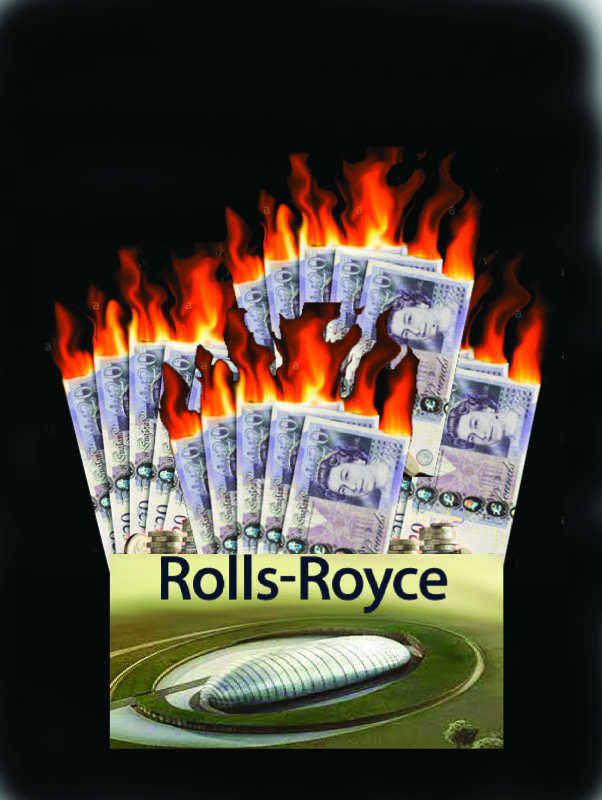
Curtailing comes after repeated delays to an ongoing government design competition
Rolls-Royce has scaled back plans to build two new factories for its small
modular reactor (SMR) programme in the UK, following delays to a government
design competition. The FTSE 100 company had originally proposed one
factory to make heavy pressure vessels for its SMRs and another to make the
building blocks of the reactors.
It had drawn up a final shortlist of
locations for the pressure vessels factory, including the International
Advanced Manufacturing Park on the outskirts of Sunderland, Teesworks in
Redcar and the Gateway industrial park in Deeside, Wales.
But on Friday Rolls confirmed it no longer intends to proceed with that plan because
there is no longer time to build the factory and make the first pressure
vessels for the early 2030s, when it hopes to complete its first SMRs.
It is still proceeding with work to build the second factory, however. The
company had been waiting for the outcome of an ongoing SMR design
competition in the UK – first announced by the Government in 2015 –
before it made a decision on the pressure vessel plant.
But that competition has been repeatedly delayed, with the arms-length body Great
British Nuclear only formally created last summer and winners not due to be
announced until this June at the earliest. Instead the engineering giant
will now buy its heavy pressure vessels from a third party supplier. The
large, metal components sit at the heart of nuclear reactors and must be
able to withstand extremely high temperatures and pressures. They are only
made by a select group of companies, partly due to the need for specialist
welding techniques.
Rolls is still pressing ahead with plans to build its
second factory, which will build the modular units that make up its SMRs.
It is understood that sites shortlisted for the pressure vessel factory
will also be contenders for the second plant but no decisions have been
made.
Telegraph 27th April 2024
https://www.telegraph.co.uk/business/2024/04/27/rolls-royce-plans-build-smr-water-vessel-factory-uk
Rolls-Royce pulls plug on UK nuclear factory plans
Rolls-Royce has reportedly downscaled its ambitions to construct nuclear factories in the UK, citing delays in a government design competition for its small modular reactor programme
Dimitris Mavrokefalidis, 04/29/2024, https://www.energylivenews.com/2024/04/29/rolls-royce-pulls-plug-on-uk-nuclear-factory-plans/
Rolls-Royce has reportedly revised its plans to construct nuclear factories in the UK, citing ongoing delays in a government design competition for its small modular reactor (SMR) programme.
Initially proposing two factories, the company has decided to forgo building a pressure vessel manufacturing facility due to time constraints, opting instead to procure heavy pressure vessels from third-party suppliers.
While plans for a second factory focused on building modular units for SMRs continue, the decision highlights the challenges posed by the delayed design competition.
Rolls-Royce has indicated the possibility of revisiting its plans for a pressure vessel factory in the future, depending on the establishment of a robust order pipeline.
A Department of Energy Security and Net Zero spokesperson told Energy Live News: “Our world leading SMR competition aims to be the fastest of its kind, helping secure billions in investment for the UK, meaning cleaner, cheaper and more secure energy in the long term.
“We’ve ended the stop-start approach to nuclear and recently launched a roadmap setting out the biggest expansion of the sector in 70 years, simplifying regulation and shortening the process for building new power stations.
We have already launched the tender phase and Great British Nuclear aims to announce successful bidders by the end of 2024.”
Energy Live News has contacted Rolls-Royce for comment.
Pontins Pakefield holiday park to close to public from 2025
An end of era looks set to be marked at a seaside holiday park that has
attracted hundreds of thousands of guests over the past 70 years. Sizewell
C is set to take over the whole of Pontins Pakefield Holiday Village in
Lowestoft from January next year.
This means that the site is set to close
to the public from early 2025 – as it provides accommodation for “about 500
workers” who will be constructing the Sizewell C nuclear power station.
After Sizewell C reached a rental agreement with Pontins Pakefield this
week – which will deliver a “considerable refurbishment” of the site and “a
long-term legacy for the area”, Sizewell C said construction workers would
be housed at the site from January 2025.
East Anglian Daily Times 26th April 2024
https://www.eadt.co.uk/news/24278600.pontins-pakefield-holiday-park-close-public-2025
How much will the UK’s new nuclear submarines really cost?
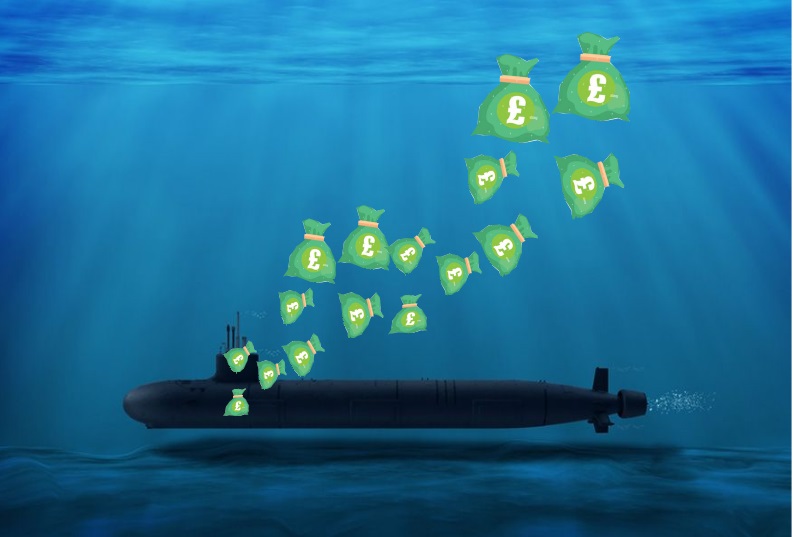
The terrible truth is that nobody knows how much this will cost
25th April
What does it cost, and how many jobs does it actually create? This is
especially important now with the next generation of nuclear-powered
submarines, the “Dreadnought” class, starting construction.
When the UK Government announced the programme to replace the current Valiant class
boats, the cost they announced in Parliament, £31 billion, was to build
four submarines.
This is as disingenuous as announcing the cost of a
revamped NHS as the cost to build four hospitals. The total cost of
ownership over the projected 30-year lifespan is much larger.
We have reached a figure of over £600bn. Shocking? Indeed. Surprising? Compared to
what, the HS2 rail link? The terrible truth is that nobody knows how much
this will cost. The annual report of the government’s own
“Infrastructure and Projects” authority has a lot of bad news,
including a “red” score for the development of the Dreadnought boats’
new engines. In short, this means it can’t be done. Sounds expensive.
The National 25th April 2024
https://www.thenational.scot/politics/24277002.much-will-uks-new-nuclear-submarines-really-cost
Nuclear Power’s Lethal, Larcenous End Game

BY HARVEY WASSERMAN 26 Apr 24
For the first time since 1954, no large new atomic reactors are under construction or on order in the United States.
On March 1, 2024, Vogtle Unit 4 connected to the Georgia grid …years behind schedule and billions over budget. Once hyped as “too cheap to meter,” America’s last large light-water reactor thus forever froze the “Peaceful Atom” in financial failure.
Despite enormous public hype and subsidies, ZERO new US atomic reactors—large or small— are likely to become significantly available here for at least a decade.
The first will likely be an unproven “Small Modular Reactor” prototype already leaning toward a trillion-dollar failure.
***
When it comes to the myth of nuke power helping to fight global warming…there’s no there there.
Atomic reactors cause climate chaos. Some 415 reactors directly heat our air and water in concert with mega-explosions like Chernobyl and Fukushima. All pour radioactive carbon 14 into a lethal brew of filth and wastes.
Despite the latest round of “Nuclear Renaissance” hype, the US lacks the industrial capacity to produce impactful new reactors—large or small— before 2030, if then.
The void comes when we most desperately need to reduce carbon emissions. The mega-grift for unproven new nukes cripples the vital transition to renewables, multiplying the planet-killing impacts of fossil fuels…and of decrepit old reactors whose average age is now over 40.
The original fantasy that the “Peaceful Atom” would be “too cheap to meter” came from Atomic Energy Commission Chair Lewis Strauss, played by Robert Downey, Jr., in “Oppenheimer.”
Harry Truman’s 1952 Paley Commission Report on the future of energy had predicted an epic boom in renewables, including 15,000,000 solar heated US homes by 1975.
But in December, 1953, President Eisenhower—in a remarkably war-like speech—told the United Nations that “Atoms for Peace” would limitlessly power the planet.
On September 6, 1954, the Navy and Westinghouse began building the first US commercial reactor, which opened at Shippingport, Pennsylvania, on May 26, 1958.
In 1974 Richard Nixon promised a thousand US reactors by the year 2000. There were in fact 104. With Vogtle 4’s opening, there are now 94—and none on order or under construction.
Atomic power has become what Forbes Magazine called in 1985 “the largest managerial disaster in business history, a disaster on a monumental scale.”
A 2014 study of 180 nukes worldwide said 175 of them cost 117% more than promised, while going 64% beyond schedule.
Despite the early hype, the Peaceful Atom’s financial catastrophes are too frequent to count, and with price tags too huge to compile, including…
X the 1966 “We Almost Lost Detroit” accident at Michigan’s Fermi I, costing at least $100 million;
X the 1979 Meltdown at Three Mile Island, which—aside from killing innumerable downwinders—converted a $900 million asset to a $2 billion liability;
X the 1983 Washington Public Power System’s $2 billion pubic bond default, the first of its kind, killing four reactors then under construction;
X Sacramento’s 1989 landslide vote to shut the municipal utility’s money-losing Rancho Seco reactor, where surrounding solar panels (unlike the dead nuke) still produce juice;
X the Public Service of New Hampshire’s 1988 dump of Seabrook Unit Two, fueling the first investor-owned utility bankruptcy since the Great Depression;
X the 1998 failure of New York’s never-to-operate $7 billion Shoreham, which shattered the Long Island Lighting Company;
X the 2017 collapse of South Carolina’s VC Summer, whose $9 billion dead loss joined Vogtle’s $20 billion cost overrun to bankrupt Westinghouse;
X NuScale’s 2023 SMR collapse in Idaho, fusing into financial failure the industry’s ever-escalating crises in safety, seismic instability, un-insurabililty, heat and radiation emissions, terrorism, war.
Massive explosions at Russia’s Kyshtym and New Mexico’s Waste Isolation Pilot Project underscore the industry’s unsolved waste management problem. So does radioactive devastation at California’s Santa Susanna and the Hanford Nuclear Reservation in Washington State.
After seven decades of experience, massive 21st century catastrophes continue in the US, Finland, France, England.
Westinghouse’s Summer/Vogtle bankruptcy follows 70 years of a “negative learning curve.”
Finland’s Olkiluoto, France’s Flamanville and England’s double reactor project at Hinckley Point are all hugely over budget and years behind schedule. Olkiluoto has occasionally shut to make way for cheaper wind and hydro.
Many of France’s flagship 56 reactors regularly curtail their output for generic repairs…or as rivers become too global-heated to cool the cores without serious downstream eco-damage.
But Germany’s 2023 final reactor closures allow more than half its power to come more cheaply and reliably from renewables.
California’s similar-sized economy now often gets 100+% of its power from renewables, dwarfing remnant double reactors at Diablo Canyon, now costing $1+ billion/year over market.
Undaunted, Brussels’ World Nuclear Summit just hyped a tripled global fleet, calling for investments beyond $5 trillion to fund a production schedule than many believe is simply impossible.
The international banking response has been a grim “Just Say No”…accompanied by a vote of confidence in a renewable future.
But most terrifying is the demand that decrepit reactors (average age 42+) operate without meaningful inspections or insurance…………………………………………. https://www.counterpunch.org/2024/04/26/nuclear-powers-lethal-larcenous-end-game/
1 This Month

of the week – Shut Down Drone Warfare!


Tell the Ukrainian Government to Drop Prosecution of Peace Activist Yurii Sheliazhenko

Petition to revoke the licensing of the Near Surface Nuclear Disposal Facility (NSDF) at Chalk River. https://www.ourcommons.ca/petitions/en/Petition/Details?Petition=e-7247
To see nuclear-related stories in greater depth and intensity – go to https://nuclearinformation.wordpress.com
-
Archives
- April 2026 (103)
- March 2026 (251)
- February 2026 (268)
- January 2026 (308)
- December 2025 (358)
- November 2025 (359)
- October 2025 (376)
- September 2025 (257)
- August 2025 (319)
- July 2025 (230)
- June 2025 (348)
- May 2025 (261)
-
Categories
- 1
- 1 NUCLEAR ISSUES
- business and costs
- climate change
- culture and arts
- ENERGY
- environment
- health
- history
- indigenous issues
- Legal
- marketing of nuclear
- media
- opposition to nuclear
- PERSONAL STORIES
- politics
- politics international
- Religion and ethics
- safety
- secrets,lies and civil liberties
- spinbuster
- technology
- Uranium
- wastes
- weapons and war
- Women
- 2 WORLD
- ACTION
- AFRICA
- Atrocities
- AUSTRALIA
- Christina's notes
- Christina's themes
- culture and arts
- Events
- Fuk 2022
- Fuk 2023
- Fukushima 2017
- Fukushima 2018
- fukushima 2019
- Fukushima 2020
- Fukushima 2021
- general
- global warming
- Humour (God we need it)
- Nuclear
- RARE EARTHS
- Reference
- resources – print
- Resources -audiovicual
- Weekly Newsletter
- World
- World Nuclear
- YouTube
-
RSS
Entries RSS
Comments RSS
 nuclear-news