Hinkley nuclear power plans grind to a halt
Hinkley nuclear power station delay deals blow to government hopes Earthwork preparation of Hinkley site put back as election of Francois Hollande as French president hits confidence Damian Carrington guardian.co.uk, 14 May 2012 Massive earthworks needed to prepare the ground for a new nuclear power station at Hinkley in Somerset have been delayed, dealing a further blow to the government’s energy plans.
Half of the big six energy firms have already abandoned their nuclear plans as too costly, but Hinkley is backed by the most pro-nuclear of them, EDF, which is 83% owned by the French state….. Continue reading
Vogtle Nuclear Reactor’s cost overrun $2 billion
 Rushing nuclear power reactors is not prudent and stockholders and/or the vendors, not ratepayers, should bear the burden of such costs.
Brazil ditches nuclear reactor plans, in favour of renewable energy and gas

 Brazil shelves plans to build new nuclear plants Google News 10 May (AFP) BRASILIA — Brazil said Wednesday it has shelved plans to build new nuclear power stations in the coming years in the wake of last year’s Fukushima disaster in Japan.
The previous government led by former president Luiz Inacio Lula da Silva had planned to construct between four and eight new nuclear plants through 2030….. “The last plan, which runs through 2020, does not envisage any (new) nuclear power station because there is no need for it. Demand is met with hydro-electrical power and complementary energy sources such as wind, thermal and natural gas,” Energy ministry’s executive secretary, Marcio Zimmermann said in remarks released by the ministry Wednesday. “The 2021 plan, as far as I know, will not consider nuclear power stations either, ” he added, ….
Loss and share price fall for Denison uranium miner
Uranium miner Denison Mines reports US$52-million first-quarter loss
By: The Canadian Press 05/9/2012 TORONTO – Denison Mines Corp. (TSX:DML) reported Wednesday a loss of US$52 million in the first quarter as it took a $44-million writedown on its U.S. assets and operations which it is selling.
The uranium miner, which keeps its books in U.S. dollars, said the loss amounted to 14 cents per share for the quarter ended March 31 compared with a loss of $7.1 million or two cents per share a year ago..
.. Shares in the company, which reported its results after the close of markets, were down four cents at $1.57 on the Toronto Stock Exchange on Wednesday.
Middle East joins the throng marketing nuclear reactors to Britain
 Wylfa: Chinese, US and Mid East investors ‘may bid for Horizon Nuclear Power’ BBC News North West Wales, 6 May 12 Investors from Chinese, America and Middle East are the latest said to be interested in a bid to build a new nuclear reactor on Anglesey.
Last month Russian state-owned Rosatom was reported to be interested in buying Horizon Nuclear Power to build a replacement for ageing Wylfa reactors.
German owners E.ON and RWE npower have shelved the £8bn plan.
News agency Reuters has quoted industry sources saying the other investors are also interested in Horizon… “There are five groups interested overall,” said the source , who Reuters said had direct knowledge of the deals but who asked not to be identified…. http://www.bbc.co.uk/news/uk-wales-north-west-wales-17977739
UK government’s unsustainable push for nuclear power
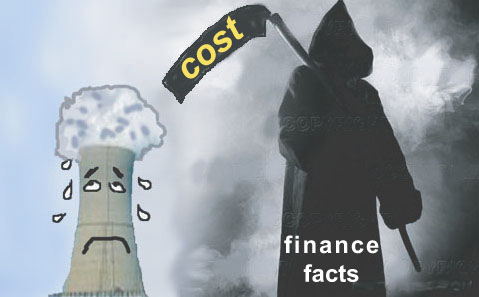
 The eye-watering expense of nuclear power, Guardian UK, by Jonathon Porritt, 4 May 12 The coalition wants us to depend more and more on nuclear power, but quite simply, it is too expensive to be able to deliver “….. It doesn’t really matter what you think: it cannot possibly deliver – primarily for economic reasons.
Nuclear reactors are massively expensive. They take a long time to build. And even when they’re up and running, they’re nothing like as reliable as the industry would have us believe. Continue reading
South African govt’s aim for nuclear power is looking unconvincing
The government’s pretence that there is a bidding war between nuclear power providers is also unconvincing. Companies from the US, South Korea and Russia have given up and a joint French-Chinese bid is the only game in town.
 Nuclear drive more about foreign policy than energy, ANTHONY BUTLER: http://www.businessday.co.za/articles/Content.aspx?id=171008 State’s campaign to win public support for proposed nuclear power programme hampered by logic and chronology 2012/05/04 THE government’s belated campaign to win public support for its proposed nuclear power programme has been hampered by logic and chronology. Continue reading
South Korea’s push to export nuclear technology hampered by corruption scandal

 Lee’s nuclear push meets obstacle Korea Times, 4 may 12, By Kang Hyun-kyung President Lee Myung-bak’s drive to win nuclear deals abroad has met an unexpected, formidable challenge from within as a state-run nuclear operator has been embroiled in malfunctions and corruption cases. Continue reading
$65 for repair to San Onofre nuclear plant
 Repair bill for San Onofre nuclear plant could hit $65 million LA Times, May 2, 2012 | Edison International officials estimate that the company’s cost for inspections and repairs at the closed San Onofre nuclear plant will be between $55 million and $65 million, but said that the costs may be recovered under a manufacturer’s warranty. Continue reading
USA’s consumer trap of paying in advance for nuclear reactors

 Progress Energy files for more recovery charges after nuclear project estimate soars and is further delayed http://enformable.com/2012/05/progress-energy-files-for-more-recovery-charges-after-nuclear-project-estimate-soars-and-is-further-delayed/
Progress Energy, the electric utility in Pinellas County and much of North and Central Florida, has filed its nuclear cost recovery charges with the state Public Service Commission to assist in continuing work on nuclear reactors which may never be built, or ever return to
service at the Levy and Crystal River sites….
Progress Energy’s charge if granted in full will have a tremendous impact on residential
homeowners, who would be expected to pay an extra fee of $5.09 on a 1,000-kilowatt-hour residential bill beginning next year, compared to the extra $2.86 in 2012. Continue reading
Inadequate insurance for Koodankulam nuclear power plant
Koodankulam N-plant insured for Rs 8,000 cr
http://www.mydigitalfc.com/insurance/koodankulam-n-plant-insured-rs-8000-cr-846 By R Srividhya May 02 2012 , Chennai, The controversial Koodankulam Nuclear Plant in Tamil Nadu has been insured by United India Insurance for a sum of Rs 8,000 crore carrying a premium of Rs 35 crore. However, the insurance covers only the equipment and infrastructure and does not include the nuclear reactor and possible human losses arising out of a possible reactor failure.
The installation and erection process of the plant has been insured with the company for the past seven years, company officials said and would continue till the commissioning of the plant.
“After the commissioning of the plant, which is expected to happen in a few months, the coverage would only be for the cold zone, outside the reactor area and would not include the reactor region, known as the hot zone,” said PK Mahapatra, deputy general manager, United India Insurance. About 60 per cent of the risk has been reinsured with Swiss
Re.
The confused issue of the ever-growing costs of nuclear power
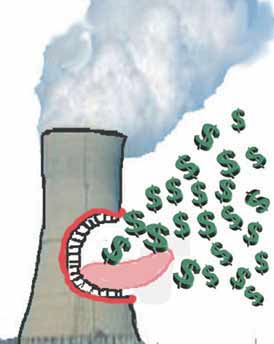 Does nuclear power have a negative learning curve? Think Progress By Joe Romm on Apr 6, 2011 ‘Forgetting by doing’? Real escalation in reactor investment costs Drawing on largely unknown public records, the paper reveals for the first time both absolute as well as yearly and specific reactor costs and their evolution over time. Its most significant finding is that even this most successful nuclear scale-up was characterized by a substantial escalation of real-term construction costs. Continue reading
Losses and falling demand for uranium – AREVA to sell off nuclear radiation measurement unit
Areva Said to Commence Sale of Nuclear Unit Canberra , Bloomberg, By Anne-Sylvaine Chassany and Francois de Beaupuy – May 2, Areva , the largest nuclear reactor maker, has started a process to sell its nuclear radiation measurement unit Canberra, three people with knowledge of the plans said.
The state-controlled company based in Paris sent financial information to potential bidders for the asset, which may fetch as much as 400 million euros ($526 million), said the people, who declined to be identified as the talks are private. Canberra posted earnings before
interest, taxes, depreciation and amortization of about 30 million euros, they said.
Areva Chief Executive Officer Luc Oursel, who took over from Anne Lauvergeon in June, plans to sell at least 1.2 billion euros of non-strategic assets by the end of 2013 to shore up a balance sheet that’s been impaired by the acquisition of uranium mines in Africa, losses at a nuclear reactor under construction in Finland and falling demand for nuclear fuel following last year’s accident at an atomic plant in Japan…. http://www.bloomberg.com/news/2012-05-02/areva-said-to-commence-sale-of-nuclear-unit-canberra.html
Report on financial problems in investing in new nuclear power
 THE FINANCIAL RISKS OF INVESTING IN NEW NUCLEAR POWER PLANTS
There is increasing recognition in the business world that investing in new nuclear power stations is commercially risky.
This report describes five major types of risk for any investor considering putting money into new nuclear plants, with particular emphasis on the situation in the UK: Continue reading
China joins the frenzy to sell nuclear reactors to Britain
CHINA POWERS UP £6BN NUCLEAR BID , Express UK, April 29,2012 By Tracey Boles ONE of China’s state-backed nuclear companies is in talks to invest more than $10 billion (£6 billion) in Britain’s new nuclear reactors.
According to Whitehall sources, the State Nuclear Power Technology Corporation is considering funding a bid for Horizon, the nuclear venture put up for sale by German utilities RWE and Eon. It is in talks about joining forces with Japan’s Toshiba which owns
Westinghouse, the reactor designer formerly owned by the UK government. Over time, the tie-up could be worth $60 billion (£37 billion), sources said. Continue reading
1 This Month





PLEASE OPPOSE HR 8255 AND S.3639 – bills would accelerate satellite deployment, with no environmental review or safeguards – https://ncstd5li.quorum.us/campaign/169331/
To see nuclear-related stories in greater depth and intensity – go to https://nuclearinformation.wordpress.com
-
Archives
- October 2026 (29)
- September 2026 (339)
- August 2026 (330)
- July 2026 (355)
- June 2026 (287)
- May 2026 (306)
- April 2026 (356)
- March 2026 (251)
- February 2026 (267)
- January 2026 (308)
- December 2025 (358)
- November 2025 (359)
-
Categories
- 1
- 1 NUCLEAR ISSUES
- business and costs
- climate change
- culture and arts
- ENERGY
- environment
- health
- history
- indigenous issues
- Legal
- marketing of nuclear
- media
- opposition to nuclear
- PERSONAL STORIES
- politics
- politics international
- Religion and ethics
- safety
- secrets,lies and civil liberties
- spinbuster
- technology
- Uranium
- wastes
- weapons and war
- Women
- 2 WORLD
- ACTION
- AFRICA
- Atrocities
- AUSTRALIA
- Christina's notes
- Christina's themes
- culture and arts
- Events
- Fuk 2022
- Fuk 2023
- Fukushima 2017
- Fukushima 2018
- fukushima 2019
- Fukushima 2020
- Fukushima 2021
- general
- global warming
- Humour (God we need it)
- Nuclear
- RARE EARTHS
- Reference
- resources – print
- Resources -audiovicual
- Weekly Newsletter
- World
- World Nuclear
- YouTube
-
RSS
Entries RSS
Comments RSS

