UK’s Hinkley Point C nuclear plant yet to attract new investors, says EDF boss .
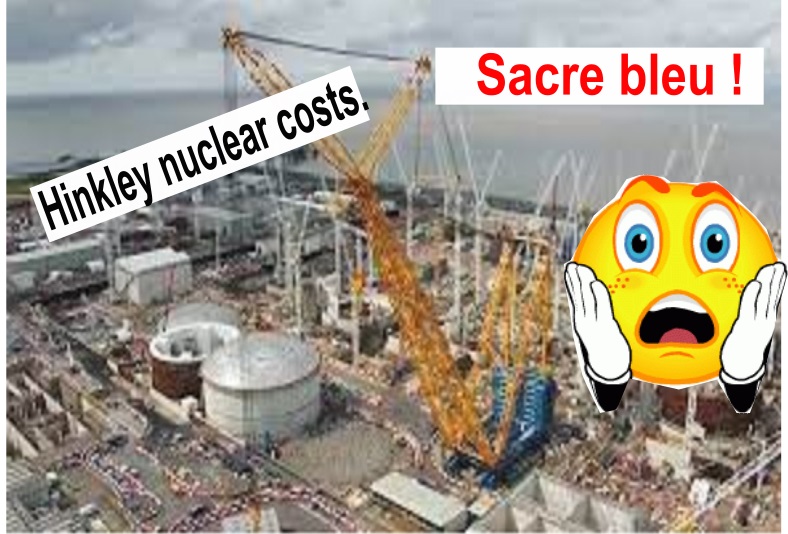
French energy group EDF has not yet found alternative investors for the
flagship Hinkley Point C nuclear project as a freeze in funding from its
Chinese partner places an “extra weight” on the debt-laden company.
Luc Rémont, chief executive of France’s state-owned electricity company,
said it had held talks during 2024 with “lots” of potential funders for
the Hinkley Point C project in Somerset, but was not yet able to proceed
with any of them. EDF was continuing to meet the financing costs but was
working to find alternative investors for the project with the support of
the British government, Rémont said, as the company reported its annual
results on Friday.
“In the current circumstances, the fact that our
partner CGN is not injecting any more capital into Hinkley Point
is . . . an extra weight for EDF,” he said, but added that the
project remained a potentially profitable investment.
His comments raise further questions for the future of Hinkley Point C, the first new nuclear
power station being built in the UK in a generation and a vital part of the
government’s plan to decarbonise power supplies. Hinkley Point C was
initially set to cost £18bn and to be completed in 2025, but the estimated
cost has since swelled to roughly £46bn in 2024 terms while the start date
has been pushed back to 2029 at the earliest, because of construction
delays.
EDF is developing the project with Chinese state-owned CGN as a
junior investment partner, which agreed to finance 33.5 per cent of the
original costs. However, CGN has balked at making further contributions to
help meet cost overruns after the UK government in November 2022 bought it
out of a sister project, Sizewell C in Suffolk, amid concerns about
China’s involvement in critical national infrastructure. Asked on
Thursday whether he was also interested in investing in Hinkley Point C,
Centrica’s chief executive Chris O’Shea said: “We clearly like
nuclear power. And I am open to any kind of conversation. “My focus at
the moment is on hopefully getting to a good place with Sizewell C.”
FT 21st Feb 2025 https://www.ft.com/content/c546117d-1fbc-47c8-93a8-dd823311d2ac
Small Nuclear Reactor developer groups raise $1.5bn amid race to power AI boom
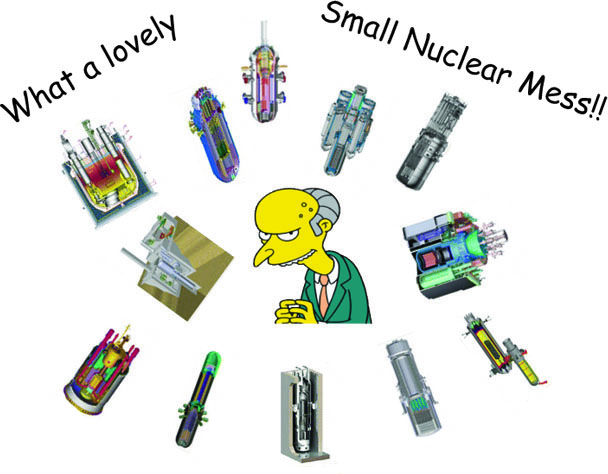
Developers of small modular nuclear reactors have raised at least $1.5bn in
funding over the past year, tapping into a surge of investor interest
linked to power supply deals agreed with Big Tech.
They have also secured pledges of billions of dollars of support from governments, amid a global race to launch new technologies considered critical to powering the
artificial intelligence revolution.
The largest fundraising of $700mn was closed this month by X-energy, a US developer that added Jane Street and other institutional investors to a register that included technology giantAmazon,
Ken Griffin, founder and chief executive of Citadel and chemical
company Dow. Paris-based developer Newcleo raised $151mn in September and
US-based developers Blue Energy and Last Energy raised $45mn and $40mn
respectively last year.
Nano Nuclear Energy, a developer of microreactors
which listed in May, raised $134mn capital in 2024. Three SMR developers
listed in New York, Oklo, NuScale and Nano Nuclear, raised more than $700mn
through share sales and other financing mechanisms over the past 12 months,
according to a Financial Times analysis of public records and data from
PitchBook and BloombergNEF.
Westinghouse, Rolls-Royce, Holtec
International, GE Hitachi and Bill Gates’ TerraPower are also among a host
of companies investing in about 60 SMR projects globally, according to
World Nuclear Association data. Amazon’s purchase of a stake in X-energy
and Google’s power supply deal with SMR developer Kairos Power, which both
occurred in October, have shaken up a funding market that soured in 2023
because of high interest rates and inflation.
But analysts warn developers
still face technical, regulatory and funding risks despite the improved
sentiment.
FT 19th Feb 2025, https://www.ft.com/content/2d84198e-7eeb-4154-bbf2-9a469b0cc700
UK government in “poor negotiating position” as Centrica vague about investing in the new Sizewell C nuclear power station.
Energy supplier Centrica has announced plans to invest in the new Sizewell
C nuclear power station – but campaigners say the move demonstrates the
government’s “poor negotiating position”.
Stop Sizewell C, which is opposed
to the power station, said any investors in the project could demand higher
rates of return, piling further costs on consumer bills. The government has
announced that the power station will be part-funded by adding costs to
people’s energy bills.
A spokesperson for the group said: “Chris O’Shea’s
comments show what a poor negotiating position the government is in, having
committed so much taxpayers’ money to Sizewell C without any guarantees
that private investors will take a stake. “Any investors still interested
in this risky project can demand high rates of return, but the higher the
return, the greater the burden on consumer bills during Sizewell C’s
lengthy and uncertain construction. It’s a lose lose situation for
households.”
East Anglian Daily Times 20th Feb 2025, https://www.eadt.co.uk/news/24951657.size-sizewell-stake-1-50/
Rolls-Royce ‘resists pressure’ to put Czech parts in mini-nuclear reactors.
British engineering giant urged to award contract to Skoda
despite leaning towards Korean company. Rolls-Royce is under pressure to
buy Czech parts for its pioneering mini-nuclear power stations after
striking a deal with Prague to build a generator in the country.
The British engineering giant revealed in October that CEZ, the Czech state
energy company, had placed the first order for its small modular reactors
(SMRs) and was taking a minority stake in the venture as well. It was
hailed as a landmark deal that would see the Czech Republic benefit from
being part of the technology’s supply chain.
But according to local media
reports, Rolls and CEZ are in disagreement about where to source key
components from. CEZ has reportedly been pushing for its subsidiary Skoda
JS – a former part of the Skoda Works empire that is now separate to the
car company of the same name – to be awarded the contract to manufacture
reactor pressure vessels, according to Czech newspaper Ekonomicky denik.
However, the report claimed that Rolls is pushing for Doosan, in South
Korea, to be given the work instead because it can do a better job for a
lower price. Rolls was also said to be frustrated that CEZ had not agreed
to post engineers to Britain to help finish the company’s SMR designs.
Telegraph 18th Feb 2025
https://www.telegraph.co.uk/business/2025/02/18/rolls-royce-resists-pressure-put-skoda-parts-mini-nukes/
At Great Cost: The companies building nuclear weapons and their financiers show 260 profiteers from the nuclear weapons industry

The 2024 Don’t Bank on the Bomb analysis identifies 260 banks, pension funds, insurance companies and other financial institutions with significant finance or investment relations with the 24 main nuclear weapons producers.
The number of Institutions with significant financial exposure to companies involved in the nuclear weapons industry has dropped by a quarter since the Treaty on the Prohibition of Nuclear Weapons came into force in 2021 according to “At Great Cost: The companies building nuclear weapons and their financiers” a new report from the International Campaign to Abolish Nuclear Weapons (ICAN) and PAX. Read more about the significance of this trend here.
All nine nuclear-armed states are investing in their nuclear arsenals. Several of these countries contract the private sector to manufacture and service their nuclear weapons; the 24 most significant of these companies are identified in this report. The most significant contracts for nuclear weapons related work went to Northrop Grumman, General Dynamics, BAE Systems, Boeing, Leonardo, Lockheed Martin and RTX. download the PDF here.
Uncertain nuclear partnership between ČEZ and Rolls-Royce.
Negotiations between ČEZ and Rolls-Royce
on cooperation are starting to falter. Negotiations on the capital
investment of the CEZ Group in the British company Rolls-Royce SMR and
subsequent cooperation on the development and construction of modular
reactors are not going smoothly.
On the contrary, according to two
well-informed sources of the Economic Daily, the negotiations are starting
to falter. The Czechs and the British have different expectations, for
example, regarding where the production of the main parts of the reactor
will be located – whether in the Pilsen-based Škoda JS or in Korea.
According to one source, the British claim that the best option would be to
outsource the production of pressure vessels, steam generators and other
large parts to the Korean Doosan; they are said to be able to produce them
cheaper and better than anyone in Europe. On the other hand, ČEZ is trying
to properly utilize the capacities of the manufacturing and engineering
company Škoda JS, which it took over at the end of 2022. It would like to
produce pressure vessels, internal parts of the reactor and other equipment
in Pilsen.
This is a lot of money, and supplies for up to dozens of
reactors are at stake. One of the sources contacted points to another point
of contention. Rolls-Royce management expected active participation of
Czech experts in completing the design of the 470-megawatt modular reactor.
However, ČEZ and its subsidiaries are keeping the shortage of nuclear
engineering experts “at home” and do not want to send them to Britain
for several years.
Ekonomicky Denik 17th Feb 2025
Amazon-backed nuclear power developer X-Energy threatens to move investment away from UK
Amazon-backed nuclear power developer X-Energy delivered a potential blow
over the weekend by threatening to move investment earmarked for its first
next-generation plants in the UK elsewhere unless the government sets out a
clear regulatory and financial route to market, The Times reported this
morning. “We would like to go big in Europe from a base in the UK but we
don’t have to do a base in the UK,” said X-Energy’s chief executive Clay
Sell.
“We’ve got to get real and we’ve got to get going, otherwise we’re
going to go someplace else.” Based in Maryland in the United States, the
firm is reported to be in discussions with French energy group EDF to build
one or more units on the site of the Hartlepool nuclear power plant, which
is due to be decommissioned in 2027. X-Energy recently closed a $700m
funding round anchored by Amazon, as part of a broader partnership to bring
5GW of power on stream by 2039. However, Clay reportedly said he remains
“very optimistic” that it could get its 80MW modular reactors – which can
be scaled into “four pack” 320MW plant – built in the UK.
Business Green 17th Feb 2025
French State Spars With EDF Over Multibillion-Euro Reactor Plan
French government officials took issue with Electricite de France SA’s plan to build six nuclear plants, saying cost estimates are too broad and reactor designs not firmed up, according to people with knowledge of recent talks.
Bloomberg News, Francois de Beaupuy, Feb 14, 2025 – https://financialpost.com/pmn/business-pmn/french-state-spars-with-edf-over-multibillion-euro-reactor-plan
EDF’s board met with state representatives last week amid growing concern that the company and its suppliers are far from ready to launch a project deemed key to France’s long-term energy security. The world’s biggest nuclear-plant operator needs to prove it has a credible plan after long delays and cost overruns at other reactor developments caused debts to balloon.
Officials at the Feb. 5 meeting characterized state-owned EDF’s presentation as unconvincing on both budget and reactor design, the people said, asking not to be identified discussing private talks.
A French state auditor said last month that a final investment decision on the six reactors should be made only once their design is well advanced and funding finalized. It said the estimated bill for construction, excluding financing costs, had swelled to almost €80 billion ($84 billion) when accounting for inflation.
The criticism at last week’s presentation went both ways. EDF Chief Executive Officer Luc Remont railed against the government for enacting a finance bill that doesn’t specify tax rates on future windfall revenues, the people said. Several board members also expressed concerns about the uncertainty surrounding the level of state aid for reactor projects, the people said.
Spokespeople for EDF and the government’s shareholding agency declined to comment.
Slow progress is not only fueling tensions between EDF and the government. It also threatens to undermine preparations along the supply chain for reactor construction. In the past two years, EDF has seen US and Korean competitors make inroads in European markets as its own proposals were overlooked.
Nuclear Revival
The difficulties faced by a nuclear behemoth such as EDF may also raise questions over the speed and breadth of an atomic-power renaissance across Europe, with many countries planning new reactors to cut emissions from power generation and bolster energy security.
Back in July, EDF’s Remont expressed hope that a state support package for the six new reactors would be agreed upon by the end of 2024, paving the way for a final investment decision by the end of 2025 or early next year.
Already on the back foot, EDF must now move quickly to pin down costs and designs so that the government can work out the necessary support and seek approval from European competition authorities, the people said. The state aid needs to be fine-tuned to limit any remedies requested by Brussels, they said.
X-Energy threatens to pull out of building nuclear plants in Britain
Developer backed by Amazon demands clarity on financial and regulatory
support before building advanced modular reactor in Hartlepool.
X-Energy, based in Maryland in the United States, is in discussions with EDF, the
French state-backed energy group, over a project to build one or more units
on the site of the Hartlepool nuclear power plant in Co Durham, a
large-scale reactor that is due to be decommissioned in 2027.
The company, which is also backed by Dow, the American industrial group, is developing
its first advanced modular reactor at one of Dow’s manufacturing sites on
the Texas Gulf Coast, with support from the US government. Another project
for Amazon is also planned in Washington state.
While its preference was to
build its first European Xe-100 reactors in Britain, Clay Sell,
X-Energy’s chief executive, said that without greater clarity from the
government on financial and regulatory support mechanisms it would look to
other markets. “We would like to go big in Europe from a base in the UK
but we don’t have to do a base in the UK. We’ve got to get real and
we’ve got to get going, otherwise we’re going to go someplace else,”
Sell said.
A clear framework included sites being made available for
advanced modular reactors, some government support for early development
work for the first plant alongside private capital, and funding for
construction through the so-called regulated asset base model, which is
levied on electricity bills. Unlike the existing designs operating in the
UK, X-Energy’s technology uses helium as a coolant rather than water to
divert heat away from the core. It has also developed its own fuel, which
it claims can withstand four times the temperature of typical nuclear fuel.
Times 17th Feb 2025, https://www.thetimes.com/business-money/companies/article/x-energy-threatens-to-pull-out-of-building-nuclear-plants-in-britain-hk99djbps
US government tries to rehire nuclear staff it fired days ago
BBC, Brandon Drenon, 16 FEB 25
The US government is trying to rehire nuclear safety employees it had fired on Thursday, after concerns grew that their dismissal could jeopardise national security, US media reported.
The National Nuclear Security Administration (NNSA) workers were among hundreds of employees in the energy department who received termination letters.
The department is responsible for with designing, building and overseeing the US nuclear weapons stockpile.
The terminations are part of a massive effort by President Donald Trump to slash the ranks of the federal workforce, a project he began on his first day in office, less than a month ago.
US media reported that more than 300 NNSA staff were let go, citing sources with knowledge of the matter.
That number was disputed by a spokesperson for the Department of Energy, who told CNN that “less than 50 people” were dismissed from NNSA.
The Thursday layoffs included staff stationed at facilities where weapons are built, according to CNN.
The Trump administration has since tried to reverse their terminations, according to media outlets, but has reportedly struggled to reach the people that were fired after they were locked out of their federal email accounts.
A memo sent to NNSA employees on Friday and obtained by NBC News read: “The termination letters for some NNSA probationary employees are being rescinded, but we do not have a good way to get in touch with those personnel.”…………………………………………………..
https://www.bbc.co.uk/news/articles/c4g3nrx1dq5o
India PM Modi ends foreign tour with nuclear deals in pipeline
By AFP, 14 February 2025 Daily Mail
Indian Prime Minister Narendra Modi concluded a whistle-stop diplomatic tour Friday having secured significant pledges of support from Washington and Paris to help step up his country’s nuclear energy programme.
New Delhi has vowed to achieve net zero carbon emissions by 2070 partly by increasing the number of nuclear plants in the country from eight, which currently account for around three percent of power generation in India.
Modi’s White House meeting with President Donald Trump resulted in an agreement to build US-designed nuclear reactors in India.
“This path forward will unlock plans to build large US-designed reactors and enable collaboration to develop, deploy and scale up nuclear power generation with advanced small modular reactors,” a joint statement said Thursday.
India revealed a similar deal with France following Modi’s meeting with President Emmanuel Macron earlier this week.
Foreign secretary Vikram Misri said Wednesday that India and France aimed to initiate cooperation on developing small modular nuclear reactors, nothing that the technology was still in its “initial stages”.
“Our intent is to be able to cooperate in co-designing the reactors, co-developing them, and co-producing them,” he told reporters.
Both partnerships come days after Modi’s government announced plans to amend its strict nuclear liability law, which holds operators liable for any damage or accident, with exceptions made for certain situations including natural disasters……………………… https://www.dailymail.co.uk/wires/afp/article-14396859/India-PM-Modi-ends-foreign-tour-nuclear-deals-pipeline.html
Small nuclear reactors: Big safety problems, and who pays the piper?
https://www.smh.com.au/world/north-america/trump-wants-russia-china-to-stop-making-nuclear-weapons-so-all-can-cut-defence-spending-by-half-20250214-p5lc59.html 15 February, 2025
As usual, in matters nuclear, the Anglophone news is awash with articles extolling the future virtues of Small Nuclear Reactors. Especially in the UK, where Trumpian antics don’t dominate the news the whole time, nuclear news gets a lot of coverage. As I’ve mentioned before, the UK corporate press is ecstatic about SMRs. SMR critics, (of which there are plenty), usually focus their ire on the subject of costs. Other objections centre on health, climate needs, the environment, and the connection between civil and military nuclear technology.
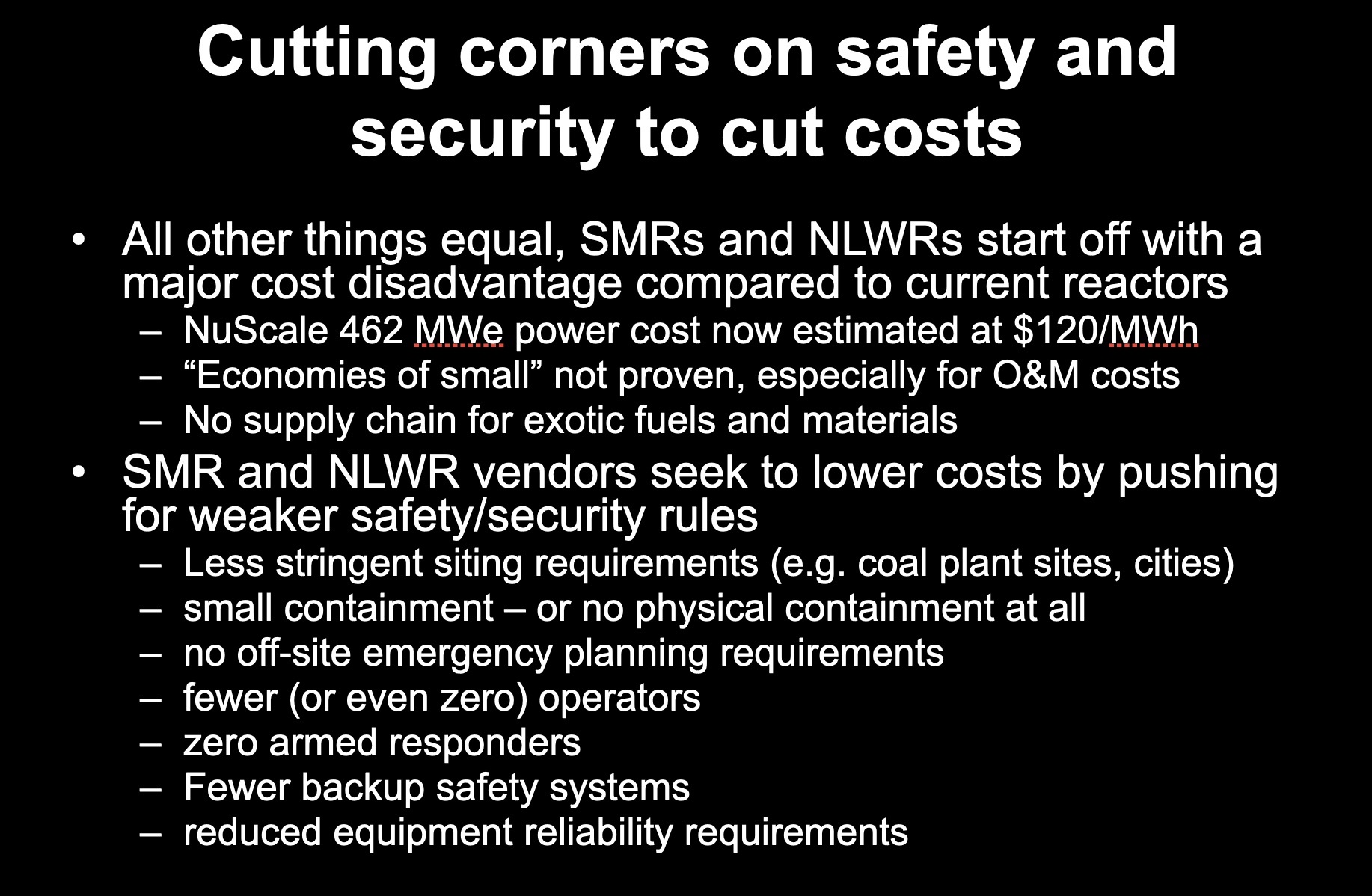
The nuclear lobby has very successfully touted safety as the big plus for the new (though still non-existent) Small Nuclear Reactors (SMRs) . Everyone seemed to buy this idea, because, after all, SMRs can’t melt down in the same dramatic way that big ones can. So, there’s been relatively little fuss made by the anti-nuclear movement on the grounds of safety, regarding SMRs.
Imagine my surprise when I opened up my eyes today – to see a corporate media news outlet, New Civil Engineer, usually pro-nuclear, coming out with a damning criticism of SMRs on the grounds of safety. It’s not as if New Civil Engineer actually condemned SMRs. Oh no! – they did indeed point out that the Department for Energy Security & Net Zero ((DESNZ) is confident that SMR developments are subject to “robust controls“. And the Office of Nuclear Security (ONR) “ensures that the highest levels of safety, security and safeguards are met”
It’s just that New Civil Engineer brought up a few points that have escaped notice, following the publication of the draft National Policy Statement for nuclear energy generation (EN-7) They note that –
“Despite EN-7 being 64 pages, just two lines are dedicated to specifically addressing the security of SMRs.“
The new regulations for SMRs would allow for many new nuclear sites near communities.
For large nuclear power sites, security is funded by the developers themselves. For SMRs, the security needs would be provided by the Civil Nuclear Constabulary (CNC) and also by local police. But these bodies are not under the direction of the ONR or the DESNZ. The writer quotes a policing expert, John McNeill :
“Not even [the government] can direct them.
Policing of airports and football grounds, even schools and educational campuses, shows how hard this will be to fund fairly.”
The expansion of AI and data centres add another complexity to the question of the amount of security needed, and of who pays for it. The proliferation of nuclear sites, closer to populated areas also means the increase in transport of radioactive materials – again bringing the risks of accidents, theft, and terrorism. And again, bringing the need for more security measures.
There’s some community concern in the UK about the safety of prolonging the life of aging nuclear reactors, and of the safety of coastal reactors and the marine environment. There’s also concern about the safety of the SMRs themselves, as the governments relax regulations.
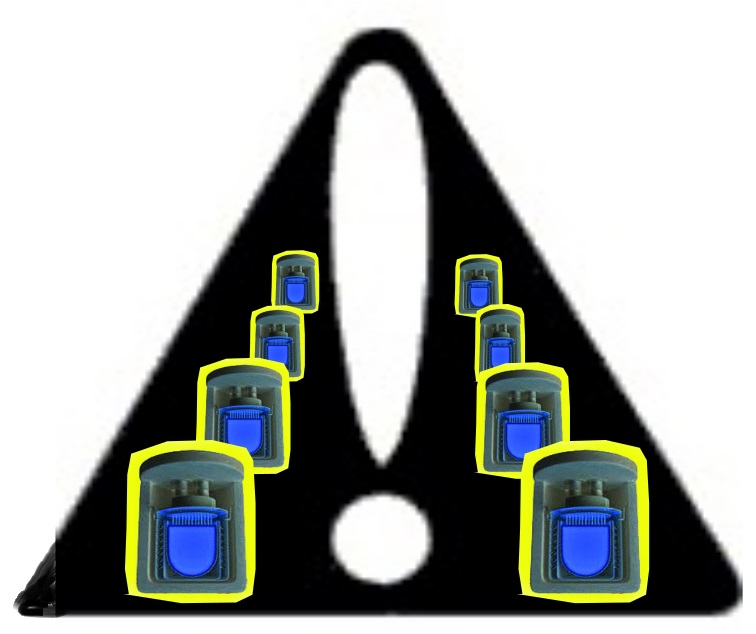
The highly enriched uranium needed for most SMRs poses another risk – as it is useful for nuclear weapons, and therefore attractive to terrorists, and to countries seeking to get nuclear weapons.
So there has been some awareness of safety and security problems amongst critics, especially in the environmental movement. However, this is the first time that I’ve seen the corporate media speak up about this. As the author quotes questions raised in the House of Lords, it looks as though this issue is at last coming to the fore.
I guess that I should not be surprised that the issue of security of Small Nuclear Reactors is at last going to be taken seriously by The Establishment. After all, the examination of the huge and complicated difficulties raised in trying to organise security of SMRs eventually boils down to costs again – “Finally, who pays the piper?”
NUCLEAR BRIBERY: Nuclear Waste Services funds Cumbrian community projects

More than 260 projects across Cumbria and Lincolnshire have received
financial support from Nuclear Waste Services (NWS). The community projects
have received millions of pounds worth of funding from NWS in the last
three years. The communities in which NWS operates have been supported by
funding that aims to benefit people and projects. Over the last three
years, more than £10 million has been awarded to over 260 initiatives
across Cumbria and Lincolnshire ranging from youth schemes, mental health
initiatives, and mountain rescue.
Carlisle News & Star 13th Feb 2025, https://www.newsandstar.co.uk/news/24931120.nuclear-waste-services-funds-cumbrian-community-projects/
Jobs Jobs Jobs ! -screams the nuclear lobby

And the media faithfully regurgitates the message.
It’s not new, but it is now being spouted with a new exuberance (- or desperation?) in Britain:
“Hinkley C construction set to create 3,000 new jobs in next 18 months”. – Construction Enquirer 11th Feb 2025, West Somerset Free Press 10th Feb 2025, Burnham-on-sea.com 10th Feb 2025, BBC 10th Feb, 2025 , Somerset Live 10th Feb 2025, “creating thousands of highly skilled jobs” – Adam Smith Institute 10th Feb 2025 , Irvine Times 10th Feb 2025
As a child, I always wondered why people got so excited at the idea of more jobs. I used to think that they didn’t really want the jobs. They just wanted the money that you get paid for the job. And really, that still applies.
I now know that jobs can also bring personal satisfaction, a pleasure in doing something well, in knowing that your work is valuable. But I’d have to question that in some jobs – for example, in the 1960s if you worked for the Dow Chemical Company, making napalm to burn Vietnamese children. And I question it about the nuclear weapons-nuclear power industry.
Today, we know about ionising radiation causing illness and deaths, about the environmental damage of the nuclear fuel chain, the waste problem, about the intrinsic connection between the “civil” and military nuclear industries. We also know of the increasing evidence that the nuclear industry is not a healthy workplace.
So, why is the nuclear lobby spruiking “jobs” as the reason for the nuclear industry? The UK has an official unemployment rate of 4.4%, not wonderful, but not a crisis – not a statistically very high rate for a G20 country I would have thought that the biggest arguments for a new nuclear industry would be that it’s supposed to fix climate change, to be a clean industry, to be an economically successful industry.
The trouble is – there is ample evidence that nuclear power cannot fix climate change, is not clean, and most critical for Britain, it is not economically viable. That’s why the industry can’t get investors. The UK government has to supply direct funding through grants and investments to support the development of new nuclear power plants, particularly for projects like Sizewell.
And there’s a constant stream of corporate media articles, about the nuclear resurgence and the great future and employment in the (non-existent) small nuclear reactors. Professor Ramana of the University of British Columbia has questioned this resurgence, and examined what is actually happening : “I would first dispute the idea that there is an actual resurgence in nuclear power. What we are seeing is a resurgence in talk about nuclear power”.

The media, when it republishes handouts from the nuclear lobby, is not doing journalism. It’s just repeating propaganda .
It is hard to find proper journalistic scrutiny on the jobs situation in UK’s nuclear industry. But there is such scrutiny:
- Only 20 % of Great British Nuclear staff employed permanently.
- The Wylfa project – will deny local people of Ynys Môn the opportunity to take up green jobs in the interim……… For the reality, as established at the two existing gigawatt projects, at Hinkley Point C in Somerset and increasingly at Sizewell C in Suffolk, is that, for these large construction projects, large national and multinational civil engineering contractors are engaged, with experience in delivering mega projects at this scale, and they bring with them specialist subcontractors with their own transient workforces.
- Hinkley Point C ‘using cheap foreign labour‘ , say striking workers.
- Nuclear power is nothing if not hugely capital, not labour, intensive.
When touting for nuclear power as a great jobs-provider, surely it would be reasonable to compare this with alternative energy sources, but this, of course, is never mentioned in nuclear industry handouts to media.But – Renewables create more jobs/$ than fossils and nuclear.
I can only conclude that Sr Keir Starmer’s Labour government is all too well aware of the money pit into which they are plunging Britain, with these grandiose nuclear projects of Hinkley Point C, and Sizewell C. They must be hoping to get the British public, and investors, enthused about the nuclear job market, especially at a time when the government is about to make brutal cuts in welfare benefits. The rather dodgy assumption might be that human beings – disabled or too ill to work, family carers, suddenly losing income, will be able to work in the supposedly expanding nuclear industry.
Octopus Energy launches renewables investment platform for consumers
Octopus Energy, the UK’s largest energy supplier, has launched an
investment platform allowing consumers to buy shares of a renewable energy
project. Octopus has launched ‘the Collective’ which it says is a
first-of-its-kind initiative that enables customers to invest in renewables
themselves. There is a minimum investment requirement of £25 but, since
there are no fees and the Collective is free to join, all returns go to the
investor. A YouGov survey revealed that 33% of Brits want to invest in
green power; Octopus says that by becoming the first energy company in the
UK with a retail investment platform regulated by the Financial Conduct
Authority (FCA), it will meet this demand.
Current 10th Feb 2025 https://www.current-news.co.uk/octopus-energy-launches-renewables-investment-platform-for-consumers/
1 This Month

of the week – Shut Down Drone Warfare!


Tell the Ukrainian Government to Drop Prosecution of Peace Activist Yurii Sheliazhenko

Petition to revoke the licensing of the Near Surface Nuclear Disposal Facility (NSDF) at Chalk River. https://www.ourcommons.ca/petitions/en/Petition/Details?Petition=e-7247
To see nuclear-related stories in greater depth and intensity – go to https://nuclearinformation.wordpress.com
-
Archives
- April 2026 (68)
- March 2026 (251)
- February 2026 (268)
- January 2026 (308)
- December 2025 (358)
- November 2025 (359)
- October 2025 (376)
- September 2025 (257)
- August 2025 (319)
- July 2025 (230)
- June 2025 (348)
- May 2025 (261)
-
Categories
- 1
- 1 NUCLEAR ISSUES
- business and costs
- climate change
- culture and arts
- ENERGY
- environment
- health
- history
- indigenous issues
- Legal
- marketing of nuclear
- media
- opposition to nuclear
- PERSONAL STORIES
- politics
- politics international
- Religion and ethics
- safety
- secrets,lies and civil liberties
- spinbuster
- technology
- Uranium
- wastes
- weapons and war
- Women
- 2 WORLD
- ACTION
- AFRICA
- Atrocities
- AUSTRALIA
- Christina's notes
- Christina's themes
- culture and arts
- Events
- Fuk 2022
- Fuk 2023
- Fukushima 2017
- Fukushima 2018
- fukushima 2019
- Fukushima 2020
- Fukushima 2021
- general
- global warming
- Humour (God we need it)
- Nuclear
- RARE EARTHS
- Reference
- resources – print
- Resources -audiovicual
- Weekly Newsletter
- World
- World Nuclear
- YouTube
-
RSS
Entries RSS
Comments RSS
 nuclear-news