Tokyo 2020 Olympics’ Main Venue Costs Expected To Reach $87M
March 10, 2017A source with the 2020 Games organizers said Thursday that temporary structures for the new National Stadium that will serve as the main venue for the 2020 Tokyo Olympics and Paralympics are “expected to cost more than double the estimate presented during the bidding,” according to KYODO. …(subscribers only) https://www.sportsbusinessdaily.com/Global/Issues/2017/03/10/Olympics/2020-National-Stadium.aspx
on 5th anniversary of Fukushima nuclear catastrophe, the global nuke industry is in decline
 Terminal decline? Fukushima anniversary marks nuclear industry’s deepening crisis, Ecologist, Nuclear Monitor 10th March 2017 With the sixth anniversary of the Fukushima disaster falling on 11 March , nuclear lobbyists are arguing over solutions to the existential crisis facing nuclear power, writes Jim Green. Some favour a multinational consolidation of large conventional reactor designs, while others back technological innovation and ‘small modular reactors’. But in truth, both approaches are doomed to failure
Saturday March 11 marks the sixth anniversary of the triple-disaster in north-east Japan – the earthquake, tsunami and the Fukushima nuclear disaster.
And the news is not good. Scientists are wondering how on earth to stabilise and decontaminate the failed reactors awash with molten nuclear fuel, which are fast turning into graveyards for the radiation-hardened robots sent in to investigate them.
The Japanese government’s estimate of Fukushima compensation and clean-up costs has doubled and doubled again and now stands at ¥21.5 trillion (US$187bn; €177bn).
Indirect costs – such as fuel import costs, and losses to agricultural, fishing and tourism industries – will likely exceed that figure.
Kendra Ulrich from Greenpeace Japan notes in a new report that “for those who were impacted by the worst nuclear disaster in a generation, the crisis is far from over. And it is women and children that have borne the brunt of human rights violations resulting from it, both in the immediate aftermath and as a result of the Japan government’s nuclear resettlement policy.”
Radiation biologist Ian Fairlie summarises the health impacts from the Fukushima disaster: “In sum, the health toll from the Fukushima nuclear disaster is horrendous. At the minimum:
- Over 160,000 people were evacuated most of them permanently.
- Many cases of post-trauma stress disorder (PTSD), depression, and anxiety disorders arising from the evacuations.
- About 12,000 workers exposed to high levels of radiation, some up to 250 mSv
- An estimated 5,000 fatal cancers from radiation exposures in future.
- Plus similar (unquantified) numbers of radiogenic strokes, CVS diseases and hereditary diseases.
- Between 2011 and 2015, about 2,000 deaths from radiation-related evacuations due to ill-health and suicides.
- An, as yet, unquantified number of thyroid cancers.
- An increased infant mortality rate in 2012 and a decreased number of live births in December 2011.”
Dr Fairlie’s report was written in August 2015 but it remains accurate. More than half of the 164,000 evacuees from the nuclear disaster remain dislocated. Efforts to restore community life in numerous towns are failing. Local authorities said in January that only 13% of the evacuees in five municipalities in Fukushima Prefecture have returned home after evacuation orders were lifted.
As for Japan’s long-hyped ‘nuclear restart’: just three power reactors are operating in Japan; before the Fukushima disaster, the number topped 50……….http://www.theecologist.org/News/news_analysis/2988749/terminal_decline_fukushima_anniversary_marks_nuclear_industrys_deepening_crisis.html
Small Modular Reactors have little hope of saving the nuclear industry
Terminal decline? Fukushima anniversary marks nuclear industry’s deepening crisis, Ecologist, Jim Green / Nuclear Monitor 10th March 2017
 “……..Small is beautiful? The four Third Way / Breakthrough Institute authors argue that
 nuclear power must become substantially cheaper – thus ruling out large conventional reactors “operated at high atmospheric pressures, requiring enormous containment structures, multiply redundant back-up cooling systems, and water cooling towers and ponds, which account for much of the cost associated with building light-water reactors.”
Substantial cost reductions will not be possible “so long as nuclear reactors must be constructed on site one gigawatt at a time. … At 10 MW or 100 MW, by contrast, there is ample opportunity for learning by doing and economies of multiples for several reactor classes and designs, even in the absence of rapid demand growth or geopolitical imperatives.”
Other than their promotion of small reactors and their rejection of large ones, the four authors are non-specific about their preferred reactor types. Any number of small-reactor concepts have been proposed.
 Small modular reactors (SMRs) have been the subject of much discussion and even more hype. The bottom line is that there isn’t the slightest chance that they will fulfil the ambition of making nuclear power “substantially cheaper” unless and until a manufacturing supply chain is established at vast expense.
And even then, it’s doubtful whether the power would be cheaper and highly unlikely that it would be substantially cheaper. After all, economics has driven the long-term drift towards larger reactors.
As things stand, no country, company or utility has any intention of betting billions on building an SMR supply chain. The prevailing scepticism is evident in a February 2017 Lloyd’s Register report based on “insights and opinions of leaders across the sector” and the views of almost 600 professionals and experts from utilities, distributors, operators and equipment manufacturers.
The Lloyd’s Register report states that the potential contribution of SMRs “is unclear at this stage, although its impact will most likely apply to smaller grids and isolated markets.” Respondents predicted that SMRs have a “low likelihood of eventual take-up, and will have a minimal impact when they do arrive”.
The Third Way / Breakthrough Institute authors are promoting small reactors because of the spectacular failure of a number of large reactor projects, but that’s hardly a recipe for success. An analysis of SMRs in the Bulletin of the Atomic Scientists sums up the problems:
Without a clear-cut case for their advantages, it seems that small nuclear modular reactors are a solution looking for a problem. Of course in the world of digital innovation, this kind of upside-down relationship between solution and problem is pretty normal. Smart phones, Twitter, and high-definition television all began as solutions looking for problems.
“In the realm of nuclear technology, however, the enormous expense required to launch a new model as well as the built-in dangers of nuclear fission require a more straightforward relationship between problem and solution. Small modular nuclear reactors may be attractive, but they will not, in themselves, offer satisfactory solutions to the most pressing problems of nuclear energy: high cost, safety, and weapons proliferation.”
Small or large reactors, consolidation or innovation, Generation 2/3/4 reactors … it’s not clear that the nuclear industry will be able to recover – however it responds to its current crisis……..http://www.theecologist.org/News/news_analysis/2988749/terminal_decline_fukushima_anniversary_marks_nuclear_industrys_deepening_crisis.htm
Investors worried about bankruptcy risk in Toshiba’s troubled nuclear business Westinghouse
Toshiba’s troubled nuclear business Westinghouse is bringing in bankruptcy lawyers, City AM, Courtney Goldsmith, 9 Mar 17, Toshiba’s US nuclear business, Westinghouse, has hired bankruptcy attorneys, signalling to investors it is serious about the potential of a Chapter 11 filing.
The Japanese conglomerate brought in law firm Weil Gotshal & Manges to explore the option, but it had not yet taken a decision on a bankruptcy filing, sources told Reuters.
Toshiba’s shares closed down 7.2 per cent today.
The firm unexpectedly delayed its financial update last month as it announced it needed more time to probe its US nuclear business after revealing a multi-billion pound hole. It’s due to report earnings Tuesday, but a source has told Reuters the likelihood of Toshiba meeting this deadline was “fifty-fifty”.
If the firm fails to meet that deadline, it has until 27 March to file or could be delisted.
Although the troubled firm said it’s not aware of any intention for Westinghouse to file for Chapter 11 bankruptcy, sources have said it is one of several options being considered. The nuclear business faces cost overruns at two projects.
Toshiba has also hired a Japanese law firm to help estimate the how a US bankruptcy will impact the broader group, sources said…..
one issue may be financing guarantees given by the US government to help fund the construction of reactors at the Vogtle plant in Georgia, one of the two projects at the core of Westinghouse’s woes.
A 2014 statement on the US department of energy’s website says the loan guarantees totaled $8.3bn (£6.8bn)
Toshiba is also pursuing the sale of most, or even all, of its prized flash memory chip business, which will help protect it against future financial problems. Bids on the company, which Toshiba values at least 1.5 trillion yen, are due at the end of the month. http://www.cityam.com/260648/toshibas-troubled-nuclear-business-westinghouse-bringing
Nuclear lobbyists in disarray on what to do about the nuclear industry’s crisis
Terminal decline? Fukushima anniversary marks nuclear industry’s deepening crisis, Ecologist, Jim Green / Nuclear Monitor 10th March 2017
“……..Nuclear lobbyists debate possible solutions to the nuclear power crisis
Michael Shellenberger from the Breakthrough Institute argues that a lack of standardisation and scaling partly explains the “crisis that threatens the death of nuclear energy in the West”. The constant switching of designs deprives the people who build, operate and regulate nuclear plants of the experience they need to become more efficient.
Shellenberger further argues that there is too much focus on machines, too little on human factors:
“Areva, Toshiba-Westinghouse and others claimed their new designs would be safer and thus, at least eventually, cheaper, but there were always strong reasons to doubt such claims. First, what is proven to make nuclear plants safer is experience, not new designs. …
“In fact, new designs risk depriving managers and workers the experience they need to operate plants more safely, just as it deprives construction companies the experience they need to build plants more rapidly.”
Shellenberger has a three-point rescue plan:
1. ‘Consolidate or Die’: “If nuclear is going to survive in the West, it needs a single, large firm – the equivalent of a Boeing or Airbus – to compete against the Koreans, Chinese and Russians.”
2. ‘Standardize or Die’: He draws attention to the “astonishing” heterogeneity of planned reactors in the UK and says the UK “should scrap all existing plans and start from a blank piece of paper”, that all new plants should be of the same design and “the criteria for choosing the design should emphasize experience in construction and operation, since that is the key factor for lowering costs.”
3. ‘Scale or Die’: Nations “must work together to develop a long-term plan for new nuclear plant construction to achieve economies of scale”, and governments “should invest directly or provide low-cost loans.”
Wrong lessons
Josh Freed and Todd Allen from pro-nuclear lobby group Third Way, and Ted Nordhaus and Jessica Lovering from the Breakthrough Institute, argue that Shellenberger draws the wrong lessons from Toshiba’s recent losses and from nuclear power’s “longer-term struggles” in developed economies.
They argue that “too little innovation, not too much, is the reason that the industry is on life support in the United States and other developed economies”. They state that:
- The Westinghouse AP1000 represents a fairly straightforward evolution in light-water reactor design, not a radical departure as Shellenberger claims.
- Standardisation is important but it is not a panacea. Standardisation and building multiple reactors on the same site has limited cost escalation, not brought costs down.
- Most of the causes of rising cost and construction delays associated with new nuclear builds in the US are attributable to the 30-year hiatus in nuclear construction, not the novelty of the AP1000 design.
- Reasonable regulatory reform will not dramatically reduce the cost of new light-water reactors, as Shellenberger suggests.
They write this obituary for large light-water reactors: “If there is one central lesson to be learned from the delays and cost overruns that have plagued recent builds in the US and Europe, it is that the era of building large fleets of light-water reactors is over in much of the developed world.
“From a climate and clean energy perspective, it is essential that we keep existing reactors online as long as possible. But slow demand growth in developed world markets makes ten billion dollar, sixty-year investments in future electricity demand a poor bet for utilities, investors, and ratepayers.”
A radical break
The four Third Way / Breakthrough Institute authors conclude that “a radical break from the present light-water regime … will be necessary to revive the nuclear industry”. Exactly what that means, the authors said, would be the subject of a follow-up article.
So readers were left hanging – will nuclear power be saved by failed fast-reactor technology, or failed high-temperature gas-cooled reactors including failed pebble-bed reactors, or by thorium pipe-dreams or fusion pipe-dreams or molten salt reactor pipe-dreams or small modular reactor pipe-dreams? Perhaps we’ve been too quick to write off cold fusion?
The answers came in a follow-up article on February 28. The four authors want a thousand flowers to bloom, a bottom-up R&D-led nuclear recovery as opposed to top-down, state-led innovation.
They don’t just want a new reactor type (or types), they have much greater ambitions for innovation in “nuclear technology, business models, and the underlying structure of the sector” and they note that “a radical break from the light water regime that would enable this sort of innovation is not a small undertaking and will require a major reorganization of the nuclear sector.”
To the extent that the four authors want to tear down the existing nuclear industry and replace it with a new one, they share some common ground with nuclear critics who want to tear down the existing nuclear industry and not replace it with a new one.
Shellenberger also shares some common ground with nuclear critics: he thinks the UK should scrap all existing plans for new reactors and “start from a blank piece of paper“. But nuclear critics think the UK should scrap all existing plans for new reactors and not start from a blank piece of paper……….http://www.theecologist.org/News/news_analysis/2988749/terminal_decline_fukushima_anniversary_marks_nuclear_industrys_deepening_crisis.html
The Era of Nuclear Decommissioning (END) taking over from nuclear construction
 Terminal decline? Fukushima anniversary marks nuclear industry’s deepening crisis, Ecologist, Jim Green / Nuclear Monitor 10th March 2017 “……….The ageing of the global reactor fleet isn’t yet a crisis for the industry, but it is heading that way.
The assessment by the ‘Environmental Progress’ lobby group that 151 GW of worldwide nuclear power capacity could be shut down by 2030 is consistent with figures from the World Nuclear Association (132 reactor shut-downs by 2035), the International Energy Agency (almost 200 shut-downs between 2014 and 2040) and Nuclear Energy Insider (up to 200 shut-downs in the next two decades). It looks increasingly unlikely that new reactors will match shut-downs.
Perhaps the best characterisation of the global nuclear industry is that a new era is approaching – the Era of Nuclear Decommissioning (END). Nuclear power’s END will entail:
- a slow decline in the number of operating reactors (unless growth in China can match the decline elsewhere);
- an increasingly unreliable and accident-prone reactor fleet as ageing sets in;
- countless battles over lifespan extensions for ageing reactors;
- an internationalisation of anti-nuclear opposition as neighbouring countries object to the continued operation of ageing reactors (international opposition to Belgium’s reactors is a case in point);
- a broadening of anti-nuclear opposition as citizens are increasingly supported by local, regional and national governments opposed to reactors in neighbouring countries (again Belgium is a case in point, as is Lithuanian opposition to reactors under construction in Belarus);
- many battles over the nature and timing of decommissioning operations;
- many battles over taxpayer bailouts for companies and utilities that haven’t set aside adequate funding for decommissioning;
- more battles over proposals to impose nuclear waste repositories on unwilling or divided communities; and
- battles over taxpayer bailouts for companies and utilities that haven’t set aside adequate funding for nuclear waste disposal.
As discussed in a previous article in The Ecologist, nuclear power is likely to enjoy a small, short-lived upswing in the next couple of years as reactors ordered in the few years before the Fukushima disaster come online. Beyond that, the Era of Nuclear Decommissioning sets in, characterised by escalating battles – and escalating sticker-shock – over lifespan extensions, decommissioning and nuclear waste management.
In those circumstances, it will become even more difficult than it currently is for the industry to pursue new reactor projects. A positive feedback loop could take hold and then the industry will be well and truly in crisis………http://www.theecologist.org/News/news_analysis/2988749/terminal_decline_fukushima_anniversary_marks_nuclear_industrys_deepening_crisis.html
Kentucky not getting nuclear power any time soon, despite Senate Bill to lift moratorium
even if the bill finally wins approval, Kentuckians aren’t likely to see cooling towers on the horizon any time soon.
“Lifting the moratorium is not going to bring nuclear to Kentucky,” Tom FitzGerald with the Kentucky Resources Council says. “There will have to be a number of fundamental changes in the economics of nuclear power,……..
Typically an opponent of nuclear, FitzGerald is taking a neutral stance on the bill, praising new provisions requiring nuclear proposals to more fully account for the costs of operation, waste storage, and decommission.
Unlike current laws mandating nuclear facilities arrange a permanent means of disposal, SB11 would only require them to offer a plan for safe storage to be reviewed by the Nuclear Regulatory Commission. The Senate-approved measure passed a House committee Tuesday and now heads to the full chamber.
If successful, the bill’s sponsor, Paducah Republican Danny Carroll, says it would likely take 15-20 years before a nuclear reactor could be built in the commonwealth.http://wuky.org/post/bill-lifting-kentucky-nuclear-moratorium-picks-steam#stream/0
America heading towards bankruptcy, as Trump administration plunders the nation’s coffers to enrich war profiteers?
In addition to increasing the national debt, such a program will require cutting every sector of the civilian side of the budget — housing, transportation, environmental protection, biomedical research, education and health care. For many years, caps on these programs have continued to weaken them. The current proposal will essentially bankrupt the federal contribution to the civilian side of the economy.
The longer-term effects on the national economy are often obscured but will be even more devastating…..
Efforts to communicate to voters the role of weapons contractors in distorting national security policy are getting underway, following the lead of the European-based “Don’t Bank on the Bomb” campaign. Last spring, the Cambridge City Council voted unanimously to request that the Cambridge pension funds divest from stocks in companies involved in the manufacture of nuclear weapons. Subsequently, the US Conference of Mayors passed a supporting resolution. These are small but important first steps in focusing attention on these corporate drivers of dangerous and costly nuclear weapons policies

Trump Is Bankrupting Our Nation to Enrich the War Profiteers, March 06, 2017 By Jonathan King and Richard Krushnic, Truthout | News Analysis President Trump’s calls for a military buildup are opening the fiscal floodgates for congressional hawks and defense industry contractors. On January 27, Trump signed an executive order setting in motion a “great rebuilding of the Armed Forces” that will include new ships, planes and weapons and the “modernization” of the US nuclear arsenal. Presently, more than half of this year’s congressional budget — some $610 billion of our income tax dollars — is allocated to Pentagon accounts, including overseas military operations and nuclear weapons.
Though the details were scarce, we can expect the Trump order to align with the proposals of Sen. John McCain, chair of the Armed Services Committee. As reported in Politico, Senator McCain is now calling for large increases in this already bloated budget, to $640 billion for fiscal year 2018 — $54 billion above the current budget projections. Adding in the $60 billion projected spending for Iraq, Afghanistan, Syria and other interventions could bring total Pentagon spending next year to more than $900 billion. The primary beneficiaries of such a buildup will be the large corporations that dominate weapons contracting.
This is likely to be more than 60 percent of the total congressional discretionary budget. For comparison, the National Institutes of Health budget, which funds biomedical research on all the diseases that afflict tens of millions of Americans, is about $33 billion, less than 3 percent of the congressional budget. By fiscal year 2022, defense appropriations would reach $800 billion.
Trump’s tweets calling to limit the costs on the deeply troubled and over-budget F-35 Joint Strike Fighter have led to some optimism regarding his Pentagon spending plans. But mildly limiting the excessive profits to Lockheed Martin and their subcontractors, by tens or even hundreds of millions, is a very small effect when overall spending is increased by hundreds of billions.
Excessive Pentagon Spending Undermines the Civilian Economy
In addition to increasing the national debt, such a program will require cutting every sector of the civilian side of the budget — housing, transportation, environmental protection, biomedical research, education and health care. For many years, caps on these programs have continued to weaken them. The current proposal will essentially bankrupt the federal contribution to the civilian side of the economy.
The longer-term effects on the national economy are often obscured but will be even more devastating. Weapons don’t house us, don’t clothe us, don’t help us get to work and don’t cure our diseases. Thus, in the long run, they drain resources away from productive investments, deeply undercutting the overall health of the economy………
Former US Secretary of Defense William J. Perry, who served from 1994-1996, argues, “We are facing nuclear dangers today that are in fact more likely to erupt into a nuclear conflict than during the Cold War.” He notes that the new US nuclear weapons modernization program and Russia’s modernization program — along with confrontations in Eastern Europe and the Middle East — have begun a new nuclear arms race more dangerous than the Cold War. He sees “an imperative to stop this damn nuclear race before it gets underway again, not just for the cost but for the danger it puts all of us in.”
Efforts to communicate to voters the role of weapons contractors in distorting national security policy are getting underway, following the lead of the European-based “Don’t Bank on the Bomb” campaign. Last spring, the Cambridge City Council voted unanimously to request that the Cambridge pension funds divest from stocks in companies involved in the manufacture of nuclear weapons. Subsequently, the US Conference of Mayors passed a supporting resolution. These are small but important first steps in focusing attention on these corporate drivers of dangerous and costly nuclear weapons policies.http://www.truth-out.org/news/item/39712-trump-is-bankrupting-our-nation-to-enrich-the-war-profiteers
Occasiona
Tepco data show 32,000 workers at Fukushima No. 1 got high radiation dose
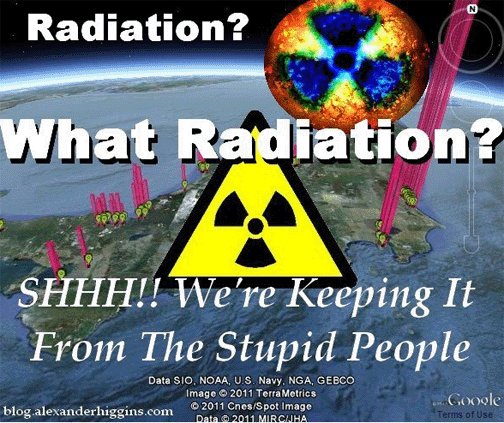 , Tepco data show http://www.japantimes.co.jp/news/2016/03/07/national/science-health/32000-fukushima-no-1-workers-got-high-radiation-dose-tepco-data-show/#.WL-YzNKGPGhJIJI
A reading of 5 millisieverts is one of the thresholds of whether nuclear plant workers suffering from leukemia can be eligible for compensation benefits for work-related injuries and illnesses.
Of those workers, 174 had a cumulative radiation dose of more than 100 millisieverts, a level considered to raise the risk of dying after developing cancer by 0.5 percent. Most of the exposure appears to have stemmed from work just after the start of the crisis on March 11, 2011.
The highest reading was 678.8 millisieverts.
Overall, a total of 46,490 workers were exposed to radiation, with the average at 12.7 millisieverts.
The number of workers with an annual dose of over 5 millisieverts increased 34 percent from fiscal 2013 to 6,600 in fiscal 2014, when workloads grew to address the increase in radiation-tainted water at the plant. The number was at 4,223 in the first 10 months of fiscal 2015, which ends this month, on track to mark an annual decline.
A labor standards supervision office in Fukushima Prefecture last October accepted a claim for workers compensation by a man who developed leukemia after working at the plant, the first recognition of cancer linked to work after the meltdowns as a work-related illness. Similar compensation claims have been rejected in three cases so far, according to the labor ministry.
The average radiation dose was higher among Tepco workers at the plant than among workers from subcontractors in fiscal 2010 and 2011. Starting in fiscal 2012, the reading was higher among subcontractor workers than among Tepco workers.
The average dose for subcontractor workers was 1.7 times the level of Tepco workers in fiscal 2013, 2.3 times in fiscal 2014 and 2.5 times in fiscal 2015 as of the end of January.
A separate analysis of data from the Nuclear Regulation Authority showed that the average radiation dose of workers at 15 nuclear power plants across the country, excluding the Fukushima No. 1 and No. 2 plants, fell to 0.22 millisievert in fiscal 2014, when none of the plants was in operation, down 78 percent from 0.99 millisievert in fiscal 2010.
Lockheed Martin – USA’s top salesman for war?
Lockheed Martin Used Pentagon Dollars to Lobby Congress for Nuclear Weapons Funding One of the uses of the billions of dollars from these contracts is to recycle them back into lobbying the government to push for additional conventional and nuclear weapons spending, as reported by William Hartung and Stephen Miles. Of course, in addition, these funds are used to support a general environment of fear and insecurity, through contributions supporting hawkish think tanks.
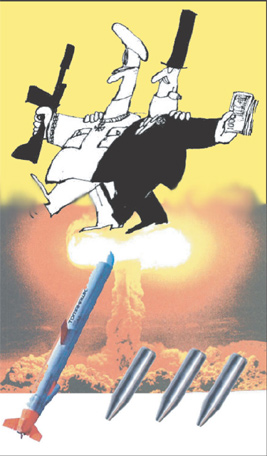
 Trump Is Bankrupting Our Nation to Enrich the War Profiteers, March 06, 2017 By Jonathan King and Richard Krushnic, Truthout | News Analysis
“……..Corporations that contract with the Department of Defense (DOD) for nuclear weapons complex work do not report revenues and profits from this work separately from their other military work, although they do break up government work from civilian work, and sometimes break up military work from other government work. Hence, it is not possible to determine profits made from nuclear weapons complex work from the annual reports and Securities and Exchange Commission (SEC) filings of large military corporations. However, it is possible to estimate, and to demonstrate how a significant amount of military R&D and production not recorded as nuclear weapons work is in fact partially nuclear weapons work. The nuclear weapons work financed by the US Department of Energy (DOE) is (not surprisingly) carried out in a semi-secret insiders club that insulates it from public knowledge and oversight. The first contracts for the upgrading of the nuclear weapons triads have already been awarded — one to Northrop Grumman — for a new generation of long-range bomber. But the public remains in the dark as to how many tens of billions of their tax dollars will be spent on the project.
From 2012-2014, according to Lockheed Martin’s 2014 annual report, the company realized an average of $46 billion a year in revenue, with an average of $3.2 billion in profits — 7 percent of revenue, and a 76 percent return on $4.2 billion of investor equity. The annual report informs us that 59 percent of 2014 revenue came from the Pentagon. We know from other sources that $1.4 billion a year is coming from the DOE for operation of the Sandia nuclear weapons lab, and we are estimating that an additional $600 million a year is coming for DOE nuclear weapons complex work. Information in the annual report indicates that around $6.1 billion came from foreign military sales. This adds up to around $35 billion of military revenue, or 75.3 percent of total 2014 revenue. The single biggest revenue earner in recent years is the F-35 jet fighter, bringing in $8.2 billion, 17 percent of total corporation revenue, in 2014. (William Hartung’s recent report describes additional aspects of Lockheed Martin’s military business, and his book Prophets of War: Lockheed Martin and the Making of the Military Industrial Complex provides extensive background).
The only references to Lockheed Martin’s nuclear weapons complex work in its 2014 annual report is a sentence noting provision of infrastructure and site support to the DOE’s Hanford complex, and a phrase noting continuing work on the Trident missile. The words “nuclear weapons” never appear in the report.
Lockheed Martin’s Nuclear Weapons Operations
In spite of the lack of mention in the annual report, Lockheed Martin is a partner with Bechtel ATK, SOC LLC and subcontractor Booz Allen Hamilton in Consolidated Nuclear Security LLC (CNS), in running the DOE Pantex Plant and the Y-12 Complex. Pantex does nuclear weapons life extension, dismantlement, development, testing and fabrication of high explosive nuclear warhead components. Y-12 stores and processes uranium, and fabricates uranium weapons components.
Lockheed Martin produced the Trident strategic nuclear missile for the 14 US Ohio-class nuclear submarines and for the four British Vanguard-class submarines. The 24 Tridents on each Ohio-class submarine each carry either eight or 12 warheads, all of them 20 to 50 times more powerful than the bombs dropped on Hiroshima and Nagasaki. Each warhead is capable of killing most of the people in any one of the world’s largest cities — either immediately or later, from radiation, burns, other injuries, starvation and disease. Lockheed MArtin is not producing new Trident missiles now, but it maintains and modifies them. Previously, Lockheed Martin and its subcontractors received $65 million for each of the 651 Trident missiles, in addition to the $35 billion in earlier development costs.
The other primary strategic nuclear weapon delivery vehicle is Boeing’s land-based Minuteman III strategic missile, also with many warheads per missile. About 450 of them are in silos in Colorado and northern plains states. Lockheed Martin produced and continues to produce key systems for the Minuteman III, and plays a large role in maintaining them. It was awarded a $452 million contract for this work in 2014.
Lockheed’s Sandia Subsidiary
Regarding the Pentagon’s nuclear weapons upgrades planned for the next decade; particularly important is the role of Sandia National Laboratories (SNL). Outside of Albuquerque, New Mexico, this DOE lab’s 10,600 employees make 95 percent of the roughly 6,500 non-nuclear components of all seven US nuclear warhead types. Components arm, fuse, fire, generate neutrons to start nuclear reactions, prevent unauthorized firing, preserve the aging nuclear weapons stockpile and mate the weapons to the missiles, planes and ships that deliver them to targets. Sandia Corporation LLC, wholly owned by Lockheed Martin, operates Sandia. The DOE is spending at least $1.4 billion a year on Sandia nuclear weapons work. The secret Lockheed Martin nuclear warhead assembly plant uncovered in Sunnyvale in 2010 is an extension of Lockheed Martin’s Sandia operations. Again, none of this received any mention or revenue numbers in Lockheed Martin’s 2014 annual report.
Lockheed Martin Used Pentagon Dollars to Lobby Congress for Nuclear Weapons Funding
One of the uses of the billions of dollars from these contracts is to recycle them back into lobbying the government to push for additional conventional and nuclear weapons spending, as reported by William Hartung and Stephen Miles. Of course, in addition, these funds are used to support a general environment of fear and insecurity, through contributions supporting hawkish think tanks. Technically, the federal government does not allow military contracting firms to use awarded funds to lobby Congress. Lobbying funds must come from other parts of the companies’ businesses. In reality, this is a non-functional restriction, since profits from various business segments are fungible; that is, once they are profits, they are intermingled, so in reality, the firms can use the profits from military contracts to lobby Congress. But Lockheed Martin went ahead and spent military contract funds from 2008-2012 as part of the contract expenditures. It didn’t even bother to book the lobbying expenditures as expenditures of profits. In 2015, the US Department of Justice required Lockheed Martin’s Sandia subsidiary to repay $4.9 million of a Sandia contract award to the Pentagon that the firm had spent under the contract for lobbying of Congressman the DOE secretary and the secretary’s family and friends………http://www.truth-out.org/news/item/39712-trump-is-bankrupting-our-nation-to-enrich-the-war-profiteers
$110 million deal to keep FitzPatrick nuclear facility operating, NRC approves transfer from Entergy to Exelon
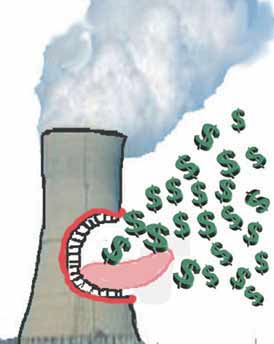
 NRC approves transfer of Entergy’s Fitzpatrick nuclear plant to Exelon Robert Walton Utility Dive 8 Mar 17Dive Brief:
- The U.S. Nuclear Regulatory Commission last week approved the transfer of the operating license belonging to Entergy’s FitzPatrick nuclear facility to Exelon as part of a $110 million deal to keep the plant operating.
- The NRC’s approval is the last regulatory hurdle of the deal, Syracuse.com reports, with Exelon officials anticipating to close out the deal later this month.
- Entergy had planned to shutter the struggling FitzPatrick plant, but Exelon agreed to purchase it with the caveat that New York developing a Clean Energy Standard subsidy program to keep it profitable. But the Zero Emissions Credit plan is now being challenged by the Electric Power Supply Association, which argues the credits intrude on federal jurisdiction of wholesale markets.
- Dive Insight:
- New York’s plan to save the state’s nuclear fleet is tied up at the Federal Energy Regulatory Commission. The agency has only two members, preventing any decisions on major cases until a third commissioner is seated for a quorum.
While the deal moves ahead, federal regulators will still need to make broader decisions about how to credit the carbon-zero output from nuclear plants, which struggle against natural gas plants and renewables with lower fixed costs. While generators opposing the plan say the ZECs intrude into wholesale power markets, Exelon has argued they are within the state’s purview…..http://www.utilitydive.com/news/nrc-approves-transfer-of-entergys-fitzpatrick-nuclear-plant-to-exelon/437539/
Only the taxpayer can save this Ohio nuclear power station
 BEAVER VALLEY NUCLEAR PLANT FUTURE HINGES ON SUBSIDIES, Beloit Daily News March 07, 2017 By ANYA LITVAK, Pittsburgh Post-Gazette PITTSBURGH (AP) — One way or another, come next year, FirstEnergy Corp. is getting rid of the Beaver Valley nuclear power station.
All the global nuclear salesmen are targeting Kenya
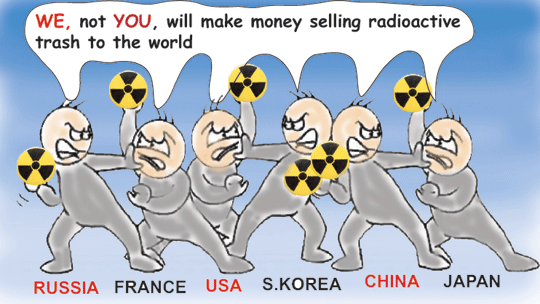
Kenya is on a delicate journey that will see it switch on its first nuclear power plant by 2027. The country plans to put up four nuclear plants in the long term, each generating 1,000 megawatts (MW) of electricity. Initial estimates show it will cost between Sh400 billion and Sh500 billion to put up one nuclear reactor. This means one plant will cost slightly more than building the 609-kilometre Mombasa to Nairobi Standard Gauge Railway (SGR). By the time the plan is complete, the country will have spent about Sh2 trillion – just under the national Budget for a year – to reap the benefits of an additional 4,000MW of energy plugged into the national grid.
Besides the financing headache, the second test for the 10-year dream being championed by the Kenya Nuclear Energy Board (KNEB) is coming up with a location to for the reactors. The board estimates site selection will cost the country Sh1.5 billion in a three-year process. Though the potential sites have remained a closely guarded secret, the power plant will be built next to any of the four biggest water bodies in the country – that is, the Indian Ocean, Lake Victoria, River Tana and Lake Turkana.
Russia’s Rosatom strongly promoting nuclear power at Malaysian conference
 The seventh Nuclear Power Asia conference being held in Kuala Lumpur on Tuesday and Wednesday is bringing together the leaders of the Asian nuclear-power industry.
Session participants have concurred that nuclear power, being an economically and environmentally viable source of electricity, has the capacity to contribute greatly to Asia’s sustainable future.
“Sustainable future is impossible without sustainable energy,” said Egor Simonov, director of Rosatom Asia. “Nuclear power [emits] 25-30 times less [greenhouse gas] than coal- or oil-fired power plants. Therefore, nuclear power may be a viable solution for Asean nations willing to fulfil their climate-change commitments.”
Rosatom is Russia’s nuclear regulator, and its Southeast Asian regional branch is in Singapore. …….The Nuclear Power Asia conference is a platform to discuss the latest challenges, trends and achievements in the Asian nuclear industry. The event is annually attended by more than 300 participants from nuclear-energy authorities, energy commissions, nuclear energy programme implementing organisations, international developers and operators, technology suppliers, and academic society. http://www.nationmultimedia.com/news/breakingnews/30308264
South Africa’s murky nuclear deal and the country’s financial mess

 SA heads for financial armageddon, Fin 24 2017-02-26 06:02 – Justin Brown State finances face stormy times as the private sector braces itself for a possible switch in finance ministers amid spluttering tax collections, low growth, tax hikes and deep suspicion regarding the nuclear build.
1 This Month
26 September – International Day for the Total Elimination of Nuclear Weapons





PLEASE OPPOSE HR 8255 AND S.3639 – bills would accelerate satellite deployment, with no environmental review or safeguards – https://ncstd5li.quorum.us/campaign/169331/
To see nuclear-related stories in greater depth and intensity – go to https://nuclearinformation.wordpress.com
-
Archives
- September 2026 (323)
- August 2026 (330)
- July 2026 (355)
- June 2026 (287)
- May 2026 (306)
- April 2026 (356)
- March 2026 (251)
- February 2026 (267)
- January 2026 (308)
- December 2025 (358)
- November 2025 (359)
- October 2025 (375)
-
Categories
- 1
- 1 NUCLEAR ISSUES
- business and costs
- climate change
- culture and arts
- ENERGY
- environment
- health
- history
- indigenous issues
- Legal
- marketing of nuclear
- media
- opposition to nuclear
- PERSONAL STORIES
- politics
- politics international
- Religion and ethics
- safety
- secrets,lies and civil liberties
- spinbuster
- technology
- Uranium
- wastes
- weapons and war
- Women
- 2 WORLD
- ACTION
- AFRICA
- Atrocities
- AUSTRALIA
- Christina's notes
- Christina's themes
- culture and arts
- Events
- Fuk 2022
- Fuk 2023
- Fukushima 2017
- Fukushima 2018
- fukushima 2019
- Fukushima 2020
- Fukushima 2021
- general
- global warming
- Humour (God we need it)
- Nuclear
- RARE EARTHS
- Reference
- resources – print
- Resources -audiovicual
- Weekly Newsletter
- World
- World Nuclear
- YouTube
-
RSS
Entries RSS
Comments RSS

