Nuclear workers in strike threat at Wylfa and Trawsfynydd, Daily Post 4 Jan 17 Union leaders are to meet to discuss potential action over a pensions row Union leaders representing nuclear workers at Wylfa and Trawsfynydd are to consider strike action over pensions.
The unions said 16,000 workers at 19 sites across the UK face cuts under plans by the Nuclear Decommissioning Authority to make savings of £660 million.
They include hundreds of Magnox staff at Wylfa on Anglesey, which is currently de-fuelling after ending operations at the end of 2015, and Trawsfynydd in Gwynedd, which is being decommissioned.
The unions said the Government’s expectation is that the final salary pension schemes in place across the NDA estate will be reformed by April 2018.
Justin Bowden, GMB national officer, said: “There is no justification for this attack on the pensions of these nuclear workers and their communities.
“These pension funds are in a sound state and underwent considerable reform 10 years ago…….http://www.dailypost.co.uk/business/business-news/nuclear-worker-strike-threat-wylfa-12409439
January 6, 2017
Posted by Christina Macpherson |
employment |
Leave a comment
 China is also seeking market dominance in clean energy technology.
The nation’s ambient air pollution and its greenhouse gas emissions would both decline if China could produce more electricity using clean renewables rather than relying on coal. It has been the largest producer of solar photovoltaic cells in the world since 2007, and overtook Germany as the nation with the largest installed photovoltaic capacity in 2015.
As the price of renewable power equipment declines, the law of demand predicts that more U.S. companies will go green.
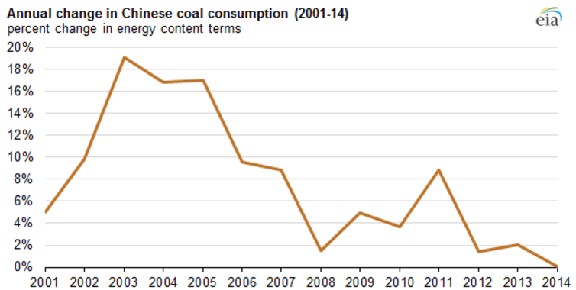
For China, Climate Change Is No Hoax – It’s a Business and Political Opportunity Desmogblog, , December 31, 2016 By Matthew Kahn, University of Southern California
In mid-November, while Americans were preoccupied with election returns, China sent some of its clearest signals yet that it will continue to pursue an international leadership role on issues including climate.At an international climate change summit in Marrakech, the Chinese government reasserted its commitment to reduce its greenhouse gas emissions. The government announced that its aggregate emissions will peak by 2030 or earlier, and that its emissions per dollar of economic output will decline sharply.
For 25 years I have taught my economics students that climate change represents the ultimate “free rider problem.” To slow global climate change, we need to reduce aggregate global emissions.
Yet each individual nation’s efforts are too small to “solve” the problem, so it has only weak incentives to take costly mitigation actions, and strong incentives to “free ride” on the benefits of emission reductions by other countries.
From this perspective, President-elect Trump’s pledges to “cancel” the Paris Agreement and dismantle President Obama’s carbon mitigation initiatives follow standard economic logic. If the United States backs out of commitments to reduce national emissions, it still benefits from other countries’ efforts.
Why, then, is China is pressing ahead with low-carbon initiatives?
My research suggests several motives. Chinese leaders want to improve the quality of life in their nation’s cities by reducing air pollution; win large shares of promising export markets for green technologies; and increase China’s “soft power” in international relations.
Taking aggressive action to cut carbon emissions helps China in all three areas.
Reducing Coal’s Cruel Impacts
Much of the staggering rise in China’s carbon dioxide emissions in recent decades came from burning coal to produce electricity for the nation’s industrial sector. While this growth has created millions of jobs and wealth for the nation, coal-fired power plants are major sources of greenhouse gases and conventional air pollutants that affect millions of people.
A large body of research, including joint work by U.S. and Chinese scholars, has demonstrated that air pollution in China causes thousands of premature deaths yearly. Coal also provides winter heating in China’s colder cities. Recent epidemiology research has found that coal use for heating greatly increases fine particulate air pollution, which has raised morbidity and mortality rates.
Using data from around the world, economists have found that when countries develop economically they move up an “energy ladder.”
The richer a country grows, the more likely it is to swap out cheap polluting fuels in favor of cleaner, more expensive fuels. A natural experiment that occurred in Turkey as natural gas pipelines were built throughout the nation between 2001 and 2014 showed as people gained access to natural gas, air quality improved and mortality rates declined.
China has more coal than natural gas resources, but as its citizens grow wealthier, their willingness to pay to avoid pollution increases. This trend will encourage substitution toward cleaner fuels. As such, China’s political leaders will likely prioritize policies that substitute natural gas for coal, which should reduce air pollutants and greenhouse gas emissions……….
China is also seeking market dominance in clean energy technology.
The nation’s ambient air pollution and its greenhouse gas emissions would both decline if China could produce more electricity using clean renewables rather than relying on coal. It has been the largest producer of solar photovoltaic cells in the world since 2007, and overtook Germany as the nation with the largest installed photovoltaic capacity in 2015.
U.S industrial regulators have accused China of engaging in predation and dumping low-cost solar panels that compete with U.S products.
But environmentalists should cheer that potential buyers in importing nations now face lower prices — especially global companies like Wal-Mart which are pledging to shrink their carbon footprints. As the price of renewable power equipment declines, the law of demand predicts that more U.S. companies will go green.
There is a key synergy between electric vehicles and green power generation.
As studies have shown, driving an electric vehicle that runs on electricity generated from coal can produce more greenhouse gas emissions than operating a conventional gasoline vehicle. If Chinese exports of electric vehicles and renewable generating technologies lead to their joint adoption by suburbanites, greenhouse gas emissions from both transportation and power generation will fall.
Investing in Soft Power
For decades, the world’s media have portrayed China as a bully and trade cheat abroad and a repressive power at home. In cutting carbon emissions, the Communist Party seeks to boost its own political legitimacy in the international arena as well as with the Chinese people.
By committing to pursue ambitious environmental goals, Chinese leaders hope to signal to both domestic constituents and international actors that China is an international leader and cares about its own people. A “leading nation” plays an active role in international relations, helps to keep the peace and promotes global public goods.
At a time when the United States appears to be stepping back from its leadership role, the CCP may see a chance to fill the vacuum, and make money in the process. https://www.desmogblog.com/2016/12/31/china-climate-change-no-hoax-business-political-opportunity
January 2, 2017
Posted by Christina Macpherson |
business and costs, China, renewable |
Leave a comment
 Toshiba hit by nuclear plant delays , THE AUSTRALIAN, BRIAN SPEGELE, The Wall Street Journal. January 2, 2017 Toshiba’s ambitions to make nuclear power a centrepiece of its future have instead led to an accounting scandal and billions of dollars in potential losses.
For clues to what happened, the reactor being built by its Westinghouse Electric division in a seaside town south of Shanghai offers an illuminating Exhibit A.
The Sanmen reactor was meant to be the showcase of a new technology that Westinghouse hopes will revolutionise the nuclear industry by making power plants safer, less labour-intensive and quicker to build.
Instead, the first so-called AP1000 reactor has been bedevilled by delays. In one instance, a critical component in its cooling system failed, slowing work by more than two years. Meanwhile, Westinghouse struggled for years to complete its design work for the AP1000, adding to delays and angering its Chinese state-owned customer. The reactor is now at least three years behind schedule.
Westinghouse said it aimed to load enriched uranium fuel in the reactor early next year, pushing back its previous year-end goal.
The troubles in Sanmen mirror those at nuclear projects around the world — including four by Westinghouse in the US — that led to this week’s announcement by Toshiba that it is looking at billions of dollars in potential losses, triggering a massive sell-off by investors……….
State Nuclear Power Technology assistant president Zhang Fubao said the company was committed to working with Westinghouse.
Mr Benjamin said proving that the AP1000 works was vital to the company’s future. “The eyes of the world and the eyes of the industry are watching,” he said. http://www.theaustralian.com.au/toshiba-hit-by-nuclear-plant-delays/news-story/86ebad9b6a7e359f7c8d0a6f38f0eca4
January 2, 2017
Posted by Christina Macpherson |
business and costs, Japan |
Leave a comment
 Toshiba puts UK’s nuclear power plans under threat: Fears that crisis will halt Japanese firm’s investment in British plant http://www.thisismoney.co.uk/money/markets/article-4074492/Toshiba-puts-UK-s-nuclear-power-plans-threat-Fears-crisis-halt-Japanese-firm-s-investment-British-plant.html By Rachel Millard For The Daily Mail 30 December 2016 Britain’s nuclear power plans have been thrown into doubt as a financial crisis grips the company behind one of the country’s biggest projects.
Japanese company Toshiba owns a 60 per cent stake in the planned £10billion NuGen nuclear power project in Moorside, Cumbria, which aims to supply power for about 6million homes from 2025.
But shares plunged at Toshiba for the third day running yesterday after it warned of a multi-billion dollar write-down involving its US nuclear subsidiary.
Forty per cent has been wiped off the company’s value since it said on Monday that its US nuclear subsidiary Westinghouse Electric may have overpaid by several billions of dollars for another nuclear construction and services business.
Westinghouse UK is providing the reactors for the planned project in Cumbria, the rest of which is owned by French company Engie, and would be one of Europe’s largest nuclear power plants.

Moody’s investor service has downgraded Toshiba’s ratings and warned the writedown could affect the company’s ability to pay its debts, little over a year after its finances were seriously hit by an accounting scandal.
Justin Bowden, the GMB union’s national secretary for energy, said: ‘It needs to be established as soon as possible whether or not the collapsing Toshiba share price, in particular in relation to its Westinghouse operation, has any implications, and if so what these are for the extremely important Westinghouse project.’
Masako Kuwahara, a Moody’s vice-president, said: ‘The downgrade of Toshiba’s ratings principally reflects Moody’s deepening concerns over the sustainability of Toshiba’s near-term liquidity, as well as the substantive and rapid erosion of its equity base.
‘Although Toshiba is still assessing the exact amount of the impairment loss, its financial metrics will likely deteriorate further, potentially resulting in a negative equity position.’
Moody’s added that if Toshiba breached its debt obligations, its ability to stay solvent would depend on banks’ support.
‘The availability of such support in such a situation, is currently uncertain,’ Moody’s added.
Bankers and analysts said the latest shock could force Toshiba to trim down its businesses.
‘If the company wants to survive, it needs to go through a scrap-and-build process,’ said Norihiro Fujito, senior investment strategist at Mitsubishi UFJ Morgan Stanley Securities.
Toshiba’s problems come after NuGen said it was in talks with potential investors for the Cumbria site, with a final investment decision due in 2018.
It is potentially a blow to the Government after ministers had described 2016 as a ‘year for the industry to look back on’ following backing for a new plant at Hinkley Point in Somerset.
Then UK energy minister Lucy Neville-Rolfe said Hinkley Point would ‘trigger this country’s nuclear renaissance’. But the GMB’s Bowden said: ‘We are one step away from the lights going out.’
NuGen yesterday declined to comment and Toshiba could not be reached for comment.
A Department for Business, Energy and Industrial Strategy spokesman said: ‘We are working closely with developers on a number of proposed new nuclear projects in the UK, as they develop their plans.’
December 30, 2016
Posted by Christina Macpherson |
business and costs, politics, UK |
Leave a comment
 Investors wipe $6.6 billion off Toshiba’s market value http://www.wfmz.com/news/investors-wipe-66-billion-off-toshibas-market-value/238091402
Losses over last 3 trading sessions total 42% By: SHERISSE PHAM Dec 30, 2016 HONG KONG (CNNMoney) – Toshiba’s dreams of becoming a nuclear energy leader have turned into a nightmare.
December 30, 2016
Posted by Christina Macpherson |
business and costs, Japan |
Leave a comment
Toshiba’s nuclear power hopes in meltdown The Australian, REBECCA SMITH, KOSAKU NARIOKA, The Wall Street Journal, December 30, 2016 Toshiba seemed poised to profit from a global nuclear power revival when it paid $US5.4 billion to win a bidding war for Westinghouse Electric in 2006.
Today, that bet threatens to sink the venerable Japanese conglomerate, as cost overruns and missed deadlines on nuclear-reactor projects around the world have forced it to warn investors that it may soon have to report billions of dollars in losses.
Toshiba lost a fifth of its market value on Wednesday and its stock fell another 15 per cent early yesterday in Tokyo as panicked investors rushed to sell shares. The news of the nuclear writedowns came just as Toshiba was beginning to emerge from an earlier accounting scandal……
Westinghouse’s woes help explain why the nuclear industry has seen its dreams of global growth sputter. Until recently, the company was regarded as the industry’s front-runner, the only nuclear supplier to have landed contracts for its next-generation reactor in both the US and China.
But a series of missteps and unexpected problems have snarled nuclear projects by Westinghouse and rivals including Areva and General Electric.
Fifty-four reactors are under construction in 13 nations, and 33 are badly delayed, according to the World Nuclear Industry Status Report, an independent annual assessment. Blunders have afflicted projects regardless of location, reactor design or construction consortiums.
To lower costs and speed construction times, Westinghouse and its competitors came up with cookie-cutter plant designs in which major sections would be built as modules in factories and then hauled to plant sites for final assembly. Gone was the customisation that added expense.
But the strategy appears to have backfired. “Supply-chain issues just moved from the plant sites to the factories. It didn’t solve the basic issue of quality control,” said Mycle Schneider, a nuclear expert based in Paris. And cookie-cutter designs meant flaws got replicated.
In France, Areva is trying to get to the bottom of a scandal involving falsified records for critical components that have wound up in nuclear plants there and in other countries, including the US. The problems appear to stretch back decades and to have gone unnoticed despite supposedly strict government supervision. Areva has said it is co-operating with investigators from France and other nations.
“There’s a world-wide problem with managing these megaprojects,” said Edwin Lyman, senior scientist for the Union of Concerned Scientists in Washington, DC. “Managers grossly underestimated the time and cost of construction.”………
It isn’t clear if Toshiba’s difficulties would have an impact on the eight reactors it is trying to complete in the US and China, but its disclosure suggests the situation is worse than previously understood.
In the US, Westinghouse was providing reactor components for nuclear plants in Georgia and South Carolina being built by utilities Southern and SCANA.
At the site of Southern’s Vogtle 3&4 reactors going up in rural Georgia, there have been rumours of financial problems for months, said Will Salters, business manager for the union IBEW Local 1579.
He said the site now employs about 500 of his electricians but the union recently received notice that there would be a hiring freeze pending a review.
“We’ve been hearing for months they were broke and had to meet certain milestones by Southern to get paid,” Mr Salters said……
Toshiba is already on a Tokyo Stock Exchange watchlist because of the accounting scandal that forced it to take a $US1.3bn writedown for its nuclear business in November 2015.
At the time, it acknowledged that it had overstated its profit for seven years. http://www.theaustralian.com.au/business/wall-street-journal/toshibas-nuclear-power-hopes-in-meltdown/news-story/1ba4929c61e94f528062d1aa44ab1b30
December 30, 2016
Posted by Christina Macpherson |
business and costs, Japan |
Leave a comment
10 Reasons Trump Won’t Lead A Nuclear Renaissance http://oilprice.com/Energy/Energy-General/10-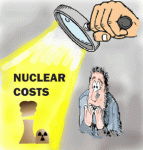 Reasons-Trump-Wont-Lead-A-Nuclear-Renaissance.html By Leonard Hyman & William Tilles – Dec 28, 2016 Donald Trump in the White House and Theresa May in 10 Downing Street. They will open the door to more nuclear spending, no doubt. Prime minister May has already given a green light to Britain’s most expensive energy project, a heavily subsidized nuclear power station at Hinkley Point. Based on the most recent federal budgeting approvals, we expect that no U.S. nuclear weapons programs will want for funds. But, despite all the post-election industry euphoria, should we anticipate a full renaissance for U.S. commercial nuclear power? Is that just a bridge too far, so to speak? Let’s look at the what will go into some of these decisions.
1.Need for the product. With no growth in the market for electricity, the industry needs new power plants only to replace old ones and to decarbonize output in order to mitigate global warming. The Trump administration has declared an end to the so-called war on coal, which makes it less likely that the electric industry will have to close old coal fired generating stations soon and it has categorized global warming as a hoax, which removes an excuse to build non-carbon producing nuclear units. The nuclear industry will need another rationalization for expansion.
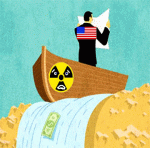 2.Economics. Nuclear power looks like an expensive means of producing base load electricity with significant known risks and ongoing waste storage/disposal issues. A new 1,000 MW nuclear plant ordered today for 2025 in service would cost about $10 billion. New renewables can produce power at no higher a cost per kwh, without the same long construction schedule and need to build so large a unit. A new base load gas fired unit of the same size capacity could be completed in a few years and cost one fifth as much per MW and produce at a lower cost per kwh. Producing a commodity like electricity at a relatively high price in a competitive market is not a winning business strategy. Nuclear has to offer something else.
3. Base load generation. Nuclear plants run as base load units, something renewables cannot do — at least not until economical energy storage comes into the picture– because of the intermittency of their output. Still, renewables, particularly wind in the U.S. midwest and Texas, will temporarily displace more large central station power generation, forcing more units to “cycle”. Nuclear plants are less well suited for this duty. Flexibility and load following may become more highly valued than base load. This also reflects a change in the electric industry itself. The former command and control or paternalistic relationship between utility and consumer is changing. At a minimum consumers are dictating how their energy is produced, agreeing for example to pay premiums for “greener” forms of electricity. In other words, nuclear has something to sell in the base load market, but that market may be in decline.
4. Power markets. Neither U.S. nor UK power markets will support unsubsidized or non-mandated new generation. To the extent that the U.S. wholesale power markets remain both deregulated and regulated in parts, this is also a negative for new nuclear capacity. Deregulated power markets, both here and in the UK, aren’t permitting wholesale prices high enough to finance new gas fired capacity much less new nukes. Regulators will want a cost benefit analysis before approving a new nuclear facility. Basically, this means that a new nuclear project in order to proceed will need a subsidy of one sort or another. A carbon tax would do the job even better. But what GOP politician would vote for that tax, especially if some of their constituents view the issue of global warning as a hoax?
5. Nuclear as infrastructure. As currently built, nuclear projects require a large contingent of well paid labor and massive amounts of steel and concrete. A handful of qualified engineering firms, the usual suspects, also build other infrastructure and one can only think that these politically connected firms can lobby for nuclear projects as hard as they lobby for new bridges or highways. Nuclear construction then could play a role as a component of the as part of the infrastructure program needed to boost the economy. The problem, however, is that nuclear infrastructure has some drawbacks.
6. Resilience needed. Infrastructure should be resilient and anti-fragile. In battle, would we rather attack our enemy in a swarm formation as part of a horde of thousands or ponderously approach the fields of honor as a monolithic “death star”. The former is anti-fragile. The latter, as we all know from the movies (no spoiler intended), is powerful but most definitely fragile. The “enemy” here approaches from two sides: technological obsolescence (which is slowly confronting all central station power generators) and simple obsolescence from a harsher operating environment. In plain terms, stuff just wears out faster. It’s a riskier business that’s for sure.
7. Investor-owned operators needed. The two major U.S. electric utilities with an outsized presence in nuclear power, Entergy and Exelon, could be characterized as the Dogs of the UTY, thanks to their less than stellar stock performances. EDF, the builder of the new British station, almost didn’t get to a positive decision on the new plant due to a revolt on the part of concerned directors. Do investors want more nuclear power? Probably not without subsidies or guarantees.
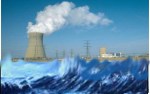 8. Coastal locations needed. One problem with commercial nuclear power is not that it produces expensive electricity via fission, but that its voracious need for cooling water requires mostly coastal or riparian sites. Ignore the technology for a moment. Rising seas, hurricanes, storm surges and the like could render an ever broader swath of coastline unsuitable for infrastructure of any sort. Even if the Trump administration sees no issues, property and casualty insurors as well as and bond investors might.
9. Using nuclear subsidies as corporate welfare. New York and Illinois both launched
programs best described as Welfare for the Nuclear Elderly. It’s heart-warming to see such generosity just prior to the holiday season aimed at aging, uneconomic nuclear plants. This sounds to us like a job creation/preservation program for rural areas (where high paying jobs are scarce) masquerading as an environmentally beneficial, carbon mitigating proposal. There is nothing inherently evil about subsidizing private sector jobs in the electric utility industry. We just wish they’d drop the low carbon fig leaf as a rationale or change the market so it pays for the supposed virtues of nuclearinstead of making this a political handout. But note that handouts to old nukes do not encourage the building of new ones.
 10. Nuclear for defense. Defense spending may crowd out civilian needs.Themilitary already plans to modernize its nuclear warfare capability over comingdecades. In fact, if we think about where nuclear power as an energy source has worked best, it is in military-maritime applications, things like submarines and arctic icebreakers. If a nuclear accident on a naval vessel at sea occurs resulting in all hands lost–that is clearly a tragedy. If Indian Point goes full metal Fukushima, rendering significant parts of Westchester County, NY uninhabitable, we don’t even have the adjectives much less the liability coverage. We also doubt that military applications will take a back seat in the new administration. Beyond that, there are two big nuclear related projects in the U.S.: completion of the Yucca Mountain nuclear waste repository in Nevada and construction of a vitrification facility at the Hanford, WA site now holding significant amounts of highly radioactive materials in less than perfect circumstances. More than likely, the military, Yucca and Hanford will absorb the lion’s share of new nuclear-related infrastructure monies.
Without a rationale rooted in decarbonization or in shortage of alternative fuels or energy sources, the new administration in the U.S. can only make a weak case for commercial nuclear power. If it will not embrace direct subsidies (which the incoming Congress may be reluctant to do as a matter of principle), the administration may have a hard time finding private partners for nuclear projects. But it can, and probably will, make a strong case for completing the huge nuclear tasks already on the government’s plate. That spending could boost the economy just as much as putting up new nuclear power stations,
December 30, 2016
Posted by Christina Macpherson |
business and costs, USA |
Leave a comment

 Toshiba Says Nuclear Writedown May Reach Billions of Dollars, Bloomberg, by Pavel Alpeyev, Finbarr Flynn, and Tesun Oh December 27, 2016,
-
Nikkei, NHK report charges related to Westinghouse acquisition
-
Writedowns may be more than company’s projected profit
Toshiba Corp. can’t get past its accounting problems.
The Japanese company, which paid a record fine a year ago for its bookkeeping practices, warned that it may now have to take another charge of several billion dollars related to an acquisition made by U.S. unit Westinghouse Electric.
The company’s shares fell 12 percent to 392 yen at the close in Tokyo on Tuesday, the biggest decline since December 2015, after earlier reports that it may book a loss of as much as 500 billion yen ($4.3 billion). Toshiba issued a statement after the market closed, saying that while the final writedown was yet to be determined, it would affect earnings.
The loss is related to a dispute over the value of an acquisition by Westinghouse of a nuclear construction company called CB&I Stone & Webster Inc. The Nikkei newspaper said the writedown would come to about 100 billion yen, while Japanese broadcaster NHK said the charge may total as much as 500 billion yen. Such a loss would eclipse the 168 billion yen in net income that analysts had been projecting for Toshiba’s current fiscal year through March. The Tokyo-based company booked a loss of 460 billion yen last year.
While the company can probably offset a one-time loss of 100 billion yen, a charge of 500 billion yen would be “severe” given its potential impact on shareholders’ equity, said Takao Matsuzaka, a credit analyst in Tokyo at Daiwa Securities Group Inc.
“It comes down to how much they can counterbalance any loss,” Matsuzaka said by phone. “Improving the financial base of the company is a top priority.”………
Toshiba was fined a record 7.4 billion yen in December last year after Japanese regulators found the manufacturer misled investors by filing false financial statements. The watchdog has also been gathering evidence to determine whether to seek criminal prosecutions of former bosses over the scandal. https://www.bloomberg.com/news/articles/2016-12-27/toshiba-says-nuclear-unit-faces-billions-of-dollars-in-charges
December 30, 2016
Posted by Christina Macpherson |
business and costs, Japan |
Leave a comment

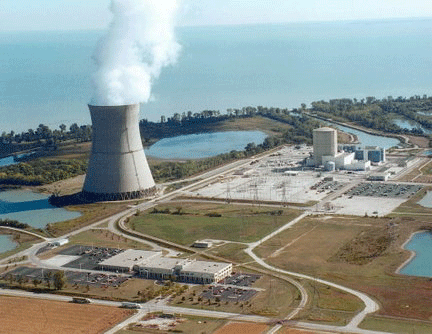
 Davis-Besse Nuclear Power Station Could Soon be Closed or Sold by FirstEnergy , CleverScene, Sam Allard on Thu, Dec 29, 2016 USA Today reports that the Davis-Besse Nuclear Power Station might soon be shuttered or sold by FirstEnergy Corp.
FirstEnergy CEO Chuck Jones said in an industry conference that due to cheap energy sources like natural gas, and the state of Ohio’s unwillingness to set energy prices above market rate, operating some power plants is no longer profitable. Davis-Besse is one of several plant in Ohio and Pennsylvania potentially on the chopping block…….
December 30, 2016
Posted by Christina Macpherson |
business and costs, USA |
Leave a comment
 Toshiba may lose ‘billions of dollars’ on troubled U.S. nuclear power deal WP, By Makiko Yamazaki December 27 Toshiba said it may have to book several billion dollars in charges related to a U.S. nuclear power acquisition, a shock warning that sent its stock tumbling 12 percent and rekindled concerns about its accounting acumen.
The Japanese group said cost overruns at U.S. power projects handled by a nuclear construction business newly acquired from Chicago Bridge & Iron would be much greater than initially expected, potentially requiring a huge writedown.
Such a hit would be another slap in the face for a sprawling conglomerate hoping to recover from a $1.3 billion accounting scandal as well as a writedown of more than $2 billion for its nuclear business in the last financial year.”This will come as an additional shock to Toshiba’s institutional investors that may further undermine confidence in company management as well as significantly weakening its international nuclear credentials,” said Tom O’Sullivan, founder of energy consultancy Mathyos Japan.
O’Sullivan noted the acquisition in December 2015 coincided with the finalizing of a record fine by Japanese regulators for accounting irregularities at Toshiba, indicating that corporate governance controls were extremely weak……
As of end-September, Toshiba had shareholders’ equity of 363 billion yen, or just 7.5 percent of assets, which could fall close to zero if the company is forced to log significant losses…….
Toshiba has positioned its nuclear and semiconductors businesses as key pillars of growth while seeking to scale down less profitable consumer electronics units such as personal computers and TVs…….
The deal between CB&I and Toshiba’s Westinghouse division has been fraught with disagreement since at least July.
Clashing over who should shoulder potential liabilities related to cost overruns and over calculations for working capital for the unit, CB&I sued Toshiba’s Westinghouse division after Westinghouse said it was owed more than $2 billion……. https://www.washingtonpost.com/business/economy/toshiba-may-lose-billions-of-dollars-on-troubled-us-nuclear-power-deal/2016/12/27/dd6503c4-cc4f-11e6-a747-d03044780a02_story.html?utm_term=.a3d4b3382b25
December 28, 2016
Posted by Christina Macpherson |
business and costs, Japan |
Leave a comment
Donald Trump Is the Stock Market’s Most Interesting Man, Bloomberg, by Joseph Ciolli and
Lily Katz 23 Dec 16,
Donald Trump’s still the most interesting man in the world for U.S. stock investors.
A Twitter post from the President-elect signaling support for beefing up America’s nuclear arsenal sent shares in uranium miners surging……..
Trump’s call for expanded nuclear capability erased a loss of 2 percent in an exchange-traded fund tracking a basket of uranium miners. Uranium Energy Corp. climbed as much as 14 percent intraday to lead gains in the fund, while Mega Uranium Ltd. and Laramide Resources Ltd. are on pace to gain more than 3.7 percent…….
Goldman Sachs Group Inc. shares have surged 32 percent, touching the highest since 2007 this week, to lead financial shares higher on speculation Trump will roll back industry regulations. Goldman alumni dot the billionaire’s inner circle, with his picks for Treasury secretary, economic adviser and chief strategist all having ties to the investment bank………https://www.bloomberg.com/news/articles/2016-12-22/trump-stock-market-s-most-interesting-man-as-tweet-roils-nuclear
December 24, 2016
Posted by Christina Macpherson |
business and costs, Uranium, USA |
Leave a comment
Trump Goes Nuclear, But This Time Lockheed, Northrop, Raytheon Rise http://www.investors.com/news/trump-tweets-about-nukes-after-blasting-pentagon-spending/ GILLIAN RICH President-elect Donald Trump tweeted about the importance of the U.S. nuclear arsenal, which will cost hundreds of billions of dollars to recapitalize, potentially giving defense giants like Lockheed Martin (LMT), Northrop Grumman (NOC), Raytheon (RTN) and Boeing (BA) some hope that he won’t cost-shame them on that piece of the Pentagon budget America’s nuclear triad of air-, land- and sea-based delivery systems is nearing the end of its life span and needs to be replaced. But that won’t come cheaply.

Over the summer, the Air Force released its requests for proposals for intercontinental ballistic missiles to replace Boeing’s aging Minuteman system. The Ground-Based Strategic Deterrent’s estimated cost is $62 billion over 30 years, but a report from the Pentagon’s office of independent cost assessment said the Air Force’s estimate is too low by “billions of dollars,” sources told Bloomberg.
The Air Force is also seeking Long-Range Standoff nuclear cruise missiles to replace Boeing AGM-86B Air-Launched Cruise Missiles. That program’s cost has been estimated at $20 billion-$30 billion.
Boeing, Raytheon, Northrop and Lockheed are expected to bid on the two contracts, and initial contracts could be awarded next year.
Last year, Northrop was awarded a contract to build the B-21 bomber that replaces the Cold War-era Boeing B-52s. The Air Force has put the development-phase cost for the B-21 at $23.5 billion, but analysts have estimated the total acquisition cost at up to $80 billion. The Navy’s program to replace its Ohio-class submarines, which can launch nuclear missiles, will cost the service $100 billion.
Shares of defense contractors reversed higher after early, narrow losses. Lockheed shares edged up 0.1% on the stock market today, Northrop added 0.3%, and Raytheon rose 0.5%. Boeing gained 0.1%. General Dynamics (GD) and Huntington Ingalls (HII), which build submarines, were up 0.3% and 2.1%, respectively.
December 23, 2016
Posted by Christina Macpherson |
business and costs, politics, USA, weapons and war |
Leave a comment
 Nuclear plundering of the public purse – the Sellafield and Moorside billions, Ecologist, Martin Forwood 13th December 2016
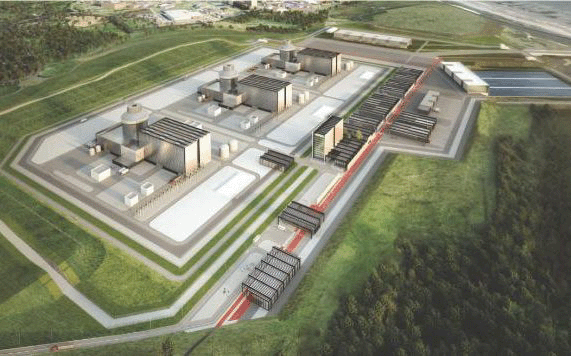
“………Largely under-reported by the media, Moorside’s developer NuGen told the House of Lords Economic Affairs Committee in early November that it had been calculating how elements of its proposed triple AP1000 reactor site might be carved up to allow the non-nuclear elements of the project to be paid for by the UK Government.
For despite casting its net far and wide in an attempt to drum up the additional finance to meet the clearly under-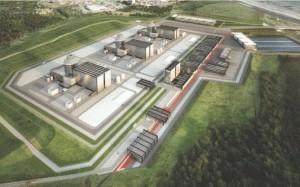 estimated £15 billion cost of building Moorside, the consortium of Japan’s Toshiba and France’s Engie is clearly struggling to attract support.
The struggle was intensified by the not unexpected news on 8th December that Engie itself has declared that it will pull out of the Moorside and other new-build developments because “it no longer has the resources to finance such expensive projects” and wants to concentrate on renewables instead.
Hoping that the Treasury’s taxpayer cavalry will ride to the rescue, NuGen’s CEO Tom Samson told the House of Lords that one non-nuclear element of the project has been identified by the consortium as the seawater system required to cool Moorside’s reactors.
Exactly how this vital component of reactor operation can be classified by NuGen as a non-nuclear element and thereby qualify for taxpayer support is as incomprehensible as is the further suggestion that major ‘civil works’ such as the removal of excavation spoil, could also qualify for Government largesse.
It’s a telling sign of NuGen’s dire financial straits, and one that will leave tax-paying observers wondering exactly which part it is of the Government’s erstwhile promise – that future developers would shoulder the whole cost of new-build in the UK – that NuGen doesn’t understand or seeks to circumvent in its hour of self-inflicted need.
And now – taxpayer-funded transport infrastructure and powerlines
Then there’s the suggestion of Government assistance in improving the transport infrastructure in the Cumbrian area to help support both the decommissioning operations at Sellafield and the proposed construction site at Moorside.
Leaving aside NuGen’s less than subtle ploy to boost its case for infrastructure improvements by lumping together Moorside and Sellafield decommissioning, local communities will nevertheless know to their frustration that pleas to improve West Cumbria’s chronic road and rail infrastructure have fallen on deaf Government and industry ears for decades.
Even the construction of the Thermal Oxide Reprocessing Plant (THORP) in the 1980’s and 90’s – a project of similar workforce size to that forecast for Moorside and with similar demands on the local infrastructure – saw no improvements whatsoever made to the outdated transport system.
With Sellafield’s commercial reprocessing operations in their death throes and the site in clean-up mode, it would be morally indefensible for the taxpayer to be expected to step in now to bank roll a Japanese / French private consortium that has clearly bitten off more than it can chew and finds itself short of funding for a project whose timetable and sums increasingly fail to add up.
The very notion that the Treasury should ride to the rescue of NuGen’s vested interest in a new-build project that has considerably less than full public support will be anathema to taxpayers, particularly as they witness hospital and community services in West Cumbria – whose survival is in everyone’s interest – being increasingly starved of Government support.
A thought must be spared too for those facing the double whammy of increased electricity bills as a result of the estimated £2.5 billion cost of connecting Moorside to an upgraded North West Coast grid system – a contentious and hugely disruptive and visually damaging upgrade that National Grid has confirmed again recently would not be necessary if the Moorside project was not on the table.
The government must pull back from this boondoggle project
Time will tell whether the historically apron-stringed – some would say incestuous – relationship between Government and UK Nuclear will come up trumps for NuGen.
But if it doesn’t there will be no public sympathy for a consortium that has walked open-eyed into a remote green field site well documented as being ‘less than optimum’ for new-build in construction, infrastructure and transmission terms.
Nugen has made its bed and should now lie in it or, as the other saying suggests, get out of the Cumbrian kitchen if it can’t stand the financial heat.
Martin Forwood is the Campaign Coordinator of CORE, Cumbrians Opposed to a Radioactive Environment.
This article was originally published on the CORE website. http://www.theecologist.org/News/news_analysis/2988449/nuclear_plundering_of_the_public_purse_the_sellafield_and_moorside_billions.html?utm_source=&utm_medium=&utm_campaign=
December 19, 2016
Posted by Christina Macpherson |
business and costs, politics, UK |
Leave a comment
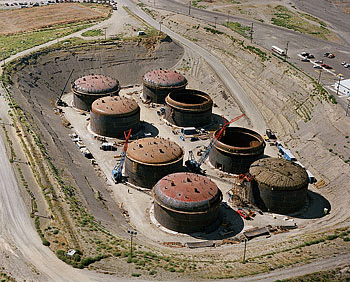
 The price tag for cleaning up nuclear waste at Hanford site just went up another $4.5 billion LA Times, 16 Dec 16 Ralph Vartabedian Contact Reporter The U.S. Energy Department said Friday that its long-troubled attempt to build a plant to process highly radioactive sludge at a former nuclear weapons site in central Washington state will cost an additional $4.5 billion, raising the project’s price tag to $16.8 billion.
The Hanford treatment plant, a small industrial city with some two dozen facilities on a desert plateau along the Columbia River, is more than a decade behind schedule and will cost nearly four times the original estimate made in 2000.
The government aims to transform 56 million gallons of deadly sludge stored in leaky underground tanks into solid glass, which theoretically could then be stored safely for thousands of years.
But the effort has involved an extended history of errors, miscalculations and wrongdoing. The result has been a massive, partially built concrete facility that has been under a stop-work order for three years because of serious technical doubts.
The biggest technical problems involve two giant facilities, a melter building for high-level radioactive waste and a pretreatment building to prepare the sludge for chemical processing.
After an exhaustive technical review, the Energy Department at the beginning of this year ordered fixes for more than 500 problems, some of them fundamental design deficiencies at the melter. Construction of the building and equipment was 78% complete at the time of the review.
And in November, the Justice Department settled a False Claims Act suit against two major contractors at the plant, San Francisco-based Bechtel Corp. and AECOM, an engineering, design and construction management company based in Los Angeles. The allegations originally were brought by three engineers at the plant, who had long raised concerns that the fundamental design of the plant was flawed. The two companies agreed to pay $125 million in damages, a portion of which will be awarded to the three whistle-blowers……..
outside watchdogs say the giant cost increase could jeopardize the cleanup at a time when the incoming president, Donald Trump, has already sharply criticized high-cost government projects and contracts.
Tom Carpenter, executive director of the Hanford Challenge, which has helped whistle-blowers disclose problems at the site, said the new cost estimate puts a target on the plant that could lead the Energy Department to begin searching for lower-cost and less safe solutions to the waste problem.
One potential lower-cost remedy at Hanford, which has been used at other former nuclear waste sites, would be to pour concrete into the tanks to solidify the waste and then simply leave it in place. The risk is that the concrete might eventually break down, leak radioactivity into the groundwater and contaminate the Columbia River about seven miles away, Carpenter said.
“There are a lot of question marks about the fate of this facility,” Carpenter said.
The revised plan disclosed Friday is part of an effort to get the waste treatment plant started up sooner, though the estimated delay for full operational status seems to be growing.
In 2013, then-Energy Secretary Steven Chu stopped most construction on the project after a whistle-blower warned about a potential for explosion from accumulated hydrogen gas in the melter tanks. In an effort to get the cleanup moving again, Chu’s successor, Ernest J. Moniz, ordered that some of the lower-level waste be solidified without any pretreatment — a so-called direct feed system — and on a faster schedule at the low-level melter.
The early processing could begin in 10 years or less, but the full capability for the most highly radioactive sludge that requires the high-level melter is now scheduled for a 2036 start-up, some 20 years past the original schedule, Carpenter said.
“It is an astounding date,” he said. http://www.latimes.com/nation/la-na-hanford-cost-20161216-story.html
December 19, 2016
Posted by Christina Macpherson |
business and costs, Reference, USA, wastes |
Leave a comment
 Nuclear plundering of the public purse – the Sellafield and Moorside billions, Ecologist, Martin Forwood 13th December 2016
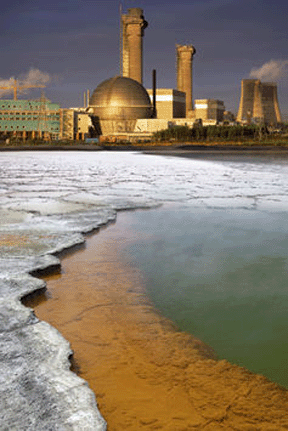
While the government is cutting vital public expenditure across the board there’s one industry for which no costs are too great, writes Martin Forwood. The price of an ‘evaporator’ at the Sellafield nuclear complex is escalating towards £1 billion, while billions more of taxpayer finance are being lined up to finance cooling systems, power lines and transport links for the adjacent Moorside new-build nuclear power plant.
The Brexit vote and Donald Trump’s elevation to the US Presidency have turned the international status quo upside down.
But some things – like the nuclear industry’s insatiable appetite for taxpayers’ money – never change.
Sellafield’s Evaporator D project, with NuGen’s Moorside in hot pursuit, is a prime example as it limps along, sustained only by ever increasing helpings from the public purse.
With nuclear power rightly acknowledged as being a hideously expensive way of boiling a kettle, then Evaporator D – known to the Sellafield workforce as the ‘Big Kettle’ – must be breaking all records.
Initially costed at £90 million (2007) and originally due to come into operation in 2010/11, the cost has increased eight-fold to £740m – as at September 2015. With a ‘challenging’ operational date currently pencilled in as 2017/18, and with updated figures yet to be published, the sky is clearly the limit for Evaporator D.
The tortured progress of the new Evaporator, designed to reduce (by evaporation) the volume of the dangerous liquid High Level Wastes (HLW) produced by spent fuel reprocessing, reveals a catalogue of project mismanagement and eye-watering cost hikes that show little sign of abating.
Promoted specifically by BNFL and subsequently by the NDA as being urgently needed to support continued reprocessing operations in the B205 (magnox fuel) and THORP (oxide fuel) plant, Evaporator D is currently being shoe-horned into the HLW complex.
There it will join its three fellow but semi-crippled evaporators (A,B & C) whose increasing unreliability through age and internal corrosion had underpinned the urgency for Evaporator D.
A tale of mismanagement and incompetence
Despite claiming not to recognise the £90m estimate of 2007, the NDA was nevertheless happy to confirm a price tag of £100m in 2008, since when the cost of Evaporator D has risen in almost annual increments – with the biggest hike to over £600m.
That number comes in a damning report by the National Audit Office that was highly critical of the NDA’s project management and that of its subsequently sacked contractor Nuclear Management Partners (NMP) who had acted for the NDA as Sellafield’s Parent Body Organisation since 2008. As the NAO reported,
“Gaps in the capability of subcontractors in the supply chain to undertake work to the standards required for nuclear installations have had direct consequences for the speed and efficiency of project delivery. For example, the Authority estimates that £50 million of the £244 million increase in the cost of evaporator D and part of the 18-month delay since 2009 is because the subcontractor lacked experience in welding to the necessary nuclear quality standards.
“The Authority was aware of these risks when it approved the start of construction. It relied on Sellafield Limited’s assurances that its subcontractor could manage the risks. The Authority did not obtain assurance from Sellafield Limited that it had put in place appropriate quality assurance and training.”
The cramped conditions in and around the HLW complex was a major factor in employing the novel option of having the main elements of the Evaporator built off-site (by Interserve at Ellesmere Port) and delivered by barge to Sellafield beach in the form of 11 modules, the largest weighing 500 tonnes and measuring 12.5 x 7.5 x 27 metres tall. The Evaporator, whose top and bottom sections are shown above being fabricated at Ellesmere Port, will operate in an upright position once installed at Sellafield.
Novel as the option was, it soon fell foul of a range of problems that included a disorganised supply chain, design changes, the quality of module fabrication, and seismic qualification.
With the modules delivered to Sellafield beach and hauled onto site between 2011 and 2013, Evaporator D’s cost increases from 2013 onwards are largely attributed by the NDA to the ‘transfer of incomplete modules to site’. This resulted in extensive additional cutting and welding work being needed – in a confined work space – to connect together the component parts of the Evaporator system.
And now Evaporator D looks set to miss the ‘reprocessing boat’
The greatest irony of all is, of course, that despite the early hullabaloo about its urgent and crucial support role for reprocessing at Sellafield, Evaporator D can be of service to THORP reprocessing (due to finish in 2018) for no more than one year at best.
At worst it will be of service only for THORP’s post-2018 clean out, the remnant days of B205 reprocessing which is due to end around 2020 and other site decommissioning work.
Faced with this prospect and the embarrassing reality that its much vaunted Evaporator D could indeed miss the THORP reprocessing boat for which it was primarily designed, the NDA and Sellafield Ltd damage limitation teams have recently swung into top gear – by stressing the Evaporator’s future decommissioning role through its ability to deal with the larger waste particles expected to be encountered during the coming years of clean-up work.
For a project whose £740m cost will undoubtedly escalate further, aggrieved taxpayers may take some comfort from Sellafield’s 2012 announcement that plans for a fifth (£600m) Evaporator E had been scrapped. But they should now cast a wary eye to NuGen’s new-build project just across the road from Sellafield where the prospect of further pilfering from the public purse is simmering on the back-burner.
Moorside nuclear power plant – another massive drain on taxpayers’ money …….
http://www.theecologist.org/News/news_analysis/2988449/nuclear_plundering_of_the_public_purse_the_sellafield_and_moorside_billions.html?utm_source=&utm_medium=&utm_campaign=
December 19, 2016
Posted by Christina Macpherson |
business and costs, UK, wastes |
Leave a comment








 nuclear-news