Israel’s genocide is big business – and the face of the future

“Gaza not only looks like a dress rehearsal for the kind of combat US soldiers may face. It is a test of the American public’s tolerance for the levels of death and destruction that such kinds of warfare entail.”
21 July 2025, https://www.jonathan-cook.net/2025-07-21/israel-genocide-big-business/
US corporations and military planners welcome the ‘legal maneuver space’ Israel has opened up for them to profit from warfare that slaughters and starves civilians
[An audio version of this article is available here]
The Financial Times revealed this month that a cabal of Israeli investors, one of the world’s top business consulting groups and a think-tank headed by former British prime minister Tony Blair had been secretly working on plans to exploit the ruins of Gaza as prime real estate.
The secret consortium appears to have been seeking practical ways to realise US President Donlad Trump’s “vision” of Gaza as the “Riviera of the Middle East”: transforming the small coastal enclave into a playground for the rich and an enticing investment opportunity, once it can be ethnically cleansed of its Palestinian population.
Meanwhile, the UK government has declared Palestine Action a terrorist organisation – the first time in British history that a direct-action campaign group has been banned under Britain’s already draconian terrorism legislation.
Notably, the government of Keir Starmer took the decision to proscribe Palestine Action after lobbying from Elbit Systems, an Israeli weapons maker whose factories in the UK have been targeted by Palestine Action for disruption. Elbit supplies Israel with killer drones and other weapons central to Israel’s genocide in Gaza.
These revelations came to light as the United Nation’s special rapporteur on the occupied Palestinian territories, Francesca Albanese, published a report – titled “From economy of occupation to economy of genocide” – exposing Big Business’ extensive involvement in, and profits from, Israel’s crimes in Gaza.
Albanese lists dozens of major western companies that are deeply invested in Israel’s oppression of the Palestinian people.
This is not a new development, as she notes. These firms have exploited business opportunities associated with Israel’s violent occupation of the Palestinian people’s lands for years, and in some cases decades.
The switch from Israel’s occupation of Gaza to its current genocide hasn’t threatened profits; it has enhanced them. Or as Albanese puts it: “The profits have increased as the economy of the occupation transformed into an economy of genocide.”
The special rapporteur has been a growing thorn in the side of Israel and its western sponsors over the past 21 months of slaughter in Gaza.
That explains why Marco Rubio, Trump’s secretary of state, announced soon after her report was issued that he was imposing sanctions on Albanese for her efforts to shed light on the crimes of Israeli and US officials.
Revealingly, he called her statements – rooted in international law – “economic warfare against the United States and Israel”. Albanese and the UN system of universal human rights that stands behind her, it seems, represent a threat to western profiteering.
Window on the future
Israel effectively serves as the world’s largest business incubator – though, in its case, not just by nurturing start-up companies.
Rather, it offers global corporations the chance to test and refine new weapons, machinery, technologies, data collection and automation processes in the occupied territories. These developments are associated with mass oppression, control, surveillance, incarceration, ethnic cleansing – and now genocide.
In a world of shrinking resources and growing climate chaos, such innovative technologies of subjugation are likely to have domestic, in addition to overseas, applications. Gaza is the corporate world’s laboratory, and a window into our own future.
In her 60-page report, Albanese writes that her research “reveals how the forever-occupation has become the ideal testing ground for arms manufacturers and Big Tech… while investors and private and public institutions profit freely”.
Her point was underscored by the Israeli arms firm Rafael, which issued a promotional video of its Spike FireFly drone that showed it locating, chasing and killing a Palestinian in what it called “urban warfare” in Gaza.
As the UN special rapporteur points out, quite aside from the issue of genocide in Gaza, western companies have been under a legal and moral obligation to sever ties with Israel’s system of occupation since last summer.
That was when the world’s highest court, the International Court of Justice, ruled Israel’s decades-old occupation was a criminal enterprise based on apartheid and forcible transfer – or what Albanese refers to as policies of “displacement and replacement”.
Instead, the corporate sector – and western governments – continue to deepen their involvement in Israel’s crimes.
It is not just arms manufacturers profiting from the genocidal levelling of Gaza and the occupations of the West Bank and East Jerusalem.
Big Tech, construction and materials firms, agribusiness, the tourism industry, the goods and services sector, and supply chains have also got in on the act.
And enabling it all is a finance sector – which includes banks, pension funds, universities, insurers and charities – keen to continue investing in this architecture of oppression.
Albanese describes the mosaic of companies partnering with Israel as “an eco-system sustaining this illegality”.
Escaping scrutiny
For these corporations and their enablers, international law – the legal system Albanese and her fellow UN rapporteurs are there to uphold – serves as an impediment to the pursuit of profit.
Albanese notes that the business sector can escape scrutiny by shielding behind other actors.
Israel and its senior officials are on notice for committing genocide, crimes against humanity and war crimes.
When she wrote to 48 companies to warn them that they were colluding in this criminality, they either responded that this was Israel’s responsibility, not theirs, or that it was for states, not international law, to regulate their business activities.
Corporations, Albanese points out, can secure their biggest profits in the “grey areas of the law” – laws they have helped to shape.
Lockheed Martin’s F-35 jets, whose “beast mode” has been shop-windowed by Israel as it has destroyed Gaza, depend on some 1,600 other specialist firms operating in eight separate states, including Britain.
Late last month the UK high court, while admitting British-made components used in the F-35 were likely to contribute to war crimes in Gaza, ruled that it was up to Starmer’s government to make “acutely sensitive and political” decisions about the export of these parts.
UK foreign secretary David Lammy, by contrast, told a parliamentary committee it was not for the government to assess whether Israel was committing war crimes in Gaza, using British arms, it was “a decision for the court”.
Lockheed Martin has joined the buck-passing. A spokesperson said: “Foreign military sales are government-to-government transactions. Discussions about those sales are best addressed by the US government.”
Big Tech collusion
Albanese also points the finger at leading tech firms for rapidly and deeply embedding in Israel’s illegal occupation, including by acquiring Israeli start-ups that exploit expertise gained from the oppression of Palestinians.
The NSO Group has developed Pegasus phone spyware that is now being used to surveill politicians, journalists and human rights activists around the world.
Last year the Biden administration signed a contract with another Israeli spyware firm, Paragon. Will we learn one day that the US used exactly this kind of technology to spy on Albanese and other international law experts, on the pretext that they were waging so-called “economic warfare”?
IBM trains Israeli military and intelligence personnel, and is central to the collection and storage of biometric data on Palestinians. Hewlett Packard Enterprises supplies technology to Israel’s occupation regime, prison service and police.
Microsoft has developed its largest centre outside the US in Israel, from which it has fashioned systems for use by the Israeli military, while Google and Amazon have a $1.2 billion contract to provide it with tech infrastructure.
The prestigious research university MIT, the Massachusetts Institute of Technology, has collaborated with Israel and companies like Elbit to develop automated weapons systems for drones and refine their swarm formations.
Palantir, which supplies the Israeli military with Artificial Intelligence platforms, announced a deeper strategic partnership in January 2024, early in Israel’s slaughter in Gaza, over what the Bloomberg news agency termed “Battle Tech”.
Over the past 21 months, Israel has been introducing new automated programs driven by AI – such as “Lavendar”, “Gospel” and “Where’s Daddy?” – to select huge numbers of targets in Gaza with little or no human oversight.
Albanese calls this “the dark side of the start-up nation that is so embedded, so intimately related to the military industry aims and gains.”
Not surprisingly, tech firms are falling back on all-too-familiar smears against the special rapporteur and the UN for pulling back the veil on their activities. The Washington Post reported that, in the wake of Albanese’s report, Google’s co-founder, Sergey Brin, called the UN “transparently antisemitic” in a chat on a staff forum.
Concentration camp
There are a long list of other household names in Albanese’s report: Caterpillar, Volvo and Hyundai are accused of supplying heavy machinery to destroy homes, mosques and infrastructure in Gaza and the West Bank.
Leading banks such as BNP Paribas and Barclays have underwritten treasury bonds to boost market confidence in Israel through the genocide and maintain its favourable interest rates.
BP, Chevron and other energy firms are profiting from existing gas fields in the eastern Mediterranean and pipelines that pass through Palestinian maritime waters off Gaza. Israel issued exploration licences for Gaza’s own undeveloped gas field, off the coast, shortly after launching its genocidal slaughter.
Israel’s latest plan to create, in its own words, a “concentration” camp inside Gaza – where Palestinian civilians are to be tightly confined under armed guard – will doubtless rely on business partnerships similar to those behind the bogus “aid distribution hubs” Israel has already imposed on the enclave’s people.
Israeli soldiers have testified that they are being ordered to shoot into crowds of starving Palestinians queueing for food at these hubs – explaining why dozens of Palestinians have been killed daily for weeks on end.
Those hubs, run by the misleadingly named Gaza Humanitarian Foundation, were in part the brainchild of the Boston Consulting Group, the same management consultants caught this month plotting to turn Gaza into Trump’s Palestinian-free “Riviera of the Middle East”.
Israel’s planned concentration camp built on the ruins of the city of Rafah – to be termed, again deceptively, a “humanitarian zone” – will require all those entering to be “security screened”, using biometric data, before their incarceration.
Doubtless other contractors, using largely automated systems, will control the camp’s interior until, in the Israeli government’s words, “an emigration plan” can be implemented to expel the population from Gaza.
Albanese points to the many precedents for private corporations driving some of the most horrifying crimes in history, from slavery to the Holocaust.
Albanese urges lawyers and civil society actors to pursue legal avenues against these firms in the countries in which they are registered. Where possible, consumers should exert what pressure they can by boycotting these corporations.
She concludes by recommending that states impose sanctions and an arms embargo on Israel.
Further, she calls on the besieged International Criminal Court – four of whose judges are, like her, under US sanctions – as well as national courts “to investigate and prosecute corporate executives and/or corporate entities for their part in the commission of international crimes and laundering of the proceeds from those crimes”.
Psychopathic culture
All of this is crucial to understanding why western capitals have continued to partner in Israel’s slaughter, even as Holocaust and genocide scholars – many of them Israeli – have reached a firm consensus that its actions amount to genocide.
Governing parties in western countries like the US and Britain are largely dependent on Big Business, both for their electoral success and, after victory at the polling booth, in maintaining popularity through the promotion of “economic stability”.
Keir Starmer reached power in the UK after spurning the popular grassroots funding model of his predecessor, Jeremy Corbyn, and wooing instead the corporate sector with promises that the party would be in its pocket.
His reassurances were also key to making sure the billionaire-owned media – which had ferociously turned on Corbyn, constantly vilifying him as an “antisemite” for his democratic socialist and pro-Palestinian positions – smoothed Starmer’s path to Downing Street.
In the US, the billionaires even have one of their own in power, in Donald Trump. But even his campaign depended on funding from big donors like Miriam Adelson, the Israeli widow of casino magnate Sheldon Adelson.
Adelson is among a number of top donors, funding both main parties, who make no bones about their number one political priority being Israel.
Once in power, parties are then effectively held to ransom by major corporations on large areas of domestic and foreign policy.
The financial sector had to be bailed out by taxpayers – and still is through so-called “austerity measures” – after its reckless excesses crashed the global ecomomy in the late 2000s. Western governments considered the banks “too big to fail”.
Similarly, Israel – the world’s biggest incubator for the arms and surveillance industries – is just too big to be allowed to fail as well. Even as it commits genocide.
Critics of the rise of globalised corporations over the past half century, such as famed linguist Noam Chomsky and law professor Joel Bakan, have long noted the inherently psychopathic traits of corporate culture.
Corporations are legally obligated to pursue profit and prioritise shareholder value over other considerations. Limitations on their freedoms to do so are near non-existent after waves of deregulation from suborned western governments.
Bakan observes that corporations are indifferent to the suffering or safety of others. They are incapable of maintaining enduring relationships. They lack any sense of guilt, or capacity for self-restraint. And they lie, cheat and deceive to maximise profits.
These psychopathic tendencies have been on show in scandal after scandal, whether from the tobacco and banking industries, or from pharmaceutical and energy companies.
Why would Big Business behave any better in pursuing profits tied up in the Gaza genocide?
Bakan addresses those who confuse his argument with a conspiracy theory. The psychopathic behaviours of corporations simply reflect the legal imperatives on them as institutions – what he calls their “logical dynamic” – to maximise profit and sideline rivals, whatever the consequences for the wider society, future generations or the planet.
Growing fat on genocide
The stakes in Gaza are high for western governments precisely because they are so high for the business world growing fat on Israel’s genocide.
Governments and corporations have an overwhelming shared interest in protecting Israel from scrutiny and criticism: it serves as their colonial attack dog in the oil-rich Middle East, and it acts as a cash-cow for the weapons, surveillance and incarceration industries.
Which explains why Trump and Starmer, on one side, and university administrations, on the other, have invested so much political and moral capital in crushing the spaces, especially in academia, where free speech and protest are supposed to be most prized.
The unversities are far from a disinterested party. Before their campus encampments were trashed by police, student demonstrators sought to highlight how heavily invested the universities are in the economy of occupation and genocide, both financially and through research partnerships with the Israeli military and Israeli universities.
The need to ringfence Israel from scrutiny also explains rapid moves in the West both to impute “antisemitism” to every effort to hold Israel, or its genocidal army, to account.
The desperate lengths to which governments will go was on display this month as UK officials and the establishment media kicked up a storm of outrage after a punk band at Glastonbury chanted “Death, death to the IDF!” – a reference to Israel’s genocidal army.
And as the power of the antisemitism accusation has weakened from misuse, western capitals are now rewriting their statutes to designate as “terrorism” any attempt to put a spoke in the wheels of the genocide economy, by for example sabotaging weapons factories.
Morality and international law are being scattered to the winds to keep the West’s most important colonial spin-off a money-maker.
Business as usual
Israel’s indispensability to the corporate sector and a captured western political class extends far beyond tiny Gaza. Israel is playing an outsize role as a war-industries incubator on a global battlefield in which the West seeks to ensure its continuing military and economic primacy over China.
Last month the global business elite – comprising tech billionaires and corporate titans, joined by political leaders, media editors, and military and intelligence officials – met once again at the publicity-shy Bilderberg summit, this year hosted in Stockholm.
Prominent were the CEOs of major “defence” suppliers and arms manufacturers such as Palantir, Thales, Helsing, Anduril and Saab.
Drone warfare – being used in innovative ways by key military clients like Israel and Ukraine – was high on the agenda. The greater integration of AI into drones appears to have been a mainstay of the discussions.
The subtext this year, as in recent years, was a supposed rising threat from China and an associated “authoritarian axis” comprising Russia, Iran and North Korea. This threat is seen chiefly in economic and technological terms.
In May, Eric Schmidt, the former head of Google and a Bilderberg board member, wrote with alarm in the New York Times: “China is at parity or pulling ahead of the United States in a variety of technologies, notably at the AI frontier.”
He added that the West was in a race against China over the imminent development of super-intelligent AI, which would give the winner “the keys to control the entire world”.
Schmidt, like other Bilderberg regulars, predicts that the power-draining needs of super AI will lead to ever-intensifying energy wars for the West to stay top dog.
Or as a Guardian report on the conference summed up the mood: “In this desperate winner-takes-all race for the keys to the world, in which the ‘geopolitics of energy’ becomes ever more important, power stations – along with the data centers they feed – are going to become the No 1 military targets.”
Israel’s slaughter in Gaza is seen as playing a critical role in opening up the “battlescape”.
The same corporations cashing in on the Gaza genocide stand to benefit from the more permissive environment – legally and militarily – created by Israel for future wars, ones where massacred civilians count only as “incidental deaths”.
An April article in the New Yorker magazine set out the challenge facing US military planners, who have considered themselves hobbled since the 1980s by the rise of a human rights community that developed an expertise in the laws of war independently from the Pentagon’s self-serving interpretations.
The result, say US generals regretfully, has been a “general aversion to collateral damage risk” – that is, killing civilians.
Pentagon military planners are keen to use the slaughter in Gaza as a precedent for their own genocidal violence in subduing future economic rivals like China and Russia who threaten the official US doctrine of “global full-spectrum dominance”.
The New Yorker sets out this thinking: “Gaza not only looks like a dress rehearsal for the kind of combat US soldiers may face. It is a test of the American public’s tolerance for the levels of death and destruction that such kinds of warfare entail.”
According to the magazine, the genocidal violence being unleashed by Israel is opening up the “legal maneuver space” – the space needed to commit crimes against humanity in full view.
This is where much of the impulse comes from in western capitals to normalise the genocide – present it as business as usual – and demonise its opponents.
The arms makers and tech companies whose coffers have been swollen by Israel’s genocide in Gaza stand to make far greater riches from a similarly devastating war against China.
Whatever the script we are sold, there will be nothing moral or existential about this coming battle. As ever, it will be about rich people keen to get even richer.
EDF shifts nuclear strategy to focus on domestic projects
The company will
reduce its international sales team by 60, including ten managerial roles.
France’s state-run utility EDF is planning to reduce its overseas workforce
and withdraw from certain international nuclear projects to concentrate on
a domestic construction programme under its new CEO Bernard Fontana, as
reported by Reuters. Once a global leader in nuclear power, France is
retreating amid rising global demand, allowing new competitors to emerge as
high costs and design challenges hinder its international competitiveness.
Power Technology 23rd July 2025, https://www.power-technology.com/news/edf-nuclear-strategy-focus-domestic/
EDF not repeating its costly Hinkley nuclear blunder – for Sizewell C, the UK tax-payers will cop the costs.

In response to the Government’s announced funding plan to build new EPR
reactors at Sizewell, Dr Douglas Parr, Policy Director for Greenpeace UK,
said: “The UK’s unswerving loyalty to the one energy source that
consistently increases in price remains undimmed by our cost of living
crisis.
At a time when much cheaper renewables and storage, grid
improvements and a decoupling from gas would do so much more to reduce
energy costs, this announcement is testament to both the lobbying skills of
the nuclear industry, and a blind optimism from the government when it
comes to building atomic infrastructure that actual experience seems
incapable of shifting.
The only significant difference between the slowly
unfolding economic blunder of Hinkley C and the forthcoming economic
disaster of Sizewell C is that Hinkley’s predictable construction
problems, delays and cost overruns were borne by EDF. EDF know they can’t
afford to make that mistake again, and so this time those costs will be
borne by you, the British public.”
Greenpeace 22nd July 2025, https://www.greenpeace.org.uk/press-centre/
Sizewell C’s Final Investment Decision has only crawled over the line (- with the public purse)
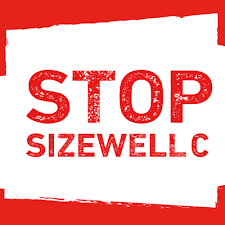
“This much-delayed Final Investment Decision has only crawled over the
line thanks to guarantees that the public purse, not private investors,
will carry the can for the inevitable cost overruns. Even so, UK households
will soon be hit with a new Sizewell C construction tax on their energy
bills. It is astounding that it is only now, as contracts are being signed,
that the government has confessed that Sizewell C’s cost has almost
doubled to an eye watering £38 billion – a figure that will only go up.
Given that Ministers claimed not to recognise the cost was close to £40
billion is there any wonder there is so little trust in this project?”
Stop Sizewell C 22nd July 2025,
https://mailchi.mp/stopsizewellc/finalinvestmentdecision?e=326ee81c22
Ed Miliband admits Sizewell C cost has almost doubled to £38bn
New power station approved despite costs almost doubling from an estimate made five
years ago. Ed Miliband has admitted Sizewell C will cost at least £38bn to
build as he gave final approval for the construction of the nuclear power
station. The Energy Secretary took the final investment decision on the
controversial power station on Tuesday.
The site will take at least a decade to build. The Government confirmed the project will cost £38bn in 2024 prices, or £39.3bn once inflation since then is factored in. The
total is almost double the £20bn estimate given by the government and
developers EDF in 2020.
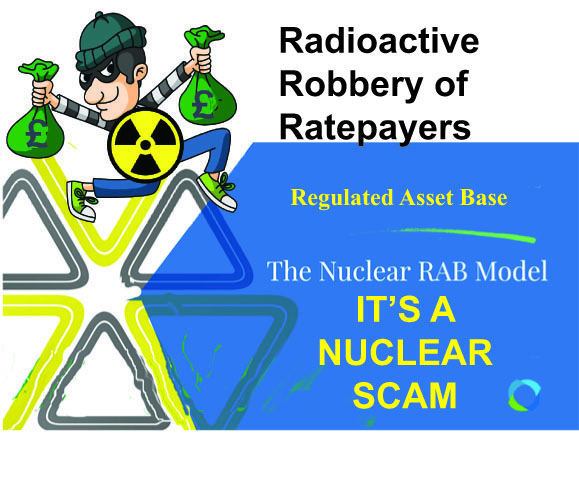
Sizewell C will be part-funded by a new levy on
household electricity bills called the Regulated Asset Base. The aim is to
pay the construction costs as they are incurred rather than borrow and then
pay decades of interest. Mr Miliband has claimed this levy will add only
£12 a year to the average household bill, but his claim is being treated
with scepticism by critics who point out that almost all major nuclear
projects suffer massive delays and cost overruns.
Telegraph 22nd July 2025 https://www.telegraph.co.uk/business/2025/07/22/miliband-gives-sizewell-c-nuclear-plant-the-green-light/
How Britain enticed investors to back its costly new nuclear plant
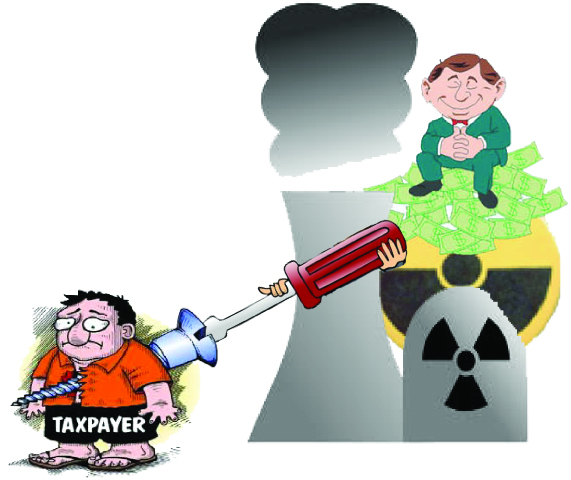
Taxpayers will bear most of the cost and risk, while most of the funding is
in the form of government loans. It has attracted private sector investment
from the likes of Centrica and La Caisse, but the UK taxpayer will bear
most of the cost and risk associated with the project, and most of the
funding will be in the form of government loans.
La Caisse said it was “thrilled” to be one of the investors, while Centrica was
“delighted” the project was moving forward.
Here’s why they are getting a good deal. Under the financing package announced by the
government on Tuesday, private investors are putting in a total of £3.25bn
of equity. France’s state-owned utility EDF, which has led the project
and is supplying the reactor technology, is contributing £1.05bn in
equity, while France’s export credit agency will provide guarantees on
about £5bn in commercial bank loans.
But the vast majority is coming from
the UK government — £3.8bn in equity and £36.55bn in loans from its
National Wealth Fund, funded in turn by government borrowing. A further
£400mn in equity is being supplied by the Nuclear Liabilities Fund, owned
by EDF, the UK government and a public trust set up to pay for nuclear
decommissioning.
Centrica, which is investing £1.3bn for a 15 per cent
stake, said it expected a 12 per cent internal rate of return.
International Public Partnerships, which is investing £250mn, said it
expected a “low teen IRR” until the 2030s. Investors typically expect
about 7 per cent for infrastructure projects, say experts, although they
want higher returns for riskier schemes.
In this case, the risks appear
low. One investor highlighted “predictable, inflation-linked cash
flows”, “enhanced investor protections”, “cash yield from day
one” and “no exposure to power price volatility”. Dieter Helm,
infrastructure expert at Oxford university, said “there is always a
balance between risk and return and even nuclear is worth investing in if
it is de-risked in this way”. “In this case the government and the
taxpayer bear a considerable proportion of the total risk.”
FT 22nd July 2025,
https://www.ft.com/content/e1e1b8df-4eb4-4423-a623-ca76858023c7
Investment decision to be made on Sizewell C nuclear.
The UK government is expected to reach a final investment decision on the
Sizewell C nuclear power plant on Tuesday. “We are in constructive,
commercially sensitive negotiations with a range of potential investors as
part of the equity raise process,” a spokeswoman for the Department for
Energy Security and Net Zero told Energy Voice in an emailed statement.
“A final investment decision will be made following the conclusion of the
process, which we are targeting for this summer.”
The Financial Times reported that the price tag for the planned nuclear power station in
Suffolk, a replica of Hinkley Point C, will hit £38 billion including
equity and debt. Ministers will reportedly unveil the cost of the project
by the parliamentary recess on Wednesday.
Campaign pressure group Together
Against Sizewell C (TASC)’s chair Jenny Kirtley said: “What
right-minded government would commit billions of public funds to a project
that has already seen a staggering 90% uplift in cost over the last 5
years? “This government and Sizewell C Limited both denied recent build
cost estimates of £40bn for Sizewell C stating there would be a 30%
reduction from Hinkley Point C’s costs due to ‘lessons learned’ so,
why would anyone believe government claims that £38bn Sizewell C will
provide ‘value for money’ for consumers and taxpayers?”
The group has called for a value-for-money assessment of the project to be independently
audited to establish what cost provisions have been included for
“unresolved issues”, including sea defences that were not in EDF’s
original development consent order application.
The main developer on the project, EDF, has reduced its equity stake in the project to 12.5%, valued at about £1.1bn, Energy Voice reported this month. British energy supplier
Centrica is expected to take a 15% stake in the nuclear power plant.
According to a report in Les Echos, Amber Infrastructure and Canadian fund
la Caisse de dépôt et de placement du Québec (CDPQ) now plan to take a
stake of between 25% and 30% in the project.
Reports suggest that a
consortium led by Brookfield Asset Management pulled out of its bid to take
a 25% stake in Sizewell C at the last minute. Greencoat Schroders, which
had entered the round with Brookfield, has also exited the bidding,
according to a separate report. This latest reshuffle would leave the UK
government with an implied minority stake of as little as 42.5%.
Energy Voice 22nd July 2025, https://www.energyvoice.com/renewables-energy-transition/576815/investment-decision-expected-on-sizewell-c/
Centrica really can’t lose at Sizewell
Centrica’s £1.3 billion investment in Sizewell C guarantees substantial returns, even with cost
overruns. Now we know what Ed Miliband means by his “golden age of
nuclear” — golden for the companies putting their money into Sizewell
C. Yes, reactor projects have a habit of blowing up private investors. But
maybe not this one. It looks more like an exercise in transferring risk to
consumers and the taxpayer.
Times 22nd July 2025, https://www.thetimes.com/business-money/companies/article/centrica-really-cant-lose-at-sizewell-k33brftl2
EU opens door to funding nuclear energy in next budget
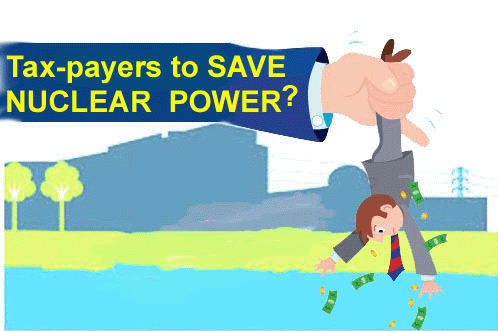
By Kate Abnett, July 18, 2025, https://www.reuters.com/sustainability/climate-energy/eu-opens-door-funding-nuclear-energy-next-budget-2025-07-17/
BRUSSELS, July 17 (Reuters) – The European Commission wants to open up part of its proposed 2 trillion euro EU budget for 2028-2034 to nuclear energy, a move likely to divide the bloc’s member states, which Germany immediately rejected.
In an annex to its mammoth budget proposal published on Wednesday, the Commission listed nuclear power as an activity countries can fund through their national share of the budget – specifically, “new or additional fission energy capacity installed in GW”.
Around 865 billion euros of EU funding will be available under these national spending plans.
The move would be a sea change for the EU, whose current budget does not fund conventional nuclear power plants – reflecting a long-running conflict between pro-nuclear EU members like France and Sweden and traditionally anti-nuclear countries like Germany and Austria.
“Germany rejects any subsidization of nuclear power from the EU budget,” its environment minister Carsten Schneider said on Thursday, adding that Berlin respected the choice of other countries to build reactors.
“However, respect for national sovereignty in energy matters also means not claiming EU funds for this expensive path, a quarter of which comes from German taxpayers’ money,” Schneider said.
France’s energy ministry did not immediately respond to a request for comment. Swedish energy minister Ebba Busch declined to comment.
The Commission’s budget proposal marks the start of years of intense negotiations among EU nations, which must all approve the final budget.
EU countries have long been at loggerheads over whether to promote atomic power to reduce CO2 emissions, a dispute which has delayed policymaking on climate change and energy in the bloc.
That dynamic had appeared on the cusp of a shift earlier this year, when German Chancellor Friedrich Merz signalled Berlin would no longer object to treating nuclear power on a par with renewable energy in EU policies.
Countries including Denmark and Italy had also signalled a shift in their past opposition to nuclear power.
However, some EU diplomats said that this softening of positions had not extended into support for EU funding.
“There is no chance EU money goes to new nuclear,” one EU country diplomat said.
The EU’s current budget explicitly bans member states from building nuclear power plants using their share of hundreds of billions of euros in regional development funds – although the budget offers some limited funds for nuclear research and decommissioning of old reactors.
Reporting by Kate Abnett; additional reporting by Simon Johnson, Holger Hansen, America Hernandez, Riham Alkousaa; Editing by Hugh Lawson
Oxford fusion pioneer risks running out of cash within months
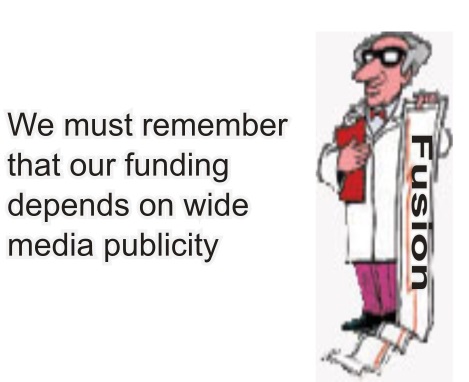
First Light scrambles for funding despite Labour promise to invest £2.5bn in nuclear
research. A British nuclear fusion pioneer has warned it risks running out
of cash within six months as it races to raise millions of pounds in
funding to secure its future. First Light Fusion, which is based in Oxford,
is in talks with investors to raise £20m after burning through tens of
millions of pounds to develop its novel fusion technology. The start-up,
founded in 2011, had sought to develop what it called “projectile
fusion”, developing a giant gas-powered gun that would fire a 5p-sized
projectile at extreme speeds into a fuel source, sparking a fusion
reaction. However, the company abandoned plans to build a prototype reactor
earlier this year as it struggled to raise funds.
Telegraph 20th July 2025, https://www.telegraph.co.uk/business/2025/07/20/oxford-fusion-pioneer-running-out-of-cash/
Ministers set to admit Sizewell C nuclear plant price-tag has soared to £38bn.
New official estimate reflects surging construction inflation and
contingency costs. Sizewell C nuclear plant will cost £38bn to build, the
UK government is set to admit for the first time next week as it reveals
the terms of an expected deal for private investors to fund a small portion
of the bill,
The new official estimate is a big increase from a £20bn
figure given by French energy giant EDF and the UK government for the
project in 2020, reflecting surging construction inflation and new
contingency costs.
A trio of private companies are set to invest around
£9bn of equity in Sizewell, but the majority of the construction will be
funded by loans underpinned by a levy on consumer bills, according to
people familiar with the matter.
The UK government is expected to remain
the largest investor in the project with a 47.5 per cent stake, the
Financial Times previously reported. The £38bn cost, details of the deal
and how the financial risk of the project will be shared is set to be
announced before the parliamentary summer recess begins on Wednesday, the
people said.
FT 18th July 2025, https://www.ft.com/content/d4315905-e7b5-4c2c-a0d1-32dd302e7761
UK’s nuclear push may hand investors a cushy deal

while the financing looks “private”, the real backstop is public.
Yawen Chen, July 18, 2025, https://www.reuters.com/commentary/breakingviews/uks-nuclear-push-may-hand-investors-cushy-deal-2025-07-18/
Brookfield’s (BAM.TO), opens new tab reported plan to take a 25% stake, opens new tab in the Sizewell C nuclear project would mark a big vote of confidence in Britain’s atomic energy revival. But while it suggests that private capital could play a role in funding the country’s energy security, taxpayers are likely to take much of the risk.
The Canadian giant is no stranger to infrastructure, but nuclear power comes with high upfront costs, delays and cost overruns. Sizewell C could cost up to 40 billion pounds ($54 billion) to build, the Financial Times says, up from the latest government estimate of 20 billion pounds.
Britain’s track record is far from reassuring. Take Hinkley Point C, which was majority owned by EDF. Construction began in 2017 and was originally expected to be completed in 2025 and cost 18 billion pounds. It is now unlikely to be operational before 2030, with the overall cost revised to up to 35 billion pounds in 2015 prices. EDF had little protection against those delays as the chief backing it got from the government came from energy price commitments, which kick in when the plant is running.
Bringing in private investors may therefore require a new approach. That’s why the government passed legislation in 2022 so that the Sizewell C plant will be financed via a model, opens new tab seen in utilities like water companies or energy networks, dubbed the regulated asset base (RAB). That model fixes an allowed return to investors by passing on costs to consumers. Crucially, it allows a project to generate revenue from the moment construction begins, instead of only when it becomes operational.
The closest precedent is probably London’s Thames Tideway Tunnel, which funded the construction of a new sewer. There, consumer bills are charged enough to cover a blended return to debt and equity investors, or weighted average cost of capital (WACC), of 2.5% over inflation while the project is under construction. Given the risks in nuclear, industry experts reckon a WACC of 4% above inflation is more likely, equivalent to a nominal rate of 6%. And, as with Thames Tideway, nuclear plants will likely require a commitment from the government for it to compensate investors if cost overruns exceed a certain threshold.
That’s means the RAB model could easily end up becoming pretty expensive. The National Audit Office’s modelling suggests that the WACC of a hypothetical nuclear project could rise to 9% if expenses were to come over budget by between 75% and 100%. As Hinkley Point showed, that’s quite plausible.
UK Prime Minister Keir Starmer may not have much choice. The government says
, opens new tab it needs new nuclear power stations to help its transition to net zero and ensure energy security threatened by Russia. And Chancellor Rachel Reeves will be loath to fund them all on balance sheet, given the country’s fiscal state. Brookfield’s interest shows that institutional investors may be able to step up. But while the financing looks “private”, the real backstop is public.
Context News
UK energy secretary Ed Miliband said in June that Sizewell C would be the beginning of a “golden age” for nuclear in Britain. He also said the project would be “majority public funded”. The government has committed 14.2 billion pounds
The UK government is closing in on a final deal to secure private investment into the Sizewell C nuclear power project. Its 84% stake in the development is expected to be diluted to around 47.5%, with Canadian investor Brookfield Asset Management, British energy supplier Centrica and French energy giant EDF holding the remainder, the Financial Times reported on July 9 citing people with knowledge of the ongoing negotiations.
Brookfield is likely to take a 25% stake, with Centrica buying 15%, the report said.
France’s state-owned EDF, which is leading the development of the site, said on July 8 it would reduce its holdings to 12.5%.
Sizewell C | Investor withdraws from consortium set for 25% stake.
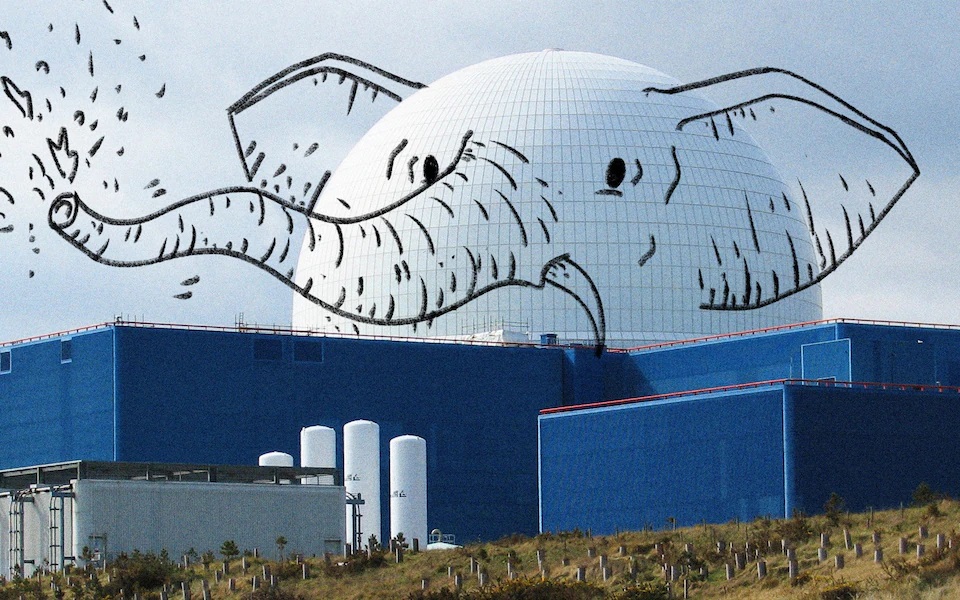
17 Jul, 2025 By Tom Pashby, https://www.newcivilengineer.com/latest/sizewell-c-investor-withdraws-from-consortium-set-for-25-stake-17-07-2025/
One of the investors reported to be considering a stake in Sizewell C has decided to withdraw, while the government is no longer planning to classify nuclear energy as “sustainable”.
Schroders Greencoat, which describes itself as “a specialist renewables infrastructure investor”, was previously reported to be one of the companies considering an ownership stake in Sizewell C.
It was widely reported that Schroders Greencoat was one of the companies in the consortium led by Brookfield Asset Management, which was in total considering a 25% stake in the nuclear power plant.
In an email dated 16 July seen by NCE, the investor said it no longer wishes to invest in the project on the Suffolk coast.
Wait for final investment decision continues
Sizewell C must achieve its final investment decision (FID) before main construction can start.
Despite the delay, Sizewell C has committed over £2.5bn on contracts.
It is now expected that the final investment decision will be taken this summer.
Nuclear dropped from sustainable finance classification plans
The UK Government recently decided to not go ahead with plans to create a UK Green Taxonomy for financial investments, meaning that it won’t have a specific classification of certain areas of activity, like nuclear power, as “sustainable”.
This had been a plan hatched by former chancellor Jeremy Hunt in the 2023 Spring Budget, but NCE found that no work had gone towards this 16 months later.
HM Treasury economic secretary to the treasury and city minister Emma Reynolds announced the decision in the UK Green Taxonomy Consultation Response.
“To make sure the UK is well-positioned to capture [growth in the green economy], the government is delivering a world-leading sustainable finance framework,” Reynolds said.
“This includes ensuring that we have the right tools in place and the proportionate regulation that is needed to support the transition, strengthening the UK’s position as the sustainable finance capital of the world so that the UK can lead the clean energy transition at home and abroad.
“That is why, after careful consideration, the government has concluded that a UK Taxonomy would not be the most effective tool to deliver the green transition and should not be part of our sustainable finance framework.
“Whilst our ambitions to continue as a global leader remain unchanged, the consultation responses showed that other policies were of higher priority to accelerate investment into the transition to net zero and limit greenwashing.”
It is understood that the decision to drop plans for the taxonomy may have contributed to Schroders Greencoat’s withdrawal from investing in Sizewell C.
Anti-Sizewell C campaign attributes withdrawal to taxonomy decision
Stop Sizewell C executive director Alison Downes said: “It’s welcome news that Schroders Greencoat won’t be investing in Sizewell C.
Based on our dialogue with Schroders, we attribute this to the government deciding not to adopt a green taxonomy, which thankfully has the outcome that nuclear energy cannot be erroneously labelled ‘green’.
“We wish that other investors would take the same view and exit Sizewell C forthwith.”
No comment from parties to negotiations
The negotiations around the final investment decision are often described as commercially sensitive, and as such the government doesn’t tend to comment.
This hasn’t stopped sources informing the media about certain parts of the negotiations, like the report in the FT that the government is now taking a minority ownership stake.
The Department for Net Zero and Energy Security, Sizewell C and Schroders Greencoat did not supply a comment.
Small Nuclear Reactor company’s focus turns to raising $500+ million.
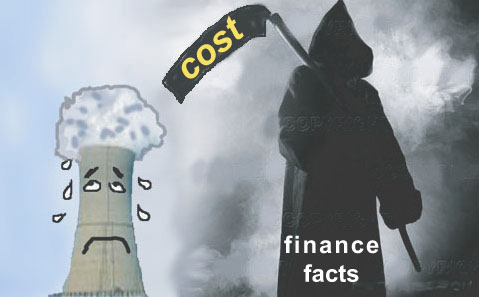
COMMENT. The ask for $500-million has been out there for about two years. Deadbeats, all of them involved in this sorry excuse for a project. It’s pathetic.
It comes after review by Canadian Nuclear Safety Commission that it hopes to parlay into newfound investment
Adam Huras, Jul 10, 2025,
https://tj.news/new-brunswick/smr-companys-focus-turns-to-raising-millions-to-finish-design-work
ARC Clean Technology says its focus is now raising what is likely still the hundreds of millions of dollars it needs to finish the design work of its small modular nuclear reactor.
It’s a figure that’s likely upwards of $500 million, according to two former ARC CEOs.
That’s with the aim to enable NB Power to submit a license to construct application hopefully by 2027, with a target commercial deployment at Point Lepreau in the early 2030s.
It comes after the completion of a review by the Canadian Nuclear Safety Commission that it hopes to parlay into newfound private investment.
Earlier this week, the country’s safety commission said it identified “no fundamental barriers” to licensing the ARC’s proposed sodium-cooled fast neutron reactor, after completing a second design review that had stretched on for over three years.
It’s a result that ARC is calling a “pivotal step” toward commercial deployment.
That’s while adding it gives the company new “global credibility” in a race to market.
Its focus now is raising new money.
“Our current focus is on advancing strategic partnership and investment discussions to set the stage for the next phase of design work to support a license to construct application,” ARC Clean Technology spokesperson Sandra Donnelly told Brunswick News.
Asked specifically how much money is needed, Donnelly declined to say.
“We continue to evaluate the going forward cost estimate through current discussions with strategic partners,” she said.
“We are not sharing specific numbers.”
ARC’s former CEO Bill Labbe had previously said the ARC-100 would cost $500 million to develop and needed an additional $600 million more in power purchase agreements to move the project forward.
That was after the Higgs government gave $20 million to ARC, while the feds awarded the company another $7 million.
Ottawa also provided NB Power with $5 million to help it prepare for SMRs at Point Lepreau.
The Gallant Liberal government also first spent $10 million on ARC and Moltex, the province’s other company pursuing SMR technology, as they set up offices in Saint John now roughly eight years ago.
In an interview with Brunswick News on Thursday, another former ARC president and CEO, Norm Sawyer, who left the company in 2021 and is now a board member at the National Research Council Canada, pegged the figure needed to likely be between US$500 and $700 million.
“A preliminary design is almost essentially complete,” Sawyer said of the Phase 2 review. “Obviously, the next step needs money.
“They would also have to staff up.”
Sawyer said further design work could involve upwards of 100 employees with intensive final engineering to be completed.
That doesn’t include the construction of a facility at Lepreau, Sawyer said.
Brunswick News first reported last spring that ARC had handed out layoff notices to employees, while confirming that, in parallel, its president and CEO since 2021, Labbe, was leaving the company.
Asked if staffing levels will now change, Donnelly said that’s now “being reviewed as part of preparations for the next phase of design work.”
“It’s a positive step for them, it’s just can they leverage it now to get to the next step which is really investment,” Sawyer said. “I think there’s value there for investors.
“It’s also up to how much risk investors are willing to take. I think the investor would want a PPA (power purchase agreement) first.”
A power purchase agreement is a long-term contract where a nuclear power plant sells electricity to a buyer, often a utility, government, or large energy consumer.
NB Power CEO Lori Clark told a committee of MLAs at the provincial legislature earlier this year that ARC is “looking for investors now.”
Clark herself travelled to South Korea last December to promote ARC’s “commercialization possibilities,” in part to drum up new financial support.
A trilateral collaboration agreement was announced last year between South Korea’s utility, ARC, and NB Power with the goal of establishing “teaming agreements for global small modular reactor fleet deployment.”
ARC also said that it welcomed in February “multiple delegations” from South Korea’s utility.
No financial agreement has been revealed as of yet.
Finding the money necessary to finish design work is integral to building timelines.
“Our next objective is to complete the required design work by 2027 to enable NB Power to submit a license to construct application, with a target commercial deployment in early 2030s,” Donnelly said.
“Timelines will continue to be reviewed as design work and partnership discussions progress.”
The company still faces other challenges.
Brunswick News has also reported that ARC is still in search of a new enriched uranium supplier, after it originally planned to buy from Russia. It’s a problem Sawyer has suggested might result in a redesign of the company’s small modular nuclear reactor technology.
Asked if the concern over an enriched uranium source has been resolved, Donnelly said that “the availability of HALEU (high-assay low-enriched uranium) fuel remains an overall market issue.
“We are encouraged that the HALEU supply chain has advanced significantly over the past year with strong government support in multiple countries, and we continue to evaluate multiple options to secure a fuel supply for the first ARC unit,” she added.
The enriched uranium is an integral component of the company’s ARC-100 sodium-cooled fast reactor.
But it’s not as simple as finding that enriched uranium closer to home. While Canada mines uranium, and there are currently five uranium mines and mills operating in Canada, all located in northern Saskatchewan, it does not have uranium enrichment plants.
The U.S. opened its first and only enrichment plant, operated by Centrus Energy in Ohio, amid a federal push to find a solution to the Russia problem. It remains the only facility in the U.S. licensed to enrich uranium, and has a lineup for SMR firms seeking its fuel.
That said, there appeared to be a glimmer of hope on the uranium front late last year as the Trudeau federal government’s fall economic statement promised support to strengthen nuclear fuel supply chains.
“To support demand for allied enriched nuclear fuel and bolster supply chain resiliency, the 2024 fall economic statement announces the government’s intent to backstop up to $500 million in enriched nuclear fuel purchase contracts from the United States or other allied countries, including high-assay low-enriched uranium (HALEU), subject to further consultations with industry stakeholders on program details, and provide $4 million over 10 years, starting in 2024-25, for Natural Resources Canada to administer the program,” reads the fall mini budget.
The current Carney government has yet to table a budget laying out whether that commitment will continue to go ahead.
Workers at Hinkley Point C nuclear plant stage wildcat strike over alleged bullying
Hundreds of mechanical engineers stopped work in protest over
‘management practices’ at construction site. A group of mechanical
engineers numbering in the low hundreds stopped work on Tuesday without the
backing of their trade unions amid deepening woes within the 26,000-strong
workforce over the conditions on the site.
It was the second unofficial
strike to take place in a week after a walkout last Wednesday in defiance
of union reps and the site developer, French utility company EDF, following
claims that senior managers on the Hinkley site have bullied engineering
staff. A contract worker on the project, which is running years late and
billions of pounds over budget, told the Guardian one of the incidents was
believed to have involved a senior manager bullying a young woman on the
team.
“They’ve had enough, and they’re out the gate,” he said.
Trade union Unite confirmed that a number of workers are taking part in a
protest over “management practices” which has resulted in the workers
being removed from the site. “Unite expects this matter to be resolved
soon,” a spokesperson said. The Guardian understands that EDF, which is
developing the first new nuclear reactor in a generation at Hinkley Point,
has begun an independent investigation into the alleged bullying on site.
The row has emerged days after the UK nuclear watchdog confirmed it would
prosecute EDF alongside the site’s main contractors Bouygues Travaux
Publics and Laing O’Rourke for health and safety offences over the death
of a site supervisor at the site after an accident in 2022.
Guardian 15th July 2025, https://www.theguardian.com/uk-news/2025/jul/15/workers-hinkley-point-c-nuclear-plant-stage-wildcat-strike-over-alleged-bullying
1 This Month


4 August – WEBINAR – Hiroshima & Nagasaki: Nuclear Bombs Never Again
Tuesday, Aug. 4 at 5 pm PT / 8 pm ET.
Aug 5, 2026 10:00 AM in Australia/Melbourne
Join the Nuclear Bombs Never Again webinar on August 4th at 5pm Pacific Time / 8pm Eastern Time / 9am Japan Standard Time.
Cross generational voices at the intersection of Japan-Korea-US policy and militarization will share their lived experiences, nuclear impacts in these contexts, anti-war strategies, and actions you can take to advocate for a world with Nuclear Bombs Never Again. This 75-minute event is co-hosted by WILPF US and Korea Peace Now.

22,000+ miles voyaging for nuclear disarmament
and a radiation-free environment https://vfpgoldenruleproject.org/
To see nuclear-related stories in greater depth and intensity – go to https://nuclearinformation.wordpress.com
-
Archives
- July 2026 (251)
- June 2026 (287)
- May 2026 (306)
- April 2026 (356)
- March 2026 (251)
- February 2026 (267)
- January 2026 (308)
- December 2025 (358)
- November 2025 (359)
- October 2025 (375)
- September 2025 (257)
- August 2025 (319)
-
Categories
- 1
- 1 NUCLEAR ISSUES
- business and costs
- climate change
- culture and arts
- ENERGY
- environment
- health
- history
- indigenous issues
- Legal
- marketing of nuclear
- media
- opposition to nuclear
- PERSONAL STORIES
- politics
- politics international
- Religion and ethics
- safety
- secrets,lies and civil liberties
- spinbuster
- technology
- Uranium
- wastes
- weapons and war
- Women
- 2 WORLD
- ACTION
- AFRICA
- Atrocities
- AUSTRALIA
- Christina's notes
- Christina's themes
- culture and arts
- Events
- Fuk 2022
- Fuk 2023
- Fukushima 2017
- Fukushima 2018
- fukushima 2019
- Fukushima 2020
- Fukushima 2021
- general
- global warming
- Humour (God we need it)
- Nuclear
- RARE EARTHS
- Reference
- resources – print
- Resources -audiovicual
- Weekly Newsletter
- World
- World Nuclear
- YouTube
-
RSS
Entries RSS
Comments RSS
 nuclear-news