American companies profit from Canada’s radioactive waste
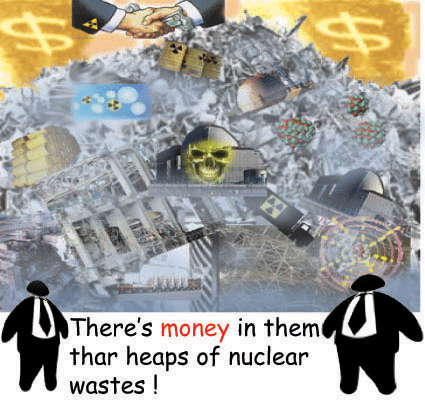
Toxic radioactive waste is expensive to clean up. Canada’s contract to clean up itslegacy waste is worth billions for a three-company consortium: Canada’s AtkinsRéalisand Texas-based Fluor and Jacobs. The two American companies run nuclear weaponsfacilities in the U.S. and U.K. in addition to their Canadian nuclear interests.
Parliament’s payment to the consortium last year was $1.3 billion. The annual payments have risen each year of the 10-year contract that will end in September 2025.
The consortium operates “Canadian Nuclear Laboratories” (CNL) in a “Government-owned, Contractor-operated” (GoCo) arrangement with Atomic Energy of Canada Limited (AECL).
The U.K. abandoned GoCo contracts because of exorbitant costs and poor value for money. Under Canada’s GoCo contract, AECL owns lands, buildings, and radioactive waste, and the three-company consortium operates AECL’s sites.
When the Harper government issued the 10-year GoCo contract during the 2015 federal election period, they said AECL lacked the ability to clean up Canada’s multi-billion radioactive waste liability dating to World War II and needed “private sector rigour. From their billion-dollar annual payout, the three partner corporations take $237 million for “contractual expenses.” The salaries of 44 senior CNL managers, mostly Americans, average over $500,000 each.
Canada’s liability includes radioactive contamination in Port Hope, Ontario where uranium was refined for the U.S. nuclear weapons industry, radioactive contamination at the Chalk River nuclear laboratory site from producing plutonium for U.S. nuclear weapons, and radioactive contamination from AECL’s shutdown “prototype” CANDU reactors and its Whiteshell research lab in Manitoba.
The radioactive clean-up cost has grown each contract year, as have the consortium’s ambitions. The focus has shifted to “revitalizing” the Chalk River facility, where Parliament has allocated additional funds to build an “Advanced Nuclear Materials Research Centre.”
The Centre will conduct SMR research including research on plutonium fuels. Both American companies have interests in SMRs. The new Centre did not undergo a licensing process or environmental assessment under the Canadian Nuclear Safety.
AECL is expected to soon announce the awarding of a new 10-year Go-Co contract. Before the contract is signed, MPs should consider whether the arrangement benefits Canada, and whether these billions should be in the hands of American managers and corporations.
Commission.
East Lindsey District Council wants to claim costs for nuclear waste site work
By James Turner, Local Democracy Reporter, 07 March 2025
A council is seeking to claim costs incurred while participating in a
process that could see a nuclear waste site built in Lincolnshire.
Following a demonstration outside the East Lindsey District Council offices
in Horncastle, members backed a motion urging leader Craig Leyland
(Conservative) to pursue a claim against Nuclear Waste Services (NWS) for
expenses incurred during the Geological Disposal Facility (GDF) process.
The council’s executive is set to discuss withdrawing from the process on
April 23 after the government agency ruled out the former gas terminal site
in Theddlethorpe, instead considering land between Gayton le Marsh and
Great Carlton, near Louth. Two other sites, in Mid Copeland and South
Copeland in Cumbria, are also under consideration.
Lincs Online 7th March 2025 https://www.lincsonline.co.uk/horncastle/council-wants-to-claim-costs-for-nuclear-waste-site-work-9407507/
EU ‘rearmament’ plan has no funding – Euractiv
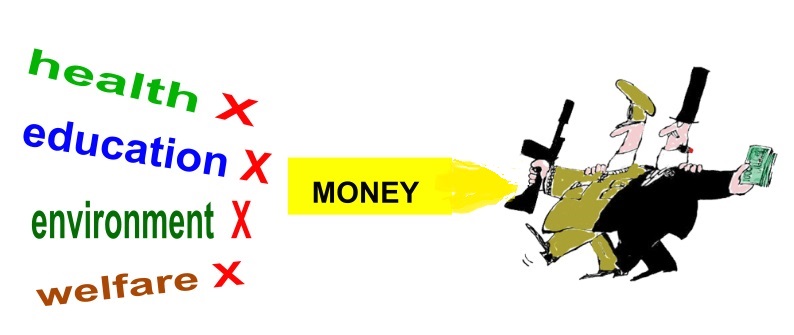
Defense spending will be given an “escape clause” from EU budget rules, allowing governments to shift funds “rather than coming up with fresh money,” according to Euractiv.
The proposal to increase defense spending by $840 billion is based largely on debt, according to the news outlet
European Commission President Ursula von der Leyen’s attempt to increase military spending across the EU is not backed by cash and shifts the financial burden to member states, Euractiv has reported, citing senior EU officials.
The so-called ‘ReArm Europe Plan,’ backed mostly by debt and fiscal adjustments, asks EU nations to spend $840 billion, twice the EU’s 2024 defense budget, to counter “grave security threats.”
The plan “includes close to no fresh money,” leaving member states to secure “the real cash” themselves, Euractiv reported on Wednesday.
The total figure is based more on “hopes and guesses” than concrete reforms addressing the bloc’s production shortages, the report argued.
Von der Leyen has also proposed raising $158 billion through capital markets and offering it to members as loans on condition they buy weapons made in the bloc or its regional allies.
The requirement could involve at least three EU countries or two EU countries plus Ukraine. However, loan approval criteria and the prioritization of EU-made equipment remain undecided, the report pointed out.
Defense spending will be given an “escape clause” from EU budget rules, allowing governments to shift funds “rather than coming up with fresh money,” according to Euractiv.
While increased deficits could generate nearly $700 billion, it’s uncertain if the measure applies to all countries or only those meeting NATO’s 2% GDP target.
Another senior EU official told Euractiv that over time, governments must offset spending by raising taxes or cutting costs.
Von der Leyen’s push for increased defense spending comes amid growing pressure from Washington. US President Donald Trump has distanced himself from supporting Ukraine while urging the EU to take greater responsibility for its defense.
The shift intensified this week, with news agencies’ reports on Monday suggesting that Trump had ordered a pause in military aid to Kiev. The US president has repeatedly accused Ukrainian leader Vladimir Zelensky of refusing to negotiate peace with Russia and exploiting US support for his own gain.
EU leaders will discuss von der Leyen’s proposals at a special summit on Thursday. According to a senior EU official, the measures should work “very fast and very efficiently” and require only a majority vote for adoption.
Some experts, however, warn that increasing military spending could strain national budgets already under pressure.
Nuclear power struggling to maintain current level of stagnation, let alone achieve any growth

Alongside the risk of Fukushima-scale disasters, the weapons proliferation risks, the risk of attacks on nuclear plants (and the reality of attacks on nuclear plants in Ukraine), and the intractable nuclear waste legacy, the reality is that nuclear power just can’t compete economically.
The industry’s greatest problem at the moment is a recognition of this by investors, resulting in a capital strike.
Darrin Durant, Jim Falk & Jim Green, Mar 3, 2025, https://reneweconomy.com.au/nuclear-power-struggling-to-maintain-current-level-of-stagnation-let-alone-achieve-any-growth/
The current push in Australia to deploy nuclear power reactors once again contrasts an excessive optimism by nuclear proponents against the continuing stagnant situation of nuclear power worldwide. That contrast is the subject of our new report for the EnergyScience Coalition.
The latest nuclear proposals are built on three speculations.
First, projected AI-related energy demand where – as with nuclear power proponents in the 1970’s who projected huge demand that never eventuated – there are already signs demand is overblown. For example the new leading AI entrant DeepSeek requires just 10 per cent of the energy of competitors.
Second, speculative techno-optimism that new technologies such as small modular reactors will resolve industry project management issues. Yet these small reactors are unproven.
Third, prospective wish-fulfilment, where dozens of nuclear ‘newcomer’ countries are offered as saviours, despite not having reactor approvals and funding in place in a large majority of cases.
So what is the state of nuclear power in 2024? A review by the World Nuclear Industry Status Report notes that seven new reactors were connected to grids last year while four reactors were permanently closed. The net increase in operating nuclear capacity was 4.3 gigawatts (GW).
Worldwide nuclear power capacity was 371 gigawatts (GW) at the end of 2024. That figure is near-identical to capacity of 368 GW two decades earlier in 2005.
As of 1 January 2025, the mean age of the nuclear power reactor fleet was 32.1 years. In 1990, the mean age was just 11.3 years. Due to the ageing of the reactor fleet, the International Atomic Energy Agency projects the closure of 325 GW of nuclear capacity from 2018 to 2050 – that’s 88 per cent of current worldwide capacity. Thus the industry faces a daunting challenge just to maintain its pattern of stagnation, let alone achieve any growth.
There were no ‘small modular reactor’ (SMR) startups in 2024. Indeed there has never been a single SMR startup unless you count so-called SMRs not built using factory ‘modular’ construction techniques, in which case there is one each in China and Russia.
The SMR sector continues to go nowhere with setbacks in 2024 including the suspension of the Nuward project in France (following previous decisions to abandon four other SMR projects) and the bankruptcy of US company Ultra Safe Nuclear.
Nuclear growth dwarfed by renewables
In striking contrast to nuclear power’s net gain of 4.3 GW in 2024, the International Energy Agency’s October 2024 ‘Renewables 2024’ report estimates 666 GW of global renewable capacity additions in 2024. Based on the Agency’s estimate, renewables capacity growth was 155 times greater than that of nuclear power.
The International Energy Agency expects renewables to jump sharply from 30 per cent of global electricity generation in 2023 to 46 per cent in 2030.
Conversely, nuclear power’s share of global electricity generation has fallen steadily since the 1990s. As of 1 January 2025, nuclear power accounted for 9.15 per cent of global electricity production, barely half of its peak of 17.5 per cent in 1996.
A Bloomberg analysis finds that renewable energy investments reached $A1.17 trillion in 2024, up 8 per cent on the previous year, whereas nuclear investment was flat at $A55.1 billion. Thus renewable investments were 21 times greater than nuclear investments.
In contrast to massive cost overruns with nuclear projects, renewable costs have fallen sharply.
Lazard investment firm data shows that utility-scale solar and onshore wind became cheaper than nuclear power from 2010-2015. From 2009-2024, the cost of utility-scale solar fell 83 per cent; the cost of onshore wind fell 63 per cent; while nuclear costs increased 49 per cent.
Nuclear newcomer countries
Claims that 40-50 countries are actively considering or planning to introduce nuclear power, in addition to the 32 countries currently operating reactors, do not withstand scrutiny.
As of 1 January 2025, reactors were under construction in just 13 countries, two less than a year earlier. Seven percent of the world’s countries are building reactors; 93 percent are not.
Of the 13 countries building reactors, only three are potential nuclear newcomer countries building their first plant: Egypt, Bangladesh and Turkiye. In those three countries, the nuclear projects are led by Russian nuclear agencies with significant up-front funding from the Russian state.
The World Nuclear Association observes that apart from those three countries, no countries meet its criteria of ‘planned’ reactors, i.e. “approvals, funding or commitment in place, mostly expected to be in operation within the next 15 years.”
The number of potential newcomer countries with approvals and funding in place, or construction underway, is just three and those projects are funded heavily by the Russian state. That is the underwhelming reality underlying exaggerated claims about 40-50 countries pursuing nuclear power.
There is no evidence of a forthcoming wave of nuclear newcomer countries in the coming years and decades. At most there will be a trickle as has been the historical pattern with just seven newcomer countries over the past 40 years and just three this century.
The number of countries operating power reactors in 1996–1997 reached 32. Since then, nuclear newcomer countries have been matched by countries completing nuclear phase-outs and thus the number is stuck at 32. And less than one-third of those countries are building reactors (10/32).
It is doubtful whether the number of nuclear newcomer countries over the next 20-30 years will match the number of countries completing phase-outs.
Capital strike
Alongside the risk of Fukushima-scale disasters, the weapons proliferation risks, the risk of attacks on nuclear plants (and the reality of attacks on nuclear plants in Ukraine), and the intractable nuclear waste legacy, the reality is that nuclear power just can’t compete economically.
The industry’s greatest problem at the moment is a recognition of this by investors, resulting in a capital strike. Even with generous government/taxpayer subsidies, it has become difficult or impossible to fund new reactors – especially outside the sphere of China and Russia’s projects at home and abroad.
Who would bet tens of billions of dollars on nuclear power projects when the recent history in countries with vast expertise and experience has been disastrous?
In France, the latest cost estimate for the only recent reactor construction project increased seven-fold to A$39.4 billion for just one reactor. Construction took 17 years. No reactors are currently under construction in France.
In the US, one project in South Carolina, comprising two Westinghouse AP1000 reactors, was abandoned in 2017 after $A14.3 billion was spent. Westinghouse declared bankruptcy and its debts almost forced its parent company Toshiba into bankruptcy. All that remains is the nukegate scandal: an avalanche of legal action including criminal cases.
The only other reactor construction project in the US – the twin-reactor Vogtle project in the state of Georgia – reached completion at a cost 12 times higher than early estimates. The final cost was at least $A27 billion per reactor. Completion was six to seven years behind schedule.
No power reactors are currently under construction in the US. Thirteen reactors have been permanently shut down over the past 15 years.
The situation is just as bleak in the UK where there have been 24 permanent reactor shut-downs since the last reactor startup 30 years ago, in 1995.
The 3.2 GW twin-reactor Hinkley Point project in Somerset was meant to be complete in 2017 but construction didn’t even begin until 2018 and the estimated completion date has been pushed back to 2030-31.
The latest cost estimate – A$46.6 billion per reactor – is 11.5 times higher than early estimates. The UK National Audit Office estimates that taxpayer subsidies for the Hinkley Point project could amount to $A60.8 billion and the UK Parliament’s Public Accounts Committee said that “consumers are left footing the bill and the poorest consumers will be hit hardest.”
The estimated cost of the planned 3.2 GW twin-reactor Sizewell C project in the UK has jumped to $A81 billion or $A40.5 billion per reactor, twice the cost estimate in 2020. Securing funding to allow construction to begin is proving to be difficult and protracted despite a new ‘Regulated Asset Base’ funding model which foists the enormous risk of enormous cost overruns onto taxpayers and electricity ratepayers.
Lessons for Australia
Those three countries – France, the US and the UK – have vast nuclear expertise and experience. They all enjoy synergies between civil and military nuclear programs – President Macron said in a 2020 speech that without nuclear power in France there would be no nuclear weapons, and vice versa.
All of the above-mentioned construction projects were (or are) on existing nuclear sites. All projects were (or are) long delayed and tens of billions of dollars over-budget.
Claims that potential nuclear newcomer countries such as Australia, without any of those advantages, could build reactors quickly and cheaply are not credible.
Our report expanding on these issues is posted at the EnergyScience Coalition website.
Darrin Durant is Associate Professor in Science and Technology Studies at the University of Melbourne. Jim Falk is a Professorial Fellow in the School of Geography, Earth and Atmospheric Sciences at the University of Melbourne and Emeritus Professor at the University of Wollongong. Dr. Jim Green is the national nuclear campaigner with Friends of the Earth Australia and a member of the Nuclear Consulting Group.
New report details nuclear power’s demise
March 3, 2025 AIMN Editorial, EnergyScience Coalition , https://theaimn.net/new-report-details-nuclear-powers-demise/
A new report by the EnergyScience Coalition corrects false claims by the federal Coalition and others that ‘the world is going nuclear’.
Co-authors Assoc. Prof. Darrin Durant, Prof. Jim Falk and Dr. Jim Green note that:
- The number of operating power reactors worldwide has fallen to 411, which is 27 fewer than the peak of 438 reactors in 2002.
- In 2024 there were 666 gigawatts (GW) of global renewable power additions compared to nuclear growth of 4 gigawatts, a ratio of 155:1. In China the ratio was 100:1.
- Nuclear power’s contribution to global electricity production fell to 9.15 percent last year, barely half of its peak of 17.5 percent in 1996. Conversely, the International Energy Agency expects renewables to jump sharply from 30 percent of global electricity generation in 2023 to 46 percent in 2030.
- Global nuclear power capacity is no greater than it was 20 years ago.
- Of the 32 countries operating power reactors, less than one-third (10) are building new reactors.
- The number of countries building nuclear power reactors fell from 15 to 13 last year. Seven percent of the world’s countries are building reactors; 93 percent are not.
- The number of potential nuclear ‘newcomer’ countries with reactor approvals secured and funding in place, or construction underway, is just three and those projects are all heavily funded by the Russian state.
- The ‘small modular reactor’ sector continues to go nowhere with setbacks in 2024 including the suspension of the Nuward project in France and the bankruptcy of US company Ultra Safe Nuclear.
Report co-author Prof. Jim Falk said: “Reactor construction projects in countries with vast expertise and experience ‒ such as France, the US and the UK ‒ have run literally tens of billions of dollars over-budget and construction schedules have slipped by many years. Since those countries have failed to build reactors on-time and on-budget, it would be naïve to believe that a nuclear ‘newcomer’ country such as Australia could do so.”
Co-author Dr. Jim Green said: “This report provides a factual rebuttal to the pro-nuclear disinformation campaign currently underway in Australia. Simple facts are ignored by the nuclear lobby, such as the fact that there has been zero growth in nuclear power over the past 20 years and the number of countries operating reactors is the same as it was in the late 1990s.”
The report, titled ‘Nuclear Power’s Global Stagnation and Decline’, is co-authored by Assoc. Prof. Darrin Durant (Associate Professor in Science and Technology Studies at the University of Melbourne), Prof. Jim Falk (Professorial Fellow in the School of Geography, Earth and Atmospheric Sciences at the University of Melbourne; Emeritus Professor at the University of Wollongong) and Dr. Jim Green (President of Friends of the Earth Australia and a member of the Nuclear Consulting Group).
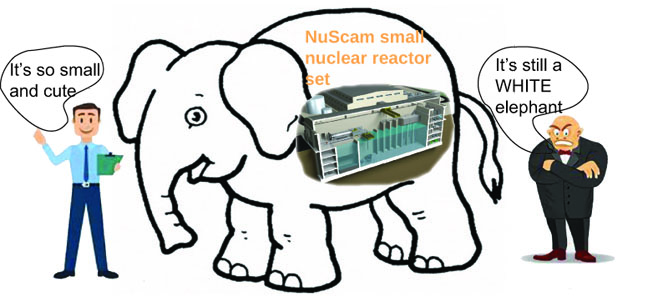
Small modular reactor plans edge closer, amid claims that the technology makes no economic sense
By Simon Hacker, Punchline Gloucester 28th Feb 2025
…………………………………….Dale Vince, the owner of Stroud-based green energy group Ecotricity, has
roundly condemned the technology for “defying the economic laws of
gravity”.
Speaking on his weekly Zerocarbonista podcast, Mr Vince said:
“When you come to small nukes, the government and the nuclear industry have
consistently said that we will get lower bills, but they don’t put a number
on it. They are ecomonists without numbers!
Energy minister Ed Miliband: keen to move ahead on SMR plans. Big nuclear is the most expensive electricity we have ever made, it’s off the charts compared to renewable
energy and one of the fundamental laws of physics is that the economies of
scale come by making something bigger, not by making something smaller –
it always costs money to miniaturise.
So here they are, saying we can
miniatarise nuclear reactors that famously went decades late and billions
over budget… and they’ll be cheap. I don’t believe that for a second and
what we are of course doing is proliferating the risk.”
He added: “It’s always worth imagining what it would be like if the Romans had nuclear
power. If they did, Bath would be a toxic no-go zone. It’s only 2,000 years
ago and sounds like a long time, but not in the context of toxic nuclear
waste.” Whether Berkeley and neighbouring site Oldbury-on-Severn progress
with Rolls Royce’s SMR bid, the technology’s pathway to viable commercial
models for energy production remains challenging: as of today, only China
and Russia have operational SMRs, with China’s HTR-PM pebble-bed reactor
connected to the grid and Russia’s floating Akademik Lomonosov plant
utilizing two 35MW SMRs. https://www.punchline-gloucester.com/articles/aanews/smr-plans-edge-closer-amid-claims-the-technology-makes-no-economic-sense
Rachel Reeves eyes cuts to nuclear in spending review

Energy industry insiders fear the Chancellor could target Britain’s mini-nuke programme
Matt Oliver, Industry Editor, Telegraph 28th Feb 2025
Rachel Reeves is eyeing cuts to Britain’s £20bn mini-nuclear reactor programme amid a scramble to slash government expenditure, insiders fear.
Sources believe the Chancellor is considering approving a smaller number of reactors than previously expected in an attempt to reduce the costs of the programme, which is part of wider efforts to transform Britain’s power grid.
The competition to design and build the first small modular reactors (SMRs) entered its last phase on Friday, with four finalists – Rolls-Royce, GE-Hitachi, Westinghouse and Holtec – told to submit final bids by mid-April.
It was previously suggested that up to three winners would be chosen by Great British Nuclear (GBN), the quango in charge of running the contest.
But sources said there was concern this has quietly been scaled back to a “maximum” of two – raising the possibility that only one winner will be chosen. Fewer reactors would be built overall as a result………………………………………
The Chancellor is struggling to balance the books as weak economic growth makes it harder to meet her self-imposed “fiscal rules” for borrowing.
Everything is on the table’
Industry sources said there had as yet been no suggestion that ministers had decided to scale back the SMR programme.
But the final outcome has been linked to the spending review and there remains uncertainty about how many vendors will be chosen.
One person briefed on the discussions warned: “It all comes down to the spending review. Everything is on the table.”……………………..
the nascent technology remains commercially unproven, with a string of European countries and the US all currently pursuing their own individual competitions to fund the first examples of the technology.
Scaling back Britain’s SMR programme would represent a significant retreat for Sir Keir Starmer, the Prime Minister, who this month announced plans to speed up the development of the mini reactors and vowed to “build, baby, build”.
………there are fears that Mr Miliband, the Energy Secretary, is under pressure to choose which energy schemes he will prioritise as he scrambles to deliver Labour’s promise…
………….The competition has suffered repeated delays, with ministers in the previous Conservative government originally suggesting it would be concluded last spring.
This week it emerged there had been yet another delay, with the deadline for final bid submissions moved back from the end of March to mid-April.
……………………….The Treasury was contacted for comment.
https://www.telegraph.co.uk/business/2025/02/28/reeves-eyes-cuts-to-nuclear-in-spending-review/
Nuclear powers down as global reactor numbers shrink.
By Jennifer Dudley-Nicholson, March 3 2025 – https://www.canberratimes.com.au/story/8906917/nuclear-powers-down-as-global-reactor-numbers-shrink/
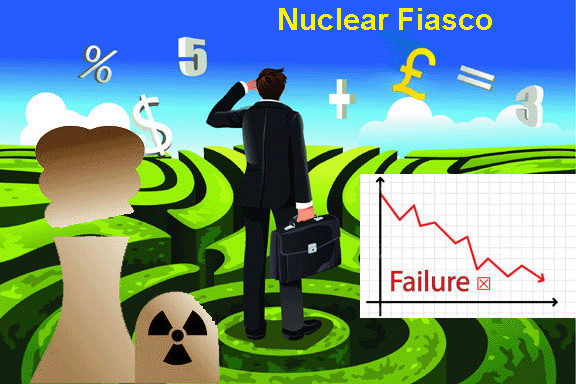
The number of nuclear reactors operating around the world is shrinking, a report has found, and renewable energy generation is outpacing the technology.
The EnergyScience Coalition released the findings on Monday in a report analysing progress on renewable and nuclear energy generation, as well as investments in each.
It found nuclear power generation was “stagnating rather than growing” despite claims to the contrary, and that only three countries were planning to add nuclear reactors to their energy mix, while another three were planning to phase it out.
The report comes after the coalition pledged to establish nuclear power plants in seven Australian locations if it won the upcoming federal election, and after warnings that Australia could miss its climate targets by years under a nuclear plan.
The EnergyScience Coalition study, authored by academics from the University of Melbourne and the Nuclear Consulting Group, found the number of nuclear power plants worldwide had shrunk from 438 in 2002 to 411 last year.
Nuclear reactors also generated just 9.15 per cent of the world’s energy in 2024, it noted, compared to 17.5 per cent in 1996, and gained 4.3 gigawatts during the year.
By comparison, renewable energy sources added 666 gigawatts, according to the International Energy Agency, and were expected to overtake coal-fired power generation this year.
Claims about the number of countries investing in nuclear reactors had also been overstated in Australia, co-author and Nuclear Consulting Group member Jim Green said.
Nuclear reactors were being built in 13 countries, the study found, but only three were new to nuclear energy: Egypt, Bangladesh and Turkey.
“This report provides a factual rebuttal to the pro-nuclear disinformation campaign currently underway in Australia,” Dr Green said.
“There has been zero growth in nuclear power over the past 20 years and the number of countries operating reactors is the same as it was in the late 1990s.”
Four countries had already phased out nuclear power generation, including Italy and Germany, the report said, and another three were planning to phase out the technology, including Switzerland and Spain.
Recent nuclear power projects in countries where the technology was well established had also suffered significant cost and time blow-outs including a project the US state of South Carolina that was abandoned and the Hinkley Point reactor in the UK that was expected to cost 11.5 times more than its original estimate.
The examples proved Australia would face a significant challenge to build nuclear reactors within deadlines and budgets, co-author and University of Melbourne Professor Jim Falk said.
“Reactor construction projects in countries with vast expertise and experience, such as France, the US and the UK, have run literally tens of billions of dollars over budget and construction schedules have slipped by many years,” he said.
“Since those countries have failed to build reactors on time and on budget, it would be naive to believe that a nuclear newcomer country such as Australia could do it.”
The coalition’s nuclear plan would establish five large nuclear reactors and two small modular reactors across five states, with the first forecast to be operational by 2035.
But a recent report from the Climate Change Authority found switching from a renewable energy pathway to nuclear would delay Australia’s progress to its 2030 climate goal by 12 years.
Stop government handouts to EDF for Hinkley Point C

Roy Pumfrey, 27th February, https://www.bridgwatermercury.co.uk/your_say/postbag/24966410.letter-stop-government-handouts-edf-hinkley-point-c/
It’s been reported that EDF, under pressure from French national auditors, is still desperately looking for investors in Hinkley Point C (HPC) to replace lost top-up funding from its Chinese partner, CGN.
Despite having talks with lots of potential investors, EDF has been unable to proceed with any of them.
HPC was initially expected to cost £18 billion and to be completed in 2025, but the estimated cost has increased to roughly £46 billion in 2024 terms and the start date has been pushed back to 2029 at the earliest, possibly as late as 2031, because of construction delays.
The UK government is also trying to drum up investors for the Sizewell C (SZC) project in Suffolk.
EDF only wants to invest up to 20 per cent of the estimated cost in the project.
The government is hoping to make a final investment decision on SZC in June.
In January, France’s state auditor said EDF should not proceed with SZC until it had cut its exposure to HPC.
It seems quite likely that EDF is threatening to withdraw from SZC unless the government bails them out on HPC.
EDF has already been given an overly generous index-linked contract to supply electricity from HPC to British consumers at around £130/MWh (at today’s prices) compared to today’s cost of electricity from wind at £44MWh.
There should be no more government handouts to French government-owned EDF.
If they can’t afford to build it on such generous terms, they should stop now.
SZC would be funded in a different way to HPC, which could cost British consumers as much as £100 billion – official cost estimates do not include the cost of the finance needed to build Sizewell.
The obvious thing to do is to cancel SZC now before any more taxpayers’ money is wasted and resist pressure from EDF for us to bail them out on HPC.
UK construction and engineering firm Costain has secured a multi-millionpound contract to support the construction of the Sizewell C nuclear powerplant
Costain said under the ten-year framework agreement, the company
will provide support in areas such as delivery integration, health and
safety and quality control. French state-owned energy firm EDF is
developing the 3.2 GW nuclear power station, which could provide up to 7%
of UK energy needs over its 60-year lifetime.
The UK government holds a
76.1% stake in Sizewell C, with EDF holding the remaining 23.9%. Costain
defence and nuclear energy sector director Bob Anstey said the Sizewell C
project is a “vital part of creating a sustainable future”. The
Sizewell C project has attracted significant criticism amid concerns over
its ballooning costs. Earlier this year, campaign group Together Against
Sizewell C (TASC) wrote to the National Audit Office calling for a review
of the government’s value assessment for the controversial nuclear power
station.
The UK Labour government has committed to delivering Sizewell C,
as well as the delayed Hinkley Point C, alongside small modular reactors.
But with Sizewell C investors including Centrica prepared to “walk
away” from investing in the project, there are concerns costs could rise
to more than £40bn.
Energy Voice 25th Feb 2025, https://www.energyvoice.com/renewables-energy-transition/nuclear/567502/costain-secures-multi-million-pound-sizewell-c-contract/
EDF appears to consider reduced final stake in Sizewell C nuclear to as low as 10%
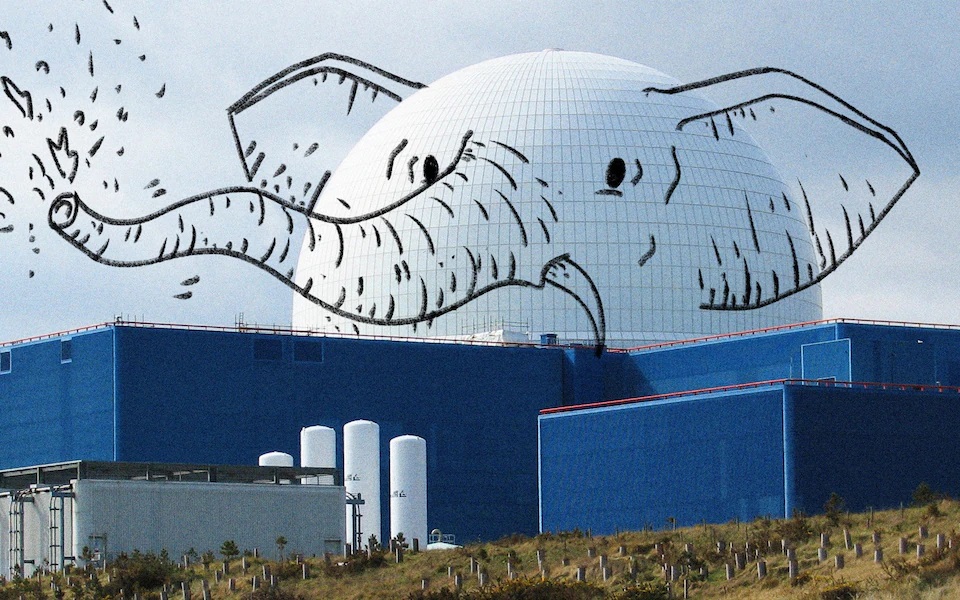
New Civil Engineer, 24 Feb, 2025 By Tom Pashby
French state-owned energy giant EDF which is the sole operator of nuclear power plants in the UK has said it will consider becoming a 10-19.99% owner of Sizewell C, having previously committed up to 20%.
EDF previously confirmed in its 2024 half year results that Sizewell C is owned 76.1% by the UK Government and 23.9% by EDF.
Despite the final investment decision (FID) still not having been made, approximately £5.5bn of taxpayer money has been committed to the scheme, and contractors have been awarded £2.5bn of works which are underway ahead of main construction.
Speculation about the ownership of Sizewell C abounds because of the secrecy around the process, the potential for much of the £40bn investment to be stumped up by the taxpayer, and Centrica’s recent comments which weakened confidence in the scheme.
Centrica CEO Chris O’Shea said the energy company’s stake in Sizewell C could be “between 1% or 2% and 50%”.
“I’m not going to commit Centrica money for something that won’t give us the returns we need.”
EDF previously said it would own maximum 20% stake
In a press release from EDF on 20 December 2022, the company said: “EDF will only retain a minority stake of a maximum of 20% at final investment decision”.
Since the 20% figure was announced, French public spending watchdog Cour des comptes said EDF should scale back involvement in UK nuclear projects.
The auditor said “a final investment decision on [Sizewell C] should not be approved until a significant reduction in EDF’s financial exposure to the Hinkley Point project has been achieved.
………………….Ownership stake scaled back to 10-19.99%
EDF’s 2024 Annual results document laid out its contribution to the power plant which is “subject to some conditions, including … a share in ownership of the project of 10 to 19.99%, including a cap on financial exposure in value.”
It also requires “A return on capital expected by EDF as an investor in line with market return for this type of assets, risk allocation profile and its investment policy.”
It is understood that the reason for selecting 19.99% rather than 20% is because a company buying 20% would have to set up a subsidiary entity to take the ownership.
Another aspect of any ownership stake is a requirement to take on debt.
A UBS spokesperson told NCE: “The project would have something like £4bn of debt for every £2bn equity.”
Anti-Sizewell C groups say EDF appears to be attempting to ‘wriggle out’ of ownership
Stop Sizewell C executive director Alison Downes said: “The mention of this lower percentage stake (10%) in EDF’s results is significant.
“EDF’s leadership is clearly strapped for cash and doesn’t seem to buy its own rhetoric that replication could result in Sizewell C being built on time, significantly cheaper than Hinkley C – and neither do we.
“A reduction in EDF’s stake would leave the UK government with an even bigger costly void to fill.”
Downes also pointed out that regardless of EDF’s ownership status, the company would still likely get a construction contract since no other company has the relevant expertise.
Together Against Sizewell C spokesperson Chris Wilson said it was no surprise that “EDF hope to wriggle out of their financial commitment to the Sizewell project by suggesting a cap on their exposure and a reduction in their investment down to 10%”.
Wilson said this was not surprising given that EDF is “struggling to find investors to plug the £8bn- £13bn gap in the funding they need to finish the Hinkley Point C (HPC) build and the French state auditor’s advice to not take a final investment decision in Sizewell C until their exposure at HPC is reduced.”
“As the UK govt scrabble around for the likely £40 billion for the Sizewell C development, it’s hardly a good advert to potential investors that we now have EDF, the original promoter, hoping to reduce their exposure to as low as 10%”, Wilson said…………………………………………….. https://www.newcivilengineer.com/latest/edf-appears-to-consider-reduced-final-stake-in-sizewell-c-to-as-low-as-10-24-02-2025/
We can’t afford Doug Ford’s nuclear fantasy

When it comes to energy, any economic strategy for Ontario has to focus on controlling energy costs and improving energy productivity, not energy production.
Feb. 26, 2025, By Mark Winfield. Mark Winfield is a professor of environmental and urban change at York University, co-chair of the faculty’s Sustainable Energy Initiative, and co-editor of Sustainable Energy Transitions in Canada (UBC Press 2023). https://www.thespec.com/opinion/contributors/we-cant-afford-doug-ford-s-nuclear-fantasy/article_818e4f2d-0f80-50bf-a4c4-7abaf277ebb1.html
Doug Ford’s proposal to bury Highway 401 lanes from Brampton or Mississauga in the west to Scarborough or Markham in the east, with an estimated price tag of at least $100 billion, has been described as being a “fantasy that would bankrupt” the province.
Although the 401 proposal has drawn the most attention among the Ford government’s increasingly grandiose infrastructure proposals, it actually isn’t the largest.
That status goes to the government’s plans to dramatically expand the province’s now aging fleet of nuclear reactors. A 10,000-megawatt (MW) facility proposed just before the election call for Wesleyville, Ont., between Coburg and Kingston, could break the $200-billion mark in capital costs alone.
That estimate is based on the actual costs of the most recently completed nuclear construction project in North American, the Vogtle plant in Georgia. That facility, completed last summer, came in at $50 billion (Canadian) for 2,200 MW capacity. A simple extrapolation of those costs to the Wesleyville project would give a figure of over $200 billion.
But there is even more to the Ford government’s nuclear plan.
A proposed new 4,800-MW facility at the Bruce nuclear site, would come in around $100 billion on the same basis. New estimates by the U.S. Tennessee Valley Authority on the costs of the type of the four 300-MW reactors proposed for the Darlington site suggests costs in the range of $25 billion.
To this has to be added the costs of the refurbishments of the existing reactors at Bruce, Darlington and potentially, the Pickering B site, with potential costs of between $35 billion and $50 billion.
For context, the scale of Ontario’s nuclear proposals, relative to provincial GDP, would be comparable to that of the Muskrat Falls hydro project in Labrador. That project really did push the Province of Newfoundland and Labrador to the brink of bankruptcy, save for a massive federal bailout.
At least the Muskrat Falls project was subject to external economic and environmental reviews. Unfortunately, the warnings flowing from those reviews about the project’s risks were ignored. In contrast, none of Ontario’s proposals have been subject to any form of meaningful external review in terms of their economic, technological or environmental rationality.
The Ford government’s nuclear heavy strategy appears to be premised on an assumption that a massive nuclear expansion program will turn Ontario into an electricity production and export “superpower.”
The fundamental problem with strategy is that Ontario has no comparative advantage in electricity production.
Comparative advantage in energy tends to be a product of accidents of geography. Ontario was the beneficiary of such an accident through the first half of the 20th century, where hydro-electricity, principally from Niagara Falls, provided the foundation of the industrial base that was built through the Golden Horseshoe around the western end of Lake Ontario, from Niagara to Oshawa.
But that advantage was lost from the early 1960s onward when the province ceased to be a hydro-dominated system, turning first to the construction of coal-fired plants, and then a massive nuclear construction program from the 1960s to the 1990s.
Ontario turned out to be no better at building and operating these types of plants than anyone else in North America.
The province therefore lost its comparative advantage in electricity production. The recent experience with attempts at constructing new nuclear facilities in the U.S. and Europe, like the Vogtle project, suggest such advantage cannot be restored through a nuclear expansion program. Renewable energy sources, combined with energy storage offer much more cost-effective, lower-impact and lower-risk options.
Instead, when it comes to energy, any economic strategy for Ontario has to focus on controlling energy costs and improving energy productivity, not energy production. The province is already taking $7.3 billion a year from general revenues, funds that otherwise would be spent, for example, on schools and hospitals, to artificially lower hydro costs for industrial and residential consumers.
The Ford government has given no indication of what its nuclear expansion program will cost or how it will be financed. Past experience tells us it will be Ontario electricity ratepayers and taxpayers who are likely to be ultimately stuck with the bills.
Ontario needs to engage in a serious debate about the future of its energy systems. But it needs to look to pathways to decarbonize the province without risking bankrupting it in the process.
Nuclear site warns £2.8bn budget is ‘not enough’

BBC 24th Feb 2025
Planned work to decommission the UK’s largest nuclear site could have to be slowed down or paused due to insufficient funding, managers have warned.
Sellafield Ltd, which manages the site near Seascale in Cumbria, said its £2.8bn funding for the 2025-26 financial year would “not be enough” for the planned operations.
The GMB union urged Sellafield to be transparent about the impact of the budget restraints on workers.
The Department for Energy Security and Net Zero said Sellafield’s safety and security was their “top priority”.
In October the spending watchdog, the National Audit Office, said the site was not “value for money” and it had spent £1.9bn more than it earned in 2023-2024.
It is understood that while the funding for the 2025-26 financial year is similar to the one for the 2024-25, it does not take into account inflation and rise in energy prices.
Employee fears
The funding is indicative and is expected to be confirmed soon, but Sellafield said the forecast budget would impact its supply chain.
A spokesman added: “Critical work will continue but some projects will need to be slowed down, paused, or stopped.”…………………………..
https://www.bbc.co.uk/news/articles/cm2yvpx8xp1o
Sellafield nuclear site plans cuts as chief says £2.8bn funding ‘not enough’
Union concerned over safety as site’s bosses say budget does not cover work planned.
Alex Lawson and Anna Isaac, Guardian, 25 Feb 25
Sellafield has said nearly £3bn in new funding is “not enough” and bosses are now examining swingeing cuts, prompting fears over jobs and safety at the vast nuclear waste dump.
The Cumbrian nuclear site, which is home to the world’s largest store of plutonium, was last week awarded £2.8bn for the next financial year, the bulk of the total of just over £4bn funds allotted to the Nuclear Decommissioning Authority, a taxpayer-owned and funded quango.
Sellafield’s chief executive, Euan Hutton, has told staff that the funding was “not enough” to carry out planned works, leaving bosses to make “difficult decisions” over spending, sources told the Guardian.
A spokesperson for Sellafield said: “While this is significant funding, it will not be enough for all our planned activities. Critical work will continue but some projects will need to be slowed down, paused, or stopped. This will impact parts of our supply chain.”
Hutton told employees at the site – which employs more than 10,000 people – that all areas of the business will be affected and spending reviewed.
It is understood that internal calculations had forecast that at least £3.1bn would be needed to meet Sellafield’s spending requirements next year, when accounting for rising costs. The site was awarded £2.8bn for the current financial year.
The public spending watchdog has said the ultimate cost of cleaning up Sellafield is expected to rise to £136bn, causing tensions with the Treasury as the chancellor, Rachel Reeves, attempts to tighten public spending and spur growth.
In 2023, the Guardian’s Nuclear Leaks investigation revealed a string of safety concerns at the site – from issues with alarm systems to problems staffing safety roles at its toxic ponds – as well as cybersecurity failings, radioactive contamination and allegations of a toxic workplace culture.
Hutton has not told staff which projects could be paused or stopped at the site, which covers two square miles and hundreds of buildings. Staff carry out a range of work from painstakingly emptying the toxic ponds to building new facilities to house nuclear waste.
Hutton said that safety and security would be prioritised and the site would adhere to legal and regulatory rules, sources said.
However, staff at the hazardous toxic site in north-west England remain concerned that cuts to spending could affect safety and jobs.
Dan Gow, a senior organiser at the GMB union, said: “GMB calls on Sellafield to be fully transparent about any cost-saving measures and to engage with us to ensure the workforce is protected.
“No worker should ever have to fear that budget cuts will put their safety at risk.
“GMB is urging all workers to stand together, stay informed, and ensure their voices are heard. Now more than ever, being part of a strong, organised union is the best way to protect jobs, rights and safety.”
The Office for Nuclear Regulation last week took Sellafield out of special measures for its physical security – but said concerns remained over its cybersecurity……………………………https://www.theguardian.com/environment/2025/feb/24/sellafield-nuclear-site-cuts-funding-union-spending
UK’s Hinkley Point C nuclear plant yet to attract new investors, says EDF boss .
French energy group EDF has not yet found alternative investors for the
flagship Hinkley Point C nuclear project as a freeze in funding from its
Chinese partner places an “extra weight” on the debt-laden company.
Luc Rémont, chief executive of France’s state-owned electricity company,
said it had held talks during 2024 with “lots” of potential funders for
the Hinkley Point C project in Somerset, but was not yet able to proceed
with any of them. EDF was continuing to meet the financing costs but was
working to find alternative investors for the project with the support of
the British government, Rémont said, as the company reported its annual
results on Friday.
“In the current circumstances, the fact that our
partner CGN is not injecting any more capital into Hinkley Point
is . . . an extra weight for EDF,” he said, but added that the
project remained a potentially profitable investment.
His comments raise further questions for the future of Hinkley Point C, the first new nuclear
power station being built in the UK in a generation and a vital part of the
government’s plan to decarbonise power supplies. Hinkley Point C was
initially set to cost £18bn and to be completed in 2025, but the estimated
cost has since swelled to roughly £46bn in 2024 terms while the start date
has been pushed back to 2029 at the earliest, because of construction
delays.
EDF is developing the project with Chinese state-owned CGN as a
junior investment partner, which agreed to finance 33.5 per cent of the
original costs. However, CGN has balked at making further contributions to
help meet cost overruns after the UK government in November 2022 bought it
out of a sister project, Sizewell C in Suffolk, amid concerns about
China’s involvement in critical national infrastructure. Asked on
Thursday whether he was also interested in investing in Hinkley Point C,
Centrica’s chief executive Chris O’Shea said: “We clearly like
nuclear power. And I am open to any kind of conversation. “My focus at
the moment is on hopefully getting to a good place with Sizewell C.”
FT 21st Feb 2025 https://www.ft.com/content/c546117d-1fbc-47c8-93a8-dd823311d2ac
1 This Month
To see nuclear-related stories in greater depth and intensity – go to https://nuclearinformation.wordpress.com/
12 February – Webinar The Big Push: New Nuclear Projects in Canada
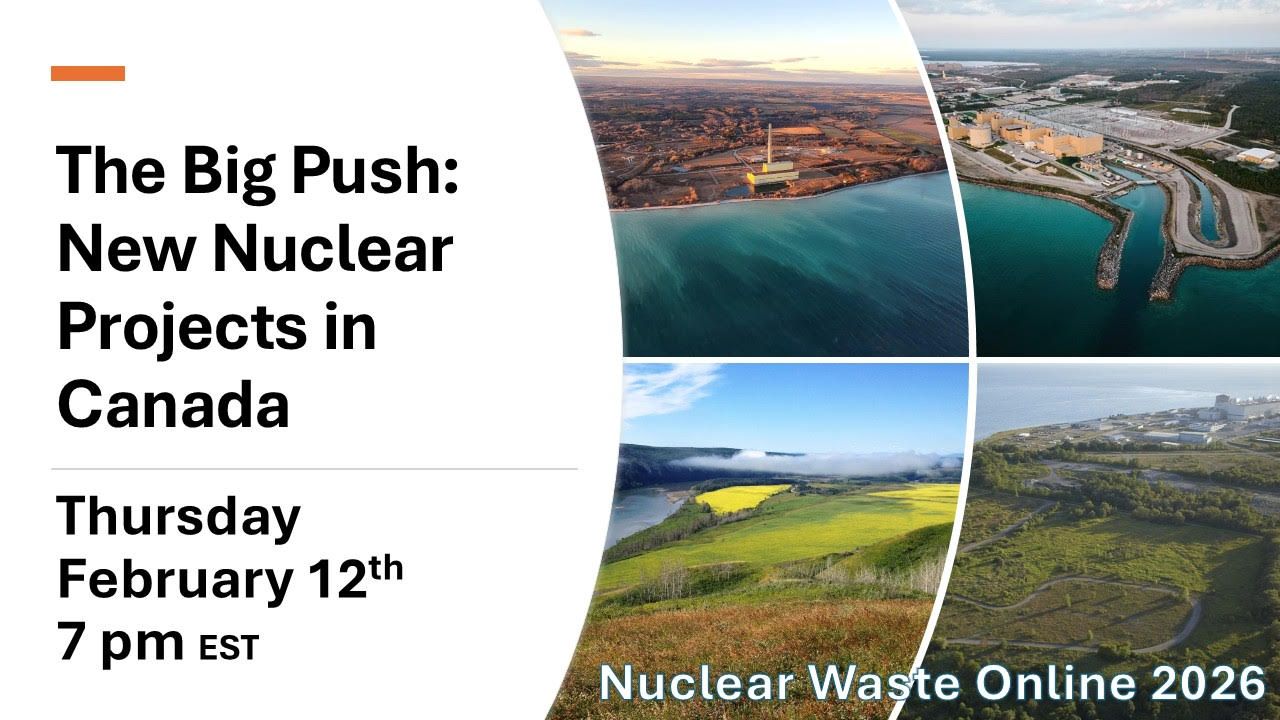
Thursday, February 12, 7 pm Eastern | 2nd of 4 sessions in the 2026 Nuclear Waste Online webinar series
Join a webinar on the push for new nuclear generation in Canada. Go to Northwatch.org to register or use the registration link https://us02web.zoom.us/webinar/register/WN_ZfWOf1GITqSRIZX8CB-A9w
-
Archives
- February 2026 (127)
- January 2026 (308)
- December 2025 (358)
- November 2025 (359)
- October 2025 (376)
- September 2025 (258)
- August 2025 (319)
- July 2025 (230)
- June 2025 (348)
- May 2025 (261)
- April 2025 (305)
- March 2025 (319)
-
Categories
- 1
- 1 NUCLEAR ISSUES
- business and costs
- climate change
- culture and arts
- ENERGY
- environment
- health
- history
- indigenous issues
- Legal
- marketing of nuclear
- media
- opposition to nuclear
- PERSONAL STORIES
- politics
- politics international
- Religion and ethics
- safety
- secrets,lies and civil liberties
- spinbuster
- technology
- Uranium
- wastes
- weapons and war
- Women
- 2 WORLD
- ACTION
- AFRICA
- Atrocities
- AUSTRALIA
- Christina's notes
- Christina's themes
- culture and arts
- Events
- Fuk 2022
- Fuk 2023
- Fukushima 2017
- Fukushima 2018
- fukushima 2019
- Fukushima 2020
- Fukushima 2021
- general
- global warming
- Humour (God we need it)
- Nuclear
- RARE EARTHS
- Reference
- resources – print
- Resources -audiovicual
- Weekly Newsletter
- World
- World Nuclear
- YouTube
-
RSS
Entries RSS
Comments RSS
 nuclear-news