Bill Gates and nuclear bigwigs-a conglomerate of propaganda for Small Nuclear Reactors

|
GE Hitachi, TerraPower Team on Nuclear-Storage Hybrid SMR, Power, Sep 3, 2020, by Sonal Patel GE Hitachi Nuclear Energy (GEH) and Bill Gates’ nuclear innovation startup TerraPower are ready to demonstrate a “cost-competitive” advanced nuclear reactor system that will integrate a 345-MWe sodium fast reactor (SFR) with a molten salt energy storage system under a unique energy system architecture. The advanced nuclear technology developed under a joint development agreement is called “Natrium.” It blends the “best of” TerraPower’s Traveling Wave Reactor (TWR) and GEH’s PRISM technology, but it boosts them with “additional innovations and improvements” to ramp up the SFR’s performance and economics and render it competitive in the U.S. and other countries, the companies told POWER on Sept. 2. Because Natrium leverages “the breadth and depth of the team’s expertise and resources”—which takes into account work on multiple reactor designs and efforts across the nuclear lifecycle—the technology has sped “beyond the research and development phase” and is ready for demonstration. “The demonstration plant is designed to be delivered in the next seven years,” TerraPower told POWER on Wednesday. “That means the Natrium technology will be available in the late 2020s,” which would make it one of the world’s first commercial advanced nuclear technologies, it said. …. https://www.powermag.com/ge-hitachi-terrapower-team-on-nuclear-storage-hybrid-smr/ |
|
France’s President Macron joins the global nuclear lobby’s push to export nuclear reactors
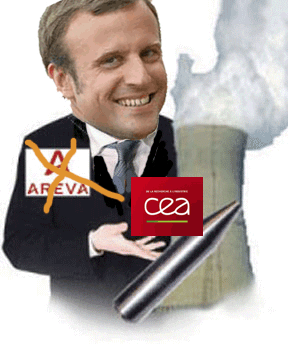 Macron talks nuclear energy and ways to control militias during Iraq visit, The National , Khaled Yacoub Oweis, Sep 2, 2020French PM is the most significant leader to visit Iraq since Prime Minister Mustafa Al Kadhimi came to power in May
During a visit to Baghdad on Wednesday, French President Emmanuel Macron discussed solving Iraq’s massive power shortages with nuclear energy ……. Mr Kadhimi told reporters in Baghdad that he discussed with Mr Macron “a future project” to use nuclear energy to produce electricity and solve decades-long power shortages……..
If realised, the project would place Iraq along with the UAE and Iran as the only Middle East countries with electricity produced by a nuclear reactor. ………. https://www.thenational.ae/world/mena/macron-talks-nuclear-energy-and-ways-to-control-militias-during-iraq-visit-1.1071729
Purpose of US International Development Finance Corporation perverted in the interests of the nuclear industry
|
Trump’s new foreign investment agency: Itching to build on nuclear quicksand. Bulletin of the Atomic Scientists, By Victor Gilinsky, Henry Sokolski, July 17, 2020 In 2018 a Republican Congress, with strong Democratic support, created the US International Development Finance Corporation to “provide the developing world with financially sound alternatives to unsustainable and irresponsible state-directed initiatives.” That’s government-speak for competing with China’s Belt and Road initiative. It didn’t take very long, however, for the new agency to fall in line with an irresponsible state-directed initiative of its own—the Trump administration’s all-out effort to encourage nuclear exports.
In June, the agency, whose own rules prohibit financing nuclear exports, proposed to fling the doors open to such financing, without limiting its scope to the agency’s mission to help the economies of the lower income countries with modest, environmentally sensible projects. There is no hint on what sorts of conditions would apply on funding nuclear reactors. Would the country have to have a system of safety regulation? Would it have to meet security requirements? Would it have to allow international inspections? It isn’t even clear whether the agency’s support would be limited to US reactor exports, and therefore subject to the requirements of the Atomic Energy Act’s Section 123 or whether they could also cover equipment purchases from other suppliers. Such details determine whether a federal bureaucracy is constrained to act responsibly, or whether it is free to cater to the latest whims of the White House. To justify its proposed action, the agency relies on the administration’s ritual talking points—that nuclear exports will “offer an alternative to the financing of authoritarian regimes while advancing US nonproliferation safeguards and supporting US nuclear competitiveness.” These pearls are straight out of the administration’s April 2020 interagency report “Restoring America’s Competitive Nuclear Energy Advantage.” So are the agency’s assurances that advanced “small modular reactors” and “microreactors” will have significantly lower costs than existing nuclear power plants and “could help deliver a zero-emission, reliable, and secure power source to developing countries, promoting economic growth and affordable energy access in underserved communities.” This is all pie in the sky: None of these plants have been built, and their characteristics and economics are speculative. But if the proposed change is restricted to small reactors or microreactors, the nuclear industry’s influential registered lobby, the Nuclear Energy Institute, hasn’t heard about it. The Institute’s president crowed her unqualified approval: “The US International Development Finance Corporation’s proposed policy change to lift its legacy prohibition on nuclear energy projects supports the development of clean, reliable energy worldwide, helps countries reach their energy development goals, buttresses US national security, and can help level the playing field for US firms.” Nor does her response suggest any awareness that the agency’s financing of nuclear projects will be limited to countries in the lower portion of the economic scale……, This whole affair is the latest expression of the administration’s organizing principle for nuclear energy policy—finding ways to loosen rules and to create subsidies to propel nuclear exports. This is supposed to energize the much-diminished domestic nuclear manufacturing sector. Since the whole policy doesn’t make any economic sense, the ultimate argument is based on the dogma: Come what may, we have to head off sales by our adversaries China and Russia……. The agency does have on its books good environmental, social, and economic criteria for evaluating projects. But will they be applied as intended?,………..https://thebulletin.org/2020/07/trumps-new-foreign-investment-agency-itching-to-build-on-nuclear-quicksand/# |
|
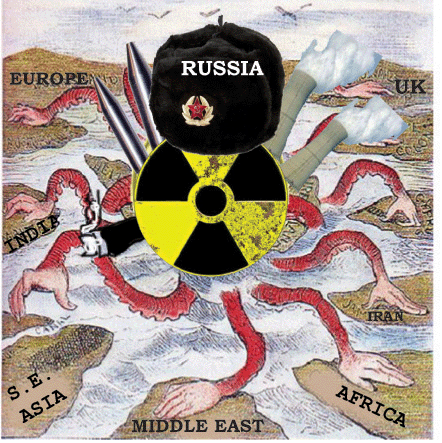
Russia’s nuclear imperialism in Africa
Russia’s nuclear play for power in Africa, DW 2 July 20,
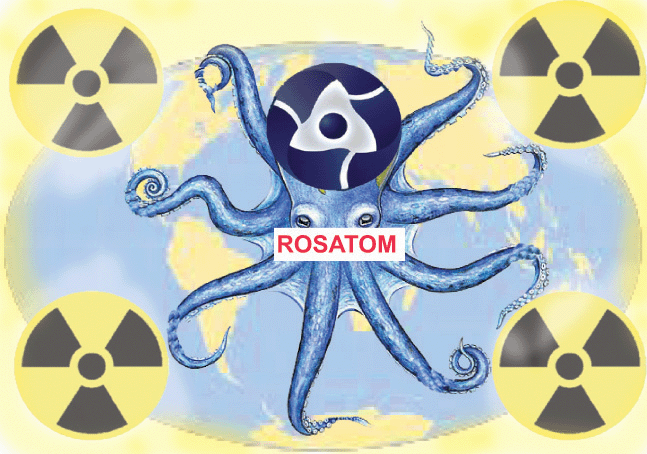
Russia is pushing nuclear technology to African nations to both turn a profit and expand its political might on the continent. Rwanda’s parliament has just approved a plan for Russia’s state-owned Rosatom nuclear conglomerate to build it a nuclear research center and reactor in the capital, Kigali.
The Center of Nuclear Science and Technologies, planned for completion by 2024, will include nuclear research labs as well as a small research reactor with up to 10 MW capacity.
Ethiopia, Nigeria and Zambia have signed similar deals with Rosatom, while countries such as Ghana, Uganda, Sudan and DRC have less expansive cooperation agreements.
Rosatom has been aggressively wooing African nations since the mid-2000s and the nuclear deals are seen as part of Russia’s push turn a profit and also gain influence in Africa.
Western sanctions first imposed on Russia in 2014 over its annexation of the Crimea in the Ukraine have forced Russia to seek alternative sources of incomes and also new friends.
Nuclear technology instead of trade
“For Putin to remain relevant in Russia, he really has to ensure that Russia has a big influence,” said Ovigwe Eguegu, a geopolitics analyst with the international affairs platform, Afripolitika. “That’s why he is looking at African markets so he has more parties to partner with when it comes to international issues.”
African nations constitute the largest voting bloc in the United Nations.
While the Soviet Union had a close relationship to various African states during the Cold War, Russia’s trade balance with Africa is one tenth of that of China, meaning it needs to look for other means to get a foothold on the continent.
“Russia is using the tools that they have to expand their influence and right now, Russia has lots of experience in the nuclear energy area,” Eguegu said in a phone interview from Abuja.
Rosatom nuclear leader
Rosatom is the world’s biggest nuclear company by foreign orders. While it has projects in developed countries such as Finland and Hungary, it’s mainly involved in developing regions.
The Rosatom packages are popular because the corporation’s sheer size means it can offer all-in-one deals, from training local workers to developing nuclear science curricula, supplying uranium for the plant’s life time and dealing with nuclear waste — with the added plus of Russian state loans for the projects.
The cost and financing of Rwanda’s nuclear research center is still undisclosed. But Russia is extending a $25 billion (€22.23 billion) loan to Egypt to cover 85% of the cost of the El Dabaa nuclear power plant, which Rosatom is constructing.
Rosatom has come to dominate nuclear exports to developing countries because of their generous financing and worker training,” according to the 2018 Center for Global Development policy paper, Atoms for Africa.
Additionally, Russia is itself a major player in the nuclear market, responsible for some 8% of uranium production worldwide as well as 20% of uranium conversion and 43% of uranium enrichment (conversion and enrichment are stages of processing uranium so it can be used by commercial nuclear power reactors)………….
many experts, including Gatari, believe that nuclear technology doesn’t yet make sense for African countries. They lack the highly skilled local workforce required to run the technological intricacies of such reactors. Plus, nuclear facilities are vastly expensive and take years to build.
Gatari warns of countries becoming locked into costly projects that end up being “white elephants”.
“Such a project can only be driven by strong and educated local human resources,” the nuclear researcher said. “That knowledge isn’t possible by rushing young students through training for a short time.
And the cost of maintaining that kind of installation can cripple the budget of a country for a long, long time.”
Doing the smooth sell
Currently, South Africa is the only country in sub-Saharan Africa with a functioning nuclear power plant, while Nigeria and Ghana have research reactors, which are primarily used for studying and training and to test materials, such as minerals.
In Europe, safety concerns around nuclear technologies have already caused countries such as Germany, Italy, Spain and Switzerland to vote to phase out nuclear power.
These concerns are compounded in Africa, given the the political instability of certain regions and the threat of sabotage or terrorist attacks. This hasn’t stopped Rosatom, and Russia, from doing a soft sell of nuclear technologies on the continent.
Rosatom funds scholarships for students from sub-Saharan Africa to study nuclear sciences and engineering in Russia. As of January 2020, around 300 students from more than 15 African countries were studying nuclear specialties there.
It runs an online video competition, Atoms for Africa, where participants stand a chance to win an all expenses paid trip to Russia for a video dedicated to innovative nuclear technologies.
In 2019, it even held an international fishing competition near the Leningrad nuclear power station, Russia’s largest, to demonstrate the safety of nuclear power for water bodies. (The competition was won by an Egypt team).
“There is good money if you can sell a research reactor,” said nuclear scientist Gatari. “Unfortunately, the convincing capacity of [Rosatom’s] marketing is very high, and the understanding of those who are buying is low.” https://www.dw.com/en/russias-nuclear-play-for-power-in-africa/a-54004039
Marketing man Trump trying to sell U.S. nuclear reactors to Poland
 Duda, Trump announce nuclear energy deal, Presidents Andrzej Duda and Donald Trump announced on Wednesday the signing of a deal on development of nuclear energy in Poland, which Duda said would be signed as soon as possible.US President Donald Trump talked of the purchase of American technology.
At a press conference with Duda at the White House, Trump said they were working on a deal that would facilitate the development and building of a nuclear power plant in Poland, adding that it would work with the use of American technology bought from a large US company……… https://www.thefirstnews.com/article/duda-trump-announce-nuclear-energy-deal-13601
USA’s International Development Finance Corp will remove its ban on financing exports of US nuclear technologies.
US agency plans to lift nuclear power plant financing ban: spokeswoman S and P Global  Platt’s, Author, Joniel Cha 10 June 20 Washington — International Development Finance Corp., a US federal agency, will end its ban on financing nuclear power plant projects, a spokeswoman said June 10, a move that follows the Trump administration’s support for US reactor exports.
Allen declined to provide a timeline for when she expects DFC could begin financing exports of US nuclear technologies.
Industry sources said in May that DFC lacks the personnel and expertise to properly evaluate the financing of nuclear projects.
DFC was created in 2019 through the consolidation of Overseas Private Investment Corp. and the US Agency for International Development’s Development Credit Authority. DFC has a total investment limit of $60 billion, more than double OPIC’s $29 billion investment cap, according to DFC’s website.
OPIC and USAID both had bans in place prohibiting them from supporting nuclear reactor projects.
To “empower U.S. export competitiveness,” the federal government should “level the playing field versus foreign competitors, expand the arena of competition space, and challenge our rivals,” the Nuclear Fuel Working Group said in an April report.
A White House working group report released April 23 by the Department of Energy recommended the removal of a financing ban on US nuclear energy technologies. The Nuclear Fuel Working Group was formed in July by President Donald Trump to provide recommendations to revive and expand the US nuclear energy sector.
The working group said the US has not sold reactors overseas recently and “is missing out on a nuclear reactor market” the Commerce Department estimates is valued at $500 billion-$740 billion over the next 10 years.
Six US senators wrote the DFC in October, saying the agency should overturn the “categorical prohibition” against supporting civil nuclear energy projects.
ClearPath, a “conservative, clean energy” group, supports lifting the US ban on financing nuclear projects, Rich Powell, executive director, said June 10.
“By lifting the previous restrictions on the U.S. nuclear energy industry to develop internationally, America is taking a huge step to truly offer a competitive product – similar to the incentives China and Russia provide when they approach other countries with offers to develop infrastructure and energy,” Powell said in a statement. https://www.spglobal.com/platts/en/market-insights/podcasts/focus/060520-hydrogen-aviation-future-energy-transportation-decarbonisation
USA offers to build Britain’s nuclear reactors
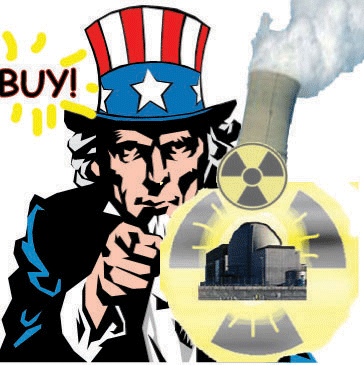 US offers to build UK’s 5G and nuclear stations to end ‘coercive’ relationship with China
Mike Pompeo said the United States ‘stands ready to assist our friends in the U.K’ Telegraph UK , By Danielle Sheridan, POLITICAL CORRESPONDENT10 June 2020 • America has offered to build Britain’s 5G and nuclear power stations so that the “coercive and bullying” relationship with China can end, Mike Pompeo has said.
In a statement released yesterday the US Secretary of State said America stood with its “allies and partners against the Chinese Communist Party’s (CCP) coercive bullying tactics”, as he sighted reports that Beijing had threatened to punish HSBC and “break commitments to build nuclear power plants in the United Kingdom unless London allows Huawei to build its 5G network”.
HSBC is understood to have claimed that it could face reprisals in China if Huawei was blocked from selling equipment to the next generation of networks being built by Britain’s mobile operators…. (subscribers only) https://www.telegraph.co.uk/politics/2020/06/10/us-offers-build-uks-5g-nuclear-stations-end-coercive-relationship/
Oleg Bodrov on the status of the Russian nuclear industry
Oleg Bodrov: Rosatom has agreements to build 36 nuclear power plants outside of Russia https://www.pressenza.com/2020/05/oleg-bodrov-rosatom-has-agreements-to-build-36-nuclear-power-plants-outside-of-russia/ 31.05.2020 – St Petersburg, Russia – Abolition 2000, On the 23rd of May, 2020, the Abolition 2000 Global Network to Eliminate Nuclear Weapons held its Annual General Meeting online for the first time due to the coronavirus pandemic. A large part of the meeting was dedicated to reflecting on the implications of covid-19 on the work of nuclear abolition. Oleg Bodrov of Public Council of the South Coast of the Gulf of Finland, near St Petersburg, Russia shared his views in a pre-recorded interview. We share it here for readers of Pressenza.
Transcript below
Dear colleagues, my name is Oleg Bodrov, I am a physicist, ecologist and peace movement activist from the south coast of the Gulf of Finland, in the Eastern Part of the Baltic Sea Region, close to St. Petersburg, Russia. I am the Chairman of the Public Council of the South Coast of the Gulf of Finland.
I worked in the Russian nuclear industry for 17 years but left it after the Chernobyl disaster. For the past 30 years, I have been working on issues of environmental protection, nuclear safety and the prohibition of nuclear weapons. I live on the border of the confrontation between NATO and Russia, on the southern coast of the Gulf of Finland.
So, the point which I will present just now, will be based on my personal experience and activities in the last years.
First of all I’d like to say something about the status of the Russian nuclear industry in the context of nuclear weapons and the export of “civil nuclear technologies” before the NPT Review Conference.First of all Russia, according to the official doctrine, could be the first to use nuclear weapons. It is a very important message. The Ministry of Foreign Affairs of the Russian Federation declared that: “The prohibition of nuclear weapons is contrary to our national interests”. And the president of the Russian Federation has demonstrated his psychological readiness to use nuclear weapons. He has personally launched four transcontinental missiles from submarines, air and ground-based facilities. Last but not least, the Russian state corporation, Rosatom, has agreements to build 36 nuclear power plants outside of Russia in different countries. Consumers of the nuclear electricity from these nuclear power plants outside of Russia may be investors in Russian military programs.
So the top level of Russian politicians are already ready to use nuclear weapons and develop the nuclear infrastructure outside of Russia which is possible to support Russian military programmes. This is number 1 of my message to my colleagues.
Some lessons after the pandemic Covid-19.
All countries, including nuclear weapons countries, have been powerless against the new virus.
Covid19 has stimulated the development of the economic crisis, and leaders of nuclear countries are using the crisis to find enemies outside of their counties. Thus, instead of joining forces against the virus, the political confrontation between countries deepens. What can we do, our international peace movement?
First of all I’d like to say that we have a SICK planet and we have no planet B! So now we need to not only protect our planet from nuclear weapons, but also reduce greenhouse gas emissions, stop “civil nuclear” expansion, which is part of military nuclear industry. We need to provide safe decommissioning of the more 400 nuclear power plants on our planet, and we need to promote sustainable development of our countries.
I think, first of all, we need to develop cooperation with our colleagues from non-governmental organisations working in the field of protection of traditional lifestyles of indigenous peoples, NGOs against climate change, and NGOs against the export of nuclear power plants.
It is reasonable to stimulate transboundary cooperation between NGOs, municipal and regional authorities close to the border between NATO and non-NATO countries.
I think that the politicians of NATO and Russia are trying to make us enemies 75 years after the Second World War. I think let’s hold hands, friends, in Russia, Europe, China and USA. We are friends and not enemies!
Is it in the national interest? Chinese nuclear reactors for Bradwell, UK
BANNG 26th May 2020, The ‘golden era’ in relations between Britain and China which gave
birth to the prospect of a Chinese nuclear power station on the Blackwater
appears to be foundering less than five years after its triumphant
proclamation at the State Visit of the Chinese President Xi Jinping, in
October 2015.
The Blackwater Against New Nuclear Group (BANNG) has long
voiced its concerns about the potential security risks from Chinese control
of strategic UK infrastructure, such as the proposed Bradwell B nuclear
power station. These fears have been echoed by Dr. Robert Ford, the US
State Department’s Assistant Secretary for Non-Proliferation and
International Security, who has warned that the Chinese developer, China
General Nuclear Power Corporation, (CGN), ‘is closely linked to the
Communist regime’s military’ and urged Britain not to hand China
control of its electricity (Daily Mail, 16 May, 2020).
It is worth noting that the United states, with whom the UK is seeking a free trade deal, is
opposed to issuing a nuclear license to ‘an alien or any other
entity……it knows or has reason to believe is owned, controlled or
dominated by an alien, a foreign corporation, or a foreign government’
(Statement from US Nuclear Regulatory Commission).
Meanwhile, in the UK,
the ‘golden relationship’ is being questioned by Tory MPs, the Labour
Party and the Foreign Affairs and Defence Select Committees of MPs. Moves
are being made to toughen up company takeover laws, to strengthen security
and to assert the UK’s strategic independence. The Government has
recently set up ‘Project Defend’ to ‘identify, the country’s main
economic vulnerabilities to potentially hostile foreign governments as part
of a broader approach to national security’ (Reuters, 22 May, 2020).
BANNG’s Chair, Andy Blowers, has written to Nadhim Zahawi, the Energy
Minister, pointing to concerns about the Chinese threat to British
industry, trade and security and urging him to consider whether having
Chinese-designed and built reactors on a vulnerable site in Eastern England
is in the national interest.
UK’s new nuclear plants – nearly all parts are sourced and/or funded from China and France
David Lowry’s Blog 24th May 2020, Letter from David Lowry to The Times: Your important revelation follows Johnson’s assertion to MPs on Wednesday that he is pursuing “measures
to protect our technological base.” The initiative, “Project Defend,”
is aimed at creating a new national resilience framework, which, The Times
reports, will address the current over-reliance on China for “medical and
other strategic imports.”
One such strategic import is civil nuclear
technology, on which UK is 100 per cent reliant on foreign suppliers for
the critical core reactor infrastructure, with the Hinkley C nuclear plant
under construction by French state generator, Electricite de France ( EdF)
using French technology, supported by French and Chinese capital
investment.
The next new nuclear plant in line for construction, at
Sizewell C in Suffolk, will have 20per cent of its costs paid for by
Chinese state company China General Nuclear.
The third new plant, at
Bradwell in Essex, is planned to entirely built using 100 per cent Chinese/
French designed technology, mostly imported, and backed by 62 per cent
Chinese funding. It would also be operated by a primarily Chinese technical
team. Only smaller parts for these new plants will be sourced from the UK
supply chain.
http://drdavidlowry.blogspot.com/2020/05/uk-china-nuclear-relations-need-reset.html
USA desperately pushing the fantasy of Small Nuclear Reactors to India
|
“………Ahead of Trump’s recent visit to India, officials of the US Department of Energy were quoted as saying that they are strongly encouraging Westinghouse Corporation to ensure further progress on the nuclear projects already in the pipeline.
Another addition to the nuclear bucket list this time are the Small Modular Reactors (SMRs), which the industry has been fervently pushing both within and outside the United States. While US-based corporations have individually attempted to introduce their SMR business in India in recent years, this is the first time these reactors have been formally introduced as part of the official US-India nuclear dialogue. Globally, nuclear lobbies have promoted SMRs as an innovation that will help address the perennial problems of cost, feasibility, environmental impacts, and scalability associated with conventional large reactors.
However, as independent experts in the field suggest, SMRs are an old and discredited idea – a make-believe renaissance after the Fukushima accident thwarted dreams of building massive-sized nuclear power parks across the globe. SMRs are neither cheap nor innovative nor green, as a number of leading experts in the field have pointed out. In particular, SMRs will be disastrous in densely populated countries like India, which already has an electricity surplus, and whose problems in the power sector owe more to its people’s lack of purchasing power, messy regulatory frameworks that do not allow it to take advantage of renewable energy sources despite their increasing efficiency and competitiveness, and the larger questions surrounding its neoliberal growth model. India has also been desperately trying to position itself as an exporter of SMRs, and the reaffirmation of US support for India’s accession to the Nuclear Suppliers’ Group (NSG) “without any delay” in the joint statement is expected to boost this ambition.
However, much like the other projections made by the Indian nuclear establishment, the pipedream of India becoming a nuclear exporter reflects its postcolonial aspirations of becoming a big player internationally, rather than being grounded in any realism. India does not have much to offer beyond the sub-300MWe capacity Pressurized Heavy Water Reactors (PHWRs) that it mastered in the 1970s by reverse engineering the Canada-imported reactors called CANDUs. Invariably these reactors had huge cost and time overruns, and India is now building their larger versions, 700MWe each, at sites such as Gorakhpur, Chutka, and Kaiga. The smaller designs are evidently unattractive for potential SMR buyers for reasons of cost, safety and reliability. However, simply pitching them in the foreign market will bring to India the tag of a major nuclear player, which is enough international recognition for the chest-thumping present regime. Despite the hype that Trump’s recent visit generated – of an upgrade of US-India relations to a ‘Comprehensive Global Strategic Partnership’ and so on – there is very little that India stands to gain. In the absence of any new meaningful and people-centric cooperation on trade, environment, education or technology, this nuclear tango will only remain a farcical buildup at the cost of the safety and livelihoods of Indian citizens.
Not long ago, Modi’s own home state of Gujarat had rejected a US-imported nuclear project labeling it unacceptably risk-prone, especially in the wake of the 2011 Fukushima accident. This leaves the Modi government with no moral right to impose the US reactors on people in other parts of the country. Kumar Sundaram is founding editor of DiaNuke.org, an international platform for nuclear-related discussions and campaigns. https://www.thecitizen.in/index.php/en/NewsDetail/index/6/18388/Namaste-Nukes-Trumps-Toxic-Sales-Pitch-for-the-Stalled-Westinghouse-Nuclear-Project-in-India
|
|
|

Trump’s toxic nuclear sales pitch to India- undermining India’s nuclear liability law
|
In a rush to please the Americans, no matter the cost The recently concluded US President’s visit to India was marked by the odious displays of pomposity for which both Modi and Trump are known to have a soft spot. Even as Delhi burned, with deadly riots engineered and unleashed by majoritarian mobs backed by the ruling party, Modi and Trump continued their photo-ops around the Taj Mahal and Gandhi Ashram. What risks being ignored amid this deafening cacophony are crucial issues concerning the US-imported nuclear reactor project in India, to which both the media and civil society have not paid adequate attention, perhaps due to the fact that these nuclear negotiations have been in the pipeline for more than twelve years now and their mention in bilateral summits and statements appears little more than ceremonious. However, there are additional twists to the India-US nuclear story that deserve our attention. To recap, in 2008, in exchange for the American heavy-lifting of the decades-long nuclear embargo that India faced internationally for testing atomic weapons, a massive contract for a 6-unit nuclear power park was signed with the US nuclear giant, Westinghouse. In a reciprocal gesture for this diplomatic favour, India announced the project without any cost-benefit calculation, safety or environmental impact analysis, and in the stark absence of dialogue, negotiations or the consent of the local communities in Kovvada, a site on India’s eastern coast in Andhra Pradesh. Although the Indian government, in a rush to please its American counterpart, has already pushed through land acquisition in Kovvada, bulldozing grassroots dissent and even resolutions passed by democratically elected local bodies, the project has been stalled by a number of other factors, including the global decline of the nuclear industry post-Fukushima, which led Westinghouse to first sell its stakes to Toshiba and then eventually, declare itself bankrupt.
Additionally, certain other India-specific factors have stalled the nuclear power projects which corporations in the US, France and Russia have been eyeing in order to resurrect themselves. Nuclear liability tops the list here – foreign vendors have been wary of the 2010 liability law enacted by the Indian parliament, which they view as overly restrictive, even as civil society activists and safety experts consider the legislation extremely weak. The Indian law provides for a ‘right of recourse’ in Clause 17(b) under which, in case of a future nuclear accident, the nuclear operator can demand liability from the equipment suppliers.
The nuclear industry lobbies have found this provision to be an anathema and the US government has taken the lead in pressuring successive Indian governments to do away with it.
Despite his party’s vociferous criticism of such moves
 by the earlier Singh-led government when in opposition, Modi’s unabashed dalliance with the US has barely remained under wraps – he and Obama jointly declared in 2015 that India would actively take steps to limit liability in the case of a nuclear accident. by the earlier Singh-led government when in opposition, Modi’s unabashed dalliance with the US has barely remained under wraps – he and Obama jointly declared in 2015 that India would actively take steps to limit liability in the case of a nuclear accident.However, Modi didn’t stop at that. Not only did his government ensure that the liability rules were dubbed ‘ultra vires’ and against the spirit of the law by former Solicitor-General Soli Sorabjee, entered into force in 2016, it also went on to ratify the Convention on Supplementary Compensation (CSC) – an international template promoted by the nuclear lobbies to ensure a liability-free market, thereby deliberately creating a contradiction between India’s domestic law and its international commitments. Ever since it assumed power, the Modi government has consistently undermined nuclear liability provisions meant to safeguard the interests of the Indian people.
If the recent utterances of senior officials from the US Department of Energy offer any clues, the American nuclear vendors do not want to settle for anything short of amending the original Nuclear Liability Act – “to be clear, there are still open issues around the liability issue,” the US DoE Assistant Secretary is reported to have said in a Reuters report published last week. As the street protests by indignant survivors of Bhopal’s gas accident during Trump’s recent visit suggest, Indian citizens have had an agonising experience due to the apathy of governments and judicial processes, with the most vulnerable sections having been denied both compensation and justice in the case of the world’s worst industrial disaster. Successive governments in both the US and India have managed to ensure that concerned corporations remain unscathed and that their owners go unpunished.
Neither the routine exhortations of India-US summits being spaces for a rendezvous between two democracies, nor Modi’s much celebrated cleanliness drive, have translated into an open dialogue with the victims of the Bhopal disaster, or the detoxification of the accident site even three decades after the horrific chemical industrial accident.
Trump’s domestic energy policy and budget allocations disproportionately favour the nuclear industry, and exporting American nuclear reactors to developing countries is also a key part of this policy shift. The US under Trump has concluded nuclear deals with the UAE despite massive proliferation concerns………. Despite the hype that Trump’s recent visit generated – of an upgrade of US-India relations to a ‘Comprehensive Global Strategic Partnership’ and so on – there is very little that India stands to gain. In the absence of any new meaningful and people-centric cooperation on trade, environment, education or technology, this nuclear tango will only remain a farcical buildup at the cost of the safety and livelihoods of Indian citizens.
Not long ago, Modi’s own home state of Gujarat had rejected a US-imported nuclear project labeling it unacceptably risk-prone, especially in the wake of the 2011 Fukushima accident. This leaves the Modi government with no moral right to impose the US reactors on people in other parts of the country. Kumar Sundaram is founding editor of DiaNuke.org, an international platform for nuclear-related discussions and campaigns. https://www.thecitizen.in/index.php/en/NewsDetail/index/6/18388/Namaste-Nukes-Trumps-Toxic-Sales-Pitch-for-the-Stalled-Westinghouse-Nuclear-Project-in-India |
|

Egypt going into $25 billion debt to Russia, to buy nuclear reactors
Russia lends Egypt $25 billion for Dabaa nuclear power plant, AL-Monitor, 26 Feb 20, CAIRO — Atomstroyexport, a subsidiary of Russia’s State Atomic Energy Corporation, or Rosatom, announced Feb. 17 that three Egyptian companies were awarded a tender offer for constructing the first phase of Egypt’s Dabaa nuclear power plant.
The three Egyptian companies, competing among 10 others, are Petrojet, Hassan Allam and the Arab Contractors.
The Egyptian government intends to start negotiations within the next few days with the Egyptian Nuclear and Radiological Regulatory Authority to obtain permission to start implementing the Dabaa nuclear plant project. The plant will be constructed in the Dabaa area of Marsa Matrouh governorate in the west of the country.
The Dabaa plant is the first nuclear plant for peaceful uses, with a total capacity of 4.8 gigawatts. The project is financially supported by Rosatom through a Russian loan amounting to $25 billion………….
Yemen al-Hamaki, a professor of economics at Ain Shams University said that under this agreement Egypt will use the loan to finance 85% of the total value of the building, construction, insurance and all other related works. Egypt would bear the remaining 15% in the form of installments. The loan is for 13 years at a 3% annual interest rate. If Egypt fails to repay any of the annual interest within 10 working days, it shall be subject to arrears of 150% of the interest rate calculated on a daily basis
Hamaki also warned that this massive Russian loan of $25 billion could blow up Egypt’s foreign debts. “This loan is a great risk to the future because it burdens the state and should be settled from the wealth and economic assets of the future generations,” she said, adding, “Egypt’s resorting to many loans foretells its inability to attract foreign investments, while tourism revenues continue to decline.” ….. https://www.al-monitor.com/pulse/originals/2020/02/power-plant-nuclear-egypt-russia-loan.html#ixzz6F5iQcolQ
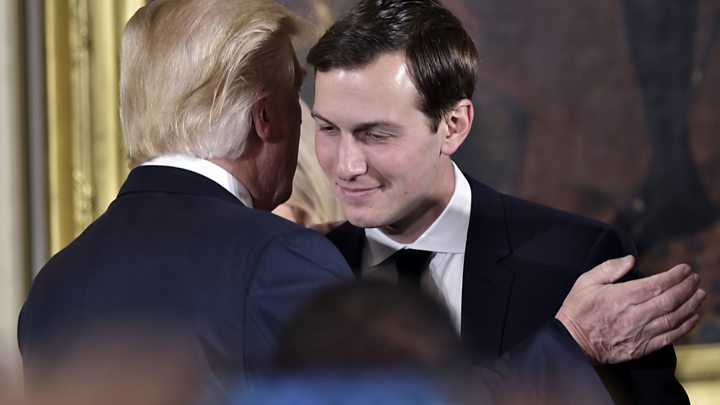
Communist Party of India (CPI (M) oppose purchase of U.S nuclear, with Jared Kushner’s vested interest
|
Party leader urges Centre to protect the country’s securityDemanding dropping of nuclear power plant proposed by Nuclear Power Corporation of India Ltd (NPCIL) at Kovvada in Srikakulam district, CPI (M) State Secretariat member Ch. Narsinga Rao on Monday said United States President Donald Trump was on a visit to India to pursue supply of reactor to the plant, among other things. He told reporters along with Greater Visakha unit president of CPI (M) B. Mr. Narsinga Rao said Westhouse company, which agreed to supply the reactor to Kovvada, had been acquired by Brookfield Asset Management, an investment company in which Qatar Investment Authority is a major stakeholder. The CPI (M) leader said Mr. Kushner was an investor in Qatar Investment Authority.
Mr. Trump might be keen on proceeding with the MoU on Kovvada, he alleged and asked the Centre to protect the country’s security by rejecting America’s plea to supply the rector to NPCIL. He said originally nuclear power plant was proposed at Mithivirdi in Gujarat and due to public protest, it was later decided to set up the plant at Kovvada. He said the Kovvada plant would be expensive and unviable and banks funding it were bound to turn bankrupt. Mr. Rao said former Union Power secretary E.A.S. Sarma had also strongly opposed the move to sign MoU with the US for supply of six reactors for Kovvada from the erstwhile Westinghouse company. |
|
Trump to visit India as salesman for Westinghouse nuclear reactors
 Westinghouse to sign deal for six nuclear reactors in India during Trump’s visit: report HTTPS://THEHILL.COM/POLICY/INTERNATIONAL/INDIA/483820-WESTINGHOUSE-TO-SIGN-DEAL-FOR-SIX-NUCLEAR-REACTORS-IN-INDIA-DURING BY JUSTINE COLEMAN – 02/20/20 U.S. energy company Westinghouse is expected to sign a deal for six nuclear reactors with the state-run Nuclear Power Corporation of India (NPCIL) during President Trump’s trip to the country, Reuters reported.The deal will outline timelines and name the lead local constructor for building the reactors at Kovvada in southern India, according to the news service. Westinghouse to sign deal for six nuclear reactors in India during Trump’s visit: report HTTPS://THEHILL.COM/POLICY/INTERNATIONAL/INDIA/483820-WESTINGHOUSE-TO-SIGN-DEAL-FOR-SIX-NUCLEAR-REACTORS-IN-INDIA-DURING BY JUSTINE COLEMAN – 02/20/20 U.S. energy company Westinghouse is expected to sign a deal for six nuclear reactors with the state-run Nuclear Power Corporation of India (NPCIL) during President Trump’s trip to the country, Reuters reported.The deal will outline timelines and name the lead local constructor for building the reactors at Kovvada in southern India, according to the news service.
India has reportedly been open to receiving nuclear reactors since its 2008 civil nuclear energy pact with the U.S. Last year, the countries announced they had committed to six reactors. Representatives from the U.S. Energy and Commerce departments, Westinghouse, the U.S.-India Strategic Partnership Forum and The Nuclear Energy Institute have met in India for negotiations, Reuters noted. Rita Baranwal, assistant secretary for the Office of Nuclear Energy in the U.S. Department of Energy, told the news service that the team is “optimistic” the agreement will be signed “shortly.” “We are encouraging moving forward with Westinghouse and NPCIL to sign a MoU. It certainly is a private industry-to-private industry, a business-to-business decision,” she said, referring to a memorandum of understanding. Representatives from the U.S. Energy and Commerce departments, Westinghouse, the U.S.-India Strategic Partnership Forum and The Nuclear Energy Institute have met in India for negotiations, Reuters noted. The Hill reached out to Westinghouse and NPCIL for comment. |
|
1 This Month

of the week – Shut Down Drone Warfare!


Tell the Ukrainian Government to Drop Prosecution of Peace Activist Yurii Sheliazhenko

Petition to revoke the licensing of the Near Surface Nuclear Disposal Facility (NSDF) at Chalk River. https://www.ourcommons.ca/petitions/en/Petition/Details?Petition=e-7247
To see nuclear-related stories in greater depth and intensity – go to https://nuclearinformation.wordpress.com
-
Archives
- March 2026 (244)
- February 2026 (268)
- January 2026 (308)
- December 2025 (358)
- November 2025 (359)
- October 2025 (376)
- September 2025 (257)
- August 2025 (319)
- July 2025 (230)
- June 2025 (348)
- May 2025 (261)
- April 2025 (305)
-
Categories
- 1
- 1 NUCLEAR ISSUES
- business and costs
- climate change
- culture and arts
- ENERGY
- environment
- health
- history
- indigenous issues
- Legal
- marketing of nuclear
- media
- opposition to nuclear
- PERSONAL STORIES
- politics
- politics international
- Religion and ethics
- safety
- secrets,lies and civil liberties
- spinbuster
- technology
- Uranium
- wastes
- weapons and war
- Women
- 2 WORLD
- ACTION
- AFRICA
- Atrocities
- AUSTRALIA
- Christina's notes
- Christina's themes
- culture and arts
- Events
- Fuk 2022
- Fuk 2023
- Fukushima 2017
- Fukushima 2018
- fukushima 2019
- Fukushima 2020
- Fukushima 2021
- general
- global warming
- Humour (God we need it)
- Nuclear
- RARE EARTHS
- Reference
- resources – print
- Resources -audiovicual
- Weekly Newsletter
- World
- World Nuclear
- YouTube
-
RSS
Entries RSS
Comments RSS
 nuclear-news