European Commission approves Romania’s purchase of nuclear reactors
 EU blesses Romania’s $8bn US nuclear deal https://www.globalconstructionreview.com/news/eu-blesses-romanias-8bn-us-nuclear-deal/ 25 November 2020 | By GCR Staff EU blesses Romania’s $8bn US nuclear deal https://www.globalconstructionreview.com/news/eu-blesses-romanias-8bn-us-nuclear-deal/ 25 November 2020 | By GCR Staff
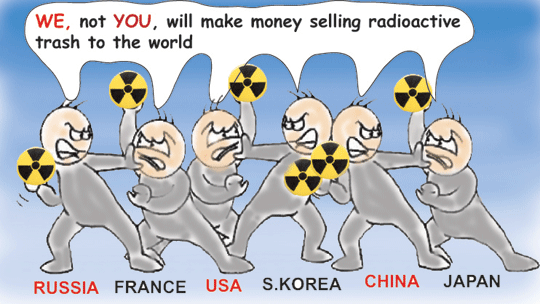
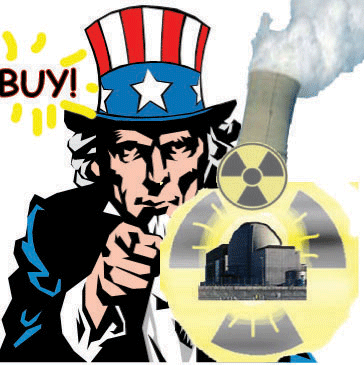
The European Commission has approved an agreement between the governments of the US and Romania to add two reactors to the Cernavoda nuclear power plant, ending longstanding plans to enlist Chinese aid in the project.Ludovic Orban, the prime minister of Romania, announced the endorsement on Friday. “We are delighted that we received this agreement from the Directorate of Energy, which will allow us to sign the agreement in the final form,” he said. Romania and the US signed an intergovernmental agreement in October for an $8bn programme of works to refurbish reactor 1 and build reactors 3 and 4 at the Black Sea plant (see further reading). The two also agreed a memorandum of understanding whereby America’s Export-Import Bank would provide $7bn of loans for the development of nuclear and related projects. In 2013 Romania and China signed two agreements that assigned China General Nuclear (CGN) a leading role in building and financing the reactors. This was followed by a deal in May 2019 between Romania’s state nuclear company Nuclearelectrica and CGN to build two 700MW reactors. Romania changed course at the start of this year as the Trump administration intensified its criticisms of China. The project will be coordinated by Aecom and will involve a consortium of companies from the US, Romania, Canada, and France to install two Canadian Candu 6 reactors. Romania and France have signed a declaration of intent on civil nuclear cooperation, and Orano, a state-owned French engineer, has also agreed to work with Nuclearelectrica on the project. |
|
USA looks to get $18billion now, maybe $40billion later, in flogging off nuclear reactors to Poland
|
U.S. sees $18 billion from purchases in nuclear power agreement with Poland, By Timothy Gardner, WASHINGTON (Reuters) 16 Nov 20, – The United States and Poland have struck a nuclear power agreement in which Poland will likely buy $18 billion in nuclear technology from U.S. companies, the U.S. energy department said on Monday.
The United States has been competing with China and Russia and other countries to supply nuclear power technology to countries hoping to build their first reactors, or boost their programs. “We are hopeful that the ultimate decisions that are made by Poland … over a period of time will result in them choosing U.S. technology,” U.S. Energy Secretary Dan Brouillette told reporters in a teleconference. …… Over the next 18 months, the United States and Poland will work on an a report for the program that seeks to build six reactors, as well as potential financing arrangements, the department said. The first reactors are planned to be in operation by 2033 in a program that will potentially be worth $40 billion, a senior U.S. energy department official said. Poland would buy at least $18 billion from U.S. companies, the official said. Westinghouse, owned by Brookfield Asset Management BAMa.TO, Bechtel and Southern Co SO.N and the U.S. government, will participate in a first step in the agreement, an engineering study for planned plants, the official said. This month the United States and Romania came to an initial $8 billion agreement on the construction of two reactors on the river Danube. Romanian state-owned nuclear power producer Nuclearelectrica ROSNN.BX ended talks with China General Nuclear (CGN) about the construction of the reactors after they had dragged on for six years. Reporting by Timothy Gardner; Editing by Nick Zieminski and Marguerita Choy https://www.reuters.com/article/us-usa-nuclearpower-poland-idUSKBN274239 |
|
NuScam pushing to sell its ”small” nuclear reactors to South Africa
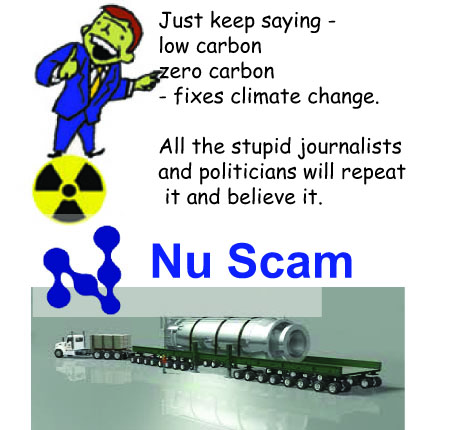 S. Africa Regulator to Consider Approving Nuclear Power Plan, Bloomberg, By Antony Sguazzin,10 November 2020,
-
- Program envisages addition of 2,500 megawatts of atomic power
- Country’s renewable-energy lobby opposes expansion of industry
The National Energy Regulator of South Africa will on Nov. 11 consider approving the procurement of 2,500 megawatts of nuclear power, marking another step toward the expansion of the industry.
The regulator will consider approving a so-called section 34 determination for the program, which enables the Department of Mineral Resources and Energy to undertake a bidding process for private producers to build nuclear-power facilities, it said in a Twitter posting outlining the agenda for the meeting.
South Africa, which destroyed its atomic weapons prior to the end of apartheid, already operates Africa’s only nuclear-power plant, the 1,800 megawatt Koeberg facility in Cape Town, as well as the Pelindaba research facility north of Johannesburg.
While the expansion of nuclear power has the support of the ministry and labor unions, it’s opposed by environmentalists and backers of the country’s expanding renewable-energy program.
NuScale Power LLC, a U.S. nuclear-energy firm, has said it will propose small, modular reactors for installation in South Africa. The U.S. International Development Finance Corp. has announced that it will support a bid by NuScale, approving the procurement of 2,500 megawatts of nuclear power, marking another step toward the expansion of the industry.
The regulator will consider approving a so-called section 34 determination for the program, which enables the Department of Mineral Resources and Energy to undertake a bidding process for private producers to build nuclear-power facilities, it said in a Twitter posting outlining the agenda for the meeting.
South Africa, which destroyed its atomic weapons prior to the end of apartheid, already operates Africa’s only nuclear-power plant, the 1,800 megawatt Koeberg facility in Cape Town, as well as the Pelindaba research facility north of Johannesburg.
While the expansion of nuclear power has the support of the ministry and labor unions, it’s opposed by environmentalists and backers of the country’s expanding renewable-energy program. https://www.bloomberg.com/news/articles/2020-11-09/south-african-regulator-to-consider-approving-nuclear-power-plan
Rolls Royce and Exelon get together to market ‘small’ nuclear reactors
|
Industrial technology company Rolls-Royce has signed a memorandum of understanding (MoU) with Exelon Generation for the operation of compact nuclear power stations in the UK and overseas locations. Under the contract, Exelon Generation agreed to assist Rolls Royce in the development and deployment of UK small modular reactors (UKSMR)…… In January, Rolls-Royce announced that it will be leading a consortium to build and install small modular reactors (SMRs) on former nuclear sites to power the UK by 2029. Members part of the consortium are Assystem, Atkins, BAM Nuttall, Jacobs, Laing O’Rourke, National Nuclear Laboratory, Nuclear Advanced Manufacturing Research Centre, Rolls-Royce and TWI. Working with its partners, as well as the UK government, the consortium will secure a commitment for a fleet of factory-built nuclear power stations, each with a 440MW capacity, developed inside a weatherproof canopy…….. https://www.power-technology.com/news/rolls-royce-exelon-mou/ |
|
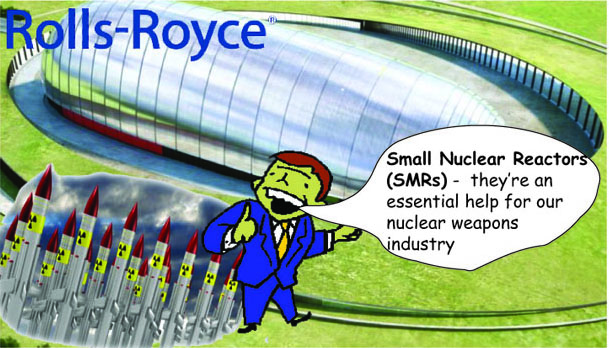

U.S and Russia battling it out to market new nuclear reactors to Eastern Europe countries
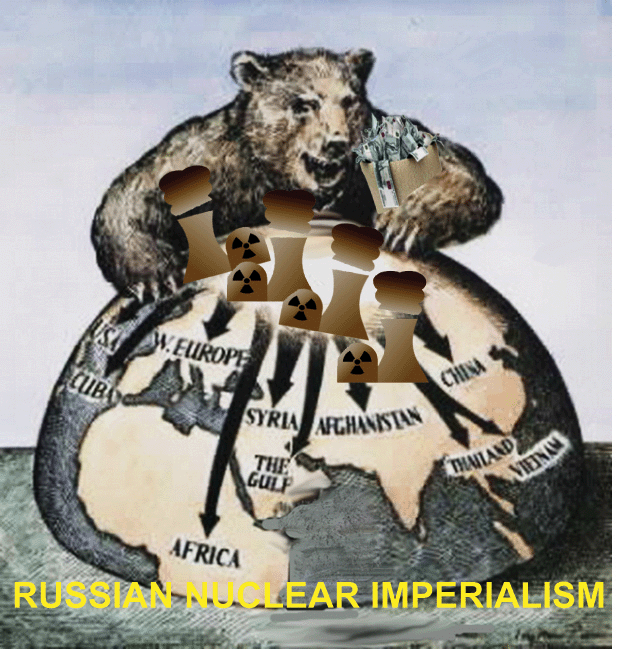 China and Russia lead world ranking for supplying new nuclear reactors, Bloomberg, 9 Nov 20, Source: UxC ResearchThe former Cold War frontier of eastern Europe is becoming a battleground in the $500 billion business of building nuclear power plants.
Four months after lifting a prohibition on financing nuclear-energy deals overseas, the U.S. is finding an opening for companies such as General Electric Co., Westinghouse Electric Co. and Bechtel Group Inc.
In the span of a few weeks, the U.S. signed a memorandum with Romania for the financing of a new reactor and other accords with Poland as well as Bulgaria, which plans to revive an older reactor project.
The plan to win business for U.S. companies in this geopolitically key market started under Donald Trump is poised to survive the transition to a new U.S. administration under President-elect Joe Biden. That may nudge eastern European partners to move forward with stalled nuclear projects.
Greater access to financing may be the chief advantage on the American side as it pushes back against Russian and Chinese interests in the region.
“The projects in countries such as Romania, Bulgaria and Poland could be accelerated if the U.S. helps them come up with funding sources at competitive costs and, eventually, without the need for state aid or guarantees,” said Razvan Nicolescu, a Bucharest-based partner at Deloitte specializing in the energy industry.
Eastern European nations, which are dependent on fossil fuels from Russia and their own coal deposits, have even more reasons than others to seek nuclear options. Being subject to stringent European Union emissions standards also creates additional incentives.
The recent change in regulation is allowing the U.S. to compete for a larger share of the market, whose value it estimates at $500 billion-$740 billion over the next 10 years.
Barriers to expansion remain formidable.
Westinghouse, which was one of the leading nuclear industry suppliers in the U.S., went bankrupt in 2017 as it faced billions in potential liabilities related to domestic projects in Georgia and South Carolina. After the South Carolina project was canceled in 2017, the two at Southern Co.’s Plant Vogtle remained the only reactors under construction in the world using Westinghouse’s flagship AP1000 technology, though that is also behind schedule and over budget.
Political rhetoric may prevail over actual investment decisions, said Martin Vladimirov, an analyst at the Sofia-based Center for the Study of Democracy.
“While the U.S. seeks to counter Russian and Chinese economic interference, those projects may not follow the market logic and will need significant state support,” Vladimirov said.
Nuclear Love Affair in Europe’s Poorer East Is Hitting the Rocks
Russia doesn’t see current U.S. nuclear deals in Europe as a threat to its flagship Rosatom Corp. because the U.S. companies don’t have the bandwidth to build new plants now, a government official close to Russia’s nuclear industry said. The U.S. projects in Europe will likely be limited to servicing agreements, the official added, asking for anonymity as they’re not authorized to speak publicly.
State-owned Rosatom itself also played down the risk from increased competition, saying there’s room for many projects in the region.
“We believe that the U.S. nuclear sector has a great potential,” Rosatom said. “The most important thing now for the U.S. vendors is to grow skills by building more in the markets where they have presence and experience.”
Romania’s need to refurbish an existing reactor makes it the most likely candidate to tap U.S. funding or start work with backing from the U.S., Canada and France. There are bigger doubts over the economics and political will behind the nuclear push announced by Poland and Bulgaria.
Some have stuck by Russia as their main technological and financing partner, such as Hungary for its 10 billion-euro ($12 billion) nuclear expansion deal, though GE will get a chance to supply turbines there.
Others have turned away from the long-standing deals with Russia and rebuffed newer attempts by China to step in as financier and supplier.
Funding will be the key determinant whether these projects can get off the ground, according to Bloomberg Intelligence analyst Elchin Mammadov.
“It’s a very risky and expensive venture that is unlikely to be funded by anyone but the state,” Mammadov said.
Even with state backing, most of the projects flagged across eastern Europe may face years of delay and many may be eventually abandoned.
Russia and China have an edge because they offer package deals. The U.S. is “entirely absent” from the global new build reactor market, the U.S. Energy Department said in an April report.
The U.S. has “lost its competitive global position as the world leader in nuclear energy,” the American department concluded.
— With assistance by Will Wade, Zoltan Simon, Maciej Martewicz, Daryna Krasnolutska, Stepan Kravchenko, and Zoe Schneeweiss https://www.bloomberg.com/news/articles/2020-11-09/u-s-goes-nuclear-to-compete-with-russia-china-in-europe-s-east
France trying to market nuclear reactors to Romania
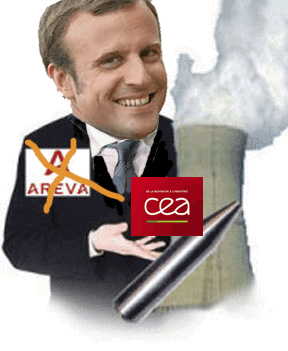 World Nuclear News 27th Oct 2020, France and Romania have signed a declaration of intent on cooperation in
the civil nuclear field, which aims, among other things, to work “with
strategic partners” to build units 3 and 4 of the Cernavoda nuclear power
plant and to upgrade unit 1. The document was signed yesterday by French
Prime Minister Jean Castex and his Romanian counterpart Ludovic Orban, who
led a delegation of his ministers to Paris.
https://www.world-nuclear-news.org/Articles/France-and-Romania-plan-joint-work-on-Cernavoda-pr
Trump’s USA is pushing NuScale’s small nuclear reactors for South Africa

The US nuclear company with an eye on South Africa just got a R23 billion boost, courtesy of Donald Trump, https://www.businessinsider.co.za/nuscale-nuclear-which-has-plans-for-sa-gets-a-big-us-subsidy-to-test-its-design-2020-10 Phillip de Wet , Business Insider SA Oct 22, 2020,
- American nuclear energy company NuScale has been citing Cape Town as an example of an ideal customer for its still-theoretical generators.
- It has now received in-principle financial support from the American government to build a nuclear power station in South Africa.
 NuScale’s pathfinder project for its new technology, in Idaho, just got a promise of an infusion of US government cash worth some R23 billion.
- While South Africa abandoned plans to create next-generation PBMR systems, the administration of Donald Trump has pushed small-scale nuclear development.
NuScale, a company with roots in US-funded research, this week received assurances that the American government will provide up to $1.4 billion (around R23 billion) in subsidies for a 12-module reactor it hopes to start building in Idaho by 2025.
The project is a commercial one, with municipal buyers lined up for the electricity, but the cash from the US department of energy is intended to bring the cost of that electricity down to $55 per MWh on a levelised cost of energy (LCOE) basis, making the project at least vaguely competitive with other forms of power generation.
Without the subsidies, the supposedly once-off cost of building a first-of-its kind power station would make the NuScale project commercially unviable, its planned customers say.
Just how once-off such costs are, and how much money the US government ends up actually spending on the project, will be closely watched in South Africa
Last week the US International Development Finance Corporation (DFC) announced it had signed a letter of intent to support NuScale “to develop 2,500 MW of nuclear energy in South Africa”.
NuScale has cited Cape Town as a purely theoretical customer for a 12-module version of its nuclear energy system, saying that such an installation could desalinate enough water to keep the entire city going.
But the 2,500MW number cited by the DFC suggests its South African ambitions are substantial. That is the full generating capability the South African government now envisages adding to the national grid from nuclear stations – but the government plan calls for a mixture of the conventional pressurised water reactors (PWRs) such as Russia’s Rosatom sells, and the type of small modular reactors (SMRs) NuScale is developing.
By seeking development finance for the full 2,500MW, NuScale appears to be signalling a plan to bid for the whole thing, rather than seeking to build only part of a new set of nuclear generators in SA alongside companies from China or elsewhere.
That matches the aggressive posture of the US government under the administration of Donald Trump. The DFC letter of intent is the first time the organisation has supported any nuclear project; a ban on its involvement in nuclear energy was lifted on the recommendation of a working group formed by the White House.
The state funding for the NuScale project in the US, meanwhile, comes after consistent and determined efforts under Trump’s presidency to “revitalise” nuclear energy in America, both in production and through research and development on next-generation systems.
South Africa, though determined to buy new nuclear power stations, has not had a similar political appetite to invest in research. In 2010 it mothballed work on the pebble bed modular reactor, a project launched in the late 1990s to create a safe, small, modular reactor system for both domestic use and sale abroad.
Russia once thought it had a done deal to build new nuclear reactors in South Africa. Half a decade later, thanks to its sheer political weight, China seems to be a serious contender for the job. Both France and South Korea have, at various points, been in the running too.
But as of this week, an American company with no track record of actually building commerical nuclear reactors yet is lining up the kind of money from the US government that could make its plans for South Africa viable – replacing a dream of home-grown next-generation nuclear with an imported version.
As of this year there are still vague plans to revive the project, in one form or another, but even if those were to succeed, the pace of development would have to be improbably fast for it to have any place in South Africa’s current round of explorations.
$40 billion cost to Poland for nuclear power – $18 billion to USA for starters
Poland Strikes $18 Billion Nuclear Power Deal With U.S. Oil Price, By Charles Kennedy – Oct 20, 2020, The United States and Poland closed a nuclear power deal potentially worth $18 billion as the Central European country seeks to reduce its reliance on coal and Russian natural gas……….
The agreement closed this week stipulates that over the next 18 months, the parties will develop a program for the construction of the reactors and how they will be financed. Per plans, the first reactors should come online in 2033. The whole program could end up costing Warsaw some $40 billion, of which at least $18 billion would go towards acquiring U.S. nuclear technology, according to a U.S. government official……. https://oilprice.com/Latest-Energy-News/World-News/Poland-Strikes-18-Billion-Nuclear-Power-Deal-With-US.html
USA aiming to beat Russia, China etc, in marketing nuclear reactors to Poland
|
US to cooperate on Poland’s nuclear plans, Argus 9 October 2020, The US and Poland are set to sign an agreement to co-operate on Poland’s nuclear development programme, envisaging construction of 6-9GW of nuclear generation capacity, with the first unit to start in 2033.US secretary of energy Dan Brouillette and Poland’s secretary of energy infrastructure Piotr Naimski today agreed to sign a long-term agreement between the governments of both countries to co-operate on Polish nuclear development.
The agreement, which had been already signed by the US side and is to be signed by Poland in the near future, provides that over the next 18 months the countries will work together on a financial and technical report on Poland’s nuclear power programme. This report will be the basis for US long-term involvement and for the Polish government to take final decisions on construction of nuclear power plants in the country, the US Department of Energy said……….. Earlier this year a Polish nuclear consortium led by government-controlled PGE sold its stakes in the PGE EJ 1 subsidiary, which initially was to be developing nuclear plants. In 2009 PGE said it planned to develop 6GW of nuclear capacity. Since then the company has struggled to come up with a financing model, and it recently opted to abandon its nuclear plans and focus on renewables. Under the current financing model, Poland plans to set up a joint venture with strategic foreign investors for development of the plants, with the Polish government maintaining at least 51pc. Tentative partners, beyond US companies, include firms from France and South Korea. https://www.argusmedia.com/en/news/2151529-us-to-cooperate-on-polands-nuclear-plans |
|
The frenzy to promote small nuclear reactors – shown in Google news headline articles today when you search ”nuclear”
 Google nuclear headlines today pointed to 96 articles on nuclear issues
By far the topic most covered most was the ”need” for new generation nuclear reactors for energy. – 24 articles in all, mostly enthusing about small nuclear reactors. Several of these involved the marketing of USA reactors to other countries.
The next most popular pro nuclear topic was nuclear fusion . (7 articles.) Other prominent pro nuclear themes were claims on safety, and action on climate. There were 50 pro nuclear articles in all.
There were 21 anti-nuclear articles. A few denied the claims on nuclear safety, and action on climate. Others dealt with the Fukushima nuclear waste water to be released into the Pacific ocean, with questions on nuclear economics.
There were 13 articles that didn’t ‘take sides’ – basically factual articles about nuclear wastes, safety, and international politics.
On the subject of nuclear weapons all of the articles opposed them, although one could be interpreted as suggesting that there’s a need to counteract China’s developments.
South Africa the first sucker to get American experimental nuclear reactor + $billions in bribes?
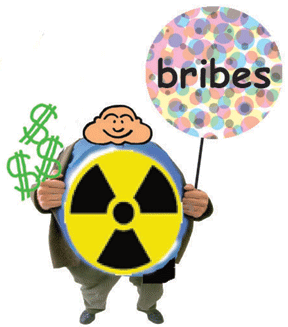 US firm ‘aims to build a nuclear power plant’ in South Africa, https://www.thesouthafrican.com/news/us-firm-aims-to-build-a-nuclear-power-plant-in-south-africa/What pandemic? An American investment group is looking to pump billions into South Africa, with one eye on a new nuclear power plant for Mzansi.by Tom Head 2020-10-18 US firm ‘aims to build a nuclear power plant’ in South Africa, https://www.thesouthafrican.com/news/us-firm-aims-to-build-a-nuclear-power-plant-in-south-africa/What pandemic? An American investment group is looking to pump billions into South Africa, with one eye on a new nuclear power plant for Mzansi.by Tom Head 2020-10-18
The future of South Africa’s energy supply could be shaped by a cash injection from the United States of America. The government, in their ongoing discussions with NEDLAC and foreign investors, has entertained the idea of letting an international development firm finance and build a new nuclear power plant in Mzansi.
AN AMERICAN NUCLEAR POWER PLANT IN SOUTH AFRICA?As Bloomberg has confirmed, The US International Development Finance Corp (DFC) has signed a letter of intent to support plans laid out by NuScale, an American technology group that are ready to kick on with this project. Amongst the billions of dollars they’ve pledged to South Africa, a ‘secure, reliable energy supply through the construction of new nuclear plants’ is their major priority. A CONTINENTAL FIRST FOR SOUTH AFRICA?
The DFC released a statement last week, confirming that they would be pioneering in their ambitious blueprint. Should a new nuclear plant get the green light, this would be the first IPP funded by the USA throughout the whole of Africa. The future of South Africa’s energy supply could be shaped by a cash injection from the United States of America. The government, in their ongoing discussions with NEDLAC and foreign investors, has entertained the idea of letting an international development firm finance and build a new nuclear power plant in Mzansi. further R4.5 billion would be spent on public transport development over the next 12 months. |
USA marketing NuScam small nuclear reactors to Africa
US to support new nuclear power project in South Africa https://businesstech.co.za/news/energy/441510/us-to-support-new-nuclear-power-project-in-south-africa/, Bloomberg17 October 2020 The United States International Development Finance Corp. pledged to support NuScale Power LLC, a US nuclear energy technology firm, to develop 2,500 megawatts of power in South Africa.
South Africa’s government drafted an economic recovery plan in conjunction with business and labour groups several months ago in a bargaining forum known as the National Economic Development and Labour Council, in the wake of the coronavirus pandemic.A version of the strategy that was discussed by the cabinet this week, and seen by Bloomberg, includes suggestions to secure reliable energy supply through the construction of new nuclear plants.
The draft envisages R23 billion ($1.4 billion) being allocated to galvanize private investment in infrastructure and R4.5 billion being spent on public transport over the next 12 months, but provides scant detail on where the money will come from.
The DFC, which ended its prohibition on supporting nuclear power in July, signed a letter of intent to support NuScale’s bid for South Africa’s independent power producer program, the development bank said in an emailed statement on Friday.
“If successful, NuScale would be the first US nuclear energy IPP on the continent and would help support energy resilience and security in one of Africa’s leading economies,” the DFC said.
USA to market nuclear reactor to Bulgaria
|
Bulgaria to hold talks with U.S. companies over new nuclear reactor, SOFIA, Oct 13 (Reuters) – Bulgaria’s government gave state-owned energy firm Bulgarian Energy Holding (BEH) a green light on Wednesday to start talks with U.S. companies on plans to build a new nuclear reactor at its Kozloduy power plant, the energy minister said……
On Tuesday, Prime Minister Boyko Borissov said the new reactor should be based on U.S. technology and allow diversification in nuclear energy ….
Petkova did not name the companies that would be involved in talks, but said they were developers of nuclear technology, including those who work on small modular designs. She said she would have until the end of January to present the results from the research, which will explore potential technology that could be used for the new unit at the Kozloduy plant and options for its construction. Petkova did not name the companies that would be involved in talks, but said they were developers of nuclear technology, including those who work on small modular designs. She said she would have until the end of January to present the results from the research, which will explore potential technology that could be used for the new unit at the Kozloduy plant and options for its construction. https://www.reuters.com/article/bulgaria-nuclear-kozloduy/bulgaria-to-hold-talks-with-us-companies-over-new-nuclear-reactor-idUSL8N2H44VI |
|
USA trying to beat China, in marketing nuclear reactors to Romania
Romania, U.S. to sign cooperation agreements over nuclear reactors, By Reuters Staff, 9 Oct 20, BUCHAREST (Reuters) – Romania’s economy ministry will sign cooperation and financing agreements with the United States
Nuclear powers battle each other to market nuclear reactors to Czech Republic
|
The Czech Republic Is Caught in a Nuclear Tug of War, FP,
Competition among China, Russia, and the West is taking the form of a battle to build reactors in Eastern Europe. BY TIM GOSLING SEPTEMBER 8, 2020”………………… The minority government of Czech Prime Minister Andrej Babis, who founded the ruling ANO 2011 party, has welcomed U.S. President Donald Trump’s embrace. But his stance looks less than certain as the country prepares to face one of its sternest geopolitical tests since the fall of communism 30 years ago: choosing a partner to expand its Soviet-built nuclear power capacity.
……….. Part of Pompeo’s mission to the Czech Republic was to convince Babis that it would pose a similar risk as Huawei should China or Russia win an upcoming tender to build a new 1.2-gigawatt reactor at the Dukovany nuclear power plant, at an estimated cost of over $7 billion. “If you choose one of these countries, it will jeopardize your freedom and sovereignty,” Pompeo reportedly stressed to the Czech leader.
However, Babis’s government is weak, and he faces building pressure at home and abroad to lean east. In turn, he has declined to exclude Chinese and Russian state-owned companies from bidding for the project and, despite welcoming Pompeo enthusiastically, demurred on signing a proffered cooperation agreement on nuclear energy………… Part of Pompeo’s mission to the Czech Republic was to convince Babis that it would pose a similar risk as Huawei should China or Russia win an upcoming tender to build a new 1.2-gigawatt reactor at the Dukovany nuclear power plant, at an estimated cost of over $7 billion. “If you choose one of these countries, it will jeopardize your freedom and sovereignty,” Pompeo reportedly stressed to the Czech leader. However, Babis’s government is weak, and he faces building pressure at home and abroad to lean east. In turn, he has declined to exclude Chinese and Russian state-owned companies from bidding for the project and, despite welcoming Pompeo enthusiastically, demurred on signing a proffered cooperation agreement on nuclear energy. The expansion of the country’s two nuclear power plants—Dukovany and Temelin—are at the center of the Czech Republic’s long-term energy strategy. However, the government has struggled for years to find a financing model agreeable to the minority shareholders at state-controlled energy group CEZ, which is tasked with building and running the nuclear energy infrastructure. The disagreement over funding saw plans to build two new units at Temelin scrapped in 2014. The two finalists in that race—which also brought a U.S. secretary of state to Prague—were the Russian state nuclear agency Rosatom and U.S.-based Westinghouse. They’ve sat in the background in Prague since, awaiting the starting gun for new projects. In the Dukovany showdown, they’re set to be joined by bidders from China, France, and South Korea……….. In the wake of Pompeo’s trip to Prague, lobbying around the nuclear plant will ramp up. “Russia has been extremely active in lobbying for the past couple of years,” Karaskova said. “The U.S., through Mike Pompeo’s comments, also showed a strong interest, probably the first time so openly and publicly.” Petr Trescak, an opposition MP, veteran of the nuclear sector, and member of the government committee for new nuclear plants said that he expects intense lobbying will soon start. Lipavsky said that the tender is already a regular topic with representatives of those countries that will bid, including the French and U.S. ambassadors. Public opinion is also key. Following Pompeo’s visit, Westinghouse launched a search for new senior PR operatives……… https://foreignpolicy.com/2020/09/08/czech-republic-nuclear-tug-of-war-china-russia-united-states/ |
|
1 This Month

of the week – Shut Down Drone Warfare!


Tell the Ukrainian Government to Drop Prosecution of Peace Activist Yurii Sheliazhenko

Petition to revoke the licensing of the Near Surface Nuclear Disposal Facility (NSDF) at Chalk River. https://www.ourcommons.ca/petitions/en/Petition/Details?Petition=e-7247
To see nuclear-related stories in greater depth and intensity – go to https://nuclearinformation.wordpress.com
-
Archives
- March 2026 (237)
- February 2026 (268)
- January 2026 (308)
- December 2025 (358)
- November 2025 (359)
- October 2025 (376)
- September 2025 (257)
- August 2025 (319)
- July 2025 (230)
- June 2025 (348)
- May 2025 (261)
- April 2025 (305)
-
Categories
- 1
- 1 NUCLEAR ISSUES
- business and costs
- climate change
- culture and arts
- ENERGY
- environment
- health
- history
- indigenous issues
- Legal
- marketing of nuclear
- media
- opposition to nuclear
- PERSONAL STORIES
- politics
- politics international
- Religion and ethics
- safety
- secrets,lies and civil liberties
- spinbuster
- technology
- Uranium
- wastes
- weapons and war
- Women
- 2 WORLD
- ACTION
- AFRICA
- Atrocities
- AUSTRALIA
- Christina's notes
- Christina's themes
- culture and arts
- Events
- Fuk 2022
- Fuk 2023
- Fukushima 2017
- Fukushima 2018
- fukushima 2019
- Fukushima 2020
- Fukushima 2021
- general
- global warming
- Humour (God we need it)
- Nuclear
- RARE EARTHS
- Reference
- resources – print
- Resources -audiovicual
- Weekly Newsletter
- World
- World Nuclear
- YouTube
-
RSS
Entries RSS
Comments RSS
 nuclear-news