Nuclear power station workers set to walk out in dispute over pay
The union say that the dispute is a result of an ‘inadequate’ pay offer of 4.5%, effective from April 2023.
Caitlyn Dewar, 18 Mar 24, https://news.stv.tv/highlands-islands/dounreay-nuclear-power-station-workers-in-highlands-set-to-walk-out-in-dispute-over-pay
Hundreds of workers at a nuclear power station in the Highlands are being balloted for strike action in a pay dispute.
Unite the union confirmed that around 450 members employed by Magnox Limited based at Dounreay power station are being balloted for strike action in a pay dispute.
The union say that the dispute is a result of an “inadequate” pay offer of 4.5%, effective from April 2023 which was rejected by 95% in a consultative pay ballot.
Unite said the offer amounts to a substantial real terms pay cut, adding that the true rate of inflation based on the RPI stood at 11.4%.
Unite’s Magnox membership includes craft technicians, general operators, chemical and electrical engineers, and maintenance fitters and safety advisors.
Unite general secretary Sharon Graham said: “The Dounreay workforce are highly-skilled and they undertake an extremely important job.
3 days ago
Share this story
Posted in
Hundreds of workers at a nuclear power station in the Highlands are being balloted for strike action in a pay dispute.
Unite the union confirmed that around 450 members employed by Magnox Limited based at Dounreay power station are being balloted for strike action in a pay dispute.
The union say that the dispute is a result of an “inadequate” pay offer of 4.5%, effective from April 2023 which was rejected by 95% in a consultative pay ballot.
Unite said the offer amounts to a substantial real terms pay cut, adding that the true rate of inflation based on the RPI stood at 11.4%.
Unite’s Magnox membership includes craft technicians, general operators, chemical and electrical engineers, and maintenance fitters and safety advisors.
Unite general secretary Sharon Graham said: “The Dounreay workforce are highly-skilled and they undertake an extremely important job.
Ad
“The failure to pay our members a decent pay increase is outrageous, Magnox seems to have money to burn for directors and shareholders but thinks it is acceptable to deny its workers a decent pay increase.”
“Unite will fully support our members at Dounreay power station in the fight for better jobs, pay and conditions.”
Magnox Ltd, currently trading as Nuclear Restoration Services, is a wholly owned subsidiary of the Nuclear Decommissioning Authority (NDA).
The Dounreay power station is scheduled to be fully decommissioned and cleaned-up in 2033.
The union said that the remuneration package of the highest paid Magnox director went up from £331,000 to £651,000 in March 2023, and the company paid dividends of £2.1m in the same period.
Marc Jackson, Unite industrial officer, added: “Pay negotiations with Magnox have been ongoing since January 2023 with next to no movement by the company. However, Magnox has not been slow in making sure the remuneration packages for directors have been bolstered with the highest paid director seeing their package double in the space of a year.
“Unite’s membership at Dounreay power station will no longer accept these double standards, and that’s why we are balloting our members for strike action.”
Magnox has been contacted for comment.
Dounreay workers vote on strike action after pay talks stall
https://www.gmbscotland.org.uk/newsroom/gmb-scotland-ballot-at-dounreay.html 13 Mar 24
Workers at Dounreay nuclear site are being balloted on industrial action after long-running pay talks stalled.
Members of GMB Scotland and other unions are voting on industrial action including working to rule, overtime bans and strikes after a pay offer was overwhelmingly rejected.
Discussions with management at the Caithness site have been continuing for 18 months and Keir Greenaway, GMB senior organiser in public services, said workers cannot be expected to wait any longer for a fair offer.
He said: “This delay would be unacceptable at any time but when our members have been enduring an unprecedented cost of living crisis, it is beyond the pale.
“Managers insist they are bound by civil service rules but have chosen not to seek exemption from those rules for their own reasons.
“We have heard a lot of words but seen no action by management and words do not pay our members’ bills.
“They deserve to see a fair pay offer urgently and will take whatever action is necessary to secure one. Enough is enough.”
Dounreay joined Magnox Ltd last year and then became part of Nuclear Restoration Services, which is responsible for the clean-up of the Caithness site and 11 others across the UK.
A ballot on industrial action by GMB Scotland, Unite and Prospect members is now open and will continue for three weeks.
Fukushima fishers strive to recover catches amid water concerns
Amid voices of support from across the country for seafood products sourced from Fukushima Prefecture, the local fishing community is pushing ahead with efforts to revitalize the industry despite apprehension about the ongoing decommissioning of the crippled Fukushima No. 1 nuclear power plant.
While Fukushima Prefecture has yet to experience significant reputational repercussions, the fishing industry remains concerned about the decommissioning work, which is expected to take several decades, coupled with the discharge of the treated radioactive water from the crippled plant that began about half a year ago…………………………….
With government subsidies and other initiatives, the prefecture’s seven fishery cooperatives aim to increase the catch to surpass 50% of pre-disaster levels………………………………………………… https://www.japantimes.co.jp/news/2024/03/06/japan/society/fukushima-fishermen-fight-recover-catch/
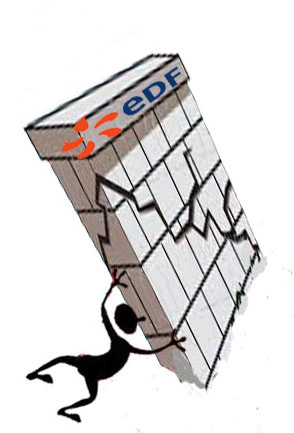
France: EDF Faces Unprecedented Nuclear Workload in France
Energy Intelligence Group, Fri, Feb 9, 2024, Grace Symes, London
As France faces two major nuclear efforts — the refurbishment and life extension of EDF’s domestic operating fleet and a major nuclear newbuild program — there are already signs that the country’s nuclear workforce is struggling to keep up. With 10-year safety reviews, or decennial visits (DVs), of EDF’s 56 domestic reactors growing ever more complex and time-consuming, EDF anticipates flatlined nuclear output from 2025 to 2026, and beyond that France will need to ramp up an industrial effort not seen in generations if it hopes to successfully launch simultaneous large newbuilds (related).
Energy Intelligence 9th Feb 2024
https://www.energyintel.com/0000018d-7944-d1ef-a5cd-fd647d920000
Berkshire nuclear defence workers strike
Planet Radio 24 Jan 24
Workers at the Atomic Weapons Establishment (AWE) at Aldermaston and Burghfield are on a 24-hour strike after two months of other forms of industrial action in a dispute over pay.
Action short of a strike started in mid-November and will re-commence on Thursday January 25. ……………………………………….https://planetradio.co.uk/greatest-hits/berkshire-north-hampshire/news/workers-awe-aldermaston-burghfield-strike/
B1 Federal Employees to Stage Walk Out Over Biden’s Support for Gaza Slaughter
Federal employees from nearly two dozen US government agencies will walk off their jobs on Tuesday in protest of President Biden’s full-throated support for Israel’s brutal assault on Gaza, Al-Monitor reported on Friday.
by Dave DeCamp January 14, 2024 https://news.antiwar.com/2024/01/14/federal-employees-to-stage-walk-out-over-bidens-support-for-gaza-slaughter/
Federal employees from nearly two dozen US government agencies will walk off their jobs on Tuesday in protest of President Biden’s full-throated support for Israel’s brutal assault on Gaza, Al-Monitor reported on Friday.
The Biden administration has faced significant internal dissent over the Israeli slaughter in Gaza, which has killed nearly 24,000 Palestinians, mostly women and children. Officials from across government agencies have signed letters protesting the US support for Israel, but a walkout will be the most dramatic step yet, besides the two resignations from administration officials.
Dozens of US officials are organizing the walkout as a group calling itself Feds United for Peace. They expect hundreds of other federal employees to join them on Tuesday.
Al-Monitor obtained a list of some of the agencies where employees are expected to participate in the protest, which includes the Executive Office of the President, the National Security Agency, the Departments of State, Defense, Homeland Security, and Veterans Affairs, and more.
In light of the Al-Monitor Report, House Republicans are calling for any employees who participate in the protest to be fired. “Any government worker who walks off the job to protest US support for our ally Israel is ignoring their responsibility and abusing the trust of taxpayers,” said House Speaker Mike Johnson (R-LA), according to Axios. “They deserve to be fired.”
President Biden is also facing dissent from within his re-election campaign as his backing of Israel’s mass killing of Palestinians is hurting his chances of winning another term. Seventeen Biden campaign staffers said in a letter protesting his support for Israel that they’ve seen “volunteers quit in droves, and people who have voted blue for decades feel uncertain about doing so for the first time ever, because of this conflict.”
Hotel near Bridgwater could be repurposed to house Hinkley Point C workers
By Jamie Grover
Bridgwater Mercury 12th Jan 2024
PLANS have been submitted to Somerset Council to request permission for a hotel near Bridgwater and Highbridge to be repurposed in order to house Hinkley Point C workers.
It is proposed that Laburnum Lodges in West Hunstpill would be converted to accommodate workers at the EDF power plant for a minimum of five years, before then resuming usual operations as holiday accommodation.
The news comes after it was recently revealed EDF were once again in talks with Somerset Council to increase the workforce on site, despite an ongoing housing crisis in Bridgwater.
……………………………………………. Cllr Leigh Redman, Bridgwater Town Council spokesperson for Nuclear Issues, said that the original development consent order (DCO) signed by the secretary of state for Hinkley Point C, indicated that at peak, the number of workers on site would be 5,600.
This number was since raised to 8,600 due to the conversion of Pontins in Brean to become an accommodation site for workers at the power plant, which is now full.
There are now over 11,000 workers at Hinkley Point C, and EDF has confirmed its plans to bring in more staff in the near future.
To keep up to date with the application, or for more information, search reference number 52/23/00010 on the Somerset Council website.
Comments are welcomed until Tuesday, February 13, and approval could be given as early as Wednesday, February 14. https://www.bridgwatermercury.co.uk/news/24045404.hotel-near-bridgwater-house-hinkley-point-c-workers/
Nuclear defence workers to strike over pay
Daisy Stephens & PA Media – BBC News, Thu, 11 January 2024
Workers at a nuclear warhead factory are set to strike in a dispute over pay, their union has announced.
Members of Prospect at Berkshire-based Atomic Weapons Establishment (AWE) will walk out for 24 hours on 24 January, after two months of other forms of industrial action.
The company is facing “a recruitment and retention crisis” and risks “being unable to fulfil its critical role in safeguarding our national security” if pay is not improved, Prospect general secretary Mike Clancy warned. ……………………………………more https://au.news.yahoo.com/nuclear-defence-workers-strike-over-150520892.html
Nuclear Free Local Authorities (NFLAs) call upon nuke cops chief to issue statement on ‘toxic’ Sellafield allegations

Following the disturbing revelations in The Guardian that a ‘toxic’
workplace culture exists within the Civil Nuclear Constabulary, the Nuclear
Free Local Authorities Chair has written to the force’s Chief Constable
‘offering him the opportunity’ to issue a statement.
The Guardian
published its allegations on 6 December, and this article included a
comment from Chief Constable Chesterman who said that he has ‘made it
clear that anyone holding misogynistic, racist, homophobic, or other
unacceptable views, or who carries out behaviour that breaches our
standards of professional conduct, has no place in the CNC.’
NFLA 3rd Jan 2024
Mass layoffs at small nuclear reactor companies

Pioneering Nuclear Startup Lays Off Nearly Half Its Workforce. NuScale is the second major U.S. reactor company to cut jobs in recent months.

Huff Post, By Alexander C. Kaufman, Jan 5, 2024,
Almost exactly one year ago, NuScale Power made history as the first of a new generation of nuclear energy startups to win regulatory approval of its reactor design ― just in time for the Biden administration to begin pumping billions of federal dollars into turning around the nation’s atomic energy industry.
But as mounting costs and the cancellation of its landmark first power plant have burned through shrinking cash reserves, the Oregon-based company is laying off as much 40% of its workforce, HuffPost has learned.
At a virtual all-hands meeting Friday afternoon, the company announced the job cuts to remaining employees. HuffPost reviewed the audio of the meeting. Two sources with direct knowledge of NuScale’s plans confirmed the details of the layoffs.
NuScale did not respond to a call, an email or a text message seeking comment.
Surging construction costs are imperiling clean energy across the country. In just the past two months, developers have pulled the plug on major offshore wind farms in New Jersey and New York after state officials refused to let companies rebid for contracts at a higher rate.
But the financial headwinds are taking an especially acute toll on nuclear power. It takes more than a decade to build a reactor, and the only new ones under construction in the U.S. and Europe went billions of dollars over budget in the past two decades. Many in the atomic energy industry are betting that small modular reactors ― shrunken down, lower-power units with a uniform design ― can make it cheaper and easier to build new nuclear plants through assembly-line repetition.
The U.S. government is banking on that strategy to meet its climate goals. The Biden administration spearheaded a pledge to triple atomic energy production worldwide in the next three decades at the United Nations’ climate summit in Dubai last month, enlisting dozens of partner nations in Europe, Asia and Africa.
The two infrastructure-spending laws that President Joe Biden signed in recent years earmark billions in spending to develop new reactors and keep existing plants open. And new bills in Congress to speed up U.S. nuclear deployments and sell more American reactors abroad are virtually all bipartisan, with progressives and right-wing Republicans alike expressing support for atomic energy…………
Until November, NuScale appeared on track to debut the nation’s first atomic energy station powered with small modular reactors. But the project to build a dozen reactors in the Idaho desert, and sell the electricity to ratepayers across the Western U.S. through a Utah state-owned utility, was abandoned as rising interest rates made it harder for NuScale to woo investors willing to bet on something as risky a first-of-its-kind nuclear plant.
In 2022, NuScale went public via a SPAC deal, a type of merger that became a popular way for debt-laden startups to pay back venture capitalists with a swifter-than-usual initial public offering on the stock market.
In its latest quarterly earnings, NuScale reported just under $200 million in cash reserves, nearly 40% of which was tied up in restricted accounts……………………………………..
NuScale, which has four other projects proposed in the U.S. and tentative deals in at least eight other countries, isn’t the only nuclear startup navigating choppy waters.
In October, Maryland-based X-energy, which is working with the federal government to develop a next-generation reactor using gas instead of water for cooling, cut part of its workforce and scrapped plans to go public.
In September, California-based Oklo appeared to lose a $100 million contract to build its its salt-cooled “micro-reactors” at an Air Force base in Alaska, as the independent Northern Journal newsletter first reported. ………. https://www.huffpost.com/entry/nuscale-layoffs-nuclear-power_n_65985ac5e4b075f4cfd24dba
Swiss nuclear power plants are running out of staff
After warning Switzerland over two years ago, the International Atomic Energy Agency (IAEA) recommends the authorities develop a roadmap to deal with the impending problem of labour shortage in Swiss nuclear power plants.
This content was published on December 3, 2023 – 14:17December 3, 2023
Switzerland’s existing nuclear power plants are on the verge of having their lifetimes extended from 50 to 80 years. But now a problem is threatening to thwart these plans.
The search for skilled labour is becoming increasingly challenging, as reported by the NZZ am Sonntag newspaper on Sunday. There are currently over 40 vacancies at the Beznau, Gösgen and Leibstadt nuclear power plants.
A team of experts from the IAEA warned Switzerland back in October 2021. In a report, the agency concluded that the search for personnel was one of the biggest challenges for Swiss nuclear plants and for the supervisory authority itself…………………https://www.swissinfo.ch/eng/business/swiss-nuclear-power-plants-are-running-out-of-staff/49027136
Are staff shortages at Sellafield nuclear power plant affecting safety at the site?
QUESTIONS have been asked over whether a staff shortage at Sellafield
nuclear power plant is affecting safety at the site. The issue was raised
at this month’s meeting of the west Cumbria sites stakeholder group at
Cleator Moor Civic Hall. Neil Crewdson, Sellafield’s site director, was
presenting a progress report on various developments at the site where he
highlighted recruitment issues and a difficulty in attracting staff. But he
outlined a number of ways in which they are hoping to tackle the situation
and turn things around. He said there used to be 200 vacancies a year and
it had risen to 900. He added: “Post Covid we had a step change in people
leaving. With salaries we are trying to make sure they are more
competitive.”
Carlisle News & Star 14th Nov 2023
https://www.newsandstar.co.uk/news/23923195.rising-number-vacancies-sellafield-covid/
Are They Already Cutting Corners on Worker Protection at DOE’s New Plutonium Processing Plant?

plutonium is toxic at the scale of micrograms, deadly at the scale of milligrams, and useable in nuclear weapons of mass destruction at the scale of kilograms. This is why plutonium work requires rigid, intensive safety systems, referred to as “defense in depth,” to protect workers and the surrounding people and landscape; as well as extreme levels of security and material accounting.
CounterPunch, BY DON MONIAK 11 Sept 23
As of this past Labor Day, there are strong indications that future workers at the planned, new Savannah River Plutonium Processing Plant (SRPPF) may face unnecessary, increased risks of exposure to radiological hazards inherent in plutonium toxicity and chemical complexity.
According to an August 3, 2023 letter from the Defense National Facilities Safety Board (DNFSB) to the Department of Energy’s (DOE) National Nuclear Security Agency (NNSA), the SRPPF project leadership team does not consider vital plutonium processing safety equipment as “safety significant controls.”
According to the letter, NNSA’s project leadership team believes a reliance on worker sense of sight, hearing, taste, smell, and touch is sufficient to detect and/or prevent accidents such as plutonium fires and dispersal of plutonium oxide powder.
In the hierarchy of nuclear safety, the Department of Energy standards place “Safety Significant Controls” above administrative controls that are reliant upon the absence of human error.
The motive for SRPPF project team’s preference for administrative controls is unknown.
The New Plutonium Processing Plant.
The plutonium/MOX (Pu/MOX) fuel facility was a massive, multi-billion dollar endeavor designed to help dispose of dozens of tons of surplus nuclear weapons plutonium (Pu). This Savannah River Site(SRS) project was abandoned in the late 2010’s, following a chronic array of technical issues, mismanagement, major cost overruns, cutting of corners, and the lack of commercial Pu/MOX fuel customers.
After the project was abandoned, the Department of Energy’s (DOE) National Nuclear Security Agency (NNSA) decided to repurpose the unfinished facility into a new “plutonium pit”production plant. The Mixed Oxide Fuel Fabrication Facility (MFFF) was then renamed the Savannah River Plutonium Processing Plant (SRPPF). This $11 billion plus repurposed facility is already burdened by cost overruns—-the original estimate was $3.7 billion.
Plutonium pits are referred to as the primary nuclear explosives, or triggers,” (1) that dominate the known U.S. nuclear weapons arsenal. Pits acquired their quaint nickname by virtue of the resemblance of the configuration of high explosives surrounding the primary nuclear explosive to stone fruit like peaches and plums—an example of early nuclear weaponeers’ inside humor.
The Pu pits are pressure vessels with nested shells of material, comprised of other non-nuclear parts, including the metal cladding, welds, a pit tube, neutron tamper(s) and initiator, as well as the usually hollow-cored plutonium hemispheres. In most pit designs, a sealed pit tube carries deuterium-tritium gas into the hollow-core to boost the nuclear explosive power of weapons.
But unlike the sweet, fruity, and and delectable flesh surrounding plum and peach pits, a Pu pit is surrounded by a high explosives package powerful enough to implode the plutonium metal sphere contained in the pit. This is not like compressing a tin can, as plutonium is the most durable of the transuranic heavy metals.
The current plan is to annually produce at least eighty new plutonium pits in the SRPPF. Pit fabrication was once the exclusive task at the long-closed Rocky Flats plant in Colorado, and the work processes constitute the most dirty—in terms of waste production—and dangerous workplace in the national nuclear weapons complex. In this century, Los Alamos National Laboratory (LANL) has failed miserably to reconstitute a tiny fraction of the Rocky Flats pit production rate.
Pit production is unlikely to be the only task at the SRPPF. An estimated ten to twelve-thousand surplus plutonium pits, containing a sum of 30 to 34-metric tonnes of plutonium, could also be processed at a plutonium pit disassembly and conversion line at the SRPPF. The resulting plutonium oxide powder would then be sent to the SRS K-Area’s Pu waste production facility, where the powder is diluted to a three to five percent level within a larger mixture of inert materials………………………….
Some Plutonium Processing Hazards
There is a negligible level of debate that plutonium is toxic at the scale of micrograms, deadly at the scale of milligrams, and useable in nuclear weapons of mass destruction at the scale of kilograms. This is why plutonium work requires rigid, intensive safety systems, referred to as “defense in depth,” to protect workers and the surrounding people and landscape; as well as extreme levels of security and material accounting.
The most hazardous plutonium operations involve plutonium pit fabrication. After pit disassembly, the plutonium within pits is converted to a finely dispersed powder form (2), made up of sticky grains containing energetic alpha particles that easily damage soft lung tissues. Sticky plutonium oxide particles clinging to ductwork can also hinder ventilation systems over time.
Recycling plutonium for pit production then requires difficult and dangerous processes to remove impurities and undesirable decay products such as intensely radioactive Americium-241. (3) The resulting plutonium form is transferred to the next step, the plutonium foundry.
The foundry work involves a complex ten-step process, summarized as melting, casting, and heat treating of plutonium metal. Gallium is added at a one-percent ratio to produce an alloy that is considered almost as easy to machine as aluminum or silver. The risk from explosion, criticality, and spill hazards must be rigidly controlled; while contaminated parts such as crucibles pose unique waste management measures.
The final plutonium processing step is machining the foundry product into a precise sub-critical configuration. Like any machining, Plutonium metal work casts tiny shavings and creates fine dust.
These shavings can ignite upon exposure to air and lead to larger fires that can destroy glove boxes and ventilation systems, and cause large releases of plutonium into the atmosphere. The Rocky Flats experience suggests that fires of any size are not a remote possibility, they are a probability.
The task is to keep Pu metal fires small and nondestructive, while preventing injury and harmful exposures to workers. A small fire can render costly equipment useless. A large fire can lead to a countryside contaminated with particles that become more intensely radioactive for decades.
Extreme care must also be taken to keep plutonium metal in a non-critical configuration at all times. The wrong geometry or placement of metal pieces in the wrong configuration can produce the deadly blue light that signifies criticality accidents. In 2009, a number of Los Alamos criticality engineers walked off the job at the lab’s pit production line, citing a casual approach to criticality safety.
The final step is assembly, where the parts that make pits tick are introduced. The making of these parts pose their own toxic hazards, such as the fine dust from machining beryllium metal.
Those are just several aspects of the safety issues involved with the plutonium pit fabrication.
The True, and False, Necessity for New Pit Fabrication and Production. ……………………………………………………………………………………………………………………………………………………………………………….
The Pit Plant’s Initial Design: One Less Layer of Safety Depth?
Because of all these factors, new pit production is considered essential, and a new, smaller scale—by Cold War Standards—plutonium pit fabrication capacity is presently in the preliminary design phase at the SRPPF complex.
The highest standards of safety are expected to prevent accidents or mitigate the impacts of spills, fires, leaks, and dispersion of fine radioactive dust. A less rigid approach to safety is quite unexpected for a high hazard, hardened nuclear facility that would only be the second its kind in the weapons complex—-the last being the Rocky Flats plant built in the 1950’s.
But according to the August 3, 2023 letter from the Defense Nuclear Facilities Safety Board (DNFSB), the DOE/NNSA’s project leadership team does not consider vital plutonium processing safety equipment as “safety significant controls.”…………………………………………………………………………………………………………………………………………………………………………………………….more https://www.counterpunch.org/2023/09/11/are-they-already-cutting-corners-on-worker-protection-at-does-new-plutonium-processing-plant/
1000 Sellafield Ltd. contractors to be balloted for strike by Unite
AROUND 1,000 contractors at Sellafield are being balloted for potential
strike action, after Unite have criticised an ‘unacceptable offer’ from
management. More than 3,000 engineering construction workers nationally,
operating under the National Agreement for Engineering Construction
Industry (NAECI), are being balloted for strike action overpay, Unite, the
UK’s leading union, said on Thursday, September 7. This includes about
1,000 Sellafield Ltd. contractors who the union say conduct critical repair
and maintenance at the site.
Whitehaven News 10th Sept 2023
Health and safety concerns raised with Dounreay management
Some trade union and safety representatives have no confidence in the
management at Dounreay and have raised health and safety concerns at the
site.
A number of employees told the John O’Groat Journal that they are
also worried over how issues on the well-being of staff were being
addressed. “There are numerous cases of staff members off due to
work-related stress – some as a result of bullying and harassment,” said
one worker. “Concerns have been raised but do not appear to be addressed.
“Dounreay has said that ‘our workers are out greatest asset’, but from the
conversations I’ve had with people across site, this is not believed.”
Another employee stated: “This has been an ongoing issue for years. It is
hard to prove in many cases and has been dealt with in some instances.
Safety reps have been involved in meetings on this topic along with the
chairman of the Trade Union Co-ordinating Committee.”
John O’Groat Journal 8th Sept 2023
1 This Month
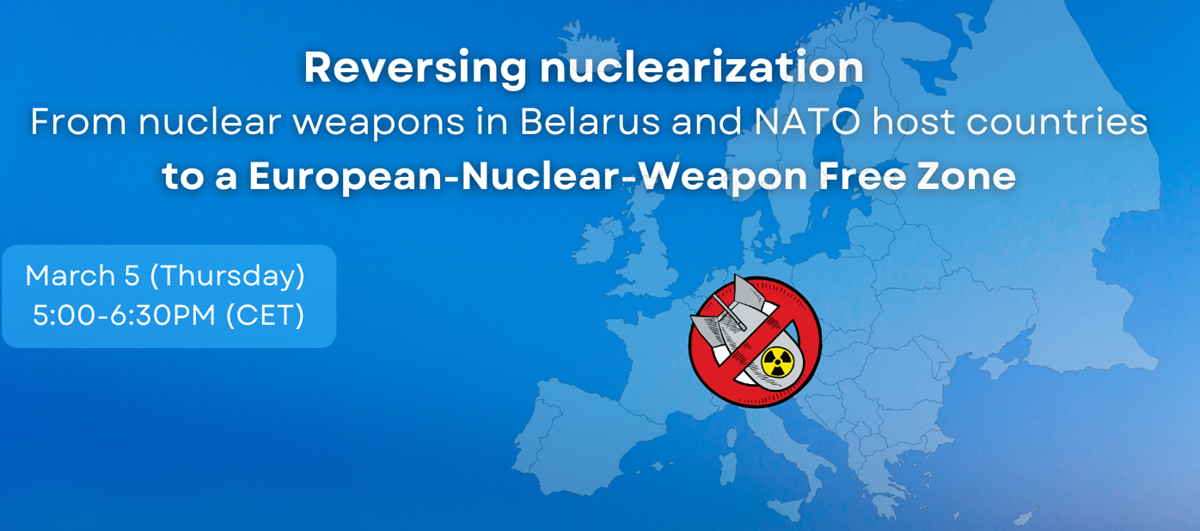
5 March -Online – Reversing nuclearization:
From nuclear weapons in Belarus and NATO host countries to a European-Nuclear-Weapon Free Zone
11am-12:30pm Eastern Time USA / 5pm-6:30pm CET

of the week – Advocating for a
nuclear free beach – https://www.samuellawrencefoundation.org/
The Samuel Lawrence Foundation advocates for a Nuclear Waste Free Beach at San Onofre, join us and take action!

10 March A LIVE WEBINAR THE REAL EFFECTS OF NUCLEAR POWER
What the Industry Isn’t Telling Us
1:00 PM Mountain, 2 pm Central, 3 pm Eastern. Live on the Keepers of the Water Facebook page

18 March Webinar @ 1 PM EST: An Assessment of SMR Projects: The Case of Canada
register for the zoom:
https://us02web.zoom.us/webinar/register/WN_o8BIIOUvQ2ONJR1nta65DQ#/registration

of the week – STOP SMALL MODULAR REACTORS IN CANADA
To see nuclear-related stories in greater depth and intensity – go to https://nuclearinformation.wordpress.com
-
Archives
- March 2026 (38)
- February 2026 (268)
- January 2026 (308)
- December 2025 (358)
- November 2025 (359)
- October 2025 (376)
- September 2025 (258)
- August 2025 (319)
- July 2025 (230)
- June 2025 (348)
- May 2025 (261)
- April 2025 (305)
-
Categories
- 1
- 1 NUCLEAR ISSUES
- business and costs
- climate change
- culture and arts
- ENERGY
- environment
- health
- history
- indigenous issues
- Legal
- marketing of nuclear
- media
- opposition to nuclear
- PERSONAL STORIES
- politics
- politics international
- Religion and ethics
- safety
- secrets,lies and civil liberties
- spinbuster
- technology
- Uranium
- wastes
- weapons and war
- Women
- 2 WORLD
- ACTION
- AFRICA
- Atrocities
- AUSTRALIA
- Christina's notes
- Christina's themes
- culture and arts
- Events
- Fuk 2022
- Fuk 2023
- Fukushima 2017
- Fukushima 2018
- fukushima 2019
- Fukushima 2020
- Fukushima 2021
- general
- global warming
- Humour (God we need it)
- Nuclear
- RARE EARTHS
- Reference
- resources – print
- Resources -audiovicual
- Weekly Newsletter
- World
- World Nuclear
- YouTube
-
RSS
Entries RSS
Comments RSS
 nuclear-news