The US buried millions of gallons of wartime nuclear waste – Doge cuts could wreck the cleanup

Guardian, Andrew Buncombe in Richland, Washington. 16 May 25
Hanford made the plutonium for US atomic bombs, and its radioactive waste must be dealt with. Enter Elon Musk
Andrew Buncombe in Richland, WashingtonThu 15 May 2025 23.00 AESTShare
In the bustling rural city of Richland, in south-eastern Washington, the signs of a nuclear past are all around.
A small museum explains its role in the Manhattan Project and its “singular mission – [to] develop the world’s first atomic bomb before the enemy might do the same”. The city’s high school sports team is still known as the Bombers, with a logo that consists of the letter R set with a mushroom cloud.
Richland lies just 30 miles from the Hanford nuclear site, a sprawling plant that produced the plutonium for America’s atomic weapons during the second world war – and later the bomb dropped over Nagasaki. Over the decades, thousands of people in the Tri-Cities area of southern Washington worked at the plant, which shuttered in 1989.
Residents have long spearheaded an operation to deal with 56m gallons of nuclear waste left behind in dozens of underground tanks – a cleanup that is expected to cost half a trillion dollars and may not be completed until 2100. The government has called it “one of the largest and most expensive environmental cleanup projects worldwide”.
In recent weeks, what has already been a costly and painstakingly slow process has come under renewed scrutiny, following an exodus of experts from the Department of Energy (DoE) that is overseeing the cleanup being executed by thousands of contract workers.
According to local media, several dozen staff, who reportedly include managers, scientists and safety experts, have taken early retirement or been fired as part of a broader government reduction overseen by Elon Musk and his “department of government efficiency”. The government has refused to provide a specific figure for how many people involved with cleanup efforts have left. The top DoE manager at the Hanford site, Brian Vance, who had many years of experience, resigned at the end of March without giving a reason.
The changes have thrown the communities around the Hanford plant into limbo. And while the Department of Energy has said that only six staff have been fired, and reiterated its commitment to the cleanup, that hasn’t managed to assuage locals’ concerns.
Those raising the alarm include politicians from both parties, environmental activists, and Indigenous communities who have historically owned the land on which the 560 sq mile (1,450 sq km) site sits.
The US senator for Washington Patty Murray said workers were already understaffed, and that cutting further positions was “reckless”.
“There is nothing ‘efficient’ about indiscriminately firing thousands upon thousands of workers in red and blue states whose work is badly needed,” the Democrat said.
Dan Newhouse, the local Republican congressman is similarly concerned. “A strong, well trained federal workforce is essential,” he wrote in a weekly newsletter to constituents.
Concerns have also been raised by some over the difficulty former workers face in making medical compensation claims to the government for everything from cancer to acute pulmonary disease linked to their time at the plant.
Taken together, there is fresh anxiety in a community, where many are still living with the health and environmental effects of Hanford.
Richland, part of the Tri-Cities, was obtained by the army in 1943 to house workers engaged in top-secret efforts to produce plutonium used in the world’s first nuclear explosion – the-so-called “Trinity” device tested near Los Alamos, New Mexico, in 1945. Though the city was returned to the public a decade later, it can still feel like a company town.
To get anywhere near what is known as Hanford’s B-reactor, the world’s first full-scale plutonium production reactor, you need to sign up for an official tour. Yet a view of its grey, single tower, looming from the hillside, can be seen from state route 24, close to the Columbia River.
Those expressing concern about the federal government downsizing include local Indigenous groups who historically owned the land where the site is located and were pushed off it by the government. The Hanford plant area contains the location of several sacred sites, among them Gable Mountain, which were used for ceremonies, and the area of Rattlesnake Mountain, or Lalíik, which has for centuries been used to hunt elk.
The site is also located close to the Yakama Indian Reservation, home to 11,000 people, and the tribe has long pushed to be central to decisions about the cleanup and what it is eventually used for. The tribe recently signed a deal to carry out their first elk hunt in the area for seven decades.
“One of the biggest fears is that without proper manpower, there might not be a very good crew for the cleanup of the property,” says Gerald Lewis, chairman of the Confederated Tribes and Bands of the Yakama Nation. “Without this cleanup, that’s been happening for a number of years, we’re afraid of a nuclear mishap.”
Dr Elizabeth McClure, a health data specialist with the Union of Concerned Scientists, is currently conducting research in the communities around Hanford. She says there is a history of government-led cover-ups over the years at the site, including what is known as “the Green Run”, the intentional release of 8,000 so-called curies of iodine-1 into the atmosphere in 1949……………………………………………………………………………………………………………….. https://www.theguardian.com/us-news/2025/may/15/us-government-nuclear-waste-doge
Kingston Fossil Plant and Oakridge Nuclear Facility – an unholy alliance of radioactive pollution,
While no one was killed by the 2008 coal ash spill itself, dozens of workers have died from illnesses that emerged during or after the cleanup. Hundreds of other workers are sick from respiratory, cardiac, neurological, and blood disorders, as well as cancers.
The apparent mixing of fossil fuel and nuclear waste streams underscores the long relationship between the Kingston and Oak Ridge facilities.
Between the 1950s and 1980s, so much cesium-137 and mercury was released into the Clinch from Oak Ridge that the Department of Energy, or DOE, said that the river and its feeder stream “served as pipelines for contaminants.” Yet TVA and its contractors, with the blessing of both state and federal regulators, classified all 4 million tons of material they recovered from the Emory as “non-hazardous.”
A U.S. Environmental Protection Agency analysis confirms that the ash that was left in the river was “found to be commingled with contamination from the Department of Energy (DOE) Oak Ridge Reservation site.
For nearly a century, both Oak Ridge and TVA treated their waste with less care than most families treat household garbage. It was often dumped into unlined, and sometimes unmarked, pits that continue to leak into waterways. For decades, Oak Ridge served as the Southeast’s burial ground for nuclear waste. It was stored within watersheds and floodplains that fed the Clinch River. But exactly where and how this waste was buried has been notoriously hard to track.
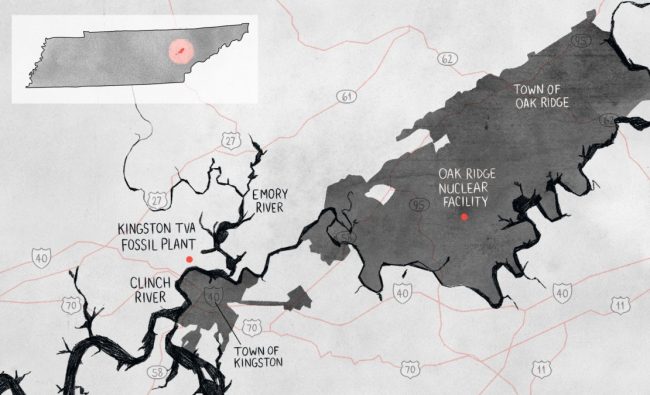
A Legacy of Contamination, How the Kingston coal ash spill unearthed a nuclear nightmare, Grist By Austyn Gaffney on Dec  15, 2020 This story was published in partnership with the Daily Yonder.
In 2009, App Thacker was hired to run a dredge along the Emory River in eastern Tennessee. Picture an industrialized fleet modeled after Huck Finn’s raft: Nicknamed Adelyn, Kylee, and Shirley, the blue, flat-bottomed boats used mechanical arms called cutterheads to dig up riverbeds and siphon the excavated sediment into shoreline canals. The largest dredge, a two-story behemoth called the Sandpiper, had pipes wide enough to swallow a push lawnmower. Smaller dredges like Thacker’s scuttled behind it, scooping up excess muck like fish skimming a whale’s corpse. They all had the same directive: Remove the thick grey sludge that clogged the Emory.
The sludge was coal ash, the waste leftover when coal is burned to generate electricity. Twelve years ago this month, more than a billion gallons of wet ash burst from a holding pond monitored by the region’s major utility, the Tennessee Valley Authority, or TVA. Thacker, a heavy machinery operator with Knoxville’s 917 union, became one of hundreds of people that TVA contractors hired to clean up the spill. For about four years, Thacker spent every afternoon driving 35 miles from his home to arrive in time for his 5 p.m. shift, just as the makeshift overhead lights illuminating the canals of ash flicked on.
Dredging at night was hard work. The pump inside the dredge clogged repeatedly, so Thacker took off his shirt and entered water up to his armpits to remove rocks, tree limbs, tires, and other debris, sometimes in below-freezing temperatures. Soon, ringworm-like sores crested along his arms, interwoven with his fading red and blue tattoos. Thacker’s supervisors gave him a cream for the skin lesions, and he began wearing long black cow-birthing gloves while he unclogged pumps. While Thacker knew that the water was contaminated — that was the point of the dredging — he felt relatively safe. After all, TVA was one of the oldest and most respected employers in the state, with a sterling reputation for worker safety.
Then, one night, the dredging stopped.
Sometime between December 2009 and January 2010, roughly halfway through the final, 500-foot-wide section of the Emory designated for cleanup, operators turned off the pumps that sucked the ash from the river. For a multi-billion dollar remediation project, this order was unprecedented. The dredges had been operating 24/7 in an effort to clean up the disaster area as quickly as possible, removing roughly 3,000 cubic yards of material — almost enough to fill an Olympic-sized swimming pool — each day. But official reports from TVA show that the dredging of the Emory encountered unusually high levels of contamination: Sediment samples showed that mercury levels were three times higher in the river than they were in coal ash from the holding pond that caused the disaster.
Then there was the nuclear waste. Continue reading
Navy’s nuclear submarine hiring crisis as sailors forced to spend record 204 days underwater

By MARY O’CONNOR, 20 April 2025
Naval experts have sounded the alarm over a recruitment crisis plaguing
Britain’s submarine fleet. The Royal Navy is struggling to hire and hold on
to sailors manning the Trident nuclear deterrent, resulting in shortages of
engineers and other critical roles. Sailors are quitting amid a raft of
challenges, including maintaining ageing boats. There are increasingly long
patrols underwater, with sailors cut off from contact with loved ones for
months.
Daily Mail 19th April 2025,
https://www.dailymail.co.uk/news/article-14628517/sailors-forced-spend-record-days-underwater.html
Subsidies attract companies, but not workers, to Fukushima zones
By SUSUMU OKAMOTO/ Staff Writer, Asahi Shimbun March 18, 2025
Billions of yen in government subsidies have attracted businesses and fueled a surge in industrial park development across areas affected by the Fukushima nuclear disaster.
But one big problem remains: Most workers are not returning to these municipalities that were depleted through evacuation orders.
………………………………………………………………………………….Industrial parks developed by local governments are almost entirely funded by the central government.
So far, 21 parks have opened in the region since the disaster, with nine more planned.
The total cost has exceeded 100 billion yen.
While the construction boom has given the impression of an economic revival, actual progress has fallen short of government and local expectations.
WORKERS NOT RETURNING
………………………………….Interviews with local governments and companies show that 89 businesses and organizations employ around 2,500 people in newly developed industrial parks.
Around 1,050 work in six towns and villages with high radiation levels and restricted access―Tomioka, Okuma, Futaba, Namie, Katsurao and Iitate.
But only about 15 percent of them live within those municipalities. Most of the workers commute from Iwaki and other nearby cities.
DEBATE OVER CONTINUING SUBSIDIES
In November, municipalities affected by the nuclear disaster strongly opposed a government review that suggested a possible end to the industry ministry’s subsidy program around 10 years after the lifting of all evacuation orders.
Experts on the review panel argued that the economic impact of the subsidies remains unclear.
But Kawauchi Mayor Yuko Endo, whose entire village was evacuated, warned, “The town won’t survive if the subsidies are cut off.”
Over the eight years through fiscal 2023, the ministry’s program has distributed 95.9 billion yen to 135 companies and organizations.
“Without jobs, people won’t return to nuclear disaster-affected areas,” a ministry official said. “Without people, neither commercial nor medical facilities can come back.”
The government has allocated an additional 11 billion yen for the program in fiscal 2025.
LONG ROAD TO SUSTAINABLE GROWTH
“Young people in Fukushima Prefecture were already leaving for cities before the disaster,” said Toshiyuki Kanai, a professor at the University of Tokyo’s of Faculty of Law. “Creating jobs alone won’t bring people back.”
However, he added: “The government has little choice but to continue support, given its responsibility for the displacement caused by the nuclear disaster. The scale of the damage is irreparable.”………………… https://www.asahi.com/ajw/articles/15656086?fbclid=IwY2xjawJG4llleHRuA2FlbQIxMQABHflEUQCKoAUe6O8fzoy952K_909rjqNLcrSehKzuCAKI-j0j72skaYMOlQ_aem_Qo9irxiJmty4KnXYMVu3aA
US government tries to rehire nuclear staff it fired days ago
BBC, Brandon Drenon, 16 FEB 25
The US government is trying to rehire nuclear safety employees it had fired on Thursday, after concerns grew that their dismissal could jeopardise national security, US media reported.
The National Nuclear Security Administration (NNSA) workers were among hundreds of employees in the energy department who received termination letters.
The department is responsible for with designing, building and overseeing the US nuclear weapons stockpile.
The terminations are part of a massive effort by President Donald Trump to slash the ranks of the federal workforce, a project he began on his first day in office, less than a month ago.
US media reported that more than 300 NNSA staff were let go, citing sources with knowledge of the matter.
That number was disputed by a spokesperson for the Department of Energy, who told CNN that “less than 50 people” were dismissed from NNSA.
The Thursday layoffs included staff stationed at facilities where weapons are built, according to CNN.
The Trump administration has since tried to reverse their terminations, according to media outlets, but has reportedly struggled to reach the people that were fired after they were locked out of their federal email accounts.
A memo sent to NNSA employees on Friday and obtained by NBC News read: “The termination letters for some NNSA probationary employees are being rescinded, but we do not have a good way to get in touch with those personnel.”…………………………………………………..
https://www.bbc.co.uk/news/articles/c4g3nrx1dq5o
Jobs Jobs Jobs ! -screams the nuclear lobby

And the media faithfully regurgitates the message.
It’s not new, but it is now being spouted with a new exuberance (- or desperation?) in Britain:
“Hinkley C construction set to create 3,000 new jobs in next 18 months”. – Construction Enquirer 11th Feb 2025, West Somerset Free Press 10th Feb 2025, Burnham-on-sea.com 10th Feb 2025, BBC 10th Feb, 2025 , Somerset Live 10th Feb 2025, “creating thousands of highly skilled jobs” – Adam Smith Institute 10th Feb 2025 , Irvine Times 10th Feb 2025
As a child, I always wondered why people got so excited at the idea of more jobs. I used to think that they didn’t really want the jobs. They just wanted the money that you get paid for the job. And really, that still applies.
I now know that jobs can also bring personal satisfaction, a pleasure in doing something well, in knowing that your work is valuable. But I’d have to question that in some jobs – for example, in the 1960s if you worked for the Dow Chemical Company, making napalm to burn Vietnamese children. And I question it about the nuclear weapons-nuclear power industry.
Today, we know about ionising radiation causing illness and deaths, about the environmental damage of the nuclear fuel chain, the waste problem, about the intrinsic connection between the “civil” and military nuclear industries. We also know of the increasing evidence that the nuclear industry is not a healthy workplace.
So, why is the nuclear lobby spruiking “jobs” as the reason for the nuclear industry? The UK has an official unemployment rate of 4.4%, not wonderful, but not a crisis – not a statistically very high rate for a G20 country I would have thought that the biggest arguments for a new nuclear industry would be that it’s supposed to fix climate change, to be a clean industry, to be an economically successful industry.
The trouble is – there is ample evidence that nuclear power cannot fix climate change, is not clean, and most critical for Britain, it is not economically viable. That’s why the industry can’t get investors. The UK government has to supply direct funding through grants and investments to support the development of new nuclear power plants, particularly for projects like Sizewell.
And there’s a constant stream of corporate media articles, about the nuclear resurgence and the great future and employment in the (non-existent) small nuclear reactors. Professor Ramana of the University of British Columbia has questioned this resurgence, and examined what is actually happening : “I would first dispute the idea that there is an actual resurgence in nuclear power. What we are seeing is a resurgence in talk about nuclear power”.

The media, when it republishes handouts from the nuclear lobby, is not doing journalism. It’s just repeating propaganda .
It is hard to find proper journalistic scrutiny on the jobs situation in UK’s nuclear industry. But there is such scrutiny:
- Only 20 % of Great British Nuclear staff employed permanently.
- The Wylfa project – will deny local people of Ynys Môn the opportunity to take up green jobs in the interim……… For the reality, as established at the two existing gigawatt projects, at Hinkley Point C in Somerset and increasingly at Sizewell C in Suffolk, is that, for these large construction projects, large national and multinational civil engineering contractors are engaged, with experience in delivering mega projects at this scale, and they bring with them specialist subcontractors with their own transient workforces.
- Hinkley Point C ‘using cheap foreign labour‘ , say striking workers.
- Nuclear power is nothing if not hugely capital, not labour, intensive.
When touting for nuclear power as a great jobs-provider, surely it would be reasonable to compare this with alternative energy sources, but this, of course, is never mentioned in nuclear industry handouts to media.But – Renewables create more jobs/$ than fossils and nuclear.
I can only conclude that Sr Keir Starmer’s Labour government is all too well aware of the money pit into which they are plunging Britain, with these grandiose nuclear projects of Hinkley Point C, and Sizewell C. They must be hoping to get the British public, and investors, enthused about the nuclear job market, especially at a time when the government is about to make brutal cuts in welfare benefits. The rather dodgy assumption might be that human beings – disabled or too ill to work, family carers, suddenly losing income, will be able to work in the supposedly expanding nuclear industry.
Nuclear delusion in Ynys Môn will deny islanders green jobs
NFLA 3rd Feb 2025
Welsh antinuclear campaigners believe that the continued fixation of certain Senedd politicians and civil servants on bringing a new nuclear project back to Wylfa amounts to a delusion which will deny local people of Ynys Môn the opportunity to take up green jobs in the interim and make of Ynys Môn a true ‘green energy island’.
Former Labour First Minister Vaughan Gething MS convened an inaugural meeting of the Nuclear Energy Senedd Cross-Party Group recently with the primary objective of bringing a new nuclear power plant to Wylfa. In the gushing pre-amble accompanying the meeting invite the organisers describe such a project as the ‘single biggest inward investment opportunity in Welsh history’, without seemingly being cognizant that such a project will be costly and uncertain with a previous gigawatt project being derailed by the enormous financial cost and a condemnatory Planning Inspector’s report setting out clear and valid reasons for refusal.
Antinuclear campaigners are adamant that new nuclear cannot deliver ‘clean Welsh power, good jobs and skills and investment in communities’; they believe there should instead be a focus on renewable energy technologies, which will guarantee new ‘green’ jobs and a boost to the Ynys Môn economy.
The promise of such a strategy was outlined in the publication a ‘Manifesto for Mon’, authored by the late renowned Dr Carl Clowes, who identified that the development of sustainable industries, including renewable energy, on the island could create 2,500 – 3,000 jobs for local people. Existing jobs decommissioning the old Wylfa plant would be retained as the project will take decades to complete.
In July 2022, campaign groups met in Caernarfon to adopt a declaration outlining their common goals in opposing new nuclear power and affirming the commitment to achieving a renewable energy future for the nation.

Of nuclear power, the declaration states that ‘it costs too much; takes too long; will come too late [to address the energy or climate change crisis]; is accompanied by operational risks; causes long-term damage to the natural environment; is dependent upon foreign technology, finance, and uranium; is inevitably linked to the production and possession of nuclear weapons; always represents a potential target for terrorists or hostile powers in times of war; and creates toxic waste, left for future generations to deal with.’ ………………………………………………………………………………………………
the reality, as established at the two existing gigawatt projects, at Hinkley Point C in Somerset and increasingly at Sizewell C in Suffolk, is that, for these large construction projects, large national and multinational civil engineering contractors are engaged, with experience in delivering mega projects at this scale, and they bring with them specialist subcontractors with their own transient workforces. These workers require housing and landlords, recognising that they are in highly paid employment and able to pay higher rents, displace existing tenants to free up houses for the workforce. Alternately local holiday camps have been acquired to house the workers denying this accommodation to tourists for years. It is hardly likely that any more than a tiny minority of this workforce would be local or Welsh-speaking.
Referencing specific concerns about its impact on Welsh-speaking Gwynedd and Ynys Môn, the Declaration states that new nuclear ‘will inevitably lead to a huge influx of temporary workers, most of whom will not use Welsh as their first language. This will lead to a dilution in the first use of the Welsh language for daily conversations and transactions, and inevitably adversely impact the linguistic heritage of the region.’
Wylfa was described by former Conservative Prime Ministers Boris Johnson and Rishi Sunak as the ‘best site for new nuclear in Europe’ without either backing this bold statement with any evidence. The Planning Inspectorate clearly had a contrary view as they published a report recommending refusal of Hitachi’s proposal to build the Wylfa Newydd plant.
Energy company Horizon – a subsidiary of Hitachi – needed a Development Consent Order to allow their £16bn project to go ahead, but refusal of the DCO was recommended on several grounds. Although the project was expected to create 1,000 permanent jobs and 9,000 temporary construction posts, planning officers believed that ‘on balance, the matters weighing against the proposed development outweigh the matters weighing in favour of it’ for their assessment identified that the project would displace the Arctic and Sandwich tern populations from Cemlyn Bay where the plant was set to be built, and that the influx of thousands of building workers would have an adverse impact on the local economy and tourism, put huge pressure on local housing, and dilute the prevalent use of the Welsh language.
For the reality, as established at the two existing gigawatt projects, at Hinkley Point C in Somerset and increasingly at Sizewell C in Suffolk, is that, for these large construction projects, large national and multinational civil engineering contractors are engaged, with experience in delivering mega projects at this scale, and they bring with them specialist subcontractors with their own transient workforces. These workers require housing and landlords, recognising that they are in highly paid employment and able to pay higher rents, displace existing tenants to free up houses for the workforce. Alternately local holiday camps have been acquired to house the workers denying this accommodation to tourists for years. It is hardly likely that any more than a tiny minority of this workforce would be local or Welsh-speaking.
In May 2024, Energy Secretary Claire Coutinho announced that Wylfa was the Conservative Government’s ‘preferred site’ for a third large-scale nuclear power plant. Although the Welsh Nuclear Free Local Authorities had urged the Welsh Government to themselves purchase and redevelop the site as a renewable energy hub as a step towards making Ynys Mon a ‘green energy island’, this suggestion was declined and instead the site was eventually bought by the British Government from the former owners – Hitachi – who had wound up its Horizon Nuclear Power subsidiary in March 2021 after failing to secure a satisfactory public subsidy from Conservative Ministers and must have been keen to sell the site, with Oldbury, for £160 million.
It remains unlikely that any third new gigawatt plant at Wylfa will be developed. With two similar projects currently in development securing the necessary finance for a third remains the overriding challenge.
Hinkley Point C is being developed at its own expense by EDF Energy, which is owned by the French state. It is significantly above budget and will be delivered years late. The original estimated cost was £18 billion, but this has risen to £34 billion, based on 2015 prices. Although the project was first expected to be generating by the end of 2017, it is now unlikely to be completed before 2031.
British newspapers have recently reported comments attributed to sources close to the Sizewell C project that the likely budget has doubled to £40 billion. EDF Energy is also a minority stakeholder in this project, but, based on their sobering experience in backing Hinkley Point C, French state auditors have just recommended that no further significant investment be made in such foreign enterprises. The UK Government is the majority stakeholder. It has so far burnt through, or committed, £5.5 billion of taxpayer cash to finance preliminary works, whilst conducting an extensive and, so far, elusive, search for committed private sector partners upon which to offload much of its stake.
With future French and British Government financial support likely to be limited or non-existent, with Chinese state investment being currently effectively excluded by government diktat, and with private finance so difficult to find, it is highly unlikely a third gigawatt project at Wylfa can be funded. Indeed, the Final Investment Decision to proceed at Sizewell C has been put on hold pending the conclusion of an overall Government Spending Review, amidst a backdrop of more and more cross-party voices in both Houses calling for its abandonment.
Prior to the 2024 general election, Conservative Ministers courted the American nuclear concerns Bechtel and Westinghouse as potential suitors to develop the site. The Welsh NFLAs have previously highlighted their very chequered history of working on the Vogtle and V C Summer projects in the United States, with huge cost overruns, work being charged to state taxpayers which has never been delivered, senior executives being prosecuted for corruption, a corporate bankruptcy, and, in South Carolina, $9 billion being squandered on an incomplete and abandoned nuclear plant which shall never generate electricity. Such businesses, averse to risk, focused on profit, and hooked on grift, would be looking for a big public handout to pique their interest; a handout which Chancellor Rachel Reeves, already contemplating the price tag of Sizewell C and an alleged £22 billion blackhole inherited from the Tories to boot, would baulk at.
With a gigawatt plant at Wylfa then unlikely, what then is the new Senedd committee seeking?
Well, the invite gives a big clue as it references potential developments in the spring. This could of course allude to the outcome of the Spending Review, but equally it might refer to the much-delayed decision about which two Small Modular Reactor designs the Department for Energy Security and Net Zero should take forward with support from the public purse (again) following the conclusion of the SMR competition that is being conducted by Great British Nuclear. Four designs are in the running, with the expectation that two will be selected and offered money and development sites for deployment.
As antinuclear campaigners have previously, and repeatedly, pointed out none of these SMR designs have yet fully navigated the regulatory road to approval for deployment, nor have any been built or operated, and it is uncertain where the finance would come from. It is also unlikely that any will be deployed before the early or mid-2030’s, even if they work; are economically viable; and an acceptable solution to the management and disposal of radioactive waste can be identified. Like gigawatt plants, these modular projects will be assembled on-site by specialist teams who doubtless will be moved from site to site by the developer. Operators will thereafter be often specialists who will be relocated with no family or Welsh connections to Wylfa.
Even were new nuclear to eventually come to the ‘energy island’, it would come far too late to help address the energy and climate change crisis we face now. Remember those 2,500 – 3,000 jobs for local people predicted in the Manifesto for Mon; they could be delivered far more quickly and at a much lower cost, and with local people engaged in renewable energy technologies they would also be contributing to reducing the carbon footprint of Wales and generating the affordable energy the nation’s electricity consumers need……………………………………… https://www.nuclearpolicy.info/news/nuclear-delusion-in-ynys-mon-will-deny-islanders-green-jobs/
“We are no longer investing in nuclear.”

“We are focusing on what we agreed upon, namely the extension by 10 years.
That is already a gigantic job,” says Vincent Verbeke. According to him,
nuclear is no longer part of Engie’s “strategic ambition”.
The French energy giant focuses on renewable energy and flexibility. “We are no longer
investing in nuclear.” The plans to extend Doel 4 and Tihange 3 by another
10 years seem to fall flat on their face. “A 20-year extension is a
different project. It doesn’t exist,” says Verbeke. He thinks nuclear
energy is too expensive. “The cheapest option is to invest in renewables.”
VRT News 24th Jan 2025, https://www.vrt.be/vrtnws/nl/2025/01/24/bijkomende-verlenging-doel-4-en-tihange-3-ondenkbaar-zegt-eng/
No more buckets and spades – would nuke dump end West Cumbrian tourism?
NFLA 7th Jan 2025
The UK/Ireland Nuclear Free Local Authorities fear the siting of a Geological Disposal Facility in the South Copeland Search Area could lead to irrecoverable damage to the tourist economy and the loss of many local jobs.
Local campaigners in Millom and District against the Nuclear Dump have always been aware of this possibility. One of their first posters in a nod to Fifties tourism flyers urged visitors to ‘Come holiday at Britain’s first nuclear waste dump’, with the tagline ‘Its radiant’.
The most recent statistical analysis published by Cumbria Tourism shows that day trippers and holidaymakers brought in almost £300 million in annual revenue to South-West Cumbrian coastal resorts, helping to sustain over 2,300 full-time jobs…………………………………………….. https://www.nuclearpolicy.info/news/no-more-buckets-and-spades-would-nuke-dump-end-west-cumbrian-tourism/
Only 20% of Great British Nuclear staff employed permanently

Just 30 of 140 currently staff at Great British Nuclear (GBN) are employed
on permanent contracts, it has been revealed. GBN is the government body
running the competition for selecting SMRs to receive taxpayer support for
deployment.
However, its responsibilities in the wider UK nuclear picture
are unclear and criticism has been made about how it interfaces with Great
British Energy. GBN chair Simon Bowen was asked by House of Commons Energy
Security and Net Zero select committee chair Bill Esterson on 20 November
2024 about the proportion of permanent staff at GBN. Bowen said: “The
headcount currently runs at about 140, 30 of which are permanent
employees.”
Explaining why only roughly one-in-five (21%) of the staff
are permanent, he added: “It took us many, many months to get a pay
agreement through the various government processes, understandably, which
really slowed down our recruitment, but we’re now starting to accelerate
and to bring people into the organisation.”
New Civil Engineer 29th Nov 2024
https://www.newcivilengineer.com/latest/only-20-of-great-british-nuclear-staff-employed-permanently-29-11-2024/
Civil and military nuclear programmes: will they be derailed by skills shortages?

Because of the continuing problems, efforts are increasing to share resources and costs between the civilian and military nuclear programmes [11]. Rolls Royce is promoting ‘modular’ nuclear power stations with reactors similar to those used in submarines. Also the new industry recruitment website ‘DestinationNuclear.com’ abandons the old pretence that civil nuclear power is separate from the production of nuclear weapons:
It is time for a nuclear reality check.
it looks likely that in future the contribution of nuclear power to UK energy supplies will be small.
Scientists for Global Responsibility 27th Nov 2024, https://www.sgr.org.uk/resources/civil-and-military-nuclear-programmes-will-they-be-derailed-skills-shortages
Alasdair Beal takes a look at the UK nuclear industry – and finds that the proposed expansion has a workforce problem.
The incoming Labour government has inherited two major nuclear programmes – new power stations and new Trident missile submarines. Both are behind schedule and over-budget but the government says it wants them to continue. This article looks at the difficulties mobilising the skilled workforces required.
Nuclear programmes off-track
In 2010, the Conservative-led government announced its aim for work to be started on eight new nuclear power stations by 2025 [1]. Plans and timetables have been repeatedly revised since then but, currently, only one is actually under construction – Hinkley Point C (HPC) in Somerset. The 2024 ‘Civil Nuclear: Roadmap to 2050’ [2] stated that the aim is now to “secure investment decisions to deliver 3-7GW [gigawatts] every five years from 2030 to 2044, to meet our ambition to deploy up to 24GW of nuclear power by 2050.” This would amount to up to eight more plants the size of HPC. Even this appears unrealistic, given the serious problems building current reactor designs [3].
The military nuclear programme is also in trouble. Recently, Vanguard class submarines – armed with Trident nuclear missiles – have three times operated sea patrols lasting over 6 months, setting new Royal Navy records [4]. These occurred because two submarines were out of service for repairs, leaving only two in seaworthy condition. Numerous other problems have also been reported, including a faulty depth gauge leading to a nuclear-armed submarine taking a potentially catastrophic “unplanned dive” [5], and a major fire in the building used to assemble new submarines [6].
Construction of the Vanguard class submarines started in 1986 and they entered service between 1993 and 1999 with a design life of 25 years, later extended by 5 years. Construction of the replacement Dreadnought class began in 2016, with the first planned to enter service in 2028. However, this has now been delayed to “the early 2030s”, [7] which will require the existing submarines to operate until they are 40 years old, i.e. 15 years longer than their original design life and 10 years beyond their extended design life.
Major skills shortages
Skills shortages could also be a problem for both projects. In 2015, a government document [8] stated that to construct five or more new power stations by 2030, decommission existing power stations, and develop new nuclear missile submarines, “the workforce must grow by 4,700 people a year over the next 6 years. Over the same period 3,900 people are expected to leave the sector, mostly due to retirement. This means that the sector must recruit 8,600 people every year.”
Since then the schedule for new power stations has been delayed but there is now also a contract to construct new SSN-AUKUS nuclear-propelled ‘attack’ submarines. According to a House of Commons Science, Innovation and Technology Committee 2023 report [9]:
“If the UK is to achieve a contribution of 24GW of nuclear power by 2050 it will need to plan for, and achieve, a massive increase in the nuclear workforce … 50,000 full time equivalent employees would need to be recruited by 2040, even without an expansion of nuclear power … Under a scenario which envisages 19GW of nuclear capacity by 2050 … 180,000 workers will need to be recruited by 2050 – including an average of 7,234 recruits each year until 2028, compared to the current inflow of around 3,000 a year. Recently, vacancies in the nuclear sector are running at twice the rate of the general engineering and construction sector.”
With existing vacancies unfilled and recruitment insufficient to maintain present staff numbers, let alone those required for government expansion plans, the potential shortage of skilled staff is serious.
However, the situation is actually worse than the bare numbers suggest: those retiring will include many knowledgeable people with experience of designing and constructing previous nuclear submarines or power stations, or else of working with those who did. New recruits can fill the vacant seats but they cannot replace the loss of knowledge. Books, training courses and videos can help but in advanced engineering work nothing beats the passing on of accumulated knowledge and experience directly between generations of engineers.
Experience counts
I am a professional civil and structural engineer and after graduation I worked on long-span bridge design with the engineers who had designed and supervised construction of some of the biggest bridges in the world. I learned a lot from them – not only about stress calculations but also about the thinking required to produce a successful design. Much of this could not have been learned from courses or books.
The case of Rolls Royce in 1971 illustrates why this is important. Problems with their new RB211 jet engine had forced the company into liquidation and it had to be nationalised. To rescue the situation , the new directors had to persuade retired former senior engineers to return to work to lead the process of redesigning the engine to overcome the problems.
This issue may also be contributing to current problems at HPC. Existing UK nuclear engineers have only limited experience of Pressurised Water Reactor (PWR) construction and in any case they are likely to be fully occupied decommissioning the UK’s old AGR reactors and dealing with historic nuclear waste. Therefore construction of HPC depends heavily on French expertise.
French companies have constructed 58 nuclear power stations based on the Westinghouse PWR design, the last of these being ordered in 1990. No more were ordered for 15 years until Finland ordered a power station based on the new European Pressurised Water Reactor (EPR) design in 2005. By then many of the engineers and other workers who constructed France’s PWRs are likely to have retired or changed occupations, making it difficult to assemble teams with the necessary knowledge and experience to build a new power station to a new design. Maybe we should not be surprised that major problems have been encountered constructing the EPRs at Olkiluoto in Finland, at Flamanville in France – each of which has taken 17 years to build [10] – and at HPC.
Similar problems may also be affecting construction of the new Dreadnought submarines. By the time these were ordered in 2016, many of the engineers with experience of designing and constructing their predecessors would have retired or be close to retirement, taking their knowledge and experience with them.
Because of the continuing problems, efforts are increasing to share resources and costs between the civilian and military nuclear programmes [11]. Rolls Royce is promoting ‘modular’ nuclear power stations with reactors similar to those used in submarines. Also the new industry recruitment website ‘DestinationNuclear.com’ abandons the old pretence that civil nuclear power is separate from the production of nuclear weapons:
“Nuclear plays a vital role in shaping the UK’s future in broader ways. Nuclear power produces carbon-free electricity that lights homes, fuels businesses, and keeps the economy moving.
The impact of nuclear goes beyond power grids. The expertise within the sector plays a crucial role in ensuring the strength and effectiveness of the UK’s nuclear deterrent, contributing to global peace and security. Nuclear is not just an energy source; it’s a critical part in building a secure future for the UK.”
While the claims made in this statement can be criticised on many grounds, most relevant for this article is the apparent assumption that people who are concerned about climate change are also likely to be enthusiastic about nuclear weapons – which could trigger a catastrophic ‘nuclear winter’ if used [12]. If they are, then public acknowledgement of the link between the civil and military nuclear programmes is a clever move and will boost recruitment. However, if they are not, this strategy could backfire badly.
Time for a rethink
It is time for a nuclear reality check.
In 1994, the UK had 16 functioning nuclear power stations (total capacity 12.7GW) but in 2024 there were only 5 (total capacity 5.9GW) and by the end of 2028 there will be just one: Sizewell B (1.2GW) [13]. Completion of the HPC first unit (1.6GW) is now expected between 2029 and 2031, with its second unit following some years later [14]. When the effects of potential skills shortages are considered alongside the problems of current nuclear reactor designs, the idea of achieving anything like 24GW capacity by 2050 seems like a fantasy. Given the rapid growth of renewable energy and related technologies – which is set to continue – it looks likely that in future the contribution of nuclear power to UK energy supplies will be small.
Meanwhile, the programme for new Trident nuclear missile-armed submarines is a gamble based on two risky assumptions: (i) despite industry skills shortages, there will be no further delays in completing the new submarines; and (ii) the existing submarines will be able to continue operating for at least 10 years after the end of their design life. If either assumption proves incorrect then, after all the arguments over ‘unilateral’ or ‘multilateral’ nuclear disarmament, we could end up instead with a rather British outcome: ‘Unintentional Nuclear Disarmament’. At that point, the government would finally have to face up to the dangerous flaws in the idea of ‘nuclear deterrence’ and plan instead for a nuclear-free future.
The conclusion is clear: current plans for new nuclear power stations and new nuclear missile-carrying submarines should both be cancelled and the resources diverted to:
(a) reducing energy consumption and accelerating the development and deployment of alternative renewable energy supplies; and
(b) supporting international arms control and disarmament initiatives, such as the United Nations Treaty on the Prohibition of Nuclear Weapons.
Alasdair Beal BSc CEng FICE FIStructE is a chartered civil engineer, based in Leeds, and a former member of SGR’s National Co-ordinating Committee.
References : …………………………………………………………………………………………..
Hinkley Point C: Hundreds down tools over concerns
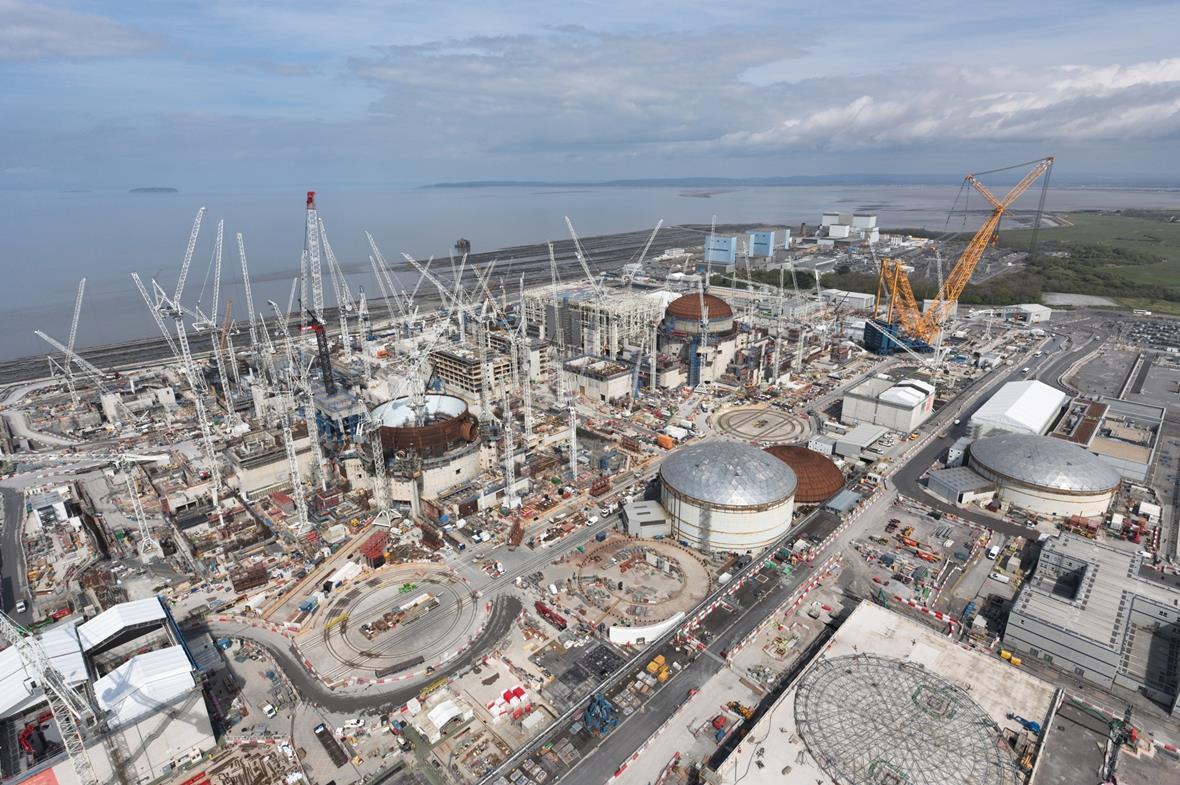
By Seth Dellow, Bridgwater Mercury 28th Nov 2024
HUNDREDS of workers at Hinkley Point C have stood down today over unresolved concerns.
The action short of strike began at 9am this morning with workers claiming it concerns fingerprint scanners in a small area on site. They have claimed there are only five scanners serving 13,000 workers on site but this is strongly denied by EDF which runs the Hinkley Point site. Electricians, pipe fitters and welders are all said to have walked out.
The number of affected workers could be up to 1,600 as the action only involves some of the MEH workers on site. MEH has contracted staff doing work on the Hinkley Point site.
Earlier, workers claimed between 2,000 and 6,000 workers had walked out.
One electrician, who spoke anonymously to the Bridgwater Mercury, said that workers were “being taken advantage of.”
The nuclear power station is already behind schedule and is expected to be operational between 2029 to 2031.
Workers are planning on taking full strike action on Monday, December 2, 2024, as they say they will be blocked from entering the site because of their actions today.
It follows recent strike action which saw EDF workers walk out over pay concerns. ………………
https://www.bridgwatermercury.co.uk/news/24757425.hinkley-point-c-6-000-workers-walk-concerns/
East Suffolk Council offering grants to convert homes to accommodate nuclear workers.
By Dominic Bareham, East Anglian Daily Times 23rd Nov 2024
Homeowners in east Suffolk are being offered the chance to access grants of up to £7,000 to provide accommodation for workers at the new Sizewell C nuclear power station.
Two new grant schemes, administered by East Suffolk Council, are set to open soon – with the first, the Renovation Grant, supporting the conversion of homes, spare rooms, annexes or non-residential buildings into safe and suitable accommodation for Sizewell C workers.
Under this scheme, up to £7,000 is available per bed space to cover structural works, electrical wiring, heating installation, windows and doors, plumbing, installing kitchen and bathroom facilities and additional parking………………………………………………….
https://www.eadt.co.uk/news/24745238.east-suffolk-council-offering-grants-convert-homes/
Hinkley Point C ‘using cheap foreign labour’, say striking workers.
Engineers claim colleagues brought in from outside the UK and EU are paid
less than half their wages.
EDF Energy is investigating claims that a
company in its supply chain is using cheap foreign labour to undercut
British engineers working on its Hinkley Point C and Sizewell C nuclear
power station projects.
The allegation was made by cabling and pipework
engineers who went on strike last week after claiming that they had not
received a pay rise in four years. They allege that since beginning their
dispute last year with Alten, their employer, which provides engineering
services for the projects, they have discovered that foreign colleagues
brought in from outside the UK and EU from places such as India and Nigeria
are being paid about half their wages.
Times 11th Nov 2024 https://www.thetimes.com/business-money/energy/article/hinkley-point-c-using-cheap-foreign-labour-say-striking-workers-g3gw20v65
Occupational exposure to radiation among health workers: Genome integrity and predictors of exposure

Mutation Research/Genetic Toxicology and Environmental Mutagenesis
Volume 893, January 2024, Hayal Çobanoğlu, Akın Çayır
Highlights
- •Significant increase of genomic instability biomarkers reflecting long term disease risk
- •Significant association between radiation exposure and NPB, and NBUD frequencies
- •Work-related parameters have the potential to explain increase of genomic instability
- •Higher risk of exposure in plain radiography field
Abstract
The current study aimed to investigate genomic instabilities in healthcare workers who may experience varying levels of radiation exposure through various radiological procedures. It also sought to determine if factors related to the work environment and dosimeter reading could effectively explain the observed genomic instabilities. Utilizing the cytokinesis-block micronucleus assay (CBMN) on peripheral blood lymphocytes, we assessed a spectrum of genomic aberrations, including nucleoplasmic bridge (NPB), nuclear budding (NBUD), micronucleus (MN) formation, and total DNA damage (TDD). The study uncovered a statistically significant increase in the occurrence of distinct DNA anomalies among radiology workers (with a significance level of P < 0.0001 for all measurements). Notably, parameters such as total working hours, average work duration, and time spent in projection radiography exhibited significant correlations with MN and TDD levels in these workers. The dosimeter readings demonstrated a positive correlation with the frequency of NPB and NBUD, indicating a substantial association between radiation exposure and these two genomic anomalies. Our multivariable models identified the time spent in projection radiography as a promising parameter for explaining the overall genomic instability observed in these professionals. Thus, while dosimeters alone may not fully explain elevated total DNA damage, intrinsic work environment factors hold potential in indicating exposure levels for these individuals, providing a complementary approach to monitoring.
Introduction
Ionizing and non-ionizing radiation constitute inevitable forms of environmental exposure, to which a substantial portion of the global population remains consistently subjected. Among those at heightened risk are individuals employed in radiology, who utilize radiation sources for both diagnostic and therapeutic procedures. More than 30 million medical radiology workers are exposed to low level of radiation worldwide [1], [2], which provides the opportunity to understand the health risks of chronic exposure to low-dose ionizing radiation (IR) [3].
It has been observed that there are increased risks for many cancer types, including skin, leukemia, breast, and thyroid, in medical radiology workers who started working before the 1950 s [4], [5], [6], [7], [8]. These results probably reflect higher occupational radiation exposure of medical radiology workers [5], [9]. Today, even if radiation exposure is less than in the past owing to technological advances and radiation safety measures [9], recent studies show that long-term exposure to low-dose IR may still be a significant health risk [10], [11], [12].
Introduction
Ionizing and non-ionizing radiation constitute inevitable forms of environmental exposure, to which a substantial portion of the global population remains consistently subjected. Among those at heightened risk are individuals employed in radiology, who utilize radiation sources for both diagnostic and therapeutic procedures. More than 30 million medical radiology workers are exposed to low level of radiation worldwide [1], [2], which provides the opportunity to understand the health risks of chronic exposure to low-dose ionizing radiation (IR) [3]. It has been observed that there are increased risks for many cancer types, including skin, leukemia, breast, and thyroid, in medical radiology workers who started working before the 1950 s [4], [5], [6], [7], [8]. These results probably reflect higher occupational radiation exposure of medical radiology workers [5], [9]. Today, even if radiation exposure is less than in the past owing to technological advances and radiation safety measures [9], recent studies show that long-term exposure to low-dose IR may still be a significant health risk [10], [11], [12].
Despite the efforts to minimize radiation exposure, radiation-exposed health workers may frequently encounter low levels of ionizing radiation due to various occupational factors, including excessive work hours, inadequate shielding in their work environment, a high volume of daily imaging procedures, and failure to employ personal protective equipment during imaging activities. Although traditional methods such as physical dosimeters and blood-based clinical assessments are routinely used to monitor worker health, these approaches possess limitations when it comes to assessing the long-term effects of low-dose radiation exposure. Consequently, it is imperative to implement more robust biomarkers to routinely monitor radiology workers………………………………………………………………………………………………………………………………… more Link: https://www.sciencedirect.com/science/article/abs/pii/S1383571824000020
1 This Month

of the week – Shut Down Drone Warfare!


Tell the Ukrainian Government to Drop Prosecution of Peace Activist Yurii Sheliazhenko

Petition to revoke the licensing of the Near Surface Nuclear Disposal Facility (NSDF) at Chalk River. https://www.ourcommons.ca/petitions/en/Petition/Details?Petition=e-7247
To see nuclear-related stories in greater depth and intensity – go to https://nuclearinformation.wordpress.com
-
Archives
- March 2026 (237)
- February 2026 (268)
- January 2026 (308)
- December 2025 (358)
- November 2025 (359)
- October 2025 (376)
- September 2025 (257)
- August 2025 (319)
- July 2025 (230)
- June 2025 (348)
- May 2025 (261)
- April 2025 (305)
-
Categories
- 1
- 1 NUCLEAR ISSUES
- business and costs
- climate change
- culture and arts
- ENERGY
- environment
- health
- history
- indigenous issues
- Legal
- marketing of nuclear
- media
- opposition to nuclear
- PERSONAL STORIES
- politics
- politics international
- Religion and ethics
- safety
- secrets,lies and civil liberties
- spinbuster
- technology
- Uranium
- wastes
- weapons and war
- Women
- 2 WORLD
- ACTION
- AFRICA
- Atrocities
- AUSTRALIA
- Christina's notes
- Christina's themes
- culture and arts
- Events
- Fuk 2022
- Fuk 2023
- Fukushima 2017
- Fukushima 2018
- fukushima 2019
- Fukushima 2020
- Fukushima 2021
- general
- global warming
- Humour (God we need it)
- Nuclear
- RARE EARTHS
- Reference
- resources – print
- Resources -audiovicual
- Weekly Newsletter
- World
- World Nuclear
- YouTube
-
RSS
Entries RSS
Comments RSS
 nuclear-news