5.7 million people employed in renewable energy

2012 was the second highest year ever for renewable energy investments – but being “second” doesn’t reflect installed capacity as prices for renewable energy equipment, particularly related to solar power, have plummeted.
Last year was another record year in terms of installed capacity; with 115 GW of new renewables put in place globally. However, 2012 saw the most significant change so far in the balance of renewable energy investment activity between developed and developing economies. Continue reading
Japanese Red Cross Society radiation limits for emergency workesr
Red Cross radiation limit for relief workers too low, say critics Asahi Shimbun, By YURI OIWA June 13, 2013 The Japanese Red Cross Society has established a guideline for medical workers that sets an accumulated radiation dose limit of 1 millisievert for relief activities, although experts have said the ceiling is too low to allow workers to provide ample assistance to disaster victims.
“Radiation doses above 1 millisievert have no health effects,” said Yasushi Asari, a professor of emergency medical care at Hirosaki University. “There is no need for medical workers to use that threshold.”
Masahito Yamazawa, director-general of the Red Cross nuclear disaster preparedness task force, said during in-house discussions there were arguments for and against the 1-millisievert threshold. But the Red Cross determined that a 1-millisievert limit would still allow its workers to engage in relief activities in zones with high radiation levels because each relief mission usually lasts only up to a week, Yamazawa said.
One millisievert is the legal annual dose limit for members of the public during normal times.
Yamazawa added that allowances were also made for the fact that its medical relief squads include clerical workers.
“We have created the guideline out of a positive desire to help victims during a nuclear disaster,” Yamazawa said. “We will use it as a platform for further improvements if the need arises.”
Japanese Red Cross relief units fulfilled a total of 900 missions in communities ravaged by the 2011 Great East Japan Earthquake. However, initially they were unprepared for a nuclear disaster, and that created a vacuum of relief squads in Fukushima Prefecture during the early stages of the crisis at the Fukushima No. 1 nuclear power plant.
Red Cross officials said they learned from that experience and decided to create the new guideline for nuclear disaster relief activities.
The guideline says relief squad members should carry dosimeters and iodine tablets at all times, and retreat to safety whenever they are in danger of being exposed to more than 1 millisievert in accumulated radiation. It also says relief workers should keep clear of zones that are off-limits to residents……
Crisis developing as shortage of Fukushima clean-up workers gets worse

“We’re headed toward a real crisis “
Under the worst scenario, experienced workers capable of supervising the work will be gone as they reach their radiation-exposure limits
Stricken nuke plant struggles on, Yahoo 7 Finance, AAP Jun 10, 2013 Keeping the meltdown-stricken Fukushima nuclear plant in north-eastern Japan in stable condition requires a cast of thousands.
Increasingly the plant’s operator is struggling to find enough workers, a trend that many expect to worsen and hamper progress in the decades-long effort to safely decommission it.
Tokyo Electric Power Co (TEPCO), the utility that runs the Fukushima Dai-ichi plant that melted down in March 2011 after being hit by a tsunami, is finding that it can barely meet the headcount of workers required to keep the three broken reactors cool while fighting power outages and leaks of tons of radiated water, said current and former nuclear plant workers and others familiar with the situation at Fukushima…….less risky, better paid decontamination projects in the region irradiated by the Fukushima meltdown are another draw.
Some Fukushima veterans are quitting as their cumulative radiation exposure approaches levels risky to health, said two long-time Fukushima nuclear workers who spoke to The Associated Press.
They requested anonymity because their speaking to the media is a breach of their employers’ policy and they say being publicly identified will get them fired………….. Continue reading
Shortage of Fukushima cleanup workers will be worse if Japan’s nuclear power push goes ahead
Stricken nuke plant struggles on, Yahoo 7 Finance, AAP Jun 10, 2013“…….One Fukushima Dai-ichi worker, who has gained a big following on Twitter because of his updates about the state of the plant since the meltdowns, said veteran workers are quitting or forced to cut back on working in highly radiated areas of the plant as their cumulative exposure rises…………. Known as Happy-san to his 71,500 Twitter followers, he has worked in the nuclear industry for 20 years, about half of that at Fukushima.
He has worked at bigger contractors before, but is now at a mid-level contractor with about 20 employees, and has an executive level position.
“If things continue the way they are going, I fear decommissioning in 40 years is impossible. If nuclear plants are built abroad, then Japanese engineers and workers will go abroad. If plants in Japan are restarted, engineers and workers will go to those plants,” he said in a tweet………..
Other jobs are already so plentiful that securing enough workers for even the more lucrative work decontaminating the towns around the plant is impossible, according to Fukushima Labour Bureau data.
During the first quarter of this year, only 321 jobs got filled from 2,124 openings in decontamination, which involves scraping soil, gathering foliage and scrubbing walls to bring down radiation levels……….
“We’re headed toward a real crisis,” said Ryuichi Kino, a freelance writer and photographer who has authored books about the nuclear disaster and has reported on TEPCO intensively since March 2011.
Under the worst scenario, experienced workers capable of supervising the work will be gone as they reach their radiation-exposure limits, said Kino.
He believes an independent company separate from TEPCO needs to be set up to deal with the decommissioning, to make sure safety is not being compromised and taxpayer money is spent wisely. http://au.finance.yahoo.com/news/stricken-nuke-plant-struggles-000105277.html
Harm from radiation, among families of nuclear workers
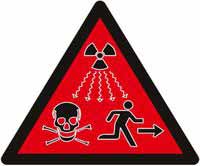 Some Atomic Energy Workers Passed Effects of Radiation and Chemical Exposure to their Spouses and Children Huntington News, June 3, 2013 – BY TONY E. RUTHERFORD, NEWS EDITOR “……“Big Jim” took a job working around radioactive elements in 1954 at the Portsmouth Gaseous Diffusion Plant (PGDP) in Piketon, Ohio. Workers told his daughter how they kept their lunches warm by laying them on uranium yellow cakes and poked fun of individuals who put around their clothing before painting. They wore radiation exposure badges, but by “doing his job” Jim later developed four cancers.
“My dad talked about the A plant, but he never told us what it was,” Joan Fearing (Big Jim’s daughter) said. “Mom washed his work clothes.” She passed away from a rare form of cancer too. “When my mother was dying, she still did not tell us what it was.”
The Cold War ended the arms race. Nuclear weapons were replaced with atoms for peace at electrical power plants. However, the atomic legacy appears passed to the 21st Century. Continue reading
Radiation risks to health staff from nuclear medical imaging
 What to do when the patient is hot http://www.theheart.org/article/1535927.do 7 May 13, MAY 7, 2013 Shelley Wood Boston, MA – Patients who’ve had a nuclear imaging study with radioactive tracers become, themselves, radiation emitters—something that hospital staff should keep in mind, say researchers in a new analysis trying to quantify that risk. Their research letter is published today in the Journal of the American College of Cardiology [1]. Continue reading
The fallacy of assuming that weapons manufacture creates jobs
America’s War Games How the Obama administration is redefining the US military’s strategic priorities with far-reaching consequences, Aljazeera, 27 April 13 “……. William Hartung, from the Center for International Policy says that Pentagon contractors have “for years used the jobs argument to revive weapons systems that have been cancelled. To push for things that even the Pentagon itself has not wanted.” For months, a study has been circulating in Washington, underwritten by the Aerospace Industries Association, a major defence industry trade group. It claims that a million jobs would be lost as a result of sequestration cuts to defence spending.
Hartung, who has analysed the study, says it exaggerates the potential job loss number by a factor of three, and that many of those jobs will be replaced. He points out that spending on education, health care, and infrastructure “can create 1.5 to 2 times as many jobs. So the economy would be much better off spending on things other than the Pentagon.”
Several recent reports examining ways to cut Pentagon spending call for changes in the US nuclear weapons posture. They claim that it would produce hundreds of billions of dollars of savings in coming decades, and the Obama administration is reportedly considering nuclear weapons cuts. But they will be difficult to achieve.
“People are still mired in Cold War thinking and they feel like the more nuclear weapons we have the better,” Hartung says. “And in addition to that the nuclear weapons industry has some of the biggest strongest companies in the military industrial complex.”
Lockheed Martin builds submarines, launches ballistic missiles, and runs the nuclear weapons laboratories; General Dynamics builds nuclear subs; and Northrop Grumman, Boeing and Lockheed Martin are all hoping to build the next nuclear bomber……http://www.aljazeera.com/programmes/peopleandpower/2013/04/2013424113558268754.html
Misleading information masks true level of radiation received by Fukushima workers
 63 workers exposed to higher radiation than logged in their records,
March 02, 2013, THE ASAHI SHIMBUN by Toshio Tada and Jun Sato
Dozens of workers at the crippled Fukushima No. 1 nuclear power plant
were exposed to radiation levels higher than those registered in their
personal records, according to a health ministry investigation. Continue reading
Radiation risk causes doctors to go on strike – Wuhan, China
 Wuhan doctors on strike over X-ray radiation Shanghai Daily, February 22, 2013 Some hospital workers in Wuhan, capital of Hubei Province reportedly went on strike after three gynecologists developed thyroid cancer, which they believed was caused by their frequent exposure to X-rays.
The three women doctors at the Wuhan Union Hospital were diagnosed with cancer last month, today’s Beijing News reported. They blamed the hospital in a statement made to the public on Monday.
The statement said they performed surgeries on a floor directly underneath two X-ray machines in two bone surgery rooms overhead. The two rooms were not insulated with radiation-proof materials. The hospital did not inform or warn them of the risks…… http://www.china.org.cn/china/2013-02/22/content_28035886.htm
Many Fukushima labourers cheated out of correct pay
Ministry: Many Fukushima laborers deprived of danger pay
http://ajw.asahi.com/article/0311disaster/fukushima/AJ201302090067 By
TOSHIO TADA February 09, 2013 The Environment Ministry has admitted
danger pay has not been reaching some laborers entitled to a hefty
 bonus for their work on decontamination projects near the Fukushima
No. 1 nuclear plant.
Unscrupulous employers likely pocketed the missing cash, but the
ministry says it will neither penalize them nor name and shame them
because that “would have a big adverse effect,” an official in charge
of the matter said. Continue reading
Shortage of workers at Fukushima nuclear plant resulted in high radiation exposure
Worker shortages revealed at nuclear plant after disaster
http://www.yomiuri.co.jp/dy/national/T130113003104.htm 14 Jan
A manager’s calls for reinforcements to help contain a series of
crises at Tokyo Electric Power Co.’s Fukushima No. 1 nuclear power
plant were ignored, newly released TEPCO teleconference footage has
revealed.
Although Masao Yoshida, then manager of the plant damaged by the March
11, 2011, earthquake and tsunami, repeatedly asked TEPCO headquarters
in Tokyo to send more workers, the request was not met in a timely
manner. As a result, the plant’s workers suffered extreme fatigue and
heightened radiation exposure, the footage showed. Continue reading
Japan workers organise for a nuclear free society
 It’s Labor’s Turn! – Workers’ Committee to Aim for Nuclear Free Society Established http://labornetjp.blogspot.com.au/2012/12/its-labors-turn-workers-committee-to.html “Civil society is active in no nukes movement, but it’s our turn now to mobilize workers and unions,” HASEGAWA Takehisa, president of Japan Construction and Transport Industry Workers Solidarity Union, said on Nov. 20 in Tokyo. “We have long made effort to protect our jobs and livelihoods, but as we are threatened even for our existence by nuclear plants, we must protect our lives and safety. No life, no job. We would build solidarity with those who are deprived of decent work and living due to dangerous work in radioactive environment.” The committee formed by seven unions plans to hold a simultaneous actions in March and movie screening of a documentary on people of Futaba. Some 60 attended the meeting held for establishment of the committee and listened to KAIDO Yuichi, lawyer, who spoke of the basic law on nuclear free society. (By M)
Exploitation of workers at Fukushima nuclear plant
Asahi: Fukushima workers report exploitation — Told to be like kamikaze — Large numbers leaving — “I wonder if we can raise children” http://enenews.com/asahi-fukushima-workers-report-exploitation-told-to-be-like-kamikaze-large-numbers-leaving-i-wonder-if-we-can-raise-children
December 9th, 2012
Title: Worker wants new government to secure safety at Fukushima plant
Source: AJW by The Asahi Shimbun
Author: Miki Aoki and Toshio Tada
Date: December 09, 2012
A man in his 50s hopes that a new government to be formed after the Dec. 16 Lower House election will protect the health of workers like himself at the stricken Fukushima No. 1 nuclear plant […]
The man said workers at the Fukushima No. 1 plant are being exploited. […]
“Many people work without seeing a doctor because they fear they might be told not to come anymore from the next day,” he said. “It is a distortion caused by the layers of subcontractors involved. I want the government to protect us.” […] Continue reading
Data on Fukushima workers’ radiation exposure
TEPCO releases worker radiation exposure data to WHO, Enformable.com. 6 Dec 12 TEPCO released data related to the radiation exposure doses documented for Fukushima Daiichi emergency workers which it had submitted to the World Health Organization (WHO).
The data showed the youngest workers were in their teens, while the oldest was 84 years old. One of the teenagers was exposed to 56.89 mSv. Most of the workers are in their 40s. 26 workers are over the age of 70.
TEPCO Worker Ages……
The highest radiation dose recorded was 678.8 mSv. The highest dose recorded by a worker in their 20s was 477.01 mSv…..
Distribution of Thyroid Doses based on measured value of I-131 (Thyroid equivalent dose from Cs not included in data)……
There are still over 600 workers unaccounted for in the most recent data, TEPCO did not release any details as to why they were unable to track down the missing workers……..
Source: TEPCO
Source: JiJi Press
Read more at http://enformable.com/2012/12/tepco-releases-worker-radiation-exposure-data-to-who/#les31YbP4ZC0Kk2S.99
Renewable Energy – a job provider for millions of Indians
Indian Renewable Energy Sector to Create 2.4 Million Jobs by 2020 http://theenergycollective.com/energyjobline/147291/indian-renewable-energy-sector-create-24-million-jobs-2020 by C. Dominguez November 24, 2012 India’s renewable energy sector is to create up to 2.4 million jobs by 2020, according to a report jointly commissioned by environmental group Greenpeace, the Global Wind Energy Council and the European Renewable Energy Council.
To date, the sector employs 200,000 people, but this could jump 14 times by 2030 with the right policies and investments in place, stated India Energy [R]evolution report.
By 2050, about 92 percent of India’s energy infrastructure will be based on renewable energy sources. Renewables such as wind, solar thermal energy and photovoltaic, will comprise 74 percent of electricity generation. Continue reading
1 This Month
6 June – WEBINAR- Get Inspired by Protests Against Military Bases!


Cuba Is Not a Failed State – It Is a Besieged State
PETITION: “Global Appeal to Endorse Palestinian Right of Return of Refugees”


of the week– Nuclear Reactor Information Task Force
To see nuclear-related stories in greater depth and intensity – go to https://nuclearinformation.wordpress.com
-
Archives
- June 2026 (34)
- May 2026 (306)
- April 2026 (356)
- March 2026 (251)
- February 2026 (268)
- January 2026 (308)
- December 2025 (358)
- November 2025 (359)
- October 2025 (376)
- September 2025 (257)
- August 2025 (319)
- July 2025 (230)
-
Categories
- 1
- 1 NUCLEAR ISSUES
- business and costs
- climate change
- culture and arts
- ENERGY
- environment
- health
- history
- indigenous issues
- Legal
- marketing of nuclear
- media
- opposition to nuclear
- PERSONAL STORIES
- politics
- politics international
- Religion and ethics
- safety
- secrets,lies and civil liberties
- spinbuster
- technology
- Uranium
- wastes
- weapons and war
- Women
- 2 WORLD
- ACTION
- AFRICA
- Atrocities
- AUSTRALIA
- Christina's notes
- Christina's themes
- culture and arts
- Events
- Fuk 2022
- Fuk 2023
- Fukushima 2017
- Fukushima 2018
- fukushima 2019
- Fukushima 2020
- Fukushima 2021
- general
- global warming
- Humour (God we need it)
- Nuclear
- RARE EARTHS
- Reference
- resources – print
- Resources -audiovicual
- Weekly Newsletter
- World
- World Nuclear
- YouTube
-
RSS
Entries RSS
Comments RSS
 nuclear-news