Misleading inaccuracies in BBC report on Hunterston nuclear reactors
 Ianfairlie 8th March 2019 On March 8, the BBC published a news item about cracks in the Hunterston B nuclear reactors. Whilst it is good that the story highlighted reporting of the safety issues surrounding the plant and, in particular, included photographs of the cracked graphite core, we wish to correct several inaccuracies.
The BBC article claims that early decommissioning could cause serious energy supply problems. This is simply not the case and is alarmist nonsense: the reality is that Scotland has, if anything, an oversupply of electricity. Both Hunterston and Torness could be closed without problem to Scotland’s electricity supplies.
The BBC article then states that “Concerns have also been raised about the consequences for local jobs if Hunterston closed early.”As pointed out in our article, few if any jobs would be lost if the reactors Hunterston B were closed permanently: dealing with the immense heat rates from radioactive decay even from closed reactors will guarantee jobs there for the first 2 to 3 years.
After that decommissioning will provide more jobs then when the reactors operated, just as is occurring at the closed reactors at Dounreay. The BBC cites Councillor Tom Marshall as stating: “Most of the large employers round about here have disappeared – and this is one of the last major employers.
So, if it is safe to run most people locally would be happy to see it running.” We obviously share the concerns of local people about deindustrialisation and the appalling effects of the UK Government’s uncivilised austerity programmes in Scotland. But local councillors should\ not be misled by incorrect statements by the nuclear industry. Closing
Hunterston B for good will not lead to large numbers of job losses: the contrary in fact.
Dave Toke’s Blog 8th March 2019
https://realfeed-intariffs.blogspot.com/2019/03/the-real-story-about-stricken.html
Fukushima nuclear workers still facing radiation danger, eight years on.
 Eight years after Fukushima nuclear meltdown, workers still facing radiation risk https://www.peoplesworld.org/article/eight-years-after-fukushima-nuclear-meltdown-workers-still-facing-radiation-risk/ February 22, 2019 eight years since the nuclear meltdown at the Fukushima Daiichi Nuclear Power Plant. The NPP operator, Tokyo Electric Power Company (TEPCO), says that it will soon conduct a probe into the containment vessel of the No. 2 reactor in order to find out the condition of the melted nuclear fuel inside, which means that TEPCO has yet to obtain even such basic information.
TEPCO officials recently said to Akahata that high-risk zones in the Fukushima Daiichi plant have become smaller and that now workers do not need to wear a full-face mask and a protective suit in 96 percent of the plant premises. This is because the level of radioactive materials in the air has decreased as a larger area of the site is now covered with concrete, according to officials. At the crippled nuclear power plant, the number of workers coping with the aftermath of the 2011 nuclear accident, though, is still more than 4,000 per day.
However, the hidden reality regarding contamination risks seems to differ from the impression the utility wanted to create by citing the figure “96 percent.” In a recently published survey of Fukushima workers conducted by TEPCO, of the respondents who are anxious about their exposure to radiation, nearly half feared that their health would be damaged in the future. In another question in the same survey, more than 40 percent were concerned about working at the nuclear power plant.
The most common reason for their concern was that they have no idea how long they need to work at the plant because it is unclear how much work remains to be done. They are also worried about the risk of radiation-induced health damage in the future with no guarantee of a stable income. Without a worker-friendly environment, the decommissioning of the crippled reactors will be extremely time-consuming.
The storage of radiation-contaminated water is another major issue. Around 100-150 tons of polluted water is produced every day at the plant, which means that a 1,000-ton tank is filled up in seven to ten days. Currently, around 1.1 million tons of radioactive water are stored on the plant premises, but under TEPCO’s plan, the maximum planned storage capacity is only 1.37 million tons.
In another survey of residents conducted by municipalities near the Fukushima plant, among the respondents who decided not to go back to their hometowns and who cannot decide whether to do so, many cited worries about the safety of the plant as a reason.
The government of Prime Minister Shinzo Abe, however, is still encouraging Fukushima evacuees to return to their homes, but as the nuclear disaster drags on.
Radiation in a crematorium traced back to a human body
It wasn’t enough radiation to be alarming, but it could be a sign of an ongoing problem The Verge By A crematorium in Arizona became contaminated with radiation when workers cremated a man who had received radiation treatments for cancer right before he died, a new study reports. The findings highlight a potential safety gap for crematory workers, who might not know what’s in the body they’re cremating.
In this case, the radiation in the crematorium wasn’t significant enough to be worrying for the crematory worker’s health, according to a study published today in the Journal of the American Medical Association. But the study also found clues that exposure to radioactive compounds from medical treatments may be an ongoing safety risk for crematory workers……..
It’s not an easy problem to fix. Manufacturers provide detailed instructions for handling the drug with patients who are alive, but not for ones that have died, Yu says. “It presents a unique safety challenge.” Detecting radioactive materials is more complicated than running a Geiger counter over the body. And there aren’t any federal regulations for what to do with a radiation-treated body, Yu says, so the laws change from state to state. ……https://www.theverge.com/2019/2/26/18241402/radiation-crematorium-arizona-radiopharmaceuticals-cancer-body-lutetium
Waste Isolation Pilot Plant under federal investigation for worker exposure to radiation and chemical hazards
The DOE’s Office of Enterprise Assessments filed a notice on Jan. 29 of its intent to investigate to Nuclear Waste Partnership (NWP), the DOE-hired contractor responsible for WIPP’s daily operations.
Between July and October 2018, employees in the underground nuclear waste repository were potentially “overexposed” to carbon tetrachloride, nitrogen dioxide and sulfur dioxide, read the notice, including a “series” of heat-stress incidents.
The DOE intends to investigate the circumstances leading up to the alleged “hygiene-related events,” and could fine NWP, based on what is uncovered. ……
A pattern of bad management?
Don Hancock, director of the Nuclear Waste Program at the Southwest Research and Information Center – an Albuquerque-based environmental watchdog group – said the alleged incident was just the most recent example of evidence that NWP is improperly managing WIPP.
“This is a constant problem where workers are exposed to dangers, radioactive or otherwise, that shouldn’t have happened,” Hancock said. “These are not just paperwork problems.”
Hancock also pointed to an accident radiological release in 2014, which led to a three-year closure of the WIPP facility, as part of what he called a pattern of mismanagement and undue hazards. He said NWP’s recent contract renewal shouldn’t have happened because of numerous safety issues throughout its operations at WIPP……. https://www.currentargus.com/story/news/local/2019/02/21/wipp-federal-investigation-department-energy-hazardous-chemicals/2905747002/?fbclid=IwAR21RsaxA4oeB8aZSoXOcCiBzEHDPqQFOyHhE6aF50S3F6bJzgsGxIGusfo
Uncertain future for nuclear engineers
 High-Paying Jobs in Nuclear Power Aren’t Looking So Safe Anymore
A wave of plant closings has workers—even highly trained engineers—on edge, THE WALL STREET JOURNAL, Erin Ailworth, Dec. 28, 2018 “………As large employers, these plants are often economic anchors for the smaller, sometimes rural communities in which they were built. When they disappear, so too can a significant portion of the tax base—a big blow for many. Each plant shuttered equals hundreds of jobs lost; combined, the nine slated to retire employ more than 7,000.
After a plant closes, those employees are left playing musical chairs, hoping to land a spot at another nuclear plant even as that job pool shrinks. Federal labor data for nuclear and other electric power generation shows the number of workers has dropped to about 63,000 in October from roughly 158,000 in 1990. At least 3,000 of those jobs vanished since the start of 2013………
Federal forecasts show that employment among nuclear power reactor operators, who tend to have a high school or equivalent education, is expected to fall by just over 10% from 2016 to 2026. Meanwhile, the Nuclear Energy Institute, a trade association, estimates that of 100,000 nuclear workers—including those with jobs outside power plants—it expects about 23,000 people to retire from or quit the industry over the next five years.
……. The latest nuclear job losses occurred at Oyster Creek, a 49-year-old plant owned by Exelon Corp. in New Jersey, that went offline in September. Next to go will be Entergy Corp.’s Pilgrim nuclear plant in Massachusetts, which is scheduled to shut down in May. Three Mile Island’s shuttering is slated for September 2019.
Christopher Crane, chief executive of Exelon, said his company is doing what it can to absorb workers displaced by Oyster Creek’s retirement, even as it works to avoid further closures by lobbying for policies that recognize nuclear power as a carbon-free resource akin to solar and wind farms.
…….. The last nuclear plant built in the U.S. came into full service in 2016. More recent nuclear projects have had huge cost overruns and delays.
The Trump administration, meanwhile, repeatedly has promised to help the struggling nuclear industry, but so far its efforts haven’t panned out.
Employees at the James A. FitzPatrick nuclear plant in central New York state worry about their future. https://www.wsj.com/articles/high-paying-jobs-in-nuclear-power-arent-looking-so-safe-anymore-11545993000
Washingtonhelping nuclear workers to get compensation State will defend its law
State will fight feds over Hanford worker compensation, Q13 FOX, , DECEMBER 11, 2018, BY ASSOCIATED PRESS SPOKANE, Wash. (AP) — Officials for the state of Washington said Tuesday they will defend a new law that helps employees of a former nuclear weapons production site win worker compensation claims, after the federal government filed a lawsuit seeking to overturn the law.
Democratic Gov. Jay Inslee criticized the lawsuit as outrageous and “depraved.”
“The people who fought communism shouldn’t have to fight their federal government to get the health care they deserve,” said Inslee, who is weighing a run for the White House in 2020.
The U.S. Department of Justice filed the lawsuit on Monday in federal court for the Eastern District of Washington.
The Washington Legislature last spring passed a law that says some cancers and other illnesses among Hanford Nuclear Reservation workers are assumed to have been caused by chemical or radiological exposures at work, unless that presumption can be rebutted by clear and convincing evidence.
…….The legislation signed into law in March by Inslee was propelled through the Legislature by the concerns of sick Hanford workers frustrated by state denials of their compensation claims…..
Ferguson said he presumed the federal government was worried the new Washington law might spread to other states where federal employees were involved in dangerous work. He predicted the issue would likely be resolved at trial.
“Before this, workers had to prove that whatever illness they had was not caused by something else in their lives,” Ferguson said.
Inslee called it another attempt by the Trump administration to take health care away from people in the state.
“They want to tell workers at Hanford to go hang,” said Inslee, who used to represent the Hanford site in Congress.
Lynne Dodson of the Washington State Labor Council said the federal government should be working to improve worker safety, rather than pursuing this lawsuit.
“Donald Trump and (Energy Secretary) Rick Perry would kick these workers while they are down,” Dodson said. https://q13fox.com/2018/12/11/state-will-fight-feds-over-hanford-worker-compensation/
Delay in compensation for NUCLEAR LAB EMPLOYEES WITH RADIATION-LINKED CANCERS
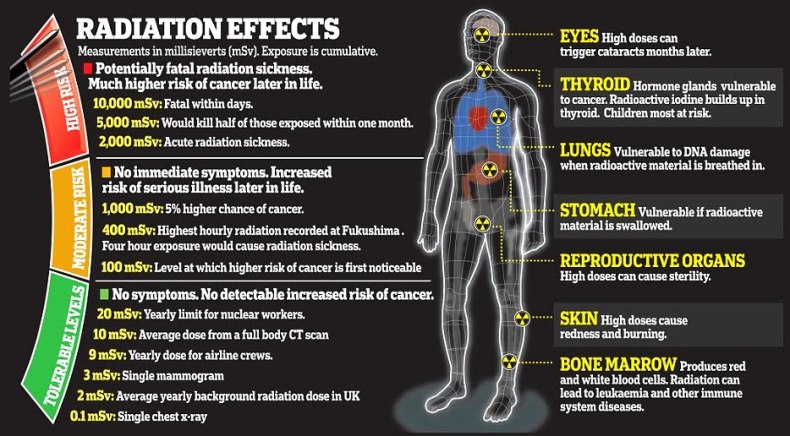
NUCLEAR LAB EMPLOYEES WITH RADIATION-LINKED CANCERS HAVE BEEN FORCED TO WAIT YEARS FOR POTENTIAL BENEFITS At the Los Alamos National Laboratory in New Mexico, workers are still waiting for answers about who is liable for sicknesses they say were caused by radiation from the lab. REBECCA MOSS PACIFIC STANDARD, Nov 30, 2018
In an 18-Year-Old Program to Help Ill Nuclear Workers, a Petition Has Lingered for 10 Years
A security guard at Los Alamos National Laboratory has been seeking compensation for fellow lab workers who’ve become ill, but the government has repeatedly denied the petition and he’s still waiting for a final answer. by Rebecca Moss, Santa Fe New Mexican Nov. 30 Ten years ago, a Los Alamos National Laboratory security guard named Andrew Evaskovich submitted a petition seeking compensation for fellow nuclear lab workers diagnosed with cancer linked to radiation. The government has repeatedly recommended denying the petition, despite evidence of continuing safety and recordkeeping problems at Los Alamos. And today, Evaskovich is still waiting for an answer. (Read our investigation.)
October 2000: Congress creates a program to compensate nuclear workers who’ve become sick after being exposed to hazardous levels of radiation or toxic chemicals. The law allows groups of workers to petition the government for easier access to compensation if their worksite has not kept adequate worker health records. The process has yet to help workers who started after 1996, when labs had to begin meeting higher safety standards.
2000 to 2004: Government inspectors find continuing worker safety problems at Los Alamos. A top official writes that Los Alamos labs’ “corrective actions have not been effective in preventing the recurrence of the radiological and safety basis violations.”
March 2006: Internal government memos are revealed showing a plan to deny petitions seeking special compensation for workers whose exposure records are missing or were destroyed, as a way to keep the costs down.
January 2008: A government watchdog report finds numerous incidents of “unusually high, unexplained dosage readings for workers” at Los Alamos.
April 2008: Evaskovich files a petition seeking compensation for ill Los Alamos workers employed between 1976 and 2005 who may not have adequate records of radiation exposure, based on his research showing problems with lab safety and recordkeeping.
January 2009: The National Institute for Occupational Safety and Health, or NIOSH, recommends for the first time that Evaskovich’s petition be denied, saying Los Alamos records’ show the lab had a health and safety program and was monitoring workers.
February 2009: A government advisory board disagrees and tells NIOSH to continue studying the petition.
July 2009: Workers are exposed to radioactive arsenic-74 at two areas of the lab, violating radiation safety practices in part because personnel “did not recognize the extremely high beta radiation dose rate associated with the arsenic.” Los Alamos is later fined for the incident.
July 2010: In response to a different petition, the government provides easier access to benefits for workers employed at Los Alamos prior to 1975.
August 2012: NIOSH reverses course and says that workers employed prior to 1996 should be eligible for compensation as a group since they “may have accumulated substantial chronic exposures through intakes of inadequately monitored radionuclides.” It also says it needs to continue studying those who started work in subsequent years.
February 2014: Lab workers improperly pack nuclear waste, which causes a drum to burst at an underground nuclear waste facility in Carlsbad, New Mexico. The accident exposes more than 20 workers to radiation and is one of the costliest nuclear accidents in Department of Energy history.
August 2015: The DOE cites Los Alamos for six violations, with issues going back a decade, including a near-runaway chain reaction.
April 2017: NIOSH once again recommends denying Evaskovich’s petition for Los Alamos workers, saying the stricter rules implemented in 1996 meant the lab didn’t have systemic problems after that.
July 2017: Independent consultants disagree. The lab “did not magically” have the ability to follow the rules in 1996 just because the government said it had to, said one of the consultants who had been hired to provide technical advice to the government’s advisory board.
October 2018: NIOSH again recommends that Evaskovich’s petition be denied, saying it has plenty of documents to estimate workers’ radiation exposure, even if they weren’t individually monitored by the lab.
November 2018: Independent consultants again disagree.
The Department of Energy and NIOSH both say that nuclear sites are safer and have done a better job monitoring workers since the new rules were implemented in 1996. Los Alamos spokesman Kevin Roark said that workers are closely monitored for radiation exposure and that the lab complies with all federal requirements.
USA Justice Dept now tries to prevent sick nuclear workers from getting compensation
DOJ is wrong to fight state and sickened Hanford workers https://www.yakimaherald.com/opinion/editorial-doj-is-wrong-to-fight-state-and-sickened-hanford/article_9d57b37c-f424-11e8-8cbc-8fdfc885e6c4.html?utm_medium=social&utm_source=twitter&utm_campaign=user-share, The Yakima Herald-Republic Editorial Board , 29 Nov 18
The cancer toll on nuclear workers: $15.5 billion in compensation and counting

Nuclear fallout: $15.5 billion in compensation and counting
They built our atomic bombs; now they’re dying of cancer
Nearly 33,500 former nuclear site workers died due to radiation exposure- report
 Nuclear Fallout: This story produced in partnership with ProPublica and the Santa Fe New Mexican. (Richly illustrated with photographs, videos, charts, documents interactive map)
Wave 3, By Jamie Grey and Lee Zurik |
LOS ALAMOS, NEW MEXICO (InvestigateTV) – Clear, plastic water bottles, with the caps all slightly twisted open, fill a small refrigerator under Gilbert Mondragon’s kitchen counter. The lids all loosened by his 4- and 6-year old daughters because, at just 38, Mondragon suffers from limited mobility and strength. He blames his conditions on years of exposure to chemicals and radiation at the facility that produced the world’s first atomic bomb: Los Alamos National Laboratory.
Gilbert Mondragon, 38, pulls the cap off a plastic water bottle that had been twisted open by his young daughters. He hasn’t the strength for those simple tasks anymore and blames his 20-year career at the Los Alamos National Lab. He quit this year because of his serious lung issues, which he suspects were caused by exposures at the nuclear facility. (InvestigateTV/Andy Miller)
Mondragon is hardly alone in his thinking; there are thousands more nuclear weapons workers who are sick or dead. The government too recognizes that workers have been harmed; the Department of Labor administers programs to compensate “the men and women who sacrificed so much for our country’s national security.”
But InvestigateTV found workers with medical issues struggling to get compensated from a program that has ballooned ten times original cost estimates. More than 6,000 workers from Los Alamos alone have filed to get money for their medical problems, with around 53 percent of claims approved.
The Los Alamos lab, the top-secret site for bomb design in 1943, has had numerous safety violations and evidence of improper monitoring, federal inspection reports show. Continue reading
Japanese government report – 4 companies exploited foreign workers in Fukushima nuclear clean-up
|
Four Japan firms used foreign trainees to clean up at Fukushima plant after nuclear meltdowns: final report, Japan Times, BY SARAH SUK, STAFF WRITER, 19 Oct 18 The government concluded Friday that four companies had used foreign trainees to perform work cleaning up radioactive contamination after the March 2011 tsunami triggered meltdowns at the Fukushima No. 1 nuclear plant.The headline figure from the final report on a survey conducted by the Justice Ministry, the labor ministry and the Organization for Technical Intern Training was the same as that in the interim report, released in mid-July, which reflected results of surveying fewer than 200 companies with foreign trainee programs.
Officials visited a total of 1,018 such companies with facilities in eight prefectures in eastern and northeastern Japan, interviewing technical interns there to confirm the situation, after the issue came to light in March. Of the four companies, one in Iwate Prefecture has been banned from accepting foreign trainees for five years. It was found to have neglected to pay allowances for decontamination work, amounting to a combined ¥1.5 million, to three trainees. The government has issued a similar ban for three years to a firm in Fukushima Prefecture for not paying a total of ¥180,000 to three interns for overtime work. A company in Fukushima and another in Chiba Prefecture received warnings because foreign trainees there engaged in decontamination work, albeit for short periods of time. The names of the four companies were not revealed……https://www.japantimes.co.jp/news/2018/10/19/national/four-japan-firms-used-foreign-trainees-clean-fukushima-plant-nuclear-meltdowns-final-report/#.W8qY8mgzbIU |
|
The workers of Fukushima
|
TOUCHING FROM A DISTANCE, The workers of Fukushima Daiichi BY ANDREW DECK METROPOLIS JAPAN, SEPTEMBER 28, 2018“………an elaborate operation that also aspires to full decommissioning of Units 1, 2, 3 and 4 by 2050. Now seven years into this proposed timeline, some critics have questioned its feasibility. According to Daisuke Hirose, a TEPCO spokesperson who debriefed Metropolis on the state of decommissioning, there are three major priorities in fulfilling the plan as scheduled.
The most complex is the location and extraction of nuclear fuel debris. Hundreds of tons of melted fuel remain buried deep within Units 1, 2 and 3, the exact locations of which remain unknown. Rubble and fatal radioactivity levels have rendered these parts of the reactor buildings inaccessible to humans, leaving remote-controlled robots the most viable method of investigation. Only minimal fuel debris in Unit 2 has currently been identified and the means of extraction have not been finalized, but Hirose says TEPCO will meet a 2021 benchmark for initial fuel extraction. Alongside the handling of nuclear debris, the plant must confront a rapid accumulation of contaminated water on site, perhaps the most urgent task facing the operation. ……….
Our coach passed the border of the “difficult to return zone,” a government-designated boundary that separates areas of Fukushima deemed habitable from those deemed uninhabitable. Suddenly we were facing the Fukushima “ghost towns” of popular imagination. While Fukushima Daiichi is ground zero, the heart of this disaster is in the abandoned towns of the prefecture: homes and businesses and schools left behind in an instant, hard evidence of the 160,000 residents that were displaced by the disaster. Abandoned vehicles, shattered windows, hollowed-out storefronts, a dilapidated pachinko parlor and seven years of weeds rising from cracks in the cement — they all passed by the coach windows on our approach to Fukushima Daiichi. We were not the only vehicles on this highway, trucks rumbled past us and cars lined the road. Calling these “ghost towns” is a misnomer: these towns may be uninhabited, but they are not unoccupied. Many of these vehicles belonged to a decontamination project that spans the original 20km exclusion zone and beyond. It is not operated by TEPCO, but rather a web of government agencies and municipalities. Their job, first and foremost, entails the mass removal of dirt, stripping entire towns of topsoil and manually washing down rooftops and other surfaces that were doused in radioactive particles in an effort to clean away radiation. Fields of black refuse sacks, millions of which are filled with contaminated soil, now litter the prefecture without plans for their permanent storage or removal. Regardless of this work’s efficacy, it is an undertaking that requires a massive labor force; Japan’s Ministry of Health, Labour and Welfare reports that more than 46,000 were employed in Fukushima decontamination work in 2016. The harsh reality is that the disaster has disrupted the industries that once thrived in Fukushima Prefecture — fishing, agriculture and service jobs. Currently, only half of the region’s 1,000 fishermen are going out to sea and they face highly reduced demand. The decontamination industry is one of the few thriving seven years later, but this line of work is not without its risks. In early September, the UN human rights division released a statement warning of possible worker exploitation in the recovery effort, both within the prefectural decontamination projects and on the 1F site. “Workers hired to decontaminate Fukushima reportedly include migrant workers, asylum seekers and people who are homeless,” wrote three UN Special Rapporteurs. “They are often exposed to a myriad of human rights abuses, forced to make the abhorrent choice between their health and income, and their plight is invisible to most consumers and policymakers with the power to change it.” Japan’s Foreign Ministry responded by calling the statement “extremely regrettable.” There are many people who shoulder the burden of the nuclear disaster: parents sending their children to school with Geiger counters on their backpacks, farmers who have lost their livestock and livelihood, elderly left to care for deserted towns as the young set roots far from Futaba-gun, multi-generation Fukushima lineages that have been forced to abandon their familial homes for prefabricated temporary housing units. Yamamoto carries one small burden of this sweeping tragedy, as do the other workers of Fukushima Daiichi, as do those who labor in irradiated fields without other means of income. They are trying to extinguish a danger that can’t be seen, but its presence is felt in every aspect of their work. At times the job they’ve been assigned feels beyond comprehension, but Fukushima is not a supernatural disaster and Yamamoto is no ghostbuster. This disaster is deeply human, founded in both nature and negligence. “If you think in terms of decades, the long road ahead and the abstractness of it all will crush you,” says Yamamoto. “But just as with any other work, if you split up big projects into smaller pieces, the feeling of accomplishment from each small victory will keep you motivated.” Inside the exclusion zone, we witness the people of Fukushima trying to take their land a few steps closer to normal. https://metropolisjapan.com/workers-of-fukushima-daiichi-power-plant/
|
|
|
California law to protect workers, community and environment, as Diablo nuclear power plant to close
 California Gov. Brown Signs Historic Diablo Canyon Nuclear Plant Bill, https://www.powermag.com/press-releases/california-gov-brown-signs-historic-diablo-canyon-nuclear-plant-bill/Power Magazine, 09/20/2018 SACRAMENTO, CA – California Gov. Jerry Brown today signed into law a bill to protect the environment, workers, and local communities during the closure of California’s last nuclear plant, Diablo Canyon near San Luis Obispo.Senate Bill 1090, which had wide bipartisan support, will help to ensure that the electricity generated by the giant plant is replaced with zero-carbon options led by energy efficiency and renewable energy. The new law also mandates full funding of a $350 million employee retention program and the $85 million community impact mitigation program, which are needed to ensure that the plant is adequately staffed and essential emergency services are provided through the end of the plant’s license period in 2025.
Plant owner Pacific Gas & Electric (PG&E), citizen and environmental groups including NRDC, and labor organizations in June 2016 announced an agreement to close the two reactors by August 2025 and replace their generation with lower-cost, zero-carbon alternatives. Their joint proposal asked the California Public Utilities Commission to authorize the replacement of the electricity being generated by the plant 250 miles south of San Francisco with emissions-free options led by energy efficiency, wind and solar power, and included protections for plant workers and surrounding communities during the transition. When the CPUC rejected much of the historic joint proposal in January, supporters turned to the Legislature.
Following is a statement from Ralph Cavanagh, energy program co-director at the Natural Resources Defense Council:
“Governor Brown made climate history again today when he signed this legislation to specifically authorize that Diablo Canyon’s electricity generation be replaced with carbon-free resources like energy efficiency and wind and solar power. This groundbreaking legislation also ensures that we account for the full impact of the plant’s closure on the workers and surrounding communities.”
US govt plan to improve worker safety at Hanford polluted nuclear site
Washington Attorney General Bob Ferguson told reporters that the agreement represents a major win for hundreds of workers who have been getting sick for years while cleaning up the nation’s nuclear waste at the Hanford Nuclear Reservation in eastern Washington.
“Those workers deserve to be protected,” Ferguson said.
He added that the U.S. Department of Energy did not take the issue seriously and resisted putting protections in place.
“There’s no way to sugar coat this,” Ferguson said.
The Energy Department will for the first time test a new technology that Ferguson called “game-changing” that would protect workers from the vapor exposures.
Under the agreement, the agency will pay $925,000 in fees and costs to the state and Hanford Challenge, a watchdog group that has for decades been warning about worker safety. The agency will also install a new vapor monitoring and alarm system and maintain safety measures that are currently in place, including supplying air and respirators.
The Department of Energy said in an emailed statement that the agreement “acknowledges the extensive actions” that the agency, and its contractor, Washington River Protection Solutions LLC, have taken to protect workers from potential exposure to chemical vapors.
The agency said they continue to “take a very conservative approach to protecting workers from potential exposures to chemical vapors” and that agreement reinforces the ongoing effort.
The state, Hanford Challenge and the pipefitters union Local 598 sued the Energy Department in 2015 and its contractor for tank farms containing nuclear waste, seeking better protection for workers at risk of inhaling vapors or gases that leaked from underground storage tanks.
The agreement puts that federal lawsuit on hold while the Energy Department tests and implements a new system to capture and destroy vapors escaping waste tanks. Ferguson said if the federal agency doesn’t meet its obligations, legal action could resume.
“Hearing and documenting dozens of stories of sick workers was heartbreaking,” said Meredith Crafton, a lawyer representing Hanford Challenge, whose voice broke as she spoke to reporters.
The agreement protects workers in the interim but also creates incentives to find better technology to protect workers in the future, she said.
The 586-square-mile (943-square-kilometer) Hanford nuclear site located along the Columbia River in Eastern Washington state produced up to 70 percent of the plutonium for the U.S. nuclear arsenal since it was established in World War II.
Hanford has 177 underground tanks made of steel that contain more that 54 million gallons (204 million liters) of radioactive and chemical wastes.
Ferguson said studies over the last 20 years, including by the Energy Department and other government agencies, have shown workers falling ill after being exposed to the vapors. They’ve experienced dizziness, nausea and other issues.
Hinkley nuclear deal with union – work will continue in the event of a worker death accident
killed during construction of the Hinkley Point nuclear power plant. The
Enquirer understands that construction workers were encouraged to agree to
the deal last month to protect payouts to the family of any worker who dies
on the project. It goes against standard practice to down tools on site in
the event of a fatality.
http://www.constructionenquirer.com/2018/09/13/hinkley-workers-sign-no-death-stoppage-deal/
1 This Month

of the week – Shut Down Drone Warfare!


Tell the Ukrainian Government to Drop Prosecution of Peace Activist Yurii Sheliazhenko

Petition to revoke the licensing of the Near Surface Nuclear Disposal Facility (NSDF) at Chalk River. https://www.ourcommons.ca/petitions/en/Petition/Details?Petition=e-7247
To see nuclear-related stories in greater depth and intensity – go to https://nuclearinformation.wordpress.com
-
Archives
- April 2026 (7)
- March 2026 (251)
- February 2026 (268)
- January 2026 (308)
- December 2025 (358)
- November 2025 (359)
- October 2025 (376)
- September 2025 (257)
- August 2025 (319)
- July 2025 (230)
- June 2025 (348)
- May 2025 (261)
-
Categories
- 1
- 1 NUCLEAR ISSUES
- business and costs
- climate change
- culture and arts
- ENERGY
- environment
- health
- history
- indigenous issues
- Legal
- marketing of nuclear
- media
- opposition to nuclear
- PERSONAL STORIES
- politics
- politics international
- Religion and ethics
- safety
- secrets,lies and civil liberties
- spinbuster
- technology
- Uranium
- wastes
- weapons and war
- Women
- 2 WORLD
- ACTION
- AFRICA
- Atrocities
- AUSTRALIA
- Christina's notes
- Christina's themes
- culture and arts
- Events
- Fuk 2022
- Fuk 2023
- Fukushima 2017
- Fukushima 2018
- fukushima 2019
- Fukushima 2020
- Fukushima 2021
- general
- global warming
- Humour (God we need it)
- Nuclear
- RARE EARTHS
- Reference
- resources – print
- Resources -audiovicual
- Weekly Newsletter
- World
- World Nuclear
- YouTube
-
RSS
Entries RSS
Comments RSS
 nuclear-news