Underground data fortresses: the nuclear bunkers, mines and mountains being transformed to protect our ‘new gold’ from attack
The Conversation , 26 Sept 25 A.R.E. Taylor, Senior Lecturer in Communications, University of Exeter
It’s a sunny June day in southeast England. I’m driving along a quiet, rural road that stretches through the Kent countryside. The sun flashes through breaks in the hedgerow, offering glimpses of verdant crop fields and old farmhouses.
Thick hawthorn and brambles make it difficult to see the 10ft high razor-wire fence that encloses a large grassy mound. You’d never suspect that 100ft beneath the ground, a hi-tech cloud computing facility is whirring away, guarding the most valuable commodity of our age: digital data.
This subterranean data centre is located in a former nuclear bunker that was constructed in the early 1950s as a command-and-control centre for the Royal Air Force’s radar network. You can still see the decaying concrete plinths that the radar dish once sat upon. Personnel stationed in the bunker would have closely watched their screens for signs of nuclear missile-carrying aircraft.
After the end of the cold war, the bunker was purchased by a London-based internet security firm for use as an ultra-secure data centre. Today, the site is operated by the Cyberfort Group, a cybersecurity services provider.
I’m an anthropologist visiting the Cyberfort bunker as part of my ethnographic research exploring practices of “extreme” data storage. My work focuses on anxieties of data loss and the effort we take – or often forget to take – to back-up our data.
As an object of anthropological enquiry, the bunkered data centre continues the ancient human practice of storing precious relics in underground sites, like the tumuli and burial mounds of our ancestors, where tools, silver, gold and other treasures were interred.
The Cyberfort facility is one of many bunkers around the world that have now been repurposed as cloud storage spaces. Former bomb shelters in China, derelict Soviet command-and-control centres in Kyiv and abandoned Department of Defense bunkers across the United States have all been repackaged over the last two decades as “future-proof” data storage sites.
I’ve managed to secure permission to visit some of these high-security sites as part of my fieldwork, including Pionen, a former defence shelter in Stockholm, Sweden, which has attracted considerable media interest over the last two decades because it looks like the hi-tech lair of a James Bond villain.
Many abandoned mines and mountain caverns have also been re-engineered as digital data repositories, such as the Mount10 AG complex, which brands itself as the “Swiss Fort Knox” and has buried its operations within the Swiss Alps. Cold war-era information management company Iron Mountain operates an underground data centre 10 minutes from downtown Kansas City and another in a former limestone mine in Boyers, Pennsylvania.
The National Library of Norway stores its digital databanks in mountain vaults just south of the Arctic Circle, while a Svalbard coal mine was transformed into a data storage site by the data preservation company Piql. Known as the Arctic World Archive (AWA), this subterranean data preservation facility is modelled on the nearby Global Seed Vault.
……………………..Bunkers are architectural reflections of cultural anxieties. If nuclear bunkers once mirrored existential fears about atomic warfare, then today’s data bunkers speak to the emergence of a new existential threat endemic to digital society: the terrifying prospect of data loss.
Data, the new gold?
………………………………………………………………… For governments, corporations and businesses, a severe data loss event – whether through theft, erasure or network failure – can have a significant impact on operations or even result in their collapse. The online services of high-profile companies like Jaguar and Marks & Spencer have recently been impacted by large-scale cyber-attacks that have left them struggling to operate, with systems shutdown and supply chains disrupted. But these companies have been comparatively lucky: a number of organisations had to permanently close down after major data loss events, such as the TravelEx ransomware attack in 2020, and the MediSecure and National Public Data breaches, both in 2024.
With the economic and societal impact of data loss growing, some businesses are turning to bunkers with the hope of avoiding a data loss doomsday scenario.
The concrete cloud
One of the first things visitors to the Cyberfort bunker encounter in the waiting area is a 3ft cylinder of concrete inside a glass display cabinet, showcasing the thickness of the data centre’s walls. The brute materiality of the bunkered data centre stands in stark contrast to the fluffy metaphor of the “cloud”, which is often used to discuss online data storage.
Data centres, sometimes known as “server farms”, are the buildings where cloud data is stored. When we transfer our data into the cloud, we are transferring it on to servers in a data centre (hence the meme “there is no cloud, just someone else’s computer”). Data centres typically take the form of windowless, warehouse-scale buildings containing hundreds of servers (pizza box-shaped computers) stored in cabinets that are arranged in aisles………………………………………………………….
We often think of the internet as an immaterial or ethereal realm that exists in an electronic non-place. Metaphors like the now retro-sounding cyberspace and, more recently, the cloud perpetuate this way of thinking.
But the cloud is a material infrastructure composed of thousands of miles of cables and rows upon rows of computing equipment. It always “touches the ground” somewhere, making it vulnerable to a range of non-cyber threats ………………………………………………………………………………….
Like any computer, servers generate a huge amount of heat when they are running, and must be stored in constantly air-conditioned rooms to ensure they do not overheat………………………………………………………………………
An average data centre consumes an estimated 200-terawatt hours of electricity each year. That’s around 1% of total global electricity demand, which is more than the national energy consumption of some countries. Many of these facilities are powered by non-renewable energy sources, and the data centre industry is expected to emit 2.5 billion tons of carbon dioxide by 2030.
In addition, to meet expectations for “uninterruptible” service levels, data centres rely on an array of fossil fuel-based back-up infrastructure – primarily diesel generators. …………………………
………….Amid hype and speculation about the rise of AI, which is leading to a boom in the construction of energy-hungry data centres, the carbon footprint of the industry is under increasing scrutiny…………………………..
For technology behemoths like Apple and Google, cloud storage is a key strategic avenue for long-term revenue growth. While the phones, laptops and other digital devices they make have limited lifespans, their cloud services offer potentially lifelong data storage. Apple and Google encourage us to perpetually hoard our data rather than delete it, because this locks us into their cloud subscription services, which become increasingly expensive the more storage we need.
Apple’s marketing for its cloud storage service, iCloud, encourages users to “take all the photos you want without worrying about space on your devices”. Google has made “archive” rather than “delete” the default option on Gmail. While this reduces the likelihood of us accidentally deleting an email, it also means we are steadily consuming more of our Gmail capacity, leading some to purchase more Google Drive storage space.
Cloud hoarders
It is also increasingly difficult to operate off-cloud. Internal storage space on our digital devices is dwindling as the cloud becomes the default storage option on the majority of digital products being developed. Users must pay a premium if they want more than the basic local storage on their laptop or smartphone. Ports to enable expandable, local storage – such as CD drives or SD card slots – are also being removed by tech manufacturers.
As our personal digital archives expand, our cloud storage needs will continue to grow over our lifetimes, as will the payments for more and more cloud storage space. And while we often imagine we will one day take the time to prune our accumulations of digital photos, files, and emails, that task is often indefinitely postponed. In the meantime, it is quicker and easier to simply purchase more cloud storage.
Many consumers simply use whichever cloud storage service is already pre-installed on their devices – often these are neither the cheapest nor most secure option. But once we commit to one provider, it is very difficult to move our data to another if we want a cheaper monthly storage rate, or simply want to switch – this requires investing in enough hard drives on which to download the data from one cloud provider and upload it to another. Not everyone is tech-savvy enough to do that…………………………………………. https://theconversation.com/underground-data-fortresses-the-nuclear-bunkers-mines-and-mountains-being-transformed-to-protect-our-new-gold-from-attack-262578
The Shift: 50 States, One Israel

Amid the ongoing genocide, the largest-ever delegation of U.S. lawmakers attended the “50 States, One Israel” conference in Jerusalem last week. It’s clear from the event, and the local reactions it sparked, that Israel’s isolation is only worsening.
It seems clear that this event was organized out of a growing sense of desperation, not a position of strength.
By Michael Arria September 25, 2025 https://mondoweiss.net/2025/09/the-shift-50-states-one-israel/
Multiple installments of this newsletter have covered congressional delegations to Israel, but the “special relationship” goes far beyond Washington and permeates politics at the most local of levels.
Last week, lawmakers from across the U.S. flew to Jerusalem to attend “50 States One Israel,” which was billed as the largest delegation of politicians to ever visit the country.
“I thank you for coming here to stand with Israel. Thank you, Democrats and Republicans alike,” Israeli Prime Minister Benjamin Netanyahu told the attendees. “We value and cherish your support. This is an active effort to counter attempts to besiege Israel – not isolated, not symbolic, but a real effort to push back.”
“It may sound a little bit this afternoon as if I’m almost speaking on behalf of Israel rather than the U.S.,” Ambassador to Israel Mike Huckabee told the group.
“If you came to my house tonight for dinner and you came in and you said, ‘Oh, Mike, we like you,” he continued. “We really think the world of you. We just enjoy being with you. So excited to be here with you and have dinner with you. ‘But your wife, we can’t stand her. We don’t like her a bit. I hope she’s not going to be at the table.’ I would say, ‘Well, she will be. You won’t be. Get out.’ Because if you were to insult my partner, you have insulted me.”
Normal stuff.
There wasn’t much coverage of the event in the mainstream media, but you can find a lot of interesting coverage in local outlets, and see how the battle over Israel is taking shape in multiple states.
Let’s start with the Idaho Capital Sun, where Clark Corbin covered the state’s participants. Idaho sent five lawmakers to Israel, four of whom were Republicans. The only Democrat to attend was House Minority Leader Ilana Rubel (D-Boise).
A group of state Democrats is circulating a letter condemning Rubel for attending and calling for her to step down from her leadership position. The Idaho Young Democrats published a statement criticizing the move as well.
Shiva Rajbhandari, an Idaho human rights advocate, wrote an Op-Ed for the Idaho Statesman, arguing that Rubel and her Republican colleagues “lack the moral courage for public service of any kind.”
Rubel published her own Op-Ed, in which she wonders why we can’t all just get along.
“If you want someone that will indignantly shun the other side, I’m not your person,” writes Rubel. “I prefer useful results.”
It’s unclear what results Rubel’s referring to, but she goes on to dismiss the anti-genocide position as an example of “ideological purity,” giving people “false comfort.”
Next, the Alaska News Source. Wil Courtney reports on four Alaskan lawmakers making the trip.
Courtney says his paper “sent all members of the delegation questions..including questions over the war in Gaza, which were not answered.”
He notes that the World Health Organization estimates over 640,000 people will face “catastrophic levels of food insecurity” in the Gaza Strip.
Alaska’s News Source also reached out to the governor’s office, but did not receive a response.
On Instagram, the daughter of New Mexico State Senator Jay Block (R) posted a video criticizing her dad and other “loser politicians” for attending the conference.
“It seems like he sold his soul to the devil and is now just peddling lies and propaganda,” she declared. “I just genuinely hope this will be the end of my dad’s political career.”
“50 States, One Israel” occurred amid growing international solidarity against the ongoing genocide in Gaza and Israel’s further isolation on the world stage. Lately, Netanyahu has expressed anxiety about the country’s actions impacting its economy.
A recent piece by Mitchell Plitnick, explains why BDS is so crucial at this juncture. “An isolated Israel is a failed Israel, and Netanyahu knows it. So do his business cronies,” he wrote.
Foreign Minister Gideon Sa’ar called on the conference attendees to combat the BDS movement within their communities.
“Instead of boycotting Israel, promote engagement with Israel,” he told the lawmakers. “Instead of divesting from Israel, promote investments in Israel. And instead of sanctioning the only Jewish state, speak out clearly against those who recycle age-old hatred in modern form.”
It seems clear that this event was organized out of a growing sense of desperation, not a position of strength.
Block the Bombs
The Congressional Progressive Caucus (CPC) has voted to endorse the Block the Bombs Act.
The news was first reported by Prem Thakker at Zeteo.
“The Block the Bombs bill is the first step toward oversight and accountability for the murder of children with US-made, taxpayer-funded weapons,” said Rep. Delia Ramirez (D-IL), who leads the bill. “In the face of authoritarian leaders perpetrating a genocidal campaign, Block the Bombs is the minimum action Congress must take.”
The legislation currently has 50 House co-sponsors.
It focuses on bunker buster bombs, 2,000-pound bombs, Joint Direct Attack Munitions (JDAMs), 120mm tank rounds, and 155mm artillery shells.
Many find it difficult to take the merits of this bill seriously.
It does nothing to deter “defensive weapons” like Iron Dome. In fact, it allows Israel to keep receiving all weapons by simply providing “written assurances satisfactory to the President.”
On top of all that, it obviously has no chance of passing.
However, the Progressive Caucus is one of the largest in Congress, and it has traditionally avoided the issue altogether. This is the first time it has endorsed legislation directly related to Palestine.
The fact that it’s backing an effort that’s opposed by groups like AIPAC is certainly notable, as it points to the decline of Israel’s brand among Democratic voters.
In a recent Common Dreams Op-Ed, Peace Action president Kevin Martin puts this bill, and recent related efforts, in a wider context:
The bill is as close as we have to a de facto arms embargo on Israel, as it would ban transfers of seven specific offensive weapons systems, from bunker busting bombs to tank ammunition to white phosphorus artillery munitions. While House Speaker Mike Johnson and the Republican majority will probably not allow the bill to advance, even to consideration by a House committee, building support to Ban the Bombs to Israel can help put pressure on President Trump (who recently blurted out that Israel had lost its “total control” of Congress) to exert leverage on Israeli Prime Minister Netanyahu to end his inhumane slaughter in Gaza.
In addition to further votes on Joint Resolutions of Disapproval on specific weapons transfers to Israel, the Senate could also move privileged measures including a War Powers Resolution to prevent further support for Israel’s actions in Gaza, or an inquiry under section 502(B) of the Foreign Assistance Act for Israel’s clear violations of U.S. law. Or, the Senate could attach language such as that in the House Block the Bombs bill as an amendment to an Appropriations Bill.
None of those actions would be an easy lift, and would not be likely to pass (or override an expected presidential veto) but the reality now is the political tide has turned decisively against Israel.
Perhaps the simplest way to look at this is that advocates for peace and human rights have done their job, and the public has responded, as only 8% of Democrats approve of Israel’s actions in Gaza, with the overall number at only 32%, according to a recent Gallup poll.
Disarmament over destruction: A renewed push for a world without nuclear weapons

United Nations, By Sachin Gaur, 25 September 2025
In the final days of the Second World War, as the idea of the United Nations was beginning to take shape, the atomic bombings of two Japanese cities sent a chilling warning to the world, of the terrifying destructive power of nuclear weapons. Eight decades later, amidst rising geopolitical tensions and ongoing conflicts, the threat from nuclear arms is escalating.
Highest threat level for decades
In his message for the ‘International Day for the Total Elimination of Nuclear Weapons’, observed annually on September 26, UN Secretary-General Antonio Guterres reminds the world that “nuclear weapons deliver no security – only the promise of annihilation.”
Nuclear disarmament has remained a top priority for the UN since its inception. In fact, the very first resolution adopted by the UN General Assembly in 1946 focused on nuclear disarmament.
In the decades that followed, the UN continued to lead diplomatic efforts in this direction. In 1959, the General Assembly formally supported the goal of general and complete disarmament. In 1978, the first Special Session of the General Assembly on Disarmament declared nuclear disarmament to be the highest priority.
Every UN Secretary-General has actively pursued this goal. The current incumbent, António Guterres, has repeatedly warned in recent years that “geopolitical tensions and mistrust have escalated the risk of nuclear warfare to its highest levels in decades.”
“These weapons are growing in power, range, and stealth. An accidental launch is one mistake, one miscalculation, one rash act away,” he told the Security Council last year
What’s at stake
Although nuclear weapons have only been deployed twice, their shadow still hangs over humanity. Over 12,000 nuclear warheads still exist today. Their destructive potential threatens entire cities, millions of lives, the environment, and future generations.
More than 50 per cent of the world’s population lives in countries that either possess nuclear weapons or are part of nuclear alliances. Deep concerns surrounding the possible use of these weapons have intensified due to conflicts, including the war in Ukraine.
Many nuclear-armed countries are also planning to modernise their arsenals. The integration of emerging technologies, such as artificial intelligence, raises the possibility of misjudgements and misunderstandings, making the risks even more complex and unpredictable.
A renewed nuclear arms race?
A range of multilateral treaties and initiatives have been established to curb, regulate, or eliminate nuclear weapons over the decades, helping – to some extent – to put the brakes on proliferation and advanced disarmament.
However, rising global instability and violent conflicts are placing increasing pressure on these mechanisms. The weakening of such frameworks risks sparking a renewed nuclear arms race.
In 2019, the United States announced its withdrawal from the Intermediate-Range Nuclear Forces Treaty, which targeted the elimination of a specific class of nuclear missiles and, in 2022, a major review conference failed to reach consensus on the Nuclear Proliferation Treaty.
The following year, Russia withdrew its ratification of the Comprehensive Nuclear Test-Ban Treaty (CTBT) and suspended its participation in the ‘New START’ Treaty on measures for the reduction and limitation of Strategic Offensive Arms
These developments have led to growing frustration over the slow pace of disarmament and increasing concern about the catastrophic potential of even a single nuclear detonation: since the end of the Cold War, while the number of deployed nuclear weapons has decreased, not a single nuclear warhead has been eliminated as a result of any treaty. Nor are there any active negotiations currently aimed at nuclear disarmament………………………….. https://news.un.org/en/story/2025/09/1165949
UN at 80: Civil Society Must Have a Say in the Struggle for Renewal
Andrew Firmin, https://www.ipsnews.net/2025/09/un-at-80-civil-society-must-have-a-say-in-the-struggle-for-renewal/?utm_source=email_marketing&utm_admin=146128&utm_medium=email&utm_campaign=UN_at_a_Mixed_Legacy_of_Highs_and_Lows_An_Overdose_of_Renewables_New_Energy_Risk_in_Brazil_and_more
LONDON, Sep 26 2025 (IPS) – As the high-level opening week of the UN General Assembly unfolds, with heads of states delivering often self-serving speeches from the UN’s podium, the organisation is undergoing one of its worst set of crises since its founding 80 years ago. This year’s General Assembly – ostensibly focused on development, human rights and peace – comes as wars are raging across multiple continents, climate targets are dangerously being missed and the institution designed to address these global challenges is being hollowed out by funding cuts and political withdrawals.
A UN Commission has just determined that Israel is committing genocide in Gaza, while the Israeli state recently escalated its campaign of violence by bombing Qatar. Meanwhile, Russia’s war on Ukraine threatens to spill over with its recent launch of drones against Poland and incursion into Estonia’s airspace. Conflicts continue in Myanmar, Sudan and many other countries, despite the UN’s foundational hopes of ensuring peace, security and respect for human rights.
The Trump administration has abandoned multilateralism in favour of transactional bilateral dealmaking while spearheading a donor funding withdrawal that is hitting both the UN and civil society hard. The US government has also repudiated the Sustainable Development Goals, the ambitious and progressive targets all states agreed in 2015, but which are now badly off track.
Today’s multiple and growing crises demand an effective and powerful UN – but at the same time they make this less likely to happen.
Cutbacks loom large
As state leaders meet, one of the items on the agenda is the UN80 initiative. Launched in March, this is presented as a reform process to mark the UN’s 80th anniversary. But reflecting the impacts of the funding crisis, it’s first and foremost a cost-cutting drive. The slashing of donor aid – not only by the USA, but also by other established donor states such as France, Germany and the UK, often in favour of military spending – is having a global impact. The UN is being hit both by states failing to pay their mandatory assessed contributions, or delaying them for long spells, and by underfunding of initiatives that rely on additional voluntary support.
When it comes to mandatory contributions, the most powerful states are those that owe the most, with the USA in the lead with a circa US$1.5 billion debt, followed by China on close to US$600 million. Meanwhile voluntary funding shortfalls are particularly hitting human rights work, always the most underfunded part of the UN’s work. In June, UN human rights chief Volker Türk announced that 18 activities mandated by Human Rights Council resolutions wouldn’t be implemented because of resource constraints. In a world riven by sickening conflicts, human rights investigations on Palestine, Sudan and Ukraine aren’t able to operate at anywhere near full capacity.
Funding shortfalls, intensified by the Trump administration pulling out of key UN bodies and agreements, have forced the UN to plan for a 20 per cent budget cut in 2026. That may involve shedding some 7,000 jobs from its 35,000-person workforce, merging some agencies, shutting offices and relocating functions to cheaper locations.
The UN is undoubtedly an unwieldy and over-bureaucratic set of institutions, and it would be surprising if there weren’t some efficiency savings to be made. If staff are relocated from expensive global north hubs to cheaper global south locations, it could help UN bodies and staff better understand global south realities and improve access for civil society groups that struggle to travel to the key locations of Geneva and New York, particularly given the Trump administration’s new travel restrictions – although that wouldn’t be the rationale behind relocation.
But the proposed cuts mean the UN is effectively planning to do less than it has done before, at a time when the problems are bigger than they’ve been in decades. Given this, decisions about UN priorities mustn’t be left to its officials or states alone. Civil society must be enabled to have a say.
Civil society already has far too little access to UN processes. At the high-level week, even civil society organisations normally accredited for UN access are locked out of events. Reform processes such as last year’s Summit of the Future have also fallen far short of the access needed. Civil society’s proposals to improve the situation – starting with the creation of a civil society envoy, a low-cost innovation to help coordinate civil society participation across the UN – haven’t been taken up.
Now even civil society’s limited access could be further curtailed. Already the Human Rights Council is shortening sessions, reducing the opportunities available for civil society. The proposed cuts would impact disproportionately on the UN’s human rights work. In the name of efficiency, the UN could end up becoming less effective, if it grows even more state-centric and less prepared to uphold international human rights law. States that systematically violate human rights can only benefit from the ensuing lower levels of scrutiny.
Civil society is an essential voice in any conversation about what kind of UN the world needs and how to make it fit for purpose. It urgently must be included if the UN is to have any hope of fulfilling its founding promise to serve ‘we the peoples’.
Andrew Firmin is CIVICUS Editor-in-Chief, co-director and writer for CIVICUS Lens and co-author of the State of Civil Society Report.
Two leaders, two realities: Trump vs Albanese at the UN.


26 September 2025 Roswell , https://theaimn.net/two-leaders-two-realities-trump-vs-albanese-at-the-un/
President Trump has spoken at the United Nations, and now Prime Minister Anthony Albanese has too.
The contrast could not have been starker. Trump rambled like a man who’d just been handed the microphone at a small-town karaoke night – except the song was foreign policy and he didn’t know the words. He wandered through half-baked grievances, boasted about imaginary achievements, and at one point seemed to forget which country he was president of.
Albanese, meanwhile, spoke like an actual world leader – calm, confident, and passionate. He talked about climate action, regional security, and cooperation with the kind of clarity that makes you think, “Ah yes, this person knows what he’s talking about.”
And yet, if you relied on Australia’s right-wing media, you’d think you’d just watched two completely different events. To them, Trump was basically Moses parting the Red Sea with one hand while balancing the U.S. economy on the other. Albanese, apparently “reckless,” was a bumbling tourist who accidentally stumbled into the General Assembly and asked for directions to Times Square.
One commentator even claimed Trump was “extraordinary” – which is technically true if you count all the diplomats burying their heads in their hands. Meanwhile, Albanese’s calm and measured speech was branded “utterly humiliating” and dismissed as nothing but “symbolic gestures,” because apparently international diplomacy should be performed like a WWE entrance.
This is the theatre we live with now: policy and substance don’t make headlines, but a man ranting about wind turbines does. If Trump had started selling selfies from the UN podium, they’d have called it “bold economic diplomacy.”
The world saw two very different leaders this week – one looking like he could chair a serious discussion about global challenges, the other looking like he should be gently escorted back to his seat before he accidentally sanctioned Canada.
World leaders urged to prevent nuclear war, end the nuclear arms race and achieve global nuclear abolition
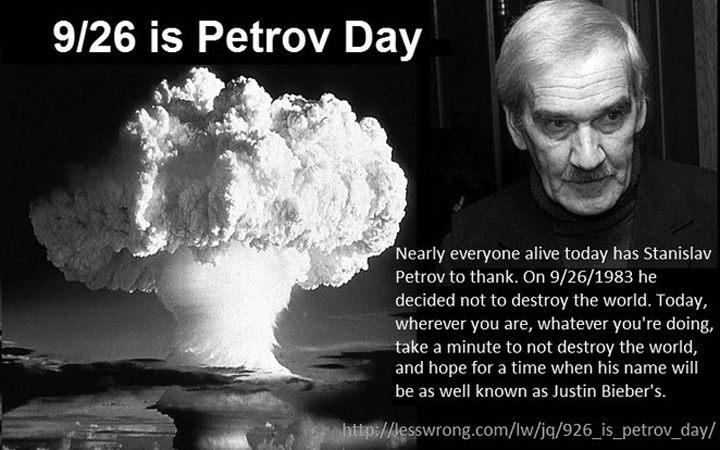
September 26 is a significant date. On this day in 1983 a nuclear war was narrowly averted when Colonel Stanislav Petrov, Duty Officer at a Russian nuclear early warning facility, broke protocol by not affirming to senior command an apparent incoming ballistic missile attack from the United States (later confirmed as a false alarm).
UNFOLD ZERO, New York, September 26, 2025
World leaders, meeting at a UN High Level Meeting to commemorate the International Day for the Total Elimination of Nuclear Weapons today, are being called to stand down nuclear forces, end the costly nuclear arms race and commit to achieving the global elimination of nuclear weapons no later than 2045, the 100th anniversary of the United Nations.
The call comes in in a Joint Appeal for Nuclear Abolition Day September 26 from over 500 civil society organizations representing peace, disarmament, human rights, environment, business, religious, youth, development and academic communities from around the world. It is endorsed by an additional 1000+ individuals, including parliamentarians, local body representatives, religious leaders, Nobel Laureates, former diplomats, academics/scientists, medical professionals, youth leaders and regular members of civil society (see below for a small sample list of endorsers).
The Appeal, which is organized by NuclearAbolitionDay.org, highlights that the risk of nuclear war by accident, miscalculation, crisis escalation, or malicious intent, is higher now than ever – with the Doomsday Clock ticking closer to midnight. The use of nuclear weapons by any of the nine nuclear-armed States or their nuclear allies would have catastrophic human, economic, and environmental consequences.
“Nuclear weapons are a hazard for all of humanity and therefore should be dismantled and abolished altogether from the face of our earth our planet our home,” says Ela Gandhi (South Africa), Chairperson of Gandhi Development Trust, Honorary Co-President of Religions for Peace and Granddaughter of Mahatma Gandhi.
“On September 26, we face the fact that proliferation of nuclear arms fits the definition of insanity,” says Senator Marilou McPhedran (Canada), Member of Parliamentarians for Nuclear Non-proliferation and Disarmament.
The Appeal attests that the threat and use of nuclear weapons is generally illegal, and that States currently relying on nuclear weapons for their security have an obligation to replace these policies with approaches based on international law and common security, as outlined in the UN Charter.
“The 1996 International Court of Justice Advisory Opinion held that there exists an obligation to pursue in good faith and bring to a conclusion, negotiations leading to nuclear disarmament in all its aspects under strict and effective international control,” says Dr. Deepshikha Kumari Vijh (USA),Executive Director of the Lawyers Committee on Nuclear Policy, who will present the appeal to the High-Level Meeting this afternoon. “Nuclear Weapon States are urged to meet this obligation.”
“The lack of engagement and good faith actions by UN Member States on nuclear disarmament is not just disappointing – it’s a dangerous failure,” says Chris Guillot, co-founder of AwareNearth. “We must shift our mindset on nuclear risk now, for the sake of future generations.”
“Let us all build friendship and peace among nations, abolish genocidal nuclear weapons and give hope to Humanity” says Mairead Corrigan Maguirre (Ireland), Nobel Peace Laureate 1976.
September 26 is a significant date. On this day in 1983 a nuclear war was narrowly averted when Colonel Stanislav Petrov, Duty Officer at a Russian nuclear early warning facility, broke protocol by not affirming to senior command an apparent incoming ballistic missile attack from the United States (later confirmed as a false alarm). “If a similar situation of incorrect information about a potential nuclear attack were to arise today, either in the Russian nuclear command and control system or in the US one, it’s doubtful, in the current geopolitical context of explicit nuclear threats, that a latter-day equivalent to Colonel Petrov would be there,” says John Hallam (Australia), Steering Committee Member for NoFirstUse Global. “The consequences for everyone and everything would then be catastrophic.”…………………………………………………………………………………………………………. https://www.unfoldzero.org/world-leaders-urged-to-prevent-nuclear-war-end-the-nuclear-arms-race-and-achieve-global-nuclear-abolition/
US-UK deal nuclear signed to speed up reactor approval, as companies announce cross-border partnerships
SIR KEIR STARMER and Donald Trump have signed a bilateral agreement to
advance nuclear technology, alongside a series of commercial partnerships
between US and UK companies. The Atlantic Partnership for Advanced Nuclear
Energy, signed between the two leaders during the US president’s second
state visit to the UK, aims to speed up regulatory approval in both
countries for nuclear power projects by allowing assessment results to be
shared.
The deal is focused on next generation nuclear technology as well
as small modular reactors (SMRs). The deal has been welcomed by industry
and is viewed as a step toward deeper transatlantic collaboration on
nuclear development between the US and UK.
The bilateral agreement allows
regulatory tests approved in one country to support reactor assessments in
the other. The UK government expects the agreement to cut the time required
to secure a nuclear project licence from three to four years down to two.
Chemical Engineer 25rg Sept 2025, https://www.thechemicalengineer.com/news/us-uk-deal-nuclear-signed-to-speed-up-reactor-approval-as-companies-announce-cross-border-partnerships/
Federal Judge Strikes Down New York’s “Save the Hudson” Nuclear Discharge Ban
A federal judge has sided with Holtec International in a dispute over a New
York law that barred the discharge of radioactive materials into the Hudson
River during the decommissioning of the Indian Point nuclear facility. The
ruling underscores the primacy of federal oversight in nuclear safety
decisions.
On Wednesday, U.S. District Judge Kenneth Karas held that a 2023
New York statute (commonly known as the “Save the Hudson” law) was
preempted by federal law. The judge found that the state statute, which
prohibits radioactive discharges in connection with decommissioning,
“categorically precludes Holtec from utilizing a federally accepted
method of disposal.”
Oil Price 24th Sept 2025, https://oilprice.com/Latest-Energy-News/World-News/Federal-Judge-Strikes-Down-New-Yorks-Save-the-Hudson-Nuclear-Discharge-Ban.html
US senator says he is concerned energy secretary acting in nuclear firm’s interest

. U.S. Senator Edward Markey sent a letter to President Donald
Trump on Tuesday saying he is concerned U.S. Energy Secretary Chris Wright
is working in the interest of nuclear power company Oklo (OKLO.N), opens
new tab, of which he used to be a board member. Markey, a Democrat, noted
that the administration is moving ahead with plans to allow Oklo to build a
nuclear waste reprocessing plant and transfer government-held plutonium
from nuclear weapons to use as fuel in planned reactor projects.
Reuters 23rd Sept 2025, https://www.reuters.com/business/energy/us-senator-says-he-is-concerned-energy-secretary-acting-nuclear-firms-interest-2025-09-23/
Sizewell C taking the axe to two century-old trees
Two century-old oak trees will be felled to make way for a new road
network which will eventually serve a new nuclear power plant in Suffolk.
Managers for Sizewell C will chop down the trees along the B1125 Leiston
Road in Middleton so a new junction can be built. Sizewell C had permission
to cut down seven trees, although residents feared as many as ten could be
chopped down. Steve Mannings, Sizewell C’s head of ecology, said only the
two oak trees nearest the new junction needed to be felled.
BBC 25th Sept 2025, https://www.bbc.co.uk/news/articles/c5y4dqw8vqqo
50 States One Israel – Wikipedia

26 Sept 25 https://en.wikipedia.org/wiki/50_States_One_Israel
50 States One Israel was a conference held in Israel from September 14, 2025 to September 18, 2025[1] for state legislators from the United States and members of the Israeli government.[2][3] Hosted by the Israeli Foreign Ministry, the conference was described as the largest delegation of elected officials to visit Israel.[2] According to Lior Haiat, Deputy Director for North America at the Foreign Ministry, lawmakers including state legislators from all 50 states were in attendance.[2]
Background
………………………….. The conference, including travel, is paid entirely by the Israeli government.[4]
According to a July 8, 2025 letter to Oregon Representative David Gomberg sent by Israel’s consulate-general to the Northwest, The Ministry of Foreign Affairs will provide “roundtrip economy airfare from New York to Tel Aviv (including domestic U.S. flights to NYC),” and “all in-country transportation, accommodations, meals, and guided programming.”[1] Five lawmakers from every state were expected to attend.[5
……………… On September 15, 2025, attendees visited the Western Wall and the Church of the Holy Sepulchre.[6] Later, Foreign Minister Gideon Sa’ar urged American lawmakers to pass anti-BDS laws in their states.[7] In the evening, Prime Minister of Israel Benjamin Netanyahu gave a welcome address to the delegation.[8][9] ……………………..
On September 17, 2025, President of Israel Isaac Herzog addressed the delegation, saying that Israel’s “ironclad bond with the United States of America [exists] because we drink from the same fountain: the values of the Bible”.[11]………………….
Attendees…………incomplete list of 105 lawmakers named here
Impact
In the period following the conference, several participants faced criticism from constituents, the general public, and family. The daughter of New Mexico State Senator Jay Block took to social media platforms to register her disgust with her father’s participation in the conference, stating “It seems like he sold his soul to the devil and is now just peddling lies and propaganda… I just genuinely hope that this will be the end of my dad’s political career…”[61] Leading up to a potential government shutdown, Republican House Speaker Matt Hall of Michigan had instructed the Republican caucus not to leave the state while the budget was not completed and removed all bills from Representative Jaime Greene’s committee for her absence in attending the event.[62]
References.…………………………………………………
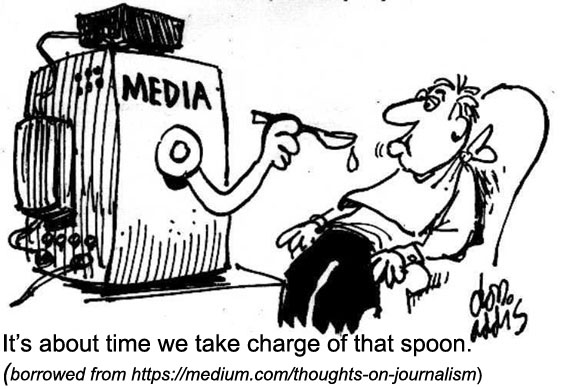
‘Near Daily’ Israeli Assaults on Lebanon Have Become Non-News for Western Media
Belén Fernández, September 26, 2025, https://fair.org/home/near-daily-israeli-assaults-on-lebanon-have-become-non-news-for-western-media/
The Israeli military unleashed a large wave of air strikes on densely populated towns in South Lebanon on Thursday, September 18—although you’d never know it from the Western corporate media, who have increasingly lost interest in reporting on Israel’s unceasing war on its northern neighbor. This proceeds unabated in spite of a ceasefire, brokered by the United States and France, that ostensibly took hold last November. Prior to Thursday’s strikes, area residents were given an hour to evacuate.
The BBC (9/18/25) was one of the few corporate outlets that managed to find a bit of space for these events, under the headline, “Israeli Air Strikes Hit Southern Lebanon.” The outlet noted that
an Israeli military spokesman said the targets were infrastructure belonging to Hezbollah and in response to the group’s attempts to re-establish activities in the area. He provided no evidence.
The piece also explained that Israel “has carried out air strikes on people and places it says are linked to Hezbollah almost every day, despite a deal that ended the war with the group in November.”
Reuters (9/18/25) managed an even shorter writeup—and took Israel’s word for it in the headline: “Israel Attacks Hezbollah Targets in South Lebanon.”
No casualties were reported in these particular attacks, but the fiery spectacle naturally sent a whole lot of people fleeing in terrorized panic. The fact that such terrorism by the state of Israel transpires “almost every day” is perhaps part of the reason the media have largely relegated it to the realm of non-news.
Another part of the reason might be that outlets are too busy serving as apologists (FAIR.org, 4/11/25, 4/25/25, 6/6/25) for the ongoing US-backed genocide in the nearby Gaza Strip, which Israel launched in October 2023, and which has thus far officially killed more than 65,000 Palestinians, including 20,000 children—although this is likely a grave underestimate.
‘Along the border’
It was the momentum of this very genocide—and the accompanying astronomical increase in America’s already-astronomical financial and military assistance to Israel—that spurred Israel to once again go after Lebanon (pardon, “Hezbollah infrastructure”). Between October 2023 and November 2024, Israel killed more than 4,000 people in Lebanon and injured nearly 17,000 (Al Jazeera, 8/7/25).
In the seven months following the “ceasefire” agreement, another 250 people were killed, as the New York Times (7/9/25) acknowledged in one of its sporadic reports on Israel’s “near-daily strikes,” while also acknowledging that the Israelis had “held onto five positions along the border in violation of the agreement.” Had the paper wanted to be precise, it might have specified that these five positions are not simply “along the border,” but rather entirely within Lebanese territory.
Speaking of occupying Lebanese territory, it bears mentioning that the US is currently wrapping up construction of a gigantic fortress in the hills overlooking Beirut, which will soon serve as the country’s new embassy. It “dwarfs any government facility in Lebanon,” as observed by Lebanese journalist Habib Battah in an article for MERIP (4/10/24).
Boasting a trapezoidal swimming pool and buffed marble courtyard, the “19-structure ziggurat” also comprises a “labyrinth of megalithic blast walls emerging from deep excavation pits.” In other words, it’s the perfect setting for the US to continue strong-arming Lebanon into disarming Hezbollah, which, in addition to being one of Israel’s pet nemeses, has long been a thorn in the side of US empire, complicating America’s pursuit of regional hegemony.
And while Lebanese President Joseph Aoun is fully on board with the disarmament plan and the handing over of Hezbollah’s weapons to the Lebanese army, he warned in the aftermath of Thursday’s air strikes that the “silence of the states sponsoring the ceasefire agreement is a dangerous failure that encourages these attacks.” It is hardly a stretch to add that media silence similarly encourages such aggression, adding an extra layer to the impunity Israel already knows so well.
Given that Hezbollah is the only force in Lebanese history that has proved capable of defending the country from Israeli predations, pretending that Israel isn’t continuously bombing Lebanon during a “ceasefire” also seems like a pretty good way of denying that there is any further need for Hezbollah. The Lebanese army, for its part, has not once managed to protect the nation from its bellicose neighbor to the south—a failure directly related to the US’s longtime “security cooperation” with Lebanon’s armed forces.
When corporate media outlets do find themselves obliged to document Israeli strikes on Lebanon, this is done in typically decontextualized fashion. Hezbollah are generally understood to be the “bad guys”; rarely is it mentioned that the group owes its very existence to the 1982 Israeli invasion of Lebanon, greenlit by the US, that killed tens of thousands of Lebanese and Palestinians, and occurred in the context of a brutal 22-year Israeli occupation of South Lebanon.
‘Governments have been largely silent’
On Sunday, September 21, there was a relative flurry of corporate media activity after reports emerged that four of the five people killed in an Israeli drone strike on the South Lebanese town of Bint Jbeil—three of whom were children—were US citizens. The four got top billing, for example, in the CNN headline “Four US Citizens Killed, Including Three Children, in Israeli Strike on Lebanon, Says Lebanese Government,” with the fifth, non-American victim banished to the text of the article (9/21/25). CNN has now updated the headline as follows: “Five Killed in Israeli Strike on Lebanon, But Claim Some Were US Citizens Is Being Disputed.”
Indeed, the frequent selectivity of media coverage means it is sometimes easier to keep up with Israel’s activities in Lebanon by checking the Israeli military’s English-language X account—although the content must first be translated from Israel-speak about “terrorists,” “precision strikes” and so forth.
On Thursday, the same day as the underreported attacks on South Lebanon—and one year and one day after Israel detonated personal electronic devices across the country in an unprecedented terrorist attack, killing 12 and wounding thousands—the army’s X account broadcast another attack on eastern Lebanon that was unreported by the corporate media.
The next day, Friday, there was so much news out of Lebanon that the X post required bullet points, including one registering that “a Hezbollah ‘Radwan Force’ terrorist was eliminated in Tebnine, southern Lebanon.”
Bullet points were incidentally also necessitated the previous week when Israel slaughtered 31 journalists in air strikes on Yemen—another of the no fewer than six countries that Israel managed to attack in the span of 72 hours. The X version of this particular event began by claiming that the Israelis had “struck military targets belonging to the Houthi terrorist regime in the areas of Sanaa and Al Jawf in Yemen.
As the Washington Post (9/19/25) noted, the Israeli army “did not respond to a request for evidence of military activity at the site” where the journalists were struck. But why bother presenting evidence when you are never, ever held accountable? Even the Post found it worth remarking that “governments have been largely silent on the Israeli strike.”
‘Raising fears for truce’
As for intermittent media silence on Lebanon, one effect of this is to normalize Israel’s unending war on the country. And yet sometimes it does have to be talked about at length, as in the aforementioned New York Times article (7/9/25) acknowledging Israel’s “near-daily strikes” that ran under the headline “Israel Launches New Ground Incursion in Lebanon, Raising Fears for Truce.” No kidding.
This article was occasioned by the visit to Beirut of US special envoy Tom Barrack, who was set to receive the Lebanese government’s response to the “road map” to Hezbollah’s disarmament. The Times reported: “Just hours before Mr. Barrack’s visit, Israel launched a wave of airstrikes across southern and eastern Lebanon,” while the “announcement of renewed Israeli ground operations came shortly after” his arrival. Following his meeting with President Aoun, Barrack nonetheless declared himself “unbelievably satisfied” with Lebanon’s response to the disarmament plan.
Fast forward to September 18 and the Reuters (9/18/25) nod to the South Lebanon air strikes, which includes this detail:
The Lebanese army warned on Thursday that Israeli attacks and violations risked hampering its deployment in the south, and could block the implementation of its plan to end Hezbollah’s armed presence south of the Litani River.
Which makes one wonder if perhaps an end to the war on Lebanon isn’t what Israel wants at all.
Cato Institute: Nuclear power’s hamster wheel

Beyond Nuclear,September 23, 2025 https://beyondnuclear.org/cato-institute-nuclear-powers-hamster-wheel/
Accelerating climate change demands a stop to wasting precious little time along with human and financial resources being diverted from real solutions on nuclear power that’s going nowhere.
The conservative Cato Institute’s Fall 2025 status report on “The Next Nuclear Renaissance?” provides a comprehensive status report and global overview, nuclear nation by nation.
The report is best summed up in its concise conclusion:
The mystery is why the nuclear industry retains any credibility. Throughout its history, nuclear proponents have made rosy claims about the safety and economics of the next generation of nuclear projects, but they have all gone unfulfilled. In the early years of nuclear development, claims that processes such as learning by doing, technology change, standardization, economies of scale, and economies of number would result in improved performance had an intuitive credibility. However, after repeated failures to produce the forecasted results, why are renewed claims of this type being taken seriously now? Is it simple ignorance of the past, or are there other factors that make policymakers cling to a belief in nuclear?
Why are people unwilling to consider the reason that nuclear projects fail so often is the technology itself? Instead, they fall back on old, tired excuses such as unsympathetic regulators, delays caused by local protestors, and simply not getting the right ‘recipe’ for building nuclear power plants.
In March 2025, UK Prime Minister Keir Starmer claimed: For too long, blockers have had the upper hand in legal challenges—using our court processes to frustrate growth. We’re putting an end to this challenge culture by taking on the NIMBYs and a broken system that has slowed down our progress as a nation.
Starmer has created a taskforce to streamline safety regulation, but he has offered no evidence that the delays and cost escalation suffered at Hinkley Point C are in any way attributable to opposition or obstructive regulation—and he cannot because there is none.
The problem is not so much that money will be wasted on large numbers of uneconomic facilities. Rather, it is the opportunity costs of the time and human resources that are consumed by nuclear power and not available to other, quicker, more cost-effective and less financially risky options. We appear now to be facing serious risks from climate change, and there will not be a second chance if we fail to tackle it because too many resources are being consumed by an option—new nuclear—that will not work.”
Sorry, Donald Trump and Keir Starmer – Scotland doesn’t need nuclear
Craig Dalzell: I’M going to preface this article by saying that unlike
many of my comrades across the green and environmental movement, I’m not
ideologically against nuclear power per se.
In this decade of the 21st
century, we’re seeing the true energy transition start to change the
world around us faster than we realise. When I was in school, renewables
were taught as a thing that existed but were likely to only supply a small
fraction of the energy future. Today, wind and increasingly solar power are
dominating the globe in terms of new installed capacity.
Just after I left
high school in 2002, the total combined new energy generation installed
between both renewables and nuclear was about 20% of the global total that
year. Now, it’s more like 80%. And that’s massively overemphasising the
impact of nuclear.
The International Energy Agency’s 2025 Global Energy
Review found that more than 7GW of new nuclear power capacity was brought
online in the previous year compared to 700GW of new wind turbines and
solar photovoltaic panels (with solar providing around three-quarters of
that capacity). The age not just of renewables but of solar power
specifically, appears to be crashing over us.
It makes sense. The panels
are now cheap and easy to produce as once you have a production line going
it can just keep fabricating them. They’re easy to install just about
anywhere (to the point where in places like Germany it’s increasingly
common to see folk hanging them from their balconies). And every single new
panel installed anywhere starts producing power immediately with no fuel,
almost no maintenance and will keep producing power for decades.
The efficiencies of production have been stark. A solar PV panel in my school
days cost about £4.87 per watt in today’s prices. That panel now costs
about 20p per watt. A 96% price reduction in real terms.
Conventional nuclear power, on the other hand, requires years to decades of planning and
construction, truly massive upfront capital costs and the plants don’t
produce any power until they are switched on.
One way that the nuclear
sector is adapting is through the development of “small modular
reactors” (SMRs). Last week, Keir Starmer used Donald Trump’s state
visit to sign a deal for the US to produce such reactors for the UK. Costs
are expected to remain high though. Right now, a watt of conventional
nuclear energy costs about three to five times as much as solar and even
the best estimates for SMR cost reductions aren’t expected to make up
that gap.
The UK Government accepts that SMRs will only reduce the cost of
electricity by about 20% compared to conventional nuclear, which will mean
they will remain the most expensive way to generate electricity for the
foreseeable future. The future of energy, especially in Scotland, isn’t
going to be expensive conventional nuclear or expensive and untested SMRs.
It’s going to be by capturing the wind, waves and sun all around us and
bottling it for later use.
The National 25th Sept 2025, https://www.thenational.scot/politics/25496145.sorry-donald-trump-keir-starmer—scotland-doesnt-need-nuclear/
Spain and Italy, not US, protecting 22 Americans on Global Sumud Flotilla targeted for destruction by Israel.
Walt Zlotow, West Suburban Peace Coalition, Glen Ellyn IL 25 Sept 25
The Global Sumud Flotilla consists of 52 boats seeking to bring food and medicine to over 2,000,000 beleaguered Palestinians starving in Gaza from the Israeli genocide there. It contains over 500 incredibly courageous unarmed volunteers facing endless attack by Israel. Twenty-two Americans including 6 ex-service members are aboard.
The Flotilla is under constant Israeli attack using unmanned drones, deployment of incendiary devices, and dispersal of chemical substances to stop the Flotilla from reaching starving Palestinians.
Yesterday Spanish Prime Minister Pedro Sanchez announced Spain will join Italy in sending a military warship to help the Flotilla. While attending the UN Summit in New York Sanchez did not hold back from condemning Israel’s grotesque attacks on the innocent humanitarians:
“The government of Spain insists that international law be respected and that the right of our citizens should be respected to sail through the Mediterranean in safe conditions. Tomorrow we will dispatch a naval vessel from Cartagena with all necessary resources in case it was necessary to assist the flotilla and carry out a rescue operation.”
The US response to endless Israeli attacks on humanitarian boats, some containing Americans risking their lives to bring aid to starving Palestinians? Nada, nothing, zilch. Why would the US do anything that might interfere with their enabling of Israel’s genocide in Gaza? Despicable US refusal to end the genocide in Gaza, even if it means Americans might die, is further evidence American foreign policy is dictated by the practitioners of genocide in Israel.
There are 296 battle force ships in the US Navy, the world’s largest. But when it comes to endangered Americans seeking to aid the starving Palestinians their government is complicit in starving, the US is essentially saying, ‘Sorry boys, we don’t have a ship to spare’.
1 This Month
29 Jan. Thursday 7-8 p.m. Webinar – World’s Largest Nuclear Station in Port Hope, ON?
To see nuclear-related stories in greater depth and intensity – go to https://nuclearinformation.wordpress.com/

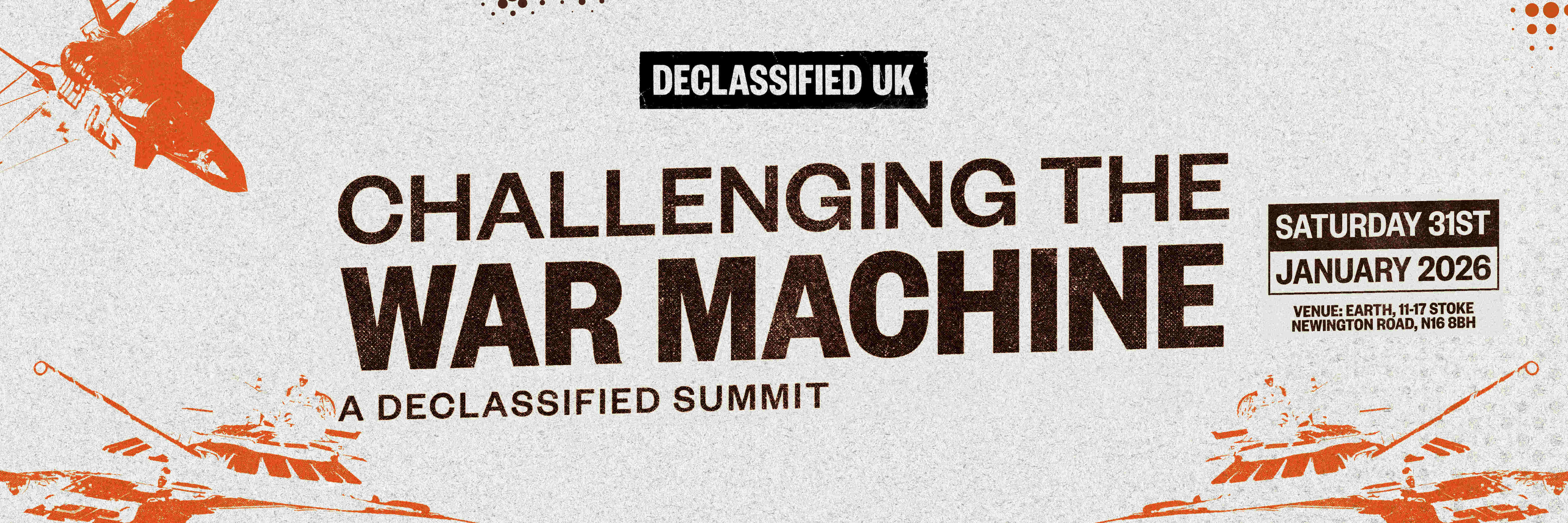
31st January – Challenging the War Machine – a DECLASSIFIED UK SUMMIT


Website of the Week
Now until to February 10, 2026 Radioactive waste storage in France: the debate is finally open! How to participate?
-
Archives
- January 2026 (288)
- December 2025 (358)
- November 2025 (359)
- October 2025 (376)
- September 2025 (258)
- August 2025 (319)
- July 2025 (230)
- June 2025 (348)
- May 2025 (261)
- April 2025 (305)
- March 2025 (319)
- February 2025 (234)
-
Categories
- 1
- 1 NUCLEAR ISSUES
- business and costs
- climate change
- culture and arts
- ENERGY
- environment
- health
- history
- indigenous issues
- Legal
- marketing of nuclear
- media
- opposition to nuclear
- PERSONAL STORIES
- politics
- politics international
- Religion and ethics
- safety
- secrets,lies and civil liberties
- spinbuster
- technology
- Uranium
- wastes
- weapons and war
- Women
- 2 WORLD
- ACTION
- AFRICA
- Atrocities
- AUSTRALIA
- Christina's notes
- Christina's themes
- culture and arts
- Events
- Fuk 2022
- Fuk 2023
- Fukushima 2017
- Fukushima 2018
- fukushima 2019
- Fukushima 2020
- Fukushima 2021
- general
- global warming
- Humour (God we need it)
- Nuclear
- RARE EARTHS
- Reference
- resources – print
- Resources -audiovicual
- Weekly Newsletter
- World
- World Nuclear
- YouTube
-
RSS
Entries RSS
Comments RSS
 nuclear-news