AUKUS. Deal of the century! … For the Americans

by Rex Patrick | Oct 23, 2025, https://michaelwest.com.au/aukus-deal-of-the-century-at-least-for-the-americans/
“Submarines in our time!” He didn’t say it, but Anthony Albanese might as well have, as he returned triumphantly from his meeting with Donald Trump this week.
AUKUS is indeed a fantastic deal. For the Americans, at least.
“Trump is not going to cancel AUKUS”, a well-connected industry source told MWM two weeks ago.
“AUKUS is so good for US industry – Australia is spending billions on their shipyards, and then there’s the purchase of the submarines themselves. General Dynamics Electric Boat and Huntington Ingalls Industries will see tens of billions of Australian dollars flow their way, as will Lockheed Martin and Raytheon”, said the source.
“And assuming things go well, the shipyard mess in the UK will see us going from three US Virginia-class subs to five, and then likely eight. Australia will abandon the UK AUKUS-designed subs, and even more Australian money will flow into the bank accounts of US companies.”
‘They’ll be lobbying the White House to ensure this cash keeps on flowing.’
And clearly, the lobbying has worked so far. Trump has endorsed AUKUS. It’s the sort of deal he likes.
As former Prime Minister Malcolm Turnbull stated in the lead-up to the meeting, it wasn’t going to be in Trump’s interest to withdraw, “The AUKUS deal is a fantastic deal for the Americans, a terrible deal for Australia, so there is no way Donald Trump will walk away from it because what does he get?” he said.
Turnbull was right. He was also right in his analysis after the meeting, “warm words don’t build submarines”.
Submarine woes
The United States is not building enough Virginia-class subs. They’re not building enough for their own Navy, let alone ours. That is the determining fact sitting in the middle of the AUKUS slipway.
For more than a decade, the US Government has been trying to build two Virginia subs per year. But they haven’t been able to move the shipbuilding dial. They’re currently struggling along at 1.1 submarines per annum, not enough to meet their own demand, let alone the 2.3 boats per annum they need to hit to be able to spare a submarine or three for Australia.
The spin from US and Australian politicians is turning in the opposite direction to the analysis of the United States Congressional Research Service, the US Government Audit Office and the US Chief of Naval Operations. No matter the spin from politicians, they can’t cause a change in the engineering and construction taking place at Groton, Connecticut and Newport News, Virginia.
Trump needn’t be worried though; he won’t be the President in the early 2030s when the first Virginia Class sub can’t be delivered because doing so,
will have a detrimental effect on the US Navy’s undersea warfare capability.
The US Congress has enshrined that “America First” requirement in their AUKUS legislation, and the crunch point is already less than a decade away – too little time for the US submarine industrial base to make the enormous strides that are so easily spruiked but so difficult, if not impossible, to achieve.
Eroding our sovereignty
Meanwhile, MWM’s industry source has foreshadowed the closing down of some Australian Defence companies struggling to make ends meet after Defence has cancelled a range of local programs, and is not initiating replacement work, so that they can meet the almost $10B in payments to both the US and UK governments to invest in their industry.
‘AUKUS is sending Australia into a sovereignty-eroding spiral.’
We are already tightly integrated into the US military with common hardware, common ordinance and common tactics. As the US turns its eye towards its superpower competitor, China (incidentally, our biggest trading partner), we are also seeing an expanding US military footprint on Australian soil, including:
and logistics storage in both Victoria and Queensland.
the long-standing Pine Gap joint communications and intelligence facility at Alice Springs,
the critical submarine very low frequency communications station at WA’s North West Cape,
a new mission briefing/intelligence centre and aircraft parking aprons at RAAF Darwin,
fuel storage at Darwin Port, infrastructure at RAAF Tindal near Katherine,
And there’ll be a forward staging base for US Navy Virginia-class subs out of HMAS Stirling near Perth from 2027.
US nuclear-powered, and by the early 2030s likely nuclear-armed, submarines will be using Western Australia as a strategic base for operations extending from the Gulf of Aden and Arabian Sea, the Bay of Bengal, to the South China Sea and the East China Sea and beyond.
‘All th’is is about strategic competition with China.‘
The Australian Defence Force, as it diverts money to AUKUS, will suffer in terms of independent capability. Industry will suffer. The taxpayer will suffer.
Best deal in history
Trump must be rubbing his hands together. This will play out well for the US.
Billions of Australian dollars will flow into the continental US to contribute to its submarine industry – this is a certainty. In contrast, the US will almost certainly not deliver. There is no clawback of expended money for non-delivery.
Australia’s Collins Class submarine capability will atrophy further, as will the general capabilities of the Australian Defence Force, starved of funds. More reliance on the US will see the US Navy station more subs in WA, the US Air Force stationing and staging additional air capabilities in our north, and an increase in the number of US Marines rotating through Darwin.
More than ever, Australia will be reduced to being “a suitable piece of real estate” in US war planning (to adopt the words of one of Australia’s most insightful strategic critics, the late Professor Des Ball).
Australia will have little choice but to let the US do this … and we might be pressured into much more.
‘There will be no choice but to follow the US into conflict with China.‘
We will have limited capabilities and will be left totally reliant on red, white and blue military capabilities. When Richard Marles talks of sovereign capabilities and decision-making, it’s just a political con job.
Trump will, in retirement, post on Truth Social his genius and how he suckered retired Prime Minister Albanese into what Paul Keating would call, in the view from the White House and Pentagon, the best deal in all of history.
Rex Patrick is a former Senator for South Australia and, earlier, a submariner in the armed forces. Best known as an anti-corruption and transparency crusader, Rex is also known as the “Transparency Warrior.”
Mainers will not benefit from coastal rocket launch sites
Economic and oversight concerns make this a bad idea for our state.
I read with interest the Sept. 17 op-ed by Thom Moore, “Maine should vie to be the next US spaceport,” arguing for Maine to become a place where rocket launches occur regularly.
It’s not surprising that a retired NASA scientist who is not from Maine feels our state would be improved by toxic industrial activity of the sort Texas and Florida have to deal with regularly. Moore writes: “… a space industry could make beneficial contributions to Maine’s economy and to the national supply of viable launch sites.”
Let’s examine those claims.
Claims of benefit to Maine’s economy must be weighed against the harms to our traditional economy. Maine’s economy is highly dependent on commercial fishing on the one hand and tourism on the other. Even with the government shutdown, tourists are still flocking to Acadia National Park from all over the world. It’s a uniquely beautiful spot where one can witness the first rays of dawn light in the continental U.S.
Residents of nearby Steuben earlier this year rejected a bid to build a rocket launch site offshore of their village, citing the threat to environmental health of waters where food is harvested and also significant noise pollution. And as far as optics, who wants to see a rocket launch facility within sight of Acadia? Not locals.
Previously, Jonesport rejected a launch site after passing a moratorium to halt development while local residents had time to study the proposal. Which town will be next to say it does not want to hear or see rockets launching from its coast?
At present there is almost no regulatory oversight of such potentially harmful uses of Maine’s shoreline. Look what SpaceX has done to Boca Chica, Texas, over local objections: littered bird nesting grounds with debris from rocket explosions and prevented local residents from access to their beach.
“National supply of viable launch sites” is a backhand acknowledgement of the central role of the Space Force branch of the Pentagon in pushing for launch sites to be constructed. No rocket launch site would be financially viable without military spending, and the U.S. military plans to benefit from the investments of private industry as much as it can with so-called public-private partnerships.
At least two rocket firms in Maine have acknowledged they’ve already received funding from the U.S. Space Force: bluShift Aerospace in Brunswick and VALT Enterprizes in Presque Isle.
But when the Maine Space Corporation was established, legislators were told that its purpose was research and development for civilian and educational purposes. They were explicitly told by the bill’s sponsor that there would be no military use.
This is also what locals in Kodiak, Alaska, were told when a rocket launch site was built there more than 20 years ago. Now, the site has expanded to multiple launch facilities and is most often used for Israeli military satellites and Pentagon payloads. Personnel are brought into Kodiak to oversee these launches, and the only local jobs generated are for custodians and security guards.
Wealthy people looking to profit from using Maine’s natural resources is nothing new. The CMP corridor is being built through the North Woods — over the objections of a majority of Maine voters — in order to enrich CMP and Hydro Quebec.
As you and your neighbors struggle to fund schools and heat your homes amid soaring inflation, ask yourself who would really benefit from building a rocket launch site on the coast of Maine
Israel’s Untold Environmental Genocide
Kit Klarenberg, Oct 21, 2025
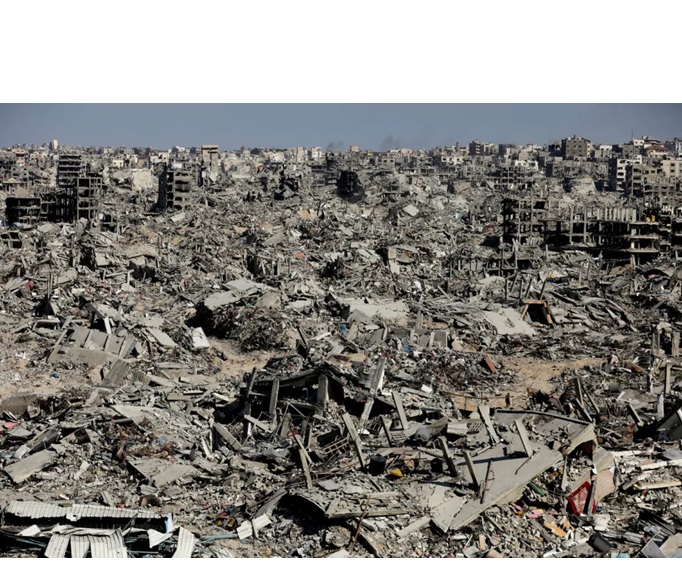
On September 23rd, the UN published a little-noticed report highlighting a barely-acknowledged facet of the 21st century Holocaust in Gaza. Namely, the Zionist entity’s genocide is wreaking a devastating environmental toll not merely on occupied Palestine, but West Asia more widely – including Israel. The damage is incalculable, with air, food sources, soil, and water widely polluted, to a fatal extent. Recovery may take decades, if at all. In the meantime, Gaza’s remaining population will suffer the cost – in many cases, with their lives.
In June 2024, the UN issued a preliminary assessment on the Gaza genocide’s “environmental impact”. It found the Zionist entity’s barbarous aggression had “exerted a profound impact” on “people in Gaza and the natural systems on which they depend.” Due to “security constraints” – namely, Israel’s continuing assault – the UN was unable “to assess the full extent of environment [sic] damage.” Nonetheless, the body was able to collate information indicating “the scale of degradation is immense,” and has “worsened significantly” since October 7th.
For example, Tel Aviv’s 21st century Holocaust has “significantly degraded water infrastructure leading to severely limited, low-quality water supply to the population.” The UN finds this “is contributing to numerous adverse health outcomes, including a continuous surge in infectious diseases.” Groundwater contamination is rampant, with catastrophic implications “for environmental and human health.” None of Gaza’s wastewater treatment facilities are operational, while “heavy destruction of piped systems, and increasing use of cesspits for sanitation, have increased contamination of the aquifer, marine and coastal areas.”
Resultantly, the genocide “has all but eliminated Gazan fishing livelihoods.” Israel’s “destruction of institutional capacity” in the sphere means “there are no effective controls of contamination in the food chain from fish supply, leading to consumption of poisonous fish” by starving Palestinians. “Marine ecosystems have clearly been contaminated with munitions, sewage and solid waste,” the UN gravely concludes. The situation demands “urgent re-installation” of the Strip’s water supply and wastewater collection capacity “to prevent further human health impacts and prevent future outbreaks of communicable diseases.”
Elsewhere, “remote sensing assessments” conducted by the UN indicate that by May, 97.1% of Gaza’s tree crops, 95.1% of its shrubland, 89% of its grass/fallow land and 82.4% of its annual crops had “been damaged.” As such, “production of food is not possible at scale,” and “soil has been contaminated by munitions, solid waste and untreated sewage.” The UN concludes the Zionist entity’s “military activity” has resulted in the “degradation of soils through loss of vegetation and compaction,” with disastrous results.
The Gaza genocide’s consequences reverberate in Israel itself. Tel Aviv’s Health Ministry calculates that in 2023 alone, pollution produced by Benjamin Netanyahu’s blitzkrieg caused at least 5,510 premature deaths locally. Given the Zionist entity’s industrial-scale carnage – primarily inflicted via air – subsequently intensified to unprecedented levels, we can only speculate how much the situation has worsened today. Israeli officials were hesitant to release the 2023 report, and more recent figures are unavailable. The rationale for this omertà is obvious.
‘Safe Movement’
The UN report details how destruction in Gaza “is extensive”, with an estimated 78% of the Strip’s “total structures destroyed or damaged,” including homes, hospitals, mosques and schools. Locally, debris “is now 20 times greater than the combined total debris generated by all previous conflicts in Gaza since 2008.” Current estimates suggest “more than 61 million tons of debris will require clearing, sorting and recycling or disposal.” Much of this detritus “is contaminated with asbestos, and industrial chemicals.”
Littered throughout the rubble will be untold human remains, recovery of which naturally requires “sensitivity”. In the meantime, surviving Gazans must endure “significant volumes of dust” created by Zionist entity bombing and demolition, which have “contributed to increased cases of respiratory infection,” with over 37,000 cases reported in June 2025 alone. Unexploded ordnance also poses a high risk in urban areas, with safe removal necessary “to mitigate risks of future explosion, damage, traumatic injuries and loss of life.”
The UN nonetheless acknowledges its findings significantly underrate the true situation on-the-ground, as “limited data is available on air quality, due to minimal air-quality monitoring” locally. Still, “known challenges” include “pollution from explosions and resultant fires during bombing campaigns, and emissions from explosions of munitions and resultant fires in bombed structures, including industrial facilities, which will also have likely released toxic chemicals into the air.” Moreover, the “repetitive nature” of Israel’s attacks “will likely have a cumulative impact on the environment” in Gaza:…………………………………………………………………………………………………………..
Presently, the amount of deadly chemicals and dust released into the local atmospheres of Iran and Lebanon due to Israel’s indiscriminate savagery cannot be quantified. However, history shows the impact of such offensives is enduringly lethal. NATO’s illegal 78-day-long bombing of Yugoslavia in 1999 primarily targeted civilian and industrial sites. A subsequent Council of Europe report concluded over 100 toxic substances circulated widely throughout the region due to the campaign. Not coincidentally, the former Yugoslavia ranks highly in global cancer rates today.
Perversely, even if the Zionist entity was to uphold its brittle ceasefires with Beirut and Tehran, and cease annihilating Palestinians, Tel Aviv’s genocide would continue apace – invisibly, through the putrified air civilians breathe, food they eat, and water they drink. Yet, in a bitter twist, the environmentally ruinous legacy of Tel Aviv’s deranged bloodlust has rendered Benjamin Netanyahu’s ultimate goal of eradicating Gaza to make way for Greater Israel null and void. Any Zionist settlement of the area would be literally suicidal. https://www.kitklarenberg.com/p/israels-untold-environmental-genocide
US offers nuclear energy companies access to weapons-grade plutonium

US offers nuclear energy companies access to weapons-grade plutonium.
Expert warns commercial use of the radioactive material from cold war-era
warheads carries safety risks.
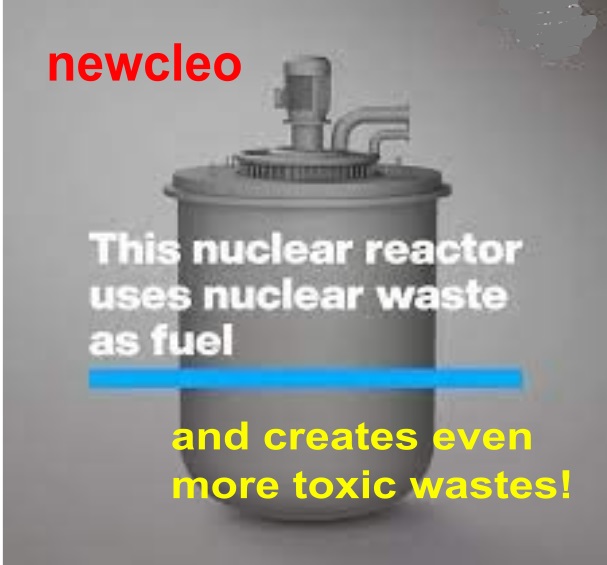
The US has offered energy companies access
to nuclear waste that they can convert into fuel for advanced reactors in
an attempt to break Russia’s stranglehold over uranium supply chains. The
Department of Energy on Tuesday published an application that nuclear
energy groups can use to seek up to 19 metric tonnes of the government’s
weapons-grade plutonium from cold war-era warheads.
In the document seen by
the Financial Times, the energy department said being selected to receive
the plutonium could help companies secure faster approval for a Nuclear
Regulatory Commission license, which is required to operate a nuclear
facility. At least two companies, Oklo, which is backed by OpenAI’s Sam
Altman, and France’s Newcleo, are expected to apply to access the
government’s plutonium stockpile.
FT 21st Oct 2025, https://www.ft.com/content/2fbbc621-405e-4a29-850c-f0079b116216
Inside Oklo: the $20bn nuclear start-up without any revenue.
Nuclear technology company Oklo has no revenues, no licence to operate
reactors and no binding contracts to supply power.
But this has not stopped
the Silicon Valley-based start-up from riding a wave of investor enthusiasm
that has propelled its stock market valuation above $20bn, a rise of more
than 500 per cent since the turn of the year.
The company, backed by
technology boss Sam Altman and with close ties to Donald Trump’s energy
secretary, has set ambitious targets to deliver commercial power to its
first customers in 2027, having broken ground on its pilot in Idaho last
month. Oklo, led by the husband-and-wife team Jacob and Caroline DeWitte, envisages a future powered by a new generation of small modular reactors that use liquid sodium rather than water as a coolant.
FT 22nd Oct 2025, https://www.ft.com/content/cdf09f0e-d673-41f4-8faa-fe795a2b872e
UK Government look at bypassing SNP amid block on ‘billion pound’ nuclear investment.

The Scottish Government is refusing to give planning permission for any new nuclear reactors to be built in Scotland – despite the possibility of billions of pounds of investment.
UK Government look at bypassing SNP amid block on ‘billion pound’ nuclear
investment. The Scottish Government is refusing to give planning permission for any new nuclear reactors to be built in Scotland – despite the possibility of billions of pounds of investment. There has been interest
from the likes of Rolls Royce in building nuclear reactors north of the
border, but any planning applications would be rejected by the SNP
Government.
However, a source close to the UK Government suggested that it was pushing for reactors to be built in Scotland. It would put it on a
collision course with the SNP who are anti-nuclear. Former Scottish
Secretary Alister Jack suggested a few years ago that his office were
already plotting a similar move, if the SNP are kicked out of office in
2026. Now, this idea has been revived, it is understood, with Scotland set
to miss out on billions of pounds of investment if John Swinney clings on
to power in May next year. The UK and USA signed a lucrative deal last
month which will fast track the creation of small nuclear power stations,
halving the time it takes to gain regulatory approval for nuclear projects
from up to four years to two.
Express 22nd Oct 2025, https://www.scottishdailyexpress.co.uk/news/politics/uk-government-look-bypassing-snp-36109802
True cost of nuclear waste disposal facility £15bn higher than recent Treasury figures

MP says ministers ignore long-term waste costs of nuclear power
“Government ministers are very happy to talk about the so-called benefits of nuclear power without reference to its long-term impacts and the eye-wateringly large amounts of money associated with storage and security of nuclear waste, which is in the tens of billions of pounds just to create the GDF,” he said.
23 Oct, 2025 New Civil Engineer, By Tom Pashby
The true cost of an underground facility for long-term storage of nuclear waste has been revealed to be up to £68.7bn – £15bn more than the sum listed in the National Infrastructure and Service Transformation Authority’s (Nista’s) recent annual report.
A Geological Disposal Facility (GDF) represents a monumental undertaking, consisting of an engineered vault placed between 200m and 1km underground, covering an area of approximately 1km2 on the surface. This facility is designed to safely contain nuclear waste while allowing it to decay over thousands of years, thereby reducing its radioactivity and associated hazards.
Nuclear Waste Services (NWS) is responsible for the GDF project and declares that this method offers the most secure solution for managing the UK’s nuclear waste, aimed at relieving future generations of the burden of storage. NWS is part of the Nuclear Decommissioning Authority (NDA), which is itself an executive non-departmental public body, sponsored by the Department for Energy Security and Net Zero (DESNZ).
Nista is a unit of HM Treasury and published its NISTA Annual Report 2024 to 2025 in August 2025, where it described the GDF project as ‘Red’, meaning the projects appears to be “unachievable”, and as having a whole life cost of from £20bn to £53.3bn.
However, Nista’s Infrastructure Pipeline lists the GDF’s CapEx (capital expenditure) range for new infrastructure in 2024/2025 prices as being from £26.2bn to £68.7bn, with the top end being slightly over £15bn higher than the figure published in the annual report.
A government source explained to NCE that the discrepancy is because the figures published in Nista’s annual report are based on 2017/2018 prices, meaning the effects of long-term inflation were not accounted for.
Criticism was previously levied at High Speed 2 (HS2) because of its use of historic pricing figures to reduce the impact of inflation on budget projects and make the total cost of the project appear to be lower than it would end up being.
Parliamentarians told NCE that ministers should face up to the long-term legacy costs associated with the nuclear industry.
Current GDF pricing only provided by Nista to ensure consistency with pipeline
A government source told NCE that the difference in the two ranges for whole-life costs for the GDF is a factor of the price basis for each quoted figure.
They said that the NDA provided Nista with data in 2017/18 prices with the total range of £20bn-53.3bn, which was reflected in the Nista annual report.
The same data for this project was converted to 2024/25 prices for the Nista Infrastructure Pipeline, to ensure consistency with the rest of the data in the set, the source said. This is reflected in the higher figure of £26.1bn-£68.7bn.
NWS did not provide any comment.
MP says ministers ignore long-term waste costs of nuclear power
SNP spokesperson for energy security and net zero, transport, and science, innovation and technology, Graham Leadbitter MP, told NCE that ministers ignore the long term legacy of nuclear power when promoting projects.
“Government ministers are very happy to talk about the so-called benefits of nuclear power without reference to its long-term impacts and the eye-wateringly large amounts of money associated with storage and security of nuclear waste, which is in the tens of billions of pounds just to create the GDF,” he said.
He added that the waste would have to be managed for 1,000’s of years, and the money budgeted for nuclear waste management would be better spent on “more valuable infrastructure projects … that would support high-quality employment, investment in skills and vastly improved public services.”
Government must ‘face up to the legacy’ of nuclear – peer
Liberal Democrat Lords spokesperson for energy and climate change Earl Russell told NCE: “If this Government truly want to see a renaissance in nuclear power, it must finally face up to the legacy it leaves behind.”
Russell reiterated the fact that Nista described the GDF as “unachievable” and added: “The government must have a credible, long-term strategy for managing the waste new nuclear projects will produce.”……………………………………………………………………… https://www.newcivilengineer.com/latest/true-cost-of-nuclear-waste-disposal-facility-15bn-higher-than-recent-treasury-figures-23-10-2025/
Parliamentary Committee calls for clear direction on Oldbury and Wylfa, and a “one-stop shop” to finally overcome excessive cost and delays in deployment of nuclear energy
House of Commons Energy Security and Net Zero Committee, 24 October 2025
In a report today the Commons Energy Security and Net Zero Committee says new planning guidance for building Britain’s future nuclear energy generation brings a welcome ‘presumption of consent’ for low-carbon generation across a range of nuclear technologies.
But the UK’s move into unprecedented territory of private development of new nuclear sites creates new challenges. The Committee is concerned that the “exhaustive” drafting of the criteria in EN‑7, intended to introduce the flexibility to consider a wide range of factors towards approval, may in fact just duplicate issues also addressed by specialist regulators and create more uncertainty, delay and cost.
It concludes that new policy statement EN-7 “fails to present a truly joined-up approach across planning, safety, and environmental regulation” and so risks undermining its own purpose: to provide a definitive and coherent framework for decision-making. Commercial developers, facing a front-loaded application system and potential review both by multiple regulators and in Court, may be driven to “gold plate” applications with excessive detail. ……………………………………………………………………………… https://committees.parliament.uk/committee/664/energy-security-and-net-zero-committee/news/209808/committee-calls-for-clear-direction-on-oldbury-and-wylfa-and-a-onestop-shop-to-finally-overcome-excessive-cost-and-delays-in-deployment-of-nuclear-energy/
Interest growing in nuclear-powered shipping, BUT – high costs and the nuclear WASTE problem
Industry groups are getting ready to adapt advancing technologies for maritime use Business case would have to include managing nuclear wasteCosts hard to estimate, but will be high
22 Oct 2025,
https://www.lloydslist.com/LL1155184/Interest-growing-in-nuclear-powered-shipping
1
European leaders are unable to inflict a strategic defeat on Russia yet unwilling to face the political consequences of peace in Ukraine

The war in Ukraine is now entirely dependent on the ability of European states to pay for it at a cost of at least $50bn per year
a strong likelihood……….. that three years from now Ukraine would have to settle for a peace that was even more disadvantageous to it than that which is available now
Ian Proud, Oct 22, 2025, https://thepeacemonger.substack.com/p/european-leaders-are-unable-to-inflict?utm_source=post-email-title&publication_id=3221990&post_id=176818542&utm_campaign=email-post-title&isFreemail=true&r=1ise1&triedRedirect=true&utm_medium=email
President Trump’s latest about face on dialogue with Russia doesn’t change the fundamental predicament Europe finds itself in: unable to inflict a strategic defeat on Russia but unwilling to face the political consequences of ending the war in Ukraine.
The Budapest Summit between Trump and Putin is now off, it seems. European leaders and Zelensky have clearly sold the US President on the idea of entering a ceasefire along the current line of contact. Yet, caught between a rock and a hard place, European leaders continue to deny the obvious realities of the dire situation in Ukraine, which will only worsen over time. I see no evidence of any willingness to change course, despite the obvious political hazard they face and the increasingly grim forecast for Europe and for Ukraine should they continue to push an unwinnable war.
The war in Ukraine is now entirely dependent on the ability of European states to pay for it at a cost of at least $50bn per year, on the basis of Ukraine’s latest budget estimate for the 2026 fiscal year. Ukraine itself is bankrupt and has no access to other sources of external capital, beyond that provided by the governments sponsoring the ongoing war.
That then brings the conversation back to the creation of a so-called ‘reconstruction loan’ underwritten by $140bn of the Russian foreign exchange assets currently frozen in Belgium. The term ‘reconstruction loan’ is itself disingenuous, on the basis that any expropriated Russian assets would not be used for reconstruction, but rather to fund the Ukrainian war effort. Indeed. Chancellor Merz of Germany recently suggested that the fund could allow Ukraine to keep fighting for another three years.
The most likely scenario, in the terrible eventuality that war in Ukraine did continue for another three years is that the Russian armed forces would almost certainly swallow up the whole of the Donbass region – comprising Donetsk and Luhansk oblasts. This – Ukraine’s departure from the Donbas – appears to be the basis of President Putin’s conditions for ending the war now, together with a Ukrainian declaration of neutrality and giving up any NATO aspirations. More likely, the Russian Armed forces might also capture additional swathes of land in Zaporizhia and Kherson oblasts, and also in Dnipropetrovsk, where they have made recent incursions.
So, there is a strong likelihood, at the currently slow pace of the war effort in which Russia claims small pieces of land on a weekly basis, that three years from now Ukraine would have to settle for a peace that was even more disadvantageous to it than that which is available now, having lost more land, together with potentially hundreds of thousands of troops killed or injured.
Logically, European policymakers would be able to look into the future to see this grim predicament with clear eyes and encourage Zelensky to settle for peace now.
But European policy is driven by two key considerations. Firstly, an emotional belief that an extended war might so weaken Russia that President Putin was forced to settle on unfavourable terms. The idea of a strategic defeat of Russia – which is often spoken by European politicians – however, doesn’t bear serious scrutiny.
Russia doesn’t face the same considerable social and financial challenges that Ukraine faces. Its population is much larger and a wider conscription of men into the Armed forces has not been needed – Russia can recruit sufficient new soldiers to fight and, indeed, has increased the size of its army since 2022. Ukraine continues to resort to forced mobilisation of men over the age of 25, often using extreme tactics that involve busifying young men against their will from the streets.
Critically, Russia could likely continue to prosecute the war on the current slow tempo for an extended period of time without the need for a wider mobilisation of young men, which may prove politically unpopular for President Putin domestically. Yet, the longer the war continues, Ukraine will come under increasing pressure, including from western allies, to deepen its mobilisation to capture young men below the age of 25 to shore up its heavily depleted armed forces on the front line.
There has been considerable resistance to this so far within Ukraine. Mobilising young men above the age of 22 would prove unpopular for President Zelensky but it would also worsen Ukraine’s already catastrophic demographic challenge: 40% of the working age population has already been lost, either through migration or through death on the front line and that number will continue to go south, the longer the war carries on.
Russia’s financial position is considerably stronger than Ukraine’s. It has very low levels of debt at around 15% of GDP and maintains a healthy current account surplus, despite a narrowing of the balance in the second quarter of 2025. Even if Europe expropriates its frozen assets, Russia still has a generous and growing stock of foreign exchange reserves to draw upon, which recently topped $700bn for the first time.
Russia’s military industrial complex continues to outperform western suppliers in the production of military equipment and munitions. In the currently unlikely event that Russia started to fall into the red in terms of its trade – what commentators in the west refer to as destroying Russia’s war economy – it would still have considerable scope to borrow from non-western lenders, given the strength of its links with the developing world, aided by the emergence of BRICS.
Ukraine is functionally bankrupt because it is unable to borrow from western capital markets, on account of its decision to pause all debt payments. With debt expected to reach 110% in 2025, even before consideration of any loan backed by frozen Russian assets, it depends entirely on handouts from the west. Ukraine’s trade balance has continued to worsen throughout the war, reinforcing its dependence on capital injections from the west to keep its foreign exchange reserves in the black.
So while the determination of Ukraine to fight is unquestionable, the emotional belief in the west that this will overcome the enormous social and economic challenges the country faces in an extended attritional war with Russia is wildly misplaced.
So, let’s look at the rational explanation for Europe’s continued willingness to prolong the fight in Ukraine. The uncomfortable truth is that Europe’s political leaders have boxed themselves into this position because of a hard boiled determination not to concede to Russia’s demands in any peace negotiations. Indeed, there is a steadfast and immovable objection to talking to Russia at all, which has been growing since 2014.
However, across much of Europe, the political arithmetic is turning against the pro-war establishment with nationalist, anti-war parties gaining ground in Central Europe, Germany, France, Britain and even in Poland. And despite so far fruitless overtures made by President Trump towards negotiation with President Putin, Trumpophobia provides another brake on the European political establishment shifting its position.
So, changing course now and entering into direct negotiations with Russia would have potentially catastrophic consequences, politically, for European leaders, which they must surely be aware of. A full 180 degree change in diplomatic course by Europe would require an acceptance that the war against Russia was unwinnable, and that Russia’s underlying concerns – namely Ukrainian neutrality – would finally have to be accepted as a political reality.
On this basis, European politicians would face the prospect of explaining to their increasingly sceptical voters that their strategy of defeating Russia had failed, having spent four years of war saying at all times that it would eventually succeed. And that would lead potentially to internationalist governments falling across Europe starting in two years when Poland and France will again go to the polls, and in 2029 when the British and German governments will face the voters.
There are deeper issues too. An end of war would accelerate the process of admitting Ukraine into the European Union with potentially disastrous consequences for the whole financial basis of Europe. The European Commission will face the prospect of accepting that a two-tier Europe is inevitable, admitting Ukraine as a member without the financial benefits received by existing member states; for probably understandable reasons, this would cause widespread resentment within Ukraine itself, having sacrificed so much blood to become European, precipitating widespread internal dissent and possibly conflict in a disgruntled country with an army of almost one million. Alternatively, the European Commission would need to redraw its budget and face huge resistance from existing Member States, who would lose billions of Euros each year in subsidies to Ukraine. And the truth is that it will in all likelihood be unable to do so.
Caught between hoping for a strategic defeat of Russia which any rational observer can see is unlikely, and accepting the failure of their policy, causing a widespread loss of power and huge economic and political turmoil, Europe’s leaders are choosing to keep calm and carry on. If they had any sense, the likes of Von der Leyen, Merz, Starmer or Macron would change tack and pin their hopes on explaining away their failure before the political tide in Europe evicts them all from power. But I see no signs of them having the political acumen to do that. So we will continue to sit and wait, while storm clouds grow ever darker over Europe.
The Rise of the Thielverse and the Construction of the Surveillance State (w/ Whitney Webb) | The Chris Hedges Report
Chris Hedges, October 23, 2025
Whitney Webb traces the Thielverse’s rise and the bipartisan construction of the modern surveillance state that Trump and his benefactors are deploying against dissidents and immigrants today.
The descent into a new, mutated and technology-focused form of American fascism is already here. Those who have kept track of the rise of the Thielverse, which includes figures such as Peter Thiel, Elon Musk and JD Vance, have understood that an agenda to usher in a unique form of authoritarianism has been slowly introduced into the mainstream political atmosphere.
Whitney Webb, investigative journalist and author of One Nation Under Blackmail, joins host Chris Hedges on this episode of The Chris Hedges Report to document the rise of this cabal into the most powerful positions of the American government.
“I think now it’s quite clear that this is the PayPal Mafia’s moment. These particular figures have had an extremely significant influence on US government policy since January, including the extreme distribution of AI throughout the US government,” Webb explains.
It’s clear that the architects of mass surveillance and the military industrial complex are beginning to coalesce in unprecedented ways within the Trump administration and Webb emphasizes that now is the time to pay attention and push back against these new forces.
If they have their way, all commercial technology will be completely folded into the national security state — acting blatantly as the new infrastructure for techno-authoritarian rule. The underlying idea behind this new system is “pre-crime,” or the use of mass surveillance to designate people criminals before they’ve committed any crime. Webb warns that the Trump administration and its benefactors will demonize segments of the population to turn civilians against each other, all in pursuit of building out this elaborate system of control right under our noses.
Transcript:
Chris Hedges
There were many, including some liberals, who mistakenly believed the Trump administration would dismantle the deep state. In fact, as the investigative reporter Whitney Webb has documented, Trump is closely allied with the most authoritarian figures in Silicon Valley, such as Peter Thiel, who envision a world where our habits, proclivities, opinions and movements are minutely recorded and tracked.
These Trump allies do not intend to free us from the tyranny of intelligence agencies, militarized police, the largest prison system in the world, predatory corporations or mass surveillance. They will not restore the rule of law to hold the powerful and the wealthy accountable. Nor will they slash the bloated and unaccountable spending — some $1 trillion dollars — by the Pentagon.
They are rapidly purging the civil service, as well as law enforcement and the military, not to eradicate the deep state, but to ensure that those in charge of state machinery are exclusively loyal to the whims and dictates of the Trump White House. What is being targeted is not the deep state, but the laws, regulations, protocols and rules, and the government civil servants who enforce them, which hinder absolute dictatorial control.
Compromise, limited power, checks and balances and accountability are slated to be abolished. Those who believe that the government is designed to serve the common good, rather than the dictates of a tiny cabal of billionaires, will be forced out. The deep state will be reconstituted to serve the leadership cult.
Laws and the rights enshrined in the Constitution will become irrelevant. It is a coup d’état by inches, one that will be enforced in crude and brutal fashion by Immigration and Customs Enforcement agents on the streets of our cities and empowered by Thiel’s Palantir and the sophisticated forms of monitoring made possible by artificial intelligence and digital surveillance pioneered by Silicon Valley.
Joining me to discuss our emergent Orwellian state is the investigative journalist and author of One Nation Under Blackmail Whitney Webb. You can find her on her website, Unlimited Hangout.
Whitney, let’s go back to the beginning, [John] Poindexter, Iran-Contra, which I covered actually when I was in Nicaragua, because that’s really the origin of where we are today.
Whitney Webb……………………..right after the Reagan administration, Poindexter was sort of in various roles throughout these tech companies that were sort of a prototype to what Palantir and Total Information Awareness (TIA) would later do…………………………………………………………………………….
Peter Thiel incorporated Palantir and as Palantir was developing as a company they, Peter Thiel and Alex Karp, the Palantir co-founders, reached out to Poindexter directly through Richard Perle, who’s a well-known neoconservative figure and was also one of the architects of the Iraq War at the Bush-era Pentagon.

Basically they hatched this plan to privatize this program, rightly calculating that if they turned it into an entirely private sector enterprise, the outrage would essentially dissipate, which it remarkably did because originally it was a public-private partnership housed within DARPA……………………………………………………………………………..
the CIA was Palantir’s exclusive client for, I believe, the first six years of its existence as a company and its engineers went to Langley, the CIA headquarters in Virginia, every two weeks for several years as well where the CIA was developing their algorithm with them, in a very direct partnership and Alex Karp has even said that the CIA was always the intended client of Palantir………………………………………………………….
Palantir, you know, also works extensively now in the private sector as well. They’re a major AI engine for Wall Street banks, for example, and they have different programs that are sold to different entities, but ultimately, they are a massive contractor to essentially every US intelligence agency, and that includes DHS and ICE
………………………………………………….. predictive policing is the term that they use but a lot of other companies have attempted to also get in on this.
One of the most notorious being PredPol that was a partnership I believe with UCLA and LAPD or something to that effect and they’re notoriously inaccurate…………………
another Peter Thiel-backed entity called Carbyne also has a predictive policing component……………………………..
But this is a company that wasn’t just funded by Peter Thiel, it was funded by Jeffrey Epstein and was led for a significant amount of time by Ehud Barak, the former Israeli prime minister, as well and has sort of expanded outwards.
…………………………… The Trump administration was explicitly using Palantir to make databases on every American. But that has been done in a way that has been more covert through something called the Main Core database.
…………………………..William Barr, then Attorney General, created this program at the DOJ called DEEP that basically created the legal infrastructure for pre-crime. And you had Trump come out and say that the way to combat these shootings was to have social media develop algorithms that flag posts to predict shooters before they can act, target some of these anonymous online message boards.
…………………………………………..It is rather unsettling but, as I mentioned earlier, a lot of this profiling of Americans has been going on for a long time under the guise of what was developed by the Iran-Contra crowd covertly. The continuity of government protocols in this effort by parts of the “deep state” or the national security state to basically profile people they deemed unfriendly for whatever reason, people that could be, you know, potentially incarcerated in a time of political upheaval, they said.
……………………………………………………………………………………………………And so since then you have a whole network of people that have either been protege’s of these figures or worked at one point for PayPal. For example the current AI and crypto czar at the White House David Sacks, a former top executive at PayPal with Thiel and all of these other people.
And of course JD Vance, the current vice president, is intimately connected to Peter Thiel……………………………………………………
So Thiel’s influence is incredibly significant. It was also arguably significant during the first Trump administration, but I think now it’s quite clear that this is the PayPal Mafia’s moment. These particular figures have an extremely significant influence on US government policy since January, including the extreme distribution of AI throughout the US government.
…………………………………………………….what I find particularly troubling about this is that a lot of these PayPal Mafia figures Thiel, Musk and Vance, among others, are extremely close to or acolytes really of the philosophy advocated by a fellow named Curtis Yarvin, whose political philosophy is essentially that the way to solve the problems of our current system and current bureaucracy is to basically completely privatize the state and install a CEO in place of the president, who would rule essentially as a dictator, which is completely bonkers and it’s amazing that people have allowed people like Peter Thiel or even Yarvin himself to masquerade as so-called libertarians when they’re very in favor of the authoritarian abilities of the state.
………………………………………………… And you can also see how a lot of these people are also war profiteers, Palantir, of course, not only is this tool of mass surveillance, it’s a tool of mass murder used by the US Army and also by the IDF [Israel Defense Forces] to decide who lives and who dies in Gaza.
And a lot of these other people that have been Thiel protégés, for example, like Palmer Luckey and Anduril, which Luckey co-founded with Trae Stephens, who’s also affiliated with the aforementioned Epstein-funded Carbyne 911.
Anduril is ushering in this era of autonomous warfare, and bankrolled, of course, by Peter Thiel. And they’re also developing the so-called smart wall on the US-Mexico border. And really, you know, these people are developing very Orwellian disturbing systems with not just domestic implications but also very significant implications to how the US military and other militaries operate abroad……………………………………………………………………….
So under the guise of “we’re making the government more efficient”, what aspects of the government are these people in the PayPal Mafia actually making more efficient? Well, one of them is mass murder.
…………………………………………………………………………………… basically the goal of the smart wall, it’s not a physical wall, it’s meant to be basically an invisible wall that uses a combination of surveillance and drone technology to basically intercept anyone crossing the border in a non-authorized way.
………………. I’m not sure exactly what you’d like to talk about as it relates to SpaceX, but it is worth pointing out that they’re a massive military contractor specifically for Space Force created under the first Trump administration. They really are the main contractor for Space Force.
And also, you know, they are directly affiliated with Starlink, the satellite internet company that also arguably has some kind of covert uses with Elon Musk, for example, saying he is going to help sneak Starlinks into Iran, for example
………………………………………………….. through the Department of Government Deficiency, a government efficiency DOGE, a lot was made to facilitate that by laying off a lot of government workers in their place putting, basically replacing them with, AI algorithms.
And those algorithms are, of course, patented and controlled by Silicon Valley companies. And the vast majority of major Silicon Valley companies double as either intelligence or military contractors or both, or have for a very long time.
One that’s often overlooked a lot is Oracle, Larry Ellison’s Oracle. And Larry Ellison, before creating Oracle, worked on Project Oracle at the CIA, and then created Oracle, the company, which then took on the CIA as one of its earliest main clients, similar in a way to what happened with Palantir, as I noted a moment ago.

And now, Larry Ellison is becoming, basically taking over a large swath of American media now. So you’re seeing a lot of these Silicon billionaires that contract for the military are also becoming major owners of mass media. So you see that with Ellison, for example, and it’s also true with Elon Musk after his purchase of Twitter…………………………………………………………………………………………………………………………………………………………………………………..
Chris Hedges
I want you to speculate what this world is going to look like, it is the fusion of corporate and governmental power. In some ways, of course, these corporations will have even more power than government institutions. We just had the presidential memo that came out a couple days ago, which essentially criminalizes… It’s quite an amazing memo that criminalizes people who criticize capitalism, support gender equality.
Whitney Webb
Or really anyone who is antifascist in any capacity…………………………………………………………………………………………………………………….
we lost all of our freedoms, but now al-Qaeda is just let’s shake hands and let them come to the UN while we don’t let anyone from Palestine come. I mean, it’s totally insane. ……………………………………………….
I think Americans have been naive that a lot of the evil that that national security state has done abroad would never be used against them. And I think that we need to be very aware of what is going on here and that the deep state, whatever you want to call it, is expanding and it’s expanding in the hands of private oligarchs that have a very dangerous political vision that is rarely talked about.
……………………………………………………………………..So I think there’s a potentially dark future but there’s still time for awareness about these agendas and for people to develop parallel systems to escape this. And I think it’s very important too that people start really seriously considering how to wean themselves off of these Silicon Valley giants that are building these systems and contracting with these military and intelligence agencies. You know, getting off of Microsoft or Google products………………………………………………………….. https://chrishedges.substack.com/p/the-rise-of-the-thielverse-and-the
Ukraine Says It Struck a Chemical Plant Inside Russia With British-Provided Storm Shadow Missiles

The Ukrainian military requires US targeting data to fire Storm Shadow missiles
by Dave DeCamp | October 21, 2025, https://news.antiwar.com/2025/10/21/ukraine-says-it-struck-a-chemical-plant-inside-russia-with-british-provided-storm-shadow-missile/
Ukraine’s military said on Tuesday that it used British-provided Storm Shadow missiles to strike a chemical plant inside Russia’s Bryansk Oblast, signaling the US is again supporting Ukrainian missile strikes on Russian territory.
“A massive combined missile-and-air strike was carried out, including with air-launched Storm Shadow missiles that penetrated Russia’s air defence system,” the General Staff of Ukraine’s Armed Forces said in a statement, according to Reuters. So far, the attack hasn’t been confirmed by Russia.
Storm Shadows are produced jointly by the UK and France and have a range of about 150 miles. Ukraine first began firing them into Russia last year, along with US-provided ATACMS missiles, which can hit targets up to 190 miles away.
In August, The Wall Street Journal reported that the Trump administration was not allowing Ukraine to fire ATACMS into Russia, a policy that also applied to Storm Shadows, since the Ukrainian military requires US targeting data to fire the British missiles. But another report from the outlet this month said that President Trump reversed the policy and signed off on providing Ukraine with intelligence for long-range missile strikes on Russian territory.
The Financial Times has also reported that the Trump administration has been providing intelligence for long-range drone attacks on Russian energy infrastructure since July.
US-backed missile and drone attacks on Russian territory always risk a major escalation from Moscow. When President Biden first gave Ukraine the green light to fire ATACMS and Storm Shadows into Russia, Moscow responded by altering its nuclear doctrine to lower the threshold for the use of nuclear weapons.
Request for an Immediate Stop to the Transportation of Radioactive Waste to Chalk River.

This is a translation of a letter, written in French, sent to the Minister of Natural Resources
by the Bloc Québécois on October 17 2025.
Mr. Tim Hodgson,Minister of Energy and Natural Resources, House of Commons,Ottawa (Ontario)
Dear Minister,
It is with dismay that we learned of your government’s ambition to use the Chalk River site as a “radioactive dump” to house the waste irradiated from at least three different nuclear reactors.
This revelation is all the more distressing because it comes just weeks after we learned that tons of spent fuel were transported over the summer, to this same location at Chalk River, all with the blessing of your government.
We remind you, Mr. Minister, that the site used in Chalk River is located very close to the source of drinking water for millions of Quebecers. This is probably one of the worst possible and imaginable places to decide to store nuclear waste.
And we are not the only ones to be outraged by this location: no less than 140 Quebec and Ontario municipalities as well as the Kebaowek First Nation are urging to abandon your proposed landfill site also located in Chalk River, known as the Near Surface Disposal Facility (NSDF), near the Chalk River Ottawa.
This is an irresponsible project that unnecessarily risks an ecological and environmental disaster with effects for decades and a direct impact on millions of human lives.
As a result we call for an immediate halt to any further operations to transport radioactive waste to the Chalk River site.
There is no reason, no reason at all, to justify the lack of transparency and consideration that your government has shown in this matter. We’re talking about decisions that affect millions of people and an entire ecosystem: they can’t be taken lightly. The bare minimum should be to listen to the views of those affected and to to take into account the consequences that such a choice would have for our world.
We are counting on your sense of responsibility, Minister. There is still time to take a step back, abandon the landfill project and stop all further transportation of nuclear waste to Chalk River.
Mario Simard, Bloc Québécois Critic for Natural Resources
Patrick Bonin, Bloc Québécois Critic for Environment and Climate Change
Sébastien Lemire, Bloc Québécois Critic for Indigenous Relations
C.C.: Julie Dabrusin, Minister of Environment and Climate Change, House of Commons, Ottawa (ON) K1A 0A6 613-995-8425
EU and Ukraine to offer Trump ‘peace plan’ with no territorial concessions – Bloomberg
Rt.22 Oct 25, https://www.rt.com/news/626782-bloomberg-european-peace-proposal-ukraine/
Kiev’s European backers are planning to advance a condition Moscow has firmly rejected.
Ukraine and its European backers are finalizing a 12-point peace plan that would rule out territorial concessions to Russia, Bloomberg reported on Tuesday, citing people familiar with the matter.
The proposal would reportedly establish a “peace board” chaired by US President Donald Trump to oversee its implementation. European officials could travel to the US this week to present the roadmap to Trump, Bloomberg reported.
According to the outlet, the plan includes a ceasefire along the current front lines, a prisoner swap, as well as “security guarantees” and fast-tracked EU accession for Ukraine. Russia and Ukraine would negotiate “the governance of occupied territories,” but neither Ukraine nor its European backers would recognize Russia’s new borders, Bloomberg cited its sources as saying.
Russia has listed recognition of its new borders as one of the crucial conditions for a lasting peace. Moscow has also demanded that Ukraine withdraw troops from parts of Russian territory it controls, halt mobilization, and stop receiving military aid from abroad.
Multiple US media outlets reported that Trump urged Ukrainian leader Vladimir Zelensky to cede land to Russia during their meeting at the White House on Friday. The US president later noted that Russian troops already control nearly all of the Donbass region claimed by Ukraine. Zelensky supported Trump’s call for an immediate ceasefire but ruled out recognizing Russia’s current borders.
AUKUS proves why Australia is no longer a middle power with sovereignty and autonomy

If AUKUS is such a good deal for the Americans, why did Albanese fall over himself to talk it up in DC? It points towards a crisis of control.
Wanning Sun, Oct 24, 2025, https://www.crikey.com.au/2025/10/24/aukus-deal-united-states-america-australia-anthony-albanese-defence/?utm_campaign=daily&utm_medium=email&utm_source=newsletter
Australian media coverage of Prime Minister Anthony Albanese’s meeting with US President Donald Trump was teetering on the brink of euphoria.
Emerging from the cabinet room where the meeting took place, the ABC’s reporter Jane Norman appeared breathless in her account of the big moment. Even Sally Sara, host of Radio National’s Breakfast, who is usually calm and is known to ask probing questions, seemed to have abandoned her cool. She pronounced: “Well, the bonds between the United States and Australia appear tighter than ever today.’
But our prime minister didn’t rest on his laurels, even after securing various assurances from Trump. Albanese seemed to feel he needed to further convince the Americans of our nation’s commitment to their nation. As he told a roomful of US Congress members: “We’ve already contributed a billion dollars to your industrial base; there’ll be a billion dollars on its way before Christmas.”
He went on to say there would be “a further billion dollars next year because … we want to uplift your industrial capacity. … We’ll be providing a capacity for maintenance of your subs from 2027 on top of the facilities that we have already in the West.” And just to ensure his audience understood his message, he added, “It will increase your capacity to forward project.”
In other words, he wanted to drive home that AU
When asked by Sara what securing a commitment from Trump meant, the ABC’s John Lyons said: “From America’s point of view, why wouldn’t you? When a country comes along and says we will pay you $380 billion to boost your manufacturing industry in America for submarines you may one day see, of course! America loves the deal.”
But Lyons didn’t mention that while the AUKUS contract commits the US to deliver eight nuclear-powered submarines to Australia by 2032, there’s a condition: under the US legislation, the president of the day can stop the transfer if the American government believes the sale could affect its undersea capabilities, thereby undermining the national interest. To put it plainly: Australia has no way of recovering its money, even if we end up with no submarines.
If AUKUS is such a good deal for the Americans, why does our prime minister feel the need to keep talking up AUKUS to them? KUS is really in America’s national interest.
Could the Albanese government be so desperate to secure a continuous commitment because it needs to convince Australian voters it is doing its utmost to persuade America to stay the course, so that their taxpayer money won’t go down the drain? Perhaps the government believes it can’t afford to let up on the PR surrounding AUKUS in both the US and Australia, even though it isn’t certain the submarines will eventually turn up, nor that they will deter Australia’s enemies?
Australia’s news media are prone to switch from pursuing a “public interest” mandate to a “national interest” mandate when covering foreign policy. For this reason, despite Trump’s assurances this week, they will doubtlessly continue to focus on the trope of “Is AUKUS on track or is it in trouble?” They are likely to keep ignoring or downplaying critical questions such as “What does Australia get out of the AUKUS deal?” and “Will the US submarines keep us safe?”
Both past and present Labor prime ministers, as well as foreign policymakers, like to describe Australia as a middle power. This self-description is consistent with our leaders’ rhetoric of what Australia does: that it is a good global citizen, that it seeks to maintain “the existing global rules-based order”, and that it believes in multilateralism.
Although middle powers have less global influence, they nevertheless exercise agency strategically in the emerging multipolar world as great powers contest the rules of order. They gain influence by mediating between great powers through what international relations theorists call “hedging”.
Such scholars believe that hedging enables middle powers to engage with competing great powers, while avoiding alignment that limits their autonomy. Through hedging, less powerful states preserve sovereignty in a context of uncertainty by balancing engagement and resistance. Our Asian neighbours, such as India, Indonesia and Singapore, do precisely that.
Despite our leaders’ rhetoric, signing up to AUKUS seems to signal that Australia has somewhat voluntarily relinquished its capacity as a middle power to practise effective hedging.
For instance, Sydney University’s James Curran believes AUKUS could mean the US would expect Australia to join them in a potential war with China over Taiwan:
Similarly, the Lowy Institute’s Sam Roggeveen argues that Australia’s deeper alignment with the US and the hosting of US bomber capabilities at Tindal and future nuclear-submarine infrastructure raises the likelihood of Australia becoming “an important target” in a conflict with China.
Neither of the major parties has ruled in or out the possibility that Australia would join the US in a potential war. But despite Defence Minister Richard Marles’ rebuttal of criticism from AUKUS critics over the issue of sovereignty, one thing is clear: unlike many Western European and Scandinavian middle powers, Australia’s constitution implies that decisions to engage in armed conflict are made by the executive government under prerogative powers, not by parliament as a whole.
In other words, the Parliament of Australia apparently has no power to stop Australia from going to war, even though it could be consulted.
It is for these reasons that Clinton Fernandes, in the Future Operations Research Group at UNSW Canberra, believes that “rules-based international order” is a “euphemism” for the US-led imperial order, and that Australia is really a “subimperial power upholding a US-led imperial order”.
Without giving a full account of the myriad concerns raised by critics of AUKUS, let’s just say here that with AUKUS, Australia’s capacity to function as a true middle power — one that is confident of its sovereignty, autonomy and capacity to exercise agency to influence superpowers — seems gravely in doubt. And signing up to AUKUS may be another case study that supports Fendandes’s argument.
Wanning Sun, Contributor
Wanning Sun is a professor of media and cultural studies at the University of Technology, Sydney. She also serves as the deputy director of the UTS Australia-China Relations Institute. She is a fellow of the Australian Academy of the Humanities and a member of the Australian Research Council’s College of Experts (2020-23). She is best known in the field of China studies for her ethnography of rural-to-urban migration and social inequality in contemporary China. She writes about Chinese diaspora, diasporic Chinese media, and Australia-China relations.
1 This Month
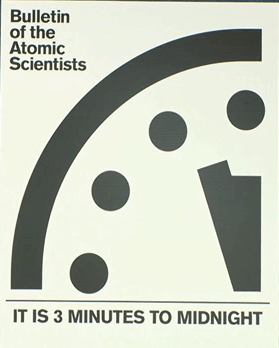
Watch the 2026 Doomsday Clock unveiling live here on January 27 at 10 a.m. EST
To see nuclear-related stories in greater depth and intensity – go to https://nuclearinformation.wordpress.com/

29 Jan. Thursday 7-8 p.m. Webinar – World’s Largest Nuclear Station in Port Hope, ON?


31st January – Challenging the War Machine – a DECLASSIFIED UK SUMMIT


Website of the Week
Now until to February 10, 2026 Radioactive waste storage in France: the debate is finally open! How to participate?
-
Archives
- January 2026 (283)
- December 2025 (358)
- November 2025 (359)
- October 2025 (376)
- September 2025 (258)
- August 2025 (319)
- July 2025 (230)
- June 2025 (348)
- May 2025 (261)
- April 2025 (305)
- March 2025 (319)
- February 2025 (234)
-
Categories
- 1
- 1 NUCLEAR ISSUES
- business and costs
- climate change
- culture and arts
- ENERGY
- environment
- health
- history
- indigenous issues
- Legal
- marketing of nuclear
- media
- opposition to nuclear
- PERSONAL STORIES
- politics
- politics international
- Religion and ethics
- safety
- secrets,lies and civil liberties
- spinbuster
- technology
- Uranium
- wastes
- weapons and war
- Women
- 2 WORLD
- ACTION
- AFRICA
- Atrocities
- AUSTRALIA
- Christina's notes
- Christina's themes
- culture and arts
- Events
- Fuk 2022
- Fuk 2023
- Fukushima 2017
- Fukushima 2018
- fukushima 2019
- Fukushima 2020
- Fukushima 2021
- general
- global warming
- Humour (God we need it)
- Nuclear
- RARE EARTHS
- Reference
- resources – print
- Resources -audiovicual
- Weekly Newsletter
- World
- World Nuclear
- YouTube
-
RSS
Entries RSS
Comments RSS
 nuclear-news