Turkey’s Erdogan signals further nuclear projects with Russia
Turkey is planning to expand its nuclear cooperation with Russia to build
more power plants, President Recep Tayyip Erdogan said Tuesday. The signal
of deepening ties with Russia is likely to raise concerns among Western
allies, who have been worried by Ankara´s closeness to Moscow as the war
in Ukraine rages. Rosatom, a Russian state corporation, is close to
completing the Akkuyu nuclear power station on Turkey´s Mediterranean
coast. Its four reactors are expected to generate around 10% of Turkey´s
electricity when it comes online.
Daily Mail 1st Sept 2026, https://www.dailymail.com/wires/ap/article-16096403/Turkeys-Erdogan-signals-nuclear-projects-Russia.html
Syria was building a nuclear reactor in Deir el-Zour under Assad, UN reports
Syria was constructing a nuclear reactor in Deir el-Zour under the
leadership of ousted former President Bashar Assad, according to a U.N.
report seen Tuesday by The Associated Press. Inspectors with the U.N.
nuclear watchdog visited several sites in Syria in August and carried out
verification work that confirmed the existence of a long-suspected nuclear
site, according to the confidential report circulated to member states.
Daily Mail 1st Sept 2026, https://www.dailymail.com/wires/ap/article-16096699/UN-report-finds-Syria-building-nuclear-reactor-Deir-el-Zour-former-President-Assad.html
Ukrainian Writer Gets 15 Years in Jail for Article EXPOSING Ukraine Nazis
31 Aug 2026
Katie speaks to German World Socialist Website editor Johannes Stern about the case of Bogdan Syrotiuk, a 27-year-old Ukrainian activist who was charged with terrorism for writing articles opposing the war and exposing Ukraine’s rehabilitation of Nazis.
Fuel loading under way for Palisades restart, Holtec announces
The loading of fuel into the reactor has begun at Palisades nuclear power
plant in the US, as Holtec International continues to move towards the
first restart of a closed-down unit.
World Nuclear News 1st Sept 2026,
https://www.world-nuclear-news.org/articles/fuel-loading-under-way-for-palisades-restart-holtec-announces
Heatwaves and secret emissions: Why nuclear power may not be as ‘green’ as you think

“The bulky concrete structures mean that it has a large amount of embodied carbon and, of course, it is not a renewable energy as it requires the mining of uranium, bringing with it carbon costs in terms of extraction and transport,” says Dr Bettina.
“Nuclear waste disposal and decommissioning must also be factored into the carbon budget of nuclear energy generation.”
By Liam Gilliver, 01/09/2026 , https://www.euronews.com/2026/09/01/heatwaves-and-secret-emissions-why-nuclear-power-may-not-be-as-green-as-you-think
The war on Iran has triggered calls to double down on nuclear power. But is it really ‘clean’, can Europe’s energy grid cope and will it survive the wrath of climate change?
The world stood still on 11 March 2011, when a major earthquake triggered a 15-metre tsunami that left an unforgettable scar on Japan’s east coast.
A series of powerful waves ripped through homes, businesses and roads – leaving more than 450,000 people homeless and killing 15,500. Alongside the chaos, the tsunami caused the meltdown of three nuclear reactors at the Fukushima Daiichi Nuclear Power Plant, spewing out toxic, radioactive materials and forcing thousands to evacuate.
The event triggered global conversation about the safety of nuclear energy, leading several countries to plan to phase out nuclear energy or stop its expansion.
But 15 years later and the horrors of Fukushima have slowly been replaced with calls to double down on nuclear power, particularly following the war on Iran and its subsequent energy crisis. Speaking exclusively to Euronews, EU Climate Action Commissioner Wopke Hoekstra listed nuclear as one of the power sources EU countries must lean on.
However, an expert from the University of Oxford has warned that new nuclear capacity will not fix today’s energy problems – urging policy makers to consider the true risks of nuclear.
“In the high‑renewables systems of Europe, the problem is increasingly not how to generate more electricity but how to access it when and where it’s needed,” says Dr Bettina Wittneben, a lecturer in Management at Oxford’s Saïd Business School and associate fellow at Pembroke College and the School of Geography and the Environment.
Is nuclear power really ‘clean’?
Nuclear energy is often touted as a clean form of energy as it is low carbon at the point of generation.
In layman’s terms, nuclear reactors can create electricity without releasing carbon dioxide or smog-forming pollutants into the atmosphere. However, experts point out that this isn’t the full picture.
“The bulky concrete structures mean that it has a large amount of embodied carbon and, of course, it is not a renewable energy as it requires the mining of uranium, bringing with it carbon costs in terms of extraction and transport,” says Dr Bettina.
“Nuclear waste disposal and decommissioning must also be factored into the carbon budget of nuclear energy generation.”
Are nuclear power plants climate resilient?
Europe was scorched by back-to-back heatwaves this summer, which experts say would have been “virtually impossible” if it weren’t for climate change. The extreme heat, combined with scant rainfall, triggered droughts across much of the continent, draining some of Europe’s biggest rivers to record-level lows.
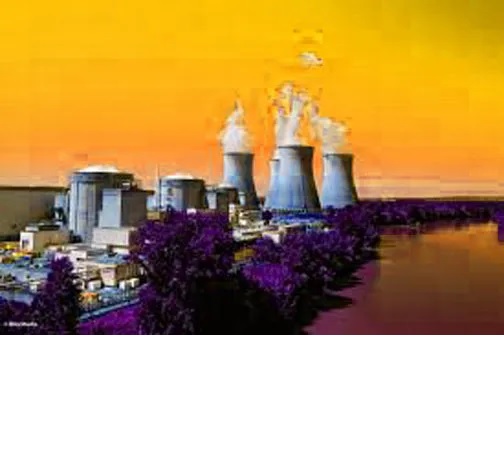
This forced several nuclear power plants to temporarily shut off or be set to a reduced output across France, Hungary and Romania.
Nuclear requires vast amounts of water, particularly for the cooling process, and is often known as the “thirstiest power source”. According to The Nuclear Energy Institute, one nuclear reactor requires between 1,514 and 2,725 litres of water per MWh – equating to hundreds of gigalitres every year.

It’s why nuclear power plants are often built near large bodies of water. Without a constant, reliable source of water a nuclear reactor risks overheating – which could lead to serious core damage and end up releasing harmful radiation into the environment.
Coal power and hydropower also suffered during the heatwave, but a surge in solar power helped meet heightened electricity demand from cooling devices such as air conditioning.
According to energy think-tank Ember, solar output in European countries rose by up to 17 per cent on heatwave days in June and July – becoming the only major power source to perform “better than usual” during hot weather.
‘Hellbrise’: Nuclear is not as reliable as some say
Intermittent forms of energy such as wind and solar are often blamed for overloading Europe’s outdated energy grid.
When electricity demand outstrips supply, surplus energy is often wasted – and can lead to negative electricity prices. This is often referred to as ‘Hellbrise’ (hell= bright, brise= breeze) and can occur on sunny, windy days.
“This is also the narrative of fossil fuel advocates, who present fossil gas as the saviour of the baseload, or the electricity that is available when renewables fall short,” says Dr Wittneben.
“Fossil fuel sceptics point instead to nuclear power as a reliable baseload technology.”
However, the expert points out that nuclear power plants are slow and costly to turn off, which means they only “amplify” the grid’s Hellbrise challenge – rather than present a solution to it.
The EU has recognised that battery energy storage systems (BESS) are a “crucial technology” to help prevent renewable energy from being wasted or entering sub-zero pricing. The logic is that batteries can store electricity produced by renewables during the day (when consumption tends to be low) and release it to households when demand increases in the evening.
Europe installed 36 GWh of new BESS in 2025, bringing its total operational capacity beyond 100 GWh for the first time. This is enough stored energy to power around 75 million homes.
Which EU countries have become reliant on nuclear power?
Continue readingIsrael’s ‘Facts on the Ground’ – razing Gaza and South Lebanon
by Cathy Peters | Sep 2, 2026, https://michaelwest.com.au/israels-facts-on-the-ground-razing-gaza-and-south-lebanon/
Israel is destroying the evidence in the world’s largest crime scenes – Gaza and South Lebanon. Journalist Cathy Peters investigates the push to obliterate Palestinian lives and identity.
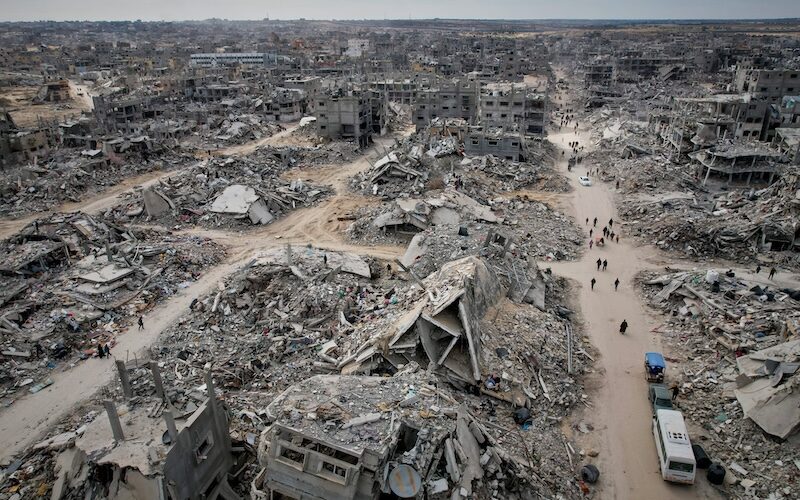
Israel is currently creating new Orwellian ‘facts on the ground’ in Gaza. Millions of tonnes of rubble are being transported out of areas in Gaza that the IDF has closed off behind the Yellow Line Zone.
Key locations of recent and former burial sites and ruins of major urban and agricultural landscapes have been razed in a blatant move to erase not only evidence of war crimes but also evidence of prior Palestinian existence on these lands.
Meanwhile, Drop Site News reported journalist Muhammad Shehada has asked Donald Trump’s Board of Peace to disclose whether Gaza reconstruction funds were “paying Israeli contractors or the Israeli military to remove rubble that may contain human remains and pave roads over potential mass graves”. The Board of Peace has denied it.
Nakba reprise
The Nakba (‘catastrophe’ in Arabic) of 1948 was planned by a group of Jewish Zionist leaders including Israel’s first president, Ben Gurion, seven years prior to the ethnic cleansing of 750,000 Palestinians from Palestine. 530 towns and villages were depopulated, destroyed and then flattened in 1948.
They had been identified in the “Village Files” project (1940–47) which extensively mapped and gathered intelligence on hundreds of towns and villages. These files were incorporated into the ethnic cleansing Plan Dalet of 1948.
By August that year Ben Gurion had formally laid out a policy for the complete erasure of Palestinian existence in large areas of historic Palestine. This razing ensured that Palestinians once forcibly expelled, would not have anything to return to as refugees.
In subsequent years, the Israeli state and state supported organisations like the Jewish National Fund, planted forests over the sites of former Palestinian villages, greenwashing the colonisation of Palestinian lands to ‘dehistoricise Palestine’ in an attempt to obliterate Palestinian identity and ownership of the land.
Facts on the Ground
‘Facts on the ground’ is a familiar catch cry for illegal Israeli actions – unilateral military and civilian actions led by successive generations of Israeli governments pursuing their goal of ‘Eretz Israel’ (The Land of Israel) through relentless seizure of Palestinian property regardless of any agreements or international laws.
The creation of ‘facts on the ground’ such as the 1948 razing of evidence of Palestinian existence throughout Palestine ‘48 (now Israel) or the masses of illegal Israeli settlements throughout the West Bank have thwarted any legal processes and greatly
“impeded chances for a just peace for Palestinians.“
Israel’s latest ‘facts on the ground’ are the large swathes of flattened land throughout closed off areas in Gaza and South Lebanon. It has obliterated all evidence of habitation and destroyed evidence in the world’s largest crime scenes.
As 2 million Palestinians try to survive in unspeakable conditions herded into just over a third of the land mass of Gaza, IOF (Israel Occupying Forces) and their mercenary contractors are destroying physical evidence of Israel’s war crimes and of prior Palestinian existence throughout some 65% of land now closed off in the Yellow Line Zone controlled by Israeli forces.
Bombed out landscapes with any number of human remains, crumbling structures of homes, municipal buildings, mosques, streets, civil infrastructure and vital agricultural lands are being razed.
Al Jazeera has reported that hundreds of trucks are transporting rubble out of the Gaza Strip into Israel. This is another grave violation of international humanitarian law by Israel and an obstruction of the work the International Court of Justice is doing in relation to the case brought by South Africa against Israel’s genocide in Gaza.
Destroying, altering, or removing evidence can constitute an offence against the administration of justice under Article 70 of the Rome Statute. The Genocide Convention cites that along with killing and inflicting severe bodily or mental harm,
“destroying the means of existence for a group, is genocide.“
This week South Africa accused Israel of failing to adhere to the orders imposed by the International Court of Justice in 2024 and filed a dossier to the Court citing that Israel had continued to arbitrarily kill and arrest, torture and imprison Palestinians in Gaza and other violations of the Genocide Convention which include destruction of buildings and infrastructure.
Out of sight, out of mind
There are no peace keepers in Gaza, no Palestinian or international war crimes investigators or journalists and no members of the National Committee for the Administration of Gaza (NCAG), the body established to oversee the rebuilding of Gaza established by Trump’s Board of Peace and the terms of the ceasefire of October 2025.
They have not yet set foot in Gaza despite the urgent call two weeks ago by the Gaza Government Media Office for them to enter the Strip urgently.
Without any oversight, Israel is creating irreversible facts on the ground and bulldozing not only evidence of its crimes and the bodies of those killed and unaccounted for, but any remaining documentation of individuals’ lives and their ownership of property and land.
Now, not a single landmark or street or tree or building remains in key areas inside the Yellow Line Zone occupied by the IOF and its supported civilian militias outposts.
The BBC produced this forensic satellite analysis of the widespread destruction of towns and cities in Gaza back in July 2025 and all reports indicate that this destruction is continuing apace with the removal of rubble into Israel now a key feature.
Gaza. BBC satellite investigation – [on original]
Not only is the genocide and continued military blockade in Gaza denying any rights or recourse to justice for the living but this erasure is denying Palestinians the right to identify and bury their dead, and to recover any of their heritage in these areas in Gaza which goes back thousands of years.
Testimonies from Gaza
Michael West Media has received reports from Palestinians on the ground in Gaza.
Ahmed is a graduate of one of the best universities in Gaza. He lost his family and home east of Gaza City early in the genocide, and now lives alone in a damaged apartment in Gaza City. Previously he took shelter in a primary school near his home, but the IDF occupied it and has now cleared its ruins. He speaks frequently with Australian friends.
“The IDF and the pro-Israel militia have been killing people trying to cross the yellow line to try salvage personal possessions from the ruins of their homes. Now all the Israeli-controlled zone is being flattened, with rubble and bodies removed to Israel. This means no one can see where their streets or homes or shops or farms were. Families cannot properly honour their dead.
“Historic buildings and the Commonwealth war cemetery, near my old home, have been bulldozed. Friends being evacuated via the Israeli Karem Abu Salem checkpoint, have said all of the land in Rafah has been
“levelled, except for the Israeli and allied militia bases.”
“The levelling is not just for unrestricted military operations by Israel, but shows they want to eradicate Palestinian presence from eastern, southern and northern Gaza permanently.
On the Palestinian side of the yellow line, Israel is doing what it can, by controlling what supplies enter and who sells them, and by bombing local police, to encourage internal conflict, for instance between the big families.”
Tarek, the brother of a Palestinian Australian, is unable to get a visa out of Gaza.
“The situation in Gaza is extremely desperate with people struggling to access basic necessities such as food, safe drinking water, shelter, health care, and medicines. Overcrowded tents and poor sanitation have led to a significant spread of rodents, insects, and diseases in shelters and streets.
“At the same time, shortages of medicines and limited access to health services are putting vulnerable patients, particularly those with chronic conditions, at serious risk.”
Tarek’s comments on the bulldozing and removal of rubble from Gaza reinforce reports from EuroMed Monitor and Al Jazeera on what is happening behind the Yellow Line Zone, hidden from sight as Israel creates its facts on the ground now in Gaza.
“I have heard about the extensive bulldozing and destruction of areas behind the so-called yellow line, including the removal of rubble. I am familiar with some of these areas because some of my friends and colleagues used to live there.
“Large parts of these residential areas have been destroyed or heavily damaged, leaving families displaced and unable to return to their homes. The scale of the destruction has resulted in the loss of homes, infrastructure, and livelihoods, making the possibility of returning to normal life increasingly difficult.
“We do not deserve this. The lack of strong action from the international community feels like a profound abandonment and
“a great failure toward the people of Gaza.”
Ahmed lives in Sydney and has lost many family members. He is in regular contact with a family survivor in desperate conditions in the Al-Mawasi area, west of Khan Yunis city in southern Gaza where many thousands of displaced Palestinians living in tents have been facing acute water shortages and extreme heat for months.
“The humanitarian situation continues to deteriorate. There’s a renewed blockade of medical supplies and essential food supplies. Clean water has been incredibly scarce and food supplies are becoming more and more limited.
“Dangerous rodents and harmful insects have infested the displacement camps along the coasts of Khan Younis (Al Mawasi area) and residents suspect that to be intentionally spread by the IOF because they are of types that they have never seen in the Strip before.
“Moreover, the burning heat waves this summer have been dangerously paralysing and detrimental especially for newborns, small children, and the injured who have not been able to be evacuated overseas for medical attention.
“The genocide may have slowed down to avert the global attention away from Gaza, but our beloved Gaza Strip has been shrinking, and has evidently become a laboratory for the IOF necropolitics where they get to test all types of
physical, mental and psychological weapons
they continuously develop to suppress the population, as they intentionally keep the gates to the Gaza death camp securely locked.
Razing South Lebanon
Last week the UN Committee on the Elimination of Racial Discrimination called for “an end to [Israeli] attacks directed against, or indiscriminately affecting, civilians and civilian objects in Lebanon” and noted “reports that entire villages in southern Lebanon have been rendered uninhabitable, with homes, schools, healthcare facilities, water and electricity infrastructure, places of worship and agricultural land destroyed by strikes and demolitions.”
Since March this year, Israel indiscriminately attacked Lebanon and enforced mass displacement orders particularly throughout Southern Lebanon resulting in 1 million people forcibly displaced from 189 towns and villages in just one week.
The Lebanese public research institute, the National Council for Scientific Research (CNRS) has estimated that almost 85,000 housing units have been damaged or destroyed in the south.
Additionally Israel sprayed what laboratory tests confirmed was glyphosate at very high levels over prime agricultural land destroying the chance of farmers to continue to work their lands.
Human Rights Watch has documented numerous instances of Israel’s illegal use of white phosphorus in populated areas of South Lebanon since 2023
n April this year, BBC Verify assembled data on the destruction in Lebanon based on satellite maps showing the complete razing of towns and villages in the south in line with Defence Minister Katz’s order of March 22nd to “accelerate the destruction of Lebanese homes” and key infrastructure
based on the “model in Gaza”.
As quoted in the Lighthouse Report and co published with the Financial Times in August, Kristine Beckerle, a deputy director at Amnesty International stated that “It’s an extensive, long-lasting and organised attack on the people of southern Lebanon … “If you raze everything to the ground, critical infrastructure and healthcare, if you scorch the earth, you are creating effective wastelands that are unliveable and making it very difficult for people to return to southern Lebanon.”
These are Israel’s facts on the ground in Lebanon.
Israel justifies its actions in Gaza and Lebanon as self-defence but the systematic erasure of life and the means to life has never been about self defence. There will never be any justification for the industrial slaughter and collective punishment in Gaza and Lebanon and the razing of their lands where generations of existence has been wiped off the map.
Cathy Peters
Cathy Peters is a former ABC RN producer/executive producer and Greens councillor on the former Marrickville Council. She also worked for a state Greens MP and is a long-time advocate for Palestinian rights. In 2014, she co-founded PSNA / BDS Australia. She has Jewish heritage, has travelled and volunteered in the Occupied Palestinian Territories.
Shortage of radioactive ‘rare as diamonds’ material (plutonium) frustrates nuclear start-ups

A shortage of plutonium could hold back a new generation of
nuclear projects, with start-ups battling to secure the radioactive
material given the limited supplies available to civilian projects.
Plutonium, which cannot be mined, is a byproduct of spent uranium-based
fuel used in reactors. Its huge explosive capacity makes it ideal for
nuclear warheads, meaning its usage and extraction have been highly
restricted for decades.
Some designs for a new crop of nuclear projects
require the material to help power their systems, with companies trying to
find an adequate supply to carry out testing as well as eventually running
the reactors.
Industry executives and analysts said a shortage of nuclear
fuel recycling facilities around the world would not be easily overcome
given the cost and lengthy development time for new projects.
FT 1st Sept 2026, https://www.ft.com/content/836566de-fd44-43c4-9899-28e05b4fbf33
Figures on Fox News’ key programs have called for escalation in the Iran war more than 250 times since the initial ceasefire

Jason Campbell, 08/28/26, https://www.mediamatters.org/media-matters-weekly-newsletter/media-matters-weekly-newsletter-august-28
In the four months since the initial ceasefire agreement between the United States and Iran, Fox News figures have continuously warmongered. Throughout the cycle of ceasefire violations and stalled peace talks, individuals on Fox have urged President Donald Trump to “decapitate and destroy this regime” and send Iran “back to the Stone Age,” and encouraged him to “send the SEALs in and blow something up just for grins.”
Media Matters studied 7 key shows on Fox News — which includes the network’s evening programming as well as some shows hosted by commentators whom Trump has praised or promoted during the Iran war — called for escalatory action in the war at least 252 times since the initial ceasefire agreement on April 7. The escalatory rhetoric on the network includes arguments for military strikes, ground invasions, regime change, arming Iranian citizens, or attacks on civilian infrastructure.
I invite you to check out this study to see how the data breaks down. You can find it here.
Also: Many right-wing figures promised an early and easy victory against Iran when the U.S. and Israel launched the war in February. Six months later, it seems very clear the Trump administration has fallen quite short of its objectives. Nonetheless, a set of especially sycophantic pundits — including Sean Hannity, CNN contributor Scott Jennings, and Benny Johnson — are claiming that Trump has already won the war.
You Could Be Next: Trump’s Gestapo Tactics Are Getting Worse

You might also be murdered without a trial if you happen to be on a vessel off Latin America’s Caribbean coast or in the eastern Pacific Ocean. A mere accusation of drug trafficking is enough to kill you, without any evidence presented before any court of law or neutral magistrate.
The US military announced Monday that it had again carried out a strike on a vessel in the eastern Pacific Ocean, killing two people it accused of trafficking drugs — bringing the overall death toll to 223 people killed in 67 strikes during the nearly yearlong US campaign of bombing boats alleged to be smuggling drugs.
Finally, the Trump regime is imprisoning Americans who demonstrate against its police state.
Wake up, America. You’re living in a nightmare.
Robert Reich, Common Dreams, Aug 29, 2026
Imagine living in a country that can arrest and imprison you whenever it wants, without any judge or jury deciding you did anything wrong. It can call you a “domestic terrorist” and put you in prison for life. It can even execute you on the basis of nothing more than its own decision that you’re dangerous.
Well, I have bad news for you. You’re living in that country right now.
As he loses power and popularity — and faces mounting resistance abroad and at home — Trump is enlarging his police state.
His regime is having ever more people arrested, imprisoned, and deported without any judge or jury deciding they did anything wrong. It’s using racial profiling in deciding whom to target. It’s making warrantless searches and seizures of people, their cars, and their homes. All of this violates the US Constitution.
Trump’s police state not only continues, but it is growing larger by the day.
According to a new analysis by The New York Times, the regime’s surge in immigration arrests this summer has swept up thousands of people, most of whom have not been charged with or convicted of a crime (less than 4 percent had a past violent criminal conviction).
Those being arrested, imprisoned, and potentially deported include some married to US citizens, others who entered the US legally and are pursuing asylum claims, and some who came here with temporary legal status that the Trump regime has decided to revoke.
In other words, they were all here legally.
If you have temporary protected status because you escaped from inhumane conditions in another country, ICE might now summon you to an ICE office and put a monitor around your ankle — even if you have no criminal history and are in full compliance with your immigration status. The Trump regime has unilaterally revoked temporary protected status and claims the ankle monitors are necessary to track people whom it may want to deport at some point.
You’re not even safe if you’re a US citizen born in America. ProPublica has found that more than 170 US citizens have been wrongfully detained by ICE agents in raids and protests over a recent nine-month span. It described cases involving alleged force and multiday detention without access to counsel or communication.
Some estimates put the number of US citizens subjected to ICE as much higher, but there’s no way of knowing because there’s no legal process for filtering out and protecting American citizens, just as there’s no legal process for protecting anyone else who’s here legally. Trump’s police state is extrajudicial, and it’s being done in secret.
You might even be murdered, without a trial finding you guilty of anything. In addition to Renee Good and Alex Pretti in Minnesota last January, ICE agents have murdered two others just this summer…………………………………..
You might also be murdered without a trial if you happen to be on a vessel off Latin America’s Caribbean coast or in the eastern Pacific Ocean. A mere accusation of drug trafficking is enough to kill you, without any evidence presented before any court of law or neutral magistrate.
The US military announced Monday that it had again carried out a strike on a vessel in the eastern Pacific Ocean, killing two people it accused of trafficking drugs — bringing the overall death toll to 223 people killed in 67 strikes during the nearly yearlong US campaign of bombing boats alleged to be smuggling drugs.
Finally, the Trump regime is imprisoning Americans who demonstrate against its police state………………………
These cases are the first to incorporate new guidance from the regime that classifies Antifa as a “domestic terrorist organization.” That’s despite the fact that Antifa is a decentralized movement rather than a single organization and that there is no federal charge of domestic terrorism under existing US law.
I want to make three concluding points about all this.
First, Trump’s police state not only continues, but it is growing larger by the day. Kristi Noem’s replacement as secretary of homeland security, Markwayne Mullin, along with his boss in the White House, Stephen Miller, and the secretary of defense, Pete Hegseth, have more money, manpower, and firepower than ever. They are ramping up all of their extrajudicial arrests, detentions, deportations, and murders.
The only difference between last year and now is they’re no longer announcing what they’re doing with fanfare and braggadocio, because the American public has grown wary of it.
Second, none of us is safe from this because the arrests, installations of ankle bracelets, imprisonments, deportations, and murders are made without any judge, jury, or neutral party deciding that the assumptions on which they’re based are adequate and truthful.
Not even “domestic terrorism” arrests and lengthy prison sentences necessitate judicial inquiry into what exactly is meant by “domestic terrorism” and whether defendants have done anything to justify that appellation.
Finally, this growing menace is cruel, inhumane, and likely unconstitutional. It is causing hundreds of thousands of families in our country extreme mental distress; many people are not leaving their homes for fear of being arrested or worse. It is likely chilling First Amendment rights to speak up and protest against these atrocities.
Historians looking back on this shameful period will wonder how this was allowed. How can one maniacal man in the Oval Office, his fanatical assistant, and two suck-up Cabinet secretaries have been so cruel and oblivious to basic human rights? How can their Republican enablers in Congress have been willing to go along? How can the American public have been so quiet? https://www.commondreams.org/opinion/trump-s-gestapo-tactics
200-MWe marine microreactors could power ports, desalination and electro-fuel plants.

The nuclear barge could supply power to ports, isolated regions and coastal industries. (Ed – they don’t mention the wastes)
By Atharva Gosavi, Aug 29, 2026, https://interestingengineering.com/energy/200-mwe-marine-reactors-could-power-ports-desalination-and-electro-fuel-plants
A consortium led by advanced reactor developer newcleo has begun studying a floating nuclear power plant designed to supply low-carbon electricity to ports, coastal industrial hubs and isolated regions.
Named n-Floating, the project will examine a non-self-propelled barge housing multiple lead-cooled LFR-AS-200 reactors, each capable of producing 200 MWe.
The initiative has received nearly €1 million through a Bpifrance-managed program supporting the decarbonization of the maritime sector.
Work is underway and will continue for approximately 18 months, with potential industrial deployment targeted by 2036.
Multiple reactors aboard one floating unit
newcleo is working with classification society Bureau Veritas Marine & Offshore and French engineering company ABMI Groupe.
Together, the three companies will assess whether advanced nuclear reactors can be safely and competitively integrated into floating infrastructure.
The initial phase will focus on conceptual studies for the nuclear barge. Researchers will evaluate possible applications, including electricity supply for ports, associated industrial facilities, coastal areas and regions that may face land, grid or infrastructure constraints.
The barge could also support energy-intensive processes such as desalination and the production of low-carbon fuels.
However, the project remains at the study stage, and its technical feasibility, regulatory requirements and commercial prospects still need to be evaluated.
“Maritime deployment of advanced reactors opens a broader and still largely unexplored market for nuclear energy,” said Stefano Buono, CEO of newcleo.
“Floating nuclear offers an opportunity to bring reliable, low-carbon power to applications at sea and in coastal locations,” he added.
Borrowing experience from offshore energy
The concept will draw on established methods used by the maritime, oil and gas industries to design, construct and operate floating facilities for energy production, storage, liquefaction and regasification.
Building and integrating major plant systems inside a controlled shipyard environment could support greater standardization and repeatable construction.
Once completed, the unit could then be transported to its intended operating location rather than being built entirely at the deployment site. Bureau Veritas will contribute expertise in classification, certification and risk assessment.
Its work will help the consortium examine the safety, regulatory and technical questions created by combining a nuclear installation with a floating maritime platform.
ABMI Groupe will contribute engineering and project-delivery experience from complex maritime and nuclear programs.
The consortium will also establish a development roadmap covering the steps required to move from the present conceptual phase toward possible construction and deployment.
Safety and licensing remain central
Floating reactors would need to comply with both nuclear and maritime safety requirements. Licensing, physical security, operations and regulatory oversight will therefore form important parts of any future development program.
The study begins as international discussions around maritime nuclear technology gather pace.
The International Atomic Energy Agency launched its ATLAS initiative on August 26 to encourage dialogue and improve technical understanding of innovative nuclear applications and their safety and regulatory implications.
The consortium ultimately aims to create a standardized floating energy system that can be deployed at scale. Under its current roadmap, the nuclear barge could progress toward industrial deployment by 2036.
Israel Is Cementing its Control Over The West Bank And East Jerusalem While The World Is Distracted
September 1, 2026, Martin Kear, University of Sydney, https://scheerpost.com/2026/09/01/israel-is-cementing-its-control-over-the-west-bank-and-east-jerusalem-while-the-world-is-distracted/
With the world’s attention focused on the ongoing US-Iran conflict and the delicate negotiations over the fate of Gaza, it’s easy to overlook what’s happening in the other occupied Palestinian territories.
In recent days, the Israeli government has given final approval to a plan to build a new settlement in an area of the West Bank known as E1, east of Jerusalem. The government has opened up tenders for the construction of some 1,200 housing units.
Settlements in E1 would effectively split the West Bank into two parts, cutting off the Palestinian city of Ramallah in the north from Bethlehem in the south. It would also separate East Jerusalem from the rest of the West Bank. Palestinians consider East Jerusalem an indispensable part of any future Palestinian state.
Israel’s far-right finance minister, Bezalel Smotrich, indicated this was precisely the point. He said every new settlement in the West Bank puts “another nail in the coffin” of a Palestinian state.
Israel has held off on approving settlements in E1 for decades due to international pressure, particularly from previous US administrations that have tried to maintain the possibility of a future Palestinian state, however remote.
A joint statement by nearly two dozen Western nations condemned the move to develop E1 last week and called “for its immediate reversal in the strongest terms”.
However, with Prime Minister Benjamin Netanyahu’s political fortunes waning in the lead-up to elections in October, it appears he is willing to risk international opposition to shore up votes at home, with the belief the Trump administration will shield Israel diplomatically.
The move comes amid rising violence from Israeli settlers against Palestinians in the West Bank, which has led to at least 80 deaths this year.https://flo.uri.sh/story/3801560/embed
Earlier this month, settlers laid siege to the homes of Palestinian families in the village of Qusra. They cut off water and electricity supplies, damaged orchards and prevented the families from leaving their homes.
The international reaction was swift. Even the US ambassador to Israel, Mike Huckabee, a longtime supporter of Israeli settlements, denounced what he called the “inexcusable and repugnant” actions of the settlers in Qusra.
The Israeli police, however, didn’t make any arrests. And the Israeli soldiers sent to the area threw clothing belonging to a families out of the window of their homes.
Expanded settlements in West Bank
The situation in Qusra is emblematic of a rapidly deteriorating security situation for Palestinians across the West Bank since the October 2023 attacks by Hamas and Israel’s invasion of Gaza.
The United Nations estimates thousands of Palestinian homes have been demolished, seized or sealed by Israeli soldiers or settlers. Tens of thousands of people have been displaced.
In June, Amnesty International published a report arguing settler attacks are not being conducted by rogue extremists, but are instead an integral part of an organised state policy. The report concludes the Israeli government is actively engaged in the ethnic cleansing of Palestinians in the West Bank.
Since October 2023, Israel has also expropriated more Palestinian land and expanded the construction of settlements that are considered illegal by many states under international law.
In 2024, Peace Now, an Israeli activist group that tracks settlement expansion, revealed that Israel had declared 23 square kilometres of the West Bank as state land. This was the largest transfer of land to Israeli control in decades. Such declarations mean Palestinians cannot own the land; instead, the government can lease it to Israelis.
And earlier this year, the Israeli Security Cabinet approved 34 new settlements in the West Bank. This brings the total number of settlements established since Netanyahu’s right-wing government came to power in 2022 to more than 100.Steady incursions at East Jerusalem holy site
In addition to the proposed building of settlements in the E1 area, Israel is also seeking to assert its sovereignty over Haram al-Sharif/Temple Mount, the site of the al-Aqsa Mosque compound and Western Wall. The site in the Old City of Jerusalem is sacred for Jews, Muslims and Christians.
Israel captured East Jerusalem from Jordan in 1967. In their 1994 peace agreement, Israel agreed that Jordan would retain custodianship of the site.
Under the agreement, only Muslims have the right to pray in the compound that contains the al-Aqsa Mosque. Jews are permitted to pray at the Western Wall.
The issue of access to the compound is so sensitive that Palestinians consider any entry by Israelis to be extremely provocative. It’s seen as an assertion of Israeli sovereignty over the third-holiest site in Islam and an essential part of any future Palestinian state. https://www.youtube.com/embed/aWWt_tH7lZs?wmode=transparent&start=0 Right-wing Israeli rabbi accused of provocation at Jerusalem holy site.
For example, when then-Opposition Leader Ariel Sharon visited the compound in 2000 accompanied by hundreds of police, it was considered one of the sparks of the Second Intifada (2000–05).
In 2021, when Israeli security forces prevented thousands of Palestinians from praying at the compound during Ramadan, it triggered a brief, deadly conflict between Israel and Hamas in Gaza.
And last month, Israeli National Security Minister Itamar Ben-Gvir, accompanied by armed police and more than 4,000 supporters, entered the Temple Mount site to pray and wave Israeli flags. Ben-Gvir said “everywhere, people understand that the State of Israel is the sovereign authority” at the site.
Jordan has been very concerned by these persistent Israeli incursions. On August 5, it convened an emergency meeting of Arab and Muslim foreign ministers to discuss what it called the “imminent” threat of an Israeli takeover of the site.
Jordan’s foreign minister also warned that any attempt by Israel to alter the status quo at the site “could trigger a religious conflict that could reverberate beyond Palestine and Jordan into the whole Muslim world”.
What all of this means
This pattern of events shows the Israeli government is trying to change the “facts on the ground” in the the West Bank and East Jerusalem. It is doing this by expelling Palestinians from what little territory they still inhabit and asserting sovereignty over Palestinian lands and religious sites. This would make any future Palestinian state impossible.
If these actions continue, they will be the death knell for any chance at peace between Israel and the broader Muslim world.
Ukraine’s Mounting Political Crisis
Gordon Hahn Considering Russia and Eurasia, byGordonhahnSeptember 1, 2026
The NATO-Russia Ukrainian War is coming to its endgame in Russia’s favor, sharply raising the temperature of domestic Ukrainian politics. To add catastrophe to disaster, the Ukrainian Maidan regime, state, and army are riven with schisms threatening the existence of them all.
Thus, on the ‘left’ and on the right, particularly the far right neofascist wing of Ukrainian politics, pressure on the Volodomyr Zelenskiy iteration of the Maidan oligarchic-neofascist regime is being intensified. On the right, the 3rdArmy Corps ‘Azov’, based on the Azov neofascist political movement, has been put in charge of the defense of what remains (approximately 15 percent) of Ukraine’s hold on Russian-claimed Donetsk Oblast.
There, in western Donetsk, Russian forces have entered Dobropiliya and are in the process of encircling the Slovansk and Kramatorsk strongholds. To the west of these three towns lies nothing but undefendable open fields leading to the middle of the Dnepr River.
To this must be added the increasingly dire situation in Ukraine’s northern oblasts of Kharkiv and Sumy, with their provincial capitols under threat of siege and encirclement. Russian victories in the north would revive the threat to Kiev long dormant since the war’s first months. In the southern oblast of Zaporozhe, the road to its provincial capitol of the same name is about to open with the imminent fall of Orekhov. …….. . . . . . (Subscribers only) .https://gordonhahn.substack.com/p/ukraines-mounting-political-crisis?r=stexy
Former Senior Officials Ask Secretary Wright to Release Saudi Nuclear Deal Documents
NPEC 31st Aug 2026
Early last week, President Trump sent his Saudi nuclear cooperative agreement to Capitol Hill. The agreement will come into force by year’s end unless Congress opposes or amends it. Here’s the rub, though: it’s unclear if Congress has received all that the Administration agreed to with the Kingdom. Worse, the Energy Department has yet to publicly release what it sent the Hill.
With every previous U.S. nuclear cooperative agreement, the Executive has always made the text and any side agreements, appendices, agreed minutes, or side letters public.
As four other former senior national security officials and I wrote last Friday to Energy Secretary Chris Wright (see letter text below), such transparency has been the rule for the simplest of reasons: It’s the surest way to assure a proper review of the agreement.
This written request to make these documents available included Eric Edelman, former Under Secretary of Defense for Policy (Bush II); Robert Einhorn, Assistant Secretary of State for Nonproliferation (Clinton); Robert Joseph, Under Secretary of State for Arms Control and International Security (Bush II); and Gary Samore, White House Coordinator for Arms Control and WMD (Obama).
letter follows [on original ] https://npolicy.org/former-senior-officials-ask-secretary-wright-to-release-saudi-nuclear-deal-documents/
‘Drunk’ pilot crashes ‘stolen’ Cessna plane near nuclear power plant
A pilot has been arrested on suspicion of stealing a light aircraft before
landing it in the middle of a sunflower field near a nuclear power plant.
Authorities in Hungary deployed two supersonic fighter jets after a man
took off in an allegedly stolen Cessna from Kalocsa airfield. He proceeded
to fly the jet into restricted airspace around the Paks nuclear power plant
before conducting ‘manoeuvres’ over the facility, according to local
reports. After being detected by military radar, Gripen fighters were
dispatched to follow the aircraft, which made an emergency landing in a
sunflower field in Tolan county, around 84 miles south of capital Budapest.
Metro 31st Aug 2026, https://metro.co.uk/2026/08/31/drunk-pilot-crashes-stolen-cessna-plane-near-nuclear-power-plant-29499150/
North Korea hits out at Trump’s ‘pointless’ demands and vows to strengthen nuclear force
Trump has been seeking another summit with Kim Jong-un, following three meetings in 2018 and 2019
Kyu-seok Shim, 31 August 2026
North Korea declared on Monday that Washington’s hostile policy remains unchanged and pledged to continue strengthening its nuclear capabilities, rebuffing repeated American calls for denuclearization.
In a statement released via state media KCNA, a Foreign Ministry spokesperson accused Washington of maintaining a confrontational stance through demands for Pyongyang’s “complete denuclearisation,” criticism of its human rights record, and upcoming joint military exercises with South Korea and Japan.
“The Trump administration has thus fully reconfirmed its invariable hostile policy to wantonly violate the sovereignty, political system and security interests of the DPRK,” the spokesperson said, referring to the Democratic People’s Republic of Korea.
The official described the country’s nuclear arsenal as “an absolute guarantee for defending its sovereignty,” adding that U.S. demands would not weaken its nuclear status………………………………………………………………………………………… https://www.the-independent.com/news/world/americas/us-politics/north-korea-trump-nuclear-force-hostile-us-policy-b3042186.html
1 This Month



Shut down the radiation-damaged Heysham nuclear reactors now
To see nuclear-related stories in greater depth and intensity – go to https://nuclearinformation.wordpress.com

Say No to NASA’s Reckless Nuclear Reactor on the Moon
Say No to NASA’s Reckless Nuclear Reactor on the Moon
-
Archives
- October 2026 (256)
- September 2026 (339)
- August 2026 (330)
- July 2026 (355)
- June 2026 (287)
- May 2026 (306)
- April 2026 (356)
- March 2026 (251)
- February 2026 (267)
- January 2026 (308)
- December 2025 (358)
- November 2025 (359)
-
Categories
- 1
- 1 NUCLEAR ISSUES
- business and costs
- climate change
- culture and arts
- ENERGY
- environment
- health
- history
- indigenous issues
- Legal
- marketing of nuclear
- media
- opposition to nuclear
- PERSONAL STORIES
- politics
- politics international
- Religion and ethics
- safety
- secrets,lies and civil liberties
- spinbuster
- technology
- Uranium
- wastes
- weapons and war
- Women
- 2 WORLD
- ACTION
- AFRICA
- Atrocities
- AUSTRALIA
- Christina's notes
- Christina's themes
- culture and arts
- Events
- Fuk 2022
- Fuk 2023
- Fukushima 2017
- Fukushima 2018
- fukushima 2019
- Fukushima 2020
- Fukushima 2021
- general
- global warming
- Humour (God we need it)
- Nuclear
- RARE EARTHS
- Reference
- resources – print
- Resources -audiovicual
- Weekly Newsletter
- World
- World Nuclear
- YouTube
-
RSS
Entries RSS
Comments RSS

