Israel is making sure Trump can’t find an off-ramp in Iran

The main problem for Trump, the US narcissist-in-chief, is that he is no longer in charge of events – beyond a series of soundbites, alternating between aggression and accommodation, that appear only to have enriched his family and friends as oil markets rise and fall on his every utterance.
Trump’s words are worthless. He could agree to terms tomorrow, but how could Tehran ever be sure that it would not face another round of strikes six months later?
Netanyahu pitched the war as a repeat of Israel’s apparent ‘audacious feat’ of smashing Hezbollah. The US president should have noted instead Israel’s moral and strategic defeat in Gaza
Jonathan Cook, Mar 30, 2026
Israeli Prime Minister Benjamin Netanyahu must have persuaded Donald Trump that a war on Iran would unfold much like the pager attack in Lebanon 18 months ago.
The two militaries would jointly decapitate the leadership in Tehran, and it would crumble just as Hezbollah had collapsed – or so it then seemed – after Israel assassinated Hassan Nasrallah, the Lebanese group’s spiritual leader and military strategist.
If so, Trump bought deeply into this ruse. He assumed that he would be the US president to “remake the Middle East” – a mission his predecessors had baulked at since George W Bush’s dismal failure to achieve the same goal, alongside Israel, more than 20 years earlier.
Netanyahu directed Trump’s gaze to Israel’s supposed “audacious feat” in Lebanon. The US president should have been looking elsewhere: to Israel’s colossal moral and strategic failure in Gaza.
There, Israel spent two years pummelling the tiny coastal enclave into dust, starving the population, and destroying all civilian infrastructure, including schools and hospitals.
Netanyahu publicly declared that Israel was “eradicating Hamas”, Gaza’s civilian government and its armed resistance movement that had refused for two decades to submit to Israel’s illegal occupation and blockade of the territory.
In truth, as pretty much every legal and human rights expert long ago concluded, what Israel was actually doing was committing genocide – and, in the process, tearing up the rules of war that had governed the period following the Second World War.
But two and a half years into Israel’s destruction of Gaza, Hamas is not only still standing, it is in charge of the ruins.
Israel may have shrunk by some 60 per cent the size of the concentration camp the people of Gaza are locked into, but Hamas is far from vanquished.
Rather, Israel is the one that has retreated to a safe zone, from which it is resuming a war of attrition on Gaza’s survivors.
Surprises in store
When considering whether to launch an illegal war on Iran, Trump should have noted Israel’s complete failure to destroy Hamas after pounding this small territory – the size of the US city of Detroit – from the air for two years.
That failure was all the starker given that Washington had provided Israel with an endless supply of munitions.
Even sending in Israeli ground forces failed to quell Hamas’ resistance. These were the strategic lessons the Trump administration should have learnt.
If Israel could not overwhelm Gaza militarily, why would Washington imagine the task of doing so in Iran would prove any easier?
After all, Iran is 4,500 times larger than Gaza. It has a population, and military, 40 times bigger. And it has a fearsome arsenal of missiles, not Hamas’ homemade rockets.
But more important still, as Trump is now apparently learning to his cost, Iran – unlike Hamas in isolated Gaza – has strategic levers to pull with globe-shattering consequences.
Tehran is matching Washington’s climb up the escalation ladder rung by rung: from hitting US military infrastructure in neighbouring Gulf states, and critical civilian infrastructure such as energy grids and desalination plants, to closing the Strait of Hormuz, the passage through which much of the world’s oil and energy supplies are transported.
Tehran is now sanctioning the world, depriving it of the fuel needed to turn the wheels of the global economy, in much the same way that the West sanctioned Iran for decades, depriving it of the essentials needed to sustain its domestic economy.
Unlike Hamas, which had to fight from a network of tunnels under the flat, sandy lands of Gaza, Iran has a terrain massively to its military advantage.
Granite cliffs and narrow coves along the Strait of Hormuz provide endless protected sites from which to launch surprise attacks. Vast mountain ranges in the interior offer innumerable hiding places – for the enriched uranium the US and Israel demand Iran hand over, for soldiers, for drone and missile launch sites, and for weapons production plants.
The US and Israel are smashing Iran’s visible military-related infrastructure, but – just as Israel discovered when it invaded Gaza – they have almost no idea what lies out of sight.
They can be sure of one thing, however: Iran, which has been readying for this fight for decades, has plenty of surprises in store should they dare to invade.
No trust in Trump
The main problem for Trump, the US narcissist-in-chief, is that he is no longer in charge of events – beyond a series of soundbites, alternating between aggression and accommodation, that appear only to have enriched his family and friends as oil markets rise and fall on his every utterance.
Trump lost control of the military fight the moment he fell for Netanyahu’s pitch.
He may be commander-in-chief of the strongest military in the world, but he has now found himself unexpectedly in the role of piggy in the middle.
He is largely powerless to bring to an end an illegal war he started. Others now dictate events. Israel, his chief ally in the war, and Iran, his official enemy, hold all the important cards. Trump, despite his bravado, is being dragged along in their tailwind.
He can declare victory, as he has repeatedly sounded close to doing. But, having released the genie from the bottle, there is little he can actually do to bring the fighting to a close.
Unlike the US, Israel and Iran have an investment in keeping the war going for as long as either can endure the pain. Each regime believes – for different reasons – that the struggle between them is existential.
Israel, with its zero-sum worldview, is afraid that, were the military playing field in the Middle East to be levelled by Iran matching Israel’s nuclear-power status, Tel Aviv would no longer exclusively have Washington’s ear.
It would no longer be able, at will, to spread terror across the region. And it would have to reach a settlement with the Palestinians, rather than its preferred plan to commit genocide and ethnically cleanse them.
Similarly, Iran has concluded – based on recent experience – that the US, and especially Trump, can no more be trusted than Israel.
In 2018, in his first term, the US president tore up the nuclear deal signed by his predecessor, Barack Obama. Last summer Trump launched strikes on Iran in the midst of talks. And then late last month he unleashed this war, just as renewed talks were on the brink of success, according to mediators.
Trump’s words are worthless. He could agree to terms tomorrow, but how could Tehran ever be sure that it would not face another round of strikes six months later?
…………………………………………………………………………. Stoking the flames
As becomes clearer by the day, US and Israeli interests over Iran are now in opposition.
Trump needs to bring calm back to the markets as soon as possible to avoid a global depression and, with it, the collapse of his domestic support. He must find a way to reimpose stability.
With air strikes failing to dislodge either the ayatollahs or the Revolutionary Guard, he has one of two courses of action open to him: either climb down and engage in humiliating negotiations with Iran, or try to topple the regime through a ground invasion and impose a leader of his choosing.
But given the fact that Iran is not done wreaking damage on the US, and has zero reason to trust Trump’s good faith, Washington is being driven inexorably towards the second path.
Israel, on the other hand, bitterly opposes the first option, negotiations, which would take it back to square one. And it suspects the second option is unachievable.
The primary lesson from Gaza is that Iran’s vast terrain is likely to make invading troops sitting ducks for attack from an unseen enemy.
And there is far too much support for the leadership among Iranians – even if westerners never hear of it – for Israel and the US to foist on the populace the pretender to the throne, Reza Pahlavi, who has been cheering on the bombing of his own people safely from the sidelines.
Israel initiated this war with an entirely different agenda. It seeks chaos in Iran, not stability. That is what it has been trying to engineer in Gaza and Lebanon – and there is every sign it is seeking the same outcome in Iran.
This should have long been understood in Washington.
This week, Jake Sullivan, Joe Biden’s former national security adviser, cited recent comments by Danny Citrinowicz, a former veteran Israeli military intelligence lead on Iran, that Netanyahu’s aim is to “just break Iran, cause chaos”. Why? “Because,” says Sullivan, “as far as they’re concerned, a broken Iran is less of a threat to Israel.”
………………………………………………………………………………………….. Confusing messages
In typical fashion, Trump is sending confusing messages. He is seeking to negotiate – though with whom is unclear – while amassing troops for a ground invasion.
It is hard to analyse the US president’s intentions because his utterances make precisely no strategic sense.
This is not the logic of a superpower looking to shore up its own authority, and restore order to the region. It is the logic of a cornered crime boss, hoping that a last desperate roll of the dice may disrupt his rivals’ plans sufficiently to turn the tables on them.
That roll of the dice looks likely to be a plan to send US special forces to occupy Kharg Island, the main hub for Iran’s oil exports through the Strait of Hormuz.
Trump appears to think that he can hold the island as ransom, demanding Tehran reopen the Strait or lose its access to its own oil.
According to diplomats, Iran is not only refusing to concede control over the Strait but threatening to carpet-bomb the island – and US forces on it – rather than give Trump leverage. Tehran is also warning that it will start targeting shipping in the Red Sea, a second waterway vital to the transport of oil supplies from the region.
It still has cards to play.
This is a game of chicken Trump will struggle to win. All of which leaves the Israeli leadership sitting pretty.
If Trump ups the stakes, Iran will do so too. If Trump declares victory, Iran will keep firing to underscore that it decides when things come to a halt. And in the unlikely event that the US makes major concessions to Tehran, Israel has manifold ways to stoke the flames again.
In fact, though barely reported by the western media, it is actively fuelling those fires already.
It is destroying south Lebanon, using the levelling of Gaza as the template, and preparing to annex lands south of the Litani River in accordance with its imperial Greater Israel agenda.
It is still killing Palestinians in Gaza, still shrinking the size of their concentration camp, and still blockading aid, food and fuel.
And Israel is stepping up its settler-militia pogroms against Palestinian villages in the occupied West Bank, in preparation for the ethnic cleansing of what was once assumed to be the backbone of a Palestinian state.
Sullivan, Biden’s senior adviser, noted that Israel’s vision of a “broken Iran” was not in America’s interests. It risked prolonged insecurity in the Strait of Hormuz, the collapse of the global economy, and a mass exodus of refugees from the region towards Europe.
That would further deepen a European economic crisis already blamed on immigrants. It would strengthen nativist sentiment that far-right parties are already riding in the polls. It would intensify the legitimacy crisis already faced by European liberal elites, and justify growing authoritarianism.
In other words, it would foment across Europe a political climate even more conducive to Israel’s supremacist, might-is-right agenda.
Trump’s off-ramp is elusive. And Israel will do its level best to make sure it stays that way. https://jonathancook.substack.com/p/israel-is-making-sure-trump-cant?utm_source=post-email-title&publication_id=476450&post_id=192603646&utm_campaign=email-post-title&isFreemail=true&r=17yeb&triedRedirect=true&utm_medium=email
The “Nuclear Energy Paradox”- Investigating nuclear imaginaries in energy projections

Science Direct,
Energy Research & Social Science
Volume 135, May 2026, 104676
Fanny Böse ab, Alexander Wimmers bc, Björn Steigerwald bc, Christian von Hirschhausen bc
Highlights
- •Decades of high-growth projections for nuclear power from (inter-)national agencies and from academia can be observed
- •Actual development shows divergence between projections and reality
- •A recurring pattern of overestimation can be identified, which we call the “nuclear energy paradox”
- •The paradox is rooted in nuclear imaginaries like the plutonium economy and/or hopes of mass production of, e.g., SMRs
- •Recent energy scenarios are still driven by narratives that are based on certain nuclear imaginaries
Abstract
Current energy projections often envision an expansion of nuclear capacities to decarbonize future energy systems. However, this contrasts with the historic and current status of the nuclear industry, marked by techno-economic challenges for both light-water and non-light-water reactor technologies.
Regardless, projections of strong nuclear growth have persisted since the 1970s. This paper investigates the “nuclear energy paradox” which shows the recurring divergence between historical projections and actual developments.
A data compilation of long-term energy projections from international organizations such as the IAEA and the IEA as well as energy system models like GCAM and MESSAGE, as used in the IPCC, reveal a recurring pattern of high-growth projections for nuclear power. Such projections often rest on techno-economic assumptions such as substantial cost reductions.
We propose the concept of nuclear imaginaries to show that these assumptions are embedded into techno-economic visions of nuclear power development, which shape model assumptions and narratives. The historic perspective helps to show that nuclear imaginaries may never materialize and remain in a hypothetical state for decades. Our findings support decision-makers in making more informed decisions and urge for caution when interpreting energy scenarios and projections, especially for nuclear power.
…………………………………………………………………………………………………………………………………………………………………………………………………………………………………………………………………………………………………………………………. 6. Conclusion
Our analysis reveals that the “nuclear energy paradox” exists, meaning that throughout history, strong nuclear growth projections and accompanying imaginaries of nuclear futures have been published across different international bodies (e.g., IAEA, IEA, and IIASA), seemingly disconnected from socio-technical realities.
………………………………………..originate from authors who had assumed technological progress in favor of nuclear and were skeptical regarding the cost development of renewables, thereby implicitly supporting a vision of a plutonium economy with a vast expansion of fast reactors ………………..
Overall, the historic analysis of energy projections and scenarios shows that envisioned nuclear futures may never materialize. The nuclear energy paradox illustrates how technological expectations remain unmet, even on a recurring pattern, across several organizations. Recent scenarios with high-nuclear futures are still created, although historical development and actual trends strongly contrast them. Also, national agencies, in particular the US DOE, promote nuclear expansion similarly to the 1970s to advocate for the tripling of nuclear capacity. However, the nuclear energy paradox shows the hypothetical state of nuclear power in energy projections…………………………
negotiations about energy futures can be observed, in which nuclear is promoted by certain actors, and energy scenarios are used for scientific justification. The paradox shows that nuclear imaginaries have not materialized for decades and thus should be treated with caution. ……………………….https://www.sciencedirect.com/science/article/pii/S2214629626001477
Who Else, Besides Pete Hegseth, is Trying to Use the War in Iran to Get Rich?
31 March 2026 by Larry C. Johnson , https://sonar21.com/who-else-besides-pete-hegseth-is-trying-to-use-the-war-in-iran-to-get-rich/
Looks like Pete Hegseth tried to make a financial killing off of the war of aggression the US launched against Iran on 28 February 2026. According to the Financial Times:
Pete Hegseth’s broker at Morgan Stanley contacted BlackRock in February to make a multimillion-dollar investment in a defense-focused Exchange-Traded Fund (ETF) called IDEF.
This $3.2 billion fund is built around companies that benefit from increased military spending, including RTX, Lockheed Martin, Northrop Grumman, and Palantir — all major Pentagon contractors.
The request came just weeks before the U.S.-Israeli strike on Iran, a campaign Hegseth helped shape and strongly supported within the Trump administration.
BlackRock flagged the inquiry internally because of Hegseth’s high-profile role. The investment didn’t go through, but only because the ETF wasn’t yet available on Morgan Stanley’s platform.
BlackRock, Morgan Stanley, and the Pentagon declined to comment.
If you do the analysis on the weapons expended so far in the month-long war with Iran, the opportunity for war profiteering is quite clear. The US/Israeli Ramadan War has drained the US inventory of its two ballistic missile defense systems. Both US PAC-3 (Patriot) and THAAD interceptor inventories are significantly depleted or nearing critical levels as of late March 2026, after accounting for prior conflicts (Ukraine support, June 2025 12-day Israel-Iran war) and the ongoing 2026 Iran war (Operation Epic Fury). The high expenditure rates, combined with historically low peacetime production, have created a serious “race of attrition” that cannot be quickly reversed. Both the PAC-3 (Patriot Advanced Capability-3, specifically the MSE variant) and the THAAD (Terminal High Altitude Area Defense) interceptors are primarily manufactured by Lockheed Martin.
Combined Estimate of Remaining US Inventories (Rough Synthesis)
Exact classified figures are not public, so these are reasoned ranges drawn from consistent reporting (CSIS, Payne Institute, RUSI, JINSA, DoD budget data, and conflict usage estimates). Numbers reflect US-owned/controlled operational stocks (not including allies’ separate purchases).
PAC-3 MSE (Patriot terminal-phase interceptors):
Pre-2026 baseline: Roughly 1,600–2,000 modern PAC-3 MSE (out of a broader Patriot family inventory sometimes cited around 2,000 total, with older variants mixed in). As I have mentioned in previojous posts, cumulative production upper bound of ~4,620 through 2025 (with ~620 delivered in 2025) is reasonable as a global total, but the US retained share is smaller after Foreign Military Sales.- Major draws: Hundreds fired by US forces in the first 16 days of the 2026 war (estimates of ~402 in early reports, with some higher figures in intense periods); prior usage in Ukraine (hundreds total over years) and the June 2025 war; plus Gulf partner support.
- Current remaining (late March 2026): There are few, if any, PAC 3 missiles left in the US inventory in Israel and the Persian Gulf. There are an estimate 1,400 PAC 3s remaining in INDOPACOM’s pre-war planning stock. Stocks available for sustained Middle East operations outside pre-positioned or diverted units are, under the most optimistic assumptions, critically low. The two-missile (or more) salvo doctrine multiplies consumption per threat. Yet, I have seen videos where at least four PAC 3s are fired at one target… which means the consumption rate is even worse than estimated.
THAAD (high-altitude ballistic missile interceptors):
- Pre-2026 baseline: Around ~534–632 (MDA procurement/delivered figures; some estimates reference higher cumulative including pipeline or foreign orders). Production has been extremely low (~96 or fewer per year historically).
- Major draws: Significant usage in June 2025 (~92–150 interceptors, often cited as ~25% or up to 30% of inventory); additional heavy expenditure in the 2026 war (estimates of ~198 in the first 16 days, or ~40% of pre-conflict on-hand inventory in some analyses). Gulf/Middle East operations have consumed a large share.
- Current remaining (late March 2026): Reports indicate fewer than 400 ready/reserve interceptors in some estimates, with others warning of depletion risk within weeks (e.g., by mid-April) if current tempo continues. Some analyses describe ~30–40%+ of the stockpile already expended in the current conflict alone on top of prior usage.
US stocks of these two high-end ballistic missile defense interceptors are effectively strained to the point of operational risk for prolonged high-intensity defense. THAAD is in a more acute near-term crisis due to tiny production rates, while PAC-3 has a somewhat better (but still insufficient) ramp underway. If the war continues at saturation-attack levels, further constraints (or changes in tactics/priorities) become likely. Exact numbers remain opaque for operational security reasons, but the trend is clear: both systems are depleted or nearing depletion. Which means that Lockheed Martin can expect a major influx of cash to boost production and try to replenish exhausted missile air defense inventories.
I wonder who else in the Trump administration and the US Congress are making money off of this bloody war?
Judge Napolitano and I discussed the insanity of US plans to deploy ground forces to Iran:
VIDEOS on original – Judging Freedom Podcast – Full Escalation etc
Implications of a Possible US Ground Invasion of Iran
Abbas Hashemite, March 30, 2026, https://journal-neo.su/2026/03/30/implications-of-a-possible-us-ground-invasion-of-iran/
Following Iran’s strong retaliation, the United States is mulling a ground invasion of the country. However, it would have significant implications for the US.
Escalation Amidst Diplomacy
Despite ongoing negotiations over Iran’s nuclear program, the United States and Israel attacked Iran, violating international rules and norms. Most of Iran’s top-level military and civilian leadership was assassinated in the US and Israeli attack on February 28, 2026. In retaliation, Iran targeted Israeli cities and its nuclear and energy infrastructure, along with key US military facilities in the region. Iran also closed the Strait of Hormuz, a key route for global maritime oil trade, which increased global inflation as energy and oil prices surged worldwide.
Since February 28, Iran has been continuously targeting Israeli and US interests in the Middle East. Iran’s strong retaliation against the United States and Israel and its closure of the Strait of Hormuz have exasperated US President Trump. Surging global inflation due to his unnecessary “war of choice,” as Americans call it, has made him desperate to secure a deal over the issue of closure of the Strait of Hormuz. President Trump’s frustration is evident from his simultaneous statement about continuing the war and ending it through diplomatic negotiations.
Contradictions in Strategy and Leadership
Due to increasing contradictions between Trump’s rhetoric and actions, people around the world are curious about the future of this war. Following President Trump’s statement regarding talks with Iran, the Israeli Prime Minister Benjamin Netanyahu announced that the Israeli attacks on Iran would continue. On March 25, the Zionist Prime Minister even ordered the Israeli military to speed up its air campaign for the next 48 hours against Iran to destroy as much of its arms industry as possible. Similarly, the US Central Command, on the night when Trump talked about negotiations, reported that air strikes against Iran were carried out extensively.
The cost of the US-Israel and Iran war has already spiraled out of control. The Gulf countries are still unable to recover from the shock of this unexpected war. Amongst all this, a ground invasion of Iran would prove catastrophic for the world, and it would push the war into an ‘irreversible’ phase. Once the United States starts the ground invasion of Iran, it would become nearly impossible to stop the war, and the detrimental impacts of this war would increase manifold. For such an invasion, a clear objective and aim of the war need to be defined first. However, the US and Israeli leadership have failed to define a clear objective of this war.
Shifting Goals and the Risks of Ground War
Initially, the US and Israel stated that their goal was to remove the Islamic regime and end the country’s nuclear and missile program. However, after their failure to spark a native uprising against the Ayatollah regime and Iran’s strong retaliation, President Trump’s objective has apparently shifted towards opening the Strait of Hormuz. Pakistan’s Minister of Defense, Khawaja Asif, also mocked the US by stating, “The goal of the war seems to have shifted to opening the Strait of Hormuz, which was open before the war.” This shifting objective of the war indicates that the US policymakers are unable to define a clear aim of the war they started at the behest of Israel.
The absence of a clear objective has resulted in a military posture that no longer aligns with the initially stated goals of the war, disrupting US military planning. The ground invasion of Iran would not be possible with a few divisions, but it would require a complete military ecosystem. Iran has already mobilized one million soldiers to counter a possible US ground invasion of the country. Therefore, deploying insufficient military forces in Iran would create an imbalance, resulting only in casualties of the US soldiers. With the increasing number of military casualties, Trump’s political stature will also diminish, as the argument that “the US troops are sacrificing their lives for Israel” will strengthen.
If the United States seeks to control the Strait of Hormuz and nearby islands, it would compel Iran to respond with full military might, as it is ready to sacrifice its own energy infrastructure, which has already been significantly damaged by Israeli and US attacks. Similarly, a ground invasion of Iran through the Kurdish region is also impossible for the US, as it would result in a protracted war between the two sides. A prolonged war between the two sides would further increase the economic cost of this war.
Therefore, a ground invasion of Iran, especially under the current circumstances, is impossible. President Trump’s popularity in the US has already declined to a record low after his involvement in this Israeli war. A ground invasion of Iran would further increase political hardships for Donald Trump. However, if he continues to pursue a conflicting policy stance regarding the Iran war, it would be impossible to halt the war diplomatically and further increase mistrust between the two sides.
Trump’s “New” Mideast: False Promises of Peace Through War
Daniel Martin Varisco, Informed Comment March 30, 2026 , https://www.juancole.com/2026/03/mideast-promises-through.html
On March 27 President Trump spoke in Miami to a Saudi investment conference and touted the “rise of the Middle East,” echoing what he said last October to the Israeli Knesset about the “historic dawn of a new Middle East.”
Imperial wars falsely advertised as a means to peace and stability are not, however, “new” in this region of the globe, nor in any other. Since the early uncivilized behavior of rulers in ancient Mesopotamia and ancient Egypt it has been the same old story: war for the glory of whoever was the local god or goddess. Sargon of Akkad, served by the wind god Enlil, went with his army from southern Iraq all the way to the Mediterranean over four millennia ago, destroying cities, slaughtering enemies and enslaving those who survived. Three and a half millennia ago the Egyptian Pharaoh Thutmose III took control of Canaan at the Battle of Megiddo, the same location in what is now Israel that apocalyptic-minded Evangelical Christians think will take place between a returned Christ and the Devil’s last gasp at Armageddon.
The advent of the three major monotheisms did not prevent war in this region from being a constant. The Israelites, after wandering for forty years without a map in Sinai, were told by their Abrahamic God to drive out the Canaanites, in some cases slaughtering every man, woman and child (Joshua 8:24-25). The Babylonians and the Assyrians made life miserable for the descendants of Kings David and Solomon. It was Solomon who reminds us that there is nothing new under the sun (Ecclesiastes 1:9).
In the year 70 CE the Romans destroyed the Jewish Second Temple in Jerusalem. Almost six centuries later Arab armies under the banner of the new religion of Islam conquered Jerusalem from Christian Byzantine control and guaranteed religious protection for the Jews and Christians there.
At the end of the 11th century Medieval Christian crusaders conquered Jerusalem, slaughtering the Jews and Muslims there in the name of their Abrahamic God. Less than a century later the Ayyubid leader Saladin reconquered Jerusalem, allowing the Christian Crusaders there to leave in peace.
The Buddhist Mongols came close to capturing Jerusalem in the 13th century, but were defeated by the Egyptian Mamluks, who were in turn overcome by the Ottoman Turks in the early 16th century.
At the end of 18th century Napoleon led a massive French force that took over Egypt but failed to conquer Ottoman Palestine, thanks to the British. A century later the British assumed control of Egypt and its important Suez Canal.
The 20th century in the region was regularly punctuated by warfare. The first World War ended the Ottoman Empire and created a new map of what was transitioning from the Near East to the Middle East. The lines drawn by Europeans may have been new, but the problems created by the imposed borders brought up all kinds of old problems. The French denied Syria to the Hashemite Prince Faisal who helped Lawrence of Arabia defeat the Ottomans.
The British created space for two Hashemites hailing from Mecca to become kings in Jordan and Iraq. The French carved Lebanon out of Syria to create a Christian-majority country that Paris hoped would support their colonialism (in the 1940s the Christian Lebanese demanded independence along with everyone else in the country). The pre-oil Gulf States remained British Trucial States for the most part, and mostly desert Arabia was given to King Saud with his fanatical Wahhabi backers.
And, to top it all off, the Balfour Declaration of 1917 set policy for the British Mandate in Palestine, once it was conquered by British troops and awarded by the San Remo conference to London. The British commitment to flooding the Mandate with European Jews led to mounting violence within and outside Palestine. Then in 1948 the modern state of Israel was created, followed by major local wars the rest of that year and again in 1956, 1967 and 1973, along with almost constant tension and violence through the present. Today there is what many call genocide being committed by Israel’s right-wing government in Gaza, daily Israeli settler violence against Palestinians in the West Bank, the recent invasion of southern Lebanon and the now four-week old Iran war that is or is not being called a war.
There may indeed be a “newer” Middle East, certainly considering the state of the region a mere century ago, but both the present and future are clouded by non-stop war, revenge and imperial interference that are as old as recorded time itself. Poor patriarch Abraham, who spiritually fathered the three religious rivals in the land where he shepherded his sheep, must be rolling over in his grave. One of the most quoted parables of Jesus in the Gospels, those New Testament books that talk a lot about peace and not about war, is about putting new wine into old bottles. It is worth quoting from the old English King James Version so beloved by those who insist Jesus is yet again about to come down to earth:
The rhetoric clothing war-talk as a prelude to peace can never cover the naked truth of the ongoing suffering of victims on all sides in the ongoing conflicts.
Yet another new wine justifying the horrors of war in a region that has known too much conflict only leads to more spilled blood.
Daniel Martin Varisco is an anthropologist and historian who specializes on Yemen’s agricultural heritage. He blogs at Tabsir.net.
DONALD TRUMP: THE GREAT ILLUMINATOR

Jonathon Porritt April 2, 2026, https://jonathonporritt.com/trump-the-great-illuminator/
I know readers of my blog do not expect absolute consistency, blog by blog, but you may be somewhat surprised to see Donald Trump excoriated one week as the “Destroyer of Hope” and the next as “The Great Illuminator”! But here’s the thing: he’s inadvertently becoming the Great Illuminator (as in shedding light on the suicidal workings of the global economy today) precisely by virtue of applying himself so ruthlessly to destroying people’s hope for a better world.
Let’s start with the easy bit: day by crazy day, Trump’s war with Iran strips bare the true cost of our continuing addiction to fossil fuels: oil at $100 – $150 a barrel; chokepoints and straitened dependencies; multi-billion dollar fossil fuel investments brought low by a few home-grown drones; increasingly costly energy security; a rolling cost of living crisis, and, depending on what happens over the next couple of weeks, the very real possibility of a global recession.
That’s the downside. And it could be utterly horrendous.
The upside? Why would any single country on Earth (apart from the USA, Russia and the dozen or so petrostates that make up today’s fossil fuel incumbency) hesitate for a single second in expediting a transition strategy out of fossil fuels? If some have failed to understand the imperative rationale for this (and we all know why that’s the case!), there’s now not one residual doubt available to them.
The geopolitics of this is extraordinary. Conjure up for a moment the near-permanent beam on XI Jinping’s face as he gratefully accepts the free pass that Trump has given him to dominate the ‘post-fossil fuel energy economy’ as ruthlessly as the USA has dominated the fossil fuel energy economy.
(This may be a bit geeky, but check out what’s happening — as a direct consequence of the war in Iran — in the battle between the Petrodollar and the Petroyuan!).
Most people don’t appreciate this, but the renewables revolution is all but done, in large part because of China. It’s just a question of how long it takes. The batteries/storage revolution is in full swing, massively fast-tracking the renewables revolution in the process. And the wider ‘electrify everything revolution’ is gearing up nicely. In five years time, we’ll be wondering what took us so long!
Shine on, Donald!
Beyond that, five weeks into the war, The Great Illuminator’s spotlight is now moving on to reveal the reality of the suicidal food and agricultural system on which the world depends — every aspect of which is itself dependent on historically cheap fossil fuels.
Courtesy of the UK’s Joint Intelligence Committee we now have some cracking scenarios to show us how this ‘food insecurity crisis’ goes: the cost of essential inputs into today’s intensive agriculture (primarily fertilisers, pesticides and fuel, all of which depend on production in the Gulf — including about 35% of the world’s supply of fertilisers) continues to rise. And then rise again. Even if the war ends soon, costs stay high as producers struggle to repair the massive damage to infrastructure and supply chains that the war has already done.
Many experts believe that ‘an unprecedented global food crisis is now inevitable’. Equally inevitably, it will be the poor of the world who suffer most. The World Food Programme talks of “shock waves across the globe”, anticipating that the number of people who will experience acute food insecurity could soon exceed 350 million.
What the World Food Programme has not pointed out is the very meaty elephant in the room: prices for these inputs will now stay high for a long time, primarily because demand will stay high, primarily to maintain high yields of those commodity crops to feed the billions of animals that our meat-obsessed food economy depends on.
A bridge too far, perhaps? To suggest that today’s addicted beef-eaters are as threatened a species as addicted petrolheads? That per capita meat consumption will need to decline at least as rapidly as per capita dependence on fossil fuels?
Probably – but before we move on, have a look at one of the most eloquent summaries I’ve ever seen of why our dependence on animal-based protein is the principal cause of ecosystem collapse (https://www.plantist.org/briefing/)
Back to The Great Illuminator! And here you need to give your imagination full rein.
Have you spotted the emerging transition from TACO (Trump Always Cops Out) to TISOP (Trump Increasingly Shits on Our Parade)? An endorsement from Donald Trump these days is already something of a mixed blessing, but what if it soon becomes an out-and-out poison pill?
Many believe that Mark Carney only won the Canadian general election in 2025 because Trump so enthusiastically endorsed his neoliberal opponent (Pierre Poilievre), who was otherwise on track to do to the Canadian economy what Trump continues to do to the US economy.
In Italy, one imagines that Georgia Maloney will be a lot less lovey-dovey next time Trump is looming over her, having lost the recent ‘Trump inspired’ referendum in Italy to weaken the independence of the Italian judiciary.
And have you noticed, here in the UK, how Farage is rapidly transitioning from Arselicker-in-Chief to ‘Donald Who?’.
The most important test of this poison pill hypothesis takes place in 10 days time. Viktor Orban, Hungary’s Prime Minister, has been Trump’s thuggish Mini Me ever since Trump was first elected president back in 2016. It’s touch and go whether Orban’s adulation for Trump exceeds even his adulation for Putin.
If his opponent, Peter Magyar, wins on April 12th, this will be recognised around the world as a massive ‘up yours, Orban’, and, at one degree removed, ‘up yours, Putin’, and (please God!) ‘up yours, Trump’. (These days, I spend quite a lot of time transmitting positive vibes to Peter Magyar).
Shine on, Donald!
There’s one final speculative reason to be a bit more hopeful about the future than might be warranted by the horrors of the world today. Not least those going on in Gaza, the West Bank, East Jerusalem and Lebanon, courtesy of Trump and Netanyahu’s genocidal endeavours.
It’s this: what if Trump were to become THE poster child for the entire Billionaire Class dominating the world today?
I think most of us already have some seriously strong antipathy to the likes of Elon Musk, Jim Ratcliffe, Peter Thiel, Mark Zuckerberg, Jeff Bezos, Sam Altman, Bill Gates, etc., etc. But what if Donald J Trump Jnr (a rather lowly and inadequate billionaire, as it happens, if it’s sheer size that you’re looking for) were to become THE poster child for the entire Billionaire Class? In all his maximally corrupt, lethally psychopathic and irredeemably narcissistic glory?
Shine on, Donald, shine on!
Atlanta robot security dogs now giving commands to Americans
Steve Watson, Modernity, Wed, 01 Apr 2026
Slippery slope to automated enforcement as machines take over city patrols amid rising crime
In the latest escalation of tech-driven “security” in American cities, Atlanta has unleashed robot security dogs that are actively issuing verbal commands to citizens on the streets.
A new video exposes how these mechanical enforcers operate with zero discretion: one woman greets the device warmly, complies instantly, and still gets reported to police.
These four-legged units, deployed by companies such as Undaunted Robotics across Atlanta apartment complexes, parking lots, and construction sites, patrol 24/7 with cameras, lights, sirens, and speakers.
Remote human operators monitor live feeds and speak through the robots to issue warnings or alert authorities.
Proponents claim they deter theft and break-ins where traditional guards fall short, with the founder noting they provide a cheaper alternative to on-site security while feeding real-time video to responders.
Yet the viral clip reveals the cold reality on the ground. A compliant citizen offering a friendly greeting triggers the same automated response as a suspected threat.
No nuance. No human judgment in the moment. Just a machine escalating straight to law enforcement.
This rollout comes as private security firms position the robots as partners for local police departments in Atlanta and DeKalb County, with plans to expand statewide.
Early deployments in areas like Castleberry Hill have drawn praise from some residents tired of unchecked property crime, but the hands-off approach raises red flags about accountability when silicon decides who gets flagged…………………………… ……………………….https://modernity.news/2026/04/01/watch-atlanta-robot-security-dogs-now-giving-commands-to-americans/
Will the New Brunswick Power Review finally shake up New Brunswick Power?
The report’s considerable emphasis on NB Power’s nuclear operations is justified: the plant’s poor performance is the main reason that the utility cannot lower its debt to asset ratio and loses money almost every year. As the report notes: “The benefits of nuclear are only achieved when the asset performs at a high-capacity factor…. A structure and organization that is focused on excellent nuclear performance is needed and it is not clear to us that this is possible under the existing corporate structure.”
Unfortunately, the main recommendation for the nuclear plant will simply kick the white elephant down the road. ………………… The report also noted that the utility’s debt related to nuclear power was $3.6 billion and suggested that an appropriate amount of debt be assigned to the new entity, presumably with the remaining debt picked up by taxpayers.
If there is any silver lining, it’s that the report barely mentions small modular nuclear reactors (SMRs), and at the media event, the panel stated clearly that New Brunswick should not go down that road.
by Susan O’Donnell, March 31, 2026, https://nbmediacoop.org/2026/03/31/will-the-nb-power-review-finally-shake-up-nb-power/
NB Power desperately needs a very big shake up. The NB Power Review report published on Monday rattled the utility but not nearly hard enough.
The NB Power Review was meant to chart a path to a better future for the public utility. Launched last April, the three-person review panel was tasked with reviewing the utility to address: “rising electricity rates, system reliability, and financial challenges, including a high debt-to-equity ratio.”
The shake-up needs to happen at the top. The report is rightly highly critical of NB Power’s organizational culture that lacks not only “operational excellence” but also basic project management procedures and practices. NB Power, the report clearly states, does not have the capacity and skills to manage all the projects planned, including “large hydro refurbishment, complex plant conversions, large software replacement, and transmission and distribution expansions.”
NB Power’s grid is a mess. The big power generators are liabilities more than assets. The Mactaquac dam needs repairs that will cost more than $9 billion. The Belledune coal-fired plant is federally mandated to close by 2030. The Point Lepreau nuclear plant performs so badly that the utility is losing millions, with millions more for costly repairs on the horizon. NB Power’s big fossil fuel generators – oil-fired Coleson Cove and gas-fired Bayside – need to wind down for the same reason Belledune will need to stop burning coal: the climate emergency.
Yet, the Review report does not mention the word “climate,” or “weather” or “storms” or give any indication that “Fit for the Future” (the title of the report) must include resilience and mitigation strategies for climate change.
As reported last April when the Review was announced, the panel’s mandate did not include consideration of climate action, which is evident in the report. For example, after pointing out that many homes in the province rely on baseboard heating, the report recommends “increased deployment of natural gas for heating purposes” suggesting that these homes should install gas furnaces. Heat pumps, the obvious and more cost-conscious and environmentally-responsible option, are barely mentioned and not included in the report’s 50 recommendations.
The report also misses an important opportunity to highlight the potential of wind energy and external financing for wind projects with Indigenous communities. A table in the report appendix lists NB Power’s power purchase agreements, including from three wind farms co-owned by Indigenous communities: Nuweg (25 MW capacity) Wisokolamson Energy (18 MW) and Wocawson Energy (20 MW) – without mentioning that these are Indigenous-partnered projects.
New Brunswick has tremendous wind resources, and First Nations in the province and their partners are building wind farms at a rapid pace, also not mentioned in the report. In fact, the most exciting energy infrastructure developments currently ongoing in New Brunswick are wind projects with Indigenous communities co-financed with the federal government.
In 2024, the federal government announced up to $1 billion in funding for new Indigenous-partnered wind projects in New Brunswick and currently five new Indigenous-partnered wind projects are in development. The Review panel should have mentioned this and recommended that NB Power actively explore with Indigenous and government partners how more of these wind projects could be developed and added to New Brunswick’s electric grid.
Where the report stands out is its lengthy discussion of nuclear power and NB Power’s capacity to operate a nuclear plant. The report includes only several paragraphs covering the challenges at the Mactaquac hydroelectricity plant and Belledune coal plant, but nuclear power gets five pages, plus an excellent four-page appendix with the history of the Point Lepreau Nuclear Generating Station detailing the operational problems.
The report’s considerable emphasis on NB Power’s nuclear operations is justified: the plant’s poor performance is the main reason that the utility cannot lower its debt to asset ratio and loses money almost every year. As the report notes: “The benefits of nuclear are only achieved when the asset performs at a high-capacity factor…. A structure and organization that is focused on excellent nuclear performance is needed and it is not clear to us that this is possible under the existing corporate structure.”
The panel acknowledges that NB Power does not have the capacity to operate the nuclear plant with New Brunswick talent. Currently the nuclear plant is managed under a contract with Laurentis Energy Partners, a business venture of Ontario Power Generation, a contract the review panel suggests will not alone achieve the needed improvement in the plant’s performance.
Unfortunately, the main recommendation for the nuclear plant will simply kick the white elephant down the road. The review panel recommends that the Point Lepreau plant be operationally separated from the rest of the utility’s power generators and that a new entity, Point Lepreau Nuclear, be set up with its own governance team of nuclear experts focused on the performance of the plant. The report also noted that the utility’s debt related to nuclear power was $3.6 billion and suggested that an appropriate amount of debt be assigned to the new entity, presumably with the remaining debt picked up by taxpayers.
It was almost amusing to read the review panel’s statement that hiving off the utility’s nuclear operations into a separate entity will “reduce stress and accountability” for the NB Power management and board. For sure, saying “it’s not my problem” is a good way to reduce stress but it doesn’t make the problem go away.
What about the stress experienced every month by New Brunswick ratepayers who can’t afford their utility bills? The panel, in its report and media event, acknowledged that electricity rates will continue to rise, energy poverty is real, and that “government needs to step in and provide financial support for those New Brunswickers who are considered vulnerable or for those targeted customers” but does not recommend developing such a program as one of its 50 recommendations. In any case, using general revenues to subsidize the costs of the nuclear operations is not a long-term solution.
As the panel clearly identified, the Point Lepreau nuclear plant is a big, central, problem for NB Power. If, as the report states, the contract with Laurentis Energy Partners is not enough, what will be enough? The existing contract with Laurentis is $88.4 million over three years (the value is not mentioned in the Review report). What will be the cost of hiring outside experts to set up and run the proposed Point Lepreau Nuclear entity? Does anyone believe that another group of outside experts will be able to magically bewitch the Lepreau plant so that it will make money, rather than lose it? “Silk purse” and “sow’s ear” come to mind.
If there is any silver lining, it’s that the report barely mentions small modular nuclear reactors (SMRs), and at the media event, the panel stated clearly that New Brunswick should not go down that road. As reported earlier by the NB Media Co-op, the NB Power review “could be the last nail in the coffin for the controversial technology in New Brunswick.”
However a further recommendation in the report is that the government consider “initiating the planning assessment phase for an additional large scale, proven technology nuclear plant to be sited alongside the Point Lepreau facility.” At the media event for the report launch, the review panel stressed they were not recommending a second reactor but rather that the utility take the time to conduct a thorough review about the future of nuclear in New Brunswick.
Another “big” reactor? Currently in Canada, only two firms are competing to build proposed big nuclear projects, in Ontario and Alberta. AtkinsRéalis (formerly known as SNC Lavalin) is proposing a CANDU design and Westinghouse its AP1000 design. The CANDU design has not made cost estimates public but two AP1000 reactors were recently completed in the U.S., at a cost of about $24 billion each in Canadian dollars.
This NB Power Review should have been the thorough review required to put NB Power’s future nuclear ambitions to rest. After its detailed discussion of NB Power’s debt problem and failure to operate the Point Lepreau nuclear plant successfully, it defies belief that the panel would recommend considering another nuclear reactor, one that would cost tens of billions of dollars. This is the very definition of nuclear hopium, not the big reality shake that the government and NB Power so badly need.
Susan O’Donnell, a member of the NB Media Co-op board, is the lead investigator of the CEDAR project at St. Thomas University and co-author of a recent report on SMRs in Canada
After murdering thousands in criminal Iran war, Trump to surrender during address to nation tonight

Walt Zlotow West Suburban Peace Coalition Glen Ellyn IL 2 Apr 26
No it won’t be the unconditional surrender Trump demanded of Iran. It will be a surrender couched as a US victory over Iran. Trump will say he’s obliterated enough of Iran’s nuclear program and missile capability to wind down his criminal war within a couple of weeks.
Nonsense. It’s the US bases in the Gulf States and Israel proper being decimated by Iran’s ferocious defense that are causing Trump to trumpet victory when in fact he’s been defeated in every war goal.
Trump didn’t achieve regime change in Iran.
Trump didn’t get Iran to surrender unconditionally or any other way at all.
Trump didn’t destroy Iran’s missile and drone defense.
Trump didn’t destroy Iran as Israel’s last remaining hegemon rival in the Middle East, the primary reason he attacked on February 28.
Trump didn’t reopen the Strait of Hormuz as promised, whose closure is threatening worldwide economic disaster.
Tonight Trump will spin his colossal defeat as victory. But while speaking, Iranian missiles and drones will continue raining down on US Gulf States bases and thruout Israel. Tomorrow the Strait of Hormuz will remain closed as gas prices continue endlessly upward.
Trump will remain trapped like the rat he is while killing more thousands before his cabinet invokes the 25th amendment to take away his license to kill and destroy.
Closing Air Spaces and Cracking Alliances: Trump’s Growing Problem with Allies
2 April 2026 Dr Binoy Kampmark, https://theaimn.net/closing-air-spaces-and-cracking-alliances-trumps-growing-problem-with-allies/
With the Iran War groaning along, the Trump administration is getting increasingly indignant. Plumes of childish anger can be seen coming out of the White House and Pentagon. Having joined an illegal, joint enterprise with Israel in attacking Iran, allies are proving increasingly unwilling to play along.
That unwillingness gurgled to the top with Spain’s announcement on March 30 that it had closed its airspace to US aircraft participating in strikes on Iran. This added to Madrid’s decision earlier in the month to deny the US military access to its bases for military operations against Tehran. “We don’t authorise either the use of military bases or the use of airspace for actions related to the war in Iran,” Defence Minister Margarita Robles told reporters. Spain’s Economy Minister Carlos Cuerpo, in an interview with radio Cadena SER, called the move consistent and “part of the decision already made by the Spanish government not to participate in or contribute to a war which was initiated unilaterally and against international law.”
The government of Prime Minister Pedro Sánchez has been singularly pertinacious in its characterisation of the Iran War, and more broadly illustrative of the current bad blood in transatlantic relations. In a piece for The Economist, Sánchez wrote of his country’s misplaced support for Washington in February 2003 when the then US Secretary of State, Colin Powell, told the UN Security Council most gravely that Iraq had weapons of mass destruction, and needed to be attacked. The foolishly credulous Spanish Prime Minister at the time, José María Aznar, was convinced that the regime of Saddam Hussein had such weapons. “Today we face a similar situation, and my government’s position is the same as that voiced by Spanish society two decades ago: NO TO WAR. No to the unilateral violation of international law. No to repeating the mistakes of the past. No to the idea that the world’s problems can be solved with bombs.”
Italian authorities have also expressed displeasure at the presumptuousness of their US allies in taking liberties with their military facilities. In a March 31 report by Corriere della Sera, “several US bombers” that had intended to land at Sigonella air base on route to the Middle East were refused as they had not properly requested authorisation or consulted with the Italian military. A statement from Palazzo Chigi, the office of Italian Prime Minister Giorgia Meloni, reiterated that Italy “acts in full compliance with existing international agreements and with the policy guidelines expressed by the Government to Parliament.”
Other allies are openly rebuffing requests by US officials to secure additional military equipment to the Gulf. Critical here are air-defence systems such as the Patriot batteries that have been dramatically depleted since the outbreak of hostilities. In the first 16 days of the war, some 1,285 PAC-3 Patriot missiles were used by the US military and Gulf states.
The Polish Defence Minister, Władysław Kosiniak-Kamysz could not have been clearer in his statement on whether Poland’s complement of Patriot air defence systems would make their way to the Middle East. “Our Patriot batteries and their armaments are used to protect Polish airspace and NATO’s eastern flank. Nothing is changing in this regard, and we have no plans to move them anywhere!” Fellow allies understood “the importance of our tasks here. Poland’s security is an absolute priority.”
As has become customary, US President Donald Trump has led the growls of grievance, billowing with anger on Truth Social about the reluctance of European partners to throw in their lot in what is, at best, a criminal enterprise. On the issue of depleted jet fuel supplies restricted by the closure of the Strait of Hormuz, he brusquely suggested to his allies that they could purchase supplies from the US (“we have plenty”) and “build up some delayed courage, go to the Strait, and just TAKE IT.” With a demented paternalism, he went on to declare that “You’ll have to start learning how to fight for yourself, the USA won’t be there to help you anymore, just like you weren’t there for us.” With typically strained logic, he went on to suggest that any assistance would be minor, in any case, as Iran had been “decimated.” “The hard part is done. Go get your own oil!”
Special mention was made of mulishness on the part of the UK (“which refused to get involved in the decapitation of Iran”) and France. France, for instance, had refused to permit planes carrying military supplies destined for Israel to fly over French territory. “France has been VERY UNHELPFUL with respect to the ‘Butcher of Iran’, who has been successfully eliminated. The U.S.A. will REMEMBER!!!”.
Soon afterwards, a comically crazed and increasingly God loving Pete Hegseth struck a similar note in the Pentagon. “A lot has been laid bare, a lot has been shown to the world about what our allies would be willing to do for the United States of America,” grumbled the Secretary of Defense (he prefers War) to reporters. “When we undertake an effort of this scope on behalf of the free world, these are missiles that don’t even range the United States of America, they range allies and others and yet, when we ask for additional assistance or simple access… we get questions or roadblocks or hesitation.”
In his March 30 interview with Al Jazeera, Secretary of State Marco Rubio was also brimming with complaints. “If NATO is just about us defending Europe if they’re attacked but then denying us basic rights when we need them, that’s not a very good arrangement. That’s a hard one to stay engaged in and say this is good for the United States.” All this called for a reassessment. “All of it’s going to have to be re-examined.” The re-examination, notably judging from the temper of European states, is proving increasingly reciprocal and, in some circles, even welcome.
Israeli nuclear city emerges as focal point in escalating Iran–Israel confrontation
March 30, 2026, https://www.middleeastmonitor.com/20260330-israeli-nuclear-city-emerges-as-focal-point-in-escalating-iran-israel-confrontation/
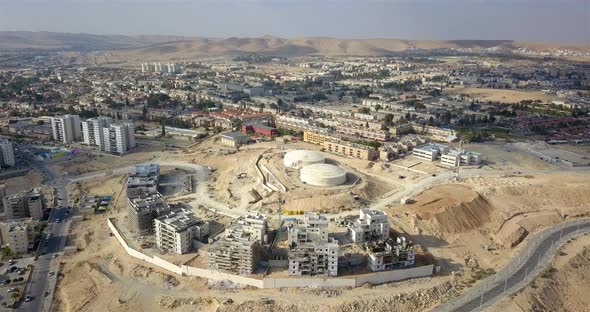
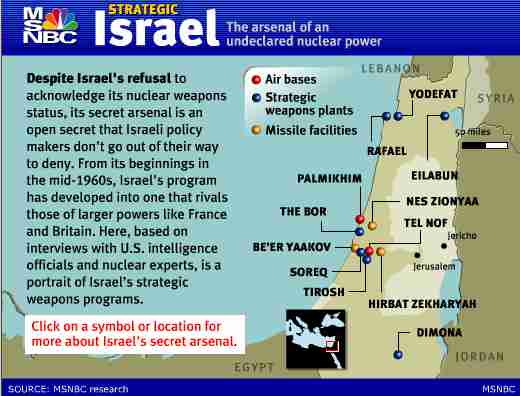
The city of Dimona has moved to the center of the escalating confrontation between Iran and Israel, following reports of an Iranian strike targeting its vicinity on 21st March.
Located deep in the Negev desert, Dimona is widely regarded as one of the most sensitive nodes in Israeli strategic infrastructure, largely due to its association with the country’s nuclear programme. Established in 1955, the city has since evolved into a key military and strategic site.
Researchers note that the area surrounding Dimona was historically inhabited by tens of thousands of Palestinian Bedouin Arabs prior to the 1948 Nakba. According to political analyst Muhammad Mustafa Shahin, the Negev region was home to between 90,000 and 95,000 Palestinians from tribes including the Tayyah, Azazmeh, and Jabarat, who relied on agriculture and herding.
Shahin highlights the geological significance of the region, noting that the Negev contains phosphate deposits rich in uranium in areas such as Aron, Zein, and Arad, alongside industrial facilities like the Rotem Amfert plants. These resources, he argues, contributed to the foundations of Israel’s nuclear development.
At the heart of Dimona’s strategic importance is the Negev Nuclear Research Center, commonly referred to as the Dimona reactor. Constructed with French assistance in the late 1950s and becoming operational in the early 1960s, the facility is widely believed to have played a central role in producing plutonium for nuclear weapons.
Shahin describes the reactor as part of what is known as Israel’s “Samson Option” — a doctrine of ultimate deterrence — which continues to fuel regional tensions, particularly in light of Israel’s refusal to sign the Nuclear Non-Proliferation Treaty (NPT).
The reported strike near Dimona marks a significant moment in the current escalation, drawing renewed attention to the risks surrounding nuclear-related infrastructure in an increasingly volatile regional conflict.
It’s all about the nukes
31 March 2026 Dr Binoy Kampmark , https://theaimn.net/its-all-about-the-nukes/
The idea of nuclear non-proliferation has come in for some heavy punishment of late. For one thing, powers with nuclear weapons, pre-eminently the United States, have been shown up as blackguards in seeking to prevent other powers in acquiring the option. In its conduct of talks with Tehran, ostensibly to stem their nuclear ambitions, Washington was merely managing a front of chatter while the warmongers were busying themselves behind the scenes. In June 2025, this culminated in the US joining Israel with Operation Midnight Hammer, which saw, according to President Donald Trump, “Monumental Damage […] done to all Nuclear sites in Iran as shown by satellite images. Obliteration is an accurate term!”
Despite these celebratory self-awarded accolades, Israel and the United States would initiate a savage and ongoing encore that began on February 28, with Trump again stating that Iran could never have a nuclear weapon. Apparently, obliterated nuclear facilities must have had some inner life that needed expunging. Diplomacy on non-proliferation was further shown to be contemptible and hypocritical.
Last year’s strikes on Iran, and the current Iran War, reveal the central hypocrisy of those who insist on keeping the nuclear club closed and limited, something made comically grotesque by the fact that one of the belligerents, Israel, is an undeclared nuclear power buttoned up in strategic ambiguity. Countries possessing the murderous nuke have been keeping those without such weapons in a state of suspended anticipation for decades. The central bargain is to be found in the Nuclear Non-Proliferation Treaty (NPT), a document that keeps club members in fattened bliss while holding off future admissions with the promise of civilian nuclear technology. Iran’s case shows that even having a civilian nuclear program is not something that will be countenanced.
The hard lesson, and one studiously understood by North Korea, is that having nukes is the ultimate security guarantee in the great family of unruly gangsters known as the international community. This much was admitted by the country’s leader, Kim Jong Un, in a March 23 speech at the Supreme People’s Assembly in Pyongyang. “Today’s reality clearly demonstrates the legitimacy of our nation’s strategic choice and decision to reject the enemies’ sweet talk and permanently secure our nuclear arsenal.”
Those who refuse to pursue such an option or have abandoned their ambitions in the face of pressure and empty undertakings given by the powerful, have been found wanting and ultimately dead: Libya’s Muammar Gaddafi, Iraq’s Saddam Hussein.
The late Iranian supreme leader, Ali Khamenei, was killed by Israeli and US airstrikes, despite having issued an expansive fatwa banning the development of nuclear weapons. The religious ruling had first surfaced at a meeting of the International Atomic Energy Agency (IAEA) in 2005. In its words, “[T]he production, stockpiling and use of nuclear weapons are forbidden under Islam and that the Islamic Republic of Iran shall never acquire such weapons.” Iran’s leadership had “pledged at the highest level that Iran will remain a non-nuclear weapon State party to the NPT and has placed the entire scope of its nuclear activities under IAEA safeguards and additional protocol, in addition to undertaking voluntary transparency measures with the Agency.”
In February 2025, the leaders of the Islamic Revolutionary Guard Corps (IRGC) begged Khamenei to reconsider the edict in light of Trump’s return to the White House and the increasingly belligerent tone he had adopted towards the regime. “We have never been this vulnerable, and it may be our last chance to obtain one before it’s too late,” stated one official to The Telegraph. Another revealed that, “The existential threat we now face has led several senior commanders – who previously insisted on following the supreme leader’s guidance – to push for making an atomic weapon.” One of Khamenei’s advisers, Kamal Kharazi, said last November that the fatwa was the only impediment to developing a nuclear capability. “If the Islamic Republic of Iran faces an existential threat, we would have no choice but to adjust our military doctrine.”
In the meantime, Iranian policy became a ragbag of options that pushed it to a point where Tehran might be considered on the brink of the nuclear threshold without quite getting there. Deterrence could be achieved without actually acquiring a weapon. “Khamenei,” writes Tom Vaughan for The Conversation, “seems to have made a bet that achieving ‘nuclear threshold’ status, where a state has the potential to develop nuclear weapons at short notice, would be enough to do this and to deter US or Israeli attacks.” In failing to achieve this, Iran had “borne all the costs of being a ‘proliferator’, while reaping none of the perceived security benefits of nuclear weapons.”
Expanding nuclear weapons arsenals has also become modish. In the face of unreliable guarantees of extended nuclear deterrence offered by the United States in Europe, French President Emmanual Macron is inclined to the view that the next five decades “will be an era of nuclear weapons.” Keeping in mind “our national and European challenges, we have to strengthen the nuclear deterrent… We must think of our nuclear deterrent on a European scale.”
John Erath, former US diplomat and currently serving as a policy director of the Center for Arms Control and Non-Proliferation says that more countries “feel insecure”, with nuclear weapons being the antidote. “There is no real alternative. Deterrence has so far prevented nuclear war, but often by luck.” Specific to Iran, reasons Ramesh Thakur, director of the Centre for Non-Proliferation and Disarmament in the Crawford School of the Australian National University, “nuclear weapons are now the only thing that will guarantee regime survival.” Jennifer Kavanagh, director of military analysis at Defense Priorities, a Washington-based think tank, suggests that a nuclear weapon may prove “a faster route to restore deterrence for a regime that is now more radical and has been attacked twice in the midst of negotiations.”
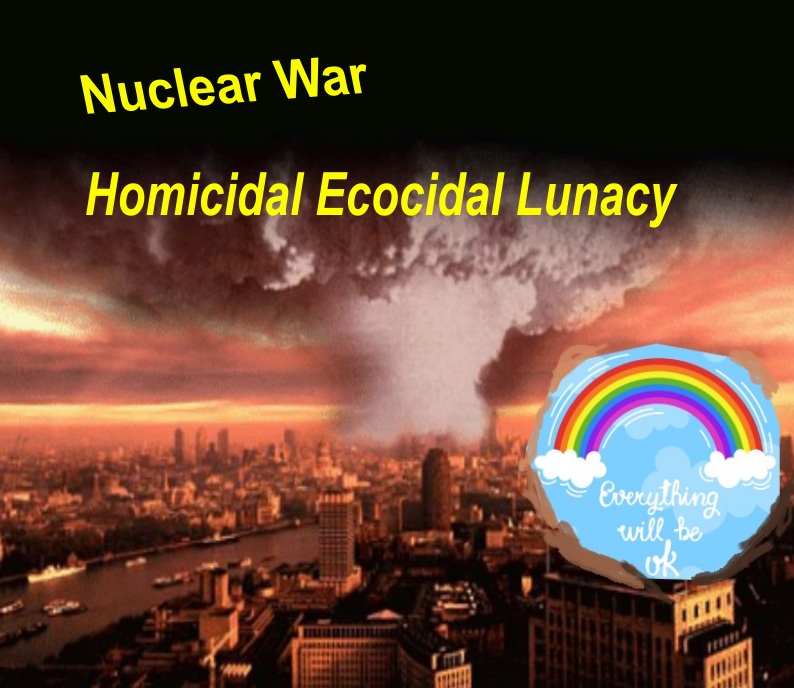
Instead of being shaded into unusable insignificance and hopeful oblivion, these weapons of homicidal lunacy have been shown to be more attractive than ever. They are virtually the only way regimes and governments of all stripes can hope to deter potential belligerents. Survivors of Iran’s leadership, now facing that existential threat long warned against, will be only too aware of that fact.
Netanyahu woke up on Iran war day 31 with a 3-front war he cannot win
By Walt Zlotow, Walt Zlotow, West Suburban Peace Coalition Glen Ellyn IL, 31 March 2026, https://theaimn.net/netanyahu-woke-up-on-iran-war-day-31-with-a-3-front-war-he-cannot-win/
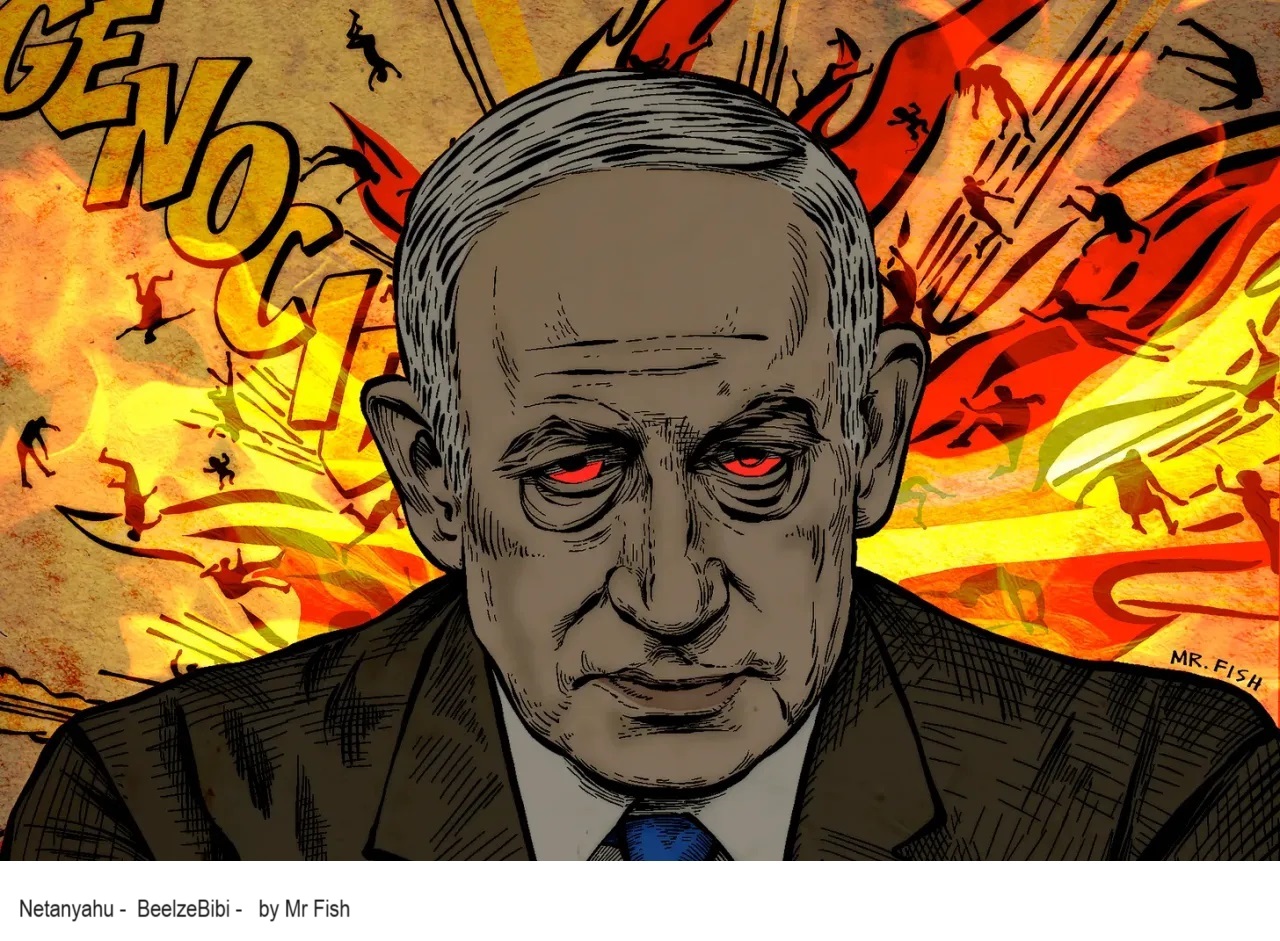
Tho scrubbed from mainstream news, Trump attacked Iran February 28 because Israeli Prime Minister Benjamin Netanyahu pleaded, begged, demanded he do so. Trump’s top diplomat, Marco Rubio, revealed this when he stupidly admitted Trump knew Israel would attack Iran and had to preemptively attack as well to avoid Iran retaliation. What Rubio didn’t admit is that the Israeli attack was fully supported by the US since Israel could not attack without total US support.
Trump’s and Netanyahu’s unprovoked war of choice had one strategy. Kill Iranian leader the Ayatollah Ali Khamenei and watch the Iranian people depose their government and capitulate within 3 days.
That failed spectacularly as the Iranian people responded like Americans after Pearl Harbor. Iran’s government did likewise, with relentless bombing of Israel, 13 US bases in the Gulf States and closing the Strait of Hormuz.
If this was all that unfolded it would still represent a catastrophic loss for the Trump/Netanyahu war criminal tag team
But for Netanyahu it gets worse. He sent his army north into Lebanon to destroy Hezbollah. That war is now going south as Hezbollah just destroyed 20 Israeli tanks in one day. Hezbollah missiles are raining down on northern Israel driving tens of thousands of Israelis from home.
It gets worse. The Houthis who control Yemen just entered the war on Iran’s side by launching 2 strikes into Israel Saturday. Houthi spokesman Yahya Saree declared Yemen bombed Israel “in support of the Islamic Republic of Iran and the resistance fronts in Lebanon, Iraq, and Palestine, and in view of the continued military escalation, the targeting of infrastructure, and the perpetration of crimes and massacres against our brothers in Lebanon, Iran, Iraq, and Palestine.”
In addition, the Houthis may reimpose the blockade on Israeli-linked shipping through the Bab el-Mandeb Strait, which connects the Gulf of Aden and the Red Sea. If so, the Bab el-Mandeh Strait will join the Strait of Hormuz in expanding economic disaster worldwide.
Worse yet. Shi’ite militias in Iraq have joined the war and will be targeting US military assets in Iraq that the US has kept there for 23 years.
When Benjamin Netanyahu goes to sleep tonight, he won’t need to count sheep to fall asleep. He just needs to count neighboring countries joining Iran’s defense against the most self-destructive criminal war this century.
No To Nuclear- Why Nuclear Power Destroys Lives, Derails Climate Progress and Provokes War.
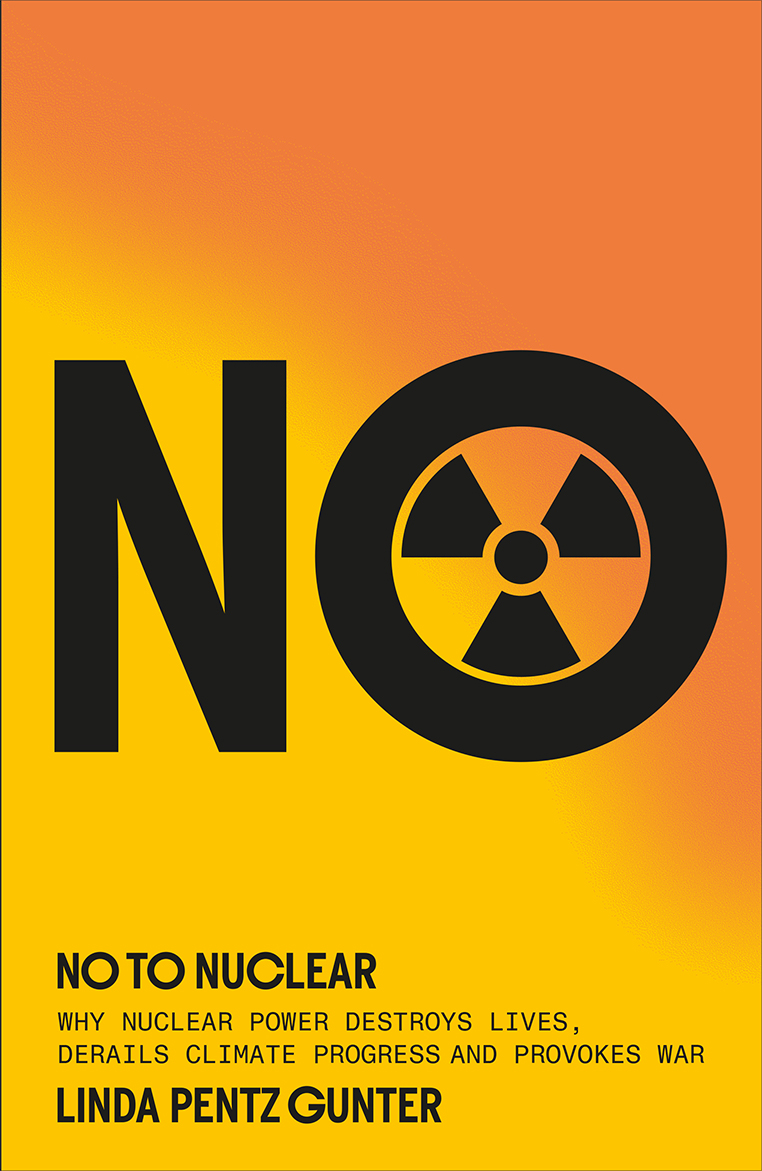
Debunks the enduring myth that nuclear power is safe and green
There is no silver bullet for the climate crisis—but that hasn’t stopped people searching. Seizing its chance, the nuclear power industry wants us to believe that theirs is the only technical fix for our deliverance. The public, politicians and the media have been easily swayed.
This should come as no surprise. After all, the pro-nuclear PR campaign is richly funded and has an army of lobbyists sowing myths while the industry reaps the rewards of taxpayer-funded subsidies.
No To Nuclear calls the industry’s bluff. Blasting aside its claims to be safe and green, Linda Pentz Gunter makes the irresistible case that nuclear power is too slow, too expensive, too dangerous and too integrally connected to the nuclear weapons complex, to serve as a rational energy choice.
The book also delves into the lives of Indigenous peoples and communities of colour, who have been harmed the most by the nuclear sector, and questions whether the way we devalue nature and the environment is costing us the chance of a genuinely just energy transition.
No To Nuclear. Why Nuclear Power Destroys Lives, Derails Climate Progress
And Provokes War by Linda Pentz Gunter, is now available to order from
Pluto Press. Purchase on or before April 8 and you will receive 40% off the
cover price as part of Pluto’s special promotion for books on the energy
transition. No to Nuclear covers a wide array of reasons to reject nuclear
power, focusing on the human rights and ecological impacts as well as the
chief detriments including cost, time, safety, waste and the link to
nuclear weapons. When ordering, click the currency symbol in the scroll
down menu at the top to select dollars or pounds.
Pluto Press 30th March 2026,
https://www.plutobooks.com/product/no-to-nuclear/
Why is Iran being singled out while others escape scrutiny? : Erase nuclear apartheid

Israel maintains a long-standing policy of nuclear ambiguity. It neither confirms nor denies its arsenal, avoids international inspections, and remains outside the NPT altogether. Despite this, it faces no comparable sanctions regime, no sustained diplomatic isolation, and no credible threat of enforced disarmament.
March 30, 2026, by Ranjan Solomon, https://www.middleeastmonitor.com/20260330-why-is-iran-being-singled-out-while-others-escape-scrutiny-erase-nuclear-apartheid/
“The world cannot preach non-proliferation while practising selective permission. That is not law – it is hierarchy.”
The global discourse on nuclear weapons has drifted far from its stated goal of disarmament. What remains today is not a principled framework for peace, but a deeply unequal system of control – one that determines who may possess the most destructive weapons ever created, and who must remain permanently under suspicion.
At the centre of this unequal order stands Iran: scrutinized, sanctioned, and threatened, not for what it has done, but for what it might one day choose to do. This is not non-proliferation. This is nuclear apartheid.
The Nuclear Non-Proliferation Treaty, which entered into force in 1970, was premised on a fundamental bargain. Non-nuclear states ag
At the same time, states outside the NPT framework – such as India and Pakistan—have developed and maintained nuclear weapons with limited global penalty. Most strikingly, Israel, widely believed to possess a sophisticated and undeclared nuclear arsenal, has never signed the NPT and remains entirely outside its inspection regime.
The result is unmistakable: a two-tier system – one for the powerful, and one for the rest.reed to forgo nuclear weapons in exchange for access to peaceful nuclear technology and a binding commitment by nuclear-armed states to pursue disarmament under Article VI. More than fifty years later, that promise stands betrayed.
The five recognized nuclear powers – United States, Russia, China, France, and United Kingdom – have not only failed to disarm, but have actively modernised their arsenals. Vast resources continue to be poured into enhancing nuclear capabilities, refining delivery systems, and ensuring the long-term viability of weapons that can destroy humanity many times over.
To understand why Iran is singled out, one must step beyond present-day accusations and examine history, law, and geopolitical power.
Iran’s nuclear programme did not begin in defiance. It began with encouragement from the United States under the “Atoms for Peace” initiative in the 1950s. At that time, Iran was a strategic ally, and its nuclear ambitions were supported rather than feared.
What changed was not technology – but politics.
The 1979 Revolution transformed Iran from a Western-aligned monarchy into an independent republic asserting sovereignty over its political and economic choices. From that moment onward, its nuclear programme was reframed—from legitimate development to potential threat.
Yet Iran remains a signatory to the NPT. It has accepted inspections and consistently maintained that its nuclear programme is for peaceful purposes, even invoking religious prohibitions against nuclear weapons.
Contrast this with Israel.
Israel maintains a long-standing policy of nuclear ambiguity. It neither confirms nor denies its arsenal, avoids international inspections, and remains outside the NPT altogether. Despite this, it faces no comparable sanctions regime, no sustained diplomatic isolation, and no credible threat of enforced disarmament.
This disparity is not incidental. It reflects geopolitical alignment.
Similarly, nuclear-armed states—both within and outside the NPT—continue to expand and refine their arsenals without facing existential scrutiny. The international system tolerates nuclear weapons in the hands of allies while criminalizing their pursuit by adversaries.
Dimona’s Shadow: How Israel’s Nuclear Monopoly Warps Middle East Security
Iran is not singled out because it is uniquely dangerous. It is singled out because it is politically inconvenient.
The dominant justification for nuclear weapons remains deterrence—the idea that possession prevents aggression. Yet deterrence is not a neutral doctrine. It is a privilege reserved for those already in possession of nuclear weapons.
For states like Iran, surrounded by nuclear-armed powers and subject to repeated threats of military action, the logic of deterrence becomes difficult to ignore. The existence of nuclear arsenals elsewhere creates the very conditions under which others feel compelled to pursue them.
This is the central contradiction of the non-proliferation regime: it seeks to prevent proliferation without addressing the incentives that drive it.
So long as nuclear weapons are seen as guarantors of security for some, they will remain objects of aspiration for others.
Under Article X of the NPT, any state has the sovereign right to withdraw if it determines that extraordinary events jeopardize its supreme national interests. This provision is not exceptional – it is foundational.
If Iran were to exercise this right, it would not be acting outside international law. It would be exercising a legal option embedded within the treaty itself.
The real question, then, is not legality – it is legitimacy.
Why should a state remain bound by a treaty that is applied selectively? Why should obligations be enforced unevenly while privileges remain protected? A legal framework that lacks reciprocity cannot command enduring compliance.
The moral argument against nuclear weapons is not abstract – it is rooted in history. The Atomic bombings of Hiroshima and Nagasaki, carried out by the United States, demonstrated the catastrophic humanitarian consequences of nuclear warfare. Entire cities were obliterated. Generations suffered from radiation, illness, and trauma.
These events should have marked the beginning of the end for nuclear weapons.
Instead, they marked the beginning of their normalization.
In response to this enduring threat, the international community has moved – however unevenly – toward prohibition. The Treaty on the Prohibition of nuclear weapons, adopted in 2017, represents a clear legal and moral rejection of nuclear weapons, declaring them incompatible with international humanitarian law. Yet none of the nuclear-armed states have joined it.
Once again, the pattern is unmistakable: law for some, exemption for others.
The path forward cannot be built on coercion or selective enforcement. It must be grounded in universality. A credible non-proliferation regime requires that all states—without exception – commit to disarmament. This includes the United States, Russia, China, France, the United Kingdom, as well as India, Pakistan, and Israel.
The principle must be simple and uncompromising: no nuclear weapons anywhere, no exceptions, no hierarchies. Anything less is not non-proliferation – it is discrimination.
Talks without balance: Why Tehran and Trump remain locked in escalation
But disarmament cannot remain a rhetorical aspiration. It demands verifiable timelines, binding commitments, and enforcement mechanisms that apply equally to all states. Without such measures, treaties risk becoming instruments of pressure rather than pathways to peace. The authority of international law depends not only on what it proclaims, but on how consistently it is applied.
The current nuclear order is unsustainable because it is fundamentally unjust. It divides the world into those permitted to wield ultimate violence and those permanently denied that power under threat of punishment.
Iran’s case lays bare this contradiction with clarity. Whether one agrees with Iran’s policies or not, the principle remains clear: international law cannot survive selective application. A system that enforces restraint on some while excusing excess in others undermines its own legitimacy.
If the world is serious about peace, it must move beyond power and toward principle—beyond dominance and toward equality. Not a peace imposed by deterrence, but a peace secured by justice. Not a stability rooted in fear, but one grounded in mutual restraint and shared accountability.
Until then, the truth will remain stark and unavoidable:
There can be no peace with nuclear weapons. And there can be no justice with nuclear apartheid
1 This Month

of the week – Shut Down Drone Warfare!


Tell the Ukrainian Government to Drop Prosecution of Peace Activist Yurii Sheliazhenko

Petition to revoke the licensing of the Near Surface Nuclear Disposal Facility (NSDF) at Chalk River. https://www.ourcommons.ca/petitions/en/Petition/Details?Petition=e-7247
To see nuclear-related stories in greater depth and intensity – go to https://nuclearinformation.wordpress.com
-
Archives
- April 2026 (57)
- March 2026 (251)
- February 2026 (268)
- January 2026 (308)
- December 2025 (358)
- November 2025 (359)
- October 2025 (376)
- September 2025 (257)
- August 2025 (319)
- July 2025 (230)
- June 2025 (348)
- May 2025 (261)
-
Categories
- 1
- 1 NUCLEAR ISSUES
- business and costs
- climate change
- culture and arts
- ENERGY
- environment
- health
- history
- indigenous issues
- Legal
- marketing of nuclear
- media
- opposition to nuclear
- PERSONAL STORIES
- politics
- politics international
- Religion and ethics
- safety
- secrets,lies and civil liberties
- spinbuster
- technology
- Uranium
- wastes
- weapons and war
- Women
- 2 WORLD
- ACTION
- AFRICA
- Atrocities
- AUSTRALIA
- Christina's notes
- Christina's themes
- culture and arts
- Events
- Fuk 2022
- Fuk 2023
- Fukushima 2017
- Fukushima 2018
- fukushima 2019
- Fukushima 2020
- Fukushima 2021
- general
- global warming
- Humour (God we need it)
- Nuclear
- RARE EARTHS
- Reference
- resources – print
- Resources -audiovicual
- Weekly Newsletter
- World
- World Nuclear
- YouTube
-
RSS
Entries RSS
Comments RSS
 nuclear-news