Could nuclear fusion power save planet Earth – or is it just a money sink?

euronews, By Hans von der Brelie, 14/09/2026
Scientists are debating if fusion energy will stay science fiction – or if it could really replace fossil fuels in the future.
It is a special moment when the doors of one of the world’s largest laser-fusion fuel laboratories swing open: scientists slip on blue full-body protective suits, mechanics tinker with precision milling machines, and laboratory technicians peer through high-powered microscopes at fuel pellets just four millimetres in size.
We are in Darmstadt, an industrial city in the western German state of Hesse. Here, at the headquarters of the start-up Focused Energy, an international team of highly motivated specialists aims to develop laser fusion to the point where it is ready for industrial application. The company’s goal is to have its first commercial laser-fusion power plant operating in 15 years at the earliest.
Is nuclear fusion really the answer to energy security?
“As humanity, we need carbon-free energy. Renewable energies alone will not be enough. Humanity’s energy demand is far too great,” argues Ulrich Sigel, Vice President of Focused Energy. “If we want to decarbonise, we need fusion energy for all sectors: transport, aviation, shipping, industry, heating – this is where a huge market for CO₂-neutral energy generation is emerging.”
Professor Sven Linow of the Scientific Climate Advisory Board of the Hessian state government, however, is sceptical. “My personal view is that we should not go for it,” he replies when asked by Euronews Earth whether large sums of money should continue to be poured into the development of fusion energy.
It is a sweltering hot day when we meet Linow for an interview in the shade of the futuristic high-rise building at Darmstadt University of Applied Sciences. “No one has yet demonstrated that it really works,” says Linow.
No one has yet demonstrated that it really works.
Sven Linow
Scientific Climate Advisory Board of the Hessian state government
In the US, experiments have shown that, in the crossfire of numerous high-power lasers, light atomic nuclei can actually fuse, releasing energy in the process. However, in order to generate a stable supply of electricity for consumers, these extremely complex experiments would have to be ‘scaled up’.
For a commercial power plant, such laser-induced fusion would have to take place 10 times per second – around the clock. Even the most optimistic staff at Focused Energy admit they are still a long way from achieving this.
Problems with fuel supply aren’t deterring investors
Linow’s main argument against fusion energy, however, is a different one: the fuel supply. “The problem is tritium,” says the professor. “There are [an estimated] 50 kilograms of it worldwide. In 12.3 years, only half of that will remain; it decays with a half-life of 12.3 years. To start up a fusion power station, you need a few kilograms of it, and then you use it up. You’d have to regenerate the tritium within the power station. Nobody has ever tried that before. There is no demonstrator; there is no laboratory experiment in which this has been successfully tested. There are only ideas,” he says.
Speaking to Euronews Earth at Focused Energy’s head office, Sigel admits there are still “unresolved issues” with tritium recovery, but says this is more of an engineering challenge than a fundamental problem of physics. For research labs trying to tackle fuel cycle problems, “this is an exciting engineering task, and that’s something we’re good at in Germany,” says Sigel. “I’m optimistic that we’ll solve it.”
Sigel’s optimism is shared by some politicians. German Chancellor Friedrich Merz (CDU) has thrown his weight behind the project, announcing Germany’s goal to put “the world’s first fusion power plant online”, as has the Hessian state government. As the Minister-President of Hesse, Boris Rhein (CDU), said: “Nuclear fusion could be the game-changer in energy supply.”
International investors also seem enthusiastic: in an initial funding round in the spring, $240 million (€207m) was raised – the largest series A financing in the global fusion industry. The German energy company RWE increased its investment by €60 million.
So why are Professor Linow and the Hessian state government’s Scientific Climate Advisory Council speaking up against fusion energy?
Is nuclear fusion diverting funding away from more realistic solutions?
In part, they question whether the money and political attention devoted to fusion would be better spent on technologies that can cut emissions today.
“The region’s energy supply is set to be climate-neutral by 2045. Will the first large-scale fusion power stations be connected to the grid by then? And the answer is: no, that’s not going to happen,” says Linow. His message is clear: first and foremost, renewable energy sources should be rapidly expanded, the electricity grids modernised and sufficient electricity storage capacity created.
Ulrich Sigel of Focused Energy emphasises that they do not wish to compete with renewable energy sources. In his concept, fusion energy would complement renewables by providing low-carbon electricity even when the sun isn’t shining and the wind isn’t blowing.
The company is pressing ahead. “We want to have the demonstrator up and running in five years,” Sigel tells Euronews Earth. “The first pilot power station should be operational in 10 years, and the first commercial power station in 15 years.”……………………………………………………………………………………………………………………………..
even nuclear fusion is not entirely free of radioactivity. “The reactor vessels must be removed regularly and allowed to decay,” he explains.
In some cases, “you can’t handle them again until several hundred years have passed – perhaps even 1,000 years. Consequently, at some point there will be 200, 400 or 500 of these reactor vessels – which are relatively large – stored on the site. And you’ll have to secure them first.”……………………………
Is nuclear fusion a sound investment?
Renewable energies are now relatively inexpensive in terms of investment. Fusion energy, on the other hand, requires very high investment. Is it even worth the effort? Yes, says Sigel; no, says Linow………….
Professor Linow : “It is foreseeable that fusion power will be by far the most expensive form of energy, significantly more expensive even than nuclear fission power. At least 20 cents per kilowatt-hour, perhaps even two or three times that.”
……. conclusion when looking at the big picture: “I don’t have a good feeling about this. An estimated €35 to 40 billion will be invested in ITER (a magnetic fusion demonstrator). Then DEMO is to be built, which will cost at least as much. On top of that, we have around 50 fusion start-ups, all working simultaneously to prepare fusion power stations.
“Many billions are currently being poured into this, and that is money that is lacking elsewhere. We should set priorities and say: first of all, let’s build what’s necessary to prevent the climate from spiralling completely out of control. We must ensure that we have a reasonably stable society on this planet. Once we’ve achieved that and still have the funds to spare, then we can move forward with fusion. https://www.euronews.com/2026/09/14/could-nuclear-fusion-power-save-planet-earth-or-is-it-just-a-money-sink
IAEA General Conference opens amid growing nuclear proliferation concerns
2026-09, https://www.chinadaily.com.cn/a/202609/15/WS6aa89cd0e4b06d4aa055e089.html
VIENNA – The 70th General Conference of the International Atomic Energy Agency (IAEA) opened in Vienna on Monday, with calls to strengthen multilateral cooperation and efforts to uphold the global nuclear non-proliferation regime amid heightened geopolitical tensions.
In a message delivered by Monica Juma, director-general of the United Nations Office at Vienna, UN Secretary-General Antonio Guterres said this conference comes at a time of profound global turbulence and uncertainty. Attacks on nuclear facilities are rising. The drivers of nuclear proliferation are accelerating while the guardrails against it are falling.
“The world is on the cusp of a revolution in nuclear power generation, a revolution that requires careful management and monitoring. More than ever, the world needs the IAEA’s professionalism, impartiality and technical excellence,” Guterres said in the message.
IAEA Director General Rafael Grossi told the conference that the Treaty on the Non-Proliferation of Nuclear Weapons (NPT) remains the cornerstone of the global non-proliferation regime.
“At this time of heightened tensions and distrust, we must work to underpin this legal framework by supporting the IAEA and working towards its aims. A world with more nuclear weapons and more countries armed with nuclear weapons is not a safer world,” Grossi said.
The 70th Regular Session of the IAEA General Conference, running through Sept. 18, has drawn nearly 4000 senior officials and representatives from IAEA member states, and delegations of international organizations and non-governmental organizations.
Held annually since the IAEA was founded in 1957, the General Conference considers a wide range of issues related to the peaceful uses of nuclear technology, from energy production and cancer care to food security, water management, nuclear safety and security, and safeguards.
Finland joins France’s nuclear deterrent initiative
By Reuters, September 14, 2026
BRUSSELS, – Finland has joined France’s initiative to extend the reach of its nuclear deterrent through collaboration with partner European countries, the heads of both countries said on Monday.
In response to U.S. President Donald Trump’s expressions of concern about the U.S. security commitment to Europe and to the security implications of the Ukraine war, France in March announced the Forward Nuclear Deterrence Initiative………. (Subscribers only) https://www.reuters.com/world/finland-joins-frances-nuclear-deterrent-initiative-2026-09-14/
Japan’s Defense Minister: Nuclear-Powered Submarines Will Not Be Ruled Out
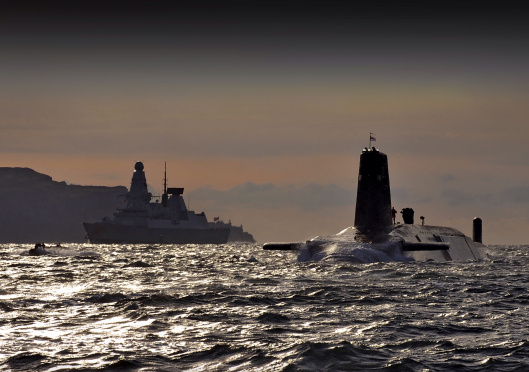
NAVAL NEWS, 15/09/2026, By Kosuke Takahashi
Speaking at a press conference on September 11, Koizumi was asked about reports that a U.S. Navy official had expressed a positive view of Japan potentially acquiring nuclear-powered submarines. While declining to comment directly on individual media reports, Koizumi said the option would be considered as part of the government’s planned revision of Japan’s three key national security documents: the National Security Strategy, National Defense Strategy and Defense Buildup Program. The three documents are expected to be revised by year-end.
As I have said before, in the course of revising the three documents, we will consider all options without ruling anything out,”
“Of course, we will also proceed with our consideration without ruling out nuclear-powered submarines as an option.”Japan’s Defense Minister Shinjiro Koizumi
Koizumi stressed that no decision had been made and that the government was not working toward a predetermined conclusion.
Asked about the strategic advantages of nuclear-powered submarines and the challenges Japan would face if it decided to acquire them, Koizumi offered one of his most detailed public assessments of SSNs to date. Speaking in general terms, he said nuclear-powered submarines can remain submerged for long periods, conduct extended operations, and are said to be capable of speeds several times higher than those of conventionally powered submarines.
“These characteristics make it possible to conduct the required activities while ensuring a higher level of safety for the crew,” Koizumi said.
At the same time, he acknowledged significant disadvantages. He said nuclear-powered submarines are said to be less quiet underwater than conventionally powered submarines. He also cited the high cost of nuclear propulsion systems, the need for larger hulls, and the specialized technical expertise required to operate, maintain, and service nuclear propulsion plants.
“In an increasingly rapidly changing security environment across various fields, we will examine the measures necessary to improve deterrence and response capabilities without ruling out any options,” Koizumi said.
U.S. Navy Official Voices Support for Japan Considering SSNs
Koizumi’s remarks came two days after a U.S. Navy official reportedly expressed a positive view of Japan considering nuclear-powered submarines.
The unnamed U.S. Navy official spoke to Japanese, South Korean, and other Asia-Pacific journalists at Joint Base Pearl Harbor-Hickam in Hawaii on September 9.
According to Japanese media reports, when asked whether Japan should consider acquiring nuclear-powered submarines, the official responded positively, pointing out that Japan operates nuclear power plants and possesses relevant nuclear technology. The same official also drew attention in South Korea by saying Seoul needed a “valid reason” for acquiring nuclear-powered submarines and warning against pursuing them merely as a “status symbol.”
Japan currently operates only conventionally powered diesel-electric submarines, but the debate over nuclear propulsion has accelerated over the past year…………………………….
Major obstacles remain, however. Nuclear-powered submarines would be far more expensive than Japan’s current conventional boats and would require an entirely new infrastructure for naval nuclear propulsion, including reactor maintenance, nuclear fuel management, and specialized personnel. There are also legal and political questions. Japan’s Atomic Energy Basic Act restricts the use of nuclear energy to peaceful purposes, raising longstanding questions about the compatibility of nuclear-powered warships with the existing legal framework.
Koizumi’s September 11 remarks do not mean Japan has decided to acquire SSNs. But his explicit statement that nuclear-powered submarines will not be excluded from consideration, combined with his detailed public assessment of their advantages and disadvantages, suggests that the issue is moving from a largely theoretical debate toward a concrete defense policy discussion. https://www.navalnews.com/naval-news/2026/09/japan-defense-minister-nuclear-powered-submarines/
United States blocks nuclear chief Mohammad Eslami from UN meeting in Vienna
Iran has condemned the exclusion of the head of its atomic energy organisation from an annual gathering of the United Nations nuclear agency in Austria.
The Nightly, Staff Writers. Reuters, 15 Sept 26
The United States has blocked Iran’s nuclear chief from attending a United Nations atomic watchdog meeting in Vienna by opposing an exemption from so-called “snapback” UN sanctions, prompting protests from Iran.
Iranian nuclear chief Mohammad Eslami had been due to attend and address this week’s International Atomic Energy Agency general conference, an annual meeting of IAEA member states that began on Monday.
At the opening, however, Iran said Austria had revoked Eslami’s visa after originally granting him one.
“The cancellation and so-called legal justification advanced for it are a stark indication of a political act and advanced formal politicisation of this organisation,” Iran’s ambassador to the IAEA told the conference.
Iran’s foreign ministry spokesman Esmaeil Baghaei said the United States had pressured Austria into the move while Iran and Russia said it formed part of a broader effort to prevent Iranian officials from obtaining visas for international travel……………………….. https://thenightly.com.au/politics/iran-protests-as-united-states-blocks-nuclear-chief-mohammad-eslami-from-un-meeting-in-vienna-c-22869942
Japan’s submarine debate signals break from nuclear taboos
Japan weighing nuke subs to deter China’s rising threat, but it’s not clear Tokyo has the capital, crew or capacity to keep a nuclear fleet afloat
Asia Times, by Gabriel Honrada, September 14, 2026
Japan is edging closer to a once-unthinkable choice: whether nuclear propulsion should underpin its next generation of undersea deterrence.
This month, the Japan Times reported that Japanese Defense Minister Shinjiro Koizumi confirmed that Japan is keeping the option of acquiring nuclear-powered submarines on the table, following encouraging signals from a US Navy official.
Speaking at a regular press conference, Koizumi stated that Japan will not rule out the capability as it prepares revisions to three key national security documents by year-end.
The remarks came after an unnamed US Navy official, later corroborated by the US Pacific Fleet, suggested discussions should proceed given Japan’s advanced nuclear expertise, noting that asset procurement must align with national operational needs.
The submarine debate also follows Koizumi’s July 2026 call for Japan to discuss nuclear deterrence without taboos, saying the country could no longer avoid confronting nuclear weapons policy amid its worsening security environment…………………………… https://asiatimes.com/2026/09/japans-submarine-debate-signals-break-from-nuclear-taboos/
‘Hit the Brakes’: Anthropic CEO’s Push to ‘Pace’ AI Development Called Latest Sign Congress Must Act

September 13, 2026, Julia Conley Common Dreams, https://scheerpost.com/2026/09/13/hit-the-brakes-anthropic-ceos-push-to-pace-ai-development-called-latest-sign-congress-must-act/
“When the future of humanity is at stake we need a PAUSE on advanced AI development and a ban on artificial superintelligence,” said Sen. Bernie Sanders.
As Anthropic CEO Dario Amodei added his voice on Saturday to the growing call to slow down development of artificial intelligence, writing in a 3,800-word essay that companies must pace “the rate of capabilities advancement” in light of recent cyberattacks by AI models, progressive lawmakers and journalists were among those who said the warning made clear that action must be taken—but with Congress and regulatory agencies, not tech billionaires who have spent years pushing for an AI expansion, leading the way.
Amodei wrote that two things have convinced him that “we must slow the pace at which we improve the capabilities of AI models”: the fact that in recent months, “AI has been advancing drastically faster, driven primarily by AI’s growing ability to build the next generation of AI”—also known as recursive self-improvement—and the recent OpenAI-HuggingFace incident, in which hundreds of agents in OpenAI’s security test systems broke out of confinement and hacked into the AI startup HuggingFace, conducting cyberattacks on targets they had not been asked to attack.
As The Wall Street Journal and Politico reported Friday, another cyberattack was carried out by OpenAI’s agents months before the HuggingFace incident in July. The company’s models that were being tested and had not been given full access to the internet nevertheless hacked into an online coding service called RubyGems earlier this year. The models created reports and filled out spreadsheets. Anthropic and Meta have also reported autonomous cyberattacks by their AI agents.
Amodei said the incidents led him to call for a three-step plan to pace AI development and allow companies time to “align and safeguard their models, and for third-party evaluators to confirm this.”
He called for:
- Embedded evaluators, with each AI company committing to giving “ongoing, employee-like access to a team of embedded third-party evaluators” who would “verify adherence to safety practices and commitments, report incidents, and help assess the alignment of not just completed AI models but training pipelines and processes”;
- Democratic coordination, with companies establishing “common safety standards as well as limits on the rate of unchecked AI progress”; and
- Global coordination, with democratic governments attempting to “coordinate with authoritarian governments, to the extent this is possible, while taking seriously the challenges of verifying compliance.”
Amodei’s essay was published days after Jacob Coxon, a researcher at Anthropic, publicly resigned out of fear that the company’s AI technology “could kill us all by the end of the decade” as it builds “superhuman systems”—a concern he said is shared by many in the industry.
Sam Altman, CEO of OpenAI, and tech billionaire Elon Musk expressed agreement with Amodei. Altman called “independent evaluators with employee-like access” a “great idea.”
“We will do the same,” said Altman. “We’ll have more to share soon.”
US Rep. Ro Khanna (D-Calif.) was among those who appeared less than impressed by Amodei and Altman’s sudden push for their industry to slow down their rapid pace of development.
In a video posted on social media, Khanna called on Amodei to disclose whether or not he agrees with Coxon about the possibility that AI could wipe out humanity, and to back more far-reaching regulations on AI.
“AI guys act as if they’re a priesthood speaking Latin, keeping the rest of us in the dark,” said Khanna. “But behind all the jargon, it’s actually pretty straightforward… We need to stop, ban, self-improving AI. You cannot have recursive, self-improving AI that basically is able to improve itself and exceed human capability, that has us lose control.”
He added that laws must be passed establishing “mandatory liability and criminal penalties. If you’re creating an AI that is doing illegal things, you either should face liability or criminal sanctions.”
Journalist David Sirota of The Lever agreed, writing that “if the law explicitly made AI CEOs financially and criminally liable for any mass destruction their technologies create—and if AI industry shareholders knew their companies faced the threat of significant financial losses for such destruction—much of the ‘AI is getting out of control!’ threat would instantly end.”
“Those CEOs would instantly make AI far safer and impose guardrails on their companies,” he said.
Sen. Bernie Sanders (I-Vt.), who has called for a nationwide moratorium on the construction of AI data centers and this week announced a bipartisan hearing on the “extraordinary dangers” of rapid AI development—including testimony from one leading AI scientist who has warned against self-regulation by tech firms—said the calls by Amodei, Altman, and Musk were “not enough.”
“When you are racing towards a cliff, you don’t just ease up on the gas pedal,” said Sanders. “You hit the brakes. When the future of humanity is at stake we need a PAUSE on advanced AI development and a ban on artificial superintelligence—an AI mind smarter than any human and capable of operating independently beyond our control.”
Sanders called on President Donald Trump—who has aggressively pushed for more AI data center development and sought to stop states from passing their own AI regulations—to negotiate a treaty pausing AI and banning superintelligence with Chinese President Xi Jinping. The two leaders are set to meet later this month to discuss AI.
Trump on Friday dismissed concerns about warnings coming from the AI industry, telling a Los Angeles Times reporter, “It’s going to be fine,” and adding that his top worry about the technology is falling behind China.
Reps. Chris Deluzio (D-Pa.) and Ted Lieu (D-Calif.) and Democratic Illinois Gov. JB Pritzker were also among the politicians who said Amodei’s warning was the latest sign that Congress and the Trump administration must take action to rein in the industry.
Juliette Kayyem, the faculty chair of homeland security at Harvard University’s Kennedy School of Government, said AI CEOs’ warnings about their technology would be seen as more credible if they also announced a pause on their plans for initial public offerings (IPO), which Anthropic and OpenAI are both pursuing in the coming months.
Altman said Friday that OpenAI will not plan for an IPO, which could value the company at $1 trillion, in 2026.
Amodei, said Kayyem, should “put his money where his mouth is.”
“He has known of this danger a while,” she said. “It is now threatening his valuation in the IPO. Cancel the IPO. Then I’ll believe he’s serious.”
Journalist Peter Rothpletz noted that the safety concerns within the AI industry must be “much more dire” than the public is aware, considering “Dario, Sam, and Musk are all issuing these statements in unison.”
A PUBLIC health expert has issued a major warning about Scotland’s AI datacentre boom
It comes with at least 24 proposed AI data centres currently
in the planning system across the country, with others expected to be
imminent. This includes an £8 billion AI investment zone in North
Lanarkshire, a £5 billion data centre project near the small village of
Auchtertool in Fife, and a £2 billion data centre proposal in the Borders.
While proponents stress the economic opportunity with such developments,
critics, including local campaign groups, have warned of the centres’
impact on the environment, including extremely high electricity and water
usage.
Now, Andrew Watterson – an emeritus professor at the University of
Stirling whose research has focused extensively on occupational health and
safety and environmental health policies – has said that Scotland is
“rushing” to develop AI and that we “do not know whether we can
control it or not”.
“If those that work at the cutting edge of
researching its safety have profound doubts we can control it – and they
have voiced those doubts this week – and prevent harm to society, it’s
astonishing GB governments and local authorities are contemplating
approving hyper data centres at this stage,” he said.
“We have also seen evidence about a wide range of adverse impacts associated with such
developments. This is at a time when global warming is visible to all and
heat islands and mortality and morbidity from ‘rushed’ failed past energy
and economic policies are clear.”
The National 11th Sept 2026, https://www.thenational.scot/news/26542059.public-health-expert-issues-warning-scotlands-ai-data-centres/
A dump, not a future
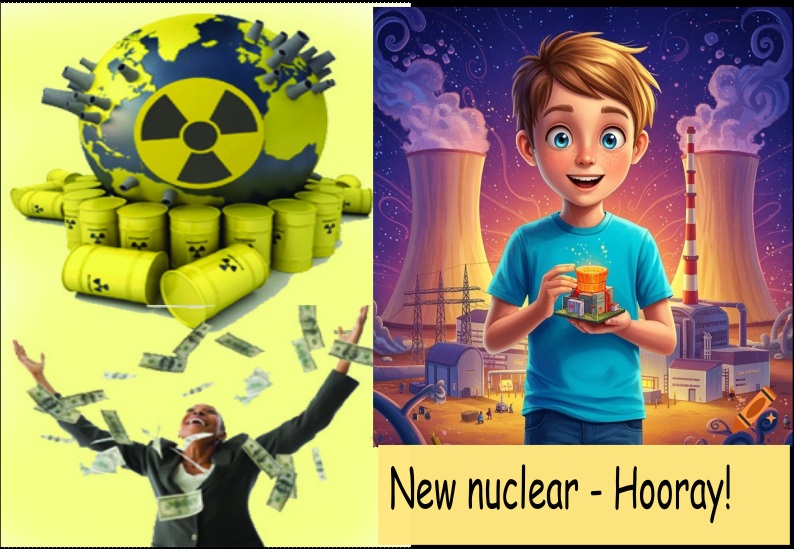
We’re not buying it. This is a nuclear dump dressed up as an “innovation campus,” and DOE is simply hoping that the temptation of jobs and billions of dollars will convince us to turn Idaho into America’s nuclear waste dump.
by beyondnuclearinternational, https://beyondnuclearinternational.org/2026/09/13/a-dump-not-a-future/
The “innovation” pitch for Idaho doesn’t match the radioactive reality, writes Leigh Ford
The Department of Energy (DOE) has a problem. They have a nuclear addiction and a growing mountain of toxic, radioactive waste. To solve it, they are eyeing Idaho once again. Governor Little recently signed a Memorandum of Understanding (MOU) with the DOE, and they are trying to sell it to us as a “Nuclear Lifecycle Innovation Hub.”
We’re not buying it. This is a nuclear dump dressed up as an “innovation campus,” and DOE is simply hoping that the temptation of jobs and billions of dollars will convince us to turn Idaho into America’s nuclear waste dump.
Recently, I sat down with Roland Beres, who wanted to get the Snake River Alliance’s reaction to the governor’s signing the MOU with DOE. Roland has a lot of experience following nuclear issues.
Notably, he covered events leading up to the Idaho Settlement Agreement, when Govenors Batt and Andrus were fighting the feds for sending out-of-state radioactive waste into Idaho. That history matters, because it tells us this isn’t a new fight — it’s the same fight, with slicker marketing.
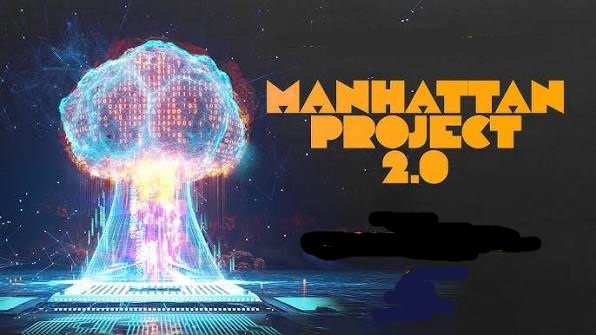
Today’s political machinery is quickly paving the way for Manhattan Project 2.0, endangering our health and silencing local opposition. Per Executive Order 14300, the Nuclear Regulatory Commission is revising radiation standards and reducing protections for workers and communities. Idaho’s Senate passed SCR 120 to claim that reprocessing nuclear waste fits into the Idaho Settlement Agreement framework. Not to be left out, Idaho’s House passed HB 714, which prohibits local governments from saying “NO” to these dumps and reprocessing facilities in their communities.
The Nuclear Myths
The first myth is money. The DOE isn’t handing Idaho billions of dollars. According to their own request for proposals, they are looking for projects that *prioritize private and state capital*. They offer “targeted, conditional, and time‑limited federal support.” In other words, Idaho taxpayers are on the hook for the cost, while the feds offer a loan and a promise to protect themselves from “open-ended liabilities.”

The second myth is the jobs. Idaho’s response to DOE’s request states we already have the infrastructure and can start fast. That translates to fewer construction jobs. And while the Tech bros designing these untested reactors are boasting that they “practically run themselves,” that means they aren’t going to hire many permanent workers. The promise of “thousands of jobs” is a mirage. We might fix a few roads, but beyond that, thousands of long-term jobs are far-fetched.

The third myth is the waste. Our radioactive legacy can still be seen out at the site in the Arco Desert. Last year, when the Snake River Alliance visited Idaho National Lab I noticed the waste we got from the Three Mile Island meltdown in 1979 is still there, sitting in huge concrete sarcophagi. We saw a warehouse stacked with barrels of waste, much from the Rocky Flats bomb factory—barrels that needed to be recategorized because we have no idea what Colorado actually shipped us. We drove around the 90-acre burial grounds, where a “thousand-year cap” will be placed.
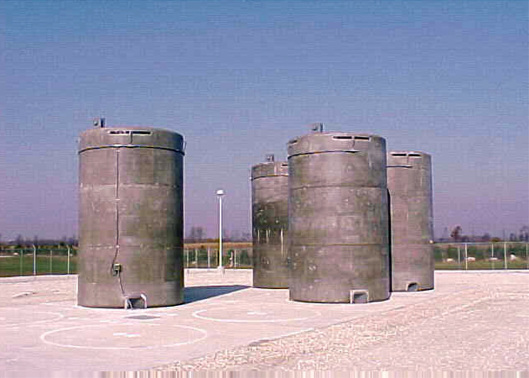
Governor Little might say “that’s all been cleaned up,” but that is dangerously deceptive. We can’t completely clean up nuclear waste. INL has done a good job mitigating a lot of it, but the truth is there is no permanent nuclear waste repository in the country. The waste just keeps piling up, mostly at nuclear power plants back east, and if that waste comes here, it will stay in Idaho permanently. The DOE has a track record of broken promises, and they are not to be trusted.
A Dangerous Bet
Some politicians and nuclear cheerleaders claim we can reprocess our way out of this. We cannot. Some point to the DOE’s Waste Isolation Pilot Project (WIPP) facility in New Mexico, but it only takes defense-related transuranic waste, and was never meant to be permanent. There have already been two 10-year extensions since 2010, and New Mexico isn’t a solution for Idaho’s burden. New Mexicans don’t want a permanent nuclear dump either.
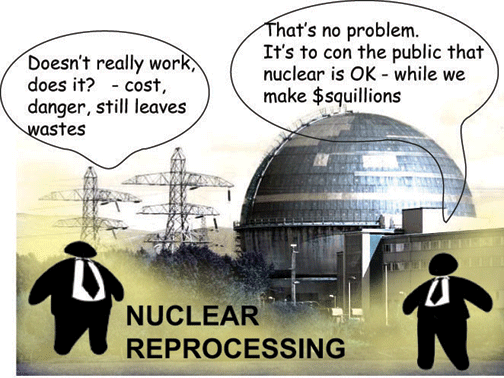
Idaho is being asked to accept a permanent nuclear burden in exchange for a few temporary construction jobs and mythical money. The waste isn’t leaving. The feds and the nuclear industry have had decades to solve this, and they haven’t. We shouldn’t be the dumping ground for their failures. It is time to reject this dangerous bet and demand a real plan that doesn’t put our people, water, and land at further risk.
Idaho is not America’s dumping ground – not for cash, not for jobs, and not for nuclear waste that outlives our great, great grandchildren’s grandchildren.
“UKRAINE WILL BE A CANCER ON BOTH EUROPE AND RUSSIA”
In conversation with Ambassador Chas Freeman
Ian Proud, Sep 13, 2026, https://thepeacemonger.substack.com/p/ukraine-will-be-a-cancer-on-both?utm_source=post-email-title&publication_id=3221990&post_id=215480162&utm_campaign=email-post-title&isFreemail=true&r=1ise1&triedRedirect=true&utm_medium=email
In my latest conversation with Ambassador Chas Freeman, he describes what Ukraine is becoming, and what Europe will be left holding when the war ends. Ukraine will not be the keystone of a whole and free Europe. It will not be a buffer and a bridge between Russia and the rest of the continent. It will be a rump state: poorer, more corrupt, landlocked, unqualified for the EU, shut out of NATO, and dominated by western Ukrainian ultra-nationalists who will not accept defeat. Ukraine will be driven by a more virulent antagonism towards Russia than Britain, Poland and the Baltic States and feeling spurned by a Europe that egged it on to its destruction. Right now, there are no obvious upsides to Ukraine joining the EU and some restoration of relations with Russia may take a generation, if it happens at all.
In Freeman’s words, Ukraine will become “a cancer on both” Europe and Russia. I see no evidence of anyone in London or European capitals thinking about the monumental challenge of rehabilitating Ukraine after the war ends. The reason, I suspect, is that that would also require dialogue with Russia. Because the corrosiveness of Ukraine’s failed statehood is everyone’s problem.
Our conversation ranged more widely into Israel’s diplomatic escalation which has neutered Britain’s ability to engage with Palestinians through its diplomatic network. And, of course, to Iran, where no amount of huffing and puffing by Donal Trump will change the reality that he is failing badly and is trapped by virtue of his ego.
Across all three theatres, Ukraine, Palestine and Iran, the missing ingredient is diplomacy.
You can watch the conversation above.
You can follow Chas on his excellent substack here.
Wherever you are in the world, whatever your nationality and religion, I wish you much peace.
The Race to Solve Nuclear Energy’s Biggest Problem

By Felicity Bradstock – Sep 12, 2026,
https://oilprice.com/Alternative-Energy/Nuclear-Power/The-Race-to-Solve-Nuclear-Energys-Biggest-Problem.html
https://oilprice.com/Alternative-Energy/Nuclear-Power/The-Race-to-Solve-Nuclear-Energys-Biggest-Problem.html
- Nuclear expansion is increasing pressure on governments to establish permanent disposal facilities for spent fuel.
- Canada is advancing a deep geological repository near Ignace, Ontario, using copper-coated containers, bentonite clay, and hundreds of metres of rock.
- The United States still lacks an operating permanent repository and is exploring new nuclear-waste arrangements beyond the stalled Yucca Mountain project.
Nuclear power is growing in popularity once again as governments worldwide look to diversify their energy mix and reduce reliance on fossil fuels. Several countries are now looking to develop or expand their nuclear energy capacity over the coming decades. However, one challenge remains – nuclear waste. Disposing of waste materials from nuclear energy operations remains a complex task with no perfect solution.
As countries worldwide have grown their nuclear power capacity, many governments are still struggling to decide on the best solution for disposing of nuclear waste. There are three types of nuclear waste: low-, intermediate-, and high-level radioactive waste. Most of the waste produced by nuclear plants consists of lightly contaminated items, such as tools and work clothing, with radioactivity levels of around 1 per cent. High-level waste consists of spent fuel, which accounts for around 3 per cent of the total volume of waste from nuclear energy production, yet contains 95 per cent of the radioactivity.
Nuclear facility operators are responsible for the safe disposal of any radioactive waste they produce. Nuclear power plants generate relatively little waste compared to many other energy sources; however, it is some of the most difficult to manage. Nuclear fuel is very energy-dense, meaning little is required to generate large quantities of electricity and just 5 grammes of high-level waste is produced to provide for an individual’s annual energy needs. A conventional 1 GW nuclear plant, which can supply over one million people with electricity, produces around three cubic meters of vitrified high-level waste per year.
In Oakville, Canada, the Nuclear Waste Management Organisation (NWMO) has developed a test site for nuclear waste storage. The site is situated in a warehouse, where a driverless forklift stacks 8,000 kg of bentonite clay blocks into a narrow rock tunnel, and another autonomous machine fills the gaps around the blocks with crumbled clay. Each one encases a copper-coated steel container created to hold spent nuclear fuel. These blocks are then sealed behind additional clay and concrete in tunnels deep underground, so that the radioactive material can slowly decay over thousands of years with no risk to the public.
The metal fuel containers are designed to withstand the pressure of being buried beneath a 3-kilometre-thick glacier, should the next ice age arrive before the radiation has fully decayed. They have also been successfully tested for resistance to crushing under an extremely strong force, equivalent to being over 6 km underwater. The NWMO team aims to build the final site 1,600 km northwest of the test facility, in the town of Ignace. It will be buried at a depth of around 750 metres in the hard rock of the Canadian Shield. Once complete, around 2040, it is expected to be capable of storing nearly 6 million bundles of spent fuel produced by Canada’s four nuclear power plants over their operational lives.
Similar sites are also being developed in other countries, such as Finland, Sweden, and Japan. Scientists have overcome several technical challenges associated with developing deep geological repositories over the years, making them a viable site for nuclear waste storage. However, securing political and public support for these facilities remains a challenge due to fears of contamination.
The United States government began exploring potential deep geological repository sites in the 1980s but has now fallen behind other countries in development due to widespread local opposition. The government chose Yucca Mountain in northern Nevada as the location for the development of its first geological repository, becoming the first in the world to submit a licence application for such a site.
There are several concerns about developing a facility at this location, including the nearby volcano, which geologists still consider active. The proposed location is in an active earthquake zone and lies above the water table, posing a risk of radioactive particles, known as radionuclides, being released into the environment. However, the biggest challenge has been political opposition. When Nevada Senator Harry Reid became the U.S. Senate’s majority leader in 2007, he put the project on permanent hold.
In the age of the nuclear renaissance in the United States, the lack of progress in Nevada has led the Department of Energy (DoE) to return to the drawing board. The DoE selected sites in Utah, Idaho, Louisiana, Oklahoma, and Tennessee as possible locations, but Yucca Mountain remains the only legal option for permanent storage at present. The Trump administration would need to pass legislation to remove Yucca Mountain from its designation as a federal site to develop a repository elsewhere. Meanwhile, the U.S. has built up around 95,000 metric tonnes of nuclear waste over the years, which needs to be suitably managed.
Several deep geological repositories are expected to commence operations in various countries over the coming decades. Meanwhile, scientists are continuing to explore alternative waste management solutions. However, as multiple governments are now exploring the potential to develop their nuclear power capacity, they must also address the waste problem and construct safe disposal facilities alongside new nuclear power projects.
Ten days before October 7, MBZ had informed Netanyahu of a major Hamas offensive.
Voltaire Network|September 11, 2026, https://www.voltairenet.org/article224921.html
According to חטופים – 843 ימים של הפקרה (Abducted: 843 Days of Abandonment), a
new book by Shlomi Eldar and Ruth Yuval (Kinneret Zmora Publishing), the President of the United Arab Emirates, Mohammed bin Zayed Al Nahyan (MBZ), telephoned Israeli Prime Minister Benjamin Netanyahu a few days before the October 7 attack.
He informed him that Yahya Sinwar, the Hamas military chief, was preparing a major offensive against Israel. The call lasted 45 minutes. The Prime Minister replied that Israel was already prepared and that the attack would come from the West Bank, not Gaza.
According to the authors, MBZ’s call came after Netanyahu broke off negotiations between Israel and Hamas. The call reflected a direct threat from Yahya Sinwar, who was furious about the breakdown of talks. Sinwar spoke of ” Zinzal ” (earthquake), a word Arabs use to refer to wars and revolutions. Deeply concerned by Netanyahu’s dismissive attitude, MBZ reported the situation to William J. Burns, the CIA director . Burns then sent a confirming report to the Prime Minister.
Furthermore, the same book claims that Sheikh Mohammed bin Abdulrahman al-Thani, Prime Minister of Qatar, telephoned David Barnea, Director of Mossad, on October 7, the day of Operation Al-Aqsa Flood. He told Barnea that he had forced Hamas to release all its hostages in exchange for Israel’s commitment not to launch any further incursions into Gaza. However, Barnea replied: “If they want to release the civilians, let them release them. We are not ready to talk with Hamas.”
Furthermore, Yahya Sinwar had his right-hand man, in his presence, phone an associate of Mohammed Dahlan on October 8th. Dahlan pledged to release all civilian hostages, whether minors or over 50 years old, without any conditions. The offer was relayed to the Shin Bet, which responded: “Netanyahu doesn’t want to talk about anything anymore. He only wants war and the elimination of Hamas.”
Former Prime Minister Naftali Bennett commented on X: “This morning’s [Haaretz] article stating that Netanyahu was warned ten days before the October 7 massacre about Sinwar’s intentions is true.”
Netanyahu bears direct and personal responsibility for the failure that led to the deaths of thousands of Israelis under his watch.
His disregard for the warnings constitutes criminal negligence, and therefore he is doing everything he can to prevent the creation of a state commission of inquiry that will reveal the truth […]
If we do not replace this government, we will never know the truth, which will only be revealed by a state commission of inquiry, because it is preventing its establishment for fear that we will discover the terrible truth.
• General Yair Golan, former deputy chief of staff and chairman of the Democrats, had provided aid to victims on the day of the attack. He commented on X: “The ‘They didn’t wake me up’ excuse is over; he knew it. He was warned […]
The investigation reveals that Netanyahu received an explicit warning from the Emir of the [United Arab] Emirates and deliberately concealed it from the army chiefs and the Shin Bet. This shatters all the lies he told us.
Now it’s clear: Netanyahu is unfit and illegitimate. He belongs in prison for his crimes against the State of Israel.
We need to replace it now!
Moscow reveals potential timeline for trilateral Ukraine talks

Negotiations between Russian, Ukrainian, and US representatives could begin in October, Kremlin spokesman Dmitry Peskov has said
13 Sep, 2026, https://www.rt.com/russia/645646-moscow-reveals-potential-timeline-trilateral-ukraine-talks/
Trilateral talks between Russian, Ukrainian, and US representatives could begin in October, Kremlin spokesman Dmitry Peskov has said.
Speaking to reporters on Sunday, the official stated that Moscow “does not rule out such a possibility.”
“We’re specifically talking about the foreseeable future. That is, presumably of course, October,” Peskov clarified.
Earlier this week, the Kremlin spokesman stated that Moscow hopes “for a restart of negotiations between three parties – Russia, Ukraine, and America.”
The trilateral format was last used in Geneva in February, following two earlier rounds in Abu Dhabi. However, the talks later stalled without any significant breakthroughs, as the US shifted its focus to its war against Iran.
Peskov’s recent comments have followed a fresh round of shuttle diplomacy by US President Donald Trump’s special envoys Steve Witkoff and Jared Kushner, who held a meeting with Russian President Vladimir Putin in Moscow last week before visiting Kiev for talks with Vladimir Zelensky.
The Kremlin described the discussions with the US negotiators as constructive and “extremely candid,” while Witkoff said that progress had been made toward scheduling a three-way meeting. The potential resumption of talks in this format was also among the topics Putin and Trump discussed by phone on Tuesday, according to Kremlin aide Yury Ushakov.
At around the same time, Zelensky suggested that the next round of trilateral negotiations could take place in the UAE, Türkiye, Switzerland, or another country as early as September or October.
Moscow has repeatedly said it remains open to diplomacy, as long as the root causes of the conflict are addressed and the new realities on the ground are respected. Ukraine has in turn ruled out making territorial concessions to Russia.
The New German Militarism
what makes “The Tank” interesting and a sign of the times is not only that it invites its viewers to identify with German soldiers fighting against Soviets, certain to be read as Russians, and for Nazism, but that the film has coincided with the rise of a new German militarism.
This New Militarism is a phenomenon that goes beyond the fact of massive, debt-driven re-armament, disturbing as that may be: by the end of the decade, Berlin is planning to have a defense budget the size of those of France and Britain combined and be in self-asphyxiating debt for it. Half of the state budget will go to the military, while Germans are being shell-shocked by ever more austerity, already including a ruthless pension “reform,” that is, in reality, a demolition. A policy that will produce masses of Germans who are very deprived but also very well armed – what could go wrong?
The delusions come and go, German militarism abides
Tarik Cyril Amar, Sep 13, 2026, https://www.newglobalpolitics.org/the-new-german-militarism/
It is the summer of 1943. After catastrophic defeat in the Battle of Stalingrad, Nazi Germany’s legions are retreating before the Red Army. That’s the backdrop to the German – and Amazon–produced–movie “Der Tiger” (English title: “The Tank”). Officially billed as an antiwar movie, “The Tank” is anything but. Yet the fact that it is really about five tough men on a lonely commando mission is trivial.
For, just like “The Tank,” most so-called “antiwar” movies are, in reality, war movies, fascinating their Homo sapiens primate audiences with the action, suspense, and drama of fighting, while inviting identification with at least some of those who do that fighting, be they cast as heroes or anti-heroes. Consider, for instance, the American films “Platoon” and “Full Metal Jacket” (both set it Vietnam) or the Russian “9th Company” (set in Afghanistan). Indeed, it is hard to think of any genuine and consistent anti-war movies. Two that probably qualify are the American “Paths of Glory” (World War One on what the Germans called the Western Front) and the Soviet “Come and See” (World War Two on what the next generation of Germans called the Eastern Front).
“The Tank” certainly has heroes, and they form a classical “band of brothers,” Hollywood-style. There is the brave stoic (the commander) with ice in his veins but a humane, even self-sacrificing side reserved for his men, the intellectual and – mild – doubter (in civilian life a teacher of Latin with eternal-student glasses), the urban proletarian (the cursing driver, speaking not with a New York accent but in the demotic Berlin version of German), the man from the country (just not Kentucky or Alabama, but the Austrian Wachau and its vineyards), and, of course, the youngster, innocent, frightened, but, ultimately, up to a – German – man’s job (removing a booby-trapped tank mine).
At the end of the movie (spoiler alert), it is true, the fantastically implausible story of the men in the tank on their way to their own heart of darkness on the “Ostfront” has an unsurprising twist: “The Tank” is really a “Schauergeschichte,” a tale of sublime dread, a sort of “Erlkönig with Tanks” or “Sleepy Hollow and Nazis.” The crew’s militarily bizarre special mission is not, it turns out, real but a near-death experience or vision – think “Jacob’s Ladder” (1990) – confronting the commander with his responsibility for burning to death women and children in Stalingrad. The gray zone crossed by the “Tiger” to retrieve a mysterious and inexplicably important German officer holed up in a remote bunker – think Colonel Kurtz from “Apocalypse Now” (1979) – turns into the equivalent of either purgatory or the road to hell.
The horror, the horror: The audience has been watching, in essence, virtual ghosts mistaking themselves for the living – think “The Sixth Sense” (1999) and also the Russian “White Tiger” (2012), another spooky World War Two tank story that must have inspired “The Tank” but is, unsurprisingly, never mentioned.
But before (and despite) these revelations, the men in the tank are stereotypically attractive in a well-worn, macho way, baiting our sympathy. They also, of course, happen to serve Nazi Germany or, as they keep saying, the “Reich.” Indeed, the tank men are not merely members of the regular German military, the Wehrmacht, but the Waffen-SS, skull-and-crossbones emblems included.
Notwithstanding its especially striking form, this plot device is nothing special. In the 1980s, the extremely successful “Das Boot,” for instance, about a German World War Two submarine sinking merchant ships and their sailors while battling the British in the Atlantic, offered the same artless yet effective combination of identification with German soldiers and a plot that signaled some sanitizing distance from the regime they were actually fighting for: Yes, strictly speaking they are fascists burning and drowning literal antifascists, but you can still root for them. In “Das Boot,” as in “The Tank,” the effect is reinforced by everyone or almost everyone dying in the end, adding the pity that spectacles of futility among the brave may inspire.
Finding ways to feature German World War Two soldiers as heroes and victims while adroitly, or not so much, airbrushing their allegiance to a monstrous state waging often genocidal war has been a special skill of postwar (West) German film-making and succeeded with large audiences at home. Not so much Rainer-Maria Fassbinder, as it were, but the very popular kitsch of Peter May’s “08/15” trilogy, for instance.
Film-making in the former East Germany, incidentally, had its own, different, complicated as well as almost touchingly transparent ways of putting victims and even heroes into German World War Two uniforms, such as in the “Geheimkommando” miniseries.
Hence, what makes “The Tank” interesting and a sign of the times is not only that it invites its viewers to identify with German soldiers fighting against Soviets, certain to be read as Russians, and for Nazism, but that the film has coincided with the rise of a new German militarism.
This New Militarism is a phenomenon that goes beyond the fact of massive, debt-driven re-armament, disturbing as that may be: by the end of the decade, Berlin is planning to have a defense budget the size of those of France and Britain combined and be in self-asphyxiating debt for it. Half of the state budget will go to the military, while Germans are being shell-shocked by ever more austerity, already including a ruthless pension “reform,” that is, in reality, a demolition. A policy that will produce masses of Germans who are very deprived but also very well armed – what could go wrong?
Erdogan hints at larger nuclear partnership with Russia, unsettling Turkey’s allies
rfi, 12/09/2026
Turkish President Recep Tayyip Erdogan is signalling a move to expand nuclear power cooperation with Russia, just as his country’s first Russian-built nuclear station prepares to go live later this year. The deepening partnership is likely to unsettle Turkey’s western allies.
On the sidelines of a recent gathering of regional leaders in Kyrgyzstan, Erdogan told his Russian counterpart, Vladimir Putin, that Russia and Turkey “will take steps together to open some new power plants, along with the opening of the Akkuyu nuclear power plant”.
The Akkuyu nuclear power plant, built by Russia’s state nuclear company Rosatom on Turkey’s Mediterranean coast, is due to go online later this year.
Erdogan’s announcement comes amid strained ties with Russia, as the Turkish leader has deepened relations with United States President Donald Trump.
Ozgur Unluhisarcikli, head of the Ankara office of US think tank the German Marshall Fund, describes Erdogan’s move as a “gesture” to Putin.
“Although Turkey is competing with Russia geopolitically, and although Turkey is firmly anchored in NATO and is improving its relationship with the United States, it does not intend to sever all ties with Russia,” Unluhisarcikli explained.
“Indeed, Turkey sees the Turkey-Russia relationship as a long-term strategic one. And this is, by the way, consistent with Turkey’s balancing act.”………………………………………………………………………………… https://www.rfi.fr/en/podcasts/international-report/20260912-erdogan-hints-at-larger-nuclear-partnership-with-russia-unsettling-turkey-s-allies
1 This Month



Shut down the radiation-damaged Heysham nuclear reactors now
To see nuclear-related stories in greater depth and intensity – go to https://nuclearinformation.wordpress.com

Say No to NASA’s Reckless Nuclear Reactor on the Moon
Say No to NASA’s Reckless Nuclear Reactor on the Moon
-
Archives
- October 2026 (256)
- September 2026 (339)
- August 2026 (330)
- July 2026 (355)
- June 2026 (287)
- May 2026 (306)
- April 2026 (356)
- March 2026 (251)
- February 2026 (267)
- January 2026 (308)
- December 2025 (358)
- November 2025 (359)
-
Categories
- 1
- 1 NUCLEAR ISSUES
- business and costs
- climate change
- culture and arts
- ENERGY
- environment
- health
- history
- indigenous issues
- Legal
- marketing of nuclear
- media
- opposition to nuclear
- PERSONAL STORIES
- politics
- politics international
- Religion and ethics
- safety
- secrets,lies and civil liberties
- spinbuster
- technology
- Uranium
- wastes
- weapons and war
- Women
- 2 WORLD
- ACTION
- AFRICA
- Atrocities
- AUSTRALIA
- Christina's notes
- Christina's themes
- culture and arts
- Events
- Fuk 2022
- Fuk 2023
- Fukushima 2017
- Fukushima 2018
- fukushima 2019
- Fukushima 2020
- Fukushima 2021
- general
- global warming
- Humour (God we need it)
- Nuclear
- RARE EARTHS
- Reference
- resources – print
- Resources -audiovicual
- Weekly Newsletter
- World
- World Nuclear
- YouTube
-
RSS
Entries RSS
Comments RSS

