Iran hits out ahead of UN vote on nuclear sanctions
Tehran says it has offered fair proposals and accuses the E3 of ‘political bias’ in seeking to revive sanctions.
By Elis Gjevori and News Agencies, 19 Sept 25, https://www.aljazeera.com/news/2025/9/19/iran-hits-out-ahead-of-un-vote-on-nuclear-sanctions
Iran has hit out at European states that have threatened to revive international sanctions over the monitoring of its nuclear programme.
Tehran officials on Friday accused the European states, which have said they will reimpose international sanctions if Tehran does not meet conditions, of “political bias” and insisted that they have presented fair proposals to resolve the issue.
The complaints come ahead of a scheduled United Nations Security Council (UNSC) vote later on Friday on a resolution that would permanently lift UN sanctions.
The resolution is unlikely to get the nine votes needed to pass, diplomats told news agencies, and if it did, it would be vetoed by the United States, Britain or France.
Britain, France and Germany – known as the E3 – launched a 30-day process in late August to reimpose sanctions unless Tehran meets their demands.
Iranian officials have accused the trio of abusing the dispute mechanism contained in the 2015 Treaty on the Non-Proliferation of Nuclear Weapons (NPT), which allows for the application of sanctions under a “snapback mechanism”.
“What Europeans are doing is politically biased and politically motivated … They are wrong on different levels by trying to misuse the mechanism embedded in the Joint Comprehensive Plan of Action (JCPOA),” Deputy Foreign Minister Saeed Khatibzadeh said.
The Europeans offered to delay the snapback for up to six months if Iran restored access for UN nuclear inspectors and engaged in talks with the US.
However, French President Emmanuel Macron said on Thursday that sanctions are likely to be reinstated, with European officials claiming that Iran has not engaged seriously in negotiations.
Following Macron’s statement, Iran’s Foreign Minister Abbas Araghchi had said that Tehran had presented a “reasonable and actionable plan” and insisted Iran remains committed to the NPT.
Khatibzadeh cautioned that “all options are on the table if diplomacy fails,” although he did not offer details.
“If Europeans go on this path, they are making the level of unpredictability to the highest level possible, and they are responsible for… any possible future risks,” he declared.
Dirty work
The E3 accuse Tehran of breaching the Joint Comprehensive Plan of Action (JCPOA), which was signed by Iran, the US, China, Russia, and the EU.
Under the deal, Iran agreed to curb its nuclear programme in return for sanctions relief. The agreement unravelled in 2018 after then-US President Donald Trump pulled out and reimposed unilateral sanctions.
Tensions escalated further earlier this summer, when Israel launched a 12-day war on Iran, with Israeli and US forces striking several nuclear facilities.
German Chancellor Friedrich Merz caused anger in Tehran at the time when he declared: “This is dirty work that Israel is doing for all of us.”
Iranian officials have also criticised the UN nuclear watchdog, the International Atomic Energy Agency (IAEA), for accusing Tehran of noncompliance with its nuclear obligations ahead of the attacks.
Iran has repeatedly denied seeking a nuclear weapon, while Israel is widely believed to possess an undeclared nuclear arsenal of dozens of atomic bombs.
UN security council fails to prevent ‘snapback’ nuclear sanctions on Iran
Iranian foreign ministry urges further diplomacy and says return to pre-2015 measures are unlawful and unfounded.
William Christou, 20 Sept 25, https://www.theguardian.com/world/2025/sep/20/un-security-council-fails-to-prevent-snapback-nuclear-sanctions-on-iran
Last month, France, Germany and the UK triggered the snapback provision of the deal after Iran refused to cooperate with International Atomic Energy Agency (IAEA) inspectors, which is tasked with monitoring implementation of the deal.
Two weeks later, Iran agreed to resume cooperation with the IAEA, but it has not yet been able to carry out all of its inspection activities and the body’s ability to operate in the country has been restricted for years.
Since the initiation of the snapback mechanism, intense diplomacy has taken place between mainly European powers and Iran to reach a deal to prevent the sanctions. Talks have not been fruitful, though the UK indicated on Friday after the vote that it was still open to diplomacy.
“The United Kingdom remains committed to a diplomatic solution. We are ready for further engagements diplomatically in the next week and beyond to seek to resolve differences,” said Barbara Woodward, the British ambassador to the UN.
The Iranian foreign ministry said in a Friday statement that it had consistently kept the path of diplomacy open and that it viewed the reimposition of sanctions as “unlawful, unfounded and proactive”.
Iran is still dealing with the impact of the 12-day Iran-Israel war, when Israel launched surprise attacks that it said was a pre-emptive move against the country’s nuclear programme. Iran insists that its nuclear programme is of a civilian nature and that it does not seek to create a nuclear bomb.
Case for Military Proportionality: Disabling Nuclear Plants.
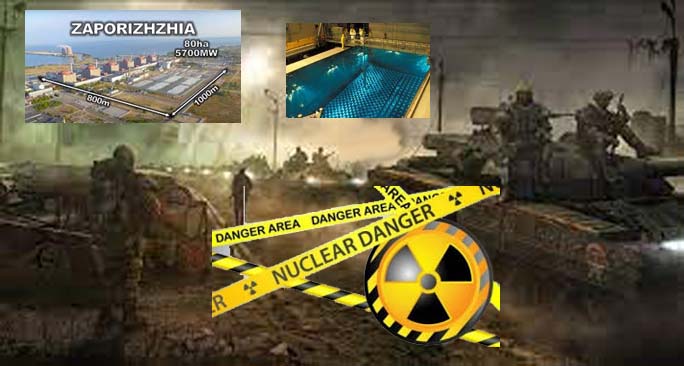
If a reactor’s spent fuel pond storage system was hit, the likely radiological releases could force millions of people to evacuate……………… In an attack against a spent fuel storage facility, US Nuclear Regulatory Commission staff conservatively estimate the radiological release could be 100 times greater than that of the Fukushima accident.20
Today, nuclear plants can be disabled in many ways without risking harmful releases of radiation. The Russians, in the Russia-Ukraine War, have demonstrated several disabling techniques
Russia’s attacks afford a clear example of disabling critical civilian objects (reactors) to its military advantage without releasing hazardous radiation
By: Henry Sokolski, Nonproliferation Policy Education Center, September 16, 2025
For nearly a decade, protecting civilians and civil objects from disproportionate military assaults has been a top priority of the Pentagon. Two Department of Defense secretaries from the first Donald Trump administration championed quantifying and reducing harm to civilians and civil objects. Under the Joe Biden administration, the Pentagon further focused on protecting civilians and civil objects, and, in 2023, Congress created a Civilian Protection Center of Excellence within the Department of Defense. This center, consisting of a staff of 30 people with an annual budget of $7 million, helped military commands execute their missions while minimizing collateral damage.1
In early 2025, however, the Pentagon cut the funding and eliminated almost all the staff in the Civilian Harm Mitigation and Response office and the Center and asked Congress to eliminate the legal requirement for its continued operation. Rattled, some wondered if the Department of War was rescinding its previous guidance on limiting civilian harm. The answer to the question was unclear.2
Trump administration officials stated the Civilian Protection Center of Excellence jeopardized war fighters’ abilities to do their jobs. But those officials did not discuss a deeper set of developments: Hamas’s October 7 attack against Israeli citizens; Israel’s crushing response, which killed thousands of noncombatants; and Russia’s attacks against Ukrainian civilians and civil infrastructure. Each development challenged many experts’ previous beliefs about what proportionality should prohibit.
Both Vladimir Putin and Benjamin Netanyahu insist their military operations are proportionate. These claims, in turn, rely on an American view of proportionality Abraham Lincoln’s top military and legal adviser, Francis Lieber, promulgated in the 1860s. The Lieber Code (General Orders No. 100) championed avoiding attacks on civilians and civilian objects. But the code also allowed, if a compelling military objective emerged whose achievement incidentally entailed harming civilian people and objects, that attacks were permissible. Commanders on the front lines should decide what actions are militarily justified or not, according to the code.3
Some have argued Lieber’s view renders proportionality hopelessly subjective. If commanders were free to determine what actions are justified, proportionality would seem to be little more than a standard of behavior the weak may demand of the strong, but the strong can effectively ignore. Victorious nations rarely litigate against their own officials or officers for disproportionate military actions (that is, for ignoring or violating the requirements of proportionality).4
Therefore, enforcing proportionality against defeated foreign nations might be attractive, but demanding one’s own military enforce proportionality is less realistic or practical. At best, realists argue, limiting harm to civil persons and objects is advisory; institutionalizing or promoting proportionality by creating Pentagon centers goes too far.
This line of thinking is intuitive and appealing. But it ignores a critical point: Sparing civilians and civilian objects unnecessary harm is often essential to achieving military victory.
Carl von Clausewitz, known for championing the necessity of violence in battle, was just as emphatic that wars could only be won by reaching political solutions the enemy’s military and leadership—and the enemy’s population—could accept. Needlessly killing civilians and destroying infrastructure critical to their welfare only complicates reaching lasting political solutions. For Clausewitz, the need to inflict violence in war had to be measured against the war’s ultimate objective, which is always political. Violence against civilians is self-defeating if it undermines the achievement of the war’s ultimate political objective.5
Thus, Winston Churchill and Dwight D. Eisenhower resisted calls in 1944 for the indiscriminate bombing of French cities and infrastructure during World War II because though such bombings would weaken German defenses, they would also dramatically undermine French political support of the Allied powers and the Allies’ resistance to the Nazis. Indiscriminate bombing would also complicate the reconstruction of the French economy after the Allies won the war.6
For similar reasons, President Harry S. Truman rejected the advice of his commander in the field, General Douglas MacArthur, who wanted to use nuclear weapons on North Korea and China. Truman feared attacking these states with nuclear weapons would escalate the conflict, cause unnecessary destruction, and turn international public opinion against the United States. Truman understood maintaining international support was essential to containing China and deterring Russia’s use of nuclear weapons after the end of the Korean War.7
One of Adolf Hitler’s best generals—Erwin Rommel—also refrained from using excessive force against civilians to protect his communications and supply lines from local disruption. Rommel understood that, in some cases, good military discipline and order required restraint, as did pacific relations with the local population (for example, in Northern Africa). Rommel’s attention to these points helped secure supply lines and reduced local resistance to his forces’ operations.8
Nazi troops terrorized enemy populations, but General Walther Wever, who served as the Luftwaffe’s chief of staff in the mid-1930s, argued such actions. Responsible for formulating Germany’s military air doctrine, Wever rejected the idea of bombing cities to break the will of the people. Wever believed such attacks were, at best, distractions from the Luftwaffe’s main mission: destroying the enemy’s armed forces. Wever also believed terror bombing was militarily self-defeating because it increased, rather than reduced, local resistance, jeopardizing the achievement of the Luftwaffe’s prime military missions.9
Besides these arguments, there are additional reasons for not hitting certain civilian facilities. Attacking chemical plants and nuclear facilities can poison the theater of operations with dangerous contaminants and hamper military operations (for example, if a dam is attacked, flooding the terrain). Such attacks can also prompt major evacuations which, in turn, retard military movements.
However, another advantage of avoiding conducting military assaults on civilian objects relates to military cohesion. As I noted in a previous Parameters article, Protocol I of the Geneva Conventions specifically discourages nations from attacking civilian objects, especially if doing so would risk releasing “hazardous forces” that could inflict “severe harm” on innocent civilians. Although the United States has signed the protocol, 174 nations took the additional step of ratifying it. The United States chose not to do so. As such, the United States is at odds with most of its NATO Allies.10
Thus, in 2022, foreign and military ministers in the European Union, the United Kingdom, and Germany declared Russian strikes against Ukrainian infrastructure and the Zaporizhzhya nuclear power plant were prosecutable war crimes. The United States took no position. In a war game conducted in 2022, close US Allies that have ratified Protocol I were at odds with Washington regarding how to respond to Russian attacks on Allied reactors. The United States’ Allies wanted to respond strongly to what they saw as a war crime, whereas the United States did not. In the game, the other NATO members were concerned NATO would be drawn into a larger conflict if Poland and Ukraine jointly attacked Russia. These concerns held up war operations and resulted in the United States using Article 5 of the North Atlantic Treaty to keep Poland from participating in a Ukrainian strike against Russia.11
Finally, temporarily disabling civilian infrastructure (for example, water, gas, and oil pumps; energy pipelines; telecommunications lines; and electrical-supply systems) can afford clear military advantages over physically obliterating civilian infrastructure, even if no hazardous forces are released. The temporary disablement of civilian infrastructure deprives one’s enemy of the ability to use infrastructure facilities, facilitates their subsequent use by one’s own forces in war, and allows for their speedy repatriation once the war is over.12
All of these points recommend fostering effective military applications of proportionality against civilian objects. The question is how.
………………………………………………………………………………………………………………………………………….If a reactor’s spent fuel pond storage system was hit, the likely radiological releases could force millions of people to evacuate, as confirmed by US Nuclear Regulatory Commission, government-sponsored, and private studies. The areas rendered uninhabitable could also be quite large: from 30,000 to 100,000 square kilometers (the latter area is larger than the entire state of New Jersey). In an attack against a spent fuel storage facility, US Nuclear Regulatory Commission staff conservatively estimate the radiological release could be 100 times greater than that of the Fukushima accident.20
The case of an attack against a spent fuel storage facility is extreme. A less dramatic scenario is the radiological release attendant to a loss of coolant induced by a military assault. Still, a wholesale, indiscriminate attack against Iran’s Bushehr power reactor could release significant radiation and force the evacuation of hundreds of thousands to millions of nearby civilians.21
Wholesale, indiscriminate attacks are precisely the kind of assault diplomats and lawyers aimed to prevent when they crafted Protocol I to the Geneva Conventions a half century ago. This international framework has several provisions that focus on the most likely type of military assault against nuclear power plants at the time: wholesale aerial attacks, which were almost certain to trigger massive releases of radioactivity. Today, things are different. With precision targeting and tailored munitions, nuclear power plants can be disabled in many ways without releasing radiation.22
Oddly, this transition to precision is still not fully reflected in the Pentagon’s legal guidance on targeting nuclear plants. …………………………………………………………………………………
Today, median miss distances for precision weapons are measured in meters or in smaller units. As a result, nuclear plants can be disabled in many ways without risking harmful releases of radiation. The Russians, in the Russia-Ukraine War, have demonstrated several disabling techniques……………
Through repeated strikes on these nonnuclear components, Russia has succeeded in shutting down Europe’s largest nuclear power plant—the Zaporizhzhya nuclear power plant. In addition, Putin can now collapse Ukraine’s entire electrical-supply system at a time of his choosing. Meanwhile, Russia says it could restart the Zaporizhzhya nuclear power plant to supply electricity to territories occupied by Russia in a matter of months.
More could be said about Russia’s studied targeting of Ukraine’s nuclear power plants and electrical-power systems. But Russia’s attacks afford a clear example of disabling critical civilian objects (reactors) to its military advantage without releasing hazardous radiation.26
Of course, other nuclear examples should be considered. Some states use portions of their civilian nuclear programs to make nuclear-weapons materials—for example, China, India, and North Korea. Disabling the facilities used to make nuclear-weapons materials would be a worthy military objective. Physically, obliterating those facilities and risking the widespread dispersal of harmful radiation, however, could be militarily counterproductive.median miss distances for precision weapons are measured in meters or in smaller units. As a result, nuclear plants can be disabled in many ways without risking harmful releases of radiation. The Russians, in the Russia-Ukraine War, have demonstrated several disabling techniques. These techniques exploited the nuclear-safety requirement for irradiated reactor fuel to be cooled continuously to prevent it from overheating, failing, and releasing dangerous, radioactive by-products.24
Rather than prompting such failures, analysis suggests Russia has been careful to target the electrical power–supply systems needed to keep the nuclear plants’ cooling and safety systems running. Russia’s aim is twofold: first, to force the plants’ operators to shut them down for safety reasons, and second, to increase the credibility of making follow-on strikes that might risk a significant release of radiation.25
The power-system components Russia has targeted include on- and off-site electrical transformers; high-voltage lines running in and out of the plants; cooling water supply systems; a major dam critical to supplying water to the Zaporizhzhya nuclear power plant; and major, off-site electrical power–generating plants needed to stabilize the electrical-supply grid supporting the nuclear plant’s safe operation…………………………
Recommendations
What steps can the US military take to update its plans and operations for targeting and protecting civil infrastructure?
First, the Pentagon should publicly share much more information about its thinking than it has to date, which would allow for greater civilian oversight, sharpen military planning, and increase the clarity of current policy and legal guidance.
Second, the Pentagon should work with private industry and other government departments focused on civil-infrastructure protection—the US Department of Homeland Security and the US Nuclear Regulatory Commission—to produce convincing public narratives about why and how civil objects should be protected and to improve existing protection schemes. Planning to protect this infrastructure has long been underway, but under the protection of the Federal Energy Regulatory Commission’s Critical Energy / Electric Infrastructure Information, which keeps these plans from the public. What’s needed is a sensible tear sheet for public consumption.27
Third, the Department of War should offer Congress routine public reports about matters related to protecting civil infrastructure. The US government must prepare the public for a future in which the United States’ electrical-supply systems, energy pipelines, biological research facilities, potentially dangerous petrochemical plants, telecommunications systems, and civil nuclear facilities may come under attack. Setting the public’s expectations about what can and should be done, actively and passively, to defend these systems should not wait until an attack occurs.
Finally, training is critical. The Department of War’s military education training institutions should offer dedicated, unclassified courses that provide technical and historical instruction on the targeting and defense of civil objects. The instruction should be fortified by unclassified government simulations for civilians and military officials, which play out alternative targeting plans against civil objects that could release hazardous forces.
How will the US government accomplish these objectives? The first step is to make mastering these matters a requirement for military promotion. This step could be done quietly, without top-down scolding, legal hectoring, or creating centers. The best US military operators and planners already know civil objects and nuclear facilities are becoming increasingly significant military targets. The Pentagon should reward and support efforts to clarify what should be done to disable and protect civil objects and nuclear facilities.
Acknowledgments: I would like to thank Caitlyn Collett for providing essential assistance in the production and editing of this special commentary.
To read the full piece, click here.
Can the US, Russia and China break their nuclear talks impasse?
With a key US-Russia arms treaty due to expire in February, the world is at risk of entering a new era of strategic instability, analysts warn.
Shi Jiangtao, SCMP, 21 Sep 2025
US President Donald Trump’s summit in Alaska last month with Russian leader Vladimir Putin failed to revive long-stalled nuclear negotiations or advance efforts to preserve the last major arms control pact between Washington and Moscow, which is set to expire in February.
Trump’s subsequent push for trilateral “denuclearisation” talks involving China elicited a firm refusal from Beijing, underscoring challenges to extending the New Strategic Arms Reduction Treaty (New START) amid fears of a fresh nuclear arms race, analysts said.
Following the summit, Beijing, with its long-standing policy of “no first use” and a nuclear strategy rooted in self defence, spurned Trump’s proposal, with Chinese foreign ministry spokesman Guo Jiakun calling it “neither reasonable nor realistic”…………………………(Subscribers only) https://www.scmp.com/news/china/diplomacy/article/3326243/can-us-russia-and-china-break-their-nuclear-talks-impasse?module=perpetual_scroll_0&pgtype=article
Remembering the fight to make Sebastopol a “nuclear-free zone”

Forty years ago, local activists kicked off a campaign to declare Sebastopol “nuclear free”
Sebastopol Times, Albert Levine and Laura Hagar Rush, Sep 21, 2025, https://www.sebastopoltimes.com/p/remembering-the-fight-to-make-sebastopol
When you drive into Sebastopol, an official city sign welcomes you to town and informs you that you have entered a Nuclear Free Zone.
Those too young to remember the anti-nuclear movement of the 1970s and 80s can be excused for thinking, “Wha…?”
This is the story of that sign and the movement behind it.
The long march of the anti-nuclear movement
The anti-nuclear movement in the United States began almost as soon as the United States dropped two atomic bombs on Japan in August of 1945. J. Robert Oppenheimer, often called “the father of the atomic bomb,” became part of a growing movement opposed to the development of nuclear weapons in the 1950s. He paid for his opposition with the loss of his U.S. security clearance and the loss of his job at the Atomic Energy Commission.
But the movement continued apace, growing over the years on college campuses, eventually blending with the anti-war movement of the sixties and the burgeoning environmental movement of the 1970s.
To be clear, nuclear energy and nuclear weapons are separate things. One heats your home, the other blows it up. But they’re entwined because the process of producing nuclear energy also produces material that can be used in nuclear weapons. Nuclear energy production also produces radioactive waste, which is difficult (some say impossible) to store safely.
But it wasn’t until the nuclear accident at Three-Mile Island in 1979—which was turned into a 1983 hit movie, “Silkwood,” starring Meryl Streep and Cher—that opposition to nuclear energy went mainstream……………………………………
From the sixties onward, there was also a sea change in people’s attitude toward authority.
“People tended to believe that the government was looking out for their best interests and slowly, people came to realize that the government doesn’t always look out for your best interest,” said James. “Therefore, you have to question what they’re doing.”
Sebastopol picks up the gauntlet
It was in this environment that, in 1984, Sebastopol architect John Hughes formed a group called Nuclear Free Sebastopol, which worked to get the Nuclear Free Zone initiative on the Sebastopol ballot.
………………………………………………………… the council voted 3 to 2 to place the measure on the ballot.
The measure was initially scheduled to go on the November 1986 ballot, but after pressure from activists, that was moved up to the June 1986 ballot. It was named Measure A, and it passed with 73% of the vote.
According to a Sebastopol Times article, dated June 12-June 18, 1986, activists made sure the city posted the new “Nuclear Free Zone” sign the day after the vote was made official.
…………………………………..Sebastopol’s Nuclear Free Zone ordinance reads as follows:
The City Council shall place and maintain a sign reading “Nuclear-Free Zone” at all City limit signpost locations. The sign shall be clearly visible and its letters at least equal in size to those on the nearest City limit sign.
…………………………………………………….Other nuclear-free zone efforts in Sonoma County
There were two other attempts in Sonoma County to declare other nuclear-free zones: one in Camp Meeker, which took place before the Sebastopol campaign, and a county-wide measure, Measure B. Both went down to defeat.
………………………………………………………………………………………………………. Ernie Carpenter, who lives in West County, was on the Sonoma County Board of Supervisors at the time.
“The issue of war comes and goes, but it never really goes. And the issue of nuclear weapons never really goes.” said Carpenter.
“There were a couple of businesses that kind of led the charge against [Measure B], because it hurt them. I think the populists mainly turned it down because they didn’t see it as the business of local government,” he said.
“[But] it must have worked, because we haven’t had any nuclear weapons or applications to build bombs in Sonoma County. It’s really an expression of the people, and the people need to keep making these expressions and keep pushing on the gates. It does have an impact, but it’s not always clear-cut. Ask the suffragettes—it takes a long time.”
Looking forward
When asked if he saw a future where the production of any bombs or weapons would be prohibited from being manufactured or transported through Sonoma County, Carpenter said, “Never say never.”
Some local activists, for example, have protested against General Dynamics, the world’s fifth-largest weapons manufacturer, which operates a facility in Healdsburg, which has a role in producing weapons to be used in Gaza………………………https://www.sebastopoltimes.com/p/remembering-the-fight-to-make-sebastopol
8.20.010 Declarations.
The people of Sebastopol hereby declare it to be a nuclear-free zone. No nuclear weapon shall be produced, transported, stored, processed, disposed of, nor used, within Sebastopol. No facility, equipment, supply or substance for the production, storage, processing, disposal or use of nuclear weapons, except radioactive materials for medical purposes, shall be allowed in Sebastopol.
8.20.020 Signs.
and
Sep 21, 2025
‘Media Really Took at Face Value What Trump Said About This Boat and Its Occupants’: CounterSpin interview with Alex Main on Venezuelan boat assault.

FAIR, Janine Jackson, 18 Sept 25
Janine Jackson interviewed CEPR’s Alex Main about Trump’s Venezuelan boat assault for the September 12, 2025, episode of CounterSpin. This is a lightly edited transcript.
Janine Jackson: The US military struck a small boat in the southern Caribbean September 2, killing 11 people. The next day, the New York Times told readers, “Pentagon officials were still working Wednesday on what legal authority they would tell the public was used to back up the extraordinary strike in international waters.”
As telling and concerning as that is, it seems it might’ve been generous in posing it as a question to be asked. In an online exchange, Vice President JD Vance declared that “killing cartel members who poison our fellow citizens is the highest and best use of our military.” And when someone pointed out that killing the citizens of another nation who are civilians, without any due process, is called a war crime, Vance replied, “I don’t give a shit what you call it.”
It does matter what things are called, how they relate to the law as we understand it, and how such an act is responded to. We’re joined now by Alex Main, director of international policy at the Center for Economic and Policy Research. Welcome back to CounterSpin, Alex Main.
JJ: Reporting on this strike is full of qualifiers. Politico says it was “against an alleged drug vessel leaving Venezuela, which President Donald Trump said was aimed at the Venezuelan Tren de Aragua group, killing 11 suspected traffickers.” But as the story gets told and retold, qualifiers morph into facts, and it becomes a matter of how else should we kill narco terrorists, if not in international waters?
And you want to say, “Wait, wait, wait. No. We have to first properly understand the events themselves.” So before we get to the pretenses behind it, the uses sure to be made of it, what do we actually know about this strike attack on a boat, that killed 11 people last week?
AM: Yeah, excellent question, and one that still needs to be figured out. And I’m really glad you bring up the fact that from the outset, so much of the media really took at face value what the Trump administration said about this boat and its occupants and its origin, and didn’t really seem to question this idea that they were all drug traffickers, that they might be associated with the Tren de Aragua. And we can talk more about the Tren de Aragua, which is a very nebulous sort of organization indeed.
And there was no effort whatsoever made, at least initially, to try to identify who the victims were, who were these 11 people that were shot in a small boat, that was clearly not a military boat of any kind. There was no indication that these individuals were armed, and all we know about them is what we see from aerial footage that was proudly posted by President Trump and Secretary of State Marco Rubio—just shows this grainy footage of a small boat, with what looks like people inside, and then a big flash of light, and that suggests that the boat was blown up.
And that’s really all we had. But, again, you immediately saw a lot of the media just go along with the narrative that was put out there by the Trump administration, and that itself is very problematic.
And to this day, I haven’t seen, really, any sort of major media, certainly from the US, make any sort of effort to try to identify the victims. The most I’ve seen in that regard has been from local media in Venezuela, where it seems that a small village, where there does seem to be drug trafficking, they had lost eight people from that village, and other people from neighboring villages. I mean, this sort of remains hearsay, but this is the most that I’ve really seen in terms of any kind of documentation. But I haven’t really seen any journalists investigate this, in any depth. And that doesn’t seem to be a priority………………………………………………………………………………………………………..
In fact, it’s just been revealed that the video, that was heavily edited and was then posted by President Trump and by Secretary Rubio, that editing, what it didn’t show—according to sources, apparently within the military, that spoke to the New York Times—is that the boat was shot at repeatedly. The boat had turned around, and headed in the other direction. So if it wasn’t bad enough that this boat had been shot up without any clear justification, it’s becoming clear that the boat had actually turned away and was heading in the opposite direction, thereby not posing, really, any kind of threat whatsoever, if ever it had posed a threat…………………………………………………………………………………… https://fair.org/home/media-really-took-at-face-value-what-trump-said-about-this-boat-and-its-occupants/
Confusion About a Second Repository for Radioactive Wastes.

From: Stop SMRs Canada , Thu, 18 Sept 2025
In June, the Nuclear Waste Management Organization (NWMO) posted a “discussion paper” outlining their intention to site a second deep geological repository (DGR) for radioactive waste.
The NWMO announcement of an additional DGR has caused confusion. MPs are having trouble keeping the story straight among the various nuclear waste schemes. Already constituents are receiving letters from MPs that clearly confuse the two, which puts MPs’ credibility on the line, as well further reducing public trust in the nuclear industry.
The latest NWMO DGR proposal is for a mix of “intermediate level” radioactive and – as an add on – high-level radioactive waste from future reactors.
The NWMO, a collaboration between the provincial utilities that generate and own the high-level nuclear fuel waste produced by nuclear reactors, has a mandate under the Nuclear Fuel Waste Act (2002) to develop an option to manage the highly-radioactive nuclear fuel waste long-term.
The NWMO’s June 2025 paper is purportedly premised on the “Integrated Strategy for Radioactive Waste” which they proposed to the federal government in 2023.
Making a careful distinction between government policy and industry strategy, the Minister of Natural Resources had acknowledged the nuclear industry’s proposed strategy for low and intermediate level wastes, framing the proposed strategy as one of “two fundamental recommendations” (the other related to low level wastes). The Minister summarized the plan thus: “Intermediate-level waste and non-fuel high-level waste will be disposed of in a deep geological repository with implementation by the NWMO.”
However, over the last 18 months the NWMO has increasingly been adding to the proposed DGR mix the high-level waste fuel waste from future small modular reactors and from the mega-reactors proposed for both the Bruce Nuclear Generating Station in southwestern Ontario and the Peace River area in Alberta.
The siting process for the DGR for high-level waste was extremely divisive and since the selection of the Revell site in northwestern Ontario in November 2024 there has been rising opposition and now a legal challenge from a nearby First Nation. The new DGR proposal promises more of the same divisiveness, opposition, and political pressures.
Saudi pact puts Pakistan’s nuclear umbrella into Middle East security picture
With many Arab nations feeling a rising threat from Israel, the
Saudi-Pakistan defense pact announced this week brings Pakistan – and its
nuclear umbrella – into the region’s security equation. The “Strategic
Mutual Defense Agreement” signed between Pakistan and Saudi Arabia on
Wednesday effectively marries Riyadh’s money with Pakistan’s giant
nuclear-armed military, analysts said.
Reuters 19th Sept 2025, https://www.reuters.com/business/aerospace-defense/saudi-pact-puts-pakistans-nuclear-umbrella-into-middle-east-security-picture-2025-09-19/
The non-corporate nuclear news – 8 -20th September

Some bits of good news –Humanity enters the age of rewilding. Humanity will shrink, far sooner than you think China’s green “Marshall Plan” is reshaping global energy.
TOP STORIES
The dangerous new Washington consensus for more nuclear weapons.
The Building of the First Atomic Bombs Impacted Workers and Residents, Too.
Israel has officially moved on from destroying Hamas to erasing
Palestine.Zelensky has insulted Trump: Is he suicidal?
Who are Britain Remade?
More hype about Small Modular Reactors (SMRs), but they may curb nuclear development .
Climate. Human-made global warming ‘caused two in three heat deaths in Europe this summer‘. Kenya’s Ruto says western leaders have broken ‘climate blood pact’– ALSO AT https://nuclear-news.net/2025/09/11/1-b1-kenyas-ruto-says-western-leaders-have-broken-climate-blood-pact/
Aid cuts cast long shadow over key Africa climate talks. Protect Arctic from ‘dangerous’ climate engineering, scientists warn.
Environment. Key oceans treaty crosses threshold to come into force.
AUSTRALIA.
Nuclear subs base: Will it be Newy or The Gong? Could Australia defend itself?
US Threat to World Peace, AUKUS, and Dollar Sovereignty.
Australia rooftop solar hits 26.8 GW as home battery uptake surges.
NUCLEAR ITEMS
ECONOMICS Why Starmer’s nuclear ‘golden age’ risks becoming a lot of hot air – ALSO AT https://nuclear-news.net/2025/09/20/1-b1-why-starmers-nuclear-golden-age-risks-becoming-a-lot-of-hot-air/
U.S. Firms Boost UK Nuclear Sector with Major Deals . US and UK companies ink nuclear deals ahead of Trump visit.
Sweden Looks to Lend $23 Billion to New Nuclear Power Projects.
| ENVIRONMENT. ‘Sizewell C oak tree felling would be devastating’. |
| ETHICS and RELIGION. Ending a War That Never Should Have Started.Holy See tells nations at UN to end threat of nuclear weapons, even as deterrence.. |
| EVENTS. 22 September – Spazio Europa, Rome – Global Launch of the World Nuclear Industry Status Report 2025 To attend in person, please register here, The event will be live-streamed on YouTube here. Note: The full 589-page report will be available for free download as of 22 September 2025 at 10:00 CET here |
| HEALTH. Why a national cancer study near US reactors must be conducted before any new expansion of nuclear power. |
| LEGAL. A killing at sea marks America’s descent into lawless power.Campaigners continue to need their day in court, says NFLA Secretary. |
| MEDIA. Trump masters the art of “dobbing” on an Australian journalist.Israeli Lawmakers Demanded Better PR to Conceal Gaza Famine: Google Obliged. New York Times misstates Palestinian death toll, downplays genocide.Read this book! |
| PERSONAL STORIES. I am ANTIFA .Israeli Forces Bomb, Loot, Vandalize Our Homes in Gaza: We Long for Normal Life.Trump not Commander in Chief…he’s Violence Inciter in Chief. |
| POLITICS. Will the US Continue to Aid, Abet, and Arm Genocide in Gaza? Political witch hunts and blacklists: Donald Trump and the new era of McCarthyism. Iran hardliners reject IAEA deal, but IRGC outlet voices support. What You Need to Know About the £38 Billion Sizewell C Nuclear Project in the UK. U.S. Nuclear Reactors will NOT Build a Strong Canada. https://nuclear-news.net/2025/09/20/1-u-s-nuclear-reactors-will-not-build-a-strong-canada/ |
| POLITICS INTERNATIONAL and DIPLOMACY. Europe has discombobulated Trump’s Ukraine war peace plan. UN genocide report puts Starmer in the dock. The future of Gaza as seen from the White House. Iran, allies submit draft IAEA resolution to ban attacks on nuclear sites. IAEA chief notes progress in Iran talks over nuclear site inspections. China, Russia urge Europe to halt UN snapback after Iran-IAEA deal. Saudi pact puts Pakistan’s nuclear umbrella into Middle East security picture. Saudi Arabia, nuclear-armed Pakistan sign mutual defence pact. |
| SAFETY.UK Ministry of Defence dismiss MP’ s call for inquiry into trident bases nuclear leaks – ALSO AT https://nuclear-news.net/2025/09/20/1-b1-uk-ministry-of-defence-dismiss-mp-s-call-for-inquiry-into-trident-bases-nuclear-leaks/ UK hands over its nuclear safety conditions to Trump’s administration? – ALSO AT https://nuclear-news.net/2025/09/20/1-b1-uk-hands-over-its-nuclear-safety-conditions-to-trumps-administration/ Can the UK fast-track nuclear power without cutting corners on safety? Case for Military Proportionality: Disabling Nuclear Plants. IAEA reports “serious safety risks” at Zaporizhzhia Nuclear Power Plant. Nuclear Sites Dotted Across Ukraine Pose Threat of Radiation Disaster. Chernobyl shelter repairs: ‘Difficult choices’ lie ahead. Plans to close Suffolk rail crossings for a Sizewell C upgrade will have a “huge impact” on residents and businesses. |
| SECRETS and LIES. Antifa Nation. |
| SPACE. EXPLORATION, WEAPONS. Communities Push Back against SpaceX in Tamaulipas. |
| SPINBUSTER. Rolls Royce “Small” nuclear reactors are not at all small! – ALSO AT https://nuclear-news.net/2025/09/20/2-b1-rolls-royce-small-nuclear-reactors-are-not-at-all-small/ |
| TECHNOLOGY. Small Modular nuclear reactors sound great, but won’t be ready any time soon. |
| WASTES.Backlash against UK nuclear push with uncertainty over radioactive wastedisposal a key issue. Plutonium, Public Money and a Perilous Nuclear Dump on the Lake District Coast, a Letter to Cumberland Council’s “Nuclear Issues Board”. Academic agrees with NFLA’s position on management of deadly radioactive waste. Two down: Whicham joins Millom in withdrawing from undemocratic and discredited community partnership. First of four containers of tritium waste at LANL has been vented. Construction starts of Belgian disposal facility |
| WAR and CONFLICT. The Department of War Is Back! Israel Bombs Doha, Reportedly Targeting Hamas Negotiators Discussing US Proposal. Israel bombed Qatar to assassinate Hamas’s lead ceasefire negotiators. US Considers Bombing Venezuela as It Deploys F-35 Fighter Jets to Puerto Rico. |
| WEAPONS and WEAPONS SALES. The Military-Industrial Complex.UK Labour must not award Elbit a £2 billion military deal . Spain Announces Arms Embargo on Israel and Other Steps ‘to Stop the Genocide in Gaza’. Pakistan nuclear weapons, 2025. |
I am ANTIFA

The Anti-Fascist I Was Raised to Be
Michael TaylorT, he Australian Independent Media Network 19 Sept 25, https://antinuclear.net/2025/09/20/i-am-antifa/
I am ANTIFA. Or so says President Donald Trump, branding me and millions like me as terrorists in the same breath he decries “fake news” and “radical left” bogeymen.
It’s a label that stings not because it’s novel – God knows we’ve heard worse – but because it erases the very soil from which it springs.
Let me tell you who I really am, before the algorithms and outrage machines bury the truth. My father fought in World War II. He was one of the Diggers who stormed the beaches, dodged the shells, and stared down the abyss in places whose names still echo like ghosts: Tobruk, El Alamein, New Guinea.
When the war spat him out, he landed in a Soldier Settlers camp on the dusty fringes of rural Australia – a patchwork of tin shacks and hopeful paddocks where broken men tried to stitch lives from the scraps of peace. Everybody’s father there had fought. The camp was a republic of the scarred: limps from shrapnel, coughs from gas, eyes that flickered away when thunder rolled like distant artillery.
Nobody talked about the war. Not really. The soldiers wore their deep wounds like second skins – visible to all, but spoken of in silences around the communal fire, or in the way a man’s hand trembled pouring tea. Their lives were irrevocably changed, folded and refolded like old maps no longer leading anywhere familiar. But they carried on. They planted crops in unforgiving soil, raised kids who knew the taste of damper bread and the sting of billy tea, and built a world where freedom wasn’t a slogan but a hard-won breath.
We’d eventually learn, piecing it together from half-heard stories and library books, that they weren’t just fighting other armies. They were battling ideals – the poison of fascism that choked Europe, Asia, and beyond. Ideals that promised order but delivered ovens and gulags, that crushed the human spirit under the boot of blind obedience.
My father and the thousands around the world – Allies from every corner of the globe – were the antidote. They were anti-fascists, plain and simple. Not with hashtags or headlines, but with bayonets and bullets, with the sweat of reconstruction and the vigilance of survivors.
And so were we, the children, schooled in the camp’s unspoken creed: Guard the light. Question the shadows. Forgive the man, but never the machine that marched him to madness.
As scarred as those soldiers were, something extraordinary happened in that camp. Former enemies – Germans, Italians, even Japanese migrants fleeing their own ruins – washed up on Australian shores, seeking the same fragile peace. Friendships formed over shared fences and shearing sheds. My father put it to me one evening, his voice gravel from years of unspoken grit: “Michael, I forgave the enemy the day the war ended. The ordinary bloke on the other side? He was just like me – sent to die for a lie. But not the government that shipped us off like cannon fodder. And never the belief that drove those governments to war. That’s the real enemy. That’s what we fought.”
That forgiveness wasn’t weakness; it was the ultimate defiance of fascism’s divide-and-conquer rot. It built bridges where bombs had fallen. It echoed the Nuremberg trials, the Universal Declaration of Human Rights, the quiet revolutions of decency that followed. Anti-fascism wasn’t a club or a costume – it was the air we breathed, the legacy etched into every settler’s callused hand.
Yet now, in 2025, President Trump tells me – and millions like me – that I belong to a terrorist organisation. ANTIFA, he calls it, a shadowy cabal of chaos when, in truth, it’s the ghost of that very fight: a refusal to let authoritarianism creep back in, disguised as populism or “America First.” As a result, I see good people – everyday folks with ‘settler blood in their veins’ – being abused on social media. Labeled “warmongering ANTIFA bastards” for daring to call out lies, for marching against wars and white nationalism, for remembering that fascism doesn’t die; it just rebrands. I seem to have missed something.
What changed? The weapons? No – the ideals are the same: the cult of the strongman, the demonisation of the “other,” the march toward unchecked power. The difference is the battlefield. It’s not Normandy or the Pacific; it’s Twitter feeds and town halls, where words are the new front lines. And the soldiers? We’re still here, the children of those camps, scarred by our own wars – of inequality, climate denial, eroded truths – but carrying on.
Trump’s slur isn’t just an insult; it’s an erasure. It paints the anti-fascist as the fascist, the defender as the destroyer. But history doesn’t bend that way. My father’s forgiveness teaches me to pity the man behind the microphone, twisted by his own government’s machine. Yet it also demands I fight the belief that fuels him – the one that whispers war is glory, division is strength, and truth is optional. So yes, Mr. President, call me ANTIFA. I’ll wear it like my father’s medals: not for the shine, but for the weight. Because in the end, the real terrorists aren’t the ones who remember the war. They’re the ones who want to start another.
Who are Britain Remade?

By Mike Small, https://bellacaledonia.org.uk/2025/05/01/who-are-britain-remade/
There’s a concerted attempt to attack Scotland’s long-standing commitment to no new nuclear power, alongside a full-scale assault on the idea of Net Zero, and the very basics of climate policy (however inadequate mainstream policy is).
This is being led by Nigel Farage who has called Net Zero ‘the New Brexit’, whatever that means. All this has been echoed by Tony Blair’s intervention this week where he argued that any attempt to limit fossil fuels in the short term or encourages people to limit consumption is “doomed to fail”. Alongside this we can see Scottish Labour’s recent commitment to the cause of new nuclear power in Scotland.
Today The Scotsman ran with a front-page splash all about how ‘SNP voters back nuclear power’ by Deputy Political Editor David Bol and Alexander Brown.
The article was replete with quotes from Labour MSP for East Lothian, Martin Whitfield, Scottish Conservative MP, John Lamont, who said the Scottish Government embracing nuclear power would be “basic common sense”. Then there’s a quote from Sam Richards, founder and campaign director for Britain Remade, who, it turns out commissioned the poll and was also enthusiastically pro-nuclear.
What The Scotsman didn’t explain though, was who ‘Britain Remade’ are? They’re presented as if they’re maybe pollsters or some independent think-tank.
But Britain Remade is a Tory think-tank and lobby group campaigning on behalf of nuclear power. Jason Brown is Head of Communications for Britain Remade, a former No. 10 media Special Adviser and Ben Houchen’s comms Adviser.
Jeremy Driver is the Head of Campaigns at Britain Remade, a former Lloyds Banker and Parliamentary Assistant to Ann Soubry. Sam Dumitriu is Head of Policy at Britain Remade who formerly worked at the Adam Smith Institute. These are Tory SPADS working on their own campaign to support new nuclear in Scotland: Lift The Ban On New Scottish Nuclear Power.
Britain Remade claimed they are not affiliated: “We’re an independent grassroots organisation. We are not affiliated with, or part of, any political party” their website says. They may not be officially affiliated to any party, but it’s very clear where their politics (and their staff) come from.
So here we have the Scotsman giving over its front-page to a Tory lobby group to promote their campaign. On the same day they published a similar piece in the Telegraph “SNP’s ‘senseless’ nuclear ban ‘damaging Scotland’” so it’s really working for them.
This is not just a question of client journalism, it’s a question of how far right-wing forces, often working with dark money, will attempt to derail even the most modest (and completely inadequate) environmental policies. Quite why Saudi-funded Tony Blair should jump on the anti Net Zero bandwagon is anybody’s guess, but it’s quite clear there is a coordinated pro-nuclear lobbying group in action in Scotland that pans across the Conservatives and Labour parties, and is supported by astroturf groups and pliant media friends. Watch this space for more on the new nuclear lobby.
America’s overreach: bullying allies to bury Palestine’s statehood
21 September 2025 Michael Taylor, https://theaimn.net/americas-overreach-bullying-allies-to-bury-palestines-statehood/
As the United Nations General Assembly convenes on September 22, the world watches a pivotal moment in the Israel-Palestine conflict. But instead of diplomacy, the U.S. Congress has chosen intimidation. On September 18, Republican leaders fired off a letter* to the leaders of Australia, Canada, France, and the UK, demanding they scrap plans to recognise Palestine as a state. Labeled a “reckless policy” that “empowers Hamas” and “rewards terrorism,” the missive warns of “punitive measures” if these allies dare defy Washington. This isn’t leadership – it’s overreach, a desperate bid to prop up a failing status quo amid Gaza’s humanitarian catastrophe.
Let’s be clear: This letter reeks of hypocrisy and imperial arrogance. The U.S., which has vetoed UN resolutions on Palestinian rights for decades, now lectures sovereign nations on their foreign policy. With over 64,000 Palestinian deaths since October 2023 and famine gripping Gaza, recognising Palestine isn’t a “reward” for violence – it’s a moral imperative for justice and a two-state solution. France, Canada, the UK, and Australia have signaled their intent to join 147 other nations in this recognition, conditional on ceasefires and demilitarisation. Yet here comes Congress, threatening economic retaliation and demanding crackdowns on “antisemitic activity” as if free speech were collateral damage. It’s a playbook straight out of the autocrat’s handbook: bully your “allies” into silence while ignoring the International Court of Justice’s rulings against Israel’s occupation.
The backlash has been swift and scorching, exposing the letter’s isolation. On X (formerly Twitter), users worldwide branded it “disgraceful” and “compromised,” with one Australian poster calling them “vile creatures” enabling “shredding babies with impunity.” Palestinian-American commentator Abier Khatib fired back: “Any country with self-respect… should be telling them, respectfully, to shove it.” Independent journalist Chris Menahan highlighted the veiled threats: “may invite punitive measures in response,” a line that reeks of mafia tactics. Even in Canada, voices decried it as “disgraceful interference in our sovereignty,” urging a firm condemnation. Spanish activists noted the “Zionist spokespersons” amplifying these threats online, turning social media into a battleground for outrage.
Domestically, the pushback is even more telling. Just hours after the letter, Democratic senators led by Jeff Merkley introduced the first-ever Senate resolution urging President Trump to recognise a demilitarised Palestinian state alongside a secure Israel – a direct rebuke to Republican sabre-rattling. “Settlement expansion, annexation, and rejection of Palestinian statehood are incompatible with peace,” they argued, spotlighting the Gaza crisis as a tipping point. House Democrats, over a dozen strong, echoed this in August with a letter to Trump and Secretary Rubio, insisting Palestinian self-determination is “long overdue” and essential to end the war and famine. Progressives such as Ro Khanna warned against U.S. isolation: “We cannot be isolated from the rest of the free world.” UN experts piled on, slamming U.S. visa denials for Palestinian officials as discriminatory and a violation of diplomacy ahead of the UNGA.
Of course, not everyone’s applauding the revolt. Pro-Israel hawks in Congress and on X cheer the letter as a bulwark against “Hamas’s intransigence,” with one user crowing, “The gloves are off… What now @AlboMP?” They argue unilateral recognition skips negotiations and endangers Israel. Fair point? Hardly. Hamas’s October 7 atrocities were horrific, but Israel’s response – collective punishment on steroids – has radicalised a generation and eroded global sympathy. The two-state solution isn’t dying from Palestinian bids; it’s being suffocated by endless settlements and vetoes. As the General Assembly endorses the New York Declaration for Palestinian statehood, even abstainers like Latvia affirm solidarity with civilians on both sides.
This overreach isn’t just about Palestine – it’s a symptom of America’s fraying empire. Trump’s administration, with its strongman sympathies, treats allies like vassals, demanding loyalty to a policy that’s bankrupted U.S. credibility. The backlash proves the world is waking up: From X rants to Senate floors, the chorus is clear – enough with the threats; let justice prevail.
Australia, Canada, France, and the UK: Stand firm. Recognise Palestine. And to Americans: Pressure your leaders to join the 147 nations choosing humanity over hegemony. The UNGA isn’t a stage for U.S. bullying – it’s a forum for the silenced to speak. Silence it now, and the echoes of Gaza will haunt us all.
*You can read the letter here.
23 September -Webinar -Meltdown of Democracy: Bringing Nukes Back Despite Statewide Vote Against Them.

REGISTER—Massachusetts Peace Action Zoom webinar, 7:00-8:30 PM ET, https://masspeaceaction.org/event/meltdown-of-democracy-bringing-nukes-back-despite-statewide-vote-against-them/ Tuesday, September 23.
Democratic State Governors across the country are selling us out to President Trump’s Executive Orders to revive “gold-plated nuclear power” to enrich the few, with nuclear waste and electrifying rate hikes for the rest. The people of Massachusetts are mobilizing to oppose Democratic Governor Maura Healey’s plan to repeal a 1982 Public Referendum requiring a statewide vote before new reactors and nuclear dumps can even be considered. But Democratic Governors Kathy Hochul (NY), Gretchen Whitmer (MI), Gavin Newsom (CA), Tony Evers (WI), Ned Lamont (CT), Josh Shapiro (PA), JB Pritzker (IL) and Wes Moore (MD) are unwittingly or otherwise joining Healey to rally under Trump’s authoritarian “Unleashing Atomic Power”!
What’s In a Name? The “Defense” Department Has Always Been About War.
Washington reserves for itself the unilateral right to intervene, violently and antidemocratically, in the affairs of other nations to secure what it considers its interests.
The reversion of the Defense Department to the War Department should be seen less as a rupture than a revelation. It strips away a euphemism to make far plainer what has long been the reality of our world.
Tom Dispatch, By Eric Ross, September 18, 2025
The renaming of the Defense Department should have surprised no one. Donald Trump is an incipient fascist doing what such figures do. Surrounded by a coterie of illiberal ideologues and careerist sycophants, he and his top aides have dispensed with pretense and precedent, moving at breakneck speed to demolish what remains of the battered façade of American democracy.
In eight months, his second administration has unleashed a shock-and-awe assault on norms and institutions, civil liberties, human rights, and history itself. But fascism never respects borders. Fascists don’t recognize the rule of law. They consider themselves the law. Expansion and the glorification of war are their lifeblood. Italian fascist leader Benito Mussolini put it all too bluntly: the fascist “believes neither in the possibility nor the utility of perpetual peace… war alone brings up to its highest tension all human energy and puts the stamp of nobility upon the peoples who have courage to meet it.”
Pete Hegseth is now equally blunt. From the Pentagon, he’s boasting of restoring a “warrior ethos” to the armed forces, while forging an offensive military that prizes “maximum lethality, not tepid legality. Violent effect, not politically correct.” The message couldn’t be clearer: when the U.S. loses wars, as it has done consistently despite commanding the most powerful military in history, it’s not due to imperial overreach, political arrogance, or popular resistance. Rather, defeat stems from that military having gone “woke,” a euphemism for failing to kill enough people.
The recent rechristening of the Department of Defense as the Department of War was certainly a culture-war stunt like Trump’s demand that the Gulf of Mexico be renamed the Gulf of America. But it also signaled something more insidious: a blunt escalation of the criminal logic that has long underwritten U.S. militarism. That logic sustained both the Cold War of the last century and the War on Terror of this one, destroying millions of lives.
When Hegseth defended the recent summary executions of 11 alleged Venezuelan drug smugglers on a boat in the Caribbean, he boasted that Washington possesses “absolute and complete authority” to kill anywhere without Congressional approval or evidence of a wrong and in open defiance of international law. The next day, in responding on X to a user who called what had been done a war crime, Vance wrote, “I don’t give a shit what you call it.” It was the starkest admission since the Iraq War that Washington no longer pretends to operate internationally under the rule of law but under the rule of force, where might quite simply makes right.
While such an escalation of verbiage — the brazen confession of an imperial power that believes itself immune from accountability — should alarm us, it’s neither unprecedented nor unexpected. Peace, after all, has never been the profession of the U.S. military. The Department of Defense has always been the Department of War.
American Imperialism and “Star-Spangled Fascism”
The U.S. has long denied being an empire. From its founding, imperialism was cast as the antithesis of American values. This nation, after all, was born in revolt against the tyranny of foreign rule. Yet for a country so insistent on not being an empire, Washington has followed a trajectory nearly indistinguishable from its imperial predecessors. Its history was defined by settler conquest, the violent elimination of Indigenous peoples, and a long record of covert and overt interventions to topple governments unwilling to yield to American political or economic domination.
The record is unmistakable. As Noam Chomsky once put it, “Talking about American imperialism is like talking about triangular triangles.” And he was hardly the first to suggest such a thing. In the 1930s, General Smedley Butler, reflecting with searing candor on his years of military service in Latin America, described himself as “a racketeer, a gangster for capitalism… I helped make Mexico, especially Tampico, safe for American oil interests… I helped make Haiti and Cuba a decent place for the National City Bank boys to collect revenues in. I helped in the raping of half a dozen Central American republics for the benefit of Wall Street.”
Historically, imperialism and fascism went hand in hand. As Aimé Césaire argued in his 1950 Discourse on Colonialism, fascism is imperialism turned inward. The violence inherent in colonial domination can, in the end, never be confined to the colonies, which means that what we’re now witnessing in the Trumpian era is a reckoning. The chickens are indeed coming home to roost or, as Noura Erakat recently observed, “The boomerang comes back.”……………………………………………………………
Imperialism incubates fascism, a dynamic evident in the carnage of World War I, rooted, as W.E.B. DuBois observed at the time, in colonial competition that laid the foundations for World War II. In that conflict, Césaire argued, the Nazis applied to Europe the methods and attitudes that until then were reserved for colonized peoples, unleashing them on Europeans with similarly genocidal effect.
War is Peace
In the postwar years, the United States emerged from the ruins of Europe as the unrivaled global hegemon. With some six percent of the world’s population, it commanded nearly half of the global gross domestic product. Anchored by up to 2,000 military bases across the globe (still at 800 today), it became the new imperial power on which the sun never set. Yet Washington ignored the fundamental lesson inherent in Europe’s self-cannibalization. Rather than dismantle the machinery of empire, it embraced renewed militarism. Rather than demobilize, it placed itself on a permanent global war footing, both anticipating and accelerating the Cold War with that other great power of the period, the Soviet Union.
The United States was, however, a superpower defined as much by paranoia and insecurity as by military and economic strength. It was in such a climate that American officials moved to abandon the title of the Department of War in 1947, rebranding it as the Department of Defense two years later. The renaming sought to reassure the world that, despite every sign the U.S. had assumed the mantle of European colonialism, its intentions were benign and defensive in nature………………………………………………………………………….
“The Greatest Purveyor of Violence”
As with the CIA, the not-so-aptly-renamed “Defense Department” would oversee a succession of catastrophic wars that did nothing to make Americans safer and had little to do with the protection of democratic values. Within a year of its renaming, the U.S. was at war in Korea. When the North invaded the South in 1950, seeking to reunify a peninsula divided by foreign powers, Washington rushed to intervene, branding it a “police action,” the first of many Orwellian linguistic maneuvers to sidestep the constitutional authority of Congress to declare war………………………………………………………………………………………………………………………………………………..
Washington reserves for itself the unilateral right to intervene, violently and antidemocratically, in the affairs of other nations to secure what it considers its interests. The reversion of the Defense Department to the War Department should be seen less as a rupture than a revelation. It strips away a euphemism to make far plainer what has long been the reality of our world.
We now face a choice. As historian Christian Appy has reminded us, “The institutions that sustain empire destroy democracy.” That truth is unfolding before our eyes. As the Pentagon budget tops one trillion dollars and the machinery of war only expands in Donald Trump’s America, the country also seems to be turning further inward. Only recently, President Trump threatened to use Chicago to demonstrate “why it is called the Department of War.” Meanwhile, U.S. Customs and Immigration Enforcement, or ICE, is set to become among the most well-funded domestic “military” forces on the planet and potentially the private paramilitary of an aspiring autocrat.
If there is any hope of salvaging this country’s (not to speak of this planet’s) future, then this history has to be faced, and we must recover — or perhaps discover — our moral bearings. That will require not prolonging the death throes of American hegemony, but dismantling imperial America before it collapses on itself and takes us all with it.
Eric Ross is an organizer, educator, and PhD candidate in the history department at the University of Massachusetts Amherst https://tomdispatch.com/whats-in-a-name/
Iran withdraws resolution banning attacks on nuclear sites following US pressure
Iran decided at the last minute Thursday to withdraw a resolution
prohibiting attacks on nuclear facilities that it had put forward along
with China, Russia and other countries for a vote before an annual
gathering of the U.N. nuclear watchdog’s member nations.
Western diplomats,
who spoke on condition of anonymity to discuss internal deliberations, said
the U.S. has been heavily lobbying behind the scenes to prevent the
resolution from being adopted. The U.S. has raised the possibility of
reducing funding to the International Atomic Energy Agency if the
resolution was adopted and if the body moved to curtail Israel´s rights
within the agency, the diplomats said.
Daily Mail 18th Sept 2025, https://www.dailymail.co.uk/wires/ap/article-15112913/Iran-withdraws-resolution-banning-attacks-nuclear-sites-following-US-pressure.html
1 This Month





PLEASE OPPOSE HR 8255 AND S.3639 – bills would accelerate satellite deployment, with no environmental review or safeguards – https://ncstd5li.quorum.us/campaign/169331/
To see nuclear-related stories in greater depth and intensity – go to https://nuclearinformation.wordpress.com
-
Archives
- October 2026 (40)
- September 2026 (339)
- August 2026 (330)
- July 2026 (355)
- June 2026 (287)
- May 2026 (306)
- April 2026 (356)
- March 2026 (251)
- February 2026 (267)
- January 2026 (308)
- December 2025 (358)
- November 2025 (359)
-
Categories
- 1
- 1 NUCLEAR ISSUES
- business and costs
- climate change
- culture and arts
- ENERGY
- environment
- health
- history
- indigenous issues
- Legal
- marketing of nuclear
- media
- opposition to nuclear
- PERSONAL STORIES
- politics
- politics international
- Religion and ethics
- safety
- secrets,lies and civil liberties
- spinbuster
- technology
- Uranium
- wastes
- weapons and war
- Women
- 2 WORLD
- ACTION
- AFRICA
- Atrocities
- AUSTRALIA
- Christina's notes
- Christina's themes
- culture and arts
- Events
- Fuk 2022
- Fuk 2023
- Fukushima 2017
- Fukushima 2018
- fukushima 2019
- Fukushima 2020
- Fukushima 2021
- general
- global warming
- Humour (God we need it)
- Nuclear
- RARE EARTHS
- Reference
- resources – print
- Resources -audiovicual
- Weekly Newsletter
- World
- World Nuclear
- YouTube
-
RSS
Entries RSS
Comments RSS

