14 May – online event From Bombs to Data Centres: the Face of Nuclear Colonialism
By@GRNHM_NVDA, https://www.eventbrite.co.uk/e/from-bombs-to-data-centres-the-face-of-nuclear-colonialism-tickets-1987783314403?aff=oddtdtcreator
Overview
Dive into hidden stories connecting the UK’s nuclear history and the tech powering our digital world
The Western Shoshone are the indigenous population of the territory in Nevada occupied in the1950s by the US without Shoshone consent for a Nuclear Test Site. This site is where the UK tested (exploded) its Trident missile systems until as recently as 1991. To date, no formal monitoring of human health has been conducted, nor any tracking of impacts on local ecosystems. PM Zabarte has new information to share with the international community on the lingering presence of plutonium on Shoshone land, and evidence of an historic cover-up of radioactive contamination from the test site. Moreover, there are multinational consortia today proposing a vast nuclear waste dump, lithium mines, and nuclear-powered AI data centres on Shoshone and adjoining Native American territories.
The historic and contemporary exploitation of indigenous communities, cultures, and territories by imperial nations and extractive industries is increasingly a part of public discourse; however, the story of modern-day nuclear colonialism by the UK upon the Western Shoshone Nation is almost unknown.
How do Britons feel about nuclear energy?
40 years on from the Chernobyl nuclear disaster, Britons are divided on
whether nuclear energy is safe: Key takeaways:
Britons support the use of
nuclear power by 51% to 29%, with opposition declining in recent years:
Green voters are divided 46% to 39% on whether or not they support the use
of nuclear power: 37% of Britons want more of the UK’s electricity to come
from nuclear energy, compared to 23% who want less: Britons are divided 45%
to 39% on whether or not nuclear energy is generally safe: Men are
consistently far more supportive of nuclear power than women.
You Gov 24th April 2026, https://yougov.com/en-gb/articles/54612-how-do-britons-feel-about-nuclear-energy
‘Territorial Theft With Better Branding’: Israel Keeps Advancing Its ‘Yellow Line’ in Gaza
One Palestinian American researcher warned that Israel is seeking “annexation without legal burden.”
Stephen Prager, Common Dreams, Apr 22, 2026
Israel’s gradual advancement of its “yellow line” to occupy more territory in the Gaza Strip is fueling concerns that it is seeking to effectively annex and colonize the majority of the territory without any formal agreement.
The Guardian reported on Wednesday that Israel has been steadily pushing the truce line to take control of more Palestinian territory in the six months since a “ceasefire” was reached in October.
The yellow line drawn on the ceasefire maps had Israeli troops in control of about 53% of Gaza’s territory, cramming nearly 2 million displaced Palestinians into a territory less than half the size of the one they inhabited before.
But an analysis by Forensic Architecture shows Israel has unilaterally shifted the line westward over the past six months to the point where it controlled about 58% of the strip by December in an occupation zone that continues to grow.
Palestinians living in Gaza reportedly woke up to learn that large yellow concrete blocks denoting the ceasefire line had suddenly moved and that they were now living in a free-fire area, where the Israeli military considers any Palestinian person or vehicle a legitimate target.
The Associated Press found in January that at least 77 Palestinians have been shot on sight when they’ve found themselves on the wrong side of the yellow line or even just near it, even though the line’s boundaries are ill-defined and fluid.
They are among more than 730 Palestinians who have been killed since the “ceasefire” began in October, according to the Gaza Health Ministry, which has accused Israel of thousands of violations.
According to The Guardian, some displaced people, such as those who lived near the Salah al-Din road, which spans the length of Gaza from north to south, suddenly found themselves targeted by Israeli forces, who also began demolishing homes and other buildings and constructing new ones.
Though the yellow line was supposed to be set up as a temporary measure under US President Donald Trump’s “peace plan” for Gaza before control of the strip is transferred back to Palestinians, Israel Defense Forces (IDF) chief of staff Eyal Zamir described it as a “new border” with Gaza back in December, around the time it reportedly began to move…………………………………………………………………………………………………………………
Like in Gaza, the Israeli military has forbidden the more than 600,000 Lebanese inhabitants of villages below the line or within a newly established “buffer zone” from returning indefinitely. Katz has said they’ll be allowed to return once the “safety and security of the residents of the north [of Israel] is ensured.”
Given that Israeli settler groups have already begun mapping out new settlements and advertising plots of land for sale in southern Lebanon, Weizman said Katz was making what is by design “an impossible demand” meant to entrench the land grab.
“This exemplifies the circular logic of Zionist settler-colonialism: settlements are built to mark and protect the state’s border, but that makes them vulnerable to attack, and so a buffer zone is established to protect them,” he said. “Afterward, this buffer zone is itself settled to mark and protect the newly expanded borders, at which point another buffer zone becomes necessary.” https://www.commondreams.org/news/israel-moving-gaza-yellow-line
Chernobyl, 40 Years Since Disaster: Five Things to Know
Ukraine on Sunday marks the 40th anniversary of the explosion at the
Chernobyl nuclear power plant – the worst civilian nuclear disaster in
history. It comes four years into the Russian invasion that has put the
plant once again under threat and raised risks of another radioactive
catastrophe.
Here are five things to know about the disaster and the plant
today: Thousands are estimated to have died as a result of exposure to the
radiation, though assessments of the precise human toll vary. A 2005 UN
report put the number of confirmed and projected deaths at 4,000 in the
three worst-affected countries. Greenpeace in 2006 estimated that the
disaster had caused close to 100,000 deaths. According to the United
Nations, some 600,000 people involved in the clean-up operation — known as
“liquidators” — were exposed to high levels of radiation. The disaster
raised public fears of nuclear energy, fuelling a surge in anti-nuclear
movements across Europe.
Kyiv Post 24th April 2026, https://www.kyivpost.com/post/74633
Protest Targets Capital One to Demand Bank Ends Loans to Israeli Weapons Company
Activists are urging the bank to not extend additional credit to Elbit Systems, Israel’s largest weapons manufacturer.
By Joseph Mogul , Truthout, April 23, 2026
On the morning of April 21, a dozen community members with the anti-imperialist campaign Demilitarize Brooklyn Navy Yard (DBNY) entered the Capital One corporate offices in Midtown, Manhattan, unfurling two banners that read: “Capital One Pays For Genocide” and “Eject Elbit Systems.” The group quickly installed a “soft blockade” with the banners, partially obstructing two hallways to bring attention to workers. One protester walked across the building lobby, showering the floor in faux cash stained with red paint.
A New York City Police Department (NYPD) officer and two private security guards stationed inside grabbed the banner, shoving protesters and reporters toward the exit. Before forcing DBNY outside — where the protest continued — an NYPD officer shouted at this author: “No freedom of press on private property!”
This action comes days before the expiration of a $545 million loan from a consortium of six banks — including $90 million from Capital One — to Elbit Systems, Israel’s largest weapons manufacturer. As part of a global week of action called by the Boycott, Divestment, Sanctions (BDS) movement to “intensify the BDS campaign against Elbit,” organizers planned actions in New York City, Boston, and the Washington, D.C. area targeting Capital One under the moniker “Eject Elbit.”
“This week, Capital One’s $90 million loan to Elbit Systems is set to either renew or expire, and we came out in multiple cities to let them know that we’re not giving up,” said one Eject Elbit organizer in D.C. who chose to remain anonymous for security reasons. “They’ve heard from us for months, and they will continue to hear until they drop this violent funding.”
According to a Bloomberg financial markets database, the $545 million loan was signed on May 21, 2021, and is set to mature on April 24, 2026. The BDS Global Week of Action overlaps with a pivotal moment of escalation — pressuring Capital One to not extend additional credit to Elbit Systems.
Elbit Systems is one of most complicit actors in Israel’s genocide in Gaza, supplying the Israeli military with weapons such as MPR 500 bombs, which are specifically designed for “densely populated urban warfare.” Elbit also developed border surveillance systems crucial to the maintenance of Israeli apartheid, and repressive immigration enforcement at the U.S.-Mexico border, where the Department of Homeland Security (DHS) awarded Elbit with $23.9 million to install surveillance towers in 2023.
In addition to organizing against two companies operating on city-owned property at the Brooklyn Navy Yard — Easy Aerial and Crye Precision, both with ties to the Israeli military and DHS — DBNY joined the national Eject Elbit campaign last fall.
“Easy Aerial supplies Elbit Systems; they’re collaborators,” said Iman Bowman, a DBNY spokesperson, referencing contracts to retrofit Elbit Systems ground vehicles with Easy Aerial autonomous drones.
DBNY recently celebrated its first victory after successfully pressuring the Brooklyn Navy Yard not to renew Easy Aerial’s lease in February. Now the campaign continues fighting local nodes of the global weapons supply chain to Israel, including Elbit’s financiers…………………………………………………………………………………………………………………………………….. https://truthout.org/articles/protest-targets-capital-one-to-demand-bank-ends-loans-to-israeli-weapons-company/?utm_source=Truthout&utm_campaign=01f7de4f88-EMAIL_CAMPAIGN_2026_04_23_09_18&utm_medium=email&utm_term=0_bbb541a1db-01f7de4f88-650192793
‘Worst investment ever’: Expert fumes as first $4.2billion taxpayer-funded payment for nuclear subs paid to US

We keep forking out money for submarines I’m definitely not going to live to see, and I don’t know if young people will live to see them ever arrive,’ he told the Daily Mail.
‘It is doubling down on something that was a bad idea to start with.
If and when submarines ever did arrive, they would be undoubtedly redundant, overtaken by cheap and cheerful anti-submarine drone technology.
‘If we build this base, it will undoubtedly be a prime nuclear target, because who wouldn’t want to take out a couple of nuclear-armed submarines from America.’
- US announces the first AUKUS contract
- But experts raise the alarm about the deal
By CAITLIN POWELL – NEWS REPORTER and TESS IKONOMOU FOR AUSTRALIAN ASSOCIATED PRESS, 24 April 2026 https://www.dailymail.com/news/article-15761031/AUKUS-contract-Mark-Beeson.html
The Trump administration has signed off on the first AUKUS submarine contract, funded by a hefty taxpayer-funded payment from the Albanese government.
The Pentagon confirmed on Friday that nuclear-powered submarine capabilities would be transferred from the United States to Australia.
The contract, worth $276million ($US197million), will be covered by the Labor government’s first down payment of $4.2billion ($US3billion), the ABC reports.
The US Navy has set targets to almost double construction to 2.33 boats per year to build up its fleet, the ABC reports.
But, during a series of congressional hearings this week, data revealed the pace of production has dropped to 1.1 boats per year due to construction delays.
An Australian Submarine Agency spokesperson told the Daily Mail they welcomed the announcement of the new contract.
‘(It) strengthens the United States’ ability to deliver Foreign Military Sales commitments to partners, including Australia,’ they said.
‘This represents further momentum and commitment by AUKUS partners to deliver on the Optimal Pathway.’
Professor Beeson has made no secret of his concerns about the trilateral deal between Australia, the US and the United Kingdom.
‘I think it’s possibly the worst investment Australia’s ever made in anything, but particularly in defence material,’ he said.
‘It is doubling down on something that was a bad idea to start with
The 2021 AUKUS pact is designed to counter China’s growing influence in the Indo-Pacific and involves Australia acquiring Virginia-class nuclear-powered submarines from the US by 2032.
However, the alliance relies on the US building enough defence vessels itself before some are sent to Australia.
International politics expert and AUKUS critic, Professor Mark Beeson, said the contract epitomised Australia’s dependence on American productivity.
‘We keep forking out money for submarines I’m definitely not going to live to see, and I don’t know if young people will live to see them ever arrive,’ he told the Daily Mail.
‘It’s because, famously, the Americans can’t build as many as they would like, or consider they need. There’s going to be no spare capacity for these submarines.’
‘The only way to get a more credible-looking outcome for AUKUS is by continuing to supply the Americans and eventually the British with lots of loot to rebuild shipyards and increase the production line for these submarines.
‘If and when submarines ever did arrive, they would be undoubtedly redundant, overtaken by cheap and cheerful anti-submarine drone technology.
‘If we build this base, it will undoubtedly be a prime nuclear target, because who wouldn’t want to take out a couple of nuclear-armed submarines from America.’
The Australian-funded contract has been awarded to US Navy contractor General Dynamics Electric Boat, which will see construction take place on American soil at a Connecticut shipyard.
As such it is between the US Government and industry to support Foreign Military Sales requirements and activities.
While that policy includes AUKUS, Australia is not party to the contract itself and this investment does not relate to Australia’s contribution to the construction of the US Submarine Industrial Base.
The announcement comes just hours after opposition industry spokesman Andrew Hastie said Australia incurred ‘strategic trade-offs’ in doubling down on its alliance with Washington.
‘We forgot the hard lessons of war, and outsourced our security to the United States,’ he said at the Robert Menzies Institute in Melbourne on Thursday.
‘It has cost us sovereign capabilities like a robust defence industry, and our strategic freedom of action in ways that we are now discovering.’
A former special forces officer, Hastie pointed to the fuel crisis triggered by the Middle East conflict and Australia’s de-industrialisation as examples of the nation betting too much on the dominance of the US.

COMMENT. Andrew Hastie conveniently forgetting that it was his own party, theLiberal-National Coalition, that signed up tp AUKUS in the first placde
He warned that, if the security alliance with the US was to endure for another 75 years, Australia needed to urgently invest in its industrial base and defence force.
‘We must grow our industrial might and hard power,’ he said.
War Chokes the Food Chain: Hormuz Crisis Threatens Global Hunger Shock
April 23, 2026, SCHEERPOST,
UN officials warn that the U.S.–Iran conflict and the shutdown of the Strait of Hormuz are triggering a fertilizer collapse that could ripple into food shortages, soaring prices, and mass hardship worldwide.
A farmer stands in a field outside Amritsar, India, scattering fertilizer across green crops—an ordinary act that now sits at the edge of a global emergency. What should be routine agricultural labor has become a symbol of a system under strain, where the most basic input to grow food is increasingly uncertain.
That uncertainty is not accidental. It is the direct consequence of war.
A top United Nations official has issued a stark warning: if the Strait of Hormuz remains disrupted, the world could face a “significant and severe” food crisis. Roughly one-third of global fertilizer shipments pass through this narrow maritime chokepoint. Now, amid escalating conflict between the United States and Iran, that flow is breaking down.
This is how modern war works. It doesn’t just destroy cities—it strangles systems.
With tanker traffic through the Strait of Hormuz frozen by the widening Persian Gulf crisis, the UN is warning that the world is sleepwalking into a preventable famine. One‑third of global fertilizer trade has been choked off, and Jorge Moreira da Silva — tapped by Secretary‑General António Guterres to lead an emergency task force — says the world’s poorest farmers are now racing against a biological clock that diplomacy can’t match. “The planting season has already started…So if we don’t get some solution immediately the crisis will be very significant and severe, particularly for the poorest countries and for the poorest citizens,” he told UN News. Countries already battered by conflict and climate shocks — Sudan, Somalia, Mozambique, Kenya, Sri Lanka — face catastrophic yield collapses if fertilizers don’t move within days, not weeks. The UN’s proposed workaround is a seven‑day “one‑stop platform” to shepherd fertilizer shipments through the blocked corridor, a stopgap da Silva insists is not a challenge to freedom of navigation but a last‑ditch effort to prevent what the World Food Programme warns could push 45 million more people into hunger and starvation. In a region where political will is scarcer than ammonia, the UN says the real commodity running out is time.
From Oil Shock to Food Shock
The Strait of Hormuz is not just about النفط and geopolitics—it is the artery through which the global agricultural system breathes. Fertilizers, particularly nitrogen-based ones tied to natural gas, are essential to maintaining crop yields. When those inputs stall, the consequences cascade:
- Farmers reduce planting or cut fertilizer use
- Crop yields decline
- Food supplies tighten
- Prices surge
UN officials are clear: the timeline is brutally short.
As negotiations drag on with no guarantee of reopening the Strait of Hormuz, UN officials are warning that the world is running out of buffer time. Fertilizer isn’t just another commodity stuck behind a geopolitical choke point — it’s the backbone of global food production, and its absence hits fragile states first and hardest. UNOPS chief Jorge Moreira da Silva says the organization is prepared to deploy monitors, verification teams and a fast‑track approval system within a week, but only if the parties blocking the corridor agree to let humanitarian shipments through. Until then, farmers from East Africa to South Asia are being forced into a planting season without the basic inputs needed to keep yields from collapsing. Agencies like the World Food Programme have already warned that the disruption could push tens of millions toward hunger, a cascading crisis born not of drought or disaster but of political paralysis at one of the world’s most vital maritime arteries.
“We can’t wait… the planting season has already started… if we don’t get some solution immediately, the crisis will be very significant and severe.”
The clock isn’t theoretical—it’s agricultural………………………………………………………………………………………………………………………………………………………………………………………………………………
The Politics of Consequence
This crisis is not an abstract market fluctuation. It is a political outcome.
The decision to escalate war with Iran—and the resulting instability in the Strait of Hormuz—has triggered a chain reaction that now threatens global food security.
And like most global crises, the burden will not be shared equally.
Vulnerable populations face hunge
Wealthy nations absorb higher prices
Poor nations face scarcity
What begins as a geopolitical strategy ends as a humanitarian emergency.
As “Food prices will definitely rise in the coming months, making it more difficult for many people around the world to afford adequate and healthy diets,” Matin Qaim, executive director of the Center for Development Research at the University of Bonn in Germany, told Al Jazeera.
“Poor people in Africa and Asia will be hurt the most because they have to spend a high share of their income on food anyway,” Qaim said.
“Hunger and undernutrition will very likely rise.”
A Narrow Window
The UN is blunt: the situation is not yet irreversible—but the window is closing.
Avoid trade restrictions. Stabilize supply chains. Restore flow through Hormuz. Support farmers before planting decisions are locked in.
Or don’t—and watch a preventable crisis unfold.
Because by the time empty shelves appear, it will already be too late. https://scheerpost.com/2026/04/23/war-chokes-the-food-chain-hormuz-crisis-threatens-global-hunger-shock/
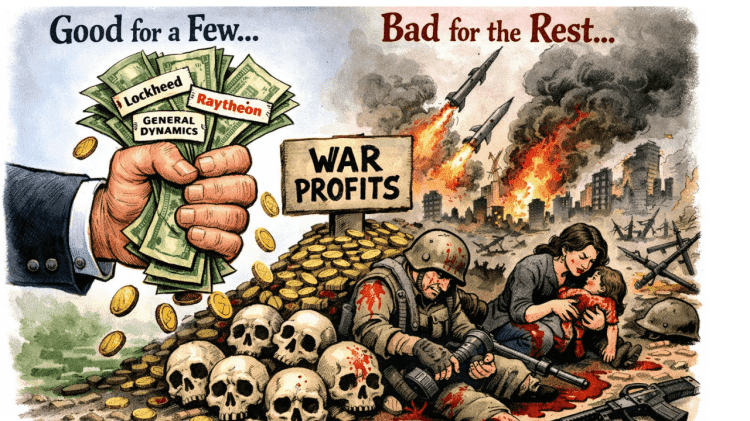
Staggering amount for guns, bullets, bombs, space superiority
$1.5 Trillion Budget Request Prioritizes Service Members, Modernization
U.S. Department of War, April 21, 2026
“We are delivering on President [Donald J.] Trump’s commitment to expand American military dominance for decades to come,” said Secretary of War Pete Hegseth. “Previous administrations underinvested in our military while our enemies grew stronger and more dangerous, so we are now changing the game. This budget builds this arsenal without compromising readiness that will ensure we remain the world’s premier fighting force, we protect the homeland, and we create peace through strength now and into the future.”
The FY27 budget request represents a sizable increase over last year’s budget, said Jules W. Hurst III, performing the duties of the War Department comptroller.
“This is a generational investment in the United States military— the arsenal of freedom,” Hurst said. “This 42% increase will supercharge our defense industrial base by expanding production of major weapon systems, while strengthening supply chains and supporting tens of thousands of small and medium-sized businesses. It secures our homeland and military advantage through investments in the Golden Dome missile defense system, drone dominance and space superiority.”
This year’s budget request puts a huge focus on buying and investing in actual hardware, Hurst said. About 52% of the total budget request is aimed at buying munitions, planes, tanks and ships.
“The FY27 defense budget will be the largest investment in military capabilities in over a generation,” Hurst said. “This budget allocates over $750 billion … just in capability development and procuring weapons systems.”……………………………………………………………………………………………………………………………………………………………………………………………….. https://www.war.gov/News/News-Stories/Article/Article/4465551/15-trillion-budget-request-prioritizes-service-members-modernization/
10 takeaways from Trump’s senseless Iran war

Walt Zlotow West Suburban Peace Coalition Glen Ellyn IL , 23 April 26, https://theaimn.net/ten-takeaways-from-trumps-senseless-iran-war/
1. First time a foreign power, Israel, goaded, indeed demanded America launch a criminal war
2. Trump’s capitulation to Israel’s war demand is destroying his presidency and will likely hand over Congress to Democrats in November
3. Air power alone has not and will not achieve victory over Iran
4. Ignoring Iran’s ability to close Strait of Hormuz gave strategic advantage to Iran to force stalemate, if not achieve outright Iranian victory
5. US has greatly degraded world economy and may spiral it into recession, possibly even depression if it doesn’t end war soon
6. All US Gulf States bases have been damaged or destroyed and may never be rebuilt due to loss of US security credibility to Gulf States
7. Israel has largely destroyed its support among young Americans disgusted with its endless manipulation of US to support both its Gaza Genocide under Biden and war to destroy Iran under Trump
8. If desperate Trump resumes bombing to destroy Iranian infrastructure, Iran will retaliate destroying Israeli and Gulf States infrastructure, possibly all Middle East oil production
9. A peaceful settlement on Iran’s sensible terms is the only path to Middle East peace
10. As long as the war continues, Israeli use of nuclear weapons remains a possibility
‘We Have No Plan For Next Round Of Negotiations’: Iran Rules Out Immediate US Talks
Iran announced it has no immediate plans to resume negotiations with the United States, accusing Washington of repeated ceasefire violations and aggressive actions that undermined trust. Pakistan, acting as mediator, remains cautiously hopeful of restarting talks in Islamabad, but rising tensions have clouded prospects for a temporary agreement to extend the ceasefire.
Vinay Mishra, April 20, 2026,
Iranian Foreign Ministry Spokesperson Esmaeil Baghaei said on Monday that Iran currently has no plans to hold another round of negotiations with United States, citing growing mistrust between the two sides. Speaking at a press briefing, Baghaei stated that no schedule had been fixed for future talks as uncertainty continues over whether discussions between Tehran and Washington will resume.
Iran accused the US of lacking genuine commitment to diplomacy, alleging repeated violations of ceasefire terms. Baghaei claimed that Washington’s actions, including alleged breaches of agreements related to Lebanon and attempts to impose a naval blockade, had weakened trust between the two nations.
He further alleged that a recent strike on an Iranian commercial vessel amounted to an act of aggression under United Nations resolutions. According to him, such actions have deepened distrust among the Iranian public and raised doubts about US intentions. He added that Iran would determine the future of negotiations based on its national interests.
Baghaei also said Iran had informed Pakistan, which is serving as the main mediator, about the alleged violations. Pakistani officials expressed cautious optimism about reviving dialogue and have been preparing to host another round of talks in Islamabad aimed at ending hostilities.
However, officials acknowledged that escalating tensions have dimmed hopes for immediate progress. Unlike the earlier round held on April 11, Pakistan has been pushing for extended multi-day negotiations to secure a temporary memorandum of understanding that could prolong the ceasefire by up to 60 days and allow more time to negotiate a lasting peace deal.
GOP Senator Suggests Trump Should “Finish” Iran With Nuclear Bomb

The senator, Roger Marshall, said Trump has to “take everything into consideration” if ceasefire progress stalls
.By Sharon Zhang , Truthout, April 22, 2026, https://truthout.org/articles/gop-senator-suggests-trump-should-finish-iran-with-nuclear-bomb/?utm_source=Truthout&utm_campaign=9a9827f3a8-EMAIL_CAMPAIGN_2026_04_22_09_22&utm_medium=email&utm_term=0_bbb541a1db-9a9827f3a8-650192793
epublican Sen. Roger Marshall (Kansas) said in an interview on Wednesday that President Donald Trump faces issues on par with those of World War II with regard to the U.S. and Israel’s war with Iran, seeming to suggest that Trump should nuke Iran in order to prevent the country from ever having nuclear weapons.
Marshall was asked by a Newsmax anchor if he believes that the U.S. military will “have to go in and finish this job” if negotiations between the U.S. and Iran for a permanent ceasefire continue for several more weeks.
“I think that’s right,” said the senator. “Previous presidents have had the same issues on what to do. Think about President Truman’s decision on dropping the bomb, and D-Day for President Eisenhower.”
“You’ve got to take everything into consideration,” Marshall said, including whether negotiations are “truly making progress or not.”
Earlier in the interview, the senator said that the U.S.’s aggression against Iran is necessary because “Iran can never, never, ever have a nuclear weapon.”
Related Story
“If Iran had a nuclear weapon, gasoline would be $10 a gallon, and for generations to come, Americans’ lives would be threatened,” the lawmaker said.
The statements echo Trump’s genocidal rhetoric toward Iran, including his threat to “blow up the rest of their Country” if negotiations falter on Tuesday. Legal experts have said that Trump’s indiscriminate threats against Iran as a whole, as well as his pledges to target civilian infrastructure like power plants, constitute threats to commit war crimes.
Marshall also bragged about the harm that the U.S. is causing civilians with Trump’s blockade on Iran.
“We also have this embargo working as well, the blockade, and we’re literally starving them,” said Marshall, “both financially and they can’t feed themselves either, very long.”
The use of starvation as a weapon of war is prohibited under international law.
The UN indeed warned last month that an additional 45 million people may be “pushed into acute hunger by price rises” if the conflict and closure of the Strait of Hormuz continue through June, adding to the already record high of 319 million people currently facing acute food insecurity. Iran previously pledged to open passage through the strait as a term of the temporary ceasefire agreement, but is still prohibiting ships from crossing due to Israel’s attacks on Lebanon and the U.S.’s blockade of Iranian ports, which Iranian officials have said are both violations of the ceasefire.
Republicans have previously called for the usage of nuclear weapons with impunity. Last May, Rep. Randy Fine (R-Florida), said that Israel should drop a nuclear weapon on Gaza. “We nuked the Japanese twice in order to get unconditional surrender. That needs to be the same here,” he said. “There is something deeply, deeply wrong with this culture and it needs to be defeated.”
The staunchly pro-Israel lawmaker’s statements were condemned by rights advocates — but, just weeks later, Republican leaders granted him a seat on the high-powered House Foreign Affairs Committee.
This followed a remark by another Republican House lawmaker, Rep. Tim Walberg (Michigan), who said in March of 2024 that Gaza should be attacked “like Nagasaki and Hiroshima.”
Westminster keeps nuclear secrets to avoid upsetting Scottish Government

The Scottish Greens argued that the people of Scotland have a “fundamental right” to know the risks they face from hosting weapons of mass destruction on the Clyde. Suppressing information that may support arguments against nuclear weapons poses a “clear and present danger” politically, it warned
Rob Edwards, April 10 2023, https://www.theferret.scot/nuclear-secrets-scottish-government/
The UK Government is refusing to say why it is keeping nuclear safety reports secret because it is worried about “anti-nuclear arguments from the Scottish Government”.
The Ministry of Defence (MoD) won’t give its reasons for failing to release annual assessments of the safety of nuclear weapons on the Clyde so as not to “prejudice relations between the UK and Scottish governments”.
The secrecy has been condemned by the Scottish Greens as “outrageous, undemocratic and frankly dangerous”. It was akin to nuclear policies in Russia, China and North Korea, according to a campaigner — and it was described as “totally unacceptable” by a former nuclear submarine commander.
The Scottish Government urged the MoD to be “open and transparent” about the handling of nuclear materials in Scotland. The MoD said it had to “strike a balance” between public interest in safety and protecting information about nuclear weapons.
Annual reports from the MoD’s internal watchdog, the Defence Nuclear Safety Regulator (DNSR), were released for ten years, but ceased being published in 2017. A freedom of information appeal to a UK tribunal to force the MoD to again release the reports was rejected in July 2021.
The Ferret previously revealed that the reports for 2005 to 2015 highlighted “regulatory risks” 86 times, including 13 rated as high priority. One issue repeatedly seen as a high risk was a shortage of suitably qualified and experienced engineers.
Now the MoD has rejected another freedom of information request asking for documents that set out the rationale for refusing to release more recent DNSR reports. It disclosed that the decision was taken in 2017 by then secretary of state for defence, Michael Fallon, but has withheld information on why.
In a letter to a campaigner in January 2023, the MoD said it had used an exemption under freedom of information law aimed at preventing damage to relations between UK administrations. The exemption had been applied to information “which relates to the basing of the nuclear deterrent in Scotland”, it explained.
“There is a strong public interest in reassuring the public, especially in Scotland, that the nuclear deterrent is maintained and operated safely. However, any misinterpretation of the information, due to an incomplete picture, could lead to further anti-nuclear arguments from the Scottish Government, which is already strongly in favour of removing the nuclear deterrent from Scotland.”
The MoD concluded that “the balance of public interest” was in favour of withholding the information “as its release would prejudice relations between the UK and Scottish governments.”
The MoD letter also argued that information on reasons for withholding the reports should be kept secret “for the purpose of safeguarding national security”. Secrecy was also necessary so as not to prejudice “the defence of the UK” or “the relationship between the UK and the US” as well as to allow a “safe space” for officials to advise ministers.
A formal memo to officials from Fallon in October 2017 released by the MoD gave a little more detail. “The current threat of the UK deterrent from hostile state actors, including hostile foreign intelligence services [redacted] means we need to tighten up our practice on release of information,” it said.
“Even information which is unarguably unclassified in isolation could help a potential adversary put together a more highly classified picture.”
Nuclear secrecy ‘totalitarian’
The Scottish Greens argued that the people of Scotland have a “fundamental right” to know the risks they face from hosting weapons of mass destruction on the Clyde. Suppressing information that may support arguments against nuclear weapons poses a “clear and present danger” politically, it warned.
“The extraordinary admission in this letter that the MoD and UK Government are actively concealing key pieces of information from the Scottish Government is outrageous, undemocratic and frankly dangerous,” said Green MSP, Mark Ruskell.
“The MoD is basically saying they won’t share this information because they are scared Scotland won’t like it and it might upset the US. You simply can’t get any more totalitarian than that and this should be challenged further.”
Ruskell added: “If they want to reassure people that there are no unnecessary added dangers, they should share the information urgently and transparently. If not they should pack up and ship out. Scotland doesn’t want nukes here and they know it.”
The nuclear researcher and campaigner who has been challenging the MoD’s refusal to release the nuclear safety reports is Peter Burt. UK citizens are allowed to know “virtually nothing” about the hazards of nuclear weapons despite paying billions of pounds for them, he said.
“We’re not allowed to know whether the Ministry of Defence’s safety watchdog thinks the nuclear weapons programme is complying with public protection arrangements, and Scottish Ministers are not trusted to know what is going on at the Navy’s nuclear bases in Scotland,” Burt told The Ferret.
“It’s pretty clear that this has more to do with politics than security. While the US government regularly releases information about its nuclear weapons programme, the UK Government has decided to model its own nuclear policies on those of countries like Russia, China, and North Korea.”
Rob Forsyth, a former Royal Navy nuclear submarine commander who now campaigns against nuclear weapons, described the MoD’s justifications for secrecy as “totally unacceptable”.
He said: “The way to avoid any misinterpretation is to be honest and fully transparent over matters affecting public safety and our national defence. The notion that government should not allow public discussion is not conduct expected of a democracy.”
The Scottish Government reiterated its opposition to the possession of nuclear weapons and its support for world-wide nuclear disarmament.
“In order to retain the confidence of this government and the Scottish public, the Ministry of Defence should be open and transparent in its actions around the handling of nuclear materials in Scotland,” said a spokesperson.
The Ministry of Defence insisted that it had “robust safety measures” at nuclear sites and took safety incidents “incredibly seriously”. Nuclear programmes were “subject to regular independent scrutiny and reviews,” it said.
An MoD spokesperson told The Ferret: “The release of information on nuclear safety must strike a balance between recognising public interest in nuclear safety matters and protecting information about our nuclear systems.”
Exposed: Israeli operation to help Brits move to West Bank
Undercover investigation reveals charity touted ‘awesome’ illegal settlements and claimed it could benefit from UK tax subsidies
Martin Williams, DECLASSIFIED UK, 13 April 2026
An Israeli organisation has been caught on camera offering to help British citizens move to an illegal settlement in the West Bank.
Declassified can reveal how the group, Shivat Zion, told supporters it could benefit from UK tax subsidies – despite staff bragging about “awesome” settlements.
An undercover investigation saw the group’s “encouragement” officer discussing the support it would give settlers moving to Efrat, in the West Bank.
“You’re next to the Arabs; you’ll hear their mosques,” he was recorded saying. “But apart from this, it’s a great living standard.”
The comments were made during a Zoom call with a Jewish anti-Zionist activist, who asked Declassified to secretly film the conversation.
In February, the UK government promised to take “concrete steps in accordance with international law to counter settlement expansion”.
Foreign minister Hamish Falconer said: “Israel’s illegal settlements and decisions designed to further them are a flagrant violation of international law”.
But Declassified can reveal how Shivat Zion invited supporters to claim UK Gift Aid when making donations.
Despite being registered in Israel, it directed donations to a separate charity called UK Toremet Ltd, based near London.
In an email seen by Declassified, a representative from Shivat Zion claimed that donations “go through” the UK Toremet charity, explaining that this “ensures the donations properly reach Shivat Zion”.
If money were to be received this way, it could mean that support for illegal settlers could potentially benefit from British tax subsidies………………………………………………………………………………………………………………………………………………………………………………………………………. ‘Unacceptable’
Human rights lawyer Daniel Machover told Declassified: “Fundamental breaches of international law cannot constitute charitable purposes.”
He added: “It’s just unacceptable, really, for these things to go unhindered when it’s clear that they shouldn’t be taking place. I am really deeply disturbed that this is going on.”………………………………………………………………………………………………..https://www.declassifieduk.org/exposed-israeli-operation-to-help-brits-move-to-west-bank/
Leader in nuclear”? Or leader in repeating harm?
| Elaine Cimino, Apr 23, 2026, |
Rep. Meredith Dixon stood at a pro-nuclear conference and laid it out plainly: New Mexico is building a “nuclear ecosystem.”
Let’s translate that.
An ecosystem where:
– Public money cleans up yesterday’s contamination
– Public money funds tomorrow’s nuclear expansion
– And communities are told, once again, to accept the risk
$40 million to clean up abandoned uranium mines.
$150 million to build new nuclear technology.
That’s not balance. That’s subsidizing the problem at both ends.
They say this time is “different.”
They said that last time too.
Hundreds of abandoned uranium sites across New Mexico say otherwise.
Navajo communities still living with contamination say otherwise.
Water systems already under stress say otherwise.
Now we’re told uranium can come from “produced water.”
The same toxic waste stream the oil and gas industry is trying to dump into our future.
This is not innovation.
This is expanding extraction under a new label.
And let’s be clear about what’s driving this push:
Data centers. Defense systems. Industrial demand.
Not community need. Not public health.
Meanwhile, local journalism keeps framing this as a “debate”—two equal sides.
There are not two equal sides when one side carries decades of contamination, illness, and broken promises.
That’s not “both sides.”
That’s power vs. people.
We don’t need a nuclear ecosystem.
We need clean water, clean air, and full cleanup—first.
No new uranium. No expansion. No sacrifice zones.
Democratic NM representative says state poised to become national nuclear leader • Source New Mexico https://sourcenm.com/2026/04/21/democratic-nm-representative-says-state-poised-to-become-national-nuclear-leader/
Kiev’s 2014 anti-terror operation was a bankers’ war
The war, which left 14,000 casualties, was instigated by IMF’s “key shareholders,” and discussed by Arianne de Rothschild and Jeffrey Epstein
Alex Krainer, Apr 23, 2026, https://alexkrainer.substack.com/p/kievs-2014-anti-terror-operation?utm_source=post-email-title&publication_id=1063805&post_id=194384784&utm_campaign=email-post-title&isFreemail=true&r=1ise1&triedRedirect=true&utm_medium=email
On 15 April 2026, we passed the 12-year anniversary from the start of Ukraine’s anti-terrorism operation (ATO), which set off a cascade of events leading to a civil war in Ukraine and which made the ultimate clash between Russia and the U.S./NATO all but inevitable. The ATO was a critical part of Western powers’ attempt to take full control of Ukraine, but at the same time, but its nature and intensity was deliberately obscured in the Western media.
The Maidan coup and the breakup of Ukraine
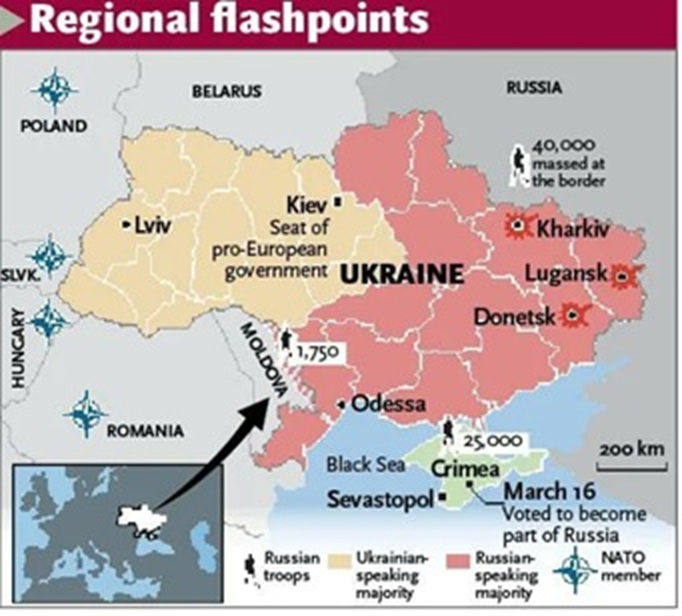
Violent overthrow of the democratically elected President Alexander Yanukovich took place in February 2014 and it provoked strong resistance in the southern and eastern regions of Ukraine where the majority of people understood what took place in Kiev.
These were the most populous regions of Ukraine which overwhelmingly supported President Yanukovych. In the 2010 elections in the Donbass he received over 90% of the vote and the people there did not accept his violent overthrow.
Russia seizes Crimea
In the immediate aftermath of the coup, Moscow moved to secure the Crimean peninsula. On 27 February 2014, Russian troops that were stationed in Crimea secured all of the peninsula’s strategic points to prevent a forcible takeover by Kiev junta’s forces. On 16 March, Crimea held a referendum to a very large turnout (83.1%) and 96.77% of the votes (1.23 million) were in favor of the peninsula re-joining Russia. Two days later, on 18 March, the Kremlin officially recognized Crimea as a constituent part of the Russian Federation.
Meanwhile, in other parts of the east and the south of Ukraine demonstrations against the new regime multiplied, disabling Kiev’s attempts to take full control the country. Kiev’s Western sponsors exerted pressure on the new government to crack down on these protests and consolidate control of the whole country. As a result, in early March 2014 Kiev began sending convoys of troops armed with helicopters, artillery and tanks toward the mutinous regions.
However, the people of the eastern regions of Donetsk and Lugansk organized to block their advance. Because the ordinary Ukrainian soldiers were reluctant to unleash violence on their fellow citizens, these acts of civilian resistance proved effective and the regime was in danger of losing control of the country’s south and east regions.
The Nazification
On 13 March, the Junta moved quickly to form a more aggressive force, a 60,000-strong National Guard. Led by the new security chief Andriy Paruby, the National Guard would play a similar role in Ukraine as Ernst Roehm’s Storm Troopers played in Germany during the 1930s: it would be to carry through an onslaught against any elements disloyal to the regime.
At the same time, the Interior Minister Arsen Avakov took up the task of spiking up the rest of Ukraine’s armed forces by seeding almost all of their regular units with at least two or three far right radicals to overcome the troops’ scruples about violence. These men were assigned to accompany the regular army units, confront the protesters and enforce the Junta’s commands.
As John Pilger reported in The Guardian at the time, Ukraine was turned into a CIA theme park, run personally by the CIA director John Brennan in Kiev, with dozens of “special units” from the CIA and FBI setting up a “security structure” overseeing savage attacks on those who opposed the February Coup.
Kiev’s ATO triggers a civil war in Ukraine
In this way, the stage was set for a civil war in Ukraine. What’s important to recognize, however, is that the pressure to consolidate Junta’s control over the Donbass originated with the international banking cartel, the IMF acting as their conduit.
Immediately after the coup, US Treasury Secretary Jacob Lew indicated that Ukraine’s discussions with the IMF were crucial. Lew held discussions with the junta’s leader Arseniy Yatsenyuk and assured him that his government could count on a broad international assistance coordinated by the IMF.
Lew then instructed the IMF chief Christine Lagarde that Ukraine needed to quickly begin implementing the requisite “structural reforms.” Two weeks into Kiev’s ATO, on Wednesday, 30 April 2014, the IMF signed off on a $17 billion aid package for Ukraine.
IMF money, with strings attached
This was the very same IMF that only six months prior could come up with only $4 billion in aid, subject to extremely harsh conditions. But for the new regime, $17 billion was doable, only with different strings attached this time. One day after approving the new aid package, the Fund’s staff report pointed to the obvious problem:
“… unfolding developments in the east and tense relations with Russia could severely disrupt bilateral trade and depress investment confidence for a considerable period of time, thus worsening the economic outlook. … Should the central government lose effective control over the east, the program will have to be re-designed. ”
A CNBC article titled, “IMF warns Ukraine on bailout if it loses East” noted that Kiev’s actions were “politically driven by key IMF shareholders to support the Yatsenyuk ‘kamikaze’ administration in its reform efforts.” How important was IMF’s role? On 26 November 2014, Prime Minister Yatsenyuk said as follows:
“Our cabinet has resumed the program of activity and cooperation with the International Monetary Fund, the European Bank for Reconstruction and Development and other banks. Today international investors are not ready to go to the country but international banks are ready to help us. … We would not have survived without the international assistance.”
However, to earn that vital assistance from western banking cartel, Kiev would have to take full control of the defiant eastern regions which accounted for nearly 80% of the nation’s GDP.
It’s (as always) the collateral, stupid!
Why, we might ask, were the banking interests so keen that their Kiev junta retain control of the Donbas? It all had much less to do with its freedom and democracy and more with its large coal industry, ferrous-metallurgy industry, machine building, chemical industry, construction sector, enormous energy resources, diversified agriculture, and a dense transportation network – all coveted prizes for the western financial interests.
Furthermore, the Donbass accounted for almost 95% of Ukraine’s domestic energy resources and about 30% of her energy use. Some 90% of Ukraine’s coal reserves, which are the 6th largest in the world, are located in the Donetsk basin. This was crucial for Ukraine’s energy diversification plans, as formulated by the OECD in 2011. The plan entailed doubling Ukraine’s electricity generation through 2030 and shifting thermal power plants from gas, which was supplied from Russia, to domestic coal.
Taking control of the Donbas and Crimea was essential for the realization of that plan. Ukraine was also found to have the third largest shale gas reserves, estimated at 1.2 trillion cubic meters. One of the two large fields, the Yuzivska, falls almost entirely within the Donetsk and Kharkov oblasts. Western energy giants like Chevron, Exxon, Halliburton and Shell had already set their crosshairs on projects in eastern Ukraine oblasts.
The rebellion in Donetsk and Lugansk deprived them of the opportunity to develop those assets, and their bankers of the opportunity to turn those natural resources into their own collateral. Already in June 2014, Royal Dutch Shell had to suspend operations on shale gas exploration projects on Yuzivska due to the fact that Kiev government was unable to secure their control over the field. Six months later, the company had to abandon the project altogether.
Likewise, Chevron had to abandon its own plans to develop Ukraine’s energy resources, estimated to be worth about $10 billion. After Russia annexed Crimea, Exxon Mobil had to shelve its own ambitious plans to develop Black Sea offshore gas fields. Its $12 billion Skifska project with 3 trillion cubic feet of estimated gas reserves was expected to begin producing gas in 2017, only now it was on Russia’s sovereign territory.
The price of democracy and freedom
All these resources could not just be abandoned to the uppity east Ukrainians. There was work to be done and Western diplomats and ‘advisors’ made sure to prod their Kiev agents accordingly. As soon as the Junta was in power a slew of top western officials descended on Ukraine’s capital, including John Kerry, two visits by Vice President Joe Biden, a number of “senior US defense officials,” and no less than seven visits by Sweden’s Foreign Minister Carl Bildt, advising the new government on how to secure the nation.
On 12 April 2014 CIA Director John Brennan made a secret visit to Kiev for a meeting with the Junta’s key officials. Ukraine’s top level intelligence officer Andrii Telizhenko testified that, at the time, he received a call from the U.S. Embassy asking him to help organize the meeting that would include his boss, the First Deputy Prime Minister Vitaliy Yarma, U.S. Ambassador Jeffrey Pyatt, Ukraine’s acting President Oleksandr Turchynov, foreign intelligence chief Victor Gvozd, and a few other senior Ukrainian security officials.
Telizhenko said that, “Brennan gave [the] green light to use force against Donbass,” and discussed “how the U.S. could support it… Brennan was talking about how Ukraine should act… A plan to keep Donbass in Ukraine’s hands… Ukraine has to take firm, aggressive action to not let this spread all over.” The very next day, the Junta announced its brutal “anti-terrorist operation” (ATO) against the rebel regions, which then kicked off on 15 April, 12 years ago.
So, who were the IMF’s “key shareholders”?
As CNBC reported, today we know that Kiev’s actions were “politically driven by key IMF shareholders to support the Yatsenyuk ‘kamikaze’ administration in its reform efforts.” Given that Kiev’s ATO triggered a civil war in Ukraine, caused over 14,000 casualties it would be interesting to know who these “key IMF shareholders” were.
Keep in mind, the 2014 coup and Kiev’s ATO created the conflict that ultimately cascaded into a full-scale war between Ukraine in Russia, resulting in well over a million casualties and a near total devastation of Ukraine’s economy and society. Without a doubt, this conflict will continue to metastasize and might, ultimately, lead to another devastating World War on the European continent.
Finding out the “key shareholders” should not be too difficult if we wanted to prevent the war from escalating further. Today we even know one suspect by name, thanks to her correspondence with her pet employee, Jeffrey Epstein: Arianne de Rothschild, CEO of the Edmond de Rothschild Group. Here’s [on orignal] an email exchanged between them only three days after Kiev launched their ATO:
With Ukraine’s estimated $10-12 trillion in money-good collateral, there would indeed be “many opportunities , many”
1 This Month
6 June – WEBINAR- Get Inspired by Protests Against Military Bases!


Cuba Is Not a Failed State – It Is a Besieged State
PETITION: “Global Appeal to Endorse Palestinian Right of Return of Refugees”


of the week– Nuclear Reactor Information Task Force
To see nuclear-related stories in greater depth and intensity – go to https://nuclearinformation.wordpress.com
-
Archives
- June 2026 (34)
- May 2026 (306)
- April 2026 (356)
- March 2026 (251)
- February 2026 (268)
- January 2026 (308)
- December 2025 (358)
- November 2025 (359)
- October 2025 (376)
- September 2025 (257)
- August 2025 (319)
- July 2025 (230)
-
Categories
- 1
- 1 NUCLEAR ISSUES
- business and costs
- climate change
- culture and arts
- ENERGY
- environment
- health
- history
- indigenous issues
- Legal
- marketing of nuclear
- media
- opposition to nuclear
- PERSONAL STORIES
- politics
- politics international
- Religion and ethics
- safety
- secrets,lies and civil liberties
- spinbuster
- technology
- Uranium
- wastes
- weapons and war
- Women
- 2 WORLD
- ACTION
- AFRICA
- Atrocities
- AUSTRALIA
- Christina's notes
- Christina's themes
- culture and arts
- Events
- Fuk 2022
- Fuk 2023
- Fukushima 2017
- Fukushima 2018
- fukushima 2019
- Fukushima 2020
- Fukushima 2021
- general
- global warming
- Humour (God we need it)
- Nuclear
- RARE EARTHS
- Reference
- resources – print
- Resources -audiovicual
- Weekly Newsletter
- World
- World Nuclear
- YouTube
-
RSS
Entries RSS
Comments RSS
 nuclear-news