Media Silent on Fukushima Radiation Impact in U.S.
“…My internet search skill may not be the best, but the fact that I have to search for follow-up stories is a warning sign. Journalists and the media should be paying more attention. The only recent article I could find related to radiation fallout from Fukushima was a scientific study published in November, 2012. It focuses primarily on how tracing the travel of radionuclides gives insight into atmospheric air circulation in the Northern Hemisphere….”
21 JANUARY 2013
Media Silent on Fukushima Radiation Impact in U.S.
Sometimes big news stories can only be seen by the shadows they cast. You would think that it should be easy to find detailed updates on theFukushima disaster‘s impact on our fishing industry, milk production, global radiation distribution patterns, etc. You would be mistaken. The massive media coverage following the initial disaster has fallen nearly silent. Some frustrated environmental advocates have suggested that there is a media blackout. Probably not, but media follow-up stories are few and far between these days.
In July of last year there were major stories about Fukushima and the plume of radiation reaching across the Pacific Ocean towards North America. On July 16, 2012, Deborah Dupre of the Examiner reported the following:
“As hair falls out of a Fukushima victim’s head, a new German study reports that North America’s West Coast will be the area most contaminated by Fukushima cesium of all regions in Pacific in 10 years, an “order-of-magnitude higher” than waters off Japan, according to a new German study followed by a former New York Times journalist going inside the no-entry zone and reporting radiation levels over 10 times higher than Tepco’s data.”
The article was accompanied by this scary graphic:

http://www.examiner.com/article/fukushima-west-coast-cesium-slam-ahead-hair-falling-out-tepco-data-flaw?cid=PROD-redesign-right-next
The article went on to say: “After 10 years, the concentrations become nearly homogeneous over the whole Pacific, with higher values in the east, extending along the North American coast with a maximum (~1 — 10 -’4) off Baja California,” a new research report states.”
Then, on August 22, 2012, Japan’s NHK News reported that the Fukushima Daiichi nuclear plant detected radiation levels 380 times the government safety limit in a fish caught off Fukushima Prefecture.
Since then not much more has been reported on the spread of radiation, although there continues to be reports about the tons of debris from the tsunami still washing up on the Pacific coast.
(One recent article can be found here: click here)
My internet search skill may not be the best, but the fact that I have to search for follow-up stories is a warning sign. Journalists and the media should be paying more attention. The only recent article I could find related to radiation fallout from Fukushima was a scientific study published in November, 2012. It focuses primarily on how tracing the travel of radionuclides gives insight into atmospheric air circulation in the Northern Hemisphere. It is clear from the abstract that atmospheric traces of radiation from Fukushimahave already encircled the hemisphere.
We deserve to know more about what the US, Canadian and Mexican governments are doing to monitor radiation levels, track distribution rates and study how it may be impacting our food and water.
Below is a reference to the recently published study.
Science of The Total Environment Volume 438,
1 November 2012, Pages 80—85
http://www.opednews.com/articles/Media-Silent-on-Fukushima-by-Brian-Lynch-130108-588.html
Breaking! Nigeria -Ansaru claims attack on Mali-bound troops -More “spillover”?
Published on Monday, 21 January 2013 05:00
Daily Trust
A group blamed for abducting Westerners claimed responsibility for a deadly attack on troops heading to Mali on Sunday in Kogi State, Reuters quoted Desert Herald yesterday as reporting.
Mali: A French quagmire in the making?
By SHARIF NASHASHIBI
Mon Jan 21, 2013 08:26 am (KSA) 05:26 am (GMT)

Just 10 days into its military intervention in Mali, there are already signs that France may have taken on more than it bargained for. The West African country may become to French President Francois Hollande what Iraq was for U.S. President George Bush and British Prime Minister Tony Blair: a destructive, open-ended quagmire with wide-ranging, unforeseen consequences.
Timescale
France’s foreign minister has said the campaign against Islamist rebels, who have taken control of the northern two-thirds of its former colony, will last “a matter of weeks.” However, subsequent statements by Hollande suggest that he is either contradicting his foreign minister, or that this timeframe is wishful thinking.
The president said French forces will leave when there is “security in Mali, a legitimate authority, an electoral process, and no more terrorists threatening the integrity of the country.” He added that his troops will stay “as long as is necessary so that terrorism can be defeated” in West Africa.
Hollande is either delusional in thinking that this utopia can be created within weeks – if at all – or he is preparing for the very long haul. After all, more than a decade since the U.S.-led invasions of Afghanistan and Iraq, the two countries are still a mess.
Public opinion
Many French will resent being told to tighten their belts while money is spent long-term on a foreign campaign that they may increasingly view as not worth the cost

Nearly two-thirds of French people support the intervention, according to a poll by the French Institute of Public Opinion. Quick and decisive military operations abroad often boost leaders’ ratings at home, and Hollande may be counting on this to alleviate his unpopularity over the economy. However, public opinion usually turns when a campaign lasts longer than expected or promised.
France slams media blackout on Mali war -PressTV
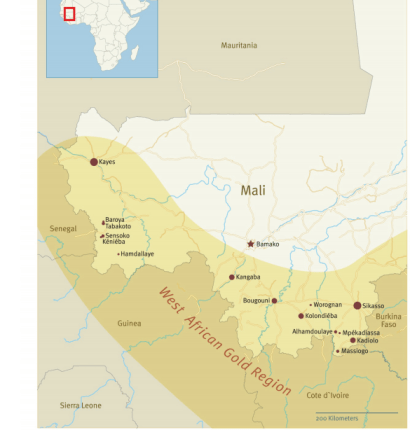
On January 11, France launched the war under the pretext of halting the advance of fighters in Mali. However, as Paris has stepped up its ground offensive and aerial strikes in Mali few images of the conflict have come out of the African country.
French networks TF1 and France Televisions have also sent several teams to Bamako, but a media blackout on images of the clashes has confined all journalists to the city.
This comes as French Defense Minister Jean-Yves Le Drian has said the number of French troops on the ground in the West African country could top the initially-planned number of 2,500.
“Two thousand five hundred is what was initially announced, maybe that will be exceeded,” Le Drian said in a Saturday television interview.
Also on Sunday, Le Drian announced that Paris’ goal in the African country “is the total reconquest of Mali,” adding, “We will not leave any pockets” of resistance.
Meanwhile, the United Nations refugee agency, UNHCR, said it was preparing for around 700,000 people to flee the violence in Mali.
The United States, Canada, Britain, Belgium, Germany, and Denmark have already said they would support the French war against Mali.
The Economic Community of West African States (ECOWAS) has also pledged to support the French war by sending 5,800 soldiers to Mali.
Some analysts believe that Malian abandoned naturalresources, including gold and uranium reserves, could be one of the reasons behind French war on the country.
http://www.presstv.ir/detail/2013/01/21/284689/france-slams-media-blackout-on-mali-war/
World Nuclear Electricity Generation Down 5 Percent Since 2006 and Canada issues
SUNDAY, JANUARY 20, 2013

completely (two at Bruce and one at Clarington) and
Russian nuclear icebreaker traversing Norwegian waters, worrying Bellona
The Russian nuclear icebreaker, the Rossiya, has left the Murmansk-based icebreaker port of Atomflot on Tuesday en route to the St. Petersburg area on what is likely to be its last voyage of Russia’s forth-oldest ship of this type.

Charles Digges, 17/01-2013

The icebreaker will likely be taken out of service because it has surpassed its intended useful lifespan.
As of 11:00 Central European time Thursday, the Rossiya was located 200 kilometers east southeast of the Northern Norwegian city of Bodø travelling at 17 knots, according to the Norwegian Coastal Administration (NCA).
Nils Bøhmer, Bellona’s general manager and nuclear physicist expressed concern that the Rossiya would be completing the some 5000 kilometer along Norway’s 100,000 kilometer-long coastline as it steams to the Gulf of Finland where it will be deployed until April to help with commercial ship navigation in icy conditions, he said.
He said the potential for accidents aboard the vessel such as fires or reactor trouble were heightened because of its age. The vessel put to sea in 1985.
Bøhmer said NCA officials were notified on Christmas that the Rossiya would be sailing along its coast, but – as has happened in the past to the chagrin of Norwegian authorities – officials were given no specific dates for the voyage.
The ship’s route will take it from Russia’s far north port of Atomflot, along Norway’s western coast, through the narrow Øresund between Sweden and Denmark to the Gulf of Finland, the Barents Observer news portal reported.
The Rossiya has experienced no major radiological or other technical problems during its service period, and has even been used to shuttle tourists to the North Pole.
But other icebreaker mishaps over the past several years nonetheless give Bøhmer pause.
“The age of such vessels, the wear on reactors, andexamples of other mishaps aboard ships of Russia’s nuclear icebreaker fleet are a cause for concern to Norway’s public and the population of those countries the Rossiya will also pass,” he said.
Fire kills two aboard Vaygach
A recent example was a fire aboard Russia’s Vaygachnuclear powered icebreaker, which killed two in December 2011.
The Vaygach, which had departed from Dudinka 2,800 kilometers northeast of Moscow, was breaking the way for the freight carrier Kapitan Danilkin along the Yenisei river that runs north through Siberia when the blaze broke out.
Though the fire left the Vaygach’s reactor untouched, it burned for three hours at the mouth of the Yenisei were it spills into the Kara Sea.
A third man suffered burns and smoke inhalation, but theVaygach eventually returned to Atomflot under its own steam. The Vaygach put to sea in 1990.
In another 2011 incident, this one in May, the Russian nuclear icebreaker Taimyr was forced to return to port when tiny cracks in the first cooling circuit of the ship’s reactor were found to be leaking large quantities of cooling water.
Coolant leak hobbles Taimyr at sea
A bloggers critique of corporate resource stripping in Africa
“People don’t seem to like the way Glencore does business and they do not agree with what they do, especially in Africa. “[Glencore] is cheating other people, taking things out of the ground and not paying [much in taxes in the countries in which it operates] and selling it at a lot of profit.”
“Tony Hayward is not only the President and CEO of Genel Energy, he is also the Senior Independent Director at Glencore International Plc.”

Published on Jan 17, 2013
The artist taxi driver
A response to Jon Snow on reporting civilian deaths in Mali
Some crowd sourced, free and critical thoughts without corporate censorship bias
A conversation amongst bloggers…
….I was just looking at the March 26th London Energy Symposium on your site and noticed that Tony Hayward is one of the speakers. I thought i’d take a little look at his new company Genel Energy and it seems he’s doing some very interesting stuff.
Earlier this month, Genel Energy started exporting crude oil by truck directly into Turkey from its Taq Taq oil field in Iraqi Kurdistan, after official exports from the region were halted until the federal authorities pay the 350 billion dinars ($300 million) dues owed to international companies working in the Kurdish area.
Fukushima Nuclear Crisis Update for January 15th to January 17th, 2013 -Greenpeace
“…In addition, utilities used advertising budgets—also covered by utility fees paid for by consumers—on expensive dinners and drinks for media executives. They sponsored television shows and bought advertising in publications run by Prime Minister Abe’s Liberal Democratic Party (LDP), which currently holds control of the Lower House of the Diet. Spending doubled after the Chernobyl nuclear disaster in 1986, when many began to seriously question nuclear power’s safety. “It is easy to see that by spending a large sum on ads, utilities tried to keep a close eye on media organizations’ negative reporting on nuclear power plants,” noted Hiroyoshi Sunakawa, an associate professor of media theory at Rikkyo University. Tatsuo Hatta, a visiting professor of economics at Gakushuin University, agreed: “With advertising money, media organizations became dependent on utilities for revenue and found it hard to criticize nuclear power.”….”
Here’s the latest of our news bulletins from the ongoing crisis at Japan’s Fukushima Daiichi nuclear power plant.
Blogpost by Christine McCann – January 18, 2013
Decontamination Scandal
A major decontamination scandal continues to unfold in Fukushima Prefecture, prompting the Environment Ministry to conduct its own investigation into shoddy practices after a series of articles in the Asahi Shimbun revealed photographic, video, and audio evidence of contracted workers blatantly disregarding Ministry rules regarding appropriate disposal of radioactive materials and other decontamination procedures. After the articles first began to appear in Asahi on January 4, Ministry officials asked four construction firms contracted to do the decontamination to conduct their own investigations into the charges, which included illegally dumping radioactive materials into rivers, streams, and forested areas. However, the construction company officials only admitted the three infractions, including allowing contaminated water from high-pressure sprayers to flow intogutters and washing boots and other equipment covered in radioactive mud in rivers and ditches. They blatantly denied the other allegations, despite a mountain of evidence to the contrary.
Asahi reporters uncovered 14 instances of wrongdoing, and approximately 30 whistleblowers who had worked at the decontamination sites contacted the Ministry after being ordered to improperly dispose of the debris. In one instance, reporters took a series of 27 photographs of a Kajima Corporation supervisor kicking radioactive leaves into a river. Kajima officials continue to insist that the incident didn’t happen, instead saying that he was trying to recover a rake that had slid down an embankment into the river. However, none of the pictures showed a rake, and the embankment near the river was covered with roots, branches, and other foliage, making it difficult or impossible for the rake to slide down the hill. In another instance, a report said that contractors did not use pressurized sprayers to clean roofs, when Asahi photographs clearly show that they were used, a violation of Environment Ministry decontamination policies.
Some workers have blamed lack of training and the prospect of a nearly impossible task with no clear-cut goals for the poor work practices. One worker mused, “Theories and experience in the field are different. It’s something no one has experienced before. No one knows how it should be done, exactly.” He added, “Those overseeing us from the contracting company or government offices nag at us to work safely, but they don’t give us any specific instructions,” noting that some workers in his crew did not even wear protective footwear when working in highly radioactive areas.
In addition, problems have surfaced in Fukushima City, which is not one of the central government’s 11 officially designated “special decontamination areas”, but has received government funding for cleanup. Although the prefectural government told Environment Ministry officials that it would use zeolite-filled sandbags to filter radioactive materials out of water contaminated by the cleaning process, it failed to do so, instead allowing the water produced by pressurized sprayers to flow into gutters. Ministry guidelines say that houses are supposed to be decontaminated by wiping, not spraying, and when spraying is used, radioactive water should be collected. Officials blamed the failure on lack of temporary storage space for the contaminated sandbags. In Fukushima City, although 90,000 homes have been certified radioactive, only 4,000 have been decontaminated almost two years after the nuclear disaster first began to unfold.
Nuclear Politics in Japan
“Chilling Testimony”: Expert says public was put in great danger because of errors at California nuclear plant — KPBS: NRC hearing was a Catch 22… Kafkaesque (AUDIO)
Published: January 18th, 2013 at 6:23 pm ET
By ENENews
See the presentation here
Title: CHILLING TESTIMONY: DESIGN FLAWS AT CALIFORNIA NUCLEAR PLANT PUT MILLIONS IN DANGER
Source: The Reno Dispatch
Date: January 17, 2013
The operator of the San Onofre nuclear power plant in Southern California made critical errors in the design of the plant’s replacement steam generatorsand, as a result, the public was put in great danger last year, according to expert testimony Wednesday by an internationally renowned nuclear engineer at a Nuclear Regulatory Commission (NRC) hearing.
The chilling testimony, which was presented to the NRC Petitions Review Board, was accompanied by evidence showing that plant operator Southern California Edison should have been required to go through a license amendment process before installing the new steam generators in 2009 and 2010.
The nuclear expert, Arnie Gundersen, a consultant to Friends of the Earth, explained to the NRC that the design changes proposed by Edison created a dangerously high level of steam at the top of all four replacement steam generators. […]
Title: Nuclear Safety Groups Petition NRC
Source: KPBS
Author: Alison St John
Date: January 17, 2013
[…] In a question and answer session at the end of the hearing, Daniel Hirsch of the nuclear safety group, Committee to Bridge the Gap, told the NRC the hearings are Kafkaesque, because Edison won’t release some very pertinent documents.
“You are placing the burden on Friends of the Earth to tell you what’s wrong with a document you will not permit them so see,” he said. “So I’m asking you for the rationale behind a public agency keeping those documents secret from the public, and then demanding that the public critique something they do not have access to.” […]
KPBS broadcast here
Caldicott: Terribly alarming what’s happening in Japan — Signs of radiation sickness reported in children after 3/11 — Lies are being fed to the people (AUDIO)
Published: January 19th, 2013 at 12:30 pm ET
By ENENew
Title: Interview with Helen Caldicott
Source: KPFA 94.1 FM
Date: January 15, 2013
At 11:30 in
Dr. Helen Caldicott: It’s terribly alarming what’s happening, and the ignorance of the population, and the lies that are being fed to the people.
I’ve just been in Japan for 10 days doing a speaking tour and I had audiences of 400 people and I’d give them the medical data and statistics about radiation and then it’d turn into a medical consultation. […]
Indeed many children were reported to have had nose bleeds which means their platelets are low which is a sign of radiation sickness.
And there have been a lot of viral illnesses as well. Of course your immune system is depleted by radiation.
There’s little being done to collect the medical data.
From the comments, h/t Mack from Enenews
Some notes from interview:
–> 1/2 Japan contaminated with Cesium-137 which causes brain, muscle, reproductive cancers
–> Strontium-90 in some Tokyo soil so radioactive that in America it would be sent to radioactive waste sites
–> Children living in areas with radiation levels at which Russians were evacuated
–> Japanese didn’t announce there had been 3 meltdowns for 2 or 3 months
–> Japan knew where plume was going, but didn’t tell people because they didn’t want to cause panic
–> Japanese gov’t encouraging radiative rice sold and fed to children
–> They’re diluting radioactive rice with non-radioactive rice
–> Mushrooms so radioactive they’re forbidden to be eaten
–> 100,000 children tested and 40% have thyroid lesions
–> 2 have thyroid cancer which is really quick because it took 5 years after Chernobyl for thyroid cancer to show up
–> Children extremely sensitive to radiation, 10X more than adults, girls 2X more than boys
–> Doctors in Japan are hungry for information
–> Japan trying to gloss it over and even open reactors again
–> Fukushima will never end
–> No idea how to clean it up becase there have never been 3 meltdowns in histroy
–> Continuation of radioactive elements being put in ocean
–> 53% of fish caught there are radioactive
–> Hillary Clinton signed a deal so food would be imported from Japan
–> Musn’t eat food from Japan now because you don’t know what’s going to be radioactive–> 200 radioactive elements were released during the meltdowns – some last seconds, some last millions of years
–> NUCLEAR ACCIDENTS NEVER END
Dr. Caldicott also discusses the Fukushima symposium.
The guest list is impressive.
Link for symposium
http://www.helencaldicott.com/2012/12/helen-caldicott-foundations-fukushima-symposium/
November 2012 -Cattenom incident upgraded to INES level 1
LUXEMBOURG
Published on 11.01.13 15:19
WORT.LU

A systems failure which took place last year at the Cattenom nuclear power plant has been reclassified to a level 1 incident.
The incident, which took place on November 11, 2012 and was initially given a rating of 0 out of 7 (the lowest) on the INES safety scale.
However, it was upgraded to a level 1 incident in a meeting by management on January 10 because of the discovery of several anomalies on the clamp for the control rods clusters.
A blockage to the control cluster resposible for powering the reactor at production unit No. 2 was first discovered during the restart of reactor operations last year.
The source of the fault was traced to a faulty screw on the control rod cluster. The anomaly was reported to the Nuclear Safety Authority and 64 other clusters were reviewed and found to be fully functioning.
The Luxembourg government said that this incident had no impact on the safety of the plant located on the Luxembourg-France border.
http://www.wort.lu/en/view/cattenom-incident-upgraded-50f01f5ae4b034d98bfcd85e
72 microsieverts/hour spike -Cattenom France, during emergency response exercise -Not noticed?
3.00 am 4th Dec 2012
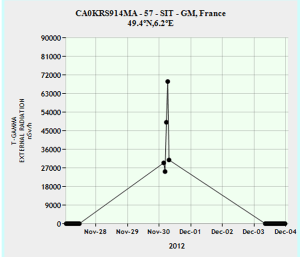
72 microsieverts/hour spike -Cattenom France, during emergency response exercise -Not noticed?
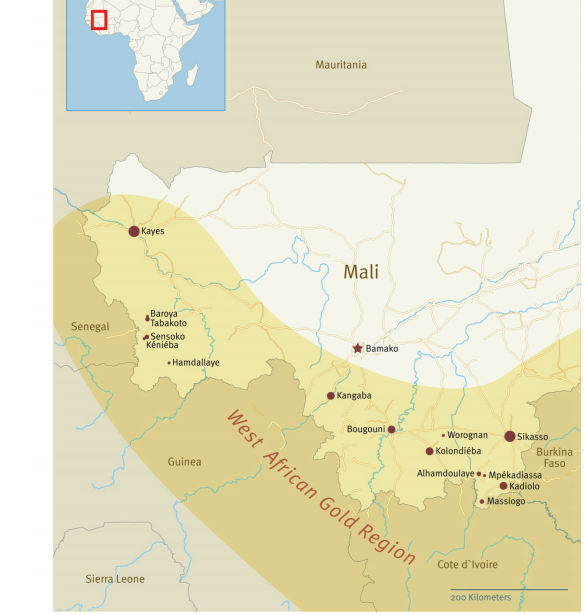
Human Rights Watch report on MALI Child labor in Gold exploitation
DECEMBER 6, 2011
UPDATE: For the report, “A Poisonous Mix: Child Labor, Mercury, and Artisanal Gold Mining in Mali,” Human Rights Watch reprinted a government list that named “Kaloute Hong Kong” as buying gold from Mali’s artisanal mines. However, Kaloti Jewellery International in Hong Kong has subsequently informed us that it does not buy such gold.
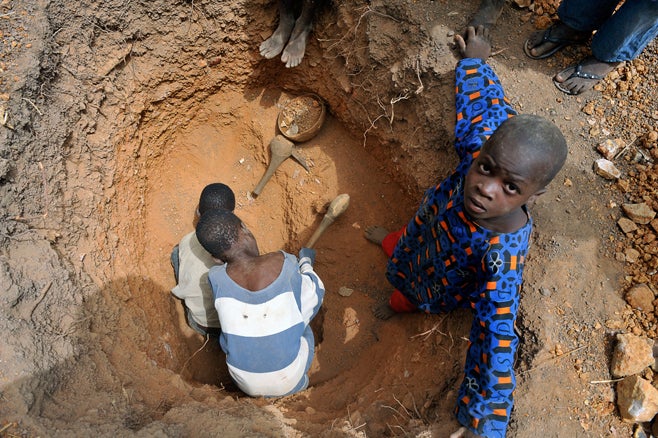
(Bamako)– At least 20,000 children work in Malian artisanal gold mines under extremely harsh and dangerous conditions, Human Rights Watch said in a report released today. The Malian government and international donors should take action to end child labor in artisanal mines, Human Rights Watch said. Artisanal miners rely on low-tech methods and often organize informally.
The 108-page report, “A Poisonous Mix: Child Labor, Mercury, and Artisanal Gold Mining in Mali,” reveals that children as young as six dig mining shafts, work underground, pull up heavy weights of ore, and carry, crush, and pan ore. Many children also work with mercury, a toxic substance, to separate the gold from the ore. Mercury attacks the central nervous system and is particularly harmful to children.
“These children literally risk life and limb”, said Juliane Kippenberg, senior children’s rights researcher at Human Rights Watch. “They carry loads heavier than their own weight, climb into unstable shafts, and touch and inhale mercury, one of the most toxic substances on earth.”
Of 33 child laborers interviewed by Human Rights Watch, 21 said that they suffered from regular pain in the back, head, neck, arms, or joints. Childrenalso suffer from coughing and respiratory disease. One boy about six years old described the pain he felt when digging shafts with a pickaxe for hours on end. Another boy said that “everything hurts” when he comes home after a day’s work underground.
Most children work alongside their parents to supplement the little income adult miners get from selling gold to local traders. Other children migrate to the mines by themselves, and end up being exploited and abused by relatives or strangers who take their pay. Some girls are sexually abused or engage in sex work to survive. Children come to the mines from other parts of Mali, as well as from Guinea, Burkina Faso, and other neighboring countries.
Belgium to build ‘battery island’ to store wind farm energy
“…The Belgian island project is part of the country’s phase-out of nuclear energy and shift towards renewables. The country, which has for years received more than half of its electricity from its two nuclear power plants, Doel and Tihange, wants to shut down all its reactors by 2025; wind farms on the North Sea are an essential part of this strategy.
The country had just 1,078 megawatts of wind power connected to the grid in 2011, but the output is expected to expand to more than 4,000 megawatts by 2020, according to a European Wind Energy Association report.
The island will also double as a resting place for gulls and other sea birds, Minister Lanotte said. They will be fed there, and will be less inclined to bother people on the mainland, he explained….”
Published: 19 January, 2013, 12:43
RT
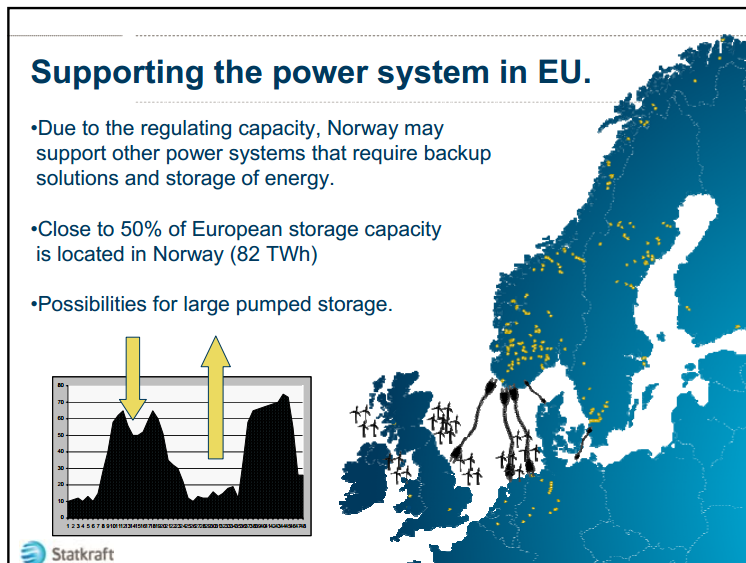
Belgium plans to build a horseshoe-shaped artificial island off its North Sea coast to store energy generated by its wind farms. The project will also double as attraction for sea birds (and possibly flocks of tourists).
The ambitious undertaking was unveiled this week by Belgian North Sea Minister Johan Vande Lanotte, as he reported on the implementation of marine special planning.
The island is planned to be built over the course of five years about three to four kilometers off the coast near the village of Wenduine in the province of West Flanders. It will be about three kilometers in diameter, and will have a giant water reservoir occupying most of its territory.
Energy will be stored by pumping seawater inside the reservoir. It is then recovered when needed by guiding the water back into the sea through a hydropower plant at the heel of the ‘horseshoe.’
Storing excess energy is a common problem for electric grid management. Consumption of electricity varies greatly between daytime and nighttime, so balancing the load often requires generating and storing extra energy overnight and releasing those reserves during peak hours. This is a particular issue for many forms of green energy; for example, the output of a wind farm depends on whether there is enough wind to spin its turbines.
Fish with 254,000 Bq/kg Cesium Was Caught Right at Fukushima I Nuke Plant, Not “Near Fukushima”
http://ex-skf.blogspot.co.uk/2013/01/fish-with-254000-bqkg-cesium-was-caught.html
SATURDAY, JANUARY 19, 2013
EXSKF -Clarification of shoddy french journalism!
“Fish was caught near Fukushima” is how France’s Le Monde seems to portray the event, though I can only read the Google translation:
Radioactivity on a record fish caught near Fukushima
Fish, close rockfish was caught in the bay near the central Fukukshima Daiichi…
Le Monde’s article was sited at Zero Hedge also, calling the fish “Mike the Murasoi”.
As I posted, the bottom-dwelling fish was caught right inside the harbor for the nuclear power plant, not near the plant or not near Fukushima:
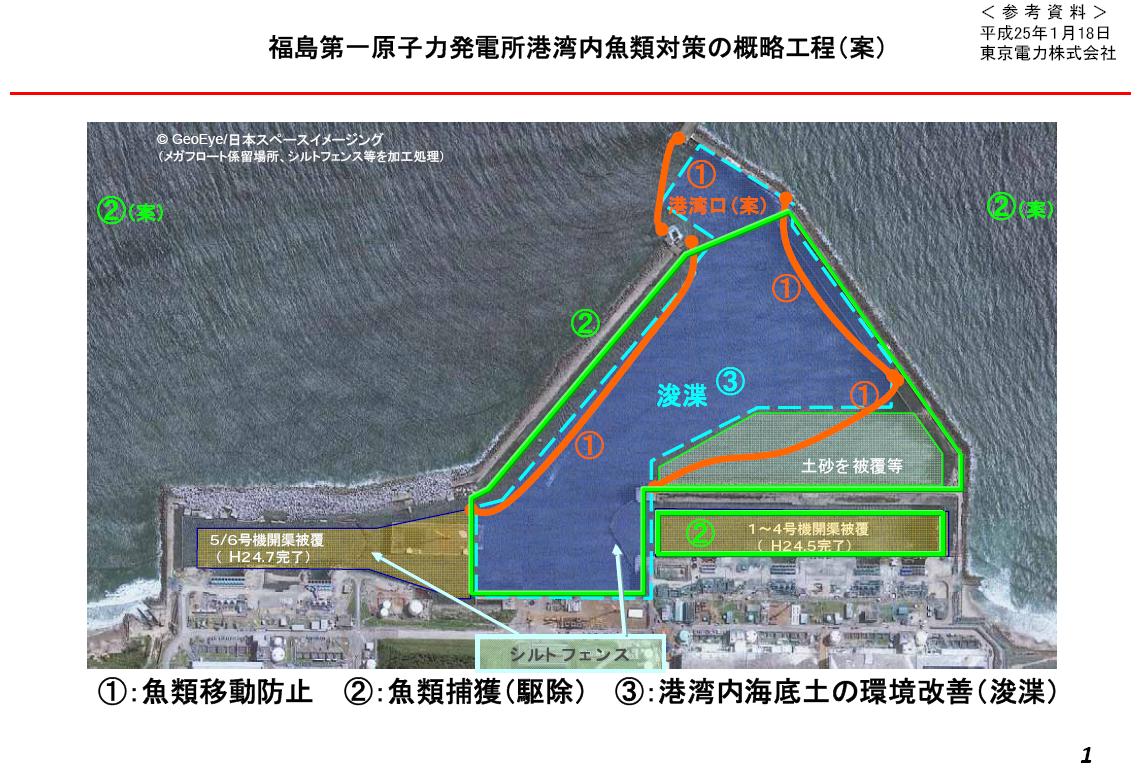
TEPCO plans to close off the harbor mouth with a net.
Iran answers IAEA questions if it sees an end to process: Analyst (video)
“Just take a look at the history of IAEA’s dealings with Tehran, they first raised the issue of a laptop that they got from nowhere and focused on it for several years and then totally forgot about it and moved on to a different issue which is the Parchin military site.”
Press TV

Image socioecohistory.wordpress.com
“I have talked to Iranian diplomats and they told me that Iran has constantly expressed its willingness to answer all the questions that have been raised [by IAEA], provided that when the questions are answered, the process comes to an end,” Hamid Reza Emadi said in an interview with Press TV on Friday.
He went on to say that the United States has stopped the IAEA from fulfilling its duties, making the agency unwilling to end its questioning process with regards to Iran.
“The International Atomic Energy Agency, which is clearly working under a US-dictated mandate that has prevented it from performing its professional obligations, wants to maintain the pressure on Tehran. The agency, as the diplomats told me, does not want the case to be closed any time soon and they want to raise more questions, to raise more issues once the existing questions are fully answered by Iran. So this is going to be an endless process,” Emadi pointed out.
1 This Month





PLEASE OPPOSE HR 8255 AND S.3639 – bills would accelerate satellite deployment, with no environmental review or safeguards – https://ncstd5li.quorum.us/campaign/169331/
To see nuclear-related stories in greater depth and intensity – go to https://nuclearinformation.wordpress.com
-
Archives
- October 2026 (10)
- September 2026 (339)
- August 2026 (330)
- July 2026 (355)
- June 2026 (287)
- May 2026 (306)
- April 2026 (356)
- March 2026 (251)
- February 2026 (267)
- January 2026 (308)
- December 2025 (358)
- November 2025 (359)
-
Categories
- 1
- 1 NUCLEAR ISSUES
- business and costs
- climate change
- culture and arts
- ENERGY
- environment
- health
- history
- indigenous issues
- Legal
- marketing of nuclear
- media
- opposition to nuclear
- PERSONAL STORIES
- politics
- politics international
- Religion and ethics
- safety
- secrets,lies and civil liberties
- spinbuster
- technology
- Uranium
- wastes
- weapons and war
- Women
- 2 WORLD
- ACTION
- AFRICA
- Atrocities
- AUSTRALIA
- Christina's notes
- Christina's themes
- culture and arts
- Events
- Fuk 2022
- Fuk 2023
- Fukushima 2017
- Fukushima 2018
- fukushima 2019
- Fukushima 2020
- Fukushima 2021
- general
- global warming
- Humour (God we need it)
- Nuclear
- RARE EARTHS
- Reference
- resources – print
- Resources -audiovicual
- Weekly Newsletter
- World
- World Nuclear
- YouTube
-
RSS
Entries RSS
Comments RSS

