Hundreds of Miyagi residents seek equal compensation as Fukushima
National May. 22, 2013
TOKYO —
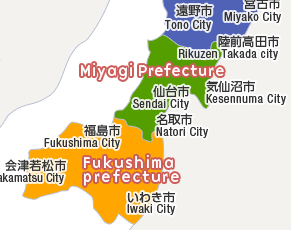
Hundreds of people living just outside Fukushima Prefecture say they have been denied adequate compensation after the country’s 2011 nuclear disaster despite suffering elevated radiation levels.
Nearly 700 residents from Hippo district in Miyagi Prefecture, just northeast of Fukushima, filed a claim Tuesday with a government arbitration office demanding that they be given the same compensation as residents of Fukushima.
The government’s basic compensation scheme only covers Fukushima residents, which critics say is an attempt to minimize costs.
The Hippo residents said some radiation levels in their area exceeded those in Fukushima towns. Hippo district is about 50 kilometers northwest of the crippled Fukushima Daiichi nuclear plant.
They demanded that the plant’s operator, Tokyo Electric Power Co, pay them an additional 70 million yen in damages.
Due to the huge costs of compensation and cleanup of the plant, TEPCO has declared bankruptcy and is under state control. The compensation money paid by TEPCO actually comes from the government.
Radiation levels in Hippo district are comparable to areas in Fukushima subject to voluntary evacuation, where residents are entitled to receive up to 720,000 yen for every child and pregnant woman, and up to 120,000 yen per adult. After months of negotiations, TEPCO has agreed to pay Hippo residents about half the Fukushima amount.
“We in Marumori town have been exposed to as much radiation as our peers in Fukushima, or even more depending on the area,” said Takeo Hikichi, 71, who represents the claimants. “We cannot accept the kind of compensation scheme that discriminates against us just because of the prefectural border.”
Residents of areas just outside of Fukushima say they also face discrimination in legal protection. They say health checks, radiation monitoring and cleanup projects in most cases do not go beyond the prefectural border.
“Damages from the nuclear accident do not stop at the border. We hope that the compensation program is carried out in a way that reflects the reality of people’s lives,” said Koji Otani, a lawyer representing the residents.
Although the amount sought by each resident is small, the group hopes to be able to set a precedent, he said.
A massive earthquake and tsunami hit the Fukushima plant, knocking out its cooling systems and causing the cores of three reactors to melt and release radioactivity into the air and water. The radiation level in Hippo exceeded the annual limit for nuclear workers.
So far, TEPCO has paid 2.3 trillion yen, about half of it to companies and business owners. That amount includes 1.6 million individual claims, mostly from voluntary evacuees. Because the amount of claims is expected to exceed the initial estimate of 3 trillion yen, the government has injected an additional 154 billion yen into the compensation fund.
About 150,000 Fukushima residents are still displaced. Hundreds have filed claims seeking greater compensation.
Comments here
Obituary: Lynda Pugh; Feminist, socialist, anti nuclear and troops out campaigner,
‘To leave the world a better place and to know that even one life has breathed easier because you have lived… this is to have succeeded.’
Obituary: Lynda Pugh; feminist, socialist, anti nuclear and troops out campaigner, pioneer in women’s aid who helped set up the first refuge in Birmingham.

During the 1980s, Lynda was a member of Women Oppose the Nuclear Threat (WONT) and was a regular at Greenham Common in Berkshire: blockading entrances, cutting perimeter fences and being hauled away by the police. She later sold her wire cutters for charity.
Image and comment source ; http://www.guardian.co.uk/society/2013/may/08/lynda-pugh-obituary
Lynda Pugh, who has died of cancer aged 64, was a political and social campaigner who strove to improve the lives of others. She was involved with many different causes and made many friends through her passion for social justice and her sense of fun.
Daughter of Doris and Kinsey Pugh, Lynda was born in Wolverhampton and went to Wolverhampton girls’ high school. While studying to be a librarian, she realised she preferred people to the Dewey decimal system, and retrained as a social worker. She qualified at the end of the 70s and spent most of her subsequent career in Birmingham, working with children in care.
Political and social issues played an important part in Lynda’s life. In many ways she was a pioneer, and was involved with establishing pregnancy testing through the Birmingham Women’s Centre. She also helped set up the first Women’s Aid refuge in the city and later became a board member.
During the 1980s, Lynda was a member of Women Oppose the Nuclear Threat (WONT) and was a regular at Greenham Common in Berkshire: blockading entrances, cutting perimeter fences and being hauled away by the police. She later sold her wire cutters for charity.
She was involved in many Irish freedom campaigns such as the Troops Out and Women in Ireland movements. She visited Irish prisoners and picketed army barracks and police stations. More recently Lynda joined the Palestinian Solidarity Campaign – continuing to help run its city centre stall well into her illness.
Lynda had wide cultural interests, and introduced many of her friends to the arts – often paying for events they might not have thought of attending themselves. She was also a keen potter and walker. A lifelong Guardian reader, she was thrilled to very occasionally complete the cryptic crossword.
Fukushima Rad News 5/21/13: Radioactive Ocean; Contamination East of Hawaii;Taiwan Nuke Protests
Published on May 21, 2013
Kyodo: Highest levels of Fukushima contamination in plankton already EAST of Hawaii? (MAPS)
http://enenews.com/kyodo-highest-leve…
Japan Times: Discharges of Fukushima nuclear material into Pacific “have effectively contaminated the sea” — Melted reactor cores will burn again if water not perpetually poured in — “Tepco proposing some of it be dumped into ocean”
http://enenews.com/japan-times-discha…
Ruling parties draft new quake measures
Japan’s ruling parties are compiling draft legislation to invest in escape roads and other facilities to minimize damage from a projected mega-quake.
Seismologists are predicting a mega-quake and tsunami in the Nankai Trough region, which extends along the Pacific coast of central to western Japan. The area has been hit by large quakes throughout history.
Taiwan rally calls for scrapping nuclear plant
Thousands of Taiwanese have taken part in a rally to call for stopping the construction of a nuclear plant near the capital, Taipei.
Many people in Taiwan are increasingly worried about the safety of the plant under construction in Xinbei City following the accident at Japan’s Fukushima Daiichi plant in March 2011.
About 3,000 protesters took to the streets of central Taipei on Sunday. They included many mothers with children. They shouted that they do not need nuclear plants.
Health survey begins in Japan’s quake-hit region
A group led by Japanese universities has launched a long-term health survey in 2 prefectures that were hit by the 2011 earthquake and tsunami.
The survey conducted by Tohoku University and Iwate Medical University covers 150,000 residents of coastal communities in northeastern Japan. In these communities, 3 generations of a family typically live under the same roof.
The project aims to collect their medical data for health promotion and development of new drugs.
http://enenews.com/m6-quake-caused-le…
http://enenews.com/m6-quake-caused-le…
http://fukushima-diary.com/2013/05/pl…
http://fukushima-diary.com/2013/05/sr…
Meteorological Research Institute, “Cs-134/137 going deeper under ocean due to the subduction of winter”
http://fukushima-diary.com/2013/05/me…
http://fukushima-diary.com/2013/05/ma…
Fukushima Nuclear Crisis Update for May 17th to May 20th, 2013
http://www.greenpeace.org/internation…)
Generations have health affected by nuclear reactor accident radiation exposure (Video)
http://www.examiner.com/article/gener…
Physical Protection of Irradiated Reactor Fuel in Transit
http://cryptome.org/2013/05/nrc-13-05…
Why nuclear is still a booming business
http://money.cnn.com/video/news/2013/…
U.N. mulls excluding nuclear accidents from disaster prevention plan
Kyodo News InternationalMay 21, 2013 08:16
http://www.globalpost.com/dispatch/ne…
Excerpt from March to Recovery ~ Ken Watanabe – Whatever I Can Do ~
Ken Watanabe, one of Japan’s best-known actors, has repeatedly visited disaster stricken areas to meet with victims. He takes time out of his schedule to lend support to the recovery efforts.
Dr. Noam Chomsky on War, Imperialism, and Propaganda – May 21, 2013
Published on May 21, 2013
Abby Martin Breaks the Set on Media Propaganda, War on Terror, Civil Liberties and more with Dr. Noam Chomsky
LIKE Breaking the Set @ http://fb.me/BreakingTheSet
FOLLOW Abby Martin @ http://twitter.com/AbbyMartin
EPISODE BREAKDOWN: On this episode of Breaking the Set, Abby Martin talks to Dr. Noam Chomsky, philosopher, linguist, professor, political critic, and author of over 100 books, about the Boston bombings, US terror inflicted abroad, drones, Obama’s rebranding of Bush administration policies, the National Defense Authorization Act & Holder v. Humanitarian Law, conventional wisdom, the evolution of media propaganda, and education as a form of elite indoctrination.
Take Action at Fukushima: An Open Letter to Secretary General Ban Ki-moon
…..The IAEA’s mission is to promote the peaceful use of nuclear energy. Concerns of proliferation are not applicable here, and the disaster itself has certainly called into question (again) what the peaceful use of nuclear energy means and whether it should be promoted. While the agency has recently urged safety improvements at Fukushima, the official line of thinking is still, incorrectly and impossibly, to use TEPCO to carry out the process….

April 30, 2013
Read in Japanese, French, Spanish , Portuguese, or German.
Dear Secretary General Ban Ki-moon:
You no doubt observed the Fukushima disaster on March 11, 2011, with terror and worry: what would another nuclear disaster mean for state relations, especially in your home region of East Asia? Fortunately, it seemed, the effects were largely kept to Japan’s islands and were less than many experts anticipated. Within weeks the stories dissipated if not disappeared from the major media outlets, only to be resurrected with personal interest stories of a hero or an especially tragic case of a lost loved one.
But the crisis is not over. Today, Martin Fackler reported in the New York Times that radioactively polluted water is leaking out of the plants and that the site is in a new state of emergency. Mitsuhei Murata, Japan’s former ambassador to Switzerland, wrote a letter last year that brought international attention to the thousands of radioactive spent fuel rods at the site and the danger their vulnerability presents; he has testified to this several times before Japan’s parliament. International experts, independent and of the International Atomic Energy Agency, have commented that the Tokyo Electric Power Company’s plans for the removal of the rods from the site and their storage in a safer, if still temporary, location are optimistic if not unrealistic.
The news media has done an adequate if meager job of reporting the many issues the fuel rods present. The radioactive fuel must be continuously cooled in order to stay safe; the improvised electric system that maintains this cooling has failed several times, once for more than 24 hours, both on its own and because of hungry rats. The mechanism that stands between safety and a fire at the Fukushima Daiichi plant is, to say the least, precarious. (And, as has been clear to many since the beginning, TEPCO hope to shirk its responsibility: first, in its safety and maintenance of the site; second, in paying its costs to Japan.)
One can only speculate to the extent of the consequences of a spent fuel fire, but, unarguably, once a fire ignites (from lack of cooling water or from an earthquake-caused spill), even the best case scenario would be an unprecedented global disaster. Possible consequences are the evacuation of Tokyo’s 35 million people, permanent disuse of Japan’s land, and poisoned food crops in the United States. These are not fantastic projections, but reasonable, if not conservative, expectations.
Yet, unimaginably but all too familiarly, the situation is still relegated to the back pages of our papers, and thus to the back of our leaders’ minds. This reminds me of our international approach to solving climate change, which I have partaken in for decades, first in the United Nations and then as the Secretary General of the Parliamentary Earth Summit in Rio de Janeiro: we have a latent but very serious issue that we can likely fix but lack the resolve and political will to do so. As you well know, a successful climate change agreement has eluded us.
In comparison with climate change, however, the radioactive fuel rod issue at Fukushima is both easier to solve and more urgent. Any Japanese can tell you another serious earthquake will hit Japan well inside the next decade. That is to say, this situation must be resolved quickly.
Still, even if possible to solve, the issue needs constant attention and competent and well funded actors. So who might take charge? The International Atomic Energy Agency said last week that it will take TEPCO 40 years to secure the radioactive fuel rods in more appropriate storage containers. TEPCO is already refusing to pay Japan billions of Yen in cleanup costs, and does not have the technology or wherewithal to perform the task competently and expediently. Yet, so far the Japanese government has only looked to TEPCO.
The next obvious choice outside Japan is the United States, for their technological superiority, money, and leadership. Early after the accident, the U.S. Department of Defense offered assistance to Japan, but the Japanese denied their help. It remains to be seen whether that door has permanently closed. This would not be a benevolent action: the U.S. sits in harm’s way in the case of a fuel pool fire; residents of California, Oregon, and Washington have already received much radiation. U.S.-led action, except perhaps by Oregon Senator Ron Wyden, is unlikely: U.S. senators and representatives continues to demonstrate their impotence at home or abroad.
I have long been advocating for an international team of independent experts to investigate the situation. The United Nations is one appropriate body to assemble and deliver such a team. The IAEA, however, should not take on the responsibility.
The Aarhus Convention is our last, best hope! – Russias NGOs after Putin crackdown
“….Popravko said that in 2013, environmental organizations adopted a decision to conduct a one day action so that during this year, which has been designated by Russia as the Year of the Environment, they could draw the attention of authorities to the necessity of ratifying the international Convention.
The one day actions will take place in many regions of Russia on
June 25 2013
To coincide with the date the Aarhus Conventions was signed in 1998…..”
After Kremlin wrecking balls have levelled environmental legislation, the Aarhus Convention is our last, best hope!
Image source ; http://www.demdigest.net/blog/2013/05/operation-total-eradication-russia-ngo-crackdown-threatens-leading-pollster/

http://www.bellona.org/articles/articles_2013/Aarhus_needed
MOSCOW – Fifteen years ago, Russian NGOs were still urging against Russia joining the Aarhus Convention because the environmental legislation of the 90s according them wide berth to receive ecological information and the right to take part in decision-making processes.
In the interceding years of the first two terms of the Administration of Vladimir Putin, and his handpicked successor Dmitry Medvedev, who kept the presidential throne warm for Putin’s return to power last year, these rights have been contorted beyond recognition, leaving the Russian public disenfranchised from its environmental rights.
Public interest groups and environmental NGOs have had to change tack, and Today, the Aarhus Convention is more essential to the Russian public than ever.
The Aarhus Convention on access to information, public participation in the process of adopting decisions and access to legal recourse on issues concerning the environment was adopted in 1998 in Aarhus, Denmark.
For the first time, NGOs had the same level of access as governments to the development of the Convention. The Convention’s aim is to support the right to favorable environmental conditions, access to information, participation of the public in decision making processes as well as affording it legal redress.
Each participant country in the Convention was therefore obliged to create the necessary conditions for creating and supporting clear, open and coherent structures for implementing the conditions of the Convention.
Since 1998, more than 40 countries in Western and Eastern Europe as well as Central Asia (with the exception of Uzbekistan) have signed and ratified the convention.
Russia has signed the Convention, but still has yet to ratify it, though officials repeatedly speak of how work towards ratification is still progressing..
On Fukushima Beach: The lights of Fukushima – Documentary
Published on May 20, 2013
Original upload from: http://www.youtube.com/user/andrewebi…
Thank you so much Andrew ~ Hugs brother
Part 1: http://www.youtube.com/watch?v=dOSjkE…
Published on Apr 29, 2013
Thank you to all who have watched and shared ‘Ón Fukushima Beach 2’. Also, mutation in Kyoto city, 450km from Fukushima.
Japan Times: Discharges of Fukushima nuclear material into Pacific “have effectively contaminated the sea” — Melted reactor cores will burn again if water not perpetually poured in — “Tepco proposing some of it be dumped into ocean”
http://enenews.com/japan-times-discharges-of-nuclear-material-into-the-pacific-from-fukushima-have-effectively-contaminated-the-sea-melted-reactor-cores-will-burn-again-if-water-not-perpetually-poured-in-t
Published: May 20th, 2013 at 1:13 pm ET
By ENENews
Title: Fukushima No. 1 can’t keep its head above tainted water
Source: The Japan Times
Author: Reiji Yoshida
Date: May 21, 2013
[…] Tepco must perpetually pour water over the melted cores of reactors 1, 2, and 3 via makeshift systems to prevent the fuel from melting and burning again. […]
Tepco is proposing some of the water be dumped into the sea after processing it to remove most, but not all, radioactive isotopes. […]
Previous discharges into the Pacific have effectively contaminated the sea. Failure to store it means it will probably flood the whole compound and end up in the ocean anyway. […]
Will the processed water pose health or environmental risks?
According to Tepco, the processed water could theoretically be safe […]
Tritium is the exception, however. Tepco says the tritium level in the contaminated water is between 1 million and 5 million becquerels per liter. The legal limit is 60,000. […]
See also: Gundersen: “Liquid releases” of nuclear material into ocean will continue for years and years at Fukushima Daiichi — Already 10 times Chernobyl (VIDEO)
Activists bristle as India cracks down on foreign funding of NGOs
Japan and India were likely to agree at their summit meeting this month to resume talks toward a civilian nuclear cooperation pact.The pact would pave the way for exporting Japan’s nuclear technology to the massive market.
“All our work has come to a stop,” said Henri Tiphagne, head of a human rights group called People’s Watch. “I had visited [the] Koodankulam protest site once. Is that a banned territory?”
But the government’s action appears to have had its desired effect. “NGOs are too scared to visit Koodankulam or associate with us now,” said anti-nuclear activist S. P. Udayakumar.
Meenakshi Ganguly, South Asia director of Human Rights Watch, said many NGOs are afraid to speak up about the suspension of their foreign funding approval, which is “being used to intimidate organizations and activists.”
Imagr source ; http://www.thehindu.com/todays-paper/tp-national/tp-tamilnadu/udayakumar-to-sue-manmohan/article2934069.ece

By ,
Belgium May Face Legal Battle After Two Nuclear Reactors Get Green Light
Published on May 18, 2013
“We will summon the government for the lack of a decent emergency plan and at the same time they increase the risks of a nuclear accident,”
From: http://www.youtube.com/user/Euronews
Please like PigMine’s FaceBook page here: http://www.facebook.com//PigMineNews
Subscribe to http://www.youtube.com/subscriptions_…
May 18, 2013 – http://www.euronews.com/ Greenpeace are threatening to sue the Belgian government. The leading environmental activist network is threatening legal action after Belgium’s nuclear safety regulator gave the green light to GDF Suez to go ahead and restart two nuclear reactors.
However, during a news conference, the Belgian Interior Minister, Joelle Milquet claimed that the government does not have the power to block the move.
“The independent regulator provides technical advice to an operator on the restarting of its operations. We do not have the ability to interfere in the decision, because it is an independent operator,” he said.
Last year two nuclear reactors were closed after safety concerns were flagged up in their their tanks, during an ultrasound check.
Greenpeace says it is the government’s responsibility to guarantee the safety of the Belgian people.

“We will summon the government for the lack of decent emergency plan and at the same time they increase the risks of a nuclear accident,” says Greenpeace Belgium energy campaigner Eloi Glorieux.
So while a legal battle may be brewing reactors, Doel 3 and Tihange 2 could be back up and running within 3 weeks, now that Belgium’s
nuclear watchdog claims all issues have been resolved.
Germany faces big challenges in shift toward green energy
It is a grand project that Environment Minister Peter Altmaier once labeled “open-heart surgery on the national economy” of Europe’s export-driven industrial powerhouse.
The goal is to be nuclear-free by 2022 and to combat pollution and climate change by boosting the share of clean and safe renewables to 80 percent by 2050.
Germany’s solar power capacity has risen exponentially to about 30 gigawatts now. Another 25 to 30 gigawatts come from wind farms across vast stretches of Germany’s flat, coastal north and offshore parks in the North and Baltic seas.
By Mathilde Richter, AFP
May 20, 2013, 11:33 am TWN
http://www.chinapost.com.tw/commentary/afp/2013/05/20/379055/Germany-faces.htm
PULHEIM, Germany — Tense engineers have their eyes peeled on complex color-coded diagrams on a wall-sized screen that makes their control room look like the inside of a spaceship.

They work with a power system that would have seemed equally futuristic not so long ago. It is also prone to solar turbulence and other unexpected flare-ups.
The technicians work at a monitoring center of the electricity company Amprion — one of the many nerve centers of Germany’s ambitious transition from nuclear to renewable energies.
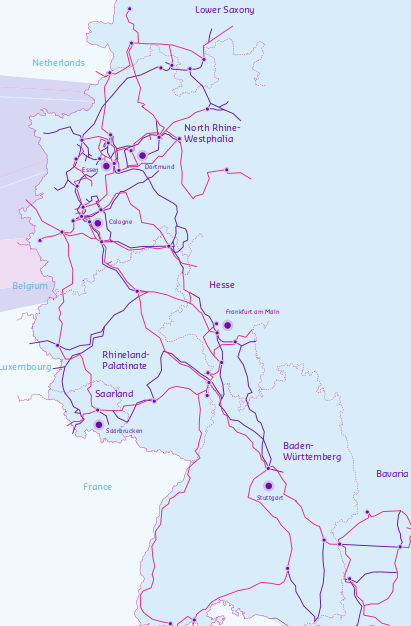
Their job is to watch screens that update every three seconds to monitor about 11,000 kilometers (7,000 miles) of high-voltage power lines that criss-cross much of western Germany and extend into other European countries.
They are watching for sudden peaks and troughs, to avert dangerous power overloads or shortages, from their high-tech safety center at Pulheim near Cologne.
“The situation changes fast, it’s very volatile,” says Christoph Schneiders, the center’s head of planning, pointing to the fickle nature of natural energy.
Siemens to Provide Wind Power for US Nuclear Weapons Plant
…..According to the company, the plant will generate enough electricity to satisfy the energy needs of 3,500 households and will provide US$2.9 million in annual cost savings throughout the life of the contract. The farm is expected to provide over 60 per cent of the Pantex site’s annual power needs….
By Marc Howe
20 May 2013
http://designbuildsource.com.au/siemens-to-provide-wind-power-for-us-nuclear-weapons-plant
German engineering firm Siemens has won a contract from the US federal government to build a wind power facility for America’s last remaining nuclear weapons plant.

Pantex Plant. Source: Texas Dept of State Health Services
The National Nuclear Security Administration (NNSA) has awarded Siemens Government Technology a 20-year construct for the construction and operation of a 11.5-megawatt wind farm for the Pantex plant, situated near Amarillo in Texas.
The wind farm will be situated on 1,500 acres of lands to the east of the Pantex nuclear weapons plant and will come equipped with five 2.3 megawatt turbines.
The new facility is also set to be the largest wind farm ever commissioned by the US federal government.
According to the company, the plant will generate enough electricity to satisfy the energy needs of 3,500 households and will provide US$2.9 million in annual cost savings throughout the life of the contract. The farm is expected to provide over 60 per cent of the Pantex site’s annual power needs.
Under the terms of the contract, Siemens will also be responsible for operation of the facility.
The new wind farm is part of efforts by federal facilities to provide greater support to renewable energy, as ordered by a presidential directive.
The NNSA is responsible for management of the US’ nuclear arsenal as well as its nuclear non-proliferation and naval reactor programs.
The Pantex plant is America’s sole remaining nuclear weapons assembly and disassembly facility. The plant is responsible for maintaining the safety and security of the country’s nuclear weapons arsenal, and is managed and operated by BWXT Pantex and Sandia National Laboratories on behalf of the United States Department of Energy.
The addition of a clean energy installation to the site’s facilities is in stark contrast to the purpose and operational history of the plant. In addition to the manufacture of conventional bombs and nuclear weaponry, the Pantex plant has triggered controversy due to the contaminants and pollution it produces, which have reportedly led to a significant increase in the incidence of cancer and low birth weights in adjacent counties.
Algeria plans to build its 1st nuclear plant in 2025
|
2013-05-20 07:38:23 Editor: Hou Qiang |
ALGIERS, May 19 (Xinhua) — Algeria plans to build its first nuclear plant in 2025 to cope with the country’s soaring electricity consumption, the official APS news agency reported Sunday, citing Minister of Energy and Mines, Yousef Yousfi.

“We plan to set up our first nuclear power plant in 2025, and we are working on it,” Yousfi was quoted as saying in a press conference in capital Algiers.
Algeria’s 29,000-ton uranium reserves are enough to launch two nuclear power plants with a capacity of 1,000 megawatts each for a period of 60 years, the minister said.
“The Nuclear Engineering Institute, recently established, will be in charge of providing specific training for engineers and technicians ahead of tasking them with the mission of running the plant,” he added.
In November 2008, the North African nation announced that it is working on building its first nuclear power plant in 2020, and would install one new plant every five years.
The launch of nuclear power is part of a renewable energy program of the government in a bid to diversify the country’s energy sources and meet the soaring demand on electricity.
Algeria’s nuclear secrecy
30 Jul 2007
http://www.isn.ethz.ch/isn/Digital-Library/Articles/Detail/?lng=en&id=53530
Algeria moves to expand its nuclear program and potentially its nuclear weapons capacity.
As Algeria emerges from over a decade of internecine bloodshed, prospects are growing for the significant expansion of the country’s secretive nuclear program, which many analysts believe was formed with the specific intention of creating a nuclear weapons capacity.
With world attention focused on the Iranian program, nuclear powers are jostling for lucrative nuclear contracts as the shackles on atomic development imposed by the US over proliferation concerns are broken.
Secretive program
In 1982, Algeria announced its intention to build an atomic program capable of supplying up to 10 percent of the country’s energy needs, despite the country’s abundant oil and gas reserves.
A secret deal was signed with China in 1983 for the fabrication of the 15MW Es Salam reactor at Ain Oussera, around 270 kilometers south of the capital Algiers. The reactor came on line in 1993, while the site also houses a related research facility.
There have been concerns since the early 1990s that the ancillary facility may have been utilized in the small-scale separation of plutonium from spent reactor fuel.
A confidential report by Spain’s Cesid intelligence agency, leaked to El Pais in August 1998, claimed that within two years the reactor would be capable of producing up to 3 kilograms of weapons-grade plutonium per year – enough for at least one nuclear weapon per annum.
A Federation of American Scientists (FAS) study notes that the deployment of a Sa-5 anti-missile battery near Ain Oussera at the time of its discovery is “a key indicator of the military nature of this site.”
The American “Nuclear Renaissance” Is Over: US Nuclear Power Suffers Series of Setbacks
“The Change in Nuclear’s Fortunes is Staggering” … a Horrible “Cauldron of Events” Has [Brought] the Nuclear Push to a Standstill”

http://www.washingtonsblog.com/ | Monday, May 20, 2013,
CNBC reports:
Once touted as a successor, or at least a competitor, to carbon-based power, the nuclear sector has taken a beating as the momentum behind new projects stalls and enthusiasm for domestic fossil fuel production grows.
Across the country, plans to build nuclear plants have hit roadblocks recently—a sharp turn for a sector that just a few years ago was looking forward to a renaissance.
***
In recent weeks, the Nuclear Regulatory Commission ruled against a proposed partnership between NRC Energy and Toshiba, citing a law that prohibits control of a U.S. plant by a foreign corporation.
Elsewhere, Duke Energy scuttled plans to construct two nuclear reactors in North Carolina, while California officials warned that two damaged reactors could be shut down permanently if the NRC doesn’t take action to get the plants back online.
The change in nuclear’s fortunes is staggering, given that the U.S. is the world’s largest producer of nuclear power ….
“Starting about four years ago, the industry felt it was in the middle of a renaissance” with applications for many new plants pending with the NRC, said Peter Bradford, a law professor and a former member of the commission. “They’ve gone from that high-water mark to a point at which … we’re actually seeing the closing of a few operating plants,which was unthinkable even a few years ago.”
***
Bradford, who also served as a utility commissioner in New York and Maine, cited a “cauldron of events” for bringing the nuclear push to a standstill, including … soaring investment costs.
Ene News notes that California’s San Onofre nuclear plant hit a major speed bump:
Reuters: An independent nuclear regulatory panel on Monday called for a full public hearing on the proposed restart of one of the two damaged San Onofre nuclear reactors, a move that will delay Southern California Edison’s plan to run the plant this summer. […] Damon Moglen of Friends of the Earth called the ruling “a complete rejection of Edison’s plan to restart its damaged nuclear reactors without public review or input.”
San Diego Union-Tribune: Murray Jennex, a former systems engineer at San Onofre for nearly 20 years who now teaches at San Diego State University’s College of Business Administration, said the order likely pushes back a final decision on restarting the Unit 2 reactor until after summer. “I won’t say this is a death blow to Unit 2, but it does make restart less likely,” Jennex said. “If approved, the additional downtime makes the Unit 2 restart more complex and costly due to corrosion issues from sitting.”
AP: San Onofre nuke plant restart halted […] A federal panel sided Monday with environmentalists who have called for lengthy hearings on a plan to restart the ailing San Onofre nuclear power plant — a decision that further clouds the future of the twin reactors.
An inside sources from within the San Onofre nuclear plant told ABC News:
I was there the day it shut down. I wouldn’t trust them to turn it back on.
The Palisades nuclear reactor is also in trouble. EneNews rounds up the latest:
WWMT: Congressman Fred Upton has just finished a tour of the troubled Palisades Nuclear Power Plant in Covert. Rep. Upton says he’s very concerned about the safety at Palisades, especially after the latest incident. […] Because it wasn’t a planned release, Palisades is under serious scrutiny at this time.
ABC57: Palisades Nuclear Plant shut down until further notice […] Congressman Fred Upton is not sold on the safety at Palisades. […] Congressman Upton did not say the plant will be shutting down. But he did say that all options are on the table. Palisades says they may look at replacing the tank that is cracked.
WOOD TV8: Authorities say they’ve found the crack that led to “slightly radioactive water” spilling from the Palisades nuclear power plant into Lake Michigan. […] The leak was in a 300,000-gallon tank used to hold water that floods and cools the nuclear reactor during refueling and in the event of a problem. The problem was a half-inch crack in the welding around one of nine nozzles in the tank, authorities said Monday. Three of those have been replaced and every weld and every nozzle is now being checked. The entire bottom of the tank is also being checked. That leaky tank sits right above the plant’s main control room. […]
Watch the broadcast here
The problem is that America’s nuclear reactors are old … and are falling apart piece by piece.
But – even after the Fukushima meltdown – regulators have reduced safety standards.
The Nuclear Regulator Commission say that the risk of a major meltdown at U.S. nuclear reactors ismuch higher than it was at Fukushima. And an accident in the U.S. could be a lot larger than in Japan … partly because our nuclear plants hold a lot more radioactive material. nuclear energy can be cheap, or it can be safe … but it can’t be both.
Indeed, nuclear is expensive and bad for the environment. Nuclear is wholly subsidized by the government … and would never survive in a free market…. and it doesn’t really reduce global warming.
And it’s not helping inspire confidence in the our ability to safely handle radioactive materials that the former governor of Washington said that the Hanford Nuclear site is an “underground Chernobyl waiting to happen”, that Washington state legislators said that the failure to address the leaks at Hanford – “a very serious problem”, where 60 of the 177 underground tanks have already leaked and all of the tanks are at risk, and which threatens the Columbia River – “smells like a very deliberate cover up”.
And it’s not helping that a “mass release of floating radioactive particles in metro St. Louis” may be released by the inferno at a landfill containing 8,700 tons of nuclear waste.
http://www.washingtonsblog.com/
IAEA inspector backs pumping Fukushima groundwater into sea
By Marco Sostero
VIENNA, May 19, Kyodo
A possible solution to the increasing amount of contaminated water inside the crisis-hit Fukushima Daiichi nuclear power plant could be to pump groundwater into the sea before it gets into the reactor buildings, as planned by the plant operator, the head of international inspectors has said.
“It will be very nice if they really get to bypass the main building through these systems — through this direct pumping of the water to the sea or whatever it is. Because it is clean water,” Juan Carlos Lentijo, head of a 13-member team of the International Atomic Energy Agency that inspected the plant last month, told Kyodo News in a recent interview.
Tokyo Electric Power Co. has created a system to direct part of the groundwater into the sea before it flows and seeps into the reactor buildings and mixes with highly radioactive water accumulating inside, increasing the amount by 400 tons a day, but has yet to win approval from local fishermen to discharge the water.
Subscription only
1 This Month


10 March A LIVE WEBINAR THE REAL EFFECTS OF NUCLEAR POWER
What the Industry Isn’t Telling Us
1:00 PM Mountain, 2 pm Central, 3 pm Eastern. Live on the Keepers of the Water Facebook page


18 March Webinar @ 1 PM EST: An Assessment of SMR Projects: The Case of Canada
register for the zoom:
https://us02web.zoom.us/webinar/register/WN_o8BIIOUvQ2ONJR1nta65DQ#/registration


of the week – STOP SMALL MODULAR REACTORS IN CANADA
To see nuclear-related stories in greater depth and intensity – go to https://nuclearinformation.wordpress.com
-
Archives
- March 2026 (76)
- February 2026 (268)
- January 2026 (308)
- December 2025 (358)
- November 2025 (359)
- October 2025 (376)
- September 2025 (258)
- August 2025 (319)
- July 2025 (230)
- June 2025 (348)
- May 2025 (261)
- April 2025 (305)
-
Categories
- 1
- 1 NUCLEAR ISSUES
- business and costs
- climate change
- culture and arts
- ENERGY
- environment
- health
- history
- indigenous issues
- Legal
- marketing of nuclear
- media
- opposition to nuclear
- PERSONAL STORIES
- politics
- politics international
- Religion and ethics
- safety
- secrets,lies and civil liberties
- spinbuster
- technology
- Uranium
- wastes
- weapons and war
- Women
- 2 WORLD
- ACTION
- AFRICA
- Atrocities
- AUSTRALIA
- Christina's notes
- Christina's themes
- culture and arts
- Events
- Fuk 2022
- Fuk 2023
- Fukushima 2017
- Fukushima 2018
- fukushima 2019
- Fukushima 2020
- Fukushima 2021
- general
- global warming
- Humour (God we need it)
- Nuclear
- RARE EARTHS
- Reference
- resources – print
- Resources -audiovicual
- Weekly Newsletter
- World
- World Nuclear
- YouTube
-
RSS
Entries RSS
Comments RSS
 nuclear-news