Greenpeace activists demand nuclear industry accountability
Sunday, 10 March 2013, 1:39 pm
Press Release: Greenpeace International
Greenpeace activists on three continents demand nuclear industry accountability

Amsterdam, March 7, 2013 — Ahead of the second anniversary of the Fukushima nuclear disaster, Greenpeace activists on three continents and in the Middle East are demanding that reactor operators and their suppliers, such as GE, Hitachi and Toshiba, be held fully responsible for potential nuclear accidents.
Using giant stickers, photos, projected images and nuclear scream masks, activists have already brought messages such as ‘They profit, you pay’ or ‘Your Business, Our Risks’ to the industry and the public. Activists are also demanding that GE, Hitachi and Toshiba should not be allowed to walk away from Fukushima.
Activists in Japan demonstrated in front of the country’s parliament, while in Belgium giant stickers were attached to GE’s European headquarters in Brussels. In Germany, activists unfurled a banner at Hitachi Power’s European HQ, while a giant blimp with similar messaging will be seen flying across a North American city later today.
In response, Greenpeace International nuclear campaigner Dr. Rianne Teule said:
“Today’s activities in three continents, in three time zones, highlight that the lack of accountability of the nuclear industry is not only a problem limited to Japan. Global nuclear regulations are seriously flawed.
“In the case of Japan, two years after the Fukushima disaster, the unfair system means hundreds of thousands of victims are still waiting for reasonable compensation for their pain, suffering and losses. They aren’t getting the help they need to rebuild their lives.
“It is shocking that big companies like GE, Hitachi and Toshiba, don’t feel they have a moral responsibility to help people who have suffered from the radioactive contamination caused by their products. They should be made accountable for the risks they create.”
The Greenpeace activities are taking place in France, Germany, Belgium, Japan and North America, while a similar activity took place in Jordan and Switzerland earlier this week.
Notes:
1. Serious flaws in regulations worldwide force the public rather than the industry to pay the vast majority of the costs of a nuclear accident. The latest estimate is that the Fukushima disaster will cost US$250 billion.
TEPCO, the operator of the Fukushima plant, is only required to pay a fraction of the disaster costs while supplier companies are not required to pay anything, effectively putting the burden on the tax payer.
ENDS
Hopeful Australian air revives Japanese children – victims of the nuclear disaster
- “….Now, they are about to experience life on the outside – 12 high-school students from Minamisoma will spend a week in Australia, staying with local families, seeing the sights and even visiting a wind farm, the symbolism of which is obvious….”
- March 10, 2013
Neil McMahon
The Sydney morning herald

Excited: Fukushima youth ambassadors are Australia-bound.
When they land in Australia in a fortnight, this will surely seem a land of simple, open-skied wonder to the youngest victims of Japan’s 2011 earthquake, tsunami and nuclear crises.
The kids of Minamisoma are living an unimaginable childhood in the middle of Japan’s radiation zone – a place poisoned by the 2011 nuclear crisis and which will take years to recover. At times they can be forbidden to even step outside for fear of contamination.
Now, they are about to experience life on the outside – 12 high-school students from Minamisoma will spend a week in Australia, staying with local families, seeing the sights and even visiting a wind farm, the symbolism of which is obvious.
”We really want them to have a holiday, but we also want it to be an educational opportunity for these kids,” Tomohiro Matsuoka says.
Matsuoka is a member of the Melbourne-based Japanese for Peace, which – with the Australian Conservation Foundation and other local groups – is a partner with Peace Boat, the international organisation behind the idea to take these ”Fukushima youth ambassadors” abroad.
In a statement, Peace Boat says of conditions in Minamisoma: ”Many places are still contaminated with a high level of radiation, and survivors are thus under tremendous pressure and stress: trauma, fear, separation from family and/or family breakdown, economic strains, community pressures, health concerns and anxiety. This is an untenable situation for anybody, but especially cruel for youth and for their … parents.”
The experience promises to be life-changing for the visitors – and potentially for locals.
Organisers are also hoping to offset some of the costs of the trip through donations. For more information, see jfp.org.au/en.
Taiwan Denies Entry to Anti-Nuke Visitor Ahead of Protest
Posted 10 March 2013 3:03 GMT
| Countries | Taiwan (ROC), Germany |
| Topics | Freedom of Speech, Human Rights |
| Languages | Chinese, English |
 This post also available in:
| Malagasy | · Lavin’i Taiwan Ny Fidiran’ilay Mpivahiny Mpanohitra Ny Nokleary Noho Ny Hetsi-panoherana |
A German man who marched in an anti-nuclear protest two years ago [zh] in Taiwan was detained at Taiwan’s international airport and denied entry [zh] into the country on March 8, 2013, a day before protesters planned to hold a large-scale anti-nuclear demonstration there.
Daniel Andres Helmdach is scheduled to be deported from Taiwan, a suspected consequence of his participation in an anti-nuclear demonstration in Kaohsiung on April 30, 2011 [zh] while he was in Taiwan working as a volunteer on conservation projects.
This is not the first time that Taiwan has zeroed in on the participation of foreigners in anti-nuclear activities in Taiwan, where the recent construction of the fourth nuclear power plant in Taiwan has been met with strong criticism because of security concerns. Two Japanese people from Fukushima were warned by the country’s immigration office [zh] immediately after they gave a speech at an anti-nuclear demonstration on April 30, 2011.

Image from Rui-Kuang Huang.
The country’s premier, Yi-Hua Chiang, has called for a referendum to be held on the construction of the Fourth nuclear power plant in August 2013.
After becoming aware of Helmdach’s detention, Helmdach’s friend Rui-Guang Huang put out a call for help on his Facebook page:
我們的好朋友今天傍晚入境台灣旅遊,在桃園國際機場被擋在外面不得入境,原因是他兩年前來台灣時,觀察紀錄我們的環境教育活動,結果竟被標記,在未被告知的情形下,此時此刻被擋在機場準備送回德國。
Legislator Shu-Fen Lin called the head of the immigration office and requested them to explain the deportation of Daniel. The immigration office said [zh] that the National Security Council made the decision in 2010 that should a foreigner conduct anything not described in his or her visa, the person would be denied entry to Taiwan three years.
Helmdach worked as a volunteer in Taiwan for one year during 2011 through arrangements made by the International Culture Youth Exchange (ICYE). Rui-Guang Huang explained the nature of Helmdach’s volunteer work at that time:
協助麟洛教會莫拉克風災社區重建工作、參與台南社大海灘廢棄物監測及相關環境關懷行動,在台期間認真學習,並善盡國際志工責任,充分配合服務單位的工作需要,並無任何不當行為。
After the Fukushima nuclear accident in Japan, Daniel studied issues related to nuclear power and walked with his friends from the Community College in Tainan City during the anti-nuke demonstration [zh] in Kaohsiung on April 30, 2011. Soon after the demonstration, special agents visited the Community College in Tainan City and the Tainan branch of ICYE, but they did not mention anything about Daniel’s involvement in unlawful activities.

Written by I-fan Lin
http://globalvoicesonline.org/2013/03/10/taiwan-denies-entry-to-anti-nuke-visitor-ahead-of-protest/
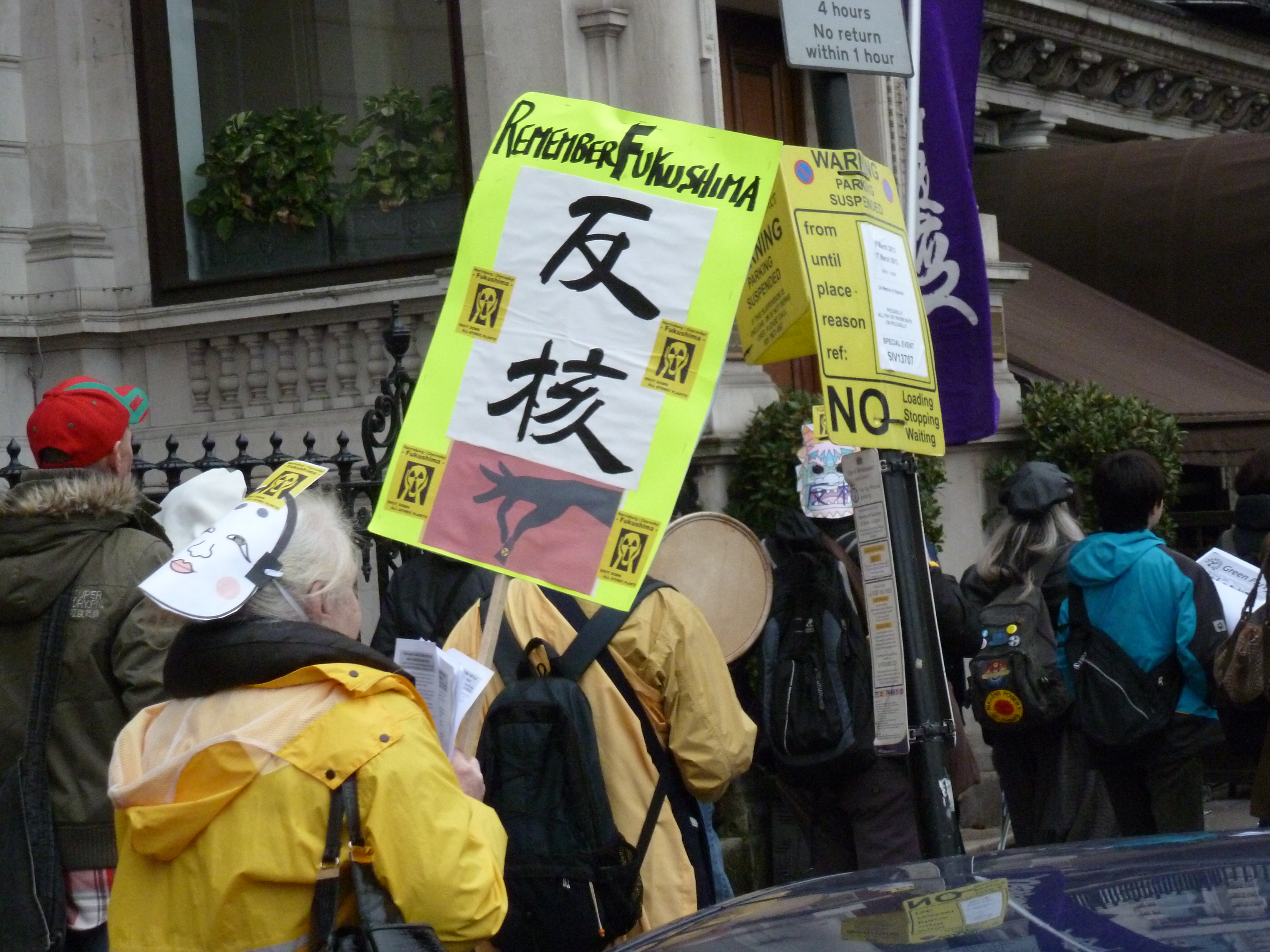
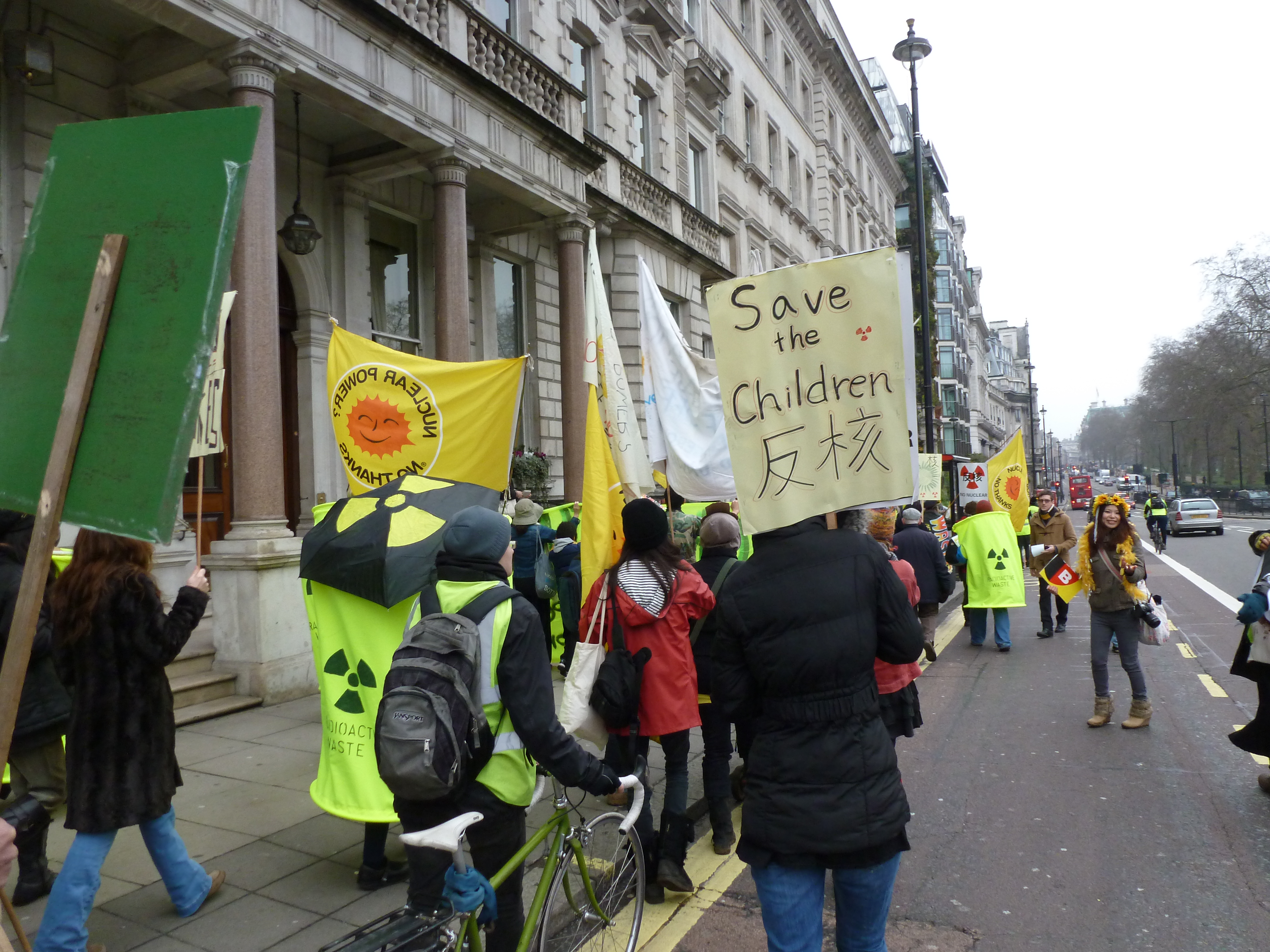
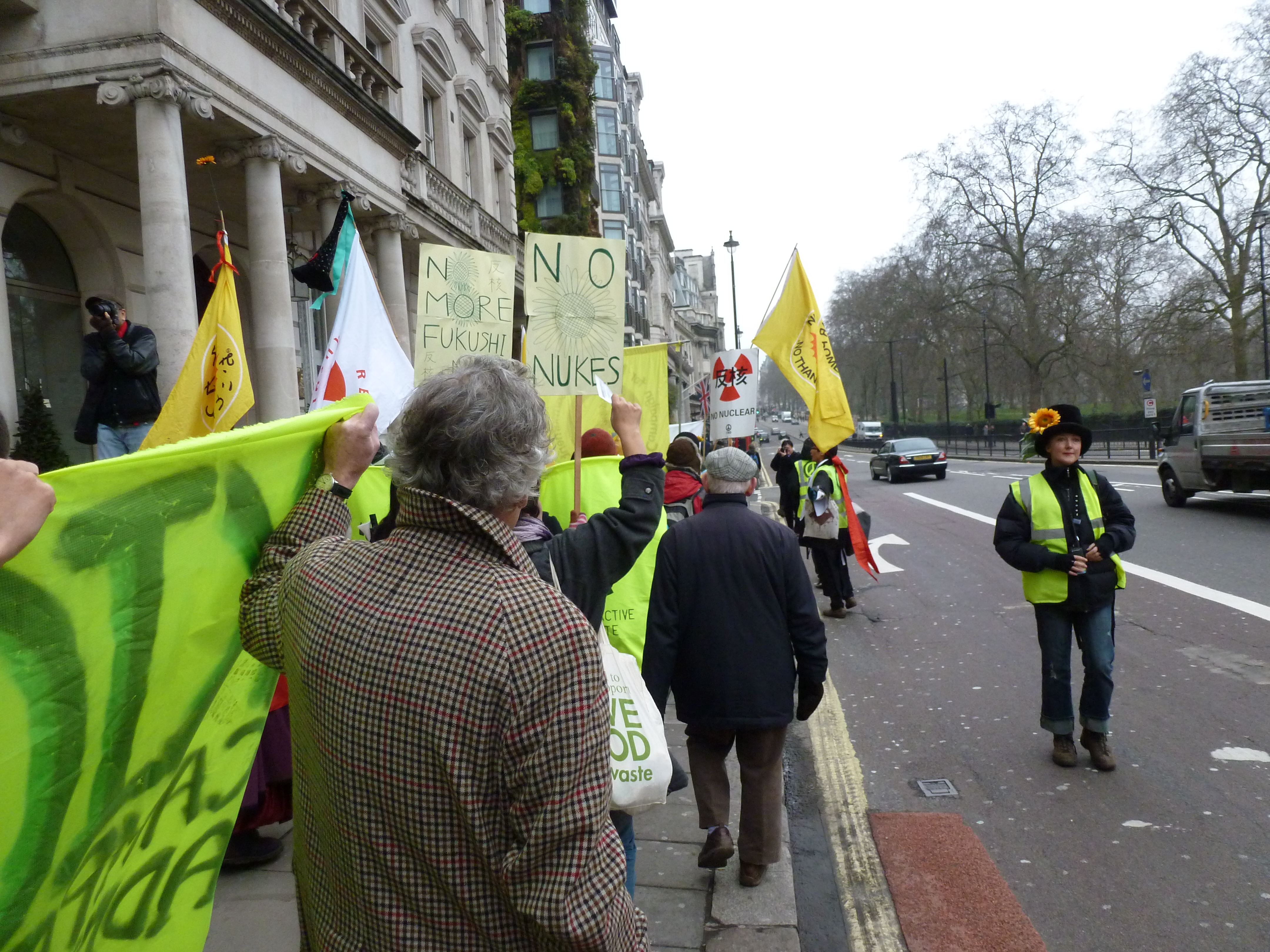
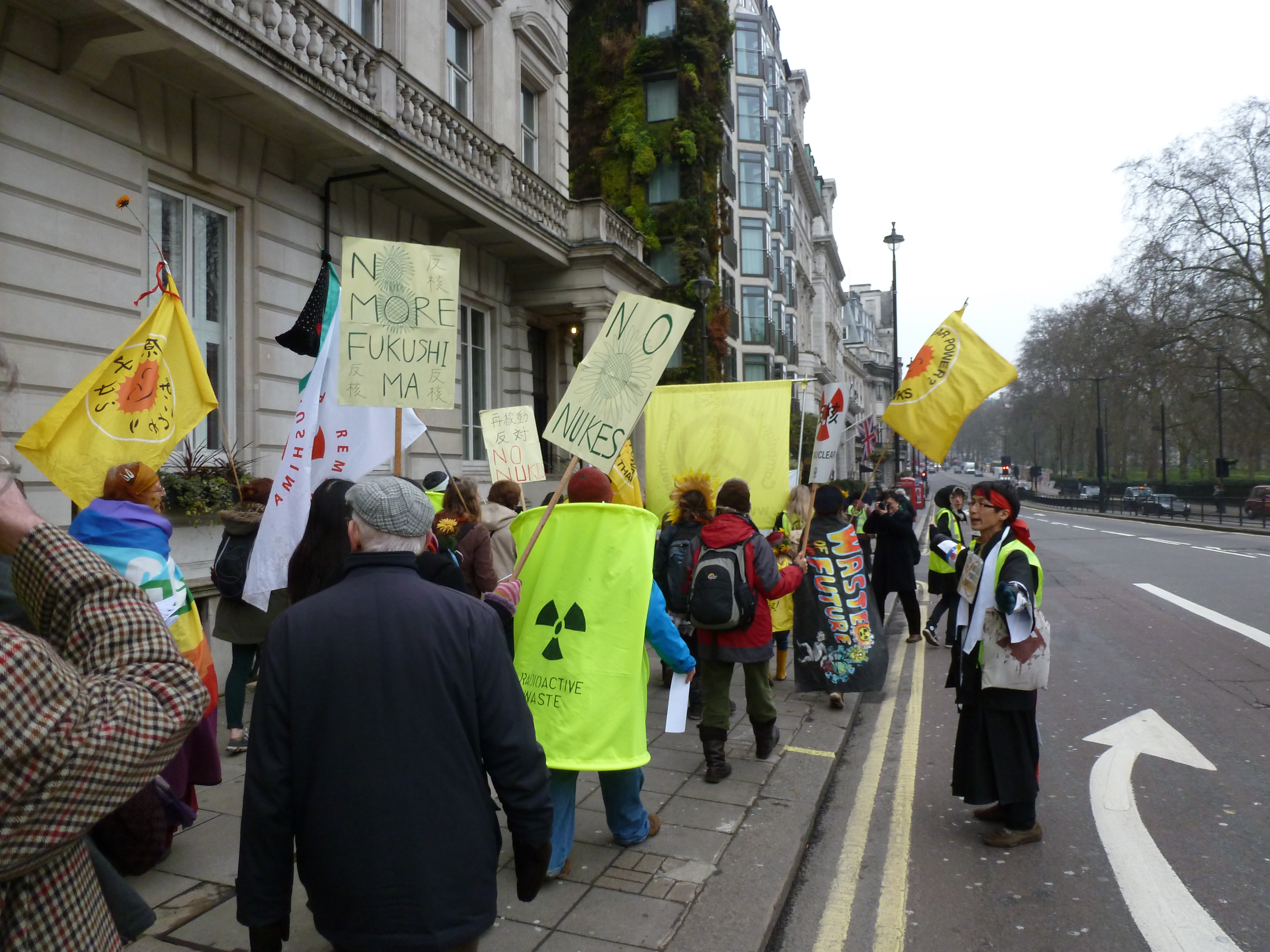
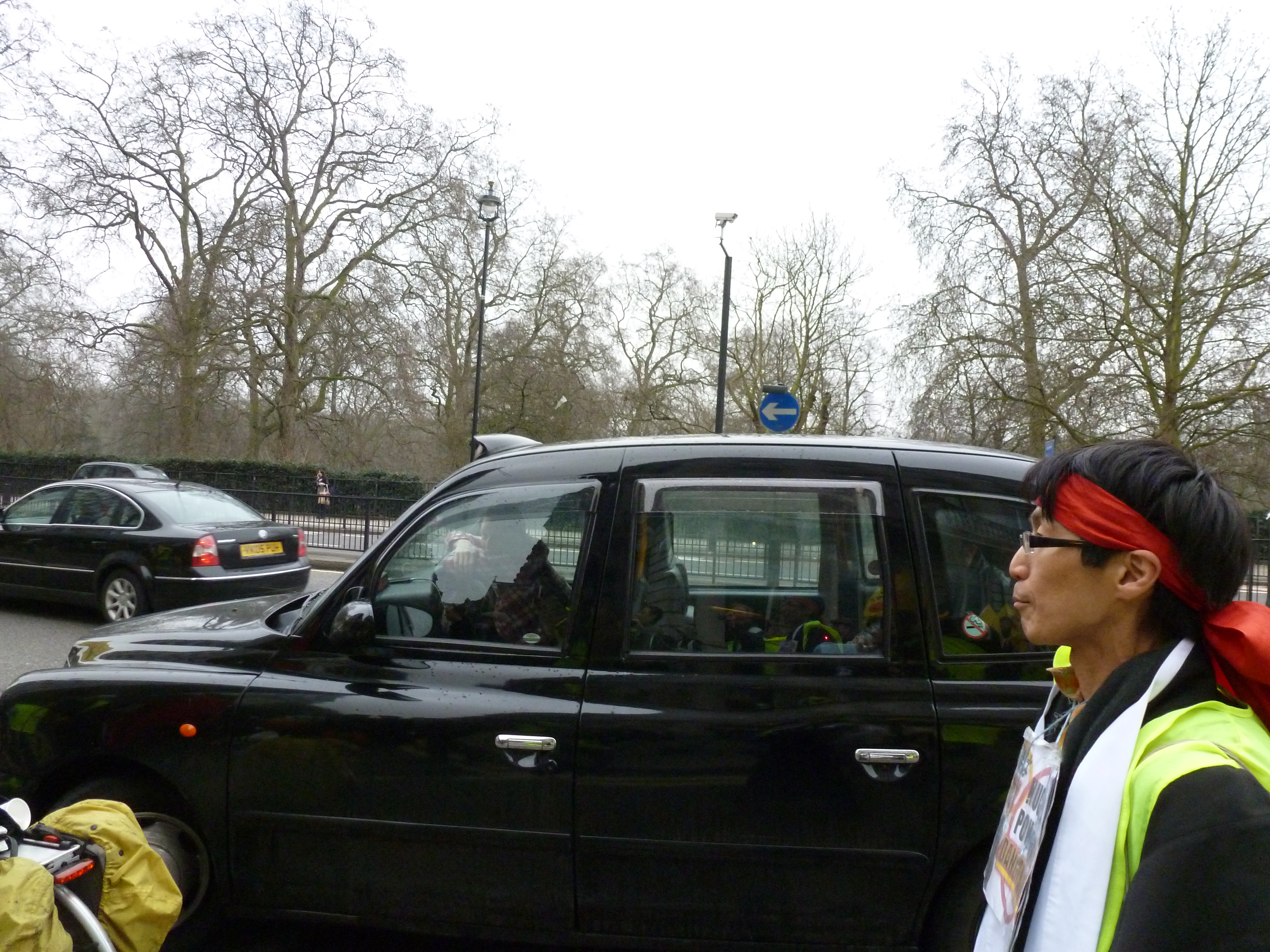
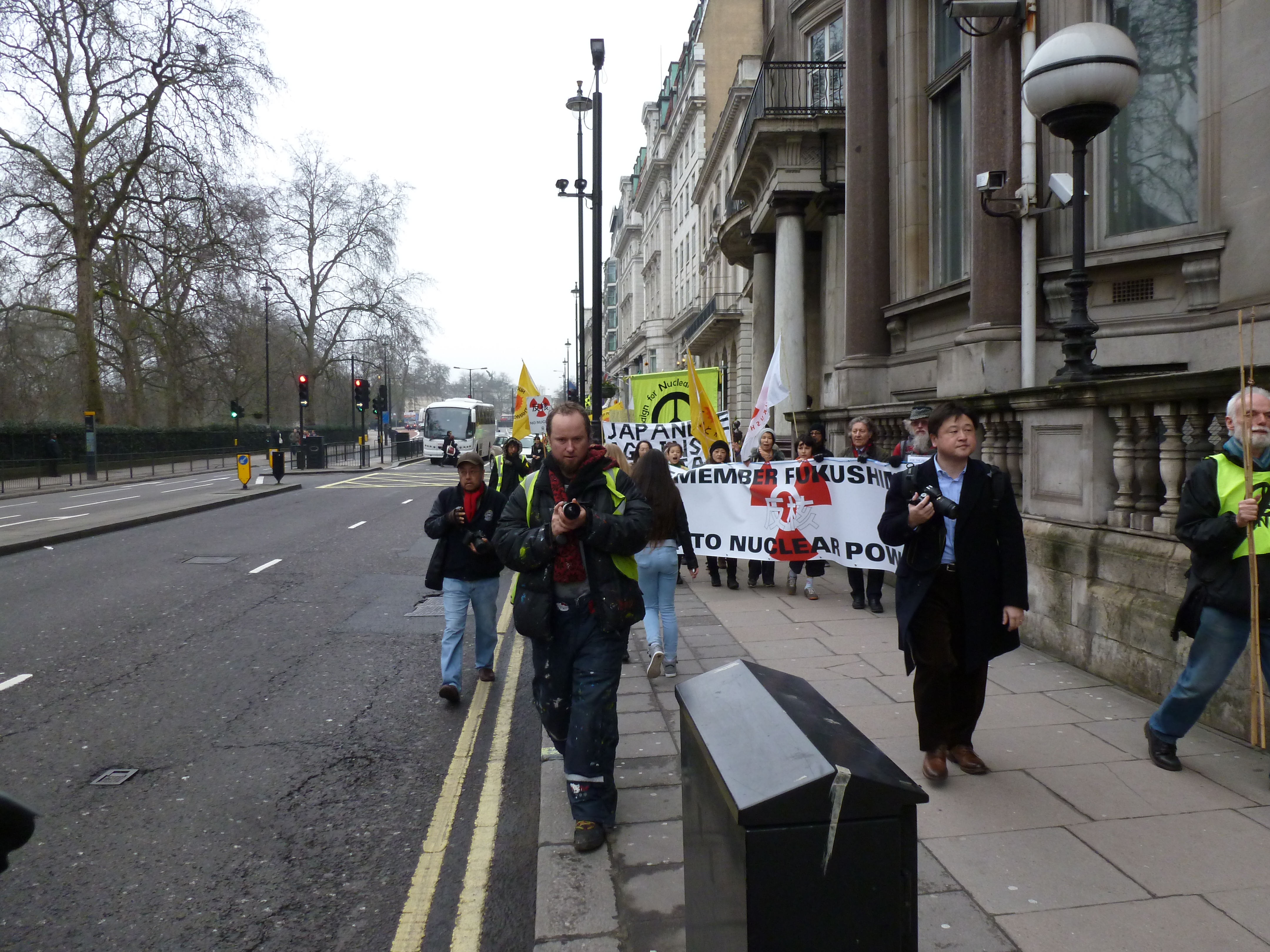
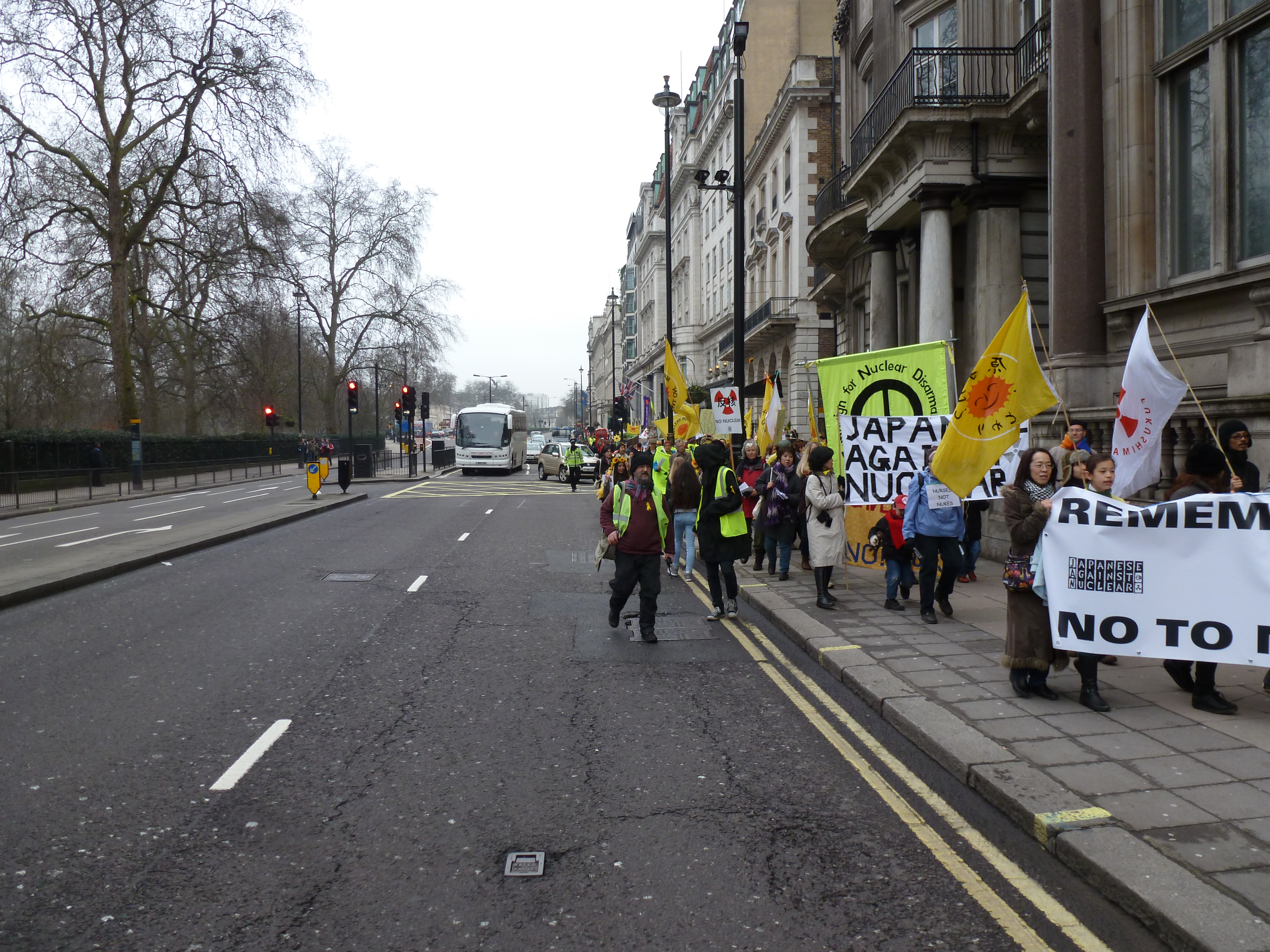
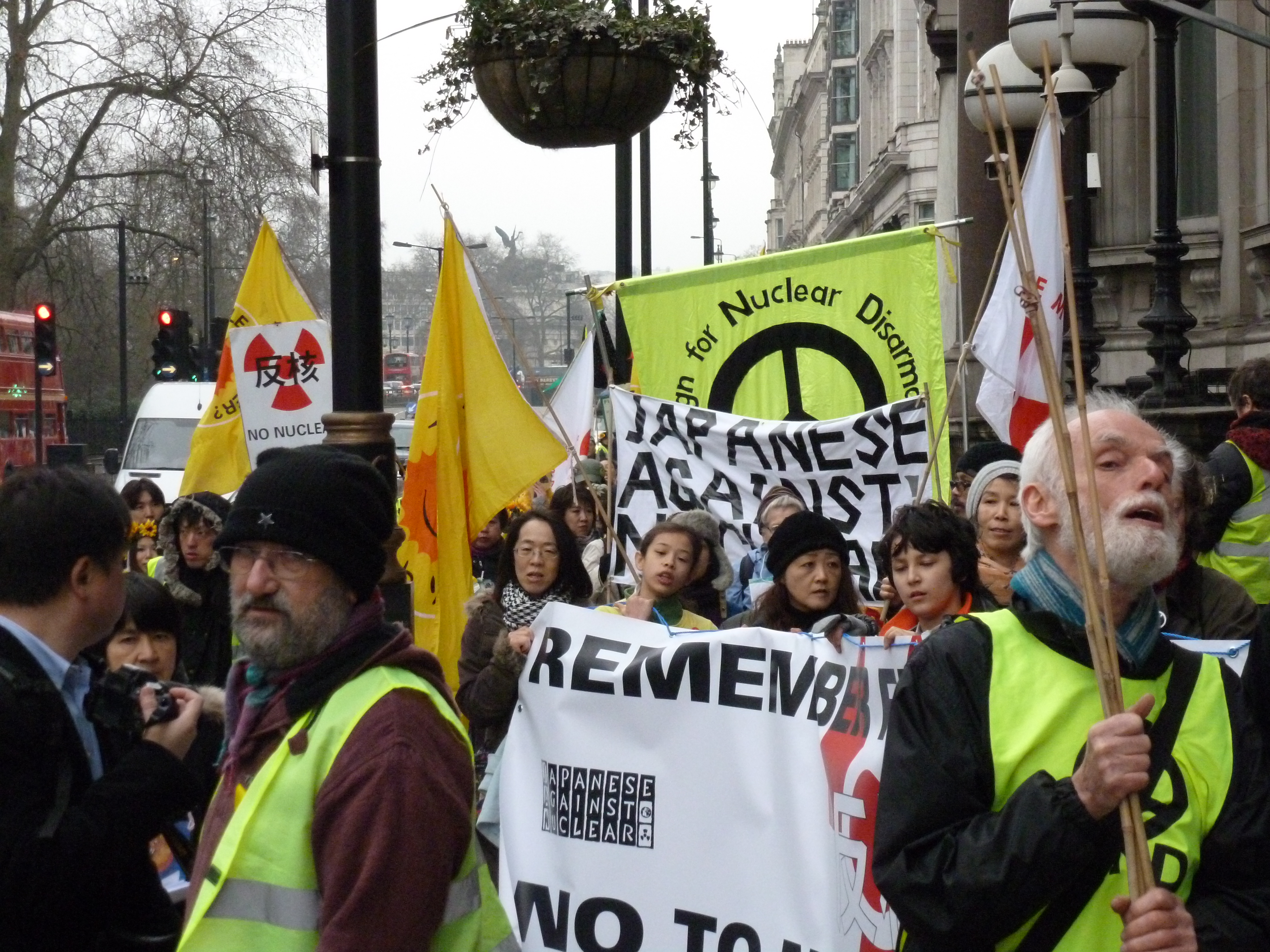
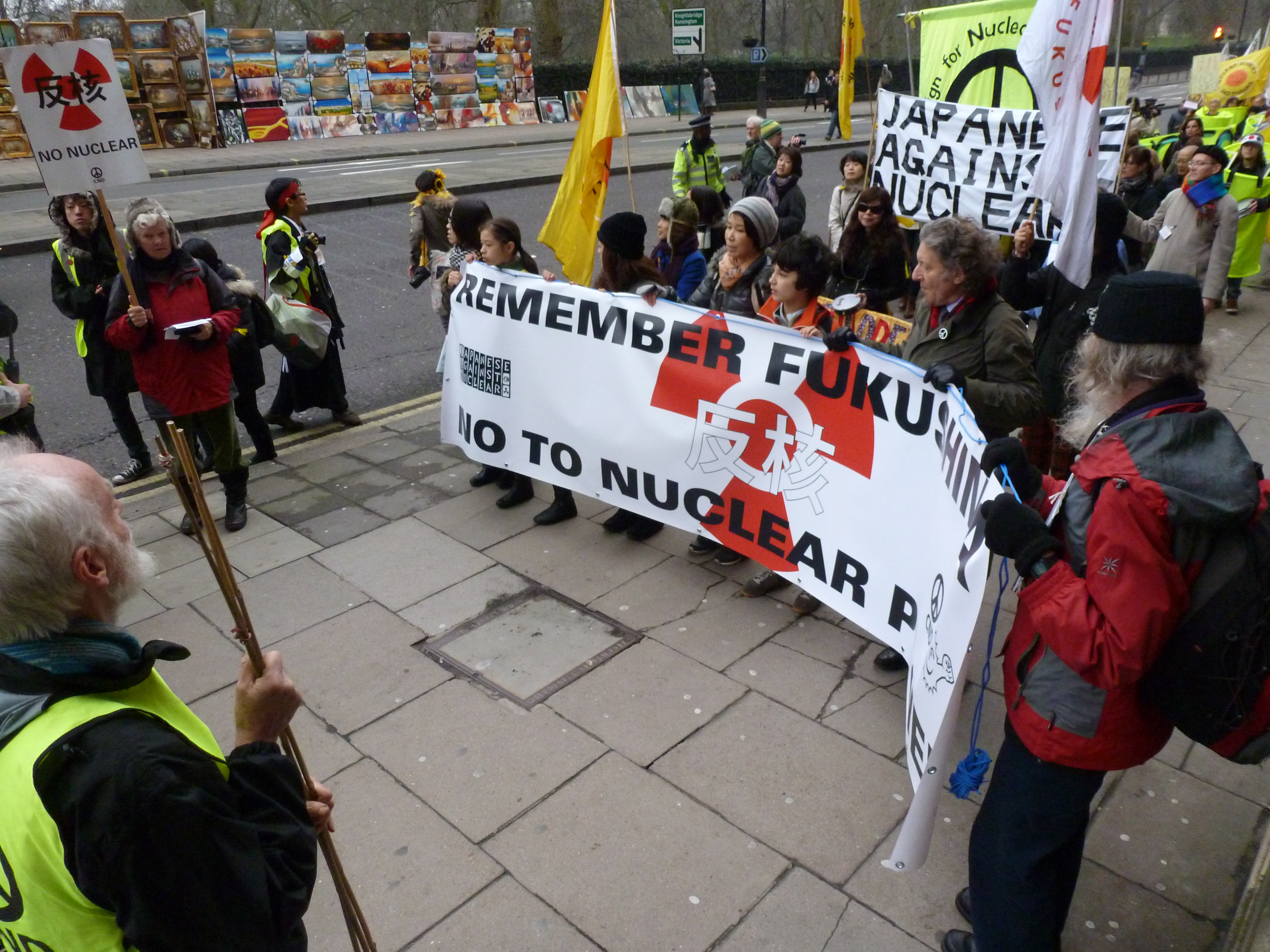
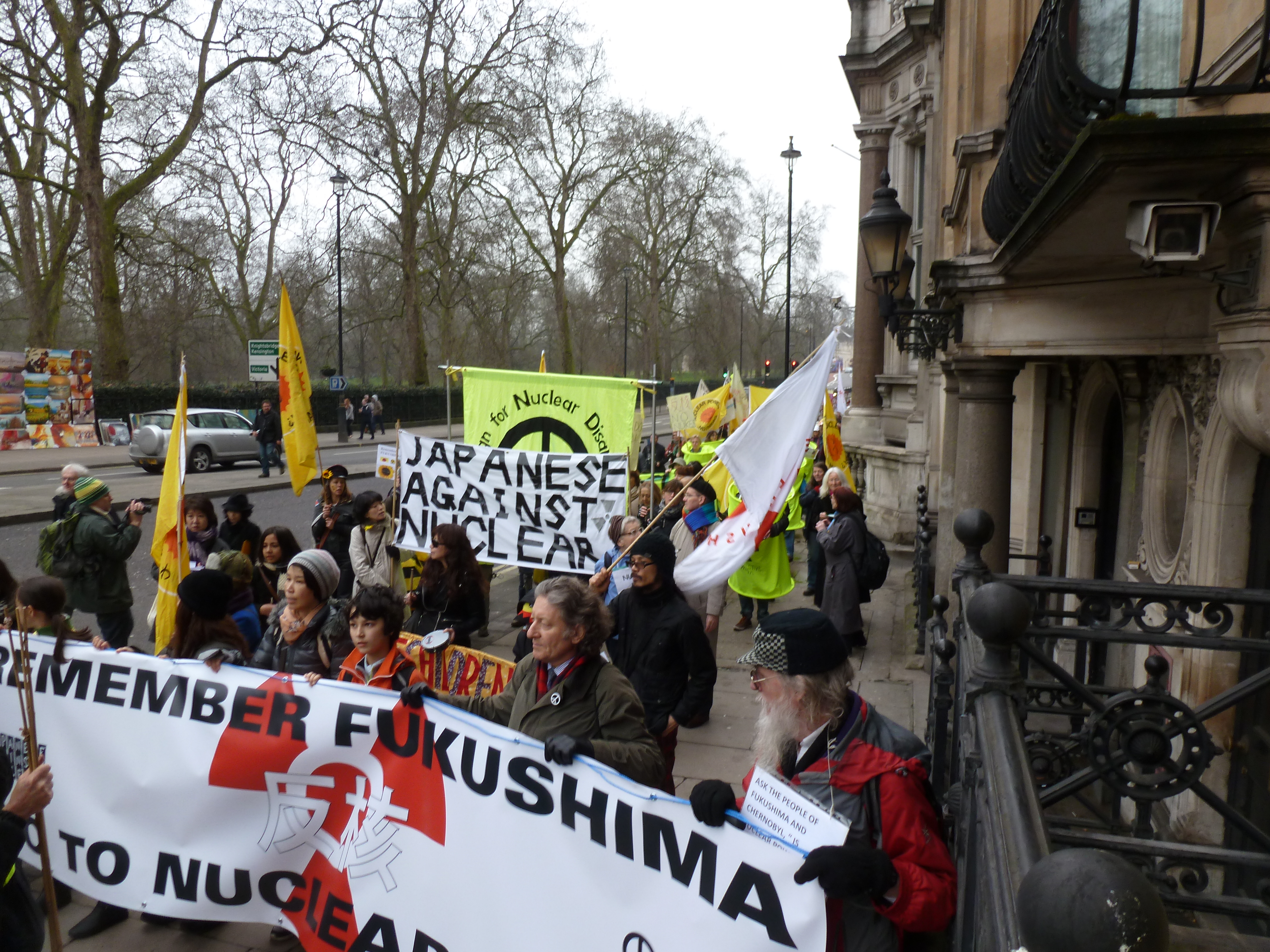
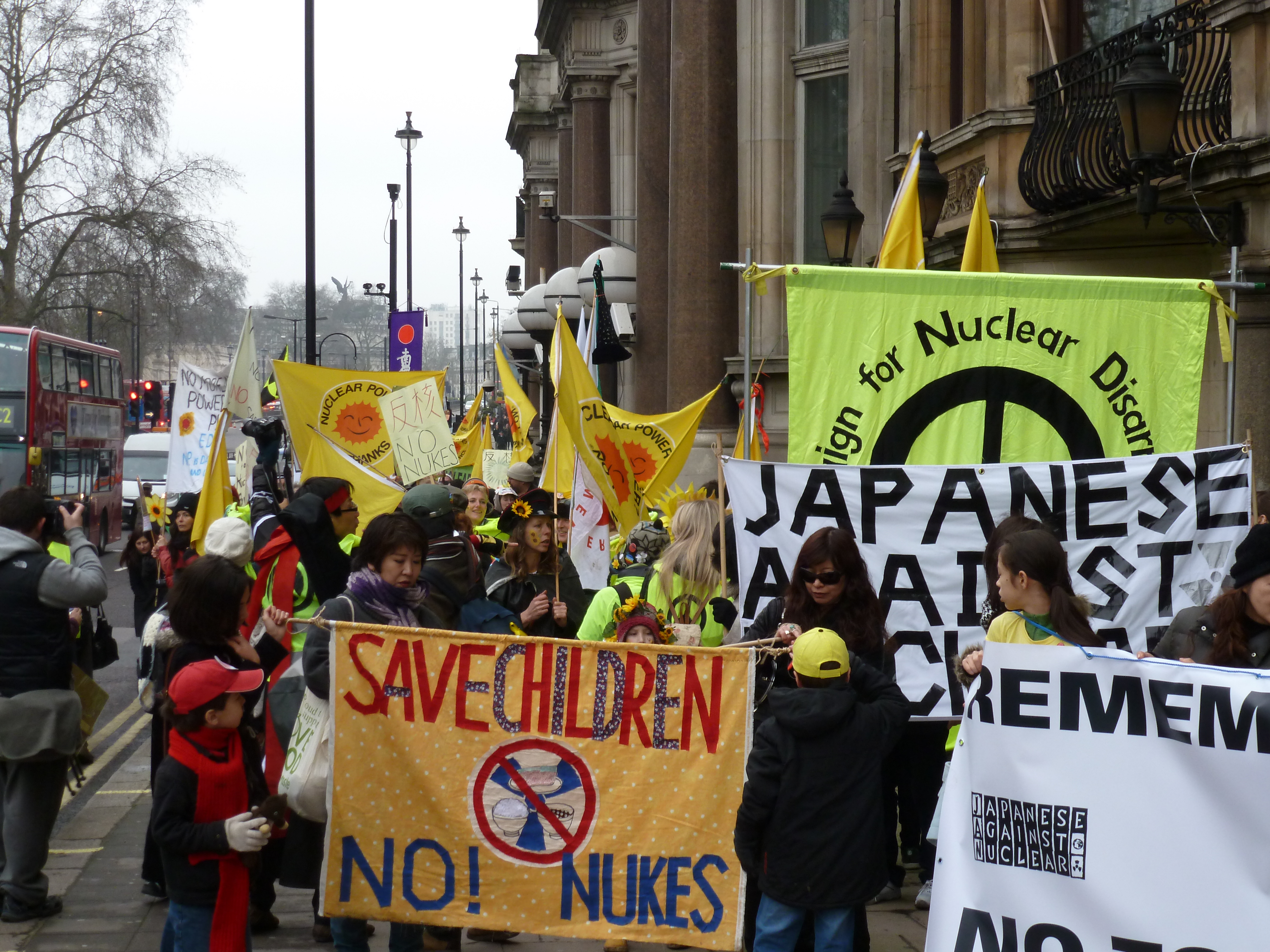
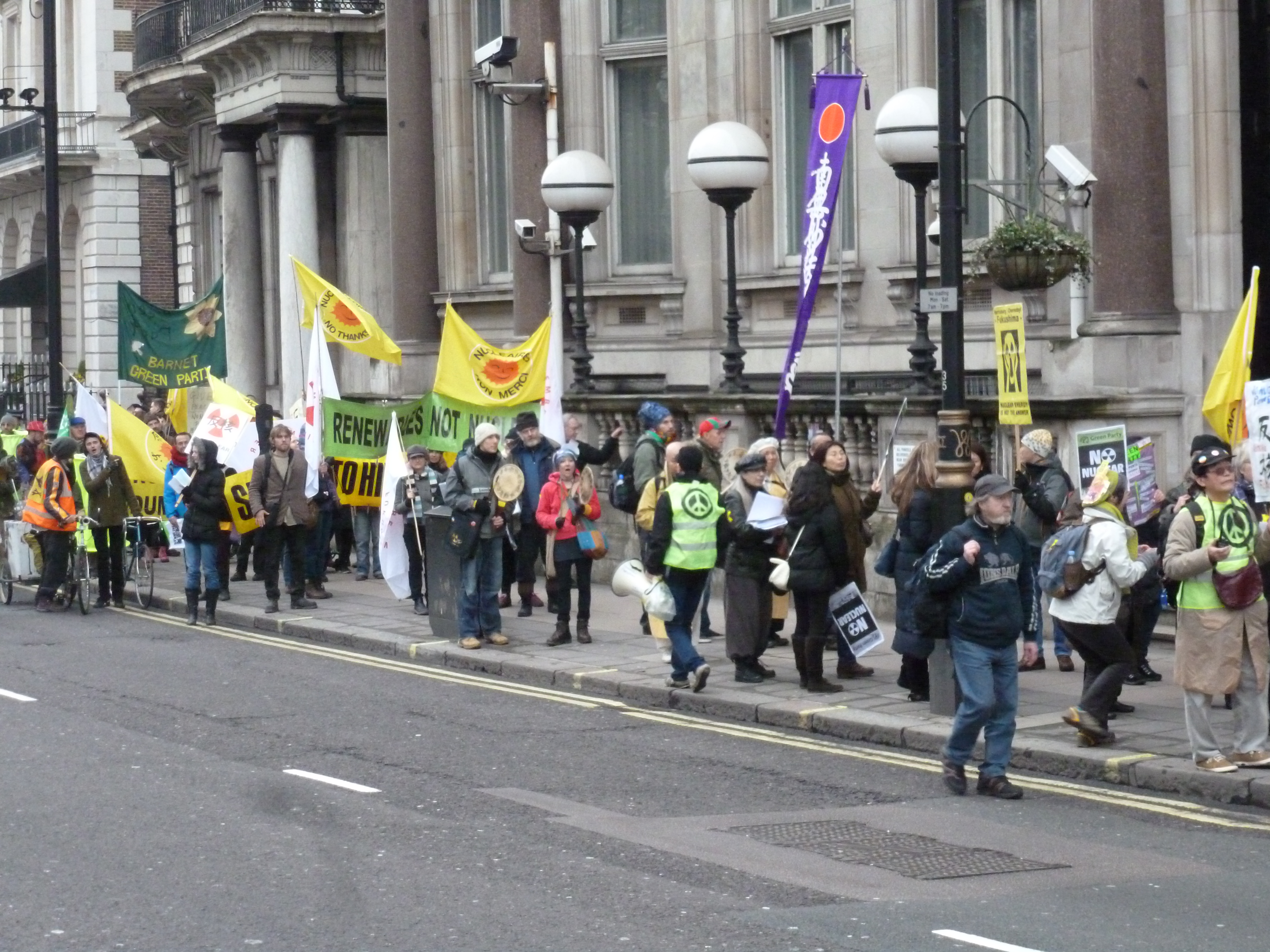
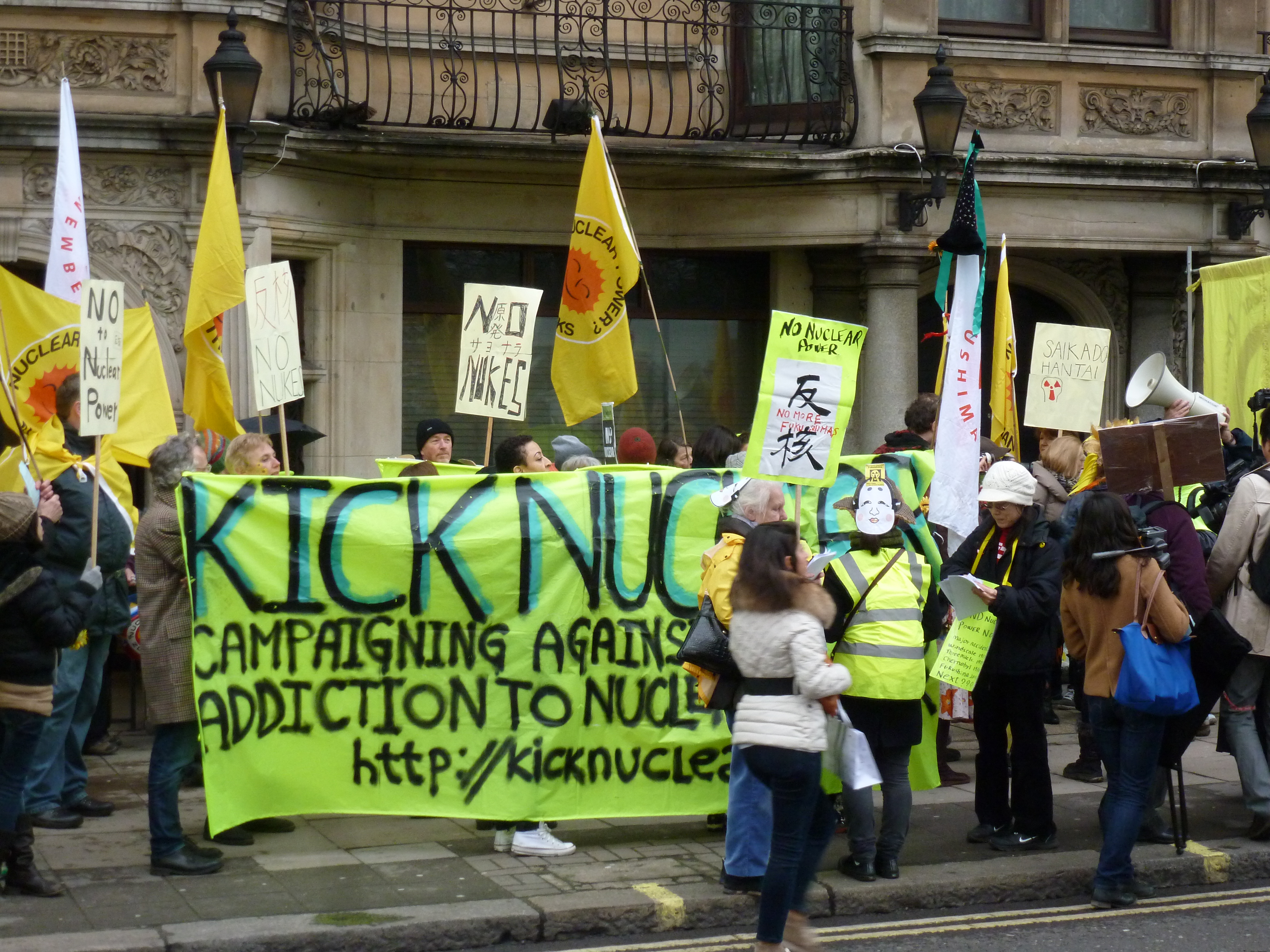
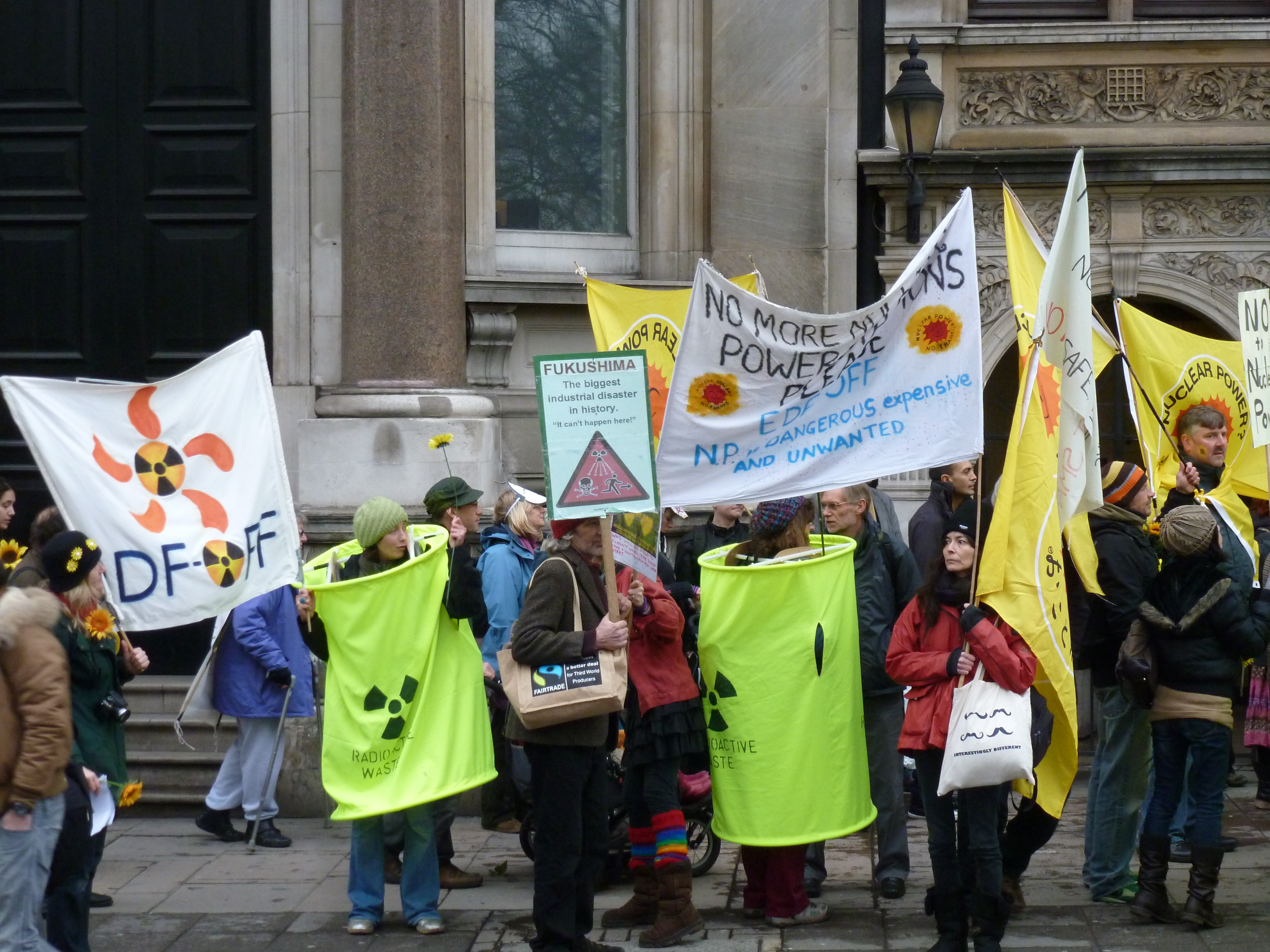
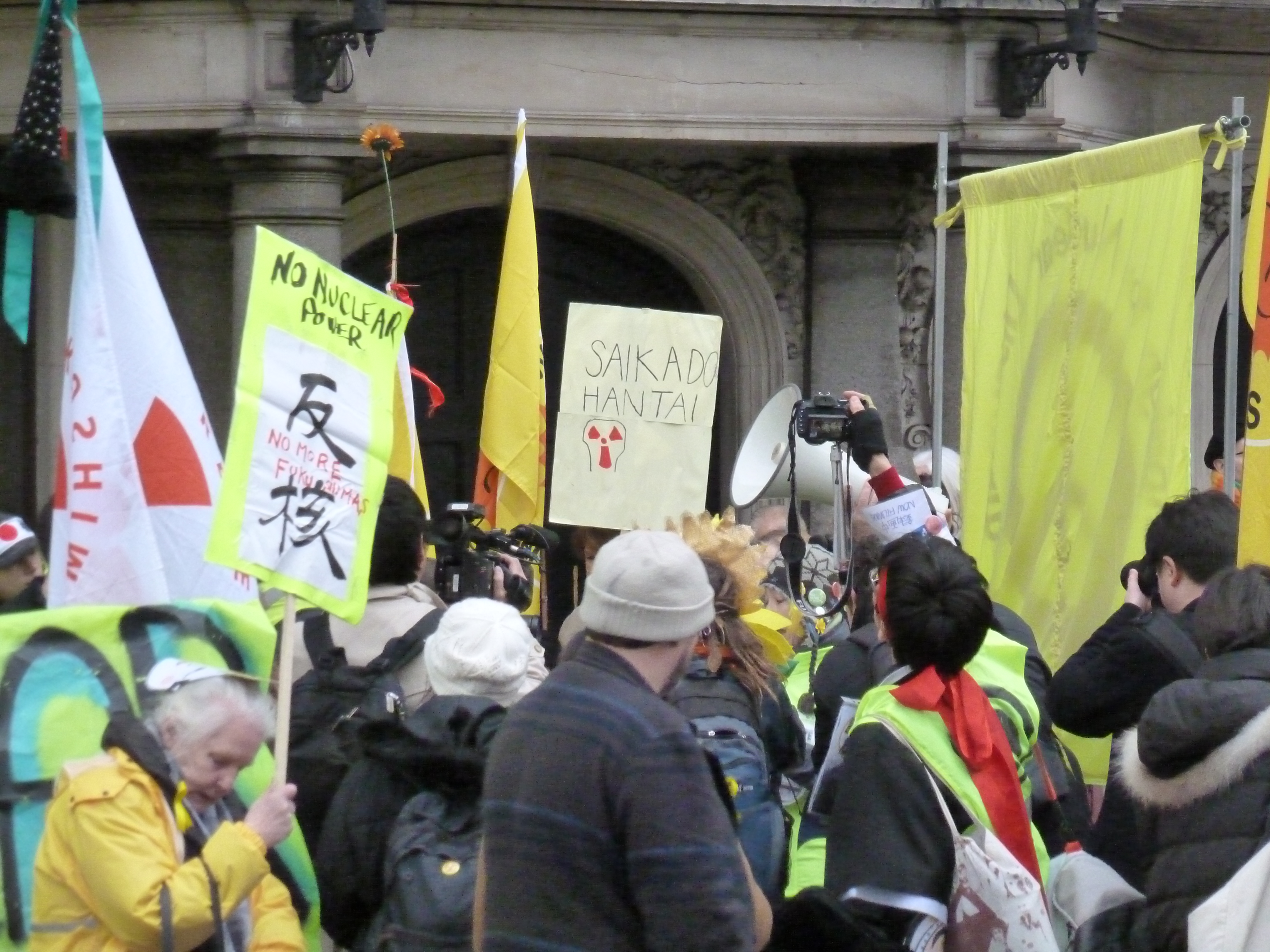
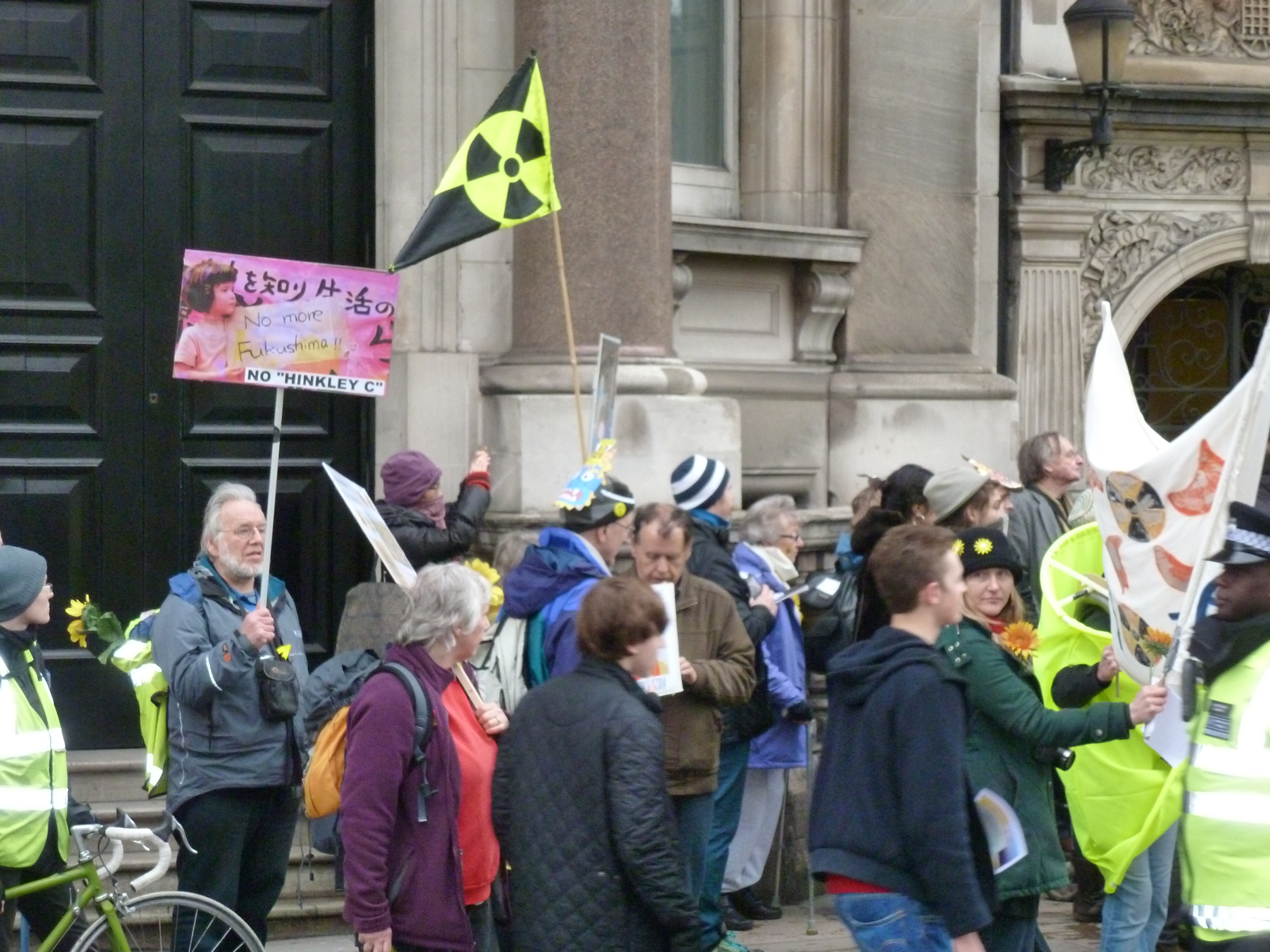
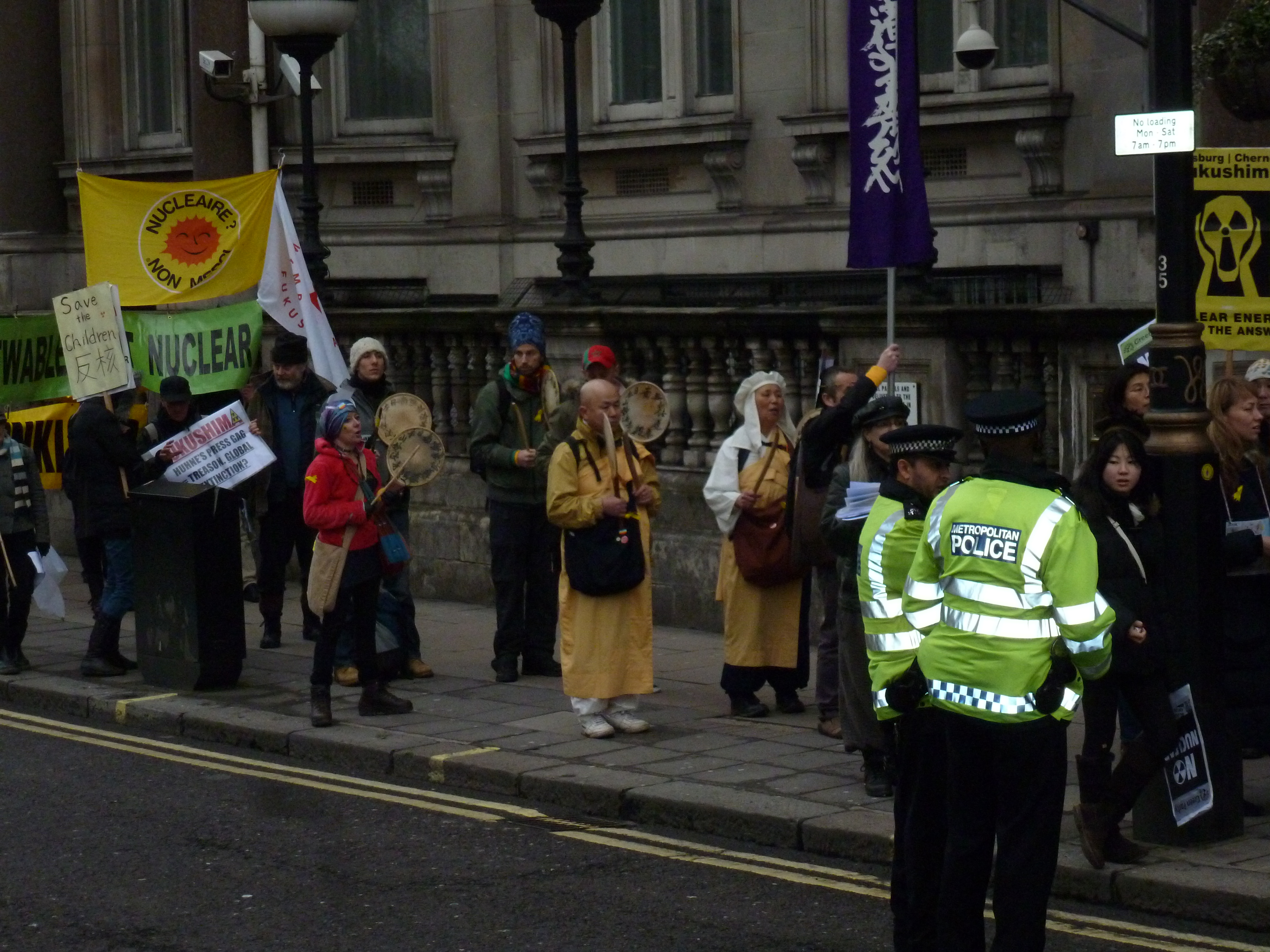
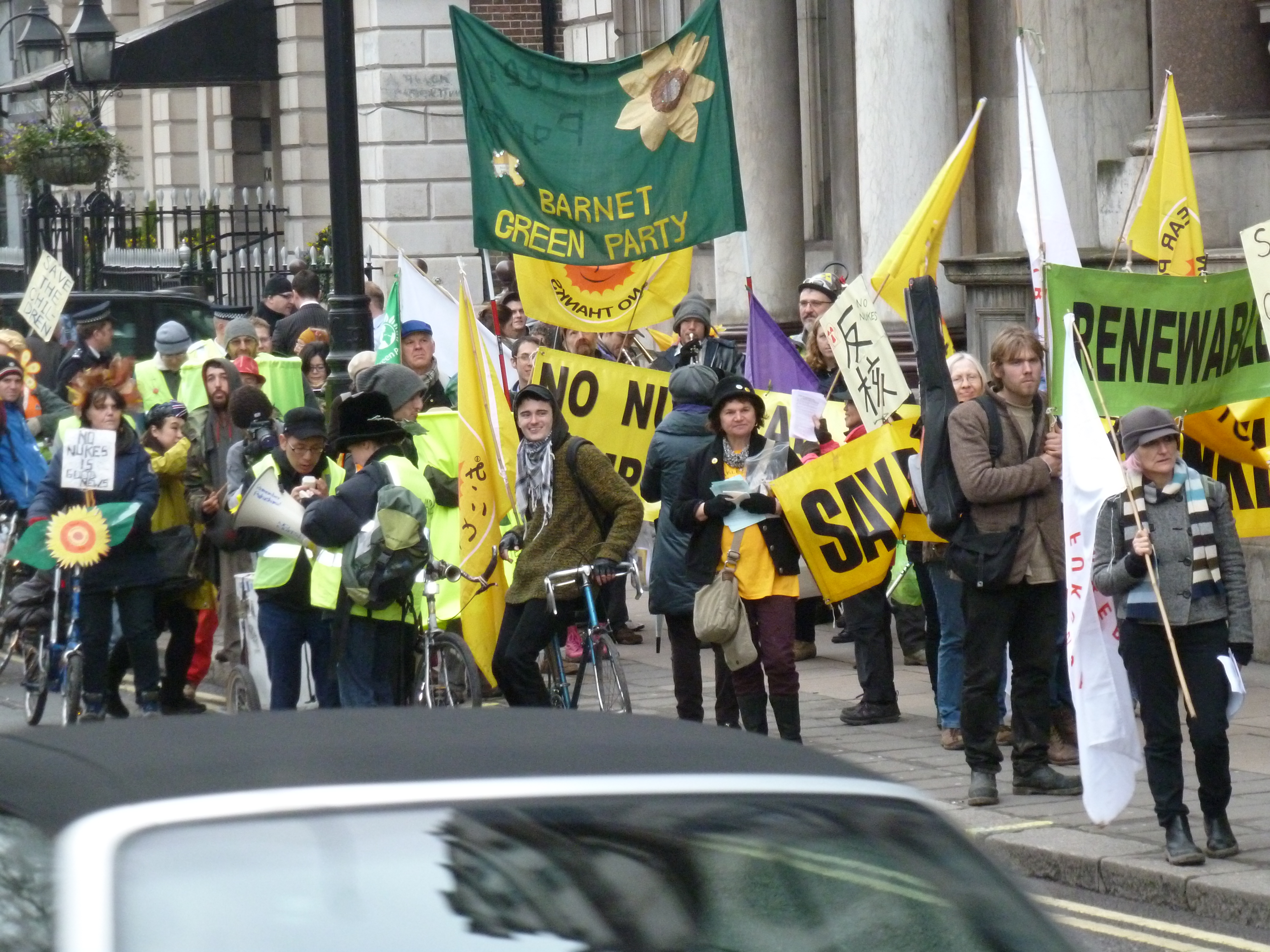
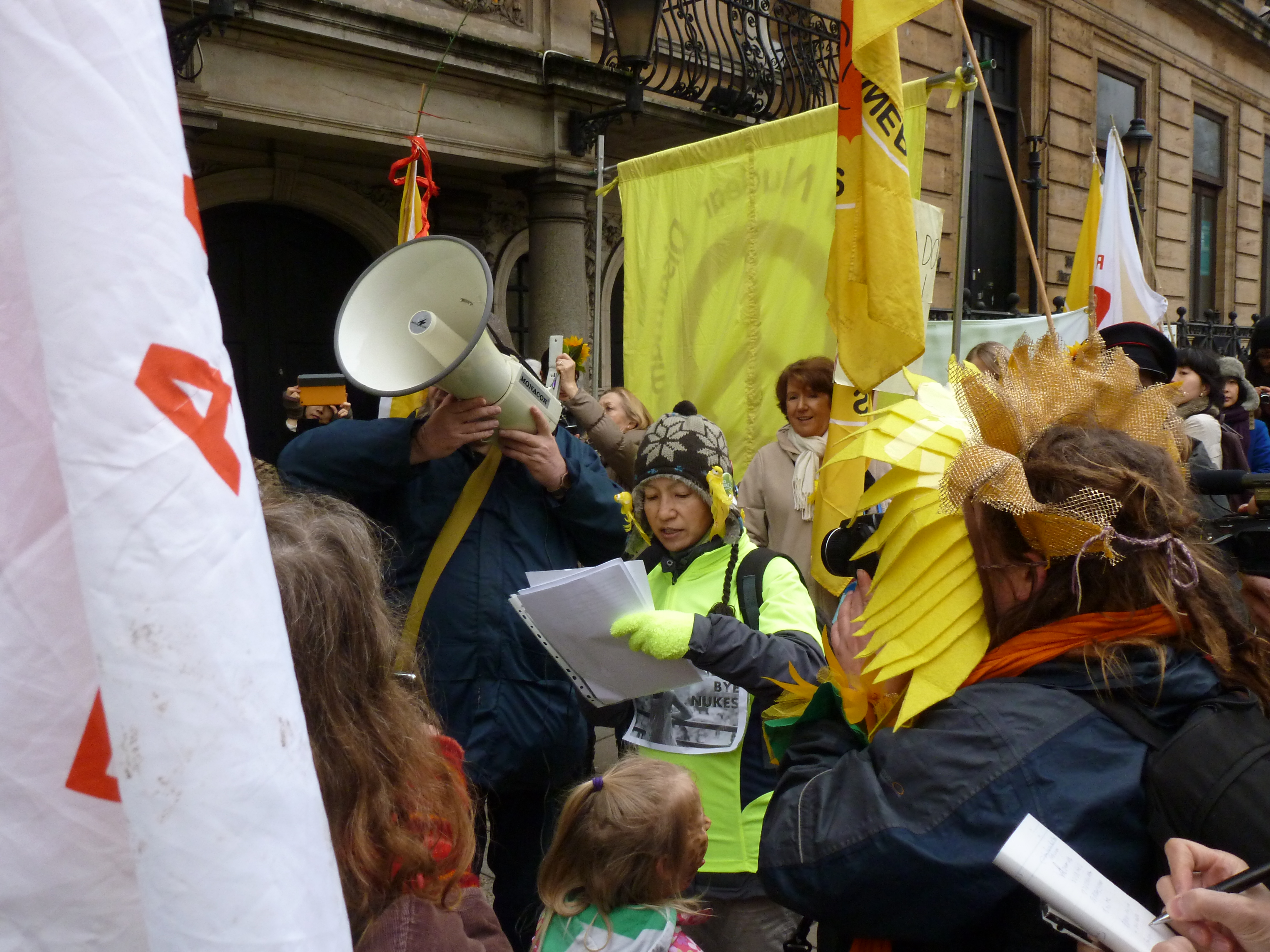
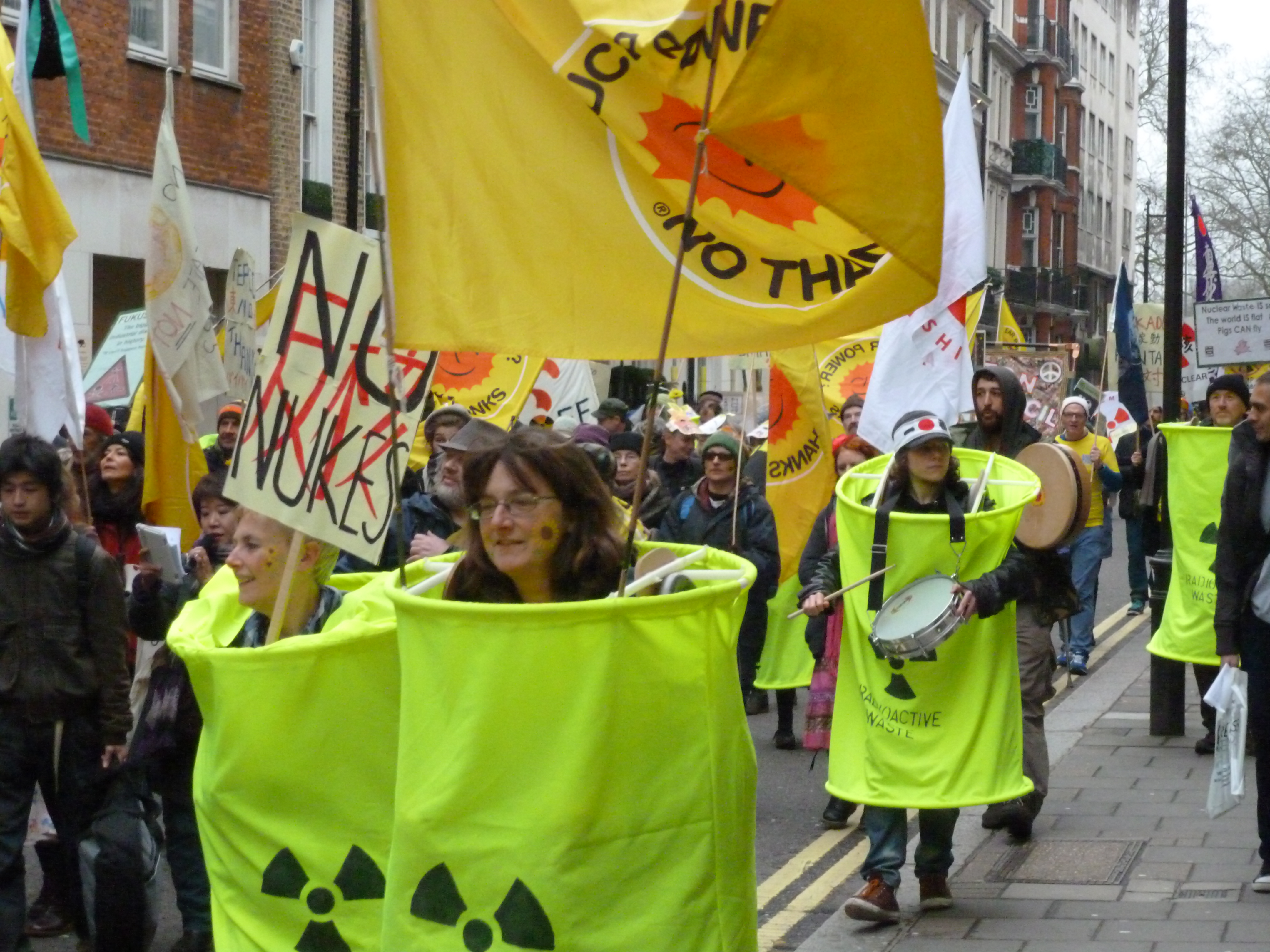
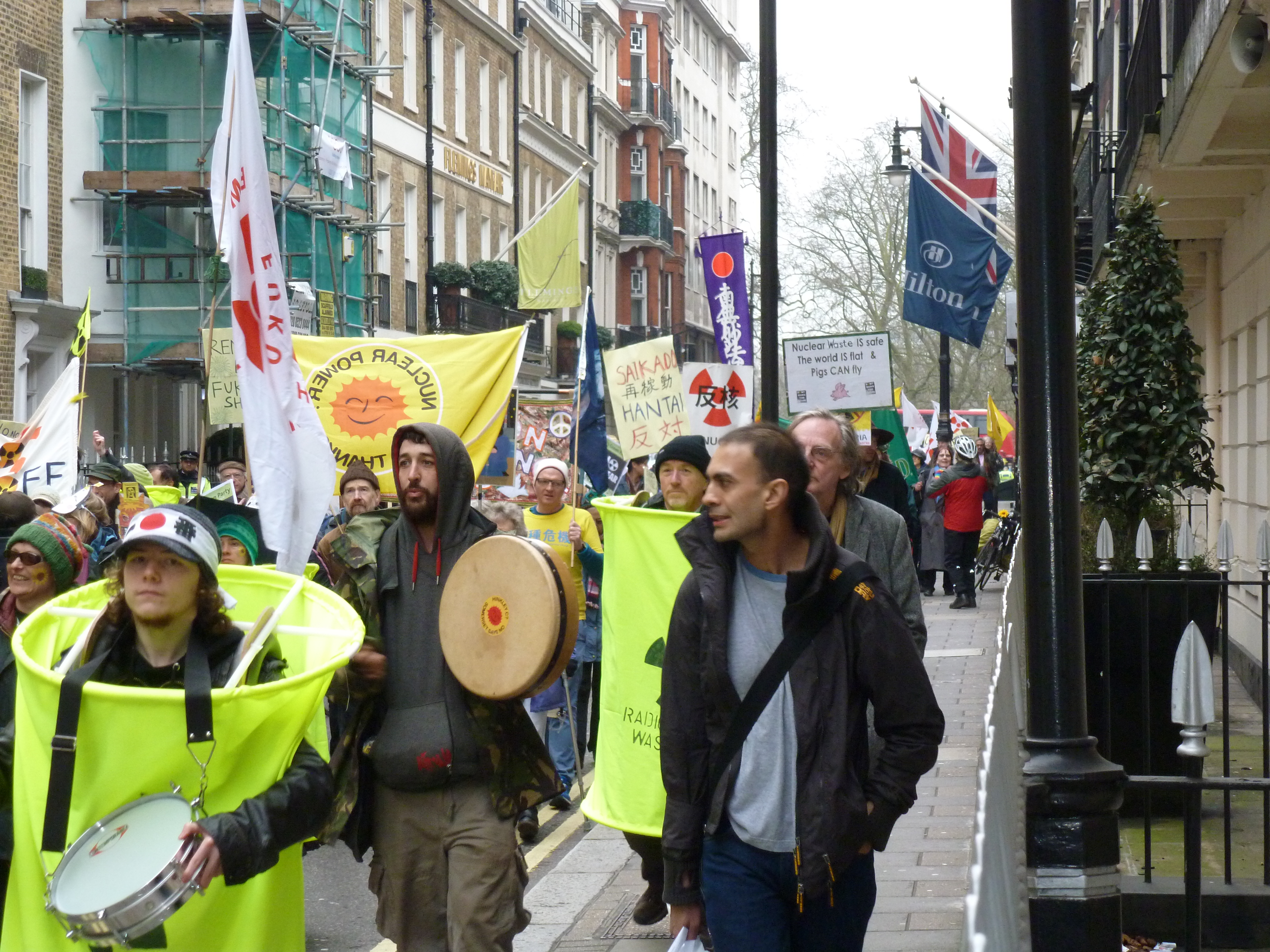
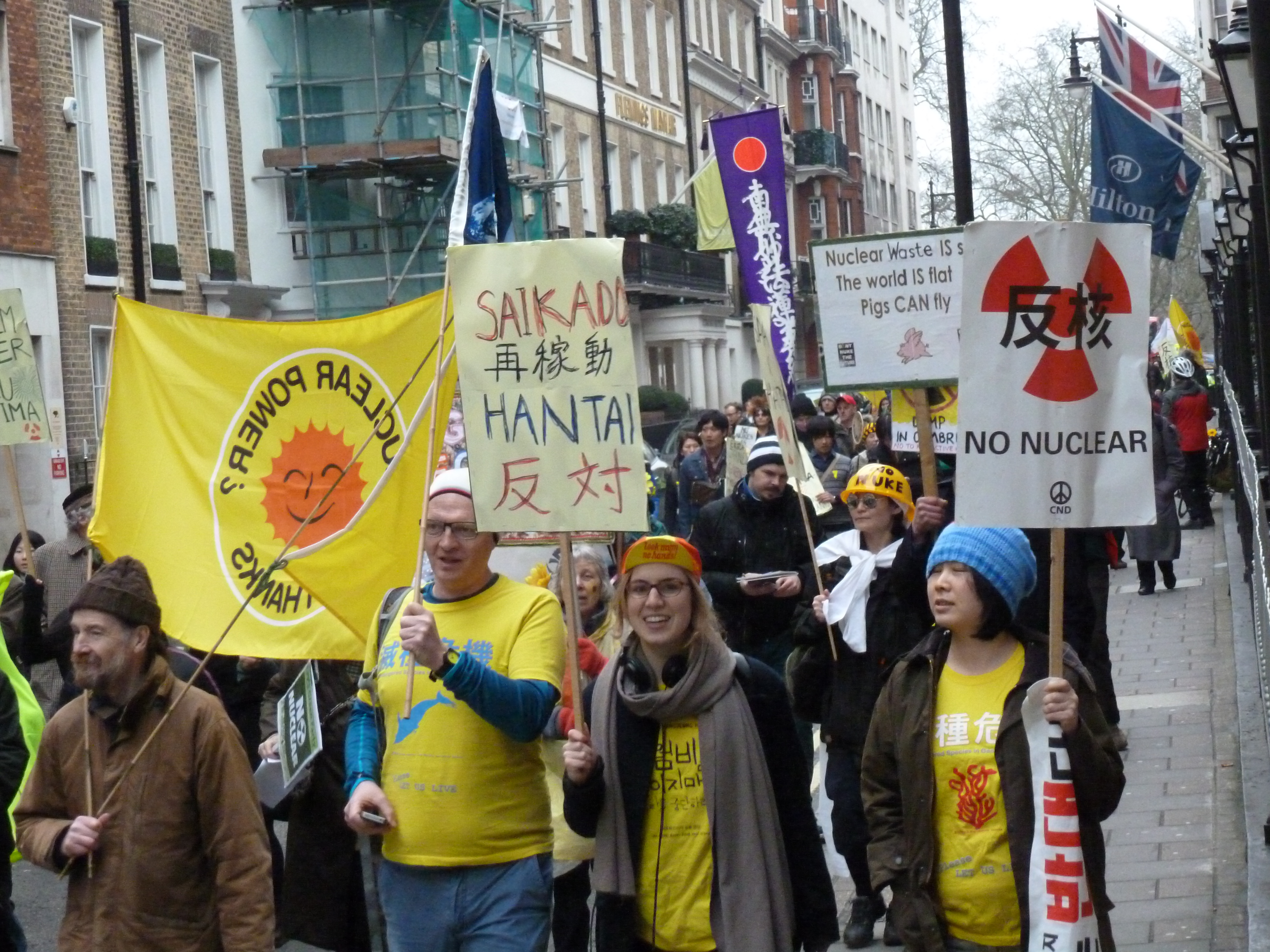
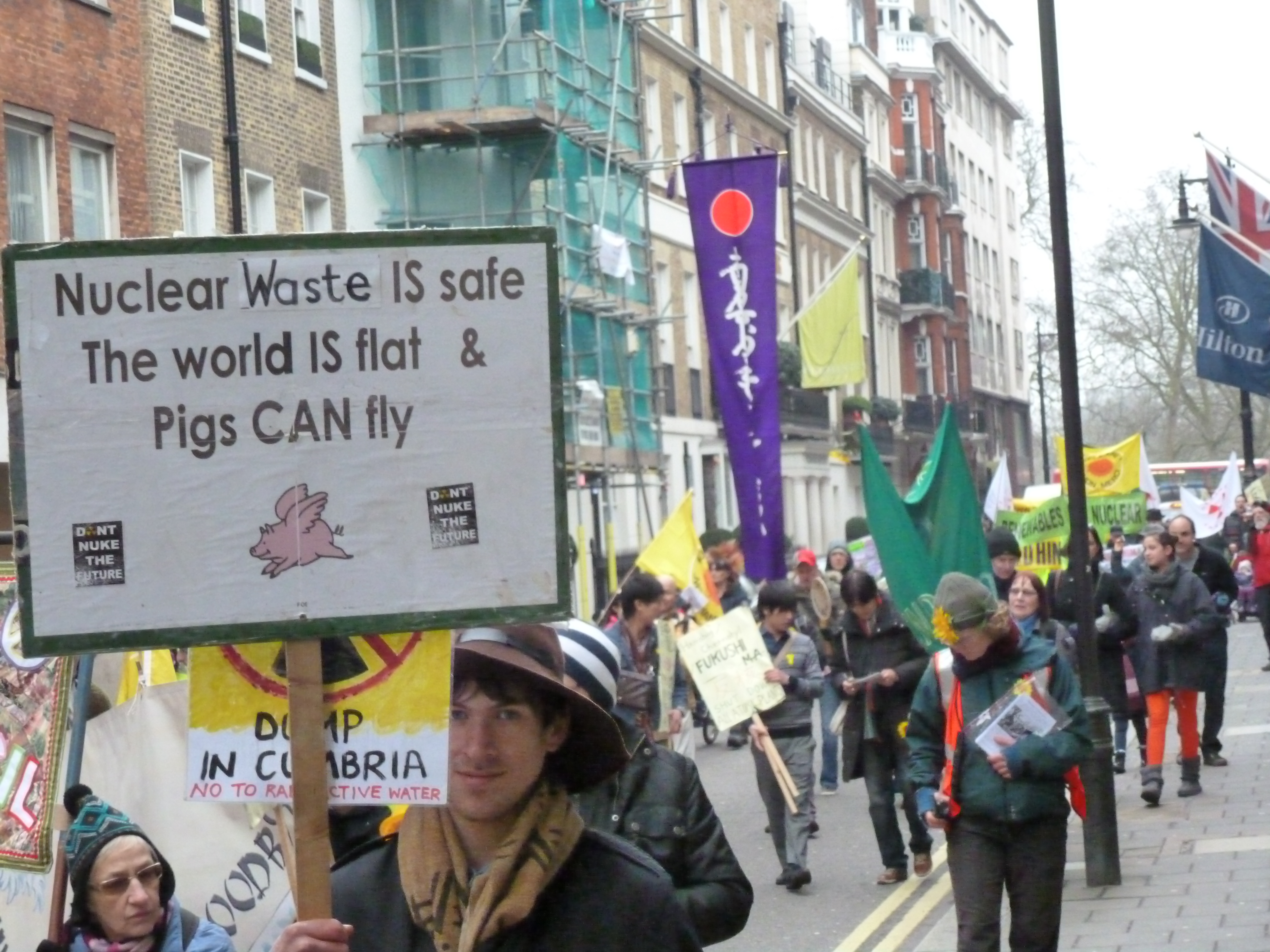
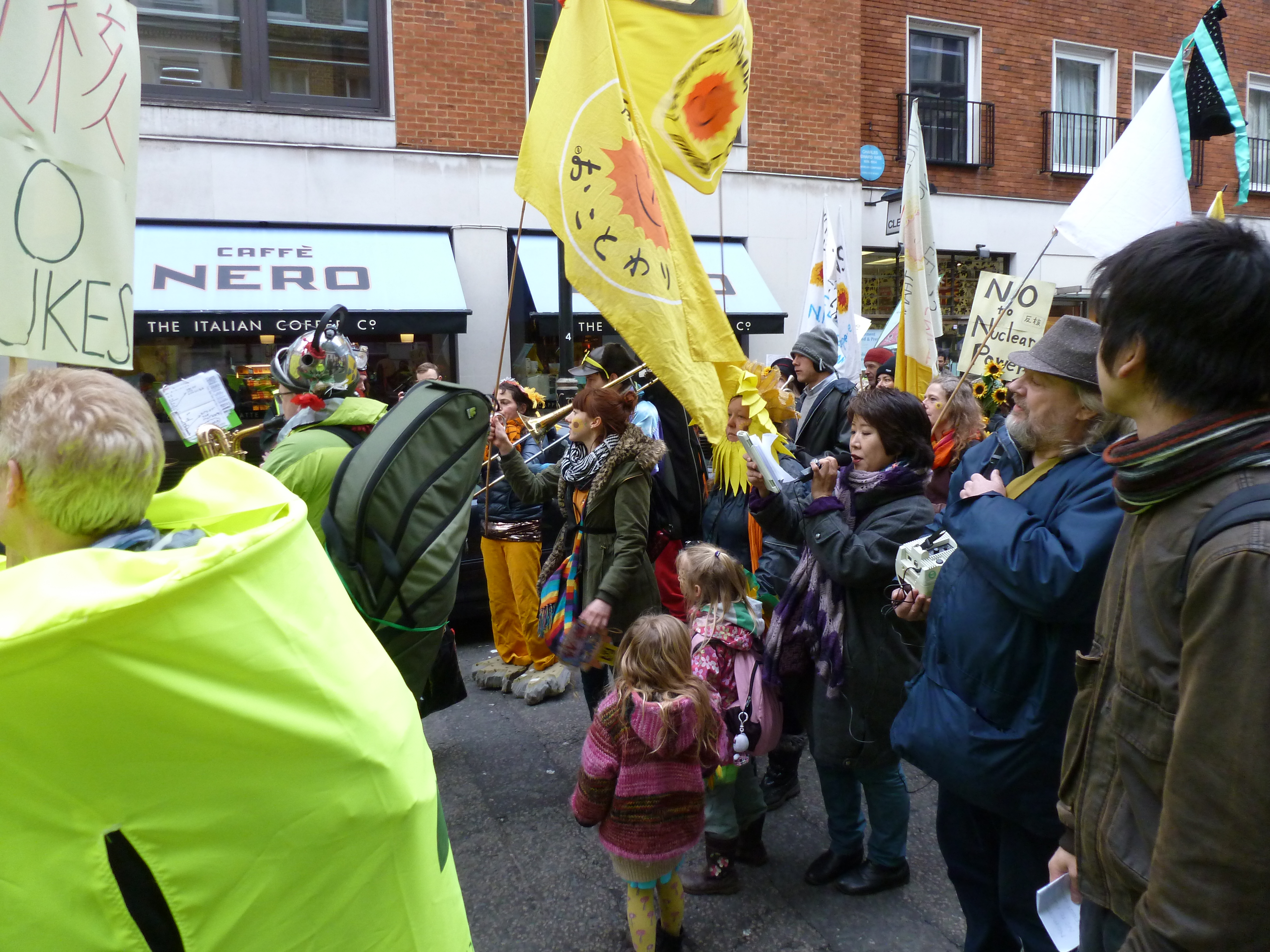
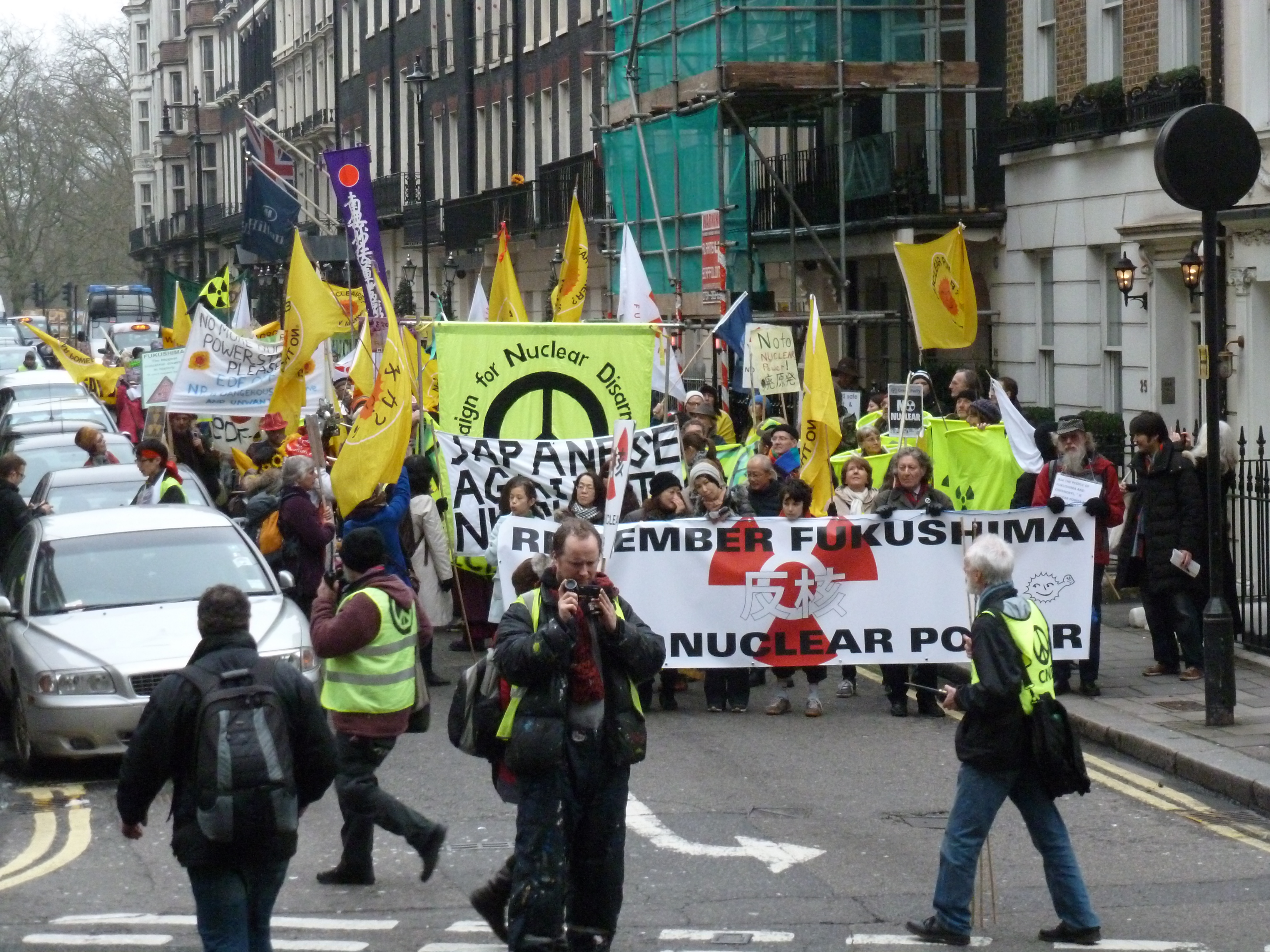
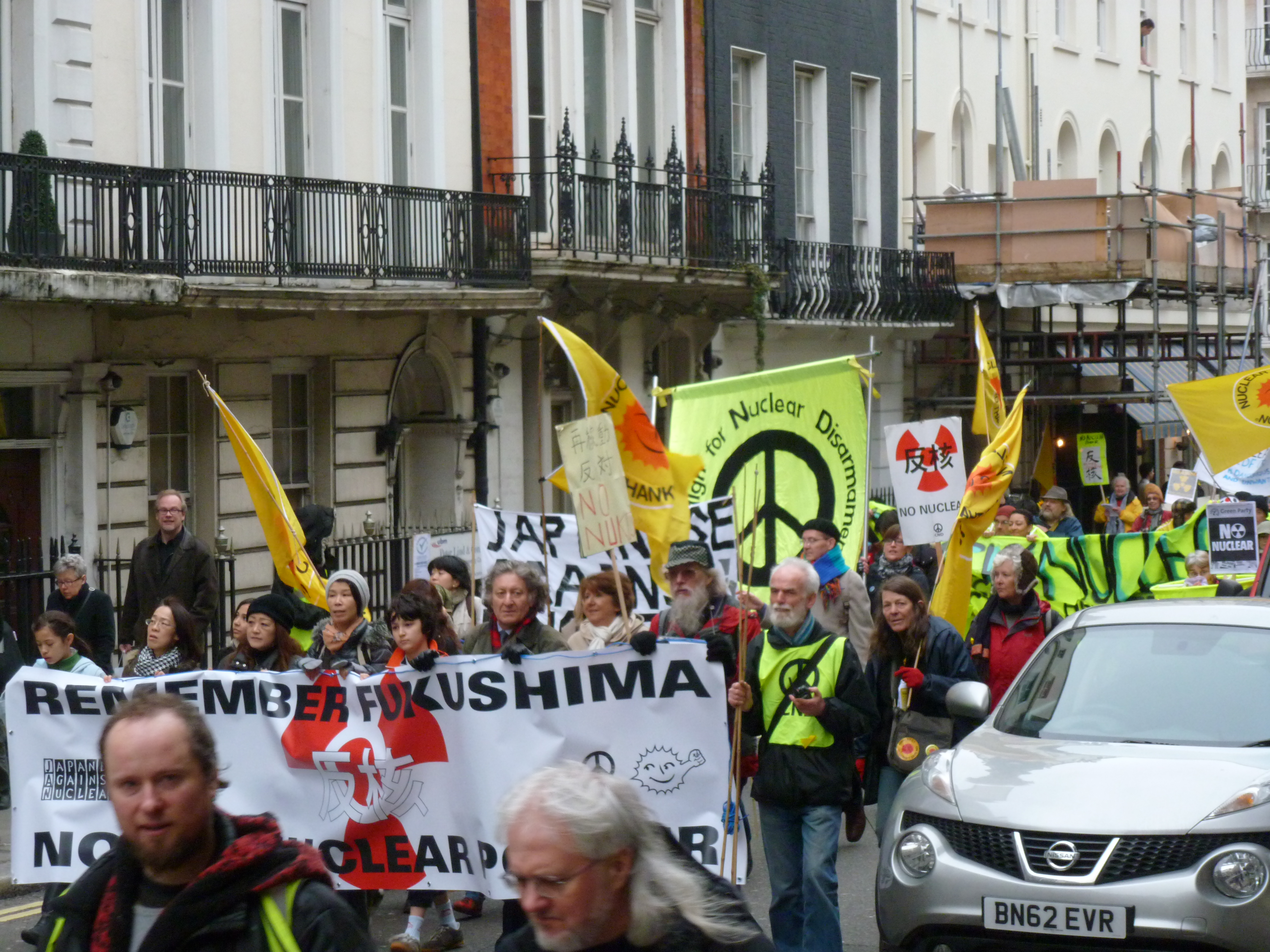
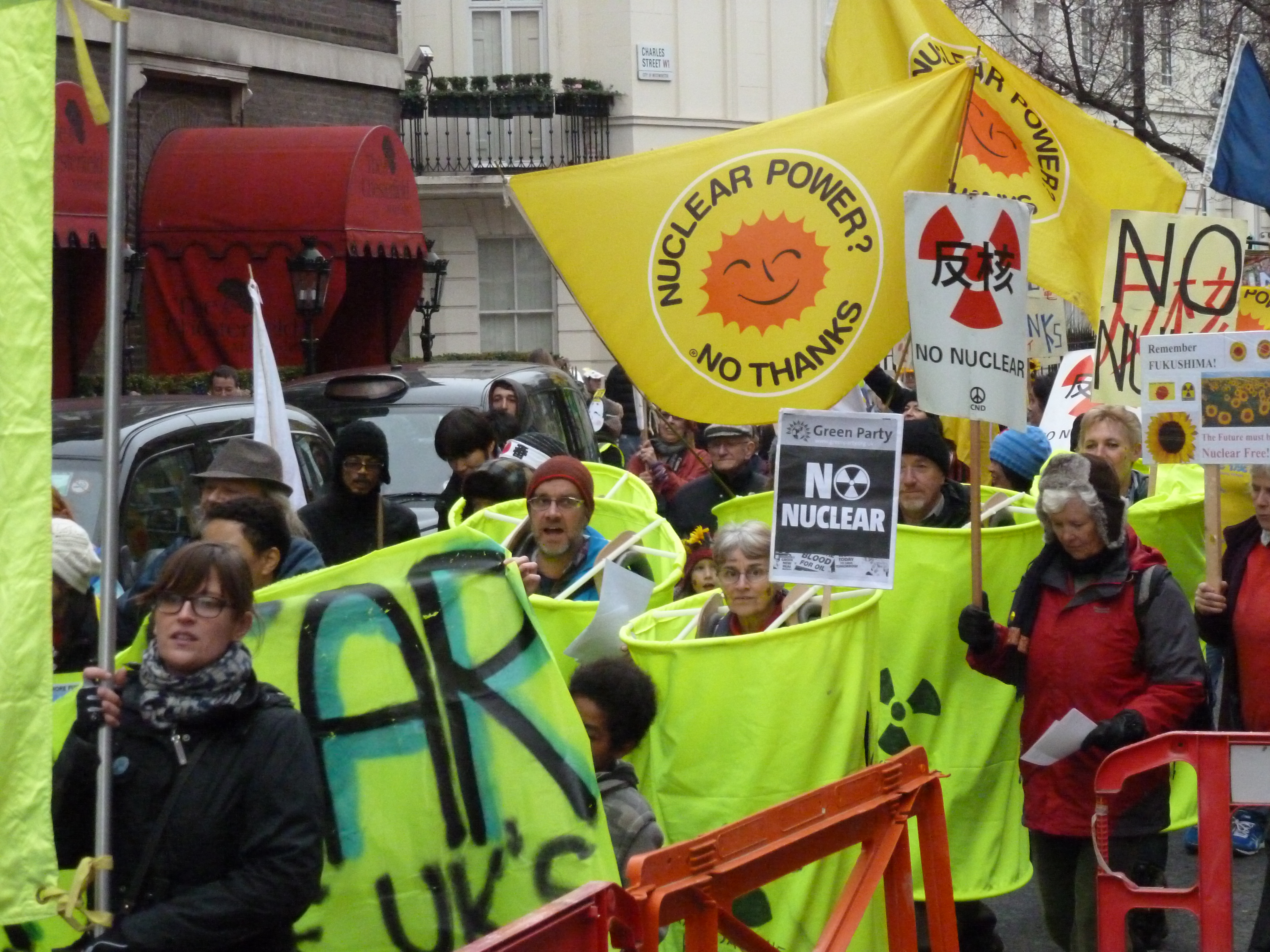
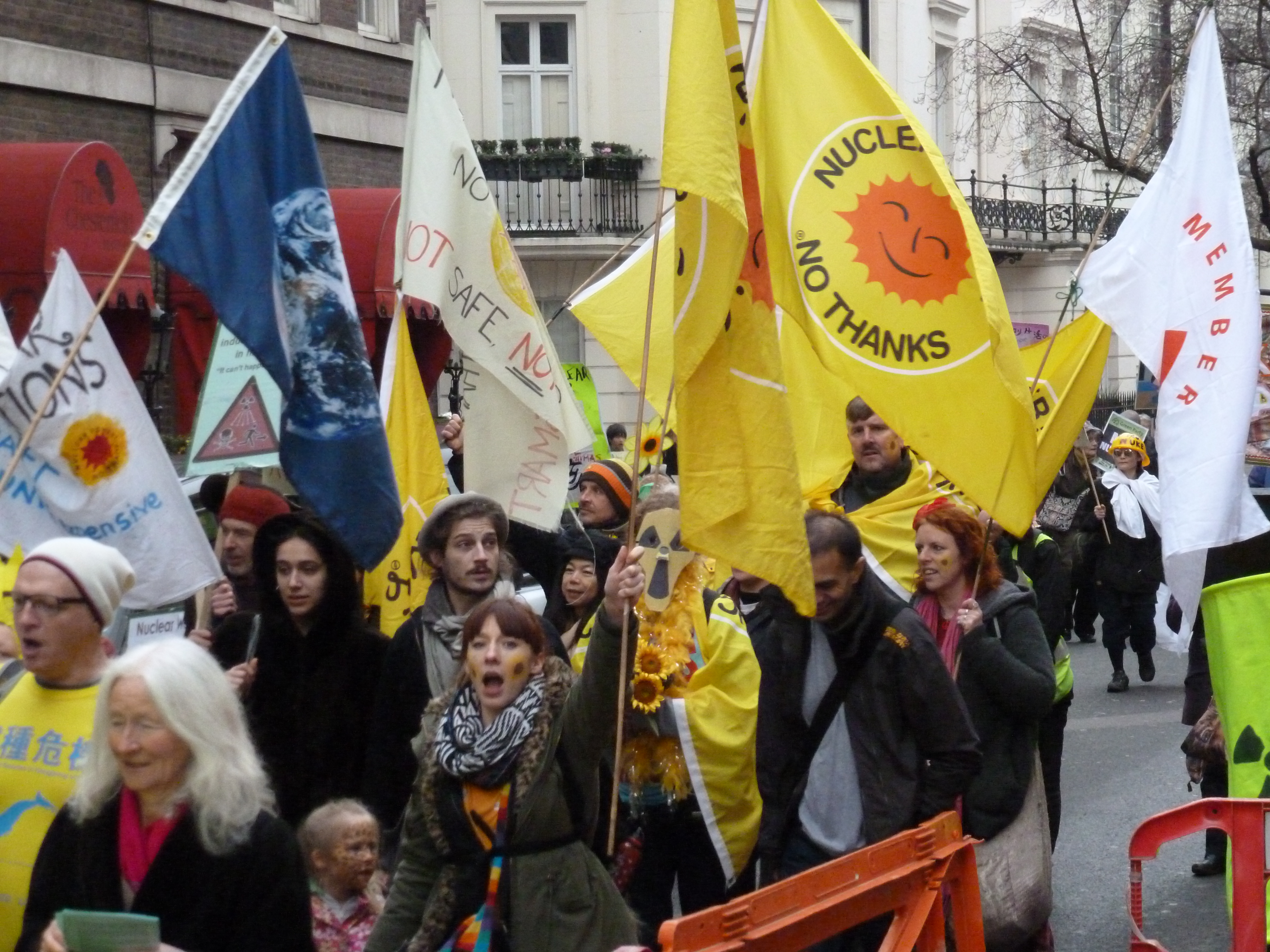
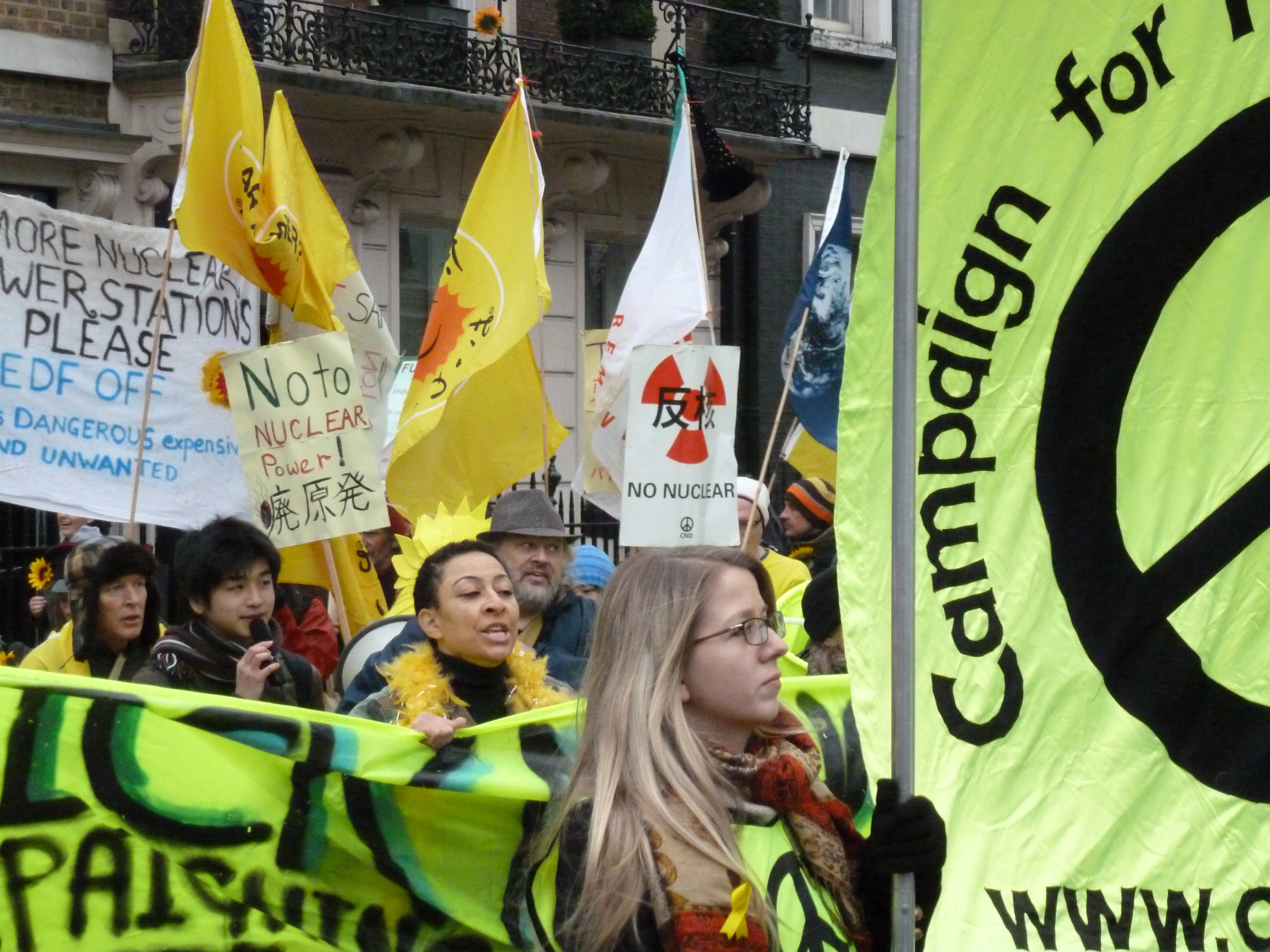
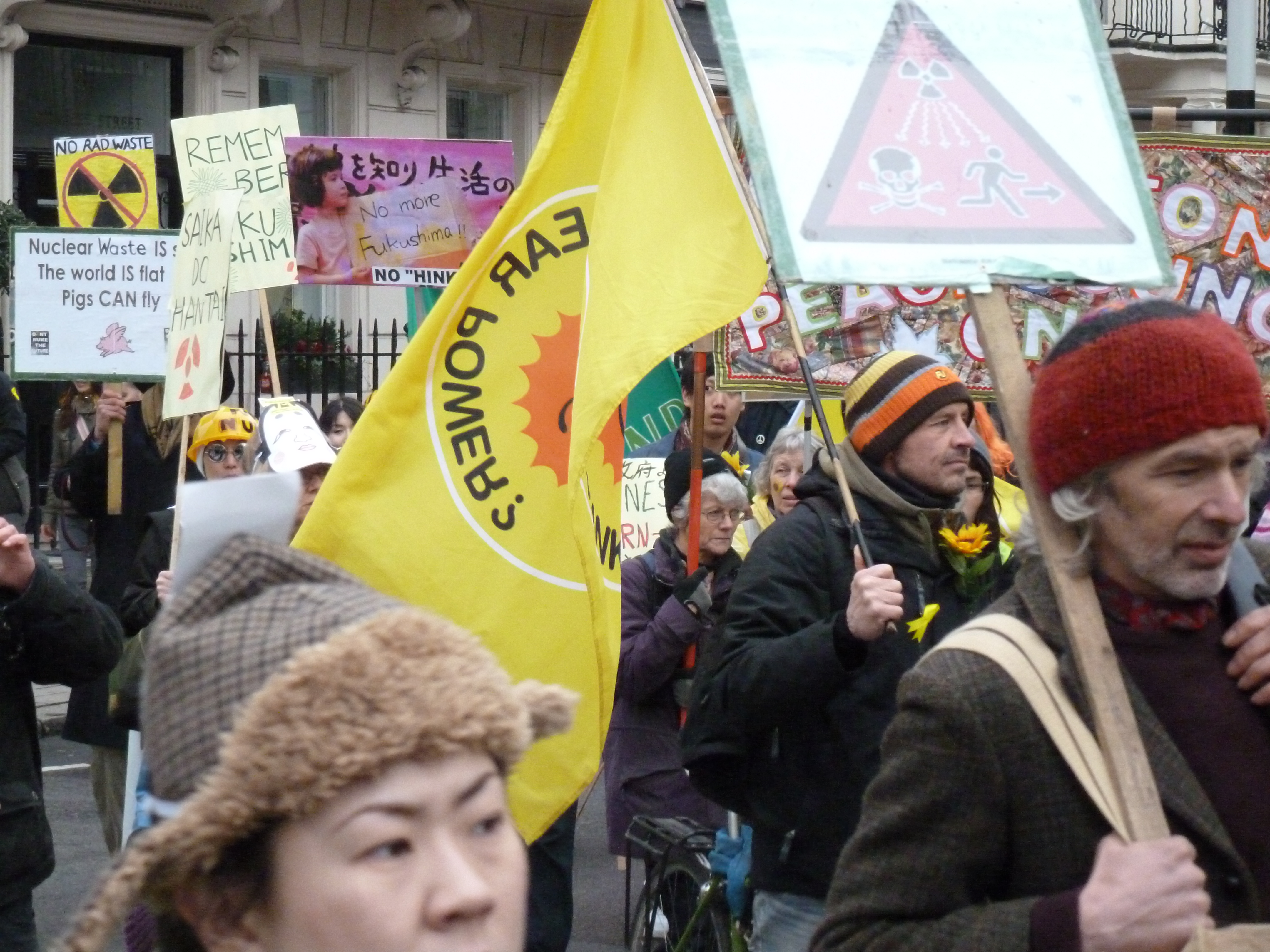
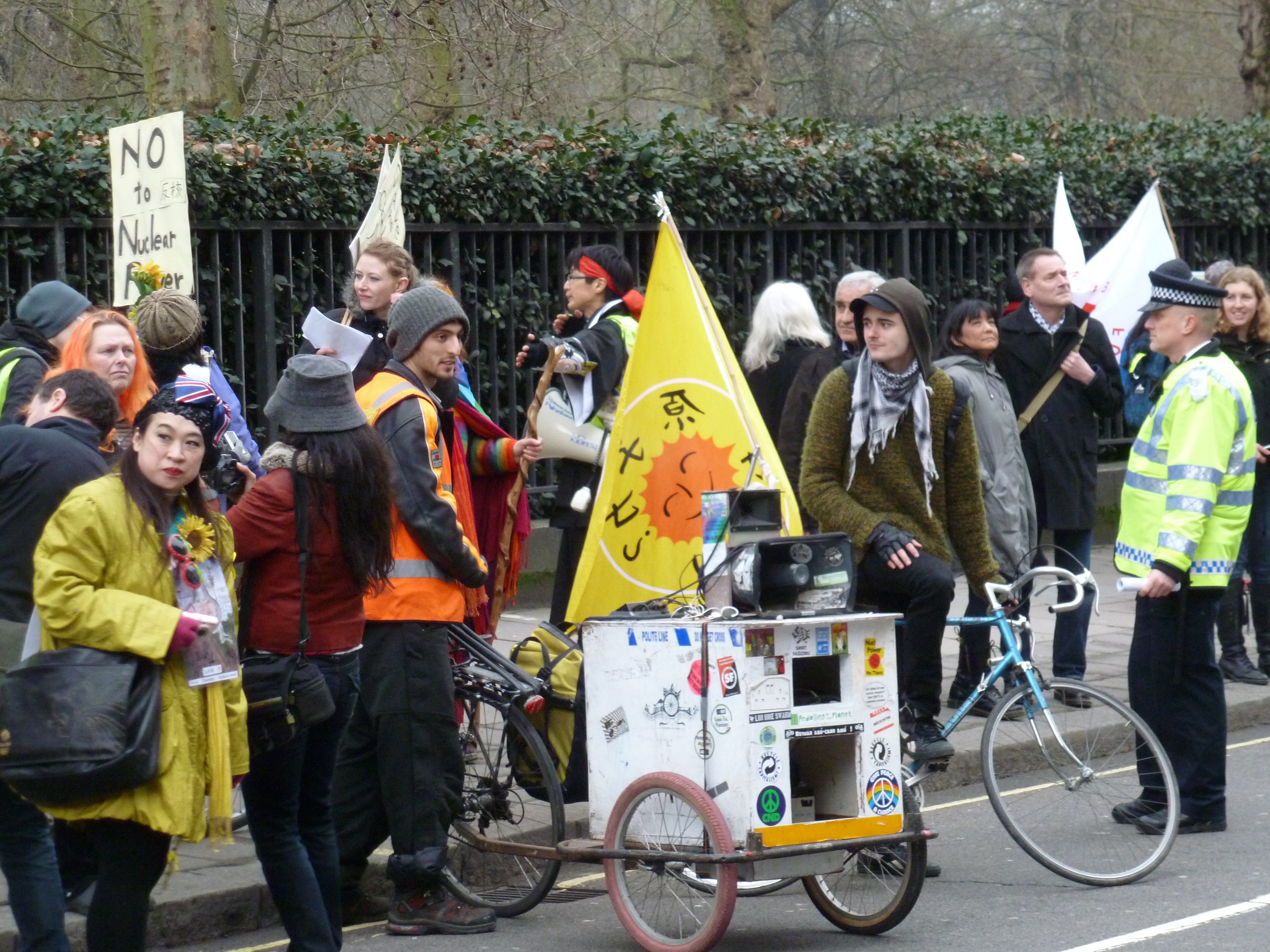
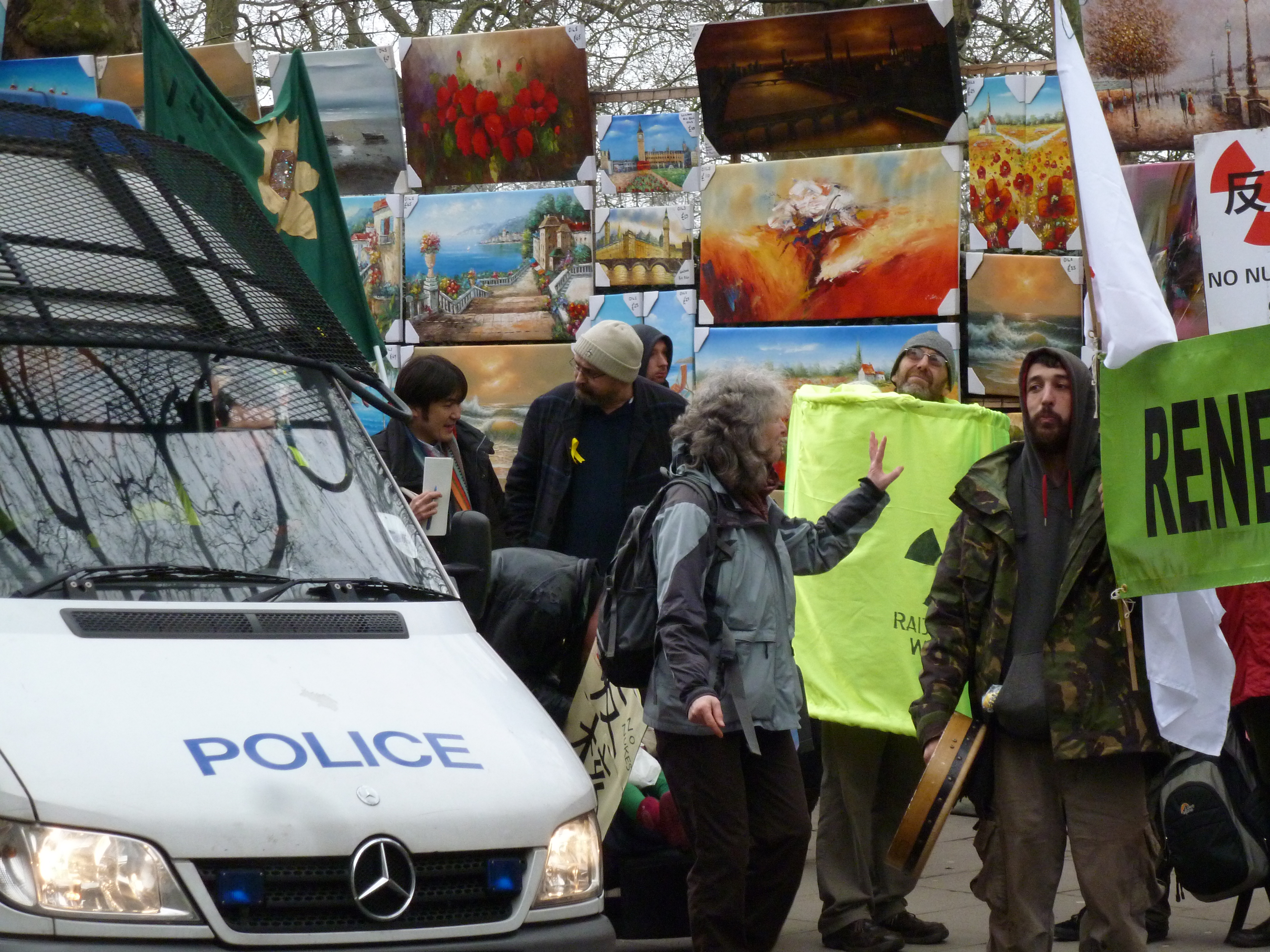
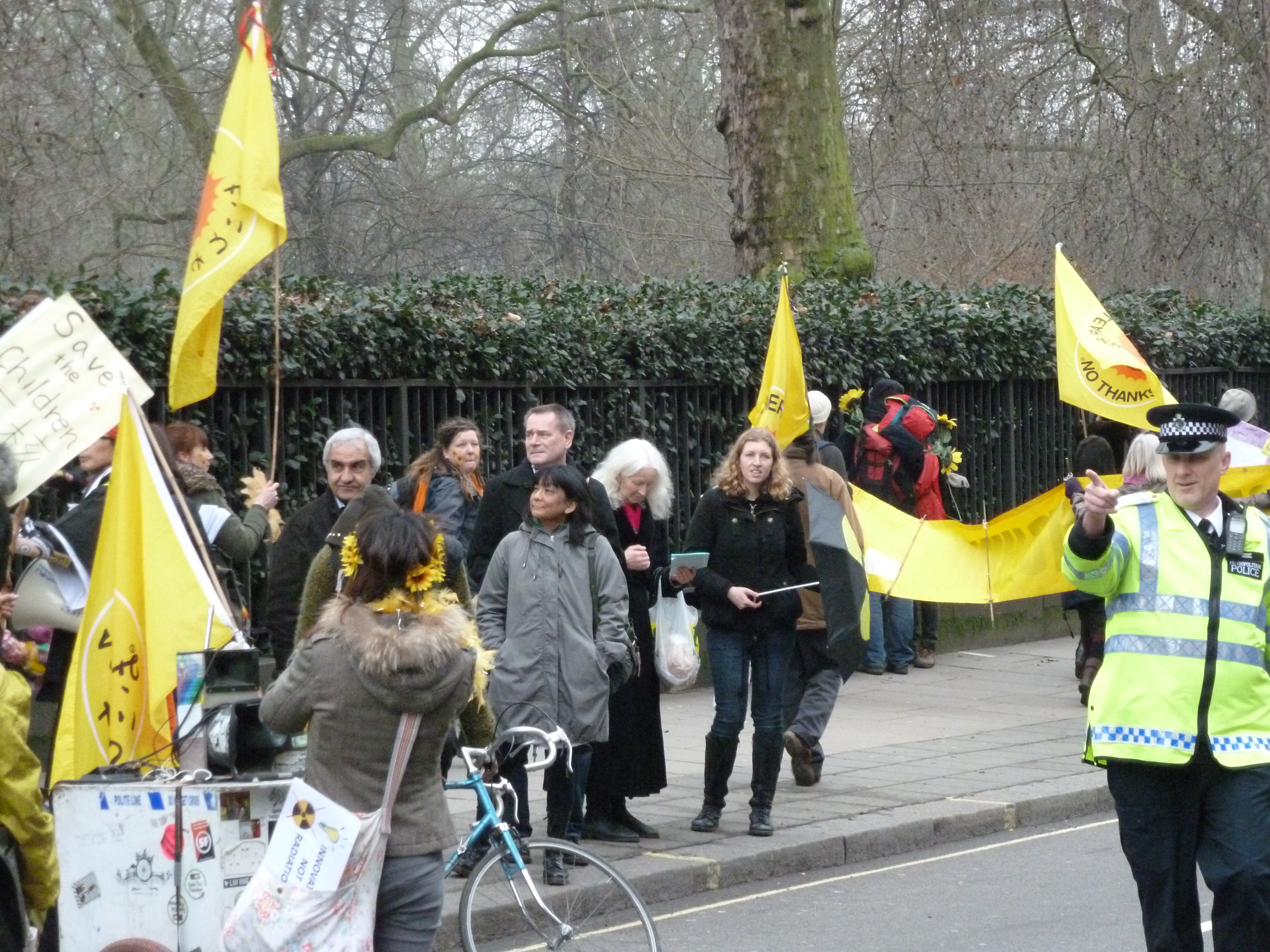
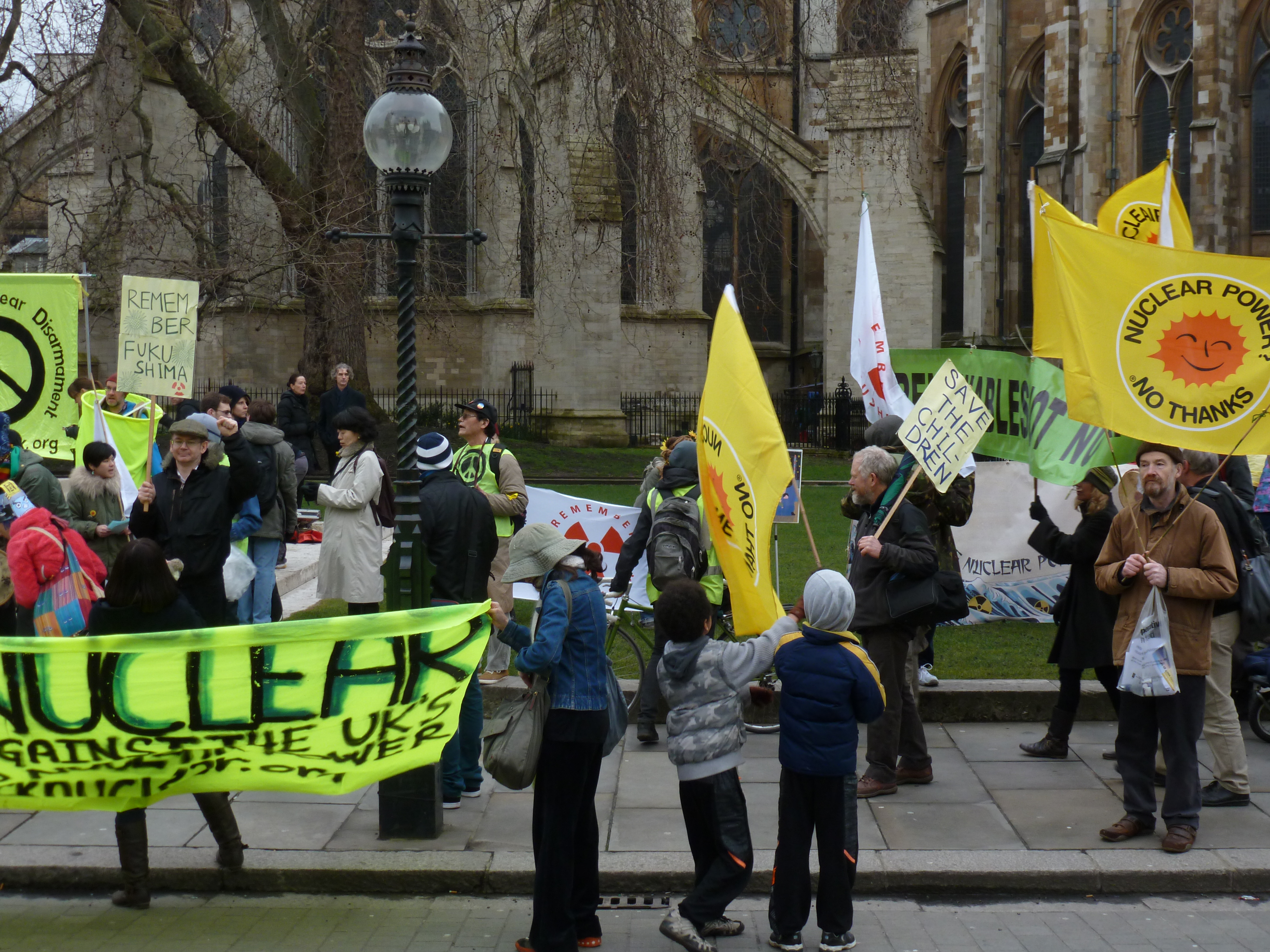
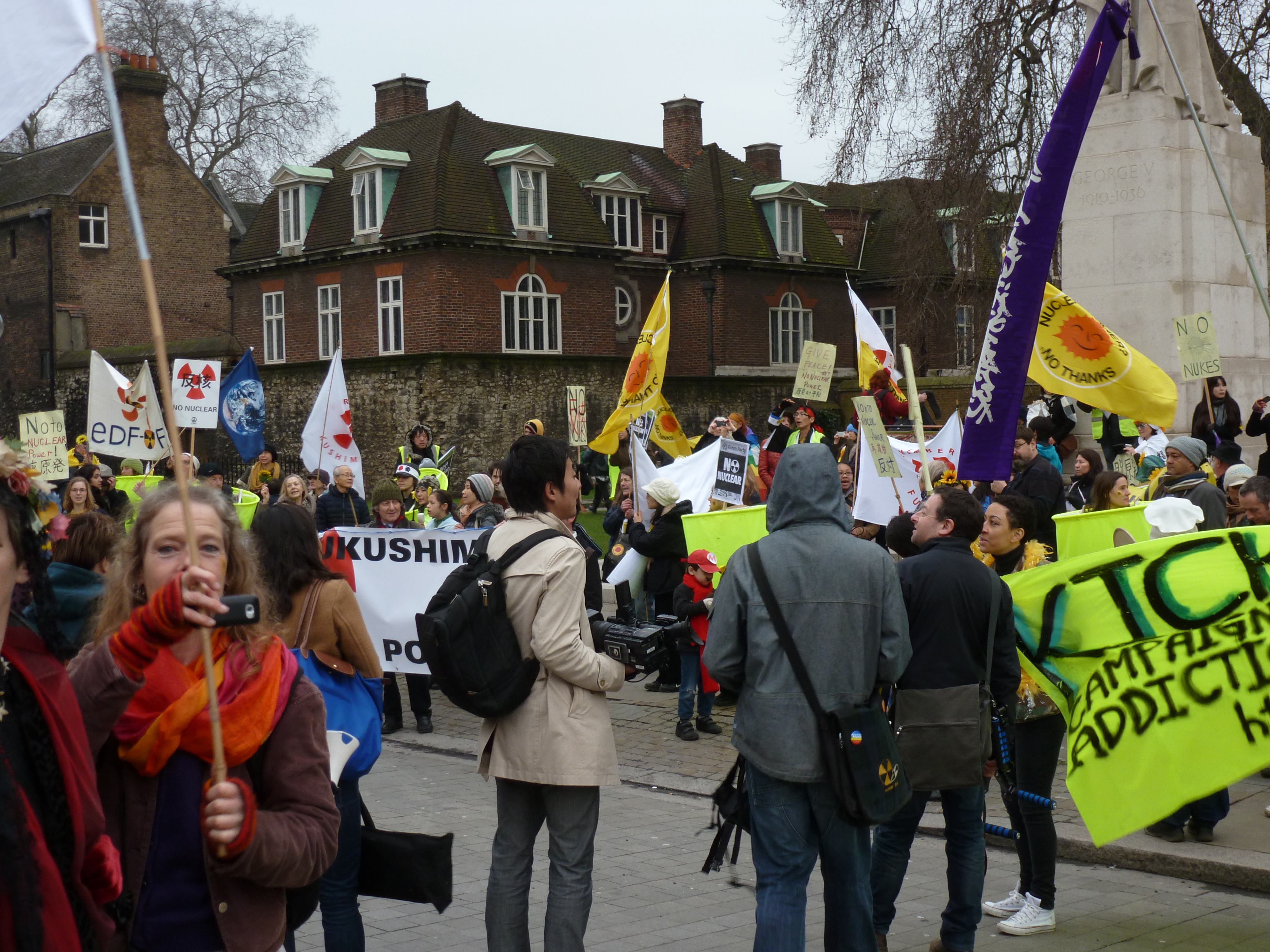
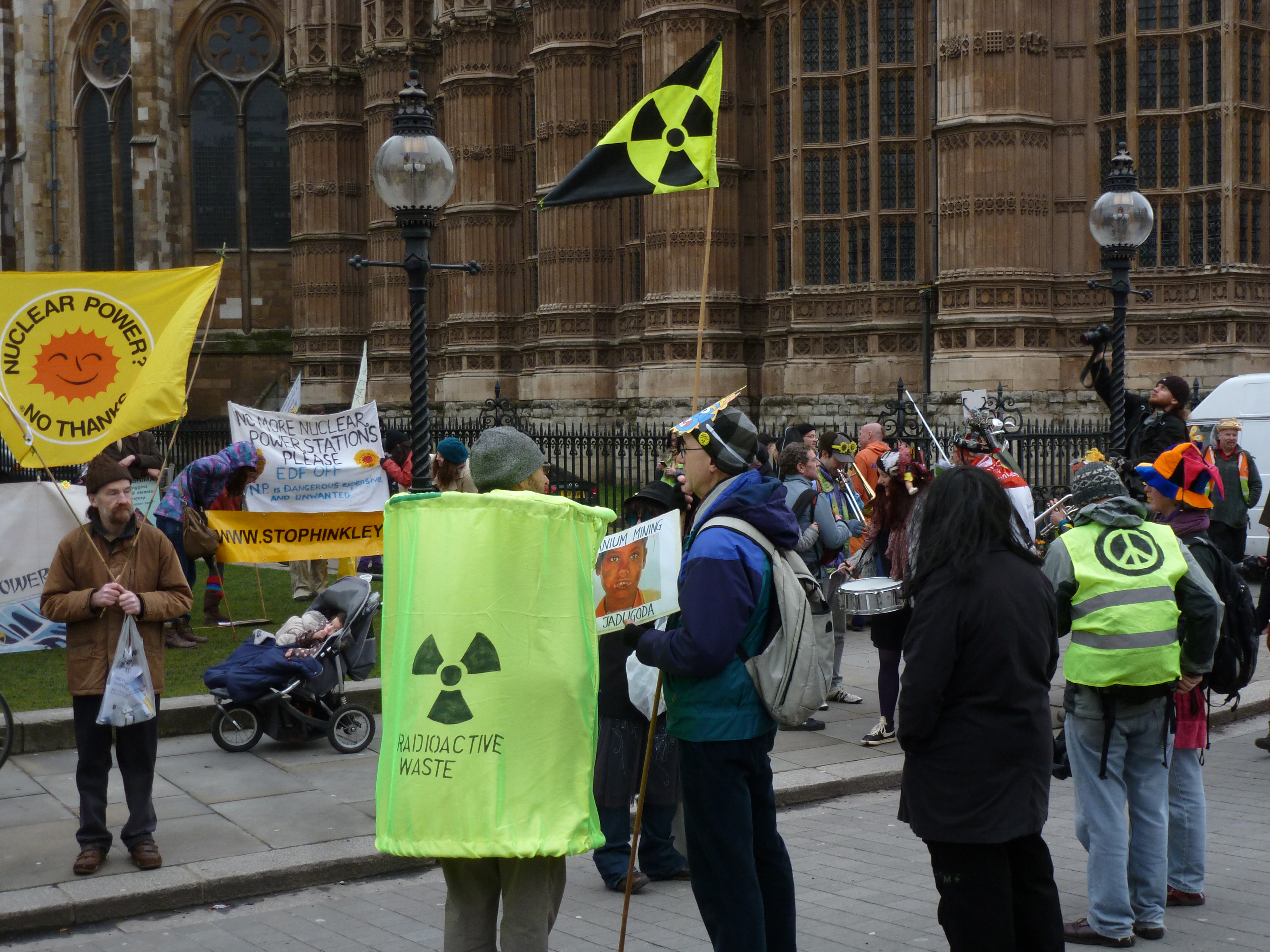
Pictures of the London demonstration and march against Nuclear – 9 March 2013
Some photos of the event for you to share and enjoy…






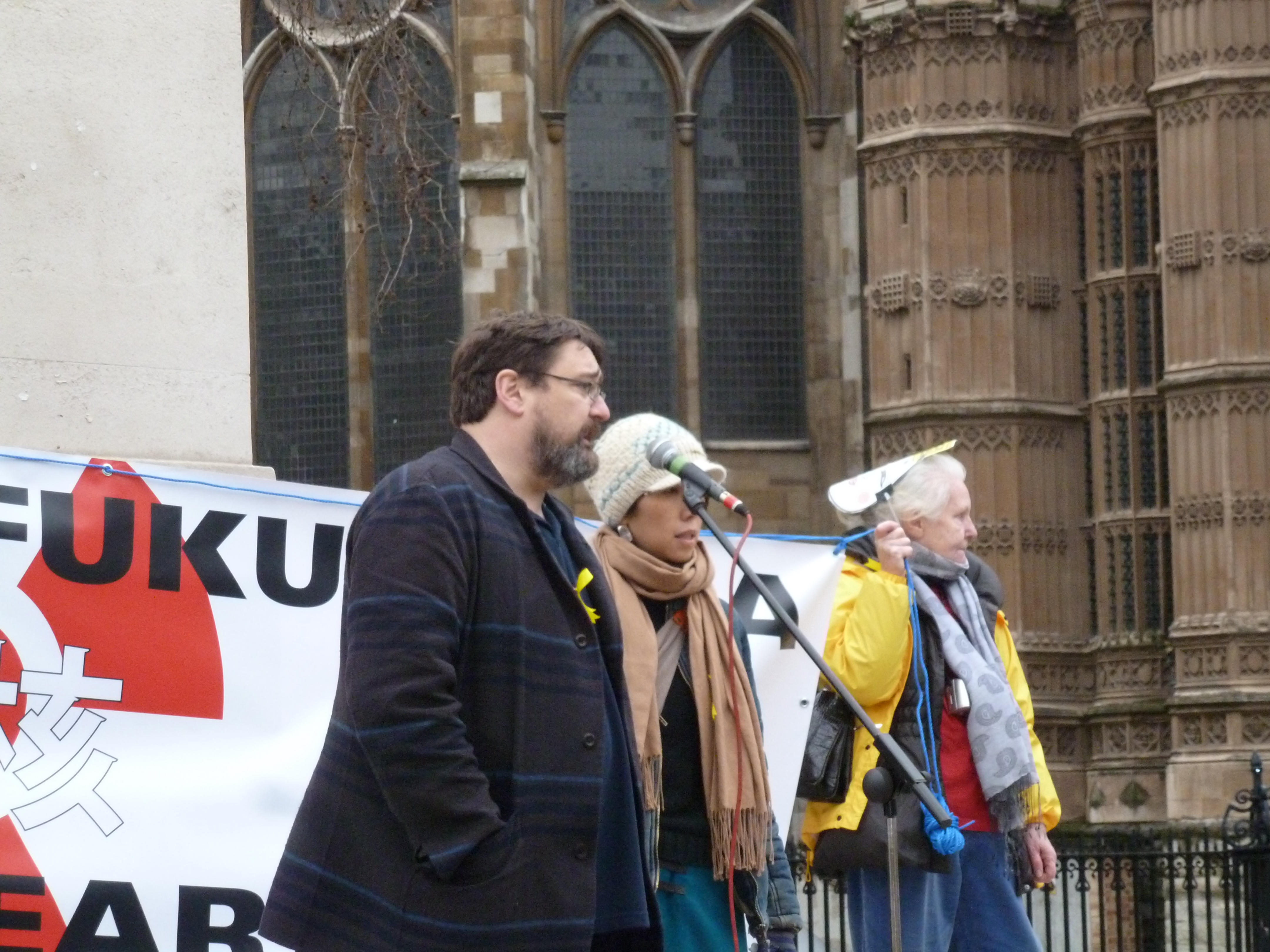
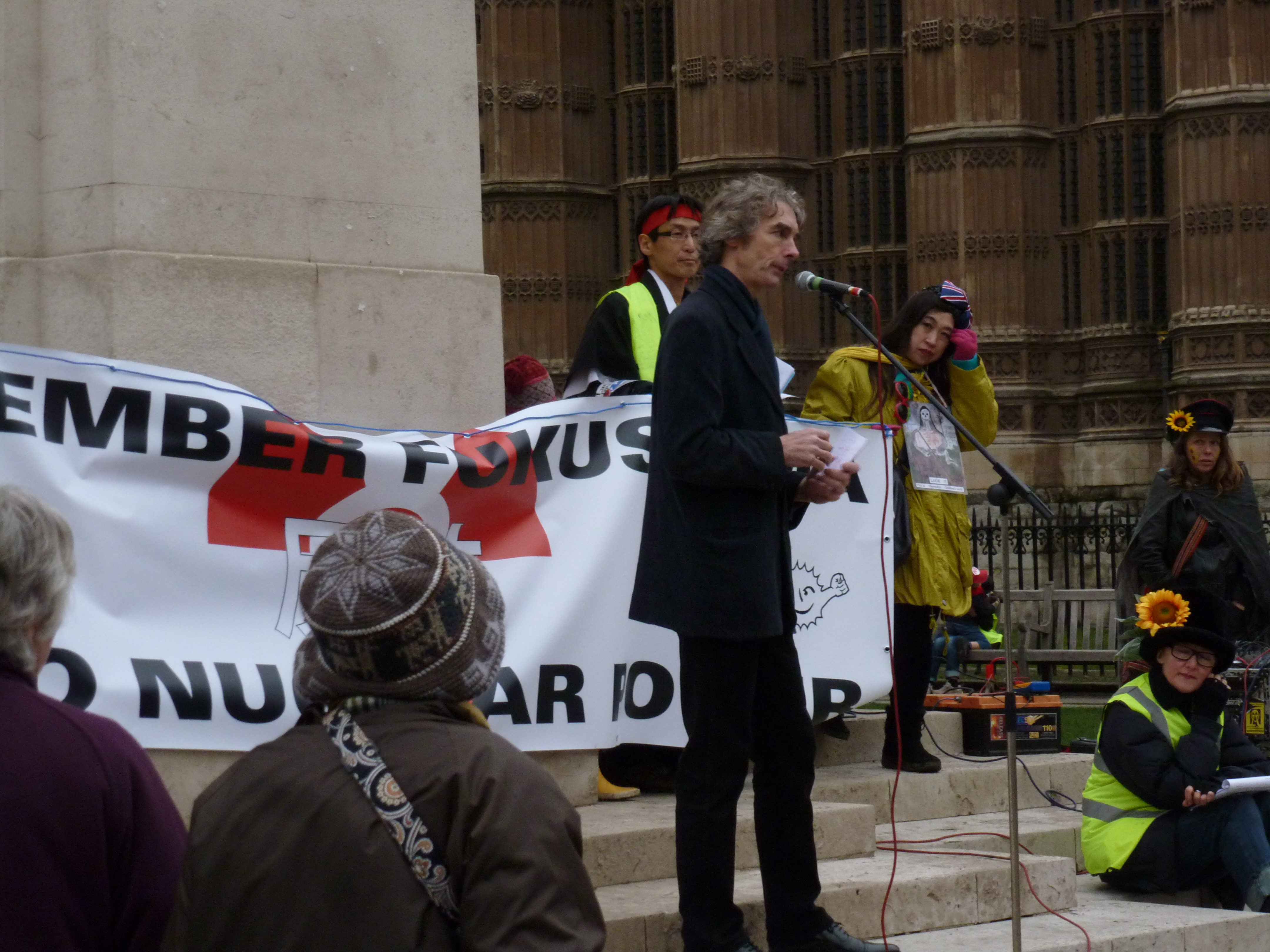
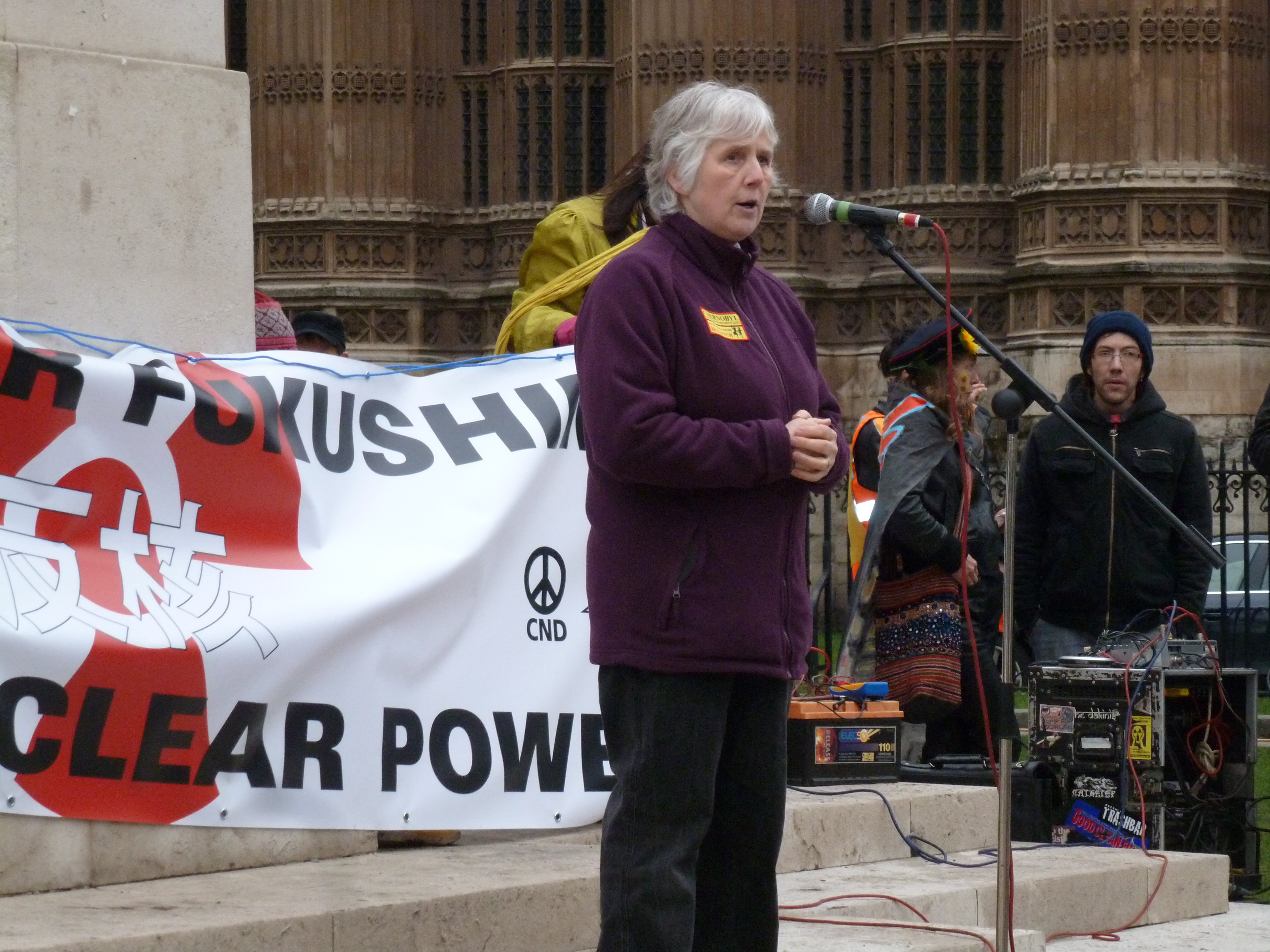
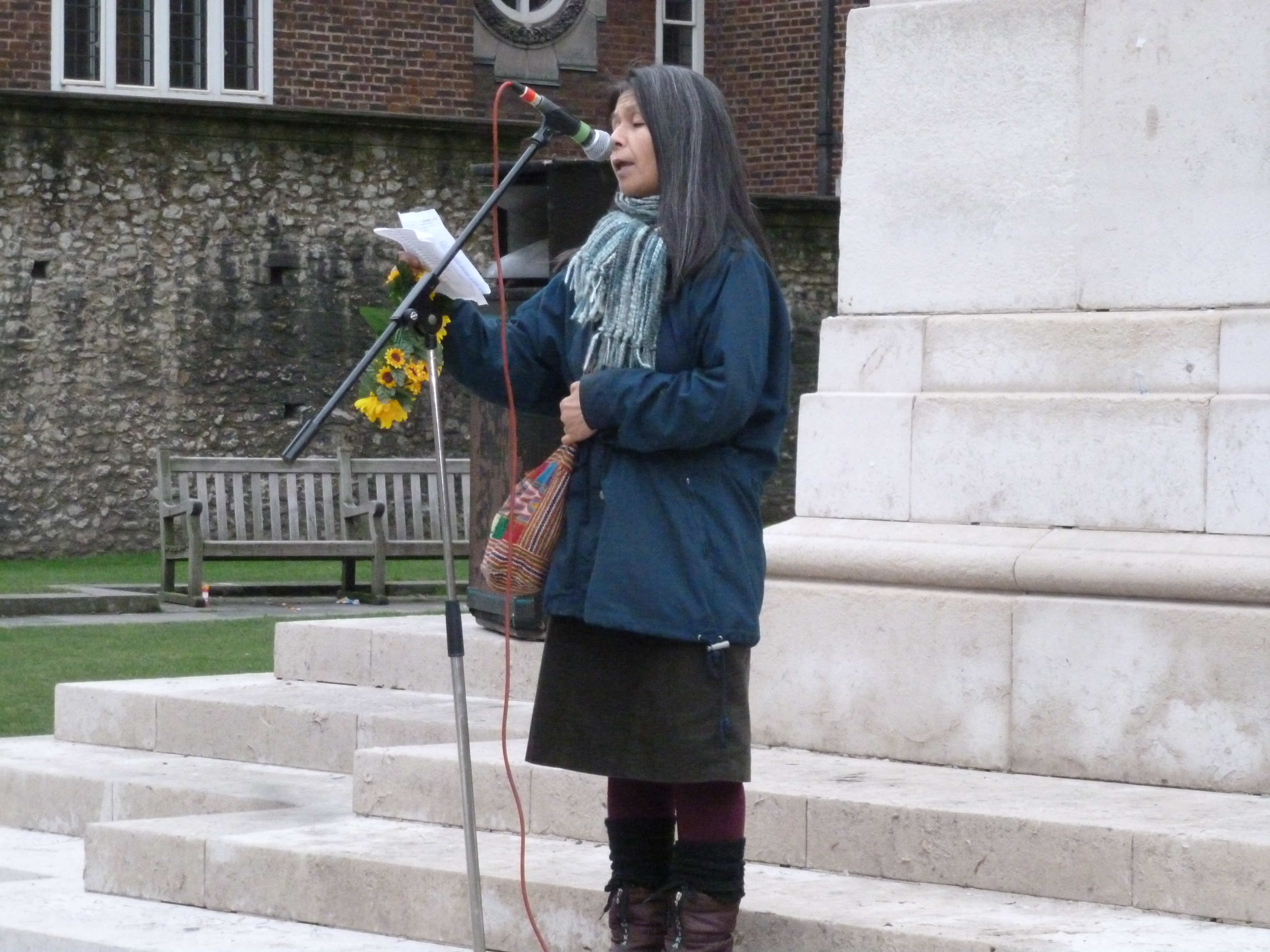
Germany – Anti-Nuclear Protesters Commemorate Fukushima Disaster

Anti-Nuclear protesters use a Geiger counter to measure the radioactive contamination of a citizen on March 9, 2013 in Hildesheim, Germany. Anti-Nuclear protesters gather in a radius of 40 kilometres around the nuclear plant Grohnde to demonstrate the impact of a nuclear disaster.


Russia’s zeal to bank on rising Arctic melt spurs concerns of likely ecological toll
http://www.bellona.org/articles/articles_2013/northern_sea_route
Anna Kireeva, 07/03-2013 – Translated by Maria Kaminskaya
MURMANSK – With the Arctic ice cover receding at alarming rates, freeing northern waterways to accommodate more sea-going traffic, Russia has been eager to start fully using the Northern Sea Route – a shipping corridor stretching along Russia’s vast northern coastline from the Barents Seain the country’s northwest past Siberia all the way to the Far East – for commercial shipping: passing legislation, restoring a dedicated state supervisory agency, building a new nuclear icebreaker, and allocating money for new Arctic-based search and rescue missions… But has anyone accounted for the ecological risks of increased Arctic traffic?

The bill governing the use of the Northern Sea Route – Federal Law No. 132-FZ – took effect just over a month ago, 180 days after it was signed by Russian President Vladimir Putin. Its full title is “On Amendments to Certain Legislative Acts of the Russian Federation Concerning State Regulation of Merchant Shipping in the Area of the Northern Sea Route.”
The law requires shipowners to hold compulsory civil liability insurance against damage resulting from pollution, or against any other damage caused by a vessel, or to be covered by other financial provisions against such liability. Absent of such a coverage, a vessel cannot call into or leave a port on the territory of the Russian Federation, nor can it obtain a permit for navigation in the waters of the Northern Sea Route.
The law defines the Northern Sea Route as the water area adjacent to the northern coastline and encompassing Russia’s internal sea waters, territorial sea, contiguous zone, and exclusive economic zone. On the east, this water area is limited by the demarcation line constituting the maritime boundary between Russia and the United States and the parallel of Cape Dezhnev in the Bering Strait, and on the west, by the meridian of Cape Zhelaniya to the Novaya Zemlya Archipelago, the eastern coastline of the Novaya Zemlya archipelago, and the western borders of the straits of Matochkin Shar, Kara Gates, and Yugorsky Strait.
This same law provides for the establishment of a Moscow-based federal state agency, the Northern Sea Route Administration. This will be the federal entity responsible for processing applications for, and issuing, permits granting shipowners the right to use the Northern Sea Route. The price will depend on the actual services rendered.
Arctic cargo traffic expected to rise
The Northern Sea Route, sometimes called the Northeast Passage, is the shortest maritime link between the markets of Northwest Europe and the Pacific region, and traffic along this route is growing each year.
Four transit voyages were already made along the Northern Sea Route in 2010, carrying 111,000 tons of cargo. In 2011, cargo shipments along the route increased seven-fold, reaching over 800,000 tons.
Arnold Gunderen and FOE snubbed at NRC licensing – San Onofre coverup!
Podcast: February 17, 2013 – The Games People Play (Part 1)
Published on 9 Mar 2013
http://www.fairewinds.com/
http://fairewinds.org/content/games-p…
http://fairewinds.org/donations
In this week’s podcast, Fairewinds looks at how difficult it is for the public to meaningfully participate in the Nuclear Regulatory Commission’s licensing process. Arnie Gundersen was retained by Friends of the Earth to assess major problems at the San Onofre nuclear plant in California that have caused a year long shutdown. Arnie met with the NRC this week concerning his analysis of what went wrong and how the problems were foreseeable. In this podcast, Arnie discusses how Southern California Edison deliberately withheld information to make his technical analysis more difficult to accomplish. Fairewinds taped the meeting, so our podcast listeners can hear for themselves the difficulties Arnie encountered and the games the nuclear industry plays to prevent public participation
http://www.youtube.com/watch?v=Ncc8-PV4dcI
(Part 2)
http://www.youtube.com/watch?v=sSOMwqW9KCY
(Part 3)
http://www.youtube.com/watch?v=_HWz3cx0Mrk
(Part 4)
http://www.youtube.com/watch?v=iTkLqVSbn_g
(Part 5)
http://www.youtube.com/watch?v=VLFCALfSLLw
(Part 6)
http://www.youtube.com/watch?v=vc2M1UhhwiA
(Part 7)
http://www.youtube.com/watch?v=PsKzw6qb7Kw
(Part 8)
Our ignorance. 15 May 2011
Published on 15 May 2011
Our ignorance would be worse disaster ever for next generations.
http://aristoman.wordpress.com/
London Anti nuclear 9 March 2013
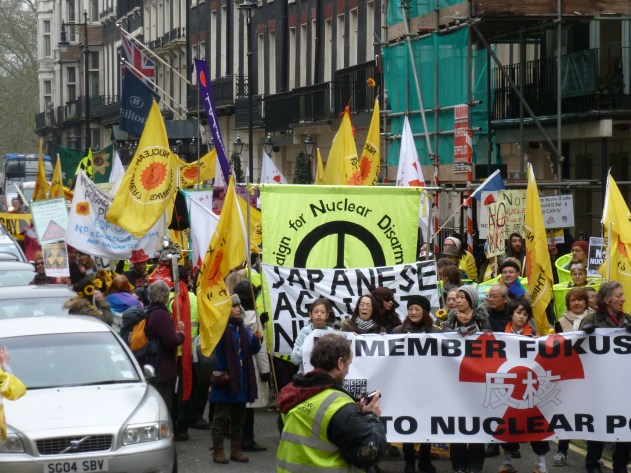
A quick picture of the demonstration moving through the streets of the west end of london on their way to TEPCO headquarters.. more info and media on this demonstration will be available as soon as possible.
It was a great day with many speeches and a message of thanks from ms Muto from japan. A Hare Krishna group turned up and fed everyone, there was music and chanting and the event went off peacefully and respectfully.
Saikado Hantai!
And a message here from JANUK ….

| JAN UK | 10 March 03:08 |
Thank you everyone to have come and joined the London demonstration in the very cold weather but in international solidarity with the people in Fukushima, Japan and the world! We hope some of you who live in/near London can make it again on Monday next week to join our vigil/Parliamentary meeting. We hope we’ll see each other in March next year with happy smiles after stopping all the nuclear power stations (and bomb factories and everything that violate the people’s happiness) in the world…
Nuclear waste: too hot to handle?
“…And then comes the real challenge – to determine if the ground beneath a volunteer community is geologically suitable for a repository. This daunting endeavour requires a decades-long process that is both politically sensitive and technically complex. Inevitably, surprises occur as studies go underground….”

18 February 2013 by William M. Alley and Rosemarie Alley
Cumbria’s decision to veto an underground repository for the UK shows how hard it is to find a long-term solution
THERE are 437 nuclear power reactors in 31 countries around the world. The number of repositories for high-level radioactive waste? Zero. The typical lifespan of a nuclear power plant is 60 years. The waste from nuclear power is dangerous for up to one million years. Clearly, the waste problem is not going to go away any time soon.
In fact, it is going to get a lot worse. The World Nuclear Association says that 45 countries without nuclear power are giving it serious consideration. Several others, including China, South Korea and India, are planning to massively expand their existing programmes. Meanwhile, dealing with the waste from nuclear energy can be put off for another day, decade or century.
It’s not that we haven’t tried. By the 1970s, countries that produced nuclear power were promising that repositories would be built hundreds of metres underground to permanently isolate the waste. Small groups of technical experts and government officials laboured behind closed doors to identify potential sites. The results – produced with almost no public consultation – were disastrous.
In 1976, West German politicians unilaterally selected a site near the village of Gorleben on the East German border for a repository, fuelling a boisterous anti-nuclear movement that seems to have no end in sight.
OP-ED: Nuclear Emptiness, Nuclear Hope
“…It is hopeful that someone as pitilessly realistic as Henry Kissinger realizes that there is no way out but abolition….”
Saturday, March 9, 2013 – 09:57

Schultz, Kissinger, Perry and Nunn, those quintessentially establishment figures, have just posted in the quintessentially establishment Wall Street Journal their fifth editorial since 2007 advocating urgent changes enabling the eventual abolition of nuclear weapons on planet Earth.
Computer modeling tells us that if even a small fraction of the world’s nuclear arsenals are detonated in a war, doesn’t matter where—could be Pakistan-India, Israel-Iran, U.S.-Russia or China or Iran—the amount of soot thrown skyward could curtail agriculture on the planet for a decade—effectively a death sentence for all.
So why do we hesitate? Are these weapons worth the money they are sucking away from our schools and firefighting equipment and bridge repairs? Why are Russian and American nuclear missiles still pointed at each other on high alert?
Aboriginal rock art at risk from mining – interactive map
- guardian.co.uk, Friday 8 March 2013 06.00 GMT
One of the world’s biggest uranium producers has found a significant deposit in a remote tropical Australian mountain range near sandstone galleries holding some of the oldest and most spectacular rock art on the planet
Drag the slider to switch between rock art sites and mines/mining plans on the guardian link
And Further reading might tell us who the mysterious mining company is?
“…Angularli prospect, Wellington Range exploration project
Australian uranium discovery threatens ancient indigenous cave art:

Paul Taçon
One of the world’s biggest uranium producers has found a significant deposit in a remote tropical Australian mountain range near sandstone galleries holding some of the oldest and most spectacular rock art on the planet. After years of drilling, Canadian-based mining company Cameco has reported the find in the Wellington Range, where the thousands of Aboriginal artworks adorning cliffs and caves include a painting of the extinct dog-like creature, the thylacine, made in a style that is at least 15,000 years old.

Courtesy of Paul Taçon, Griffith University
“The importance of this art site is that it’s like a library,” Ronald Lamilami, a traditional Aboriginal landowner in western Arnhem Land and a custodian for the art, told The Global Mail, which on Friday (Mar. 8) published a detailed feature and map of the rock-art sites at risk nationwide. Lamilami said he fears if mining goes ahead, the works of his ancestors will be damaged.
The archaeologist Prof Paul Taçon, who has worked with Lamilami to document and date the artwork, said that dust and visitors from mining exploration could potentially damage works at the Northern Territory’s Djulirri, Malarrak and Bald Rock galleries. (Guardian Mar. 8, 2013)
> See also: Rock Art Riches: The Devastating Cost of Australia’s Mining Boom  , by Debra Jopson, The Global Mail, March 8, 2013
Cameco finds “significant” uranium deposit in Arnhem Land: Cameco Australia has announced it has discovered a significant uranium deposit near the Cobourg Peninsula in Arnhem Land. (ABC Mar. 28, 2012)
The announcement was made on March 27, 2012, by Mark King of Cameco Australia during his presentation titled “Exploration for unconformity-style uranium deposits geology and mineralisation of the Angularli Prospect Wellington Range Project, West Arnhem Land” at the 13th Annual Geoscience Exploration Seminar (AGES) in Alice Springs.
“Although the area has not been explored in the detail necessary for resource definition and modelling, intersections of 20.2 m at 5.2% U3O8 (including 0.5 m at 27.8% U3O8) not only confirms the exploration methodology, but ensures that the Angularli prospect, the Angularli trend, and parallel structures will remain a focus in Arnhem Land for Cameco through the foreseeable future.” (from the abstract of Mark King’s presentation)….”
Images from http://www.theglobalmail.org/feature/rock-art-riches-the-devastating-cost-of-australias-mining-boom/570/
Fukushima disaster: Cameras monitor nuclear ‘ghost towns’ and refugees can observe their contaminated homes!
8 March 2013 Last updated at 15:02

Thousands of residents of the small farming village of Iitate in northern Japan were forced to leave their homes after radiation levels peaked dangerously high in the aftermath of the Fukushima nuclear plant disaster of 2011.
But now a special project is helping them keep an eye on their ‘ghost town’, by allowing them to monitor its surveillance camera feeds.
Roopa Suchak reports.
Video on link.. (Note that this is the main article on fukushima during a weekend of remembrance and protests in the uk and indeeed globally. This is one of the strangest story lines ive come across.. watch the video and see whatyou make of it.. they have given out free electronic tablets so people can look at their irradiated houses.. huh? seems like a waste of money and not good psychological practise to allow victims this type of voyeurism after trauma? At least, i am sure it would stimulate some discussion amongst psychologists.. Arclight2011)
Tokyo stages mass anti-nuclear rally

Thousands of people have rallied in Tokyo to demand an end to atomic power two years after the nuclear disaster in north-eastern Japan.
Organisers said disaster victims and celebrities were among an estimated 15,000 people at a central Tokyo park on Saturday, two days ahead of the second anniversary of the disaster that killed 19,000 and sparked reactor meltdowns at Fukushima Daiichi nuclear plant.
Only two of Japan’s 50 working nuclear reactors have been put back online since the disaster. This is partly because of waves of protests like Saturday’s that mark the biggest public demonstrations in Japan since the 1960s movement against the Vietnam War.
Reactor restarts
Prime Minister Shinzo Abe and his conservative Liberal Democratic Party has close ties with the nation’s powerful business circle. He has repeatedly said he would allow reactor restarts if their safety could be ensured.
|
“I am going to fight to prevent any more reactors from being restarted“ – Kenzaburo Oe, |
Protesters marched through the capital later in the day and issued a statement that called on Abe to dismantle all nuclear plants.
“The new administration should not misunderstand that the victory can mean approval of policies to maintain nuclear power,” the statement said in reference to the December elections of Abe and his party.
“We will request policies to swiftly begin procedures in decommissioning nuclear reactors and disapprove any plans to newly build nuclear plants.”
Nobel Prize-winning writer Kenzaburo Oe received huge cheers from the protesters gathered in the park when he spoke of lessons learned from the atomic bombings of Japan at the end of World War II.
Trident nuclear weapons system – Pointless?
British anti-nukes campaigners are pressuring the government to change course on replacing its Trident nuclear weapons system at an annual cost of £3 billion and rather spend the money on housing.
video on link
http://www.presstv.ir/detail/2013/03/09/292732/trident-nuclear-weapons-system/
Time to Scrap Trident: Stop fooling with nuclear weapons
 Protest at AWE Aldermaston
- 12 noon to 2pm
- Easter Monday 1st April
- Join us and invite all your friends on Facebook!
- Watch and share the video!
This year on April Fools’ Day, we will be going to Aldermaston to highlight our opposition to Britain’s Trident nuclear weapons system – because that’s where the nuclear bombs are made.
We’ll be saying Scrap Trident and cancel plans to replace it.
We’ll be gathering around the base in our thousands with music, colour, and speeches.
 Why are we going?
2013 is a year of continuous activity at AWE Aldermaston, prompted by the formation of grassroots campaign Action AWE, to highlight the site’s nuclear bomb-making function.
This is vital as we head towards the 2016 decision point on whether or not Trident should be replaced. Vast sums of money are being poured into developments at Aldermaston, even before any decision is taken on Trident.
The total cost of a replacement for Trident would be over £100 billion. At this time of cuts to jobs, housing and public services think what else Trident’s £100 billion could be spent on! We say it’s time to scrap Trident, and on April Fools’ Day we’ll be telling the government to ‘stop fooling with nuclear weapons’!
 How can you get involved?
Bring banners, placards, knitting, poems… and anything else you can think of to decorate the fence with to show what you want to spend the money on rather than Trident.
Also bring pots, pans and musical instruments, as we will be surrounding the base with the sound of protest. We hope you’ll join us for an inspirational day of protest against Britain’s illegal and immoral nuclear weapons!
Each of the gates at Aldermaston will have a different theme and regional/national focus – including a women’s gate and a faith gate.
- A few maps of AWE Aldermaston: walking, gates, satellite, road
- An information sheet is available from the office, as are flyers.
- Please start organising transport from your local area.
- Contact CND on campaigns@cnduk.org for more info.
Coaches
- London: Departs from near Embankment Station at 9:15am and picks up at Hammersmith Apollo at 9:45am. Booking in advance (by 25th March): £16 waged /£8 unwaged. After 25th March £20 waged/£10 unwaged. Contact David at London Region CND on 0207 607 2302 for more information.
- East Midlands: Coach collection points planned to include Chesterfield, Nottingham, Leicester and Northampton. Contact East Midlands CND for details on 01246 235723.
- Yorkshire: Departure at 6:50am from Bradford, University of Bradford, outside Richmond Building, Great Horton Rd. 7:30am from Leeds, Leeds Met Student’s Union, Calverley Street. 8:15am from Sheffield, Ponds Forge Leisure Centre, Pond Hill. £15 waged/ £8 student/low waged. The coach will return by early evening. To book a space please contact 01274 730 795 / dominic@yorkshirecnd.org.uk with your name, contact number and pickup point.
- Wales: For transport from South and Mid Wales contact Brian and Jan Jones (Swansea area) on 01792 830 330 or via email. From North East Wales contact Duncan Rees on 07774 268 371 or via email
- Southampton: Coach will leave Southampton Cenotaph at 10:30 am and will pick up in Winchester by King Alfred’s statue. Tickets cost £15 waged/ £8 unwaged. For bookings phone David Hoadley on 023 8022 9363.
- Merseyside: “AtoB” Coach departs at 7:15am from Mount Pleasant, opposite the multi-storey car park. Also collecting from Chester train station at 8:00am. £20 waged/£10 concessions.
- Bath: Coach will leave Laura Place, Bath at 9:00am. £15 waged/£5 unwaged. Please contact Monica on 01225 312574 for tickets or come to the weekly peace stall each Saturday outside Bath Abbey from 11:30am – 12:30pm.
What next? The Scrap Trident Tour
The Aldermaston event will launch the national Scrap Trident tour through April and beyond. CND Vice-president Bruce Kent will be touring the country, campaigning to Scrap Trident.
He’s working with a range of different organisations to highlight the wasteful spending on Trident when so much investment is needed to eradicate poverty, boost people-friendly development and make our world a safer and more peaceful place to live.
- Bruce would like to cordially invite you to his tour – read a letter from him here.
- For a full list of stops on the tour, check events.
- Download our petition for use at all your upcoming events here.
- Contact the office on campaigns@cnduk.org for more info.
1 This Month
10 March A LIVE WEBINAR THE REAL EFFECTS OF NUCLEAR POWER
What the Industry Isn’t Telling Us
1:00 PM Mountain, 2 pm Central, 3 pm Eastern. Live on the Keepers of the Water Facebook page



18 March Webinar @ 1 PM EST: An Assessment of SMR Projects: The Case of Canada
register for the zoom:
https://us02web.zoom.us/webinar/register/WN_o8BIIOUvQ2ONJR1nta65DQ#/registration


of the week – STOP SMALL MODULAR REACTORS IN CANADA
To see nuclear-related stories in greater depth and intensity – go to https://nuclearinformation.wordpress.com
-
Archives
- March 2026 (109)
- February 2026 (268)
- January 2026 (308)
- December 2025 (358)
- November 2025 (359)
- October 2025 (376)
- September 2025 (258)
- August 2025 (319)
- July 2025 (230)
- June 2025 (348)
- May 2025 (261)
- April 2025 (305)
-
Categories
- 1
- 1 NUCLEAR ISSUES
- business and costs
- climate change
- culture and arts
- ENERGY
- environment
- health
- history
- indigenous issues
- Legal
- marketing of nuclear
- media
- opposition to nuclear
- PERSONAL STORIES
- politics
- politics international
- Religion and ethics
- safety
- secrets,lies and civil liberties
- spinbuster
- technology
- Uranium
- wastes
- weapons and war
- Women
- 2 WORLD
- ACTION
- AFRICA
- Atrocities
- AUSTRALIA
- Christina's notes
- Christina's themes
- culture and arts
- Events
- Fuk 2022
- Fuk 2023
- Fukushima 2017
- Fukushima 2018
- fukushima 2019
- Fukushima 2020
- Fukushima 2021
- general
- global warming
- Humour (God we need it)
- Nuclear
- RARE EARTHS
- Reference
- resources – print
- Resources -audiovicual
- Weekly Newsletter
- World
- World Nuclear
- YouTube
-
RSS
Entries RSS
Comments RSS
 nuclear-news


