
The end of nuclear Britain?


Hitherto the future of nuclear in Britain has hinged around whether the French nuclear behemoth, EDF (Electricite de France), can find a partner to help bear the cost of new nuclear plants – currently some £14bn apiece. And, not entirely unrelated, whether EDF can squeeze the British government where it hurts into agreeing a ‘strike price’ at nearly twice the current costs of electricity generation, using the blackmail that if the government does not agree, EDF will walk away and there will be no nuclear generator left willing to step into the breach.
At that point the government’s much vaunted new nuclear build programme collapses like a pack of cards. Indeed the chances of this happening are rising by the day. But now another bombshell has been thrown into the mix (if that is not an unfortunate metaphor). EDF is close to bankrupt.
EDF’s stock value has plunged by up to a staggering 85% since 2007 and its indebtedness has grown rapidly from €29bn in 2011 to €39bn now. To put that into perspective, this very level of debt now amounts to more than half its turnover of €73bn. In addition, France’s nuclear fuel company, Areva, is also in free fall. It made a loss of €2.5bn in 2011, but that has now exploded (again, not quite the word) to €100bn in 2012. It also is stricken with very high debt, amounting to €4bn on a turnover of just over €9bn. It too has suffered a catastrophic fall in its stock value of no less that 88% since 2007.
Now Areva has suffered two further highly damaging blows. It has been down-rated by the ratings agency Standard & Poor’s to BBB – one notch off ‘junk bond’ – and its stand-alone credit profile has been downrated to BB- which is one notch off ‘highly speculative’. As if that does not say it all, it has now just been announced that Areva’s chief finance officer is jumping ship and taking up a post in Canada.
The significance of all this is that these were the two companies lined up by DECC for building the first new nuclear plant at Hickley Point in Somerset. The options available for the government are now beginning to close rapidly. As they will soon discover, if you live by the market (one of Thatcher’s legacies), you also die by the market. There will soon be little alternative but to try to make the Treasury cough up the £35bn necessary from taxpayers and electricity bill payers to subsidise the twin reactors planned. It’s beginning to look longer odds than winning the Grand National.
http://www.leftfutures.org/2013/04/the-end-of-nuclear-britain/
Another Thatcher legacy..
How Thatcher gave Pol Pot a hand

By John Pilger Published 17 April 2000
Almost two million Cambodians died as a result of Year Zero. John Pilger argues that, without the complicity of the US and Britain, it may never have happened.
…..The Cambodian training became an exclusively British operation after the “Irangate” arms-for-hostages scandal broke in Washington in 1986. “If Congress had found out that Americans were mixed up in clandestine training in Indo-China, let alone with Pol Pot,” a Ministry of Defence source told O’Dwyer-Russell, “the balloon would have gone right up. It was one of those classic Thatcher-Reagan arrangements.” Moreover, Margaret Thatcher had let slip, to the consternation of the Foreign Office, that “the more reasonable ones in the Khmer Rouge will have to play some part in a future government”….
….We even gave them psychological training. At first, they wanted to go into the villages and just chop people up. We told them how to go easy . . .” The Foreign Office response was to lie. “Britain does not give military aid in any form to the Cambodian factions,” stated a parliamentary reply. The then prime minister, Thatcher, wrote to Neil Kinnock: “I confirm that there is no British government involvement of any kind in training, equipping or co-operating with Khmer Rouge forces or those allied to them.” On 25 June 1991, after two years of denials, the government finally admitted that the SAS had been secretly training the “resistance” since 1983….
http://www.newstatesman.com/node/137397
POL Pot’s right-hand man finally went on trial yesterday charged with crimes against humanity.
Almost two million Cambodians died as a result of Year Zero. John Pilger argues that, without the complicity of the US and Britain, it may never have happened.
POL Pot’s right-hand man finally went on trial yesterday charged with crimes against humanity.
Nuon Chea, known as Brother Number Two, helped orchestrate the genocide that claimed 1.7 million Cambodians. He was joined on trial by the regime’s former head of state Khieu Samphan and foreign minister Ieng Sary.
As the tribunal hearing opened, court spokesman Lars Olsen described it as a “major milestone”, saying: “Many people never thought it would happen.”
Government, media colluded to promote nuclear power in Japan
…..Oe, awarded the 1994 Nobel Prize for Literature and whose novels include “A Quiet Life”, was speaking to reporters ahead of what activists say is expected to be one of the biggest demonstrations in Japan of the last two decades….
Nobel-winning author Kenzaburo Oe voices the anti-nuclear power sentiment of many Japanese in the wake of a nuclear disaster.
Thu, Jul 12 2012 at 1:26 PM

Japanese Nobel literature laureate Kenzaburo Oe speaks at the Foreign Correspondents’ Club of Japan. (Photo: AFP, Kazuhiro Nogi)
Nobel-winning author Kenzaburo Oe said Japan’s post-war government and media colluded to give nuclear power a stranglehold, as activists readied for what they hope will be the biggest rally in decades.
The 77-year-old laureate with anti-nuclear views said the media magnate who controlled mass circulation Yomiuri Shimbun had used his newspaper to promote atomic power, in concert with one-time Prime Minister Yasuhiro Nakasone.
“(Nakasone) said because this country does not have resources, Japan would need to find a new source of energy, which the United States had already invented,” Oe told reporters in Tokyo.
Nakasone had pushed for nuclear power in the 1950s, and held a number of ministerial posts before becoming prime minister in 1982.
“The United States offered the know-how, the machines and the fuel — which became the very first bit of nuclear waste now causing a big problem for us — for free to Japan.”
Yomiuri tycoon Matsutaro Shoriki — who had briefly led the government’s science and technology agency — “jumped at this opportunity” and unquestioningly promoted the technology, Oe said.
Gensuikyo Calls for a Total Ban on Nuclear Weapons
Saturday, April 13, 2013
Dear friends, Japan Council against A and H Bombs (Gensuikyo) issued the following “Letter to the Heads of the Five Nuclear Weapon States,” when the second PrepCom of the NPT is just around the corner. The letter was addressed to US President Barack Obama, Russian President Vladimir Putin, French President Francois Hollande, UK Prime Minister David Cameron and Chinese President Xi Jinping. We visited the embassies of P5 in Tokyo on April 5, 8 and 9, 2013 and handed it over to them. The copy of the letter was also sent to UN Secretary General Ban Ki-moon on April 10. We sent the letter in the hope that P5 will take initiatives to achieve an agreement for a total ban on nuclear weapons at the forthcoming Second NPT PrepCom or at the sessions of the UNGA and the UN Security Council, so that the 2015 NPT Review Conference will become a place to launch actions for definitely attaining the “peace and security of a world without nuclear weapons.”
:::::::::::::::::::::::::::::::::::::::::::::::::::::::
Letter to the Heads of the Five Nuclear Weapon States
Decision and Action Now for a Total Ban on Nuclear Weapons
April 2013
Japan Council against Atomic and Hydrogen Bombs
It will soon be the 68th summer since Hiroshima and Nagasaki were obliterated by two atomic bombs.
With call of the survivors who witnessed the “nuclear hell” for “No more Hiroshimas, No more Nagasakis, No more Hibakusha” and mounting public support for them, a historic momentum is building up to achieve the abolition of nuclear weapons.
The NPT Review Conference of May 2010 agreed to “achieve the peace and security of a world without nuclear weapons” and declared, “all States need to make special efforts to establish the necessary framework to achieve and maintain a world without nuclear weapons.”

gensuikWith the 2015 NPT Review Conference approaching, the governments and civil society must take actions in unison to bring this goal to a reality. So far, although three years have elapsed since then, the path to reach this goal is not yet in sight. True, a certain number of nuclear weapons, including those dealt between the U.S. and Russia, were cut down, but still some 19,000 nuclear warheads are stockpiled or deployed. Even such moves as acquiring nuclear weapons are continuing, as seen in the current tension on the Korean Peninsula. Whether intentional or accidental, the danger of nuclear weapons actually being used remains real.
$1 Billion for a Nuclear Bomb Tail
….This development is out of tune with U.S. and NATO pledges to reduce the role and reliance on nuclear weapons, and will make it a lot easier for hardliners in the Russian military to reject reductions of Russia’s larger inventory of non-strategic nuclear weapons….
April 12, 2013
Categories: NATO, Nuclear Weapons, United States
The U.S. Air Force plans to spend more than $1 billion on developing a guided tailkit to increase the accuracy of the B61 nuclear bomb.
The cost is detailed (to some extent) in the Air Force’s budget request for FY2014, which shows development and engineering through FY2014 and full-scaled production starting in FY2015.
The annual costs increase by nearly 200 percent from $67.9 million in FY2014 to more than $200 million in FY2015. The high cost level will be retained for three years until the project decreases after production ceases in FY2018. Some additional funding is needed after that to complete the integration and certification on (see graph).

Production of the guided tailkit is intended to match completion of the first new B61-12 bomb in 2019, a program that is estimated to cost more than $10 billion. Although the number is a secret, it is thought that the U.S. plans to produce roughly 400 B61-12s.
The expensive guided tailkit is needed, advocates claim, to make it possible to use the 50-kiloton nuclear explosive package from the tactical B61-4 bomb in the new B61-12 against targets that today require the 360-kiloton strategic B61-7 bomb. By increasing accuracy, the B61-12 becomes more useable because it significantly reduces the amount of radioactive fallout created in an attack.
Prof. Chris Busby at the European Parliament 2013 Video – Europeans should sign this petition as the web site is now back up!
The Nuclearjustice website is now back up if you were interested in signing the petition to put the ICRP boys and girls on the spot! In a legal setting! We shouldn’t make it easy for the proponents of lax safety science! Arclight2011
Published on 18 Mar 2013
Prof Chris Busby was invited to make an Intervention by the Green Group in the European Parliament on 29th January 2013 over the proposals to the European Parliament by the Commission to adopt the new Basic Safety Standards Directive, which replaces the old Directive 96/29 which is currently Member State law. Prof Busby points out that the new Directive explicitly bases itself on the obsolete and dangerously inaccurate ICRP risk model.
He draws attention to a Petition sent by hundreds of individuals to the European Parliament Petitions Committee to ask the Parliament to force a re justification of all practices involving exposures. Details of the Petitions are on the website www.nuclearjustice.org where the powerpoint that he is referring to will also be posted soon.
Those people who sent the petition should get on to the Petitions Committee and ask what has happened. At least one individual has been informed in writing that their petition has been accepted and the matter transferred to the Environment Health Directorate for Action.
-
Category
-
Licence
Standard YouTube Licence
Urgent appeal to stop misuse of the medical based “radiation dose model” after nuclear accidents.
The ICNJ (International Commission on Nuclear Justice) has been appealing to the European population to sign up to a petition to challenge the ICRP dose model on permitted doses of radiation to the public.
This campaign was contrived and developed during the convention in Berlin 2011 and The “Alternate World Heath Organisation” Geneva 2012
For the independence of W.H.O.
«The World Health Organisation (W.H.O.) is failing in its duty to protect those populations who are victims of radioactive contamination.»

A short video of all the main players here..
http://www.youtube.com/watch?v=qDclUdedZcs
And out of those meetings of minds was born this organisation
The International Committée on Nuclear Justice was formed on the 7th of December 2011 by the attendees of the international conference of environmental NGOs and scientists in Vilnius, holding three day seminars in the houses of Lithuanian Parliament and Vilnius Municipality. The original 24 committee members were doubled after the Independent WHO Conference in Geneva 12-13th of May 2012, now collecting a full scope of globally acknowledged scientists fr Japan, UK, Switzerland, Russia, Belarus, Ukraine, Sweden, USA etc and environmental NGO leaders from France, Germany, Sweden, Finland…
Chairman, ICNJ: Pr Georgij Lepin, Belarus
Vice Chairman, ICNJ: Nikolai Ulasevich, Belarus
The current steering committee of the ICNJ is:
Chair: Georgy Lepin, Belarus
Vice Chair: Nikolai Ulasevich, Belarus
Scientific Secretary: Christopher Busby, UK
General Secretary: Ditta Rietuma, Sweden
Committee Member: Roland von Malmborg, Sweden
Committee Member: Richard Bramhall, UK
Pr A.Yablokov
Talks here about the realities of measuring nuclear contaminated lands against the “dose model” used by the IAEA and ICRP supported Chernobyl Forum group..
Early in the video Prof Yablokov states that he uses real data against mathematically derived data and that is how he can get a real estimate of damage done to the point where the data has stopped 2006 (approx)
http://www.youtube.com/watch?v=PYgBgkZCobQ
first three minutes approx
Alexey Yablokov press conference 25.03.2011 in US – watch on C-Span
http://www.c-spanvideo.org/program/Chernob
Co-author of “Chernobyl: Consequences of the Catastrophe for People and the Environment”
(http://www.strahlentelex.de/Yablokov%20Chernobyl%20book.pdf )
published by New York Academy of Sciences
A personal plea here from Prof. Chris Busby for Europeans to sign the petition before the end of August 2012 to get the case moving.. he gives a clear explanation of the procedure! UPDATE ..The deadline has been extended..
Published on Aug 6, 2012 by radioactivebsr (12 minutes long)
A quick breakdown here
http://www.nuclearjustice.org is the site dedicated to a new project to force the governments of the world to realise that the radiation risk model of the International Commission on Radiological Protection is unsafe. This will stop further nuclear contamination of the environment and show the military use of Uranium to be illegal. The first part of this is to use existing legislation in Europe, the terms of the EURATOM Basic Safety Standards Directive. What we want you to do is to download the Petition asking for re-Justification from the website, sign it and post it to:
European Parliament
The Petitions Committee of the European Parliament
Rue Wiertz
B-1047 BRUSSELS
BelgiumEDITORS NOTE: Please note that little marketing is possible with this campaign as the IP`s seem to have some way of blocking links etc to this campaign pages so please pass around far and wide .. if we get this done in Europe it will be possible to get it done in Fukushima too! the children of Fukushima and Chernobyl are relying on us Europeans to do the right thing.. I sincerely hope we do..
thank you for your attentions!


UK – Planning advice is ignored over building near nuclear sites
Louise Barton, of Lydd Airport Action Group, described the failure to rein in development near nuclear facilities as “reprehensible”. She said: “The recommendation was made to save lives. What right has Mr Pickles to sacrifice public safety for the sake of growth?”
Image source ; http://www.kentnet.org.uk/laag/

Concern grows as Lydd airport, near Dungeness, is given the green light for expansion despite warnings
- The Observer, Sunday 14 April 2013
Ministers have chosen to ignore warnings that residential and commercial property should not be built too close to the UK’s nuclear plants.
Documents released under the Freedom of Information Act show that the government rejected advice from the Office for Nuclear Regulation (ONR), regarding the lessons to be learned following Japan’s Fukushima disaster.
The regulator recommended restricting development near nuclear plants, advice that was overridden last week when the government approved the expansion of Lydd airport in Kent, a couple of miles from Dungeness nuclear power station.
Mike Weightman, HM chief inspector for nuclear installations, wrote a report for the government about the lessons to be learned from the Japanese meltdown, which said: “In light of the events at Fukushima, we consider that it is timely for the relevant government departments in the UK to examine the existing system of planning controls for developments in the vicinity of nuclear sites and consider the need for improvements.”
Weightman felt that the current planning control system did not go far enough. His argument was then backed by the ONR, which recommended to the Department for Energy and Climate Change that there should be “a review of the adequacy of planning controls governing the construction of residential and commercial developments near nuclear power plants”.
The regulator demanded that the constraints should be incorporated into the National Planning Policy Framework, the government’s new overarching document which determines development and has proved controversial with some heritage and environmental groups because of what they perceive to be its “pro-build” ethos.
Radiating Remnants: Nuclear Waste barrels litter English Channel!
Published on 31 Mar 2013
Nightmare: Nuclear Waste (german, english subtitles) http://youtu.be/xDNGWKCS39M
Arte: http://sales.arte.tv/detailFiche.acti…
Déchets: le cauchemar du nucléaire http://www.imdb.com/title/tt1535557/
Nicola Kuhrt, SPIEGEL ONLINE.

An intact barrel of radioactive waste found just kilometers off the French coastline by SWR.
Some 28,500 containers of radioactive waste were dropped into the English Channel between 1950 and 1963. Experts have assumed that the containers had long since rusted open, spreading the radioactivity throughout the ocean and thus rendering it innocuous. But a new investigative report from the joint French-German public broadcaster ARTE has concluded that the waste is still intact at the bottom of the sea.
As part of an investigative report set to air on April 23, affiliated German public broadcaster SWR sent an unmanned, remote-controlled submarine into the canal’s depths, where they discovered two nuclear waste barrels at a depth of 124 meters (406 feet) just kilometers from the French coast.
Jettisoned by both the British and the Belgians, the containers hold some of the estimated 17,224 metric tons of low-level radioactive waste dumped in the English Channel’s underwater valley known as Hurd’s Deep, just north of the isle of Alderney, according to the International Atomic Energy Agency (IAEA). The British barrels are estimated to have contained 58 trillion becquerels (units of radioactivity), while the Belgian barrels held some 2.4 trillion bequerels. By way of comparison, the European Union’s limit for drinking water is 10 becquerels per liter.
“We think that there are still many more undamaged barrels below,” SWR journalist Thomas Reutter told SPIEGEL ONLINE, adding that it was very unlikely that the broadcaster’s expedition uncovered the only intact containers in existence.
‘High Potential for Danger’
In response to the discovery, members of Germany’s environmentalist Green Party have called for the barrels to be removed from the channel, SWR reports. “I believe that at such shallow depths these barrels pose a high potential for danger,” Green Party parliamentarian and nuclear policy spokesperson Sylvia Kotting-Uhl told the broadcaster. “And it’s not for nothing that dumping in the ocean has been forbidden for 20 years.”
Hartmut Nies, a German oceanic expert for the IAEA, is also in favor of removing the waste. “If it’s not too complex, then of course they should be removed,” he told SWR.
In response to a parliamentary inquiry from the Green Party in August 2012, entitled “Final Disposal Site Ocean Floor,” the German federal government stated: “The Federal Maritime and Hydrographic Agency (BSH), as part of its radioactivity monitoring in the North Sea, regularly carries out monitoring runs, which went into the British Channel Most recently in August 2009. The monitoring data contained no indication of emissions from dumping areas.”
Related articles
- Nuclear waste barrels remain strewn across floor of English Channel – report (rt.com)
- nuclear waste barrels discovered in English Channel (translate.google.de)
- Why is there radioactive waste in the English Channel? (foreignpolicy.com)
- Secret nuclear waste – Europe to Murmansk to Mayak (nuclear-news.net)
- Nuclear Waste, Nuclear Recycling, and the US (theepochtimes.com)
- Dumping Radioactive Waste at Sea (Radiation Legacy) (nuclear-news.net)
- Hanford Nuclear Waste Tanks Could Explode, Agency Warns (gogreennation.org)
- Nuclear waste barrels remain strewn across floor of English Channel – report (alethonews.wordpress.com)

Secret Nuclear Landfill Near Missouri River in St. Louis Linked to Over 2000 Cases of Cancer

ST. LOUIS COUNTY (KSDK) – There are radioactive secrets beneath the banks and waters of a north St. Louis County creek that may be linked to a staggering number of cancers, illnesses and birth defects. In four square miles, there are three reported cases of conjoined twins and cancer rates that one data expert says is statistically impossible.
Link to video
About two years ago, Janell Wright and several of her class of ’88 McCluer North High School friends started wondering why so many of their peers were battling cancer.
“Where it got to be suspicious is when we had two friends diagnosed within a couple of months of each other with appendix cancer. And both people were told that is a one in a million cancer,” said Wright.
Wright, an accountant and former auditor, started collecting data from her classmates. Soon, peers from neighboring schools reached out too.
“On Facebook, it just took off like wildfire. People started reporting their cancers and auto immune diseases,” Wright said.
At first she found 30 cases. Within two months, she had data on 200 cases. Now, her maps have more than 700 cases in four square miles, including:
62 brain cancer cases
27 leukemia cases
26 lung cancer cases
24 multiple sclerosis cases
15 lymphoma cases
10 pancreatic cancer cases
3 conjoined twins
Wright became equally alarmed when data showed some of her classmates’ children had serious medical problems too.
“The children usually came down with brain cancer in the first 15 years of life, in addition, leukemia. In my peer group’s children, there were several children who had to have their thyroid removed before they were 10-years-old,” she said.
Strange coincidence or was something else at play? Another classmate, Diane Whitmore Schanzenbach, is an economist at Northwestern University. She ran her own analysis and found the likelihood of so many cancers among her high school peers was .00000001. Schanzenbach called it a statistical improbability.
Connected by Facebook, high school, and illness, the classmates made a startling discovery. The creek where they played as children carried a secret.
In the 1940s, Mallinckrodt Chemical Works in downtown St. Louis purified thousands of tons of uranium to make the first atomic bombs. But the process also generated enormous amounts of radioactive waste. Sighting national security, the government quietly ordered the material moved to north St. Louis County in 1947.
Twenty-one acres of airport land became a dumping site where a toxic mixture of uranium, thorium, and radium sat uncovered or in barrels. In the 1960s, government documents noted contents from the rusting barrels were seeping into nearby Coldwater Creek. And by the 1990s, the government confirmed unsafe levels of radioactive materials in the water.
“You’re having to grasp this idea that something was wrong. Nobody knew about it. Our parents didn’t know, nobody knew,” said Wright.
Read the Full First Report Here: http://www.ksdk.com/news/article/358520/3/Cancer-map-may-show-enormous-St-Louis-cluster–
Second Report:
Homeowners lose faith with EPA over West Lake Landfill
S. David Freeman – ‘Kill Nuclear Power Before It Kills Us’
Published on Apr 13, 2013
Source video: http://www.youtube.com/watch?v=W1R4jc…
Published on Apr 12, 2013
This is the first in EON’s series of ‘preview interviews’ of participants in the forthcoming documentary SHUTDOWN: The Case of San Onofre – a look at the reborn Nuclear Free California movement.
S. David Freeman, legendary former Tennessee Valley Authority (TVA) and the Sacramento Municipal Utility District (SMUD) administrator, who has shutdown many a nuke in his career – and is now working in his 85th year to help local residents and Friends of the Earth decommission San Onofre – explains why we have to ‘kill nuclear power before it kills us.’
Future SHUTDOWN ‘Preview Interviews’ will include SanOnofreSafety.org Founder, Donna Gilmore; San Clemente Green co-founders Lauri & Gary Headricks; Emergency Response Expert Deanna Polk; Investigative Reporter Harvey Wasserman; Urban Planner Torgen Johnson; WomensEnergyMatters.org Founder Barbara George and others-to-be-posted. Stay tuned….
FAIR USE NOTICE: Any copyrighted (©) material is made available to advance understanding of ecological, political, human rights, economic, democracy, scientific, moral, ethical, and social justice issues, which constitutes a ‘fair use’ of any such copyrighted material as provided for in section 107 of the US Copyright Law.
-
Category
-
License
Creative Commons Attribution license (reuse allowed)
Savannah River Site – Liquid Waste funding cut, Site Stewardship gets $128M

- By MIKE GELLATLY
- Posted: Thursday, April 11, 2013 12:01 a.m.
Clean up work at the Savannah River Site took a hit in the fiscal year 2014 federal budget, despite record-setting work in 2013. However, other environmental work received substantial funding, with nearly $128 million for Site Stewardship.
Overall, the Department of Energy’s Environmental Management programs, or EM, took a hit of 8.4 percent over previous years.
EM received $1.19 billion in fiscal year 2012, but will only receive $1.1 billion in fiscal year 2014. A reduction of just less than $100 million.
Legacy liquid waste stabilization and disposition, or the emptying of the liquid waste tanks, has been cut by $101 million, or 15.5 percent. An even bigger hit is being taken by the Salt Waste Processing Facility, which is funded $78 million, or 45.9 percent, less in fiscal year 2014.
“At the Savannah River Site, the largest portion of the request supports the Tank Waste Liquid Waste Management Program, which includes the operation of the Defense Waste Processing Facility, as well as operation of the Actinide Removal Process and Modular Caustic Side Extraction units,” the president’s budget states. “These units will be needed through construction of the Salt Waste Processing Facility. This request also supports the operation of the Saltstone Facility and the continued closure activities for Tanks 5 and 6.”
While the budget cuts funding, it took time to laud Environmental Management’s work.
NNSA Nuclear Weapons Budget Ignores Fiscal Realities
NNSA Weapons Activities Funding:
FY 2011 Appropriation: $6.87 billion
FY 2012 Appropriation: $7.21 billion
FY 2013 Request: $7.58 billion
FY 2013 CR: $7.58 billion (excludes sequester reduction)
FY 2014 Request: $7.87 billion

Image source ; http://www.comw.org/wordpress/dsr/obama-requests-nuclear-weapons-spending-surge-mello 2010
Posted on April 11, 2013 by Daryl G. Kimball
By Daryl G. Kimball and Tom Z. Collina
The Barack Obama administration’s fiscal year 2014 budget request proposes spending $7.87 billion for National Nuclear Security Administration (NNSA) Weapons Activities, which would be an increase of $654 million, or nine percent above the 2012 enacted level, and $300 million more than the Continuing Resolution for fiscal year 2013.
And as John Fleck of the Albuquerque Journal notes in a report he posted Wednesday, “The Obama administration’s budget request, being rolled out today, calls for a 23 percent increase in the budget for U.S. nuclear weapons research, manufacturing and maintenance over the next five years,” according to a budget summary document (PDF, page 371) released by the Office of Management and Budget.
So long as the United States has a nuclear arsenal, funding for the core programs to maintain an effective arsenal will be needed, but that can be accomplished in a more cost-effective manner.
Unfortunately, the administration’s proposal for increased NNSA weapons activities spending doesn’t take into account the fiscal headwinds now blowing across the federal budget and it ignores some common-sense cost savings strategies on some of the most costly projects.
Because the administration’s fiscal 2014 budget request is above the levels mandated by the Budget Control Act, the NNSA budget request and future years budget increases are not sustainable or realistic. As a result, it will be up to Congressional budget appropriators to make the tough, practical choices about what is really necessary and what is affordable, or else allow the across-the-board budget cuts mandated by “sequestration” to go forward.
According to the administration’s fiscal year 2014 NNSA budget wish list, the funding would cover cost increases for nuclear weapon life extension programs, such as: upgrades to the W76 and B61 nuclear weapons; initiating new upgrades for the W78 and W88 nuclear weapons; and improving or replacing aging facilities, such as the Uranium Processing Facility; adding funds for tritium production and plutonium manufacturing and experimentation.
The base NNSA weapons activities budget includes programs to sustain the existing stockpile by maintaining the underlying science, surveillance, and other support programs.
Alert to Congress – Nuclear evacuation may bog down escape routes!
Jim Riccio, nuclear policy analyst for the anti-nuclear group Greenpeace, seconded the GAO’s skepticism about current shadow evacuation planning. “Greenpeace has looked at the NRC’s emergency planning for a long time as being ridiculously unrealistic,” he said. “It pretends that Americans are going to follow orders when it comes to emergency evacuation.”

by The Associated Press
10:06 PM, Wednesday, April 10 2013
Regulators and congressional investigators clashed Wednesday over a new report warning that in the event of an accident at a nuclear plant, panicking residents from outside the official evacuation zone might jam the roads and prevent others from escaping.
The report by the Government Accountability Office, which acts as the investigative arm of Congress, challenges a three-decade-old fundamental of emergency planning around American nuclear power plants: that preparations for evacuation should focus on people who live within 10 miles of the site.
The GAO found that people living beyond the official 10-mile evacuation zone might be so frightened by the prospect of spreading radiation that they would flee of their own accord, clog roads, and delay the escape of others. The investigators said regulators have never properly studied how many people beyond 10 miles would make their own decisions to take flight, prompting what is called a “shadow evacuation.”
As a result, the GAO report says, “evacuation time estimates may not accurately consider the impact of shadow evacuations.”
However, Neil Sheehan, a spokesman for the federal Nuclear Regulatory Commission, shot back in an email statement: “We disagree with the view that evacuations cannot be safely carried out.”
The investigation was requested by four U.S. senators: Democrats Barbara Boxer of California, Robert P. Casey Jr. of Pennsylvania and Sheldon Whitehouse of Rhode Island, and independent Bernard Sanders of Vermont. They asked for the report in 2011 in response to an Associated Press investigative series reporting weaknesses in community planning for nuclear accidents, including the likelihood of surprisingly large shadow evacuations.
In an interview Wednesday, Casey said the report suggests that “we need to do more to ensure that these residents who live outside of the 10-mile radius have access to and understand evacuation procedures.” He said legislation may be needed but gave no details.
The disaster at the Fukushima Dai-ichi nuclear complex in Japan two years ago has heightened worry about how well U.S. communities can protect themselves from a major release of radiation. When a tsunami cut off power and nuclear fuel melted, more than 150,000 people fled the Fukushima area, many from well beyond 12 miles, according to Japan’s Education Ministry. U.S. officials recommended that Americans in Japan stay 50 miles back.
Under federal rules, however, U.S. communities practice for evacuation or other protective action by residents only within 10 miles of nuclear power plants. States also lay plans to limit consumption of contaminated crops, milk and water within 50 miles.
Environmental and anti-nuclear groups have pressed federal regulators to expand planning to 25 miles for evacuation and 100 miles for contaminated food. They also want community exercises that postulate a simultaneous nuclear accident and natural disaster.
Nuclear sites were originally picked mainly in rural areas to lessen the impact of accidents. However, in its 2011 series, the AP reported population growth of up to 350 percent within 10 miles of nuclear sites between 1980 and 2010. About 120 million Americans — almost 40 percent — live within 50 miles of a nuclear power plant, according to the AP’s analysis of Census data. The series also reported shortcomings in readiness exercises for simulated accidents, including the failure to deploy emergency personnel around the community, reroute traffic, or practice any real evacuations.
Australia should speak up about the nuclear Middle East
What might a more independent Australia do to promote a Middle ……East WMD-free Zone? Four modest but important initiatives suggest themselves. The first would be a prime ministerial statement strongly supporting the establishment of such a zone and explaining how this objective is in line with Australia’s security and economic interests…….

Image source ; July 7, 2010 US allies join nuclear power quest
11 April 2013
Joseph Camilleri and NAJ Taylor
Despite Australia’s obvious national interests in the Middle East, our leaders have been strangely silent about the alarming security threats in that region, write Joseph A Camilleri and NAJ Taylor.
Weapons of mass destruction – biological, chemical and nuclear – are once again buzz words in the international corridors of power. In Australia, North Korea has attracted media headlines, but the more disturbing and far less predictable situation unfolding in the Middle East has yet to receive the attention it deserves.
The unresolved Israeli-Palestinian conflict, the Iran nuclear dispute, Western-led interventions, popular uprisings, conflict in Syria, and actual and potential regime changes have combined to create a highly volatile and dangerous security environment in that region.
In 2011 there were serious concerns that Libya’s chemical weapons stockpiles, though scheduled for destruction under international supervision, might nevertheless make their way to local non-state armed groups or to neighbouring states. The United States has at different times pointed to the risk of cross-border proliferation of both chemical and biological weapons from Syria, as well as possible deployment of chemical weapons by the Assad regime in the current conflict that has devastated the country.
Tensions have also arisen in relation to Iran’s atomic energy program, with the United States and the European Union accusing Iran of surreptitiously pursuing an active nuclear weapons capability. Tough economic sanctions have been imposed as a way of forcing Iran to abandon its current uranium enrichment program. In both Israel and the United States, influential voices have called for pre-emptive and preventative military strikes against Iranian nuclear facilities.
And in the meantime, Israel persists with its policy of neither confirming nor denying the existence of its nuclear arsenal, widely thought to comprise between 75 and 200 nuclear weapons. Declassified documents are reported to show that in the 1970s Israel was actively engaged in negotiations for the sale of nuclear-equipped Jericho missiles to the Apartheid regime in South Africa. In June last year, Spiegel reported that Israel was equipping German-built submarines with nuclear-tipped cruise missiles.
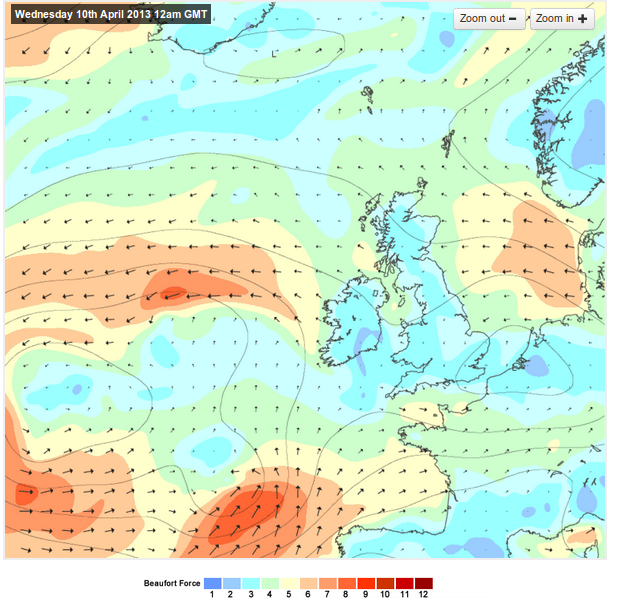
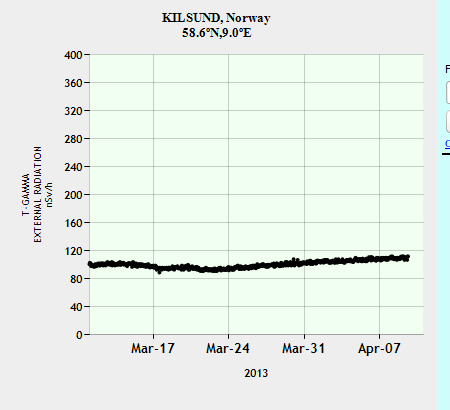
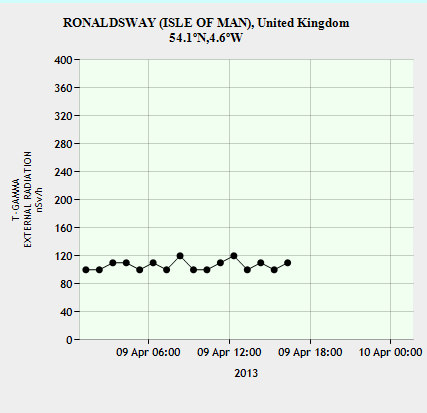
Air Quality Warning for NE Europe – Contamination from Sellafield Nuclear site 11 April 2013
Published on 10 Apr 2013

Dangers of air pollution worse than previously thought, UN health agency warns
8 April 2013 — The dangers posed by air pollution are far larger than previously thought, the United Nations World Health Organization (WHO) has announced, as it renewed its call for rapid global action in reducing what it described as one of “the greatest hazards to human health.”….

……..”The estimations we have now tell us there are 3.5 million premature deaths every year caused by household air pollution, and 3.3 million death every year caused by outdoor air pollution,” Dr. Maria Neira, the WHO’s Director of Public Health and Environment, told the CCAC meeting.
Ground-level ozone pollution was estimated to cause an additionally 200,000 premature deaths every year, the agency said in a press release, which notes that “burden of disease” is a calculation based on years of life lost combined with years lived at less than full health.
“Air pollution is becoming one of the biggest health issues we have in front of us at the moment,” Dr. Neira said. ……
http://www.un.org/apps/news/story.asp…
Link to low level wind maps
http://magicseaweed.com/UK-Ireland-MS…
Link to EURDEP radiation monitoring in Europe
https://geoserver.jrc.ec.europa.eu/Pu…
Even Moderate Air Pollution Can Raise Stroke Risks
Link to map showing “normal” particulate pollution warnings maps
http://www.facebook.com/CleanAirLondon
Feb. 13, 2012 — Air pollution, even at levels generally considered safe by federal regulations, increases the risk of stroke by 34 percent, Beth Israel Deaconess Medical Center researchers have found.
1 This Month
10 March A LIVE WEBINAR THE REAL EFFECTS OF NUCLEAR POWER
What the Industry Isn’t Telling Us
1:00 PM Mountain, 2 pm Central, 3 pm Eastern. Live on the Keepers of the Water Facebook page



18 March Webinar @ 1 PM EST: An Assessment of SMR Projects: The Case of Canada
register for the zoom:
https://us02web.zoom.us/webinar/register/WN_o8BIIOUvQ2ONJR1nta65DQ#/registration


of the week – STOP SMALL MODULAR REACTORS IN CANADA
To see nuclear-related stories in greater depth and intensity – go to https://nuclearinformation.wordpress.com
-
Archives
- March 2026 (99)
- February 2026 (268)
- January 2026 (308)
- December 2025 (358)
- November 2025 (359)
- October 2025 (376)
- September 2025 (258)
- August 2025 (319)
- July 2025 (230)
- June 2025 (348)
- May 2025 (261)
- April 2025 (305)
-
Categories
- 1
- 1 NUCLEAR ISSUES
- business and costs
- climate change
- culture and arts
- ENERGY
- environment
- health
- history
- indigenous issues
- Legal
- marketing of nuclear
- media
- opposition to nuclear
- PERSONAL STORIES
- politics
- politics international
- Religion and ethics
- safety
- secrets,lies and civil liberties
- spinbuster
- technology
- Uranium
- wastes
- weapons and war
- Women
- 2 WORLD
- ACTION
- AFRICA
- Atrocities
- AUSTRALIA
- Christina's notes
- Christina's themes
- culture and arts
- Events
- Fuk 2022
- Fuk 2023
- Fukushima 2017
- Fukushima 2018
- fukushima 2019
- Fukushima 2020
- Fukushima 2021
- general
- global warming
- Humour (God we need it)
- Nuclear
- RARE EARTHS
- Reference
- resources – print
- Resources -audiovicual
- Weekly Newsletter
- World
- World Nuclear
- YouTube
-
RSS
Entries RSS
Comments RSS
 nuclear-news