Sweden generates 99% of electricity from clean sources. So why is wind power under attack?
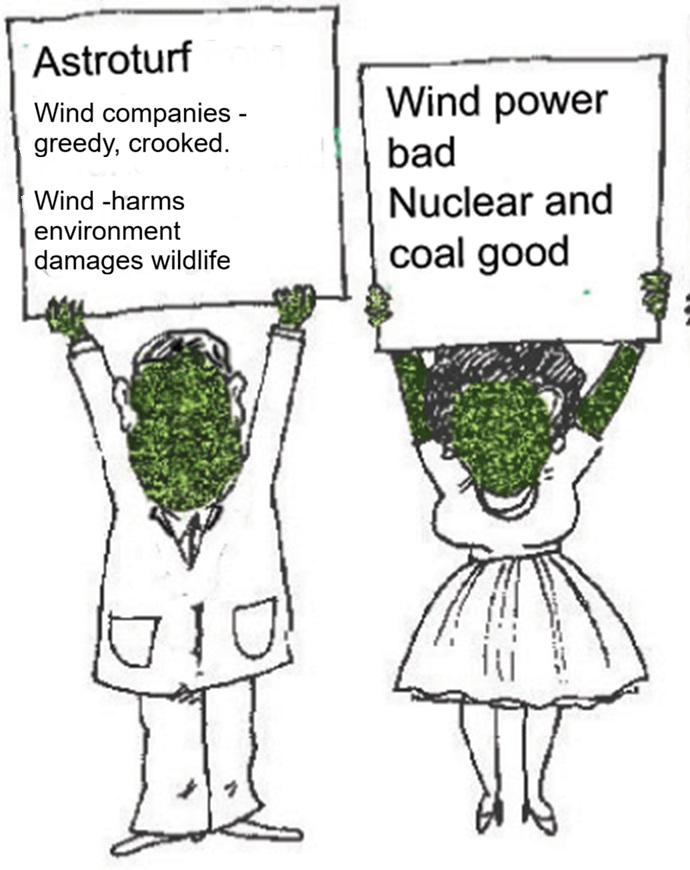
Sweden generates 99% of electricity from clean sources. So why is wind
power under attack? Thousands of anti-wind social media posts have been
analysed, as researchers warn that Europe’s energy security could be
threatened. Sweden has been hit the hardest by a coordinated attack on wind
power, according to a new analysis.
Euro News 6th May 2026, https://www.euronews.com/2026/05/06/sweden-generates-99-of-electricity-from-clean-sources-so-why-is-wind-power-under-attack
A small northern Ontario town refused radioactive waste. It’s gone to Sarnia instead

Decades-old mine tailings in Nipissing First Nation sparked outrage after the province tried to move the material to another community without consultation, but it has quietly moved them again
the Narwhal By Leah Borts-Kuperman (Local Journalism Initiative Reporter), May 6, 2026
Summary
- The Ontario government intended to move radioactive waste from the shore of Lake Nipissing to a former mine site outside Sudbury, Ont.
- A lack of consultation around the new location led to strong local opposition, and delayed the remediation project conducted by Nipissing First Nation.
- The waste has now been moved to a disposal site outside Sarnia, Ont., and Aamjiwnaang First Nation, where emissions from the industrial area known as Chemical Valley have affected local air quality.
For decades, radioactive waste sat near the shore of Lake Nipissing. It looked like an innocuous pile of gravel in what was otherwise a stretch of forest. People began using it to backfill lots, fill spaces under decks and build fire pits. In the 1970s and ’80s, Nipissing First Nation began using it to build roads.
It wasn’t normal gravel, though. It was mine tailings, containing the metal niobium, left there when the Nova Beaucage mine shuttered in 1956 after just seven months of operation.
“The company just walked away and left it with no remediation at all,” Geneviève Couchie, business operations manager at Nipissing First Nation, said. Couchie led a project to clean up the tailings, which first started in 2019. After being interrupted by COVID-19 shutdowns, the remediation resumed in spring 2024 and lasted almost two years.
In the meantime, Couchie told The Narwhal, she fielded concerns about groundwater and lake contamination from residents living close to the site or to a nearby property owned by Ontario’s Ministry of Transportation that also stored the low-level radioactive tailings. Couchie said she struggled to get satisfactory answers from government agencies.
“The workers wore hazmat suits, and I remember saying from the beginning, ‘How can I tell people they have nothing to worry about when these guys are in full on suits?’ They’re literally 20 feet from someone’s window,” Couchie said. The majority of the workers remediating the site were from the nation, and dressed in protective gear so as not to carry radioactive dust home on their clothes.
The plan was to load the waste into trucks to be transported to a tailings management area at Agnew Lake, in Sudbury District. It is the decommissioned site of a former mine, near the Township of Nairn and Hyman, and about 150 kilometres from Nipissing First Nation. The nation first had to excavate nearly 50,000 metric tonnes of the radioactive material — enough to build the Statue of Liberty, twice.
But the project faced another unexpected delay. The province had attempted to relocate the waste without consulting the Nairn community, sparking public outcry. Locals organized public meetings to raise awareness and ultimately stop the transfer.
Eventually, in July 2025 — after nearly a year of advocacy in Nairn, and delay for Nipissing First Nation — the province capitulated, finding another place for the waste to go. This was welcome news for Nipissing First Nation, which is now hoping to transform the scarred land into a lakeside green space for the community to enjoy after years of worry.
“We just wanted to see this material moved off [Nipissing First Nation] lands, and so it was an unexpected disappointment that things were delayed like they were,” Couchie said. “We were pleased that they did end up finding another disposal site.”
“But,” Couchie said, it was “eye opening as well, that there was only one other facility in Ontario that was prepared to accept this.”
That facility is close to another Indigenous community — Aamjiwnaang First Nation, in the Sarnia region, where emissions from refineries and petrochemical plants have earned the area the moniker “Chemical Valley.”
Sarnia facility accepting radioactive waste from Nipissing
The new destination for the radioactive tailings is Clean Harbors, a hazardous waste facility in Corunna, Ont. — 645 kilometres from its original dumping ground. It’s close to both Aamjiwnaang and Sarnia, which have experienced persistent air quality issues related to nearby industry.
Clean Harbors is the only government-licensed hazardous waste management complex in Ontario, and is “uniquely positioned,” its website reads, to offer safe disposal of naturally occurring radioactive material like the niobium tailings.
But the facility’s history is dotted with dust-ups over environmental safety. In 2013, neighbours of the Clean Harbors site won a civil lawsuit over the impact of the waste facility’s emissions on their health and daily lives.
In 2019 the company was fined $100,000 for discharging contaminated smoke after a filter cloth soaked with coolant, oils and metal particles caught fire.
When the province conducted a study on environmental stressors in the Sarnia area in 2023, it found that while the majority of the 870 reports from residents about industrial pollution were related to petrochemical industries and refineries, a significant minority — 219 — were “related to the waste incineration facility in the area (Clean Harbors).”
And in 2025, the Ministry of Environment fined Clean Harbors $100,000 for failing to comply with an equipment requirement for monitoring the excavation of a waste-holding basin.
Clean Harbors did not respond to The Narwhal’s questions about these claims and findings.
In a section of their 2025 annual report on legal, environmental and regulatory compliance risks, Clean Harbors asserted: “We are now, and may in the future be, a defendant in lawsuits brought by parties alleging environmental damage, personal injury and/or property damage, which may result in our payment of significant amounts.”
Aamjiwnaang First Nation Chief Janelle Nahmabin told The Narwhal she had not received any information about the niobium waste that was trucked to Clean Harbors nearly a year ago. Other environmental groups The Narwhal reached out to, including Climate Action Sarnia-Lambton, had not heard of this waste transfer, either.
“The plan now has been executed in a very different way,” said Brennain Lloyd, project coordinator at Northwatch, a northeastern Ontario environmental advocacy group. “It’s moving the waste into the territory of another First Nation that is already heavily impacted by all of the industrial activities.”
‘Under a real nuclear shadow’: radioactive waste in northern Ontario
…………………………………………………………………………………………………………………………………………. https://thenarwhal.ca/northern-ontario-radioactive-waste-sarnia/
Carbon dioxide levels in the atmosphere just hit a ‘depressing’ new record

These data come from the National Oceanic and Atmospheric
Administration’s Mauna Loa Observatory, which may soon be shut down
because of proposed government budget cuts. The amount of carbon dioxide
detected in the atmosphere hit a record high in April. CO2 levels averaged
about 431 parts per million (ppm) over that month, according to data
collected at the National Oceanic and Atmospheric Administration’s Mauna
Loa Observatory in Hawaii.
Scientific American 5th May 2026, https://www.scientificamerican.com/article/carbon-dioxide-levels-in-the-atmosphere-just-hit-a-depressing-record-high/
Am I the only one who doubts the need for more electricity?

Ken Collier, Fri, May 8, 26
Am I the only one who doubts the need for more electricity? There might be an argument for a better grid as a security and safety measure. Do we really need more electricity to manufacture cars that clog the roads and pollute the environment? More plastic? More disposable consumer goods? More entertainment of dubious quality? Manipulate huge amounts of data anf faster?
Most of the debate seems to be about whether solar, wind, hydro, etc. are better able to meet the increasing demand than nuclear or fossil fuels. Some of it is about how best to provide employment, especially for the union organized sector.
I think cutting back, or at least making better judgements about goals for energy use, would be a more productive way to exercise our actions in a way that recognizes how damaging it is to just seek more and better energy while providing our insights free to the energy industry. (even if they don’t heed it).
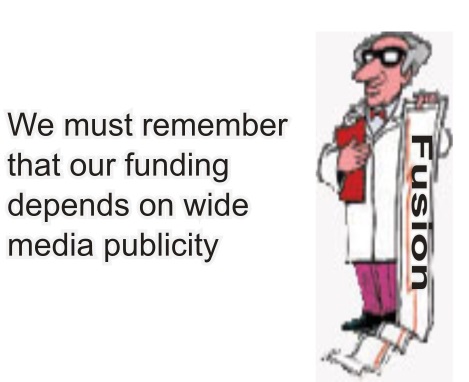
The World’s Biggest Fusion Reactor Just Hit a Milestone
By Haley Zaremba – May 06, 2026,
- The final components of ITER’s central solenoid magnet — a 59-foot, 3,000-tonne superconducting system 15 years in the making — have arrived in France, clearing a major path toward first plasma.
- ITER will never supply electricity to the grid; it exists purely as a research tool, and at €22 billion and counting, it’s still years from achieving its primary milestone.
- A wave of well-funded private fusion startups is on track to hit the same technical benchmarks as ITER faster and more cheaply — raising real questions about the megaproject’s relevance even as it celebrates progress……………………………………………………………………………………………………………… https://oilprice.com/Energy/Energy-General/The-Worlds-Biggest-Fusion-Reactor-Just-Hit-a-Milestone.html
Accountability is optional
Hamza Yusuf | Declassified UK , May 8, 2026
| The Metropolitan Police has declined to investigate Britons accused of committing war crimes while serving with the Israeli military in Gaza.Last April, the Palestinian Centre for Human Rights (PCHR) and the Public Interest Law Centre (PILC) filed an extensive, 240-page dossier to the Met’s War Crimes Team. |
The report detailed the alleged involvement of the 10 British nationals, including dual citizens, in the “targeted killings of civilians and aid workers, indiscriminate attacks on civilian areas, attacks on hospitals and protected sites, and the forced transfer and displacement of civilians”.
Over 70 legal and human rights experts urged the Met’s War Crimes Team to investigate all suspected war crimes and crimes against humanity allegedly committed by Britons when the dossier was handed in.
In its recent decision letter, the Met Police accepted that international bodies have found that Israel’s actions in Gaza “could amount to war crimes” and identified at least four individuals of “particular interest.”
However, the War Crimes Team has refused to move beyond a scoping exercise, saying there was “no realistic prospect of conviction” and that an “effective investigation could not be conducted.”
Paul Heron, a solicitor at PILC, said: “We reject The Met’s conclusions”.
“By demanding evidence capable of securing a realistic prospect of conviction before even opening an investigation, the Police have applied the wrong legal test and set the bar far too high. British nationals and residents cannot be allowed to participate in atrocities abroad with impunity.”The PILC maintains that the referral provided credible material warranting a full investigation. We recently revealed that at least 2000 Britons served in Israel’s military during the Gaza genocide. Meanwhile, Britain’s recognition of a Palestinian state may also place British nationals serving in the Israeli army in breach of the 1870 Foreign Enlistment Act. The act prohibits citizens from fighting for a foreign state at war with another state at peace with the UK, but there is no sign of enforcement. |
And what is absent is equally telling: The Foreign, Commonwealth and Development Office (FCDO) travel advice for Ukraine explicitly warns British nationals that fighting there “may amount to offences under UK legislation”and that they “could be prosecuted on your return”.
No equivalent warning appears in FCDO advice for Israel or the Occupied Palestinian Territories.
This exposes a glaring and systemic accountability gap – one the Foreign Office recently deepened by quietly shutting down its unit tracking Israeli breaches of international law.
The Met’s refusal is the latest in a pattern of dereliction: British institutions, one by one, declining to act on Israel’s crimes.
Labour and SNP row over submarines at Rosyth Dockyard

THE SNP have been accused of “scaremongering” after warning that Rosyth
has become a bigger target for terrorists and “rogue nations”. Labour
councillor Patrick Browne took aim and said the request for a public
consultation, on the prospect of Trident submarines carrying nuclear
missiles being maintained at the dockyard, was pointless and never going to
be accepted. He said: “The SNP have been scaremongering for months about
the contingent dock proposal for Rosyth. “With their latest comments they
have reached new levels of doom-mongering.”
But SNP councillor Brian
Goodall, who stated that having subs with warheads on the Forth increased
the threat of attack on Rosyth, said that response and the criticism of his
actions showed “just how right wing many in the Labour Party have become”.
The dispute has arisen due the plan for a contingent dock at Rosyth by 2029
to temporarily house the UK’s next generation of nuclear subs until a
permanent home at Faslane on the Clyde is ready in the 2030s.
Dunfermline Press 6th May 2026, https://www.dunfermlinepress.com/news/26084331.labour-snp-row-submarines-rosyth-dockyard/
Peter Beinart on What It Means to Be Jewish After the Destruction of Gaza
SCHEERPOST, May 6, 2026
“American Jews and Jews in general are safer in countries where everybody is treated equally under the law,” Peter Beinart tells TRNN. “The principle of Jewish supremacy, and Christian supremacy, and Hindu supremacy, and Islamic supremacy—all of those things are wrong.”
Marc Steiner TRNN, May 6, 2026
Amid Israel’s ongoing destruction of Gaza, its illegal annexation of land in the Occupied West Bank, and belligerent warmaking in Iran and Lebanon, antisemitism around the globe is rising—but so is an international chorus of anti-Zionist Jews speaking out against Israel’s crimes. In this episode of The Marc Steiner Show, Marc speaks with renowned author and commentator Peter Beinart about his new book, Being Jewish After the Destruction of Gaza, and about the “civil war” within the Jewish world over Israel.
…………………………………………………………. Marc Steiner:
I was thinking many ways how to start this, but this is a very difficult time for Palestinians to survive. It’s also a very difficult time for Jews to stand up saying, “Not in our name.” And you are one of the most prominent people out there saying that and not being anti-Israeli or anti-Jewish about it. So talk a bit about that for a minute, just your whole way of approaching what we face.
Peter Beinart:
Well, Judaism is an ancient tradition, which speaks in many, many voices. But for me, when I think about what it means to be a Jew, and I start with the belief that Torah begins with the creation of human beings who are not of any religion or race or ethnicity. The first human beings that we encounter in Torah are not Jews or proto-Jews or Israelites or proto-Israelites. Adam and Eve and Noah, generation of the Tower of Babel, Cain and Abel, they’re universal human beings. And I think the lesson to that for me is that all human beings have incalculable value and that we must never lose sight of the value of all human life. And so what we see in the discourse in Israel and in many Jewish communities around the world is a support for the state of Israel that essentially trumps the value of the lives of all the people who live within that state.
And that seems to me actually something akin to idolatry. It’s essentially the worship of something human made, the creation of a state, and the elevation of it over the lives of the human beings, human beings created in the image of God who live within that state, 50% of whom are Palestinian. And so to me, I think what’s incumbent upon us as Jews is to recenter the value of all human life, including Palestinian life at the center of how we think about what it means to be Jewish……………………………………………………………………………………………………………………………………………………………………………………………………………………………………………………………………….https://scheerpost.com/2026/05/06/peter-beinart-on-what-it-means-to-be-jewish-after-the-destruction-of-gaza/
Common Security as a credible alternative to nuclear deterrence
Statement to the 2026 NPT Review Conference on behalf of the World Federalist Movement-Institute for Global Policy
Cosponsored by Aotearoa Lawyers for Peace, Basel Peace Office, Global Security Institute,
Green Hope Foundation, Parliamentarians for Nuclear Nonproliferation and Disarmament,
UNFOLD ZERO and World Future Council
Presented by Kehkashan Basu
Co-President, World Federalist Movement-Institute for Global Policy
Your Excellencies, distinguished guests, and colleagues,
My name is Kehkashan Basu, and I speak as the Co-President of the World Federalist Movement-Institute for Global Policy on the topic of Common Security as a credible alternative to nuclear deterrence.
On September 22, 2025, UN Member States adopted by consensus the Pact for the Future, reaffirming that nuclear war would bring devastation to all humankind, that it can never be won and must never be fought, and that every effort must be made to prevent it. It also commits States to advance disarmament and nonproliferation, including the achievement of a nuclear-weapon-free world.
As a young woman who has spent more than a decade advancing disarmament education to lift the veil ofsecrecy surrounding nuclear weapons and raise awareness of the risks they pose, I now see a growing sense of urgency – particularly among younger generations – for security approaches rooted in cooperation,accountability, and shared responsibility.
The pursuit of a nuclear-weapon-free world is grounded in international law, as affirmed by the
International Court of Justice in 1996. We call on NPT States Parties to begin a phased transition away from nuclear deterrence and to initiate negotiations on a mutual, verifiable framework for the global elimination of nuclear weapons no later than 2045.
Nuclear deterrence continues to be viewed as a source of security – including to prevent aggression – yet it sustains risk rather than removing it. Advancing alternative credible approaches to achieving security is essential. In this regard, common security offers a practical framework. It is based on the understanding that lasting security depends on addressing the concerns of all states, including adversaries. It emphasizes diplomacy, negotiation, mediation, and the application of international law to prevent conflict and resolve disputes.
There is already a foundation to build on. Civil society and policy initiatives have identified pathways to
reduce reliance on nuclear deterrence, including strengthening nuclear-weapon-free zones, advancing arms control agreements, and making more effective use of international institutions such as the United Nationsand the International Court of Justice.
Recent global developments underscore the urgency of acting on these approaches. Across multiple
regions, senseless wars and escalating conflicts continue to take lives and deepen insecurity. These
situations persist while diplomatic and legal mechanisms remain underutilized. The UN Charter provides clear avenues for peaceful resolution, including mediation, arbitration, and adjudication. Strengthening these mechanisms, including broader acceptance of the jurisdiction of the International Court of Justice, is essential to reinforcing a rules-based international order.
In this short presentation I can merely touch on the comprehensive common security ‘tool kit’ available to States to assure security without nuclear deterrence. We will explore this tool kit in more depth in a side event on May 5 entitled Can Common Security replace Nuclear Deterrence? All delegations are invited.
Has the US accepted Iran’s demand to settle Hormuz first, nuclear later?

The US pauses Hormuz escorts after Pakistan-led mediation gains traction, signalling a shift towards a limited framework deal.
Aljazeera, By Abid Hussain 6 May 2026
Islamabad, Pakistan – On Monday morning, the United States Navy began escorting commercial vessels through the Strait of Hormuz. By Tuesday afternoon, the operation had been paused.
President Donald Trump announced the reversal on Truth Social, citing the “request of Pakistan and other Countries” and “great progress” towards a “complete and final agreement” with Iran.
Earlier on Tuesday, US Secretary of State Marco Rubio declared that Operation Epic Fury, the air and naval campaign launched on February 28, was “concluded”.
What Washington now sought, he said, was a “memorandum of understanding for future negotiations”.
For weeks, that is precisely what Iran has been demanding.
In proposals passed on to the US through Pakistan, Iran has in recent weeks sought multistage negotiations, with a preliminary deal aimed at ending the war, and negotiations on the White House’s demands that Tehran end its nuclear programme pushed for later.
Trump and his administration resisted, with the US president insisting that getting Iran to give up its nuclear programme was central to any deal with Tehran.
Now, the US appears to have come around to accepting Iran’s demand, say experts. On Wednesday, the Reuters news agency and the US publication Axios reported that the US and Iran were close to agreeing to a one-page MoU to end the war, even though there have been no detailed negotiations on Tehran’s nuclear programme.
Seyed Mojtaba Jalalzadeh, an international relations analyst based in Tehran, said the week’s diplomatic signals reflected a sober reassessment in Washington of what was achievable.
“Moving towards a memorandum of understanding, a framework for future talks, is a good, viable and important first step to solve the immediate problem,” he told Al Jazeera.
Shift amid fraying ceasefire
Pakistani officials close to the country’s efforts to mediate peace between the US and Iran told Al Jazeera that Islamabad’s role as an intermediary had intensified in recent days, with senior officials in direct communication with both sides. Details of those exchanges remain closely held.
On Wednesday afternoon in Islamabad, Pakistani Prime Minister Shehbaz Sharif responded to Trump’s announcement of the pause in the operation to open the Strait of Hormuz, naming Saudi Arabia’s Crown Prince Mohammed bin Salman as a partner who prodded the US president to suspend the military mission in the waterway.
Pakistan, Sharif wrote on social media, was “very hopeful that the current momentum will lead to a lasting agreement that secures durable peace and stability for the region and beyond”.
Just 24 hours earlier, that optimism would have appeared misplaced.
Since the weekend, an already fragile ceasefire between the US and Iran appeared to be fraying.
Iran’s Islamic Revolutionary Guard Corps (IRGC) allegedly launched missiles and drones at the United Arab Emirates on Monday and Tuesday, the first such attacks since the April 8 truce. An oil facility in Fujairah was struck, wounding three Indian workers. Iran denied involvement.
The US and Iran each claimed they had hit the other’s ships, and each denied the other’s claims of success.
Washington, however, declined to escalate. Joint Chiefs of Staff Chairman General Dan Caine said the incidents remained “all below the threshold of restarting major combat operations”. US Defense Secretary Pete Hegseth said the ceasefire “certainly holds”.
Has Washington blinked?
The central question is whether the US has, implicitly, accepted Iran’s core demand: end the war and settle the Strait of Hormuz first, with the nuclear programme to follow.
Rubio’s Tuesday briefing suggests a sharp departure from Washington’s initial position.
At the outset, the US outlined four objectives: destroy Iran’s ballistic missile capabilities, dismantle its navy, sever support for armed proxies, and ensure Iran never obtained a nuclear weapon.
A 15-point proposal delivered to Tehran via Pakistan in late March went further. It called for dismantling nuclear facilities at Natanz, Isfahan and Fordow, handing over highly enriched uranium to the International Atomic Energy Agency (IAEA), and permanently prohibiting nuclear weapons development.
By contrast, Rubio declared the military phase over. Nuclear material, he said, “has to be addressed” and is “being addressed in the negotiation”, but he declined to elaborate.
What Washington now seeks is an MoU, a framework defining “the topics that they’ve agreed to negotiate on” and “the concessions they are willing to make at the front end”.
That marks a significant shift from March.
In early April, he warned that “a whole civilisation will die tonight” if Iran did not yield. This week, he called for an agreement to be “finalised and signed”……………………………………………………………………………………………………………………… https://www.aljazeera.com/news/2026/5/6/has-the-us-accepted-irans-demand-to-settle-hormuz-first-nuclear-later
Korean A-Bomb Victims U.S. Speaking Tour & NPT Engagement Highlights
The Korean Atomic Bomb Victims U.S. Speaking Tour was successfully held from April 20 to May 2, 2026
First- and second-generation Korean atomic bomb survivors visited major cities across the United States in connection with the 11th Review Conference of the Treaty on the Non-Proliferation of Nuclear Weapons (NPT), where they shared their long-overlooked experiences and called for an official apology and compensation for the 1945 atomic bombings. Through powerful testimonies, the speakers highlighted the reality that, although victims exist, responsibility has yet to be fully acknowledged. Their accounts underscored the ongoing, intergenerational suffering that has continued for more than 80 years since the bombings of Hiroshima and Nagasaki.
From April 20 to May 2, 2026, first- and second-generation Korean atomic bomb survivors carried out a nationwide speaking tour across the United States. Held in conjunction with the 11th NPT Review Conference, the tour brought long-overlooked histories of Korean victims into international nuclear discourse.
Throughout the tour, survivors raised international awareness about the more than 70,000 Korean victims of the atomic bombings—many of whose stories have remained largely unheard globally. They also emphasized that Korean survivors have neither disappeared from history nor remained silent, but have continuously struggled for recognition and redress.
The tour was jointly organized by SPARK (Solidarity for Peace and Reunification of Korea), the International Organizing Committee of the A-Bomb Tribunal, and Korean atomic bomb victims. It brought renewed attention to the need for accountability, including an official apology and reparations from the United States for the historical injustice and prolonged suffering endured by Korean survivors.
As part of the program, the delegation visited major cities including Seattle, San Francisco, Sacramento, Los Angeles, Washington, D.C., and New York, with events held at institutions such as San Francisco State University, California State University, Sacramento, UCLA, and CUNY John Jay College of Criminal Justice. They also engaged with local civil society organizations and Korean American communities in each city, delivering testimonies on the enduring impacts of nuclear violence and their lifelong efforts toward justice and compensation.
Through this speaking tour, the issue of Korean atomic bomb victims was brought more prominently to the attention of the international community, and significant support, interest, and participation were secured for the upcoming International People’s Tribunal. The success of the tour was made possible by the generous moral and material support of partners in each region, and in particular by the dedicated efforts of the members of the International Organizing Committee.
Building on this momentum, organizers called on global civil society to participate in the upcoming International People’s Tribunal on the 1945 Atomic Bombings (A-Bomb Tribunal), scheduled to be held in Seoul from November 13 to 15, 2026.
Selected photos from each event are included below. [on original]
Trump claims his mass murder in the Caribbean saved a million American lives…real number 0

Walt Zlotow West Suburban Peace Coalition Glen Ellyn IL, 6 May 26
President Trump sure loves committing mass murder worldwide. Gaza, Iran, Somalia, Niger, Iraq, Yemen, Venezuela are among nations he’s victimized with violent murder. Add in countries like Cuba where he’s essentially murdering innocents with life suffocating sanctions, he’s racked up tens if not over a hundred thousand deaths in 6 years exercising his presidential License To Kill.
While bombing innocents worldwide was practiced by all presidents since at least Bill Clinton, Trump is unique in ordering mass murder bombing of small boats in the Caribbean. He ghoulishly lunched Operation Southern Spear in the Caribbean last September. In the past 8 months Trump, playing Long John Silver instead of a decent world leader, has blasted 54 little boats to smithereens, sending 185 innocents to Davy Jones Locker.
His justification? ‘Oh they’re certainly running fentanyl and cocaine to the Homeland killing millions of Americans.’ Trump claims the boats were all part of 24 narco terrorist cartels but couldn’t name a single one. When a couple of Trump’s targets survived the bombing, Trump’s military polished them off with another murderous salvo. ‘Can’t let these stinkin’ narco terrorists floating around gathering up the drug packages floating nearby’ was the justification for instant execution.
Trump lies shamelessly about everything. But his Whoppers about the bombings dwarf anything Burger King could cook up. Trump claims “Drugs entering our country by sea are down 97 percent.” More absurd, Trump calculates each boat he obliterates saves 25,000 American lives. Both figures are so preposterous one must ponder where he pulls them from.
Funny, if drugs arrivals are down 97%, one might conclude that border drug seizures would be similarly down. Yet, Customs and Border Protection note that seizures at U.S. borders and along coasts have increased from 38,000 lbs. to 44,000 lbs. (16%) in the 7 months following Trump’s mass murder spree compared to the 7 months before it began. In drug crazed America, usage is up, prices are stable and supply is plentiful.
But with Trump steering the Ship of State, state sponsored murder is up, prices of everything legal are escalating, and display of decency, morality and common sense nowhere to be found.
Trump’s New Iran Negotiator Is Israel Lobbyist Who Denounced Negotiations With Iran
Max Blumenthal, May 5, 2026, https://thegrayzone.com/2026/05/05/trumps-iran-negotiator-israel-lobbyist/
Tapped to advise Steve Witkoff on Iran, Nick Stewart previously condemned dealing with any of Iran’s elected leaders. His presence consolidates military conflict as the Trump administration’s only option.
The latest addition to the Trump administration’s Iran negotiation team, Nick Stewart, has declared his absolute opposition to negotiating with the Islamic Republic of Iran. According to Stewart, “it’s important that we disabuse people of that notion” that anyone among Iran’s current leadership could serve as an “honest broker.”
Stewart aruged that even the reformist President Masoud Pezeshkian must be treated as an inveterate enemy because he is “a part of the theocratic, tyrannical, authoritarian government of Iran.” He insisted that Pezeshkian “is not a reformer and we shouldn’t buy into that narrative, because what it does is it throws us off our guard.”
Stewart made these comments while chairing a panel for the pro-war Vandenberg Coalition in Washington DC on October 4, 2024. He was seated beside Cameron Khansarinia, the Secretariat of self-proclaimed “Crown Prince” Reza Pahlavi, neoconservative ideologue and former Special Advisor for Iran Elliot Abrams, and Behnam Ben Taleblu, an operative at the Foundation for the Defense of Democracies (FDD).
At the time, Stewart functioned as FDD’s top Capitol Hill lobbyist.
When it was founded in 2001, FDD was named EMET, which is Hebrew for “truth.” The think tank described its mission as working to “enhance Israel’s image in North America and the public’s understanding of issues affecting Israeli-Arab relations.”
In 2017, a top Israeli military-intelligence official cited FDD as a partner in a covert Israeli campaign to spy on Americans involved in Palestine solidarity activism. Under Trump, the outfit has dictated the administration’s Iran policy to the point that the White House plagiarized its justification for attacking Iran from a document posted on FDD’s website.
Stewart was reportedly selected by Jared Kushner to advise Steve Witkoff, a real estate mogul and Trump golf buddy who serves as the ironically titled Special Envoy for Peace Missions. Kushner Witkoff’s demonstrable ignorance of Iranian affairs, reflexive deference to Israel and crude profiteering helped inspire Iran’s rejection of the last round of negotiations. With Stewart on their team, it should be obvious to Tehran that there is no honest broker in Washington.
Yukon and Ontario and SMRs – Memorandum of Misunderstanding?

The Yukon public and their elected representatives may not fully understand the implications of introducing small modular nuclear reactors into their electricity mix.
The governments of Yukon and Ontario recently signed a partnership agreement to share Ontario’s expertise about energy development, which includes evaluation of small modular and micro-reactors. The Yukon wants to reduce reliance on diesel while meeting increasing electricity demand.
There are glaring problems with this memorandum of understanding.
First: the Ontario government cannot share what it doesn’t know. There has not been a single successful commercial SMR built worldwide. Construction of the much-touted Darlington New Nuclear Project in Ontario has barely begun.
Second: There is little private investment interest in this technology due to:
- the extraordinarily high cost ($7.7 billion for the first BWRX-300 SMR at Darlington),
- long timeline to completion (nuclear reactors have taken years longer than expected to build.)
- risks associated with accidents
Third: The Ontario public bears the full cost of building and maintaining Ontario’s reactors, remediating environmental damage, the costs of decommissioning reactors at their end of life, and management of the radioactive waste for which there is no feasible solution. Can Yukon afford this expensive electricity source?
Fourth: Nuclear reactors are notoriously unreliable; some are offline for long periods of time, like Point Lepreau in New Brunswick (which operated only 27% of the time in the 2024-2025 fiscal year), requiring diesel or gas backup to meet electricity demands.
A Nobel Effort: Parliamentary call for common security and nuclear disarmament
Presentation by Parliamentarians for Nuclear Nonproliferation and Disarmament (PNND)
to the 2026 NPT Review Conference.
May 1, 2026
United Nations, New York
DELIVERED BY BILL KIDD MSP, PNND CO-PRESIDENT
Your Excellencies,
We are meeting at the United Nations in New York at a time of devastating armed conflicts,
an erosion of multilateralism and the rule of law, a renewed nuclear arms race, increased
risks and specific threats to use nuclear weapons, increasingly severe climate-change induced
disasters and a looming existential threat to humanity from high levels of Green House Gas
emissions.
I am addressing this Review Conference in my role as a Co-President of Parliamentarians for
Nuclear Non-proliferation and Disarmament, a network of parliamentarians representing
citizens of nations around the world with their concerns over the dangers presented by
nuclear weapons.
I have spent 19 years as a Member of the Scottish Parliament working for the removal of
Trident nuclear weapons from the land and waters of Scotland – where the entire nuclear
arsenal of the United Kingdom is based just 30 miles from the homes of a half of the Scottish
Population.
Parliamentarians are active in their national assemblies, and through organizations like the
Inter-Parliamentary Union and PNND to address these issues. We appeal to you as
representatives of governments to do likewise.
Together, we need to elevate diplomacy, cooperative leadership, common security and the
rule of law in order to prevent nuclear war, resolve international conflicts peacefully, protect
the climate for current and future generations and set in motion concrete processes to
achieve the peace and security of a nuclear-weapon-free world.
We need to strengthen the roles of the UN General Assembly, International Court of Justice
and International Criminal Court to prevent – and build accountability for – acts of aggression.
And we need to support the establishment of additional nuclear-weapon-free zones,
especially in the Middle East.
In these ways we can replace the reliance on nuclear deterrence with reliance on common
security.
In 2024, 70 parliamentarians from 34 legislatures endorsed the appeal Turn Back the
Doomsday Clock which was presented to the NPT Prep Com in Geneva. It includes nine
concrete recommendations for achieving the peace and security of a nuclear weapon free
world – a world based on the common security of the UN Charter, not the threat or use of
force. You can view these recommendations in the written version of our statement today.
One immediate step not included in our 2024 appeal, is to end the war by US and Israel
against Iran through common security. Newsweek recently shared an article by PNND Council
Member, Jonathan Granoff, titled War Will Not Stop Iran’s Nuclear Threat, This Could.
It advocates making comprehensive inspection safeguards, much like the JCPOA and the
Chemical Weapons Convention, apply to all non-nuclear weapons states parties to the NPT,
not just Iran. This would make the world safer, stop the next North Korea, and allow both the
USA and Iran to rightfully claim a victory for the world. It would also strengthen the
legitimacy of the NPT regime by reinforcing its nonproliferation pillar. Would it per se
advance disarmament? No, but stopping a war and saving the unique legal instrument that
obligates the P5 to achieve nuclear disarmament is worth our efforts.
PNND highlights that 2026 is the 125th anniversary of the first Nobel Peace Prize, which was
jointly awarded to Henri Dunant (Switzerland) for founding the International Committee of
the Red Cross and to Frédéric Passy (France) for co-founding the Inter-Parliamentary
Union and for being instrumental in the establishment of the first international tribunal –
the Permanent Court of Arbitration. The vision and leadership of these Nobel Laureates can
help inspire us today.
We cordially invite you to a side-event on May 6 organised by PNND and the InterParliamentary Union entitled A Nobel Effort: The Roles and Actions of Parliamentarians to
support Diplomacy, Disarmament and International Humanitarian Law where we will discuss
these ideas in more depth.
1 This Month
23-25 October – on Zoom – World BEYOND War’s annual global conferenc


Shut down the radiation-damaged Heysham nuclear reactors now
To see nuclear-related stories in greater depth and intensity – go to https://nuclearinformation.wordpress.com

Say No to NASA’s Reckless Nuclear Reactor on the Moon
Say No to NASA’s Reckless Nuclear Reactor on the Moon

-
Archives
- October 2026 (231)
- September 2026 (339)
- August 2026 (330)
- July 2026 (355)
- June 2026 (287)
- May 2026 (306)
- April 2026 (356)
- March 2026 (251)
- February 2026 (267)
- January 2026 (308)
- December 2025 (358)
- November 2025 (359)
-
Categories
- 1
- 1 NUCLEAR ISSUES
- business and costs
- climate change
- culture and arts
- ENERGY
- environment
- health
- history
- indigenous issues
- Legal
- marketing of nuclear
- media
- opposition to nuclear
- PERSONAL STORIES
- politics
- politics international
- Religion and ethics
- safety
- secrets,lies and civil liberties
- spinbuster
- technology
- Uranium
- wastes
- weapons and war
- Women
- 2 WORLD
- ACTION
- AFRICA
- Atrocities
- AUSTRALIA
- Christina's notes
- Christina's themes
- culture and arts
- Events
- Fuk 2022
- Fuk 2023
- Fukushima 2017
- Fukushima 2018
- fukushima 2019
- Fukushima 2020
- Fukushima 2021
- general
- global warming
- Humour (God we need it)
- Nuclear
- RARE EARTHS
- Reference
- resources – print
- Resources -audiovicual
- Weekly Newsletter
- World
- World Nuclear
- YouTube
-
RSS
Entries RSS
Comments RSS

