Protecting Our Wells: The Rural Costs of Uranium Exploration in Rural Nova Scotia – Alan Timberlake
Those risks are not hypothetical. Dr. Bertell’s research showed that even low‑level internal exposure—from inhaled dust, dissolved uranium in drinking water, or radon gas—can cause cellular and genetic damage. She documented increased cancer rates, reproductive harm, immune system impacts, and long‑term generational effects in populations exposed to what regulators often describe as “safe” or “acceptable” doses.
April 4, 2026. Citizens Against Uranium Exploration and Mining in Nova Scotia, Alan Timberlake
Upper Tantallon, Nova Scotia
Protecting Our Wells: The Rural Costs of Uranium Exploration in Rural Nova Scotia – Alan Timberlake
For rural Nova Scotians, clean well water isn’t a luxury—it’s our lifeline. It’s what we drink, cook with, bathe in, and give to our animals. That’s why the province’s decision on March 26, 2025 to repeal the long‑standing ban on uranium exploration has raised so many alarms in communities like ours. When your home depends on groundwater, any activity that disturbs uranium‑bearing rock is not an abstract policy issue. It’s personal.
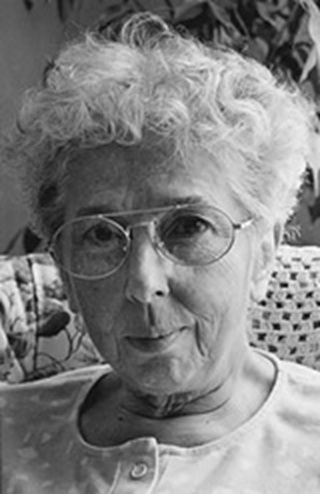
At this time in Nova Scotia, it’s important to remember the work of Dr. Rosalie Bertell (1929–2012), one of the world’s leading experts on low‑level radiation. I first met Dr. Bertell in the early 1980s after helping facilitate her participation as an intervener at the British Columbia Royal Commission on Uranium Mining in Vancouver. Her testimony there helped shape BC’s decision to maintain its moratorium on uranium mining—a position the province still holds today. She was a meticulous epidemiologist and cancer researcher, and her warnings about internal radiation exposure remain deeply relevant to Nova Scotia’s current debate.
British Columbia’s stance today stands in sharp contrast to Nova Scotia’s recent repeal. BC continues to enforce a province‑wide moratorium on uranium exploration and mining through a “no‑registration reserve” that prohibits staking, exploration, or development of uranium or thorium. Even as the federal government promotes uranium as a critical mineral, BC has deliberately excluded it from its own critical minerals strategy. The province where Dr. Bertell’s evidence helped shape policy has stayed the course—while Nova Scotia has moved in the opposite direction.
Nova Scotians have not been silent about this shift. On October 3, 2025, a petition with 7,000 signatures was formally tabled in the Legislature calling for the ban to be reinstated. More petitions are still being circulated across the province. The speed and scale of this response show just how deeply people—especially rural residents—understand the risks.
Those risks are not hypothetical. Dr. Bertell’s research showed that even low‑level internal exposure—from inhaled dust, dissolved uranium in drinking water, or radon gas—can cause cellular and genetic damage. She documented increased cancer rates, reproductive harm, immune system impacts, and long‑term generational effects in populations exposed to what regulators often describe as “safe” or “acceptable” doses.
For rural Nova Scotia, the concern is straightforward: exploration drilling can mobilize uranium into groundwater. Our geology is fractured. Water moves unpredictably underground. A 2018 provincial review found that drilled wells in Nova Scotia have a significantly higher chance of uranium contamination than dug wells. When you rely on a well, there is no backup system. No municipal treatment plant. No alternative supply. Once a well is contaminated, the options are limited, expensive, and often ineffective.
The province insists that modern exploration is “low‑impact.” But rural residents know that the first impacts are often invisible. A slight shift in groundwater flow. A small increase in dissolved uranium. A rise in radon levels in a basement. These changes don’t announce themselves with fanfare—they show up in water tests, in health statistics, or in the lived experience of families who suddenly can’t drink from their own taps.
Despite the government’s enthusiasm, no companies submitted proposals during the initial call for exploration. Even the premier later admitted the push for uranium exploration appears to be “kind of toast right now.” But the repeal remains in place, and the regulatory door is open.
That’s why Dr. Bertell’s work matters so much today. She taught us that low‑level radiation is not benign, and that internal exposure—especially through water—carries risks that can unfold over decades. For rural communities, that means we need independent science, transparent monitoring, and a real voice in decisions that affect our wells.
No comments yet.
1 This Month

of the week – Shut Down Drone Warfare!


Tell the Ukrainian Government to Drop Prosecution of Peace Activist Yurii Sheliazhenko

Petition to revoke the licensing of the Near Surface Nuclear Disposal Facility (NSDF) at Chalk River. https://www.ourcommons.ca/petitions/en/Petition/Details?Petition=e-7247
To see nuclear-related stories in greater depth and intensity – go to https://nuclearinformation.wordpress.com
-
Archives
- April 2026 (103)
- March 2026 (251)
- February 2026 (268)
- January 2026 (308)
- December 2025 (358)
- November 2025 (359)
- October 2025 (376)
- September 2025 (257)
- August 2025 (319)
- July 2025 (230)
- June 2025 (348)
- May 2025 (261)
-
Categories
- 1
- 1 NUCLEAR ISSUES
- business and costs
- climate change
- culture and arts
- ENERGY
- environment
- health
- history
- indigenous issues
- Legal
- marketing of nuclear
- media
- opposition to nuclear
- PERSONAL STORIES
- politics
- politics international
- Religion and ethics
- safety
- secrets,lies and civil liberties
- spinbuster
- technology
- Uranium
- wastes
- weapons and war
- Women
- 2 WORLD
- ACTION
- AFRICA
- Atrocities
- AUSTRALIA
- Christina's notes
- Christina's themes
- culture and arts
- Events
- Fuk 2022
- Fuk 2023
- Fukushima 2017
- Fukushima 2018
- fukushima 2019
- Fukushima 2020
- Fukushima 2021
- general
- global warming
- Humour (God we need it)
- Nuclear
- RARE EARTHS
- Reference
- resources – print
- Resources -audiovicual
- Weekly Newsletter
- World
- World Nuclear
- YouTube
-
RSS
Entries RSS
Comments RSS
 nuclear-news
Leave a comment